Tag: application development

  • Digma Leverages ML to Bring Observability Insights to IDEs

    Digma Leverages ML to Bring Observability Insights to IDEs

    Digma has launched a namesake platform the provides developers with continuous feedback from observability data that surfaces directly within their integrated development environment (IDE).

    Digma CTO Roni Dover said the Digma Continuous Feedback platform leverages machine learning algorithms to enable developers to easily analyze their code at runtime to identify issues, anomalies and regressions. Digma Continuous Feedback removes the need to consult a separate dashboard that requires developers to log into an observability platform.

    In fact, the reason developers often don’t make use of the data that observability platforms provide to write better code is that it’s not readily accessible at the time they are writing code, noted Dover.

    In general, it’s become much easier to collect logs, metrics and traces by using open source OpenTelemetry agents that can be embedded within software libraries. The Digma Continuous Feedback platform applies machine learning algorithms to that data to provide developers with insights on improving code in real-time, said Dover.

    The ultimate goal is to make it simpler for IT teams to distinguish when, for example, a software component actually needs more memory or is simply inefficient, he added. Those insights can be applied to code written by developers or code generated by an AI platform.
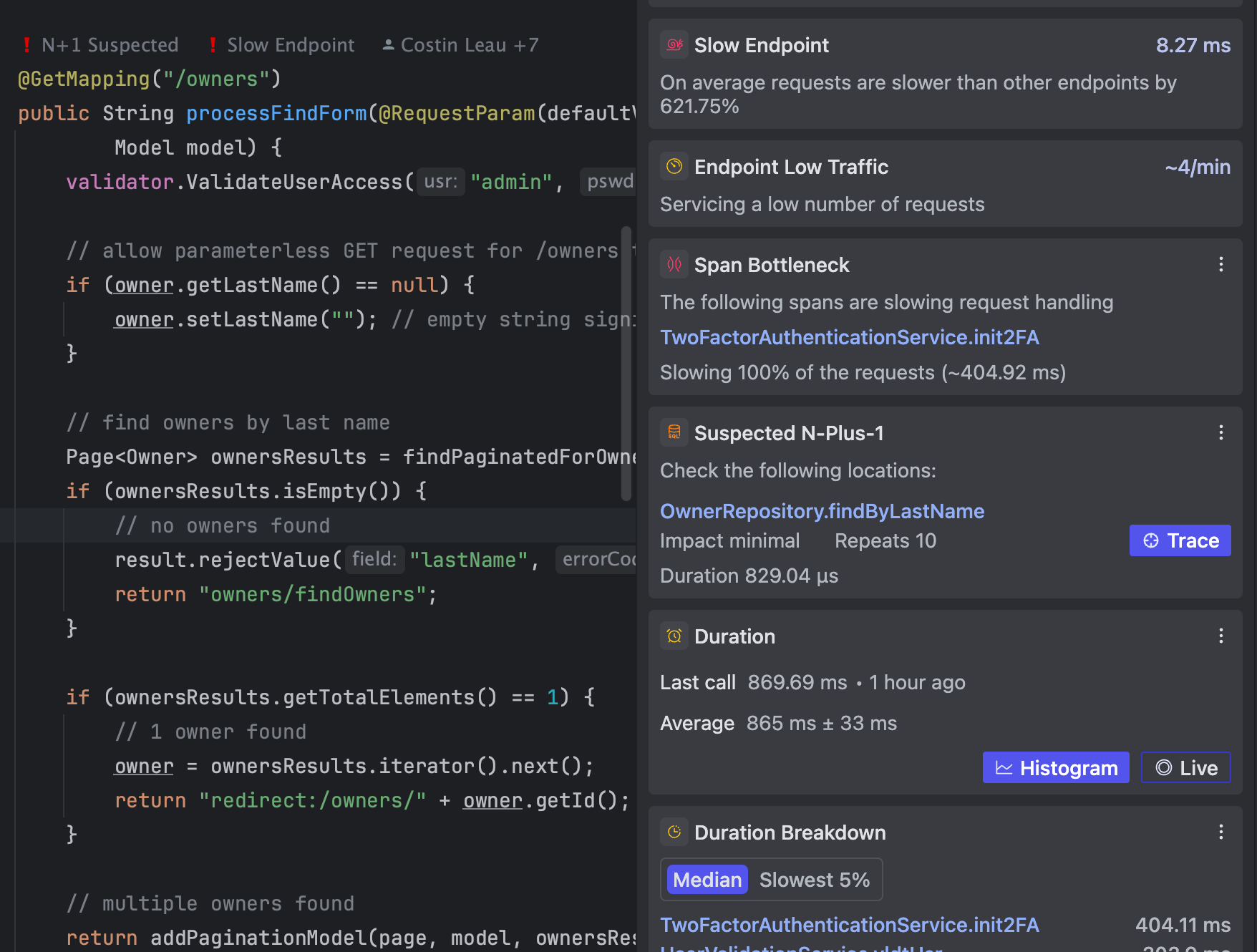
    Whether code is written by a human or generated by a machine, quality is often in question. Developers with varying levels of experience will naturally write code that can differ substantially in quality and efficiency. At the same time, developers may be asked to fix code someone else wrote; the original author no longer works for the organization, noted Dover. In either use case, the Digma Continuous Feedback platform immediately surfaces issues that will enable organizations to set higher baselines for code quality, he added.

    That baseline is especially critical as more code starts to be generated by generative AI platforms based on general-purpose large language models (LLMs) trained using code samples of varying quality collected from across the web. Developers will be able to immediately determine any issues that may arise should they choose to incorporate that code within an application.

    Developers, of course, don’t deliberately set out to write bad code, but the tools that enable them to identify issues are not easily accessible. In fact, too many developers tend to view observability platforms designed for IT operations teams as being overly complex, noted Dover. The Digma Continuous Feedback platform takes that issue off the table by identifying issues without increasing the level of cognitive load developers are expected to carry, he added.

    Eventually, thanks to the rise of machine learning algorithms and generative AI platforms designed specifically to write high-quality code, the overall state of software engineering will improve. The issue is determining the best way to get the benefits these technologies provide directly to the developers who write code—an issue that is at the heart of so many DevOps challenges.

  • Harness Launches Open Source Gitness Platform

    Harness Launches Open Source Gitness Platform

    At its unscripted conference today, Harness unveiled a streamlined open source git platform, dubbed Gitness, that is significantly lighter weight than the platforms DevOps teams traditionally rely on to build increasingly complex applications.

    At the same time, the company is adding four additional modules to its continuous integration/continuous delivery (CI/CD) platform to improve developer productivity and make it simple to build and deploy secure applications.

    Finally, Harness is launching an Engineering Excellence Collective, a consortium of 300 senior engineering leaders. The collective is developing a maturity model based on 11 pillars for achieving software engineering excellence; a FinOps Excellence community initiative was also announced to advance best practices for controlling cloud computing costs.

    Harness CEO Jyoti Bansal said the need for a modern open source Git platform—as an alternative to legacy platforms developed a decade ago—has never been more apparent. Gitness provides all the collaborations, performance, analytics and security capabilities DevOps teams require in a streamlined platform that reduces overall bloat by seamlessly integrating, for example, code hosting and automated pipelines, he added.

    Other core capabilities include automated status checks and mandatory reviews, branch protection rules, user access management tools and a semantic search engine that has been infused with generative artificial intelligence (AI) capabilities that invoke multiple large language models (LLMs).

    Collectively, the approach reduces the amount of time spent when attempting to integrate and manage disparate tools on legacy platforms that inevitably lead to the creation of additional bottlenecks, said Bansal. Rather than bolting on additional tools, the time has come to simplify software engineering by migrating to a platform specifically designed to address modern software engineering requirements, he added.

    Designed to be installed using Docker contains in a matter of minutes, DevOps teams can also take advantage of tools to automatically migrate their existing repositories and pipelines from platforms such as GitHub and GitLab.

    Gitness is also at the core of one of the four additional modules that Harness is adding to its portfolio. The Harness Repository is a premium tool, available in beta, that provides governance and compliance-as-code capabilities embedded within the repository.

    The three other modules being added are a Harness Internal Developer Portal based on open source Backstage software, Harness Infrastructure as Code Management that makes it simpler to implement GitOps workflows at scale and Harness Software Supply Chain Assurance to provide visibility into open source software components and manage the creation of software bills of materials (SBOMs).

    It’s not clear whether DevOps teams are ready to rip and replace existing platforms, but the pressure to improve developer productivity has never been higher. Organizations increasingly realize that developers are spending the bulk of their time managing development environments tied to legacy platforms that create bottlenecks and are becoming more costly to manage and sustain.

    Harness, in effect, is now calling for the establishment of an alternative approach based on open source software that promises to streamline software engineering workflows. As applications incorporate microservices, security controls and AI models, they are only going to become more challenging to build and deploy at scale.

  • Daytona Unfurls Developer Environment for On-Premises IT

    Daytona Unfurls Developer Environment for On-Premises IT

    Daytona has launched a development environment for on-premises IT environments that provides all the benefits of a cloud-based alternative.

    Ivan Burazin, CEO of Daytona, said the company’s namesake alternative to platforms such as GitHub Codespaces enables DevOps teams to retain control and better secure the intellectual property created by developers while simultaneously making them more productive.

    The Daytona platform enables developers to instantly start coding by accessing a development environment based on a set of preferred tools and frameworks, he added. Platform engineering teams looking to scale DevOps workflows can then take advantage of fine-grained access controls and advanced security features across developer environments spanning hybrid IT environments, said Burazin.

    He added that the ability to centrally manage development environments is designed to appeal to organizations attempting to improve developer productivity in highly regulated industries that are now allowed to use cloud-based alternatives. This is becoming a more pressing issue because as regulations become more stringent, organizations are trying to move source code off developers’ individual laptops that are more easily breached than a server environment, noted Burazin. The challenge is striking the right balance between enabling flexibility and centralizing the management of developer environments, he added.

    Of course, many of those organizations could opt to construct their own internal developer portal (IDP) to accomplish the same goal, but in most cases, that would prove expensive to both construct and maintain, noted Burazin.

    The same core team that created Codeanywhere, a cloud-based integrated development environment (IDE), is also behind the development of Daytona. The issue that organizations previously encountered when attempting to shift development to the cloud is that, in addition to regulations that forbid it, developers could not easily customize their environments. The Daytona platform is designed to enable more flexibility without sacrificing control, said Burazin.

    Arguably, organizations are more focused on developer productivity today than at any time in recent memory. Developers typically spend as much as 70% of their time maintaining environments versus writing code, so there is a clear need to reduce the level of toil. Reducing that toil doesn’t guarantee developers will spend more time writing code, but it does create the opportunity. DevOps teams are, as a consequence, being asked to eliminate as many of the bottlenecks that conspire to reduce developer productivity as possible in furtherance of that overall effort.

    Developer productivity issues are not going to be resolved overnight. Developers will not always be immediately inclined to give up control unless it’s conclusively proven that a platform engineering team will be responsive to their needs. The cultural challenge is finding that fine line between reducing friction while still giving the developer the sense that they can add a tool to a workflow that enables them to innovate.

    One way or another, change is coming to DevOps workflows. Each organization will need to determine how quickly that change will occur, but in the absence of any meaningful change, it’s clear they won’t be able to compete against rivals capable of producing higher-quality code faster.

  • Will ChatGPT Replace Human Software Developers? Probably Not

    Will ChatGPT Replace Human Software Developers? Probably Not

    Since the release of ChatGPT, there has been a great deal of hype around generative AI and how companies can leverage it to cut costs and democratize software and application development. Naturally, with discussions of cost-cutting and democratization come whispers about what will happen to software developers.

    This is a real and valid concern, but software developers’ skills, expertise and creativity are still very much needed.

    While generative AI and AI code generation tools like ChatGPT have shown some promise and potential benefits, they are still in their infancy—like many other innovative technological advancements. We also don’t know what scenarios they may present down the road or their true abilities when the technology matures. For instance, how will it integrate with other technologies? We don’t know what will happen when a ChatGPT-generated line of code breaks or needs to be changed. We don’t know if it can provide a novel solution to a unique problem or what security threats it will present.

    Given these unknowns, technology executives should think twice about replacing experienced and creative technology talent, such as software developers, with AI code generators.

    Will ChatGPT create novel code to solve a unique problem never encountered before? Probably not.

    A Tale as Old as Time (Or at Least a Decade)

    The technology industry has been searching for and developing new ways to make certain software development tasks much easier and more streamlined for years. One example of this is low-code/no-code.

    The notion of simplifying application development and replacing software developers with laypeople (citizen developers) has been around for more than a decade now, as low-code and no-code solutions have grown more popular. These solutions have promised that companies don’t need technical talent to get their software and app projects off the ground.

    However, if you look at the impact of these solutions today, their use can result in large amounts of technical debt and almost always require the skill of experienced software developers.

    The reason? Building complex software and applications is extremely difficult; it’s an art.

    Low-code and no-code solutions have their rightful place and can make things easier if a company is looking to launch a simple app or static web page. These solutions can increase the pace of development and time-to-market and enable everyday people without any development skills to facilitate them. However, they are not actually a complete solution and often overlook aspects of development that a human software developer would typically address. Without a skilled expert involved, low-code/no-code platforms often can’t solve a unique problem a company has.

    So, how does this relate to AI code generators like ChatGPT? Here’s how.

    A Similar Situation—With One Key Difference

    When thinking about their place in the development process, AI code generators are not that different from low-code or no-code solutions. The thinking is that they will also enable non-technical individuals to create software and applications with ease.

    Yet, there is one key difference—they promise expertise, too. But is the expertise coming from the AI code generator or the person piloting it? The answer is simple; it is not from the code generator.

    There have been examples of companies and individuals that have tried using ChatGPT to build code, and they have appeared to be successful. However, without the input of the individuals using it, it never would have been able to create the code on its own unprompted.

    This means that the expertise of skilled, human software developers is still very much needed, especially when building intricate software and apps that require complex functionality such as optical character recognition (OCR), internet-of-things (IoT) connectivity and more.

    A Future With Software Developers

    Because of the expertise still required to create elaborate and innovative software and applications, AI code generators will not replace software developers anytime soon, if ever.

    The technology used in these tools is still in its infancy, presenting many lingering questions and potential challenges. We will see this confirmed by the trials and tribulations experienced by the few companies and executives attempting to replace software development teams with tools such as ChatGPT.

    Knowing AI code generators follow a similar path as low-code and now-code solutions, companies and executives should use them as developer enablement tools. These tools should complement the work of software developers by empowering them to focus on the complex tasks software and apps today require.

  • Nitric Adds Support for Additional Languages to IaC Alternative

    Nitric Adds Support for Additional Languages to IaC Alternative

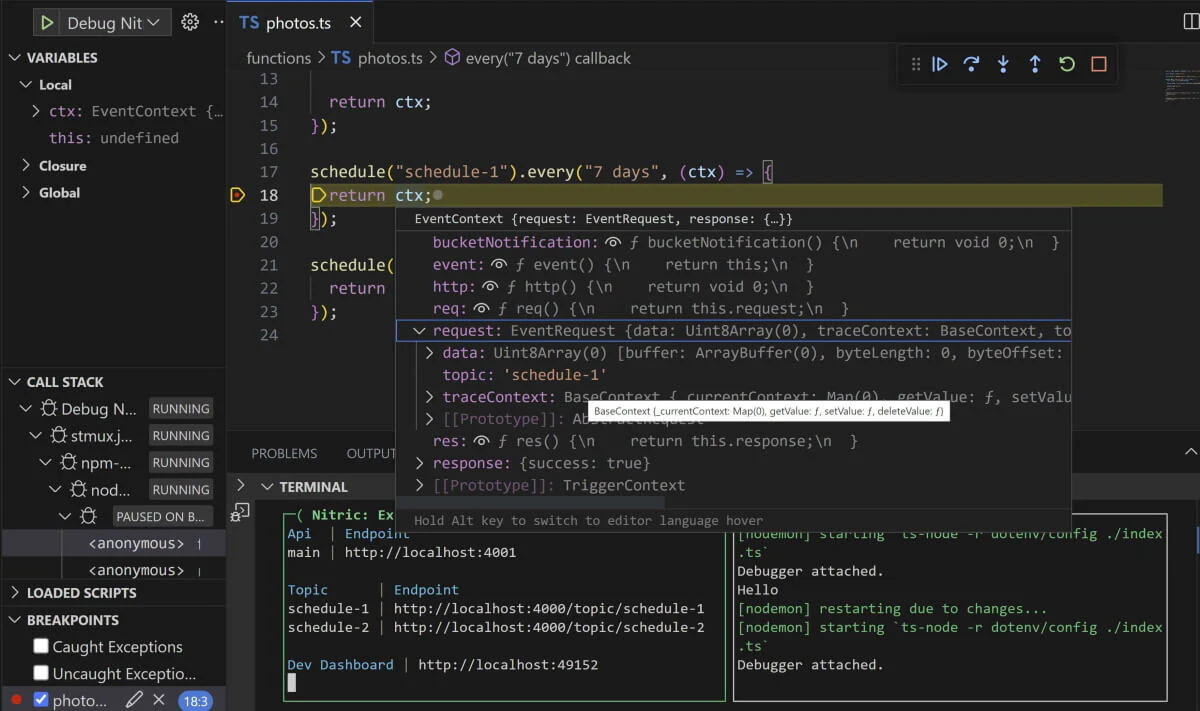
    Nitric today announced it has added support for the Go and Kotlin programming languages to its application framework. The framework automatically creates code to provision infrastructure based on the way the code used to write an application has been developed.

    Rak Siva, vice president of engineering for Nitric, said that approach eliminates the need to rely on developers using infrastructure-as-code (IaC) tools to configure platforms.

    Nitric previously supported JavaScript, Python and C# along with frameworks such as Express, Fastify and Nest.js to enable infrastructure to be automatically configured based on an intent expressed in the codebase enabled by a software development kit (SDK). In effect, Nitric infers how to optimally configure infrastructure. DevOps teams can then choose to either rely on the configurations created by the Nitric framework or customize it to add support for their own policies, said Siva.

    While IaC tools have played a major role in streamlining the application development and deployment process, they are also the root cause of many cloud security incidents. Developers that use these tools typically have limited cybersecurity expertise, so the probability that cloud infrastructure will be misconfigured in a way that cybercriminals can exploit is high.

    Nitric is attempting to take the concept of managing infrastructure-as-code to the next logical level by automating the process so it can be consistently applied and managed, said Siva. That approach provides the added benefit of improving the overall developer experience by eliminating a task that most developers view as a means to a larger end, he added.

    It’s not clear how much of the cloud infrastructure that DevOps teams are relying on to build and deploy applications is misconfigured, but given the varying levels of skill among developers, there are very few organizations that have not encountered a cloud security issue. The challenge is not so much the security of the underlying platforms as it is the shared responsibility model relied on to secure these platforms. Cloud security platform providers assume that organizations that programmatically invoke infrastructure have the expertise required to securely provision it. However, very few organizations can achieve that goal 100% of the time, which results in organization having to make considerable investments in additional tools and platforms to monitor and enforce cloud security policies.

    As more organizations focus their efforts on securing software supply chains, many of them will be revisiting how cloud infrastructure is provisioned. In fact, one of the reasons platform engineering is gaining traction as a DevOps methodology is to improve the developer experience and strengthen application security.

    Cultural change, of course, is difficult. IaC tools such as Terraform are deeply embedded within many DevOps workflows, so any alternative approach to provisioning infrastructure will require time to take hold. However, as regulations that hold organizations more accountable for application security become increasingly more stringent, it’s now a question of when rather than if change will come to how cloud infrastructure is provisioned.

  • VMware Previews Spring AI to Accelerate Java Development

    VMware Previews Spring AI to Accelerate Java Development

    At a SpringOne at VMware Explore event this week, VMware demonstrated a tool that uses abstractions to make it simpler to build Java applications that invoke multiple artificial intelligence (AI) components with minimal changes to code.

    The goal for the open source Spring AI project is to, for example, make it simpler to swap out AI models using an AiClient interface for invoking OpenAI and Azure OpenAI services. It also adds capabilities that promise to make it simpler for developers to query documentation using generative AI enabled by large language models (LLMs). An additional goal is to extend those capabilities to other Spring projects, including Spring Integration, Spring Batch and Spring Data.

    In addition, the Spring command line interface (CLI) has been extended to support Spring AI and the Spring Boot framework has been extended to help set up dependencies and classes more easily.

    The AI capabilities are part of several additions made to the widely used framework for building Java applications that address everything from automatically turning off instances of Spring running in a container, also known as scaling to zero, to using virtual threads to call external services in a way that reduces memory consumption.

    Those additional capabilities promise to make it more efficient to run Java applications in, for example, a cloud computing environment.

    Betty Junod, vice president of product marketing for modern applications and the Management Business Group at VMware, said generative AI capabilities should serve to make Spring more accessible by not having to click around as much to gain answers to questions.

    In general, VMware is betting that a larger percentage of the Java applications built using Spring will be deployed on the Tanzu platform the company has built on top of Kubernetes. That platform streamlines the application development process in a way that reduces the cognitive load on developers by eliminating the need to know how to work with YAML files or use Docker Compose to create containers.

    Despite the proliferation of alternatives to Java, it remains the primary programming language used by developers to build applications. The challenges involved with learning additional programming languages are high, so most developers would prefer to continue to use Java to build both monolithic and emerging cloud-native applications.

    In the meantime, AI is already widely employed to help developers write code faster. AI isn’t going to replace the need for developers, but it will increase the pace at which applications are being developed. As such, DevOps teams will soon see a significant increase in the amount of code moving through DevOps pipelines. The hope is that AI will be applied in a way that enables those DevOps teams to manage increasingly larger codebases.

    In fact, the way applications are built and deployed will drastically change now that the AI genie is out of the proverbial bottle. But it remains to be seen how quickly those advances will change the way DevOps is managed at a level of unprecedented scale.

  • How to Prevent Zombie APIs

    How to Prevent Zombie APIs

    There is a growing reliance on web APIs. A full 92% of organizations plan to increase their investments into APIs over the next year, the 2023 Postman State of the API Report found. APIs are powering everything from internal microservices strategies to partner strategies and fully-fledged products.

    Yet, this newfound API sprawl has consequences; a looming threat that might rise from the grave to haunt you …

    I’m talking, of course, about zombie APIs. Zombie APIs are endpoints that are no longer maintained yet are still active. They may be unused endpoints, old features never officially deprecated or forgotten development or testing environments. Regardless, zombie APIs are a type of technical debt that could pose a legitimate threat if left to rot.

    The sudden growth of APIs, along with immature inventory management and a lack of internal communication, can contribute to creating countless shadowy endpoints. Below, I’ll review some of the issues that zombie APIs might cause and consider some actionable steps DevOps teams can take to prevent them.

    Understanding Zombie API Risks

    Forgotten APIs can cause a number of issues. For example, suppose an insecure testing environment was accidentally left exposed to the public. An attacker using automated endpoint scanning could find authentication and authorization holes to exploit, potentially exfiltrating sensitive data.

    It’s also a bad idea to let any piece of technology go unmaintained, given the daily influx of new exploits and vulnerabilities. This point is accentuated by the connected nature of APIs, which may plug into a vast network of databases and allow both read and write privileges to the backend infrastructure.

    Insecure APIs can cause a business both economic harm and damage reputation. Just consider the high number of API-related data breaches in recent years, which occurred at companies like Optus, Dropbox, Twitter and Zendesk. It’s even estimated that somewhere between $12 billion to $23 billion was lost in 2022 due to compromises in web APIs.

    Zombie APIs are an easy target for these sorts of cyberattacks because they tend to have insecure designs that are easier to crack. They also tend to use immature monitoring systems, which means hackers can act under the radar more easily than with actively used endpoints.

    Tips to Avoid Zombie APIs

    Keep an Active Inventory of APIs

    As they say, you can’t secure what you don’t know about. In fact, OWASP lists improper inventory management as one of the ten top API security risks. Therefore, proper inventory management is a good first step to avoiding zombie APIs. Scan your service portfolio for forgotten endpoints, catalog them and update the catalog regularly.

    It’s also a good practice to thoroughly document your services to aid in internal discoverability. If possible, adopting specification-first practices can also ensure the documentation and implementation are based on a single source of truth, thus avoiding mismatched versions and documentation drift.

    “The key to preventing zombie APIs is visibility,” said Jeremy Snyder, CEO, FireTail. “Many organizations lack ongoing, up-to-date inventories of all the APIs that are running in either production or staging environments.”

    Use Proper Versioning and Life Cycle Strategies

    Another method to reduce the chance of zombie APIs is to adopt mature API life cycle management practices. The chosen API versioning strategy should be clearly defined and codified. And versioning changes should be clearly communicated to all stakeholders.

    On that note, it’s just as important to plan out a sunsetting, retirement and deprecation strategy from the onset. Then, remove deprecated services when they have reached their end of life! This is not a glamorous task, but it should be baked into someone’s assignments.

    “Good cyber hygiene is an often overlooked strategy,” explained Snyder. “A second requirement is to have a policy around versioning and how many versions of an API can exist at any given moment. For instance, that policy may state that only the latest version can exist or the latest plus the previous. However, this relies on having visibility in order to maintain compliance.”

    Other areas of proper life cycle management include employing governance around development and deployment and utilizing automated testing in continuous deployment (CI/CD) pipelines. Both of these could help set policies and security requirements, which should also bolster API safety.

    Share Knowledge of Internal and Third-Party Services

    Tribal knowledge is the antithesis of DevOps culture. As such, it’s a good practice to de-silo and share internal knowledge of API-powered services to limit the propagation of rogue endpoints. This could be done through private network repositories or even an internal Postman Collection or Workspace.

    “Internal processes like organizational coordination and communication are critical,” added Snyder. “If teams don’t tell each other about new APIs being developed and launched into production, security teams can’t assess or audit them. Conversely, if app teams don’t know about network infrastructure resources designed to cover various API security aspects, developers don’t know what security controls need to be baked into the API code.”

    Visibility is Required to Avoid Zombie APIs

    A recent CISO survey revealed that API security was the number one concern for CISOs. For many reasons, web APIs are still low-hanging fruit for attackers. This is underscored by the 400% spike in malicious API attack traffic recorded by Salt Labs earlier this year.

    Many of these attacks, we’ve also learned, are occurring over authenticated APIs. This shows that greater accountability and visibility are required to begin to stem the tide of API-related security incidents.

    To reach an adequate level of visibility, leaders should consider adopting tooling that helps determine if there are outdated APIs or APIs with multiple live versions, said Snyder. “These tools should help display what security live APIs have and provide recommendations around how to fix them, if not providing the necessary code or modules to secure the APIs directly.”

  • Applitools Acquires Preflight to Further Apply AI to App Testing

    Applitools Acquires Preflight to Further Apply AI to App Testing

    Applitools this week revealed it has acquired Preflight, which provides a low-code automation platform infused with machine learning algorithms that makes it possible for developers to write their own tests.

    Applitools COO Moshe Milman said Preflight extends the company’s efforts to leverage artificial intelligence (AI) to shift more testing capabilities left toward application developers using its existing test automation platform. The Applitools platform is compatible with frameworks such as Selenium, Playwright and Cypress.

    One of the major challenges organizations encounter as they encourage developers to run more tests is that many of them don’t have the skills required to write them. Applitools’ AI capabilities reduce the cognitive load required to create and run tests, noted Milman.

    The goal isn’t so much to replace dedicated application testing teams but to enable developers to more easily test code as they build it, noted Milman. There will always be a need for dedicated testing teams to evaluate more complex use cases for applications, he added.

    The issue is, thanks to advances in DevOps automation, the pace of application development is outpacing the testing resources available, said Milman. IT teams need to invest in test automation to close what has become a quality gap because not enough code is being thoroughly tested, he noted.

    Test automation also serves to reduce the total cost of creating tests. That enables organizations to conduct more tests without slowing down application development, noted Milman.

    In the longer term, Applitools also plans to leverage large language models (LLMs) to provide generative AI capabilities alongside existing support for machine learning algorithms to further automate testing, noted Milman. Applitools is already making use of computer vision to automate app testing. Preflight adds a set of tools infused with AI to create tests.

    The reasons behind inadequate application testing aren’t entirely clear. Whether it’s because tests are too difficult to create or development teams simply run out of time because of scheduling delays, the impact is the same. Too often, developers convince themselves they will address any issues that might arise with the next update only to become distracted by other priorities. Regardless of the reason, however, there are more poorly-tested applications running in production environments than many DevOps teams would prefer. In fact, much of the technical debt IT organizations need to manage today can be traced back to inadequate testing.

    However, as testing tools become more automated, the overall quality of applications should improve and technical debt may become less of an issue. In the meantime, automated testing promises to improve overall developer productivity as it becomes simpler for developers to create code that has been, at the very least, vetted by algorithms before being added to a codebase. In effect, developers are running out of excuses for not testing applications before delivering them to unsuspecting end users.

  • Mendix Embraces DevOps for Next Era of Low-Code App Development

    Mendix Embraces DevOps for Next Era of Low-Code App Development

    Mendix, a subsidiary of Siemens, today updated its namesake low-code application development platform to add support for DevOps workflows and make it simpler for developers to compose applications and embed artificial intelligence (AI) capabilities.

    Sheryl Koenigsberg, vice president of product marketing for Mendix, said Mendix 10 makes it possible to use Git repositories for version control along with Mendix Pipelines, currently in beta. Mendix Pipelines is a continuous integration/continuous delivery (CI/CD) environment that will be embedded in the low-code platform. In addition, Mendix is adding support for Webhooks that can be used to integrate Mendix with existing CI/CD platforms.

    Mendix has also added a Solutions Kit, now generally available, to make it possible to customize applications in a way that ensures those changes will be preserved as application environments are upgraded.

    There is also now a Portfolio Manager tool to track projects and a connector for integration with the Jira project management software from Atlassian.

    Later this year, Mendix will also make generally available Adaptation Insights to provide insights into application extensions.

    In the future, developers will be able to leverage an extensibility framework to tailor the Mendix Studio Pro integrated development environment (IDE) by adding their own plugins, wizards, editors and third-party integrations. Later this year, Mendix 10 will also add, in beta, a version of its Studio Pro IDE for MacOS.

    The Mendix approach to composability is also being extended to incorporate AI. The company is adding Mendix Assist, a bot that generates validation logic for data entry. This module is the second AI capability that Mendix has developed after previously previewing Mendix Chat, a tool based on a large language model created using Mendix data that will be integrated into the Mendix integrated development environment (IDE) later this year. Mendix Assist will be incorporated into Mendix Chat.

    Mendix is also developing additional LLMs for creating applications and will as part of its commitment to composability plans to make it possible to integrate third-party AI services and LLMs into the Mendix Runtime to create “smart apps.” AI models will be converted to the Open Neural Network Exchange (ONNX) format, an open standard for machine learning models, to provide that capability.

    In addition, Mendix is adding support for event-driven architectures via Business Events and an Event Broker, to build more complex applications.

    Other capabilities being added to Mendix 10 include updated REST and database connectors, support for visual data filters, rich properties and design controls, a Start from Spreadsheet tool, end user survey tools, a PDF document generator and a revamped set of governance and risk assessment tools.

    Finally, Mendix is adding a Terraform module to make it simpler to deploy its low-code platform on the Amazon Elastic Kubernetes Service (Amazon EKS) in addition to providing a reference implementation for building private clouds to develop applications using the Mendix Cloud service.

    As AI-infused low-code applications are developed faster, it’s not clear to what degree organizations are prepared to embrace the inevitable disruption that will ensue. However, the one thing that is clear is that the DevOps workflows used to deploy these applications at scale will soon be put to the ultimate test.

  • Four Ways to Modernize Your Enterprise Monoliths

    Four Ways to Modernize Your Enterprise Monoliths

    In a perfect world, every application would run like Netflix–by which I mean every application would be cloud-native, microservices-based, containerized and, in all other senses of the word, modern. Unfortunately, not every application can be transformed in these ways. Some of the most important enterprise applications–like those powered by SAP or Oracle–don’t lend themselves to architectural transformations simply because the vendors don’t support that strategy. As much as organizations might wish that they could re-architect legacy apps from the ground up, the reality is that they just can’t.

    Fortunately, though, all hope is not lost if you have an enterprise app that you can’t containerize or “microservices-ize.” Even if you can’t “break down your monolith”–to quote the standard advice you’ll find if you read articles about how to modernize legacy apps–there are a variety of practical steps you can take to make legacy, monolithic applications look and feel (in most respects) like modern, cloud-native apps.

    Here are four ways to make your enterprise monolithic apps more cloud-friendly, even if they’re not technically cloud-native.

    Use Cloud Automation to Modernize Legacy Application Management

    Most enterprise apps are compatible with the cloud in the sense that you can host them on cloud-based virtual machine (VM) instances using services like Amazon EC2.

    By taking advantage of cloud hosting for enterprise apps, organizations can also leverage cloud automation tools, such as autoscaling policies and rules that automatically start or stop VMs. In this way, it becomes possible to deploy enterprise apps in a highly scalable, automated way. You get something that resembles Kubernetes-based orchestration, except your apps don’t actually run in containers on top of Kubernetes. They’re just monoliths that benefit from cloud automation tools.

    Deploy Load Balancers to Optimize Performance

    Load balancers, which automatically manage network traffic flowing to and from applications, are another critical tool that organizations can easily leverage when they migrate legacy applications to the cloud.

    Although configuring load balancers for enterprise apps hosted in the cloud is not a strict requirement, doing so can substantially improve application performance and reliability because load balancers help to ensure that requests are directed at application instances best able to handle them. They prevent situations where one instance of your application is overwhelmed with traffic while another sits idle.

    Again, this is something that platforms like Kubernetes also do for microservices apps. But, as I’ve explained, you don’t actually need your app to run as microservices to take advantage of load balancing. You can do it with monolithic legacy apps, too.

    Adopt an Everything-as-Code Strategy

    When your app lives in the cloud and is managed by cloud automation tools, it becomes possible to manage most aspects of application operations via code. Specifically, you can:

    ● Use infrastructure-as-code (IaC) tools to automate infrastructure provisioning and setup.
    ● Automate application configuration management using code rather than applying configuration changes manually.
    ● Codify operational processes, such as application updates and backups, instead of relying on manual operations.

    Practices like these, which enable a strategy known as everything-as-code, significantly reduce the amount of time and manual effort that engineers spend managing applications. They also provide consistency and minimize the risk of errors due to human oversight. And there’s no reason why you can’t leverage these practices for legacy apps as well as modern ones.

    Integrate Legacy Apps With Modern Toolchains

    If your enterprise app is hosted on-premises, you probably manage it using tools and processes designed solely for it. But when you move an enterprise app to the cloud, it becomes possible to manage the application using the same integrated toolchain you deploy for other applications and processes.

    You can, for example, take advantage of cloud-based monitoring tools to continuously collect data about application performance and generate automated alerts when something is wrong. Likewise, you can regularly create image-based backups of your application.

    This toolchain-based operational strategy is another way to streamline enterprise application management, even in situations where you can’t rewrite or containerize the application itself.

    Conclusion: Getting More From Legacy Apps

    Just because you have a legacy enterprise app that you can’t transform into microservices doesn’t mean you have to settle for legacy management and operational practices. Modern automation tools combined with modern operational strategies like everything-as-code make it possible to achieve an enterprise application management experience that closely parallels that of fully modern, cloud-native apps, regardless of which architecture your app actually uses.