Tag: alan shimel

  • MEDIAOPS OFFERS CONFERENCE DISASTER PLANS AMID GROWING CORONAVIRUS CONCERNS

    Virtual Event Capabilities Allow Event Organizers to Afford Attendees, Speakers and Sponsors a Near Identical Experience to In-Person Physical Events


    BOCA RATON, Fla. — February 17, 2020 — Amid growing concerns over the spreading coronavirus, MediaOps, the leading global media platform for technical communities, is now offering a Conference Disaster Plan (CDP) aimed at providing conference organizers with a virtual event platform and capability that is nearly identical to the experience of an in-person physical event.

    MediaOps has produced more than 10 virtual events in the last 18 months that have offered dozens of concurrent sessions, multiple expo halls and thousands of attendees each. The platform can accommodate both live and recorded multi-track sessions in private virtual auditoriums, complete expo floor and booth capabilities, signage, chat, treasure hunt activities and more. The MediaOps platform provides all the capabilities of a live conference, including keynotes, panel sessions, Q&A, booths, attendee interaction, sponsorships and much more. Virtually anything possible at in-person events is available via the platform. Additionally, MediaOps has the personnel and expertise to produce events in a timely manner, which gives event organizers the ability to simulate a real-world setting without the travel.

    “We take this current situation very seriously; the health and well-being of our community is essential. So, for this CDP, we want to offer options that are safe and effective,” said Alan Shimel, CEO and founder of MediaOps. “Like it or not, this virus outbreak may be a tipping point in moving from the real world to virtual events. They offer comparable experiences without the travel, expense and loss of work time that physical events impose.”

    Additionally, MediaOps, through its new IT as Code community platform and along with analyst firm Accelerated Strategies Group, DevOps Institute and JumpCloud, will be conducting a survey to better understand the community’s thoughts and concerns about travel amid the current health crisis and possible implications for future events.


    About MediaOps, Inc.

    MediaOps is a premier global media platform for technical communities including DevOps, Security and Containerization. Its brands, which include devopsy.kinsta.cloud, Container Journal, Security Boulevard and Digital Anarchist, attract and engage a thriving online community of technology professionals around the world. Resources include award-winning editorial, creation of high-quality custom content, multimedia production and distribution. As the leaders in these emerging segments, MediaOps’ properties include powerful, integrated marketing and communication platforms to help clients maximize their campaign ROI and paid media investments.

    For more information, visit https://mediaops.io

    Press Contacts:

    CDP@devops.com

    OR

    Terri Douglas
    Catapult PR-IR
    303-581-7760
    tdouglas@catapultpr-ir.com


    ###


  • MediaOps, Inc. Expands Executive Leadership Team to Drive Growth and Audience Reach

    Producer of devopsy.kinsta.cloud and other Premier Tech Communities Capitalizes on Rapid Growth of Cloud, DevOps, and DevSecOps

    Boca Raton, FL, (June 13, 2017) – MediaOps, Inc., producer of leading technology brands and destinations such as devopsy.kinsta.cloud, DevOps Connect, DevOpsTV, DevOps Chat and Container Journal, today announced the appointment of two executives to the company. Joining MediaOps are Saleem Padani as Chief Operating Officer, and Deborah Schalm as Director of Marketing Operations and Customer Delivery. The appointments strengthen MediaOps’ leadership as the company scales to expand the rapid growth of its supporting communities.

    “We believe that MediaOps has a great opportunity to expand its audience, influence, and reach due to the ascendency of emerging technologies and disruption in the traditional tech media industry. Saleem and Deb bring technical and marketing expertise to their positions and the company,” said Alan Shimel, CEO of MediaOps. “These talented individuals, both with great track records of success, will enable us to further drive audience engagement and provide seamless user experience across all our digital properties.”

    Saleem Padani

    Mr. Padani joins MediaOps from IBM, where he managed worldwide DevOps portfolio marketing with a focus on hybrid cloud, methodologies, security, enterprise systems and C-suite conversations for specific industries. He managed relationships with internal and external media outlets as well as clients and business partners, led social media strategy, events, and content marketing in support of broad marketing campaigns. As a tech industry veteran, Mr. Padani’s background includes prior roles as co-founder, software engineer, architect, and consultant with early-stage technology companies.

    Deborah Schalm

    Ms. Schalm has an extensive background in media and marketing having served in marketing positions at Time Inc., Hearst, Wall Street Journal Office Network, Inc. Magazine, and others. She brings valuable expertise in integrated marketing, sales development, client management, and marketing operations. She will manage several areas of delivery including digital marketing initiatives, digital libraries, and webinars, working with MediaOps advertisers to deliver valuable, educational and compelling integrated content to its audience.

    About MediaOps, Inc.

    MediaOps is a premier global media platform for technical communities including DevOps, Security and Containerization. Its brands, which include devopsy.kinsta.cloud, DevOps Connect, DevOpsTV, DevOps Chat and ContainerJournal.com, attract and engage a thriving online community of technology professionals around the world. Resources include award-winning editorial, creation of high quality custom content supporting all stages of the buyer’s journey, from awareness to decision, multi-media production and distribution. As the leader in these emerging segments, MediaOps’ properties include powerful, integrated marketing and communication platforms to help clients maximize their campaign ROI and paid media investments.

    For more information, visit devopsy.kinsta.cloud.

    ###

    If you would like more information, please contact Deb Schalm at 203-979-9412 or email deb@devops.com.


  • DevOps Chat: Habitat by Chef with Julian Dunn

    DevOps Chat: Habitat by Chef with Julian Dunn

    julianI had a chance to speak with Julian Dunn, product manager for Chef ahead of the upcoming ChefConf conference in Austin Texas next week. Julian and I spoke about Habitat, Chef’s new open source application automation project.

    Many in the industry are hailing Habitat as something really special. Our own Tony Bradley says it could be a game changer.  Julian gives us some of the background and reasons why Habitat is important for you. He also gives us an advance look at the three Habitat related sessions scheduled for next week at ChefConf.

    If you are already going to ChefConf, be sure to hit all three of these if you can. If you are in the Austin area next week, try to make the show. We will be there covering it live.  Also the opening keynotes for Tuesday and Wednesday are being live streamed over the web.

    In the meantime here is my conversation with Julian with the printed transcript below, enjoy!

    Alan Shimel:                Hi, this is Alan Shimel, devopsy.kinsta.cloud, here for another DevOps Chat, and I’m happy to have Julian Dunn, Product Manager of Chef joining us today. Good morning, Julian, how are you?

    Julian Dunn:               Good morning, Alan, I’m doing very well. I’m melting a little bit because it’s very hot in New York, but you know, other than that—perfect summer day.

    Alan Shimel:                Yeah, it’s July in New York, it happens. Julian, we could talk about weather, I’ve certainly been traveling enough to see different ones, but let’s focus in a bit on what I wanted to really talk to you about today, and that is Chef’s new Habitat offering. Let’s assume a listener doesn’t know what Habitat is at this point. Give them a quick kind of elevator pitch on it.

    Julian Dunn:               Yeah, absolutely. Now, if you’ve read any of the materials and things like that, we’re using this tagline called Application Automation. And, you know, what on Earth does that actually mean? Well, what is the problem that Habitat solves for people?

    So, you’re an application developer today, and what you end up doing as an application developer is—well, what you want to do is, you want to spend a lot of your time doing the business logic and writing the business code that is actually gonna differentiate you from your competitors, right? So if you’re working at JCPenney, let’s say, you’re trying to write features for JCPenney’s website or mobile application or whatever to differentiate you from Macy’s and Target and Nieman Marcus or whoever your competitors are, right?

    Well, the experience of being a developer today actually ends up being that, before you write any of that program code, you have to spend a lot of time in the weeds and dealing with what I call sort of the plumbing oriented aspects of doing the programming, right?

    So just imagine if you were an interior decorator and you want to simply decorate your bedroom to whatever you wanted in there—you know, damask curtains and what have you—but you’ve spent most of your time dealing with the electrical and the plumbing. Not a particularly nice experience.

    Alan Shimel:                Mm-hmm.

    Julian Dunn:               The other thing is that, when you make those choices about what plumbing and what electrical systems you’re gonna use, that actually changes how your room is decorated. I mean, how absurd would that be, right?

    Alan Shimel:                Mm-hmm.

    Julian Dunn:               And so the notion of trying to let the application develop or be able to concentrate mostly on developing their program code and make a lot of those infrastructural choices later led us to develop Habitat, which is something that takes a little bit of a different approach than how we’ve built IT systems in the past, right?

    It’s kind of back to my analogy of the plumbing. In the past, we’ve built sort of up from the bottom towards the application, right? So we choose an operating system, we choose a bunch of stuff that sits on top of the operating system. You eventually at some point, we reach the application, right?

    And that’s an incredible waste of time for the application developer, who actually wants to start up here and define what their program logic is, right, and how that application should behave in a lot of different scenarios. And if you sort of start at the top and move towards the infrastructure, that’s the surface area that you actually end up owning as the application developer—we believe that that is Habitat.

    Alan Shimel:                Very cool. And hence the name, then, right? When you explain it that way, the name Habitat actually makes a heck of a lot of sense.

    Julian Dunn:               That’s right.

    Alan Shimel:                Yep. So, Julian, this is, some would say, you can see where Habitat is analogous—not analogous, adjacent to kind of the space that Chef plays in already. It’s a much bigger mission, if you will, than just what Chef has done to date. Is that a fair statement, you think?

    Julian Dunn:               It sure it, it sure is. You know, Chef, I think, initially started out, obviously, right, with a configuration management product that was very infrastructure oriented. And, over time, you’ve seen that our product portfolio and what we’re trying to do is a lot larger than just infrastructure configuration management, right?

    We kind of describe ourselves today as an automation company. We solve a bunch of automation problems, wherever automation is needed to help reduce people’s time to market or burdensome activities that they need to do in a regular ________, right? To really free people up, no matter what their problem domain is to being able to do the really intelligent parts of their job—the thinking parts of their job, right? And you’ll see that as we released Chef Delivery, which is a workflow system that allows people to basically implement, if you will, the principles that are in a lot of the books out there like Jez Humble’s Lean Enterprise that tell you, “This is the shape of how you should be delivering the software out to production.” Basically something like Chef Delivery is an automation arrayification or that technology—or those ideas, right?

    And then when we made the acquisition of VulcanoSec, which is the German security company, that gave us in-spec and Chef compliance that’s automating the work of compliance officers, security officers—right, folks that spend a lot of time, their job today and their pay and their experience is they spend a lot of time manually poking around systems and putting up fires manually because they don’t have a good framework and a system for describing the correctness of a particular system, right?

    And so now, as we move into—right, we’re, as a product organization, you want to be one that’s trying to address people’s pain points, right? When we started looking at what the pain was for an application developer, and they spend so much time dealing with the nuts and bolts of actually writing the code, we’re like, “How—why are systems built in this way?” We really went down a path of inquiry and we came up with Habitat as a way more application developer-centric than the perhaps infrastructure-centric things that we’ve built in the past.

    Alan Shimel:                Sure. Just two thoughts on that, Julian, I’d like to explore with you. One is—look, I’m not, I don’t hold myself out to be a Product Manager at Chef or anywhere near that integrated into it. But it feels to me, anyway, that the Chef compliance and the Chef delivery are very tactical pieces that embrace and extend Chef’s core configuration management capabilities, right?

    Where Habitat to me is more of a strategic rather than tactical type of play here, where you’re looking to set the game—the grounds, right? The stadium that we play in, whatever you wanna call it, the field, right? And so it’s a different—and again, I might be wrong, I’ll defer to you—but it feels different to me.

    Julian Dunn:               It is different in the sense that it’s a little bit iconoclastic, you’re right, in that it challenges some of the approaches that folks have been doing to try and deploy applications and get the sort of modern application characteristics that they want out there. And those characteristics are really great. I mean, one thing that’s really—as we developed this product, what really caught for us was to focus in on, “What does a modern application look like? What characteristics does it have?” And those characteristics are things like, it should be deployed immutably. It should be deployed atomically in that it’s either installed or it’s not, right? It should have certain characteristics built in. It should be aware of—it should know how to behave when it’s deployed in different scenarios, right, in different, what we call topologies.

    Alan Shimel:                Mm-hmm.

    Julian Dunn:               So you can think of, on a develop laptop, you might just have one instance. In a production environment, you probably have a number of instances, and they would have some relationship with one another, right? They might have one where you send all the rights two and the other ones are the reads, right? There might be some that are—like, think of a caching system, right? They right be hierarchical where there’s sort of a first, second, and third layer cache, like Squid or something like that, right?

    So it’s relationships between these entities, these application components, and one thing that we realized as we’re developing Habitat is, you know, as folks develop more complex applications and those applications are actually distributed systems, folks haven’t really spent a lot of time figuring out how to describe those relationships in a way that it imbues the applications themselves with the understanding about how they’re related to other components, right? The ways in which people have tried to solve the relationship problem between these components is to create sort of a central system, an orchestrator, if you will, that defines those relationships.

    And the trouble with an orchestrator is that it becomes a single point of failure, and as we know, that’s not really compatible with the cloud, right? Where in the cloud, they tell you, “You really shouldn’t have single points of failure, because you’re on an unreliable fabric,” right? So you really should have a system that knows how to recover and continue to function in the face of failure one or additional components, right?

    And so that’s where we started to come about with the architecture and the design of Habitat and how aware—how self-aware these individual components should be.

    Alan Shimel:                Absolutely. Just one other kind of comment or observation, and that is, you’re right—configuration management and compliance seem to be operational, or at least lead with operational, where Habitat clearly is a pay in the developer specter. But it’s all supposed to be one under DevOps, right? I mean, we don’t want to—I’m not into creating divisions between developers and operators, and I’m sure you guys aren’t, either, Julian.

    Julian Dunn:               Right, but I’ll tell you

    Alan Shimel:                But clearly they’re different focus—go ahead.

    Julian Dunn:               I was about to say, Alan, you know, the dirty of secret of DevOps, my observation, you know, I’ve been doing this for a number of years, and I’d love to hear your thoughts on this. But my feeling about the dirty secret of DevOps, and I go to DevOps Days and these conferences, and you survey the audience and you look at who the folks in the room are, right? And it’s something like, if you’re lucky, it’s still 80 percent Ops and 20 percent Dev, right?

    Alan Shimel:                It is, it’s OpsDev.

    Julian Dunn:               Yeah, right. So DevOps has been very much about Ops taking a lot of the good practices from Dev and learning a little bit of coding and learning that there’s a proper workflow and that you should have tests for stuff, but even if you’re not doing automated tests like Chef does, at least you should have some system for testing stuff before you just go log into a box and make changes in production and whatever.

    It’s almost like there’s this information flow that’s gone one way, but the information flow hasn’t really gone in the other way, even though we’ve had a number of iterations and generations of this technology. And so when we started asking the question, why—why have we kinda gotten from the brick wall to sort of more an English hedgerow, if you will, between Dev and Ops? How can we further develop capabilities to break down even the English hedgerow, if you will?

    Alan Shimel:                Makes a lot of sense. So, Julian, unfortunately, we’ve only got 12 or 14 minutes here and we’re running out of time. There’s a couple other things I wanted to hit. We’re recording this just the week before ChefCon, which is next week down in Austin, Texas—July 12th and 13th, or 11th, 12th, and 13th, technically. And, of course, I’m sure you’ll be there. Will there be a lot of Habitat kind of information and presentation?

    Julian Dunn:               There will. There’s gonna be three major talks, and we’re sort of billing them as the Habitat 101, 201, 301 kinda talks, right? We’re gonna have an intro and then sort of how Habitat fits into the ecosystem is sort of the 201 level talk, and then there’s a deep dive into why we made the technological choices that we did, the system design, and things like that, and that’s the 301 level talk.

    At ChefCon, we’re also gonna have something called the Habitat Zone, and we’ll program that with a few talks as well. The speakers from the 101, 201, 301, they’re gonna answer the Q&A in the Habitat zone, and that’s gonna be near the registration area. We’ll also have sort of community building—that’s one thing I didn’t mention, I don’t know, Al, if you mentioned it, but Habitat is a fully open source project.

    Alan Shimel:                Yeah, under an Apache 2.0 license.

    Julian Dunn:               Under the Apache 2.0 license, and we believed that that, we needed to make it open source to really engender a great community, similar to how created a huge community around Chef and, you know, just ways in which folks can contribute to that Habitat community is by writing plans that can build packages that live within the Habitat ecosystem.

    There’s, you know—just think of how many packages are out there within a typical kinda Linux distribution, right? There’s a lot of surface area that we would want to cover with people creating Habitat plans. That’s a great way for folks to get started. We’ll have some programming in the Habitat Lounge to talk about that with folks.

    Alan Shimel:                Yep. Julian, I’m gonna do my best to at least get the audio of this up before, in the next day or so if I can’t get it today.

    Julian Dunn:               Great.

    Alan Shimel:                And anyone hearing this, if you are in Austin or near Austin and you’re not already going to ChefCon, you really should look into it. You can get information, I guess, at getchef.io. I’m sure it’ll be listed there, just Google ChefCon.

    Julian, unfortunately, we’re just about out of time, but you know what, maybe we’ll pick this up down in Austin and we’ll do a part two or something.

    Julian Dunn:               Great.

    Alan Shimel:                Absolutely. I want to thank you for joining us today on DevOps Chat, and great—you know, I’d love to see Habitat really take off, here, and continued success to Chef and all the gang there.

    Julian Dunn:               Absolutely. Thanks very much, Alan.

    Alan Shimel:                Okay. Julian Dunn, Product Manager of Chef, thanks for appearing on this episode of DevOps Chat. We’ll see everyone next time. This is Alan Shimel for devopsy.kinsta.cloud.


  • DevOps Chat: Gene Kim, DevOps Enterprise Summit London 2016

    DevOps Chat: Gene Kim, DevOps Enterprise Summit London 2016

    I recently had a chance to sit down with author and researcher Gene Kim about the upcoming DevOps Enterprise Summit in London (DOES). This is the first DOES out of the US and Gene and team are planning to make it a great success. Below is the audio of our conversation and below that is a the transcript of the conversation.

    Of course if you are thinking about attending DOES London, you can also attend next week’s DevOps Connect: CD Summit/Jenkins Days and receive a full credit towards a DOES London ticket. A great 2 for 1 sale. BTW, Gene mentions the DevOps Enterprise YouTube channel in our discussion. Here is the link for it: https://www.youtube.com/channel/UCkyYEVVmT9vQ4yPBR4ciFUA

    Enjoy!

    Alan Shimel:                Hi, this is Alan Shimel, devopsy.kinsta.cloud here for a special DevOps chat with Gene Kim, bestselling author, researcher and DevOps personality. Hi, Gene. How are you?

    Gene Kim:                   Doing great, Alan. Oh, my goodness. How about a researcher who loves studying high performing technology organizations.

    Alan Shimel:                Okay. Hi, I’m here with Gene Kim, a researcher who loves studying high performing technology associations and writes a good book.

    Gene Kim:                   Ah, love it. So much better.

    Alan Shimel:                All kidding aside, Gene, it’s a pleasure to have you on our show again. And we’re here to talk about the upcoming DevOps Enterprise Summit, London for 2016.

    Gene Kim:                   I love it. In fact, this has been so fun. It’s our first year in London and so it’s been amazing. Sort of tapping you know the network to find great DevOps transformation stories in large complex organizations. But you know after just a lot of hard work on behalf of the entire programming committee, you know I think it’s shaping up to be just a fantastic conference.

    Alan Shimel:                Yeah. I mean I had a look earlier today at the speakers announced and you know part of me was really happy that I knew a lot of the names of who are these speakers and part of me was really happy that I didn’t know a lot of the names, right. Because you always want to hear new stories and from new people. So I think there’s something for everyone there. But Gene, you know what I’ve had the pleasure and honor of being on a program committee with you for the RSA Rugged DevOps event we do every year and so forth. But a lot of our listeners may not really understand what goes on behind the scenes and how do you get great speakers. Would you give our listeners just a little bit of like pull back the curtain a bit and talk to us about how you always come up with great speakers?

    Gene Kim:                   Yeah. You know in fact, so let me first acknowledge the amazing programming committee that we have. One of them is Owen Gartner who is part of the DevOps initiative at Barclays Capital. Ben Grinnell, he’s at North Highlands Consulting Firm. There’s Marco Swindell from Accenture. There’s Benjamin Wootton from Sendachi Consulting. And then two committee members from the U.S. DevOps Enterprise Summit, which is Damon Edwards and John Willis, who are both a part of the DevOps movement from the very beginning. So the job of the programming committee is really to shape and to kind of form the vision of the conference and shape the talks to help achieve those objectives. And I think what’s been different about the DevOps Enterprise Summit is that you know we really aim to create a vendor neutral conference that really focuses on the technology leaders who are driving DevOps transformations in large complex organizations.

    And so it means that with some rare exceptions, you don’t have a lot of the speakers from the DevOps community speaking because they’re not you know in large complex organizations. And so you know the challenge really was to find these amazing stories out there of people driving these audacious transformations in you know very conservative organizations. And you know for that you need people who aren’t just well networked in the industry and in the local market. And so you know we spent, my goodness, five, six weeks just you know scouring our rolodexes, brainstorming about all these – this is where we’ve heard about DevOps transformations going on and then actively reached out and you know vetted them just to gain some assurance that you know they weren’t just talking a good game, but they actually had _____ to show for it.

    So you know as a first year conference, you know there was just a tremendous amount of work that went into that.

    Alan Shimel:                Sure. And Gene, you know to me it’s obvious why London, right. You know when we look at our own Google Analytics here at devopsy.kinsta.cloud, London is the second biggest city from an audience perspective for us. But I’m curious, why did you pick London?

    Gene Kim:                   You know it was because that was actually one of the feedbacks that we got from our speakers and attendees, that you know because we’ve had the DevOps Enterprise Summit now going into the third year in San Francisco on the West Coast of the United States, that is a very long way to travel from people in the UK or from the European continents. So you know the ask was, hey, can you hold it somewhere in the European Union, whether it’s in the UK or in the EU. And so we were actually considering London, the Netherlands and there might have been a couple other options, but ultimately we decided to do it in London just because that’s where our network was. And when I say the network, that’s where the program committee was and that’s where I think our network was strongest. Which was very important because I think it gave us the best chance for succeeding and generating you know the right programming, the right speakers and so forth, the right transformation stories.

    Alan Shimel:                And you know what, I’ll reiterate it. London is a fantastic town. The DevOps scene there is just happening. Not to date myself and sound all groovy, but it’s a happening scene and it’s a vibrant dynamic DevOps community as well. So I think you couldn’t have picked a better place to do it in, Gene.

    Gene Kim:                   You know it’s just a huge center of economic activity. You have a huge financial services industry. You have basically every type of you know industry vertical that are operating, you know in and around London. So, yeah, I agree, it was a great – and also where so much of the progressive DevOps activity is going on within government agencies. Like the UK.gov, the UK Digital Services, all that pioneered inside the UK government.

    Alan Shimel:                Absolutely. You’re a hundred percent right there, Gene. So, Gene, listeners who are listening to this, maybe they haven’t quite decided if they want to go to does London or not. Give me right now, have all the speakers been released or announced at this point or no?

    Gene Kim:                   No. And we’re about 60 percent announced.

    Alan Shimel:                Right.

    Gene Kim:                   But I can certainly share with you the talks that I’m super excited about.

    Alan Shimel:                Go ahead.

    Gene Kim:                   You know one of them is Ron van Kemenade. You know so he is famous for his work at ING as the Global CIO. And so many of us in the DevOps community were aware of the ING DevOps Days that was held in 2011. In fact, that was probably the event that kicked off the first Target DevOps Days and the first DevOps Days at Capital One. You know it was such a novel concept. And so Ron van Kemenade as the CIO, will be talking about you know their journey when ING back in 2011 was very much like Parts Unlimited and the Phoenix Project. You know it was certainly very different from the organization they’ve become where they’ve created a world class technology organization that is widely admired. And so I’m excited that he’ll be talking about his role as the technology leader and to tell the whole inside story of how that transformation happened. And I’m particularly excited that I’ve asked him to share you know in his mind, what does it mean to be a technology leader. You know it’s not about picking Cassandra over Redis, versus Zookeeper, versus NoSQL, versus you know MySQL, right.

    So what does it mean? I think that’s not well understood and certainly not well understood by me. You know there’s a talk from Robin Hughes from LV. So that’s the Liverpool Victoria Insurance Company. So multibillion pound turnover company. So again, an organization that’s been around for over a century and you know this is just a phenomenal DevOps transformation that was really driven by the operations team. And Robin Hughes will be telling the story about how they transformed one of the largest business applications inside their portfolio and enabled developer productivity. So I think that’s great. Anthony Collard, he’s the Deputy Director at HMRC. So that’s the Majesty’s Revenue Collection. So in the US we would call it the IRS, Internal Revenue Services. And you know they have over 60 scrum teams now working to help make life better for tax payers. Whether it’s the people at home or within businesses. And it’s just an incredible story about genuine innovation and creation of phenomenal efficiencies that you know haven’t been typically associated with the way government operates.

    In fact, I was so inspired by it, I actually wanted to voluntarily pay UK taxes just to reward these amazing efforts.

    Alan Shimel:                Don’t count me in on that one, Gene. Thanks. But it’s good for you. Let me also just throw a couple of other names that I recognize and got me all excited. One is actually a friend of mine that I’ve worked with, Jonathan Fletcher over at Hiscox.

    Gene Kim:                   Right.

    Alan Shimel:                I don’t know how much you know about Jonathan, but he’s brilliant. He’s not the – I don’t want to say the suit, but he’s not the title who leads the entire DevOps transformation there. But that person relies on Jonathan to make it happen. ‘Cause I’ve looked at that organization. This guy, I love listening to him talk about what they’ve done there.

    Gene Kim:                   And it’s another phenomenal story. Another insurance company.

    Alan Shimel:                Yep.

    Gene Kim:                   And I think what makes them so remarkable, so obviously they’re a multibillion British pound turnover company. But again, over 100 years old. And yet they’re growing at 30 percent in certain market segments.

    Alan Shimel:                Yes.

    Gene Kim:                   When that’s happening its putting tremendous pressure on the technology organization, you know for them to deliver what the organization needs. And so here’s an incredible effort initiative, where they – and this one is driven by kind of an operations platform and architecture that is enabling development teams to respond quickly to the market and scale with demand. Yeah.

    Alan Shimel:                Yeah.

    Gene Kim:                   I love that Hiscox story.

    Alan Shimel:                Yeah. No. The thing about Hiscox is you know though they’re UK based most of their business is on the continent. You know they have a large presence for instance in the Caribbean as well as the Western U.S. So this is a global organization dealing with regulations and I mean its insurance. I don’t want to tell well, too much on them and Fletcher, Jonathan is a tremendous, tremendous talent. I’m sure it’s gonna translate into a great presentation. Another one Gene, that I wanted to highlight if you don’t mind me stealing a little bit from you, is Gareth Rushgrove, you know who’s at Puppet now. But you know Gareth, besides curating the DevOps weekly newsletter, you know he has a great security background like we do, Gene. And I can listen to him all day.

    Gene Kim:                   Yeah. And what’s great is that maybe not so well known is that he was part of the early UK.gov effort.

    Alan Shimel:                Yes.

    Gene Kim:                   Where he had to deal with all of the regulatory and compliance bodies inside you know a very powerful central government, as well as the intelligence agencies. And so the fact that he was able to span those boundaries and earn the trust of those agencies and essentially help define kind of the next generation of security standards and strategies, is just a really inspiring one. It’s just a really neat guy.

    Alan Shimel:                Yeah. He’s a rock star. I just wanted to mention two others Gene and they’re from DevOps San Francisco who are I guess coming over to London. And that’s Jason Cox from Disney and Rosalind Radcliffe from IBM. Just two brilliant people and I just appreciate brilliance. So you know looking forward —

    Gene Kim:                   I love them both.

    Alan Shimel:                I’m sorry what, Gene?

    Gene Kim:                   What I love about the conferences if you take a look, this is like a great cross section across you know almost every industry vertical. So you’ve got Unilever from you know the consumer goods on the financial services. You have   Barclays from _____ –

    Gene Kim:                   – insurance companies. You’ve got Pearson Publishers. News UK is another publisher. Thomas Cook Group does retailing and travel services.

    Alan Shimel:                Yes.

    Gene Kim:                   Zurich Insurance. You know actually I never realized we have so many insurance companies. So we have 26 speakers announced. You know I’ll tell you another part of the programming committee is that a lot of these we handpicked from people from our own investigation. But then we also had I think it was about 80 submissions through our call for presenters. And so you can imagine how challenging it is when you have only 25 speaking slots, of which over half had already been taken.

    Alan Shimel:                Yeah.

    Gene Kim:                   You can imagine the vigorous debate about you know which talks really need to be a part of the programming. And I just very much appreciate you know the candor and the fact that everyone had the best interest I think for the attendees in mind as we were trying to figure out how do we create the best program for the technology leadership community around DevOps.

    Alan Shimel:                Yeah. And debate is a kind word. Gene, let me –

    Gene Kim:                   Yeah.

    Alan Shimel:                – pivot a little bit ’cause we’re running low on time. So we’ve got this great lineup of speakers. We’ve hit a bunch of them and there’s more yet. But okay, if they attend DevOps Enterprise London, what are they taking out of it. Give me three bullet points. What are the three lessons? What are the three most important things they’re taking out of their attendance at this event?

    Gene Kim:                   Yeah. I think the most important thing is that they are going to hear transformation stories of organizations that look like them. So I think in the DevOps community we’re very used to hearing stories from you know Google, Amazon, Facebook, Etsy, Netflix and so forth. But if you’re in a large insurance company that’s been around for over a hundred years or a government agency that’s been around for five hundred years, you know they don’t relate very well to those unicorns. So to hear how those same type of technology transformations have occurred in large complex organizations, that is the mission of the conference is to share 30 minute experience reports where each speaker shares what business problem were they trying to solve, where did they start and why. What did they do and what were their outcomes and what do they still not know how to do and what are they looking for help with. So, yeah, I think what I’ve heard over and over again is that you know these stories, when you go to this conference you’re surrounded with people just like us, right. Or rather just like me.

    I think the second thing that they’ll hear is that they’re achieving the same sort of outcomes you know in these large complex organizations that we’ve only typically seen in the unicorn organizations. But there’s an element to me that has a tremendous amount of significance and meaning is that each one of these leaders, even though they were given some degree of air cover, I mean it’s as much true for the London conference as for the two previous conferences in the U.S. Each one of these leaders I think wildly exceeded the air cover they were given. Essentially putting themselves into some degree of personal jeopardy. And so when you ask why would they do that? What you see that each one of these speakers have in common is that if they have a sense of utter clarity and conviction that the capabilities that they’re creating for their organization are needed in order to win in the marketplace, let alone survive in the marketplace. So there’s kind of this other dimension of just the hero nature of these stories that I just find so inspiring. And it’s been an honor to help chronicle.

    Alan Shimel:                Excellent.

    Gene Kim:                   Oh, and I guess the third dimension is like to see the value they’re creating. And I would suspect that in the London conference it’s going to very much match the U.S. conferences, where we’ve observed that one out of four of the speakers at the DevOps Enterprise has gotten promoted in the last three years. Many of them more than twice.

    Alan Shimel:                What a great metric.

    Gene Kim:                   Yeah. This is a reflection of you know I think the value that they’re creating is being recognized by their organizations and they’re being asked increasingly to try to replicate that across a broader portion of the organization and help elevate the state of the practice.

    Alan Shimel:                Fantastic. Well, if that’s not enough to get them to attend to DevOps Enterprise, London, Gene, I don’t know what is. But we’re almost at the end of our time here and we’re gonna have to wrap up. I just want to quickly mention for our devopsy.kinsta.cloud audience, that we will be out there and working with Robin and Todd and the team on setting up an interview area where we’ll be doing interviews with many of these speakers when they come off stage. And much like we did in San Francisco last year and also just hearing some great insights and stories from these folks.

    Gene Kim:                   Yeah. By the way, I’m hoping you’ll post in the show notes, I actually love the devopsy.kinsta.cloud interviews that you did. And so we have them all on the YouTube channel, where you can actually see all of your interviews Alan.

    Alan Shimel:                Yep.

    Gene Kim:                   As well as all the DevOps Enterprise talks from the years past.

    Alan Shimel:                Absolutely.

    Gene Kim:                   So I think it’s just a phenomenal resource for anyone who’s interested in this topic.

    Alan Shimel:                And that’s the DevOps Enterprise Summit YouTube channel.

    Gene Kim:                   Correct. Yes. And the link will be in the show notes.

    Alan Shimel:                Fantastic. I’ll put it in there. And I’ve actually featured many of them over the months on devopsy.kinsta.cloud. You can find articles and embeds and links to it as well. But Gene, let me let you go because I probably took up more time than I was supposed to. I apologize. We’re really looking forward to a smashing DevOps Enterprise Summit in London.

  • Jenkins Creator Kohsuke Kawaguchi (KK) at DevOps Connect: CD Summit Dallas

    Jenkins Creator Kohsuke Kawaguchi (KK) at DevOps Connect: CD Summit Dallas

    I haven’t written much about some of the great content and sessions that have been held in our DevOps Connect: CD Summit/Jenkins Roadshow. We have held them in Dallas, Chicago and Boston. Each event was different, but all featured some tip top speakers. One of the “regulars” at our events has been Kohsuke Kawaguchi or KK as the Jenkins world calls him. KK is the CTO of CloudBees and the creator of Jenkins. He is also one of the more intelligent people I have ever had the pleasure to meet. On top of this his humble nature only enhances his overall stature. I wanted to post a short interview I did with KK at the Dallas DevOps Connect: CD Summit/Jenkins Days. We hope to have his full keynote available on our DevOps TV YouTube channel soon as well.

    Below is the the video of my interview with KK and below that is a transcript to read along as well. Also a quick reminder next week (May 23 & 24 and May 25) we are in London and Stockholm continuing this fantastic road show. Next fall we will be in 8 or 9 more cities as well. Check out DevOpsConnect.com for dates.

    Alan Shimel:                Hi, this is Alan Shimel, editor in chief at DevOps Connect CD Summit Jenkins Days in Dallas. Happy to be joined by KK, the founder of Jenkins and CTO of CloudBees. KK, thank you.

    KK Kawaguchi:          Oh, thank you very much for having me.

    Alan Shimel:                Thank you – well, it’s our pleasure to have you, but you are just coming out of the Jenkins track that you delivered, which was a very technical track on Jenkins and your keynote this morning was on continuous delivery pipeline and we spoke about Jenkins 2.0 as well as local Jenkins as a service and Jenkins certification. And what was the last one where we give you the whole package that we’re going to not certify, but what was the word?

    KK Kawaguchi:          So you call that the CloudBees Jenkins platform, private label solution basically.

    Alan Shimel:                Absolutely. So, for our listeners who weren’t lucky enough to be here, can you – I’m not going to ask you to do the whole 45 minutes, but can you give us a – just in five minutes, sort of the highlights of each, of what we spoke about?

    KK Kawaguchi:          Yeah, so Jenkins version two, like, we are trying to move to dial  in three key areas. The one is the continuous delivery through the pipeline of code, so we want people to be able to define this choreography of orchestration, AKA, the continuous delivery pipeline as a series of text files. And then they can put that into version control system and monitor them well. So that’s one of the sort of key features in Jenkins 2.0.

    The second one is this more curated out of the box experience. So we want new people who are starting Jenkins today or tomorrow to start with this 80 percent, like a richer set of functionality that represents the 80 percent of the use cases so they have right out of the box, they get something useful and they can get a lot of mileage from. And then at some point, they would start leveraging this great ecosystem in Jenkins. So that’s this out of box experience is the second part.

    And then the third one is some of the GUI improvements. You know, Jenkins is something people will use every day, so we wanted to make sure that we keep up with this progress in the frontend technology. So that’s something we’ve been doing. So those are the three key pillars to the new release.

    Alan Shimel:                And I think you said that fingers crossed, we’re looking at the Jenkins 2.0 or CloudBees 2.0 in the end of this month?

    KK Kawaguchi:          Yeah, so the Jenkins 2.0, we are – we’ve been working on this for a good while now and we are at the final home stretch. Today is actually the release candidate day.

    Alan Shimel:                Really?

    KK Kawaguchi:          Yeah, and then in two weeks, if nothing bad shows up, and that’s the part where I’m crossing fingers, nothing bad shows up, in two weeks, we are shipping the 2.0 GA.

    Alan Shimel:                So as you mentioned in your keynote, as someone who started this as a little project for your three, four man team inside, I imagine there’s a tremendous amount of price in seeing what this has become and –

    KK Kawaguchi:          Yeah. Yeah. Little did I know that the itch that I was scratching was shared by so many other people.

    Alan Shimel:                Yep, hundreds of thousands, really.

    KK Kawaguchi:          Yeah, exactly.

    Alan Shimel:                What was the number, 100,000 active installs, 400,000 computers?

    KK Kawaguchi:          Yes, that’s right. I think the exact number I believe I think is 120,000 or something, but there’s a massive number of people using Jenkins to, I guess to help move their – to help deliver software faster and I’m really proud of being a part of that.

    Alan Shimel:                Fantastic. KK, one last question. Many of our listeners and readers out there, they’ve heard of Jenkins. They’ve heard of continuous delivery. They may not know how to get started with it. For someone just looking to get started, what’s the best way?

    KK Kawaguchi:          Right. So if you are really new to the whole, you know, whole CICD, then I think that the very easiest place you can start is, well, you know, the install Jenkins, it’s really easy to just really get it installed or you have it installed and so you can start one up and then you put the – like an automated build up on every commit.

    So, everyone already has a build screen because that’s going to run that every time someone commits a change, even something that simple, which only takes like 15 minutes, it’s going to pay a lot of dividend.

    And then once you get this idea across to your team that well, a little bit of automation helps, then you can like incrementally go a little bit by little bit over time. So next step might be running tests. Maybe that could take a lot of, you know, multiple phases. And then that’s how I start on the, like, how Jenkins spreads inside some microsystems is really where that came from. That’s how Jenkins got into so many places and that’s how people are doing it, one thing at a time, sort of a little bit over a little bit.

    Alan Shimel:                Excellent. KK, thank you so much for your time. Thank you for sponsoring, CloudBees for sponsoring our CD Summits and we look forward to seeing you in future CD Summits as well as Jenkins 2.0.

    KK Kawaguchi:          Yeah, thank you very much and me too.

    Alan Shimel:                Thank you. This is Alan Shimel for devopsy.kinsta.cloud.
  • Can’t Miss Events at InterConnect Next Week

    Can’t Miss Events at InterConnect Next Week

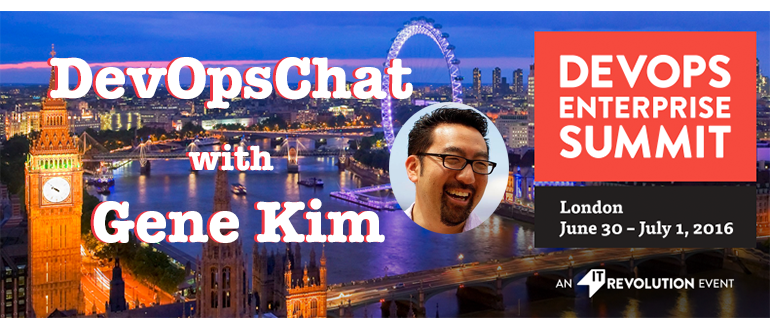
    devopsy.kinsta.cloud will be live from IBM’s InterConnect conference in Las Vegas all next week. You can expect a pretty steady stream of updates in all forms of media. We will be posting articles, live blogging, tweeting, podcasting and even broadcasting video throughout the week. So if you can’t make it out to Vegas, you can follow along here on devopsy.kinsta.cloud

    Whether you are going to Vegas or following along from home, I wanted to give you my picks for the top DevOps related content at InterConnect next week. Here are my top picks:

    1. Well I would be remiss if I didn’t start-off with my own panel which I am moderating. I am joined by Michael Azoff from Ovum, Dan Berg of IBM, Raghunath Ragman of Kaiser Permanente and Gene Kim. The topic is what will DevOps look like in 3-5 years. It should be a great discussion.
    2. Right before my panel is another great panel on DevOps and multi-speed IT. That panel features my friend Carme DeArdo of Nationwide, Hayden Lindsey and Sanjeev Sharma of IBM, Brad Schick of Skytap and Tapabrata Pal of Capital One. That is an all star cast and it should be a great discussion.
    3. Both of the above panels are on Wednesday, the keynote on Wednesday morning looks like another great one. It features IBM VPs Angel Diaz and David Linquist, Gene Kim, Tapabrata Pal of Capital One, Sam Ramji of the Cloud Foundry Foundation and John LeFreniere of Hertz. The topic is Innovate Like a Startup and Scale for the Enterprise.
    4. Talking about innovation like a startup and scaling like an enterprise, a different kind of session is the workshop that Sanjeev Sharma and Mustafa Kapadia, two of my friends at IBM are putting on. I have seen these two conduct this workshop before and it really is a great experience to help in your DevOps journey.
    5. Bluemix Garage Method on the Expo floor. There is a large DevOps Zone on the expo floor and there is also a full set up with the Bluemix Garage Method. We have featured the Bluemix Garage method in a few articles before. If you are not familiar with it you should check it out as it really represents lessons learned on IBM’s own DevOps journey.

    Well those are my top 5 but it is hard to pick from over 200 DevOps related sessions. There are 3 and half days chocked full of learning here, so this barely scratches the surface.  Not to mention an Elton John and/or Pitbull concert Wednesday night thrown in.

    If you want to see more can’t miss DevOps activities at InterConnect below is a YouTube that has all of the above and more. If you are going to InterConnect look for us and say hi. If not you can read, hear and see all about it right here.

  • DOES 15 videos – Adrian Cockcroft

    DOES 15 videos – Adrian Cockcroft

    At this years DevOps Enterprise Summit we were very happy to partner with Gene Kim’s IT Revolution and Electric Cloud to conduct on site interviews with just about all of the speakers from this years conference, as well as many other attendees. All in all devopsy.kinsta.cloud conducted something like 86 video interviews over the 3 days of the Summit.

    Over the coming weeks we will be highlighting some of the best of the best here for you. We will present them in different formats.Some will have commentary around their sessions, others will feature background info on the topic and speaker and finally we will have updated info for some of the others.

    In that vein I wanted to lead off the series with this interview of none other than Adrian Cockcroft of Battery Ventures and formerly Netflix. My conversation with Adrian touches on really just three questions:

    1. What was his presentation about: Systems integration or systems thinking. It offered an inside look at the Netflix culture and talent density.
    2. what did he think of DOES 2015 – Adrian is on the program committee though by his own admission he was a bit pre-occupied on other business this year to help too much. But like many who attended Adrian is was really impressed at how deep the penetration into different verticals were.
    3. What does he see in the next 3-5 years for DevOps? Adrian says that companies that don’t adopt DevOps ways run the risk of disappearing.

    if the short 7 minute interview above wasn’t enough, here is Adrian’s complete session at DOES 15 (warning it is 31 minutes long)


  • Happy Birthday devopsy.kinsta.cloud and what a year it’s been

    Happy Birthday devopsy.kinsta.cloud and what a year it’s been

    They say it’s your birthday
    We’re gonna have a good time,
    I’m glad it’s your birthday
    Happy birthday to you

    Wow, a whole year. To paraphrase the Grateful Dead, what a strange trip it’s been. We launched devopsy.kinsta.cloud a year ago today with perhaps the naive notion that DevOps was going to really change the way organizations do IT and business. That it was almost inevitable that DevOps was going to move beyond the realm of early adopters and visionaries, beyond startups and Unicorns and see adoption by enterprises and businesses of all sizes and shapes. You know what? We were right!

    DevOps has skyrocketed onto the mainstream IT consciousness and we were lucky enough to have a first row seat here at devopsy.kinsta.cloud. We are even proud of the fact that maybe we even played a small part in this adventure.

    But let’s be real. It hasn’t been all sprinkles and smiles. We have learned a lot of lessons along the year and usually the hard way. But sometimes the hard way is the best way to learn them. We knew that our audience was going to be a technical group. They would want to hear about and from people who had problems and issues similar to their own and how others solved or addressed the issues. We knew that they liked to find out about different tools that can help you keep the IT machine humming along.

    We defined our mission as pitching a big tent for DevOps. I said it in the very first post one year ago today. To me personally pitching that big tent meant that we weren’t just about the existing DevOps community, many of which were early adopters, thought leaders and visionaries in the space. In my mind this group represented only about 15% at most of the eventual DevOps community. I realized that though some people were talking about and instituting DevOps principles for some years already, the majority of our audience was going to be new to DevOps. I wanted devopsy.kinsta.cloud to have a place for everyone interested in DevOps.

    That right there has also been the source of some of our biggest mistakes and angst over the year. We definitely took some time finding our legs under us. Finding people with the credibility that others would respect, striking the right tone, fine tuning the mix of articles and topics. At each step along the way we made some missteps. Many in the community didn’t mince words in pointing out what they didn’t like. Others remained silent and just ignored us. We took our lumps for sure, but we just kept putting one foot in front of the other, putting out new fresh content every day.

    Many times readers or just people piling on via Twitter took us to task about what people wrote in their articles. We had and still have no problem with readers disagreeing with what an author writes here on devopsy.kinsta.cloud. It is healthy to have debate. But we were surprised that people would think that we wrote the particular post or article. Or that is what we espoused. Just not the case. We don’t agree with what everyone writes here. However we think people have the right to write what they believe in. We think giving people a place to write means not censoring or telling them what to write.

    Finally we started catching stride. Since the summer months our entire business has been on a rocket like trajectory. Here are some salient metrics:

    1. We are on track for a 100k view month for March. This represents a 100% increase over just November 2014.
    2. Our twitter, facebook, Google +, Linkedin following has grown exponentially
    3. We have published over 630 articles in the past year, by well over 125 different authors!
    4. We have produced or been media sponsor for 10+ events (with many more coming this year)
    5. We have produced 8 webinars
    6. A DevOps salary survey
    7. Fulfilled our goal of becoming the single largest collection of original DevOps related content on the Internet.
    8. We published over 50 newsletters and now offer several options on how you want to receive your devopsy.kinsta.cloud news.

    At a time when media companies like GigaOm are going under. When other media outlets are laying off paid writers, relying on unpaid bloggers, devopsy.kinsta.cloud is adding to our featured writers. At the same time continuing to publish more fresh, original DevOps content than anyone. Other sites have taken to syndicating blog posts from others, republishing stories from elsewhere. At devopsy.kinsta.cloud you can be sure that when we publish a story it is the first time that content has appeared on the Internet.

    We have spent a lot of time thinking and planning for the coming year. We think that 2015 and 2016 will be big years for DevOps. We want to make sure we do our part and continue our growth. Look for many new features and new takes on distributing DevOps content and engaging the community this year.

    If you look in our about section today you will see a near final draft of our editorial calendar. Our new media kits is also almost ready. You can see a near final draft of that in our sponsor page. Yes, 2015 promises to be even better than 2014. I am sure there will be some missteps this year as well. Hopefully we have learned from our past and there will be less.

    Most of all on behalf of everyone associated with devopsy.kinsta.cloud, I want to thank each and every one of you reading this article for your support this year. Without your support, none of the amazing things that has happened so far would be possible.

    So happy birthday devopsy.kinsta.cloud. Here is to many more. Also did I mention the first 50 people who tweet with #happybirthdaydevopsdotcom will receive a special edition t-shirt. Thanks again!

  • Live Blogging IBM InterConnect 2015

    Live Blogging IBM InterConnect 2015

  • Security and DevOps showdown

    Security and DevOps showdown

    caution

    George Hulme’s article on proceeding with caution on DevOps implementation offers some advice from a few well known security experts. Article here


    vs.

    helpmeobiwankenobi Alan Shimel says today’s speed of business isn’t compatible with :go slow”. Security people have to understand that DevOps is our last best hope. But in order to have DevOps help us to security nirvana we need to change how we interact with the rest of our IT teams. Article here