Tag: AIOps

  • AIOps Builds Organizational Efficiency, Survey Finds

    AIOps Builds Organizational Efficiency, Survey Finds

    Enterprises entered 2020 with big plans. Post-pandemic, AIOps could help them achieve those goals, according to a new research survey from Digitate and CorporateLeader.

    Enterprises entered 2020 with the best-laid plans; many had efforts lined up to expand their use of cloud services and continue their steady efforts to digitally transform their businesses. Then the pandemic happened, and business and IT teams found themselves scattered and with a new playbook: make the organization as effective as it can be while working remotely.

    This sudden shift to remote work exacerbated existing challenges within organizations, from managing hybrid environments, personnel management challenges and teams finding themselves struggling to adjust. Meanwhile, enterprises still had to focus on staying ahead of their competitors technologically. All of these challenges meant there was no room for wasted or time-consuming efforts to manage the underlying business-technology systems.

    To help increase efficiencies, some contend that the answer is artificial intelligence for IT operations, or AIOps. Proponents of AIOps say that AI is needed to augment human decision-making today because of the complexity of modern enterprise environments. Today’s environments often find their operational data spread across on-premises and multiple cloud systems. The result is difficulty in managing infrastructure issues as they arise, and the considerable time it takes to identify and fix IT issues.

    According to a survey of leading European IT analysts and advisories, conducted in fall 2020 by operations automation software provider Digitate and executive network forum CorporateLeaders, the drudgery of managing routine tasks was the most commonly cited reason for turning to AIOps, which was followed by “no proactive capability of detection and correction of system issues” at 64% and “no flexibility to scale with business needs,” also cited by 64% of respondents.

    When respondents were asked to identify the key benefits of AIOps, they highlighted common strategic and operational issues that hinder performance. According to respondents, these include the removal of manual processes (91%), improvements in agility and reliability (82%) and reach predictability (73%). More swift problem resolution also was cited by 73% of respondents.

    In a case study shared within the CorporateLeaders report, Marion Fokkinga, technology advancement manager at Netherlands-based semiconductor maker NXP explained that NXP’s move to AIOps was driven by the company’s swift expansion. “Since 2015, we have been busy with multiple merger and acquisition projects,” Fokkinga explained. “As a result of this, there was less time for innovation and transformation in IT and in the business.”

    The company set out to automate routine operations tasks with AIOps so that their resources could be freed to focus on higher-value tasks. According to Fokkinga, AIOps enables tasks, such as report generation, that previously consumed half a workday to be completed in several minutes. Saving time is the most significant result, said Fokkinga. With AIOps, NXP reports a 97% improvement in incident response time and a 95% reduction of manual effort in some of its supply chain planning work.

    Of course, in the current treacherous business environment, there’s a lot more at stake than simply building enterprise operational efficiencies. Over time, it may come down to the very success of the organization. According to the survey, a full 82% of respondents said that AIOps is necessary to the future growth and transformation of their business. “Respondents who went on to give qualitative answers later in the survey explained that the complexity of hybrid and multi-cloud infrastructures, increasing transactional volumes and the criticality of online business systems make it impossible for traditional IT systems to manage every application and infrastructure without recourse to automation. It was highlighted that the overwhelming amount of data in today’s Operations are simply beyond human analysis capacity,” the report stated.

    One respondent said that, through AI, the performance of some tasks and decisions were improved, as routine tasks were eliminated. That has to be welcome news to enterprises struggling to remain competitive while simultaneously striving to remain productive and agile during a global pandemic.

  • Accelerating AIOps with the Mainframe

    Accelerating AIOps with the Mainframe

    AIOps uses artificial intelligence by combining big data, analytics and machine learning to enhance IT operations. To successfully adopt and scale AIOps, it is critical for enterprises to add the mainframe to the equation. Adopting AIOps requires a holistic approach focused on business processes and workflows. The resiliency of a workflow depends on the health of every link in the chain. In order to be successful, you need visibility and insight throughout the entirety of the workflow.

    In this interview, Maneesh Goyal, AIOps Offering Management program director at IBM, explains how AIOps is changing IT operations and why the mainframe is so critical to the success of AIOps adoption.

    Maneesh is a DevOps expert with over 24 years of experience leading operations and management across hybrid and public cloud environments, including IBM Z. He is also one of the distinguished speakers presenting at Open Mainframe Virtual Summit, along with Mürsel Taşgın, mainframe systems manager at Credit Bureau of Turkey. During their session, Maneesh and Mürsel will discuss how organizations such as Credit Bureau of Turkey are accelerating AIOps by leveraging the wealth of operational data on IBM Z to make quick and accurate decisions in order to improve resiliency.

    Learn more about IBM’s AIOps framework and assessment to determine the next step for your business by attending Maneesh and Mürsel’s session at Open Mainframe Virtual Summit on Feb. 11. To check out the full agenda or to register for free, visit the Open Mainframe website.

  • Operations Model: DevOps, NoOps, AIOps or None of the Above Ops?

    Operations Model: DevOps, NoOps, AIOps or None of the Above Ops?

    Within an organization, an operations model must be fit-for-purpose and be able to adapt as business needs change. At the same time, changing technology necessitates an advancement in how an organization operates. Small and medium-sized enterprises are faced with the difficult choice of how much to invest in operations and which approach to choose. In light of the numerous possibilities, companies need to identify the right upgrades for their needs. For instance, should a company now using a traditional operations model invest significantly to reach DevOps? Or would AIOps better fit customers’ needs? Is NoOps an option?

    There is no “correct” answer. Each option comes with pros and cons and important budget considerations. That is why every business needs to evaluate the appropriate system for its products and its customers with three concepts in mind: cost, goals and experimentation.

    Operations Models

    Traditional IT operations (ITOps) is the process of designing, developing, deploying and maintaining the infrastructure and software components of a specific product or application. It also ensures the customer experience is delivered through traditional means of support such as tickets and escalated paths for resolutions.

    DevOps is a process for accelerating the delivery of features to the application or product infrastructure in a consistent model with less human intervention, while also providing a better quality product through automation in the software development life cycle.

    An AIOps process introduces data science into the operating model by learning the behavior of the systems, scaling according to the needs of a platform (both infrastructure and customer usage of the platform). It expands the horizon of DevOps through the introduction of machine learning, focusing on data generated from the hardware and software systems, and allows organizations to grow organically based on demand.

    NoOps, although the name suggests otherwise, is an advanced approach to managing IT operations through the mindset that everything is derived as development. This model is best applied with startups and companies with high technological maturity.

    Typically, these companies have advanced skill levels to deliver the best experience by adapting to the new industry trends of both software and hardware maintenance practices. NoOps is at the opposite end of the spectrum from traditional operations, and it’s largely a theoretical concept at this point.

    NoOps is a fully automated, cloud-based approach that eliminates the operations team, aside from an integrated team focused on life cycle. The self-managed system requires resiliency and a high level of maturity with fail points that have already been addressed. NoOps, or high maturity structures, will also provide quick learning on drawbacks, customer and product needs. However, moving toward a self-maintained system requires upkeep for advances and innovation.

    Invest in an Operations Model to Reach Higher Levels of Maturity

    The first factor to consider in evaluating an operational approach is cost. Each level of IT maturation is gradual, incremental and expensive. Costs vary depending on the size of the company and the type and number of products. A small company that seeks to move from a level 2 to 4 maturity would need to make a significant financial investment.

    Some questions to consider when looking at operations model upgrades include:

    • Does this make sense for the business?
    • Will the investment allow for scaling?
    • Will it increase customer loyalty and trust in the brand?

    Next, it’s important to consider overarching goals and brand identity. The appropriate level of maturity might depend on the company’s value proposition. If, in the company’s vision, technology is at the heart of its journey, the company needs to invest, at a minimum, in a DevOps operating model to have the competitive edge to grow the business and meet its needs. If the company’s vision is to retain existing business and gain customers through continued investment in innovation based on the trend analysis of their core business, then AIOps will have the best ROI. If the company’s vision, culture and mission are intertwined with technology, adapting to NoOps is the right move.

    Know the Product, Customer and When to Halt

    Still, it’s important not to overreach with an operations model that might not fit the customer. To make a sound decision for the organization, it is important to understand the model, the product, customer base and when to halt an operational model and invest in a new one. The leadership team needs to ask how adaptable its end users are before implementing changes. Take, for instance, the poor consumer response to replacing live customer service representatives with automated features. Some end users were not prepared to adapt to the massive change in the platform or service offerings this move entailed.

    Product-driven businesses often don’t see investing in new operations models as worthwhile. This mindset can result in continual churn that creates a backlog and increased operating costs for maintaining systems and services. Another important consideration in deciding which operating model meets the company’s needs comes through experimentation. That is because finding the right operating model for an enterprise can’t be done with a cookie-cutter approach. The point is to maintain the existing quality and productivity while investing in outcomes that will garner more trust and confidence in the company. If you do this right, the end user will appreciate the changes, and the company will outperform the competition.

    Allow for Operations Failure

    Enterprises should expect failures during experimentation with different models and plan to pressure-test an advancing model for the cracks that will emerge. It is important to invest in failure to understand why and how the model did not perform to expectations. Those failures provide valuable insight and important data, result in significant learning about products and customers and help you know what to improve or modify going forward.

    An operations model serves as the backbone for any business that wants to grow. Smart operations investments will ensure adaptability, competitive advantage and customer loyalty. But there’s no one-size-fits-all, easy-to-follow recipe for each enterprise. Whether the investment results in AIOps, NoOps, DevOps or traditional operations is unique to each organization and needs to be calculated with the brand, customer and end goal in mind.

  • OpsRamp Extends AIOps Reach to the Network

    OpsRamp Extends AIOps Reach to the Network

    OpsRamp today announced its AI-enabled IT operations management (AIOps) platform now has the ability to analyze network flows and communications traffic.

    Ciaran Byrne, vice president of product management for OpsRamp, said the new analytics capabilities will make it possible for IT teams to correlate the IT events OpsRamp already tracks on servers and storage systems against multiple types of traffic moving across a corporate network.

    OpsRamp is based on a software-as-a-service (SaaS) platform that simplifies IT adoption of AIOps without having to build and maintain their own management platform or install an AIOps platform on their own infrastructure.

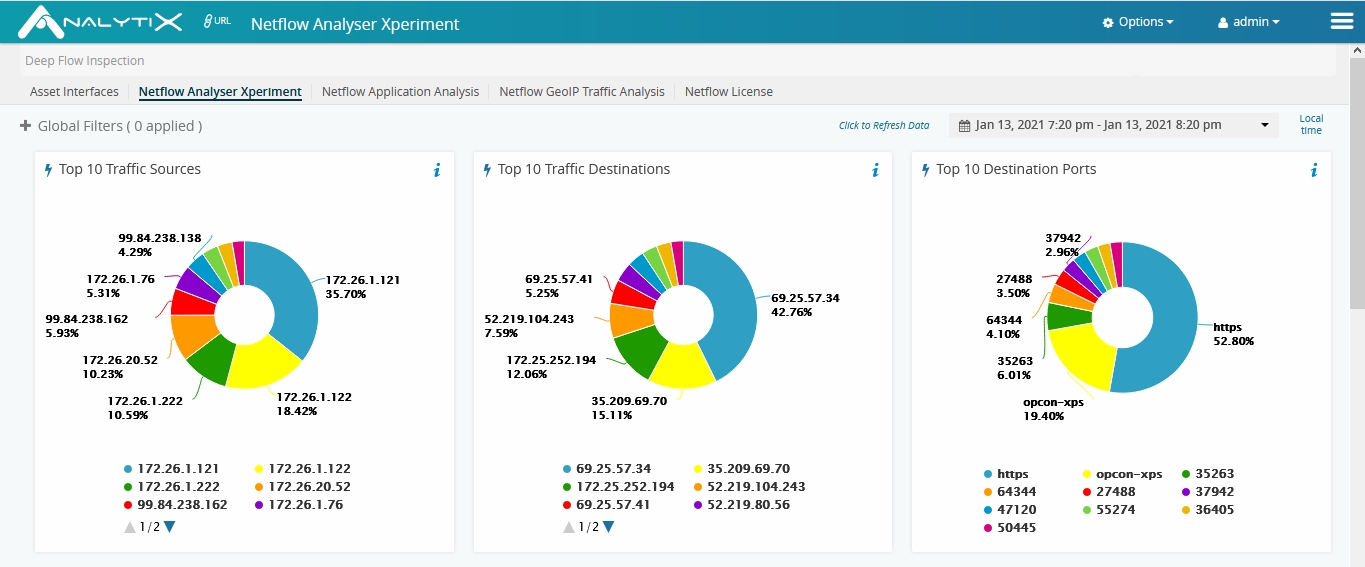
    Rather than acquiring a separate platform to analyze network traffic, OpsRamp is adding an OpsRamp NetFlow monitoring module, for analyzing packets using the NetFlow protocol developed by Cisco, and an OpsRamp Unified Communications monitoring module, for analyzing voice and collaboration data.

    OpsRamp NetFlow provides real-time diagnosis of network latency across wide area networks (WANs). It generates alerts based on network traffic utilization, and delivers insights into network utilization patterns by identifying source, destination, protocols and applications that impact services.

    OpsRamp Unified Communications works in a similar way, surfacing alerts and insights about traffic patterns impacting, for example, Zoom or Microsoft Teams.

    With more employees working remotely, the need to analyze network traffic has become more acute, said Byrne. Network performance degradations can have a major impact on overall application experience, Byrne said.

    Communications and collaboration platforms like Microsoft Teams pose particularly stubborn challenges, because they offer IT teams little to no visibility into that traffic, Byrne said.

    It’s unclear whether – and to what degree – networking and other IT operations will converge, but as AIOps platforms become more accessible, the ability to correlate IT events across multiple infrastructure classes as they transpire will steadily improve. While that may not lead to IT role consolidation anytime soon, it should enhance the level of collaboration teams can achieve.

    In the meantime, AI is poised to have a profound impact on how IT environments are managed. The amount of time spent in “war rooms” performing root cause analysis can be sharply reduced through the use of machine learning. As algorithms surface insights, IT teams will be better able to proactively address issues before they have a major impact on application performance and user experience. It may take time for IT teams to fully trust AIOps platforms, but in the near future, IT professionals will avoid working for organizations that don’t have such platforms in place. For IT professionals, keeping complex application environments running without AIOps platforms will be nearly impossible.

    Of course, transitioning to any type of new IT management platform is no small undertaking. However, as AIOps platforms continue to evolve, the overall cost of managing IT should also decline as leadership justifies the costs of these tools.

  • Measuring the Business Benefits of AIOps

    Measuring the Business Benefits of AIOps

    Staffing levels within IT operations (ITOps) departments are flat or declining, enterprise IT environments get more complex by the day and the transition to the cloud is accelerating. Meanwhile, the volume of data generated by monitoring and alerting systems is skyrocketing, and Ops teams are under pressure to respond to incidents more quickly.

    Faced with these challenges, companies are increasingly turning to AIOps – the use of machine learning and artificial intelligence to analyze large volumes of IT operations data – to help automate and optimize IT operations. But before investing in a new technology, leaders want assurances that it will bring value to end users, customers and the business at large.

    Leaders looking to measure the benefits of AIOps and build KPIs for both IT and business audiences should focus on key factors such as uptime, incident response and remediation time and predictive maintenance to prevent outages that could affect employees and customers.

    AIOps KPIs include employee productivity, customer satisfaction and web site metrics such as conversion rate or lead generation. AIOps can help companies cut IT operations costs through automation and rapid analysis; it can support revenue growth by enabling business processes to run smoothly and deliver excellent user experiences.

    Specific IT and Business Benefits

    AIOps can digest operational data and spit out actionable recommendations for keeping important systems running at peak efficiency. These are the most-cited benefits of the technology:

    • Alert management: In most cases, the first problem AIOps systems will address is reducing the volume of noise: the torrent of alerts that inundate IT operations. AIOps uses clustering and pattern matching algorithms to eliminate as much as 90% of false alarms and other redundant or irrelevant alerts, making it far easier for staffers to focus on what really matters.
    • Incident prioritization and routing: AIOps systems can learn, over time, which types of alerts should be sent to which teams, reducing redundancy and confusion when, say, networking and database teams both get the same alert related to an incident.
    • Event correlation: AIOps can correlate alerts and event data to identify the root cause of an outage or application slowdown so that IT teams can respond faster.
    • Advanced anomaly detection: AIOps systems can identify anomalies to proactively detect abnormal conditions and relate them to business impact. For example, AIOps can predict if a system will run out of disk space based on projected growth or seasonal patterns, even if the growth is non-linear. Or, if there’s a sudden increase in the number of failed server requests, the technology can determine whether the server in question is handling a mission critical task or simply performing routine backups.
    • Automation: AIOps can be used to handle routine tasks such as backups, server restarts and other low-risk maintenance activities which otherwise involve heavy manual effort.
    • Predictive analytics: A more advanced use case could involve predicting events before they happen – such as detecting when network bandwidth is reaching its limit or storage capacity is nearing threshold.

    Seven KPIs for AIOps

    These common KPIs can measure the impact of AIOps on business processes:

    1. Mean time to detect (MTTD): This KPI refers to how quickly it takes for an issue to be identified. AIOps can help companies drive down MTTD through the use of machine learning to detect patterns, block out noise and identify outages. Amid an avalanche of alerts, ITOps can better understand the importance and scope of an issue, which leads to faster identification of an incident, reduced downtime and better performance of business processes.
    2. Mean time to acknowledge (MTTA): Once an issue has been detected, IT teams need to acknowledge the issue and determine who will address it. AIOps can use machine learning to automate that decision-making process and quickly make sure that the right teams are working on the problem.
    3. Mean time to restore/resolve (MTTR): When a key business process or application goes down, speedy restoration of service is key. ITOps plays an important role in using machine learning to understand if the issue has been seen previously and, based on past experiences, to recommend the most effective way to get the service back up and running.
    4. Service Availability: Often expressed in terms of percentage of uptime over a period of time or outage minutes per period of time, AIOps can help boost service availability through the application of predictive maintenance.
    5. Percentage of automated versus manual resolution: Increasingly, organizations are leveraging intelligent automation to resolve issues without manual intervention. Machine learning systems can be trained to identify patterns, apply solutions, such as previous scripts that were executed to remedy a problem, and take the place of a human operator.
    6. User Reported versus Monitoring Detected: IT operations should be able to detect and remediate a problem before the end user is even aware of it. For example, if application performance or web site performance is slowing down, ITOps should get an alert when the issue can be measured in milliseconds; they can then fix the issue before the slowdown worsens and affects users. AIOps enables the use of dynamic thresholds to ensure that alerts are generated automatically and routed to the correct team for investigation, or automatically remediated when policies dictate.
    7. Time savings and associated cost savings: The use of AIOps, whether it’s to perform automation or more quickly identify and resolve issues, will result in both operator time savings and business time-to-value improvements. These have a direct impact on the bottom line.

    These seven AIOps KPIs can be correlated to business KPIs around user experience, application performance, customer satisfaction, improved e-commerce sales, employee productivity and increased revenue. ITOps teams need the ability to quickly connect the dots between infrastructure and business metrics so that IT is prioritizing spend and effort on real business needs. In the future, as machine learning matures, AIOps tools may even recommend ways to improve business outcomes or provide insights as to why digital programs did or did not succeed.

  • AIOps in Service Management: Removing the Noise

    AIOps in Service Management: Removing the Noise

    AIOps (artificial intelligence for IT ops) refers to the automation of IT operations through AI and machine learning. With every organization working rapidly toward the ultimate goal of digital transformation, there is a natural place for AIOps within service management as a means to automate processes and automatically spot and react to issues in real-time. But what exactly is AIOps, and how does it remove the noise from service management?

    AIOps: Taming the Growing Complexity of IT

    Digital transformation has resulted in IT infrastructure complexity growing at an astronomical rate. The resultant increases in infrastructure data and alarms at the service desk far exceed the capacity of any human to meaningfully read, analyze and respond to them. The infrastructure itself is also constantly morphing and changing, yet service desks are still expected to resolve requests, incidents, and performance issues in seconds – an impossible task, given the volume of data.

    AIOps provides the necessary firepower to address this exponential rise in data, using artificial intelligence to continually monitor and analyze changes in the IT infrastructure in real-time. By combining these insights with service desk automation, organizations can benefit from a closed loop of discovery, analysis, detection, prediction and automation which, combined, bring us closer to the enviable goal of self-healing IT.

    Two Phases of AIOps Implementation

    The implementation of AIOps falls into two phases: discovery and analysis.

    Discovery

    The discovery phase involves uncovering all of the compute, network and storage entities across your ever-changing IT environment and ensuring your configuration management database (CMDB) is always kept up to date. But just knowing what is on your network is only the first step – you then need to determine how each asset relates to, or depends on, each other. This dependency mapping stage requires tracking of dynamic, multilayered relationships between applications and hybrid infrastructure, and creating rich, visual topology maps so that you can immediately see where dependencies lie within the network, and, therefore, where potential bottlenecks or risks reside.

    Analysis

    With your CMDB now kept up to date with automated discovery and dependency mapping, you now need to make sense of this data. After all, data is useless if you can’t use it to make informed decisions. By applying machine learning algorithms to analyze this data, AIOps can identify patterns, spot anomalies and predict future outages.

    Why AIOps in Service Management?

    AIOps has many benefits within the larger service management context. AIOps can:

    1. Support, not hinder, rapid digital transformation – with automatic discovery and dependency mapping, AIOps allow the business to continue to invest in new IT services without upsetting those in operations that need to keep the lights on.
    2. Reduce downtime – with automatic reporting of anomalies, operations can address potential issues before they result in a service outage.
    3. Automatically update the CMDB – An accurate CMDB is the foundation of successful IT operations. If your CMDB is out of date, then you are left trying to solve problems blindfolded. Just make sure your AIOps supports hybrid environments, so it can discover all IT assets from physical to virtual infrastructure, on-premises to public cloud, etc.
    4. Remove noise from the service desk – AIOps helps the service desk to overcome alarm noise and determine which events need their attention by eliminating false positives, performing advanced event correlation, reviewing time-series event playbacks and determining probable root cause.
    5. Actualize self-healing IT – no longer a myth or an IT operator’s dream, self-healing IT can be realized through AIOps. By automatically triggering actions based on the findings of the machine learning engine, AIOps can quickly fix issues or prevent them from happening, whether it’s a network link that’s gone down, an over-utilized disk or a service that simply requires a restart.

    Operations is not known for being a calm and relaxing environment in which to work. When your role is primarily a reactive one, there is rarely time to be proactive. You are bombarded with alarm bells and error reports all day long. How can you tell the difference between a false alarm, an isolated incident or the early indicators of a bigger problem? AIOps, leveraging machine learning, has finally provided IT operations with the tools needed to make sense of this growing barrage of data.

  • Broadcom Extends AIOps Platform Reach

    Broadcom Extends AIOps Platform Reach

    Broadcom today extended the reach of its artificial intelligence for IT operations (AIOps) platform to provide full-stack observability via integrations with 15 third-party data sources including Dynatrace, Datadog, AppDynamics, PagerDuty, Splunk, ServiceNow, SolarWinds and Microsoft Systems Center Operations Manager.

    In addition, Version 2.0 of AIOps from Broadcom now captures data at the chip level to enable IT teams to triage network congestion and packet loss in real-time.

    The latest release also adds visualizations and dashboards for different IT personas along with a recommendation engine that enables IT teams to automate tasks once the root cause of an issue is surfaced by the platform.

    Sreenivasan Rajagopal, director of products and strategy for Broadcom Enterprise Software, said the new approach allows IT teams to decide what level of automation to apply based on the complexity of the problem and potential risk to the business.

    Collectively, these capabilities are intended to make it easier to align people and processes with business outcomes by creating a continuous feedback loop, he said, noting it takes about 90 days for the machine learning algorithm embedded within AIOps from Broadcom to start delivering on that promise.

    Other capabilities included as part of the latest release are additional machine learning topology and correlation capabilities, causal graphs and intelligent situational analysis for automatic root cause analysis, noise mitigation, alarm clustering and anomaly detection. Broadcom has also added a library of machine learning algorithms, natural language processing and an ontological graphical topology to enable situational correlation.

    Finally, Broadcom has added capacity analytics tools that can be applied to specific groups of services that IT teams are collectively managing and maintaining.

    Rajagopal said it’s now only a matter of time before AI is applied more broadly to enable IT teams to become more agile. AIOps won’t replace IT staff as much as it will simply augment the capabilities of the IT staff, he noted.

    AIOps also will prove vital as older members of the IT team retire, Rajagopal added. Newer members of the IT staff will be able to become productive much faster if they can rely on insights and recommendations surfaced by an AIOps platform.

    It’s not clear to what degree AIOps platforms will exist as a separate entity apart from traditional IT services management (ITSM) platforms that are also being infused with machine learning platforms. Broadcom is making a case for a distinct new IT operations platform that relies on data to align people, processes and platforms. The single biggest obstacle in terms of achieving IT agility is not the tools as much as it is people in different roles who can’t empathize with one another because there is no common source of data that every stakeholder can access, said Rajagopal.

    Regardless of the AIOps path chosen, it’s clear that many of the existing tools IT teams rely on to manage IT environments are slowly becoming obsolete. In fact, there may come a time soon when IT teams won’t even consider an IT management platform that doesn’t have some level of AI capability.

  • Building Your Own AIOps Platform Is a Bad Idea

    Building Your Own AIOps Platform Is a Bad Idea

    It takes considerable expertise to not only build, integrate and maintain an AIOps platform

    In the wake of the economic downturn brought on by the COVID-19 pandemic, investments in digital business transformation have accelerated. The applications that drive those processes are not only highly distributed, but they also operate at a level of scale that no IT team can manage using legacy approaches to managing IT. It can take weeks to discover the root cause of any issue.

    Enter AIOps. Machine learning algorithms make it possible to reduce the time it takes to resolve any issue and enable IT teams to continuously optimize IT environments at any scale. Many aspects of AIOps, however, are still largely unexplored. Rather than opting for proven platforms, some IT teams are building custom solutions in-house.

    I have experienced firsthand several large enterprises that have embarked on this risky journey, including one Fortune 500 company that asked a partner to help develop a solution and ultimately deployed a commercial product. Enterprise IT teams go down this road to solve a specific tactical problem, such as alert noise reduction. In many cases, all the time and effort put into a do-it-yourself (DIY) project simply winds up being wasted.

    Why DIY Platforms Usually Fail

    Given the prevalence of open source AI tools and frameworks such as TensorFlow, Theano or the Microsoft Cognitive Toolkit (CNTK), it can be tempting to build your own custom AIOps platform. It takes considerable expertise, however, to not only build an AIOps platform but also integrate it into an enterprise and maintain it.

    Here are the leading reasons why in-house developed AI projects are risky:

    • You’ll need a properly constructed data lake: AIOps platforms require access to data residing in multiple technology silos in real-time. IT teams that build their own AIOps platforms need to make sure they are gathering all the right log data, metrics and traces alongside data collected from IT service and incident management platforms. These comprehensive data sets are needed to train whatever machine learning framework is in place, which is often selected at random. Invariably, that means building or buying a costly big data platform to create a data lake to store all that data. A poorly constructed AIOps platform will be worse than the proverbial disease it’s meant to cure because the insights don’t accurately reflect what’s actually occurring in the IT environment. Do you have the funds for this and experienced data science experts onboard to get this right?
    • Designing AI-enhanced workflows is unlike other workflows: Getting the data is just the beginning. Determining how the system behaves and affects existing workflows is the next step. IT teams must decide to what degree they merely want the AIOps platform to passively surface recommendations based on what’s observed versus automatically resolving issues based on defined parameters.
    • Deployment is complex: After developing a few AIOps algorithms to produce meaningful results, the next step is to determine how to deploy it in a resilient and performant architecture. What other systems does it need to integrate with and how will results be monitored and viewed?
    • Monitoring user impact is critical: How will end users interact with the algorithm and what is the ideal UI/UX and workflow? How will feedback be provided by end users for improvement and adoption success?
    • AIOps support and maintenance is not a project, but a team. Ultimately, an internal IT team would need to build the equivalent of a product which needs ongoing maintenance and support. The total cost of the custom platform starts to rise as the bulk of the IT team could wind up spending most of their time managing the AIOps platform instead of making continual improvements. Even if the IT team has the expertise required to build an AIOps platform, there’s no guarantee those individuals will always be available to maintain and update it. Very few IT professionals spend their entire career at one organization.
    • Keeping pace with marketplace innovation: Finally, AIOps as a field is still relatively nascent and the startup community has hundreds of millions of dollars in VC backing to support R&D. Advances are being made at a rate most internal IT teams can’t keep up with, let alone evaluate and vet on their own.

    How to Safely Encourage AIOps Exploration

    There’s no substitute for knowing where an organization needs to go and how to get there. A commercial AIOps platform incorporates all the best practices that have been defined by legions of IT experts, along with these benefits:

    • Faster time to value: You can embark on the AIOps journey much sooner. A commercial AIOps platform will begin surfacing insights in a matter of weeks. It will take an internal IT team months to build an equivalent platform with no guarantee of success. Time is better spent on user adoption and adding and refining use cases for business benefit.
    • Seasoned experts: A commercial platform provides immediate access to not only a proven framework but also, AIOps experts who can troubleshoot and optimize issues quickly. There’s almost no AIOps challenge they haven’t seen before.

    How to Measure ROI From AIOps

    Savvy organizations that invest in AIOps are primarily betting on a better way to manage IT that will enable them to accomplish more as a business. The real value proposition of any AIOps platform is that it enables an existing IT team to do more not by just eliminating rote tasks but also making it possible to deploy more applications reliably without adding IT staff. It’s worth remembering that the cost of labor continues to be the single biggest IT expense.

    The return on investment from an AIOps platform can be easily calculated by measuring:

    • The number of incidents resolved in a given period of time.
    • The size of the IT operations/incident management staff before and after an AIOps platform is deployed.

    Arguably, however, those savings pale in comparison to the opportunity costs of using advanced technologies which can increase operational intelligence and deliver new business value in the form of excellent user experiences and high-performing digital services. IT organizations that don’t embrace AIOps will be unable to compete with faster, more nimble rivals that have modernized their IT processes. The easier, more affordable and least risky way to go about this is by deploying a solution already proven and in market.

  • OpsRamp Makes AIOps Platform Simpler to Configure

    OpsRamp Makes AIOps Platform Simpler to Configure

    OpsRamp today took the wraps off an update to its namesake artificial intelligence platform for IT operations (AIOps) that makes it easier for IT organizations to declaratively configure the software-as-a-service (SaaS) platform.

    Ciaran Byrne, vice president of product management for OpsRamp, said the goal is to enable IT teams to embrace AIOps without having to hire a small army of consultants.

    The OpsRamp Fall 2020 Release adds a revamped user interface that provides access to a set of wizards that discover the assets that make up a specific IT environment and subsequently automate the configuration process.

    OpsRamp has also added curated dashboards that enable IT teams to launch queries using the Prometheus Query Language (PromQL), developed for the open source monitoring tool being advanced under the auspices of the Cloud Native Computing Foundation (CNCF).

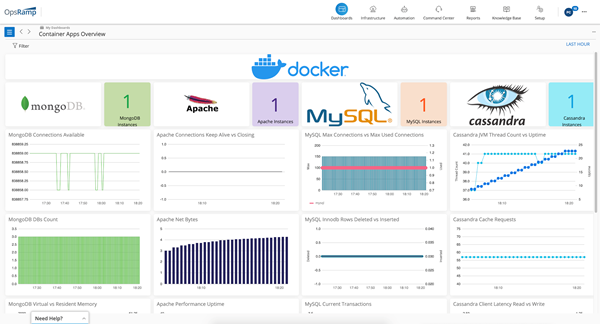
    The latest edition of the AIOps platform also adds monitoring capabilities for containerized workloads and Kubernetes clusters. In addition, IT teams can monitor other cloud services including AWS ECS, Azure Functions, Azure Hyperscale (PostgreSQL) and Azure SQL Managed Instance.

    OpsRamp has also added IT process automation capabilities that can be triggered by alerts, updates to resources or on a recurring schedule. An OpsQ bot now also recommends automation workflows. Alternatively, IT teams can require manager approval before a process is launched.

    In general, Byrne said the goal is to improve the mean time to value for an AIOps platform managed by a team of data scientists who have extensive experience applying machine learning algorithms to IT processes.

    Efforts to automate IT have increased sharply now that most IT staff are working from home to help combat the COVID-19 pandemic. However, few organizations are able to set up and configure an AIOps platform in an on-premises IT environment on their own, especially now that outside consultants are no longer being invited to spend weeks working on projects, Byrne said, noting a SaaS-based approach makes it possible for IT organizations to take advantage of an AIOps platform while continuing to work from home.

    In general, the downturn in the economy has increased interest in AIOps because IT staff ranks are either remaining the same or shrinking even as IT environments continue to become more complex. Longer-term, Byrne said it’s not clear that hiring Level 1 and 2 IT administrators will be sustainable as AIOps platforms continue to automate processes.

    DevOps teams, of course, are especially keen to automate as many IT processes as possible, which is why there is a high correlation between organizations that have embraced DevOps and early adopters of AIOps.

    It may still be a while before AIOps is widely employed, but it’s now only a matter of time before machine learning algorithms are pervasive across IT. The challenge now is figuring out where the handoff between man and machine for managing IT ultimately will lie.

  • Going Through a Cloud Migration? AIOps Can Help

    Going Through a Cloud Migration? AIOps Can Help

    AIOps can help ease many of the challenges associated with cloud migration

    As businesses seek to compete in the digital economy and better engage with customers through new digital experiences, they have become increasingly reliant on cloud as a critical component of their digital transformation strategies. This has never been more true than during the COVID-19 pandemic, when businesses across all industries are aiming to provide the best digital experiences possible in our new, heavily remote world.

    Gartner validates this reliance on cloud in a recently published report, which states that although IT spending is set to decline in 2020 due to the impact of COVID-19, the pandemic’s increase in remote work has set public cloud services to grow 19% this year.

    There’s no doubt that cloud migration can be challenging, but properly preparing and utilizing tools such as AIOps can help initiate this process and can provide ongoing visibility.

    The Ingredient for a Successful Cloud Migration

    AIOps helps identify and resolve issues before they disrupt the end user during a cloud migration, arming technologists with insights and providing visibility within multi-cloud and containerized environments as companies manage their complex platforms.

    A surge of data can be managed in the cloud but can be difficult to manage without having visibility across the platform. AIOps offers an overview and provides updates and optimization suggestions, which helps businesses be competitive and have control.

    The AIOps and Cloud Migration Process

    AIOps exists to help with big IT challenges and there is a suggested path businesses can use pre-, during and post-migration.

    Pre-Migration

    Before the migration begins, you should measure the existing performance of your applications as a baseline. You can then define performance goals and find bottlenecks you should avoid during your cloud migration. You must evaluate the potential impact of your cloud migration on your IT environment, which AIOps can help with. With robust visibility, you can see results on applications that power your business.

    During Migration

    Once you have migrated your workloads to the cloud, you can utilize machine learning and AI to check which resources might be underused. AIOps on the cloud will provide insight on overused resources, so you can identify instances that are best for your company’s needs.

    Post-Migration

    Being able to monitor your services on the cloud and end user performance gives full visibility into what you are getting from your cloud provider. Needs can change over time, so a cloud migration strategy that incorporates AIOps can identify what can be altered. This functionality helps make it clear which applications could benefit from being moved.

    The reliance on cloud support is only increasing, so the sooner you incorporate AIOps into your IT environment, the faster you can have confidence your services will deliver improved performance for the end user. Why not get the most out of your investment in the cloud by using AIOps to support your business for the long term?

    AppDynamics is sponsoring KubeCon + CloudNativeCon 2020 North America, taking place Nov. 17-20. To learn more about how AppDynamics is supporting businesses in their cloud migration journeys, register for our webinar during the show here.