Tag: AIOps

  • Virtual Instruments Changes Name to Virtana to Drive AIOps

    Virtual Instruments Changes Name to Virtana to Drive AIOps

    With the formal launch of a software-as-a-service (SaaS) to monitor cloud platforms and optimize cloud, Virtual Instruments today renamed itself Virtana.

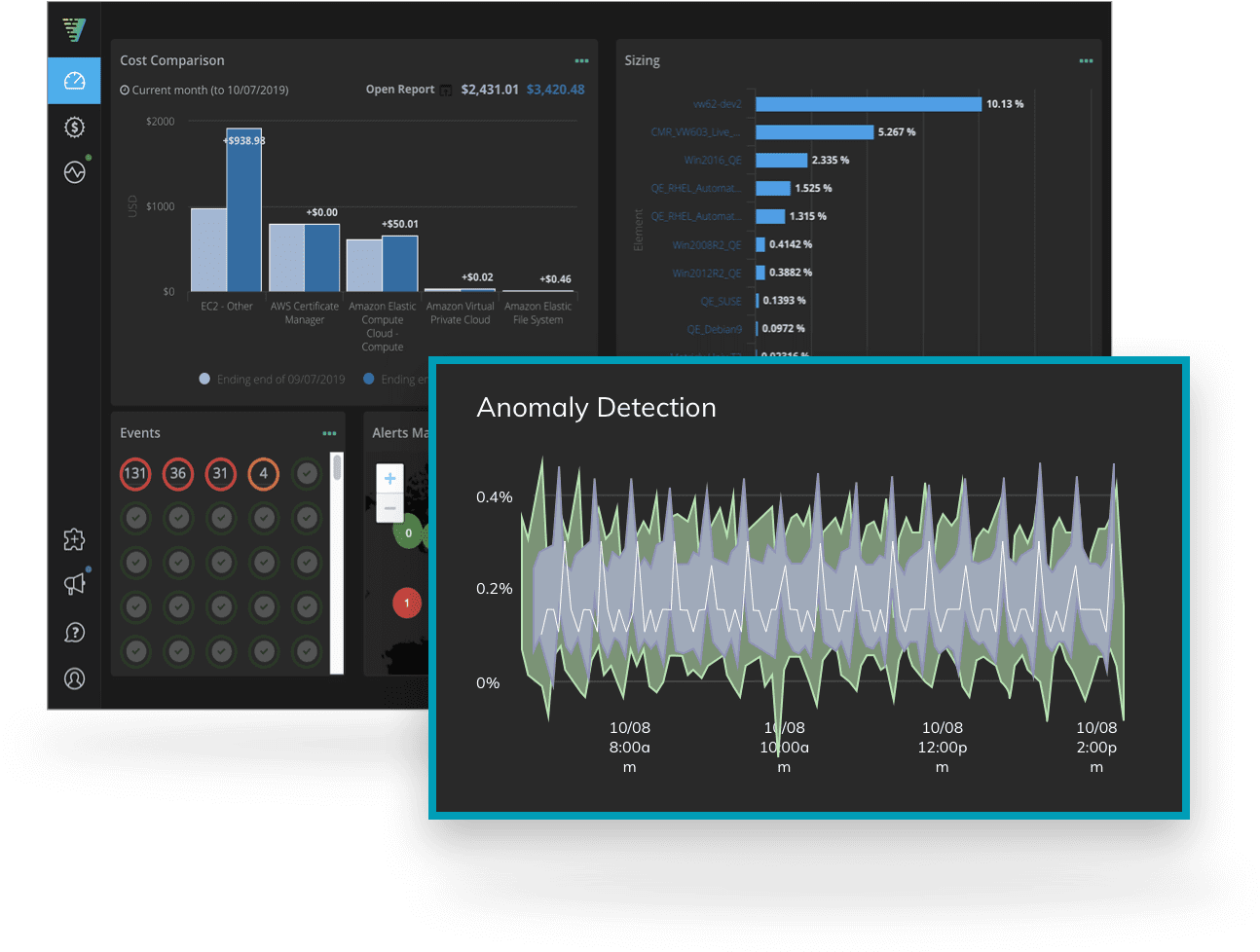
    The company’s CloudWisdom platform is based on technology Virtana gained via the acquisition of Metricly earlier this year. In addition to being integrated with existing on-premises offerings from Virtana, CloudWisdom has been expanded to include a self-service option. Downloadable trial versions are also available.

    Virtana CEO Philippe Vincent said the name change reflects a transformation from being simply a provider of storage I/O performance testing tools to becoming a provider of an IT operations management platform infused with artificial intelligence (AIOps). As part of that effort, the CloudWisdom offering represents the first time Virtana has extended the reach of its offerings beyond on-premises IT environments, he said.

    CloudWisdom will differentiate itself, Vincent said, because it combines cloud monitoring with built-in tools for optimizing cloud costs. Rival offerings require IT organizations to acquire two separate services, he noted. The CloudWisdom platform monitoring capabilities span databases, messaging platforms and containers, as well as cloud infrastructure services from Amazon Web Services (AWS) and Microsoft.

    In general, Vincent said IT organizations are moving away from a reactive approach to managing IT to a more proactive approach that will require increased reliance on automation. As IT environments become more complex, too many IT organizations are trying to compensate by overprovisioning IT infrastructure resources to make sure application performance doesn’t deteriorate or applications crash. That approach not only drives IT costs higher, he said, but it also makes those costs unpredictable.

    To address that issue, Virtana is combining CloudWisdom with an AIOps platform designed to be equally applicable in legacy IT service management (ITSM) and emerging DevOps environments. Organizations that have adopted DevOps will be at the forefront of the transition to AIOps because of the inherent fluidity and velocity of those environments, Vincent noted. Machine learning algorithms coupled with real-time monitoring, big data analytics, workflow engines and automation frameworks will enable IT teams to streamline ITSM and DevOps processes to become more efficient. The opportunity for Virtana is to disrupt a highly fractured monitoring category by leveraging AIOps to unify monitoring at an unprecedented level of scale and scope, he added.

    Virtana is not the only IT management platform provider that has identified the same opportunity; much larger incumbent providers of these platforms and a raft of startups are moving in the same AIOps direction. Vincent said Virtana will differentiate itself by pursuing a more application-centric approach to delivering on the promise of AIOps.

    It’s too early to say to what degree IT operations can be automated using AI. There’s general agreement that AI will play a significant role in automating IT, and the more standardized the IT environment is, the easier it is to accomplish. The challenge is, most IT environments today are still anything but standardized.

    — Mike Vizard

  • What is so Special About AIOps for Mission Critical Workloads?

    What is so Special About AIOps for Mission Critical Workloads?

    As the wave of digitization sweeps more enterprises with each passing day, the threats posed to organizations, particularly IT organizations, have never been more complex and pressing. With cybercrime statistics, including those for more targeted crimes (such as phishing) pointing towards an alarming frequency of attacks, the stakes for securing enterprises have been higher.

    However, many IT organizations have been unable to smoothly transition into pushing the digitization of their organizations forward. This inability to support and drive digital transformation isn’t a result of a lack of effort on behalf of these organizations. Instead, it has everything to do with the unavailability of the proper management tools needed.

    Unfortunately, many IT organizations lack the tactics and tools needed to overlook the smooth shift to digitization on such a grand scale, which often leads to the degradation of critical business applications, along with IT slowdowns and outages. Luckily, however, artificial intelligence for IT operations (AIOps) arrives like a beacon of hope for revolutionizing IT application, along with increasing business agility.

    The Failure of Enterprise in Tackling the Burgeoning Complexity of IT Infrastructure

    A primary reason behind the ever-present issue of IT slowdowns in enterprises and organizations that is frequently overlooked is the fact that the customer-facing side of IT (applications) is growing increasingly complex with each passing day.

    As the increasing number of applications continue to occupy more and more space, the IT infrastructure grows into a vast and hybrid structure which often spans across multiple clouds on a grand scale.

    Although the vastness of the IT infrastructure is a byproduct of the digitization drive taking enterprises by storm, it is still worlds away from the security infrastructure of yesterday, which was much easier to manage and analyze.

    From the Internet of Things (IoT) connecting thousands of devices onto an organization’s network to complex issues such as bottlenecks, application slowdowns and outages, along with performance latency and the ever-present threat of phishing attacks via a free host website (000webhostapp, being the most commonly used host), organizations are just setting their systems up for failure at some time in the foreseeable future.

    Owing to the flourishing complexity of the IT infrastructure, an organization’s system fails to cope with new, dynamic workloads for any multitude of reasons. Usually, the system is utilizing extra resources or is under the influence of a recent addition to the system.

    In instances of outages or IT slowdowns, the pressure to fix the IT infrastructure falls on the IT team, who are tasked with the immense responsibility of analyzing and diagnosing the issues as they occur in real-time, along with coming up with a solution that satisfies customers and prioritizes the business aspect of an organization as well.

    Unfortunately, however, without access to the proper tools and techniques, the IT team can only conjure security patches that resolve the problem for the moment but fail to withhold security in the long run. Also, without the ability to effectively predict a pattern for the ever-present security threats, the IT team is operating on a whim rather than basing their solutions on the rationale.

    How Can AIOps Help the Situation?

    To leave the momentous challenge of perfecting an organization’s IT infrastructure solely on the IT team is not only outdated, but it is also impractical. Taking into consideration the complexity of the threats facing enterprises, a solution that arches above each aspect of cybersecurity in an organization should be implemented.

    Today, that solution arises in the shape of AIOps. The hybrid IT infrastructure has become too complex to be handled through traditional tools and tactics, which is why AI, along with machine learning and automation, has to step in to bridge the gap.

    Unlike other security strategies, AIOps integrates a wholly modern and unique approach, which allows for the AI to view systems in terms of business outcomes. Simply put, rather than analyzing and diagnosing identities, infrastructure and applications independently, the AIOps platform follows the path taken by the user into the complex IT infrastructure and back out of it.

    Ideally, AIOps platforms run automated investigations that derive the root cause of existing and recent issues on a regular basis. When it comes to managing a business-critical application, an AIOps platform can detect an unusual response within the system, whether it’s an anomaly in a workload profile or variant response to critical workload.

    Other benefits to incorporating AIOps as a security tool include tapping into the truly unique set of capabilities offered, including predictive capacity management and forecasting/predictive abilities. The predictive ability of AIOps allows for the AI to smartly notify IT teams about any attack or potential outage, or slow down, before they actually happen so they may act accordingly.

    By taking a different approach to the pressing issues faced by enterprises today, AIOps manages to do what several security strategies have failed to accomplish—provide organizations with an end-to-end, app-centric approach to security, which also takes into consideration the context at hand.

    Moreover, AIOps will push organizations to shift their focus from reactive problem solving and cause them to optimize their IT infrastructure on a more proactive basis. Fundamentally, AIOps provides IT teams with the necessary tools to diagnose and combat both internal and external threats to an organization’s security infrastructure.

    After the integration of AIOps within an organization’s infrastructure, enterprises can turn their attention into optimizing the balance of critical workloads, along with prioritizing business functions and improving applications, rather than worrying about security.

    What Hurdles Can Enterprises Expect with AIOps?

    Despite the countless benefits AIOps brings to the table, certain obstacles arise when it comes to the implementation of the security model into organizations.

    Perhaps the most apparent obstruction organizations have to deal with is the extensive amount of time investment AIOps requires. Like every other security tool centered around an AI or machine learning technology, time is absolutely pivotal for the learning to actually take place. A simple way to smoothen the transition, AIOps must be fed with data, statistics and analytics originating from multiple data centers.

    Another common issue that arises, mainly because of a lack of research, is when an AIOps platform fails to perform as per the specific requirements of an enterprise. Keeping this in mind, CIOs must voice their concerns about fine-tuning AIOps before committing to a vendor.

    AIOps abilities in performing an in-depth analysis into the IT and security infrastructure—within the context of the applications it performs—gives the unique chance to stay ahead of the threats they face.

    — Rebecca James

  • Optimism Matters and so Does a Sense of Wonder

    Optimism Matters and so Does a Sense of Wonder

    I’m a terrible video game player. For as much fun as people have with me at the table for Table Top RPGs (TTRPGs), I’m a pain when playing video games.

    As a guy with a masters in computer science, and years of experience ranging from embedded drivers to enterprise architecture, I see bugs or bad design decisions in video games and they tweak my sense of right and just. Ask my wife and youngest about playing Fortnite with me, you’ll get an earful. My wife uses her masters to analyze what could have happened in the code, and why it’s understandable. I fume and say “Yeah, well the code–not me, not the other guy–just eliminated me.”

    In short, I’m jaded where video games are concerned. As a casual gamer, I see the bad even while the good all around is rocking–EPIC devs, you’re doing a great job, particularly with the rate of change the game sees. Gamer rage is about the occasional oddity like getting stuck waist deep in the snow. Or about things beyond your control, like Skill Based Matchmaking that isn’t.

    I’ve noticed a trend in the portions of DevOps that I keep an eye on lately–fatigue. A sense that the change is non-stop, and the volume will just keep increasing. It only makes sense, we’re knee deep in sea change and new terms, products and processes seem to crop up on a daily basis. It can be wearing. Just looking at requirements for jobs–there is the persistent joke about 2000 years’ experience in Jenkins for a reason–it shows a fractured and constantly changing environment that begets unrealistic expectations.

    This has a tendency to make people jaded about new technologies and techniques. After all, Agile and DevOps have brought a huge return on investment, the law of diminishing returns might be kicking in, right? And lots of new shiny have turned out to be smoke and mirrors.

    The thing is, the rate of change in DevOps is still moving so fast because there is still more to gain. Continuous optimization, aka AIOps, is cool and promises a lot. Automated testing is still ramping up, even though automation of build tests is solid in most environments. Other kinds of testing (security, regression, live and even A/B) are still lagging, and test automation is offering help.

    What we need to do is try to keep that sense of hopefulness that we embarked on DevOps with. New tools might give us an appreciable ROI. They might free up time for time-constrained teams, which is the best ROI you can hope for. New processes might address shortcomings in existing ones. Will new tools and techniques always pan out? No, your environment is unique so even popular tools or techniques might not be best fit for your particular organization/apps. That’s okay, keep poking around at what’s new and remember the wins.

    I’ve got like a 4% win rate in Fortnite. Those other 96 games out of a hundred? All learning experiences to (hopefully) increase my win rate. Same with evaluating new tools. The failures feed the successes. It’s far easier to go “Product X didn’t work for us, and this is very much like it. Let’s look closely before even trying a pilot.”

    While there are more people in IT these days by conscious career choice, the bulk of us are still here because of the wonder moments–first time you got code to compile, spun up a cloud instance, figured out network segmentation or divided physical disk into partitions. The same sense of new and exciting should be brought to the current set of changing technologies, while still rock-starring your job. After all, it is some pretty astounding stuff we’re getting to play with every day.

    Maybe I’ll take my own advice, chill a bit when playing video games. After all, that’s another space that has jumped light-years in quality and availability.

    — Don Macvittie

  • Continuous Optimization: An Idea Whose Time Has Come?

    Continuous Optimization: An Idea Whose Time Has Come?

    Agile makes development deliver code faster. CI makes testing move faster and CD makes delivery faster, but what keeps track of the volume of change all of this introduces and delivers optimizations faster?

    That is the question Opsani wants you to be asking. And it’s a valid question. Optimization in a complex and constantly changing software world becomes more important–if it can keep up. Opsani thinks it can, with a little AIOps to help anyway.

    The premise is simple. There are ways to adjust the environment that might increase performance and/or reduce costs. Those ways are individually relatively simple (such as JVM settings or cloud instance sizing), but combined they make a complex web that impacts performance as a whole, with individual bits sometimes helping and sometimes hurting.

    Up JVM memory on a large instance and it might help. Switch to a smaller instance later, and that JVM change may cause problems on the smaller footprint, for example. So something more dynamic is needed. As code changes, best optimization options might change also. As the other parts of the environment change, that magnifies the concern that applications are not running at their best and might be costing too much money.

    Opsani’s answer to this problem is continuous optimization. Using AIOps to check different combinations of settings at a rate that operations staff couldn’t manage even if they did have the time. And they generally don’t.

    From my (not their) perspective, there are two pieces to this puzzle. First is gathering inputs and determining performance, second is tweaking settings. Then repeat. Seems simple but the environment continuous optimization would work in is increasingly complex. Any look at how many places optimization can occur in a given environment–from VM/Instance to code to network to management platform to storage/database choices–there is a lot going on, and all of these settings can impact each other.

    Hence the idea of continuous optimization appeals to me. They’ve got the interfaces that one would expect to gather inputs, names such as Jenkins, DataDog and New Relic. They’ve got the interfaces to enact and test out changes too, with interfaces to products such as Kubernetes, Terraform, Rancher and Wavefront. So it certainly appears they’ve got the basics covered. Of course there are vendor interfaces I’d like to see that aren’t in the list of integrations, and no doubt the same is true for you. But the core is here, getting to the monitoring and management tools most companies use regularly.

    Opsani seems to be aware of the different comfort levels of various organizations, also. Able to run in dev or test as well as production. Since every organization has a different taste for putting new ideas into production, this is a good idea, though personally I would aim for eventual production rollout, just because that is where the rubber meets the road. Having it running as part of normal operations means even that small change that reduces responsiveness of your application by 25% (we’ve all seen it) will be detected, and Opsani can try changing some of the environment to compensate.

    When I spoke with them, we did not discuss cost, but we did discuss savings. For budget-sensitive environments, it is worth looking into the cost in your organization versus the potential savings in actual monthly dollars. Here is a screenshot showing the cost measure combined with the performance measure. Reducing monthly overhead to pay for a tool that also improves performance might just be a no-brainer–if it suits your environment.

    I can’t say if it suits your environment, nor can any other analyst/pundit. That’s for your organization to decide. But the idea of continuous optimization is a good one. Opsani is not alone in working on this problem, so even if this particular tool doesn’t suit your needs, you can look for others that do. I recommend getting the demo and seeing what they’ve got, and how it might help in your environment.

    — Don Macvittie

  • Virtual Instruments Aims to Meld DevOps, ITSM Worlds

    Virtual Instruments Aims to Meld DevOps, ITSM Worlds

    Virtual Instruments today announced additions to an IT management platform that leverage machine learning algorithms to identify application drift and dynamically right-size virtual machines.

    Tim Van Ash, senior vice president of products for Virtual Instruments, said version 6.2 of the company’s VirtualWisdom platform is part of an ongoing campaign to meld the traditional world of IT service management with best DevOps practices using an AIOps platform. As part of that effort, Virtual Instruments last month acquired Metricly, a provider of tools for monitoring cloud costs in real-time.

    The latest update to that platform also adds tools to monitors, reports, forecasts and alarms against the capacity consumption rate of any application, while a capacity forecast alarm now allows IT teams to specify how many days, weeks or months they wish to be notified prior to potential capacity exhaustion occurring on any one node or cluster.

    Finally, Virtual Wisdom 6.2 provides access to updated VirtualWisdom Proactive Dashboards that provide access to Smart Charts, through which the AIOps platform now supports annotation, linking and smart naming in addition to topology views that are specific to a set of IT infrastructure or an application.

    Van Ash said the Virtual Instruments approach to AIOps is that it allows IT teams to respond to changing application conditions in real-time and set granular limits on how much capacity can be consumed by any particular application. For example, IT teams can ensure that specific applications are given a Platinum-level preference that prevents any other application from consuming resources allocated to that application, he said.

    In general, Van Ash said Virtual Instruments is pursuing an application-centric approach to AIOps that will make it easier for IT organizations to optimize IT infrastructure capacity dynamically. Rather being overly focused on utilization rates and tracking events, AIOps platforms need to be able to address the entire IT life cycle as it relates to the value that IT environment has to the business, he said, noting today many DevOps teams are building and deploying applications with little regard or actual control over the service levels those applications need to achieve and maintain. The goal, he said, is to provide a single platform through which DevOps and IT operational teams steeped in legacy IT service management (ITSM) models such as ServiceNow can collaboratively achieve a common set of goals.

    A day of reckoning is coming for proponents of DevOps and IT teams that have built sprawling IT environments employing ITIL-based processes. Those ITIL-based processes are not especially flexible, but they have been employed successfully to roll out applications at scale consistently. Advancements in AIOps should go a long way to bring the two schools of IT management together by making it easier to bend the available IT infrastructure resources to the will of multiple application developers trying to share a common pool of resources.

    In the meantime, no one should expect AI to solve their problems magically overnight. It takes a while for algorithms to solve all their IT headaches. However, the days when the relationship between developers and IT operations teams could be described as mostly contentious soon may be coming to a merciful end.

    — Mike Vizard

  • Resolve Acquires FixStream for $24M USD to Deliver Game-Changing Combination of AIOps and Advanced Automation in a Unified Platform

    Acquisition empowers agile IT operations with the ability to predict, diagnose and automate resolution of complex infrastructure and application issues in seconds.

    Irvine, CA – August 20, 2019 – Resolve Systems®, the leading IT automation and orchestration platform, today announced the acquisition of FixStream, a pioneer in AIOps. The acquisition, expected to close by the end of September, will enable Resolve to offer the most robust IT automation platform available on the market by combining artificial intelligence insights into dynamic, hybrid IT environments with powerful automation capabilities purpose-built for the complexity of modern enterprises.

    The unified platform will handle a wide array of IT operations–from AI-driven infrastructure mapping, operational data correlation and predictive analytics to intelligently automating cross-domain actions based on those findings. This will enable customers to significantly improve infrastructure performance, reduce mean time to resolution (MTTR), increase IT operations efficiency, reduce alarm noise and proactively and intelligently allocate resources for critical business services.

    With 7x revenue growth over the last 24 months, FixStream is one of the fastest-growing AIOps platforms. Their proven solution provides automated dependency mapping that dynamically tracks the changing relationships between applications and underlying infrastructure to aid in quickly diagnosing the root cause of performance issues and outages. It also leverages artificial intelligence and machine learning to analyze and contextualize large volumes of systems data, enabling the solution to detect patterns that predict future issues across the entire IT stack.

    Ultimately, the long-term vision for the combined Resolve and FixStream solution is to aid customers in achieving the long-awaited promise of “self-healing IT.” Combining FixStream’s multi-layer visibility and predictive analytics with Resolve’s cross-domain, service-level automation capabilities will arm customers with an unparalleled ability to automatically predict, prevent and fix issues autonomously. Leveraging dynamic dependency mapping and AI-driven insights to inform, auto-update and trigger intelligent automations, Resolve will be able to deliver a closed-loop system of discovery, analysis, detection, prediction and automation.

    Acquiring FixStream enables Resolve to further tap into the market for AIOps solutions, which is seeing significant growth as IT teams cope with the conundrum of reducing IT costs while managing increasing complexity, including an exponential uptick in data volumes generated by IT infrastructure and applications. Gartner estimates the subsegment of the performance analysis market that includes AIOps, ITIM and other monitoring tools will reach $5.7 billion in revenue worldwide by 2020.*

    “We believe that FixStream’s AIOps and infrastructure mapping capabilities are a perfect marriage with Resolve’s enterprise automation platform, providing game-changing functionality that will enable customers to achieve unprecedented agility, speed and simplicity in IT operations,” said John Ferron, CEO of Resolve. “By combining our powerful, cross-domain automation with insights from FixStream’s artificial intelligence, we’ll be able to help IT teams accelerate their digital transformation journey.”

    “Together, Resolve and FixStream offer IT organizations the complete automation platform they have been looking for. We’ve repeatedly heard the need for a solution that brings together best-in-class AIOps with proven, cross-domain automation capabilities and are thrilled to see this vision become reality,” said Sameer Padhye, CEO and founder of FixStream. “Beyond the synergies that exist within our products, we share the common goal of helping IT organizations address the challenges posed by modern IT infrastructure and improve service delivery.”

    “Our research has shown that IT operations efficiency has become a critical priority for CIOs as their teams’ workloads continue to grow while staffing remains flat due to a shortage of skilled IT workers and shrinking budgets,” said Carl Lehmann, principal analyst at 451 Research. “Combining insights from artificial intelligence with automation technology enables enterprises to overcome these challenges and to manage the growing complexity of today’s hybrid IT environments, while moving closer to the long-term goal of self-healing IT.”

    For more information about how Resolve and FixStream are revolutionizing IT automation, register for their upcoming webcast on Thursday, September 5th, or visit the Resolve website.

    *Gartner, Forecast: Infrastructure Software Markets, Worldwide, 2017-2023, 2Q19 Update, Vanitha Dsilva, et al., 1 July 2019.

    ###

    About Resolve Systems

    Resolve is the number one IT automation and orchestration platform, powering more than a million automations every day from simple, repetitive tasks to insanely complex processes that go well beyond what you imagine is automatable. With more than a decade of automation expertise, Resolve’s platform is purpose-built to enable today’s ITOps, NetOps and SecOps teams to meet the growing demands on IT, achieve unprecedented efficiency and cost metrics, and drastically improve service levels through the power of automation. Resolve is majority owned by Insight Partners, a leading global venture capital and private equity firm investing in high-growth technology and software companies. See why the Fortune 1000, global MSPs, and the largest telcos on the planet trust their automation to Resolve. Learn more at resolve.io.

    About Insight Partners

    Insight Partners is a leading global venture capital and private equity firm investing in high-growth technology and software companies that are driving transformative change in their industries. Founded in 1995, Insight currently has over $20 billion of assets under management and has cumulatively invested in more than 300 companies worldwide. Our mission is to find, fund and work successfully with visionary executives, providing them with practical, hands-on growth expertise to foster long-term success. Across our people and our portfolio, we encourage a culture around a core belief: growth equals opportunity. For more information on Insight and all its investments, visit https://www.insightpartners.com/ or follow us on Twitter @insightpartners.

    — Veronica Haggar

  • DevOps Deeper Dive: BMC Software Bets on AIOps Transformation

    DevOps Deeper Dive: BMC Software Bets on AIOps Transformation

    As BMC tests the AIOps waters, the company seeks to find a balance in serving both the DevOps and ITIL populations

    It’s clear in the enterprise IT space that artificial intelligence (AI) is poised to play a significant role in IT operations, a phenomenon known as AIOps. Often with this level of IT disruption, new entrants funded by venture capitalists flood the segment, leaving incumbents to either fend off the new rivals, cede ground or, in many cases, put an end to the threat by acquiring one or more those startup companies that pose a threat to their existence.

    In the case of BMC Software, it has decided to stand its ground by aggressively investing in AIOps research and development. Most recently, BMC extended the AIOps capabilities of its existing portfolio of TrueSight IT management software through additional advanced analytics to identify patterns and anomalies within an IT environment. Other examples of BMC employing machine learning algorithms to automate IT environments tools include the ability to surface continuous recommendations for cost optimizations and automated event remediation workflows that promise to reduce the mean time to repair (MTTR).

    BMC has been making a case for AIOps as far back as 2017, but it’s only now that many organizations have enough confidence in AI to start embracing AIOps beyond the pilot stage. The challenge organizations face with AIOps are both technical and cultural: It requires a significant amount of time and effort to train and tune an AI model of each customer environment.

    [su_box title=”BMC Software Milestones”]

    • Dec. 2016: Peter Leav succeeded Bob Beauchamp as president and chief executive officer. Beauchamp remains chairman of the board of directors.
    • Oct. 2017: BMC Launches First AIOps Initiative for TrueSight
    • Nov. 2017: BMC Refinances Debt
    • Oct. 2018: BMC Software Goes Private After Being Acquired by Investors
    • Feb. 2019: BMC Partners with IBM on AI
    • April 2019: Bob Beauchamp resumes role as CEO
    • June 2019: BMC Extends AIOps Capabilities of TrueSight

    [/su_box]

    In addition, the effectiveness of any AIOps model varies based on the complexity of the IT environment. Organizations also should be concerned about the potential impact any flawed AI model might have on IT operations—it’s one thing for a human to make a mistake, but an AI model making a mistake at a level of scale could be catastrophic.

    From a cultural perspective, not every organization is yet comfortable with those AI models on current staffing, which can make some members of the IT staff less than comfortable with the whole concept.

    BMC CEO Bob Beauchamp

    It is early days for AIOps in DevOps processes. But the increased complexity of modern IT environments based on cloud-native technologies will force the issue within most organizations. BMC’s challenge is that while its management platform is employed widely in IT environments relying on ITIL-based frameworks, its footprint is comparatively nascent within organizations that have embraced best DevOps practices.

    Bill Talbot, vice president of solutions marketing for BMC, said one of the company’s advantages is access to the massive amounts of data required to train an AI model effectively. Most startup companies in this space don’t have nearly the same depth in terms of customer base, he said. That puts BMC in a better position to employ big data analytics to identify patterns and trends across multiple customers without having to know what data came from any one specific customer, unless the customer elects to share its data with BMC.

    BMC makes it a point to caution customers about rivals that make AIOps claims about their platforms but don’t actually solve a specific problem—a process known as “AIOps washing.” An AIOps platform not only needs to leverage Big Data analytics and machine learning, but it also provides the code and functionality needed to customize specific IT operations use cases, including capabilities such as automated event remediation and service resolution, optimized cost and capacity management and proactive vulnerability mitigation.

    BMC Software today stands at a crossroads. The company recently brought back former longtime CEO Bob Beauchamp to run the company day to day and has made no secret of the fact it is looking for additional investors. Making a pivot to AIOps requires access to massive amounts of funding for incumbents and startups alike.

    The next BMC act undoubtedly will involve employing AIOps across both DevOps and ITIL-based environments running on-premises and in the cloud. By any measure, that effort represents one of the most ambitious transformations ever attempted by any IT vendor.

    — Mike Vizard

  • Kentik: Cloud Native Applications Need Network Analytics

    Kentik: Cloud Native Applications Need Network Analytics

    Moving everything into the cloud seems to have taken the spotlight from the network. As the internet is ubiquitous, who worries about the networks? Kentik has a notion that in the age of cloud native, network analytics are as important as ever. In fact, network analytics may be more important than ever.

    I sat down with Jonah Kowall, CTO of Kentik, to discuss this issue. Of course having Jonah here in our Digital Anarchist studios, allowed us to explore some other areas including Jonah’s experience as a Gartner analyst, and then working at AppDynamics.

    Kentik is doing some really interesting things around network analytics to help app performance and even security. The use cases for this are pretty broad. From edge, to cloud (multi-cloud and hybrid), data center and containers, Kentik has a great use case.

    With so much going on with NewOps, NoOps (I hate this one), AIOps, DataOps and more, it sure does seem like Ops is the place to be these days. On top of this, as much as things change, it seems that what’s old is new and no matter what, the network still matters.

    Have a listen as Jonah explains further:


    — Alan Shimel

  • AI for IT Operations: All It’s Cracked Up To Be?

    AI for IT Operations: All It’s Cracked Up To Be?

    Artificial intelligence for IT operations (AIOps) is becoming a critical tool for organizations attempting to bring automation quickly to network management and IT problem resolution. However, many organizations are still unsure how to deploy AIOps for the most value and to net the full, promised results. Perhaps the challenges come from not looking beyond data silos, or perhaps the problems can be attributed to a lack of understanding AIOps’s full potential in the enterprise.

    Enzo Signore, chief marketing officer at FixStream, lends credence to the problem of siloed information. “Despite continued investments in system resources, IT cannot holistically see what’s in their physical and virtual infrastructure,” he said. “And without a clear view of the entire IT environment and the ability to make sense of the mountain of data being served up by various system tools, Ops teams can’t figure out what’s wrong or how to fix it.”

    In essence, for AIOps to be successful, IT must be able to access that siloed data and then be able to process that data to derive actionable insights, exactly what AIOps is meant to do. Yet, complexity still seems to be one of the major challenges of bringing a holistic approach to managing networks and resolving problems. 

    “IT teams are bogged down by the sheer complexity of today’s hybrid, dynamic IT environments,” Signore noted. “Along with steep learning curves and lightning-fast changes to new technology, IT departments must cope with soaring consumer expectations, supporting legacy systems, lack of skilled talent, disparate tool sets and opaque physical and virtual IT infrastructures. These factors complicate IT staff’s ability to oversee operations and optimize system performance.”

    Naturally, companies such as FixStream have a major stake in the AIOps game; the company offers numerous AI solutions that promise to modernize IT operations and bring AI into the realm of IT operations. However, understanding what AIOps is all about is one of the first hurdles to overcome when contemplating the technology. Gartner defines AIOps as platforms that enhance IT operations through greater insights by combining big data, machine learning and visualization. “IT leaders should initiate AIOps deployment to refine performance analysis today, and as an augment to IT service management and automation within the next two to five years,” advised Pankaj Prasad, senior principal analyst at Gartner.

    Gartner defined some best practices that businesses should adopt, which include: 

    • Deploy AIOps by adopting an incremental approach that starts with historical data and progress to the use of streaming data, aligned with a continuously improving IT operations maturity.
    • Select platforms that enable comprehensive insight into past and present states of IT systems by identifying AIOps platforms that are capable of ingesting and providing access to text and metric data.
    • Deepen the IT operations team’s analytical skills by selecting tools that support the ability to incrementally deploy the four phases of IT operations-oriented machine learning—descriptive, diagnostic, proactive capabilities and root cause analysis, to help avoid high-severity outages.

    Best practices aside, FixStream’s Signore opined that there are some other challenges that must be addressed. “Without the foundational capabilities of accurate discovery, contextualization and full-stack correlation, AIOps can become severely limited,” he said. “The lack of those features have become the big elephant in the room that everyone is not addressing, and it’s holding back the advancement of AIOps and machine learning for many companies.”

    Simply put, when AIOps is not fully deployed, important insights may go unnoticed and leads to data remaining in silos. “Companies are getting all this data, but it’s not being properly processed and correlated, and it’s going to waste,” he said.

    It is those types of deployment issues that are lending credence to AIOps not being as effective as promised. “AIOps is a multi-layered platform whose capabilities should include efficient data collection at big data scale, correlation across the collected data, machine learning, analytics and visualization,” said Bishnu Nayak, FixStream CTO.

    Businesses discouraged by the initial ROI of AIOps should take a long, hard look at their implementation strategy and take into consideration what their data sources are and how they are applying analytics, Nayak said. “Done right, an AIOps implementation can lead to a decreased mean time to remediation and better proactive problem-solving. By increasing system availability and responsiveness, AIOps can enhance your digital business operations and improve profitability.”

    — Frank Ohlhorst

  • Ensure Your AI is Working for Your Data Team

    Ensure Your AI is Working for Your Data Team

    AI tools hold great promise for DataOps. They can help teams identify the best apps to migrate, identify optimum cloud infrastructure and even validate decisions. But how can an IT team ensure the AI tools it uses are actually advancing its DataOps goals?

    A hard pill to swallow is that even the best-designed algorithmic decision-making and AI tools are prone to errors. Fortunately, this is unlike errors in software development, which are largely caused by development. AI errors emerge from poorly defined project goals and the organization’s tendency to treat the technology as if it’s magic. Without solid requirements, model monitoring and regular check-ins with reality, it is almost impossible for AI to deliver.

    This is why audits must be a mandate when introducing any AI tool that greatly influences business decisions. However, before the audit is conducted, ensure that the following points are met:

    Ensure the AI Tool is ‘Auditable’

    This step ensures that organizations bring in the right AI tools to their arsenal.

    An AI tool is auditable when it is:

    • Transparent: When AI tools are used to enhance the decisions a business makes, stakeholders must be able to peer into the system to ensure the legitimacy of the algorithm decision. Ensure the AI tool you choose has a logging system that makes it transparent as to how the system is making a decision, what factors most influence it and how confident it is in that decision. This allows decision-makers to trust in the system, as well as creates a feedback loop for the developers to take in real-world data and enhance and fine-tune the system to your needs.
    • Built with best practices: Just as security engineers follow best practices when securing a network, AI models and tools built with best practices in mind fare better when in use. As a general rule of thumb, all AI models must keep detailed access and process logs, incorporate failback mechanisms and generate regular health reports.

    Set Up Markers for Success

    Don’t approach an AI audit as though it’s a sandbox question. If teams are clear as to what an AI tool must achieve and how to measure its success, only then will an audit be able to judge the performance of the tool.

    It is helpful to set up markers that describe success. This could be the number of cases the AI model has rightly predicted, the time it takes, the number of edge cases it is able to handle and the number of times the AI decision collided with a human decision.

    The Audit

    Once the AI tool has been integrated into the organization and is in active use for a defined period, audits must occur. They help you answer the following questions:

    • Is the algorithm suitably transparent to end-users?
    • Is it likely to be used in a socially acceptable way?
    • Might it produce undesirable psychological effects or inadvertently exploit natural human frailties?
    • Is the algorithm being used for a deceptive purpose?
    • Is there evidence of internal bias or incompetence in its design?
    • Is it adequately reporting how it arrives at its recommendations and indicating its level of confidence?

    (HBR: “Why we need to audit algorithms”)

    Assess the Algorithm’s Fitness for its Purpose

    From a use-case perspective, AI algorithms in modern software applications tend to fall into two main categories. One is offering insights that help humans make decisions—this is what AI-driven analytics is all about. The other is allowing software applications to undertake automated actions entirely on their own, as AIOps tools increasingly do.

    A basic step in auditing your algorithm is to determine which type of use case it is supposed to support, then evaluate how well it achieves it. This is important to do regularly, because AI use cases can drift as applications evolve and the original purpose of an algorithm might change over time. (It’s common for algorithms to be implemented originally as a way to offer insights, but for applications to be updated with the expectation that the algorithms can support automated decision-making.)

    Compare and Contrast Algorithmic Decisions Against Human Decisions

    Though some of the inner workings of an AI model are a black box to even data scientists, the result of those inner workings is not. An AI audit must set up a process and team that regularly and actively monitors the decisions AI makes and compares them against decisions that a human would make.

    This is useful in identifying early on whether the AI tool has internalized biases. With an AI system, input greatly affects learning. For example, if a tool used to forecast purchase orders is incorporated by the organization during peak sales season, the tool will assume that this is the organization’s baseline performance. This causes erratic predictions in the long run.

    Active Experimentation

    Though an audit should uncover any bugs, biases or security concerns of an AI tool, it also could be used to test system variables. An AI tool is generally built on assumptions of the problem borders and trends. However, assumptions are very fragile in reality. The baselines of reality could change, causing the AI to produce questionable results.

    An audit also must be able to revisit AI tools with new assumptions, annually or biannually, to uncover any new parameters that could help improve the accuracy of the tool.

    Interviewing Users of the System

    Ultimately, an AI tool is put into place to either reduce the workload of humans or enhance it. Daily users have vast knowledge and perspective into not just how the tool works but also its limitations and quirks.

    Conclusion

    More often that not, the mystique of an AI model is used as an excuse for erratic results and poor performance. By building a robust and transparent audit system, your organizations can ensure your AI tools are actually working for your teams—and if not, it can at least uncover rare scenarios and edge cases and help mitigate them.

    This sponsored article was written on behalf of Unravel.

    — Swaathi Kakarla