Category: News

  • Report Surfaces DevOps Challenges for Mobile Applications

    Report Surfaces DevOps Challenges for Mobile Applications

    An assessment of 1,600 DevOps teams involved in building and deploying mobile applications found that 62% were adversely impacted by manual processes that slowed the rate at which these applications were deployed and updated.

    Based on the Mobile DevOps Assessment (MODAS) created by Bitrise, a provider of a continuous integration/continuous delivery (CI/CD) platform for building and deploying mobile applications, the metric measured the creation, testing, deployment, monitoring and collaboration phases of building and deploying applications.

    The survey also found (44%) of respondents reported their release approval process is mostly or entirely manual, with only 9% having fully automated application releases. Only 22% of teams said they’ve been able to complete internal release processes in less than an hour.

    The survey also found that nearly two-thirds of organizations (66%) have deployed applications that can’t be opened in two seconds or less, which is widely considered the accepted level of performance required.

    In addition, three-quarters of organizations (75%) required more than two days to address bug fixes. Only 21% of teams said that they had implemented some form of app performance monitoring to keep track of bugs, the report found.

    Daniel Balla, chief strategy officer for Bitrise, said MODAS applies many of the concepts from the DevOps Research and Assessment (DORA) metrics that Google now oversees. Those metrics, however, are not specifically designed to assess mobile application development initiatives, he noted.

    It’s not clear what percentage of applications DevOps teams are building today are deployed on mobile devices. But given the emphasis on digital business transformation initiatives, many of these applications are increasingly mission-critical to organizations. The general expectation among mobile application end users is that apps will be regularly updated with new functionality. However, if release processes are largely manual, regularly improving the user experience can become problematic. In addition to the increased likelihood that mistakes will be made, manual processes are often the reason why a vulnerability was introduced into an application environment.

    DevOps teams will also need to also consider the level of scale that will be required to support mobile app development, noted Balla. Many of the tools that developers rely on today to build applications were not necessarily designed to enable developers to build and deploy mobile applications at scale, he added.

    Finally, most enterprise applications need to run on multiple devices, so the tools used to create these applications can’t focus on applications that can only run on one platform, said Balla.

    Regardless of the approach to building and deploying mobile applications, the amount of focus on them within most organizations is high; any issues that arise are likely to be noticed by the highest echelons of an organization. That level of attention can easily put pressure on DevOps teams that frequently work on multiple projects. The challenge and the opportunity now is to create a set of DevOps workflows optimized for mobile applications that almost by definition require much more frequent updates than any other type of application.


  • Atlassian Advances DevSecOps via Jira Integrations

    Atlassian Advances DevSecOps via Jira Integrations

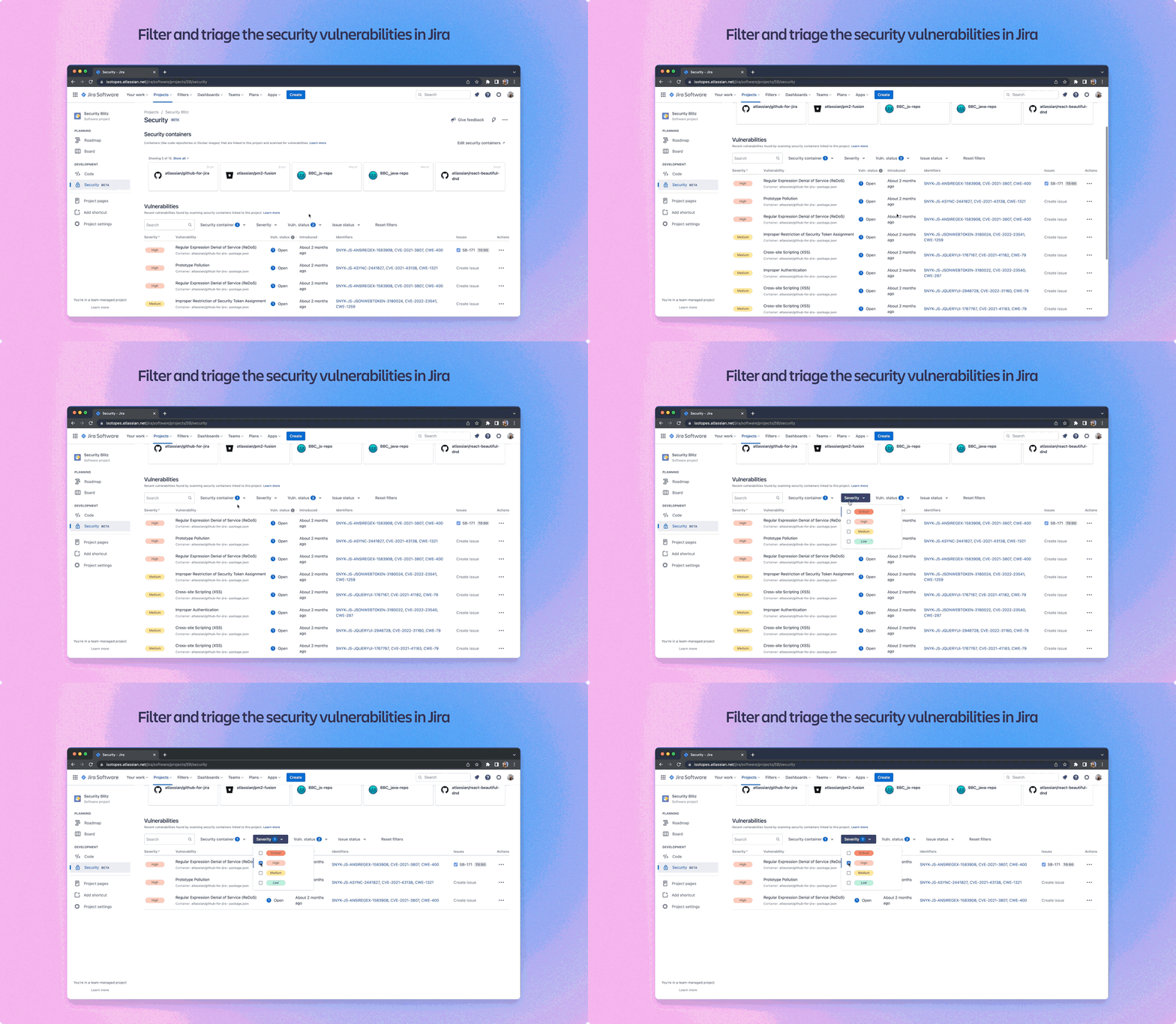
    Atlassian announced today it has allied with Snyk, Mend, Lacework, Stackhawk and JFrog to make it simpler to aggregate vulnerability data within the Jira project management software that many organizations rely on to manage application development and deployment efforts.

    Andrew Pankevicius, a senior product manager for Atlassian, said the collaborations will make it easier to prioritize a list of vulnerabilities that need to be addressed and for DevOps teams to automatically assign that work to a continuous integration/continuous delivery (CI/CD) pipeline. Atlassian provides those third-party integrations via an Open DevOps initiative.

    These capabilities, accessible via the Security Tab in Jira, will make it simpler for DevOps teams to manage output from the multiple application security tools that have become part of a larger DevSecOps workflow, noted Pankevicius.

    These additions to the Atlassian portfolio are arriving at a time when there is a lot more focus on securing software supply chains in the wake of a series of high-profile breaches. Those breaches have led to a wave of legislative proposals in the U.S. and Europe that will soon require organizations to embrace DevOps best practices to address increased potential liability that might stem from an application breach.

    For example, a proposed Cyber Resilience Act being negotiated by the member states of the European Union seeks to require organizations that sell internet-connected hardware platforms to ensure that their devices—and the software that runs on them—comply with cybersecurity best practices.

    In the U.S., meanwhile, a National Cybersecurity Strategy proposal put forward by the Biden administration seeks to hold organizations that collect data or build software more accountable for breaches.

    While both proposals are a long way from becoming the law of the land anytime soon, they are indicative of changing attitudes. Governments around the world are concluding the only way to ensure better cybersecurity is to require it. Previous suggestions made by government agencies are going to soon give way to actual mandates. As such, DevOps teams would be well-advised to get ahead of this sea change by implementing the tools and processes that inevitably will be required. As a result, many organizations are now embracing DevSecOps best practices that shift more responsibility for application security further left toward developers.

    The challenge is finding the right set of cybersecurity tools that surface vulnerabilities as code is being developed to make sure context isn’t lost, said Pankevicius. Historically, cybersecurity teams have discovered vulnerabilities long after an application has been deployed in a production environment. By then, however, most developers have moved on to other projects, so remembering how a specific piece of code was developed and by whom can be a significant challenge, he noted.

    There’s no doubt that when it comes to application security, a lot of progress has been made, but there is still much work to be done. The issue now is finding the best way to organize those efforts at a time when more applications are being simultaneously developed within organizations than ever.

  • PagerDuty Signals Commitment to Adding Generative AI Capabilities

    PagerDuty Signals Commitment to Adding Generative AI Capabilities

    PagerDuty has signaled its intention to add generative artificial intelligence (AI) capabilities to its cloud platform for managing IT operations via integrations with large language model (LLM) providers that it will disclose at a future date.

    These capabilities will make it possible to invoke natural language via PagerDuty Operations Cloud to automatically generate status updates, create drafts of incident postmortem reports and even co-author workflows in any programming language to automate remediation of an issue.

    Damon Edwards, senior director of product for PagerDuty, said as AI continues to evolve, the goal will be to minimize the need for human involvement as much as possible. That doesn’t mean there won’t be a need for humans to be involved, but it does mean that many rote tasks associated with managing an IT incident can be automated, he added.

    For example, the reports that are run to determine the root cause every time there is an incident can be automated, noted Edwards. In addition, summarizations of status reports or postmortems after incidents were resolved can be made readily available to any member of an IT team on demand, he added.

    Those capabilities will also make it easier to onboard new members to an incident management team as required, said Edwards. Today, it’s difficult to add new members to a team after an incident has unfolded because it takes time to bring them up to speed, he noted.

    In addition, generative AI also makes it easier to capture a lot of the tribal knowledge within an IT organization that would otherwise disappear when staff either leave the company or shift roles, said Edwards.

    The generative AI additions to the PagerDuty platform extend an artificial intelligence for IT operations (AIOps) capability that PagerDuty made available this spring. The PagerDuty AIOps platform leverages the data model embedded in its incident management software to reduce the amount of time required for an AI platform to learn how an IT environment operates and begin surfacing valid recommendations to optimize workflows.

    It’s not clear at what pace AI will be adopted within enterprise IT organizations, but it is rapidly becoming pervasive. Each DevOps team will need to decide the degree to which they can rely on AI to manage IT processes, but as IT processes become more complex, there is a clear need for AI to navigate all the dependencies that exist in an IT environment. As more routine tasks are automated, however, there will also inevitably be a realignment of roles and responsibilities within an IT organization. The overall goal is not so much to eliminate IT staff as much as it is to enable them to manage IT environments at a much higher level of scale.

    In the meantime, DevOps teams need to plan for not only what is possible using generative AI today but also tomorrow. After all, there’s not a lot of point in training someone to take on a new task if that task is automated a few months from now.

  • DigiCert Allies With ReversingLabs to Secure Software Supply Chains

    DigiCert Allies With ReversingLabs to Secure Software Supply Chains

    DigiCert today announced it has allied with ReversingLabs to integrate binary analysis and threat detection capabilities with a code signing service it provides.

    Deepika Chauhan, chief product officer for DigiCert, said the addition of these capabilities to the DigiCert Software Trust Manager service would make it simpler for organizations to operationalize a methodology for securing their software supply chains. The capabilities are designed to be embedded within continuous integration/continuous delivery (CI/CD) pipelines.

    In addition to being a certificate authority, DigiCert’s Software Trust Manager service automates code signing workflows. ReversingLabs, meanwhile, just added the ability to detect secrets exposed in application binaries to its Software Supply Chain Security (SSCS) platform. Those capabilities can identify secrets inadvertently left in applications as plain text, can identify secrets that can be discovered because of weak cryptography and also includes scripts that scan for malware and can generate software bills of materials (SBOMs).

    Chauhan said when combined with DigiCert Software Trust Manager, it becomes possible for the two companies to provide a comprehensive approach to detecting malware, software tampering, inclusion of secrets and certificate misconfigurations in any type of software.

    A recent ReversingLabs survey found 87% of respondents detected significant risks in their software supply chain in the last year, with software containing vulnerabilities (82%) followed by secrets leaked through source code (55%), malicious code (52%) and suspicious code (46%) posing the most serious risk to the business.

    A full 88% said software supply chain security is an enterprise-wide risk, but only 60% said their software supply chain defenses were up to the task. Nearly two-thirds (65%) of respondents, however, acknowledged their organization’s software supply chain security program wasn’t as mature as it should be. As a result, 80% are currently focused on improving security for the software supply chain, with 96% noting a more comprehensive approach to software supply chain security that detects more than vulnerabilities is needed.

    It’s not entirely clear just yet whether development teams or cybersecurity teams will be taking the lead in terms of driving the adoption of DevSecOps best practices to secure software supply chains. It is clear that securing software supply chains in the wake of a series of high-profile breaches is a much higher priority.

    Erik Thoen, director of product management for ReversingLabs, said as a result, it’s only a matter of time before development teams and cybersecurity professionals are forced to work more closely together than they have in the past.

    In the longer term, a wave of legislation in the U.S. and Europe will soon require organizations to embrace DevOps best practices to address increased potential liability that might stem from an application breach. A proposed Cyber Resilience Act currently being negotiated by the member states of the European Union seeks to require organizations that sell internet-connected hardware platforms to ensure both their devices and their software comply with cybersecurity best practices. In the U.S., meanwhile, a National Cybersecurity Strategy proposal put forward by the Biden administration seeks to hold organizations that collect data or build software more accountable for breaches.

    While both proposals are a long way from becoming law, it’s clear governments around the world are concluding the only way to ensure better cybersecurity is to require it.

  • Five Great DevOps Job Opportunities

    Five Great DevOps Job Opportunities

    DevOps.com is now providing a weekly DevOps jobs report through which opportunities for DevOps professionals will be highlighted to better serve our audience.

    Our goal in these challenging economic times is to make it easier for DevOps professionals to advance their careers.

    Of course, the pool of available DevOps talent is still relatively constrained, so when one DevOps professional takes on a new role it tends to create an opportunity for others.

    The five job postings shared this week are selected based on the company looking to hire, the vertical industry segment and, naturally, the pay scale being offered.

    We’re also committed to providing additional insights into the state of the DevOps job market. In the meantime, for your consideration:

    Indeed.com

    Citi
    New York, New York
    DevOps Engineer – Vice President
    $137,610 to $206,420

    SimplyHired.com

    Metrum Research Corp.
    Remote
    Senior DevOps Engineer
    $135,000 to $195,000

    CareerBuilder.com

    Peraton
    San Diego, California
    DevOps Systems Engineer
    $112,000 to $179,000

    Dice.com

    Stamford Technology Solutions
    Redmond, Washington
    Site Reliability Engineer (SRE)/DevOps Engineer
    $100,000 to $110,000

    LinkedIn

    TIAA Bank
    Jacksonville, Florida
    Senior DevOps Engineer
    $92,500 to $154,100

  • Chronosphere Adds Professional Services to Jumpstart Observability

    Chronosphere Adds Professional Services to Jumpstart Observability

    Chronosphere has added a professional services capability through which it will provide the resources and expertise needed to deploy and manage its observability platform.

    Ian Smith, field CTO for Chronosphere, said the Chronosphere Quick Start program will make it easier for organizations to transition away from legacy monitoring tools that only track a set of pre-defined metrics and embrace an observability platform that enables DevOps teams to surface issues before an IT environment is disrupted.

    The scope of the services provided spans everything from data ingestion to providing training so that management of the Chronosphere observability platform can eventually be handed over to an internal DevOps team.

    The professional services team will also guide DevOps teams through setting up data control mechanisms and retention polices in addition to crafting dashboards to monitor specific processes.

    Finally, there’s also a self-paced online learning platform, dubbed Chronosphere University, that provides a comprehensive curriculum to help DevOps teams navigate fundamentals, advanced features and best practices.

    It’s still early days as far as the adoption of observability platforms is concerned. But it’s apparent that as application environments become more complex, the plethora of monitoring tools that DevOps teams rely on will need to be streamlined. Observability platforms promise to unify logs, metrics and traces in a way that makes it simpler to launch queries to identify the root cause of an issue.

    The rate at which DevOps teams will embrace observability will naturally vary, but the biggest technical obstacles are deploying and configuring the platform, loading data and managing the cost of storing all the data that is collected.

    In addition, DevOps teams also need to understand what queries to launch to investigate specific issues. Many DevOps teams lack the expertise required to frame those queries today, but it’s expected that machine learning algorithms and other forms of artificial intelligence (AI) will automatically identify issues that might lead to disruption.

    In the meantime, DevOps teams should be evaluating where it makes sense to continue to rely on monitoring tools. In many instances, an observability platform might obviate the need for that tool, but there may also be plenty of instances where a simple monitoring tool is sufficient for the task at hand.

    One way or another, however, more advanced observability capabilities will be needed as application environments continue to become more complex in the cloud-native era. Application environments now consist of a mix of monolithic and microservices-based applications that gain more dependencies with each passing day. An application may not be as prone to crash as it once was, but determining the root cause of a performance issue can still take weeks given all the dependencies that exist between various services.

    Regardless of approach, observability has always been a core tenet of DevOps. As organizations’ DevOps maturity increases, the greater the appreciation for it becomes. The challenge has been that observability is one of many DevOps things that are easier said than done.

  • VMware Streamlines IT Management via Cloud Foundation Update

    VMware Streamlines IT Management via Cloud Foundation Update

    VMware this week updated its Cloud Foundation platform and rolled up recent updates to the company’s virtualization portfolio all at once.

    Version 5.0 of VMware Cloud Foundation (VCF) encompasses the latest versions of VMware vSphere 8.0u1 for workload management, VMware vSAN 8.0u1 for scale-out storage, VMware NSX 4.1 for networking and VMware vRealize LifeCycle Manager 8.10 (Aria) for cloud management.

    In addition, VMware has added a single sign-on (SSO) capability, dubbed Isolated SSO Workload Domains, that enables administrators to configure new workload domains using SSO instances from different providers or platforms via NSX.

    Rick Walsworth, director of product marketing for the Cloud Infrastructure Business Group at VMware, said that as the management of IT continues to evolve in VMware environments, more organizations are opting to update their entire VMware software stack simultaneously rather than attempting to update components individually.

    The primary reason for that shift is that the company ensures that all the latest VCF component releases have been thoroughly stress-tested from an integration perspective, he noted.

    During uncertain economic times, VMware is seeing an increased focus on simplifying IT environments as IT teams are asked to do more with less, said Walsworth. As such, more organizations are looking to standardize on a stack of infrastructure software that can be managed more consistently, he added.

    More organizations are also looking to reduce the total cost of IT by employing the same stack of infrastructure software across hybrid cloud computing environments where workloads are deployed both in on-premises IT environments and public cloud, said Walsworth.

    The company is also seeing increased adoption of DevOps best practices to programmatically manage IT environments that need to respond to rapidly changing requirements, he noted. IT teams are looking to work more collaboratively rather than relying solely on specialists to manage specific functions, said Walsworth.

    Some of that shift is also being driven by Tanzu, a distribution of Kubernetes that the company makes available as part of VCF, he noted. Most application developers don’t have a preference for a specific Kubernetes distribution, so many organizations view Tanzu as an opportunity to extend their existing management framework to a de facto standard for building the next generation of cloud-native applications, said Walsworth.

    VMware is in the midst of being acquired by Broadcom. Nevertheless, VMware this week reported revenues for the first quarter 2023 of $3.28 billion, a 6% year-over-year increase. Subscription and software-as-a-service (SaaS) revenue for the first quarter was $1.22 billion, an increase of 35% year-over-year. That increase in revenue suggests any concerns about the future direction of the company are not impacting the willingness of IT organizations to continue to rely on VMware.

    It may be a while before all the dust settles around Broadcom’s acquisition of VMware. In the meantime, however, it’s clear that the way IT is managed in the cloud era is continuing to rapidly evolve regardless of who owns VMware.

  • No, Dev Jobs Aren’t Dead: AI Means ‘Everyone’s a Programmer’? ¦ Interesting Intel VPUs

    No, Dev Jobs Aren’t Dead: AI Means ‘Everyone’s a Programmer’? ¦ Interesting Intel VPUs

    Welcome to The Long View—where we peruse the news of the week and strip it to the essentials. Let’s work out what really matters.

    This week: Nvidia’s CEO grabs headlines by saying your career is toast, and Intel is still fighting. (more…)

  • Logz.io Taps AI to Surface Incident Response Recommendations

    Logz.io Taps AI to Surface Incident Response Recommendations

    Logz.io this week added a supervised machine learning capability to its observability platform that reduces mean-time-to-remediation by surfacing recommendations for resolving incidents.

    Asaf Yigal, vice president of product for Logz.io, said the Alert Recommendation capability added to the Logz.io Open360 platform uses artificial intelligence (AI) to model the steps a DevOps team needs to complete to resolve an incident.

    The goal is to reduce the amount of time required to resolve incidents at a time when IT environments are becoming increasingly complex, he added.

    In fact, a recent Logz.io survey found 75% of respondents said it currently takes them hours to resolve production issues, with only 14% satisfied with their current mean-time-to-resolution (MTTR). A total of 41% specifically cited monitoring and observability of Kubernetes environments as a primary challenge.

    Alert Recommendation is the latest in a series of investments in AI that Logz.io has made. Previously, Logz.io integrated the ChatGPT generative artificial intelligence (AI) platform to surface links to related information and best practices for resolving IT issues.

    In general, AI tools should make it possible to manage IT at a level of scale that eliminates many of the low-level data engineering and analytics tasks that previously required manual effort from a DevOps engineering team. If, for example, the observability platform is generating recommendations to address issues, there may be less of a need to create runbooks that DevOps teams typically create to address a wide range of known issues.

    Along with making it simpler to discern the root cause of an issue, AI also makes it possible for less experienced members of a DevOps team to resolve an issue using guidance generated by the observability platform, noted Yidal.

    In effect, AI technologies are reducing the cognitive load required to be an effective member of a DevOps team, he added.

    One way or another, it’s not so much a question of whether AI will be applied to DevOps as much as it is to the degree. Many of the manual tasks that often conspire to create DevOps bottlenecks should be significantly reduced in the months ahead as more advances are made. The challenge now is determining how best to reallocate DevOps expertise in anticipation of those advances.

    Of course, there’s always going to be some sense of trepidation when it comes to AI. However, many of the tasks that are about to become automated tend to be tedious. Many DevOps professionals would just as soon see those tasks become automated in the expectation that more time will become available to take on more complex challenges.

    Regardless of the motivation, the way IT is managed is about to change. There may be plenty of instances where AI does not live up to its initial hype, but as AI models are exposed to more data, they will become more accurate. That doesn’t mean, however, there won’t always be a need for a DevOps engineer to ensure those algorithms are behaving as expected.