Category: News

  • Logz.io Adds Monitoring Service Based on ELK and Grafana

    Logz.io Adds Monitoring Service Based on ELK and Grafana

    Logz.io today at the AWS re:Invent 2019 conference launched Cloud Observability Platform, a monitoring and security cloud service based on ELK—open source Elasticsearch, a search engine; Logstash, a data processing pipeline; and Kibana, a set of visualization tools—and Grafana, an analytics and monitoring platform.

    Company CEO Tomer Levy said it’s become apparent that developers have a strong preference for open source tools for managing cloud-native applications. As such, the adoption of ELK has increased substantially. With the increasing maturity of Grafana, it’s also becoming clear that organizations want to meld the open source analytics and monitoring tool with previous investments in ELK tools, he said.

    However, not many IT organizations have a lot of ELK and Grafana expertise. To fill that gap, Logz.io is launching a managed cloud service based on Logz.io Log Management, an instance of ELK that the company has enhanced with machine learning algorithms and data analytics capabilities to enable DevOps teams to discover and resolve issues faster.

    That core platform is being extended via Logz.io Infrastructure Monitoring, a beta release of a monitoring platform based on Grafana, and a security information and event management (SIEM) platform dubbed Cloud SIEM, based on an ELK stack that includes built-in threat detection tools.

    In addition, Levy said Logz.io plans to add support for Jaeger, an open source distributed tracing tool being developed under the auspices of the Cloud Native Computing Foundation (CNCF).

    Levy said it’s apparent to all that observability is a core tenet of DevOps, which he said is why there are already a half-million developers making use of ELK software. The challenge organizations are finding is that monitoring modern IT environments based on cloud-native applications is cumbersome and time-consuming. Logz.io is addressing that issue by providing an enterprise-grade instance of an open source monitoring platform that comes with hundreds of built-in connectors, which enables DevOps teams to employ a monitoring platform without having to be worried about becoming locked in to a specific vendor because they can switch over to open source code anytime they like, Levy noted.

    Developers tend to favor open source tools because they don’t have to wait on purchasing approval to employ them. However, enterprise IT organizations tend to favor platforms that are supported by a commercial vendor. Logz.io is trying to address that issue by providing support for an open source platform that will make enterprise IT organizations comfortable enough to give up relying on a proprietary monitoring platform. Thus far, Logz.io has more than 700 customers, which the company expects to expand now that it has an instance of its platform that can be consumed as a cloud service.

    It’s too early to say to what degree an open source platform might usurp proprietary platforms in the enterprise. Change tends to come slowly to enterprise IT organizations. However, as organizations embrace next-generation applications based on microservices and containers, enterprise IT organizations are clearly evaluating their monitoring platform options going forward.

    — Mike Vizard

  • HPE Adds Control Plane to Greenlake Managed Service

    HPE Adds Control Plane to Greenlake Managed Service

    Hewlett-Packard Enterprise (HPE) announced today it has added a cloud platform to its managed Greenlake service, through which DevOps teams will be able to manage deployments of applications alongside HPE.

    Scott Yow, vice president and general manager for GreenLake Hybrid Cloud Software at HPE, said HPE Greenlake Central provides a control plane that makes it possible for DevOps teams to write, release and deploy code quickly, without having to manage the IT infrastructure directly in an on-premises IT environment.

    Instead, DevOps teams will have access to an array of tools and services from HPE and partners through a marketplace to create a workbench through which they can design and create applications using best DevOps practices, said Yow. For example, HPE will make it possible for DevOps teams to leverage Terraform tools from HashiCorp to enable DevOps teams to manage infrastructure as code.

    Announced at the HPE Discover More Munich event, GreenLake Central is in trial with general availability scheduled for the end of the first quarter of 2020. The goal is to make it possible for DevOps teams to access distributed IT infrastructure in an on-premises IT environment that is managed in much the same way cloud platforms are accessed, said Yow. HPE will provide the expertise required to consistently manage underlying IT infrastructure, while DevOps teams employ Greenlake Central to manage the application environment.

    The Greenlake service also surfaces a dashboard through which IT teams can leverage more than 1,000 controls to meet almost any compliance mandates. Reports generated via that console substantially reduce the time and effort required to audit the IT environment as well.

    HPE is essentially making available a “co-pilot” approach to managing IT infrastructure that enables DevOps teams to focus more of their efforts on managing applications. HPE also published the results of a survey of 1,000 IT decision-makers that finds 86% of respondents agree that “as-a-service” approaches to managing IT are now inevitable and 75% expect their organization to move toward full adoption of such models in less than five years.

    Today the Greenlake service is designed around a series of virtual machine options spanning offerings from HPE, Nutanix and VMware. However, HPE plans to add support next year for a recently launched HPE Container Platform that can be deployed on top of virtual machines or bare-metal servers. IT organizations also should expect HPE to extend the Greenlake control plane to public clouds to advance hybrid cloud computing to ensure IT organizations maintain ownership of the control plane to manage those environments, Yow said.

    Greenlake is at the forefront of an HPE initiative to transition all its offerings into a set of managed services. That “as-a-service” approach has already gained traction with more than 740 customers worldwide, including 160 new customer wins this year. By 2022, HPE has promised to make its entire portfolio available as a service.

    HPE is not the only provider of IT infrastructure leveraging managed services to provide DevOps teams with access to a more flexible IT environment. Historically, these types of managed services were provided by third-party IT services providers. In the age of the cloud, HPE is betting more organizations will prefer to have their IT infrastructure managed by the vendor that built it in the first place. Of course, as part of that transition, HPE is making a case for standardizing on its infrastructure.

    It’s too early to say how the marriage of DevOps and managed services will play out in on-premises IT environments. The one thing that is clear, however, is that DevOps teams increasingly need to manage the IT infrastructure on which their applications are deployed only if they really feel the need to do so.

    — Mike Vizard

  • 2019 DevOps Dozen Finalists Announced

    2019 DevOps Dozen Finalists Announced

    We are proud to announce the 2019 DevOps Dozen finalists. When we first launched five years ago, I hoped the DevOps Dozen would grow into an award that would honor the best of the best in the maturing DevOps space.

    This year, we have included three new categories: Best DevOps Practitioner of the Year, Best DevOps.com Podcast of the Year and Best DevOps Conference of the Year.

    Our finalist are definitely the most outstanding leaders in DevOps. Congratulations to each and every one of the finalists in the 12 categories. It is quite an accomplishment to make it this far into the process. Whether you’re chosen as a winner or not, you should be proud to be part of such an impressive list, and don’t get discouraged as there will be more opportunities in the future.

    Since the nomination process was opened to the public, our team has gone through thousands of votes to pick out the finalists in each category. It was not an easy task, as we couldn’t automate (DevOps) it—we had to do it by hand. Many thanks to the everyone here at DevOps.com for doing this.

    The next step in the process is for the finalists in each category to submit a presentation on why they deserve the award. Please email your final presentation to dd@devops.com by Dec 15, 2019. That information will be passed onto our panel of judges who will then select the winners. The 12 (it is the DevOps DOZEN, after all) winners will be announced in December.

    Here Are the 2019 DevOps Dozen Finalists

    1. Best DevOps Solution Provider

    2. Best DevOps Practitioner of the Year

    3. Best DevOps Solution Provider Executive

    4. Best DevOps.com Podcast of the Year

    5. Best DevOps Book/eBook of the Year

    • The Unicorn Project: A Novel about Developers, Digital Disruption, and Thriving in the Age of Data – Gene Kim
    • War and Peace and IT: Business Leadership, Technology, and Success in the Digital Age – Mark Schwartz
    • DevOps Paradox: The truth about DevOps by the people on the front line – Viktor Farcic
    • Team Topologies: Organizing Business and Technology Teams for Fast Flow – Matthew Skelton and Manuel Pais
    • Project to Product: How to Survive and Thrive in the Age of Digital Disruption with the Flow – Mik Kersten
    • Engineering DevOps: From Chaos to Continuous Improvement … and Beyond – Marc Hornbeek

    6. Top DevOps Evangelist

    7. Best DevOps Transformation

    8. Best DevOps Transformation Leader

    9. Best New DevOps Solutions Company

    10. Top DevOps Conferences

    11. Best DevOps Presentations of the Year

    12. Best DevOps.com Article of the Year

    Thanks to everyone who voted and nominated candidates. Good luck to all of the finalists!

    Stay tuned and, as always, thanks for supporting DevOps.com and the rest of the MediaOps family of communities. If you have questions, please write us DD@devops.com.  Also if you want to be included in next years DevOps Dozen awards you need to subscribe to DevOps.com and look for announcements next September.

    — Alan Shimel

  • WhiteSource Acquires Renovate to Automate Dependency Updates

    WhiteSource Acquires Renovate to Automate Dependency Updates

    WhiteSource has acquired Renovate, a provider of an open source automated dependency update platform that the company plans to make available for free.

    Rhys Arkins, co-founder of Renovate who is now director of product for WhiteSource, said that as software projects become more complicated, there’s an increased need for a mechanism to identify and track dependencies and automatically update them as changes and updates are made.

    That requirement is becoming especially acute with the rise of microservices-based applications, which substantially increase the number of dependencies that exist within and between applications, added Arkins. Microservices make it possible for DevOps teams to build and deploy applications faster, but the dependencies between the microservices often result in an application environment that becomes too complex to manage. Most recently, Renovate added support for Helm Charts used to package applications in Kubernetes environments, on which many microservices are now being deployed.

    In addition, WhiteSource plans to add support for Cocoapods, a dependency manager for Swift and Objective-C Cocoa projects.

    Prior to the acquisition, WhiteSource was reselling the Renovate platform, which has more than 150 contributors. Now that WhiteSource owns the Renovate platform, including a hosted GitHub application and self-hosted GitHub and GitLab applications, the company has decided to make it available for free under the WhiteSource Renovate brand name.

    In the future, The WhiteSource Renovate app will add support for Bitbucket Cloud and Azure DevOps, thereby expanding the sources of dependency data that can be employed to make updates less risky and time-consuming, said Arkins. In effect, WhiteSource wants its automated dependency platform to become a natural extension of any continuous integration/continuous delivery (CI/CD) platform, he added.

    Arkins said that when it comes to managing dependencies, the biggest challenge is getting developers to identify them. In the absence of a platform for managing that process, developers will either not declare dependencies at all or, more commonly, not provide the right version number for a specific release of software on which their application is dependent. The more automated that process becomes, the less likely it is DevOps teams will find applications breaking because of a dependency that they were unaware of or lost track of at some point during the project.

    With the rise of DevOps, many organizations are now employing a more structured approach to dependencies. However, Arkins noted, many organizations are unaware that an open source platform is available that automatically updates all dependencies.

    WhiteSource is best known for helping organizations discover vulnerabilities in open source code. With the acquisition of Renovate, the company is furthering its ambitions to become a provider of software composition analysis tools.

    It remains to be seen just how many organizations will incorporate an automated dependency update platform into their DevOps processes. While many organizations have embraced DevOps, the level of maturity in terms of DevOps sophistication is uneven. The more software projects an organization launches, however, the more likely it becomes apparent there is a need for a better way to manage software dependencies.

    — Mike Vizard

  • CircleCI Achieves SOC 2 Compliance for DevOps Platform

    CircleCI Achieves SOC 2 Compliance for DevOps Platform

    CircleCI has achieved a SOC 2 compliance rating for the DevOps platform it makes available via a software-as-a-service (SaaS) model.

    Tad Whitaker, security manager at CircleCI, said CircleCI is the first provider of a SaaS platform for DevOps that has invested the hundreds of thousands of dollars required to achieve SOC 2 compliance.

    SOC 2 compliance requires organizations to pass an annual audit based on the Trust Services principles and criteria defined by the American Institute of Certified Public Accountants (AICPA). That criteria evaluate IT environments on everything from the cybersecurity controls they have in place to the integrity of the data management processes employed. A SOC 2-level certification means DevOps teams can have confidence in the fact that their data is being kept completely confidential, said Whitaker.

    With interest in best DevSecOps processes on the rise, Whitaker noted more organizations are starting to ask questions about how data is managed and secured on the cloud services they rely on to build and deploy applications. Cybersecurity professionals who are now participating in those processes are starting to ask challenging questions. To address those concerns, Whitaker said CircleCI created a team within the company to first attain SOC 2 compliance and, now, maintain it.

    That may lead to additional processes and controls being put in place, but DevOps teams can be confident that everything possible is being done to secure their data from prying eyes, including employees of CircleCI.

    A lot of the data being employed to build new applications is among the most sensitive an organization is likely to possess. As organizations embrace DevOps practices to drive digital business transformation initiatives, there’s a much greater need to ensure the DevOps environment is secure end to end. However, most of the DevOps platforms delivered as a service today are not able to validate the level of security they claim to have put in place, said Whitaker.

    It’s unclear how many organizations are going to insist of SOC 2-level certifications before agreeing to develop applications on a specific DevOps platform. However, SOC 2-level certifications are routinely required for cloud service providers so it’s only a matter of time before the same audit requirements are applied to other cloud services. The challenge will come when DevOps teams have to adjust their existing DevOps processes to accommodate the security processes that SOC 2-compliant cloud service providers are required to make.

    In the meantime, the days when DevOps teams could employ cloud services to bypass cybersecurity policies are coming to an end. Cybersecurity teams are finally catching up in terms of figuring out how to enforce cybersecurity policies beyond an on-premises IT environment. Not every DevOps team may appreciate the impact those policies may have on productivity. However, if the alternative is to have sensitive data that DevOps teams are now being held accountable for exposed on the web because of careless processes than the time to come to terms with cybersecurity has finally come.

    — Mike Vizard

  • Harness Adds Analytics to CDaaS Platform

    Harness Adds Analytics to CDaaS Platform

    Harness has added an analytics module to its namesake continuous delivery-as-a-service (CDaaS) platform that makes it easier to better align constrained software development resources with business goals.

    Omed Habib, director of product marketing at Harness, said Continuous Insights enables organizations to identify bottlenecks and improve overall software delivery by automatically gathering metrics such as deployment frequency, lead time, mean-time-to-restore (MTTR) and change failure rate.

    The Harness Continuous Insights dashboard

    Habib said the biggest challenge organizations face when it comes to continuous delivery is the delicacy of most IT environments. All the interdependencies between complex systems force IT organizations to rely on manual processes and custom scripts, he said, noting the process of rolling back an application whenever there is an issue can take days and weeks.

    The Harness CDaaS platform provides a more seamless approach to application delivery that automatically detects new builds in GitHub, Bamboo, Jenkins, Artifactory or Nexus repositories or any Git repository. Once the DevOps team is alerted, they can employ graphical tools to not only automate the process of building pipelines using YAML files but also leverage machine learning algorithms to evaluate the quality of a deployment and then automatically roll it back whenever necessary by accessing data from tools such as AppDynamics, New Relic, Splunk, Elastic Search and Sumologic, added Habib.

    Harness comes in three flavors. There is a Professional Edition supported by Harness and a free forever Community Edition. There’s also an Essentials Edition aimed at medium-sized companies that do not require a full set of enterprise and security features. The Continuous Insights analytics module is free for all new and existing customers of the Harness Professional Edition.

    Habib said that despite all the advances being made in terms of DevOps and continuous integration, organizations are still struggling with continuous delivery. Because many of them don’t seem to be able to push code into production as quickly as the code can be built, the pace of innovation within IT environments is being stifled. As business leaders wonder why that pace of innovations has slowed, many of them are now demanding access to application delivery metrics.

    It’s not clear to what degree providing access to those metrics will entice organizations to adopt a CDaaS platform. However, as developers and business leaders alike become more frustrated with the pace of application delivery, a groundswell for change is starting to build. Many IT leaders are now looking to automate as much of the application delivery process to prevent that frustration from morphing into a full-scale mutiny.

    In the meantime, there’s an old adage that says things measured are things done. Not everyone may appreciate all the newfound attention being paid to key performance indicators for application delivery. However, the truth is most organizations are not going to ever really solve the application delivery conundrum until somebody starts producing relevant metrics that enable them to comprehend the true scope of the challenge.

    — Mike Vizard

  • IBM Zones in on DevOps for AI

    IBM Zones in on DevOps for AI

    IBM this week revealed it has added a drift detection capability to the Watson OpenScale platform to govern artificial intelligence (AI) models that will become a foundational piece of IBM’s approach to defining best DevOps practices for building AI-infused applications.

    Rohan Vaidyanathan, program director for IBM Watson OpenScale, said one of the biggest AI issues organizations face today is determining when to update or replace an AI model. Announced at the IBM Data and AI Forum event, the drift detection software added to Watson OpenScale provides a continuous monitoring capability that detects how far an AI model has moved from its original parameters, Vaidyanathan said.

    Drift in AI models usually occurs over time, especially as use cases change in ways that are unexpected. Once that drift is detected, organizations eventually want to either retrain that AI model or replace it with a new one. The process challenge organizations face when building AI applications is first assembling the right data to train the model and then integrating that model within an application as part of a continuous integration pipeline.

    With each interaction with an AI model, the result returned to the application might be different as the machine learning algorithms embedded in the AI model continually learn about the process the application abstracts.

    As it turns out, Vaidyanathan said, only one in 20 of the AI models being built make it into production applications, largely because organizations have not bridged the divide between DevOps teams and data scientists effectively. The drift detection capability IBM has developed is a “missing link” that will enable those two teams to begin collaborating more closely, he said.

    IBM has already defined a set of best practices for building AI models as part of its Watson Anywhere initiative, which seeks to drive adoption of the various elements of the Watson platform on multiple clouds. Rather than forcing organizations to load data into an IBM Cloud to use Watson, IBM is working to bring the various engines and application programming interfaces (APIs) to wherever data resides.

    Naturally, IBM would prefer organizations employ the opinionated DevOps and DataOps processes it defines as best practices for building AI models using its tools. However, Vaidyanathan acknowledged there is likely to be plenty of instances in which organizations will prefer to define their own DevOps processes. The hope is those organizations will still access Watson services and metrics using the APIs that IBM has exposed.

    The challenge IBM is encountering in terms of driving AI adoption are manifold. In addition to trying to get data scientists to appreciate DevOps, IBM recognizes AI models are only as good as the data employed to train them. Unfortunately, many organizations have been lax when it comes to data management. As a result, many of them are now revisiting broken DataOps processes. IBM Watson OpenScale and IBM Cloud Paks for Data, a set of portable data virtualization and management tools deployed as microservices, are part of an effort to bring both explainability and order to the building of AI models.

    Obviously, it will take some time for organizations to extend best DevOps practices to incorporate AI models. But at this juncture, it’s more a matter of when rather than if that goal will be achieved.

    — Mike Vizard

  • Survey: IT Striking Balance Between Innovation, Reliability

    Survey: IT Striking Balance Between Innovation, Reliability

    When it comes to managing IT, most DevOps teams are locked in an eternal struggle to balance innovation with reliability. There’s always a keen interest in being able to take advantage of the latest and greatest IT platform. However, new IT platforms don’t achieve the level of maturity required to build and deploy mission-critical applications overnight. Enterprise IT organizations often build an application on one platform and deploy it on another platform that is perceived to be more reliable.

    But a global survey of 505 IT and other executives published by the Cloud Foundry Foundation (CFF) suggests that, at a time when adoption of microservices based on containers and serverless computing frameworks is rising, the need to strike a balance between innovation and reliability has never been more acute.

    Conducted by ClearPath Strategies on behalf of the CFF, the survey finds serverless usage and container usage are now at 14% and 37% respectively. At the same time, adoption of platform-as-a-service (PaaS) environments such as Cloud Foundry has increased to 47% from 41% in the last six months.

    The study also suggests the rate at which organizations are adopting serverless computing and containers is starting to plateau. However, organizations that have adopted serverless computing frameworks and containers are making greater use of these capabilities as they continue to mature, according to the survey results.

    CFF CTO Chip Childers said it’s not uncommon for organizations now to deploy a PaaS and Kubernetes platforms alongside each other. In some cases, applications built using containers on a Cloud Foundry PaaS will be deployed on a Kubernetes run-time at the network edge. In other cases, applications built using development frameworks running on Kubernetes will be deployed on a Cloud Foundry PaaS that is perceived to be more reliable.

    Of course, the percentage of organizations that are employing a PaaS environment is not nearly as high as those using a less opinionated framework for building applications. However, whatever the path chosen, Childers said multiple types of abstractions that simplify IT complexity will live alongside one another for many years to come. At the same time, the underlying technologies that enable those abstractions increasingly will converge. For example, the Cloud Foundry PaaS was built before Kubernetes existed. Now the CFF is moving toward replacing much of the Cloud Foundry substrate with Kubernetes.

    According to the survey results, 65% of respondents place the most value on a platform that delivers a consistent experience. However, 59% also said a platform that integrates innovations is of the greatest value to their ability to develop software applications. In addition, almost two-thirds (63%) said a technology’s ability to integrate with their environment is the “touchstone” that makes technology better.

    As is often the case, what constitutes a touchstone is in the eye of the beholder. However, DevOps teams are not likely to sacrifice reliability no matter how cool that next big thing in IT may or may not be.

    — Mike Vizard

  • Virtual Instruments Changes Name to Virtana to Drive AIOps

    Virtual Instruments Changes Name to Virtana to Drive AIOps

    With the formal launch of a software-as-a-service (SaaS) to monitor cloud platforms and optimize cloud, Virtual Instruments today renamed itself Virtana.

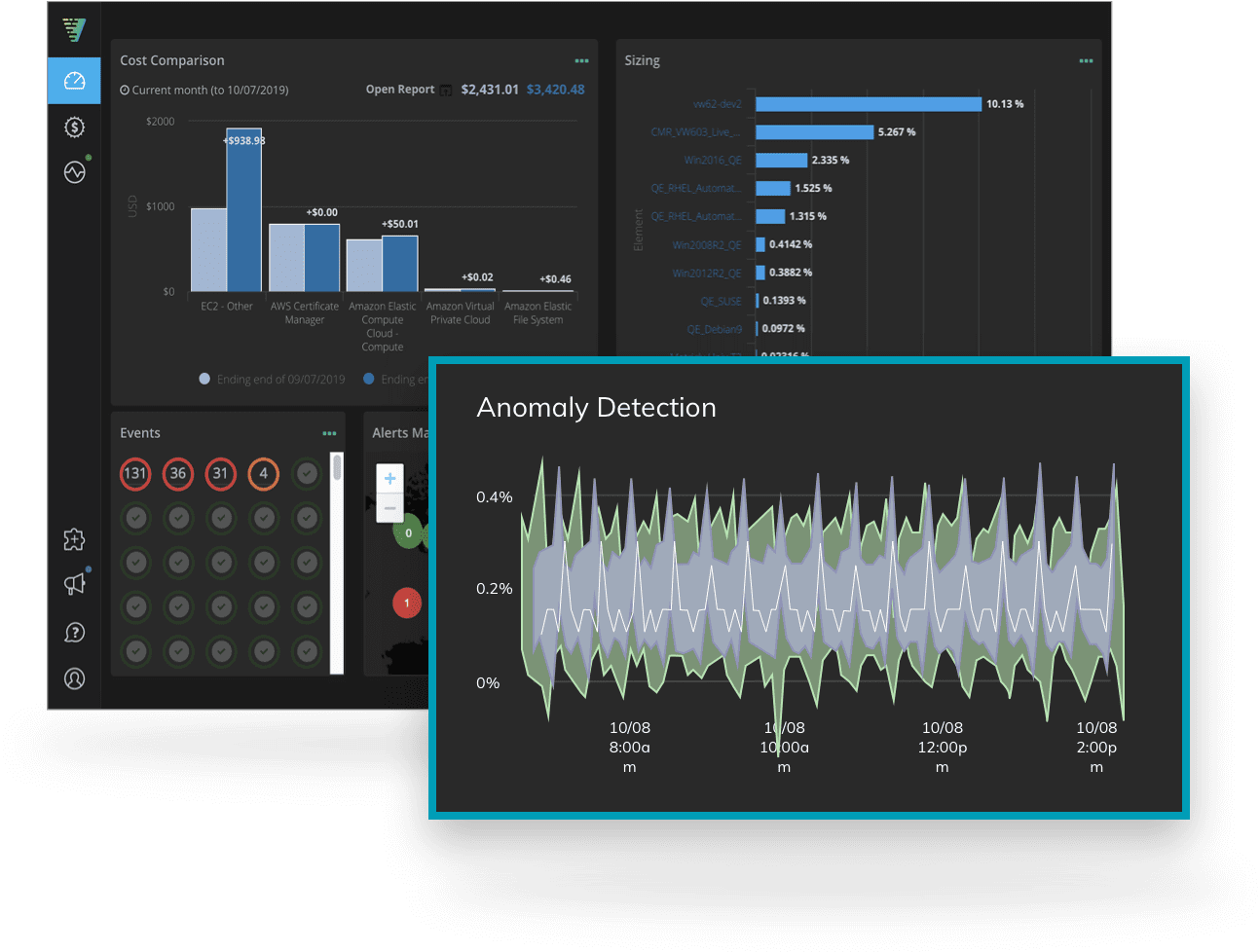
    The company’s CloudWisdom platform is based on technology Virtana gained via the acquisition of Metricly earlier this year. In addition to being integrated with existing on-premises offerings from Virtana, CloudWisdom has been expanded to include a self-service option. Downloadable trial versions are also available.

    Virtana CEO Philippe Vincent said the name change reflects a transformation from being simply a provider of storage I/O performance testing tools to becoming a provider of an IT operations management platform infused with artificial intelligence (AIOps). As part of that effort, the CloudWisdom offering represents the first time Virtana has extended the reach of its offerings beyond on-premises IT environments, he said.

    CloudWisdom will differentiate itself, Vincent said, because it combines cloud monitoring with built-in tools for optimizing cloud costs. Rival offerings require IT organizations to acquire two separate services, he noted. The CloudWisdom platform monitoring capabilities span databases, messaging platforms and containers, as well as cloud infrastructure services from Amazon Web Services (AWS) and Microsoft.

    In general, Vincent said IT organizations are moving away from a reactive approach to managing IT to a more proactive approach that will require increased reliance on automation. As IT environments become more complex, too many IT organizations are trying to compensate by overprovisioning IT infrastructure resources to make sure application performance doesn’t deteriorate or applications crash. That approach not only drives IT costs higher, he said, but it also makes those costs unpredictable.

    To address that issue, Virtana is combining CloudWisdom with an AIOps platform designed to be equally applicable in legacy IT service management (ITSM) and emerging DevOps environments. Organizations that have adopted DevOps will be at the forefront of the transition to AIOps because of the inherent fluidity and velocity of those environments, Vincent noted. Machine learning algorithms coupled with real-time monitoring, big data analytics, workflow engines and automation frameworks will enable IT teams to streamline ITSM and DevOps processes to become more efficient. The opportunity for Virtana is to disrupt a highly fractured monitoring category by leveraging AIOps to unify monitoring at an unprecedented level of scale and scope, he added.

    Virtana is not the only IT management platform provider that has identified the same opportunity; much larger incumbent providers of these platforms and a raft of startups are moving in the same AIOps direction. Vincent said Virtana will differentiate itself by pursuing a more application-centric approach to delivering on the promise of AIOps.

    It’s too early to say to what degree IT operations can be automated using AI. There’s general agreement that AI will play a significant role in automating IT, and the more standardized the IT environment is, the easier it is to accomplish. The challenge is, most IT environments today are still anything but standardized.

    — Mike Vizard

  • Anaxi Adds Reporting Capabilities to ALM Tool

    Anaxi Adds Reporting Capabilities to ALM Tool

    Anaxi today announced it has added reporting capabilities to its namesake application lifecycle management (ALM) tool that make it possible to update stakeholders about the status of software development projects residing in repositories such as GitHub and Bitbucket Cloud as well as project management applications such as Jira.

    Company CEO Marc Verstaen said reporting capabilities will make it easier to employ Anaxi to, for example, keep business leaders apprised of updates to software development initiatives by enabling IT leaders to generate a report similar to how business leaders today employ a business intelligence (BI) application to share sales forecasts.

    The Anaxi tool is designed to provide IT leaders with a single tool for tracking progress being made across multiple DevOps platforms. Verstaen said as more organizations begin to realize they are really software companies, interest in software delivery management tools is on the rise. The reporting challenge IT leaders face is the information they need to create a holistic report lies in multiple repositories because of the inherently fragmented nature of the DevOps tool chain, he said.

    To make it easier to adopt Anaxi, the ALM tool Data employs the same credentials organizations have created to access GitHub, Bitbucket and Jira. The Anaxi app connects directly to a user’s GitHub or Bitbucket repositories and Jira projects to ensure data privacy and security. Any action performed on the Anaxi applications is written back on GitHub, Bitbucket and Jira to maintain consistency across projects involving multiple team members.

    At its core, Anaxi is pulling metadata from DevOps tools to apply analytics to track individual developer productivity and team performance. IT leaders can, for example, analyze how much code has been added and removed, refactoring and code churn on a weekly basis. Anaxi can be used either in place of a project management application or as a complement to an existing project management tool to make analytics more accessible.

    The primary goal is to make it easier for IT leaders to identify DevOps bottlenecks and prioritize projects in a way that advances business goals. Too many organizations are writing more code than ever only to discover projects are being held up because a single component on which every other module depends is behind schedule. Many of the developers writing that code could have been working on other projects if IT leaders had been made aware of changes that needed to be made to the schedule based on the anticipated delay to another project. Anaxi essentially applies predictive analytics to software development projects to determine based on past histories the likelihood of a deadline being met, Verstaen said.

    Armed with that intelligence, IT leaders can either proactively reallocate how resources or allocated or inform business stakeholders to changes in delivery schedules. In either case, Versaten says the goal is to enable IT leaders to avert any software development crisis that might arise.

    The Anaxi app is free to use by teams of up to 10 members. Teams of more than 10 users will be required to adopt a premium plan priced at $19 per month per user.

    — Mike Vizard