Category: News

  • Mobb Extends DevSecOps Reach of Tool to Generate Patches

    Mobb Extends DevSecOps Reach of Tool to Generate Patches

    Mobb today added an ability to instantly surface patches for vulnerabilities at the time when code is being committed during a DevSecOps workflow.

    Previously, the tool provided by Mobb to create validated patches based on the scan results of third-party SAST tools would only surface issues to individual developers.

    Mobb CEO Eitan Worcel said organizations can now address these issues within the context of DevSecOps workflow.

    The Mobb platform combines proprietary security research and traditional semantic analysis with generative artificial intelligence (AI) to automatically create patches for vulnerabilities. The overall goal is to make it simpler for DevSecOps teams to consistently ensure applications with known vulnerabilities are remediated before they are deployed, said Worcel.

    The Mobb approach eliminates the need for IT teams to sort through static application security testing (SAST) scans themselves. Each vulnerability typically requires at least 30 minutes to fix, so the Mobb platform improves application security while simultaneously making developers more productive.

    Historically, one of the reasons for the wide divide between application development teams and cybersecurity professionals is that many of the vulnerabilities discovered don’t actually impact applications running in production environments. Development teams then find themselves wasting time investigating vulnerabilities and, when they do determine a vulnerability is an issue, spending time developing a patch. The Mobb tool automatically creates the necessary patch, so there is less of a need to debate which vulnerabilities are worthy of the time required to create a patch.

    For decades, application development teams have been attempting to find a way to remediate vulnerabilities as quickly as possible. With increased focus on adopting DevSecOps best practices to address those vulnerabilities, more organizations are now reviewing software supply chains as part of a larger effort to improve application security.

    There will, of course, be vulnerabilities that the Mobb tool will not be able to address simply because there may not be enough affected applications to warrant pre-building a patch. Even with the most robust set of rules, it is improbable that an automated tool can, with 100% certainty, safely fix every issue. However, given the number of routine vulnerabilities present in applications, such as SQL injections, there’s plenty of opportunity to improve developer productivity by relying on patches that address common vulnerabilities.

    The process by which patches are prioritized, developed and then applied has, of course, long been a source of DevOps frustration. Anything that streamlines that process will go a long way toward improving the overall state of application security at a time when cybercriminals are becoming more adept at exploiting vulnerabilities. The challenge is finding a way to remediate vulnerabilities that developers will embrace rather than resist. The Mobb approach still provides them with control over what patches are applied but the toil involved with creating a patch in the first place has been substantially reduced.

    It’s not clear how long it might be before automated approaches to building patches might improve the overall state of application security but, as always, every journey needs to begin with a first step in the right general direction.

  • Legit Security Applies AI to Detect Vulnerable Application Secrets

    Legit Security Applies AI to Detect Vulnerable Application Secrets

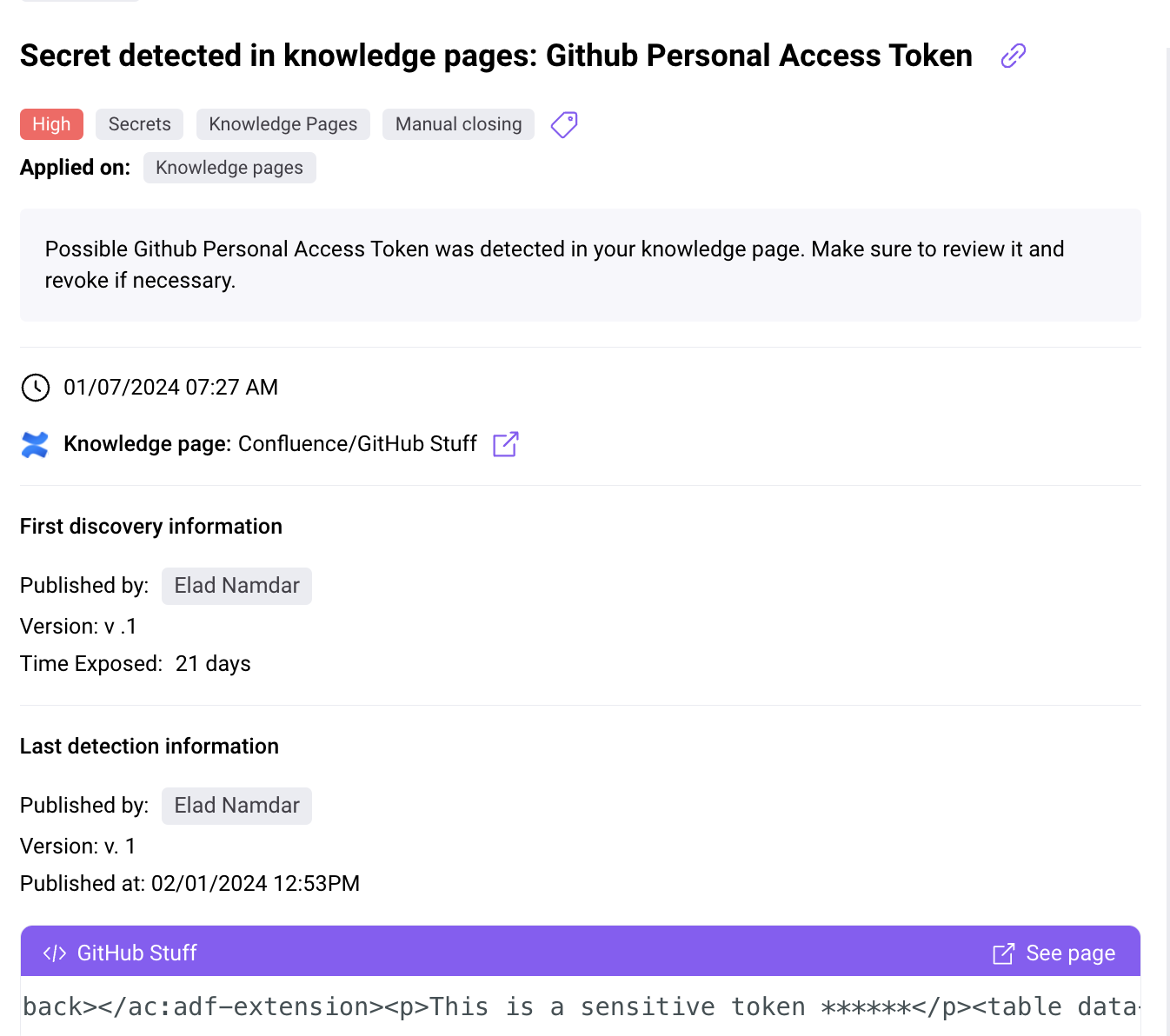
    Legit Security today announced it has expanded the scope of its application security posture management (ASPM) platform to make use of artificial intelligence (AI) to discover secrets more accurately in applications that cybercriminals can actually exploit.

    Scanners typically generate high false positive rates to the point where developers often start to ignore them. As a result, it’s not uncommon for secrets to be discovered in an application even though an alert was generated.

    Legit Security CTO Liav Caspi said the company is now applying a large language model (LLM) specifically trained for source code along with prompt engineering techniques and heuristics to reduce the level of alert noise that developers would otherwise see when scanning for secrets. The overall goal is to correctly identify access keys, passwords, application programming interface (API) keys and other personally identifiable information (PII) that should not be exposed once an application is deployed in a production environment, he noted.

    That capability can be applied to detect secrets across all development assets, including code repositories, source code management (SCM) tools, build tools and logs, artifacts and private and public documentation. In addition, this approach also uncovers toxic combinations of secrets or ones that might lie buried within assets such as source code history or modified Confluence pages that developers often forget exist, noted Caspi.

    Legit Security also enables DevSecOps teams to apply preventive guardrails on developer endpoints using the Legit command line interface (CLI) to stop secrets from being exposed before code is pushed. In addition, automated workflows can reach developers as part of a pull request or create Slack messages or Jira tickets to streamline remediation. DevSecOps teams can also continuously triage results to create a baseline that includes exceptions.

    As part of a larger effort to secure software supply chains, Legit Security has developed a software-as-a-service (SaaS) platform designed to apply security policies across an entire software development life cycle. The company is now extending the capabilities of that platform using AI technologies to detect secrets in both source code and all the components that make up a development pipeline as they are added.

    In the wake of an executive order requiring federal agencies to better secure software supply chains, there is now more focus than ever on application security. Unfortunately, many developers are a little too cavalier when it comes to managing secrets during the application development process. They often leave secrets in plain text to facilitate workflows, but more often than many care to admit, those secrets are not removed before an application is deployed. Knowing this, cybercriminals have learned to scan applications for those exposed secrets. Once gained, they then appear to be just another legitimate user of an application that might not be discovered until malware is activated.

    It may be a while before the cultural and technical issues that conspire to make the software supply chain insecure are fully addressed. In fact, the problem may get worse before it gets better—simply because the pace at which distributed applications are being built and deployed only continues to accelerate. At the same, the cost of making a secrets mistake is also only going to increase as regulations become more stringent. In fact, it’s now only a matter of time before stiff fines intended to make an example of one or more unfortunate organizations are eventually going to be levied.

  • Chronosphere Acquires Calyptia to Process Log Data More Efficiently

    Chronosphere Acquires Calyptia to Process Log Data More Efficiently

    Chronosphere today announced it has acquired Calyptia to add additional pipeline management capabilities to its observability platform.

    Calyptia created Fluent Bit and Fluentd, a set of open source log processors that are now being advanced under the auspices of the Cloud Native Computing Foundation (CNCF).

    Chronosphere CEO Martin Mao said these log processors will be embedded into the company’s namesake observability platform to enable the routing, transformation and optimization of log data at scale. That issue has become problematic because cloud-native applications based on microservices create exponentially more telemetry data than legacy monolithic applications. If it becomes too costly to analyze that data, then DevOps teams will begin to limit the number of applications they will observe, noted Mao.

    The Calyptia platform achieves that goal using filters at the data source to reduce the volume of data that might otherwise be shared by 30% or more.

    The shared data can then be analyzed in real time rather than waiting for it to be stored and indexed. In addition, DevOps teams can enrich that data in flight to include additional context.

    Calyptia cofounder Anurag Gupta added that the primary mission for the company has always been to make log data more accessible to developers as they build and deploy applications.

    The acquisition of Calyptia comes on the heels of a log management alliance between Chronosphere and CrowdStrike through which a log storage and virtualization capability, dubbed Logs powered by CrowdStrike, has been added to the observability platform. The overall goal is to simplify the management and analysis of logs via a single click of a graphical tool or within the context of a larger DevOps workflow based on a command line interface (CLI) without requiring data engineering expertise, said Mao.

    It’s not clear how fully DevOps teams have embraced observability, but it’s apparent the legacy monitoring tools that collect a set of predefined metrics are not able to keep pace with the complexity of cloud-native application environments. An observability platform makes it simpler to query log data and discover the root cause of an issue—hopefully before a catastrophic event occurs. The challenge, of course, is providing that capability without incurring massive increased storage costs for log data.

    Despite those concerns, the need for observability is becoming a more pressing issue with each passing day. Organizations have never been more dependent on applications to drive revenue. A degradation in performance is usually an early indicator of a disruption that often has a direct impact on revenue and profitability.

    There is, of course, already no shortage of observability platforms. The issue most DevOps teams encounter is finding the funding needed to employ one at a time when organizations have become much more sensitive to IT costs. There may be an opportunity to rationalize some monitoring tools to help pay for the cost of a more modern observability platform, but regardless of approach, an ounce of prevention is always going to be worth a pound of proverbial cure.

  • Meet the DevOps Dozen² 2023 Honorees

    Meet the DevOps Dozen² 2023 Honorees

    We are proud to announce the DevOps Dozen² 2023 honorees. For the past nine years, the DevOps Dozen Awards have celebrated the most outstanding individuals and companies in the DevOps community and their remarkable contributions to the industry. These honorees have demonstrated their leadership and commitment to our community during the past year.

    Congratulations to all those nominated and to the honorees. All of your hard work and dedication are greatly appreciated.

    Without further ado, here are the DevOps Dozen² 2023 honorees:

    DevOps Dozen Community Awards

    1. Best DevOps Industry Implementation: St James’s Place DevOps Implementation

    2. Best DevOps Survey/Analysis/Research: Accelerate State of DevOps Report by DORA

    3. Best DevOps-Related Video Series (video): DevOps Exchange YouTube Channel

    4. Best DevOps-Related Audio Podcast Series: DevOps Paradox

    5. Best DevOps Book/eBook of the Year: Industrial DevOps: Build Better Systems Faster by Dr. Suzette Johnson and Robin Yeman

    6. Top DevOps Evangelist: Fatima Sarah Khalid, Developer Evangelist at GitLab

    7. Best DevOps Transformation (non-vendor): Pera People Science B.V

    8. Best DevOps Event of the Year: swampUP by JFrog

    9. Most Innovative DevOps Open Source Project: Jenkins

    10. DevOps Executive of the Year (non-vendor): Garima Bajpai, Founder of Canada DevOps Community of Practice

    11. Best DevOps Presentation of the Year: It’s Time to Rip Off the Training Wheels and Enable End-to-End Automation (BMC Software)

    12. Best DevOps.com Article of the Year: DevSecOps: The Fusion of Security and DevOps for Enhanced Software Security by Muneesh Sharma, Neem Consulting Ltd.

    DevOps Dozen Tools and Services Awards

    1. Best End-to-End DevOps Tool/Service: JFrog Software Supply Chain Platform

    2. Best DevOps Repo/GitOps Tool/Service: gitStream by LinearB

    3. Best CI/CD Tool: CloudBees CI/CDRO

    4. Best Value Stream Management Tool: ValueOps by Broadcom

    5. Best Observability Solution: Grafana Cloud Free Tier

    6. Best DevSecOps Solution: GitLab

    7. Best Testing Tool/Service: Tricentis Mobile

    8. Best Kubernetes Platform/Service: Rafay Systems

    9. Best Cloud-Native Security Solution/Service: Sysdig Secure

    10. Best DevOps for Mainframe Solution: BMC AMI DevX tool suite

    11. Best DevOps for DataOps/Database Solution: Percona

    12. Best New DevOps Tool/Service Provider: New Relic Grok (now New Relic AI)

    The honorees will receive both digital badges and physical trophies celebrating their achievements.

    Winners were chosen from among the finalists with general public voting counting for 40% of the final total and our judges’ selections for 60% of the weighted total. The panel of judges went through thousands of votes to choose the winners in each category—it was not an easy task. Many thanks to our judges for making the hard calls and to everyone who has supported the DevOps Dozen² Awards by nominating candidates and voting.

    For more information, please visit the DevOps Dozen² Awards website and stay tuned for the DevOps Dozen² 2024 Awards.

  • Techstrong Group Announces the 2023 DevOps Dozen² Awards Honorees

    Techstrong Group Announces the 2023 DevOps Dozen² Awards Honorees

    Techstrong Group announces the recipients of the ninth annual DevOps Dozen2 Awards in recognition of outstanding leadership and service to the DevOps community.

    Boca Raton, FL, January 18, 2024 —  Techstrong Group, the power source for people and technology, has published the list of honorees for the 24 categories of the 2023 DevOps Dozen² Awards. The DevOps Dozen Awards highlight the most agile and distinguished individuals and companies who have demonstrated exceptional performance and commitment to the DevOps community.

    As we’ve done the last two years, the awards program has been expanded to include a tools and services section and a community section with 12 categories in each class.

    Through their exceptional efforts, the DevOps Dozen honorees have not only propelled their businesses and communities forward, but have also played a pivotal role in advancing the entire industry. In a landscape characterized by continuous innovation and evolution, these trailblazers stand out as true champions, making significant contributions to the ongoing progress and excellence within the DevOps realm.

    “It is an honor to present these awards to the individuals, projects and organizations ​​that serve as true inspirations in the DevOps landscape,” said Alan Shimel, CEO of Techstrong. “Their dedication to driving innovation and their positive impact on the community make them the epitome of DevOps excellence. Congratulations to all the honorees and to the finalists for making our community better through their leadership and service.”

    DevOps Dozen² 2023 Awards Honorees

    Here are the names of the 2023 DevOps Dozen² Awards honorees:

    DevOps Dozen Tools and Services Awards

    • Best End-to-End DevOps Tool/Service: JFrog Software Supply Chain Platform
    • Best DevOps Repo/GitOps Tool/Service: gitStream by LinearB
    • Best CI/CD Tool: CloudBees CI/CDRO
    • Best Value Stream Management Tool: ValueOps by Broadcom
    • Best Observability Solution: Grafana Cloud Free Tier
    • Best DevSecOps Solution: GitLab
    • Best Testing Tool/Service: Tricentis Mobile
    • Best Kubernetes Platform/Service: Rafay Systems
    • Best Cloud-Native Security Solution/Service: Sysdig Secure
    • Best DevOps for Mainframe Solution: BMC AMI DevX tool suite
    • Best DevOps for DataOps/Database Solution: Percona
    • Best New DevOps Tool/Service Provider: New Relic Grok (now New Relic AI)

    DevOps Dozen Community Awards

    • Best DevOps Industry Implementation: St James’s Place DevOps Implementation
    • Best DevOps Survey/Analysis/Research: Accelerate State of DevOps Report by DORA
    • Best DevOps-Related Video Series (video): DevOps Exchange YouTube Channel
    • Best DevOps-Related Audio Podcast Series: DevOps Paradox
    • Best DevOps Book/eBook of the Year: Industrial DevOps: Build Better Systems Faster by Dr. Suzette Johnson and Robin Yeman
    • Top DevOps Evangelist: Fatima Sarah Khalid, Developer Evangelist at GitLab
    • Best DevOps Transformation (non-vendor): Pera People Science B.V
    • Best DevOps Event of the Year: swampUP by JFrog
    • Most Innovative DevOps Open Source Project: Jenkins
    • DevOps Executive of the Year (non-vendor): Garima Bajpai, Founder of Canada DevOps Community of Practice
    • Best DevOps Presentation of the Year: It’s Time to Rip Off the Training Wheels and Enable End-to-End Automation (BMC Software)
    • Best DevOps.com Article of the Year: DevSecOps: The Fusion of Security and DevOps for Enhanced Software Security by Muneesh Sharma, Neem Consulting Ltd.

    Winners have been chosen from among the finalists, with public voting weighted for 40% of the final total and our judges’ selections for 60% of the weighted total.

    The DevOps Dozen Awards winners will receive digital and physical trophies and badges to celebrate their achievements.

    For more information regarding the entry process, awards, timing or any technical issues regarding the website, please contact us at DD@devops.com.

    About Techstrong Group

    Techstrong Group is the power source for people and technology. Techstrong Group accelerates understanding of technologies that drive business. With a broad set of IT-related communities and offerings, Techstrong Group is the only media company serving the needs of IT leaders and practitioners with news, research, analysis, events, education, certifications and professional development. Our focus is DevOps, cybersecurity, AI, digital transformation, cloud and cloud native. Techstrong Group business units include: Techstrong Media, Techstrong Associations, Techstrong Research and Techstrong Learning. For technology providers, Techstrong business units offer many ways to reach IT professionals and tell their stories.

    Techstrong Group is based in Boca Raton, Florida. For more information, visit us on the web and follow us on Twitter, LinkedIn, Facebook, Instagram.

    ###

    Veronica Haggar
    Techstrong Group
    veronica@techstronggroup.com

  • Swimm Adds Generative AI Chat Tool for Documentation

    Swimm today announced it has added a chat tool that enables developers to use natural language to surface insights into code.

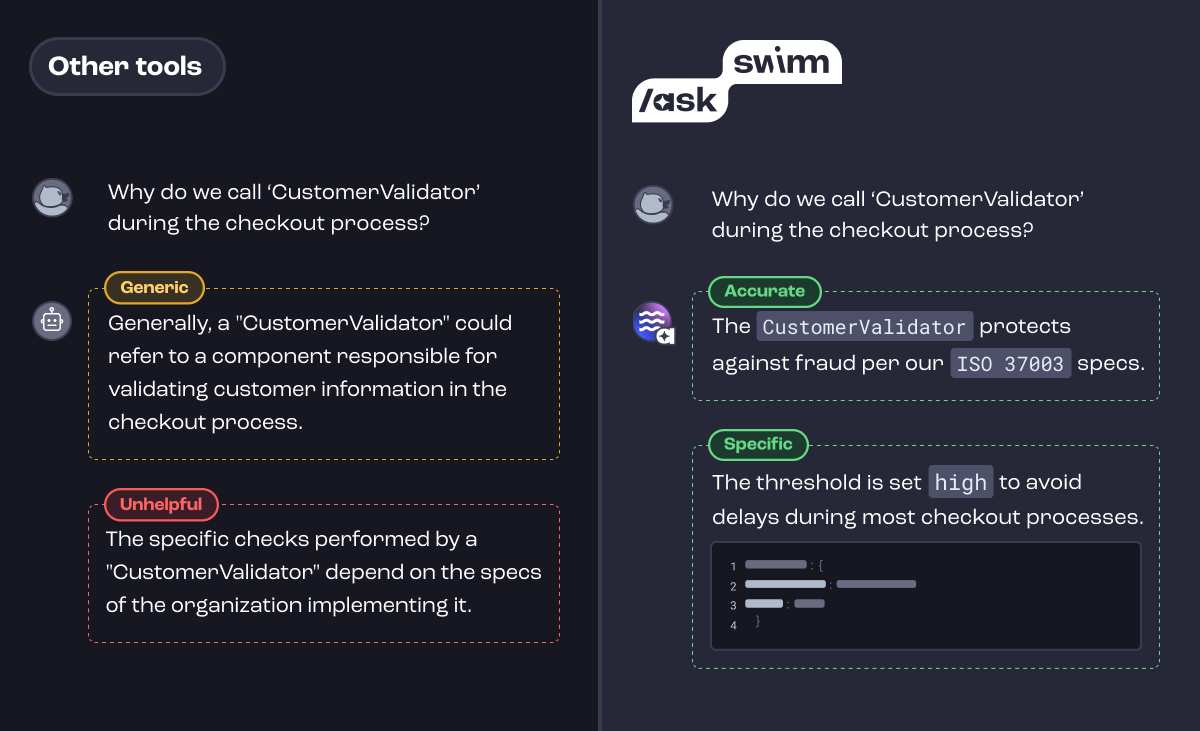
    Company CEO Oren Toledano said the /ask Swimm tool makes it simpler to launch queries that enable developers to better understand how code was constructed.

    The /ask Swimm tool aggregates documentation along with other related data to surface factors that are not evident in the code itself, such as documentation of business decisions, product design considerations and decisions concerning why specific architectural choices were made. It automatically captures and updates code-related knowledge to provide a continuous feedback loop as code, documentation, files and repositories are created and updated to provide deeper insights into code that goes beyond what might have been actually documented.

    The overall goal is to provide a mechanism that enables developers to understand how and why code was constructed within the context of an integrated development environment (IDE), said Toledano.

    Swimm has previously made available a platform that uses generative AI platform to create a static analysis of documentation. That capability should make it simpler for organizations to track documentation at a time when generative AI platforms such as ChatGPT are exponentially increasing the amount of code being written. In theory, those platforms should be able to also create documentation for that code, but there will still be a need for tools to track and analyze it.

    In the longer term, Swimm plans to continue to extend its usage of generative AI to provide deeper levels of insights across entire applications and software ecosystems to address that challenge, noted Toledano.

    In the short term, however, it’s clear that AI is making developers more productive than ever. In fact, the volume of code being generated might soon overwhelm existing DevOps pipelines and workflows. Most DevOps teams will need to revamp those workflows as the pace at which more applications than ever are being developed and deployed faster than ever.

    It’s still early days as far as generative AI adoption is concerned, but it’s clear many developers are already using it to write code. How much of that code makes it into a production environment is difficult to determine, but a lot of that code is going to be of varying quality. A general-purpose AI platform such as ChatGPT was trained using code collected from all across the web. The code generated by these platforms is only as good as the examples used to train it, all of which were created by human developers who may have made mistakes, such as including code that has known vulnerabilities.

    Regardless of whether code was generated by a machine or a human, the probability that documentation will need to be analyzed as part of a code review process is always high. The challenge and the opportunity is to determine the best way to apply AI to a longstanding challenge that is now being exacerbated by the existence of AI tools that, with each passing day, are only becoming more accessible to developers.