Category: News

  • GitLab Adds Fourth DORA Metric API to CI/CD Platform

    GitLab Adds Fourth DORA Metric API to CI/CD Platform

    The latest update to GitLab’s namesake continuous integration/continuous delivery (CI/CD) platform has added support for the application programming interface (API) for measuring change failure rates. This addition supports the fourth metric as defined in the DevOps Research and Assessment (DORA) framework.

    Version 14.10 of GitLab also expands the GitLab Runner Operator for Kubernetes to any distribution of the open source platform in addition to making it possible to manually trigger incident responses when needed.

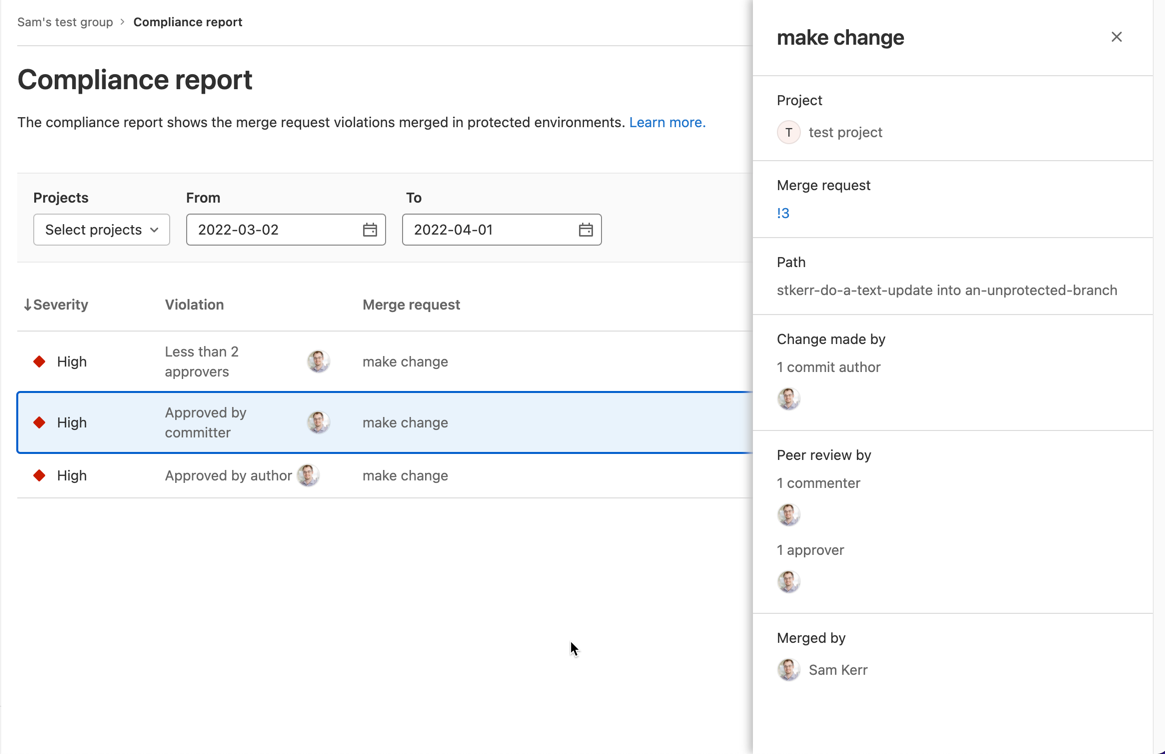
    Finally, a compliance report that surfaces every individual merge request violation has been added along with a tool for setting up streaming audit events.
    Brendan O’Leary, staff developer evangelist for GitLab, said that as DevOps processes continue to mature, DORA metrics make it simple for IT leaders to measure overall progress. While it’s not likely that any single set of DevOps practices will be universally implemented across an entire enterprise, O’Leary noted it’s important for DevOps teams to keep track of key performance indicators (KPIs) that enable teams to identify areas for ongoing improvement. For example, it’s not uncommon for technical debt to accumulate in the absence of metrics that track the progress of builds, he added.

    In general, a transition to microservices-based applications is increasing the need for CI/CD platforms that make it simpler to build them. Each of these applications is constructed using microservices that are typically built independently of one another. The challenge is that each microservice has dependencies on other microservices, so the need for DevOps workflows to optimally manage that development process is becoming more widespread, noted O’Leary.

    In some cases, organizations are deploying a CI/CD platform for the first time to build these applications. In other cases, they are looking to replace a CI/CD platform that was adopted to build legacy monolithic applications. Regardless of the type of application, there is a need to continuously refine and improve software engineering practices to increase developer productivity.

    It’s not clear to what degree developers are voting with their feet to work for one organization versus another based on the overall quality of developer experience. Organizations that do have a consistent approach to software engineering, however, make it easier for developers to spend more time writing code rather than managing the build process. The challenge is to make sure the DevOps platform itself does not become a bottleneck that hinders the rate at which developers can build code. It’s also not clear whether organizations are building applications faster than they can secure it and ensure overall quality. The only way to know for sure is, of course, to track metrics.

    Naturally, not every developer is a fan of metrics. Application development is still as much art as it is science. There is, however, a general appreciation that the amount of code that needs to be written far exceeds the available talent to write it; any effort to make software engineering more efficient benefits everyone involved. As such, given all the code that needs to be written, a software engineer is often today the best friend a developer can have.

  • Hasura Adds Join Capability to GraphQL Engine

    Hasura Adds Join Capability to GraphQL Engine

    Hasura today announced it has extended its GraphQL engine to make it possible to join data generated by multiple sources.

    Hasura CEO Tanmai Gopal said GraphQL Joins makes it possible to join data from across different GraphQL services that can then be accessed via a single GraphQL application programming interface (API). The extension of the federation capabilities enabled by the Hasura GraphQL engine eliminates the need for custom code that would otherwise be required to join that data, he added.

    The Hasura engine automatically generates a GraphQL schema from a data source that can then be used to accelerate the development of APIs. GraphQL Joins extends that federation capability to now include multiple GraphQL and, eventually, other data sources accessed via, for example, legacy REST APIs, said Gopal. That capability will make it easier for a wider range of developers to build applications that aggregate data across multiple sources, he added.

    The core Hasura Engine is based on open source software that the company claims has now been downloaded more than 500 million times. Hasura makes available a cloud service based on that core engine. That approach eliminates the backend complexity that IT teams encounter when adding GraphQL APIs to an application environment that already has a range of APIs that internal IT teams need to support, noted Gopal.

    GraphQL was originally created by Facebook, and it’s still not clear to what degree GraphQL APIs will supplant REST APIs. Developers tend to prefer GraphQL APIs because they provide more granular control over what data is accessed. The challenge is the number of backend services that expose GraphQL APIs is still comparatively limited. Most IT teams will not be replacing REST APIs with GraphQL-based APIs overnight, but the percentage of new applications that rely on GraphQL APIs will steadily increase. DevOps teams looking for easier ways to provide developers with access to backend services via a GraphQL API can employ the Hasura Engine to automate that process.

    Overall, the number of APIs employed within IT environments is rapidly expanding as more microservices-based applications are deployed. Each microservice generates its own API. Over time, IT teams will find themselves managing a range of types of APIs to support multiple digital business transformation initiatives that an organization may have simultaneously launched. In addition to building APIs, many of those organizations are now consuming data via APIs exposed by another organization. Over time, the level of interdependency between APIs and applications will serve to make application environments much more complex. The good news is that APIs make it easier to upgrade—and even replace—backend services without disrupting application services.

    It’s not always clear, though, who within IT organizations will manage those APIs. They are often created by developers that then look to IT operations teams to maintain them. Before too long, it’s not uncommon for IT teams to find themselves managing hundreds, perhaps thousands, of REST and web services APIs—and soon, that may include many built using GraphQL.

  • Datadog Unfurls Application Security Service

    Datadog Unfurls Application Security Service

    Datadog, Inc. today made generally available an Application Security Monitoring (ASM) service that is based on the same agent software that many DevOps teams already use to monitor applications.

    Pierre Betouin, vice president of product for the cloud security platform at Datadog, said ASM is designed to make it simpler for DevOps teams to add additional DevSecOps best practices to their existing workflows. The ASM service is based on a runtime application self-protection (RASP) engine and web application firewall that Datadog gained with the acquisition of Sqreen a year ago.

    ASM then employs distributed tracing to discover code-level vulnerabilities such as server-side-request forgeries (SSRFs), SQL injection and cross-site scripting (XSS) flaws. It is designed to extend an existing Datadog Cloud Security Platform that includes cloud security posture management (CSPM), cloud workload security (CWS) and cloud SIEM services.

    The overall goal is to make it simpler for DevOps teams to address application security by eliminating the need to deploy and maintain a separate set of agents within applications, said Betouin. That approach reduces resistance among DevOps teams that would otherwise be concerned about the additional overhead another approach to application security would add to an application environment, he added.

    The number of organizations looking to implement DevSecOps best practices is expected to increase in the weeks and months ahead in the wake of a series of high-profile breaches and zero-day vulnerability disclosures. Many organizations are now performing security reviews across their entire software supply chain as part of an effort to discover any malicious malware that might have been inserted into applications.

    The challenge those organizations face is that as application environments become more dynamic, maintaining application security becomes more difficult as code is continuously updated. The best way to address that engineering challenge is to extend the reach of an observability platform that many DevOps teams already have in place, noted Betouin. Ultimately, the goal is to automate application security as much as possible but that’s not going to be achievable if DevOps teams lack the context required, he added.

    It’s not clear at what rate organizations are embracing DevSecOps best practices. However, it’s clear that DevOps teams are being held more accountable for application security. Most developers are now charged with becoming application security experts overnight, so the only way to effectively ensure application security is to uncover security flaws before applications are deployed in production environments.

    There are, of course, multiple ways of achieving that goal. Datadog is betting that the path of least resistance is via a cloud service that connects to agent software inserted within those applications. DevOps teams have been inserting agent software, in one form or another, into those applications for years. The issue is that with each new agent added there is yet another software component that needs to be deployed and regularly updated. If not carefully tracked, a DevOps team could find itself attempting to manage an entire portfolio of agent software for every platform employed.

  • mabl Makes Move to Automate Accessibility Testing

    mabl Makes Move to Automate Accessibility Testing

    mabl today made available in beta an automated accessibility testing capability that it added to its software-as-a-service (SaaS) platform for testing applications.

    Dan Belcher, mabl co-founder, said given the increased accessibility requirements included in various compliance mandates, there is a greater need to address these issues as early as possible in the application development life cycle. Otherwise, organizations could find they are liable for failing to comply with accessibility requirements outlined in, for example, versions 2.0 and 2.1 of the Web Content Accessibility Guidelines (WCAG).

    At the same time, providers of applications that don’t address accessibility are also likely to find themselves called out on public social media forums, noted Belcher. The damage to brand reputation can be considerable, he added.

    The SaaS platform mabl created makes it possible to create reusable tests using a low-code engine dubbed axe-core. Those tests can then be inserted, as appropriate, into a DevOps workflow. That approach allows a dedicated testing team to create tests in a way that doesn’t need to occur on a DevOps platform, said Belcher.

    Regardless of regulatory requirements, Belcher said there is a clear need to include end users with disabilities within a digital universe that continues to rapidly expand. Unfortunately, as a whole, the software industry is only just starting to make accessibility a first-class concern, he added.

    The goal should be to enable fast feedback via accessibility regression tests that address, for example, contrast check, said Belcher. However, it’s not likely those tests are going to eliminate the need for periodic audits by accessibility subject matter experts as an application continues to evolve, he noted. Those reviews would address everything from the user interface to the overall performance impact, noted Belcher. It may possible, however, to one day address 50% of the accessibility issues identified in the WCAG guidelines via automation, he noted. Scanning code as it is being developed will prevent a backlog and a buildup of accessibility debt that would be much more costly to address after an application is deployed, added Belcher.

    In general, Belcher said, it’s not likely automation is ever going to entirely eliminate the need for dedicated testing teams. Testing platforms such as mabl are designed to enable a finite testing resource to keep pace with an accelerated rate of application development, he added.

    Accessibility is, for all intents and purposes, a subset of any comprehensive software quality review. The sooner development teams realize that fact the less likely they will find themselves apologizing in the future for not coming to that realization earlier.

  • Digital.ai Extends Scope and Reach of DevOps Platform

    Digital.ai Extends Scope and Reach of DevOps Platform

    Digital.ai today unveiled the Ascension release of its namesake DevOps platform that adds pre-built metrics and best practices dashboards using a Test Lens capability to more easily employ analytics to identify software delivery bottlenecks.

    In addition, the company has added autonomous testing tools that automatically generate performance and security tests for mobile applications. These tools can be run by DevOps teams, developers or business users. An enhanced Change Risk Prediction capability enables machine learning algorithms to make more extensive use of historical data.

    Finally, Digital.ai has also added integrations with the open source Argo continuous integration/continuous delivery (CI/CD) platform and made available an Agility Sync tool for building custom integration with legacy application environments and opened an online marketplace for integrations.

    Jeff Moloughney, chief marketing officer for Digital.ai, said the goal is to extend the reach of the company’s DevOps platform. At its core, the platform has a value stream management (VSM) and version control software originally developed by XebiaLabs and CollabNet VersionOne before the two companies merged to create Digital.ai. The combined company subsequently acquired Numerify, a provider of analytics tools infused with artificial intelligence (AI), Experitest, a set of testing tools, and Arxan, a provider of an application security platform. The company claims that its platforms are used by more than 1,500 organizations.

    In general, DevOps is entering a new era as organizations realize how dependent they are on software to drive business processes, noted Moloughney. Historically, the adoption of DevOps practices has been driven from the bottom up within most organizations. Now, business and IT leaders are also looking to drive the adoption of a consistent set of DevOps best practices to gain more visibility into software delivery, he added.

    That does not mean, however, that organizations can dictate what tools individual developers can use, so the DevOps platform employed has to be extensible in terms of the available integrations, said Moloughney.

    At the same time, Molougney added that more DevOps processes will be automated using machine learning algorithms. Digital.ai is embedding these algorithms within its core platform to both uncover software delivery bottlenecks and automate routine tasks such as testing.

    It’s not clear to what degree organizations that have already embraced DevOps might be considering replacing their existing platforms but, regardless of size, most of them are encountering issues. On the plus side, the number of organizations that are adopting DevOps practices more broadly is increasing as more digital business transformation initiatives are launched. As those practices evolve, the expectation is many of those organizations will embrace analytics in the form of VSM to better optimize their efforts.

    In the meantime, the rate of DevOps adoption across enterprises will continue to vary widely. Each development team within an organization tends to define a set of DevOps practices based on their own requirements. The challenge, given all the dependencies that exist between those projects, is determining the actual rate of progress the organization is making as each of those isolated initiatives progresses.

  • Riverbed Unveils Unified Observability Platform

    Riverbed Unveils Unified Observability Platform

    Riverbed today launched a beta of a unified observability platform it will make available under the Alluvio by Riverbed brand name.

    Jim Hansen, senior vice president for product management at Riverbed, said the Alluvio by Riverbed observability platform combines several existing network and application performance management platforms into a single offering that is now infused with machine learning algorithms to provide deeper insights into IT environments.

    The goal is to provide an open observability platform that can not only aggregate data collected from both Riverbed and third-party offerings but also identify the best ways to resolve an IT issue, added Hansen.

    Scheduled to be generally available later this year, the Alluvio by Riverbed observability platform will differ from existing observability platforms in that it will enable IT teams to not just identify the root cause of an IT issue, but also note which processes should be employed to resolve it, he said.

    With this launch, Riverbed is attempting to reposition itself. Previously, the company offered network and application performance management platforms alongside a wide range of network software and hardware. Each of those offerings is now a source of data that can be fed into the Alluvio by Riverbed observability platform, noted Hansen.

    Observability, of course, has always been a core tenet of any DevOps best practice. Achieving that goal, however, has proven to be elusive. Most of the IT monitoring tools used today are designed to track a set of pre-defined metrics. Whenever there is an issue, IT teams typically convene in a war room where they try to uncover the root cause of, for example, a performance issue by comparing reports and the various dashboards generated by monitoring tools. It can take weeks to discover an issue that often only takes a few minutes to fix once the source of the problem is identified.

    In contrast, observability platforms promise to reduce the time required to discover IT issues by aggregating all the data generated by the IT environment within a single platform that correlates events and makes it easier to identify anomalous behavior. Armed with those insights, it becomes a lot simpler for IT teams to launch queries that enable them to resolve issues faster.

    Those insights are also increasingly being used to drive business decisions as organizations become more dependent on software to drive digital business transformation initiatives. However, a recent survey conducted by Riverbed finds three-quarters of business decision-makers (75%) said their organizations struggle to glean actionable insights from data generated by their technology infrastructure.

    The challenge IT teams inevitably encounter is they don’t always know the right questions to ask, which is an issue that can be addressed by machine learning algorithms capable of identifying anomalies indicative of an IT issue that needs to be resolved.

    There already is no shortage of observability platforms. The issue now is determining which observability platform to employ across a distributed IT environment that is becoming more instrumented with each passing day.

  • What Should Elon Musk Do? | Passwordless Future: Tense | WebKit iOS Monopoly Ends?

    What Should Elon Musk Do? | Passwordless Future: Tense | WebKit iOS Monopoly Ends?

    Welcome to The Long View—where we peruse the news of the week and strip it to the essentials. Let’s work out what really matters.

    This week: Everyone has Twitter advice for Elon, passwordless vision is vacuous, and Apple prevented from forcing Safari. (more…)

  • Report Finds Most Log4Shell Vulnerabilities Unpatched

    Report Finds Most Log4Shell Vulnerabilities Unpatched

    A report published today by Rezilion, a provider of a platform for tracking and analyzing software vulnerabilities, found that despite all the attention the Java zero-day Log4Shell vulnerability attracted, it appears that nearly 60% of the affected software packages remain unpatched.

    Rezilion used Google’s Open Source Insights tool to scan open source software packages, including dependencies, and found that out of a total of 17,840 affected Java software packages, only 7,140 have been patched.

    In addition, the Rezilion report cited a Log4j vulnerability resource center maintained by Sonatype indicated that 36% of the vulnerable versions of the Log4j Java log management tool that were actively downloaded from Maven Central are still vulnerable to Log4Shell.

    Rezilion also made use of dive, an open source tool for exploring Docker container images, to verify what version of Log4j might be present in containers, and Shodan.io, a search engine for discovering internet-connected devices.

    Yotam Perkal, director of vulnerability research for Rezelion, said that the results suggested that many organizations that have deployed a Java application have no way of knowing whether it includes the widely used open source Log4j tool for tracking logs within Java application. Many of the instances of that tool are subject to a recently discovered zero-day vulnerability that can be easily used to execute malicious code within a Java application.

    The challenge is that many organizations are using Java software components provided to them by a third party, and they assume that software is secure. However, that third party is often not aware of how that software may have been deployed, noted Perkal.

    More troubling still, many organizations that deploy software today don’t actively manage anything that might be considered a software supply chain, he added. Software is deployed as needed with little to no regard for provenance, said Perkal.

    Even when organizations can track software components, patching Log4j is a challenge. Java files can be nested layers deep into other files. Java applications can also be packaged in ways that make searching for vulnerabilities more difficult.

    Naturally, much of the responsibility for discovering instances of vulnerable Java applications falls to DevOps teams. As organizations embrace DevSecOps best practices that revolve around a software bill of materials (SBOM), it becomes easier to track vulnerable software packages. The issue is that most organizations either don’t have an SBOM or fail to update it as applications are upgraded. In the absence of an SBOM, many DevOps teams are still looking for instances of Log4jShell four months after the initial vulnerability was disclosed.

    Unfortunately, this latest vulnerability crisis doesn’t appear to be the wake-up call that drives more organizations to implement DevSecOps workflows, said Perkal. While some organizations are proactively patching applications, many others are still waiting on updates from a third party they hope will address the issue. Those updates, however, may not arrive in time to prevent cybercriminals that know about the Log4jShell vulnerability from wreaking havoc.

  • Wi-Fi 7 Chips Ahoy | Google ‘Gone Downhill Fast’ | Real-World ‘Severance’

    Wi-Fi 7 Chips Ahoy | Google ‘Gone Downhill Fast’ | Real-World ‘Severance’

    Welcome to The Long View—where we peruse the news of the week and strip it to the essentials. Let’s work out what really matters.

    This week: The first silicon for Wi-Fi 7, Google’s search quality “is” failing, and what Severance tells us about The Great Resignation. (more…)

  • Russian Dev Exodus | Puppet IPO FAIL | Intel 18A Ahead of Sched.

    Russian Dev Exodus | Puppet IPO FAIL | Intel 18A Ahead of Sched.

    Welcome to The Long View—where we peruse the news of the week and strip it to the essentials. Let’s work out what really matters.

    This week: More than 100,000 tech workers leave Russia, Perforce buys Puppet, and Intel moves faster than planned. (more…)