Category: Integration

  • Kong Inc. Defines Services-Centric Approach to Integration

    Kong Inc. Defines Services-Centric Approach to Integration

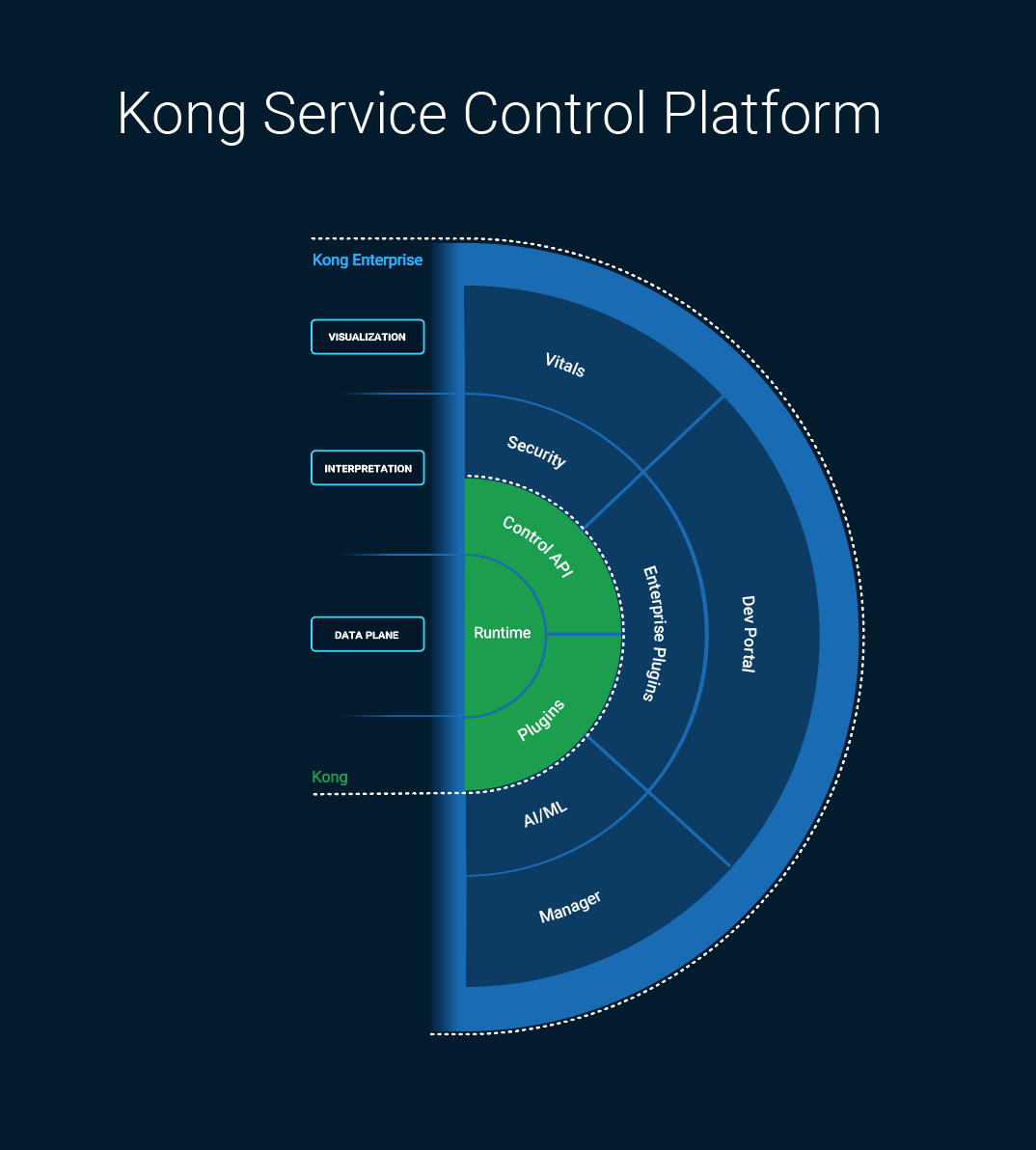
    Kong Inc. has released a feature-complete version of its namesake services broker for legacy and microservices-based applications that promises to eliminate the need for legacy application programming interface (API) management platforms.

    Company CTO Marco Palladino said traditional API management platforms, for all intents and purposes, are now dead. Formerly known as Mashape, the core technology developed by Kong Inc. has been widely employed to manage APIs. But the time has come to focus on managing services at a much higher level, he said.

    Despite Kong having been downloaded more than 45 million times, the latest version is being labeled a 1.0 release because the open source service broker has now been deemed to be feature-complete, which includes support for service mesh patterns, Kubernetes Ingress controller and backward application programming interface (API) compatibility to future releases, Palladino said.

    Kong is being positioned as a microservices API gateway capable of supporting sub-millisecond response times in a way that would not be possible to achieve using legacy API management platforms that reside in the cloud or in a local data center. Kong can be deployed on-premises or in public clouds based on virtual machines, Kubernetes or bare-metal servers. That approach makes it possible to employ Kong to manage services regardless of where they run. Kong has also developed a “Kong Brain” function that employs machine learning algorithms to optimize the flow of data traffic between services that has increased dramatically in the last few years, Palladino said.

    Palladino noted that while service meshes exist specifically for Kubernetes clusters, most enterprise IT organizations will require an approach to managing services across legacy monolithic applications and emerging microservices-based applications that are based on multiple types of runtime environments and serverless computing frameworks. Over time, Kong will integrate with various platform-specific service meshes as they emerge to further enable a more comprehensive approach to services lifecycle management, he said, adding that Kong automatically configures itself to serve traffic to new applications as they are deployed and new services are created.

    In addition, organizations can migrate from one service to another based on a different databases schema without incurring any downtime.

    When it comes to managing services, Palladino said there’s still too much focus on tribes that have emerged around specific platforms that wind up polarizing the IT industry. IT organizations clearly need a means to broker services regardless of where they run or might have originated, he said, noting API management could be viewed as a stepping stone toward achieving that goal.

    It’s not clear yet whether legacy approaches to API management are truly dead or simply in the process of transforming into a means for managing services at higher levels of abstraction. Regardless of the outcome, it’s clear that a less brittle approach to managing integration in the age of microservices will be required. Many forget, however, that in most cases a monolithic application is now just another type of service.

    — Mike Vizard

  • Microservices Momentum Accelerates

    Microservices Momentum Accelerates

    A global survey of 353 application development professionals conducted by Dimensional Research on behalf of LightStep, a provider of application performance management (APM) tools, finds a full 86 percent of respondents expect microservices to be the default architecture within five years.

    A total of 60 percent of respondents said they already have microservices in production or deployed as part of a pilot, and 92 percent said they expect to grow their use in the coming year.

    Top reasons cited for employing microservices are agility (82 percent) and scalability (78 percent).

    The downside of increased reliance of microservices is the need to manage them all. The survey finds 99 percent report challenges in using them. More than half (56 percent) reported that each additional microservice increases operational challenges, and 87 percent of those that have deployed microservices in a production environment reported they are generating more application data.

    To make matters more challenging, a full 98 percent of respondents said they have trouble identifying the root cause of performance issues associated with microservices. More than three-quarters (76 percent) said it also takes longer to resolve issues. In fact, 73 percent said it is more difficult to troubleshoot application performance problems compared to a traditional monolithic application.

    Not surprisingly, just less than three-quarters (74 percent) said they plan to increase investments in microservice performance management tools in the next year.

    LightStep CEO Ben Sigelman said that while microservices come in many forms, advances in how software is developed is clearly coming at a cost. Not only is software becoming more challenging to manage, APM tools are now a prerequisite. Historically, IT organizations only monitored their most mission-critical applications. But the level of dependency each microservice has on others requires a more holistic approach to APM, Sigelman said, noting that IT teams now need to be able to see well beyond the border of any one microservice.

    Challenges associated with managing microservices are not likely to deter organizations from eventually adopting them. The level of agility and resilience inherently built into in a microservices-based application are too high to ignore. But the rate at which they are employed might be impacted. There’s usually a direct relationship between the availability of tooling and expertise and the rate at which any emerging technology gets deployed in a production environment. The good news is advances in machine learning algorithms and other forms of artificial intelligence (AI) should make it easier to manage microservices in the years ahead.

    In the meantime, IT organizations can take some comfort in the fact that developers are being held more accountable for the microservices they build. That level of accountability tends to vary widely by organization. But the end result is generally higher levels of software quality because developers increasingly realize they can’t throw code over the proverbial IT operations wall without it coming back to them. The challenge now is to bridge the historic divide between developers and IT operations teams in a way that works best for everyone concerned.

    — Mike Vizard

  • Transition to DevOps Increasing Across IT Firms

    Transition to DevOps Increasing Across IT Firms

    Demand for faster product development and quick market release created a need for increased collaboration between Development (Dev) and Operations (Ops) teams, which eventually led to “DevOps.” With this, transition to DevOps has become one of the key points of discussion across many IT firms. This article gives you an overview of the demand and trend for organizations to transition to DevOps.

    Rise in IT innovation and burgeoning digital revolution have led to the demand for faster development and quicker releases to stand out in the IT competitive scenario. This transition eventually led to a new culture that saw collaboration between two key IT teams, development and operations teams, which the industry calls DevOps.

    DevOps established a new style of IT functioning, easing different phases of software process from product development to testing and final market release, all in a rapid and reliable way.

    Why DevOps Transition?

    Rapid delivery of independent software components and continuous integration of the same with production systems forms the key principle behind DevOps functioning.

    DevOps is often confused with Agile methodology. Though they share similarities in providing improved IT performance through rapid development, DevOps stands apart from Agile because of its efficacy in the software deployment phase, ensuring a constant communication between the two teams. Thus, DevOps is often termed as a successor to Agile.

    A collaborative approach, key for information exchange across the line, is one of the major factors driving firms to undergo DevOps implementation.

    Though DevOps is well-known as a merger of development and operations teams, an effective DevOps model extends beyond that to other key functional areas of organizations.

    Breaking the old trend of limiting individual teams to their respective work domains, DevOps brought in a scope for knowledge-sharing among them, wherein developers can extend themselves to testing and deployment and operations team members can upgrade their skill set, learning new languages, architectures and tools.

    Increased Demand for DevOps Resource

    Transition to DevOps holds a key demand in the fast-growing IT market, wherein managing with the existing infrastructure or resource plays an almost equal role as coming up with something new.

    Greenfield projects aside, DevOps deployment is most often seen in brownfield projects that encourage building on the existing resources.

    With this situation in place, there is also a lot of demand for DevOps resources across firms. The “2017 Open Source Jobs Report” from the Linux Foundation shows 60 percent demand for DevOps human resources among more than 2,000 IT open source professionals and IT hiring managers.

    This clearly shows the level of demand that transition to DevOps is holding in the IT industry.

    “If there isn’t an existing DevOps role within your company, software developers should spend time sitting with the operations team or vice versa to understand how their processes work and how they can be improved through collaboration,” said Mike Durney, CEO of the job-hunting site Dice.

    The report found:

    • Nearly 50 percent of hiring managers are keen about those DevOps resources with professional credentials such as relevant certifications
    • More than 47 percent of the companies are ready to fund certification programs for their existing personnel
    • 42 percent of companies are keen on adding DevOps skills to their hiring portfolio
    • “DevOps Engineer” profile ranks second in Glassdoor’s Best 50 jobs in America

    Despite its advantages, however, DevOps has a few challenges to overcome related to application integration, test automation, budget and skill set, among others.

    — Veritis

  • The devopsy.kinsta.cloud Containerization and Microservices Survival Guide

    The devopsy.kinsta.cloud Containerization and Microservices Survival Guide

    Containerization and microservices seemed to have leaped out of nowhere and smack into the center of the enterprise IT scene. But neither leaped from nowhere. Both containerization and microservices have been part of the fabric of enterprise tech for some time—within Linux for containers and service-oriented architecture for microservices.

    Largely, thanks to containerization, both now are moving quickly to become central components of enterprise tech. Containers in recent years—and especially in recent months—have moved from tools used in development environments to production. And the ability to manage containers as discrete services is enabling enterprises to be able to respond quickly and be agile to technology demands.

    According to a recent survey from app performance vendor NGINX, of roughly 1,800 IT professionals, while container and microservices software adoption is limited it’s use is accelerating. The survey found that only 20 percent of respondents said they are using containers in production, while about one-third are doing the same for microservices.

    That survey, not surprisingly, indicated that microservices and container use will continue to accelerate, as roughly two-thirds of respondents said that they are currently evaluating containers and 70 percent microservices.

    Microservices are workloads that perform a single task and they are not dependent on the infrastructure or other applications for their ability to complete their designated task or “service.” Microservices are very effective at providing enterprises the ability to rapidly build software that solves business problems. They also make it possible for development teams to scale their efforts and build a more resilient architecture.

    With all of that in mind, and considering the nature of the inflection point most enterprises find themselves in now, we’ve assembled this microservices and containerization survival guide. The guide consists of some of the most important storage on microservices and container management that we’ve ran in the past year.

    DevOps Teams: Containers Will Help You Become Future Ready

    According to The State of Containers 2015 Docker Adoption Survey, more than 70 percent of respondents are either using Docker or evaluating for future use. Given the overwhelming popularity of containers, this post provides three trends that DevOps teams must be prepared for.

    7 Web Interfaces for Container Management and Orchestration

    Managing containers used to be a command-line affair. But a rich and growing ecosystem of web-based interfaces for containers has now emerged. This post provides an overview of the different web UIs available for container management and orchestration.

    ‘Containers-as-a-Service’ Is a Hot Trend

    Containers are still sort of the new kid on the IT block, but already containers-as-a-service is emerging as a thing. Here’s what you need to know.

    A Closer Look at Container Monitoring

    Enterprises have to ensure that all of their microservices perform well and provide their services as designed. Beyond that, how much do they really need to know about what’s going on inside their containers? The answer to this question varies. In this post Gerald Haydtner provides an overview for container-monitoring options.

    Containers: Not One to Rule Them All

    When it comes to the container platform ecosystem, not all container platforms are created equal. This post will help you sort through the options.

    Building Microservices: A Few Considerations

    An experienced practitioner details the top five design considerations when building microservices.

    5 Docker Best Practices You Should Follow

    Support for Docker has been integrated into many products and platforms and a lot of organizations are either already using Docker containers or trying to understand how to do so themselves. Our Tony Bradley provides the Docker best practices one needs to know to succeed.

    How to Choose a Cloud Platform for Containers

    Containerization has broadened from one or two vendors to a broader, more container-agnostic world and a drive to better scalability, redundancy, interoperability and security. Amazon, Google and Microsoft each have their own unique approach to addressing these cloud container concerns as they battle each other for supremacy. Here’s a look at how to evaluate each.

    Container Security: Why Bother?

    Are containers secure? Probably not. But knowing each approach’s strengths and risks—and available options—could help ease adoption.

    Container Security Challenges: Are Container Scanners Enough?

    How secure are containers? Not very, according to open source company Red Hat, which has published a blog post blasting the container ecosystem for lacking good security processes. Here’s a synopsis of what Red Hat has to say about container security, and some additional perspective.

    For Container Security, Automation Is Key

    Regardless of the IT infrastructure element in question, if it connects to a network—even through proxies or human intermediaries—eventually someone will find a security flaw and exploit it. Compatibility issues with new applications or infrastructure elements will emerge. Because of these reasons, all IT infrastructure elements need to be managed, without exception.

    Containers and Security Q&A: Putting a Lid on Risk

    How do containers affect security? And how can IT teams do everything they need to do in order to ensure the containers in use are as secure as they reasonably can be?

    — George V. Hulme