Category: Features

  • CircleCI Adds CI/CD Service for macOS Development

    CircleCI Adds CI/CD Service for macOS Development

    CircleCI today added a dedicated continuous integration/continuous delivery (CI/CD) edition of its namesake platform for developers building applications on the macOS platform.

    Jim Rose, CircleCI CEO, said this offering is aimed at developers that either want dedicated resources to speed up their build processes or have to address compliance and security requirements that prevent them from using shared infrastructure via the existing CircleCI cloud service.

    Most of the developers building applications on macOS platforms are creating applications that will ultimately be deployed on Apple iOS devices, noted Rose. Given the popularity of those devices, the number of organizations using CI/CD platforms to accelerate creation and updates of those applications has increased, Rose added. CircleCI estimated there are now more than 30 million developers building applications on the macOS platform that would benefit from a CI/CD platform running on dedicated bare-metal infrastructure accessed via the Amazon Web Services (AWS) cloud. CircleCI’s dedicated host provides secure access to 50% more cores and more than twice the storage capacity than is available via a CI/CD platform running on top of virtual machines.

    Other capabilities provided by CircleCI include the ability to monitor the performance of apps being developed for multiple platforms in the same pipeline. Many applications deployed on iOS are also deployed on other platforms such as Android, Windows or Linux, noted Rose.

    CircleCI also provides access to testing tools that the company recently added to its portfolio of DevOps tools. Those testing tools are especially critical given the stringent requirements developers face when trying to get approval to make their iOS applications available via the Apple Store, said Rose.

    Developer productivity is, of course, a major issue for organizations trying to strike a balance between automating software development tasks and the art that goes into building applications. While developers appreciate automation, they don’t necessarily want to feel they are working in a factory. Given the demand for their expertise, many developers will simply jump ship when they feel software development processes have become overly onerous. While many managers tend to believe they have a handle on measuring developer productivity, there is often too much focus on, for example, how many lines of code are written versus the business outcomes achieved.

    A recent CircleCI survey also found that more than half (52%) of respondents don’t allow their software developers to choose their own tools. While there is a clear need for a consistent approach to building and deploying applications, organizations will find it challenging to attract and retain the best developers if they don’t allow them to experiment with different tools.

    One way or another, however, the rate at which developers can build and deploy applications is rising as DevOps best practices are adopted. It’s not clear that organizations are going to be able to absorb all that software but, in the wake of the COVID-19 pandemic, the appetite for mobile applications that drive digital business transformation initiatives has never been greater.

  • Watch Your Language(s)

    Watch Your Language(s)

    Just about every organization I am familiar with today is using more languages, frameworks, libraries, etc. than they were a decade ago. Back then, most organizations were doing a lot of Java, and maybe a little bit of PHP or .NET (almost always VB.NET). Now we have Java, Python, Ruby, Go, Swift, etc. And etc., etc.

    The problem is that employees don’t come pre-instructed with your selection of languages. Most developers can bring Java or Python and most know at least one other language well. All of them can learn (more on that in a moment), but when hiring, an organization needs to focus on the one or two languages the hiring team is using, not all the languages an organization might ask a developer to learn over the course of their employment. After all, when hiring 20 years ago, the tools of the mainframe team weren’t generally listed as requirements for a desktop developer. While there is a difference (desktop developers were only asked to work on mainframes when the shortage of experienced big iron devs got really bad), it is a similar situation today.

    You can hire with an eye to training, and most developers will be more than willing to pick up a new language and learn its ins and outs. But ask any manager that pays close attention, and they’ll let you know that there is a huge difference between time-to-productive and time-to-proficient. One manager told me that any programmer with experience could start contributing relatively quickly in Ruby, but to do the important stuff—things like knowing which array access methods were faster and the most efficient communication between Ruby and other languages—took far longer. His numbers seemed too high, in my opinion and based on my experience, so I asked around. All the managers I know that worked with Ruby (because to a great extent, this is language-dependent, so I didn’t want to make hasty generalizations though, in hindsight, the same data point in Python would have given me more responses) agreed there is a curve, and the range was somewhere between six months to two years. This is strictly anecdotal, but it seems the more technical the team in question, the longer the manager thought proficiency would take.

    But even if the lower number is accurate and applies more generally, it is an argument for keeping your language count down. Yes, some languages are better at X or Y or Z than others, but most modern languages can do just about everything an average enterprise team will ask of them. So, keeping languages within a smaller pre-defined set still allows teams to choose the best tool for the job while keeping the number of skills developers at the organization might need down to a manageable level.

    And keep wowing them. No matter what languages you are using, your user base is logging in and using the results daily—or perhaps your devices are reporting the results daily or processing them. No matter how you are delivering, you are, as our digital world shows. Keep rocking it, and do what you can to keep the number of languages under your roof down.

  • Will Splunk be Gobbled up by Cisco?

    Will Splunk be Gobbled up by Cisco?

    Word on the street is that Cisco and Splunk are in discussions about a possible acquisition. Splunk, the technology monitoring, search and analytics company could be acquired by Cisco—originally a networking company but now a complex hardware and software conglomerate.

    Splunk has generated quite a reputation as a ‘dealer’ over the years. The company, much like a drug dealer, gets you hooked and then, when you can’t live without what they’re selling, makes you pay. The difference is that what they’re selling is insight and visibility into your own data.

    For many years, Splunk’s pricing model was simple—customers paid for the amount of data that was ingested. Splunk didn’t invent this type of pay-for-what-you-use-and-consume model. For mainframe workloads, IBM has long charged clients based on millions of instructions per second, or MIPS. Likewise, the entire cloud computing business model is based on a pay-for-what-you-use model. If, for example, you leave an AWS experimental instance running over the weekend or while you’re a vacation, you’re going to pay for it (many of us have learned that the hard way).

    So why am I picking on Splunk for being a dealer? The whole value proposition of Splunk is that the more data it ingests, the more useful the software platform can be. Splunk can help operations and security teams connect disparate data points to uncover potential emerging problems or greatly reduce the time it takes to resolve an incident. However, to unlock the power, you need to push more and more (and more and more) data into Splunk.

    But here is where Splunk gets down and dirty: Like any dealer, Splunk will give teams free trials and the ability to ingest data from new areas of your business for free. Once a team starts to see the value and is hooked on the software, the Splunk sales team is right there to take your money.

    Splunk now offers other pricing models, but the stigma sticks.

    Splunk Customers are the Company’s Best Salespeople

    Splunk has done an excellent job at creating evangelists out of their existing client base. I’ve attended a lot of vendor conferences, and my experience is that Splunk’s customers are some of the most enthusiastic I’ve ever encountered. What does user enthusiasm tell me about a vendor’s product? It is either that the product is making that employee a superstar within their company or making that employee highly desirable across the broader technology market.

    At Splunk events when I have candid conversations with customers, the adoption pattern follows a fairly standardized script. The IT operations team adopted Splunk. IT operations had a ton of success and shared that with the rest of IT. Security saw ops’ success and wanted to try Splunk out for themselves. In many cases, the cybersecurity use case within the company became the bigger Splunk deployment once the platform’s capabilities were understood.

    So Why Would Splunk Sell?

    Customers like Splunk and they’re obviously seeing value. So, why would a company like that ever sell? Well, first of all, the SIEM 2.0 market vanished; security log data analysis is table stakes. What do I mean by that?

    So Long, SIEM

    The idea of security information and event management (SIEM) hasn’t gone anywhere, but now security vendors need to do more than just SIEM.

    It wasn’t long ago that those of use following the security industry tracked RSA Netwitness, Logrhythm, IBM Qradar, HPE ArcSight, RSA Archer, Carbon Black and other SIEM vendors. The reality is that all of these companies have gone through massive transformations. Those of you reading this article might be surprised by the companies that now own many of these SIEM vendors!

    Splunk is no longer unique in its approach to applying machine learning and artificial intelligence to security log data.

    AIOps—The Company Lost its Focus

    Splunk cut its teeth with operations teams. The company helped ops teams quickly find the root cause of disruptions and spot problems before the pain was felt by customers. However, operations isn’t sexy. Rather than doubling and tripling down on operations, the company expanded to security. It made sense; security organizations deal with huge amounts of complex data.

    However, as DevOps rose to prominence, Splunk has been widely left out of the conversation. DevOps teams need software tools that can normalize data across job function-specific software platforms. This would have been a perfect opportunity for Splunk—however, new competition stepped in to fill this gap.

    The World Evolved—Businesses Need Observability

    SIEM 2.0 was hot—“was” being the operative word. Today, DevOps and DevSecOps teams are looking for observability offerings. Observability tools provide teams with the ability to understand and see what is going on within systems and software from a variety of perspectives. Observability platforms can view system and cloud health and resiliency, but can also give operations teams container-level data.

    Enter the Observability Vendors

    By no means is this a comprehensive list, but my colleagues at Techstrong Research and I have come up with a list of observability vendors you should be paying attention to. Some of these vendors are pure-play observability companies while others, like Splunk, have a variety of offerings.

    •   Splunk
    •   Sumo Logic
    •   Logz.io
    •   StackState
    •   Lightstep (acquired by ServiceNow)
    •   Dynatrace
    •   App Dynamics
    •   VMware – Tanzu
    •   AWS CloudWatch
    •   Azure 
    •   Honeycomb.io
    •   Grafana Labs

    Acquisitions

    •   IBM acquired Instana for observability and Turbonomics for AIOps
    •   Cisco acquired Epsagon
    •   Cisco acquired AppDynamic for $3.7B for application performance management/monitoring
    •   VMware acquired Mesh7
    •   GitLab acquired observability distribution Opstrace 
    •   NewRelic acquired CodeStream
    •   Splunk acquired SignalFX, FlowMill and Omnition
    •   ServiceNow acquired Lightstep

    Within the observability space, there is also a tremendous amount of open source. Many vendors are coalescing around the OpenTelemetry project, for instance, that focuses on collecting data. This type of open source use makes sense—vendors should focus on areas of differentiation and customer value rather than just data collection.

    Open Source related projects

    • Prometheus
    • OpenTracing and OpenCensus from Google (folded into OpenTelemetry)
    • Zipkin (Twitter) one of the first open source tracing projects

    Why Would Cisco Want Splunk?

    Splunk’s stock has been in decline since its CEO left in Q4 of 2021. Like other technology companies, inflation and a general technology sell-off is further impacting its stock price. In addition, the company is transitioning clients to cloud-based offerings, which is often a painful process for public companies (many companies have gone private to eschew Wall Street’s prying eyes).

    Cisco has, historically, occupied the network layer. Splunk understands network data and can offer many benefits to Cisco clients.

     Splunk is an enterprise software vendor that can scale in a non-linear way if Cisco can add stability to Splunk’s leadership and vision.

    Now, will the deal for Splunk get done at $20 billion? No. But a possible acquisition is very possible, especially given the fact that Splunk’s runway is short and getting shorter.

  • IBM Shifts Mainframe App Testing to the Cloud

    IBM Shifts Mainframe App Testing to the Cloud

    IBM this week revealed it has added the ability to set up testing environments on the IBM Cloud for z/OS mainframe applications.

    In addition, on March 15, IBM will make available an IBM Z and cloud modernization stack to make it simpler to modernize mainframe applications by adding application programming interfaces (APIs) using a cloud-native set of DevOps tools that run in a Kubernetes environment.

    Tarun Chopra, vice president for the IBM Z Hybrid Cloud, said IBM Z as-a-service on IBM Cloud for development and test eliminates the need to dedicate mainframe capacity to an application testing environment. Instead, mainframe application testing can now occur in the IBM Cloud, he added.

    Currently available as a closed experimental today, IBM plans to make IBM Wazi as-a-Service (Wazi aaS) for z/OS generally available in the second half of this year. That offering will enable DevOps teams to self-provision an instance of a z/OS virtual server on a secure private space running on IBM Cloud.

    That hybrid approach means application testing no longer disrupts mission-critical applications running in production environments on a mainframe, added Chopra. The overall time required to gain access to a z/OS development and test environments will drop from days or weeks to six minutes or less, he said.

    At the same time, it will become easier to modernize mainframe applications by making them more accessible to other applications via a set of secure APIs. Many organizations today increase their technical debt by duplicating functions that already exist within mainframe environments simply because those functions are not easily accessible to developers. The IBM Z and cloud modernization stack makes it simpler to modernize mainframe applications to drive a digital business transformation initiative without increasing the overall technical debt an organization needs to service, noted Chopra.

    While many workloads over the years have been migrated off mainframes or simply retired, the applications that run on z/OS today are still among the most mission-critical that organizations run. A recent IBM Institute for Business Value study found 71% of respondents said mainframe-based applications are still central to their business strategy. Four out of five respondents also noted they needed to modernize those applications, as well.

    Modernizing mainframe applications is a less complicated endeavor than migrating them. The challenge is that building, deploying, maintaining and securing all the APIs required to do so represents a significant amount of effort. IBM said it is committed to simplifying the mainframe app modernization process.

    One way or another, mainframe applications are becoming part of the larger distributed computing environment. Most organizations that have invested in mainframe applications continue to run them in on-premises environments because of the unique transaction processing capabilities a mainframe provides. Mainframe applications that have been migrated to the cloud generally run more slowly than they did when running natively on a mainframe. There may still be circumstances where migrating a mainframe application to the cloud makes sense as part of a larger IT strategy. However, like every other application being accessed over a wide area network (WAN) there will always be performance tradeoffs to consider.

  • Credit Karma Looks to Open Source Distributed App Platform

    Credit Karma Looks to Open Source Distributed App Platform

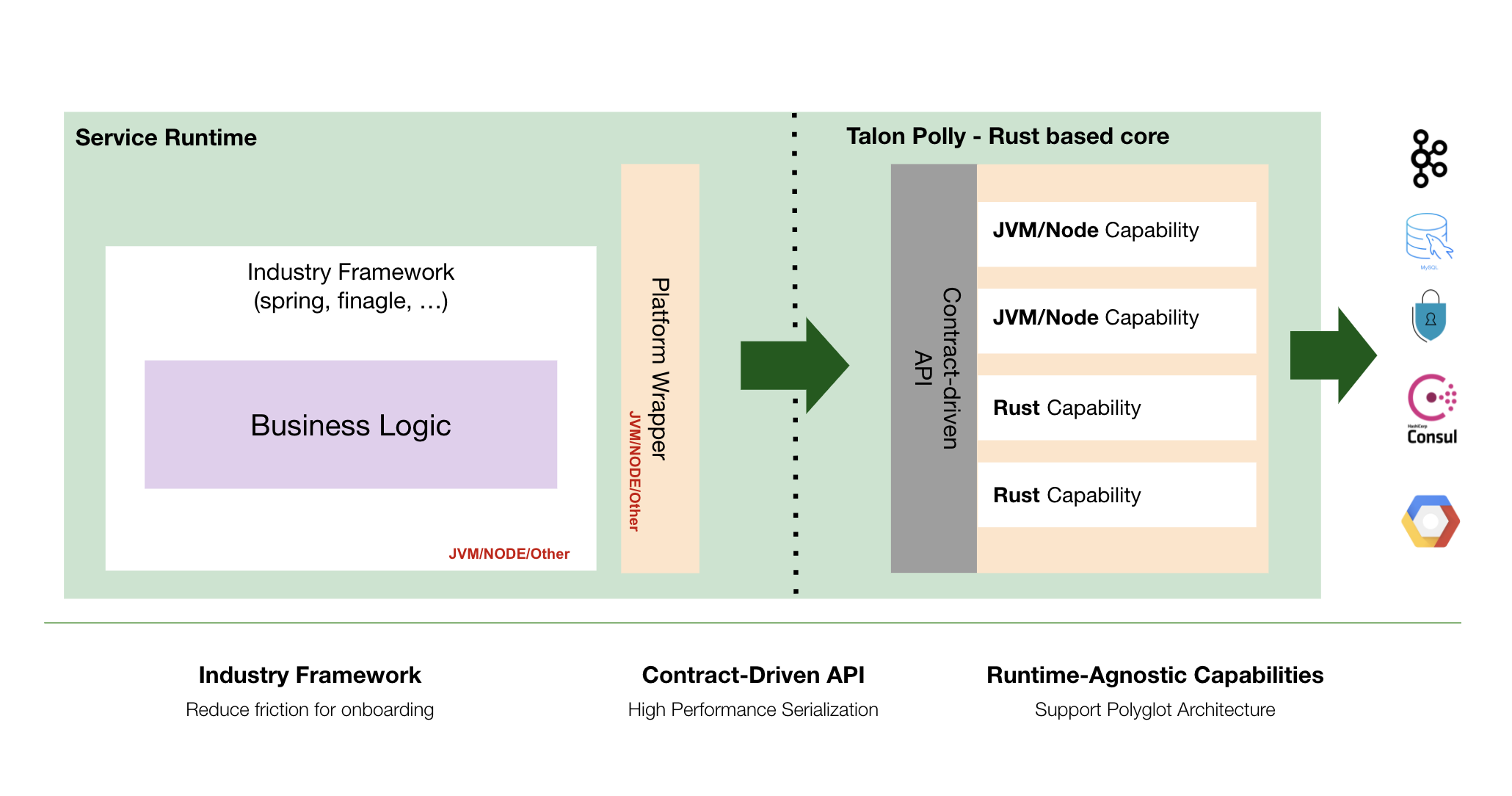
    Credit Karma has launched an application platform, dubbed Talon Polly, that makes it simpler to deploy microservices across multiple runtime environments.

    Richard Pounder, principal software engineer at Credit Karma, said the consumer financial services provider expects to make Talon Polly available as an open source project next year.

    Written in the Rust programming language, Pounder said Credit Karma created Talon Polly to provide its developers with a language-agnostic platform for building and deploying applications. Talon Polly can be deployed as a sidecar using containers or as a process running within a software environment.

    While there is no shortage of frameworks for building and deploying software, Pounder said Talon Polly is designed to make it easier for development teams to reuse code and components across multiple applications using, for example, a contract-based library included in the framework. That approach also enables Credit Karma to ensure a common set of security policies are enforced across those application environments, he noted.

    Ultimately, the goal is to enable developers to spend more time writing business logic rather than mastering the nuances of multiple application development frameworks created for specific application environments, said Pounder.

    It’s not clear to what degree other frameworks may emerge to address the same issues at Talon Polly. Odds are good that other organizations that need to deploy distributed applications built using multiple programming languages have faced similar challenges. The Cloud Native Computing Foundation (CNCF) has also adopted Dapr, a set of application programming interfaces (APIs) created by Microsoft that are deployed as container sidecars to make it simpler to build distributed applications, as an incubating project.

    Regardless of approach, the rise of distributed microservices-based applications is creating a significant management challenge for DevOps teams. Each microservice is built by different development teams that prefer one programming language over another for any number of reasons. Deploying and updating those microservices across a distributed computing environment requires more sophisticated orchestration of workflows, given all the dependencies that exist between microservices.

    Of course, it’s not quite clear yet the degree to which microservices-based applications will supplant legacy monolithic applications. Most new applications are being constructed using microservices to make applications more resilient. However, the number of legacy monolithic applications running in existing IT environments means it could be years before microservices-based applications will ever outpace them. As such, DevOps teams will be managing a mix of monolithic and microservices well into the second half of this decade.

    The paradox is that while microservices-based applications are more resilient because calls to services can be rerouted in the event of a disruption, the overall application environment becomes more complex as the dependencies between distributed microservices increases. As such, many organizations are opting to use microservices to build applications only when a certain level of resiliency is required or it’s been determined that a function likely to be used by multiple applications is more easily accessed via a microservice that has its own API.

    One way or another, going forward, it’s not so much a question of whether microservices will be employed but rather to what degree and across how many applications.

  • Kong Enterprise 2.7 Simplifies API Management

    Kong Enterprise 2.7 Simplifies API Management

    Kong Inc. this week advanced its service connectivity platform strategy with an update to Kong Enterprise that makes it simpler to collectively manage groups of application programming interfaces (APIs).

    Michael Heap, director of developer experience for Kong, Inc., said that capability will make it simpler to, for example, assign rate limits to different tiers of APIs.

    In addition, Kong Enterprise version 2.7 adds support for real-time and event-based use cases involving the open source Kafka streaming platform and webhooks. Usage of event-driven architectures is rising as more organizations embrace digital business transformation initiatives that require near-real-time processing versus relying on traditional batch-oriented applications, noted Heap.

    Finally, IT teams can now also securely store secrets such as user names/passwords, API tokens, database credentials and private keys that might be used to access Kong Gateway. An improved user interface for Kong Manager UI makes it simpler to configure the Kong OpenID Connect (OIDC) Plugin for the Kong Gateway.

    Overall, Heap said, the latest update also provides 25% increased throughput and improved latency. In tests run by GigaOM, a third-party research firm, Kong Enterprise 2.7 achieved 52,250 transactions per second (TPS) maximum throughput with a 100% success rate.

    Kong is making a case for a service connectivity platform that enables an IT team to manage APIs at a higher level of abstraction by integrating all Layer 4 through Layer 7 services for both monolithic and microservices-based applications. Rather than having to manage an array of networking services and associated services in isolated silos, that layer of abstraction makes it simpler to manage distributed applications that have dependencies on a wide range of APIs.

    In general, the number of APIs that organizations are using both internally and externally has expanded tremendously over the last several years. The challenge now is finding a way to not only manage and secure all those APIs but also retire them as new services come online. Many APIs are created and simply forgotten about because their developer neglected to inform IT operations of their existence. Those so-called “zombie APIs” then become a cybersecurity liability when cybercriminals discover they can surreptitiously exfiltrate data via those APIs.

    APIs are, of course, an integral element of any software supply chain. But as high-profile security breaches put software supply chain security in the spotlight, it’s only a matter of time before IT teams look for more efficient ways to manage and secure APIs at scale.

    Inevitably, that also means organizations will need to decide how much they want to rely on proxy software, API gateways and service meshes to achieve that goal within the context of a larger service connectivity platform.

    In the meantime, the days when APIs were managed in isolation from the rest of the IT organization are coming to an end. The only thing left to determine is how involved API developers need to be in their ongoing life cycle management.

  • Unreliable Server Scare | Information Batteries | ARM IPO PDQ

    Unreliable Server Scare | Information Batteries | ARM IPO PDQ

    Welcome to The Long View—where we peruse the news of the week and strip it to the essentials. Let’s work out what really matters.

    This week: We worry about chips failing randomly, we ponder a new way of thinking about workload shifting, and we grok Arm’s IPO.

    1. Smaller Features Lead to Random Failures

    First up this week: Could cosmic rays be causing increasing numbers of errors in cloud servers? As chips get faster and more densely packed, the worry is that undetected bit-flips could cause serious problems.

    Analysis: How can you mitigate the problem?

    As workloads grow in number and complexity, this is becoming a real issue—not merely theoretical. (See also: DevSecOps worries such as Rowhammer.) Think about where the critical data are and how to detect random errors. Even consider running important workflows in lockstep pairs.

    John Markoff: Tiny Chips, Big Headaches

    Imagine for a moment that the millions of computer chips inside … the largest data centers in the world had rare, almost undetectable flaws. … As the tiny switches in computer chips have shrunk to the width of a few atoms, the reliability of chips has become another worry for the people who run the biggest networks. … There is growing evidence that the problem is worsening with each new generation of chips.
    …
    Both Facebook and Google have published studies describing computer hardware failures whose causes have not been easy to identify. … Facebook researchers noted that some processors would pass manufacturers’ tests but then began exhibiting failures when they were in the field. … Smaller transistors, three-dimensional chips and new designs that create errors only in certain cases all contributed to the problem … according to Google.
    …
    Intel executives said they were familiar with the Google and Facebook research papers and were working with both companies to develop new methods for detecting and correcting hardware errors. [But] computer engineers are divided over how to respond to the challenge.


    Have we hit a wall? So asks Thutmose V:

    For more than 50 years, semiconductor manufacturers have been trying to keep up with Moore’s Law, which … has effectively served as the target for semiconductor engineers to push them forward. … The size of some parts of the transistors is now 10 nanometers or less. 10 nanometers is about equal to the width of 100 silicon atoms—100 atoms is not very many.
    …
    When things are that small, does quantum randomness start to be noticeable? Normally if the odds of something failing is a trillion to one, you don’t need to worry. But if you have 10 billion transistors operating at a clock speed of 3 billion times a second, a one in a trillion chance of failure is nowhere near good enough. … It is a miracle these things work as well as they do.


    We’ve known about the problem for years, but only now is it becoming reality, says dsgrntlxmply:

    We observed certain network failures to be caused by corruption of an on-chip routing table memory in a SoC that lacked parity protection for these tables. The failure rate was low, but was higher in units that were deployed at higher altitudes. … The problem was eventually mitigated by software table sweeps, and in newer SoC generations, by parity in critical tables.

    These Single Event Upsets are said to be caused by muons generated by high energy cosmic ray interactions in the upper atmosphere. Third semester undergrad physics.


    2. Mind-Bending Speculative-Compute Research

    Many of us are familiar with delaying a workload until a time when servers are idle—or when energy is cheap. But some fascinating research asks: What if we could predict a future workload and perform it in advance?

    Analysis: “Information batteries” can be cheaper than Li-ion

    The researchers argue that pre-caching even parts of a workload’s output when energy costs are low—or even negative—can save far more money than traditional grid-scale storage such as batteries or pumped hydro. For example, speculatively transcoding video versus generating it on the fly, or predicting future machine learning training workloads.

    Caitlin Dawson: A New Way to Store Sustainable Energy

    Renewable energy has an intermittency problem. … What if surplus renewable energy could be stored as computation? … That’s the thinking behind “information batteries,” a new system proposed by … Barath Raghavan, an assistant professor in computer science at the USC Viterbi School of Engineering … and Jennifer Switzer, a Ph.D. student from UC San Diego.
    …
    When renewable energy is available in excess, it is used to speculatively perform computations. … The stored computed results can then be used later when green energy is less plentiful. … For instance, every day, YouTube data centers transcode more than 700,000 hours of videos to different resolutions. Many of these computations are predictable and can be performed at a time when there is excess green energy.
    …
    [But] computations that are completed in advance do not need to match exactly with the computations completed at a later time. … The challenge, said the researchers, is determining what computation to perform, where and when, and how … to efficiently retrieve the results later. … It is only possible in some workloads and in some contexts. But Raghavan believes with improved prediction and integration into large systems, the technology points towards a promising future alternative.


    This isn’t just batch computing with a fancy name. cognizant_ape explains:

    On AWS we do a lot of batch processing when the data centers are low on traffic. This is just the standard SPOT instances which you can trigger once the cost goes below a certain amount and then end when it goes about a certain amount.

    The big issue is being effective with I/O and setup time. The article seems to be getting ambitious to the point of a distributed compiler with a flexible optimization metric.


    Cut to the chase. It hinges on prediction, says bradley13:

    Predicting loads is easy, but predicting the computations that will make up those loads? Not so much. … Imagine: Most employees start work in an hour — let’s predict which database queries they will generate. Your success rate better be high.


    3. Confirmed: Arm will IPO, Not be Sold to Nvidia

    SoftBank and Nvidia have bowed to the inevitable. Arm, designers of ubiquitous chip cores, will IPO sometime in the next 12 months.

    Analysis: The only sane choice, but ecosystem risk remains

    As I’ve said before, it seemed everyone was against the idea of Nvidia owning Arm. It put the kibosh on Arm’s open licensing stance, dooming the ecosystem to scraps from the table as Nvidia grabbed first dibs on everything. Now regulators must turn their attention to the very real risk that Nvidia will still acquire Arm anyway—via the stock market.

    Richard Waters, Arash Massoudi, James Fontanella-Khan and Antoni Slodkowski: $66bn sale of chip group Arm to Nvidia collapses

    The deal, which would have been the largest ever in the chip sector, was set to give … Nvidia control of a company that makes technology at the heart of most of the world’s mobile devices. A handful of Big Tech companies that rely on Arm’s chip designs, including Qualcomm and Microsoft, had objected to the purchase [arguing] that Nvidia would get an unfair advantage by having first rights to Arm’s technology.
    …
    Jensen Huang, Nvidia’s chief executive, hoped to use Arm’s processor designs to cement his company’s growing role in data centres. … Nvidia abandoned its pursuit of Arm at a board meeting on Monday, said a person familiar with the discussion.
    …
    The deal’s failure brought an immediate management shake-up at Arm, with chief executive Simon Segars replaced by Rene Haas, head of the company’s intellectual property unit. … In the UK, where politicians view Arm as a strategic national asset, attention is set to shift to whether the company will be listed in London [but] Haas said … no decisions had been made on where Arm would be listed.


    Reminding us why this matters to DevOps, here’s Timothy Prickett Morgan:

    Now there is no question that Arm Holdings will be going public. … The plan is to do so before the end of [its] fiscal year in March 2023. … Arm Holdings will be returning to its IP licensing roots, having spun off some uncore business back into SoftBank, and seeking out new markets as it has been able to do with hyperscalers [and] cloud builders.
    …
    When Intel was worried about AMD Epyc chips, what it really needed to worry about was boosting price/performance to keep Arm CPUs out of the hyperscaler and cloud builder datacenters. [But AWS] has Graviton Arm server chips on a pretty regular schedule, and you can bet Masayoshi’s last yen that Graviton4 will debut at re:Invent 2022 this year.


    But what happens next? Pun it up, HereAndGone:

    If Softbank is going to take ARM public, Nvidia will find it much cheaper simply to acquire a controlling interest. … Looks like a duck, walks like a duck, but cheaper than a duck—while ducking regulatory issues. This plan is not quacked up to solve what it pretends to solve and will likely prove most fowl.


    The Moral of the Story: Fall seven times and stand up the eighth


    You have been reading The Long View by Richi Jennings. You can contact him at @RiCHi or tlv@richi.uk.

    Image: Nicole Geri (via Unsplash; leveled and cropped)

  • No Matter How Things Change, Have a Plan

    No Matter How Things Change, Have a Plan

    Had enough change yet? It is almost amusing that I and some other tech people had that conversation a decade ago, and since then, nothing has slowed down. Our conclusion was that, for the near future, change would be constant. That conclusion was right; I’d have to ping everyone else to see what they think, but “near future” turned out to be longer than I expected.

    Inevitably, though, change requires taking a breather at times. It appeared that high-tech was finally ready to admit that burning out your staff was not a viable long-term business model, and was slowing down … and then, COVID-19 hit. Now I’m hearing rumblings about going back to non-stop change as if the last couple of years were a vacation and staff is all rested up and ready to replace massive chunks of the infrastructure.

    The reason that change requires intermissions, though, is not 100% about staff and burnout. That only shows up when you’re making a ton of change non-stop. Before staff burnout becomes an issue, recovery and business continuity plans become outdated. At the rate we’ve been running, I’d go so far as to say they are likely useless.

    Yes, all this change has brought us some cool stuff. While we are busier, some of the busywork is far easier, or even non-existent now—but that doesn’t change the fact that you need to breathe. This is a perfect time to go over plans to keep the business on its feet in case of IT catastrophe—or at least some major systems catastrophe. Saying “We’ll just deploy a new version” is cool, but it only works in some scenarios. I touched on this and discussed one case where it doesn’t work in October 2021. But there are a ton more. Every environment is different, but hardware failures have not disappeared and destructive writes still occur, as just two more examples. Your infosec team can give you a few more examples.

    Knowing what you’re going to do when the worst-case scenario happens is huge. And for those who’ve never been through it, knowing before people are stressed and asking you for a timeline will save you a lot of headaches.

    For those who’ve never had a DR or business continuity plan, consider it. At least have a basic DR plan that lists critical systems, things most likely to go wrong and what the steps are to recover it and get things moving again. The process of making such a list will often uncover things that should be done but aren’t—like backups or backup verifications.

    For those with a DR or business continuity plan, I’ll take a wild shot and say, “It’s out of date.” Organizations tend to create them and then forget about them. These plans should involve a bit of each project, so it’s taken care of in bite-sized chunks, but—probably because the first implementation of DR or BC is normally a massive project—it tends to be set aside and revisited every few years. Don’t do that.

    As I’ve said before, you and yours have built the heart of the modern enterprise. Don’t forget to protect it. It doesn’t take much to use some of these sweet new technology advances to put in DR procedures. Tack DR review/updates onto each major initiative, be it a new product or a big change to existing software. And keep rocking it. If you have a say in your organization, consider slowing the pace down for a bit and even updating DR. If you don’t have a say, may your employer be wise enough to do so.

  • Techstrong Research DevOps Radar Report 2022

    Techstrong Research DevOps Radar Report 2022

    You can’t control the pace of change; instead, consider that we are in a process of reinvention—both with regard to the way organizations use technology and how vendors position their offerings. At the same time, it’s never been more important for IT organizations to have complete visibility into the way technology is used from both a security and operations perspective. 

    This need to embrace reinvention while continuing to have broad and deep insight across all technology platforms led me to create a 2022 DevOps Radar Report. In this article, I highlight three near-term priorities that must be on every technology team’s radar. In addition, I’ll point out some long-range radar trends that should be on your agenda.

    Collision Warning! Your Current Radar View

    API Security

    APIs are the lifeblood of the cloud-native and app-based economies. Increasingly, poor API security across a variety of applications and systems puts your organization at risk. A compromised API or the use of unsupported or outdated APIs can prove to be an easy attack vector for cybercriminals. In addition, API vulnerabilities are calling into question how organizations approach application security and the usefulness of web application firewalls (WAF) and encryption protocols. Therefore, API security is rapidly becoming a top security priority for enterprise security teams and software professionals. 

    Failing to adequately manage the security of APIs creates a host of new challenges and questions that you must consider. For example, who is using which APIs? Are your APIs updated? Did your DevOps team evaluate the security of your APIs during their selection process? Have you formalized the way your organization is evaluating API security?

    It is increasingly clear that an API breach can lead to the downfall of your entire digital software strategy—but it doesn’t have to be this way.

    At Techstrong Research, we segment the market into “pure-play” API security vendors and larger security vendors with specific API security offerings. Our team will be publishing a Market Vista report on the API security landscape soon, so if you want to share your opinion or thoughts, please reach out.

    Below is a brief list of some of the vendors we are tracking in the API security market. Of course, expect consolidation—some of these pure-play vendors will likely be acquired in 2022.

    Pure-play API security vendors we’re tracking include:

    General security vendors with API security offerings that we’re tracking:

    Observability is Evolving to AIOps

    Modern applications are composed of containers and APIs that your organization can’t control, and into which visibility is difficult. Monitoring and application performance management (APM) solutions aren’t new; for many years log vendors built their businesses on collecting log files and sending alerts … so what’s changed?

    First, logs without context are meaningless. You need to understand upstream and downstream dependencies. Additionally, speaking for myself, I’m a mere mortal—if your teams are also made up of mere mortals, there is no way they can ingest, correlate and understand the tsunami of incoming DevOps log data quickly enough to take proactive measures.

    Besides the need to understand context, we are dealing with multiple cloud and on-premises platforms that each have their own logging protocols. Ultimately, the goal of observability and AIOps is to understand what’s happening across and among all these environments and technologies so you can detect and resolve issues as quickly as possible to keep your systems efficient and reliable and your customers happy. 

    Humans are the Biggest Security Vulnerability

    As an industry analyst, I see our clients pouring resources into cybersecurity efforts to prevent zero-day attacks and sophisticated advanced persistent threats (APTs). These threats, while real enough, are mostly external and may not pose as great a threat as many organizations believe. In fact, the vast majority of security vulnerabilities are caused by:

    • Well-meaning employees making innocent mistakes, including:
      • Falling victim to phishing attacks
      • Poor corporate password policies
      • Cloud misconfigurations and open ports
    • Technical debt—relying on older software and hardware that was never designed for a 100% mobile workforce, for example

    The first step in combating this problem is improving security awareness and building a cybersecurity culture. That starts with everyone in your organization understanding that security is a team sport and that it is a 24/7/365 responsibility. Even if you work from home; even when you’re cooking dinner while checking email on your phone, you need to have your “corporate security/Is it safe?” hat on.

    At the same time, machine learning, AI and automation have a role to play. There are emerging offerings that help enforce DevSecOps best practices and help security teams reduce the constant noise so they can focus on the most vital threats.

    Longview Radar: Plan Your Strategy Now

    To support emerging business models, what do DevOps leadership teams need to be thinking about from a long-term perspective?

    • Web3/Web 3.0 and the potential for change to the internet business model. But there is still a ton of opportunity with Web 2.0.
    • How will you support low-code/no-code? As a business model, vendors are selling directly to business units—it’s likely that your IT team has an existing solution to solve the business pain point(s).
    • Packaged software offerings that include blockchain, NFTs and other digital ledger technologies.
    • How to upskill teams, both from a technical perspective and a business perspective.
    • Providing developer teams with the tools they need while establishing guardrails to enforce governance and compliance requirements.
    • How to manage cloud costs in a predictable way no matter how many cloud vendors your organization uses.

    Conclusion: You Can’t Put the Brakes on Change

    Attempting to control change and the speed of reinvention is futile. You need to get comfortable riding the waves of industry change, or you’ll be swept away! Every IT leader needs to learn how to roll with and manage the ebb and flow of business, IT and personnel change.

    The best place to start is by building a successful culture within your organization. Although we often talk about technology-focused solutions to business problems, the first step on this journey doesn’t involve tech at all; it involves helping IT and business teams understand each other’s pain points and learn how they can each support a continual reinvention process.

    I will be tracking these incoming radar targets and other associated trends throughout the year and I look forward to your input. Do you think I missed something? Have a question or want to share what your organization is doing to support the need for continual reinvention? 

    Feel free to engage with me – @DDKirsch, LinkedIn or, of course, email. 

  • How Stream Processing Goes Beyond Real-Time

    How Stream Processing Goes Beyond Real-Time

    How fast is real-time? According to Robert Miller’s 1968 seminal study on human-computer interaction, we perceive a response time of 100 milliseconds or less as instantaneous. This is much quicker than the average human reaction time, which one online test clocks at 273 milliseconds.

    Nowadays, customer-facing applications need to respond in as close to real-time as possible to win our attention and meet standard requirements. For example, 100 milliseconds is a golden rule for credit card processors to meet SLAs. Especially in our new remote-first economy, other areas like media, health care, retail and manufacturing need to take full advantage of real-time data processing to enhance digital business and stay relevant. Yet, leveling up with real-time requires some technical nuances that might be challenging to implement with the current developer skills gap.

    According to Manish Devgan, chief product officer at Hazelcast, the problem with most data management techniques is that data isn’t being processed in-stream at the edge. Instead, data gets stored and thrown into a data lake where it accumulates, unfulfilled. To make matters more complicated, decentralized data management means organizations may be overseeing many different data lakes, adding to the potential for unused data and increased latency.

    I recently met with Devgan to learn how in-memory stream processing goes beyond real-time data. According to Devgan, the secret sauce is processing incoming data in-stream while tying it to persistent storage to create context. By doing so, companies could unlock more innovative real-time experiences, he said.

    Use Cases For Real-Time

    Real-time presents many opportunities for business operations and end-user customer engagements. This is especially true in the financial sector. For example, Devgan explains how one bank was able to use real-time data at the moment of customer interaction at their ATMs. The system was able to fetch a history of the user account and extend an offer for a low line of credit, increasing their total loans by 400%. Capturing value at the moment of user intent is a golden opportunity, said Devgan.

    Capital One is another example of a financial institution leveraging advanced technology to improve the product experience. “They’re one of the leading banks in terms of technology,” said Devgan. Capital One’s threat detection system calls a machine learning model in real-time to detect and prevent fraud. Only by acting on incoming data in the moment of interaction can preventative responses like these be signaled.

    Other scenarios are also beginning to incorporate increased real-time analysis. “This split-second preemptive decision-making is important for many other use cases,” said Devgan. Physical retail might loop into customer loyalty programs at point-of-sale systems to increase in-store spending. Or, automobile manufacturers may want to use real-time processing to detect a problem with their robotic arms sooner rather than later.

    Real-time vs. Stream Processing

    When an event comes in, it usually has very little information. But when you look up a customer profile and connect it to a greater context, you can direct further actions. “Correlating data in motion with data at rest is where the magic happens,” Devgan. This distinction uncovers the difference between real-time data and stream processing.

    The real-time label tends to get thrown around a lot, and it’s quantified differently for different groups. Real-time might be five minutes for some applications but 10 milliseconds for others. Real-time could simply mean that a system accesses data at rest very quickly, delivering perceivably “real-time” results.

    On the other hand, stream processing incorporates data at rest and data in motion. It computes incoming, in-stream data and correlates it with data at rest. “You don’t let the data land — you process it as it comes in,” Devgan said.

    For years, enterprises have been collecting and storing exorbitant amounts of data. A survey by Seagate and IDC reveals that 43% of data collected is largely unleveraged and other studies estimate the amount of this “dark data” is over 50%. And, not acting upon data effectively makes it just another pile on top of the growing mountain of technical debt.

    There is a significant storage expense for holding on to too much data, whether on-premises or in the cloud. But, the paradigm is shifting a bit, said Devgan. Organizations don’t want to hold onto everything. The attitude is beginning to shift toward “garbage in, garbage out.”

    Technology Behind Real-Time Processing

    So, what sort of technology does stream processing require? Processing data at the edge requires some fundamental changes to design thinking. For one, since data must be computed in-stream, there’s more emphasis on in-memory processing. Devgan explained this as “pushing compute around instead of pushing data around.” To enable this, Devgan pointed to open-source projects like Jet that provide powerful distributed batch and stream processing.

    SQL has a storied history of acting upon data at rest. Now, Devgan said, he noticed the reemergence of SQL in a stream processing context. Though the industry is still defining how the SQL dialect will conform in a streaming world, he’s bullish on the prospect of SQL guiding this area. “Streaming SQL will be the lingua franca for streaming,” he insisted. We’re also in an early era of determining how to bridge the stateful and serverless worlds, Devgan added.

    But regardless of computing location, it will come down to the net customer experience outcomes. “People want to build their business applications and are less worried about the operational management of the system,” said Devgan. Whether it’s building real-time offers for e-commerce or implementing fraud detection, it will come down to the numbers. There is also a role for stream processing in health care to optimize physical resources and enhance patient experiences with real-time data. In all these scenarios, rapid access to data and processing at the edge will determine much of their success.