Category: Blogs

  • DevOps Chat: ChefConf Update with Chef’s Nell Shamrell-Harrington

    DevOps Chat: ChefConf Update with Chef’s Nell Shamrell-Harrington

    2019 is shaping up as a “coming home” year for Chef. After recently reaffirming its commitment to an open source strategy, the company is gearing up for the best ChefConf yet. ChefConf, scheduled for May 20-23, is coming home to Seattle and many of the Chef favorites including Adam Jacobs, John Willis and more will be speaking.

    I had a chance to catch up with Nell Shamrell-Harrington, principal software development engineer and community engineering lead at Chef, who gave us a great preview of the whole event as well as her own presentation, and shared what her most anticipated sessions and activities are.

    You can still register for ChefConf, as well as get more information at: chefconf.chef.io/

    As usual, the streaming audio is immediately below, followed by the transcript of our conversation. Enjoy!

    Transcript

    Alan Shimel: Hello, everyone, this Alan Shimel, DevOps.com, and you’re listening to another DevOps Chat.

    Today’s DevOps Chat is all about the upcoming Chef Conference, and I’m happy to be joined by Nell Shamrell-Harrington, Principal Engineer at Chef. Nell, welcome to DevOps Chat.

    Nell Shamrell-Harrington: Hello, Alan! Greetings from Seattle. It’s fantastic to be here.

    Shimel: Yes, it is. How’s the weather in Seattle?

    Shamrell-Harrington: Surprisingly sunny today, and it wasn’t raining when I came in, so pretty darn good for Seattle in April.

    Shimel: Absolutely. Well, look—in April, April showers. But, you know, the whole weather in Seattle thing is a bit of a fallacy. You know, they get—

    Shamrell-Harrington: What I tell people, when they ask me does it rain a lot, I said, “Yes, but it’s not, like, soaking rain. There’s a constant mist in the air that gets in to your bones and makes you cold.” So, you learn to deal with that, but yep, greetings from beautiful for today, at least, Seattle.

    Shimel: Good for—[Laughter] good for you. Alright, so now, the big news is, we are, what, about a month, maybe a month and a week, a month and 10 days out of ChefConf, right?

    Shamrell-Harrington: We are indeed. I need to write my keynote. [Laughter]

    Shimel: I would say, let’s get started, yeah—might be a good idea. And this year, after ChefConf having kinda wandered around for a few years to Chicago and Austin and I think Santa Clara I was at one and a bunch of other places, you guys are coming home to Seattle, right?

    Shamrell-Harrington: We are indeed, and we are very excited about this. We look forward to welcoming the entire Chef community to our home of Seattle.

    Shimel: Absolutely. And when we say coming home now, you know, I think it’s figuratively and literally and kinda philosophically.

    Shamrell-Harrington: Absolutely.

    Shimel: As ChefConf really represents a sort of coming home for Chef in a lot of ways, do you agree?

    Shamrell-Harrington: I agree. We made the recent announcement—which I know you covered on a previous episode—about 100 percent of our product code now being open source. And one of the reasons we did that was, Chef was created through the open source community. Chef—I mean, the open source community built every piece of the foundation that Chef stands on, so we are returning to those roots with open sourcing 100 percent of our product code and a lot of the discussion about that will be at ChefConf in our geographical home as well.

    Shimel: Yep. And, you know, I mean, the open source, reaffirmation of the open source commitment, I think, is one part of it. I think another part of it, though, Nell is—you know, look, I’ve run DevOps.com now for five, six years, right? And when I first got into DevOps, you know, Chef was one of the blocks of granite, if you will, upon which the DevOps foundation or the DevOps world was kinda built.

    And over the years, you know, there’s been a lot of shiny toys that have come, as such happens in the tech space, right?

    Shamrell-Harrington: Of course.

    Shimel: And you sort of say, “Yeah, you know, that was—you know, Chef almost was old and what is it doing to stay current? Is it still relevant? And there’s Kubernetes” and all of these things. But to me, this ChefConf represents a bold, provocative, confident Chef coming, in their home court, kinda like the Hawks, right, coming out of the—

    Shamrell-Harrington: Very much so, or their home stadium, but yes.

    Shimel: – with the 12th man, and saying, “Hey, man, we’re still here, we’re still kicking, but we’re still innovating, we’re still true to our roots, and we’re still helping people with DevOps.” Fair?

    Shamrell-Harrington: Absolutely. I believe that is completely fair. We are walking this DevOps journey together, both the Chef community and Chef the company as well. And this is bringing us back into sync.

    Shimel: Cool. So, let’s dive in a little bit. You mentioned the open source commitment, and we have covered that before. Give us some—you know, and you’re gonna keynote, right?

    Shamrell-Harrington: I am, indeed. I’ll be keynoting, I’ll be first up on day two. So, make sure to be there on time.

    Shimel: Can we get a little preview without getting in trouble?

    Shamrell-Harrington: Absolutely, we can. So, I will be discussing developing software through a community. When I was starting to brainstorm this talk, I was worried that—you know, I’m a Principal Engineer. I’m very used to giving technical talks. I was worried people would respond with, “Why are you giving a cultural talk?” And I realized, open source community, it’s not cultural or technical, it’s both. And that’s really where the magic of working in open source Chef has come.

    We work on fantastic technologies, we work with fantastic technologies including Kubernetes, Terraform, and so many more, but we do it with amazing humans.

    Shimel: Yeah, absolutely. Now, Nell, you’re not allowed to mentioned your keynote, but give me what you’re looking forward to, the top three things at ChefConf this year that you might be looking forward to. And if you wanna do five, feel free.

    Shamrell-Harrington: Absolutely! Well, for ChefConf itself, I’m really looking forward to the Community Summit on Monday, May 20th. That’s when we get together, we hold a bunch of open spaces, we talk about what Chef is doing and where we as both a company and a community wanna go.

    So, there’ll be a lot of talking at the summit on Monday, and then on Thursday, we have our hack day. It’s not a competitive hackathon, it’s more people getting together in groups and building something together. So, after we talk on Monday, we’ll start building what we’ve discussed on Thursday, and I hope to see everyone there.

    Shimel: Great. So, that’s one.

    Shamrell-Harrington: Right.

    Shimel: What are some of the others?

    Shamrell-Harrington: As far as the sessions go, we have sessions from people from retail, government, banks, major cloud providers, and so much more. A few that I am particularly looking forward to are “A Habitat for Democracy.” That’s going to be by Chris Alfano of Code of America. They use Habitat to help them—they use Habitat for civic hacking, essentially. So, looking forward to hearing more from him.

    Another one is, “FIPS Doesn’t Have to Be a Four Letter Word” from Keith Walters of TapHere! FIPS is Federal Information Processing Standards. It is as boring as it sounds, but it is extraordinarily important for our government customers, especially those who work in particularly sensitive areas of the government.

    And then the third one, I mentioned how Chef, it doesn’t compete with things like Hashicorp, Terraform, or Kubernetes, it works with them. And one talk I’m particularly looking forward to is, “Terraform and Chef.” That’ll be by Seth Lippman and Andy Herm of Oracle.

    Shimel: Very cool! You know, I will say, FIPS may not be boring, but it is expensive. [Laughter]

    Shamrell-Harrington: Very.

    Shimel: In my previous life, we had to have our information assurance, as the U.S. Army calls cyber security, our information assurance solutions FIPS certified for the encryptions and stuff. And that was an ordeal, to say the least, so, I’m interested to—I’d love to listen in on that one.

    You know, you mentioned Terraform. There’s a lot of stuff coming out of the Linux Foundation recently now—

    Shamrell-Harrington: Absolutely.

    Shimel: – between Cloud Native and now this new CD Foundation that’s spun up out of Linux Foundation. It really is, you know, this whole move to Cloud Native is, in many ways, in my mind, anyway, Chef and some of the foundational work you guys did kinda laid the groundwork for the move to a Cloud Native world.

    Shamrell-Harrington: Very much. You know, the groundwork, the reason Chef was founded, the reason Cloud Native was founded is, we had this still radical idea that working with technology did not have to be as painful as it normally is.

    I remember I reached out to Gene Kim on Twitter after I read The Phoenix Project and I told him, “You know, it actually made me physically cry,” the first half at least, because it was so familiar. All that pain of dealing with both technical debt and cultural debt.

    And what we’ve said at Chef, what Linux Foundation is saying, what other Cloud Native foundations are saying is—there is a better way. It does not have to be this painful. And we’re working to make a world where it’s not as painful as it has been to run technology.

    Shimel: Amen. You know, I remember sitting with Gene Kim reading a manuscript of Phoenix Project, and you know, those characters in there are composites of real people.

    Shamrell-Harrington: Oh, yes.

    Shimel: And when you—you know, when you think back to who the real people are, I mean, it is dead on. I mean, truth is truth is truth.

    So, I’m assuming there are gonna be people in our audience who are absolutely attending ChefConf, but there are also people who have attended them in the past, but then there’s also gonna be a lot of people who have never attended a ChefConf listening in. And, you know, for those who haven’t—shame on you.

    Shamrell-Harrington: [Laughter]

    Shimel: [Laughter] But beyond that, you know, you’re missing a great time, because it’s not all sessions, ChefConf.

    Shamrell-Harrington: Very much.

    Shimel: ChefConf is very much a community, a bit of a love fest, if you will, around Chef, right? And there’s always some great social activities. Can you give us a preview, maybe?

    Shamrell-Harrington: Sure. Two of the ones I’m looking forward to, I believe it’s on Tuesday, we’ll be holding game night. We started doing those at ChefConf a few years ago, and I’ve always appreciated it. I have hearing loss, so, when I’m in a big, crowded, very loud party, I can’t have conversations with people, because I’m only getting every third or fourth word, depending on what frequency their voice is.

    But with game night, it’s quieter. People are more focused, there’s something to do. I’ve met coworkers—or people who became my coworkers a year later through game night. It’s a wonderful way to connect on a deeply personal level with other attendees and other employees of Chef.

    Shimel: And it’s fun.

    Shamrell-Harrington: It’s absolutely fun. I think we’re gonna have, something we’ve traditionally had a Chef game night has been a gamed called Artemis, which is—I’m gonna get in trouble for saying this, but it’s kind of like a Star Trek LARP without actually being Star Trek. [Laughter] But there’ll be board games as well, card games, Adam Jacob always runs a Dungeons & Dragons campaign. It’s gonna be a wonderful world of geeky fun.

    And then, on Wednesday, if kinda the traditional party is more what you enjoy, we’ll be holding the community celebration. And because we want to highlight the wonderful things Seattle has to offer, it will be catered by Tom Douglas. For all you foodies out there, you know that’s a very, very big name, both in Seattle cuisine and nationally and internationally.

    And we have two classic Seattle bands playing. The first is Mudhoney, and the second is Deep Sea Diver. They will be playing the celebration, and we are very much looking forward to hearing them and sharing that with our community.

    Shimel: So, providing a little translation in the background, right? If Tom Douglas is there, there’s a good chance there might be some killer salmon.

    Shamrell-Harrington: Absolutely.

    Shimel: He makes—I was actually privileged, he did—I forgot what event or gathering I was at. But they brought Tom in, and he showed us how to fillet a salmon.

    Shamrell-Harrington: Oh! What a wonderful experience!

    Shimel: Yeah, that was pretty cool. And then, of course, we went to one of his restaurants for dinner, and it wasn’t terrible. But beyond that, the Chef party—and that’s usually like the last night or the night before the last day kind of thing.

    Shamrell-Harrington: Yeah, it’s the night before the hack day.

    Shimel: Yep, and that’s always a great party, because by then, you know, the sessions are in, people have networked around a bit, have talked about a lot of the technology, and it’s a good time to have a good time, right?

    Shamrell-Harrington: It is, absolutely. Whenever I’m speaking at a conference, I always enjoy the conference after my talk much more than the conference before my talk.

    Shimel: Right. Well, because before, you’re all tensed, keyed up on doing that. You know, Nell, you mentioned Adam Jacob, and I’m sure some of the folks sitting out there are saying, “Well, I heard Adam’s not the CTO any more. What’s he doing there?”

    Again, I think it talks to the power of Chef. I think it talks about Chef reaffirming its roots and all of that. It’s that—yes, Adam is not the CTO any more. He’s out doing his Foundation thing. But he is going to be there, he is presenting, if I’m—

    Shamrell-Harrington: He is. He’s presenting on day two as well.

    Shimel: What other kinda—John Willis is speaking as well. John, I think, was, I wanna say, employee eight or nine at Chef back in the day.

    Shamrell-Harrington: Mm-hmm.

    Shimel: And he’s also speaking, as well as he will be there on behalf of Digital Anarchist, which is a video platform John and I partner on—

    Shamrell-Harrington: Oh, great!

    Shimel: – and we’ll be doing interviews. Yes, we’ll be doing interviews all through ChefConf, so look for the little video set, if you wanna say hello to John or check out some of the videos we’re shooting.

    What about training, though? Isn’t there training or something going on earlier?

    Shamrell-Harrington: It is, indeed. Monday, which is the day of the Community Summit, along with the Community Summit, we’re running several training sessions. So, if you wanna learn more about Chef, you wanna learn more about Chef and Kubernetes—all sorts of topics. If you wanna get hands on before the sessions begin so you get familiar with the technologies that people are going to be presenting, that’s a great way to do it.

    Shimel: Absolutely, absolutely. So, you know, Nell, interesting—look, you’re a perfect person to speak to the ChefConf crowd, right? Because it is a fairly engineering focused crowd, right?

    Shamrell-Harrington: It is. It’s historically been primarily practitioners, though that is starting to change. We’re getting what we call decision makers as well, but it is primarily an engineering crowd.

    Shimel: You know, someone could be a practitioner and a decision maker.

    Shamrell-Harrington: Absolutely! [Laughter] Absolutely. And they make the best decision makers.

    Shimel: I guess they call that diversity, but anyway [Laughter]—in a funny kind of way. Anyway, but there’s really something for everything at Chef there. What I’m trying to get at is, I don’t want people listening to this who are saying, “Well, I’m not geeky enough for that” or, “I’m not an engineer” or, “I’m not a developer,” right? If you’re at all interested in how software is getting done, how today’s winning teams are doing it—I mean, there’s something there for you at Chef.

    If I can ask you—and we didn’t talk about this beforehand, so I don’t mean to put you on the spot—give me what you think is one session that, frankly, you don’t have to be an engineer for, and you’ll still get a lot out of it.

    Shamrell-Harrington: The one I would recommend is, “Bridging the Great Divide: Using Chef as a Spark for DevOps.” That is going to be given by Brittany Woods of CARFAX, and I believe will illustrate not just their technical transformation but their cultural transformation, because the two of them go hand in hand.

    Shimel: Absolutely. I gotta tell you, to this day still, one of my favorite ChefConf presentations was the guy from, was it Alaska Air, or Air Alaska? I always mix those—

    Shamrell-Harrington: It’s Alaska Airlines, yeah. The keynote a few years ago?

    Shimel: Yes.

    Shamrell-Harrington: I remember that, the CTO of Alaska Airlines. That was one of the best ones I’ve ever seen.

    Shimel: It was. That was a really good one. Anything else we wanna highlight?

    Shamrell-Harrington: I would say, if you deal with technology at all, whether that’s as a developer or as an engineer or something else entirely, ChefConf is the place for you. We are obviously going to be highlighting Chef solutions for how to do technology better, but that’s not the only thing we’ll be doing. If you wanna meet a lot of other people who are having the same struggles as you, solving those struggles in new and different ways, please come to ChefConf.

    Shimel: Excellent, excellent. You know what we haven’t done, though, Nell? We never told anyone where to go to get the information.

    Shamrell-Harrington: Ah! Head on over to—let me check it real quick—ChefConf.chef.io. Or, if you Google ChefConf, you should get the correct ChefConf. If you see that it’s a conference for food chefs, that’s probably not the right one, [Laughter] but check out ChefConf. It’s in Seattle at the end of May, and we would love to see you there.

    Shimel: Absolutely. And there’s still—there’s still tickets, I mean, you—

    Shamrell-Harrington: There are absolutely still tickets.

    Shimel: Cool. Hey, Nell Shamrell-Harrington, thanks for being our guest on this episode of DevOps Chat. Continued success with Chef, and looking forward to a rock and rolling ChefConf.

    Shamrell-Harrington: Thank you so much, Alan. Great to be here, and looking forward to seeing everyone at ChefConf.

    Shimel: Fantastic. We’ll talk to you soon. This is Alan Shimel for DevOps.com with this update on the upcoming ChefConf conference. You can get more information at, I guess it’s ChefConf.chef.io, or just Google ChefConf.

    Until then, or until next time, you’ve just listened to another DevOps Chat.

    — Alan Shimel

  • How DevOps Can Help Speed Go to Market

    How DevOps Can Help Speed Go to Market

    With continuous evolution of IT systems, speed and flexibility have become of paramount importance for businesses. This requirement has caused a massive shift in the IT delivery system. Now, building and releasing a better product in the market is not enough for businesses to stay ahead of the competition. Organizations need an agile approach to understand and adapt to information, trends and new developments, and to meet the demands of time-to-market features.

    DevOps is one such cultural shift in the IT field that shows how software development and IT operations can work together to reduce time to market. It has attained such a great profile in the market that people have started measuring the outcomes for businesses that adopt it.

    If you’re just beginning with DevOps, here are some tips that will help you understand how you can accelerate time to market for your product and services.

    How Can DevOps Accelerate Time to Market?

    There are many ways in which DevOps helps organizations accelerate time to market for their product. Some of the most effective ways are:

    Faster Delivery of Features and Modifications

    When development teams build software, they connect with IT operations to send the software for testing. If the product is completely new, operations need to create a testing environment. If the software is an updated version of the current product and there is already a testing environment for it, operations still need to configure and add interfaces and side applications. So, a developer can only deploy code to the software when the operations team tests the product, which is a very time-consuming process.

    However, DevOps eliminates such time-consuming tasks from the software development process. For example, with automated testing of web apps developers get quick feedback and automated integration allows them to make changes in the code base more quickly. Therefore, organizations can release small or incremental updates of the software while delivering new features to market faster.

    Enhance Efficiency

    DevOps encourages development teams to give more time to value-creating work. When businesses use automated testing and integration, developers don’t have to waste their time waiting for machine configuration or code integration. Both tasks can be achieved by clicking a button on the self-service portal.

    For example, many European banks have implemented DevOps in their software process, which resulted in 25% efficiency improvements in providing updates for their online banking applications. It also reduces the workload for the IT operations team so that they can work on more challenging tasks to add more value to the company.

    Improved Quality Code and Quick Recovery from Failures

    When software is released to the market, developers often start working on their next project. So, they usually don’t have any motive to predict or prevent future problems related to software; it’s all up to the operations team. But DevOps keeps developers involved during the entire life cycle of a software product for updating any feature or application, which results in improved quality code. Also, it requires only a few fixes as developers can track and eliminate potential problems while writing code.

    As developers work with smaller chunks of code, when a failure occurs in any product, bugs can be tracked easily to their resources. Also, human errors are reduced thanks to the automation that DevOps provides to the software life cycle, while allowing companies to deliver fixes faster.

    Best Practices for Using DevOps

    Just like agile approaches, DevOps doesn’t have any pre-planned implementation model. But, most companies that use DevOps follow these best practices:

    Set a Business Standard

    The improvements in an organization can never be measured without having a business standard. If you want to reduce time to market for your software development process, then have a look at the current development process and find out which areas need improvement. For example, you can review the steps involved in making a project live and identify any defects, inefficiencies and constraints in the project.

    After reviewing these processes, you can set a business standard that shows the current software development process and the improvements that are required to reduce the time to market. With DevOps, you can set a business standard more quickly and improve your software deployment process.

    Optimize and Eliminate Unnecessary Inputs

    While reviewing your software deployment process, you might encounter some inputs that don’t add value to the process and reduce its speed. Eliminating such inputs from the development process is crucial, but make sure there is open communication between you and your team so efforts are not wasted.

    What you can do is set up the right team structure and use tools that provide transparent and fast communication between the teams. For example, you can structure a team that includes marketing managers, right analysts and, most importantly, DevOps resources.

    Allow Continuous Deployment in Software Process

    Continuous deployment is one of the essential key factors of DevOps that helps in reducing time to market. It is the continuous delivery pipeline that doesn’t involve any manual intervention in-between. In continuous deployment, automation stimulates and simplifies communication and validates the software process to ensure timely releases.

    However, not every company implements continuous deployment in its software development process. Usually, the organizations that need to move faster to provide new features, applications or security channels for their product use continuous deployment. For example, media companies and online retailers use continuous deployment in their software development process.

    Improve the Quality of Automated Tests

    One straightway to reduce time to market with DevOps is improving the quality of automated tests. In any organization, testers test the application for its functionality and other factors. But this testing process can be enhanced by engaging with clients and a targeted audience in the development process. Taking input on the overall functionality and user interface will not only improve the testing process, but also help you find bugs and defects earlier.

    It is proven that if bugs are not tracked and eliminated in the early stages, it can greatly impact the time to market for your software product. For example, if you want to test your web application browser compatibility, then consider cross-browser compatibility testing. With end-to-end automated testing, the overall testing process can be improved, which will result in reducing time to market. Some other benefits of automated testing that can improve your DevOps are:

    • Track and eliminate bugs and errors in the early stages to improve the system’s capacity.
    • Improve the security of your software product.
    • Enhance custom engagement and satisfaction with a high QoE score.
    • Less cost of ownership.
    • Meet the industry standards and compliance regulations in a better way.

    An improved automation strategy helps move your product to market faster and allows your resources to do more high-value tasks. Also, the development teams will be more encouraged and confident to add new features to the application, as it will be tested more thoroughly.

    Conclusion

    Today’s businesses heavily rely on applications to collaborate, communicate, complete sales and operate more proficiently. Therefore, they strive to bring these applications to market more quickly so they don’t miss any opportunities and easily adjust to the market standards. To achieve these objectives, organizations must adopt the right DevOps practices in their software development processes to reduce time to market.

    — Junaid Ahmed

  • Mainframes: The Cloud Before the Cloud

    Mainframes: The Cloud Before the Cloud

    Here’s something to think about: Despite the fact that IBM stopped manufacturing personal computers in 2005, deciding instead to focus on higher margin business services, the company continues to produce mainframes and by all estimates will continue manufacturing them well into the future. The question is, why? The answer: because there is still significant demand for this type of hardware.

    The fact is that a mainframe is a monster when it comes to computation and processing transactions. One mainframe can process 2.5 billion transactions daily. That’s the equivalent of 100 Cyber Mondays in a single day. To give you a clearer idea of the immensity of scale, keep in mind that Cyber Monday sales in 2018 were $7.9 billion. This translates into a mainframe being able to handle a bit more than three-quarters of a trillion dollars in transactions each day, which is almost twice the yearly GDP of Austria!

    As I said, the mainframe is a workhorse. Yet, its power and potential are hidden from most people who work in the modern cloud. This is surprising because there’s a good argument to be made that, given its power and scalability, coupled with its support for a large number of concurrent users, the mainframe was the cloud before there ever was a cloud. However, the technology is practically unknown among younger developers, mostly due to cultural reasons and a lack of historical awareness. That more people are not taking advantage of the tremendous opportunities at hand is a misfortune. When it comes to mainframe computing, there’s a lot of interesting tech to be learned and a good amount of money to be made. It’s just a matter of increasing awareness to do this. A good place to start is to redefine the narrative.

    Allow me to elaborate.

    A Special Club

    When mainframes appeared on the commercial landscape, few people interacted with computers and even fewer worked with them directly as programmers or system administrators. Just as in a modern data center, the machines were isolated in climate-controlled rooms to which few had access. Access to the actual physical machine was restricted to a special few. But unlike today, when restricted access is due more to security concerns because there are a lot more people around who are potential black hats, back then access was also restricted due to the exclusivity of the profession.

    In the 1950s, 1960s and well into the 1970s, not just anybody could program or be a systems administrator. You could go to a technical school to learn to become a computer operator, which meant you could work at a terminal as a bank teller or travel agent. Or you could learn to become a data processing clerk and work in a back office at a brokerage firm. But to learn to program, you had to go to college. Then after college, you had to go to work for a company or organization that actually used computers in day-to-day operations. These were banks, insurance companies, major manufacturers such as General Motors and General Electric, airlines, very large retailers and government. Computing was a club and you had to be well-educated to get in and be well-liked by the organization to keep your membership. Yes, there were the outliers—Gates, Allen, Joy, Wozniak and Jobs—but for most people, the career path to being a programmer was college and then into big business or government.

    As a result, computing had an air of mystery and magic to it. Remember, until the mid-1980s, most people had never touched a computer. It was the stuff of moon landings and election night predictions on network TV. Then the PC came along and changed everything. Within 10 years computers became commonplace. Even elementary schools had them—at least, those that had the budget and foresight. The power that business applications such as the spreadsheet program Lotus 1-2-3 brought to small business motivated even the dry cleaner on Main Street to plunk down the thousands of dollars it cost to buy a PC. The productivity boost was worth it. Also, since the dry cleaner actually owned the machine, the dry cleaner’s kid could learn to program on the box unencumbered, when it wasn’t being used during business hours. Remember, the Microsoft DOS operating system that shipped on every IBM-compatible PC came bundled with the programming language BASIC. You didn’t need to go to college to learn to program; all you needed was a book.

    So, PC programming took off. Instead of having to go through the effort required to get into the special club the mainframe programmers belonged to, PC programmers started their own clubs and anybody could get in. All you had to do was show up. PC programming became a meritocracy. Also, it became extremely lucrative work. There were a lot of PCs being shipped and the appetite for applications to run on them was enormous. The unlikeliest of people, such as Lotus Software founder Mitch Kapor and his sidekick, Grateful Dead lyricist John Perry Barlow, became wealthy, thanks to the PC.

    The PC became cool and programming for it became cooler. But there was a fact that got obscured as the popularity of the personal computer grew: Compared to the mainframe, the PC was a toy—a productive toy, a liberating toy, but a toy nonetheless, very much in the same way that a go-kart is a toy compared to a Formula One race car.

    Feature for feature, the mainframe ate the personal computer’s lunch. The IBM System/370 Extended Architecture Mainframe released in 1983 was a 31-bit machine that could support up to 8MB of memory with a processor running at 38 MHz. By comparison, the IBM PC-XT, also released in 1983, was an 8-bit machine that shipped with 128KB of RAM and an 8088 processor that ran at a speed of 4.77 MHz.

    But, as the saying goes, “You should never underestimate the value of cool,” and the PC was very cool. It got a lot of attention while the mainframe stayed hidden away in climate-controlled rooms in the basements of banks and insurance companies. Yet, the mainframe was more powerful, and whereas the PC was meant to meet the needs of a single user, a mainframe can service thousands.

    Built to Scale Built from Inception

    Mainframe computers from the start were designed to support hundreds (if not thousands) of users. However, more importantly, mainframes were and are designed to support millions of concurrent transactions. When you think about it, while it’s possible for a high number of user requests to exhaust CPU utilization in a typical commodity machine—which is the reasoning for being able to scale up CPU count by increasing VM allocation in the cloud-based computing cluster—the real burden on the CPU is not so much the request count but the computing burden that each request incurs. For example, one request getting a .JPG of a cat will incur nowhere as much burden as a request that needs to convert an audio file in .WAV format to MP3.

    The need to alleviate request burden has been around since bank tellers working in the various branches of a big bank had to make deposits and withdrawals at the same time. Mainframe engineers addressed the problem decades ago. Technologies such as batch processing and message queues, which make computational activity asynchronous and are optimized to fully utilize CPU capacity efficiently, were and are commonplace in the mainframe landscape.

    IBM’s 360 mainframes supported batch processing in its OS/360 system starting in 1964. Batch processing allows thousands of instructions to be performed on terabytes of data at pre-scheduled times (usually “off-hours”), all without human intervention.

    Message queuing allows processes to take data in the form of a message stored in a message queue and perform computational activity according to the data in the message. Processing is performed independent of a request in an asynchronous manner. When processing is complete, a new message is created and sent on to another queue, where another process will do more processing or create a notification indicating that work is complete. IBM MQSeries was an early message-queuing technology first used in 1993 at State Street Bank well before the internet became commonplace.

    The reason that support for user and transactional concurrency was possible in mainframes is due to a technology that is commonplace in today’s cloud environment but was unheard of among PC users back in the days when most data was exchanged between standalone PCs using floppy disks. That technology is virtualization.

    Virtualization Takes Mainframe Computing to the Next Level

    Today we take virtualization—the capability to have software simulate hardware—for granted. Without it, we couldn’t have native cloud providers such as Amazon Web Services, Google Cloud and Microsoft Azure. These services rely on virtualization to provide the segmentation and computational isolation required to meet the needs of the modern computing. Yet, as essential as virtualization is in the world of commodity cloud computing, putting a layer of virtual machines on a commodity PC is a fairly recent event in the history of computing. VMWare, VirtualBox and KVM became mainstream in the mid-2000s. On the other hand, virtualization has been part of mainframe technologies since the mid-1960s. Virtual memory appeared in the mainframe in 1965. Machine virtualization was introduced on the IBM 370 mainframe in 1972 and is still an important part of the mainframe computing experience today.

    Every single person who logs onto the mainframe when working in a native mainframe operating system gets an identical address space. You can think of each address space as a standalone virtual mainframe system. These address spaces are created instantly and are protected from interfering with each other. Also, many companies create logical partitions of their hardware called LPARs (logical partitions). The logical partitions are controlled by a native firmware hypervisor called PR/SM (pronounced Prism).

    The value that LPARS provide is a further separation between environments. This means not only can you separate users, but you can also create distinct computing environments such as those created when virtualizing X86 machines. For example, you can have a shared development environment as well as environments for testing, staging and production. You can allocate resources and security access to a particular environment based on need, just like you would in a data center full of commodity machines. This means you can configure production systems to be more secure and have higher execution priority and more resources such as memory. In fact, according to the U.S. government, from a security perspective, virtual machines created on the mainframe are considered distinctly separate machines.

    LPARs running on the same hardware or different hardware under the native mainframe z/OS operating system can be linked together as a Sysplex for redundancy and to easily provide additional capacity. Dynamic Virtual IP Addressing (DVIPA) is used to dynamically route IP traffic across multiple LPARs in a Sysplex. This is analogous to being able to tie together a variety of web servers behind a load balancer or organize them within a Kubernetes cluster. Being able to tie computers together is an important feature for making systems scalable. Also, linking computers across geographic regions increases performance. It’s always faster to work with a machine that’s closer to you than one that’s further away. As mentioned earlier, being able to scale systems up and down is a key feature of cloud-based computing. Dynamic connection, which is part of mainframe architecture, is critical for scaling to work.

    The important thing to understand is that the stuff we consider to be modern in terms of the machine virtualization that we rely upon to make the cloud work has been in play for years on the mainframe. Also, virtualization on the mainframe makes it possible for programmers and system administration staff to work in a variety of operating systems and programming languages as we’ve come to expect in commodity cloud instances. Machine virtualization allows mainframes to support Linux. Whether the computing environment is virtualized Linux or native mainframe, developers can code in Java, C/C++, Python, Perl and a variety of other languages, including something as new as Swift. But, then again, the mainframe was always intended to support many programming languages.

    Even back in the ’60s and ’70s, programmers could write in COBOL, PL/I, job control language (JCL) and Customer Information Control System (CICS). Also, writing low-level code in Assembler has always been possible. Clearly, the versatility that modern developers enjoy programming in a variety of languages in a cloud environment has been part of mainframe computing for a while. Yet, the benefit has never been at the forefront of developer awareness. Maybe it’s time to change the narrative.

    Changing the Narrative About Mainframe Computing in the Cloud

    As I stated at the beginning of this article, IBM continues to make mainframes because there’s a growing demand for the technology—particularly as smartphones and IoT devices proliferate worldwide. Netflix might be spinning up containers on a commodity machine in a data center to let you view past episodes of “Orange is The New Black.” But when it comes time to pay for your Lyft ride using your iPhone, that credit card transaction will most likely be processed on a mainframe that’s providing service via some sort of API gateway.

    There is little benefit to arguing that mainframes should or can be used interchangeably with commodity servers. That’s like saying a fleet of automobiles can be used interchangeably with a city bus. You can do it, but it doesn’t make much sense. Each technology has benefits that when used together, make the overall transportation system more efficient. The trick is to understand where and how the technologies fit together in the big picture. In this case, the big picture is the cloud.

    The old narrative around mainframe technology is based on perceptions that are no longer applicable. The modern mainframe is no more centralized than the single building that houses a regional data center. In terms of programming languages, mainframes moved beyond FORTRAN and COBOL decades ago. Current mainframe virtualization technology makes it possible to run programs written in just about any programming language. And, mainframe emulators, such as ZD&T, make it possible to get the hands-on experience necessary to get familiar working in a mainframe environment.

    The Perceptions of the Past are No Longer Applicable

    The modern mainframe is a powerful resource that provides extraordinary benefits for cloud computing. The new narrative is that the mainframe is modern, adaptable and well-suited to accommodate a very high volume of transactions at lightning-fast speeds. And, it’s a good way to make good money.

    As the current workforce (which is admittedly aging) approaches retirement, a new breed of mainframe developer will be needed to continue the work of making the mainframe a mission-critical resource in the modern cloud. In addition to understanding the essentials of mainframe computing, these developers will need to be well-versed with the modern tools and techniques that drive cloud computing. It’s an investment that I’ve urged many up-and-coming developers to make.

    Putting It All Together

    Let me share a piece of personal history: A while back I needed to do some programming. So, I went to my desk, logged into my system, wrote some code and ran it. It worked like a charm! I saved my work, finishing up just in time for dinner. A while later, it was again time to program. I went back to my desk, logged into the system and coded away. Just another day of slinging the code, right? Well, not really.

    My first coding session was in 1975. “A while later” is today. Forty-four years have passed. Back then, I was working on a mainframe that was 50 miles away. Today, I logged into an online programming environment that was also miles away, maybe even halfway around the world. That’s how it is with cloud computing: The resources are any way at any time.

    Interestingly, despite the passage of a significant amount of time, my current developer experience is not that different than the one I had decades ago. It’s still just me and a terminal. Back then, the terminal was a screen full of green characters. Today, my terminal is able to accommodate a variety of media and input devices. But, at the other end of the wire, who knows what’s going on? For all I know, I might still be connecting to the same mainframe I used back in 1975. Which is my point.

    Much of what we consider new and wonderful about cloud computing today has actually been around for a while in mainframe technology. In many ways, the mainframe was the cloud before the cloud. And, it’s still a powerful resource for what we have come to know as modern cloud computing. Given its power, versatility, scalability and support for modern DevOps tooling, the mainframe is a perfect resource for today’s and tomorrow’s cloud computing infrastructure. It’s a computing resource that we’ll do well to take advantage of as we move forward in our development efforts on an increasingly connected planet.

    — Bob Reselman

  • Embedding Accessibility into the DevOps Process

    Embedding Accessibility into the DevOps Process

    Calls for accessibility and inclusion are a defining characteristic of current times. Persons with disabilities (PwD), including vision, hearing, cognitive and physical impairments and others, are demanding equal access to virtually all public services and forums they interact with, from transportation to banking and self-service terminals in airports—and increasingly, digital (web and mobile) services.

    Ensuring accessibility can help enhance brands and is good business practice. The process can seem daunting but integrating accessibility into DevOps doesn’t have to be overwhelming. There are several simple steps for getting started.

    Understanding Your Organization’s Unique Accessibility Motivators

    Knowing what accessibility elements you need to test for depends on numerous factors, including your industry and where you are located.  For example, U.S. government organizations are subject to Section 508, while telecommunications providers must comply with the Communications and Video Accessibility Act (CVAA). Different scenarios require a nuanced approach to accessibility testing.

    The risks of digital inaccessibility are growing far beyond government websites, with the number of Americans with Disabilities Act (ADA)-based web accessibility lawsuits increasing 181% between 2017 and 2018. Since the beginning of this year alone, several well-known brands including Domino’s Pizza and Beyoncé have been sued for web accessibility breaches, bringing the issue to the forefront.

    E-commerce sites are often more concerned with lost revenue opportunities, as the average blind person is known to abandon several companies per month due to web inaccessibility. For transaction-oriented sites, inaccessibility translates directly to lost business. Whatever the motivators, building empathy can be a great way to give this mission meaning for developers. Organizations can do this by staging and having developers participate in “empathy events” where simulations are offered and developers can experience first-hand what it’s like to interact with a given website using the same assistive technologies that people with disabilities rely on regularly.

    Set Achievable Interim Milestones

    Agile DevOps teams emphasize catching defects as early as possible in the software life cycle to ensure efficient, high-quality rollouts. Unfortunately, accessibility testing is often relegated to the end of the process or performed as user-acceptance or usability testing. This type of testing is often manual and can be resource-intensive and expensive.

    Chart showing the process for building in accessibility into a product

    Organizations only became aware of issues upon hearing from end users encountering problems—or, worse, taking legal action to gain equal access to web-based content and services.

    Getting from a manual process to a fully automated and integrated process takes time. We recommend setting achievable, interim milestones that start small and build on early success. Organizations may not know what to tackle first, but some commonly shared examples of achievable first milestones are accompanying all digital videos with subtitles and/or sign language translation (for the hearing impaired) and ensuring that all new UIs are clear of any issues identified by automated tools. Experts and trainers can offer valuable advice on addressing the basics and then building on the success.

    Implement Tools

    Today’s developers have easier access to more comprehensive accessibility testing tools than ever before. Currently there are tools available for all the major platforms (web, Windows, Android and iOS) and many of these have been open-sourced, making them richer every day. Interactive testing functionality can enable development teams to thoroughly assess the accessibility of products early on in the cycle, while libraries allow these tests to be run regularly as part of the development test automation. A good tool will provide developers with simple remediation guidance and allow them to embark on a learning journey to increase their knowledge and expertise.

    Measure, Improve and Automate

    Ongoing measurement is the key to understanding whether your accessibility transformation is taking hold. Leading metrics will focus on the change in development practices. These changes will give early indication of end user outcomes. An example of a leading metric is “percentage of new UI code that is clean from an automated testing perspective.”

    End user outcomes, while lagging, are important to ensure that the activity is leading to real change. An example of an outcome might be the number and the change in the accessibility-related call center inquiries. A reduction would indicate that fewer accessibility issues are making their way into production. Metrics are strongest when they are presented in a manner that directly correlates to business outcomes (such as customer satisfaction), as these tend to resonate the most with business executives, which helps build the broadest internal support base.

    Once you’ve had some early successes, it’s time to expand, and you can keep tackling issues incrementally. Organizations should also focus on continually shifting accessibility testing “further left” earlier in the development cycle to enhance quality while maintaining velocity. The sooner you detect and fix accessibility issues, the less likely these are to become more deeply baked into the software, making them more difficult and time-consuming to undo.

     chart showing building in accessibility earlier in the product development cycle

    Organizations also should consider replacing interactive and manual accessibility tests with fully automated tests. While manual testing cannot be completely eliminated, automated unit testing and integration testing enable developers to test for accessibility as they code (not after the fact), while automated regression testing ensures live web content and applications stay accessible after changes are made. Automated regression testing is critical for organizations wishing to ship software often while maintaining quality—in some industries such as financial services, a disproportionate number of websites have experienced some level of accessibility regression.

    Conclusion

    DevOps teams are focused extensively on maintaining exceptionally high levels of software quality combined with velocity. We’ve become obsessed with minimizing the number of bugs that make it into production but may be overlooking one of the key attributes of high-quality software—accessibility.

    In most cases, functional testing does not cover accessibility testing. While functional testing determines whether a system is working as expected (i.e., certain inputs generate certain outputs), accessibility focuses on ensuring usability for PwDs as a non-functional attribute. With estimates that the current number of PwDs in the U.S. nearly equals the total populations of California and New York combined, accessibility testing needs to be prioritized in the same way as functional testing. Otherwise, you are shutting these people out.

    In summary, organizations that demonstrate a commitment to accessibility through their digital products and services will have a natural advantage in an increasingly competitive market space. Getting started can be relatively simple, and you should focus on motivating development teams to achieve and overachieve, emphasizing continual improvement rather than perfection from the get-go.

    — Dylan Barrell

  • SREs: The Happiest – and Highest Paid – in the Industry

    SREs: The Happiest – and Highest Paid – in the Industry

    According to the 2019 StackOverflow survey completed by 90,000 developers around the world, whether you are already a Site Reliability Engineer (SRE) or thinking about becoming one, looks like you are onto something.

    SREs, also called DevOps specialists, are a pretty unique type of talent; one that has knowledge in both software development and system infrastructure. And because the world of infrastructure is so vast, these professionals also need to juggle networking, security, system administration, hardware and anything else that could make an infrastructure unstable or down (yes, I am looking at you, A/C). That makes any day at work unique.

    SREs, for the most part, are in charge of making sure that your favorite website apps are loading, and fast. Their work is not customer-facing but highly critical. According to Gartner, the average cost of IT downtime is going anywhere from $5,600 per minute to—when you work for Amazon—$2 million for every minute down.

    That’s one of the reasons why SREs are among the highest paid in the industry, well, right behind their fellow managers! They also rank among the ones with the most coding experience—it takes time and hard work to get there.

    And all of this leads to happiness! With an interesting job and high pay, SREs satisfaction is among the highest in the industry, and they rank in the top three of the ones not actively looking for a job. SRE for a day, SRE forever!

    But here’s the problem: There aren’t a lot of SREs out there and hardly any computer science programs cover the topic. A recent tweet from Target software engineer Jessica Schalz illustrates the point very well:

    As TechRepublic reported, these professionals are among the most wanted in the tech industry and 33% of IT leaders report having a hard time hiring profiles with these skills. A potential reason for this lack of talent might come from the fact that the profession is failing at attracting about half of our population: women. SREs are 30 times more likely to be men than women. Training non-bearded SRE talent is possible. The Holberton School, a coding school I co-founded where 40% of the students are women, is leading a lot of students to be hired as SREs.

    And the good news is that we are not alone: CloudFoundry and Infrastructure Masons are also taking action to move the needle. And industry leaders such as Tammy Bütow and Abby Kearns are showing the way.

    As former software architect Eduards Sizovs pegged it: Great developers are raised, not hired. The industry is spending tons of money and energy and trying to attract the best talent when it would often be more efficient to take juniors that can grow to their need.

    “There is a new generation of developers of all races, genders, backgrounds coming up who can do these jobs,” said Max Johnson, DevOps engineer at Pypestream. “Businesses should widen their hiring scope and consider non-traditional sources that train as good, if not better, talent and coach them further for these highly skilled jobs.”

    LinkedIn is among the first to understand the value of investing in people—so it’s probably not a coincidence that it’s among the best places to work in the U.S. From an internal, employee-led perspective, the company has developed a number of in-house programs for both career and technical development. For example, its Women in Tech (WIT) organization leads a number of programs to connect, inspire and grow women technologists. From an external standpoint, with its REACH engineering apprenticeship program, LinkedIn is redefining the way it identifies, recruits and trains talent. REACH is an apprenticeship program that creates opportunity for every individual with the passion and potential to either develop or restart their career in engineering. The program guides participants through various levels of technical roles at the company, with the end goal being that each individual builds their skill set and gains the experience needed to become an engineer.

    “Reinventing our approach to recruiting and developing junior talent has been a great way to expand our funnel and has brought forward more diverse perspectives, forming a more robust team,” said Casey Brown, senior manager, SRE at LinkedIn and core team member of the REACH program.

    As you have probably understood, SREs are a niche talent (43% of them even picked Vim as their favorite editor). But as I recently tweeted, they are ruling the world, and more of them are needed. Let’s get creative to train and hire more of these amazing professionals!

    — Sylvain Kalache

  • Different Organizations, Different DevOps Outcomes

    Different Organizations, Different DevOps Outcomes

    The main motivation behind inventing DevOps platform was to help close collaboration between developers and IT operations. Basically, DevOps emerged as a great platform to bring closer together developers and beneficiaries of the app development process. DevOps initiates a cross-disciplinary practice spanning across development and operations.

    The ultimate benefit of the DevOps approach is removing the barrier between development and deployment of software applications in specific business processes. Regardless, not all businesses reap the benefits of DevOps platform.

    Does DevOps really suit all businesses of different sizes and niches? What are the key considerations for utilizing DevOps platform? These are the questions we will try to answer through this article.

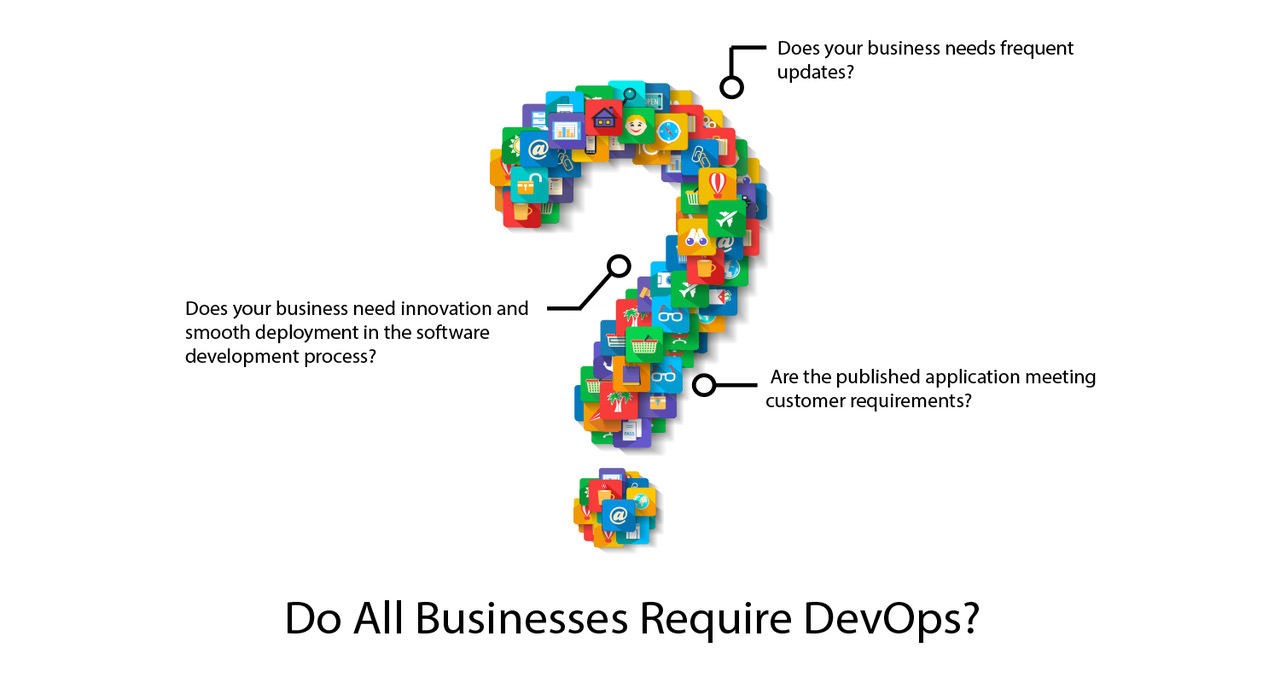
    Do All Businesses Require DevOps?

    The common and widespread consensus is that any software development company geared for innovation must embrace a DevOps environment. Any business that considers innovation and smooth deployment in the software development process—a key factor in their long-term growth strategy—should take advantage of the benefits of a DevOps platform. Whenever any service provider needs to adopt new strategies to keep pace with the evolution in the software space, DevOps will come as an irreplaceable platform choice.

    Despite this consensus and widely accepted perception, there are different opinions in the market. Many industry experts believe that to reap the benefit of the platform you need to have a dedicated DevOps team in place. If you have a DevOps culture and in-house DevOps team in your company, you can gain a competitive advantage.

    The Key Benefits of DevOps

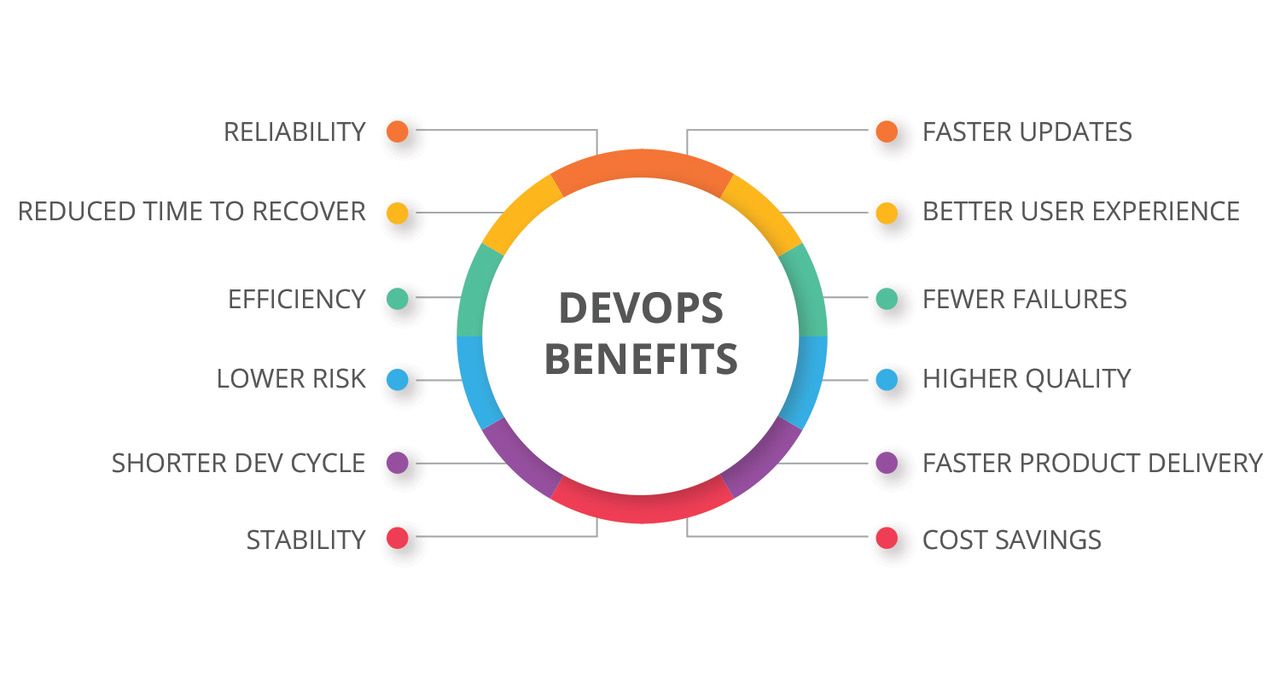
    The main benefit of DevOps is faster delivery of software with much-improved quality. There can be several other benefits depending on the industry.

    While some companies refer to the huge reduction in downtime since they adopted DevOps culture, there are still many others who simply give credit to the platform because of its integrated approach that makes the process more agile and fast-paced.

    For most companies, the domino effect of getting better software at a faster speed ends up delivering sustainable growth and revenue opportunities.

    Here’s a look at the role of DevOps platform across three types of businesses: small companies and startups, midsize companies and large business houses.

    Small Companies and Startups

    In smaller companies and startups where resources and human capital remain under-supplied, the responsibilities ascribed to developers, engineers and deployment professionals often tend to get blurred or overlap. Because of the scarcity of human resource, developers and engineers are often assigned multiple responsibilities. Naturally, in such companies, it is common to see cross-functional teams ready to engage into various development projects with ease. This makes them ideal business organizations to embrace and grow with DevOps culture.

    Midsize Companies

    As the companies tend to grow bigger in size and resources, they have a bigger (and often unbreachable) divide between verticals such as operations and development. In such organizations, staff are less likely to be open to cross-functional responsibilities, as many have been in the same job doing the same tasks and feel settled. This brings in a stagnant organizational process, where strong departmental divide rules the business process outcome.

    This stagnant work culture makes such companies less appropriate candidates to implement DevOps environment. For these companies to reap the benefits of a DevOps platform, mass organizational changes should be brought in the team structure. Building a separate cross-functional DevOps team to handle some focus projects can also be good practice for them.

    Large Companies

    Large companies enjoy the luxury and abundance of resources, and this makes them much better-placed compared to other organizations. Companies such as Amazon, Facebook, Google and Microsoft have the diversity, huge experience and robust abilities to bring together cross-functional specialists from development and operations to work on ambitious projects. These organizations are known for having product-oriented units, comprising specialists from both development and operations.

    Apart from their cross-functional expertise, product-focused approach and abundance of resources to roll on new projects, large companies also can make a big difference to the teamwork and motivation through a highly unified vision and strategic long-term objectives shared by every member of each team. This is why large companies always stand as suitable candidates to embrace DevOps approach and environment for their projects.

    Fixing the Right DevOps Strategy: 3 Things to Consider

    Beyond the organizational differences and core strengths and weakness for embracing a cross-functional DevOps approach, we must look into the key aspects that make a right strategy for any organization to incorporate DevOps into their scheme of things. Question is, despite the shortcomings and lacking, how can you embrace DevOps environment and reap the benefits? Here we provide some clues:

    • Making Change a Habit. Some strategists believe that any organizational change will face a lot of friction, causing substantial harm to the immediate business outcome. But there should be no reluctance to change for this. Rather, by bringing constant changes, people get used to the friction and pain and it becomes normal. This is one way to replace traditional IT mindset with DevOps.
    • Starting Small with a Neat Team. Obviously, finding the appropriate and credible skilled employee for your DevOps projects is not always easy. This is why it is advisable to create small startups or units, in which sharing the common vision and embracing a cross-functional approach becomes the order of the day. On top of that, do your best to bring out the best from your team and hire some experienced ones with knowledge of DevOps.
    • Continuous Development Mindset. We all know how the DevOps platform always focuses on continuous development approach. It is easier for the software developers to embrace such approach, but for operations staff, you have to slowly make them think of infrastructure as evolving and slowly building components. That’s something challenging but not impossible.

    Conclusion

    DevOps has emerged as the most promising development approach for modern software developers. Though for many development companies the friction emanating from strict role divides is becoming an obstacle, the positive push by DevOps for cross-functional approach looks indomitable.

    — Atman Rathod

  • DevOps Chat: Performance Testing with SmartBear’s Keshav Vasudevan

    DevOps Chat: Performance Testing with SmartBear’s Keshav Vasudevan

    In this DevOps Chat we speak with Keshav Vasudevan, product manager for performance testing at SmartBear. Keshav talks about the move to “end-to-end DevOps,” the importance of shifting left with testing and the latest state-of-the-art in performance and load testing with SmartBear.

    As usual, the streaming audio is immediately below, followed by the transcript of our conversation. Enjoy!

    Transcript

    Alan Shimel: Hey, everyone, it’s Alan Shimel, DevOps.com. You’re listening to another DevOps Chat. Joining me in this DevOps Chat is Keshav Vasudevan – and I’m sure I mispronounced that; we’ll let him correct it. Keshav is with SmartBear and he’s our guest in this DevOps Chat. Keshav, welcome.

    Keshav Vasudevan: Hey, thanks, Alan. So happy to be here and, yeah, I will correct it – it’s actually Keshav Vasudevan, so that’s how you say my last name. And I’m – I currently work at the –

    Shimel: Vasudevan, okay.

    Vasudevan: Yeah. I work –

    Shimel: I’m glad you _____ –

    Vasudevan: Uh-huh?

    Shimel: Well, give us your – okay, so – and we’ll call you Keshav for the rest of the podcast today. But, Keshav, you’re with SmartBear, but why don’t you give our audience a little background? What’s your own personal journey here?

    Vasudevan: Oh, of course. I mean, personally, I’m coming from an engineering background. Yeah, I love all things code. I love building applications and, in my spare time, I just love building mobile apps and Web-based apps as just hobby projects, which is why it felt like a natural fit to be at SmartBear Software. I’m incredibly passionate about quality as a whole and I understand and know the importance of having consistent quality to ensure the best optimal end-user experience.

    So, at SmartBear, currently, I’m the product manager for performance testing and specifically in the LoadNinja application. And I help communicate the value of shift-left testing in the Agile- and DevOps-based ecosystems that typically we’re seeing the world shift towards. And, of course, I’m responsible for the product management and execution of our innovative, new, revolutionary platform in the performance-testing space, essentially allowing people to do real browser-based load testing at scale, which is unprecedented so far.

    Shimel: Very cool. So, Keshav, you’re right in the heart of it of what SmartBear’s about, but SmartBear is a company – you know, when we look at the DevOps space, the move is obviously towards “bigger is better.” We have all these companies who are trying to do end-to-end DevOps and complete-life-cycle DevOps. SmartBear is a company that, for as long as I’m familiar with them, have had multiple products and plays – you know, I’m not saying you’re end-to-end DevOps or that’s what you aspire to be at SmartBear, but SmartBear is definitely a company where you aren’t singular product, singularly product-focused on any one area. SmartBear – you know, there was a lot of testing products, but there was a lot of other products too.

    And, recently – well, historically, each of those products almost had their own identity, as they should, but the SmartBear moniker was almost secondary to the individual products. And, recently, we’ve seen that change, right? Where SmartBear has made a broader effort to bring all of these disparate products into a cohesive type of vision of going to market under “SmartBear.” You wanna elaborate on that a little bit? Or, better yet, give our audience kind of the breadth of all the different solutions SmartBear can help with.

    Vasudevan: You bring up a great point, Alan. So SmartBear’s been around for almost ten years now. And, since our inception in 2009, we’ve grown into a global company, which testers and developers and architects and designers have come to trust with their overall software-development needs. Our initial focus, when we first started, was around software collaboration and testing, but, eventually, of course, as the company grew and as we added more talented people to the company and also as we grew in user base, we realized that we could actually solve much more broader functional use cases.

    And so, since our inception, we right now have 11 global offices. We are a big advocate of open-source platforms and tools, and so a combination of our open-source tools, which is SoapUI, which is one of the most popular API-based testing tools, and Swagger, which includes, of course, the Swagger UI, the Editor, the Codegen, and the commercial SwaggerHub, are all part of our ecosystem. And so, in total, we have over  6.5 million users and over 22,000 customers of our commercial platforms. And, since we’ve started, we have over 500 employees. So that is history of SmartBear and where we are in its current state, but you’re absolutely right. We have a breadth of different products, that each essentially cater to different aspects of the overall software development life cycle.

    And so, if you look at the overall life cycle, we have tools that cater to solving and solving use cases and problems and seeing the design phase of the software journey, the actual development and testing and collaboration aspect, cross-functional and performance testing. We’d integrated a bunch of our partners in the deployment phase, with AWS, for example, or Kubernetes. And, finally, in the actual post-production and post-deployment, we actually have monitoring tools as well. So we essentially play in the entire software development life cycle, and we cater to different audiences and our tools overall cater to different use cases in those journeys.

    Now we’ve gotten a lot of good feedback for each of these products, but we also recognize, at the end of the day, that, today’s day and age, Agile and DevOps is the way products – or software-development teams are moving towards. This is primarily, again, because software development has evolved in order to meet the growing demands of consumers. And consumers right now, today’s consumers of software applications, are looking two important things. The first is they want features, right? The switching cost to go from one application to the next is going lower and lower, so, if I, as a consumer, am not getting the best features on a regular basis or new updates or enhancements on a regular basis, I might get frustrated and I might just move to another vendor. And the second thing is we have started to expect a lot of good quality in all the things that we’re consuming because, again, as we’re digital consumers, we know that, every day, we spend over 11 hours in front of our computer and looking through different applications. So we have come to expect a certain standard of quality.

    And all of this ideal of fast development and incorporating testing and quality into every aspect of this journey is achieved with the ideal of incorporating Agile and DevOps into your workflow. And so we know that, to go across all of these different functions in a seamless and automated fashion, you have to essentially integrate all of the different tools that we have that cater to all of these individual use cases, in a seamless fashion as well. And so – oh, one other thing that we pride ourselves on is we, from a product level, we have a seamless integration across all of these different verticals, right?

    So, for example, we have the ability in the performance-testing space to essentially integrate with Jenkins, with LoadNinja, that essentially now allows you to automate your load testing with real browsers at scale, meaning with 10 virtual users or 10,000 users. You can be rest assured that is the most accurate representation of load. All of this can be integrated and automated using Jenkins with a simple plug-in. Right? And this also then integrates with other tools. For example, we have an integration with our design tool, which is SwaggerHub, with our API-testing tool, which is SoapUI. So then you can essentially easily design your API, architect it easily, design the API, make sure it solves the end-user use cases, and then push it to the tester and developer to actually test out each of these functionalities. So we wanna make sure that this process, this ideal of DevOps, is actually achieved in execution with the seamless integration.

    Now one level higher is the actual story and the marketing and the branding around it. And we’re proud to say that SmartBear recently unveiled its new brand that gives our customers and prospects and users a more cohesive understanding of how each of these tools fit together, feel proud of the fact that they’re now part of the SmartBear ecosystem, and allow them to, essentially, seamlessly move from one tool to the next because of maintaining the branding and user experience across each of these tools. And that was a huge undertaking that we did and we just unveiled it last year at our user conference, Connect. And we’ve gotten lot of, lot of, lot of good feedback about our new brand, our logo, and everything else around that. So it’s a long–winded way of saying, “Yes, you’re absolutely right. And we’re making sure that that we are achieving that as well.”

    Shimel: Absolutely. And you know what? I have one of the shirts with the new logo they sent me too, so thanks for that. But, you know, the interesting takeaway here – I hear from so many and I recently received an e-mail from a fellow in the field who said, “Where do you see – we need to be moving to platforms. We need platforms to build on. And how do you build a platform? And where do you see the need for a platform?” And then you look at, as you’ve just laid out here, SmartBear and you take these tools and individual solutions, point-solutions that you guys had put together over the years, and showing how integration among them, as well as integrating with best-of-breed kinda tools out there, like a Jenkins and some of – and we were blessed in DevOps to have a lot of open-source solutions as well, but integrating with a lot of these open-source. I mean, this is how you stitch together a platform. This is how you get “one plus one equals three.” Right?

    Vasudevan: Yes, exactly. Absolutely.

    Shimel: Yep. So, Keshav, we’ve waste – we didn’t waste but we’ve spoken an awful lot about kind of background on SmartBear. I really wanted to spend our time talking about what’s new and what’s going on with you and your team there, so why don’t we dig down and peel the onion back a couple layers on that? What do you have – imagine you may – you know, you alluded to it earlier but let’s dig in: what’s happening?

    Vasudevan: Absolutely. So one of the things, as I mentioned in my introduction, as something which we as a company are really passionate about, is ensuring quality. Right? And, over the last 15 to 30 years, over the last – well, let’s say over the last 15 years, we as users – and when I say “users,” anyone – me, you, our friend; it’s essentially consumers of applications – have started to expect a certain level of quality. And this is how software development has evolved, in order to meet this demand.

    And, as we have touched upon, this is why Agile has evolved, which is essentially moving fast, allowing developers and engineers to build features in a much more faster way and deploy them seamlessly so that the end users get them in the quickest way possible. Right? And we’re always listening to the end-user feedback and updating the platform. Then there’s DevOps, right? Which is, again, trying to follow the same ideal and essentially having a much more collaborative approach towards testing, operations, and development together.

    Now let’s go dissect quality, the testing aspect of it. Right? So Agile, to allow for Agile- and DevOps-based testing, functional testing tools have done a great job of keeping up with the times. Right? For example, we have two tools like that, which is SoapUI and TestComplete. And they’ve done a phenomenal job in terms of allowing people to quickly come in and create their test scripts, make sure it all works, make sure to write the test cases really quickly because they have features to do that, and then, again, automate the entire process, using maybe a REST API or, of course, using an existing CI/CD tool.

    Performance testing, though, which is a huge – which is a big business KPI in today’s day and age, right, is something that people are still, to this day, scared to do. We talk to product teams and engineering teams on a daily basis, who tell us how important they know performance testing is. For example, we know that, if consumers take more than – if it takes more then 3 seconds for a certain e-commerce page to load, for a customer, they’ll leave. They’ll just go to another platform. The switching costs are getting lower and lower and people are getting more impatient, so, if it’s gonna take a while to do a certain transaction, people will leave. And that is a huge business loss at scale for your company, for your platform, and as an organization as a whole.

    So product and engineering teams, Agile teams, want to do performance testing. However, performance testing, to this day, has not evolved to keep up with the growing needs of Agile and DevOps-based workflows. To this day, it takes such a long time, for me as a performance tester, to create a test script. I have to essentially learn – and, if I was a developer or functional tester wanting to do performance testing, I have to forget about it. I have to hire a consultant because my learning curve is gonna be so steep. I have to allocate a lot of time in my day-to-day operation in order to create a simple test script. This is because, over the last 30 years of performance testing, the technological process has not evolved at all. To this day, if you’re creating a performance test script, you have to record all the transactions between the browser and the server. You’re doing this under the protocol level. That is typically how you actually create a performance test script.

    Now, as you know, the responses and the requests between server and client will have certain dynamic characteristics, like session IDs, cookies, and so on. So, in order to play this back across 1 user or 10,000 users to do the performance testing, you will have to do this programming and dynamic correlation. This process takes anywhere between several hours to a few days to even become successful, for the most basic transactions. Now imagine doing this for the complex applications that we have today, some of the AJAX applications which are very client-rich, in terms of actions and allowing users to do multiple things. The effort that is involved to do this multiplies threefold. Right?

    And so this is why performance testing is still, to this day, seen as something which no one wants to touch. They’ll hire a consultant; they’ll have a centralized function to do this. Then there’s, of course, the actual process of emulating and creating the load itself because, to this day, we still use emulators to generate the load, which is not necessarily representative of the end-user experience.

    So this is something we saw over the last one year and we decided to do something about it, which is what – you know, our engineers came together. We said, “We are passionate about this. We face this issue ourselves. Let’s do something about it.” And so, essentially, we productized a new approach to doing load testing, essentially allowing users or testers or developers or functional testers – anyone who’s passionate about performance testing, anyone who’s behind an application, be it a marketer, a product manager, a functional tester, or a performance tester – to essentially come in, record, and instantly play back the transactions that they record in the test script, without doing any programming or dynamic correlation whatsoever. Right?

    And, from here, of course, you can – and take the script that you have and spin up tens of thousands of real browsers to go ahead and do the load test, based on these transactions. Right? This is a – I don’t use the word lightly here, but a revolutionary approach to actually doing performance testing because this is unprecedented, to essentially create browser-based test scripts without doing any sort of protocol-based recording, which allows you then to create test scripts out of the box. And then simulate tens of thousands of real browsers to run these scripts on them. So, as a user, as a tester, you’re, one, going to save over 50 to 70 percent of your time, doing the actual load testing, because the scripting process has become so much more easier. And you’re gonna get results that are coming straight from the browser, so you can be rest assured that this is the most accurate and realistic representation of the performances that your application will be showing for end users. And this is what LoadNinja is, as a product.

    And, over the last five months, since we launched in October, end of October, during our user conference, we’ve seen tremendous traction in the market. We’ve seen so many customers come to us, sign up for annuals and partner with us, to essentially allow them to do load testing. And it’s just phenomenal, as a product manager, and it’s like seeing the vision come to fruition and actually seeing the people who are behind products – product managers, functional testers, all of them – coming and saying, “Hey, we can now do performance testing by ourselves, without necessarily having to get a certification with an expensive tool. Without having to spend so much more money and dollars trying to get a consultant.” They can do this all by themselves and that’s the most gratifying thing I ever heard. So, yeah. So there’s a lot happening, but the LoadNinja’s primarily something that we’re super proud of, as a company. It was built in house by us. The revolutionary technology to do this it’s something which performance testing has never seen to this day.

    Shimel: You know, listening to you, all I can think of is back to my own days as a entrepreneur and developing security solutions, and we’d have to go get performance testing done. We were selling to DOD – it was large, large networks – and this is pre-DevOps, obviously, and pre-automation and pre-continuous. And, my god, the budget for the performance testing was bigger than the budget for the development team. It was nuts. I mean, it was – so, when I hear now about how this stuff is being done in the cloud and “automated” and “scalable” and the price points, it’s just crazy.

    Vasudevan: It is. It is. We’ve come a long way. And, to this day, there’s still – performance testing is seen as a monolithic and centralized function, right? And so, to this day, what you saw years ago, many of the factors are still there. So, yeah. So you’re absolutely right and it’s good to see the cloud coming in, but as a performance-testing industry and tool vendors, we can do a lot more to push the boundaries and keep up with the growing demands of engineering and quality as a whole.

    Shimel: Yep. Got it. Got it. You know, Keshav, I told you when we started things get out of control. We were supposed to go 15; we’re at 20 minutes.

    Vasudevan: [Chuckles]

    Shimel: We’ll have to continue our SmartBear discussion on another DevOps Chat, at another date. We’ll have you back on soon. But why don’t we put an end for it right here? But, before we do, people listening, they like what they heard; they’re interested. Where can they go get more information?

    Vasudevan: Oh, absolutely. So the best place to go is loadninja.com, so L-O-A-D-N-I-N-J-A-dot-com. And you should have all the required information to become successful and get started. One of the things we pride ourselves, as a product and engineering team, is our turnaround for new features and enhancements. We deploy almost every week and, again, using the – many of the learnings, we learned from your website, Alan, in the DevOps world, to essentially continuously integrate and deploy every now and then, every week, in order to get the features and enhancements that users require. So go to loadninja.com; you’ll have all the required information to become successful.

    Shimel: Fantastic. Thank you very much for being a guest on this DevOps Chat. And I am serious – we’ll have to have you back on here – but, for now, I think we’re gonna pull the plug on this episode. Thanks, everyone, for listening. This is Alan Shimel for DevOps.com, Security Boulevard, Container Journal, Digital Anarchist. You’ve just listened to another DevOps Chat. Have a great day, everyone.

    — Alan Shimel

  • 5 DevOps Trends Worth Knowing in 2019

    5 DevOps Trends Worth Knowing in 2019

    DevOps today is more than the buzzword it was 10 years ago. Back then, the idea of combining development with production in your IT infrastructure was not common; the logistics were nonexistent and most of the time businesses decided it was far too much effort.

    However, if the last nine years has taught us anything, it’s that DevOps is worth every penny businesses invest. It helps companies streamline production, keep customers happy and provide agile services to attract new audiences.

    But as with anything in the IT field, there is a paradigm of change. This article discusses some of the top DevOps trends happening now and how to implement them in your own system.

    Automation Will Be a Bigger Focus

    Automation has always been the way for businesses. Whether it’s speeding up the pipeline with machines, providing better response times for angry customers with chatbots or better inventory management with tracking and logging system, automation is behind it all.

    DevOps is no exception.

    But as with everything, there can be too much automation. The best thing to do is break down processes and find simple, redundant tasks that can save time if automated and apply the changes.

    The most important aspect of automating DevOps is to understand the six pillars in the DevOps cycle, which are:

    • Continuous business planning
    • Collaborative development
    • Continuous testing
    • Continuous release and deployment
    • Continuous monitoring
    • Collaborative customer feedback and optimization

    DevOps Assembly Lines: The Next Big Thing


    To track the development of your application, we have pipelines. These visually represent the product from its initial stage right through until final development and release.

    However, continuous integration (CI) is no longer the priority focus when it comes to effective monitoring and implementation. Continuous delivery and automation are a major part that businesses have already started delving into in 2019.

    This is where DevOps assembly lines enter the picture.

    Assembly lines are focused on bridging the gap between manual and automated tasks, ensuring there is no redundancy while providing several tools for teams to implement, to ensure apps are hitting the production lines as reasonably quickly as possible.

    Microservices Architecture Adoption Taking Off


    Microservices architecture may as well be that new kid in school trying to fit in. These smaller services compound into agile, implementable tools that DevOps teams can use to scale and test software over the course of weeks—not years.

    As you can imagine, this can help some businesses streamline their development and production lines, setting them way ahead of their original production estimates—which is never a bad thing.

    Implementing microservices into your DevOps team can also help companies focus on the runtime and efficient delivery of new development sources, without the hassle of creating dependency errors when something decides to bug out for no apparent reason.

    Security Needs to Step Up

    Cybercrime is on the rise—we all know that’s old news. But as a business, cybercrime can either make or break your sales and weigh down your DevOps team.

    That’s why more companies are hopping onto enterprise security options. Although there are third-party programmers for almost every situation you need, none of them have the same security levels as the tools from the enterprise version provides. Safeguarding both your company and your clientele.

    Riding the Artificial Intelligence Wave

    Finally, we have artificial intelligence (AI) and machine learning (ML). When you think about it, these two elements are literally the sum of everything we want in the DevOps community—the ability to crunch out hours upon hours of menial labor and saving your teams hours to focus on higher-priority tasks.

    The combination of AI, used to predict algorithmic influencers, and ML’s ability to adapt to new situations will be key for DevOps teams to get to the next level in 2019.

    — Gil Artmoore

  • Digital Transformation: Coming from Behind

    Digital Transformation: Coming from Behind

    For many years, enterprises have been in a race to digitally transform how they work through the digitization of all areas of their business, to reduce costs and business frictions through creating efficiencies and delivering increased value to their customers. While many organizations have attempted a transformation, few have been successful.

    Research from the consultancy McKinsey & Company finds that less than one-third of transformations are successful.

    How do organizations that find themselves today, perhaps after several failed transformations starts or having procrastinated getting started, get themselves back on track before they find themselves too far behind the competition to ever hope to catch up? We reached out to several experts to find out.

    First, many of those advised organizations that currently find themselves digital laggards should not rush into a digital transformation out of fear of missing out. “Don’t pursue digital transformation with a FOMO mindset,” said Andy Lin, senior vice president of strategy and consulting at Nexient, a software services provider. “Approach it with clear, measurable business results in mind, such as increased market share or increased revenue. Focus on how the end state of your transformation—business capabilities, technical capabilities, digital experience capabilities and similar—will make the biggest impact, and prioritize accordingly,” he said.

    Research from business consultancy West Monroe Partners, which ranked respondents by maturity, found 21% of respondents are digitally mature and 17.9% as very digitally mature. There remains a sizable percentage, 35.9%, who are either not digitally mature at all or slightly digitally mature.

    Trailing in digital maturity likely means those organizations find themselves feeling the pressure from some constituents: shareholders, customers, competitors and others, said Justin Rodenbostel, vice president of delivery services at digital transformation agency SPR. “If pressure is coming from lagging customer engagement, then one should become more familiar with customer desires through research or analyze how other industries are innovating and transforming,” he said. “Pressure from competition might require competitive analysis, market research or research into applications of potentially disruptive technologies,” Rodenbostel advises those who are trying to identify where they should focus on their catch-up efforts.

    Scrum.org CEO and product owner Dave West agreed: “Enterprises embarking on a digital transformation should look at their business strategy, their customer base and start with that; building teams that align to the customer, empowering them to drive technology and business decisions to make that customer successful.”

    Also, when they set a course, enterprises need to be sure to set goals to be set to such business outcomes as well, said Nick Polachek, senior principal strategy for Maven Wave. Instead of prioritizing technical results, such as building an enterprise DevOps pipeline, it’s better to focus on results associated with business-driven outcomes, such as improved customer experience. “To prioritize effectively, you need to understand business drivers and divide technology initiatives into attainable slices that create real business value and quick wins,” he said.

    West Monroe found many attributes—from the use of digital in sales to leveraging data—that organizations should prioritize based on their digital maturity. “An organization can fast-track its maturity by prioritizing certain characteristics over others, regardless of industry. For instance, those with the lowest maturity should prioritize innovation that addresses customer pain points and those with the highest maturity should prioritize best-in-class cybersecurity. More accelerators can be found in our research,” said Kyle Hutchins, senior director at West Monroe Partners.

    Finally, as the organization attempts to increase its digital transformation maturity, others advise organizations prioritize their digital transformation efforts that will get widespread support throughout the enterprise—which usually translates to initiatives that will increase sales. “Since most organizations are designed to support sales efforts, prioritizing transformation within the sales organization is an effective way to motivate the organization to transform,” said Craig Besnoy, program director and digital strategy consultant at Mindtree, IT services provider.

    Still, and this could be why so many digital transformations fail, a sizable percentage of organizations—41%, according to research and strategic consulting firm Altimeter—make investments in digital transformation without ever seeking the guidance from thorough customer research.

    — George V. Hulme

  • Cloud Visibility Remains a Top Challenge for Many Organizations

    Cloud Visibility Remains a Top Challenge for Many Organizations

    A number of enterprises have a love/hate relationship with cloud computing. Because of its low upfront costs, the expense for cloud is lower, especially in the early years. But historically there has been another cost: the challenge of obtaining good visibility into applications, users and network traffic. I thought advancements in cloud management and security tools in recent years had largely overcome these concerns. Turns out, I was wrong—or, perhaps, market perception hasn’t caught up to reality.

    A recent survey from Dimensional Research, which is based on responses from 338 IT professionals, found that fewer than 20% of IT professionals believe they have complete, timely access to data packets in public clouds. In private clouds, the situation is somewhat better, with 55% reporting adequate visibility. Unsurprisingly, on-premises data centers had the most positive response when it came to data visibility.

    The survey authors said the results show companies have low visibility into their public cloud environments, and the tools and data supplied by cloud providers are insufficient. They identified some of the challenges such lack of visibility can cause, including the inability to track or diagnose application performance issues and monitor and deliver against service-level agreements, as well as delays in detecting and resolving security vulnerabilities and exploits.

    Some of the findings regarding cloud visibility from the survey:

    • 87% of respondents expressed fears that a lack of cloud visibility is obscuring security threats to their organization.
    • 95% of respondents said visibility problems had led them to experience an application or network performance issue.
    • 38% cited insufficient visibility as a key factor in application outages and 31% in network outages.

    Interestingly, 99% of respondents identified a direct link between comprehensive network visibility and business value. This shows IT performance contributes directly to the business bottom line. Here are the benefits respondents cited regarding visibility:

    • Monitors and ensures application performance (60%).
    • Enables better threat identification (59%).
    • Helps to identify security indicators of compromise (57%).
    • Helps identify performance degradation.
    • Enables threat protection tools to identify malicious traffic by source.
    • Enables security monitoring tools to detect indicators of compromise.
    • Enables the monitoring of traffic at every link of their network.

    A full 86% of respondents also stated visibility was important for network and application performance monitoring, and 93% stated it was valuable for security. Cloud consumers said predicting application performance was a key challenge.

    Still, the lack of perceived visibility isn’t holding back public cloud adoption, with 84% of organizations having increased their cloud usage in the past year. While 3% of those surveyed had a moderate decrease in cloud usage and 13% remained unchanged, 63% experienced a moderate increase and 21% experienced a significant increase.

    As organizations engage in digital transformation efforts and continue to turn to public clouds, organizations can’t afford to lose visibility. This is crucial for all of the business benefits of cloud traffic visibility the survey respondents cited, such as attaining superior application performance, meeting SLAs and shrinking the time it takes to detect and remedy security relation issues.

    But here’s an unpopular opinion: There’s not much of an excuse for having poor visibility into cloud workloads anymore. There once was—that’s for sure—but today there are many tools made available by cloud service providers and third-party security vendors.

    Today, it’s a matter of will and finding the right toolsets, putting them into place and making sure that security and operations teams have the software controls and the training they need to use them, so the organization can attain the level of visibility necessary.

    — George V. Hulme