Category: Blogs

  • CircleCI Bets on Webhooks to Streamline DevOps Integrations

    CircleCI Bets on Webhooks to Streamline DevOps Integrations

    CircleCI today announced CircleCI webhooks, a feature that enables software engineering teams to build integrations that react to CircleCI job and workflow status notifications in near-real-time.

    Tom Trahan, vice president of business development at CircleCI, said this latest iteration of the company’s implementation of webhooks, which send messages any time an event occurs, will become the foundation upon which CircleCI will expand the ecosystem surrounding its continuous integration/continuous delivery (CI/CD) platform.

    For example, the CircleCI platform can now employ webhooks to integrate with a CI visibility tool from Datadog that can now be used to surface CicleCI metrics. Sumo Logic is similarly employing webhooks to enable its Continuous Intelligence observability platform to track events on the CircleCI platform. Those capabilities are now available via the software-as-a-service (SaaS) edition of the CircleCI platform.

    Trahan said the primary goal is to reduce the amount of friction within DevOps workflows that span multiple platforms by increasing the level of orchestration DevOps teams can take advantage of without having to create and maintain integrations using low-level application programming interfaces (APIs).

    Webhooks make it possible to streamline developer workflows while also increasing overall engineering velocity, he added. In addition, it should also become simpler for DevOps teams to triangulate events in a way that results in incidents being resolved faster, noted Trahan.

    CircleCI is relying on webhooks to strengthen its case for a best-of-breed approach to DevOps that enables organizations to mix and match tools as they best see fit rather than getting locked into a single integrated DevOps platform. The best-of-breed approach often makes it simpler to take advantage of new tools as they become available. The downside is the level of integration that DevOps teams need to maintain after they integrate all the tools that make up a DevOps workflow.

    It’s not clear what impact relying on webhooks to share messages in real-time about events as they occur across multiple platforms will have on integrations. However, any effort to streamline DevOps environments without requiring DevOps teams to abandon one tool for another is likely to be well-received. After all, every minute spent managing a DevOps platform means much less time that can be applied to building and deploying applications.

    It will be up to each DevOps team to decide to what degree a best-of-breed approach to DevOps suits their organization. As more organizations realize how dependent they have become on software to, for example, drive digital business transformation initiatives, many IT leaders are making a case to standardize DevOps platforms across their organization. Achieving that goal, however, may be difficult given all the various departments within an enterprise that have already adopted a wide range of tools and platforms.

    In the meantime, the focus on developer and engineering productivity will only increase as organizations look for ways to further accelerate application development and deployment at a time when software updates can now have a profound impact on profits and revenue. In fact, a delay to one software project can have a cascading impact on a wide range of initiatives that can’t go forward because of their dependency on a delayed project. Given the impact all those delays might have on revenue, the tolerance organizations have for delays to software development projects is understandably lessening by the day.

  • Avoid Security Apathy with DevSecOps

    Avoid Security Apathy with DevSecOps

    Against the backdrop of rapid digital transformation accelerated by the pandemic, every industry has seen an increase in high-level cybersecurity breaches. As organizations continue to support distributed and remote work, organizations must address the risk of incomplete security policies and procedures resulting in exposure to IT risk of all kinds. SolarWinds recently revealed findings of its SolarWinds IT Trends Report 2021: Building a Secure Future, which analyzes the degree to which organizations are prepared to manage, mitigate and prevent risk in the future.

    Measuring Risk

    The survey found 46% of tech pro respondents admitted to having medium exposure to enterprise IT risk over the past 12 months. The level of perceived risk differs by size of the organization, where a sense of high or extremely high-risk exposure is perceived at enterprise organizations (19%) compared to their small business (11%) and mid-sized business (7%) counterparts. With the rise of high-level cybersecurity breaches this past year, this is a concerning reality for security within enterprises.

    However, the findings highlight a possible disconnect—although enterprise IT risk exists within their organizations, tech pro respondents are confident in their risk management and mitigation preparedness strategies. In fact, 73% of tech pro respondents “agree” or “strongly agree” their IT organization is prepared to manage, mitigate and resolve risk factor-related issues due to the policies and/or procedures they already have in place.

    How to Avoid Security Apathy

    As a tech pro, it’s easy to think of security as an afterthought or to expect ownership to fall solely on the shoulders of a dedicated security team. This is especially true for tech pros who have been with a company for a long time and are resistant to change.

    As we emerge from the pandemic, those continued perceptions reflect apathy and complacency when it comes to security and will only increase their business’ level of risk. They’ll be more apt to limit exposure to new technologies, ignore better ways of working, or worse continue to be oblivious to other areas of less obvious risk within an organization. Something needs to change.

    Tech pros must shift their mindset and accept security as one of their responsibilities. To start this process, IT teams must examine current processes from the outside in and apply rigor when evaluating solutions. Since it’s common to be bombarded with marketing messages, this means spending time verifying a tool or solution’s functions and capabilities to help separate fact from fiction.

    Next, tech pros must focus on providing complete visibility into all systems to identify areas of risk and opportunity. Even small adjustments, like speedier upgrades and patches, the adoption of password managers and multi-factor authentication (MFA) solutions can help improve an organization’s overall security posture.

    Most important of all, tech pros should be continuously assessing their risk management, mitigation, and protocols to avoid complacency and becoming “blind” to risk.

    After a year of “crisis mode” induced by the pandemic, it’s easy to be complacent and sidestep the responsibility of risk assessment and aversion. As the security landscape continues to evolve, tech pros must remain vigilant and deploy solutions that provide better visibility into systems to identify risk and opportunity. This year’s study reveals the opportunity ahead for tech pros and IT leadership to align on priorities and policies that can best position not only individual organizations but the industry at large to succeed in managing, mitigating and preventing risk in the future.

  • How to Achieve Cloud Operational Excellence

    How to Achieve Cloud Operational Excellence

    Cloud operational excellence means delivering the right mix of cloud-based services at the optimal cost and quality to support your organization’s mission and strategy. You might be thinking, “Why go to the trouble? Isn’t ‘almost good enough’ sufficient?” It turns out that it matters—a lot. The difference between the top 10% and the bottom 10% in cost per relevant delivery metric can vary by an order of magnitude or more.

    In the mid-1990s, Gartner acquired an IT metrics firm called Real Decisions. They offered benchmarking services so customers could compare their IT efficiency with similar organizations. With hundreds of “Global 2000”-sized customers, their database was rich. Over time, the Real Decisions team refined their catalog of metrics and enriched their data with repeat studies over time, to develop indices of efficiency. 

    Within their user population, the difference in cost per unit of productive work was 11 times better in the top 10% compared with the bottom 10%. That doesn’t mean 11% better, it means 1,000% better. 

    Note that the user base was self-selected. All participants wanted to get objective metrics of performance relevant to their business goals and paid for extensive studies involving questionnaires, financial audits and technical benchmarks. Notably, all participants had cost recovery programs (beyond chargeback) in place. The bottom 10% of this segment is still within the top 10% of the IT industry—and their score is 11 times worse than the best of the best. 

    Which raises the question: What is the industry average for IT efficiency? Is it possible that the hundreds of benchmarking users are all doing IT wrong, and the search for relevant metrics is misguided? I think not. 

    Choosing the Right Metrics

    In 1911, Fredrick W. Taylor published The Principles of Scientific Management, which discussed approaches to optimizing two important variables: Output quality and worker compensation. Taylor recognized that successful firms work collaboratively, with management and workers jointly setting goals and developing methods and tools to achieve both profitability and proportionate compensation. Nowhere in this text—or in any of his recorded speeches or documents—does he say, “If you can’t measure it, you can’t manage it.” He never said that for two reasons: First, he did not believe it; second, it is not true. What he did emphasize was that if you do measure it, you will manage it. That was a warning: Pick the right metrics or you will exert effort pursuing a meaningless goal. 

    Here are some potential cloud performance metrics compiled from several cloud providers and users across various industries, not-for-profits and governmental agencies: 

    • Service Metrics 
      • Reliability – mean time between failure (MTBF)
      • Availability – Uptime, expressed as a meaningful percentage of demand
      • Serviceability – Mean time to repair (MTTR)
    • IT Metrics
      • Capacity 
      • Latency
      • Bandwidth
      • Response time
    • Strategic Metrics  
      • Business agility 
      • Customer engagement 
      • Customer reach 
      • Financial impact 
      • Solution performance 

    The journey to cloud excellence starts with developing the metrics that are most relevant to your business goals. Picking the right metrics with the right scale matters. As a rule of thumb, generally right beats precisely wrong. 

    Sustaining Excellence 

    After you agree on a set of metrics that are both statistically reliable, repeatable, objective and aligned with your firm’s mission, how do you achieve and sustain excellence? 

    In the 1970s, the U.S. Department of Defense bought a lot of custom software. Sometimes it worked well, other times it didn’t. So, the DoD funded research on code quality. It turns out that the key difference between great and mediocre quality code flowed from how the organization managed problems. More specifically, how did the team react to an unexpected event? The spectrum runs from confusion and dismay through fire drill chaos to calm, rational assessment and remediation. That methodology gets baked into the code itself. This study produced the Capability Maturity Model (CMMi), which was created by the Software Engineering Institute at Carnegie Mellon University. 

    The CMMi framework identifies five levels of process maturity. A simplified assessment of an organization’s process maturity level comes down to two questions. First, is there current comprehensive documentation for the process, including how to deal with defects? If the answer is yes, the organization is at level three or higher. If the answer is no, the second question is, “Does anyone know what’s going on?” If the answer is yes, that’s level two; if no, level one. 

    A level one organization has no standard method in place to deal with problems. When something goes wrong, everybody grabs tools and tries to figure out what went wrong and how to fix it. Organizations like this do not spend much on training or analysis. Their focus is continuing to produce whatever they are trying to make. Over time, an individual may develop expertise in diagnosing a component, and when things go wrong, the call goes out to “Get Fred in here!” to troubleshoot the problem. Organizations with pockets of expertise are moving into level two. Most organizations fall within one of these two levels. 

    Organizational transformation is very difficult, and often requires significant changes in the management team, as well as funding different activities. Training and communications skills are crucial to proceeding beyond level two. Management rewards heroes who can shoot the most difficult bugs. They get the big bonus, the promotion, the better office, a parking space near the door. This behavior reinforces the culture of heroes. But moving forward requires the heroes take on a new role.  

    Once the organization creates documentation, it is on the path to level three. Note that these transformations are wrenching. It is not easy to tell the heroes that their greatest value to the organization is now how well they can write or teach. But with proper management attention, it can be done. And the benefits of moving forward are many: 

    • Dramatically fewer crises. Staff could make plans and keep them – no emergencies interrupting a family gathering, a school event, or a get-together with friends. 
    • High quality code. Maintenance tasks became much simpler, and customers experienced improved reliability. The documentation was helpful, and troubleshooting became routine rather than overwhelming. 
    • Reliable planning. In a mature organization, plans hold true because they are based in proven metrics, continuously validated processes and uniformly high competence within the team. Project estimates are accurate because the data stems from reliable, repeatable evidence. 

    Cloud excellence is not a phantom or an unachievable goal. It is the result of clear thinking and sound documentation. Over time, practices improve, skills build. To quote Macklemore, “The greats weren’t great because at birth they could paint, the greats were great because they painted a lot.”  With practice and focus, your organization can achieve cloud excellence.

  • That Other Continuous: Data Protection

    That Other Continuous: Data Protection

    Looking around at things to add to our current project’s toolchain (that is one of the reasons we do these side projects; to check out all sorts of new ideas/tools/etc), and researching the company where a former coworker is the CMO, I was drawn into the resurgent world of continuous data protection (CDP). It is interesting that we could end up adding CDP to the list of ‘continuous’ activities, like CI/CD/… CDP, even though CDP was named long before any of our DevOps or Agile terms were born.

    The whole idea of CDP is that it is always backed up, so you are continuously protected. It largely failed when first introduced because it massively increased both the cost and complexity of your storage environment. Essentially, it required a hot copy of all of your storage. Not something most enterprises were willing to invest in. I mean, it was friggin’ expensive. And it used virtualized storage, which no one wanted to mess with. Long story short, at the time, virtualized storage introduced issues no one wanted to deal with.

    But several things have changed over the years, and it is interesting to see where CDP concepts have cropped up. You see, today it is being used to protect companies from ransomware. It’s still a bit of complexity, but we’ve become experts at hiding complexity. It still requires a lot of storage (I would argue that the current versions I’m seeing require more storage than the original CDP solutions did), but when your environment is taken over by ransomware, a clean machine can be used to restore data to a point before the ransomware took over. From a “continuous protection” standpoint—giving it a modern meaning along the lines of “continuous testing”—that is an astounding feat.

    The way it works—at least the way that the current implementations I’ve looked at work—is pretty simple at heart, though as my former coworker likes to say, “Easy in concept, difficult in implementation.” It keeps every write ever made to storage, with time and currency markers. So it knows what the disk currently looks like, but it can also get to what the disk looked like at 12:33 am yesterday. Or January first, or a year ago… You get the idea.

    It uses a ton of space because there is an implied truth here—nothing is destroyed. In traditional storage, if you change a document and hit save, the document is written over. In the new iteration of CDP, if you change a document and hit save, the changes are recorded, but the original is not altered. Call it “non-destructive writes,” if you will.

    It is worth checking out. The concepts are huge, and offer protection that is otherwise in short supply. If you have a dedicated DevSecOps team, they’re the ones I’d point at it, since the big reason for using this is a security reason at heart (though there are other uses; I’m currently gushing about security because this is a big deal).

    I’ll get back on track and report back about things directly in the toolchain for our newest DevOps project next week. I thought this was worth writing about, since most of you all could use the concept, even if only for peace of mind. You’re rocking it! Protecting your work against the newest range of attackers is just common sense. It’s worth seeing if the modern iteration of CDP is for you.

  • CNCF Advances OpenTelemetry Initiative

    CNCF Advances OpenTelemetry Initiative

    The Technical Oversight Committee (TOC) of the Cloud Native Computing Foundation (CNCF) has voted to accept OpenTelemetry as an incubating project as part of an ongoing effort to simplify instrumentation of software using open source agent software.

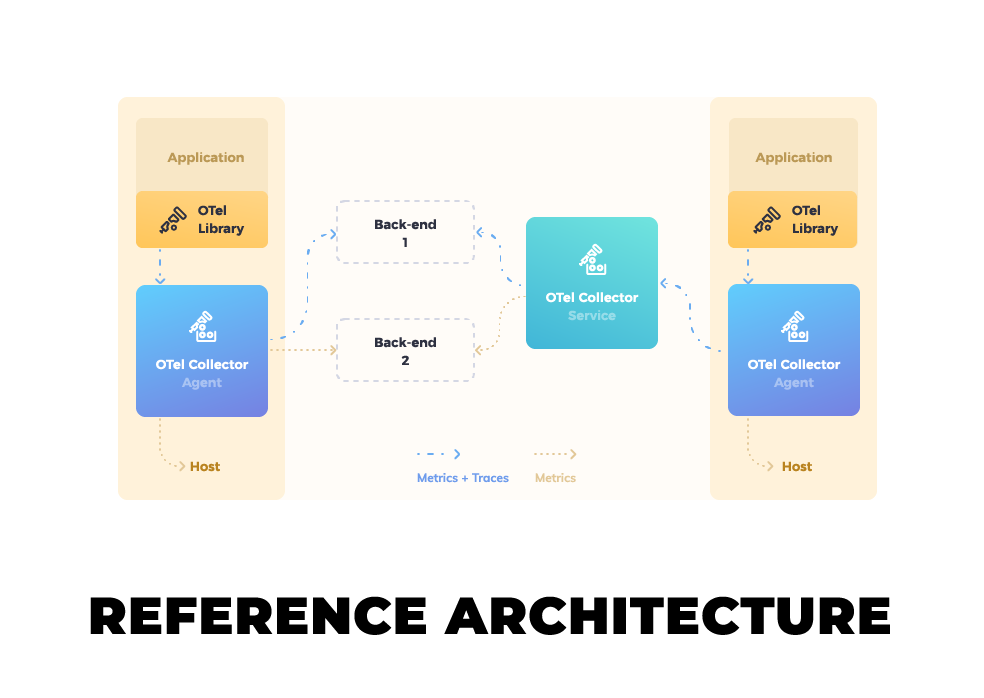
    OpenTelemetry is a collection of tools, application programming interfaces (APIs) and software development kits (SDKs) that can be employed to collect metrics, logs and traces that make it simpler to determine the root cause of an application issue.

    At its core, OpenTelemetry is based on an OpenTelemetry Protocol (OTLP) specification that describes the encoding, transport and delivery mechanism of telemetry data gathered from sources, intermediate nodes and backend platforms. An OpenTelemetry Collector provides a vendor-agnostic implementation for receiving, processing and exporting telemetry data. APIs and SDKs that make it possible to instrument applications are available for 11 different programming languages.

    Previously a sandbox-level project within the CNCF, the next step would be for OpenTelemetry to become a graduated level project alongside other open source offerings such as Kubernetes and Prometheus, a platform used to monitor IT environments.

    The OpenTelemetry project was created via the merger of the OpenCensus and OpenTracing projects in May 2019. Since then more than 500 developers from 220 companies, including Amazon, Dynatrace, Google, Honeycomb, Lightstep, Microsoft, Splunk and Uber have contributed to the project.

    Most providers of observability platforms have at least signaled their intent to support OpenTelemetry as an alternative to proprietary agent software they had previously created to collect metrics, logs and traces.

    Ben Sigelman, one of the co-creators of both OpenTracing and OpenTelemetry and CEO of Lightstep, said different elements of the OpenTelemetry project are at varying stages of maturity. As such, support for the elements of the project are being added to platforms depending on the degree to which a vendor has confidence in, for example, the ability of OpenTelemetry agent software to collect logs.

    Liz Fong-Jones, principal developer advocate for Honeycomb.io, a provider of an observability platform, said that, in time, most observability platforms will support all the elements of the OpenTelemetry initiative to reduce their own engineering and support costs. In time, those savings will be passed on to organizations that will be able to instrument applications more affordably, she noted.

    It may take a while longer for OpenTelemetry to be widely employed, but the faster organizations transition to microservices-based applications the more pressing the need for open source telemetry software becomes. The dependencies that exist between all the microservices that make up multiple applications will be unmanageable without some form of telemetry. The challenge organizations face is finding an affordable way to instrument all those microservices.

    Of course, organizations have been instrumenting applications for decades. However, the time, effort and cost associated with instrumentation have tended to limit its use to only an organization’s most mission-critical applications. The issue now is that not only do microservices-based applications require instrumentation to manage them but in the age of digital transformation the percentage of applications deemed mission-critical is also steadily rising.

  • Federal IT Must Embrace Automation

    Federal IT Must Embrace Automation

    In the private sector, an automation explosion is underway.

    One major retailer, for example, is using a new automated system to increase speed and accuracy in how freight is handled at its regional distribution centers. Another retail giant is relying on new automated processes to replenish store shelves more efficiently, reduce excess inventory and free employees from mundane sorting tasks.

    They are among the retailers using automation to make the networks that interconnect all their locations easier to deploy and manage. But what about federal agencies, which are among the largest enterprises in the world?

    The story there is more of a mixed bag.

    At first glance, it may seem like apples and oranges to compare government agencies with some of the world’s largest retailers. But both are responsible for serving millions of people during a time of dramatic digital advancement, which requires significant reengineering of operations, systems and processes.

    In the case of federal agencies, digital pressures have intensified as citizens have come to expect service experiences similar to those they encounter every day in the commercial sector, and as the volumes and types of data that agencies must deal with have surged.

    The Benefits of Automation

    Agencies can leverage intelligent automation for a range of benefits, from relieving employees of rote, low-value work so they can contribute in more meaningful ways to making digital services faster and more responsive through the automation of manual, backend processes.

    Let’s say, for example, that a government website serving millions of citizens is prone to slowing down and even crashing. Automated software tools that analyze huge volumes of network data can proactively identify a potential issue and fix it before it becomes a problem.

    Sounds great, right? But uptake of automation technologies in federal agencies remains a work in progress.

    A recent survey found that 63% of federal agency executives thought they could benefit from intelligent automation and that 38% have already started implementing it. However, a large number–30%–remain on the fence and said they didn’t know if automation could help them.

    Interestingly, automation’s top benefits as perceived by the survey respondents were: Moving employees away from redundant or low-value work, reducing errors and offering a better experience to citizens and other users. Reducing costs was lower on the list, which is a good sign because it shows that more in the government sector are recognizing automation’s strategic value rather than fearing it as a job killer.

    Federal Adoption of RPA

    As a reflection of how automation is changing the nature of work and making employees’ jobs more interesting and productive, the federal government has stepped up a push to adopt robotic process automation (RPA) over the last few years. RPA is a technology that uses software robots to automate highly repetitive tasks that people would otherwise perform manually. This frees up human employees for higher-value work.

    These tasks can include extraction of data from websites and email text into a structured form for processing, data reconciliation and monitoring and responding to common IT and networking issues.

    In 2018, the White House Office of Management and Budget directed federal agencies and heads of executive departments to identify more opportunities to streamline operations via RPA.

    In 2020, the General Services Administration estimated that current automation programs “operating within agencies are achieving roughly five hours of workload elimination per employee. If the government deployed RPA at scale and achieved only 20 hours of workload elimination per employee, the net capacity gained would be worth $3 billion–and that is only scratching the surface.”

    The GSA leads the federal RPA Community of Practice to help agencies overcome the technical, management, and operational challenges in designing and deploying RPA programs.

    “At a government-wide level, RPA can represent a profound change, with the potential to empower non-IT professionals and process owners with the tools to automate a significant share of their workload,” the group’s report said. “RPA is considered transformative because it establishes the building blocks for artificial intelligence in terms of information technology infrastructure and task standardization. With effective RPA deployment, machine learning and intelligent automation are only a few, manageable steps away.”

    According to the group, “many agencies across the federal government have initiated RPA programs to automate tasks of varying complexity. Automations developed to date have focused on multiple functional areas including finance, acquisition, IT, human resources, mission organizations and security/mission assurance.”

    My own experience in working with federal customers is that many are at least dipping their toes into the automation waters, but not quickly enough and certainly not at the pace seen in some parts of the private sector.

    Why the continued reluctance? I think much of it comes down to trust. Worries remain that automation will take jobs when, in fact, machines should be thought of as non-human team members who take care of the drudgery while the humans contribute their knowledge and creativity to more important work. Federal enterprises should embrace the opportunity to test automation to prove it works as they expect, similar to interviewing a new employee. This is how to gain the trust needed to deploy automation to augment humans’ work.

    Automation also faces resistance from older employees who, on the verge of retirement, aren’t interested in learning new technology.

    The fact is, though, the federal government is on the cusp of an automation boom. More and more, it will become critical to agencies’ success. The time for fear and mistrust is over.

    Automation is here to stay, and agencies should embrace it.

  • Majority of Organizations Now Adopt Multi-Cloud

    Majority of Organizations Now Adopt Multi-Cloud

    As IT’s digital footprint grows, its cloud footprint is rising both in size and complexity. As a result, most organizations have matured into multi-cloud operators. A multi-cloud approach empowers different divisions with the autonomy to select the right computing environment for their needs. It also enables a lift-and-shift ability to port workloads across cloud service providers (CSPs) when needed. Adopting a multi-cloud model could bring performance benefits, cost savings or better scalability, all while encouraging a more vendor-neutral stance.

    We’re in a multi-cloud world. A recent HashiCorp study found three out of every four organizations are already multi-cloud. This is a staggering increase from just a few years ago when mono-cloud was more accepted, and operators had zombie-like allegiance to AWS. The uptick in multi-cloud signals the maturity of offerings at other CSPs, like Azure and GCP. It also signals differentiation among clouds as each hones in their unique value propositions.

    HashiCorp’s inaugural State of Cloud Strategy Survey offers some very clear results about the state of multi-cloud adoption. Below, I’ll review major takeaways from the report to better understand the state of multi-cloud adoption. To sum it up, large organizations tend to benefit most from multi-cloud adoption, as there are still significant roadblocks to truly reaping a sizable return from a multi-cloud status. Yet, more infrastructure automation may help companies of all sizes respond to multi-cloud complexities.

    The Multi-Cloud Era

    DevOps truly operates in a multi-cloud era. The report revealed 76% of organizations are already multi-cloud; that leaves only one in four companies leveraging a single cloud. And, that trend won’t stop—within two years, 86% predict they will be multi-cloud operators. The study also confirms that the larger a company is, the more likely it will adopt multi-cloud—94% of large enterprises with 5,000 or more employees are multi-cloud.

    So, what’s driving this cloud fragmentation? Well, 34% of respondents cite digital transformation as a top driver for multi-cloud adoption. In the race to meet new digital innovation demands, multi-cloud has emerged as a strategic force. To enact this rapid change, many organizations are investing in a cloud center of excellence (CCoE) to guide cloud transformation efforts. A CCoE is most common within large companies with a cloud budget of $5 million or more.

    Speaking of budgets, cloud spending is going through the roof. In 2020, only half of companies met their projected cloud spend, and 39% of companies overspent their allotted cloud budgets. As I’ve covered before, cloud-native costs are notoriously difficult to identify and trim. Without the proper guardrails to manage spending, surprise data egress fees or hidden server costs can strain the cloud checkbook. As it stands now, 40% of companies lie in the $100,000 to $2 million per year range, and 6% of enterprises are investing $50 million a year or more into multi-cloud. This spending will likely increase in the coming years as cloud reliance expands.

    Enterprises Benefit Most

    So, which clouds are companies using? If we compare cloud adoption, AWS is a clear market leader; 88% of companies use AWS, 74% use Azure and 61% use GCP. AWS’s hegemony is not expected to fade in the next two years. Yet, while AWS usage will remain the same, competing CSPs will experience modest increases. This is likely due to Azure and GCP making gains in geographical zones outside North America, such as Asia-Pacific and Africa.

    In terms of technology used in cloud environments, open source software (OSS) is a popular choice. Cloud-native open source projects, such as Kubernetes, OpenStack and Terraform, have taken on a life of their own, with vibrant community support. However, not all shops build upon OSS and run it themselves. Somewhat ironically, we’re seeing more managed OSS emerge. One stand-out area is provisioning, where 42% of organizations build with open source and run it themselves.

    On the whole, multi-cloud is working at most enterprises, with 53% of survey respondents saying multi-cloud has helped achieve their business goals. The top benefit of multi-cloud is digital transformation, at 34%. This is followed by avoiding lock-in (30%), reducing cost (28%) and scalability (25%). But multi-cloud does not treat all companies as equals; the likelihood of multi-cloud success increases as the company size increases. Less than half (42%) of small companies say they have multi-cloud success, which jumps to 64% for large enterprises. With fewer resources for support, multi-cloud may be less beneficial for startups and small to medium businesses. In fact, 41% of professionals say a lack of in-house skills inhibits their cloud success.

    Challenges in a Hybrid Multi-Cloud World

    An ongoing talent gap is just one potential challenge to cloud success. Just over half (51%) say cost concerns are a top inhibitor to their cloud program success. Hybrid cloud complexity is another prominent challenge, with 35% of organizations citing it as a major cloud obstacle. Many enterprises are still grappling with the remnants of legacy on-premises estates. But technical debt is not the only reason for hybrid modalities. Surprisingly, large platforms even have constructed their own data centers or used colocation as an intentional strategy.

    Security is a top cloud inhibitor, according to 47% of IT professionals. The leading cloud security concerns include data protection (40%), data theft (33%) and regulatory compliance (31%). The myriad cybersecurity threats evolve each day, and cloud technologies are not immune; for example, web APIs are now a significant threat vector. A separate report found a 300% increase in malicious API traffic in the past six months. Other issues, such as exposed keys, insecure defaults and misconfigurations are known to hamper cloud-native infrastructure.

    Contrary to popular belief, nearly half (46%) of companies reported that COVID-19 has not quickened their cloud adoption. This reality could indicate that cloud migration has been planned for years, and recent adoption is only part of an ongoing trend. The study found that the pandemic did, however, accelerate things like infrastructure-as-code (IaC), container orchestration, compliance and governance and other operational factors.

    Infrastructure Automation Supports Multi-Cloud

    Multi-cloud feels like an inevitable result of accelerating cloud adoption in a more diversified market. Rising multi-cloud use is also arguably in line with Conway’s Law. As organizations develop more and more digital experiences across new verticals, the platforms and backend processes to support these initiatives will inevitably grow more and more complex.

    To mitigate some of the issues posed by multi-cloud, many organizations are turning toward increased infrastructure automation. In fact, 70% of those surveyed said infrastructure automation tools are extremely important to their organization. Of these tools, provisioning automation (75%) is the most popular kind in use. Automation for other areas, like networking (58%), security (50%) and app development (69%) follow.

    Hashicorp’s State of Cloud Strategy Survey boldly announces, “Welcome to the Multi-Cloud Era,” and its findings back up that sentiment. For further insights, you can view the results freely on this website.

  • How to Achieve AWS Competency Accreditation

    How to Achieve AWS Competency Accreditation

    For businesses in the early stage of their ventures, proving that they have the expertise and technical know-how when it comes to cloud technology can be difficult. An acceleration toward digitization due to COVID-19 and an increasingly crowded cloud market, dominated by the big players, means that simply shouting about your skills in cloud engineering and DevOps isn’t enough to get noticed.

    But what if you can work alongside these giants? Joining forces with expert brands and entering into endorsement partnerships can propel your business forward by supplementing it with seasoned expertise. Accreditation, if you can achieve it, can give you a stamp of approval and reassure prospects that you have the relevant knowledge to support their digital transformation efforts. Collaborating with industry leaders on skills accreditation programs is a great way to demonstrate your capabilities and provides clear goalposts to work toward when it comes to building and learning.

    So, how do businesses achieve this status and what are the long-term benefits of the process?

    Become an AWS Partner

    Achieving accreditation as an AWS DevOps Competency Partner takes a lot of hard work and investment into building the technical skills required to reach such a high standard–logging and evidencing every action your team takes is no mean feat. From beginning to end, the course takes around six months. The process begins with researching and selecting which specific competency your team is interested in achieving. It’s important to understand which competency your business is most suited to, so doing your homework is key. From there, there’s a lot of work to evidence, certificates to achieve and reviews to undergo. Becoming an accredited AWS partner brings a multitude of benefits to your brand, so it is well worth the investment.

    Top Tips for the Accreditation Process:

    Create detailed accounts of your work: To become a certified DevOps partner, businesses need to evidence four case study examples; two public and two private. As such, it can be useful to bring in a tech writer to consolidated your notes and observations throughout the process. We began, for example, with a technical exploration from the team to understand the best case studies to put forward; our work had to be clearly evidenced with strong examples and the documentation to back it up which took a considerable amount of time to pull together. Maintaining clear and detailed accounts of previous work can prevent any delays. This information is firstly analyzed by AWS to check that it met the specific requirements before being passed on to be examined by a team of external auditors, so every detail counts when it comes to showcasing your work.

    Prepare the marketing team: As part of the process, businesses are required to have certain marketing collateral in place across their website to aid with lead generation. For the DevOps competency certification, we needed to evidence three technical blogs–businesses applying for the certification need to ensure that the content best reflects their expertise in the given competency. Once the accreditation is finalized, the partnership should be displayed on the site. Even if a business is tech-agnostic, demonstrating your skills in a particular type of cloud engineering is highly valuable to your brand and AWS is a respected platform to use.

    Advance technical training in the workplace: Having members of the team qualified in cloud engineering is another requirement for accreditation. For DevOps, we needed eight people on the team to have achieved their associate certifications and four to have achieved professional certifications. To fulfill this requirement and ensure we’re on top of our game when it comes to cloud training, we’ve invested in third-party tools, provided access to LinkedIn Learning programs and we give our people additional time off from client-facing work to prepare for their exams. Building and learning in tandem is the fabric of our culture, and a similar approach would benefit any company looking to achieve certification status.

    The Benefits of AWS Accreditation

    Being able to showcase a close association with a major player such as AWS opens up a number of doors for smaller businesses. Operating within this kind of business ecosystem provides the opportunity to demonstrate a business’ DevOps and technical skills to an enormous global audience which can drive new business conversations and drive quality leads. Confirmation that your business is a trusted partner for a major cloud organization will ensure that prospects have confidence in your capabilities and you’re taken seriously as a technical player in the market. Building confidence within your teams and supporting them in their learning is an investment that will pay huge dividends.

    Working alongside AWS as an accredited DevOps partner gives us a springboard to talk about our work and engage with other players in the market. The accreditation is a fantastic talking point and definitely gets you noticed in the cloud community–plus, you will be taken more seriously as a partner.

    Investment in Cloud Tech is Key for the Future

    As businesses everywhere begin to operate in an increasingly digitized environment, technical skills and cloud expertise are a necessary investment for any business. Working toward coveted industry accreditations while prioritizing long-term skills training is imperative. It’s a competitive, buoyant market for cloud engineers and DevOps at the moment; opportunities are at their fingertips and if they aren’t feeling fulfilled by their current work, they’re likely to look elsewhere. Investment in training and nurturing growth in this way breeds employee engagement and loyalty. For a company to thrive technically, it needs to host a wide range of diverse talent and be able to retain it. Learning opportunities should always be the key focus.

    The shortage of this talent means it’s critical to advance the business’s cloud expertise by pursuing recognition from major global players like AWS. Providing advanced training and certification opportunities for your people will ensure long-term talent retention while making the business a leader in cloud engineering. That’s pivotal for long-term success.

  • Popular iOS Apps Request Excessive User Data Permissions

    Popular iOS Apps Request Excessive User Data Permissions

    Most apps require some sort of user data to function properly. Google Maps needs location data to offer routing services. Twitter needs photo library access to upload a photo, and so on. Many users are quick to allow access to personal information without hesitation. However, in recent years, it’s become apparent that many apps are collecting (and leaking) an excessive amount of personal data, resulting in serious privacy issues. This has led Apple to give user privacy a heightened focus in recent iOS updates and marketing campaigns.

    Often, user data is being collected in the background for legitimate use cases, such as tailoring personalized user experiences and refining app performance. But, many apps are also monetizing user data by reselling it to third-party advertising data brokers without explicit user consent. More seriously, recent studies show that commercially available “anonymous” data can be de-anonymized. If location data is exposed, it could put at-risk people in actual danger. These are nuanced privacy violations that U.S. regulators have yet to respond to and address.

    To shed light on the data that apps are collecting, a recent study conducted by Jamf analyzed the iOS permissions requested by nearly 100,000 popular apps on the App Store. The study found the four most-requested mobile app permissions to be photo roll, camera, location data and microphone. The findings also revealed that popular apps are consistently requesting access to data that does not serve the application’s core purpose.

    Users should consciously be aware of the data they allow apps to access. Yet, the onus is also on business leaders and app developers to limit unnecessary data collection and reduce the potential for data overexposure. In the wrong hands, access to device hardware, such as a microphone or camera, could be used to steal sensitive material. And, if leaked, personally identifiable information (PII) exploits could be disastrous to the business.

    Below, I’ll review the key takeaways from the Jamf study and consider if the constant barrage of permissions requests is exacerbating privacy issues during the application development process.

    Four Most-Requested App Permissions

    The Jamf research found the top four types of app permissions were photo library access, camera access, location data and microphone access. In addition, other popular areas included calendar information, contacts and Bluetooth. Less-requested app permissions included voice processing, health data and local network access. The study arranged apps by their App Store categories, such as business, education, entertainment, news, shopping, travel and other areas.

    user data permissions

    1. Photos

    By far, the most requested data access type is photos. At least half of apps across all categories request access to user photo libraries. Naturally, this request is most common among photo and video apps such as YouTube, FaceApp or Splice; 96% of such apps request access to photos. This is followed by 87% of shopping apps (Amazon, Shop, eBay, etc.), and 84% of social networking apps (Facebook, Instagram, Twitter, etc.).

    At issue here is that the level of intended photo library access can be highly variable. For example, granting access to an entire camera roll along with decades of old personal photos just to upload one picture grants a rather invasive privilege. This has led Apple to enhance privacy controls—users can now choose to allow access to select images only or their entire roll.

    With these new constraints in mind, app developers should take steps to respect user privacy. Be aware of potential photo limitations and design apps to only collect necessary photos for the task at hand.

    2. Camera

    The next-most requested permission is for camera access. This is most common among photo and video apps, among which 90% request camera access. This is also common among shopping and social networking apps (83% each) and business apps (75%) like Zoom, Slack or WebEx. Similar to findings about photo library access, enabling camera access is ubiquitous. However, it is also one of the most dangerous permissions to grant indefinitely. If a bad actor obtained account access, this vulnerability could enable them to spy on users.

    Again, developers should consider introducing camera functions only when it’s essential for the task at hand. Obviously, it’s unethical to invoke camera access when users are unaware. Even camera-related bugs can have extreme repercussions. For example, a 2020 lawsuit against Instagram argued the app was spying on users. Due to its threat potential, high-security facilities have disabled camera hardware entirely.

    3. Location

    Location tracking is another permission that can be very useful but is, at times, overprescribed in modern app development. Location data includes cellular, Wi-Fi, GPS and Bluetooth data used to determine a user’s approximate location. The categories that collect location data most often include shopping and food and drink, both at 81%. Social networking and photo and video app categories follow at 72% and 68%, respectively.

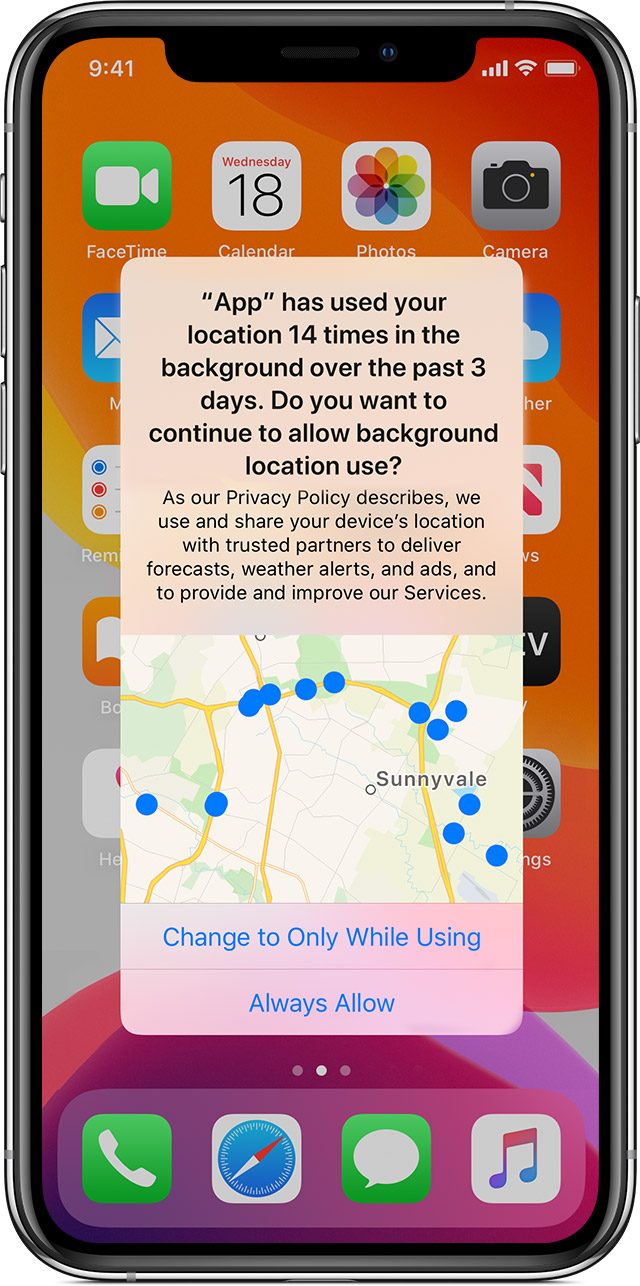
    Nowadays, iOS privacy settings offer a check against tracking location data in the background. iOS users can now choose between: ‘Allow While Using App’, ‘Allow Once’ or ‘Don’t Allow’.

    user data

    When an app tracks data in the background, a blue indicator now displays in the status bar to increase user awareness. iOS also reminds users when apps use significant amounts of location data and offers ways to turn location services completely off. Android has followed suit with an ‘Allow only when the app is in use’ function, too.
    user data

    Location tracking feels a bit creepy. In the wrong hands, it could easily be leveraged for nefarious purposes. Out of all the permission-granting options, location data presents much more of a physical safety concern for the end user. From the user’s standpoint, they should only enable access to location tracking while using an app. From a developer’s standpoint, they should be extremely careful when collecting and storing such PII to ensure regulations aren’t broken.

    4. Microphone

    Lastly, access to the user’s microphone is the fourth most commonly requested permission. The survey found 69% of social networking apps, 64% of photo and video apps and 41% of both business and productivity apps (Asana, Google Calendar, TimeTree, etc.) all want to be handed the mic.

    Here, potential privacy concerns are similar to those involving camera access. Bad actors could potentially activate the mic to listen to private conversations, record ambient noise and sell findings to advertising brokers. To increase user awareness, iOS 14 now requires an orange dot to display, indicating when the mic is in use.

    Other User Privacy Concerns

    User behavior tracking and app-to-app information exchange is another ongoing area of privacy concern. Companies often resell such information to data brokers, which is then used to refine highly targeted ad campaigns on third-party sites. This is how your search on Google results in product advertisements popping up in your Instagram feed. Apple is just starting to counter this practice with their App Tracking Transparency feature. In iOS 14.5, app devs must ask whether they can track your activity.

    Recent analysis has confirmed that commercially available consumer data, though labeled as “anonymized,” can successfully be used to piece together an accurate picture of a user by corroborating behavior on other apps. For example, users were able to track and pinpoint behavior that resulted in the outing of a catholic priest on Grindr. Smartphone app data could similarly be used by predators to spy on celebrities or politicians, posing a tangible security threat.

    Another cause for concern is metadata associated with photos. People often enable GPS-embedding into images to help organize their photo memories. If this is inexorably linked to photos, it essentially permits location data sharing to parties with photo library access who might not otherwise have location tracking permissions.

    From Big Data to Big Problem

    Perhaps the most curious finding of this report is that all apps are requesting permissions that seem irrelevant to their core value proposition. For example, why do 87% of shopping apps need access to a user’s entire photo library? Do 46% of food and drink apps really need access to a user’s personal contacts to place a food delivery order? Do navigation apps really need your personal calendar information to calculate a route downtown?

    The answer is not a pretty one. There has been a business imperative, for years, to track and collect large amounts of user data. There is undoubtedly an argument to be made for enhancing the user experience with innovative features and the role of big data in AI. However, this ongoing practice continues to creep into ethical gray areas. The fact is, the more personal data an app collects, the more potential privacy issues and security threat vectors are created in the process.

    Requesting permissions to on-device hardware and data collection is not always necessary. Thus, to stay safe and limit data overexposure, don’t overprescribe data collection. If it’s not fundamental to your app’s core function, don’t collect it, and don’t store it. Think twice before requiring many device permissions, and regularly audit app permissions requests to keep them to a minimum. As iOS and Android introduce new platform guidelines to elevate user privacy, developers should be prepared for users to grant fewer and fewer data collecting permissions. This is their right.

    It would be great if tech companies invested in honest, ethical business models that didn’t rely on harvesting and reselling user data to shady advertisers. And for those that mine user data but say it’s anonymous, I would point to reports that show anonymous data is nothing but pure myth.