Category: Low-Code/No-Code

  • ServiceNow Acquires DotWalk to Gain AI for App Testing

    ServiceNow Acquires DotWalk to Gain AI for App Testing

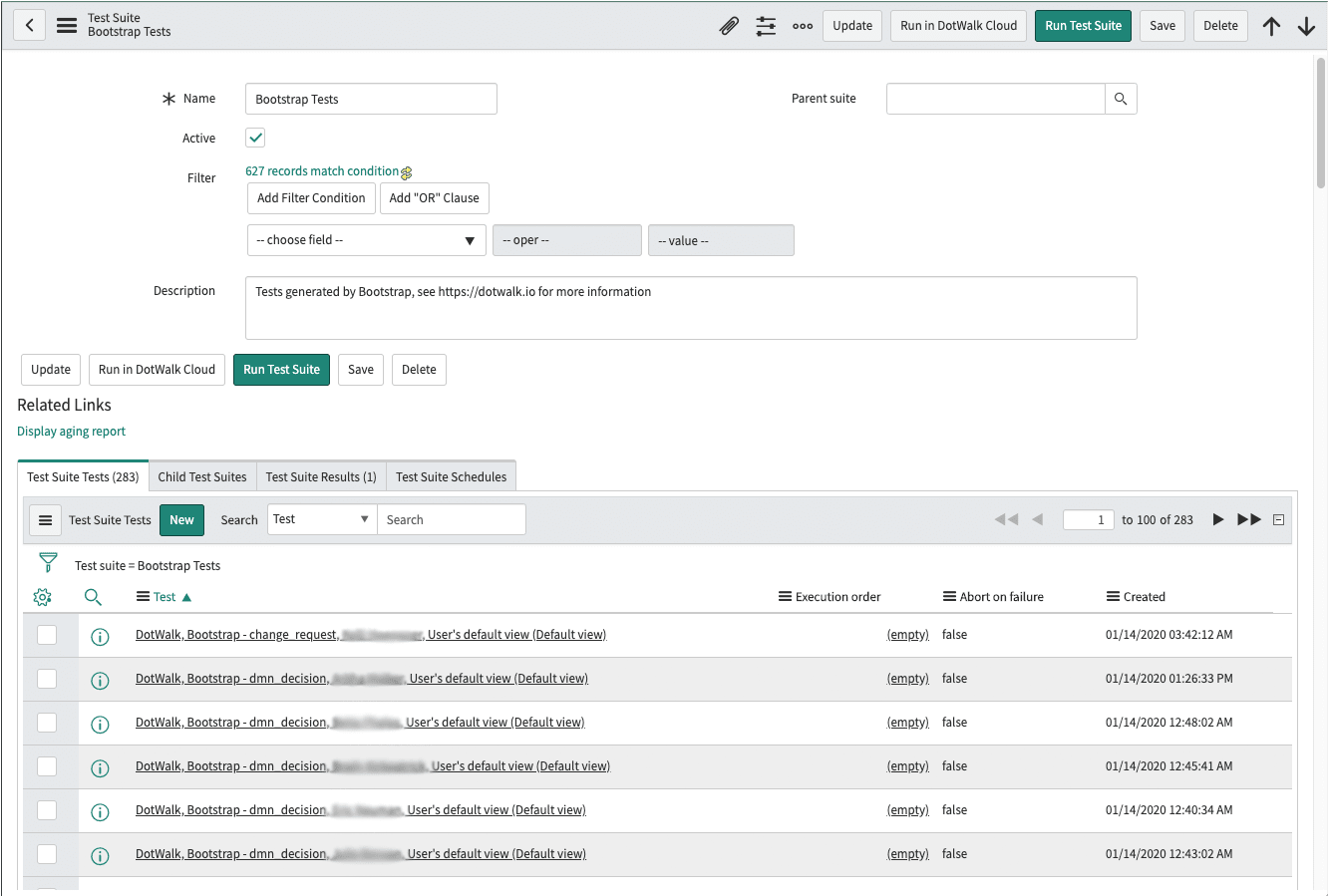
    ServiceNow today revealed it has acquired DotWalk to gain an artificial intelligence (AI)-infused application testing capability that runs natively on its software-as-a-service (SaaS) platform.

    Joe Davis, senior vice president for platform engineering at ServiceNow, said that testing capability will be made available free of charge to all organizations that build custom applications on the company’s platform.

    The number of custom applications being built on the ServiceNow platform has risen sharply since the start of the pandemic. Many organizations have taken advantage of the low-code tools provided by ServiceNow to build a range of applications that use the company’s SaaS applications as a foundation. That approach enables them to more quickly build applications that drive a wide range of digital business transformation initiatives.

    Davis said ServiceNow is committed to enabling organizations to improve the quality of those applications using a DotWalk testing capability that eliminates the need for developers to build and run tests themselves or for organizations to hire dedicated application testing teams.

    ServiceNow

    ServiceNow decided to acquire DotWalk because the company built a testing platform using machine learning algorithms specifically for the ServiceNow platform, noted Davis. The DotWalk tools also analyze logs in the background to identify and validate error sources that can arise during any application upgrade process.

    While there are a large number of professional developers that build applications on the ServiceNow platform, the company is also trying to encourage more so-called citizen developers to build applications. The challenge is many of the end users building applications lack an appreciation for design, security and what it takes to make sure an application scales as more users employ it. Testing tools infused with AI should make it easier for developers, regardless of experience, to build enterprise-class applications.

    Of course, professional developers will also benefit from AI-infused testing tools. Many developers have a tendency to cut short the application development process as they rush to meet application delivery deadlines. The end result, however, is that an application must be updated almost immediately after it has been deployed in a production environment. Testing tools that make use of AI will enable professional developers to more easily run tests they don’t have to build and then maintain, said Davis.

    One way or another, the number of custom applications built on SaaS platforms will increase as organizations digitize more processes. In the last year, more organizations have become adept at extending these platforms using a wide range of low-code tools that automate many aspects of application development. A significant percentage of those organizations are now also adopting DevOps best practices to better manage the pace at which those applications are developed and deployed.

    In the meantime, it’s too early to say precisely how AI will transform application testing. However, one thing that is certain is that even as the number of custom apps grows, applications will be more thoroughly tested before being deployed in a production environment.

  • Top 10 DevOps Things to Be Thankful for in 2021

    Top 10 DevOps Things to Be Thankful for in 2021

    Thanksgiving has been observed in the U.S. since 1861 and was officially designated as an official holiday in 1863 by president Lincoln. Of course, the tradition itself traces its lineage to the early days of the Pilgrims.

    This past year, of course, has been one of recovery from a pandemic that caused the deaths of millions of people around the world. Vaccines have saved the lives of countless more, so there is much to be thankful for despite all our recent trials and tribulations. In that spirit, there are more than a few things for DevOps professionals, in particular, to be thankful for this year starting with:

    Digital business transformation: Organizations of all sizes have had to adjust their business models because of both major changes in buyer behavior and an ongoing supply chain crisis. DevOps teams are at the core of any major digital business transformation initiative, so the demand for DevOps expertise continues to outstrip the available supply. Going forward, it’s been predicted we’ll see more digital transformation in the next 10 years than in all the last 40 years combined. The vast majority of those initiatives would never see the light of day if it were not for the expertise of developers and engineers working hand-in-hand to build and deploy applications faster than ever.

    Low-code platforms: As the demand for applications to drive digital workflows spiked in the wake of the pandemic, professional developers relied more on low-code platforms to decrease the time required to build an application. While many complex applications will still be built using procedural code, it’s clear not nearly as many applications could have been deployed without relying on low-code platforms to build them. It remains to be seen how many of the next generations of low-code applications will be built by so-called citizen developers that may soon be flooding DevOps pipelines with application code.

    Microservices: As an architecture for building applications the core concept of employing loosely coupled services together to construct an application goes all the way back to when service-oriented applications (SOA) were expected to be the next big thing in the 1990s. Microservices have, of course, been around for several years themselves. However, with the rise of containers as a software artifact for building microservices, it’s only now becoming apparent that building an application constructed using microservices not only takes less time but is easier to maintain and also more resilient.

    Observability: As a concept, observability traces its lineage to linear dynamic systems. Observability in its most basic form measures how well the internal states of a system can be inferred based on knowledge of its external outputs. In the past year, a wide range of IT vendors introduced various types of observability platforms. These make it easier for DevOps teams to query machine data in a way that enables them to proactively discover the root cause of issues before they cause further disruption. That’s a major advance over monitoring platforms that typically only provide predefined metrics to identify when a specific platform or application is performing within expectations.

    Biden’s executive order: In the wake of a pernicious attack against IT service management software from SolarWinds, the Biden administration published a sweeping executive order that requires federal agencies to implement a wide range of security best practices. Foremost among them is guidance concerning the security of software supply chains; which resulted in many organizations reviewing their entire software supply chain to make sure similar breaches will not occur.

    DevSecOps: As an extension of any DevOps best practice, DevSecOps generally describes an overall shift left in terms of making developers more responsible for application security. While still in its relative infancy, DevSecOps is starting to gain traction as DevOps and cybersecurity teams look to bridge a cultural divide that is as wide as any in IT. The ultimate goal is to deliver more secure applications without reducing the speed at which they are being built and deployed.

    GitOps: At its core, GitOps is an operational framework that takes DevOps best practices used to automate application development and extends them to infrastructure. The basic idea is that the configuration software created to manage infrastructure-as-code is just another software artifact to be stored in a Git repository. The approach provides a means for IT teams to achieve a continuous delivery goal that, more than a decade after DevOps best practices were defined, remains elusive. It’s still early days as far as GitOps best practices are concerned, but this has been the year when GitOps become part of the mainstream DevOps conversation.

    Kubernetes: Simultaneously one the most powerful and most complex IT platforms ever to come down the proverbial enterprise IT pike, Kubernetes has emerged as a de facto standard for building and deploying container applications that can more efficiently scale up and down as required to consume IT infrastructure. The challenge (and the opportunity) now is to make Kubernetes much more accessible to mere mortal IT administrators that typically don’t have the programming skills of a site reliability engineer (SRE) and which are both hard to find and retain.

    GraphQL: Employed as a query language for application programming interfaces (APIs), GraphQL provides a more efficient means of accessing data than the REST APIs that have been employed by developers in the past. Originally developed by Facebook, GraphQL adoption is still in its infancy but it’s clear APIs based on GrapQL will one day be as plentiful as REST APIs. That’s especially critical for microservices-based applications that rely on APIs to access data across a highly distributed computing environment that requires a more efficient means for transferring data.

    Venture and Wall Street capital investments: Investment firms are helping fuel DevOps advances as they continue to make capital available for companies vying for their share of a market that is expected to see compound annual growth rates of 24.7% through 2026. There will, of course, eventually be a wave of consolidation as merger and acquisition activity inevitably ensues. In the meantime, however, there is a wide range of DevOps technologies that might not otherwise be as broadly adopted if it were not for all the cash being poured into DevOps companies.

    The most important thing, of course, is that so many DevOps professionals are still here to build and deploy applications. It’s been a trying year for all concerned; however, as the pandemic crisis continues to recede, we can all be thankful for the opportunities that lie ahead.

  • Rethinking Programmer Education for Today’s Coders

    Rethinking Programmer Education for Today’s Coders

    The proliferation of low-code and no-code applications are changing the landscape for software. In the past decade, growth in these areas has empowered employees to generate solutions at the speed of a digital world, regardless of their technical background.

    This raises several questions: What kind of programmers do businesses really need? Should they still rely on programmers formally trained at four-year universities—what you might call “white-collar” programmers? Or, instead, are blue-collar programmers with self-taught skills or those who learned from a bootcamp more valuable? What will get organizations the right mix of programming skills?

    The short answer is that all programmers can be of great value. In general, blue-collar programmers, after all, connect things within the computing environment, while white-collar programmers create the things that are connected. The essence of low-code is that it allows more people to connect things and use their creativity to become more productive. But it doesn’t eliminate the need for professional programming and tools at its foundation.

    At their core, low-code and no-code are about democratization. They allow people without technical skills to work creatively in ways that essentially make everyone a programmer. A parallel from an earlier computing generation is the Excel spreadsheet, which lets people with no programming background perform computational tasks and eventually work their way up from simple formatting to full-fledged programming. But at some point, polished programming skills are still necessary, no matter how easy no-code or low-code can make some of those elements.

    In the breakneck pace of cloud-based computing environments with new services constantly being developed and deployed to the edge, it’s worth considering the distinctions between the white- and blue-collar programmers and what kinds of education are appropriate for each.

    Four-Year Colleges Vs. Boot Camps

    A career as a programmer can seem intimidating for onlookers. This is particularly true when these jobs involve complex languages such as C++ and Java, which are often used in large projects that can take years to develop and involve millions of lines of code. Some of that is still true, but the evolution of programming over the years toward languages that require less code, such as Python, and to domain-specific languages (DSLs), has also started to lower the barriers to entry for programming.

    It’s true that you’ve never needed a four-year computer science degree to be a programmer. In fact, many that have dropped out of college—or never attended at all—have made significant contributions to the industry. However, universities do provide a foundation in theory and algorithms that have always served programmers well and enable them to branch out into new areas, such as artificial intelligence or other disciplines, such as bioinformatics. Coding bootcamps, for their part, can provide intensive training on DSLs or frameworks like Rails or React.js that can benefit companies’ plans, giving blue-collar programmers the practical skills that white-collar programmers may not have. They also attract career-changing attendees with four-year degrees in other subjects, including the humanities and the sciences, which brings badly needed new ways of thinking into the profession.

    While each method is valid, both four-year institutions and bootcamps also have their shortcomings. Universities delve deep into software development theory but often don’t emphasize critical aspects of doing the job, such as teamwork, testing and agile processes. Nor do they focus much on core areas of businesses today, like cloud computing. Boot camps, by targeting specific areas and emerging technologies and languages, can help people get internships or entry-level jobs, but don’t provide a broader theoretical knowledge of programming. And they can be hit-or-miss, with some of them using sketchy practices for payments and job placement.

    The inherent weaknesses in both white- and blue-collar training can be addressed through apprenticeships and internships, but only to a point. The question remains: Who will train low-code programmers on modern development and coding practices? A lot of companies throw around terms like Agile and CI/CD, but they’re often just new labels on old, inefficient practices. Companies will need white-collar programmers to bring blue-collar programmers up to speed.

    Programming for the Masses

    No-code software is a great enabler, allowing people with no formal education or experience to become proficient in a programming environment. On the other hand, for people who do have formal training—whether a formal education or boot camp experience—low-code simplifies their work, leaving time to focus on more complex projects. But programmer or not, users of no-code and low-code solutions need to understand more than just deployment and testing if they want their software to be reliable and useful.

    Professional developers can make a difference by creating and maintaining the pipelines used to build, test, archive and deploy low-code software; they will need to build new tools to accommodate low-code frameworks. And while familiarizing themselves with current development techniques, they could become the teachers of essential computing practices that don’t involve coding.

    A cooperative, productive relationship between white-collar and blue-collar programmers is essential to moving forward with software development, as it will allow both to continue acquiring new skills and experience outside of low-code, which is only a product of programming, no matter how ubiquitous it may be.

    Making the Connection

    Today, we’re entering a business world where practically everyone will need to code, making low-code and no-code frameworks necessary, especially for users without formal training. However, the importance of professional programmers will remain, too.

    We’re likely to see a proliferation of DSLs created to solve specific problems, which will eventually evolve toward general-purpose programming languages. Programmers will need to build web frameworks, cloud capabilities and more, including everything from web widgets to the high-level tools that let users work. That may be the only way we can begin to meet the demand for more people who can program as more devices come online, more connections are made and the world becomes increasingly reliant on automation.

  • Are ERP-Centric Enterprises Being Left Behind?

    Are ERP-Centric Enterprises Being Left Behind?

    Many large enterprise companies are rife with departments that depend on customized ERP software applications. These systems accommodate vital business tasks ranging from inventory management to ordering capabilities to accounting programs to CRM platforms—all of which were custom-built to fit the enterprise’s specific needs and meet the KPIs of each unique organization. These applications tend to sustain grades, patches and reworks, sometimes resulting in multiple redesigns over the course of decades, and these often are not properly documented. To make matters worse, these ERP software systems also tend to be written in outdated programming languages such as ABAP for SAP and PL/SQL for Oracle, making them a challenge to update.

    For example, 91% of respondents in a recent ASUG survey of 110 SAP companies said they use custom code, and 41% of those applications were created at least six years ago. The majority of these companies said that the existence of these custom code environments has become a hindrance to digital transformation and is holding back innovation.

    These conditions create the bloated and overly complex legacy environments that are now commonplace in the enterprise market. Widespread, customized core business systems have made digital transformation particularly daunting for enterprise companies. They require significant developer resources, excessive time commitment and ample expense to strip down and redesign these custom systems for the cloud. 

    A Lack of Developers—and of Developer Interest

    U.S. Department of Labor statistics from December 2020 indicated that there will be a shortage of 40 million skilled workers worldwide, amplifying these issues further. That figure is predicted to grow to 85.2 million by 2030. What’s more, new developers entering the marketplace gravitate to more contemporary programming languages such as JavaScript and Python, as opposed to wanting to revamp archaic code used in most ERP solutions, such as ABAP.

    For this reason, large enterprise companies in a range of verticals are lagging behind when it comes to upgrading mission-critical software applications to the cloud or to a more modern architecture. These organizations are well aware they stand to gain significant productivity benefits from digitally transforming their systems so that, for example, inventory data can be accessed via a mobile device or shared from anywhere on a cloud-based platform. Yet these large organizations are stalled in their efforts to modernize. Some companies have gone as far as to scrap their current systems and start reprogramming their software applications from scratch—a hugely expensive, lengthy and laborious endeavor that’s also full of risk. 

    Leveraging Low-Code to Simplify Enterprise IT Environments

    One method that has shown progress in unraveling these overwrought environments is to apply automation through low-code integration. Ideally, an effective low-code development solution will automatically convert existing business processes to modern, cloud-native applications, allowing the organization to maintain the business logic it has built into those applications over the years, while drastically reducing the time commitment, costs and potential disruption associated with traditional, long-form integration. In SAP environments, for example, using a low-code rapid application development solution can separate the application layer from the core SAP system, automating a large portion of the migration while preserving a “clean” SAP core.

    With many organizations under pressure to keep budgets under control in what continues to be an uncertain economy, these large-scale companies are looking for ways to modernize their operations on a more controlled schedule. When enterprises use low-code solutions—and furthermore, don’t have to search for developers of these more archaic languages—they’re free to approach digital transformation in a far more incremental and cost-effective way.

    For instance, the 12 million users of SAP’s solutions are being compelled to upgrade to the modernized version of its product, S/4HANA. Yet the American SAP User Group (ASUG) research shows that only 33% of these organizations have taken on the challenge so far despite the looming end-of-life of the current prevalent version. This is because lacking a low-code development solution, companies are being pressured to convert and rebuild all their business processes in one fell swoop. Few organizations have the resources to absorb such a drastic and risk-prone undertaking. 

    A rapid application development program acts as a bridge for companies that are looking to modernize their businesses, allowing them to upgrade their applications incrementally, according to their own schedules. Low-code can be a catalyst for technical debt-ridden enterprises, allowing them to simplify complicated legacy environments and get down to the business of innovating their systems.

  • Best Practices for Codeless Test Automation

    Best Practices for Codeless Test Automation

    Low-code and no-code development platforms have revolutionized how companies think about application development. The same can be said for software for quality assurance (QA), where codeless test automation solutions handle the burden of coding for organizations that can’t allocate extra programming resources or keep up with extensive writing and maintenance of automated tests.

    Codeless test automation can be a big win for companies that are resource-challenged and trying to get applications to market quickly. A recent Applause survey of more than 2,000 digital experts revealed that nearly 54% of organizations have strategic plans to purchase a codeless test automation tool in the future.

    Despite the heat in the market, though, it is not a fit for every type of application or use case. It is not, in most cases, a replacement for scripted automation, but rather should be used as a complement to traditional automated testing and manual functional testing.

    An example of this is with dynamic content in applications, which have unpredictable or even subjective outcomes. Consider a streaming media platform. An automated solution might validate that the “Play” button triggers the code to play a movie, but it cannot validate that the movie plays without audio or video glitches.

    In complex cases that aren’t a fit for either codeless or traditional automated methods, manual testing is a better alternative.

    When to Use Codeless Test Automation 

    Test automation is not going anywhere, even as codeless tools become more prominent. That’s because automation enables brands to move faster and meet the fast-moving target of building and testing software that is both high quality and able to be released to end users quickly. The downside of traditional test automation, however, is that building and maturing the process can be time-, cost- and resource-intensive.

    This is because traditional automation requires experts in coding, not only to write tests at the outset but to also maintain them over time. The complexity and need for different tools—like Appium, Selenium, Apple simulators, Android emulators, element locators, locator strategies and so on—all contribute to the complexity of traditional automation and the need for specific expertise. Plus, software development engineers in test (SDETs) are constantly being taken from QA teams and moved into development roles, which often means that these projects get stuck halfway through and never fully completed, which can then result in a tremendous waste of both time and money for companies.

    The overarching value of codeless test automation, on the other hand, is that anyone can do it. With a codeless solution, a user simply moves through a test case and the codeless tool can then transcribe that experience into an automated test. And, while codeless test automation tools originally addressed only web applications, more tools now offer the ability to run sessions and create automated tests on mobile apps—on both Android and iOS—as well as web applications.

    What it all comes down to, though, is that organizations shouldn’t be thinking of codeless tools and traditional automation as an either/or scenario. Codeless test automation tools are great for less-involved scenarios—like smoke tests or portions of a regression testing suite. Using codeless tools in this way allows SDETs and dedicated automation resources to focus on higher-priority and more complex automation. Ideally, manual testing should be used alongside both traditional automation and codeless test automation solutions as a way to maximize the speed, scale and quality at which software can be delivered to end users.

    As a rule of thumb, every organization should balance test automation and codeless test automation and consider automating when the following factors are in play: 

    • Repeatable task 
    • Time-consuming testing activity 
    • A stable testing environment with little change anticipated 
    • Repetitive test(s) 
  • Empowering Pro and Citizen Developers

    Empowering Pro and Citizen Developers

    When I was the CISO years ago, we had a talented team build the incident management system for our new CIRT. The team built intake forms, interfaces with some of our tools and the workflow to hold it all together. We were fortunate to have the resources of one of the largest companies in the world (at the time), which we used to make our incident response processes faster and more efficient. Thanks to this system, we saved many thousands of hours per year.

    That was 15 years ago, and now organizations are automating processes without the need for talented (and expensive) developers. In fact, this year’s moniker is “Year of Low-Code”—the beginning of a new era. Gartner predicts low-code will continue to evolve, stating that by 2025:

    • 70% of new applications developed by enterprises will use low-code or no-code technologies (up from less than 25% in 2020) and
    • 75% of large enterprises will be using at least four low-code development tools for both IT application development and citizen development initiatives.

    As Gartner’s forecast on low-code applications comes to fruition, product and IT leaders collectively have a lot of work to do to not only provide these tools to customers but internally for their teams, as well. As organizations rise to meet the demand for automation to streamline their customers’ and their own processes, it’s important to remember that this is new territory for many.

    The absence of a well-established route for migrating to automated processes can create challenges if not done correctly. As organizations look to pioneer low-code, I’d like to offer a two-step guide for leadership to begin this low-code journey through personal insights and real-life examples–providing an “automation blueprint” for IT leaders.

    Getting Developers on Board

    Although low-code is about bringing capabilities to non-technical resources, don’t neglect the importance of getting your existing developers on board early. Chris Byers wrote this great piece on why developers should not be worried they will become “extinct” by this new outlook. On the contrary, your core developers are going to benefit from these changes–freeing them up from tedious low-value work and allowing them to focus on higher-order challenges.

    Change of any sort can be daunting, and as with any shift like this, transparency is key. I often write quick blogs in our project management system or update my developer community in their dedicated collaboration platform channel to update the team on any new processes or changes with complete transparency. My team can ask me questions directly on the platform, and they are usually pretty direct. This visibility is key, allowing everyone to feel like they have a say and stake in how the company is accomplishing shared goals.

    It’s instrumental to partner with your DevOps team and ask their advice, as they are your “low-code” experts while you navigate these waters—either creating software with these offerings in your product portfolio for your customer base or deploying tech internally with low-code tools. With the former, your developers really should have no problem getting on board.

    Introducing the Concept to Citizen Developers

    Next, we must empower people to adopt the role of citizen developer by equipping them with the knowledge they need to be successful. Otherwise, we will find ourselves back at square one with the work developers did to create low-code workflows wasted. Whether you’re working with customers, partners, or your internal teams, here are a few ways to building your citizen developer crew:

    • Bring back the lunch-and-learn (hey, they were popular for a reason) via videoconference or collaboration channel: Send out gift cards for participants to order lunch and host a live session to walk through workflows and answer questions.

    • Provide on-demand tutorials: Beef up your company’s video library with a couple of “how-to” videos on using workflows for ongoing reference. Everyone loves an excellent how-to explainer.

    • Write a guide of your own: One of our technical partners is known for its workflow, and they’ve written a guide to their low-code product’s capabilities. It’s available online, and it’s geared towards citizen developers. So it might be worth taking the time to do one in-house; a one-stop-shop for everything low-code.

    Workflows are everywhere you look – not one team in an organization operates without interacting with identity workflows. Take HR, for instance; you might think, “HR deals with people; they don’t need to build workflows.” This overlooks how many HR processes are workflow-driven. Imagine if an organization could tap HR as citizen developers—the department could establish a workflow unique to onboarding, for example. A new hire’s manager receives an automatic prompt to approve access to applications needed for that role. Imagine the time saved, which means more time spent on other business-essential tasks like recruiting quality candidates.

    The investment you make today getting buy-in from developers and educating your citizen developers will pay off in the long run. Now is the time to get started. The road of innovation is always bumpy, but that doesn’t mean you shouldn’t try to make it as streamlined as possible. To play a role in pushing boundaries forward amidst the digital transformation we are experiencing, you will need everyone—developers and citizen developers—on the same (web)page.

  • Low-Code is Table Stakes for Enterprises

    Low-Code is Table Stakes for Enterprises

    Enterprises across all industries are facing mounting pressure to deliver business value with speed and agility. In the digital age, companies that can’t keep pace often fall to the wayside, especially in light of increasing customer expectations and dynamic regulatory requirements.

    Speed has become table stakes. And business leaders have risen to the challenge across the board—focusing on efficiency and streamlined operations. However, despite enabling speed, many organizations still struggle to deliver value and continuously improve performance using technology.

    Traditional software development methods can no longer keep up with the demands of modern users. And so, to achieve speed and generate significant value, business leaders must leverage customized software with low-code capabilities, thereby empowering professional IT developers to develop and deploy business applications rapidly and seamlessly.

    Speed is Table Stakes, But So is Low-Code

    Low-code application development is certainly not a new phenomenon—in fact, the term low-code was originally coined in 2014. However, since its advent, an amalgamation of digital disruptions, hyperautomation and new technologies has led to an exponentially rising demand for low-code tools.

    According to Forrester, “Low-code development platforms are emerging as a key strategy to accelerate app delivery to support digital business transformation. And they have the potential to make software development as much as 10 times faster than traditional methods.”

    So, not only is low-code an absolute imperative in today’s business environment, it is the key to unlocking speed and agility in your operations.

    Fabrizio Biscotti, research vice president at Gartner, further states that, “Globally, most large organizations will have adopted multiple low-code tools in some form by year-end 2021. In the longer term, as companies embrace the tenets of a composable enterprise, they will turn to low-code technologies that support application innovation and integration.”

    What Does Low-Code Mean?

    When you Google “low-code” you’ll find a number of different definitions. Low-code means different things to different people, depending on their industry, their business needs and their experience with IT.

    Perhaps the most common interpretation of “low-code” refers to “no-code” development, wherein citizen developers are enabled with declarative, drag-and-drop tools to create applications without having to depend on IT.

    This type of low-code works well in cases where users are attempting to streamline simple workflows and automate standardized use cases. However, when business needs become more complex, the “no-code” approach can fall short.

    A low-code platform, in the truest sense, offers a broader and deeper set of capabilities, enabling professional IT developers to use a modeling-driven environment to rapidly develop and deploy mission-critical applications and address complex, content-driven business needs.

    Generating ROI From a Low-Code Platform

    The right low code platform enables far more than just speedy app development. By investing in one comprehensive low code platform, you can:

    • Simplify your complex, content-driven business needs
    • Enable mobile app development
    • Develop customer-facing and customer support applications
    • Streamline internal workflows
    • Create transaction-oriented standalone applications
    • Develop content-driven workflow applications
    • Modernize legacy systems
    • Reinforce backend systems to handle larger volumes of data and transactions
    • Build portals for internal and external users
    • Deliver an enhanced customer journey across multiple touchpoints
    • Deploy your applications in a cloud-based or hybrid environment
    • Scale your applications with agility

    Low Code is Here to Stay

    Gartner predicts that “Low-code application building would gather more than 65% of all app development functions by the year 2024 and with about 66% of big companies using a minimum of four low-code platforms.”

    So, not only is low code a business imperative today, it is only increasing in utility and ubiquity as we move into the future.
    For enterprises striving to stay on the cutting edge, the right low-code platform is an investment that will keep on generating significant returns. From enabling speedy app development to providing the agility and scalability to keep up with dynamic business needs and customer expectations, low-code is the key to continuous innovation and ongoing success.

  • How No-Code Will Transform DevOps

    How No-Code Will Transform DevOps

    In the years that low- and no-code development tools have been available, the movement has been slow to gather pace. Until recently, the vast majority of app and workflow development has remained firmly in the hands of professional coders.

    That is about to change—and fast. Gartner forecasts that the global low-code development technologies market is on track to reach $13.8 billion in 2021, an increase of nearly 23% over 2020. Other research suggests that 20% of all workers use no-code tools today, including 56% of coders. And 71% of those who use no-code tools within IT adopted them within the last year.

    No-code development is reaching a tipping point, and this trickle of adoption has turned into a torrent, driving more and more business demand daily.

    Drivers for the No-Code Movement

    The reason for this acceleration is simple: Digital transformation requires speed. If businesses are to digitize the full universe of processes across all departments, then they need tools that can be adopted quickly and with little ramp-up time.

    No-code tools are an ideal solution to this problem, and not just for a short-term fix. If the investment is seen solely as a short-term fix to immediate problems, it’s very likely that a company’s digital transformation efforts will continue to die on the vine. Digital transformation is not a “one-and-done” process; it’s only the start of a new business strategy based on continual innovation, where new apps and tools are built and rebuilt, time and again, to keep up with changing market dynamics and customer/employee requirements.

    The long-term trend of digital transformation has been accelerated by two shorter-term trends. First, obviously, is the COVID-19 pandemic. The social distancing measures used to control the virus meant that businesses had to create new apps and workflows (in hours or days) if they were to survive. No-code tools played an important role in helping businesses adapt at a breakneck pace, and gave them a taste of just what’s possible with intuitive app and workflow development.

    Second, a shortage of skilled developers. The population of 24 million global developers accounts for just 1% of the overall workforce, leaving businesses short-handed and looking for ways of empowering non-coders to take control of app development for themselves. As well as plugging skills gaps, no-code also meets demand from employees for more autonomy and more control over their operations, projects and workflows.

    Unlocking Innovation

    The net result of these drivers is that no-code is now a bona fide movement, and technology companies large and small are taking advantage of market innovations to transform what it means to build websites, software applications, workflows and mobile apps.

    The impact on enterprises will be profound. As Accenture highlighted in its 2021 Technology Vision, no-code is part of the broader democratization of IT, where the ability to create technology solutions to address business challenges is extended to everyone in the organization. This trend will unleash a wave of “grassroots innovation” that will help companies reinvent themselves in the years ahead. Those that fail to take this opportunity now may struggle to keep up with more inventive and agile competitors later.

    What No-Code Means for Developers

    For developers, this trend will undoubtedly lead to many questions. What is the role of the professionally trained coder in a no-code world? Will DevOps become extinct as “citizen developers” take over? Far from causing detrimental effects, no-code and low-code will likely prove to be hugely beneficial overall. Here are four key reasons why:

    Reduced workload/stress. With no-code-based roles, organizations are able to expand their technical capabilities without needing to hire more developers or coders. What’s more, by spreading basic app and workload development tasks across the organization, developers’ time is freed up. For teams that are already understaffed and under pressure, this can make a huge difference in the workplace experience and enable developers to spend more time focused on delivering high-quality software.

    A more strategic role in the enterprise. With tactical software development carried out within business units, developers can spend more of their time focused on the ‘next big thing,’ whether that’s mixed reality, quantum computing or AI. Developers and the wider IT team can act as “futurologists”, assessing new tools for the best fit within the business and guiding purchasing decisions to ensure the best possible outcomes.

    Accelerated innovation. For more complex software development that requires coding expertise, developers can leverage the speed of no-code to spin up proofs-of-concept and test them before investing time and resources on full-scale development. In fact, research suggests that many developers are already taking this approach, with 38% stating that they use no-code for prototyping a new product.

    New roles and opportunities. No-code will have a deep and broad impact on the enterprise, changing how work is done and creating new roles in the process. Many of these roles will provide new career paths and opportunities for developers, such as no-code consulting (helping businesses find the optimum no-code framework and tools for their needs) and roles that revolve around optimizing processes, building solutions and discovering ways to easily automate and streamline the day-to-day work within their organizations.

    DevOps teams, long the drivers of digital transformation, are now finally feeling the effects of those efforts. A new world of work is emerging where everyone is a technologist; using intuitive tools to rapidly build solutions to their business needs as they arise. This approach will free developers from their traditional role as gatekeepers of innovation, allowing them to focus on strategic technology decisions and channeling their specialist skills to areas where they will make the most impact.

    The rise of no-code is good news for everyone. It accelerates digital transformation and unlocks the innovation potential of all employees. And it’s great for developers, too; making their work more interesting, less stressful and with new career paths and opportunities for development. No-code can provide a growth driver to all enterprises, and arm early adopters with a significant competitive advantage.

  • Copado Acquires Qentinel to Gain AI Testing Tools

    Copado Acquires Qentinel to Gain AI Testing Tools

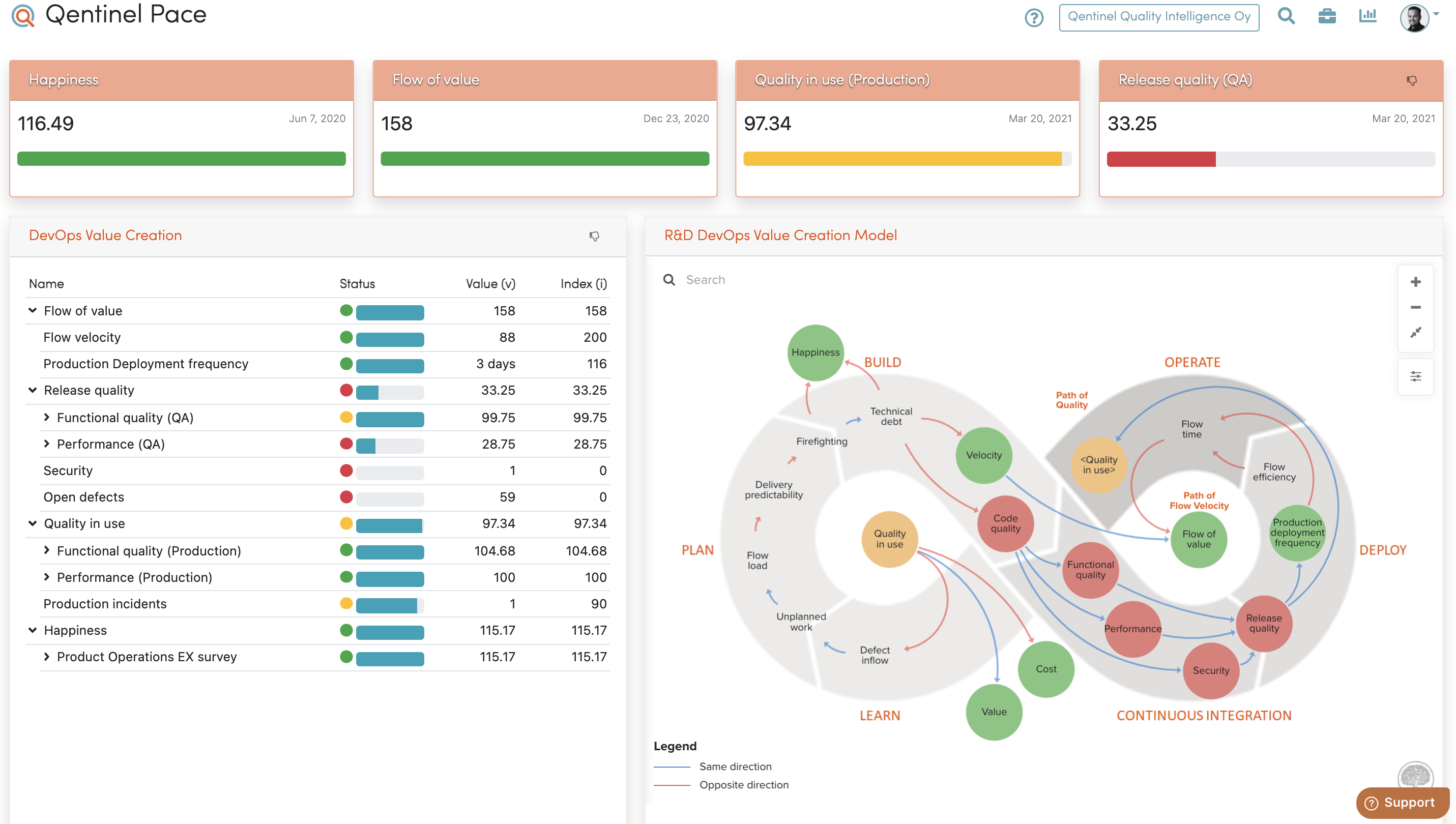
    Copado has acquired Qentinel as part of an effort to incorporate AI-infused application testing within a DevOps platform and build applications using low-code tools across multiple software-as-a-service (SaaS) platforms.

    The Copado continuous integration/continuous delivery (CI/CD) platform was originally created to accelerate the development of low-code applications on top of the Salesforce platform. Now, however, Copado is expanding the scope of its DevOps reach to include other SaaS platforms.

    Andrew Leigh, chief marketing officer for Copado, said as organizations increase the number of SaaS platforms they employ in the wake of the COVID-19 pandemic, it quickly became apparent there would soon be a need to build applications that enable organizations to unify business processes spanning multiple SaaS applications.

    As part of that effort, Copado’s acquisition of Qentinel aims to advance that goal by making it simpler for both developers and end users to participate in the application testing process, Leigh said.

    Qentinel is accessed mainly via the cloud to automate the creation of application tests. Rechristened Copado Robotic Testing, the core of the Qentinel platform is based on the open source Robot Framework that understands scripts, executes them and generates logs and reports. A set of built-in libraries comes packaged with Robot Framework and addresses a wide range of testing scenarios. Qentinel customers include Brunswick, Elisa and Konecranes.

    Copado AI testing

    Gartner is forecasting that, by 2024, 75% of large enterprises will be using AI-enabled test automation tools to advance continuous testing across different stages of the DevOps life cycle. Much of the interest in AI-infused application testing tools is being driven by necessity as the pace of low-code application development exceeds the pace at which manual testing processes can work. As application testing becomes a bottleneck, organizations will naturally look toward automation platforms that employ machine learning algorithms capable of testing applications at scale.

    It’s not clear to what degree those platforms might eliminate the need for humans to test applications. The expectation is humans will be able to test application functionality at a deeper level versus, for example, merely checking to see if compliance mandates have been met. Many smaller organizations building low-code applications don’t have any meaningful application testing capabilities at all. Testing platforms infused with AI will prove to be especially crucial for citizen developers that require guidance to build a secure application that can actually scale, noted Leigh. The more SaaS application environments those applications span, the more critical testing becomes, added Leigh.

    One way or another AI is coming to application testing. After all, machine learning algorithms don’t ever need to take a day off or suddenly leave to take a better offer elsewhere. In fact, soon, most organizations soon won’t even consider a test automation platform that doesn’t have AI capabilities as they attempt to reduce the level of manual, monotonous and repetitive testing tasks. It may take a while for everyone to gain confidence in the algorithms, but it’s now more a question of the degree to which AI will be employed rather than if.

  • Lessons Learned on a Low-Code Journey

    Lessons Learned on a Low-Code Journey

    The popularity of low-code/no-code tools are on the rise as organizations chase the promise of creating ‘citizen developers.’ The idea of using these tools to empower non-technical developers and/or to free development teams from writing code line by line is certainly compelling.

    About a year ago, a friend reached out to ask if I would critically review a book he was writing about citizen development. At the time, the expression was new to me but after reading and reviewing the book, I was intrigued. It challenged me to embark on my own citizen developer discovery. I want to share several applicable lessons I learned along the way.

    Intrigued: Citizen Developer Tools Versus Dev Teams

    The curious part of me was trying to understand if these were tools that would remove the need for expensive development teams. The previous, well-intentioned attempts had fallen short of their promise—think Computer Aided Software Engineering (CASE) from the 1990s as an example.

    Around this time, I discussed the topic with the CTO of a progressive client. His business users would not wait for technical resources when they needed apps to address persistent problems. He was quick to point out  that low-code was preferable to shadow IT. The architecture for these low-code/no-code tools meant database administration was in his team’s hands. He was supportive of business units building small tactical pieces of functionality with a clear business case, and he supported them where possible through training and allocating resources to their projects for data integrations and other functions.

    The Challenge: Write an App

    Encouraged, I decided to challenge myself over one weekend to see if I could write a commercial application. I had studied programming languages like Fortran and C in the 1980s, but I’d never worked as a developer and had never written commercial code.

    Start of Day One

    I selected a low-code tool at random. I would recommend, however, that a citizen developer engage the IT team rather than choosing at random, as most low-code/no-code tools have an underlying programming language. If your organization is a Java shop, for example, then it would make sense to pick a tool that has the same language—in this case, Java—at its source.

    I purchased a six hour training course on YouTube for $20. This would prove to be a wise decision. Learning the tool I selected was not straightforward, but the training course allowed me to pause the tutorials, rewind and repeat to ensure I was understanding concepts and could follow along with the ‘how to.’

    First task: write ‘Hello World.’ I recommend that citizen developers start here. If you can do this, then it’s more than likely you can build something more complicated.

    Three hours later (of which two were a system error) … it was done.

    low-code

    Clicking on the green button produced the screen below.

    low-code

    At this point, I still had more questions than answers. The GUI for the development tool was point-and-click within a Windows directory structure. There was no command line editor. I was even more encouraged. Could it be this straightforward?

    A note: while it took less than an hour to complete the ‘Hello World’ task, I encountered a Windows system error which pointed to a server port error. The vendor’s help desk didn’t operate over the weekend, but their documentation was adequate; it took a further two hours of effort to fix the problem, which arose because my Windows Surface Pro was both a client and a server.

    Would an ‘average’ citizen developer have been able to overcome this problem? I’m not sure. I recommend when trying low-code/no-code tools that you also trial the help desk, even if you need to pay for it. While many software tool companies try to force software engineers to work through wikis to solve problems, citizen developers may need more hand-holding.

    The next step was to build an application. Most non-technical people tend to describe applications from a graphical perspective and as business functions. This is very much in keeping with how I worked for a further two hours, at which point the ‘Home’ web page looked like this:

    low-code home page

    Using data from our in-house spreadsheets, I created the data model below with relative ease. I believe a citizen developer would benefit from asking an in-house database expert to review this ‘design’ to save time later when maintaining the application.

    low-code design

    This work was undertaken at the same time as I was building a second tier of pages to amend data. So, for example, the automatically generated customer page which allows a user to search, add, edit and delete customer records looked like this:

    low-code edit page

    This was completed in four hours. Once the table was created with the correct columns, the creation of the web pages was automatic. In fact, it became repetitive and I found it was easy to lose my concentration and make errors.

    I was learning to save every small change to ensure that the live web and mobile application builds were working. A professional developer would see this as a form of continuous integration for the citizen developer.

    I don’t recommend having teams of citizen developers working together, at least at the outset, as it introduces branching and versioning and the concept of ‘breaking a build.’ Professional developers would need to be consulted at this juncture.

    End of Day One

    I had a real sense of achievement at the end of day one and was eagerly anticipating day two. Citizen developers should note that, at this point, I had produced what developers would call a prototype. It would be possible, upon reaching this point, to approach IT to assign a developer to finish the job. If IT does not have capacity, then keep going.

    Start of Day Two

    Having designed screens and a database, the next task was to add business logic.

    low-code logic

    Creating flows of work with rules was a more engaging task, but still accomplished via drag-and-drop or point-and-click. Boolean logic operators like if- then- else allowed me to quickly build logic and attach it to visual elements on the webpage.

    low-code flow

    This is an event registration flow where data is accepted from a web page and, based on a true or false response, treated differently depending on that response.

    As before, the first workflow took some time to learn. There were many ways to both trigger an action and direct the subsequent work. After a further half day, I had produced enough working code that I felt I probably couldn’t learn a whole lot more and the application was roadworthy.

    low-code mobile app

    From there, creating the mobile version of the app was as simple as pushing a button. At the outset, I had set a switch for mobile deployment. The web and mobile editions were always in sync, and the GUI was adjusting automagically for the deployment platform. Citizen developers should check on in-house standards for web and mobile app deployment configurations and ensure their selected tool supports them.

    End Day Two

    Lessons from My Discovery

    Organizations that want to adopt low-code or no-code tools will need to ensure IT support and training for business users that want to self-service their app dev needs. I recommend early engagement and frequent retrospectives with IT colleagues.

    Business functions should consider ‘easy’ and tactical opportunities for piloting.

    Allocate an uninterrupted period of time to focus on the task. Learning a new tool over a weekend was a really good idea, too. There was zero context switching, apart from my wife dropping in with coffee for a chat.

    I recommend citizen developers try to be a little bit Agile for these engagements. Using a ‘Plan, Do, Check, Act’ methodology means that you are not ‘all in’ on this—you are simply taking small discrete steps to see if you can solve problems more efficiently than you would if you instead waited for IT.

    Professional developers should ensure that any low-code/no-code tools produce code that can be imported into their standard IDE and that the citizen developer’s code is not locked into the tool.


    As a DevOps Institute Ambassador, O’Reilly helps empower DevOps Institute community members with the SKIL framework to advance the Humans of DevOps with skills, knowledge, ideas and learning. Learn more about O’Reilly’s work in DevOps here.