Category: IT as Code

  • How 5G Mobile Networks Will Change IoT Security

    How 5G Mobile Networks Will Change IoT Security

    Depending on your location, you might have noticed a new 5G icon on your cell phone recently. The roll-out of the new 5G mobile network is largely a positive change for consumers and businesses. The fifth generation of cellular networks (hence 5G) purports to be one of the fastest wireless networks ever created.

    This technology claims to provide more efficient interconnectivity, and faster data transfers between people, objects and devices. All good things, right? But what security risks does 5G represent for the modern age?

    Some cybersecurity experts suggest that new vulnerabilities are versions of problems not entirely flushed out from 4G and even 3G networks. This article will attempt to explore some problems and opportunities that IoT security experts need to be aware of, and how savvy enterprises can be proactive about security in the age of 5G.

    Riding the 5G Wave

    A business’s potential is only as great as the technology they elect, as an organization, to adopt and use. One of the first benefits that 5G provides comes from the additional speed that the network provides. 4G posted average download speeds around 20Mbps. With a fully deployed and optimized 5G network, users should expect those download speeds to reach anywhere from 500 to 1,500Mbps. 

    Raw speed is one thing, being able to harness this type of efficiency is another. A Barclays’ poll recently reported that only around 28% of businesses understand 5G or the practical business applications the network offers. 

    Along with the challenges of leveraging the increased speed of the 5G network for business purposes, another important aspect of 5G education involves the security risks associated with faster technology. We suspect that if only 28% of businesses understand the practical applications of a 5G network, the awareness of potential security risks may be a similarly low figure.

    Getting Up to Speed on G Security

    While 5G touts a tighter grip on security, experts in the space will remind us that some of the concerning holes in the security of 4G, and even 3G, networks have been carried over into the rollout of 5G. Give credit where it’s due, the 5G security wins are associated with the encryption process which improves anti-tracking and spoofing features. This means that would-be criminals have a much harder time tracking and manipulating device connections.

    5G is also more software and cloud-focused than previous versions, which allows for better monitoring so threats can be spotted and mitigated more quickly. 

    While this is good for consumers, it’s not a perfect system by any means. “Stingray” devices can still be used to deploy fake base station attacks, which allow attackers to intercept mobile traffic and potentially manipulate data.

    Downgrade Attacks

    Purdue University and the University of Iowa outlined findings from design issues in the 5G protocol that exposed 11 vulnerabilities that may be exploited by bad actors. Five of these discovered vulnerabilities were carried over from 3G and 4G networks. Notably, a “downgrade attack” which essentially reverts the devices to use old mobile data networks. On top of potentially leading to higher wireless bills, this may allow attackers to track calls, texts or browsing habits on devices.

    If a device is forced to operate in a limited-service mode, an article in WIRED explains how IMSI numbers may also become exposed because of a downgrade attack.

    “One purported benefit of 5G is that it protects phone identifiers, like your device’s ‘international mobile subscriber identity,’ to help prevent tracking or targeted attacks,” stated WIRED. “But downgrade attacks like the ones the researchers found can bump your device down to 4G or put it into limited service mode, then force it to send its IMSI number unencrypted. Increasingly, networks use an alternative ID called a Temporary Mobile Subscriber Identity that refreshes periodically to stymie tracking.”

    Tips to Avoid Security Pitfalls in the Age of 5G

    In the age of the fastest speeds ever seen and nearly ubiquitous connectivity because of the rapid adoption of IoT devices, it’s becoming apparent that a zero trust model could help address security concerns with 5G and beyond. 

    This may require additional education to be available for employees, but an increase in security best practices for endpoint users is something that will benefit an organization tremendously. Zero-trust security models continually check the user’s presence and behavior within a network regardless of whether the user is human or machine. 

    It might seem like a great idea, but adopting the model isn’t a change to be taken lightly. A survey conducted by AT&T about 5G security indicated that just 33% of respondents reported they are currently using multi-factor authentication—the road to zero trust will take buy-in from executives and managers. 

    Sharing the Burden of Security

    The 5G rollout does provide built-in security features, but it should not be viewed as the Holy Grail. An organization will benefit from having a comprehensive security model, but that doesn’t mean they need to single-handedly oversee every aspect of that model. 

    5G is a combined effort that involves network operators and enterprises, and shared responsibility is essential for long-term success. Managed service providers should be considered by companies that may be short-staffed, or don’t have the in-house resources to cover other important areas of security, such as ransomware protection.

    Security within a business can’t exist in a silo, it’s a team sport—make sure you’re on the winning side.

    — Marty Puranik

  • Multi-Cloud Adoption: Time to Rethink Your Identity and Access Management

    Multi-Cloud Adoption: Time to Rethink Your Identity and Access Management

    This may well be the decade that the data center’s reign falls, and multi-clouds prevail. A multi-cloud strategy, which incorporates cloud services from multiple vendors, promises plenty of benefits, including improved resilience and flexibility that makes it easier for enterprises to meet various application and data needs. But, there will also be operational challenges. Expect security, specifically identity and access management (IAM), to be one of them. 

    Gartner states that “by 2025, 80% of enterprises will have shut down their traditional data center, versus 10% today.” Except for a few mission-critical processes that will remain on-premises because they require intense oversight and control, much of an enterprise’s workloads and data will be spread across a multi-cloud environment, with users accessing applications from a range of devices from multiple locations–making it more difficult to secure, control, track and manage access to applications and services. Without a comprehensive IAM plan, an organization could be more vulnerable to attacks and data breaches.

    Instituting the right IAM strategy now, in concert with an evolving multi-cloud architecture, will help protect threats and ensure that the right users have access to the right information when they need it. To get started, we recommend following these key recommendations. 

    Get Your ID Store in Order

    IAM solutions are designed to make sure only people appropriately identified and cleared can access an enterprise’s systems and services. In today’s increasingly complex IT environment, an IAM solution must include an ID store that supports both on-premise systems and cloud services. Unfortunately, too many companies still rely on Microsoft Active Directory as the single source of truth for the IT services they provide. This needs to change.

    As companies begin to adopt multi-cloud architectures, they’ll soon discover that Active Directories are not flexible enough to support IAM, nor can they keep up with the growing number of potential threats. Integrating an identity software product that can manage users’ digital identities, credentials and groupings with Active Directory may work as temporary solution, but as user passwords and access rights are dispersed across on-premise and cloud-based systems, things can get complicated quickly, taxing even the well-resourced IT team.

    If you haven’t already done so, it may be time to extend Active Directory (AD) to Azure Active Directory (Azure AD), Microsoft’s multi-tenant cloud-based directory and identity management service that enables Single Sign-On (SSO) access to on-premise and cloud applications, putting users through an authentication process to prove they are who they say they are. It uses multi-factor authentication, a two-step identity verification system that requires two or more of the following methods: something you know (password), something you have (trusted device) or something you are (biometric screening).

    Embrace Zero Trust

    The premise of zero trust has been around for several years. According to CSO, the first model was defined by John Kindervag (then principal analyst at Forrester Research Inc.) in 2010. The idea is that when it comes to securing enterprise systems and data, no user–internal or external–can be trusted. Security threats are much more sophisticated today and are impacting organizations at greater rates than ever before.

    Malware such as phishing, email phishing and drive-by downloads–which can occur when visiting a website, viewing an e-mail message or by clicking on a deceptive pop-up window–put an organization’s identity and authentication at increased risk. Once an attacker gets a working identity and authentication method, he or she can do almost anything, including system damage, data leaks and destruction, and more. A zero trust network that rethinks approaches to resource access is quickly becoming a necessity.

    Part of the move to zero trust should include a decision to move away from passwords, which are still widely used. Passwords are typically too weak or often re-used, making them vulnerable and difficult to manage. As such, they don’t deliver robust enough security for sensitive systems and confidential information. A passwordless approach eliminates this problem by removing the need for users to remember passwords and for organizations to store them. There are several ways to go passwordless, including adopting biometric authentication such as touch ID and face recognition, and token-based methods such as mobile app authenticators or secured USB keys.

    Control Your Multi-Cloud Strategy

    Of course, distributing an enterprise’s workloads and data across larger numbers of clouds operated by different providers and located in various geographic regions can increase the complexity of IAM. IT staff will have to learn how to manage, provision, control, track and synchronize the systems in each environment, and such a highly distributed operation can easily become an operational challenge. Things can get even more messy, and risky, if an enterprise’s multi-cloud adoption develops in an ad-hoc manner.

    Multi-cloud best practices include working with existing cloud partners, adopting orchestration tools, controlling the risks of shadow IT and keeping the number of cloud environments to a minimum by adding only those clouds that support and elevate an enterprise’s business goals.

    With multi-cloud adoption on the rise, IAM is becoming increasingly important in order to protect against insider and outsider cyber threats and to ensure that the only the appropriate users can access the resources they need, when they need them. 2020 is the year to get identity and authentication right. It’s time to develop a comprehensive IAM strategy that includes an advanced ID store, zero trust and controlled multi-cloud adoption.

    — Richard Diver

  • Red Hat Updates OpenStack Platform

    Red Hat today made available an update to its distribution of OpenStack that enables it to run on Red Hat Enterprise Linux (RHEL) 8 operating system.

    Sean Cohen, senior manager for product management at Red Hat, said Red Hat OpenStack Platform 16 combines three releases of OpenStack, known as “Rocky,” “Stein” and “Train” into a single update that the company plans to update on a streaming basis. In addition, future updates to Red Hat OpenStack Platform will be aligned with updates to RHEL 8, said Cohen.

    Red Hat OpenStack Platform 16 is also now being made available under a long-term support subscription as well.

    Red Hat Open Hybrid CloudCohen said Red Hat continues to see continued growth in terms of customers adopting OpenStack to build their own cloud computing platforms. Telecommunications companies have already made major investments in cloud frameworks that are now being extended to the network edge. Earlier this week, Orange Egypt announced it will be using Red Hat OpenStack Platform to deploy virtual network functions (VNFs) to manage network traffic. Enterprise IT organizations, meanwhile, are building their own private clouds on top of an open source platform.

    In some cases, enterprise IT organizations are relying on OpenStack to provide the foundation on which cloud-native applications based on Kubernetes are deployed, added Cohen. The goal is to take advantage of the virtual machines on which OpenStack is deployed to ensure isolation between instances of containerized applications running on top of Kubernetes. In other cases, IT organizations are taking advantage of tools such as Ironic to automate the deployment of Kubernetes cluster on bare metal machines, said Cohen.

    The relationship between OpenStack and Kubernetes, however, remains complicated because there are those organizations that are deploying Kubernetes clusters in on-premises IT environments without relying on any legacy infrastructure-as-a-service (IaaS) platforms such as OpenStack or VMware vSphere. Nevertheless, Cohen said Red Hat expects to see wider adoption of the Red Hat OpenShift application development and deployment platform, which is based on Kubernetes, on top of Red Hat OpenStack Platform 16.

    Cohen said there is a high correlation between organizations that have embraced best DevOps practices and usage of OpenStack as IT organizations move to automate the management of IT infrastructure at scale. The challenge organizations face is determining which modules of a very comprehensive OpenStack framework to employ. In fact, that challenge is why organizations rely on Red Hat to curate OpenStack on their behalf. In terms of adoption, Red Hat has the largest market share of any OpenStack distribution, said Cohen.

    It’s not clear to what degree the shift toward cloud-native applications based on Kubernetes might result in increased adoption of OpenStack. As organizations look to build hybrid cloud computing environments, the ability to deploy a common framework on-premises and in the public cloud has a certain appeal. However, public cloud computing platforms such as Amazon Web Services (AWS) already make available a proprietary platform for managing their IaaS environment. Many IT teams would naturally prefer to integrate with that AWS platform rather than replace it. Regardless of the approach to hybrid cloud computing, however, chances are high OpenStack will be in the mix in one form or another.

    — Mike Vizard

  • Cohesity, HPE, Cisco Create ROBO Platform

    Cohesity, HPE, Cisco Create ROBO Platform

    Cohesity, in tandem with Hewlett-Packard Enterprise (HPE) and Cisco Systems, today announced an integrated server and storage platform for remote office/branch offices (ROBOs) designed to be installed in a turnkey fashion.

    Rather than requiring IT staff to be present in a ROBO, the platforms are designed to be installed by a local office manager and then centrally managed using the Helios management platform developed by Cohesity. IT organizations will have the choice of configuring those platforms with servers from either HPE or Cisco. The platforms themselves can be ordered only directly from either HPE or Cisco. HPE is also an investor in Cohesity.

    Raj Dutt, director of product marketing for Cohesity, said the ROBO platforms being offered in collaboration with both companies is an extension of a capability Cohesity already has that allows its distributed file system to be deployed on virtual machines. The ROBO platforms, which replace the need to manage local instances of Windows file servers, extend that capability to a set of turnkey physical appliances that can be managed either via APIs provided by Cohesity or through the graphical user interface (GUI) the company makes available as part of Helios, said Dutt.

    At the core of the ROBO platforms is a multiprotocol storage system capable of storing files locally or accessing data stored in object-based storage systems that support the S3 application programming interface (API) defined by Amazon Web Services (AWS). Cohesity claims this is the first platform to combine file and object services with backup and recovery and archival services in the cloud in a turnkey platform designed specifically for ROBO environments. That capability also enables Cohesity to store an immutable copy of data that can be recovered in the event of a ransomware attack, noted Dutt.

    Dutt, citing data from Enterprise Strategy Group (ESG), said more than half of enterprise data will be created and processed outside the data center or a public cloud by 2022. Much of that data will be created and processed in real-time on a wide variety of edge computing platforms. The goal now is to reduce the amount of data any edge computing platform needs to access over a wide area network (WAN), he said. The Cohesity platform also employs global variable-length sliding window deduplication and compression to optimize both storage efficiency and bandwidth utilization. All data at rest and in-flight is also encrypted.

    It’s unclear to what degree organizations will be modernizing the management of IT in ROBO environments. What is clear is the need to have local IT administrators or dispatch IT teams to set up systems in ROBO environments is coming to an end, as IT infrastructure deployments and ongoing management become more automated. In the event of platform failure, it would even be less expensive to simply make a second appliance available locally or use an overnight delivery service to send a replacement. Of course, that may mean fewer road trips for the IT staff. However, most IT organizations have plenty of other tasks in the data center to keep most of their IT staff fully engaged.

    — Mike Vizard

  • 5G Security: Mitigating Threats in the Era of Hyperspeed and Hyperconnectivity

    5G Security: Mitigating Threats in the Era of Hyperspeed and Hyperconnectivity

    5G is one of the hottest industry buzzwords right now, and for good reason. Beyond its ability to deliver massive capacity, it is expected to be one of the fastest and most pervasive technologies of all time, fundamentally changing every sector of the economy.

    In recent years, we’ve lived through 3G and 4G. So what makes this next generation so revolutionary? Put simply, every emerging technology we are collectively excited about—IoT, VR/AR gaming, autonomous cars and smart cities—is enabled through 5G. This is because this next generation of the mobile network will increase the speed of service by extending high bandwidth and connectivity to the edge, a possibility that wasn’t quite there with 4G. 5G will connect everything around us via a network that is 100x faster than our current cellular connection and 10x faster than home broadband service.

    The technology is ready. From a commercial and business perspective, however, 5G implementation is still in its infancy. When it comes to capitalizing on the many use cases 5G offers, what is the holdup? With faster speeds, enormous data capacity, lower latency and more devices connecting and communicating than ever before, the security vulnerabilities are extreme. Given we are in the early stages of 5G deployments, service providers do not even know the full extent of the security concerns; they are just planning for the number of devices joining the network to grow exponentially. With the proliferation of connected personal devices, data privacy concerns have never been higher.

    To understand the potentially detrimental threats to personal safety and data privacy, we must first look at specific use cases enabled through this technology.

    The 5G Effect

    5G is more than just faster speeds—it is unlocking some of the most highly sought-after technologies of the decade. This is because low latency, or next-to-nothing lag time, allows a device asking something of the network to get a response almost instantaneously. For VR and AR gaming applications, this means a seamless user experience. And while sensory video games are good fun, these same principles can carry over to more serious applications in hospitals and other medical settings: By using a VR headset and special glove to control a robot arm, for example, a surgeon may have the ability to operate on a patient offsite.

    This extreme scenario offers two major risks: network lags and hacked equipment. An IoT-enabled hospital may have tens of thousands of “things” that could be compromised. Emergency room devices cannot afford to be starved for bandwidth if an admin printer is clogging the network. Any glitch in the network may lead to a slight delay in action, resulting in dangerous consequences. Additionally, with nefarious entries into the network through the high volume of vulnerable endpoints, the attack may have dire repercussions.

    A hospital is just one high-stakes environment. Now consider the IoT devices connected to a 5G network operating all around us—autonomous cars, energy grids, home security systems, etc.—the smallest glitch or endpoint vulnerability could lead to life-threatening situations.

    Many people do not realize 5G and IoT will have a major effect on seemingly innocuous devices such as refrigerators, thermometers and even light bulbs. While 5G will enable users to check on these types of appliances remotely through a simple app, convenience comes with consequence as these devices can also be usurped by malicious characters. It is important to recognize what 5G can enable, but also how it will all come together.

    Preparing for the Next-Gen

    Here are some tips on how enterprises can develop an effective 5G-ready security posture that encompasses the entire network:

    Invest in automation: 5G security poses its own Catch-22; because connections happen faster, attacks and breaches also happen faster and potentially with much more reach. To mitigate threats, 5G security will require actionable insights at scale. To achieve this, organizations need security systems that detect and automatically enforce security policy from endpoints to edge and every cloud in between.

    Scale up and out: To avoid a massive bottleneck, a proper 5G security posture will require upgrades to both physical and virtual infrastructures. Developing a secure architecture and solution that can keep up with the pace and scale of 5G without slowing it down is a large, but necessary, undertaking. The trick is to build in machine learning capabilities so the network can get smarter. Malware must traverse the network, so why not use all the data that the network already produces to fight it? A network that is constantly learning and updating is the only way to operate in the 5G landscape.

    Be proactive: History has shown us that whenever we expand our computing power and connectivity capabilities, we also expand the threat landscape. Not only that but as we continue to increase our dependency on communications networks and technologies to move tremendous amounts of data, there is greater potential for serious disaster should they be compromised. This is not the time to sit back and watch how things unfold, as major security risks are on the line.

    The use cases for 5G are plentiful. If we can conquer the threats, we can conquer anything the technology enables us to do—and the possibilities are endless.

    — Samantha Madrid

  • vArmour CEO: Cloud Security Needs Simplicity

    vArmour CEO: Cloud Security Needs Simplicity

    Cloud computing promised cost savings and simplified IT management, among other things. In many ways, the cloud has lived up to its ideals, and in other ways, such as API security, shadow IT and the securing of clouds across hybrid environments, the cloud has proven challenging.

    To get a sense of how enterprises and security vendors are adapting, we reached out to Timothy Eades, CEO at cloud application security provider vArmour. vArmour was founded in 2011 with backing from Highland Capital Partners, Menlo Ventures, Citi Ventures, Work-Bench Ventures, Redline Capital and Telstra. Timothy Eades has been the CEO since 2013; prior to that role, he was the CEO at Silver Tail Systems.

    Here’s an edited version of our conversation.

    DevOps: How do you see cloud architectures evolving over the years ahead?

    Timothy Eades: There is considerable evolution coming. At vArmour, we have a philosophy about this: Bet on the road maps, not against them.

    I think we are seeing a lot of security vendors starting to scratch their heads and wonder: Where do we invent new security technologies that can help us differentiate? The road maps for winners are going to be those that bake security into their products. This way, cloud technology will only get stronger and more secure. If one imagines an x- and y-axis and the x-axis is the strength of security capability and the y-axis is simplicity, the vendor road maps, for those who will be successful, will be about getting that balance right.

    Currently, there’s considerable complexity involved when it comes to configuring and securing the public cloud. If you are Tim’s Pizzeria and you are running on AWS, it has to be made simple and more intuitive. I was talking to some friends recently about the Windows operating system and how everything has become so simple. But back in the day when you and I were growing up, we used to say “RTFM” almost daily. Nowadays, there is no manual.

    That’s mostly thanks to Steve Jobs. Steve Jobs came along and made everything so simple that it shouldn’t require a manual. The worst-case was it might require a YouTube video to understand.

    The cloud has to go through that same transition. Everything has to be made simpler, more intuitive. Otherwise, we are just going to get very weak configurations, because people are not going to configure it right. They’re not going to secure them right. They believe that they are inherently secure.

    DevOps: What do you think will be the catalyst that will continue to drive cloud vendors getting the simplicity and security balance right?

    Eades: I think it’s going to be a competition. I think the market sees the need for the drive to simplify. And it’s going to take the competition to get there. That’s a real battle between AWS, Azure, VMware and others. The good news is that VMware is going to embed a lot of security capabilities, and that will force Amazon, Azure, and Google Cloud to respond.

    DevOps: Cloud can get complicated quickly; even that small pizza shop may run a dozen cloud services.

    Eades: Yes, they are running a bunch of different services. The funny thing is, there is always a lack of security skills at play, too. And we all know that when businesses put things in the cloud, that they think it just became secure. They don’t have the skills to understand that it’s not as secure as they believe. I think the regulators are still scratching their heads a little bit about all of this because Amazon has been preaching its “shared responsibility” model. But, as we now know, it’s not shared liability.

    And people haven’t woken up yet to that fact, that shared responsibility is not shared liability.

    DevOps: How do you see enterprises consuming the various modalities of cloud in the years ahead, on-premises, public, private cloud and the different mixtures of each?

    Eades: It’s just amazing. Consider a company located in Europe. They have to have data on servers everywhere. So they’re using AWS and Azure and others. I think the large enterprises will continue to be hybrid cloud, but they won’t have a private data center. They just won’t.

    A friend of mine runs cloud security at a large bank in New York. Their current data center will be their last data center. They’re not going to build another data center. They’re just not.

    It’s the lifetime of the applications that they look at, and they wonder: Do I still want a data center? It doesn’t take long for them to get to “no.”

    One of the banks we worked with over the last three years, as they were moving many of their applications into the public cloud, they were trying to understand the interaction of their apps. They wanted to know how stable the performance of their apps is in the public cloud. They will tell you now that they don’t see the difference between their Amazon cloud and their private cloud. There’s no difference because they’ve all the bandwidth that they need.

    If you can’t tell the difference from a usage and from a financial perspective, more enterprises are going to depart from their data centers.

    I think you are going to see a very, very long tail of private data centers among very large enterprises, but the cloud will consume the rest of IT.

    — George V. Hulme

  • Dell Pushes Computing to the Edge

    Dell Technologies today set its sights on becoming a major edge computing player with the launch of a Dell EMC PowerEdge XE2420 server optimized for space-constrained environments and a smaller version of a pre-integrated Dell EMC Modular Data Center Micro 415 (MDC Micro) ruggedized platform.

    In addition, Dell launched the Dell EMC Streaming Data Platform, a streaming analytics platform based on open source Kafka software. Dell is using Kafka also to provide an embedded management capability known as the Dell Remote Access Controller (iDRAC 9 Datacenter) for its edge computing platforms.

    Matt Baker, senior vice president for Dell EMC strategy and planning, said edge computing applications require a different approach to IT infrastructure because data is being processed and analyzed in real-time. Dell expects that eventually 75% of all data will be created and processed outside of a data center, he said.

    A primary driver of that transition will be the rise of wireless 5G networks, which will make it feasible to build and deploy real-time applications on edge computing platforms.

    Dell, of course, is making a case for distributed IT environment made up of its platform, contending will be easier for IT organizations to deploy and manage.

    The iDRAC 9 Datacenter platform, for example, provides a remote deployment capability that Dell claims can reduce administrator-attended time by up to 99.1% per server after initial setup. The streaming analytics capability, meanwhile, makes it possible to discover trends, fine-tune operations and create predictive analytics to help ensure peak performance and reduce downtime. Dell has also made available an automated certificate enablement tool to enable zero-touch security at the edge and in central locations.

    All told, Dell claims to be collecting nearly 2.9 million data points per server that can be surfaced in as many as 20 different types of reports.

    Baker said Dell has no plans to extend its data streaming analytics capabilities to other platforms, so IT teams will have to decide to what degree they want to standardize on Dell infrastructure versus setting up a streaming analytics platform of their own that is capable of supporting edge computing platforms from multiple vendors.

    Whatever the approach, the one thing that is certain is the way applications historically have been built and deployed is fundamentally changing. Rather than relying primarily on batch-oriented applications that often require large amounts of data to be transferred across networks to either a data center or public cloud, a lot more data is going to be processed at the edge because of application latency requirements. Edge computing applications, for example, will need to process analytics in near real-time to optimize a process or end user experience in milliseconds.

    Naturally, that shift will have profound implications for the management of IT going forward as IT environments become even more distributed than they are today. In fact, the real issue isn’t so much how computing platforms will be deployed at the edge so much as it is how they will be managed, at a time when most IT organizations are already short-staffed.

    — Mike Vizard

  • Veeam Updates Backup and Recovery Platform

    Veeam Updates Backup and Recovery Platform

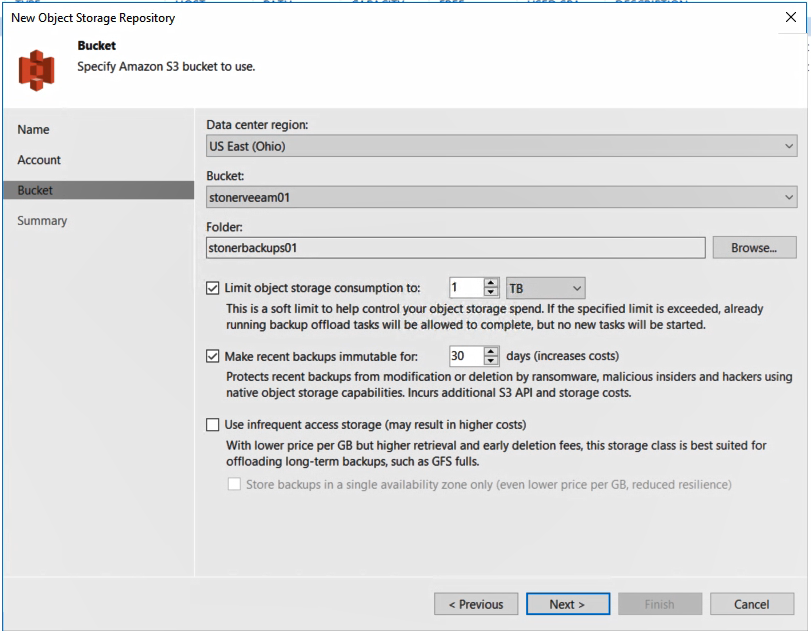
    Veeam today announced the general availability of version 10 of the Veeam Availability Suite, which, among more than 150 enhancements, adds support for network-attached storage (NAS) systems, additional ransomware protection via an ability to create immutable backups in the cloud, an ability to recover multiple virtual machines simultaneously and a set of application programming interfaces (APIs) for mining data.

    Danny Allan, chief technology officer and senior vice president of product strategy for Veeam, said IT organizations are looking for more efficient methods of protecting data, as there is no longer enough time in the day to back up petabytes of data.

    Veeam now provides the ability to back up massive amounts of unstructured data residing in NAS systems by only updating the primary backup file with the most recent changes made to data on the NAS platform, said Allan. That approach, he noted, also curtails costs because it substantially reduces the amount of data that needs to be replicated across a network.

    backup and recoveryAt the same time, Allan said backup and recovery platforms are playing a more strategic role in the battle to combat ransomware. Veeam Availability Suite v10 users can create an immutable copy of data that can reside in any platform that supports the S3 API defined by Amazon Web Services (AWS). Dubbed S2 Object Lock, the offering was developed with the goal of creating a pristine image of a data set that can be recovered in the event of a ransomware attack that a cybercriminal or malicious insider has employed to encrypt an organization’s data.

    In addition, Veeam is moving to lower disaster recovery costs by making it possible to recover multiple virtual machines simultaneously in the event of a data center outage.

    Finally, an API now makes it possible for analytics applications to access data stored using Veeam Availability Suite.

    Fresh off being acquired by the venture capital firm Insight Partners for $5 billion, Veeam is moving to expand its core capabilities for backing up virtual machines to create a data management platform that will span multiple clouds. The goal is to create a platform for managing data across a hybrid cloud computing environment, Allan said.

    With organizations now routinely managing petabytes of data, competition among backup and recovery vendors has never been more fierce. Each provider of backup and recovery tools is, to one degree or another, evolving into becoming a data management platform, a process that largely began when IT teams stared using backup tools to migrate large amounts of data into the public cloud. Now the providers of those tools see an opportunity to enable IT teams to move data not just in and out of clouds but also between them.

    It’s too early to say how this battle will play out. Backup and recovery is one of those rare categories of software that refuses to be consolidated even as new startups launch regularly. It’s not uncommon for most IT organizations to employ multiple backup and recovery tools from different vendors. Less clear is how long the tendency to employ multiple tools will persist, but as new capabilities are added to each backup and recovery tool the pressure on the other tools to continue to prove their value continues to intensify.

    — Mike Vizard

  • 5 Password Policies to Up Your Security

    5 Password Policies to Up Your Security

    Complex passwords can save users from being hacked—any IT admin will tell you that. Plus, countless studies and articles on password security have been published about why password policies are vital to online security. Increasing the length of passwords, adding complexity to them and never reusing passwords more than once … these are three examples of smart password policies every person and company should use. After all, stronger passwords contribute to users being safer online. And if users are safer online, then your organization is safer, too. However, your organization’s password policies must be adhered to and enforced for them to protect you from security breaches and hacks.

    Password Policies to Enforce for Greater Online Security

    Password policy enforcement generally refers to a number of different items, including the following five best practices:

    • Length of Password – Perhaps the strongest correlation with password strength is the length of the password. As computers have become more advanced, the amount of time it takes to hack a password has become significantly less. In fact, a password that worked a couple of years ago is a weak password today. Increasing your password length will keep your user’s devices more secure. Many IT admins now advise that passwords be a minimum of 12 characters, but we suggest increasing that to an 18-character minimum.
    • Alphanumeric Characters – Requiring upper and lowercase characters and numbers greatly increases the complexity of the password. Alphanumeric characters also increase the potential combinations of passwords, making it even more difficult for a password, and thus a device or account, to be hacked.
    • Special Characters – To increase the level of password complexity, require special characters in all passwords. This password policy alone adds another 32 characters that can be utilized to strengthen passwords. In combination with alphanumeric characters, each character in a password could have 94 different choices. Better yet, make that password have 18 characters and you have 1.78e119 number of combinations. Word to the wise: It’s more secure to have long passwords with many different character choices rather than just long passwords that contain only letters.
    • Password Aging – If your organization is required to age passwords after, say, 90 days, then you’ll want to leverage this enforcement capability and have all users update their passwords every three months. There is some debate in the security community if password aging does, in fact, increase security, but we’ll leave that debate for a different blog post. As a general rule of thumb: Updating passwords to at least the same length and complexity after a set timeframe can only help to increase online security.
    • Password Lockout – Another security mechanism that we advise adopting is the password lockout. That is, to lock a user out of his or her account after too many incorrect attempts to log in. The password lockout helps prevent hackers from brute-forcing their way into users’ accounts.

    Even in today’s cloud-operating and multi-device world, many IT organizations only leverage password policies if they are under compliance requirements to do so. But enforcing complex passwords by using the best practices listed above is the only way to guarantee your organization is safe from security breaches.

    Of course, you must decide where to enforce the above password policies that require everyone within your organization to use complex passwords. Ideally, there is an automated central system that enforces passwords across your entire infrastructure, including your endpoint devices, servers, applications and networks. A system like this, a directory system, would take the manual work out of enforcing password policies. Modern directory-as-a-service platforms offer the ability to enforce password policies across all devices, applications and your company’s network infrastructure.

    — Greg Keller

  • Achieving Full Disk Encryption and PCI Compliance

    Achieving Full Disk Encryption and PCI Compliance

    Full disk encryption (FDE) is a critical security measure in today’s modern networks. With data security being more critical than ever, many IT admins are wondering how they can enforce full disk encryption across their fleets of cross-platform systems. Many organizations are also subject to compliance regulations including PCI DSS, which require FDE as a part of their compliance requirements.

    What is FDE?

    Full disk encryption locks down a computer’s hard drive when said computer is powered off or at rest. If a computer with FDE enabled is stolen, the only thing the thief will make away with is the hardware; the data on the system will be encrypted and very difficult to acquire.

    FDE programs (BitLocker for Windows, FileVault for Mac) utilize a recovery key as a method of authentication. When a user logs into their FDE-protected system, the drive is unlocked using their associated username and password. But in case a user forgets their password, is locked out or the hard drive needs to be removed and accessed for any reason, an IT admin uses the recovery key to decrypt the drive. Given the crucial nature of recovery keys, IT admins need to store them in escrow; that is, securely stored and categorized in relation to the system it belongs to.

    What is PCI?

    The Payment Card Industry Data Security Standard (PCI DSS) is a compliance regulation that was created to ensure that credit card data is kept secure by companies that handle this critical customer financial information. PCI revolves around securing the cardholder data environment, or CDE, which houses all credit card information that passes through a company under compliance. There are 12 main requirements under PCI regulation, but Requirement 3 deals specifically with data encryption.

    Using FDE for PCI

    At its core, PCI Requirement 3 calls for installing proper security measures to protect data housed in the CDE. It is arguably one of the most important requirements for PCI altogether. FDE is an ideal way to ensure Requirement 3 compliance. By locking down at rest systems, IT admins can prevent unauthorized access due to a stolen laptop or hard drive.

    In regards to encryption, Requirement 3 also demands that cryptographic keys are securely stored and maintained. Using recovery key escrow, IT admins can ensure that only the right people have access to cryptographic keys and also monitor when they’re used for access and who uses them.

    How to Enforce FDE to Achieve PCI Compliance

    When it comes to enforcing FDE across Mac and Windows for PCI compliance, IT admins might find that their options are limited. Many FDE tools on the market are only capable of enforcing either Bitlocker or FileVault—not both. Since many of today’s IT organizations are heterogeneous with regards to system platforms, an FDE solution that can only enforce one or the other simply won’t do and admins would rather not implement multiple solutions to reach the desired end.

    Additionally, IT organizations need their FDE solution to securely store cryptographic recovery keys in escrow. This need limits the list of ideal FDE options even more. At the end of the day, with these requirements, there’s an excellent option that provides IT admins with a low overhead FDE experience suited for PCI compliance. Using JumpCloud’s Policies, IT admins can enforce FDE at scale across their Windows and Mac system fleets, escrowing individual recovery keys safely.

    — Zach DeMeyer