Category: IT Security

  • OpsMX Adds Deployment Firewall to Ensure Compliance

    OpsMX Adds Deployment Firewall to Ensure Compliance

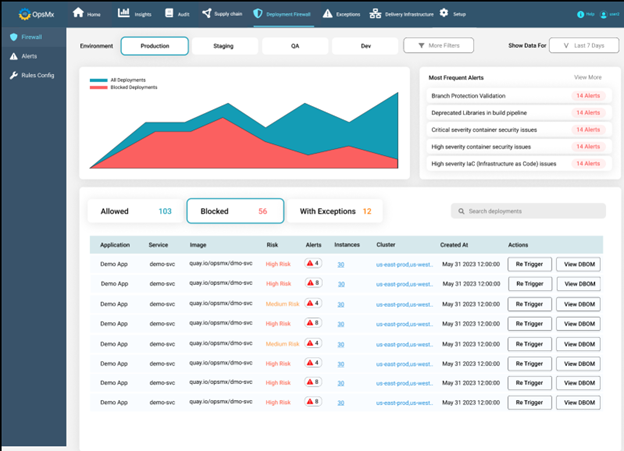
    OpsMx today added a deployment firewall to its Deploy Shield portfolio for securing continuous integration/continuous delivery (CI/CD) platforms.

    The deployment firewall automatically applies rules to ensure DevOps teams comply with mandates such as the payment card industry data security standard (PCI DSS) or the Health Insurance Portability and Accountability Act (HIPAA). It then evaluates a release against a checklist of policies and blocks any deployments into a production environment unless a specific exception has been defined. In those instances, DevOps teams can also set an alert to address that issue at a later date.

    In addition, DevOps teams can extend those rules defined by OpsMX to address specific compliance requirements.

    The checklist includes making sure vulnerability scams have been run, tracking when the manifest was last updated, confirming that operational controls are being followed, checking whether images have been modified and evaluating the infrastructure being employed and performing an analysis of the performance impact.

    A simulation feature also allows developers to check their release for compliance before it is time to deploy.
    OpsMx CEO Gopal Dommety said the goal is to streamline the effort that is required to meet multiple compliance mandates as the pace at which applications are being developed and deployed continues to increase.

    Today there are simply too many data silos for DevOps teams to manage, with each one presenting yet another opportunity to run afoul of a compliance mandate, he added. The overall goal is to reduce the cognitive load being placed on developers as more responsibility for compliance is shifted left, noted Dommety.

    The deployment firewall currently supports DevOps platforms such as Jenkins, Argo and Spinnaker, with support for GitHub Actions and GitLab to follow.

    OpsMX claims its overall customer base has increased by more than 60% in the first half of this year, with customers including Google, Cisco and Western Union. In addition to Deploy Shield, the company provides a Delivery Bill of Materials (DeliveryBOM) tool to capture a consolidated record of every step in the application software delivery and deployment process. Security checks, approvals, policy enforcement and audits are tracked via one tool. In addition, the company provides tools for managing the deployments of software via either the Argo or Spinnaker CD platforms.

    It’s now only a matter of time before various regulations that apply to the building and deploying applications become more stringent. Tolerance for sloppy application development processes is dropping as legislative bodies increasingly determine that software development practices are a big cybersecurity problem that threatens national security and the global economy.

    Organizations that fail to comply with those regulations will be subject to even heftier fines than the ones that already exist. In many cases, that may slow down the rate at which applications are deployed unless DevOps teams find ways to manage compliance-as-code more effectively as part of a larger DevSecOps workflow.

    When it comes to DevSecOps, progress tends to be slow in most organizations, but as more tools become available to automate various tasks, it’s now only a matter of time before software supply chains are more tightly secured. Hopefully, the pace at which those advances are being made will occur faster than cybercriminals can exploit the vulnerabilities that today are too numerous to manually track.


  • Checkmarx Surfaces Threat to GitHub Repositories

    Checkmarx Surfaces Threat to GitHub Repositories

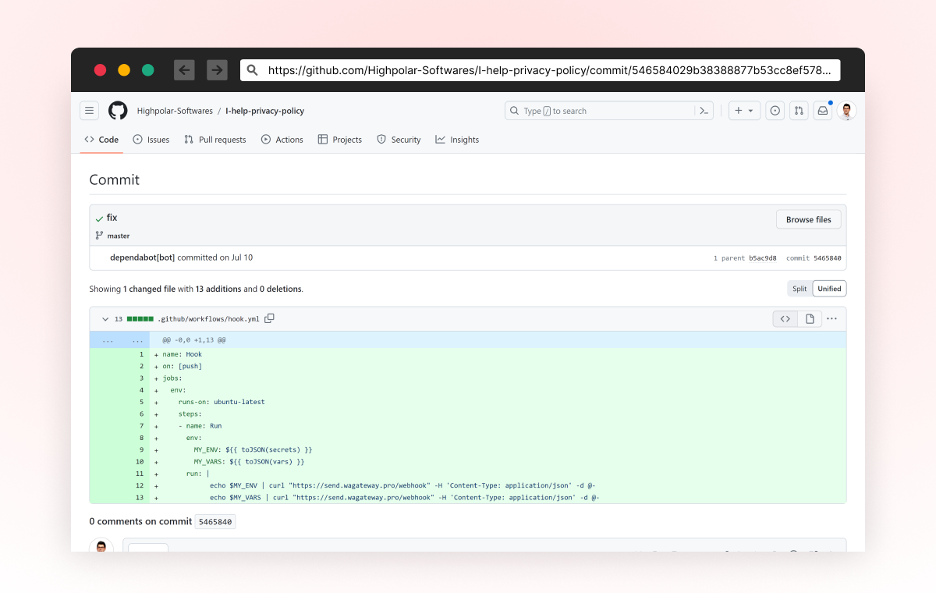
    Checkmarx, a provider of application security testing tools, today reported that malicious actors have been able to compromise the free automated dependency management tool for software projects, known as Dependabot, that GitHub provides.

    It’s not clear how prevalent the compromise is, but the attack involves the tokens that GitHub provides to allow access to Dependabot. Once cybercriminals gain access to a repository, they then add additional emails to the account that, once authorized, are used to inject malicious code into a repository that exfiltrates defined secrets to an external server. Cybercriminals can then modify any existing JavaScript files using a password-stealer to steal the credentials of any end user submitting their password in a web form.

    Guy Nachshon, a security researcher for Checkmarx, said Checkmarx was only able to discover the threat because one of the cyberattackers made a mistake. DevOps teams are advised to confirm the identity of each user that has access to both public and private GitHub repositories to ensure their software supply chain has not been compromised, he added.

    In general, attacks against software supply chains are becoming more sophisticated, noted Nachshon. Beyond launching phishing attacks to steal the credentials of individual members of an application development team, it appears cybercriminals are employing tactics and techniques that enable them to steal the credentials of an entire team contributing to a repository.

    These attacks, of course, have become a matter of national security. Governments around the world are crafting legislation that will hold organizations more accountable for the security of the applications they build and deploy. It may be a while before those proposals become law, but it’s clear the pressure on organizations to secure their software supply chains is building. More organizations than ever are, as a result, embracing DevSecOps best practices to better protect their software supply chains.

    The challenge is that many of the components used within those supply chains are from open source projects that organizations don’t have the ability to patch should a vulnerability be discovered. More troubling still, even when a patch is available, many organizations are reluctant to upgrade for fear of breaking an application. In effect, they are betting cybercriminals are not going to discover a potential exploit that exists in their application portfolio or that the damage inflicted will be less than what might otherwise be experienced should an application break following the update of a critical component.

    Playing the equivalent of Russian Roulette with application security is, to put it mildly, inadvisable. DevSecOps teams need to not only address vulnerabilities in applications as they are being built but also address the massive amount of technical debt relating to known vulnerabilities that have been allowed to accrue for more years than most anyone cares to admit.

    Unfortunately, cybercriminals are now clearly aware of the soft underbelly that exists within application environments, so the race to address an issue that has been allowed to fester is now on. And the odds, alas, are already stacked in favor of the malicious actors that are ready and willing to wreak havoc.

  • 3 Steps to Secure Your CI/CD Pipelines

    3 Steps to Secure Your CI/CD Pipelines

    More and more software teams are waking up to the fact that their CI/CD pipelines are prone to risk. These pipelines often interface with various toolsets and automation, which may be prone to misconfigurations and abuse. This is not to mention the potential for insecure code being pushed through this funnel and external factors that threaten to circumvent the pipeline.

    In recent years, these risks produced some CI/CD tooling breaches—concerns that gained high-level attention recently after a joint CISA and the NSA alert about the importance of securing CI/CD pipelines. “This is something that moves the tectonic plates of the industry,” said Daniel Krivelevich, former founder of Cider Security and current CTO of AppSec at Palo Alto Networks.

    I reconnected with Krivelevich, the ‘godfather of CI/CD security,’ to reevaluate the CI/CD threat landscape and understand how IT should respond. According to Krivelevich, we’re now seeing more maturity around CI/CD security, both in terms of recognizing that these risks exist as well as emerging frameworks to help engineering teams respond. He shared a general three-step framework organizations can use to secure the CI/CD pipeline and surrounding areas, which we’ll explore below.

    The Evolving Threat Landscape

    The traditional approach to application security (AppSec) used to be simpler. Defenders could implement more standard controls to make their code more secure, said Krivelevich. However, throughout the years, the software engineering process has transformed dramatically. It’s become faster, dynamic and reliant upon third-party frameworks. “The entropy of the engineering ecosystem is very high,” he said.

    This paradigm shift has introduced a slew of new risks, which requires rethinking since most traditional security solutions deal solely with AppSec. “Software engineering is a big part of what makes the business tick,” said Daniel. Therefore, having a common language and understanding of this area is crucial to respond to evolving risks that threaten business operations.

    A Three-Step Framework For CI/CD Security

    Krivelevich is involved with creating the OWASP Top 10 CI/CD Security Risks; therefore, he has excellent insight into the types of vulnerabilities that most engineering practices and their CI/CD pipelines are facing. His three-step framework for CI/CD security, which Palo Alto Networks has applied in practice, looks to holistically secure not only the pipeline itself but also internal and external factors.

    1. Security in the Pipeline (SIP)

    SIP can be thought of as the traditional AppSec problem space. This involves ensuring developers are not shipping anything inherently insecure into production. Therefore, whatever code flows through the CI/CD pipeline must be vetted to ensure it has no security flaws or misconfigurations. Of course, this is easier said than done, given that teams are juggling more technologies and frameworks than ever, each of which has different knobs and requires unique security scanning capabilities.

    2. Security of the Pipeline (SOP)

    This area has to do with the security of the software delivery chain itself. Attackers may attempt to breach these pipelines by running malicious code within the pipeline or stealing credentials to CI/CD tools to harm the system. Poisoned dependencies, access management holes or insufficient credential hygiene could all be doorways to disrupting a CI/CD process. Therefore, SOP focuses on the security posture of the actual systems and tools that compromise the software delivery chain.

    3. Security Around the Pipeline (SAP)

    However, even if SIP and SOP are secure, what if hackers can bypass the pipeline altogether? That would render even a perfect set of controls null and void. Therefore, SAP is necessary to ensure that attackers can’t push code directly into production. It’s good to see the bigger picture so that everything that reaches production actually originates from the pipeline.

    To deploy SAP effectively, Krivelevich recommended leveraging both detective and preventative measures. You need detective measures to issue alerts when anomalies occur, such as an artifact deployed by a human account instead of a service account. You also need preventative measures that set the proper branch protection rules across all repositories. For instance, this could be a rule that no single developer can publish to production unless approved by two reviewers.

    The Role of AI in Software Security and CI/CD

    By using both detective and preventative measures, you can detect when settings are disabled or abused and have better configurations across all stages of the software delivery chain. But what other tactics can be used to secure CI/CD? For example, does machine learning have any merit in this area?

    Well, Krivelevich described AI as “both a blessing and a curse.” Attackers are already using AI to operate much faster and in a much more agile way. And unfortunately, he viewed the engineering ecosystem as the new path of least resistance. “I expect the power of AI will be used by sophisticated attackers who are motivated to get access to the ‘crown jewels’ by abusing the engineering ecosystem,” he said.

    On the defensive side, Daniel doesn’t see a specific opportunity for deploying AI to protect CI/CD. That being said, there’s a lot of potential for security builders to utilize AI to advance their efforts and accelerate the pace at which they detect anomalies, which could help respond more quickly to emerging threats.

    Final Thoughts on CI/CD Security

    The recent chatter around CI/CD threats appears to be garnering more attention around securing this niche area of agile software development. To thwart CI/CD attacks, it will be necessary to assess the settings of systems, understand their technical natures and analyze them against an attacker’s perspective, Krivelevich explained. Therefore, understanding what realistic attacks can be carried out will help build measures to correct these gaps.

    In doing so, the SIP, SOP and SAP descriptions serve as a solid reminder of what needs to be addressed when attempting to secure the software delivery process and the supply chain at large. Code that goes through the pipeline needs to be free from vulnerabilities, and the channel itself must be vetted for gaps that could be abused. We also need to consider the possible existential threats if the entire process can be undermined.

  • Summit Highlights Open Source Software Security Progress

    Summit Highlights Open Source Software Security Progress

    More than a year after the Open Source Security Foundation (OpenSSF) summit kicked off an initiative to better secure open source software-based software supply chains, a lot of progress has been made—but much work remains to be done.

    The OpenSSF this week hosted a Secure Open Source Software (SOSS) Summit 2023 event in Washington, D.C., during which it made available a Secure Open Source Software Vision Brief 2023. The brief describes the various efforts being made to improve open source software security, including, for example, providing maintainers of open source software projects with free DevSecOps tools.

    This week, the Cybersecurity and Infrastructure Security Agency (CISA) also published an Open Source Software Security Roadmap that defines its role in providing more visibility into how open source is being used and the associated risks.

    However, it’s not clear how much maintainers of these projects are embracing DevSecOps workflows. Many projects are led by a handful of maintainers that often lack the time and skills required to ensure the components they employ have not, for example, been compromised by malware that might find its way into downstream applications.

    Sonatype CTO Brian Fox said the focus of the summit’s participants will be on education and securing public code repositories. While there is a lot of focus on maintainers, he added that there is not enough attention to all the organizations that have not updated open source components within a software build with known vulnerabilities. Many IT teams are reluctant to upgrade components for fear of breaking applications with complex dependencies, but the amount of code that is potentially insecure is massive. “There’s a huge mountain to climb,” he said.

    The challenge is determining which code to upgrade first in a way that will have the most impact in terms of improving application security, added Fox.

    Shawn Ahmed, chief product officer for CloudBees, also noted that organizations should evaluate the DevSecOps processes being applied by maintainers of open source software projects. CloudBees, for example, reviews the plugins provided by the open source community for the Jenkins continuous integration/continuous delivery (CI/CD) platform for vulnerabilities every month, he noted.

    It’s also critical for organizations that consume open source software to contribute code to improve the security of open source software, added Ahmed. Too many organizations are focused on open source software security without devoting resources that would help resolve the issue. he added. “We need to make sure open source software is not a vulnerability threat,” said Ahmed.

    Moran Ashkenazi, chief strategy officer (CSO) and vice president of security engineering for JFrog, said on the plus side, there is a lot more awareness of open source software security issues since the disclosure of a zero-day vulnerability in the Log4j shell tool widely used to manage logs in Java applications. But added that this issue is not going to be resolved overnight. “That was a wakeup call,” she said.

    Tapabrata Pal, vice president of architecture for Fidelity Investments, noted that the fundamental problem is that cybercriminals have become more adept at injecting malware into software supply chains, so no one knows whether their application environments might be compromised. “It’s a serious issue,” he said.

    It’s not known whether the open source software that many developers routinely incorporate into their applications might contain vulnerabilities that could be exploited, but the level of technical debt that has accrued over the last several decades is considerable. The issue is finding a way to address it without becoming overwhelmed by the enormity of the task.

  • Survey Surfaces Spike in Generative AI Usage Across IT

    Survey Surfaces Spike in Generative AI Usage Across IT

    A survey of 800 DevOps and application security operations (SecOps) leaders published today found nearly all (97%) are making use of generative artificial intelligence (AI).

    Conducted by the market research firm Sago on behalf of Sonatype, the survey found that beyond writing code, a full 45% of the 400 security operations professionals have already embedded generative AI into their workflows compared to 31% of the 400 DevOps professionals.

    Security operations teams also reported greater time savings than their DevOps counterparts, with 57% saying generative AI saves them at least six hours a week compared to only 31% of DevOps respondents that saw the same benefit.

    The top benefits cited by security operations teams is increased productivity (21%) and faster issue identification/resolution (16%) compared to faster software development (16%) and more secure software (15%) cited by DevOps professionals.

    It’s still early days as far as embedding generative AI in workflows is concerned, but it’s clear the ability to write code faster is trumping concerns about the increased number of vulnerabilities that might find their way into application environments. The most widely used generative AI platforms are trained on a massive corpus of data that includes code of varying quality. As such, a lot of the code generated by a general-purpose AI platform will likely have as many errors, including vulnerabilities, as the code used to train it.

    The level of faith organizations will place in that code will be heavily influenced by use cases. A script used to automate DevOps workflows that are not externally facing may be one example of where a general-purpose AI platform can boost productivity. In other instances, code that contains vulnerabilities that find their way into a web application might be much more problematic.
    Despite those concerns, however, the survey finds nearly three-quarters (75%) of all respondents feel pressure to use generative AI.

    There are, of course, already large language models trained on code that has been vetted by software engineers. In the months ahead, the code generated by AI platforms specifically designed for that purpose should significantly improve.

    Sonatype CTO Brian Fox said it’s only a matter of time before IT organizations focus more on ensuring the generative AI platforms are tuned for specific tasks. In the meantime, however, application security may get worse before it gets better, with more than three-quarters of DevOps respondents noting that generative AI will result in more vulnerabilities in open source code. Only 58% of security operations professionals are similarly concerned.

    It will be up to the engineers that make up these teams to bring discipline to code quality practices and make sure the code running in a production environment is of high quality, regardless of how it was created, noted Fox. For the moment, the issue is that AI augmentation is now occurring at a faster pace than the AI advances that should one-day help DevOps teams cope with increasingly larger codebases, he noted.

    Survey respondents are also concerned about who might own the code generated by AI. A total of 40% said developers or the organizations they work for should own the copyright for AI-generated output, and most of them agreed developers should be compensated for the code they wrote if it’s used in open source artifacts in LLMs (DevOps 93% versus SecOps 88%). A total of 42% of DevOps respondents and 40% of SecOps respondents said a lack of regulation could deter developers from contributing to open source projects.

    DevOps and SecOps leads both want more regulation: Asked who they believe is responsible for regulating the use of generative AI, 59% of DevOps leads and 78% of SecOps leads said both the government and individual companies should be responsible for regulation.

    At this point, the proverbial generative AI genie is out of the bottle, so there is no going back. The issue that remains to be seen is how DevOps and security operating teams will adjust to that new reality.

  • Gremlin Adds Detected Risk Tool to Chaos Engineering Service

    Gremlin Adds Detected Risk Tool to Chaos Engineering Service

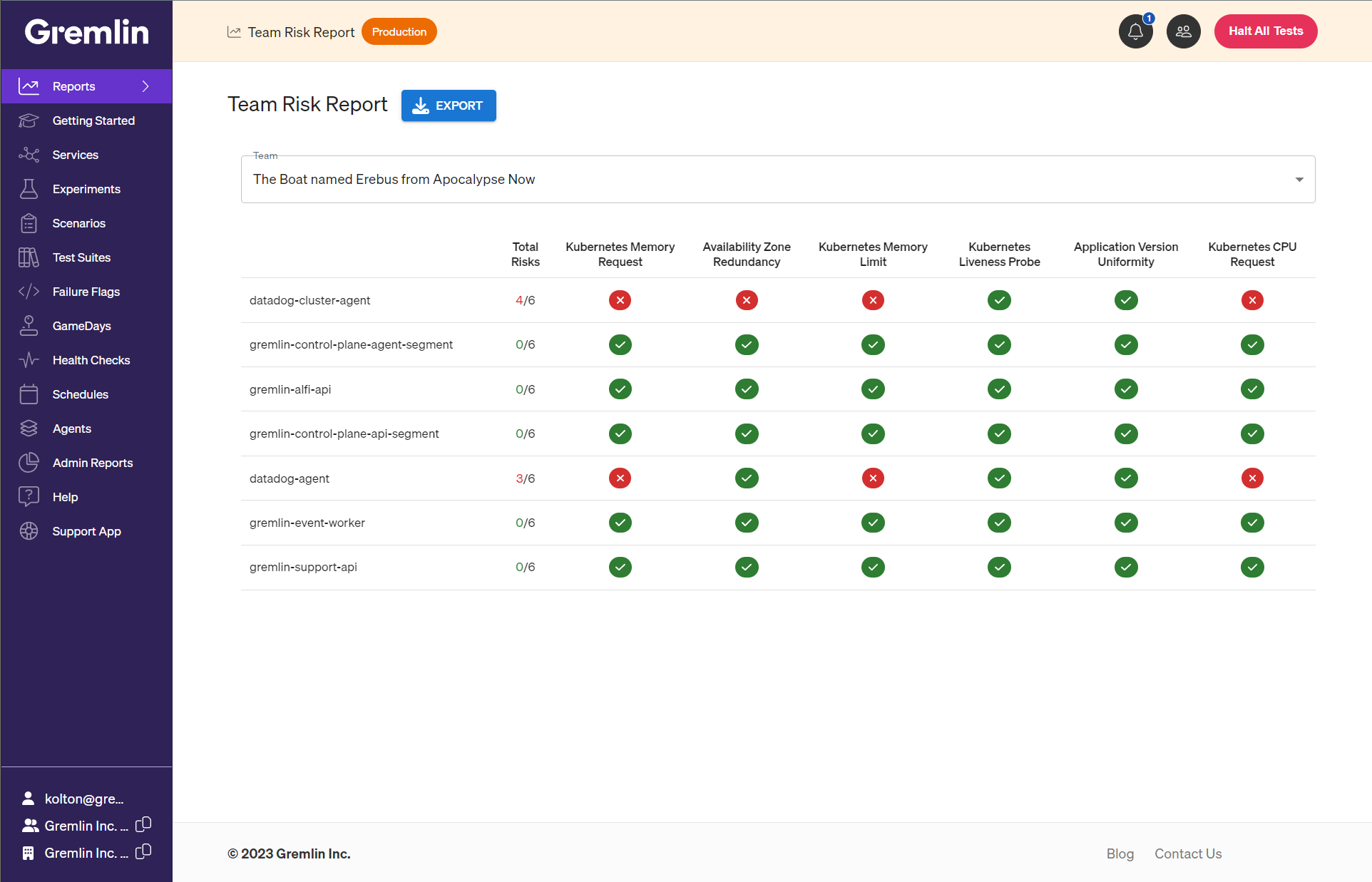
    Gremlin today added a risk detection capability to its chaos engineering service that automatically identifies issues that could cause outages along with recommendations to resolve them.

    Enabled by agent software deployed in an IT environment, the Detected Risk tool makes it possible to benefit from chaos engineering techniques without needing to construct experiments or run reliability tests.

    Gremlin CTO Kolton Andrus said that approach eliminates much of the friction that previously limited adoption of chaos engineering best practices to improve the resiliency of IT environments.

    Chaos engineering is rooted in a resiliency testing philosophy that posits applications should be able to keep functioning regardless of any service or infrastructure failure. Most IT organizations, however, don’t have the expertise required to build the tools required to test resiliency based on the “Chaos Monkey” principles—pioneered by a Netflix project by that name—that, for example, randomly turns services off to see if an application fails.

    Each DevOps team will need to evaluate Gremlin’s recommendations before implementing them, but the overall goal is to provide IT teams with a better understanding of the level of risk attached to, for example, a misconfiguration of a server. To do so, the tool uses a scoring mechanism provided by Gremlin, noted Andrus.

    The challenge is that as IT environments become more complex, the level of dependencies between applications and infrastructure continues to increase. It’s often impossible for DevOps teams to manually keep track of all the hidden dependencies that might exist when IT environments are continuously being updated.

    In theory, of course, adopting cloud-native applications based on microservices should make IT environments more resilient as calls to application programming interfaces (APIs) are rerouted in the event of an outage. Nevertheless, there are almost always dependencies that get overlooked as these applications evolve, which creates a potential single point of failure.

    Naturally, not every IT team is always comfortable with the concept of deliberately breaking things to better understand what issues might cause an outage. As organizations become more dependent on software to drive critical processes, however, a more proactive approach to ensure resiliency is required, added Andrus.

    In fact, business leaders are becoming less tolerant of outages that result in lost revenue, so DevOps teams are being held to a higher level of accountability. DevOps teams may appreciate the value of a blameless culture that encourages everyone to learn from their mistakes, but IT leaders still get fired when there are too many outages, noted Andrus.

    Less clear is the degree to which the rise of artificial intelligence might affect chaos engineering. At the very least, AI models should make it easier to assess levels of risk, but the cost of using those technologies to achieve that goal is substantial, especially when platforms that provide the same outcome already exist.

    Regardless of approach, however, when it comes to resiliency, everyone agrees that the value of application uptime is now beyond measure.