Category: Cloud Management

  • Quali Adds Free Tier to DevOps Automation Platform

    Quali Adds Free Tier to DevOps Automation Platform

    Quali has added a free tier of service to its Torque platform for automating infrastructure provisioning and application workload deployments.

    In addition, the company has updated the software-as-a-service (SaaS) platform to provide blueprints through which it provides tighter integration with Terraform, an open source infrastructure-as-code (IaC) tool, along with support for custom tags to make it easier to generate reports and dashboards that provide greater visibility into infrastructure costs.

    Quali CEO Lior Koriat said the free tier is intended to make the Torque platform more accessible to both small teams of DevOps professionals and individual users. It includes the ability to build environments on Amazon Web Services (AWS) or the Microsoft Azure cloud in addition to providing integration with a variety of DevOps tools and platforms and access to a sample blueprint library. Support for the free tier is provided via an existing community edition of the platform.

    Koriat said Torque takes IaC a step further by also making it possible to automatically deploy complete application environments on top of infrastructure provisioned as code using blueprints rather than low-level Terraform scripts. The goal is to increase developer productivity by extending Terraform so that developers can spin up environments across multiple cloud computing platforms via self-service, he added.

    That approach also sharply reduces the chances a cloud platform will be misconfigured, which Koriat noted is the bane of cloud security professionals’ existence. Most developers lack the cybersecurity expertise required to ensure cloud computing environments are configured properly. Simplifying the provisioning of infrastructure is especially critical when developers employ complex platforms such as Kubernetes, added Koriat.

    At the same time, Quali’s Koriat said IT leaders want more visibility into how cloud resources are being consumed as the number of workloads deployed in these environments steadily increases. Developers tend not to remember to de-provision cloud resources when no longer needed, which Koriat noted conspires to increase cloud costs unnecessarily.

    It’s not clear just yet how quickly DevOps teams might be moving away from relying on lower-level tools toward automation frameworks accessed via a SaaS platform. However, as application environments become more complex, it becomes even more challenging to provision and manage IT environments—especially since many DevOps teams are still working from home to help limit the spread of the COVID-19 pandemic.

    One way or another, the amount of time and effort spent managing IT infrastructure needs to be reduced. After all, while application environments are increasing in both size and complexity the number of individuals that make up a DevOps team remains largely the same. The need to rely more on automation frameworks has reached a tipping point that is becoming increasingly obvious to all concerned.

    As more organizations start to operate as software companies in the age of digital business transformation, it’s clear the way IT has been managed in the past is about to fundamentally change. The issue now is determining which automation framework lends itself best to enabling DevOps teams to achieve that goal.

  • Red Hat Adds Service to Customize RHEL Images

    Red Hat Adds Service to Customize RHEL Images

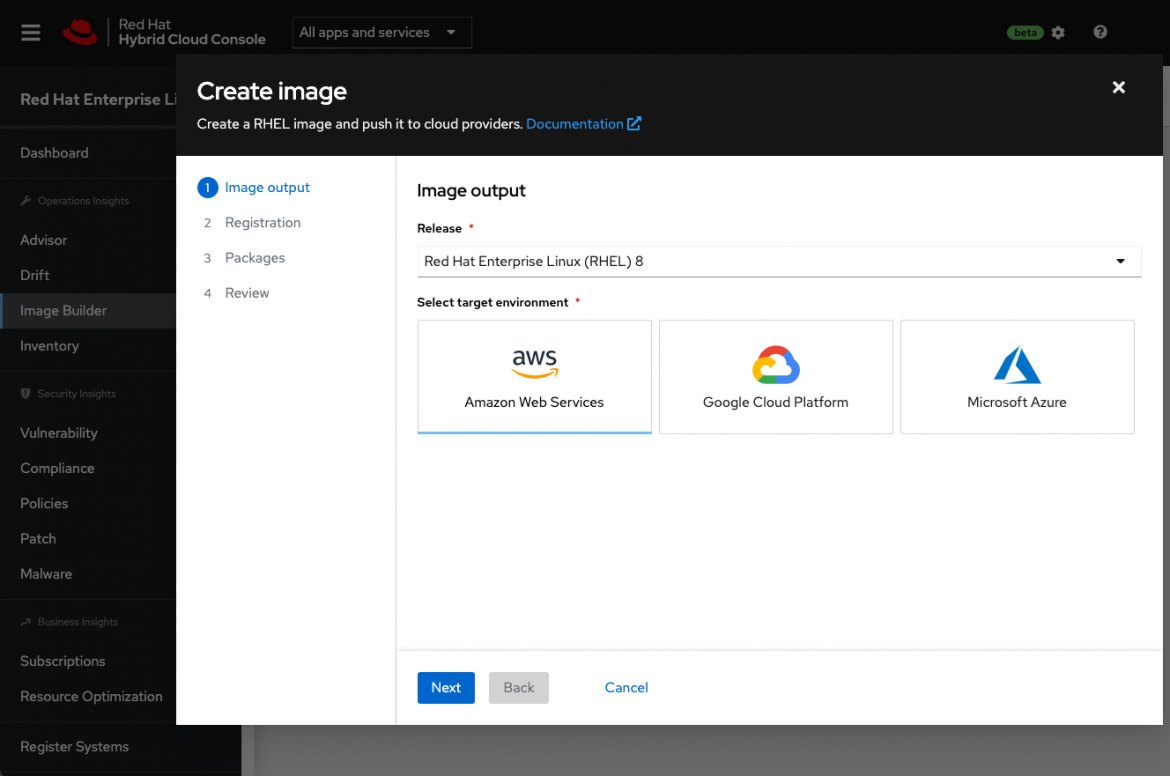
    Red Hat this week announced a public beta of an Image Builder service that streamlines the process of building customized instances of the Red Hat Enterprise Linux (RHEL) operating system.

    Scott Herold, director of product management for RHEL at Red Hat, said the Image Builder service enables an IT team to define a “gold” template for each target deployment environment that only contains the RHEL code required. Initially, Image Builder is configured to default to build a minimal, recommended RHEL server image for Amazon EC2, Microsoft Azure and Google Cloud Platform (GCP) cloud services.

    Future updates to the service will add support for VMware vSphere platforms as well as downloadable images and installation media for physical servers, customized filesystem layouts and versions 9.0, 8.5, 8.4 and 7.9 of RHEL. The service itself is accessed via the Red Hat Hybrid Cloud Console that is currently being made available in beta.

    Herold said building or installing operating systems is often a slow, tedious and error-prone process that needs to be manually performed in a slightly different way for each platform. Each physical server or edge computing platform requires different configurations and workflows. As a result, the chances mistakes will be made is high; Image Builder can greatly reduce the possibility of mistakes because there is no guesswork required, noted Herold.

    IT teams can also opt to include additional content from Red Hat in those builds to further streamline deployment processes, noted Herold. Those images can then be automatically registered with Red Hat to ensure future updates are received.

    The ability to customize those images also serves to reduce the overall size of the codebase that needs to be secured, added Herold. At a time when there is increased focus on software supply chains in the wake of a series of high-profile security breaches, many IT teams are revisiting their software deployment processes, he noted.

    Ultimately, Herold said Red Hat is moving toward providing IT teams with a more cloud-like experience regardless of where they deploy Red Hat’s curated open source software. The goal is to reduce as much friction as possible so that IT teams can more easily manage infrastructure at scale, he added.

    One way or another, the entiree software deployment process is becoming more automated. Much of the drudgery that has historically made it challenging to deploy and manage IT platforms at scale can be traced back to manual processes created when organizations ran a much smaller number of applications in on-premises IT environments. As IT teams increasingly deploy more applications in the cloud and at the network edge, it’s become more apparent that manual legacy processes won’t scale—especially when it’s already challenging to hire and retain IT personnel.

    It’s not clear how quickly IT teams will modernize software deployment processes using automated DevOps processes. Simple inertia is often a powerful force to overcome; however, most IT professionals can easily find something more compelling to do with their time that doesn’t involve using manually customizing operating system images.

  • Sumo Logic Extends Observability Reach to AWS Lambda

    Sumo Logic Extends Observability Reach to AWS Lambda

    At the AWS re:Invent conference this week, Sumo Logic announced that in addition to collecting log data, metrics and traces, it now can collect telemetry data from the Lambda serverless computing service provided by Amazon Web Services (AWS).

    In addition to collecting telemetry data, Sumo Logic also revealed that the Sumo Logic Continuous Intelligence Platform hosted on the AWS cloud can now analyze how functions used on the AWS Lambda service perform during transactions.

    That data can then also be correlated against the performance of other AWS services that Sumo Logic tracks via integrations with the AWS CloudWatch and AWS CloudTrail monitoring services.

    George Gerchow, chief security officer for Sumo Logic, said the company is making extensive use of the OpenTelemetry agent software created under the auspices of the Cloud Native Computing Foundation (CNCF) to make it simpler to instrument IT environments. That data is not only being used to improve application performance but also to surface anomalies indicative of a security breach, he added.

    As part of this ongoing security effort, Sumo Logic this week also added Sumo Logic AWS Quick Start integrations for rapid access to security and compliance insights along with support for Amazon Inspector, a vulnerability management service provided by AWS.

    AWS this week named Sumo Logic as its independent software vendor (ISV) partner of the year. The two companies have a longstanding relationship that began with Sumo Logic’s decision more than 10 years ago to build a monitoring platform hosted on the AWS cloud.

    As IT monitoring tools continue to evolve into observability platforms, Gerchow said it’s becoming much easier to leverage machine learning algorithms and open source agent software to identify the root cause of an issue before it results in a major disruption.

    Most IT teams today are still relying on legacy monitoring tools that only tack a set of predefined metrics to identify when a specific platform or application is performing within expectations. The metrics tracked generally focus on, for example, resource utilization. In contrast, observability combines metrics, logs and traces—a specialized form of logging—to instrument applications in a way that makes it simpler to troubleshoot issues.

    Observability, of course, in one form or another, has always been a core tenet of DevOps best practices. Initially, DevOps teams focused on continuous monitoring as the most effective way to proactively manage application environments. However, it can still take days (and sometimes weeks) to discover the root cause of an issue. Observability platforms promise to make it easier to manage IT environments even as the overall complexity of those environments continues to increase.

    It’s not clear at what rate IT organizations will be transitioning to observability platforms. However, it generally takes only one major outage before IT organizations start looking for better tools to manage their IT environment. As those IT environments become more complex, the probability that there will be a significant disruption is now higher than it’s ever been. The challenge and the opportunity is to find a way to instrument applications more widely; the expectation being that an observability platform will be able to analyze telemetry data to reduce the number of issues that lead to service disruptions.

  • AWS Unfurls Bevy of Automation Tools to Streamline DevOps

    AWS Unfurls Bevy of Automation Tools to Streamline DevOps

    At the AWS re:Invent conference, Amazon Web Services (AWS) added a bevy of tools to its portfolio intended to accelerate the pace of application development while simultaneously simplifying DevOps processes.

    AWS development tools unveiled this week include AWS Amplify Studio, a visual development environment that allows developers to create web application user interfaces (UIs) with minimal coding.

    Ken Exner, head of product for developer tools at AWS, said as an extension of an existing AWS Amplify Studio tool, this latest addition allows developers to customize application UIs at a higher level of abstraction using a library of components while enabling them to drop down to a lower level of coding to customize their application further whenever required. After the UI is designed, AWS Amplify Studio automatically generates the associated JavaScript or TypeScript code for the developer.

    In general, AWS is committed to improving developer productivity by providing, for example, automated reasoning tools that automate processes without locking devs into a layer of abstraction that, ultimately, may create a wall that blocks them from meeting customization requirements, he said.

    Other developer tools launched by AWS this week include updates to Amazon CodeGuru Reviewer that adds a secrets detector that uses machine learning algorithms to identify hardcoded secrets that can be secured using AWS Secrets Manager; a revamped Amazon Inspector vulnerability management tool that provides automated assessment scans, automated resource discovery, support for container-based workloads, improved risk scoring, integration with Amazon EventBridge and AWS Security Hub and the removal of the stand-alone Amazon Inspector scanning agent.

    AWS also revealed it has eliminated the need to manually pull images from the Amazon Elastic Container Registry (ECR) repositories by adding automated synchronization capabilities that keep private and public registries consistent with each other.

    In terms of IT operations tools, AWS added a managed database service to its Amazon Relational Database Service portfolio that allows IT teams to customize the underlying database and operating system using an RDS Custom option, a new table class for Amazon DynamoDB designed to reduce storage costs for infrequently accessed data and a service for RDS, dubbed Amazon DevOps Guru, that extends existing machine learning capabilities to automatically detect and diagnose performance bottlenecks and operational database issues.

    Jeff Carter, vice president for relational databases at AWS, said that as databases are increasingly managed by DevOps teams rather than traditional database administrators (DBAs), the cloud service provider is moving to reduce friction by automating as many manual tasks as possible. That’s critical at a time when IT teams are deploying a much wider range of purpose-built databases that are optimized for different classes of applications, he added. The overall goal is to rely more on automation to reduce friction across the IT environment, said Carter.

    Overall, there are two classes of AWS customers: The first are development teams that are increasingly relying on managed services provided by AWS to automate a wide range of DevOps processes. The second tend to be enterprise IT organizations that prefer to manage cloud services themselves.

    Mitch Ashley, a principal for Techstrong Research, an arm of the parent company of devopsy.kinsta.cloud, noted that, in many cases, enterprise IT teams are managing DevOps workflows that span multiple clouds. As such, they tend to prefer tools and platforms that can be applied to both multiple clouds and on-premises IT environments. The more those organizations rely on managed services provided by a cloud service provider the more difficult it becomes to consistently manage DevOps workflows across multiple IT environments.

    It’s too early to say just how much IT organizations will rely on managed services going forward. However, at a time when more organizations are using more IT platforms than ever, it’s clear the DevOps management challenge increases with each new platform introduced into the IT environment.

  • SAP Extends Developer Tool Portfolio

    SAP Extends Developer Tool Portfolio

    At an online SAP TechEd conference this week, SAP announced it has added additional low-code/no-code tools to the SAP Business Technology Platform (BTP) to enable both professional and citizen developers to build applications that invoke application services provided via the company’s cloud platform.

    The effort to increase the number of custom applications invoking those services revolves around a no-code development and automation platform dubbed SAP AppGyver, launched this week, and an existing set of low-code tools dubbed SAP Business Application Studio that the company also enhanced. SAP Process Automation, a robotic process automation (RPA) platform for automating workflows, is also being previewed.

    JG Chirapurath, chief marketing and solutions officer for SAP BTP, said the goal is to make it easier for organizations to build applications faster using tools that provide higher layers of abstraction through which they can invoke, for example, backend RPA and AI services via an application programming interface (API). SAP makes it possible to achieve that goal via an SAP BTP platform it provides to IT teams. The BTP platform allows teams to build applications that can be integrated with SAP application services running on a public cloud or managed by SAP on behalf of the customer. In either case, the goal is to make it possible for developers to spend more time building business logic versus building and maintaining integrations, he said.

    As part of the effort, new capabilities were also added to the SAP Conversational AI service and the company has promised to launch a personalized recommendation service based on a neural network.

    At the same time, the company also revealed it has updated the SAP Integration Suite for SAP BTP to provide access to additional prepacked integrations that are available on the SAP API Business Hub.

    In addition, the company said by the end of this year it plans to make the SAP Integration Suite available on the Google Cloud Platform alongside support it provides for other public clouds.

    Finally, a revamped training site, dubbed SAP Learning, will make it simpler for developers to advance their skills.

    The challenge SAP application developers are trying to navigate is determining which business processes are best served using packaged cloud applications versus ones that require actual customer code. The number of processes packaged in a suite of enterprise resource planning (ERP) applications has greatly expanded over time. With each successive update, ERP platform providers such as SAP identify new processes that could be beneficial to the bulk of their customers. For example, the processes that organizations use to track invoices and issue payments are all pretty much the same. It doesn’t make a lot of sense to write a custom application to manage a set of tasks that are already well-defined within a packaged application.

    Custom application development is typically where organizations have an opportunity to differentiate themselves. After all, if every organization is relying on the same core processes provided by a packaged application vendor, there is no real difference from one organization to the next. Custom applications, on the other hand, built using no-code or low-code tools or procedural code written by developers, should either be used to extend a workflow in some way an application doesn’t or should be used to create an application that provides a sustainable competitive advantage. That challenge—and the opportunity—is first identifying those processes and then finding the simplest way to build and maintain the applications that drive them.

  • Kyndryl Aligns with Microsoft in the Cloud

    Kyndryl Aligns with Microsoft in the Cloud

    Following its spinout from IBM, Kyndryl has allied with Microsoft to increase the scope of IT services it provides on the Azure public cloud.

    Stephen Leonard, leader of global alliances and partnerships for Kyndryl, said that as part of this initiative, Kyndryl will be expanding the scope of the services it provides to both organizations building and deploying applications as well as those looking to migrate existing applications to the Microsoft Azure cloud.

    Over time, Kyndryl will expand its cloud services to include additional public clouds as part of a larger effort to enable organizations to embrace a hybrid cloud approach to enterprise IT that spans multiple on-premises and cloud computing environments.

    In the meantime, as part of the first partnership established by Kyndryl, the two companies are committing to providing services to address data modernization and governance, security and application workloads infused with artificial intelligence (AI) capabilities. The two companies also plan to establish a co-innovation lab. Microsoft is also committing to establishing a Kyndryl University for Microsoft.

    Leonard said given the overall shortage of IT expertise, more organizations than ever are relying on external IT services to, for example, accelerate application development. Kyndryl plans to work with those organizations to best evaluate where specific classes of application workloads might best be deployed, he noted.

    It’s become increasingly clear that more organizations are attempting to integrate third-party IT services within DevOps workflows. In some cases, that means standardizing on an opinionated DevOps workflow defined by the IT services provider. In other cases, the IT services provider is focused on a specific task such as securely provisioning infrastructure on behalf of developers.

    Regardless of the approach, however, DevOps workflows are evolving into a team sport made up of both internal and external IT professionals that are trying to bridge the cultural divide that always exists between different organizations. Which IT services provider organizations ultimately select often has as much to do with how flexible they are from a cultural perspective as much as it does their technical expertise.

    For its part, Microsoft is counting on IT services providers such as Kyndryl to increase the total number of workloads running on its cloud. Now that Kyndryl is independent of IBM, it is free to establish partnerships that previously would have been more complex to navigate.

    Of course, it’s up to each organization to determine the degree to which they prefer to work with a larger IT services provider versus a smaller rival that may specialize in one specific area or that is simply a better fit for a smaller company. The one thing that is certain is that as IT continues to become more complex, it’s not feasible for organizations to hire all the IT talent they require on a full-time basis. Organizations will need to carefully evaluate when it makes more sense to consume certain IT services as a function provided by someone else versus attempting to hire and retain talent to maintain that service themselves.

  • LogicMonitor Introduces Unlimited Log Data Retention

    LogicMonitor Introduces Unlimited Log Data Retention

    LogicMonitor today announced it will provide an option that allows IT organizations to retain an unlimited amount of log data on its software-as-a-service (SaaS) platform.

    Tej Redkar, chief product officer at LogicMonitor, said one of the issues that is holding back advances in observability is the cost of storing log data. LogicMonitor has decided to remove that issue by allowing IT teams to store log data on its LM Logs service for as long as they require, Redkar said.

    That data will also always be readily available as hot storage with no need to wait for data that has been stored offline to be rehydrated, he noted. Instead, that data is readily accessible alongside the metrics and distributed tracing data that LogicMonitor also collects, said Redkar.

    In general, LogicMonitor is making a case for centralizing observability for the entire IT organization via a SaaS platform infused with machine learning algorithms that automatically surface anomalies in real-time based on millions of events captured via log data. The issue many organizations encounter today is silos of decentralized observability data that are more complex to maintain while providing less visibility at a higher total cost, said Redkar.

    The LogicMonitor platform, in contrast, is designed to be equally accessible to, for example, a network operations team as it is to a DevOps team, he noted.

    Not every organization needs to store log data forever, but Redkar said as IT management continues to evolve, more organizations are moving toward storing metrics, traces and logs for longer periods of time. The rise of open source agent software is also making it less costly for organizations to capture that data in the first place.

    It’s not clear to what degree other providers of observability platforms will provide unlimited retention of data, but as the cost of storing data in the cloud continues to drop it’s apparent that billing IT organizations for storage costs is becoming untenable. There is always going to be some cost associated with storage, but it’s not enough to charge extra beyond the core cost of the service. The only thing accomplished by billing separately for storage is discouraging IT teams from storing the data required to both attain observability and better train the machine learning algorithms that surface anomalies.

    Observability, in one form or another, has been a core tenet of DevOps best practices for years. Initially, DevOps teams focused on continuous monitoring as the most effective way to proactively manage application environments. Observability platforms infused with machine learning algorithms make it possible to correlate events so that analytics tools can more easily identify anomalous behavior in real-time. Armed with those insights, it becomes a lot simpler for IT teams to resolve issues faster.

    In fact, there may even come a day when the so-called “war room” meetings that are convened to identify the cause of an IT issue via a painstaking process of elimination are no longer required. In the meantime, however, the total number of IT incidents that actually lead to disruption should steadily decline, even as IT environments become more complex.

  • Era Software Adds SaaS Edition of Log Management Platform

    Era Software Adds SaaS Edition of Log Management Platform

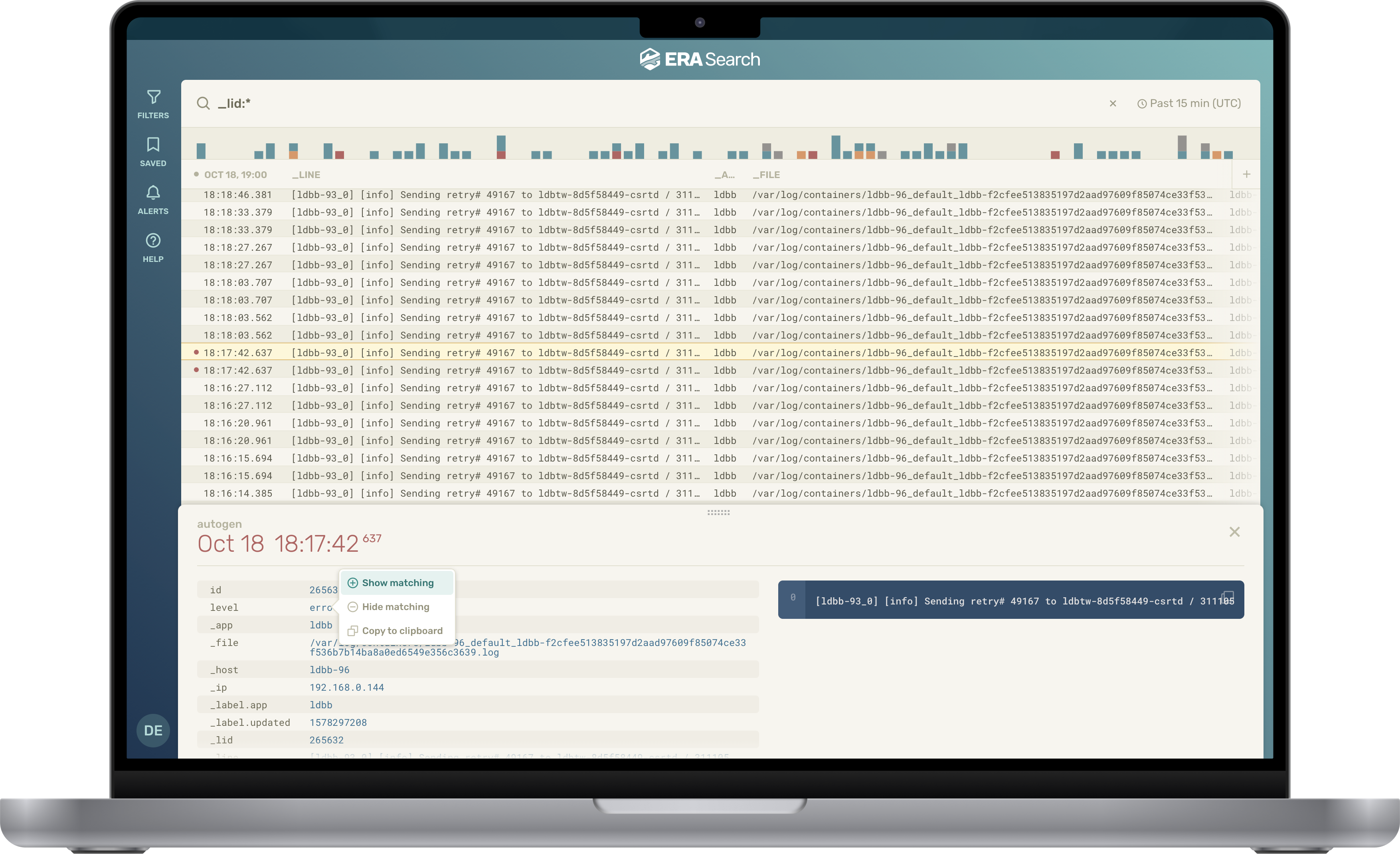
    Era Software has unfurled a software-as-a-service (SaaS) edition of its platform for collecting and managing log data that is based on a time-series database it built.

    At the same time, the company has revamped the user interface of the underlying EraSearch log management platform that IT teams can deploy themselves to make it simpler to troubleshoot IT issues.

    Stela Udovicic, senior vice president of marketing for Era Software, said the EraCloud edition of the log management platform provides a more accessible way to access a log management platform based on an object storage system that can handle any type of log data.

    There’s also an indexing engine based on machine learning algorithms that enables the platform to scale better than rival platforms, she noted.

    Available via the Amazon Web Services (AWS) marketplace, EraCloud collects, indexes and analyzes log data from cloud applications, Kubernetes and IT infrastructure platforms to provide a centralized means of collecting data at a lower cost. In addition to being able to continuously monitor billing costs, an EraSearch cluster can now be provisioned in minutes.

    Era Software, previously known as EraDB, earlier this year raised an additional $15.25 million in financing to drive development of a log management platform that provides an alternative to open source platforms, such as Elasticsearch, that don’t scale as well. The result is a higher total cost as the volume of log data that is less efficiently managed via Elasticsearch steadily compounds. As part of that effort, the company also supports a subset of the Elasticsearch application programming interface (API) to facilitate transitioning from Elasticsearch.

    Many organizations today already have terabytes of log data they are trying to manage and store, noted Udovicic.

    It’s not quite clear how many IT organizations are considering alternatives to log management platforms. However, as the amount of log data that IT teams want to be able to store over a longer amount of time increases—in part to facilitate greater observability—the pressure to contain the cost of retaining all the data is also rising.

    Observability, in general, requires combing logs, metrics and traces—a specialized form of logging—in a way that makes it easier to identify the root cause of an issue by querying data. It differs from monitoring in that observability is achieved using a predefined set of metrics that track whether a platform or application is performing within expectations.

    It may be a while before most IT teams generally achieve observability, but the journey typically starts with finding a more efficient way to collect log data in both proprietary and open source formats. Rather than having to normalize all that data, Era Software is making a case for analyzing that data in whatever format it happens to be available.

    One way or another, a much larger percentage of the applications deployed by IT teams in production environments will have to be instrumented to achieve observability. The issue now is determining how best to make all the data collected from those applications available to DevOps teams at a reasonable cost.

  • What Developers Need to Know About Edge Computing

    What Developers Need to Know About Edge Computing

    More and more companies are living “on the edge” as they move from “I’ll think about edge computing” to “I don’t think our business can optimally grow and compete without edge computing.” Developers will play a key role in helping organizations use the edge, but their effectiveness will depend on having edge-aligned processes, products and people in place.

    Edge computing takes place near the physical location of either the user or a data source. It’s one way that organizations can use and distribute a common pool of resources across multiple locations. The edge model provides users with faster, more reliable services while expanding the potential of hybrid cloud computing for organizations. Customers and businesses alike will benefit from the way in which edge computing optimizes the use and application of artificial intelligence and machine learning by running data-intensive applications closer to the data source.

    While it is in many ways a question of architecture, applications are key to effectively exploiting the edge. Here are some of the things developers—and their organizations—need to know.

    Edge computing and cloud computing are not mutually exclusive. The best solutions will leverage both platforms. For example, centralized computing might be used for storage and compute-intensive workloads, while edge computing would be used to exploit data at the source, in near-real-time. Infrastructure and company culture need to be in place to support this, but developers must be thinking in terms of building applications that can cross and bridge computing platforms.

    Consistent tooling is essential. Developing for legacy IoT was very specific and required specialized tools and skills. The modern edge, in contrast, is part of a technology continuum, and developers need tools that they can use across that continuum, including:

    • Provider/enterprise core: The “non-edge” tiers, owned and operated by public cloud providers, telco service providers or large enterprises.
    • Service provider edge: Tiers are located between the core or regional data centers and the last mile access.
    • End user premises edge: Tiers on the end-user side of the last mile access can include the enterprise or the consumer edge.
    • Device edge: Standalone (non-clustered) systems that directly connect sensors/actuators via non-internet protocols. This represents the far edge of the network.

    Containerization enables flexibility, scale: Linux container technology wasn’t built for the edge, but the model fits perfectly with edge requirements for modularity, segregation and immutability. 

    Keep an “open” mind. Open APIs open up new opportunities. Developers using open APIs can access real-time data programmatically, making it possible to build applications that can leverage data as it’s “born.” Likewise, a focus on open source development tools and platforms will help to ensure that organizations can continue to leverage the edge as the model evolves. 

    What’s different is the devices. Developing for the edge is just like developing for any other platform–except that developers must write consistent and secure code that can be seamlessly copied to all device types. 

    Edge computing may not start with developers, but developers will play a huge role in organizations’ ability to leverage the edge. A focus on flexibility, openness and the future will help ensure that developers build applications that fully exploit and expand the edge advantage. 

  • Debunking 6 Stubborn Public Cloud Myths

    Debunking 6 Stubborn Public Cloud Myths

    A lot of enterprises migrate to the public cloud because they see everyone else doing it. And while you should stay up on the latest and greatest innovations—which often happen in the cloud—you need to be aware of the realities and understand different migration strategies. You need to know why you’re moving to the cloud. What’s your goal? And what outcomes are you seeking? Make sure you know what you’re getting your enterprise into before moving forward in your journey. Here are six stubborn myths that persist about the public cloud and the realities you’re facing.

    1. Cloud Technology is not a Project, it’s a Constant

    Be aware that while there is a starting point to becoming more cloud-native—the migration—there is no stopping point. The migration occurs, but the transformation, development, innovation and optimization is never over.

    There are endless applications and tools to consider; your organization will evolve over time, technology changes regularly and user preferences change even faster. Fueled by your new operating system, cloud computing puts you into continuous motion. While continuous motion is positive for outcomes, you need to be ready to ride the wave regardless of where it goes. Once you get on, success requires that you stay there.

    2. Flex-Agility is Necessary to Survival

    Flexibility + agility = flex-agility, and you need it in the cloud. Flex-agility enables enterprises to adapt to the risks and unknowns occurring in the world. The pandemic continues to highlight the need for flex-agility in business. Organizations further along in their cloud journeys were able to quickly establish remote workforces, adjust customer interactions, communicate completely and effectively and, ultimately, continue running. While the pandemic was unprecedented, more commonly, flex-agility is necessary in natural disasters like floods, hurricanes and tornadoes; after a ransomware or phishing attack; or when an employee’s device is lost, stolen or destroyed.

    3. You Still Have to Move Faster Than the Competition

    Gaining or maintaining your competitive edge in the cloud has a lot to do with speed. Whether it’s the dog-eat-dog nature of your industry, macroeconomics or a political environment, these are the things that speed up innovation. You might not have any control over these factors, but they’re shaping the way consumers interact with brands. Again, when you think about how digital transformation evolved during the pandemic, you saw winning businesses move the fastest. The cloud is an amazing opportunity to meet all the demands of your environment but if you’re not looking forward, forecasting trends and moving faster than the competition, you could fall behind.

    4. People are Riskier than Technology

    In many ways, technology is the easiest part of an enterprise cloud strategy. It’s people that introduce much of the risk involved. You may have a great strategy with clean processes and tactics, but if the execution is poor, the business can’t succeed. A recent survey revealed that 85% of organizations report deficits in cloud expertise, with the top three areas being cloud platforms, cloud-native engineering and security. While business owners acknowledge the importance of these skills, they’re still struggling to attract the caliber of talent necessary.

    In addition to partnering with cloud service experts to ensure a capable team, organizations are also reinventing their technical culture to work more like a startup. This can incentivize the cloud-capable with hybrid work environments, an emphasis on collaboration, use of the agile framework and fostering innovation.

    5. Cost-Savings is Not the Best Reason to Migrate

    Buy-in from executives is key for any enterprise transitioning to the cloud. Budget and resources are necessary to continue moving forward, but the business value of a cloud transformation isn’t entirely about cost savings. Really, it’s about repurposing dollars to achieve other things. At the end of the day, companies are focused on getting customers, keeping customers and growing customers, and that’s what the cloud helps to support.

    By innovating products and services in a cloud environment, an organization is able to give customers new experiences, sell them new things and delight them with helpful customer service and a solid user experience. The cloud isn’t a cost center, it’s a business enabler, and that’s what leadership needs to hear.

    6. Cloud Migration Isn’t Always the Right Answer

    Many enterprises believe that the process of moving to the cloud will solve all of their problems. Unfortunately, the cloud is just the most popular technology operating system platform available today. Sure, it can help you reach your goals with easy-to-use functionality, automated tools and modern business solutions, but it takes effort to use and apply those resources for success.

    For most organizations, moving to the cloud is the right answer, but it could be the wrong time. The organization might not know how it wants to use cloud functionality. Maybe outcomes haven’t been identified yet, the business strategy doesn’t have buy-in from leadership or technicians aren’t aware of the potential opportunities. Another issue stalling migration is internal expertise (or lack thereof). If your technicians aren’t cloud-savvy enough to handle all the moving parts, bring on a collaborative cloud advisor to ensure success.