Category: Features

  • New Relic Acquires CodeStream to Close Observability Gap

    New Relic Acquires CodeStream to Close Observability Gap

    New Relic today revealed it has acquired CodeStream as part of an effort to make observability data more accessible to developers.

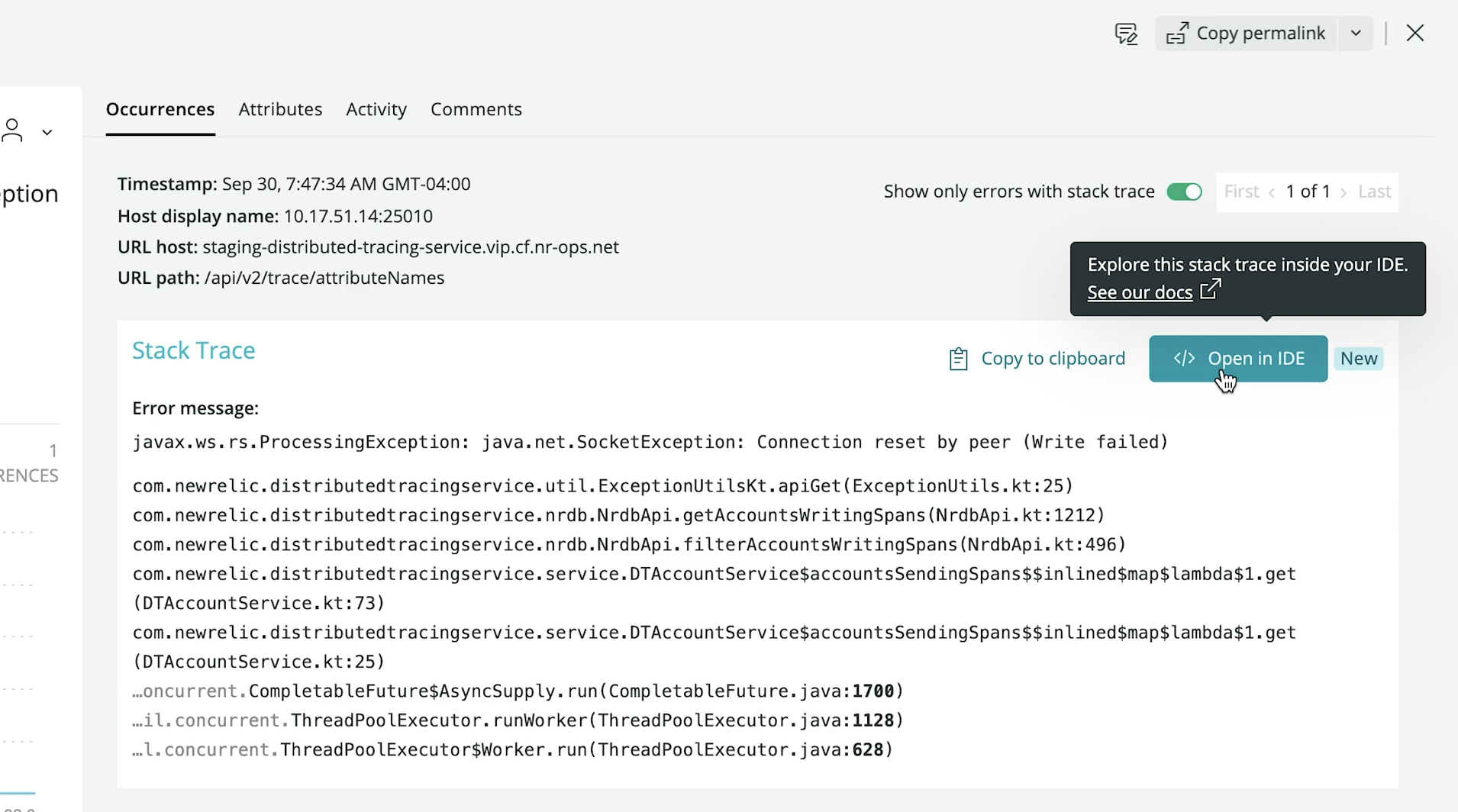
    Buddy Brewer, group vice president (GVP) and GM at New Relic said New Relic CodeStream makes application telemetry data collected via the New Relic One platform directly available within an integrated development environment (IDE), now including Microsoft VS Code. In addition, there are also integrations with Microsoft Teams and the GitHub repository.

    The goal is to close an observability gap that exists today between developers and IT operations teams that stems from a lack of developer visibility into production environments, he noted.

    Finally, New Relic is also announcing a core user pricing option for New Relic One that is aimed at developers. Starting at $49 per month, developers gain access to a core set of capabilities such as CodeStream integrations, errors inbox, logs, GraphQL application programming interfaces (APIs) and the ability to build and run custom applications on New Relic One.

    Peter Pezaris, CodeStream co-founder and CEO, now GVP and GM, strategy and developer tools at New Relic, said becoming part of New Relic will make it easier to bridge the divide that exists between most developers and IT operations teams by making it much easier for developers to see how their code is actually executing in a production environment. That capability will eliminate scenarios where code that runs just fine on a laptop executes poorly in a production environment, he added.

    Developers can also add inline code comments, trigger pull requests, request feedback and track issues directly from their IDE via integrations with a wide range of developer and communication tools. Developers also can switch from New Relic One into an IDE in a single click to navigate, triage and remediate production errors in the context of the code they wrote.

    New Relic is initially making New Relic CodeStream available for free—no credit card required—during a preview period that extends to January 12, 2022. Afterward, some of the more advanced features will require a paid user license once free tier limits are reached. Similarly, IT teams can also sign up for a free New Relic One account without entering a credit card to instrument their applications.

    As the responsibility for managing applications in production environments continues to shift left, Pezaris said it’s critical to give developers the tools they need to optimize code in a production environment.

    It’s not quite clear exactly how much responsibility for applications is shifting left toward developers; it differs from one organization to the next. Many are simply trying to reduce as much friction as possible between developers and their IT operations teams by providing more ‘connective tissue’ from New Relic that IT teams would have to otherwise write themselves, noted Pezaris.

    It may take some time to bridge the observability gap between developers and IT operations teams. Most IT operations teams are still coming to terms with what observability provides that existing IT monitoring tools don’t. Monitoring, at its core, focuses on predefined metrics to identify when a specific platform or application is performing within expectations. The metrics tracked generally focus on, for example, resource utilization. In contrast, observability combines metrics, logs and traces—a specialized form of logging—to instrument applications in a way that makes it simpler to troubleshot issues without having to rely solely on a limited set of metrics that have been pre-defined.

    In theory, at least, that level of observability should ultimately reduce the total number of incidents an IT operations team needs to fix by identifying issues long before they become an actual disruption.

  • How do we Bring APIs Into Decentralized Web3?

    How do we Bring APIs Into Decentralized Web3?

    Blockchain-based applications are growing in popularity and underscore the decentralized Web3 movement. Simultaneously, web APIs are helping port data and reusable functionality across application types and are driving microservices development practices. So, how do we bring these two paradigms together?

    There are many cases where a blockchain-based smart contract may require data updates that only a web API request can fulfill. For example, perhaps the smart contract needs to access the latest price of a given stock ticker. Or, perhaps on-chain activities are contingent on the weather at a particular time. The ubiquity of APIs means there are thousands of helpful features available for the task at hand. Yet, integrating them into Web3 applications is tricky.

    Interestingly, the API3 Alliance is making strides to introduce an industry-standard solution to bring APIs to Web3 applications. API3 provides a vendor-neutral standard gateway to apply on top of existing APIs that helps them appeal to decentralized apps. The vendor-neutral API Alliance already consists of many APIs across various verticals and appears to be gaining more traction.

    I recently met with API3’s co-founder, Heikki Vänttinen, to learn more about the challenges of introducing traditional web APIs into blockchain development. According to Vänttinen, whereas previous solutions relied on a third-party middleware or ‘oracle,’ the best way to incorporate an API request and response system into smart contracts is through a node operated by the API provider themselves. Such a system could help blockchain-based applications leverage myriad software-as-a-service solutions, essentially uniting the two worlds.

    The State of APIs in Web3

    The number of APIs is growing exponentially. As companies reinvent themselves with digital transformation, APIs have become the glue for interconnecting the applications we use on a daily basis. When it comes to APIs, there are a growing number of potential use cases for blockchain—the technology is not just relegated to cryptocurrency; rather, it can power a number of scenarios that require smart ledgers.

    Since APIs drive much of the functionality in modern software development, it makes sense that they may be useful in decentralized app development. For example, a blockchain-based decentralized finance (DeFi) app that handles lending and borrowing may want to call an API to collect raw data for a liquidation price, says Vänttinen. Or, a smart contract may wish to acquire the cost of an asset as a conditionality for making a purchase. Hooking into public APIs to check local weather or flight arrival information could affect how smart contracts respond.

    There are many use cases for incorporating APIs into a distributed ledger system. However, “blockchain applications are not able to call APIs natively,” Vänttinen explained. The incompatibility is due to the nature of blockchain technology, said Vänttinen, as it requires consensus from multiple parties to maintain the smart contracts. For this reason, blockchain applications require a middleware piece to connect a blockchain node to an API, relaying data responses from outside of the chain.

    Incorporating APIs Into Blockchain

    As Vänttinen described, previous attempts to connect APIs to Web3 architectures have revolved around a third-party middleware node. Yet, externalizing integration responsibility in this way creates a centralized point of failure, which defeats the purpose of a decentralized environment altogether.

    Instead of relying on such a dependency, Vänttinen advocates for a “first-party oracle approach,” in which API providers operate a layer in front of their APIs. This enables a request-response mechanism for smart contracts, allowing blockchain applications to initiate API requests from on-chain and incorporate the responses into the contracts. This method retains immutability and trustlessness, which is inherent to the distributed ledger.

    One solution enabling such an architecture is Airnode, a Web3 middleware that connects any web API directly to any blockchain application. Companies that have adopted Airnode make up the API3 Alliance, which is “a collective of API providers who have signed up to enable this first-party use of their API for Web3 applications,” said Vänttinen. “Adopting Airnode is a pledge from API companies to make their API blockchain-compatible.”

    The API3 Alliance is one significant initiative aiming to extend the capabilities of smart contracts and blockchain applications. This could enable such environments to call an API to send a text message or email, or grab sports scores, collect maps data and so on. Thus far, participating APIs in the API3 Alliance come from sectors such as agriculture, biotechnology, communications, open banking, insurance, supply chain management and many others. The initiative also accepts applications from API providers that want to join the marketplace.

    Benefits of a Common Web3 Integration Layer

    So, what are the benefits of embracing an industry-standard middleware for web-API-to-blockchain connectivity? Well, according to Vänttinen, it is the best way to enable complex off-chain computation. Enacting intricate computing on the chain is quite resource-intensive, resulting in high transaction fees. By extending particularly complicated calculations externally, blockchain applications could reduce operational overhead. “The industry is long overdue for connection between the real world and blockchain,” said Vänttinen. (By real-world, I assumed he meant other architectural styles that pre-date blockchain.)

    Having a standard implementation could also reduce the development burden for the API provider to support nuanced technologies. Whereas other solutions would require someone in-house to operate blockchain nodes, Airnode is more of a plug-and-play API gateway that could be deployed on AWS as a Lambda function, Vänttinen said. This usability makes it easy for API-based services to appeal to Web3 applications, thus quickly opening a new potential growth segment.

    Of course, Vänttinen admitted, the concept of syncing with off-chain processes is still at a very early stage. There are competing philosophies about how to address it on the market, and some foundational issues have not yet been resolved. For example, most efforts have focused on Read operations to acquire raw data. The next step will be having the middleware ‘oracle’ incorporate off-chain Write capabilities, too. Furthermore, more PubSub-like formats will be important to enable event listeners capable of reactive qualities.

    Final Thoughts

    The Web3 trend is bringing more decentralized, blockchain-based applications to fruition. But, such applications can’t operate in a closed-off world. To experience the full breadth of digital possibilities, they’ll likely need to figure out how to incorporate off-chain computations and mesh with alternative communication software libraries. Naturally, this will require integrations with web APIs, which have become an important method of cloud-based communication.

    The API3 Alliance is “here to propose a solution to the API connectivity problem for Web3,” said Vänttinen. “When a data provider is blockchain-compatible, you can apply the reputation of the data provider in this decentralized data feed … The importance of this becomes more clear when you talk about connecting off-chain services and microservices with smart contracts.”

    Airnode and the surrounding API3 Alliance is one initiative spearheading the connection of APIs and smart contracts. But, this is just one method in a maturing field. What do you think about bridging the two paradigms? Comment on your experience below!

  • Atlassian Survey Shows Lack of Collaboration in Software Development

    Atlassian Survey Shows Lack of Collaboration in Software Development

    A survey of 750 IT and engineering leaders found that while a full 83% of respondents agree that interdepartmental communication is critical for successful software development, only 41% of respondents view cross-collaboration to be a priority.

    The survey gathered responses from within organizations that generated more than $50 million in annual revenue and was conducted by Forrester Consulting on behalf of Atlassian.

    Overall, more than two-thirds of respondents (68%) said more departments than ever are involved with software development. Overall, 80% said they need to improve collaboration with other departments, but 82% don’t feel particularly confident about their ability to accomplish that goal. Three quarters (75%) also noted the need to improve collaboration within their own department.

    Well under half of the respondents (42%) said their culture, processes and tools enable the real-time teamwork and free-flowing information that help leaders make sound decisions.

    Among the subset of respondents that are highly collaborative, however, more than (53%) said they see greater customer satisfaction, with 59% reporting increased revenue because of that increased customer satisfaction.

    Suzie Prince, head of product for DevOps at Atlassian, said the challenge organizations face is finding a way to successfully employ a mix of synchronous versus asynchronous communication mediums to better enable collaboration. In fact, collaboration as part of any DevOps culture needs to be a C-level discussion to consistently accelerate the rate at which software can be developed and deployed, she added. The core issue is that not every management team is equally comfortable with open communications between the various departments that make up an organization, said Prince.

    It’s critical for C-level executives to set that tone and lead by example; DevOps best practices can’t only be adhered to by development teams. The entire business needs to embrace DevOps best practices as an operating model for the business to really attain the maximum benefit.

    Unfortunately, DevOps practices within development teams have been unevenly adopted, so it’s often very difficult to get the rest of the business to embrace DevOps principles. Organizations that do embrace DevOps, however, tend to be much further down the path toward becoming a digital business and can more adroitly take advantage of business opportunities as they arise or shift strategy as changing business conditions may warrant. In fact, organizations that embraced DevOps best practices arguably fared better during the economic decline that followed the onset of the global COVID-19 pandemic that took every business and IT leader by surprise.

    It’s not clear from the Atlassian survey results if a DevOps divide is starting to emerge that makes some organizations more competitive than their rivals. In theory, at least, if every organization is now a software company that happens to build something or deliver a service, then the faster they can reliably build and deliver applications the greater the competitive advantage they can attain and sustain.

    There are, of course, a whole host of factors that determine how competitive any organization might be. However, in the age of digital business transformation, it’s clear that being able to build and deploy software at a fairly regular cadence is the new table stakes required for simple survival.

  • HashiCorp Previews Updates to Consul Service Mesh

    HashiCorp Previews Updates to Consul Service Mesh

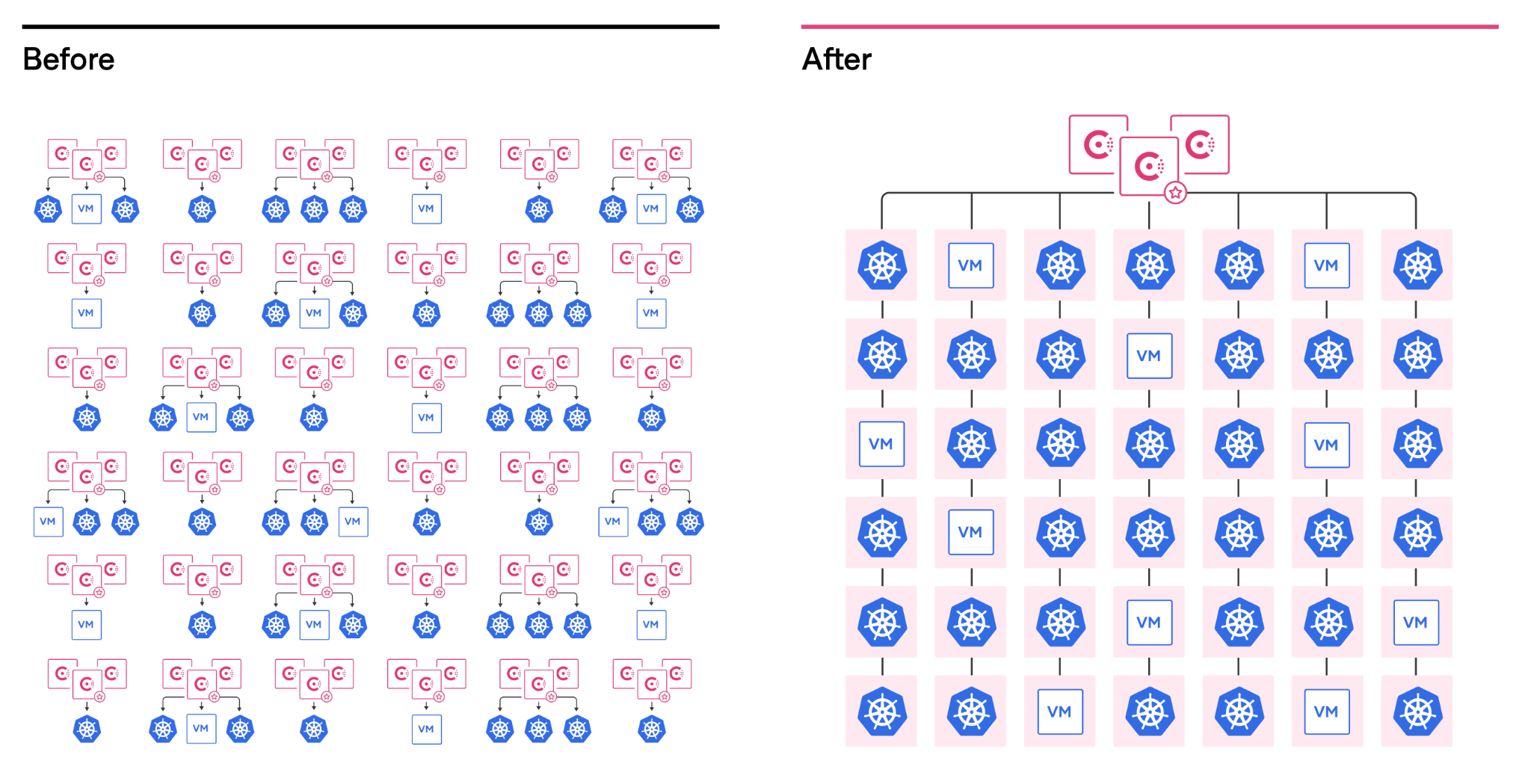
    During an online HashiConf Global conference, HashiCorp today made available a beta of an update to its open source Consul service mesh for virtual machines and Kubernetes clusters that makes it possible for multiple administrators to share the same instance of a multitenant service mesh.

    Version 1.11 of Consul will also add support for a command line interface (CLI) for Kubernetes that will provide an alternative to Helm charts for installing Consul on those clusters.

    Raymond Austin, director of product marketing for HashiCorp, said it’s become apparent that there is a need for a higher level of abstraction for managing application programming interfaces (APIs) that is easy to deploy across both legacy IT environments based on virtual machines and cloud-native environments based on Kubernetes clusters.

    Of course, in many cases, those Kubernetes clusters are deployed on top of virtual machines. However, there are also now more instances of Kubernetes being deployed on bare metal platforms at, for example, the network edge.

    As IT environments become more complex, a service mesh makes it simpler to discover, access and secure APIs that are now rapidly proliferating across the enterprise. That transition requires a more dynamic approach to not only managing APIs but also the network services those APIs depend on, added Austin.

    HashiCorp is betting that many IT organizations will prefer to rely on a lightweight open source platform supported by a single vendor rather than relying on more complex open source service mesh offerings being developed under the auspices of a consortium.

    It’s still not quite clear who within an IT organization is assuming responsibility for deploying a service mesh. Most often, it’s a development team that makes the initial decision. However, as IT operations teams become more aware that service meshes represent a capability that needs to be horizontally made available across multiple applications, it may be only a matter of time before some organizations decide to standardize on a single service mesh to reduce operational overhead, noted Austin.

    Service meshes will also play a critical role in simplifying management of networking and security services at a higher level of abstraction within a larger DevOps workflow.

    It’s still early days as far as service mesh adoption in the enterprise is concerned, but there are already a large number of service mesh options. In fact, there may never be a single dominant service mesh platform. Interoperability standards still need to be ratified that enable organizations that have standardized on different service meshes to apply policies to microservices spanning hybrid cloud computing environments.

    Of course, not every IT organization requires a service mesh yet, either. Many IT teams can still get by using a traditional proxy server or an API gateway until the number of microservices-based applications deployed starts to achieve critical mass. One way or another, however, the more APIs there are to manage, the more inevitable it becomes that an IT team will deploy a service mesh.

  • Pulumi Adds Registry to Share Secure IaC Code

    Pulumi Adds Registry to Share Secure IaC Code

    Pulumi this week added a public registry to its portfolio that makes it easier to discover packages that have been created using its tools to manage infrastructure-as-code (IaC).

    Joe Duffy, Pulumi CEO, said the Pulumi Registry will make it simpler for DevOps teams to share and reuse IaC tools that have been vetted versus always requiring each development team to write new code each time they want to programmatically provision infrastructure. Pulumi Packages provide modern cloud reference architectures in the form of software development kits (SDKs), code samples and how-to guides.

    One of the primary reasons that security has become a major cloud issue is that developers often misconfigure infrastructure. The registry provides a way to reduce those configuration errors by making it easier for developers to reuse code written in TypeScript/JavaScript, Python, Go and .NET that they have stored in repositories such as npm.

    In addition to the major cloud service providers, there are also Pulumi Provider Packages for Auth0, CloudFlare, Confluent Cloud, Datadog, DigitalOcean, Docker, GitHub, Kong, MinIO, MongoDB Atlas, PagerDuty, Snowflake, Spot by NetApp and others.

    There are also Pulumi Component Packages for deploying container applications on instances of Kubernetes and other related platforms in addition to deploying applications on serverless computing frameworks.

    Duffy said in addition to providing a “golden image” of their configurations the registry reduces the overall level of friction that often exists between developers, IT operations teams and cybersecurity professionals.

    The latest Pulumi offering is part of an ongoing effort to democratize cloud computing in a way that is repeatable and reliable, noted Duffy. Pulumi, for example, just added support for a set of AWS Cloud Control application programming interfaces (APIs) that reduce the number of APIs that developers would otherwise have to master. The more APIs there are, the more likely it is a developer will make a mistake.

    IT teams should expect that other cloud service providers will similarly streamline the APIs they present developers as part of an effort to make their services both more accessible and secure. In the meantime, frameworks provided by Pulumi provide a means to invoke those lower-level APIs at a higher level of abstraction for both developers and internal IT operations teams alike.

    It’s not clear today how many developers routinely employ IaC tools, but as the number of workloads deployed in the cloud steadily increases, so too does the percentage of developers that employ these tools. While that shift represents a major boon in productivity for developers, it brings with it additional security risks that many organizations fail to appreciate until it’s too late.

    The only way to really solve that issue is for organizations to adopt DevSecOps best practices that require a level of collaboration between DevOps and security teams that is still relatively rare. However, as the tooling provided continues to improve, the technical challenges associated with achieving that goal continue to decline. The next big issue, as always, is bringing together all the diverse cultures within an IT organization to actually implement those tools and define a set of best practices that work for all concerned.

  • Learn a Bit About AI

    Learn a Bit About AI

    Every once in a while, a trend becomes broad enough that I feel the need to offer career advice. This year it will be simple: Know enough about AI/ML to be dangerous. We are past the point where not having at least a basic understanding is a good idea. Looking around the data center, AI is in use from the earliest stages of development through production network performance evaluation. Somewhere in your environment, you are using AI and ML. More to the point, somewhere in the places you may interview going forward, they are using AI and ML.

    I’m not suggesting you become an AI/ML expert—though you certainly could; I have a relative that is a data scientist and that’s all he does—design and tweak algorithms. He’s learning new things pretty much daily, so if you like that (as I do), it’s an option. But for those of us doing DevOps or SRE or even regular old operations, we’re only going to have to understand a bit.

    Understand what tools like Jupyter are, and what the most commonly used ML algorithms in your space are. Then, learn about how AI and ML help with what you are doing. Just as knowing more about the compiler/interpreter of your chosen language helps you solve more odd problems, AI is going to have that same issue. Think about how those folks who understand the guts of routing are the ones we want solving our routing problems. Again, same scenario.

    Moving forward, AIOps, NetOps, DevSecOps … All intend to increase the amount of work offloaded onto the AI in question. In a lot of cases that is great. We have enough to do; if you can paw through those logs and give me relevant summary info, go for it. But it doesn’t end there—some AI engines are making the calls and implementing changes. In both network and application security, a fair number of vendors will tell you there is no time to wait for humans to stop an attack, and they encourage their customers to turn on automated responses. That’s the first of many applications for AI/ML. We will see an increasing number of AI/MLOps tools being used for full-on automation. We all do difficult jobs with a complex—sometimes bewildering—number of inputs. But we use pattern recognition and experience to make determinations and do what’s best for our organization. Our software has reached the point where sometimes, it can do that for us on the easier tasks so we can focus on the more complex ones. When the AI/ML fails—and it will, because pattern recognition and historical trends are not always indicative of normal usage—knowing what is going on under the covers can help you determine if it did the right thing in the wrong way, or simply did the wrong thing. And it can help you to quickly recover. I can’t speak for every organization, but I’ve never seen one that lamented, “Sure wish that outage had lasted another couple of hours!”

    And keep rocking it. Somewhere in the distant future, an  AI may be able to do your job as well as you. But that isn’t today. Even if it can handle one bit, it certainly isn’t rocking the entire breadth of your responsibilities like you are. Thank you, from all the users that don’t realize you’re keeping them live.

  • Splunk Expands Scope of Observability While Lowering Costs

    Splunk Expands Scope of Observability While Lowering Costs

    During its online .conf21 conference Splunk Inc. today revealed a bevy of updates that advance observability while at the same time reducing the total cost of deploying its platforms.

    As part of that effort, Splunk also announced it will now make workload-based pricing available to all customers.
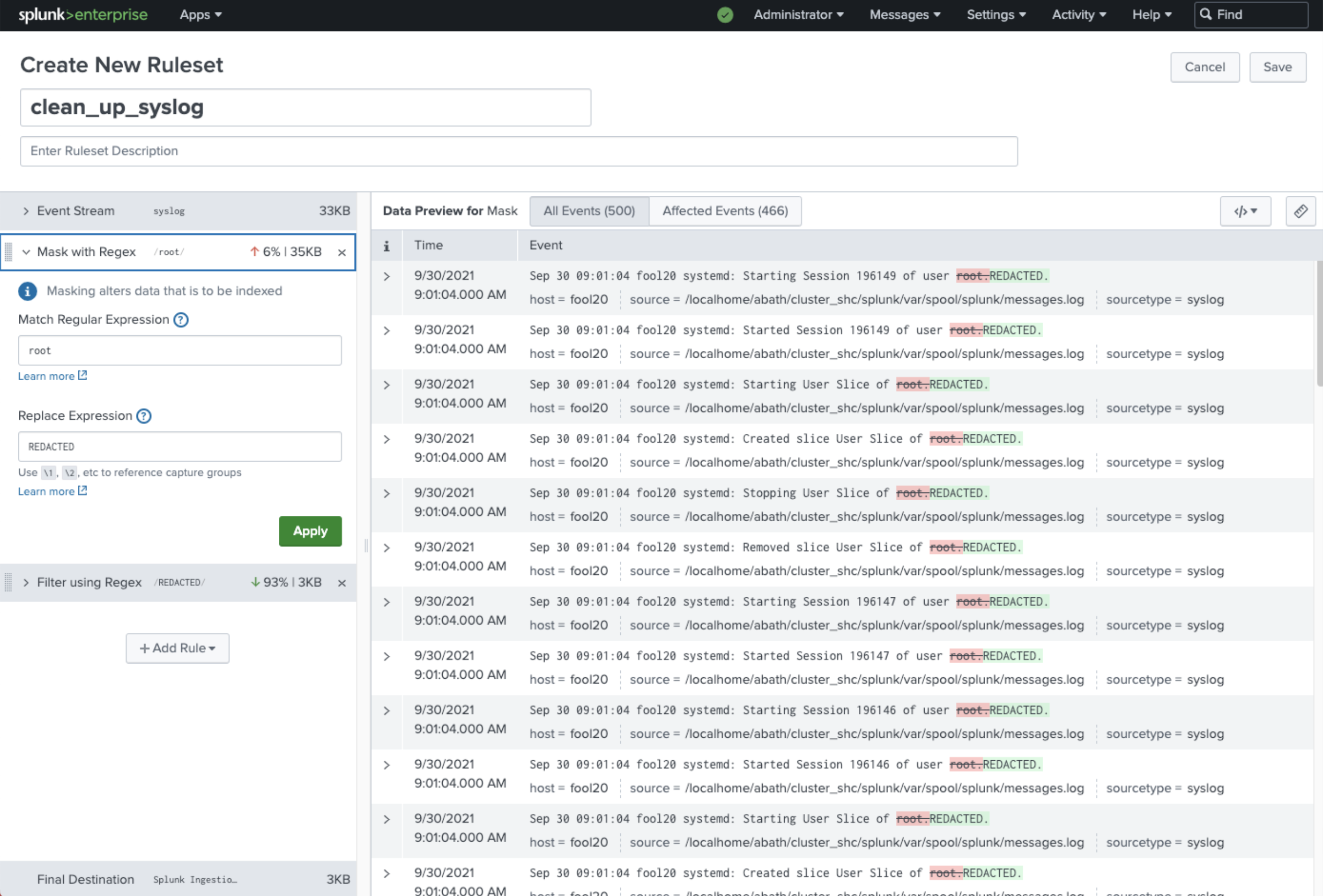
    Previously, a select number of small customers had access to workload-based pricing while other customers licensed Splunk platforms based on how much data was loaded into the platform. That approach, however, tends to discourage IT teams from loading as much of their data as possible.

    CEO Doug Merritt said workload pricing was created to enable a value-oriented pricing model that customers could employ instead of a data-centric model that can discourage IT teams from analyzing as much data as possible to improve IT operations.

    To further lower total costs, the company is also previewing a Flex Index option for customers that choose workload-based pricing to enable longer retention for lower-value data at a lower cost. Splunk is also expanding its cloud storage to include a preview of SmartStore, which allows larger volumes of data to be stored more cost-effectively on Microsoft Azure Cloud initially with support for Amazon Web Services (AWS) and Google Cloud Platform (GCP) forthcoming.

    Other enhancements to the portfolio include a preview of a data manager, a revamped onboarding tool for data stored in Amazon Web Services (AWS) and Microsoft Office 365, and Ingest Actions, which enables IT teams to act on data in motion in addition to data at rest stored in Splunk or the S3 cloud service from AWS.

    The company is also now making it easier to find and explore data via a federated search tool and a Splunk Dashboard Studio offering, available via Splunk Mobile, that makes it easier to create dashboards.

    At the same time, the company is also making available Splunk Operator for Kubernetes to make it easier to install its platforms in cloud-native environments. There is also now Splunkbase, a curated catalog that makes it simpler to find or develop a Splunk application.

    In terms of observability, the company is providing a preview of AlwaysOn Profiling for its application performance management (APM) platform, dubbed Splunk APM. AlwaysOn Profiling extends existing tracing capabilities to provide continuous code-level visibility and analysis.

    In addition, there is now a preview of an enhanced version of Database Visibility for Splunk APM, which automatically uncovers slow queries that are causing transaction latency without having to instrument a database.

    The company also announced that its real user monitoring (RUM) for mobile applications, which makes use of open source, now is generally available alongside the Splunk Observability Cloud for Mobile platform. The company also revealed there are previews of integration between Splunk Log Observer and Splunk Enterprise and Splunk Infrastructure Monitoring AutoDetect, a tool that automatically discovers infrastructure anomalies. There are also now additional Content Packs for managing Microsoft365, third-party APM tools and synthetic monitoring.

    Finally, Splunk has expanded its security portfolio to include Splunk SOAR App Editor, which provides a way to edit, test and create security orchestration, automation and remediation (SOAR) applications. There are now more than 350 SOAR apps now available on Splunkbase. The company also launched Splunk Intelligence Management based on a platform it gained with the acquisition of TruSTAR earlier this year and that it is making available security services via a team of experts dubbed SURGe.

    It’s not clear to what degree these additions will enable Splunk to fend off what has become a larger number of rival providers of observability platforms. However, as one of the most widely used IT operations management platforms in the enterprise, it’s clear Splunk enjoys an incumbent leader status it is determined to maintain.

  • Splunk Donates eBPF Telemetry Data Collector to CNCF

    Splunk Donates eBPF Telemetry Data Collector to CNCF

    Splunk Inc. announced during the KubeCon + CloudNativeCon North America conference that it donated a data collector to the OpenTelemetry project run by the Cloud Native Computing Foundation (CNCF).

    Splunk’s data collector runs as a sandbox-level program at the kernel of a Linux operating system and takes advantage of extended Berkeley Packet Filter (eBPF) technology to make it simpler to collect networking telemetry.

    The OpenTelemetry initiative itself spans a range of open source tools, application programming interfaces (APIs) and software development kits (SDKs) that are used to instrument applications. Previously, Splunk contributed the SignalFx Smart Agent and Smart Gateway to the OpenTelemetry project along with more than 64,000 code contributions.

    Morgan McLean, a director of product management for Splunk, said that while OpenTelemetry is officially in beta, some elements of the project are more mature than others. For example, tools for capturing metrics and traces are already being employed, while another set of tools for capturing log data will be ready sometime next year, he said.

    The data collector contributed by Splunk is among the first that operate at the kernel level to collect data, added McLean. That approach makes it possible for some types of data to be captured by default rather than requiring developers to always instrument their applications using agents to enable an observability platform. It will also contribute toward the eventual convergence of network operations and DevOps processes.

    Going forward, DevOps teams should expect to employ a mix of open source data collectors that operate at both the eBPF and application level, said McLean. The eventual goal is to instrument every application by default by making it much simpler to collect data. Today, most DevOps teams are employing a mix of proprietary and open source agent software to collect data that then must be deployed and then integrated with all the applications they build. Given the cost and level of effort required, the percentage of applications that are actually instrumented is, not surprisingly, fairly low.

    However, as agent software becomes more readily accessible, the percentage of applications that are instrumented should increase considerably in the years ahead. For DevOps teams that depend on that data to optimize application performance, that capability should prove to be a boon for improving overall observability in IT environments.

    Observability, in one form or another, has always been a core tenet of any DevOps best practice. Initially, DevOps teams focused on continuous monitoring as the most effective way to proactively manage application environments. However, it can still take days, sometimes weeks, to discover the root cause of an issue.

    Monitoring focuses on predefined metrics to identify when a specific platform or application is performing within expectations. The metrics tracked generally focus on, for example, resource utilization. Observability platforms combine metrics, logs and traces—a specialized form of logging—to instrument applications in a way that makes it simpler to troubleshoot issues without relying on a limited set of predefined metrics focused on a specific process or function.

    Those observability platforms then make it possible to correlate events so that it is easier to identify anomalous behavior indicative of an issue’s root cause. Armed with these insights, it becomes a lot simpler for IT teams to resolve issues faster.

    It’s unclear when OpenTelemetry tools will become more widely employed, but as more tools for collecting data become available, the impact on DevOps will be nothing short of profound.

  • Welcome to the New Field of Software Supply Chain Management

    Welcome to the New Field of Software Supply Chain Management

    Supply chain management is the newest ‘shiny object’ in both the DevOps and DevSecOps communities. But what does it mean in relation to software development?

    Historically, supply chain management is a commerce term that refers to tracking the logistics of goods and services moving between producer and consumer. This would include the storage and flow of raw materials with a focus on the channels that support the process.

    When we look at this concept from the perspective of software development, we will soon see that it is a new form of software configuration management. Yes, the new SCM is … SCM. The core of supply chain management is the process of controlling changes in software. The new SCM expands those old practices to include all ‘raw materials’ which we manage as part of our software build and package steps. For instance, when companies purchase and download open source libraries used in their in-house software. Supply chain management includes the interrogation of these ‘raw materials’ as well as all of the internal code and libraries. We will soon be hearing more about software bill of materials (SBOM) reports and difference reports, as they are critical for understanding the objects that flow through the software we create.

    The software supply chain or software configuration management practice hasn’t been talked about much until recently. This area of expertise has never been ‘sexy.’ That is, until the SolarWinds supply chain hack. The SolarWinds hack was a hard lesson to learn, but it taught us to take a closer look at how we consume our raw materials and to be more serious about how we build and package our software.

    According to FireEye, the firm that discovered the backdoor supply chain hack:

    “SolarWinds.Orion.Core.BusinessLayer.dll is a SolarWinds digitally-signed component of the Orion software framework that contains a backdoor that communicates via HTTP to third-party servers. We are tracking the Trojanized version of this SolarWinds Orion plug-in as SUNBURST.”

    It was obvious, something went very wrong with the creation of that .dll. I don’t pretend to fully understand how this breach occurred. But I do understand the build process and have been talking about the potential for these types of breaches for over 25 years.

    There have always been big security gaps and vulnerabilities in our most basic software development practice—the compile/link process. Most build processes are imperatively defined using an Ant, Make or Maven script. Each time the build runs, it rebuilds all the binaries, even if the corresponding source code has not changed.

    This is a problem. Instead, we need a build that is incremental. Incremental builds are difficult to script because they need more advanced logic. Most developers are not given adequate time to create a better build process, one that only rebuilds the changes. This means it is next to impossible to audit why a binary was recompiled because they are always recompiled. If we only recompiled the binaries that had corresponding code updates, we could more carefully audit the code and make sure that only approved coding updates were included.

    This may not have caused the SolarWinds attack, but it could have. Once hackers have gotten past the firewall they can find the build directory, read through the build scripts and identify the perfect piece of code to update with their bad function. The next time the build runs, a ‘clean all’ recompiles everything and, like dark magic, a SUNBURST is created.

    In our not-too-distant past, the developer community had tools that controlled software builds beyond what an imperative script could do. OpenMake Software, for example, provided a build automation solution called Meister that ensured that incremental builds were easy. As part of the build, it generated SBOM reports and differences reports allowing teams to easily audit and compare the actual source changes to confirm that only approved code updates were included. Another example was Rational Software’s ClearCase which used a program called ClearMake. ClearMake used a process called ‘winkin’ to reuse ‘derived’ objects that had not changed. This process created an incremental build that could be easily audited.

    I realize that I am simplifying the overall problem, but it is a good example of the basic supply chain best practices and how potentially vulnerable our processes are.

    The time to carefully think about how we manage our raw materials and overall supply chain is now. I’m guessing that most monolithic practices will not change much; it is too costly and impactful to rewrite hundreds of CI pipelines. But that does not mean we can’t solve the supply chain puzzle as we shift into cloud-native development in a microservice architecture.

    In a microservices architecture, we need to begin thinking about what the supply chain looks like. How do we track raw materials that are in the form of hundreds of small ‘bounded context’ functions? The good news is there is an emerging microservice catalog market that can become part of the supply chain solution. A microservices catalog can track versions of services to versions of their consuming applications. Your new SBOM report will have two levels: First, an SBOM for the microservice. Second, aggregated data at an application level. Remember, in this new architecture a full build is not done.

    It’s important to understand that microservices are naturally incremental and are independently built, packaged and deployed. Managing these small services opens the door to more closely auditing their source code before they are released.

    As we shift from monolithic development to microservices, we have an opportunity to incorporate supply chain and configuration management best practices. This includes being able to carefully audit the code before a release is done. And remember, we must do this as fast as possible. It sounds like a big task, but it’s well worth the effort. Collectively, we will find the answers as we explore new ways to manage our DevOps pipeline and incorporate configuration management and DevSecOps principles.

  • Energy Efficiency and the Data Center

    Energy Efficiency and the Data Center

    The IT industry has historically been a leader in the ongoing race to reduce CO2 emissions. Reducing emissions is good for the environment and for the corporate bottom line. The data center is well-known as a voracious data consumer. But the data center consumption findings keep pace with the trend. Even in the face of remarkable growth in data center capacity and performance, their energy consumption has increased only a few percentage points since the 2010s. This almost-flat rate of energy consumption is primarily the result of the shift to cloud computing as well as the shift to solar and wind energy, where it makes sense.

    Investments in renewable energy sources have helped tamp down criticism over the overall IT carbon footprint. Knowing that it takes a tremendous amount of energy to power a data center, owners and operators are always looking for ways to improve efficiency and reduce carbon expenditure. Today, there are newer and better ways for organizations to deliver the performance to properly power modern applications while keeping in mind the energy efficiency and carbon reduction the world requires.

    Minimizing Energy Use and CO2 Production

    How did we get here? Decades of semiconductor process miniaturization in concurrence with living out Moore’s Law has culminated in ongoing improvements in performance, storage capacity and device density. Today’s mobile phones are a great example of that ongoing progress. A secondary factor in the mobile phone revolution is a processor architecture optimized for efficiency and flexibility. This ARM architecture has been used to power almost all devices since the first iPhone. Over the years, ARM has also become a realistic platform for servers; often a better choice than an x86 system.

    Energy efficiency is one area where ARM systems win out over conventional server architecture. But it was not until recently that ARM processors could deliver the required performance for the data center. Today’s systems, based on Armv8 designs, have brought into play x86-class capabilities in a more energy-efficient way. The advent of the ARM-based AWS Graviton processors, which by some estimates have already captured 20% of the instance share on AWS, demonstrates that ARM can run production workloads while delivering what AWS calls “up to 40% better price performance over comparable current-generation x86-based instances for a wide variety of workloads.”

    To illustrate the impact on carbon production when a data center shifts from x86-based architecture to ARM servers, an analysis of the top elements contributing to data center energy use was undertaken. The energy savings was calculated and translated to reduced CO2 emissions based on the fuel mix used to power the electric grid in various locations. The results prove that an ARM-powered data center reduces CO2 production by 74%, equivalent to almost half a million barrels of oil.

    Power Consumption Reduced by Efficient Servers

    The premise is simple—innovative server design significantly reduces data center energy use. In this model, a server’s power draw and physical size are key factors. The energy needed for other data center subsystems was extrapolated by using ratios derived from experience and validated by estimates from other data center operators.

    Data center energy use can be divided into five categories of equipment and infrastructure: Servers, network communications, power supplies, conversion and UPS, cooling systems and storage. Servers and cooling comprise about 75% of the total.
    The calculations were based on the energy used by a medium-sized data center with 750 racks of conventional 1U servers (42 servers/rack; around 31,500 in total). Assumptions used included servers comprising two-thirds of the floor space and that the equipment space accounts for 65% of the total, translating to a 62,000 square-foot data center. For comparison, facilities operated by the major cloud vendors can be a million square feet or more. Knowing server power consumption and the ratios for the equipment categories, algebra can be used to calculate the energy consumption for each.

    The data center in this hypothetical example has, as we said, 31,500 servers. Using the 912.5W power draw of a Dell R640 as typical of 1U x86 servers, the total server usage in the ARM data center would be 251,795 MWh/year. Using this formula, the amount of energy saved by using ARM servers can be calculated. Each server requires about one-quarter the electricity of a standard server. In the formula, the assumption is that the ARM server installation would require half the equipment racks (375 instead of 750) and 52% of the power-per-system, comprising a data center using only 26% as much electricity (152,409 MWh/year) as one based on x86 systems.

    The math shows that switching one medium-sized data center to ARM servers can produce annual savings equivalent to 45,459 fewer cars on the road or 486,749 fewer barrels of oil used.

    The value in CO2 reduction is widely understood for preserving the environment. It is also advantageous from an economic standpoint. In fact, there are many technical and economic reasons to adopt energy-efficient ARM-powered servers in the next-generation cloud data center.


    To hear more about cloud-native topics, join the Cloud Native Computing Foundation and the cloud-native community at KubeCon+CloudNativeCon North America 2021 – October 11-15, 2021