Category: Enterprise DevOps

  • Survey Shows DevSecOps Progress in Larger Organizations

    Survey Shows DevSecOps Progress in Larger Organizations

    A survey of 250 U.S. and UK large enterprises with more $1 billion in revenue conducted by Security Compass, a provider of a platform for automating security tasks as application are developed, finds three-quarters (75%) have implemented DevSecOps processes on current application development projects.

    Rohit Sethi, CEO, Security Compass, said the State of DevSecOps Report published today makes it clear more organizations are starting to embrace security by design as they develop their applications. Nearly three-quarters of respondents (73%) said their organizations follow a “by design” approach that enables them to proactively address cybersecurity and regulatory compliance.

    The primary reasons respondents cited for embracing DevSecOps best practices were to improve security, quality and/or resilience (54%), followed by the ability to bring applications to market faster (30%). One of the misconceptions about DevSecOps is that it slows down application development and deployment. However, Sethi said, in practice, DevSecOps enables organizations to address security and compliance issues that would otherwise result in an application not being promoted into a production environment. Almost three-quarters of respondents (73%) noted that manual security and compliance processes slow down code releases. A full 96% said their organization would benefit from the automation of security and compliance processes.

    The biggest DevSecOps obstacles cited by survey respondents included technical challenges (60%), followed by cost (40%), insufficient time (39%), lack of education (38%), lack of skills (36%) and organizational inertia (35%).

    In terms of deploying applications, the biggest reasons cited by the 51 C-suite executives that participated in the survey were insufficient automation and lack of tooling, at 51% each. Organizational barriers came in a close third (50%).

    In the longer term, Sethi said it’s clear most organizations are shifting toward zero-trust architectures to make their application environments more secure. However, achieving that goal across a broad application portfolio will require more investment in both automation and, eventually, various forms of artificial intelligence (AI), said Sethi.

    It’s not clear to what degree smaller organizations will have the tools and resources required to fund adoption of the automation platforms needed to advance DevSecOps more broadly. There’s more awareness of DevSecOps than ever. The challenge is the tools and processes required to achieve it are not uniformly being pushed into the hands of the individual developer. In some cases, organizational leaders are encouraging developers to embrace DevSecOps without any practical guidance.

    Eventually, of course, every organization will embrace DevSecOps best practices, but the real question is, at what rate? The number of applications organizations are rolling out continues to accelerate, but reliance on DevSecOps best practices to ensure security and compliance remains uneven, at best. Larger organizations that have the resources required to fund these initiatives tend to be further along in their adoption journey. However, there is no correlation between organizational size and the ability to build and deploy secure applications. After all, a smaller organization may make up for what they lack in resources with a greater commitment to DevSecOps best practices.

  • Delivering True DevOps on the Mainframe

    Delivering True DevOps on the Mainframe

    Mainframe-inclusive DevOps enables organizations to accelerate application development and delivery so they can stay ahead of market disruptors. Efficient and effective DevOps practices in your mainframe environment allows developers to build, analyze, code, test and manage applications with improved agility and precision. 

    In this interview, Mark Schettenhelm, senior product manager for Compuware, a BMC company, shares the importance of implementing Enterprise DevOps as well as the culture and mindset that helps companies succeed in their DevOps journeys. 

    With over 35 years of experience, Mark is a DevOps expert that has been instrumental in bringing mainframe solutions to the forefront of the industry. He will be speaking more on the topic in his session “Delivering True DevOps on the Mainframe” at Open Mainframe Virtual Summit, a free virtual event taking place on Feb. 11.

    To check out the full agenda or to register for free, visit the Open Mainframe website.

  • CNCF Graduates Open Policy Agent Project to Manage Compliance as Code

    CNCF Graduates Open Policy Agent Project to Manage Compliance as Code

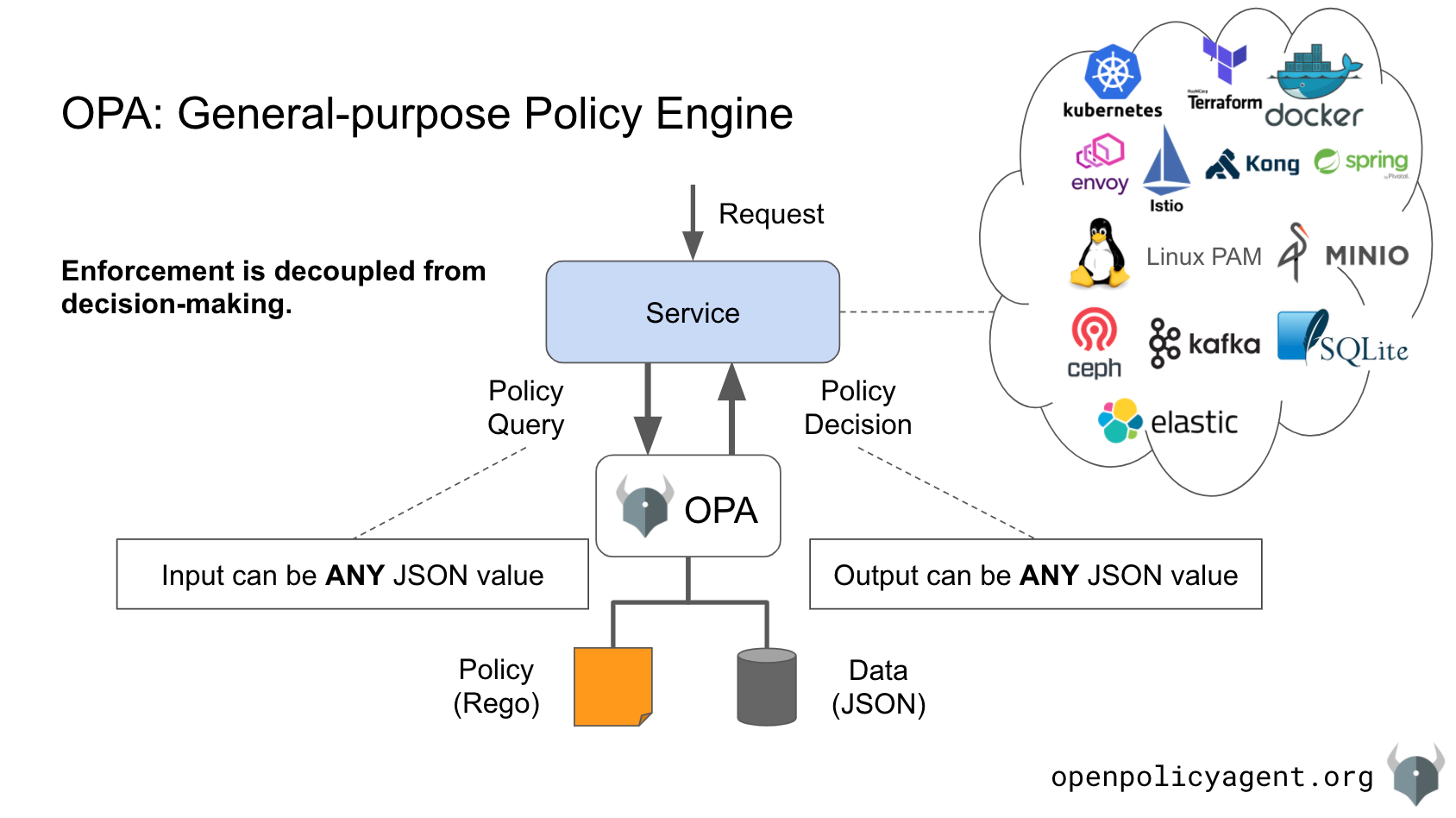
    The Cloud Native Computing Foundation (CNCF) announced this week that the Open Policy Agent (OPA) project, which many IT teams are employing to manage compliance as code, has officially graduated.

    Torin Sandall, co-founder of the OPA project and vice president of open source at Styra, whose compliance management platform is based on OPA, said formal recognition of OPA alongside other CNCF projects, such as Kubernetes, should help further adoption of the open source project that first took shape in 2016.

    Now being advanced under the auspices of the CNCF, the open source agent created by the OPA project is increasingly being incorporated into a wider range of compliance and security platforms. At the same time, more developers are starting to manage compliance as code across a wider range of applications. The ultimate goal is to make it easier to meet compliance requirements using a declarative framework so that responsibility for implementing compliance policies shifts further left toward developers.

    OPA uses a general purpose engine for enforcing policies that uses a set of rules that developers embed within applications using the Rego language. OPA has gained traction among cloud native application developers because it provides a means to enforce policies across a wide range of microservices.

    Sandall said going forward, the primary focus of the OPA project should be to develop and share as many integrations as possible. There are many instances where a use case for OPA has been created, but development teams simply don’t know that use case exists. As a result, many IT teams are attempting to employ compliance as code to address an issue that others have already solved, Sandall said.

    During its time as an incubation project managed by the CNCF, the security special interest group (SIG) within the CNCF conducted two external OPA security audits. The OPA project has also defined a security vulnerability disclosure process and a security response team.

    It’s not clear whether chief compliance officers within enterprise IT organizations have developed an appreciation for OPA. In theory, many compliance issues could be avoided if organizations mandated using OPA – or another approach to managing compliance as code – within their applications. Those compliance issues, of course, are multiplying as the number of compliance mandates expand globally. The challenge is that most compliance teams don’t have much visibility into the application development process.

    In the meantime, as DevSecOps processes continue to mature, it seems almost inevitable they would expand to include compliance mandates, most of which only exist to ensure some base level of security is present. Of course, developers may not want to be responsible for compliance mandates. However, the sooner compliance issues are addressed in the development process, the less likely they are to become DevOps’ problem when deployed in a production environment.

  • CloudBolt Software Aims to Bridge DevOps and IT Divide

    CloudBolt Software Aims to Bridge DevOps and IT Divide

    CloudBolt Software today released a Winter update to its cloud management platform that aims to bridge the divide between DevOps teams and traditional IT administrators.

    IT administrators can now employ the CloudBolt platform to invoke the open source Ansible framework for automating IT processes and workflows using a graphical user interface (GUI) surfaced via a OneFuse Ansible Tower module.

    Additionally, the OneFuse Scripting module will now make it possible to automate script creation for anyone who creates a script using, for example, Terraform, and package that script in a way that IT administrators can invoke via a graphical tool.

    Jeff Kukowski, CEO of CloudBolt Software, said the goal is to make it easier for IT teams across the organization to reuse code created by a DevOps team. OneFuse provides IT with a codeless integration tool. In addition to the core cloud management platform, CloudBolt Software also provides access to a Kumolus service that enables IT teams to optimize cloud costs and provides additional governance capabilities such a generating an audit trail.

    Other capabilities added in the Winter release include deeper cost optimization analysis for VMware vCenter and Microsoft Azure environments, support for the latest release of VMware vRealize and additional C-level dashboards and reports.

    As the number of workloads deployed in production environments increases, there is going to be a greater need for some form of détente between DevOps teams and traditional IT administrators. Site reliability engineers (SREs) can typically manage a much wider range of workloads than an IT administrator. However, SREs are both expensive and hard to find and retain. IT organizations will need to find a way for IT administrators that, at best, have limited programming skills, to pick up some of the slack.

    Those IT administrators can play a critical role in minimizing the number of misconfigurations arising from provisioning IT infrastructure as code. Misconfigurations as a result of developer mistakes are rife across the cloud, and IT administrators are more inclined to check for these than are developers who are racing to deliver their next application.

    The truth is, there are a wide range of tasks that DevOps teams would just as soon see managed by IT administrators, especially if a script or runbook that addresses common issues has already been created. The trick is making that script or runbook easily accessible.

    In the meantime, IT organizations are racing to keep up with complexity in IT environments, often by applying automation at scale in a way that is both repeatable and well-documented. Whether IT professionals like it or not, the days of writing automation scripts and failing to document them are coming to an end. The real issue is ensuring that what does get automated actually works as expected, each and every time a script is applied.

  • Oracle Includes GraalVM Support in Java SE Subscription

    Oracle Includes GraalVM Support in Java SE Subscription

    Oracle announced today it is adding a GraalVM Enterprise virtual machine for building Java applications to Java SE Subscription at no additional cost.

    Donald Smith, senior director of product management from the Java Platform Group at Oracle, said GraalVM Enterprise provides developers with a high-performance application runtime, built on Oracle Java SE, that includes a compiler that accelerates Java application execution. That’s critical as developers look to build microservices-based applications employing microservices that tend to be latency sensitive, Smith said.

    The first stable release of GraalVM arrived last fall. It consumes less memory, and enables Java applications to spin up faster by taking advantage of capabilities such as a just-in-time compiler. GraalVM Enterprise adds a native image utility that compiles Java and JVM-based applications ahead-of-time (AOT) into self-contained native executables. That approach only includes the classes and libraries needed to run the application, which reduces the size of the binary that gets generated.
    Including GraalVM Enterprise in the Java SE Subscription make it easier for Java developers to switch to that Java virtual machine (JVM) to build microservices rather than having to learn another language, Smith said.

    Smith said most organizations will continue to build monolithic applications at the same time they’re attempting to construct microservices. The Java SE Subscription makes it possible for developers to employ different JVMs depending on the type of application being constructed or updated, Smith said. A survey of 560 developers conducted by Oracle last month finds nearly half (48%) are already employing GraalVM to build microservices using Java.

    How much will organizations rely on Java to build microservices, given all the other programming language options available? That’s up for debate. However, being employed in the enterprise for more than 25 years, the number of developers that know Java well is substantial. Rather than waiting for those developers to become proficient in another programming language, there’s a natural tendency for organizations to want to stick with a familiar language. Each additional language introduced to build applications also tends to complicate DevOps processes in a way that can increase the total cost of IT.

    At the same time, however, the number of developers that know how to develop applications using everything from JavaScript to Go is also increasing. Oracle, via ongoing investments made in the OpenJDK project, is moving to make sure Java stays relevant at a time when the number of programming languages being employed has never been greater. For what it’s worth, GraalVM is designed to support multiple programming languages, including JavaScript.

    It’s unlikely Java will fade into obscurity any time soon. IT organizations have a vested interest in embracing next-generation JVMs, if for no other reason than making Java applications more efficient, regardless of how they are built.

    It’s also worth mentioning that frameworks – such as Quarkus from Red Hat – that enable Java-based microservices to run natively on Kubernetes clusters already rely on GraalVM. In some cases, developers may wind up employing such a framework without realizing it relies on GraalVM. In other cases, the challenge will be getting developers to opt for GraalVM as their JVM of choice when so many of them have routinely used the same JVM for more years than they care to admit.

  • Transforming Your Digital Transformation

    Transforming Your Digital Transformation

    Change is difficult, so most companies pull the bandage slowly, hoping to avoid the hard, painful part – especially with regard to digital transformation. But in the corporate world, cautious change inevitably leads to entropy. Progress gets made in one department at a time, at the expense of others. Leaders turn over, priorities shift, plans fall apart and the desired results never happen. The bandage never really comes off.

    I see this happen a lot in companies that say they want to transform their digital customer experience – across all industries we work with. The board or the shareholders might not embrace a truly digital-first strategy or understand what the end-state transformation goal actually is. Instead, they end up digitizing the past, refreshening a longstanding brand with a new storefront in a doomed effort to maintain business-as-usual.

    These companies start with a well-meaning internal innovation team. They preach agility, then spend months researching the problem and consulting internal stakeholders, all the while trying to stay close to their comfort zone of existing practices. They write reports, they create roadmaps, run design-thinking workshops and come up with a solution … and then throw it over the wall to IT and wash their hands of it. Nine months later, the team is busy executing the new plan, but, with no internal champion, it can’t innovate. Due to the chaos and complexity of the project, the company burns through its budget and the project becomes a sad statistic. In fact, 95% of corporate digital transformations fail outright or produce diluted results, according to one recent study.

    Shrink the Transformation Timeline

    If a company really does want to digitize for the future instead of the past, it needs to turn that approach on its head. It needs to drastically shrink the timeline for digital transformation, which means starting with a digital operating model and putting the end clearly in sight.

    The result is a digital operating model that continuously delivers and measures value. It’s not a project. It’s not a product. It’s an operating model that puts teams close to the market and customer, and makes them responsible for finding and delivering innovative, high-value customer experiences.

    Get the Team Right

    This approach requires a team that knows how to embrace ambiguity and takes responsibility for creating the solution, not just designing it or building it – both of which fail when done in a silo.

    It needs to be a small, multifunctional team with the authority to implement things quickly, with the fewest possible hoops to jump through along the way. And when the inevitable organizational friction arises, the team and its goal needs to be seen as a transformation opportunity, not a barrier to be avoided.

    Companies assume they can do this work in-house, but it’s next to impossible to form the right internal teams because, typically, they don’t have enough experience with this model.

    These internal teams don’t quite have the right training for the job, but more importantly, they don’t have the right permission and agency. Some are risk-averse or can’t break through organizational silos. Some simply aren’t given the agency to do the work. Organizations with a lot of experience evolving, that give their employees this agency as a matter of course, might have success in-house. But it’s a tough ask for older, established firms.

    Don’t Design – Execute

    To their credit, many companies see this and outsource their transformation leadership to a consultancy firm. But you can’t outsource a transformation. You can’t teach a transformation. You need to implement transformation.

    Both internally and externally led transformations fail to grasp what really makes transformation work: agency and delivery.

    Instead of researching, planning and announcing, the team needs to roll up their sleeves and start executing. They have to drive the evolution of the company’s software toward the identified goals, break down any organizational silos or challenges that get in the way and deliver – quickly. They have to work together with the IT team, and anyone else who needs to understand what they’re doing, but execution needs to be top of mind at all times.

    The solution isn’t insourcing or outsourcing. It’s a joint venture, where the transformation is within the company’s core business unit, working together with a consultancy or partner to complete the digital transformation faster by focusing on a smaller slice of the business. With this foundation, an organization can be pulled through a rapid transformation in nine to 18 months, rather than three to five years.

    In fact, in under six months, a tiny transformation team of five to seven people can scale up to a transformed organization of 120 people, quickly delivering the desired digital-first customer experience. All it takes is a team that has done it successfully, multiple times. And the best thing about this is that transformation is measurable by the ability of teams to continuously deliver and evolve experiences across multiple digital channels.

    Digital moves too fast, and is too complicated, to be managed by traditional processes and approvals. If it does, whatever change your company sets out to enact is at risk of being dead on arrival. Agency plus delivery is the formula for a successful digital transformation.

  • HashiCorp Expands Managed Services Offerings

    HashiCorp Expands Managed Services Offerings

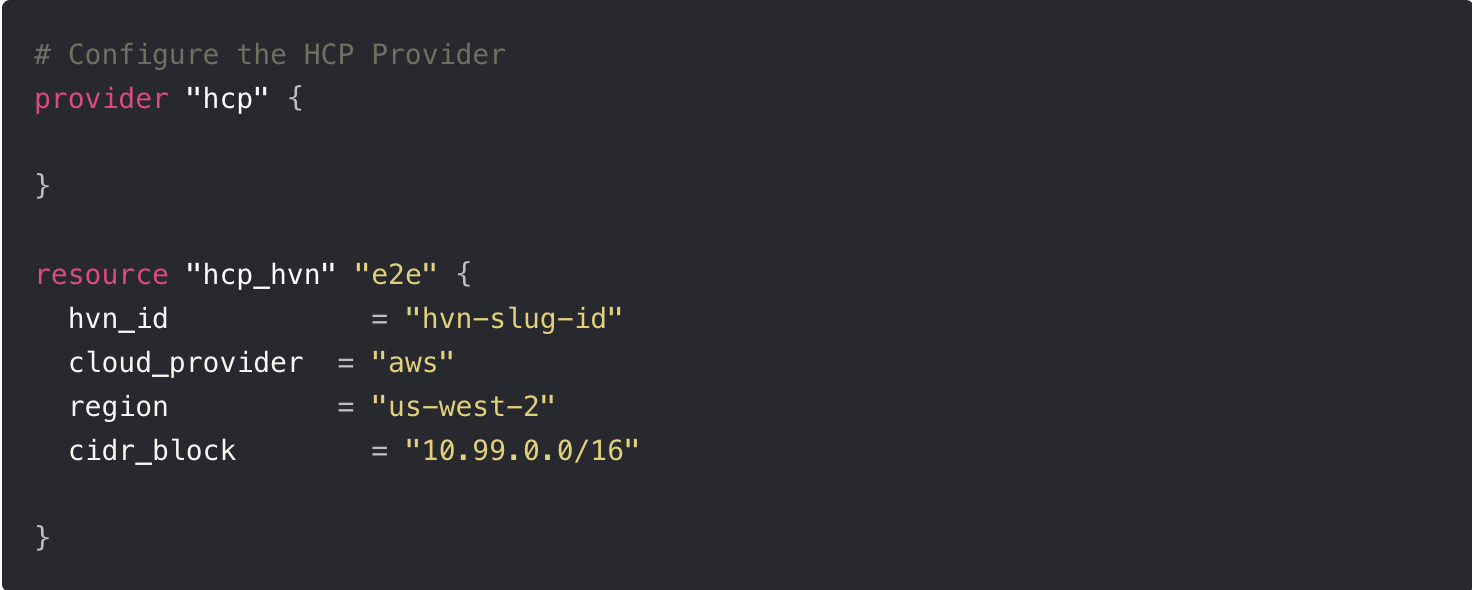
    HashiCorp today announced the general availability of its Consul service mesh as a managed service on the HashiCorp Cloud Platform (HCP) along with a beta release of a managed instance of HCP Vault, a secrets management platform, on HCP.

    HCP is currently hosted on the Amazon Web Services (AWS) platform, on which the company is making available its complete portfolio as a managed service. In the longer term, HashiCorp plans to make its managed services available on all the major cloud platforms.

    Chris Kent, director of product marketing for HashiCorp, said despite the growing number of open source service mesh alternatives, many organizations would prefer to employ a service mesh provided by a single vendor that they didn’t have to provision and maintain. HashiCorp’s Consul service mesh provides a lightweight alternative that enables service-to-service networking and security via connection authorization and encryption and spans both Kubernetes clusters and virtual machine platforms using the mutual Transport Layer Security (mTLS) protocol.

    Applications can then employ sidecar proxies in a service mesh configuration to establish TLS connections for inbound and outbound connections without ever having to directly interface with Consul itself.

    HashiCorp is making the case for Consul at a time when internecine warfare is raging between proponents of open source service mesh platforms such as Istio, Linkerd and Kuma. The Consul service mesh provides an alternative that is simpler for developers to incorporate across both microservices-based applications running on a Kubernetes cluster and legacy monolithic applications running on virtual machines, Kent said. In contrast, Istio and Linkerd are designed solely for use in Kubernetes environments.

    It’s still the early days of service mesh adoption. In addition to simplifying application traffic routing between services, one of the other benefits of service mesh is that it provides a layer of abstraction above lower-level network application programming interfaces (APIs) and protocols that is more accessible to developers. As developers become more familiar with service meshes, the ability to programmatically include network and security operations within a DevOps workflow will grow. HashiCorp is collectively positioning Consul and Vault as foundational components for creating a zero-trust architecture.

    In the meantime, each IT organization will need to determine which type of service mesh makes the most sense for their environment. In many cases, organizations may find themselves employing multiple service meshes to address different use cases. Regardless of which they choose, service meshes will soon become a permanent fixture in the proverbial solar system around which IT services revolve.

    HashiCorp claims that more than 2,000 organizations signed up to participate in the HCP Consul and HCP Vault beta programs. That level of interest suggests interest is growing in consuming IT as a service rather than as a platform that requires deployment by an internal IT team. It remains to be seen the degree to which organizations will prefer to consume those services directly from a vendor, versus a cloud service provider or third-party IT services provider.

  • Atlassian’s Shift to the Cloud Gets Underway

    Atlassian’s Shift to the Cloud Gets Underway

    Atlassian today announced the general availability of Cloud Enterprise, a cloud-based service through which organizations can mix and match the company’s various offerings under a single subscription.

    The company has signaled its intention to shift toward cloud services for months; now, the initial Cloud Enterprise subscription will cover the company’s Jira Software, Confluence and Jira Service Management offerings.

    Bala Venkatrao, head of product for Enterprise Cloud at Atlassian, said the goal is to make it more cost efficient for organizations to consume the company’s software versus merely acquiring a license to deploy software in an on-premises IT environment.

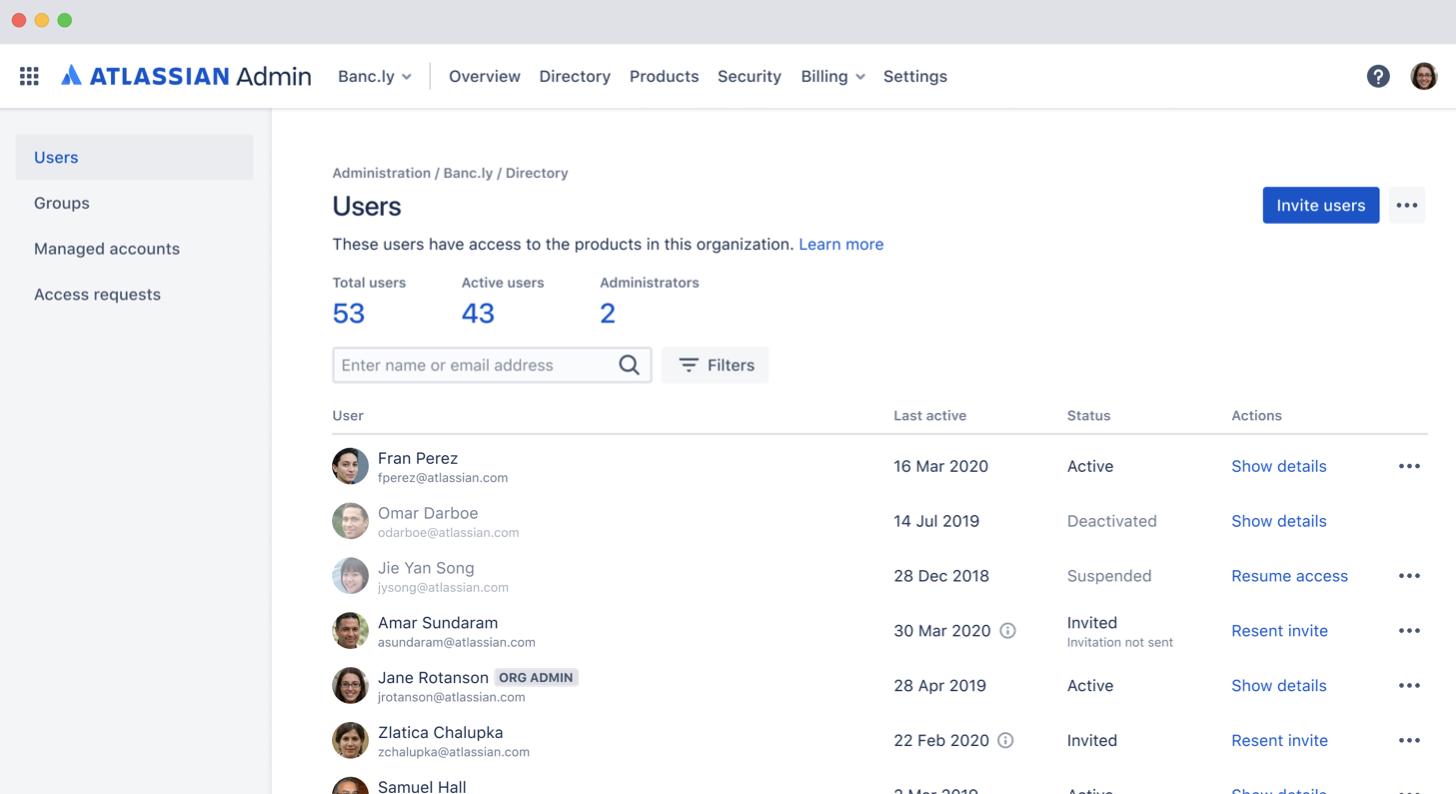
    The company is also making controls available that enable governance of user and change management via a centralized admin hub. Administrators can assign users to instances, configure security policies and monitor usage trends through the hub. There are also built-in integrations with third-party identity-as-a-service providers, to enable administrators to automate provisioning and de-provisioning.

    Administrators can also set up and customize multiple application instances; they can keep data pinned to different regions to customize those instances with specific marketplace applications or configurations for compliance purposes.

    Finally, a marketplace will allow IT organizations to expand the number of applications they consume from Atlassian and its partners. A smart links and app switcher capability for Jira and Confluence Cloud enable easy collaboration across different instances of Atlassian applications.

    Atlassian currently has more than 194,000 customers, so it may take some time to transition the existing installed base to this model. In the meantime, Atlassian is pushing as many new customers as possible toward a cloud platform that makes it easier for Atlassian to keep customers current on the latest release of its software. Atlassian plans to support up to 20,000 users per application instance by later this year.

    Venkatrao said while the Atlassian portfolio is frequently consumed by individual end users, the Cloud Enterprise offering is designed to appeal to CIOs, and other senior level executives, that want to centralize billing for application services now accessed via the cloud. That approach will make it easier for large organizations to take advantage of discounts they may qualify for as overall usage increases, Venkatrao said.

    While Atlassian may be a little late to the software-as-a-service (SaaS) application game, Venkatrao noted that the Cloud Enterprise platform will make it simpler for Atlassian to apply AI to the metadata it will collect. Atlassian has already leveraged AI to improve document search within Confluence and Jira, in addition to employing predictive analytics to surface recommendations for including personnel on a project.

    It may be a slow transition to the cloud for Atlassian, but that transition is clearly underway.

  • Esri Unveils PaaS Environment for Calling Geospatial Data via APIs

    Esri Unveils PaaS Environment for Calling Geospatial Data via APIs

    Esri today unveiled a platform-as-a-service (PaaS) environment through which developers can embed geospatial capabilities into their applications by making an application programming interface (API) call to a cloud service.

    Euan Cameron, CTO for developer technology at Esri, said the ArcGIS Platform will make it simpler for developers to incorporate mapping capabilities enabled by a geographic information system (GIS) system with, for example, a mobile application. The entire ArcGIS software stack can be accessed by those applications by making an API call. Previously, IT teams would have to stand up the entire Esri platform on their own to provide development teams with access to the Esri geospatial platform.

    The PaaS environment also makes it possible for developers to access professional-grade geospatial content that can be plugged directly into their applications, Cameron said.

    Geospatial platforms gained prominence with the popularity of mobile applications that require mapping capabilities. With the expansion of 5G wireless networks, the number of applications that require similar capabilities will continue to grow, Cameron said. A PaaS environment that abstracts the complexity of managing a geospatial platform behind a set of APIs will make it easier to build those applications at scale, Cameron said.

    There are, of course, other approaches to making geospatial databases available as a service. However, Cameron said Esri has long history of providing these capabilities alongside content it curates across a wide range of consumer and business applications. Those capabilities are now an API call away from any application, Cameron said.

    Of course, DevOps teams will need to integrate a PaaS environment that can be invoked as a cloud service within their overall workflow. Esri is committing to making its PaaS offering available on a global network of data centers to minimize latency for applications making API calls to its platform.

    These days, it’s hard to imagine an application that doesn’t require at least some degree of geospatial capabilities. Time and place have become critical elements of any application experience. The total cost of providing those capabilities drops considerably when the geospatial platform required to enable them is managed by its provider. In fact, as application development continues to evolve, DevOps teams often find themselves orchestrating a broad range of API calls to external services. Each one of those calls is simple enough, but over time, the sheer number becomes challenging to manage. Nor is the quality of the APIs surfaced by each service always of the same quality.

    Regardless of how geospatial capabilities are integrated into an application, the days when dedicated teams managed complex GIS platforms may finally be coming to an end.

  • DevSecOps Implementation: SIEM

    DevSecOps Implementation: SIEM

    The world is filled with events. Our inbox floods with events that marketers really want us to pay attention to, while news feeds flood us with events they’re trying to raise above the background noise, but then, the dog barking interrupts our consumption of that information. Our family is, meanwhile, texting us about events on the family level that may be related to events on the national or world stage … meanwhile, social media is full of garbage information about events that may or may not be real, and that you may or may not care about.

    We ignore the vast majority of these inputs and move along with our day. The inputs that require our attention usually, but not always, get it. Sometimes, we fail horribly at filtering, judging importance, or both, and it has life-impacting ramifications.

    This is not too far from the state of security event management when security information and event management (SIEM) was born. Disparate feeds were coming in from all over; analysts – be they dedicated security folks or systems administrators wearing an extra hat – had to guess which of dozens, hundreds or even thousands of events were a real threat to the environment.

    The first step to gaining control of that environment was standardization and aggregation. Get the events into one place, with similar information available for similar events. That was where SIEM came from.

    Since then, the number of events coming in has continued to rise. Companies that were seeing hundreds of events a day are now seeing hundreds an hour, and SIEM vendors had to keep up. The complexity of attacks, and the ability to detect them, has gone up, and SIEM vendors have had to keep up. Tools available for feeding the SIEM and for acting on the aggregated data have evolved … and SIEM vendors had to keep up.

    At this point in time, SIEM is best characterized as a data aggregation platform with limited intelligence that aids in filtering of irrelevant events. It’s akin to turning off social media and telling those close to you to call if needed; it filters out the worst noise and elevates the most important messages.

    Other tools can analyze their own data and make their own deductions, but SIEM is where you bundle all security-related events in one place, so it is the logical place to filter the noise and raise awareness. But it requires a high-volume, adaptable datastore. Vendors have reached that plateau.

    Once volume issues were mastered, SIEM vendors turned to helping filter the insane volume of security event noise. Yes, it is a security event if Bob logged in on a new workstation, but it probably isn’t a noteworthy security event. Unless Bob’s new workstation is in a country where the company doesn’t do business, or Bob is still logged in on his own workstation, blissfully unaware of the other login.

    So, rudimentary filters were applied to the event data in the SIEM. This got rid of a huge amount of noise. Next came filtering events that, logically, looked like notable security events, but just weren’t. Something was scanning ports on the firewall. An internal firewall. Sounds bad, unless the security tools’ logs showed that an authorized user kicked off the scan. Then, it’s a simple matter of asking the user in question, “Are you scanning X?” and moving along. It’d be better for the system to lower the importance of the event based on the fact that it is an authorized user doing the scanning, with corporate-approved tools. Then, an analyst may not need to get involved at all (my security friends are cringing because, literally, they trust no one, and would point out that authorized users can misuse tools, too – so I’ll note that here).

    But the event volume kept going up, and the analysts were even more swamped. Between adding new reporting apps (HIPS alone can add thousands of reporting points to a SIEM), and increases in events on existing monitored points, it was ugly.

    Enter AI. This is when machine learning (ML) started becoming the norm in SIEM. Now, we want the system to avoid using hard-and-fast rules that must be maintained, but to use knowledge it gains by watching the flow of data and an analyst’s resolution to selectively raise/lower the priority of events. Now, the events that actually bubble up to analysts are ones that the ML engine sees as fishy, and the number is greatly reduced. False positives still occur, but not nearly at the volume they did before, as the system learns how to detect them.

    But wait! There’s more!

    All that data in one place with ML engines crawling over it was just too much temptation for data scientists and deeply knowledgeable security personnel. So, the ability to plot a course through seemingly unconnected security events and determine that this or that was actually evidence of intruder or attacker activity spread across the system came next. This is where we are now – the ability to connect the dots on events that analysts (or the system) might have filtered out to find patterns that indicate intrusions.

    But it comes with a price. It’s not cheap to set up, it’s not easy to train, and maintenance of a system that takes inputs from everywhere and tries to correlate the resulting dataset is … work. We’re not talking a little bit of data here, and, like the environment it comes from, we’re not talking a little bit of complexity. Do you need it? I would say yes. Even if you only use SIEM as a big data store, it will help you perform post mortems when (not if) you have a breach. It is worth the effort, unless you are tiny or have no Internet presence to speak of.

    Keep rocking it! SEIM is another tool to consider as you move to DevSecOps dominance, but again, just a tool that requires you to keep the org safe.