Category: Enterprise DevOps

  • Learn a Bit About AI

    Learn a Bit About AI

    Every once in a while, a trend becomes broad enough that I feel the need to offer career advice. This year it will be simple: Know enough about AI/ML to be dangerous. We are past the point where not having at least a basic understanding is a good idea. Looking around the data center, AI is in use from the earliest stages of development through production network performance evaluation. Somewhere in your environment, you are using AI and ML. More to the point, somewhere in the places you may interview going forward, they are using AI and ML.

    I’m not suggesting you become an AI/ML expert—though you certainly could; I have a relative that is a data scientist and that’s all he does—design and tweak algorithms. He’s learning new things pretty much daily, so if you like that (as I do), it’s an option. But for those of us doing DevOps or SRE or even regular old operations, we’re only going to have to understand a bit.

    Understand what tools like Jupyter are, and what the most commonly used ML algorithms in your space are. Then, learn about how AI and ML help with what you are doing. Just as knowing more about the compiler/interpreter of your chosen language helps you solve more odd problems, AI is going to have that same issue. Think about how those folks who understand the guts of routing are the ones we want solving our routing problems. Again, same scenario.

    Moving forward, AIOps, NetOps, DevSecOps … All intend to increase the amount of work offloaded onto the AI in question. In a lot of cases that is great. We have enough to do; if you can paw through those logs and give me relevant summary info, go for it. But it doesn’t end there—some AI engines are making the calls and implementing changes. In both network and application security, a fair number of vendors will tell you there is no time to wait for humans to stop an attack, and they encourage their customers to turn on automated responses. That’s the first of many applications for AI/ML. We will see an increasing number of AI/MLOps tools being used for full-on automation. We all do difficult jobs with a complex—sometimes bewildering—number of inputs. But we use pattern recognition and experience to make determinations and do what’s best for our organization. Our software has reached the point where sometimes, it can do that for us on the easier tasks so we can focus on the more complex ones. When the AI/ML fails—and it will, because pattern recognition and historical trends are not always indicative of normal usage—knowing what is going on under the covers can help you determine if it did the right thing in the wrong way, or simply did the wrong thing. And it can help you to quickly recover. I can’t speak for every organization, but I’ve never seen one that lamented, “Sure wish that outage had lasted another couple of hours!”

    And keep rocking it. Somewhere in the distant future, an  AI may be able to do your job as well as you. But that isn’t today. Even if it can handle one bit, it certainly isn’t rocking the entire breadth of your responsibilities like you are. Thank you, from all the users that don’t realize you’re keeping them live.

  • Splunk Expands Scope of Observability While Lowering Costs

    Splunk Expands Scope of Observability While Lowering Costs

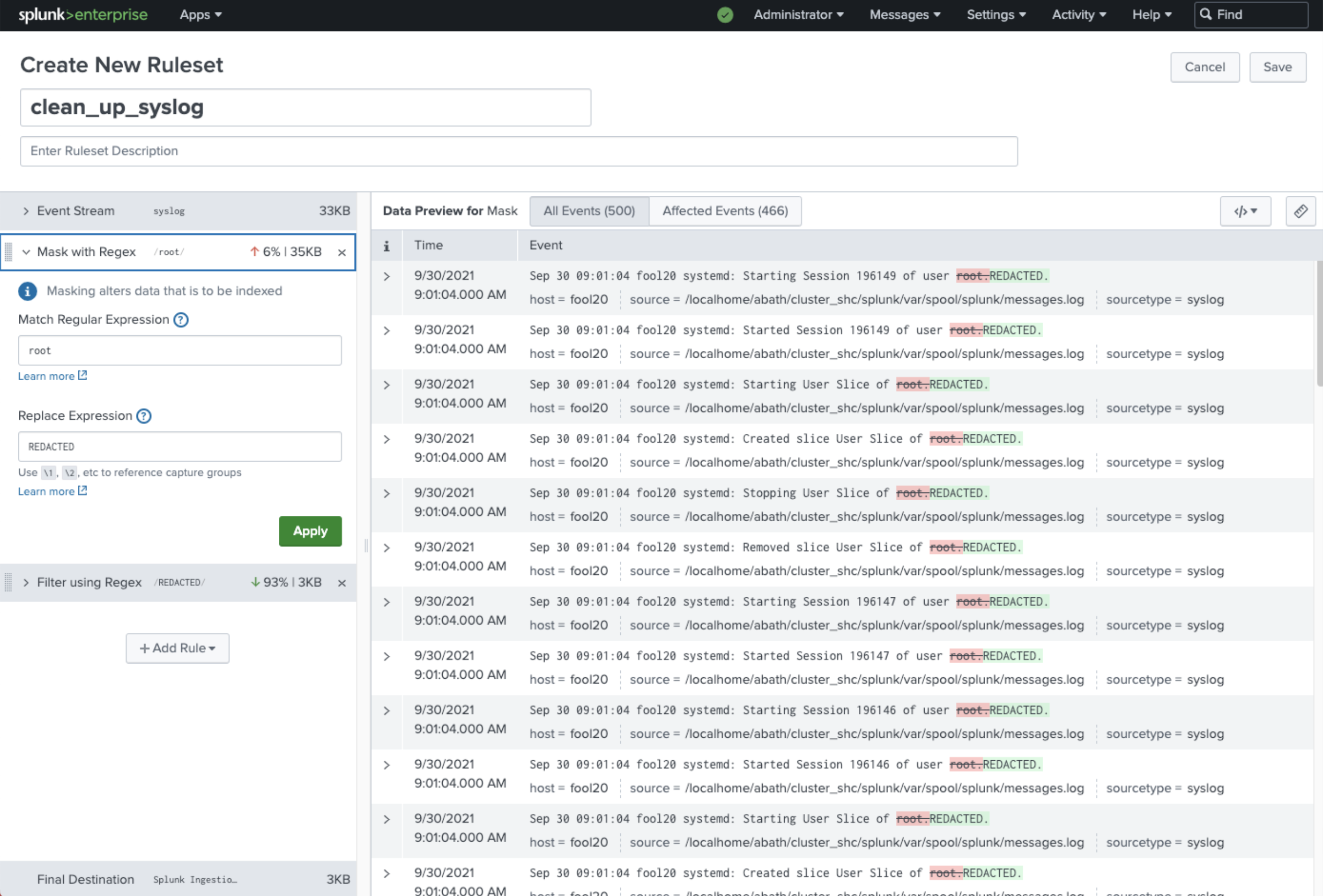
    During its online .conf21 conference Splunk Inc. today revealed a bevy of updates that advance observability while at the same time reducing the total cost of deploying its platforms.

    As part of that effort, Splunk also announced it will now make workload-based pricing available to all customers.
    Previously, a select number of small customers had access to workload-based pricing while other customers licensed Splunk platforms based on how much data was loaded into the platform. That approach, however, tends to discourage IT teams from loading as much of their data as possible.

    CEO Doug Merritt said workload pricing was created to enable a value-oriented pricing model that customers could employ instead of a data-centric model that can discourage IT teams from analyzing as much data as possible to improve IT operations.

    To further lower total costs, the company is also previewing a Flex Index option for customers that choose workload-based pricing to enable longer retention for lower-value data at a lower cost. Splunk is also expanding its cloud storage to include a preview of SmartStore, which allows larger volumes of data to be stored more cost-effectively on Microsoft Azure Cloud initially with support for Amazon Web Services (AWS) and Google Cloud Platform (GCP) forthcoming.

    Other enhancements to the portfolio include a preview of a data manager, a revamped onboarding tool for data stored in Amazon Web Services (AWS) and Microsoft Office 365, and Ingest Actions, which enables IT teams to act on data in motion in addition to data at rest stored in Splunk or the S3 cloud service from AWS.

    The company is also now making it easier to find and explore data via a federated search tool and a Splunk Dashboard Studio offering, available via Splunk Mobile, that makes it easier to create dashboards.

    At the same time, the company is also making available Splunk Operator for Kubernetes to make it easier to install its platforms in cloud-native environments. There is also now Splunkbase, a curated catalog that makes it simpler to find or develop a Splunk application.

    In terms of observability, the company is providing a preview of AlwaysOn Profiling for its application performance management (APM) platform, dubbed Splunk APM. AlwaysOn Profiling extends existing tracing capabilities to provide continuous code-level visibility and analysis.

    In addition, there is now a preview of an enhanced version of Database Visibility for Splunk APM, which automatically uncovers slow queries that are causing transaction latency without having to instrument a database.

    The company also announced that its real user monitoring (RUM) for mobile applications, which makes use of open source, now is generally available alongside the Splunk Observability Cloud for Mobile platform. The company also revealed there are previews of integration between Splunk Log Observer and Splunk Enterprise and Splunk Infrastructure Monitoring AutoDetect, a tool that automatically discovers infrastructure anomalies. There are also now additional Content Packs for managing Microsoft365, third-party APM tools and synthetic monitoring.

    Finally, Splunk has expanded its security portfolio to include Splunk SOAR App Editor, which provides a way to edit, test and create security orchestration, automation and remediation (SOAR) applications. There are now more than 350 SOAR apps now available on Splunkbase. The company also launched Splunk Intelligence Management based on a platform it gained with the acquisition of TruSTAR earlier this year and that it is making available security services via a team of experts dubbed SURGe.

    It’s not clear to what degree these additions will enable Splunk to fend off what has become a larger number of rival providers of observability platforms. However, as one of the most widely used IT operations management platforms in the enterprise, it’s clear Splunk enjoys an incumbent leader status it is determined to maintain.

  • Trust in Cloud Providers is a Developer Issue

    Trust in Cloud Providers is a Developer Issue

    Earlier this summer, we worked with ClearPath Strategies to ask developers about the level of trust they have in their various cloud service providers. What we learned spoke volumes: While developers’ familiarity and comfort with Amazon, Microsoft and Google position these well-known cloud providers as market frontrunners, developers often do not agree with the companies’ values.

    The research project gathered insights from more than 800 developers at small and mid-sized businesses, those with less than 500 full-time employees, across a wide variety of industries and geographies worldwide. You can download the summary report here (no signup required).

    In ClearPath Strategies’ report, senior analyst Stephanie Fairchild said that “approximately 20% of developers believe that the big three hyperscalers will engage in behaviors that include leveraging their brands to stifle competition, focusing on shareholders more than customer needs, hosting or working with customers that developers find morally objectionable, monetizing user data for their own use and locking them in with proprietary tools. Criteria such as security and performance clearly take priority over these trust issues for developers, but it’s interesting to note that a sizable portion of developers are thinking about how their values align with those of their service providers.”

    • Trust plays an important role in developers’ choice of a cloud hosting provider, but needs take precedence; when prioritizing needs or values, developers report they prioritize needs over their values 73% of the time.
    • The top three reasons cited for developers’ preference of their chosen third-party cloud provider: Security, trust and quality of service.
    • Survey respondents indicated that both hyperscale and alternative cloud providers deliver equally effective performance and security.

    The report cited three top criteria for choosing a third-party cloud provider: Security, trust and quality of service. Survey respondents felt that hyperscale and alternative cloud providers deliver equally effective performance and security. Interestingly, although 73% of respondents said they prioritize needs over values when making a purchasing decision, approximately 20% said they don’t trust the big three providers (AWS, GCP and Azure) in what could be considered key moral areas.

    It’s no secret that the extensive functionality and brand awareness of hyperscalers make them popular choices for developers, but an alternative cloud provider like Linode, DigitalOcean, OVHcloud or Hetzner can be a more trustworthy partner for innovative upstarts—one that likely offers better pricing and doesn’t threaten or compete with their business. And when an alternative cloud provider meets a developer’s functional needs—which is nearly always the case—developers can have the best of both worlds: A provider they can trust to meet their needs and one that shares their values. 


    To hear more about cloud-native topics, join the Cloud Native Computing Foundation and the cloud-native community at KubeCon+CloudNativeCon North America 2021 – October 11-15, 2021

  • Energy Efficiency and the Data Center

    Energy Efficiency and the Data Center

    The IT industry has historically been a leader in the ongoing race to reduce CO2 emissions. Reducing emissions is good for the environment and for the corporate bottom line. The data center is well-known as a voracious data consumer. But the data center consumption findings keep pace with the trend. Even in the face of remarkable growth in data center capacity and performance, their energy consumption has increased only a few percentage points since the 2010s. This almost-flat rate of energy consumption is primarily the result of the shift to cloud computing as well as the shift to solar and wind energy, where it makes sense.

    Investments in renewable energy sources have helped tamp down criticism over the overall IT carbon footprint. Knowing that it takes a tremendous amount of energy to power a data center, owners and operators are always looking for ways to improve efficiency and reduce carbon expenditure. Today, there are newer and better ways for organizations to deliver the performance to properly power modern applications while keeping in mind the energy efficiency and carbon reduction the world requires.

    Minimizing Energy Use and CO2 Production

    How did we get here? Decades of semiconductor process miniaturization in concurrence with living out Moore’s Law has culminated in ongoing improvements in performance, storage capacity and device density. Today’s mobile phones are a great example of that ongoing progress. A secondary factor in the mobile phone revolution is a processor architecture optimized for efficiency and flexibility. This ARM architecture has been used to power almost all devices since the first iPhone. Over the years, ARM has also become a realistic platform for servers; often a better choice than an x86 system.

    Energy efficiency is one area where ARM systems win out over conventional server architecture. But it was not until recently that ARM processors could deliver the required performance for the data center. Today’s systems, based on Armv8 designs, have brought into play x86-class capabilities in a more energy-efficient way. The advent of the ARM-based AWS Graviton processors, which by some estimates have already captured 20% of the instance share on AWS, demonstrates that ARM can run production workloads while delivering what AWS calls “up to 40% better price performance over comparable current-generation x86-based instances for a wide variety of workloads.”

    To illustrate the impact on carbon production when a data center shifts from x86-based architecture to ARM servers, an analysis of the top elements contributing to data center energy use was undertaken. The energy savings was calculated and translated to reduced CO2 emissions based on the fuel mix used to power the electric grid in various locations. The results prove that an ARM-powered data center reduces CO2 production by 74%, equivalent to almost half a million barrels of oil.

    Power Consumption Reduced by Efficient Servers

    The premise is simple—innovative server design significantly reduces data center energy use. In this model, a server’s power draw and physical size are key factors. The energy needed for other data center subsystems was extrapolated by using ratios derived from experience and validated by estimates from other data center operators.

    Data center energy use can be divided into five categories of equipment and infrastructure: Servers, network communications, power supplies, conversion and UPS, cooling systems and storage. Servers and cooling comprise about 75% of the total.
    The calculations were based on the energy used by a medium-sized data center with 750 racks of conventional 1U servers (42 servers/rack; around 31,500 in total). Assumptions used included servers comprising two-thirds of the floor space and that the equipment space accounts for 65% of the total, translating to a 62,000 square-foot data center. For comparison, facilities operated by the major cloud vendors can be a million square feet or more. Knowing server power consumption and the ratios for the equipment categories, algebra can be used to calculate the energy consumption for each.

    The data center in this hypothetical example has, as we said, 31,500 servers. Using the 912.5W power draw of a Dell R640 as typical of 1U x86 servers, the total server usage in the ARM data center would be 251,795 MWh/year. Using this formula, the amount of energy saved by using ARM servers can be calculated. Each server requires about one-quarter the electricity of a standard server. In the formula, the assumption is that the ARM server installation would require half the equipment racks (375 instead of 750) and 52% of the power-per-system, comprising a data center using only 26% as much electricity (152,409 MWh/year) as one based on x86 systems.

    The math shows that switching one medium-sized data center to ARM servers can produce annual savings equivalent to 45,459 fewer cars on the road or 486,749 fewer barrels of oil used.

    The value in CO2 reduction is widely understood for preserving the environment. It is also advantageous from an economic standpoint. In fact, there are many technical and economic reasons to adopt energy-efficient ARM-powered servers in the next-generation cloud data center.


    To hear more about cloud-native topics, join the Cloud Native Computing Foundation and the cloud-native community at KubeCon+CloudNativeCon North America 2021 – October 11-15, 2021

  • Security is About People, not Technology

    Security is About People, not Technology

    Just a random thought of the day: We have the world’s best example of how many of our security woes are actually people problems, not technology problems.

    We all know that. We’ve all discussed it—but let’s consider this example and have a quick discussion about 2FA.

    Epic Games had a problem not unlike the rest of us. But it was costing them money every day, in part because of the nature of their user base. The problem? Attackers taking over the accounts of legitimate Fortnite users. In the world of gaming, scammers are rife because the player base is younger. At least since Ultima Online (1997), online games have been growing and Fortnite is at the forefront of that movement, with user counts unheard of before it became popular. That many users combined with hackers and scammers taking advantage of the younger demographic attracted to games—over 60% of Fortnite’s massive user base is under 24 years old—they do not provide a further breakdown, but there are certainly kids as young as six playing; and possibly even younger players).

    That made for a problem. Investment of time and money and energy for supporting customers having account issues was no doubt huge. I do not have an insider feeding me information, but simple math—and the evidence of steps they’ve taken—suggest that this is the case.

    So they did with kids what far too many of us don’t have the guts to do with our adult workforce. They implemented 2FA. While they did not require it—and, like most game companies, are tight-lipped about any kind of player statistics—they implemented it with a carrot-or-stick approach that, no doubt, has been successful. My gaming group of half a dozen all use it—because we either wanted the carrot or were avoiding the stick. It’s not really a stick. Call it carrot and wall. The carrot comes in two forms for the two most popular versions of the game: A free dance for your character (toon, if you prefer) to perform in Fortnite: Battle Royale.

    Fortnite Dance

    And free gear in the paid version –  Fortnite: Save the World.

    Free gear

    For those of you who are not familiar, both of these are decent rewards; calculated by the Fortnite team to be compelling enough to warrant the steps, but not insane. The Save the World rewards are actually better in terms of usefulness, but the dance for Battle Royale is likely more popular.

    Then, they put up a wall. If you want to play competitive Fortnite, you must have 2FA turned on. It is possible that this was done to protect the sanctity of their tournaments, but it has the effect of providing the other half of the “reward and punish” equation. According to Compare Camp, 40 million players attempted to qualify for the game’s World Cup alone. So that is the minimum number of 2FA activated accounts—you cannot participate in competitive Fortnite without 2FA turned on.

    They then made turning 2FA on as easy as possible. You need to learn from this. It was harder for me to turn on 2FA and get it working for Discord than it was to turn it on and get it working for Fortnite. Strive to be as easy as Fortnite.

    At this point, we should all recognize that some form of 2FA, even the much-maligned ones like email (maligned because someone who compromises your email then has easier access to everything because 2FA is compromised), is almost essential. The cost of someone hijacking a valid user account—like the lead systems engineer or the CEO—is just too high to ignore. But some 2FA solutions are harder than others. So, we need to follow Epic Games’ lead, and make it as simple as possible, provide incentives to employees to turn it on and, if suitable, wield a stick. A minor ding on reviews until implementation is complete should be enough, if the incentives are nice. A free day off? A small bonus? You know your organization, both what management will agree to pay for and what users will find compelling.

    Get it done. The last thing you want is for your CEO to suddenly start saying/doing erratic things on corporate accounts. Unless they already do—then I suggest you consider looking for a new job. I know; there are 5,000 things to do and only a few of you. But this one is big. Don’t wait until you’ve lost accounts to turn on a pretty effective prevention mechanism.

  • The Inevitability of Multi-Cloud-Native Apps

    The Inevitability of Multi-Cloud-Native Apps

    We all know the story: Enterprises moved to the cloud. They learned about data center virtualization and multi-tenancy and self-service developer provisioning. Along came Kubernetes, and they moved to cloud-native, where they learned about automation, DevOps and infrastructure-as-code (IaC). Now, even though most enterprises are still figuring out how to do cloud-native at scale, there’s a new imperative they must master: Multi-cloud-native applications. And for almost every enterprise with a global footprint, the move to multi-cloud-native applications is not optional—it’s inevitable. 

    But before we explore why this is the case, let’s first retrace our steps. For almost every enterprise out there, the journey to the cloud started with adopting a public or private self-service infrastructure provisioning and management model. These enterprises quickly realized that this new IT model required a new set of tools to solve challenges they’d never before faced—enabling their developers with self-service provisioning, managing and operating infrastructure. Enterprises figured it out, but as soon as they figured out the cloud, they quickly had to gear up for the second phase: Automating and operationalizing an enterprise-wide rollout of cloud operating models throughout their entire developer organization. 

    Of course, this phase has its own set of challenges, and a rich ecosystem of tools emerged to address them. Even so, we all can agree that the majority of mainstream enterprises are still in this second phase. They’ve adopted cloud, they’ve expanded its use, and they’re grappling with the challenges around multi-tenancy, security, DevSecOps and governance. Hand-in-hand with this goes a whole new set of challenges around cost management. Suddenly, enterprises are faced with managing the variable costs of public cloud infrastructure: Optimizing compute infrastructure, utilization and capacity to rein in cloud spend. It’s an issue Sarah Wang and Martin Cassado took head-on in their research on the Trillion-Dollar Paradox.

    So, enterprises moved to the cloud and are now, for the most part, successfully grappling with scaling it. But nothing stays the same for long, and businesses drive IT to innovate. This is where cloud-native entered the picture to help enterprise software development teams become more agile and help businesses transform to deliver new services and experiences faster. In fact, the consumer experience this model makes possible has rapidly become the norm.

    Consistently delivering rapid software iteration across a global footprint forces DevOps organizations to grapple with an entirely new set of technical challenges: Leveraging containerized applications and microservices architectures in production across multiple Kubernetes clusters running in multiple geographies. Customers want an on-demand experience. This third phase is what we call multi-cloud-native, and it was pioneered by hyperscale IaaS players like Google, AWS, Azure and Tencent.

    The reality is, of course, that hyperscalers aren’t the only ones who have figured out how to deliver multi-cloud-native apps. Webscale innovators like Doordash, Uber, Twitter and Netflix have done it, too. To get there, they had to make and share their multi-cloud-native apps across every geography where their customers live. And, in turn, to make that happen they had to tackle a new set of challenges: Develop new tools and techniques like geographically distributed, planet-scale databases and analytics engines, application architectures that run apps on the backend close to the consumer in a multi-cloud-native way. This enabled them to do arbitrage across fleets of infrastructure capacity across regions, all while giving their customers that instant experience they increasingly grew to expect.

    What enterprises must realize is that this experience consumers have grown to expect from webscalers is rapidly becoming the same experience they expect when accessing their bank account, their insurance apps and their tax records. For almost every planet-scale enterprise, this sets up a whole new set of challenges: To span multiple clouds and multiple geographies running multiple Kubernetes clusters, you now must worry about new ways to do autoscaling, self-healing, disaster recovery, operations management and cost optimization—all of which are things that you’re just now getting figured out for virtual machines (VMs) and clusters in single regions.

    Enterprises must face the reality that cloud-native application models are not the destination but rather a waypoint on a journey to becoming multi-cloud-native. Because the consumer experiences delivered by webscalers make this the inevitable destination.

    The Enterprise Journey: Cloud, Cloud-Native and Multi-Cloud-Native

    Don’t take my word for it.

    Uber and Twitter public disclosures describe how the multi-cloud-native model is an integral part of their strategic game plan. Hybrid and multi-cloud are part of this, too, leveraging Kubernetes as a cluster manager, but they still need tools to manage all those clusters across multiple environments in multiple regions at planet scale.

    The bottom line is that the architecture that webscale companies are using today is the same one enterprises will need to adopt tomorrow to remain competitive. Alternatively, these enterprises will cede market share and relevance to the next webscale innovator to disrupt an industry. In adopting this model of building multi-cloud-native apps, enterprises will have to deal with unified access management, controlling multiple clusters, resource management and more, all across multiple regions and clusters of capacity, aggregating versus disaggregating cluster resources, using logical services that span clouds versus namespaces that span a single cluster.

    The Enterprise Solution: Planet-Scale Cluster Manager

    They will need a planet-scale cluster manager to do this; something that can observe costs, operations, performance and SLAs across clusters, across public and private clouds, spanning VMs and Kubernetes through a single pane of glass so they can operate above the clouds in an automated, easy-to-use way. Band-aid solutions like running multiple spreadsheet models to figure out how to optimize are not scalable. What’s needed are tools like machine learning to automate and optimize at scale, bin packing technology to intelligently and automatically optimize across a planet-scale infrastructure fleet and high levels of automation either with humans in or out of the loop. That’s how hyperscalers and webscalers are already doing it.

    Every planet-scale enterprise is multi-cloud-native, running data-driven apps. It’s not a fiction: It’s already happening across webscale companies, not just hyperscalers. Multi-cloud-native is the path that every enterprise is going to need to follow if they want to transform themselves to compete with the next webscale upstart. The good news is, the pioneers have left us a map to follow.


    To hear more about cloud-native topics, join the Cloud Native Computing Foundation and the cloud-native community at KubeCon+CloudNativeCon North America 2021 – October 11-15, 2021


  • Mastering API Gateways for the Modern Cloud-Native Enterprise

    Mastering API Gateways for the Modern Cloud-Native Enterprise

    As modern enterprises continue migrating to the cloud and the need for connected applications and devices dramatically increases, API-driven architectures are being widely adopted. In addition to the convenience of being able to efficiently connect and share resources, organizations benefit from the innovation and accelerated development speed that APIs bring in multi-cloud environments. APIs are not new, but as more enterprises adopt modern application architectures, they are increasingly occupying a large amount of a software development team’s delivery efforts. 

    When enterprises modernize and migrate to the cloud, it’s natural that challenges arise which need to be tackled before they become pain points—especially when it involves a complex microservices environment. API gateways are an essential ingredient that helps businesses overcome many of the challenges associated with APIs. API gateways are deployed at the edge of an infrastructure, responsible for routing client API requests to backend microservices. Modern API gateways also come with additional perks organizations can benefit from as teams and infrastructure grow simultaneously. 

    Let’s take an in-depth look at some of the major challenges organizations face around APIs, and how to maximize their benefits.

    Rapid Adoption Meets Growing Pains

    API-oriented architectures greatly accelerate the agility of an IT department, as they’ve become a well-known pattern for modern application architectures. However, this approach can be deceptive, as many critical issues and concerns around APIs aren’t always apparent from the onset. If they are not properly identified, they become growing pains teams have to face on a daily basis.

    The first challenge is the need to authenticate users when they make requests. API gateways allow organizations to integrate and consolidate authentication providers using their protocol(s) of choice. With billing and analytics, organizations need to understand the number of resources consumed when processing a transaction and how their customers consume their APIs. API gateways become the natural point at which to collect this data. 

    In terms of DevOps initiatives, some API gateways use service discovery to configure themselves dynamically which greatly accelerates a development and ops team’s velocity when shipping new features or fixes. To help teams deliver a highly available and resilient platform, API gateways are enablers that provide them with the puzzle pieces for advanced load balancing, rate-limiting, circuit-breakers, mirroring and more. These components make the DevOps mindset a reality. Teams can scale them as needed to realize production-grade environments, continuously updating deployments with software changes and avoiding any unintentional single points of failure (SPOFs). 

    In recent years, the evolution of API gateways has solved growing pains in the cloud, helping organizations leverage cloud-native technologies and workflows. Combining cloud-native technologies with an API-led integration platform creates an effective architecture for a digital enterprise to increase productivity. Automating production, operation and services is no longer a goal but a must-have.

    Modern API gateways features within this environment go well beyond what one would expect at first glance. API gateways can be the cornerstone of a deployment strategy transformation. With hundreds—if not thousands—of services to continuously deploy, the risk of introducing a regression to the platform soars, and being able to address this problem immediately is not enough. API gateways can help you transition to modern deployment strategies and blue/green or canary deployment becomes commonplace—helping deployments become an easily managed daily task.  

    API Gateways to the Rescue for Cloud-Native Architectures

    As part of the shift to modern application architectures, enterprises should invest resources in implementing API strategies as part of their software development initiatives. In turn, they should leverage API gateways to alleviate growing pains and simplify delivery efforts. APIs should be secured, managed, observed and even monetized. 

    API gateways can also help with critical issues related to authentication, security and SSL, billing and analytics, life cycle management, high availability and resilience, and they can even help you initiate a culture shift toward a DevOps mindset. By combining API-driven architectures and cloud-native technologies, organizations emerge with an effective architecture for the digital era. API gateways help overcome the challenges and unfold the networking intricacies of today’s cloud-centered world.

  • LF Networking (LFN) Adds to Open Source Portfolio

    LF Networking (LFN) Adds to Open Source Portfolio

    At the online Open Networking & Edge Summit + Kubernetes on Edge Day event LF Networking (LFN), an arm of the Linux Foundation focused on networking, today added several projects that promise to make it simpler to programmatically manage networking services based on open source software.

    Walmart is contributing a L3AF project for managing network applications that make use of an extended Berkeley Packet Filter (eBPF) capability that allows applications to run in a sandbox at the microkernel level of an operating system. Intel and Aarna Networks, meanwhile, are donating the seed code from an EMCO project that provides a universal control plane to securely connect and deploy workloads across distributed computing environments that span everything from the edge to the cloud.

    Arpit Joshipura, general manager for networking, edge and internet of things (IoT) for the Linux Foundation, said the L3AF project adds a control plane for managing those applications to the LFN portfolio that addresses load balancing, rate limiting, traffic mirroring, flow exporter, packet manipulation, performance tuning and other management tasks. Earlier this year, the Linux Foundation set up a separate eBPF Foundation to further advance development and adoption of eBPF across multiple operating systems.

    At the same time, LFN also revealed today that Project Alvarium, a tool for measuring how well data is being delivered to devices that was originally created by Dell, and eKuiper, an existing open source lightweight IoT data analytics and streaming platform, are now part of the LF EDGE portfolio of projects.

    Finally, an open source mobile edge computing project, dubbed Edge Gallery, that was originally created by Huawei has been contributed to the Linux Foundation.

    Joshipura said the LFN continues to gain momentum as more vendors contribute core technologies that, ultimately, don’t provide them with enough differentiated value to continue to develop on their own. The LFN today also revealed that VMware and F5 Networks have joined the LF EDGE consortium as premier members, while mimik and Veena, Inc. have become general members of LFN and the Eclipse Foundation has become an associate member.

    The LFN also provides a mechanism that promotes adoption of those technologies more widely than any one vendor can achieve on its own. The total cost of delivering next-generation edge computing platforms based on wireless 5G networks will also be sharply reduced as LFN projects continue to mature, said Joshipura.

    In general, the rate at which various LFN projects are updated continues to accelerate, said Joshipura. The Akraino project for creating blueprints for edge computing platforms recently delivered its fifth update to address use cases involving smart cities, cloud-native multi-tenant environments and vehicular networks. An EdgeX Foundry project for IoT platforms, meanwhile, recently revamped its application programming interfaces (APIs) to make them more secure and enable more message-based communications. The Home Edge project will also soon issue a Drewberries update that will address code stabilization, scripting, APIs, data synchronization and security.

    It’s now only a matter of time before these LFN projects become more integrated with DevOps workflows as IT teams seek to give developers more programmatic control over network services. The issue now is deciding not so much whether to integrate network operations and DevOps teams but rather determining to what degree those teams will need to fold into each other.

  • Your Tech is Only as Good as Your Infrastructure

    Your Tech is Only as Good as Your Infrastructure

    A few weeks ago, one of my neighbors dug a ditch in his yard, hit a fiber internet line and knocked out my internet for eight hours. There I was, ready to start working, and I was cut off from my colleagues for an entire day.

    That experience highlighted the importance of a good digital infrastructure—both at the office and at home—particularly as the pandemic has ushered in a hybrid work model. When the pandemic hit, organizations that were agile and had a strong digital infrastructure (including processes) were better able to quickly shift to remote work. Those that were not as digitally mature were forced to adapt.

    Eighteen months later, it’s clear that the hybrid model is here to stay, making it even more vital that organizations ensure their workers have the right tech tools to work effectively—and it all begins with a strong digital infrastructure.

    Just Because it’s On a Screen Doesn’t Make it Digital

    Let’s begin with a definition of digital. I recently had a conversation with a business owner who proudly proclaimed, “We’re digital now.” In actuality, all he had done was put a PDF form on an iPad. Once his clients filled out the PDF, he still printed it and put it in a paper folder. That’s what I call an immature vision of digital, and it’s an extreme example of the ambiguity that often exists around the concept of digital transformation.

    It’s not that paper is anathema to digital processes; in some industries (health care, for example) we want paper as a backup. For instance, if I’m a physician at your bedside and the power and/or Wi-Fi goes out and I can’t access your digital records, I need to be able to look at your chart and treat you. So there is a need for paper. But when considering the hybrid or remote work environment, the goal should be to move processes online.

    Digital Infrastructure is the Key to Agility

    As noted earlier, agile businesses are better able to adapt to changes like the move to a hybrid work model. Agile simply means the ability to move quickly and easily, the ability to move fast and make decisions in a fluid way. To do this, we must remove unnecessary steps so we’re able to focus on the end goal and the essential parts of the process.

    This is where a strong (and reliable) digital infrastructure comes in. When you think about Maslow’s hierarchy of needs for digital infrastructure, the foundation is electricity and the internet, and then you build on that. I need computers and hardware and a network, and then I need software platforms and then I need an end-user interface.

    But we’re getting ahead of ourselves; let’s go back to the basics. Once we have reliable electricity and internet, we need to look at other technology that can benefit the remote worker, like upgraded microphones and cameras for all those Zoom meetings.

    These upgrades shouldn’t be an afterthought on the part of organizations; they are at the center of their employees’ hybrid experience and can be another key to success. It’s not enough to send employees home with a laptop and a monitor anymore. Employers must focus on ergonomics (standing desks, good chairs) and the hardware their employees need to be effective at home. If the employer doesn’t provide them directly, they might consider offering a stipend for employees to make the upgrades themselves.

    (Organizations might even consider providing generators to workers who live in rural areas. I have one at my house. And once satellite internet service comes to my town, I’ll have a much more reliable digital infrastructure.)

    Now we can start building on that infrastructure. Start with audio and video communication (Zoom, Teams, Dialpad). Then add chat (Slack, Google Chat) and a good customer relationship management (CRM) system (Salesforce, HubSpot). Where does your data live? Having a great CRM system is critical.

    Using Digital to Put People First

    Organizations ignore the importance of digital infrastructure at their peril. Not only are the days long-gone when employees stayed with a company for 30 or 40 years, but we’re now in the midst of the Great Resignation, where workers are leaving their positions in droves. So it’s incumbent upon organizations to listen to their employees and give them what they need to be successful in a hybrid environment.

    And we’re not just talking about tech. Organizations need to keep employees engaged to really understand the pulse that’s around the organization because, as we all know, the culture and tone of an organization can go ebb and flow. It’s critical for organizations to really listen to what employees are asking for and to be flexible so that they can react and adapt to changing times.

    If they don’t, a ruptured internet cable may be the least of their worries.

  • BMC Acquires StreamWeaver to Advance AIOps Strategy

    BMC Acquires StreamWeaver to Advance AIOps Strategy

    BMC has acquired StreamWeaver, a provider of a platform that makes it simpler to capture streaming data in real-time, as part of an effort to extend the BMC Helix IT operations platform infused with artificial intelligence (AIOps). Financial terms of the transaction were not disclosed.

    Margaret Lee, general manager and senior vice president for digital service and operations management for BMC, said StreamWeaver brings with it a wide range of integrations with multiple data sources that BMC will use to both train AI models and improve overall observability. While connecting to data sources is relatively straightforward, the challenge now is collecting that data in real-time in a way that is easily repeatable for IT operations teams, noted Lee.

    In general, AIOps continues to gain traction as IT environments become increasingly complex. Most IT operations teams are not going to be able to manage highly distributed computing environments without augmenting their IT staff with some AI, said Lee.

    Naturally, many rote tasks that were once performed manually by IT operations professionals will become increasingly automated. However, there will always be a need for IT personnel, noted Lee.

    Arguably, there may come a day when IT professionals will not want to work for organizations that don’t have an AIOps platform in place simply because the tasks assigned to them would otherwise be considered archaic, especially if they involve a series of tedious tasks that not many IT professionals really want to perform.

    At the same time, AIOps should reduce overall risk by making it easier for IT operations teams to proactively identify issues before they disrupt an application service. That’s especially critical as IT environments—increasingly with microservices-based applications constructed using containers—and serverless computing frameworks are being deployed with greater frequency alongside legacy monolithic applications.

    BMC has been making a case for AIOps as far back as 2017. However, since then, a wave of startups and IT operations incumbents have either built an AIOps platform from the ground up or updated an existing platform with AI capabilities. It’s difficult to assess which vendors are now ahead in terms of the AIOps race, but one thing that is certain is that IT organizations now have plenty of options.

    From a cultural perspective, however, not every organization is entirely comfortable with AIOps. While some IT professionals remain skeptical, others view AI as an existential threat to their existence. Most IT teams are also concerned about the potential impact any flawed AI model might have on IT operations—it’s one thing for a human to make a mistake, but an AI model making a mistake at scale could be catastrophic.

    There are few IT organizations that are embracing AIOps across the board, but most do recognize that AIOps platforms, in one form or another, are inevitably here to stay. After all, machine learning algorithms never forget anything they learn. Nor do they ever take a day off or decide to leave when offered higher pay. The challenge is figuring out exactly where the interface between IT staff and algorithms is going to be—not just today, but also in the near future.