Category: Enterprise DevOps

  • Iterative Adds Experiment Versioning to MLOps Platform

    Iterative Adds Experiment Versioning to MLOps Platform

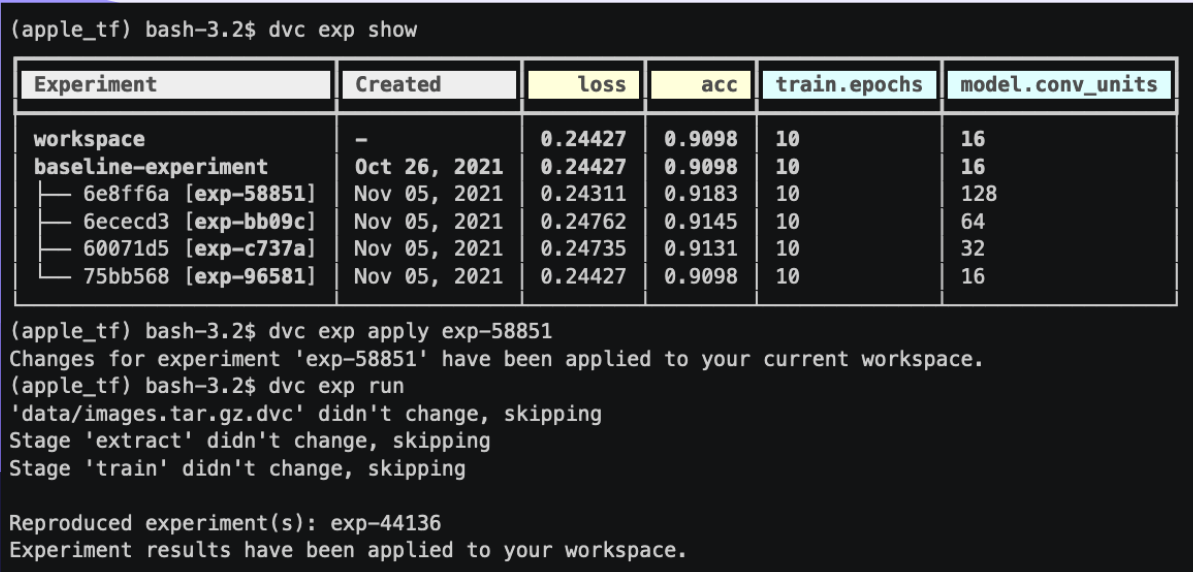
    Iterative today added an experiment versioning capability to an open source platform for managing machine learning operations (MLOps) using GitOps workflows.

    Dmitry Petrov, Iterative CEO, said the latest version of the Data Versioning Control (DVC) platform makes it simpler to save, compare and reproduce machine learning (ML) experiments at scale without requiring organizations to set up an additional repository to track them. Instead, organizations can store those experiments alongside other software artifacts in a Git repository, he said.

    As a result, IT teams will no longer need to try to keep track of experiments using spreadsheets or notebook tools such as Jupyter, he noted. Organizations that are building AI models for applications constructed using DevOps workflows will also find it easier to comply with a wide range of existing and forthcoming compliance mandates, added Petrov.

    The DVC platform makes use of a Git-like interface to enable organizations to track multiple versions of data sets, models and pipelines across an MLOps workflow. That capability is being extended to make it easier to manage the experiments data science teams create during the construction of an AI model.

    Iterative is at the forefront of an emerging debate over how best to infuse AI models into applications. Providers of platforms used by data science teams are making a case for separate repositories for tracking the artifacts used to construct an AI model. Iterative, on the other hand, is arguing for the use of an AI model build framework that uses the same Git repositories where any other type of software artifact is stored and shared. Iterative’s argument is that, in effect, AI models are just another type of software artifact, noted Petrov.

    In addition to reducing the total cost of building AI models by reducing the number of platforms required, a Git-based approach also makes it simpler for DevOps and data science teams to collaborate because the DevOps team will have more visibility into what AI models will eventually need to be incorporated into an application.

    It may be a while before the development of AI models and applications fully converges. Data science teams today typically have defined their own workflow processes using a wide range of graphical tools. However, as it becomes obvious that almost every application is going to be infused with machine learning and deep learning algorithms to some degree, the need to bridge the current divide between DevOps and data science teams will become more acute.

    In the meantime, DevOps teams should assume that many more AI models are not only on the way but that those models will need to be continuously updated. Each AI model is constructed based on a set of assumptions; however, as more data becomes available, AI models are subject to drift that results in less accuracy over time. Organizations may even determine that an entire AI model needs to be replaced because the business conditions on which assumptions were made are no longer valid. One way or another, the updating and tuning of AI models is likely to soon become just another continuous process being managed via a DevOps workflow.

  • DevSecOps for Databases: Data Masking, Cloud Backup, WAF and More

    DevSecOps for Databases: Data Masking, Cloud Backup, WAF and More

    DevSecOps is everywhere. More and more organizations realize that the traditional separation between DevOps and security is wasteful and dangerous. As a result, they are rushing to integrate security into all their software development processes. 

    Adding security to containerized applications, cloud resources and other parts of modern DevOps infrastructure is already well understood. But what about databases? Databases were always—and remain—a critical system component and a prime target for attackers. Here, I’ll review the basics of modern database security and show you how to create a continuous security process for databases in a DevSecOps organization.

    What is DevSecOps?

    DevSecOps incorporates security practices into the DevOps methodology. DevSecOps promotes a ‘security-as-code’ approach via the partnership between release engineers and security teams. Similar to DevOps, the DevSecOps approach focuses on creating innovative solutions for complex software development processes. Teams complete this within the framework of an agile approach.  

    DevSecOps aims to close the gap between security and IT teams while ensuring the speedy and safe delivery of code. Organizations replace the siloed development method with a new approach that promotes the shared responsibility of security tasks during the delivery process. 

    In DevSecOps, two supposedly opposite aims—delivery speed and secure code—are united into one effective process. 

    Database Security Basics

    The term “database security” is an umbrella term used to describe all of the tools created to develop and preserve database availability, integrity and confidentiality. A key responsibility for any DBA is to ensure that the information stored in databases is always secure.

    The goal of database security is to protect:

    • Database management systems
    • Applications that access database information
    • Datastores within databases
    • Hardware servers
    • Virtual database servers, such as cloud-based servers
    • Network access points

    It is critical to strike a balance between security and usability. While you must prioritize data security, information needs to be accessible to offer value to the organization. The more access you provide to the information retained in a database, the more vulnerable the information is. However, an overly secure database is neither practical nor functional.   

    A good way to achieve a balance between accessibility and security is to create meaningful security protocols, create tiered levels of information access and invest in a robust database security and activity monitoring tooling. 

    Common Threats and Challenges

    Here are some of the most common types of database attacks:

    • Insider threats—These involve privileged users misusing their access credentials. An insider could be a negligent employee who unwittingly exposes the database to attack, a malicious insider who abuses the database on purpose or an outside infiltrator who steals credentials to breach the database. The risk of a breach increases as more employees hold privileged access credentials.
    • Injection attacks—These involve inserting arbitrary attack strings into the database queries that HTTP headers or web applications serve. These attacks can be SQL or NoSQL. Secure coding practices and regular vulnerability tests should help protect you against injection attacks.
    • Database software vulnerability exploits—Database software providers regularly release security patches for vulnerabilities in their software. However, if you don’t apply the patches quickly, you prolong your exposure and run the risk that hackers will exploit vulnerabilities in your database. 
    • Backup attacks—If you don’t protect your backup data with sufficient controls, you expose your database to an attack on your backups. 

    The following challenges can exacerbate these threats:

    • Large volumes of data—Organizations must adequately manage increasingly large volumes of data using scalable tools and practices.
    • Sprawling infrastructure sprawl—Organizations are increasingly shifting to hybrid and multi-cloud environments, making their networks more complex and security harder to manage. 
    • Evolving regulations—With the global regulatory landscape changing and growing more complex, it is increasingly challenging to maintain compliance.
    • Skill shortage—The demand for cybersecurity personnel far outstrips supply, and this shortage is only likely to increase in the future. 

    4 Techniques for Continuous Database Security With DevSecOps

    A DevSecOps approach calls for continuous database security during all stages of database development and usage. Let’s explore a few techniques for achieving continuous security.

    Data Masking

    Data masking technology lets you create a structurally similar, anonymized version of an organization’s data. You can use this data for user training or software testing. The aim is to safeguard the real data while using a functional substitute for use cases in which the actual data is not needed.  

    In data masking, you keep the format of the data the same. You only change the values of the data. You can alter the data in various ways including character shuffling, encryption and word or character substitution. Whichever method you choose, you have to modify the value in some way that makes reverse engineering or detection impossible. 

    Use data masking when presenting data to users (whether inside or outside the organization) who don’t need to access the data as part of their role. You should apply data masking to all sensitive information before displaying it in public forums. 

    Use Web Application and Database Firewalls

    Protect your database server from security threats using a firewall that stops access to traffic as a default. The only traffic permitted should come from particular web servers or applications that require access to the information. The firewall must also prevent your database from establishing outbound connections unless they are specifically needed. 

    Protecting the database using a firewall is not enough. You should also deploy a web application firewall (WAF). That’s because SQL injection attacks, which target web applications, can be employed to delete or exfiltrate data from the database. A database firewall may not stop this from occurring if attacks are initiated from an application that is a permitted source of traffic. However, a web application firewall likely will stop attacks of this nature because it can analyze traffic at the application layer and identify malicious query patterns.

    Cloud Backup

    Database backup solutions help organizations safeguard their data with backup database copies in the event of user error, physical hardware failure, data corruption or ransomware attacks. Organizations can ensure their information is always accessible by using database backup tools, even if their central database fails or is compromised. 

    Cloud backup services allow you to send a database copy to an off-site, secondary location for safekeeping if there is a disaster or failure. A third-party service provider typically hosts the secondary data storage systems and servers. This provider bills the backup customer based on capacity used or storage space, number of users, data transmission bandwidth, number of times the information is accessed or the number of servers. 

    Using cloud data backup can help you improve data protection without overwhelming IT staff. This labor-saving advantage could be significant and may even offset some of the added costs connected with cloud backup, including data transmission costs. 

    Secure Database User Access

    You must strive to limit the number of individuals with access to the database to the extreme minimum. Administrators should only have minimal privileges—those they require to carry out their job and only when they require access. 

    For small organizations, this might be difficult to achieve because employees have multiple roles, and there may be only one or two database administrators. However, you should at least manage permissions using roles or groups rather than granting access directly.  

    If you have a large organization, you must think about automating access management via access management software. Access management software can give authorized users a provisional password with the privileges they require every time they want access to the database. This software also logs the activities conducted during that time and stops administrators from sharing their passwords. 

    It is critical to lock down any form of password sharing—this is a common practice by administrators and database users, but it makes accountability and effective database security nearly impossible. 

    In addition, you should follow standard account security procedures: 

    • Enforce the use of strong passwords
    • Store, encrypt and salt password hashes
    • Lock accounts after three or four login retries
    • Deactivate accounts when employees leave or switch to different roles

    DevSecOps and Database Security

    In this article, I explained the basics of DevSecOps and database security, covered the primary threats facing database systems in a modern IT environment and provided four ways you can implement continuous security for databases:

    • Data masking—All modern RDBMS systems offer data masking mechanisms that can reduce the impact of compromised accounts.
    • Using WAFs and database firewalls—Firewalls provide excellent runtime protection and visibility for application-layer attacks.
    • Cloud backup—Backing up databases in the cloud is a continuous process that can enhance availability and reduce the impact of ransomware attacks.
    • Secure database user access—Using least-privilege principles can dramatically reduce the threat surface of a database.

    I hope this will be useful as you extend your DevSecOps practices to critical database systems in your environment.

  • API Sprawl a Looming Threat to Digital Economy

    API Sprawl a Looming Threat to Digital Economy

    New estimates say the total number of public and private APIs in use is approaching a whopping 200 million. APIs are becoming increasingly crucial to the global digital economy. They are the backbone of many digital platforms and drive the composable enterprise model. But this ubiquity presents sprawl issues.

    F5 recently released a study that examines the conditions of the API economy at large. Authored by Rajesh Narayanan and Mike Wiley of F5, the paper, Continual API Sprawl: Challenges and Opportunities in an API Driven Economy, articulates the state of API sprawl and the conditions behind its arrival.

    According to Narayanan and Wiley, “If data is the new oil, then APIs will become the new plastic.” This looming reality will require a continuous approach to API management to avoid further polluting the digital ecosystem.

    Below, I’ll review the report’s main takeaways to see what has given rise to API sprawl and consider how IT leaders should respond.

    State of API Growth

    APIs have evolved as a standard mechanism for businesses and services to connect and share value. And, as more companies begin to rely on them, the API economy is becoming big business—83% of organizations today consider API integration a critical part of their business strategy, according to the 2020 Cloud Elements State of API Integration Report.

    There is a proliferation of API styles. Thousands of public productized APIs exist, but more private and partner APIs are in use. Technically speaking, APIs come in many different forms—they may be web-based, browser-based or embedded into devices. The report also identifies single-purpose APIs and those that aggregate multiple data providers.

    API use cases are pervasive, from hotel bookings to weather, stock tickers, transportation, IoT, DevOps workflows and many other areas. “API-powered apps have permeated every aspect of our lives,” said the report. Yet, typical market estimates are usually quite conservative when sizing up this market, said F5. According to F5’s aggressive calculations, we will be approaching 1.7 billion active APIs by 2030.

    APIs present a high value from startup use cases to enterprise applications. However, a downside is that this growth is leading to sprawl, said Narayanan and Wiley.

    API sprawl is the term used to describe both the exponentially large number of APIs being created and the physical spread of the distributed infrastructure locations where the APIs are deployed.

    Factors Driving API Sprawl

    Sheer growth. Sources predict the number of developers will grow to 45 million by 2030. SlashData also estimates that 30% of developers already use APIs. As the number of APIs on the market moves into the millions, managing growth poses a significant challenge, especially without proper governance and best practices.

    Lack of standards. “The lack of a common shared model contributes to API sprawl,” the report said. API design standards do exist, yet guidelines often leave room for nuances between services. Standards have also emerged around specific industries, like financial data exchange (FDX). While helpful for a single sector, this doesn’t advance multiple industries simultaneously. A lack of standardization leads to differing versioning approaches and integration challenges.

    New development approaches. Integration requirements are forcing many new APIs to unite disparate business apps. The microservices architecture trend is also adding to sprawl, as “APIs are both northbound to interfaces via microservices and horizontally between microservices.”

    Continuous software development. Continuous development, paired with the need to connect business units with bespoke requirements, could produce multiple versions of the same API. This quickly leads to maintenance difficulties, out-of-date documentation and broken clients. The report also cites rising data creation and “everything-as-a-service” trends as harbingers of an API sprawl.

    Various computing evolutions. New computing trends are also prompting a sprawl, says the report. Business units may be operating on different on-premises or cloud environments. When this hybrid situation occurs, APIs could get dispersed over many locations and become difficult to track. Specific connections may be created to cater to new environments like edge computing and IoT devices, further increasing sprawl.

    Problems With API Sprawl

    A digital economy reliant on APIs also relies on the underlying stability and availability of these services. Yet, “APIs have a shelf life and become unsupported if ignored by the developers,” the paper acknowledged. It could be hard to maintain service reliability for APIs sprawled across a distributed cloud. In addition to reliability issues, there are many other possible repercussions of an API sprawl.

    For one, management and operation at scale become difficult. Not all APIs are based on a specification, like OpenAPI. This means that API documentation may not be as streamlined and accessible, thus hurting discoverability and onboarding. “A simple means to connect these APIs may not be possible with conventional or legacy networking approaches,” the report added.

    As developers are top consumers of APIs, a sprawl could negatively impact their integration experience. Maintaining a swelling library of API dependencies can be cumbersome. Plus, APIs are prone to evolve and version over time and when endpoints are altered without advance notice, it leads to broken clients. Even small changes in API functionality can have a huge impact since all observable API behaviors will become relied upon, whether documented or not. (This is known as Hyrum’s Law).

    But the security ramifications of API sprawl are perhaps the most troubling. A whopping 91% of enterprises experienced an API security incident in 2020. Malicious API traffic also rose by a staggering 300% in mid-2021, Salt Labs found. Increased API use will undoubtedly cause more frequent attacks.

    “Unmanaged API sprawl is a security breach waiting to happen,” said the report. APIs typically adopt API keys for authentication and authorization, but this method is prone to misuse. Credentials are often exposed or misconfigured. Bad actors can use APIs to steal loads of data and computing power. As a result, sprawl is undermining trust in API connections and responses.

    Mitigating The Sprawl

    With the growth of the API economy slated to reach the billion mark in the next ten years, figuring out secure, stable inter-cluster communication will become more critical. According to F5, existing solutions (gateways, ingress controllers, service mesh and forward and reverse proxies) are not an adequate response.

    “We believe the solution should hence involve an intermediary (proxy) device focused on solving inter-cluster connectivity, security and integration challenges.” The writers call this solution API Gateway 2.0, which they describe as a bi-directional application-level proxy. The technology exists to implement such middleware and perhaps it could help companies address sprawl issues.

    Outside of Narayanan’s and Wiley’s recommendations, there are plenty of actions API owners can take to avoid adding to the sprawl. Here are a few:

    • Treat the API as a product
    • Improve developer experience
    • Use spec-driven development
    • Ensure up-to-date documentation and code libraries
    • Use consistent endpoint naming
    • Set clear guidelines for versioning and deprecation
    • Go beyond API keys with OAuth and OpenID Connect

    For more context, check out Continual API Sprawl: Challenges and Opportunities in an API Driven Economy for free without an email gate here.

  • 22 Engineering Leaders Weigh in on APIs

    22 Engineering Leaders Weigh in on APIs

    Every business today is a digital business … and if it’s not, it will be soon.

    A recent survey by Deloitte found that digitally mature companies are better able to navigate rapid change and, as a result, perform much better financially.  Nearly two-thirds of survey respondents asserted that organizations that don’t digitize in the next five years will be “doomed.”

    Application programming interfaces (APIs) are the cornerstone of these digital transformation efforts. APIs aren’t just technical conduits that let applications communicate with each other. In a software-driven world, they allow developers to build services more quickly, enable innovation, open up new markets and drive competitive advantage.

    A new State of the API report from Postman, which surveyed 28,000 developers and other tech pros, offers a vivid snapshot of APIs’ central role in modern organizations. It showed that API-fueled innovation has helped companies respond to the pandemic; that the global API ecosystem is growing; that developers are spending more time than ever with APIs and that almost everyone believes investment of time and resources into APIs will increase or stay the same in their organizations for the next 12 months.

    To learn more about APIs’ status in the enterprise, I’ve spent part of 2021 interviewing 22 engineering leaders from various companies for my podcast, Breaking Changes. I wanted to dive deeper into how and why these leaders view APIs as critical to business strategy and hear what lessons they’d share with others.

    Here, in 20 bite-sized chunks, are the recurring themes:

    Business. The greatest value generated from API operations is rarely directly from any single API, but around the partner enablement APIs make possible. Over and over, companies see that building an API ecosystem helps extend their business’s reach and deepens the connection with partners and customers.

    Strategy. Without proper planning, an organization will always be stuck in reactive mode when it comes to the applications that API operations are powering. It’s much better to have a comprehensive API strategy.

    Third-party relationships. Reliance on third-party systems—the vast supply chain of partners and vendors that organizations share data with via cloud-based technology—is exponentially increasing, pushing organizations to develop a more formal and external API strategy.

    Resources. The resources surrounding API operations need to speak to developers, support them and help make their lives easier as they work with a company’s APIs.

    Governance. It’s important to be cautious in automating governance at the pipeline level before developing relationships across teams and a centralized API governance approach is vital, too. API governance is the practice of applying common rules and security policies for APIs. 

    Management. The management of APIs is a continuous journey and not a destination, requiring a significant amount of planning and attention to reach desired objectives.

    Global. We are all increasingly reaching a global audience with APIs, and every organization’s message and resources need to reflect the increasingly diverse audience.

    Multi-Protocol. The future of APIs is multi-protocol, requiring a diverse toolbox of API protocols and patterns to properly grow ecosystems over the next decade.

    Enablement. Companies need to be enabling their API development teams, not governing them; making sure they have what they need to do APIs well while also failing safely.

    Regulations. API regulations are here and are pushing mainstream enterprises to become technology companies, requiring that they have an API strategy for the future.

    Mobile. The world reached a milestone in 2019: There are now more cellphones than people. APIs are how digital resources are made available on these devices in both leading and emerging markets.

    Opinionated. Informed and opinionated approaches to the API life cycle will make a bigger impact than any single technology used in the infrastructure stack.

    Intelligence. There is a massive opportunity in deriving intelligence in aggregate across the millions of API requests we make each day across core business applications.

    Quality. Organizations should prioritize not just testing APIs but testing the API tests themselves. This ensures a level of quality and reliability across all APIs, regardless of the team working with them.

    Education. Ensuring that teams have the proper ongoing training and education around the API life cycle must be a top-line priority across API operations.

    Authentication. The authentication layer of the API infrastructure holds a wealth of intelligence. Having humans study this dimension is critical for security.

    Data. Challenges and opportunities at the API data layer are massive, and machine learning is giving teams an exoskeleton to support failing and iterating faster during development.

    Privacy. Ensuring that privacy is a basic building block of the API life cycle helps developers focus on what they do best, resulting in higher-quality applications that also respect privacy.

    Observability. API analytics have matured in the last few years; becoming much more about observability across the API infrastructure and helping organizations see and respond to what matters.

    Open Source. Open-source technology is an essential part of growing and supporting an API ecosystem, providing both the technical and human nutrients needed to be healthy.

    By keeping these 20 points in mind, organizations can maximize APIs’ role as an extremely powerful mechanism for leveraging data and application functionality for business success. APIs will underpin digital transformation for many years to come, so it’s important to cover all the bases.

  • Sumo Logic Extends Observability Reach to AWS Lambda

    Sumo Logic Extends Observability Reach to AWS Lambda

    At the AWS re:Invent conference this week, Sumo Logic announced that in addition to collecting log data, metrics and traces, it now can collect telemetry data from the Lambda serverless computing service provided by Amazon Web Services (AWS).

    In addition to collecting telemetry data, Sumo Logic also revealed that the Sumo Logic Continuous Intelligence Platform hosted on the AWS cloud can now analyze how functions used on the AWS Lambda service perform during transactions.

    That data can then also be correlated against the performance of other AWS services that Sumo Logic tracks via integrations with the AWS CloudWatch and AWS CloudTrail monitoring services.

    George Gerchow, chief security officer for Sumo Logic, said the company is making extensive use of the OpenTelemetry agent software created under the auspices of the Cloud Native Computing Foundation (CNCF) to make it simpler to instrument IT environments. That data is not only being used to improve application performance but also to surface anomalies indicative of a security breach, he added.

    As part of this ongoing security effort, Sumo Logic this week also added Sumo Logic AWS Quick Start integrations for rapid access to security and compliance insights along with support for Amazon Inspector, a vulnerability management service provided by AWS.

    AWS this week named Sumo Logic as its independent software vendor (ISV) partner of the year. The two companies have a longstanding relationship that began with Sumo Logic’s decision more than 10 years ago to build a monitoring platform hosted on the AWS cloud.

    As IT monitoring tools continue to evolve into observability platforms, Gerchow said it’s becoming much easier to leverage machine learning algorithms and open source agent software to identify the root cause of an issue before it results in a major disruption.

    Most IT teams today are still relying on legacy monitoring tools that only tack a set of predefined metrics to identify when a specific platform or application is performing within expectations. The metrics tracked generally focus on, for example, resource utilization. In contrast, observability combines metrics, logs and traces—a specialized form of logging—to instrument applications in a way that makes it simpler to troubleshoot issues.

    Observability, of course, in one form or another, has always been a core tenet of DevOps best practices. Initially, DevOps teams focused on continuous monitoring as the most effective way to proactively manage application environments. However, it can still take days (and sometimes weeks) to discover the root cause of an issue. Observability platforms promise to make it easier to manage IT environments even as the overall complexity of those environments continues to increase.

    It’s not clear at what rate IT organizations will be transitioning to observability platforms. However, it generally takes only one major outage before IT organizations start looking for better tools to manage their IT environment. As those IT environments become more complex, the probability that there will be a significant disruption is now higher than it’s ever been. The challenge and the opportunity is to find a way to instrument applications more widely; the expectation being that an observability platform will be able to analyze telemetry data to reduce the number of issues that lead to service disruptions.

  • AWS Unfurls Bevy of Automation Tools to Streamline DevOps

    AWS Unfurls Bevy of Automation Tools to Streamline DevOps

    At the AWS re:Invent conference, Amazon Web Services (AWS) added a bevy of tools to its portfolio intended to accelerate the pace of application development while simultaneously simplifying DevOps processes.

    AWS development tools unveiled this week include AWS Amplify Studio, a visual development environment that allows developers to create web application user interfaces (UIs) with minimal coding.

    Ken Exner, head of product for developer tools at AWS, said as an extension of an existing AWS Amplify Studio tool, this latest addition allows developers to customize application UIs at a higher level of abstraction using a library of components while enabling them to drop down to a lower level of coding to customize their application further whenever required. After the UI is designed, AWS Amplify Studio automatically generates the associated JavaScript or TypeScript code for the developer.

    In general, AWS is committed to improving developer productivity by providing, for example, automated reasoning tools that automate processes without locking devs into a layer of abstraction that, ultimately, may create a wall that blocks them from meeting customization requirements, he said.

    Other developer tools launched by AWS this week include updates to Amazon CodeGuru Reviewer that adds a secrets detector that uses machine learning algorithms to identify hardcoded secrets that can be secured using AWS Secrets Manager; a revamped Amazon Inspector vulnerability management tool that provides automated assessment scans, automated resource discovery, support for container-based workloads, improved risk scoring, integration with Amazon EventBridge and AWS Security Hub and the removal of the stand-alone Amazon Inspector scanning agent.

    AWS also revealed it has eliminated the need to manually pull images from the Amazon Elastic Container Registry (ECR) repositories by adding automated synchronization capabilities that keep private and public registries consistent with each other.

    In terms of IT operations tools, AWS added a managed database service to its Amazon Relational Database Service portfolio that allows IT teams to customize the underlying database and operating system using an RDS Custom option, a new table class for Amazon DynamoDB designed to reduce storage costs for infrequently accessed data and a service for RDS, dubbed Amazon DevOps Guru, that extends existing machine learning capabilities to automatically detect and diagnose performance bottlenecks and operational database issues.

    Jeff Carter, vice president for relational databases at AWS, said that as databases are increasingly managed by DevOps teams rather than traditional database administrators (DBAs), the cloud service provider is moving to reduce friction by automating as many manual tasks as possible. That’s critical at a time when IT teams are deploying a much wider range of purpose-built databases that are optimized for different classes of applications, he added. The overall goal is to rely more on automation to reduce friction across the IT environment, said Carter.

    Overall, there are two classes of AWS customers: The first are development teams that are increasingly relying on managed services provided by AWS to automate a wide range of DevOps processes. The second tend to be enterprise IT organizations that prefer to manage cloud services themselves.

    Mitch Ashley, a principal for Techstrong Research, an arm of the parent company of DevOps.com, noted that, in many cases, enterprise IT teams are managing DevOps workflows that span multiple clouds. As such, they tend to prefer tools and platforms that can be applied to both multiple clouds and on-premises IT environments. The more those organizations rely on managed services provided by a cloud service provider the more difficult it becomes to consistently manage DevOps workflows across multiple IT environments.

    It’s too early to say just how much IT organizations will rely on managed services going forward. However, at a time when more organizations are using more IT platforms than ever, it’s clear the DevOps management challenge increases with each new platform introduced into the IT environment.

  • Is TypeScript the New JavaScript?

    Is TypeScript the New JavaScript?

    While JavaScript is frequently the language of choice for all sizes of frontend and backend applications, it’s not the only option; nor is it necessarily the most efficient or cost-effective. Increasingly, TypeScript is becoming the go-to language for app development—particularly for larger apps. The time- and cost-saving benefits are significant enough that some organizations are even taking projects initially started in JavaScript and migrating them to TypeScript. 

    What is TypeScript?

    While the number of programs written in JavaScript has grown exponentially, the programming language’s ability to express the relationships between different units of code and mitigate coding errors early on hasn’t kept pace. Along with JavaScript’s inconsistent semantics, this makes JavaScript-driven app development difficult to manage at scale.

    Released in 2012, TypeScript was created to address JavaScript’s deficiencies in developing large-scale apps. It’s an open source, strongly typed programming language that builds on JavaScript by adding optional static typing. Types enable structuring and validating code before it’s executed, which is beneficial when developing large apps. They also provide additional information about code, which serves as better documentation for other developers and facilitates collaboration.

    TypeScript is a superset of JavaScript, which means any JS code is also valid TS code—provided the TS configuration is set to be compatible with it. It outputs code in pure JavaScript and allows developers to liberally use JS libraries, tools and frameworks. It runs on Node.js or any browser that supports ECMAScript 3 or higher. It also supports object-oriented programming features. 

    JavaScript Drawbacks

    JavaScript is one of the world’s most popular programming languages and works extremely well for small projects. However, its disadvantages—many of which affect project costs and code delivery time—make a strong case for considering alternatives such as TypeScript, particularly for larger projects.

    Most of these drawbacks have to do with the lack of types and compile-time error checks, making JavaScript less than desirable for server-side code in enterprises and large codebases. The following are just a few of its disadvantages:

    • JavaScript employs dynamic typing, which means scripts can compile even if they contain errors that can prevent them from properly running.
    • Because JavaScript is dynamically typed, it allows one variable to have multiple properties assigned to it. It doesn’t instantly let developers know what a variable can contain. That makes it easy to assign the wrong properties.
    • Since JavaScript is an interpreted language, errors can only be found during runtime. Code needs to run before being tested and validated, so it can take considerable time to find bugs and errors in JavaScript code.
    • To eliminate inaccuracies, it’s necessary to manually verify types and the syntactic correctness of the code. This lengthens development time and extends the delivery cycle to production, increasing development costs.
    • JavaScript code is executed on the client side so it’s viewable to the user. As a result, bugs and oversights have the potential to be exploited for malicious purposes. 
    • Lengthy onboarding of new developers can result because developers must figure out the properties of the structures they’re working with, as well as the data types. While JSDoc can be used for documenting code and annotating types, there’s still the need to synchronize the actual code and documentation. The lack of synchronization, in turn, can mislead developers and complicate the introduction of new, business-requested features.
    • JavaScript is prototype-based, not class-based. It’s not considered a pure object-oriented programming language, although it can follow some object-oriented programming principles.

    The TypeScript Advantage

    TypeScript is a superset of JavaScript. If a developer knows JavaScript, there’s not much of a learning curve to take advantage of the features TypeScript offers that make up for many of JavaScript’s deficiencies—and it can offer additional benefits.

    For example, with JavaScript, variables can start as one property, and then change into an object or a string. These inconsistencies can generate problems that are difficult to resolve in large apps. TypeScript, on the other hand, analyzes the code and tries to determine proper variable types prior to runtime. Once a variable type is assigned, it stays unchanged. TypeScript’s compiler also helps shorten the QA and testing process in later stages of development.

    TypeScript also helps developers quickly figure out the purpose of a variable within the code. It can also suggest available properties in functions, classes or components. Being able to quickly look up a variable is important because it reduces the likelihood of calling the wrong function or accidentally skipping a variable declaration. Any reduction in bugs and errors reduces the time required for fixing those issues and, therefore, reduces overall development time. That gives developers more time to work on app logic and fix errors that can be detrimental to in-app performance and usability. According to a postmortem analysis by Airbnb, 38% of bugs they encountered were preventable with TypeScript after the company adopted it throughout the organization. 

    As a static language, TypeScript performs type checks upon compilation, flagging type errors and helping developers spot mistakes early on in development. Reducing errors when working with large codebases can save hours of development time.

    Clear and readable code is easy to maintain, even for newly onboarded developers. Because TypeScript calls for assigning types, the code instantly becomes easier to work with and understand. In essence, TypeScript code is self-documenting, allowing distributed teams to work much more efficiently. Teams (and individual developers) don’t have to spend inordinate amounts of time familiarizing themselves with a project.

    TypeScript’s integration with editors also makes it much easier to validate the code thanks to context-aware suggestions. TypeScript can determine what methods and properties can be assigned to specific objects, and these suggestions tend to increase developer productivity.

    TypeScript is widely used to automate the deployment of infrastructure and CI/CD pipelines for backend and web applications. Moreover, the client part (for example, when using Angular) and the backend can be written in the same language—TypeScript. This flexibility allows an engineer who knows one programming language to cover all parts of the system.

    Because TypeScript essentially transpiles to JavaScript, migrating existing code to TypeScript is easy and fast. It can typically be accomplished simply by running the compiler and adding typing where it’s not recognized by the language. There’s no need to make changes to the code.

    The benefits of TypeScript have been noticed by developers. TypeScript was used by 78% of the 2020 State of JS respondents, with 93% saying they would use it again. TypeScript continues to grow in popularity. It was voted the second most-loved programming language in the Stack Overflow 2020 Developer survey. 

    TypeScript & AWS: Better Together 

    There’s another compelling reason to consider TypeScript for large-scale app development projects. It’s fully supported by AWS, the leading cloud platform for modern app design and development as noted in Gartner’s Magic Quadrant for Cloud Infrastructure and Platform Services.

    The following services and tools have seamless integration out-of-the-box with TypeScript, enabling you to use this language for a vast number of tasks:

    • AWS CDK provides infrastructure-as-code (IaC) to automatically deploy the entire infrastructure in one click. You can also automate the creation of CI/CD pipelines for the future launch of specific jobs on demand.
    • AWS Lambda allows you to run computation tasks in serverless mode using automatic scaling and an efficient pricing scheme.
    • Amazon EC2, ECS and EKS can cover any of your tasks and provide a wide range of solutions for running apps written in TypeScript—from bare metal servers to complex clusters of hundreds of Docker containers.

    Optimize Your Application Development Projects

    All decisions made during an application development project can impact overall costs and time to market. That includes going with the right programming language and using the most appropriate cloud platform and resources. 

    When approaching an app dev project, a one-size-fits-all approach rarely works. Take the time to define your needs and priorities and select the best resources to deliver the best results.

  • Why Trust and Integrity Are Critical to IoT

    Why Trust and Integrity Are Critical to IoT

    We hear a lot about how the IoT is transforming people’s work and daily lives, but for me, its impact goes deeper. As a Type I diabetic, I depend on data from an IoT device to stay healthy. If I can’t trust my latest blood sugar reading, the results can be catastrophic. Health care use cases like mine represent some of the many examples that underscore the importance of data integrity. Stacey Higgenbotham expressed it perfectly in a recent post: “If a business or consumers can’t trust the data, the IoT fails.”

    The IoT is all about making better, more informed decisions, and data is the foundation that makes those decisions possible. As the IoT gains maturity, we’re seeing its impact across more and more industries and use cases. 

    In agriculture, smart sensors are in widespread use for real-time crop monitoring to help farmers track the state of their products. Tools like motion detectors, light detectors and moisture sensors can be brought together to support predictive analysis and enable smarter, more automated decisions. IoT sensors are also tracking the location and health of livestock to help farmers detect disease outbreaks and isolate animals if needed. 

    Most of us have seen how the IoT has revolutionized the safety and efficiency of the home, providing unprecedented control over appliances, heating and cooling systems, smart metering and lighting. Security cameras, alarm systems and smart locks are strengthening physical security and bringing residents peace of mind. As these smart home systems mature, they are also becoming increasingly integrated, personalized and automated.

    The global pandemic is also helping shape IoT adoption. Forrester predicts that manufacturers, pharmaceutical firms and utilities are increasingly switching to remote experts and technicians for support. To manage and repair their assets without extended downtime and costly travel, these industries have begun connecting previously disconnected machines.

    What do these diverse use cases have in common? Without trusted data from connected sensors and devices, all of them become vulnerable and the decisions they support become questionable. Inaccurate moisture data from a sensor could cause a farmer’s crops to fail. A compromised smart lock could leave a home vulnerable to theft. In a manufacturing environment, inaccurate telemetry from a connected machine could lead to factory floor shutdowns or damaged assets. The positive business outcomes enabled by the IoT all hinge on working with accurate, timely and trusted data.

    Signing Is Key to Strengthening IoT Data Integrity

    Establishing data trust should be top of mind for IoT device manufacturers, and it is imperative that they take steps to ensure that data is not being manipulated in transit or at rest. This protection applies not only to data packets exchanged by the devices and applications but firmware updates and supply chain processes.

    The recent executive order signed by president Biden underscores the need for measures like code signing. Focused on improving the nation’s cybersecurity, the EO presented guidelines and general best practices for federal departments, agencies and contractors. However, its impact is also likely to extend to technology and infrastructure companies. 

    Some of the strongest direction in the EO is intended to improve the security of software as well as supply chains for technology manufacturers. The order establishes baseline security standards for the development of software sold to the government, including requirements for improved visibility into that software and making security data publicly available. The order acknowledges that too many devices and software releases contain vulnerabilities that bad actors could exploit. 

    Effective Code Signing Requires Strong Management 

    Fortunately, a proven solution is available today to help manufacturers ensure data authenticity, confidentiality and trust for their IoT solutions. Best practices like code signing can help manufacturers bake security into each and every stage of their development processes. By applying digital signatures, organizations can assume full control of their development. They can confirm the integrity of their code before it moves further along in the development cycle and is put out in the field for devices and their customers. 

    Code signing is only as effective as the processes and best practices that support its implementation. To make the most of digital signatures, developers and engineers need a holistic approach to management. The signing process should be seamlessly built into their development processes to simplify and ease adoption. 

    A common management platform should enable manufacturers to fully protect private key usage and signatures, as well as monitor and manage access to digital keys. The process should also enable organizations to support granular monitoring of their code signing processes and include historical tools like reporting and auditing for full accountability and compliance. With a process in place to continually sign firmware, software updates and other components that can ensure data integrity in device interactions, manufacturers can be assured that their IoT solutions will work as intended, using data their end customers can trust. 

    There’s no question that as the IoT continues to extend deeper into our business and personal lives, the importance of data integrity is also rising. The stakes will only increase as more systems, processes and life-or-death decisions rely on trusted IoT data. To sustain the soaring growth of IoT use cases and solutions, it’s up to manufacturers to build security into the supply chain. With a strong data foundation underpinning today’s rapid innovation, the potential of the IoT revolution is limitless.

  • AWS re:Invent Roundup: Private 5G | Graviton3 ARM Chips | DevOps Guru++

    AWS re:Invent Roundup: Private 5G | Graviton3 ARM Chips | DevOps Guru++

    Welcome to The Long View—where we peruse the news of the week and strip it to the essentials. Let’s work out what really matters.

    This week: Three things that caught my eye from Amazon Web Services’ re:Invent 2021 conference: Private 5G, Graviton3 chips, and something called DevOps Guru for RDS (yes, really).

    Private NRaaS vs. Wi-Fi

    First up this week: AWS Private 5G is a new turnkey service, offering local private cellular data infrastructure, for places where Wi-Fi just doesn’t cut it. Despite the name, it offers a 4G/LTE fallback to 5G/NR. Because it’s AWS, the hardware is free—you just pay for usage.

    Analysis: Combine with an Outpost for a sharper edge

    Wi-Fi is unreliable and low powered. 5G over the 3.5 GHz “citizens’ band” seems like a great alternative (just don’t tell the lunatic fringe of the anti-5G brigade).

    And, of course, AWS makes it easy to buy—Amazon ships you all the private radio gubbins for “free” and just bills you based on capacity and usage. It’s automatically configured and remotely maintained. You just take your internet connection and plug it in.

    Aisha Malik: Amazon launches preview of new AWS Private 5G managed service

    “AWS Private 5G” … is a new service that aims to make it easy to deploy and manage your own private network. … AWS CEO Adam Selipsky said that with AWS Private 5G, you can set up and scale a private mobile network in days instead of months.
    …
    There are no upfront fees or per-device costs: … Customers pay only for the network capacity and throughput they request. [It] scales capacity on-demand.
    …
    AWS Private 5G is available in preview in the United States.


    And this is better than Wi-Fi how, exactly? Ballu counts the ways:

    Industrial area coverage: Where you need 50 Wi-Fi radio units, you can provide service with 3–4 p4G/p5G radios.
    …
    Hazardous areas: Where you can’t provide the networking at all the corners or areas, one p5G radio blast area (esp with beam technology) can.
    …
    Packet loss: Less packet loss compared to Wi-Fi (believe me, it’s a big deal in the Industrial world)
    …
    Compatibility: What’s a negative for 5G modems (not many devices are available), is positive to some extent. Once investment is made with 5G modems, the devices can be on the road too.


    Unsurprisingly, Brian Roemmele feels vindicated:

    Precisely as I wrote about in 2017 to great ridicule from an analyst at a famous VC firm: Amazon is becoming a phone company.
    …
    From the Sidewalk Network to the Kuiper satellite system to local 5G. The network is no longer just “dumb pipes.”


    Graviton3: AWS ARM SoC is PDQ

    Graviton3 is the latest version of Amazon’s ARM server chip. It looks like it’s based on a 5nm process implementing the latest ARMv9 ISA. AWS is making the usual claims about it being much faster than the previous generation, but it also has new security features.

    Analysis: Cool chips

    AWS is deadly serious about low-power, high-performance compute. Amazon is just one licensee that would be distressed to have Nvidia owning Arm.

    As I said last week—and the week before that—ARM chips are an increasing fixture in the datacenter, especially ones that value “performance per Watt.” Other IaaS providers might bleat about how they’re reducing the energy used to cool their data centers, but surely it’s a better plan to start with less waste heat.

    Maria Deutscher: AWS debuts new compute-intensive and AI instances powered by custom chips

    AWS’ new Amazon EC2 C7g instances target compute-intensive workloads such as analytics tools and scientific modeling software. The C7g series is based on the AWS Graviton3 chip, the third iteration of the cloud giant’s internally-designed processor.
    …
    Companies that plan to use C7g instances for machine learning workloads can expect an up to threefold performance jump in AI performance. The speed jump is partly the result of the processor’s support for bfloat16, a specialized data format [that] enables applications to process floating point numbers faster and using less memory than FP32, the data format historically used for the task.
    …
    For cryptographic tasks, Graviton3 delivers as much as double the performance of the Graviton2. … The chip introduces a feature called pointer authentication to reduce the risk of cyberattacks.


    Tim Anderson has been sifting through the re:Invent announcements:

    Top of the list perhaps is Graviton3, the next generation of AWS’s homemade [ARM] server processors. These chips will be used in new C7g instances previewed offering DDR5 memory (50 percent more bandwidth than DDR4) and up to 25 per cent better compute performance compared to instances powered by Graviton2.
    …
    Adam Selipsky gave his first Re:Invent keynote as AWS CEO. [He] said Graviton uses “up to 60 per cent less energy.” … Graviton matters because it is among those leading a charge to get more [ARM] microprocessors into data center and cloud infrastructure, and because if it’s more energy and cost efficient to operate, it’s critical to Amazon’s bottom line, sorry, today’s environmental concerns.


    And is that pointer-authentication feature useful? Yes, very, says spijdar:

    Very useful. … If the performance is good, this is a nice extra layer that makes return-oriented programming more difficult. Combined with NX bits, it really raises the difficulty in developing/using many types of exploits (it’s not impossible to bypass … but there’s no perfect security).


    DevOps Guru Adds RDS Support

    DevOps Guru for RDS is the latest upgrade for AWS’s oddly-named smart monitoring features.

    Analysis: Silly name; useful tool

    Laplace and Gauss were right: Your DevOps team aren’t all rockstars. “Average” ops staff are in the majority. So extending AWS’s monitoring automation to your database instances should be a positive step.

    But that branding: Can anyone take it seriously?

    Stephanie Condon: AWS brings more automation to database management

    The new Amazon DevOps Guru for RDS automatically can find and fix database issues … helping developers using Aurora detect, diagnose and resolve database performance issues. [It] can help remediate a range of issues, such as over-utilization of host resources, database bottlenecks, or misbehavior of SQL queries.
    …
    Last year, AWS introduced DevOps Guru, a service that uses machine learning to automatically detect and alert customers of application issues. … Amazon DevOps Guru for RDS builds on that
    …
    Users can view [issues] in the DevOps Guru console or via notifications from Amazon EventBridge or Amazon Simple Notification Service (SNS).


    Sounds interesting, says u/random_dent:

    I thought the DevOps Guru for RDS sounded interesting. You need to enable performance metrics first, which have their own charges, but it still looks not too expensive, plus three months free-tier, so we may try it out.

    We’ve had some odd issues with RDS performance that are too inconsistent to lock down. It would be interesting to see if this could give us some insight.


    But that name! Here’s Thomas LaRock—@SQLRockstar:

    I’m old enough to remember when DevOps Guru for RDS was just called “database performance monitoring.”


    And @shmick is young enough to say it like this:

    such a cringe name


    The Moral of the Story: Misfortune tests the sincerity of friends


    You have been reading The Long View by Richi Jennings. You can contact him at @RiCHi or tlv@richi.uk.

    Image: Andrew Svk (via Unsplash)

  • Why Do You Need GitHub Backup?

    Why Do You Need GitHub Backup?

    You’ve probably heard the joke that there are two types of people in IT: Those who do backups and those who will start. Though it’s still valid, this joke has become less relevant to businesses and professionals. The IT industry has been increasing expenditures on security for years, and backup is a critical area. However, despite the growing awareness of the need for backups and the wide availability of modern backup solutions, the problem still exists. The number of security breaches is growing, and the topic of data security looks like an endless arms race. So what can organizations do?

    First, let’s analyze some data and trends. Year over year, the number of cyberattacks, especially ransomware, is increasing. The year 2020 saw attacks intensifying due to the pandemic and the sudden shift to remote work, for which, unfortunately, not everyone was prepared. Once organizations got better at enabling effective work-from-home models, the hope was that everything could settle into a new normal. Unfortunately, the new norm became these increased attacks.

    It’s a bit like the metaphysical yin and yang—two opposing but complementary forces. One drives the other. Suffice it to say that the estimated cost of the global damage caused by ransomware in 2021 is as high as $20B! And a ransomware attack occurs, on average, every 11 seconds around the world.

    According to an Identity Theft Resource Center (ITRC) report, by the end of September 2021, there were more incidents of this type than during all of 2020. The authors of the report emphasized that they found 26 cases where cloud databases were unsecured. As a result, hackers were able to access confidential data belonging to 99 million people.

    Git Threats: Are my Bitbucket/GitLab/GitHub Repositories Secure? 

    Back in May 2019, ransomware attacks impacted hundreds of repositories on GitHub, GitLab and Bitbucket. The attack wiped away all the data and left only one piece of information: The amount of ransom demanded and a method of payment. Eventually, most of the data was recovered but the cost and the amount of time spent recovering from the attack was enormous.

    According to the Cisco Benchmark Study, approximately 40% of companies experienced downtime longer than eight hours due to a major failure. And 39% reported that at least half of their systems had been affected by a serious breach. According to IBM, the total average cost of a data protection breach on a global basis is as much as $3.86M, and the highest ransom demanded by cybercriminals in 2020 was $15 million. These numbers are scary. On the other hand, in most cases of successful ransomware attacks, the ransom is ultimately not paid; even if organizations do not pay the ransom, the mere fact that they fell victim and experienced failure or downtime can be very expensive.

    GitHub as Backup Tool

    GitHub provides many useful security tools. However, we must be aware of two things: What does GitHub backup really mean and what are its features? And what responsibility do cloud services providers have versus users’ responsibility for security? Let’s start with the latter.

    Most cloud service providers (including Amazon, Microsoft, Google, IBM, Salesforce, GitHub or Atlassian) operate on the basis of the so-called shared responsibility model. Users of cloud services most often assume that providers are fully responsible for their protection. However, providers are primarily responsible only for ensuring the security and availability of infrastructure, software and access, period. Users are responsible for the security of the business data stored as part of these services. So users themselves have to take care of backup and disaster recovery plans and solutions. In short: Providers are responsible for the security of the cloud itself and users are responsible for data security in the cloud. And at this point, it is worth pointing out that, according to data from the UK’s CybSafe, in 2019, 90% of data breaches were caused by user error.

    It can happen to any of us—a ransomware attack, phishing, loss of access to a GitHub account or an entire computer or simply overwriting another developer’s work in a repository. It affects both individual users and large corporations. In July of 2019, Ubuntu Security reported that the credentials for a company-owned GitHub account were compromised. Hackers used these compromised credentials to create repositories, issues, pull requests, etc. The attack did not cause a major crash, but repairing the damage took some work and restoring some repositories or issue trackers to the previous state was difficult.

    There are some common features any good backup should have:

    • Automation (i.e. daily backups)
    • AES encryption with its own encryption key
    • Versioning
    • Long-term data retention
    • Disaster recovery process
    • Easy monitoring (audit logs, email notifications)
    • Central management
    • Multi-tenancy (to manage admins, privileges and roles)
    • Scalability

    Based on these criteria, GitHub (and other similar hosting services) cannot be considered a proper backup tool. GitHub is a great open source project, but its purpose is completely different.

    How to Back Up Manually

    Since the cloud service itself is not enough, how can you take care of GitHub backup? Well, you could do it on your own. And often, especially in small businesses, this is the preferred method. It may seem like a good idea at first. Knowing Git well, we can create appropriate scripts that create backups for us that give us full control over what is happening without having to pay anyone for it. But this is very risk and not profitable in the long run. Disk space costs money; our employees’ time to create scripts and perform the backup is another cost. And the most important thing, in this case, is that these scripts must be maintained and updated all the time, so they constantly generate additional costs. Any change in such a script may cause an error and, as a result, deprive an organization of a working backup. Of course you could also create an appropriate mechanism to test it, but that’s an additional cost. Manual GitHub backups do not end with writing a single script.

    I’ve experienced this myself. In one project, backups were generated using such a script and then kept on our own servers. It was cheaper this way. But we did not have any validation of the created backup. One day, while updating the backup scripts, we did a manual test and it turned out that we had a serious problem—the backup was created correctly but its name did not change, so we kept overwriting the same archive constantly! The effect? It turned out that we didn’t have any copies older than one month! Luckily for us, they weren’t needed because the systems and databases were working properly at that time and there weren’t any incidents, but it makes me cringe just thinking about “What if …?”

    All in all, manually writing backup scripts is not a very good idea for many reasons. The low cost of this solution is only theoretical; with time, the cost of maintaining this mechanism increases and, in practice, often only one or two people are responsible for it, which creates additional risk. Okay, you might have more control, but overall you are wasting time and money. The backup itself is also not enough, because you need a proper restoration solution for systems or data in the event of an incident. There’s also the question of how to create a backup of the script that creates the backup? Are you sure you cannot make better use of your employees’ working time?

    How Much Does it Cost?

    It is difficult to accurately measure this; it all depends on the level of complexity of systems, the number of repositories, the skills of your team, etc. However, you can estimate how much the lack of access to services or programmers’ downtime will cost. You can also calculate the development and maintenance costs of writing, testing, maintaining and updating your own backup scripts. The history of GitHub attacks and crashes shows that the data is usually recoverable, which is good news. On the other hand, the time when services are unavailable or when teams are unable to work can be very costly.

    Third-Party GitHub Backup Tools

    Another solution—and, in my opinion, a better one—is to use third-party backup software.

    In fact, in the GitHub documentation, it is recommended:

     “Backing up a repository: You can use the API or a third-party tool to back up your repository.”

    If you can use the GitHub API, why do you need a third-party GitHub backup tool? Well, first of all, such applications are created by experts in a given field who have knowledge, experience and stay up-to-date on the current security trends. Second, these solutions are ready and available right away; you don’t have to spend time and money reinventing the wheel. Yes, there is a cost, but in the long run (taking into account the factors described earlier) the cost usually turns out to be much lower than a bespoke solution. Outsourcing backup management responsibilities may be incredibly beneficial and will allow us to focus on developing our business instead of managing GitHub repository backup all over again.

    When it comes to backup, be smart. If external third-party tools allow us to develop our products faster and more efficiently, then we should not hesitate to use them. And never forget to implement proper backups and disaster recovery plans. Taking care of it today will help ensure a more secure future.