Category: DevSecOps

  • DevOps Security Talks At RSA USA 2015 Conference

    DevOps Security Talks At RSA USA 2015 Conference

    DevOps and security. Its a muddled mix of waters made even more confusing by the wet ink still on the concept of DevOps. There is no denying the popularity of DevOps and there is a lot of talk on how the DevOps movement functions alongside security teams.

    The annual USA RSA conference is just around the corner and its worth noting a handful of DevOps focused talks deserving of your attention.

    I am anticipating a lot of common themes around integrating DevOps and Security regarding tools, processes and culture. Given the history of these speakers, you can probably anticipate many of them to be on the bandwagon of security and DevOps folks better learn to work together and learn from each other or be prepared to find a new job.

    If I missed a talk that specifically covers the nexus of DevOps and Security at RSA USA this year, please leave a comment and I’ll be sure to get it included.


  • Continuous is the new Black

    Continuous is the new Black

    We have gone from the city that never sleeps to a world that is continuous. That’s right, it seems along with the world shrinking, it is always on, someone is always watching or doing. Continuous has become the new black.

    Nowhere is this more true than in IT.  We have Continuous Delivery, Continuous Integration, Continuous Testing, Continuous Monitoring, continuous this, continuous that, continuous everywhere. Infosec is not immune to this either. We are trying to protect against continuous attacks by deploying continuous scanning, continuous threat protection, continuous monitoring, all of it part of our continuous security. All of this sounds like an old George Carlin routine. But it’s not it, it is the way things are today.

    Of course all of this continuous around security had to lead to continuous compliance. After all who would want to be compliant at only a point in time (even if that point was at the time of audit)?

    The newest version of the PCI DSS tries to move compliance from point in time compliance to continuous compliance. Some question whether this puts too big a burden on merchants. How many resources can they dedicate to compliance to make sure it is continuous?  Others say that continuous is the only way that makes sense.

    For me there is a lesson here that security can learn from DevOps.  The key is automation.  Automation is the secret weapon in doing continuous.  Without automation, continuous would require too many resources to truly succeed. But with automation we can duplicate, perform act over and over again without a human initiating every step, every move.

    That is not to say that humans are no longer needed. On the contrary, automation frees up humans to work on tasks of a higher nature. Automation frees up humans from the repetitive, mundane tasks that need to be done over and over again. Working instead on things that are of a higher value (at least they should be).

    But wait there’s more! Not only does automation empower continuous, automation brings speed. Once we automate, we can speed things up as well. So not only are we performing continuously, we are also performing faster.

    Now we are automating tasks without human intervention and at the same time doing them faster. I know for many a security admin the hairs on the back of your neck are standing up. This can’t end well.  Things are going out of control. Automating and speeding things up almost goes against being cautious and careful.

    But as counter-intuitive as it may be, automating and performing faster can actually result in being more secure and more compliant. Wait lets repeat that again: by automating and speeding up performance we can actually become more secure and more compliant.

    How? You don’t believe me? Impossible you think? How can continuous make us more secure and more compliant? Is it even possible to do all of this continuously?

    This is the topic that I along with Jody Brazil, CEO of Firemon are going to explore as hosts of a P2P session at RSA Conference. The session is on Thursday at 10:20am, it is titled Continuous Network Compliance: Finding Flaws and Betting Futures, you can click on the link for more info. Put it on your RSA calendar if you are attending. The P2P sessions only hold 25 or 30 people so come early.

    I will post a follow up to this post after the session with some of the discussion points around this. If you would like to hear the answers before then though, you will have to come to the session.  See you in San Francisco at RSA Conference.

  • Complete speakers & schedule for DevOps Connect: SecDevOps @RSAC

    Complete speakers & schedule for DevOps Connect: SecDevOps @RSAC

    The line up for DevOps Connect: SecDevOps @ RSAC is complete.  What a great job Gene Kim and Josh Corman did lining up a power-packed schedule.  Here is what the day is shaping up to be include:

    8:50 to 9:00am     Alan Shimel and Mark Miller – Opening remarks and welcome
    9:00 to 9:50am Gene Kim/Josh Corman – Rugged DevOps: Going Even Faster With Software Supply Chains
    9:50 to 10:30am David Mortman – DevOps Myths Versus Real World Realities

    10:30 to 10:45am Bio and email break

    10:45 to 11:20am Julie Tsai – Windfall Wins: DevOps Empowers Agile Security and Compliance
    11:20 to 11:55am Jez Humble – Continuous Delivery

    noon to 1:30pm lunch break


    AFTERNOON SESSIONS (ROOM 1)
    1:30 to 2:00pm Constantine Cois – DevOpsSecFail: DevOps Security Anti Patterns
    2:10 to 2:40pm Terri Potts – Leading a Horse to Water and Enticing Him to Drink
    2:50 to 3:20pm Nick Galbreath – BYOD: Bring Your Own Dependencies
    3:30 to 4:00pm Jessica Devita – No White Boards Allowed
    4:10 to 4:50pm Rich Mogull – Building Your SecDevOps Toolkit

    AFTERNOON SESSIONS (ROOM 2)

    1:30 to 2:00pm Dan Cornell and Chris Curlyo – Blending the Automated and the Manual: Making Application Vulnerability Management Your Ally
    2:10 to 2:40pm Damon Edwards and Alex Honor – Coaches and Toolsmiths
    2:50 to 3:20pm Dan Cundiff – Why DevOps != the Wild West and How Embracing it Can Improve Security
    3:30 to 4:00pm Chris Corriere – Automating Enterprise Security
    4:10 to 4:50pm Chris Walsh – I’m the New Security lead, and I’m Here to Help

    Pre-registration for the event is already sold out, but seating is on a first come, first serve basis and open to all RSA badge holders.  So Monday of RSA Conference week, April 20th, Moscone Center West, room 2018. Come be part of a great day of DevOps and Security!

  • April is Rugged DevOps Month

    April is Rugged DevOps Month

    Some of you may be aware that we have published a full blown media kit including an editorial calendar for the rest of 2015. For the month of April our focus is Rugged DevOps.  It started yesterday with a great post by David Geer, Rugged DevOps: From Idea to Automation to Impact.  It will continue all month with stories around infosecurity and DevOps. At the end of the month we will pull these all together into a Rugged DevOps special edition available to all of our newsletter subscribers.

    But that is not all we are doing with Rugged DevOps. We are also publishing an Ebook that will be available RSA Conference week, April 19th.  The EBook written by our own Ericka Chickowski will take a deep dive on the intersection of security and DevOps. We will also be printing 1000 copies of the book which will be distributed at our various activities at RSA Conference. In case you are not already aware, here is what we have planned for RSA Conference week:

    DevOps Connect: SecDevOps Edition– Monday, April 20th – 9am to 5pm, Moscone Center – Featuring keynotes by Gene Kim, Josh Corman, Jez Humble and over a dozen other top names in DevOps and Security, this events pre-registration is already filled up.  However, seating is on a first come, first serve basis and open to all RSA badge holders.  So come early or try later in the day if there are any open seats.  If you are interested in DevOps and infosec, this promises to be a don’t miss event.

    DevOps Wine-ing Event – The after party for the DevOps Connect conference, the DevOps Wine-ng event is a tradition started by Josh Corman and the Sonatype team.  This year’s event is sponsored by Sonatype, Puppet Labs and devopsy.kinsta.cloud.  In order to gain admission to the event you need an invite or pre-registration from one of the sponsors. devopsy.kinsta.cloud will be offering invites in the next week. Most of the speakers as well as DevOps community and InfoSec community members will mingle in a relaxed atmosphere.

    devopsy.kinsta.cloud  “Rugged DevOps breakfast” – 7am to 9am, Tuesday morning at Jillians, the breakfast celebrates the official release of our Rugged DevOps Ebook.  The breakfast and Ebook are sponsored by Incapsula and Evident.io.  There are only a few slots left to attend this event, so if you would like to join us for breakfast early register now at http://www.eventbrite.com/e/devopscom-presents-rugged-devops-breakfast-rsa-conference-registration-16228701483?ref=ebtnebregn.

    In addition to these DevOps related events, I of course will be helping to produce (along with a great team of Jennifer Leggio, Mike Rothman and Rich Mogull) the 9th annual Security Bloggers Meet up and Blogger Awards.  This event is open only to those who write or podcast about infosecurity.  It is usually a highlight of RSA Conference week. If you do write about security and have not been invited, write me at editor@devops.com with where you write and we can try to get you an invite.

    Beyond that I along with my good friend Jody Brazil, CEO of Firemon will be hosting a peer-to-peer session on Thursday at 10:20am, Continuous Network Compliance: Finding Flaws and Betting Futures. It should be a good discussion looking at the idea of Continuous Security.  P2P sessions only sit 25 to 35 people so come early to make sure you have a seat for that one.

    On top of all of this I will be live blogging RSA Conference here on devopsy.kinsta.cloud, so stay tuned for that.

    BTW, last month’s topic was “Containerization”. We are in the process of gathering up all of the great articles we had around this topic last month.  We will package this content into a PDF document that again will be available to our newsletter subscribers. You can subscribe to our newsletter in the right hand sidebar of this page.

  • Automated Security Testing in a Continuous Delivery Pipeline

    Automated Security Testing in a Continuous Delivery Pipeline

    Automated unit, integration and acceptance tests are essential quality controls in running a reliable continuous integration or continuous delivery pipeline. Too often, security tests are left out of this process because of the erroneous belief that security testing is solely the domain of leather-jacket-wearing security experts.

    Security testing does not need special treatment

    We’ve made great strides automating many repetitive quality testing tasks and we can use the same approach to automating security tests. There will always be a need for intelligent human testing both for security and quality, but that doesn’t mean that all security testing must be manually driven. A large proportion of security tests are essentially checks that known weaknesses have not been introduced and these lend themselves superbly to automation. In fact, using a human to perform these types of checks is a terrible waste of resources.

    From an automation point of view, security tests can be categorised as follows:

    1. Functional Security Tests.
      These are essentially the same as automated acceptance tests, but targeted at verifying that security features such as
      authentication and logout, work as expected. They can mostly be automated using existing acceptance testing browser automation tools like Selenium/WebDriver.
    2. Specific non-functional tests against known weaknesses.
      Includes testing known weaknesses and mis-configurations such as lack of the HttpOnly flag on session cookies, or use of known weak SSL suites and ciphers. These are particularly well suited for automation because the weaknesses are known up front (if not by the development team, then by the security team). What’s more is that these tests lend themselves to a TDD approach in that they can serve as the security specification before building the application and environment.
      Some work has already been done in extracting these types of tests into security test automation frameworks, see: BDD-Security (I’m the author), Mittn by F-Secure and Gauntlt.
      Because these test non-functional aspects of the application, they need access to the HTTP layer which browser automation tools do not provide. So testing these requires a hybrid approach: Browser automation together with a proxy server to inspect and inject requests. My preferred combination here is WebDriver with OWASP ZAP.
    3. Security scanning of the application and infrastructure.
      Even manually driven penetration tests usually kick off with an automated scan using vulnerability scanning tools like Nessus, Burp and OWASP ZAP. It’s worthwhile understanding the difference between these tools and how they’re used. Nessus if primarily an infrastructure scanner in that it’ll test an IP address and all exposed ports for known weaknesses. It also includes a “web” scanning component that will test HTTP services for similar known weaknesses, but the scanning at the web tier is extremely superficial. For example, Nessus would not be able to scan any content or functionality behind the login form, nor navigate through a web wizard.
      Burp Intruder (Commercial) and OWASP ZAP (Open Source) are focussed on the web tier and are true application scanners in that they inspect and test at the HTTP layer by injecting attack data into parameters and evaluating the application’s response. They can provide in-depth security scanning if they’re used correctly. But if they’re simply used to spider the application and run an automated test then there’s a good chance that they won’t find or test all the available content.
      To successfully automate application scanning, one should ensure that all of the content to be scanned is navigated and populated in the scanning tool, before starting to spider and scan the application. If you already have acceptance tests that drive a browser, then these can be re-used to populate the Burp or ZAP content before kicking off a scan.
    4. Security testing application logic.
      Automated tools can only go so far in detecting security flaws. Toidentify flaws in the logic of the application requires a human brain (at time of writing). From an automated scanner’s point of view an online auction site and an online bank are the same type of application, i.e. a series of HTTP requests. But from a human attacker’s point of view, they are vastly different beasts offering very different functions. A human security tester might try tests such as:

      • Can I manipulate the HTTP Request to bid on an item that has already ended?
      • Can I manipulate the HTTP Request to bid with a high amount, and then modify that amount to a lower amount just before the auction ends?
      • Can I transfer funds to someone else’s account using a negative number as the value?

      These require ingenuity and experience to find, but once the attack is defined they too can be recorded as automated tests and become a part of the security regression tests.

    Screen-Shot-2015-03-18-at-21.21.253

    Walk before running

    If you’re just embarking on the journey to automate security tests, the above steps may seem daunting. But it’s not necessary to implement all of them to reap the benefits of automated security testing. Points 2 and 3 probably represent the greatest value in terms of time invested vs. security value extracted since they help identify a lot of common security flaws that slip through the cracks in a normal development process.

    Any testing framework can be used to orchestrate and run these tests but in the true spirit of SecDevOps, it would be good to choose one that the development, operational and security teams are comfortable using- and that easily integrates with your CI/CD server. I’m partial to the BDD frameworks because their use of a natural language to define the testing steps means that they’re instantly understandable by a wide audience and makes them very attractive for use as security-tests-as-specifications. But some teams that are well versed in programming language X may find this additional, natural language layer, superfluous.

    Point 3 above requires an additional step if we want to integrate those tests into a CI/CD environment. The other tests all have clearly defined passing and failing criteria, but running an automated scanning tool typically results in a number of false positive results: security issues reported by the tool which aren’t actually risks. Manual security tests that use automated tools include a process of investigating and removing these false positives. Automated tests would have to do the same thing and also specify a success criteria. This can be done by wrapping the scanning operation in a test and specifying the known false positives given a particular scanning tool and target.

    For example, the BDD-Security framework performs an automated scan for SQL injection vulnerabilities using the following test:

    SQL injection scanning example

    and the additional text file: tables/false_positives.table to define the known false positives to ignore:

    false positives example

    The final step in the test defines the success criteria and would need to be selected based on the security requirements of the application and the scanning tool used.

    When to run the tests

    Since they’re automated, the cost of running the tests is very low, so naturally we’d want to fail fast and run them as early as possible. But security issues are typically found at the component level and are difficult to test at the unit/class level. So testing at the application tier should be done on a running application. In other words, at the same time as automated acceptance tests.

    Testing the security of the infrastructure should be performed on an as-near-to-live as possible environment. This will typically be a pre-production environment. And of course, since running the tests doesn’t cost anything, there’s a good argument for performing the same tests in production as well- continuously.

    Blocking tests or in parallel?

    As a security practitioner, I would love to see security tests as part of the CD process and blocking delivery if tests fail. But in reality this may not be practical for all teams; and it’s ultimately a cultural question of how deeply security is integrated into the dev and ops teams.

    For those who’ve not achieved SecDevOps Nirvana, the tests can be run in parallel to the build with supervision by the security team. It’s then the security team’s responsibility to manually block delivery if test failures indicate the presence of unacceptable risk.

    CI Server Integration

    How well the security tests integrate with the CI server depends on the testing framework and CI choice. Java, Python and Ruby testing frameworks are likely to be supported by all the major CI servers. Using Jenkins and JBehave, which produces both JUnit and HTML reports, the tests output would be:
    xunit-test-results

    bdd-report-ssl-snippet

  • One Secure OS for the Cloud – The Rise of Unikernels

    One Secure OS for the Cloud – The Rise of Unikernels

    In the last few years, a number of open source projects have started to build interesting new technologies to create faster and more secure and scalable cloud applications. The name: unikernels. The goal: develop a new breed of applications (or port existing ones) for the cloud that significantly improve security, performance and scalability by reducing the traditional layer-cake application stack into a single unikernel virtual machine (VM) image. In other words, the operating system, any libraries you need and the application itself are compiled into a small unikernel image.

    Traditional application stacks run in parallel within an operating system, which in turn may run in a (VM). The operating system manages resources and isolates applications from one another. In a unikernel, a single application is run in single VM, relying instead on the hypervisor to isolate those VMs. Unikernels are constructed by using “library operating systems,” from which the user selects the minimal set of services required for an application to run. In some unikernels, the compiler and linker eliminate all code that is not used and packages it into a single image that can be directly deployed to the cloud. These sealed, fixed-purpose images run directly on a hypervisor without an intervening guest OS such as Linux.

    Screen Shot 2015-04-01 at 10.59.12 PMUnikernels also deliver impressive flexibility, speed and versatility for cross-platform environments, big data analytics and scale-out cloud computing. Like container-based solutions, unikernels fulfill the promise of easy deployment, but also offer an extremely tiny, specialized runtime footprint that is much less vulnerable to attack

    A number of unikernel open source projects are beginning to take off, each with its own unique focus and approach. For example, MirageOS and HaLVM take a clean-slate approach and emphasize safety and security; ClickOS stresses speed; while OSv and Rump kernels aim for compatibility with existing applications. Both OSv and Rump kernels have made significant progress in porting existing applications: for example MySQL, PHP and Nginx have been ported to Rump Kernels, whereas many applications such as Tomcat, Jetty, Cassandra, OpenJDK and others have been ported to OSv. Meanwhile, MirageOS has demonstrated 1MB unikernels that serve DNS, Git and SSL web traffic with complete type safety down to the device drivers.

    Here’s a closer look at this new, more secure approach for deploying cloud services.

    Unikernel Applications Are Easy To Deploy

    The basic development and deployment model for unikernel applications is somewhat different than your traditional application stack where an application is delivered as a set of binaries, packages or some sort of installer. Different unikernels take slightly distinct approaches, but in all cases the unikernel application is in effect a VM image, which can directly be deployed into the cloud with zero configuration. This is not all that different from the build once, deploy everywhere model in use by Docker for example.

    Let’s look at two unikernels that each have a different workflow.

    The typical development workflow for MirageOS is that a developer writes the unikernel application on his local machine (e.g. Mac OSX) and compiles it against a local target. The correct libraries are provisioned through the OPAM package manager and included into the test image. The rationale for not directly developing in a hypervisor is that richer development tools are available locally. After all, a unikernel image is a VM image that contains nothing else but config data and the libraries and services that are used by the application. When the application has been tested, the developer will build a VM image and deploy it into a Xen-based cloud.

    Since MirageOS unikernels are so lean, they can even be checked into version-control themselves. This approach has been practiced by the MirageOS community for more than two years and has proven to be extremely flexible and agile. A recent post by Amir Chaudhry on ”Heroku for Unikernels” describes the kind of end-to-end workflows that the team is using.

    In the case of OSv, Cloudius Systems developed a tool for rapidly building and running OSv applications called Capstan. “Capstan is as simple and fast as using Docker for creating containers, but the result is a complete VM image that will run on any hypervisor with OSv support,” according to Cloudius Systems.

    How Unikernels Deliver Better Security

    Security is a key concern as industries move toward networked, scale-out designs with new and varying workloads and data types. Adam Wick, creator of the Haskell Lightweight Virtual Machine (HaLVM) and a research lead at Galois Inc., which counts the U.S. Department of Defense and DARPA as clients, says 2015 is already turning out to be a break-out year for security.

    “Cloud computing has been a hot topic for several years now, and we’ve seen a wealth of projects and technologies that take advantage of the flexibility the cloud offers,” said Wick. “At the same time though, we’ve seen record-breaking security breach after record-breaking security breach.”

    The creator of MirageOS, Anil Madhavapeddy, says it’s “simply irresponsible to continue to knowingly provision code that is potentially unsafe, and especially so as we head into a year full of promise about smart cities and ubiquitous Internet of Things.”

    Galois, which specializes in R&D for new technologies, says enterprises are increasingly interested in the ability to cleanly separate functionality to limit the effect of a breach to just the component affected, rather than infecting the whole system. For next-generation and in-house clouds, unikernels make it possible to run thousands of small VMs per host.

    Galois, uses this capability in their CyberChaff project, which uses minimal VMs to improve intrusion detection on sensitive networks, while others have used similar mechanisms to save considerable cost in hardware, electricity, and cooling; all while reducing the attack surface exposed to malicious hackers.

    Traditional application stacks running in Linux, and to a lesser degree Docker images, rely on a fairly heavyweight core OS to provide critical services. Thus, a vulnerability in the Linux kernel affects every Linux container, Wick said. In contrast, unikernels follow a an approach similar to a la carte menus: thus only minimal functionality and services needed to run the application are present within a unikernel image. Thus writing an exploit to attack a unikernel application is much more difficult than doing the same for traditional application stacks.

    Cloudius Systems, which is running a private beta of OSv, which it tags the operating system for the cloud, recognizes that progress is being made on making container technologies more secure.

    “Rocket is indeed an improvement over Docker, but containers aren’t a multi-tenant solution by design,” said CEO Dor Laor. “No matter how many SELinux Linux policies you throw on containers, the attack surface will still span all aspects of the kernel.”

    Conclusion

    The key takeaway for organizations worried about security is that they should treat their infrastructure in a less monolithic way. Unikernels allow for the careful management of particularly critical portions of an organization’s data and processing needs. While it does take some extra work to build unikernel applications, it’s getting easier every day as more developers address orchestration, logging and monitoring challenges. At the same time, unikernels are no harder to package and deploy than Docker containers. This means unikernels are coming of age just as many developers are getting serious about security as they begin to build scale-out, distributed systems.


    About the Author/Lars Kurth

    lars-devopsLars Kurth is the Xen Project Advisory Board Chairman. A Collaborative Project at The Linux Foundation, the Xen Project community is focused on advancing virtualization in a number of different commercial and open source market segments, including server virtualization, Infrastructure as a Services (IaaS), desktop virtualization, security applications, embedded and hardware appliances. Designed from the start for cloud computing, Xen Project members include: Amazon Web Services, AMD, ARM, Cavium, Cisco, Citrix, Google, Intel, NetApp, Oracle, Rackspace, and Verizon Terremark. For more information, please visit XenProject.org.


  • Rugged DevOps Breakfast @RSAC

    Rugged DevOps Breakfast @RSAC

    In April devopsy.kinsta.cloud will highlight the intersection of DevOps and Security. We will be hosting DevOps Connect: SecDevOps @ RSA Conference on Monday, April 20 with Gene Kim, Josh Corman, Jez Humble and others scheduled to speak.

    We are also releasing the devopsy.kinsta.cloud authored EBook, Rugged DevOps. The EBook will look at what role security can play in DevOps. It features interviews with several leaders of the community.  Copies of the EBook will be given to all attendees of the DevOps Connect: SecDevOps event and be available for download on our site.

    Rugged DevOps Breakfast @RSAC

    Today we are announcing an additional RSAC week event in conjunction with the release of our Rugged DevOps EBook.  The first Rugged DevOps Breakfast. The breakfast is free to anyone who pre-registers here. All attendees will receive a copy of the Rugged DevOps EBook as well.

    A great way to kick off the first day of RSA Conference and to celebrate the release of our EBook.  Hope to see you in San Francisco!

    The Rugged DevOps Ebook and breakfast is sponsored by:

    evident.io

    incapsula

    Details:

    Date and Time: Tuesday August 21, 8am- 10am

    Place: Jillians  @the Metreon, 175 4th St, San Francisco, CA

    Menu: Full breakfast buffet

    Eventbrite - devopsy.kinsta.cloud Presents Rugged DevOps Breakfast @ RSA Conference

    or register right here:

    (if the button doesn’t work, here is the link: Registration link: https://www.eventbrite.com/e/devopscom-presents-rugged-devops-breakfast-rsa-conference-registration-16228701483)

  • DevOps Connect: SecDevOps, how to register if you already registered for RSA Conference

    DevOps Connect: SecDevOps, how to register if you already registered for RSA Conference

    Several people have written asking us how to pre-register for the DevOps Connect: SecDevOps conference on the Monday of RSA Week at the Moscone Center.  All registrations are handled by RSA.  The event is free to anyone who has any RSA badge.  So you can go register for an RSA expo pass and still attend Monday’s event.  If you are already registered for RSA, here is how to add DevOps Connect: SecDevOps to your registration.


    Steps to register for additional course:


    1. Log into your registration record
    2. You’ll be on a landing page with several options.  In the Purchased Items section near the bottom, click “Purchase Registration Items” rsa 1
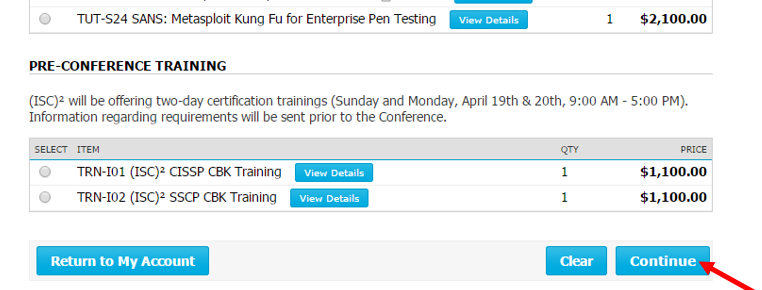
    3. On the next page, scroll to the bottom and click Continue: rsa2
    4. The next page will have the Monday activities.  The Seminars are at the bottom, check off selection and click continue again.rsa3Obviously pick DevOps Connect: SecDevOps as your activity.  Hope that helps. Any more questions about DevOps Connect: SecDevOps or other RSA activities please email us at rsac@devops.com.


  • Dev and Ops Coming Together To Combat the Weakest Security Link – BYOD

    Dev and Ops Coming Together To Combat the Weakest Security Link – BYOD

    Traditionally, security threats have taken the form of intentional acts by remote attackers: somebody on the outside working covertly to get to the inside. This is the classic scenario that most people associate with IT security, and it’s what most network operators are best prepared for. But these classic threats are eroding rapidly in the era of ubiquitous mobile devices and users who’ve become accustomed to always-on network access. BYOD is the weakest security link today.

    The surge in mobile wireless devices has blurred the line between what is inside and outside the network. Mobile devices such as smartphones and tablets are legitimate, and increasingly indispensable, business tools. Immersed in social media and digital technology, many Millennials treat their mobile devices as extensions of themselves, making it very difficult to separate one from the other. The obvious cost of a policy that prevents users from bringing personal devices to work is impacting the recruitment of new staff, and sometimes depriving existing staff of the tools they need to stay competitive, but the risks are also substantial.

    The Technical User

    While many fear the untrained user, the worst threats may come from the technically literate user, such as a developer or engineer, who feels he or she simply cannot work without their mobile device and unfettered access to the network. Such a user may not take no for an answer when it comes to bringing in their mobile device, and may even go so far as to employ their own personal hotspot hardware or software to bridge the gap between the protected work network and their unauthorized devices.

    No ill will is intended by this act; the user simply thinks s/he knows better. S/he wants to be able to use the devices that make work life easier and knows how to set up an access point to do just that. They don’t realize or just ignore the fact that an access point outside the purview of IT security or ops poses a significant risk to the network as a whole. Without being able to verify the integrity of the hotspot or its configuration, ops can’t be sure if it’s being held to the same security standards as the rest of the network.

    While these technical users know how to bypass the system, they may not know how they are leaving their network open and vulnerable. A developer with access to sensitive information, perhaps even branches of source code, may be restricted by the security team from accessing certain portions of the Internet while on the developer network. A technically adept but perhaps not security-conscious developer could attempt to bypass these restrictions by setting up an access point of his or her own – though this may give him or her access, it also gives attackers access to his or her machine. Developers have sensitive information on their laptops that needs to be protected, and connecting to unsecure networks can put this IP at risk. A developer bridging the network using a 4G adapter or access point not only exposes the information on his or her laptop; it also creates a hole that could expose the entire network to infection. Being alerted to these access points is an important step in validating your security controls.

    Best Practices: Finding a Balance

    The most important steps for creating and implementing a security policy that works both from a security and an efficiency perspective are elaborated below: assess your developers’ needs, set reasonable controls, and validate those controls. Together, they represent a balanced approach to addressing the often conflicting needs of an organization.

    1. Assess Your Developers’ Needs 

    Preventing developers and technical users from connecting devices to the network, or placing overly restrictive limits on their devices, can inadvertently lead to more security issues than otherwise. With overly restrictive policies, users are more likely to take matters into their own hands and bypass security controls. The best course of action is to engage these users to determine what their work motivations are, and meet them as closely as the overall security and operation of the network will allow. Ideally make the users allies to ops, not adversaries. These developers are knowledge workers, often well compensated, with some degree of entitlement, and cultivating an environment of trust and cooperation is in the best interests of all involved.

    1. Set Robust – But Reasonable – Security Controls

    This may be stating the obvious, but the most important part of empowering your developers is to mutually set expectations. Properly established security controls are really just agreed-to expectations, laid out in a manner that allows developers to understand what is expected of them and how to appropriately bring up concerns or exceptions. These expectations should be both reasonable and attainable. The most important part of adopting a “bring your own device” (BYOD) policy is to adopt one that meets the needs of the developers while maintaining security and validation. An inappropriately onerous process will encourage users to bypass the process, leading back to an insecure environment with gaping holes in network security. There is a range of tools to consider that can support controls. For example deciding if managed device management (MDM) tools are to be used or not is a major consideration that will drive controls and network access.

    1. Validate Controls with Visibility

    Security controls are frequently talked about, but less often mentioned is the validation side of the process. You can establish as many controls as you feel necessary, but without visibility into the network, controls are more words than reality. While seeing access points is important to evaluating the risk at your offices, it is only half the battle. The most important thing is finding devices operating on the access point and understanding what access they have to the internal network. With a list of which devices have been attached to the access point in question, it’s a simple process to identify where an offending device is located, and who is responsible for its existence.

    Once you’ve found the rogue access point and its operator, it’s time to perform triage. Was the access point connected directly to the business network, or did it get Internet connectivity over the cellular network? If it was on the business network, what kind of access did it have? Was it behind a firewall, or did it expose critical network components such as servers to the outside?

    These types of questions will help steer the subsequent investigation and save valuable time. It may end up that the access point posed no direct threat to the business network itself; such as the case of a personal hotspot tied to a cellular modem. In that sort of best-case scenario, the network operations team may simply need to reinforce the rules and regulations of the network, and explain the importance of keeping the network isolated from the outside world.

    What Does a Rogue Access Point Make Vulnerable?

    While these rising risks have grown with the erosion of classic IT boundaries, your information is still both valuable and vulnerable. Data and Intellectual Property are two of an organization’s most valuable assets; without good security processes, quick development cycles are futile.

    About the Author/Paul Paget 

    Paul-Paget-web-300x253-180x180Paul Paget is the Chief Executive Officer of Pwnie Express, provider of end-to-end security assessment solutions. He brings more than 30 years of of leadership experience in technology companies and information security to the company. Follow Paul on Twitter: @pgp2

  • First wave of sessions and speakers announced for DevOps Connect: SecDevOps @ RSA Conference

    First wave of sessions and speakers announced for DevOps Connect: SecDevOps @ RSA Conference

    As we previously announced there will be a DevOps Connect: SecDevOps @ RSA Conference this year at the Moscone Center.  The event takes place Monday of RSA Conference week at the Moscone Center.  The program committee for the event is headed up by Gene Kim and Josh Corman.  Gene and Josh will be delivering the keynote for the event as well. More on that will be announced soon.

    Today we are happy to announce the first wave of speakers and sessions selected by the program committee to present at DevOps Connect: SecDevOps.  The first wave of selections are:

    Automating Enterprise Security by Chris Corriere of Autotrader.com (and devopsy.kinsta.cloud) – How to automate security scans and make the remediation process as easy as possible for everyone involved.

    I’m the new Security Lead, and I’m Here to Help by Chris Walsh of Signal – How a new security hire learned from and Agile+Devops team, added security to the mix, and made people happier.

    DevOpsSecFail: DevOps Security Anti Patterns by Constantine Cois of Carnegie Mellon University – Common security anti-patterns I’ve observed in DevOps implementation and process.

    Blending the Automated and the Manual: Making Application Vulnerability Management Your Ally by Kris Curylo of Ally Financial and Dan Cornell of Denim Group – Security in DevOps is often laser-focused on automation. This talk looks at methods to incorporate manual tasks in a non-disruptive manner.

    All four of these sound like excellent presentations. There will be many more sessions to announce soon. With a little over a month until RSA, stay tuned for more information soon including some surprise guest speakers.

    Many thanks to everyone who submitted responses to the CFP for the event. Just because you were not selected in this first wave does not mean you are not selected.  Stay tuned for more speaker announcements shortly.