Category: DevOps Toolbox

  • Shared Responsibility? Yeah.

    Shared Responsibility? Yeah.

    One of the things that the last decade or two of enhancements has brought about is an increasing reliance on everyone across the organization to be more secure. While users have long since thrown up their hands and looked for ways to minimize the fallout when a vendor they frequent is compromised, enterprises have to lock down their own things. And given the ever-increasing volume and sophistication of attacks, the demands are growing.

    Cloud brought us the concept of a ‘shared responsibility‘ model. It is necessary in a world where an org does not control the physical servers and supporting infrastructure that applications ultimately run on. The fact is, the shared responsibility model was really cloud vendors reminding us that we still have to protect our apps, no matter where they’re deployed.

    This model and DevOps together have driven us to demand more of developers and DevOps teams with regard to security. It has also driven ops to have to care more, as more is exposed and security demands are up while security staff isn’t.

    And I’ll just remind you of the obvious. If you are responsible for security at the organization, you can get help from everyone, but those people’s job and direct responsibility is not security. They’re lending a hand because everyone cares, and that is the current state of most enterprises – DevOps made everyone involved in the SDLC a bit more responsible for all the things that aren’t their jobs (often a very good thing, often … not), but they’re not specially trained for it. That’s what security teams are for. And high-quality development security/policy management tools offer Dev and Ops and everyone in between a bit of guidance to good security practices along the way. I’ve praised putting security feedback right in the IDE half a dozen times here and elsewhere, and as a security-conscious developer, will continue to do so until it is so pervasive that people start to worry I’m losing it by going on about it. That’s a great example of helping everyone be more secure without requiring a ton of security staff hours in training. Developers don’t purposely write insecure code any more than they set out to make buggy spaghetti code. Giving tools to help them make the code more secure is a huge bonus – to them and to the corporate security team. So, if you’re not using them, start. And look into all of the other options to help non-security staff lock down their bit. The number of available security people on the market is perhaps the largest it has ever been (It’s so bad I actually know a security researcher who took months to find a new gig – that is pretty much unheard of or a unique case before recent days), but budgets to grow the security team aren’t there – any more than they are currently there to grow most teams. So tools to help are still imperative because you’re not going to get double the security staff in 2024 unless there’s only one of you … and you threatened to quit if they don’t get you help, which no one recommends as a negotiation tactic, so even if you’re solo, no doubling for you.

    Just remember who is responsible for overall infosec. Make use of the specialist and their knowledge in their space by finding tools to help them secure in a manner that matches workflow. Then verify because the organization’s security posture is security’s job.

    And keep rocking it. We’ve got so much cool stuff going on at the moment in IT in general that there is plenty of opportunity to improve architectures that are even relatively recent. Check what you have, consider it from a security perspective, improve what you have and keep rolling along.

    But first, relax, take a breather, and enjoy the holiday period.

  • Opsera Leverages AI to Simplify DevOps Platform Migrations

    Opsera Leverages AI to Simplify DevOps Platform Migrations

    Opsera is leveraging a generative artificial intelligence (AI) model it built to enable DevOps teams to migrate from one platform to another.

    Gregg Holtzrichter, chief marketing officer for Opsera, said the Hummingbird AI model makes it simpler to migrate source code from, for example, a Bitbucket on-premises continuous integration/continuous development (CI/CD) platform to GitHub.

    Opsera originally developed Hummingbird as an orchestration engine that integrates DevOps workflows spanning multiple tools and platforms. The primary goal is to make it possible for DevOps teams to unify their workflows, said Holtzrichter.

    At the same time, Opsera is now making it possible to leverage a generative AI model to reverse engineer the source code a DevOps team may have developed to extend the capabilities of a specific platform. That new code then makes it possible to significantly reduce the total cost of switching DevOps platforms, said Holtzrichter. As part of such an effort, Opsera is also now providing support for organizations looking to specifically migrate to GitHub Copilot and GitHub Actions.

    It’s not clear how many DevOps teams might be looking to switch platforms, but with the rise of generative AI capabilities for writing code, interest in platforms such as GitHub has increased, noted Holtzrichter. In addition, support for platforms such as the on-premises edition of Bitbucket is being sunsetted by Atlassian as part of an effort to drive more customers toward the cloud edition of the CI/CD platform.

    Regardless of the underlying platforms involved, generative AI promises to reduce the ability of any vendor to lock customers into a specific platform. As DevOps teams extended DevOps platforms over the past decade, many of them have discovered that the integrations they created and maintained made it all but impossible to switch platforms. With the ability to refactor much of that code based on the insights surfaced by the Opsera platform using generative AI, the time and effort required to switch platforms has been substantially reduced, noted Holtzrichter.

    At its core, Opsera makes it possible to apply analytics to DevOps workflows as they become more complex. The number of dependencies that exist between various application modules, for example, makes it exceedingly difficult for DevOps teams to manually identify the impact a delay in one project might have on any number of other downstream projects.

    The Opsera platform surfaces that intelligence by scanning all repositories and branches, including commit history and generating alerts and notifications whenever KPI thresholds or compliance requirements are exceeded. DevOps teams can also use the platform to assess their overall DevOps maturity using, for example, the DevOps Research and Assessment (DORA) metrics defined by Google. In addition, many organizations are keen to discover what best practices should be adopted by other application development teams.

    Now that AI is being applied to that analytics capability, it’s become possible to extend the reach of the Ospera platform beyond analytics to include source code migration. Each organization will still need to determine whether such an effort is worth the remaining time and effort still required, but at the very least, most DevOps teams can take comfort in the fact they can now keep their options a lot more open.

  • Sonar Adds Secrets Detection to Code Analysis Portfolio

    Sonar Adds Secrets Detection to Code Analysis Portfolio

    Sonar has added a secrets detection capability to its portfolio of tools for analyzing code and DevOps workflows.

    Designed to be applied to both finding secrets in code repositories and as applications are developed using an integrated development environment (IDE), this capability is being added to SonarLint, SonarQube and the managed SonarCloud service to identify, for example, passwords, application programming interface (API) keys, encryption keys, tokens, database credentials and other private information.

    Sonar co-CEO Olivier Gaudin said the goal is to eliminate secrets that are accidentally or maliciously stored in source code to improve software supply chain security.

    While it’s important to discover secrets in codebases, Sonar is making a concerted effort to make it simpler for developers to discover secrets before they find their way into a codebase that is one step away from a production environment, noted Gaudin. The SonarLint static analysis tool the company provides can now discover secrets in microseconds using the syntactic and semantic analysis engines the company has now extended, he added. No developer is going to wait five to 10 minutes for a code scan to be completed, said Gaudin.

    A Learn as You Code tool also explains how each secret found in a code segment poses a security risk. The overall goal is not only to remove secrets but, ultimately, reduce the number of instances where secrets are discovered in code, said Gaudin.

    Most organizations today are at varying stages of embracing DevSecOps best practices to improve software supply chain security. It’s not clear how readily secrets management is being embraced as part of those modernization efforts, but as cybercriminals routinely scan for application secrets stored in clear text that can be used to compromise application security, the need to encrypt secrets becomes a higher priority.

    There is, of course, no shortage of tools for detecting secrets. Sonar is now simply making a case for managing secret detection as part of a larger effort to reduce vulnerabilities in code that cybercriminals can exploit. That approach should help reduce the total cost of securing a software supply chain at a time when forthcoming regulations are going to make organizations that deploy software more accountable for application security.

    In the meantime, thanks to the rise of generative artificial intelligence (AI), the volume of code that needs to be scanned will likely exponentially increase. The issue with general-purpose AI platforms such as ChatGPT is they were trained using code of varying quality that often contains vulnerabilities that are now sometimes incorporated into the code they generate. On the plus side, however, many developers have little to no application security expertise, so it’s just as feasible that ChatGPT will create more secure code than a human developer. Regardless of how the code was created, however, no one will know for sure how secure it is without scanning it first.

    Hopefully, as AI progresses, the quality of the code being generated will only continue to improve. Until then, DevOps teams should continue to assume all code is suspect until proven otherwise.

  • Five Great DevOps Job Opportunities

    Five Great DevOps Job Opportunities

    devopsy.kinsta.cloud is now providing a weekly DevOps jobs report through which opportunities for DevOps professionals will be highlighted to better serve our audience.

    Our goal in these challenging economic times is to make it easier for DevOps professionals to advance their careers.

    Of course, the pool of available DevOps talent is still relatively constrained, so when one DevOps professional takes on a new role it tends to create an opportunity for others.

    The five job postings shared this week are selected based on the company looking to hire, the vertical industry segment and, naturally, the pay scale being offered.

    We’re also committed to providing additional insights into the state of the DevOps job market. In the meantime, for your consideration:

    Indeed.com

    MedStudy
    Remote
    Senior DevOps Engineer
    $125,000 to $165,000

    SimplyHired.com

    Raytheon
    Tewksbury, Massachusetts
    Technical Fellow – DevSecOps/Cloud Native
    $122,000 to $155,000

    CareerBuilder.com

    State Street Corp.
    Quincy, Massachusetts
    Azure DevOps Engineer
    $120,000 to $202,500

    Dice.com

    USEReady
    New York, New York
    Senior Azure DevOps Engineer
    $120,000 to $160,000

    LinkedIn

    Northrop Grumman
    Dulles, Virginia
    Senior Principal DevOps Engineer
    $107,300 to $199,600

  • ScienceLogic Unveils Revamped AIOps Platform

    ScienceLogic Unveils Revamped AIOps Platform

    Via an early access program, ScienceLogic this week made available a Hollywood update to its artificial intelligence for IT operations (AIOps) platform that, among other capabilities, provides root cause analysis capabilities that can be invoked via a natural language interface.

    For the first time, this release of the ScienceLogic SL1 platform incorporates predictive and generative AI technologies the company gained with the acquisition of Zebrium in 2022.

    Michael Nappi, chief product officer for ScienceLogic, said Zebrium provided ScienceLogic with an AI model that surfaces insights in a way that is simpler for IT teams to understand and act on. In addition to recommending automated workflows to run, the platform gives IT teams the option to automatically run them when, for example, there is an IT incident that an existing workflow has been defined to address, he added. Each organization will need to determine its level of comfort in automating those processes based on the level of potential risk to the business, noted Nappi.

    In addition, the SL1 user interface displays IT operational information at the business service level to provide IT teams with a guided experience that makes it simpler to prioritize tasks based on their relevance to the business, noted Nappi. There is also now an SL1 toolkit that DevOps teams can use to build or customize PowerPacks templates for monitoring specific processes and services.

    Finally, SL1 is now integrated with Slack and WebEx to streamline collaboration across IT teams. Previously, the platform only supported Microsoft Teams.

    In effect, SL1 now provides IT teams with a cockpit through which they can invoke AI to autonomously manage a wide range of tasks, said Nappi.

    It’s not clear how much advances in AI might one day soon democratize the management of IT, but it is clear the level of expertise required to manage complex IT environments is declining. The overall goal is to reduce dependency on IT professionals, such as software engineers, who are hard to find and retain.

    The rate of change being made to complex IT environments is now also occurring faster than IT teams can track without the aid of AI, noted Nappi. ScienceLogic, in the longer term, is working toward making it possible to interact with a chatbot in real-time to enable IT teams to meet that challenge, he noted.

    Each IT organization will need to decide for itself how heavily to rely on AI to manage IT functions, but in time, many IT professionals are not going to want to work for organizations that don’t provide some level of AI to reduce the level of toil they regularly encounter today. Rather than having to manually perform a series of monotonous tasks, AI should enable IT professionals to act more like supervisors in an IT environment.

    It may be a while before that aspiration is fully realized, but in the meantime, IT teams would be well-advised to start identifying which tasks will soon be automated using AI because roles and responsibilities will evolve. The challenge and the opportunity now is determining how IT teams can add more value to the business as those transitions occur.

  • The Future of Jenkins in 2024

    The Future of Jenkins in 2024

    As software development practices evolve, the tools that support them must also adapt to stay relevant. Jenkins, the venerable automation server used by many DevOps teams, is at such a crossroads as it faces the changing landscape of cloud-native applications and Kubernetes adoption. 

    This article examines Jenkins’ current utility, particularly its features that have made it a staple in CI/CD practices, and addresses the question of whether it will maintain its relevance in 2024 and beyond.

    How Jenkins is Used by DevOps Teams

    CI and CD

    Jenkins has become an integral part of many DevOps teams due to its CI/CD capabilities. Continuous integration (CI) is a software development practice where developers regularly merge their code changes into a central repository. Continuous delivery (CD) is the practice of delivering the software in short cycles to ensure that it can be reliably released at any time.

    Jenkins supports the CI/CD approach in a number of ways. First, it allows developers to automate code integration. This means that whenever code changes are pushed to the repository, Jenkins can automatically build and test the project. Second, Jenkins allows for the continuous delivery of software by automating simple deployment processes (although it lacks full deployment orchestration capabilities).

    Build Pipeline Visualization

    Another key feature of Jenkins is its build pipeline visualization. This feature allows DevOps teams to visually represent the process of software delivery from code integration to deployment. The pipeline visualization provides a clear and intuitive representation of the software delivery process, making it easier for teams to understand and manage the process.

    Build pipeline visualization in Jenkins is customizable, allowing teams to tailor it to their specific needs. For example, it can be customized to show the status of each stage of the delivery process, from code integration to testing to deployment. This allows teams to quickly identify any issues or bottlenecks in the process and address them.

    Automated Testing

    Automated testing is another area where Jenkins shines. With Jenkins, DevOps teams can automate the process of testing their code by running scripts and integrating with automated testing tools as part of the build process.

    Jenkins supports a wide range of testing frameworks and tools, allowing teams to choose the ones that best fit their needs. Moreover, Jenkins can be configured to automatically run tests whenever changes are made to the code. This ensures that any issues or defects in the code are detected early and can be addressed promptly.

    Workflow Scripting

    Workflow scripting is another key feature of Jenkins in DevOps teams. With Jenkins, teams can script their workflows, automating the process of software delivery. This allows teams to standardize their workflows, ensuring that each delivery process is consistent and predictable.

    Jenkins supports the Groovy scripting language for workflow scripting. This means that teams can use the power and flexibility of Groovy to script their workflows. Moreover, Jenkins provides a user-friendly interface for scripting workflows, making the process easy even for those who are not familiar with Groovy.

    Current Usage and Adoption Statistics

    As of 2023, Jenkins remains a leader in the CI/CD space. With its extensive plugin architecture and large user base, it is used by thousands of organizations worldwide. According to the 2022 DevOps Survey by the Cloud Native Computing Foundation (CNCF), Jenkins was used by over 50% of respondents for automation and CI/CD, maintaining a significant presence in the market.

    According to the Jenkins website, there are over 1 million active Jenkins users and more than 200,000 active installations worldwide, with the platform handling 1 million+ jobs per day. It had about 44% of the global market share for CI/CD in 2023.

    The growth trajectory of Jenkins, however, has shown signs of plateauing when compared to newer, more cloud-native-focused CI/CD tools. This observation is backed by Google Trends data, reflecting a steady but not sharply increasing interest in Jenkins over recent years.

    Despite facing competition from emerging tools designed for cloud-native development, such as GitHub Actions, GitLab CI and CircleCI, Jenkins has responded by evolving its ecosystem. The creation of Jenkins X is a strategic move to cater to Kubernetes users and address some of the criticisms related to cloud-native development. However, as we’ll discuss, Jenkins X has not been readily adopted by the industry as of yet.

    Limitations of Jenkins in Cloud-Native Environments

    While Jenkins is a powerful tool for DevOps teams, it has serious limitations in cloud-native environments. These limitations stem from the fact that Jenkins was originally designed for traditional, monolithic applications, not for the dynamic and distributed nature of cloud-native applications.

    Statefulness

    One of the critical limitations of Jenkins in cloud-native environments is its inherent statefulness. Cloud-native architectures typically favor stateless applications, which are easier to scale and manage in dynamic environments like Kubernetes. 

    Jenkins, however, relies on maintaining state—it stores configuration, build history and user data, making it challenging to scale and manage efficiently in a cloud-native setup. This statefulness requires persistent storage, which complicates deployments in distributed systems where resiliency and horizontal scaling are key. Moreover, the risk of data loss or inconsistency increases in cloud-native environments, particularly during scaling operations or when recovering from failures.

    Configuration Complexity

    Jenkins is often criticized for its complex configuration requirements. Setting up Jenkins in a cloud environment involves intricate configurations that are not only time-consuming but also prone to errors. This complexity is exacerbated when integrating with modern cloud-native tools and services, requiring extensive customization and maintenance of plugins. 

    In addition, Jenkins’ traditional master-slave architecture was not designed for dynamic cloud environments, where resources need to be provisioned and deprovisioned rapidly. This leads to a significant operational overhead for DevOps teams.

    Immutable Infrastructure

    Adopting an immutable infrastructure approach is a cornerstone of cloud-native environments, promoting the idea of replacing or rebuilding servers rather than modifying them. 

    However, Jenkins’ traditional model does not align well with this principle. It typically requires modifications to its runtime environment for updates or changes, contrasting with the cloud-native approach of immutable deployments. This can make it challenging to maintain consistency and reliability in cloud-native systems where automation and minimal manual intervention are paramount.

    Microservices Limitations

    Jenkins was originally designed for monolithic architectures and doesn’t naturally fit into microservice-based applications, which are prevalent in cloud-native environments. In microservices architectures, applications are broken down into smaller, independently deployable services. 

    Jenkins, however, tends to treat applications as monolithic units, making it less efficient for handling multiple, independent microservices. This limitation affects its ability to provide fine-grained control over individual services’ build, test and deployment processes. Consequently, Jenkins may struggle with the high degree of automation, flexibility and scalability required in microservices environments.

    What is Jenkins X?

    Jenkins X is an open source project that provides pipeline automation, built-in GitOps, and preview environments to help teams collaborate and accelerate their software delivery at any scale. It is an improved version of the original project, designed specifically for Kubernetes, a popular container orchestration platform.

    Jenkins X streamlines the technical aspects of building, testing, and deploying software. It automates the installation of popular tools like Helm and Draft, making it easier for developers to get started. It also provides pre-configured pipelines so teams can start delivering software right out of the box.

    Jenkins X also introduces a new Jenkinsfile format, Jenkinsfile.yaml, which provides a more straightforward and human-readable way to describe pipelines. This new format, combined with the automation provided by Jenkins X, helps reduce the complexity of pipeline configuration and management in Kubernetes.

    Limitations and Criticisms

    Jenkins X has not been widely adopted by the software industry and has not achieved the respect and prominence of its predecessor, Jenkins. Let’s review the main limitations and criticisms of the tool.

    Lack of Maturity

    Jenkins X’s relatively recent entry into the market means it has not had the time to mature like its predecessor. This lack of maturity can manifest in several ways, including fewer features compared to established tools, fewer community-tested plugins, and potentially more bugs or unresolved issues. Due to the fast-paced evolution of cloud-native technologies, tools need time to adapt and stabilize; Jenkins X is still in this phase of its lifecycle.

    Moreover, a mature tool typically has extensive documentation and a large community of users who can offer support and share best practices. While Jenkins X has seen growth in its user base, it still lags behind more mature CI/CD solutions in these areas. This can lead to challenges when teams are looking to solve complex problems or when they require advanced support.

    Limited to Git Projects

    Another criticism of Jenkins X is that it’s limited to Git projects. While Git is the most popular version control system, it’s not the only one. Some teams may use other systems like Mercurial or SVN, and these teams would be unable to use Jenkins X.

    Even within the world of Git, Jenkins X has limitations. For example, it doesn’t support all Git hosting platforms. While it works with popular platforms like GitHub and Bitbucket, it doesn’t support others like GitLab. This can be a significant limitation for teams that use unsupported platforms.

    Community Support

    Finally, there are concerns about community support for Jenkins X. While the project is open source and theoretically has the potential for wide community involvement, some critics argue that it’s primary source of support is CloudBees, the company behind Jenkins.

    These critics worry that if CloudBees were to withdraw its support, the project could falter. They also argue that the project’s focus on certain tools and platforms (like Kubernetes and Git) reflects CloudBees’ business interests more than the needs of the broader DevOps community.

    Conclusion

    In conclusion, Jenkins’ role in the CI/CD landscape has been pivotal, and its continued evolution with projects like Jenkins X demonstrates an effort to adapt to the needs of modern, cloud-native environments. While Jenkins X has yet to reach the widespread adoption and maturity of its predecessor, its specialized focus on Kubernetes and GitOps reflects the shifting priorities in software development.

    Jenkins, despite showing signs of plateauing in growth, still possesses a strong user base and an established presence in the market, supported by a vast plugin ecosystem and a robust community. Its limitations in cloud-native contexts—such as managing statefulness, configuration complexity, and supporting immutable infrastructure—pose challenges that Jenkins X seeks to address.

    As we approach 2024, the relevance of Jenkins will likely hinge on its ability to integrate more seamlessly with cloud-native technologies and the willingness of the community to evolve its ecosystem. The breadth of its adoption and the depth of its integration in existing development pipelines mean Jenkins will continue to be a significant player in the DevOps toolchain. However, its long-term relevance will depend on the project’s ability to innovate and remain adaptable in a landscape that is rapidly embracing cloud-native solutions.

  • Copado Expands Beta of Generative AI Tools for Salesforce DevOps Platform

    Copado Expands Beta of Generative AI Tools for Salesforce DevOps Platform

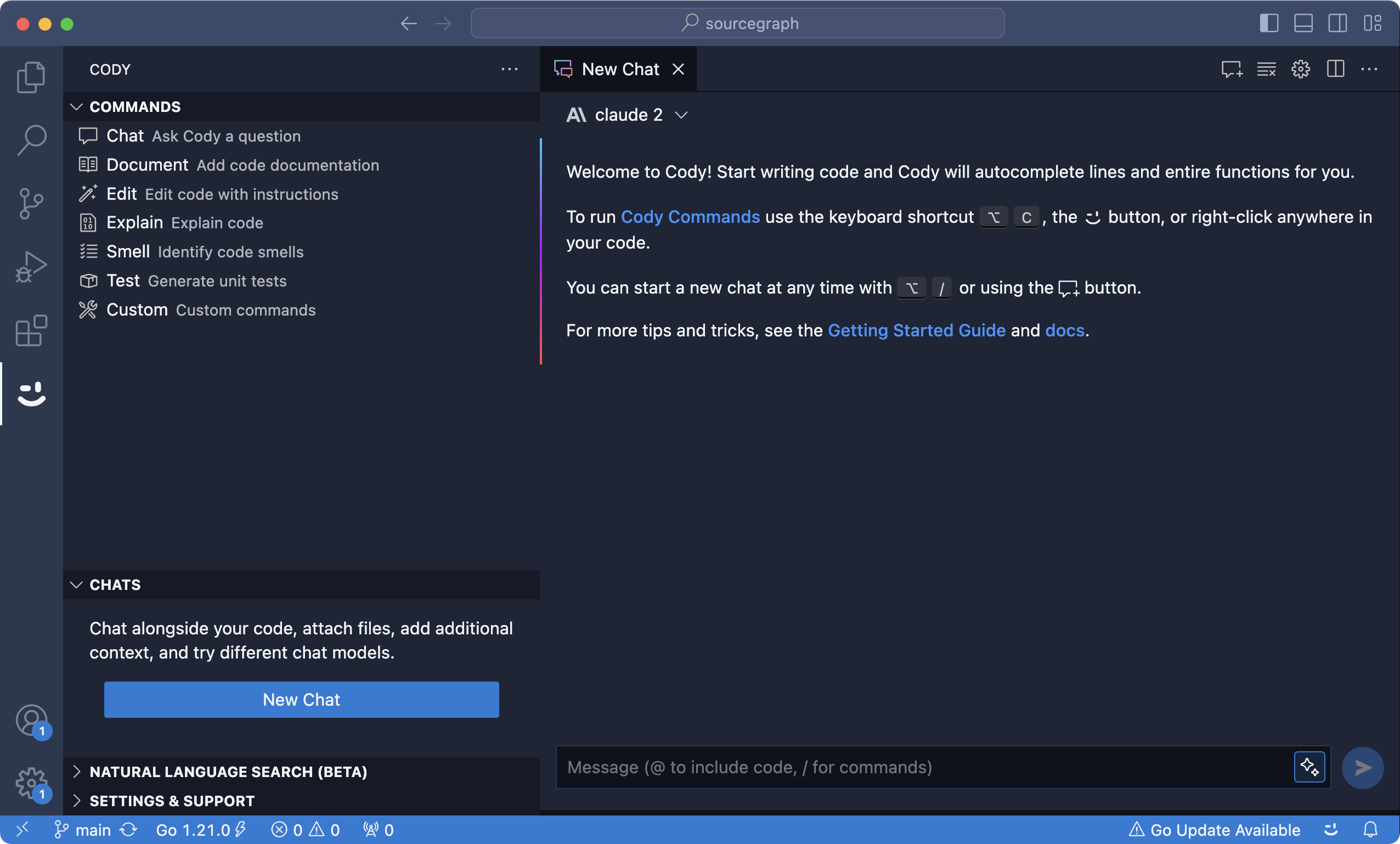
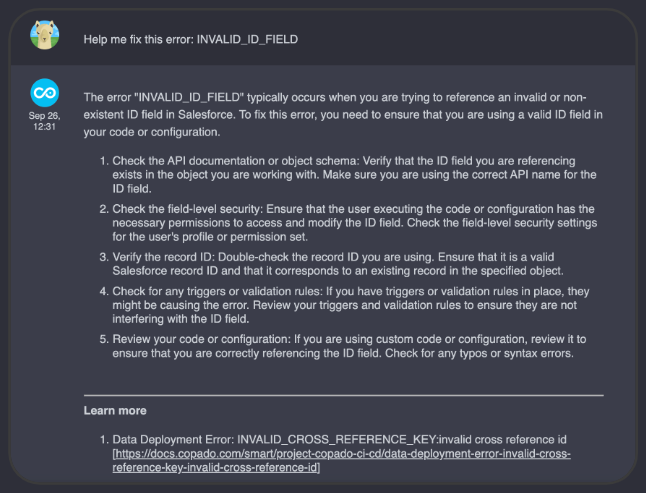
    Copado today announced it has expanded a beta program through which it provides application development teams building applications for the Salesforce software-as-a-service (SaaS) platform access to generative artificial intelligence (AI) capabilities enabled by ChatGPT.

    David Brooks, SVP of Evangelism for Copado, said the company, via the usage of vector databases, has exposed instances of ChatGPT to everything in its knowledge base that has been collected over the last 10 years. That approach enables Copado to extend the large language model (LLM) used to train ChatGPT without exposing any data that might be used to one day train the next version of the generative AI platform.

    The goal is to enable DevOps teams to generate code and tests faster while simultaneously reducing the time required to handle support calls, said Brooks.

    In addition, Copado is using ChatGPT to enable impact analysis and conflict detection to reduce the level of friction encountered when deploying applications in a production environment. That latter capability is critical because, in many instances today, DevOps teams don’t have a firm understanding of how code needs to be deployed, resulting in unnecessary rollbacks of application deployments, noted Brooks.

    Generative AI will also automate the creation of documentation, such as release notes for every application deployed, to reduce the overall level of toil DevOps teams experience, noted Brooks.

    Copado also plans to provide governance tools that will enable DevOps teams to ensure the code written by an LLM is not based on a hallucination that results when trying to reconcile conflicting data, added Brooks. There will, of course, always be a need for a human to review code before it is deployed in a production environment, he added.

    In the longer term, Copado will make it possible for organizations to invoke multiple LLMs to address various functions as they best see fit, said Brooks. In fact, DevOps teams should expect to soon be employing multiple copilots trained to address specific tasks such as writing code, deploying applications, assessing cybersecurity and addressing compliance mandates, he added.
    Ultimately, application development and deployment efforts that today require weeks to complete will soon be accomplished within the same day, said Brooks.

    At the same time, organizations will also be able to better manage application environments that today operate at levels of scale few IT teams can manually track. Generative AI capabilities, in effect, will make it simpler for DevOps teams to effectively manage application environments at much higher levels of scale, said Brooks.

    Each organization will naturally need to determine to what degree they are prepared to absorb that level of innovation, but it’s clear the pace at which applications are built and deployed is about to exponentially increase. The issue organizations will increasingly encounter is that business processes will not be able to absorb the rate at which software can be built and updated.

    It’s not clear just yet to what extent generative AI will transform DevOps, but as advances continue to be made, many of the manual tasks and bottlenecks that today conspire to slow down application development and deployment are about to be eliminated in ways that few would have thought possible a little more than a year ago.

  • KubeCon 2023: CTO.ai’s Developer Control Plane

    KubeCon 2023: CTO.ai’s Developer Control Plane

    Speaker 1: This is Techstrong TV.

    Alan Shimel: Hey, everyone, we’re back. We’re here in Chicago at KubeKon. We’re wrapping up our day two coverage, our last guest for day two. We’ll be back tomorrow, though. But let me introduce you to Kyle Campbell, right?

    Kyle Campbell: That’s right.

    Alan Shimel: Kyle is the founder of cto.ai and we’re going to find out about cto.ai and a little bit about what they’re doing here at KubeKon. But before we do that, Kyle, first of all, welcome.

    Kyle Campbell: Thank you.

    Alan Shimel: Second of all, let’s hear a little bit about Kyle.

    Kyle Campbell: Yeah, thanks.

    Alan Shimel: Tell us your kind of journey.

    Kyle Campbell: Yeah, well, first of all, great to meet you in person. I’ve talked in the past. Yeah, so my journey, I’ve told this story before, a little unconventional. I grew up in Nova Scotia in Canada, a small town. Been on the internet since the age of eight and just had no interest in the formal past. So I’ve been building software from the early days of the .com boom. I may not look at it, but I got some of the scar tissue. But I was self-taught software engineer, so open source was the key to my success and good developer tools.

    Alan Shimel: Sure.

    Kyle Campbell: And I came up through the cloud and open source era and then started founding developer platforms in 2014. The first company I built was a developer platform, the real estate space. Zillow acquired it in about eight months, which was interesting.

    Alan Shimel: Very.

    Kyle Campbell: And then I bootstrapped a DevOps agency quite successfully and started to find that there was a lot of opportunity for next generation developer platforms, which led me to cto.ai.

    Alan Shimel: Excellent, man. What a great story too. You still up in Nova Scotia?

    Kyle Campbell: I’m not. I moved to the other side of the country. I live in British Columbia now.

    Alan Shimel: Good for you.

    Kyle Campbell: Love the outdoors. Spend a lot of time with my son camping, fishing, and trying to get outdoors and just enjoy the beautiful-

    Alan Shimel: Loving it. Yeah, no, it’s beautiful. I mean, not that Nova Scotia’s not beautiful. It’s brutal in the winter, but it’s a beautiful country, part of the country.

    Let’s talk cto.ai now. So look, I’ve founded multiple companies myself. Every founder I’ve ever interviewed or spoken with in 30 years, they don’t just say wake up and say, “Oh, I feel like founding a company today.” There’s kind of like Richard Dreyfuss in Close Encounters of the Third Kind, right? There’s something driving you like, “I got to do this. This needs to get done.” What was driving you that needed to get done here with cto.ai?

    Kyle Campbell: Yeah. I mean, as I described my past, a lot of my journey was self-taught and stand on the shoulders of giants. And really important thing for me was developer experience and ease of use and tooling early on in my career because that enabled me to really drive my competencies as a developer and keep up with these people that had computer science degrees and master’s and all these things, right?

    Alan Shimel: Certainly.

    Kyle Campbell: So when I thought about that and I also thought about where the future’s going and my passion for platform engineering, it became pretty obvious to me that what was missing in the market was a set of tools that were designed to embrace the future of developer experience and how AI can impact that from code to cloud.

    So in 2016 or so, I started experimenting with the idea, and through 2020, I decided to formally launch cto.ai as a developer control plane is what we call it. The way to think about it is it’s a modern CI/CD platform where teams can compose their workflow across build, deployment, test, and preview. And as they work with these tools, they can interact with them in the CLI Slack, GitHub, talk to these workflows through sort of a prompt based model. And we collect telemetry data that allows them to then measure that against DORA metrics, which is-

    Alan Shimel: It’s standard.

    Kyle Campbell: … yeah, it’s a standard and I think, frankly, an empirical way to measure the developer experience. We don’t try to measure developer productivity. We think that’s the wrong question to ask. The question is how do I measure the experience the developer has in the same way that I would measure the experience my users have with my product? And if what we’re doing is building platforms to enable developer experience, we need a natively integrated way to measure that. And we also think that that measurement is a way to pave a future between how the developers experience those tools and how AI can support the developer experience and enhance developers with, frankly, superpowers over time.

    Alan Shimel: So I was recently at a couple of user conferences, big DevOps companies, and it was interesting. Three conferences all use the same metric, which is that developers only spend about 30% of their time developing.

    Kyle Campbell: State of DevOps Report 2018, I think?

    Alan Shimel: But it was in there and it’s been kind of verified in several others. What do you think about that? Is it good thing, bad thing, something to be proud of, something we should be working on? What’s the deal?

    Kyle Campbell: Yeah. Well, I think a pretty practical point of view in that as a software engineer, my goal is to release features that customers love and drive business value. And if I can do that at a higher velocity while maintaining quality, I mean, I think that that is a way that I, as an individual, can contribute to the success of the business and the team.

    But I think what often happens is we get really obsessed about the individual developer. And I think any developer who looks at the idea that they only spend 30% of their time adding value isn’t going to like that very much. And I think we need to reframe the conversation away from developer productivity towards developer enablement and look at the tooling and the process that the developer experience promotes and how developers go from code to cloud and ask ourselves as a business leader, as a CTO who we work with a lot, is the tooling and the workflow that we’re supporting our team with and that developer experience, what they’re experiencing, is that driving results?

    And I think DORA metrics is an empirical way to measure that, obviously, through anecdotes and surveys, but what we’ve really innovated on is creating a vertical integration with the tool chain that allows you to measure that in real time and then iterate on the tools quickly. And some of the teams can really own that themselves. And what the businesses should be doing is zooming out and asking themselves, “Yeah, how do we maximize the amount of time developers spend without individualizing that consideration?” There’s an innerloop and there’s an outerloop. And what DORA is really good for is measuring the outerloop of how we work in aggregate of teams. We need next generation platforms that make this data and this context more accessible to business leaders.

    Alan Shimel: I don’t disagree with anything you said there, so we’re there with that. What about have you guys released any news or anything? What do you got going on around the show?

    Kyle Campbell: Yeah, so for the last while, we’ve been focused on really building a rock solid workflow and tooling to basically set the premise of that next generation composable CI/CD vision. We’ve fed that data into DORA Metrics. You can now report on DORA metrics in real time, save those reports, share them with whoever one-on-ones, retros, so kind of up to you. And we’re starting to experiment with some data science, but something that’s really exciting that we just kind of put into production last week. We haven’t really officially announced, so I guess this is a first is we’ve released our first kind of AI-

    Alan Shimel: Heard it here first.

    Kyle Campbell: … yeah, heard it here first. Our first AI feature set, which is AI code review. And what we’re doing is we’re letting teams start with these sort of base models for how they can leverage AI in the code review process to get developers’ feedback earlier. But then, we want them to be able to do is enhance that model to really customize it to their preferences on their own kind of hardware, to customize those models to take into consideration their own specialized requirements and obviously protect proprietary information that’s so core to their beliefs. So we launched that into production, announcing it here first.

    Alan Shimel: Really?

    Kyle Campbell: And we’re looking for early adopters who can kind of test it out and help us stress test it and figure out how do we further enhance the context of that model with some of the information that is derived in these DORA metrics as well.

    Alan Shimel: So here, we’re talking to this camera. Developers out there. You’re looking for them to kick this around a little bit. Kick the tires.

    Kyle Campbell: That’s right. Yeah.

    Alan Shimel: How do they do it?

    Kyle Campbell: You’re a developer and you’re interested in how AI can support your CICD workflow, specifically code review, come over to cto.ai, sign up, send a message. I’d love to talk to you personally, software development yourself, and love to hear what you think, what you think are the limitations and hesitations, and more importantly, how do you think we can enhance this with other use cases? Because I think there’s a whole exciting set of use cases for AI and software delivery that is going to help software developers.

    Alan Shimel: Absolutely.

    Kyle Campbell: We embrace-

    Alan Shimel: I had this conversation in an earlier interview today. Look, for people who aren’t tech, you show them an AI interface and some of the kind of parlor tricks it could do and they think it’s magical.

    Kyle Campbell: Yes. Arthur C. Clark.

    Alan Shimel: Right.

    Kyle Campbell: Yeah.

    Alan Shimel: Now, we know it’s not magic. It’s just putting one word in front of the other or one… but there are some uses that AI really shine certain. So it’s not meant to replace Google Search nor is it meant to replace software developers.

    Kyle Campbell: No.

    Alan Shimel: But it can empower software developers to be 10x more effective. And one of the ways it could teach you to code, right? You could put code in there and say, “Explain it to me.” It could review code, right? So either it’s writing code or it’s reviewing code. You shouldn’t have it doing both probably, but…

    Kyle Campbell: It’s true.

    Alan Shimel: Right. But if it’s using it for review, what a great use of the technology.

    Kyle Campbell: Yeah. We’ve seen that the number one thing that slows down time to market in feature sets for developers is waiting for code review. And while I’m not sure that it’ll be the same thing as you and I pair programming and getting into the nitty-gritty details, if we can make sure that every developer can get a code review instantly just by adding a label and then that we can tailor the quality of that code review with more context that is supported by how the team thinks about quality. I think this is an important example of how we can accelerate the needs of developers and the developer experience with AI that still leaves all the control in the hands of the developer to decide, “Is this rational? Is this a hallucination? Is this the appropriate time?” But the feedback loop that we can get from this is, I think, a really great beachhead and why we chose to start there.

    Alan Shimel: Absolutely. And we’ll see. I don’t think we scratched the surface yet on how we’re going to use AI, but this is certainly a real definitive first step that I see us going with, right?

    Kyle Campbell: I think so. And I think the call to action for other software vendors out there is to think about reinstrumenting what they’re offering to prepare for this because I think there’s a necessary hesitance around AI. I think rightly so. But if we can think about how we can take control of it, how softwares can take control of it. Software engineers are perfectly suited to be some of the first stewards of these problems. Just like we see AI and code generation, I think the next natural step is to support it within code review. And then we’ll start looking at how smarter deployments, smarter rollbacks, and obviously, operations can be enhanced with AI. And this place is a perfect example of people trying to solve that problem.

    Alan Shimel: Absolutely. Absolutely. And here’s the other thing. I’ve been in technology a long time. You don’t put these genies back in their bottles.

    Kyle Campbell: Right.

    Alan Shimel: Once they’re out, they’re out. And so like it or not, they’re here. And I think you could… if you can’t beat them, join them.

    Kyle Campbell: You can’t stop Moore’s Law. I mean, this the pathway that the world is on.

    Alan Shimel: No, you’re not. You’re just not going to stop it. That’s the way it is. It’s great stuff, man. I love the attitude. I love having you on here. Cto.ai. Again, if you’re looking to help Kyle out, kick the tires on this AI code review product they got coming on, it’s fantastic. So let’s check it out.

    Kyle Campbell: All right. Thank you so much.

    Alan Shimel: All right. Hey, Kyle, enjoy the rest of your KubeKon. cto.ai wrapping up day two in Chicago at KubeKon. We’re going to be here tomorrow morning. I think we’re on at 10. We’re only here till two tomorrow because it wraps early tomorrow. But we’ll be back with a full load. We hope you’ve enjoyed today. On Demand is available at Techstrong TV. And so if you missed anything, do check it out. This is Alan Shimel. We’re out.

  • Atlassian Delivers on Generative AI Promise for DevOps and ITSM

    Atlassian Delivers on Generative AI Promise for DevOps and ITSM

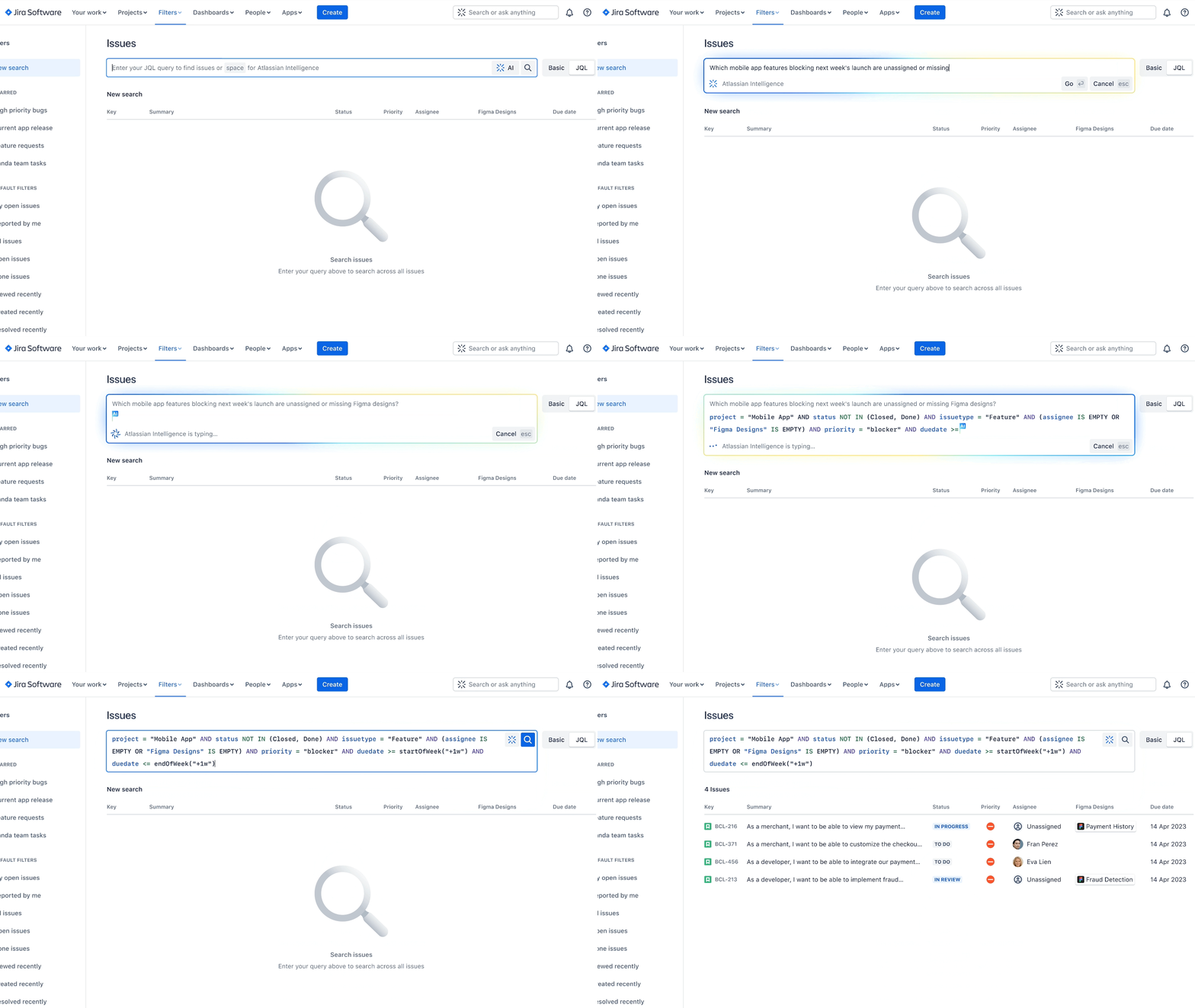
    During a virtual Unleash event, Atlassian today announced its generative artificial intelligence (AI) capabilities are now generally available across its Jira and Confluence suite of tools for managing IT and DevOps workflows.

    In addition, Atlassian also committed to adding generative AI capabilities to its Bitbucket continuous integration/continuous deployment (CI/CD) platform to enable DevOps teams to review pull requests and leave comments automatically with suggested changes around syntax and code conventions via a natural language interface. Developers will also be able to autogenerate pull request descriptions from commit messages.

    Matt Schvimmer, head of products for the Agile and DevOps division of Atlassian, said the capabilities provided by Atlassian Intelligence will reduce the level of toil and stress DevOps teams experience at a time when the velocity at which applications are being developed and deployed only continues to increase.

    Atlassian reported nearly 10% of its more than 265,000 customers have already leveraged Atlassian Intelligence since the launch of the beta program. Organizations, for example, can instantly create user stories within Jira Software tickets, change the tone of a customer response within Jira Service Management, create summaries, launch workflow requests via prompts and generate a starting point for a test plan in Confluence.

    Natural language capabilities, currently available for Confluence, will shortly be generally made available for Jira. An ability that promises to help demystify company-specific concepts, jargon or acronyms is also available now in beta, with support for Jira Software and Jira Service Management to shortly follow.

    There is little doubt at this juncture that AI will be pervasively applied across both ITSM and DevOps workflows. As those advances are made, it should also become feasible to reduce the level of toil these teams regularly encounter. At the same time, the level of scale at which ITSM and DevOps workflows can be effectively managed should also increase substantially.

    Each organization will need to decide how quickly to incorporate AI into those workflows, but hopefully, the level of burnout experienced by IT personnel will be sharply reduced as more tasks are automated. Less clear is the impact AI will have on the size of IT teams required to provide those services, but for the foreseeable future, there will always be a need for some level of human supervision.

    In the longer term, the war for IT and DevOps talent that has been waged now for multiple decades should diminish as managing these workflows becomes more accessible, noted Schvimmer. Organizations will not need to rely so much on the expertise of a handful of specialists, he added.

    Organizations, however, would be well-advised to make sure AI is embraced from both the bottom up and the top down to ensure optimal adoption, said Schvimmer.

    In the meantime, IT teams should take an inventory of the processes that are likely to be automated by AI today with an eye toward restructuring teams as more tasks are automated. Ultimately, the goal should be to let machines handle the tasks they do best to enable the IT staff to provide services that deliver more value to the business.