Category: DevOps Practice

  • ‘DevOoops’ Moves: Poorly Defined KPIs

    ‘DevOoops’ Moves: Poorly Defined KPIs

    DevOps’ ultimate aim is to create efficiencies in the software delivery process. But, it doesn’t always work out that way. Sometimes DevOps initiatives lead to mistakes—something we lovingly call a “DevOoops.” CloudBees recently polled some colleagues and came up with five examples of a DevOoops in action. The following is a discussion submitted by product marketer Juni Mukherjee about poorly defined key performance indicators (KPIs).

    Scenario:

    How we define KPIs can change the game. For example, one quality engineering team defined the number of tests executed per sprint as a success metric. Humans are driven by incentives and the natural tendency of the team was to add more and more tests without even considering archival of outdated ones. Think of this: We could have a larger impact with fewer tests and, more importantly, fewer tests lower the test cycle time. So, instead of sheer quantity, we should focus on the coverage and effectiveness of tests. Similarly, a release engineering team defined the number of releases per sprint as a success metric. The number of releases reflects on velocity for sure. However, releases move bits from point A to point B without assessing the value added to business. It is critical to tie a business KPI (such as the number of new customers acquired, percentage of revenue increase, etc.) to velocity, such that we know we are investing in valuable speed and not suicidal speed.

    Management consultant Peter Drucker boiled his whole philosophy down to the following few words: “If you can’t measure it, you can’t improve it.”

    Successful DevOps leaders take this saying to heart. To understand where they’re going, how to get there and ultimately how far they’ve come, these leaders know how critical it is to establish KPIs that fit the overall objectives of their DevOps transformations. KPIs provide appropriate and continuous insight—and they plot a route to help you get to your destination.

    The big question is: Are you measuring the right things? If not, you could be spinning their wheels.

    To avoid this “DevOoops” scenario, you need to start by establishing KPIs that not only align to your objectives but can also be established so that they create a continuous feedback loop. As the project progresses, as you mature and learn more, you will likely need to maintain, monitor and possibly adjust and update these KPIs.

    What would be an appropriate test coverage goal? Teams all want to improve quality. But by how much? Seventy percent? Eighty percent? One hundred percent? This is an example of a KPI that needs to be considered in the context of your application as well as measured against your real objective.

    You can have 70 percent test or code coverage, but if that’s just treated as a measure to test as much code as possible, you may miss the mark. If you are covering 70 percent of the wrong code and the 30 percent that’s missing is critical code, you’ve put in significant effort with the risk of little or no return on quality level.

    In terms of your goals, increasing and monitoring test coverage may be an indicator of quality, but it may not measure your actual quality of work. In this case you want a KPI that’s measuring the outcome rather than the activity. Look at what is severity 1 and severity 2 defect rate in production. You can see code coverage get to 90 percent, but if you’re not seeing a decrease in severity 2 defects, you won’t really be seeing an improvement in our code coverage metric.

    Takeaways: 

    • You’re not implementing DevOps just to say you’re doing it; you need to develop goals and objectives for your initiative and align to them.
    • Once goals are defined, you need to align KPIs and success metrics to those objectives. Properly defining these success metrics and KPIs will dictate what gets prioritized when building pipelines.

    — Brian Dawson

  • Survey: DevOps Progress Slow, but Steady

    Survey: DevOps Progress Slow, but Steady

    Atlassian has published the results of a survey of 500 IT and software professionals that suggest now is the best and worst of times when it comes to DevOps.

    On the plus side, the survey found that more than half of respondents (57 percent) are encountering fewer bugs and outages after deploying a continuous integration/continuous deployment (CI/CD) platform. Nearly half (47 percent) of those who have adopted a CI/CD platform also report they make changes and receive customer feedback faster. A full 71 percent who have embraced microservices have also discovered it is much easier to test and deploy new software features, according to the survey results.

    However, the survey found three-quarters (75 percent) of development teams face issues with bugs, defects or delays when it’s time to release. A total of 73 percent of software development teams also reported spending 10 percent to 50 percent of their time on updates and upgrades to self-hosted software. On average, according to the survey results, teams rely on 4.3 tools to move code from development into production environments.

    More frustrating, 62 percent of respondents reported they resort to performing manual testing due to insufficient automated test coverage, additional manual processes or a lack of build/deployment pipeline automation. However, among those organizations that have adopted feature flagging to ease management of the application development process, 63 percent report better testing a feature and higher overall rates of software quality.

    The metric IT organizations are employing to measure DevOps success appears a little soft. A full 93 percent of respondents consider customer satisfaction to be the most important DevOps metric, but 60 percent admit it’s difficult to measure customer satisfaction for the features that have been developed.

    Sean Regan, head of growth for software teams at Atlassian, said that while there is clearly much work still to be done, the democratization of DevOps continues unabated. Rather than being limited to a few high IT practitioners, Regan said DevOps processes increasingly are being pushed into the realm of everyday enterprise IT operations. At the same time, many line of business executives are being included within those teams to ensure the software being developed achieves the desired business outcome, noted Regan.

    IT organizations are also starting to apply more engineering principles to the management of IT infrastructure, added Regan. In many cases, IT organizations are discovering a single engineer can be more efficient than 10 systems administrators. However, finding and retaining those engineers is a major challenge. The goal needs to be to create a set of DevOps processes defined by an engineer that are simple enough to be implemented by IT administrators, said Regan.

    Of course, many of those IT administrators today are schooled in less agile ITIL processes. But as ITIL continues to absorb some of the concepts and best practices pioneered by the DevOps community, the divide between engineers and traditional IT administrators should become that much more narrow to bridge.

    — Mike Vizard

  • Automation: We Have Not Yet Achieved Balance

    Automation: We Have Not Yet Achieved Balance

    I’m going to start this week’s blog out with a very clear statement that regular readers will already be aware of: I fall on the automation side of the DevOps equation. I see DevOps as automation first, process second. The problem is getting to that “second” part. The act of automating the entire pipeline should, by example, show the benefits of integrating these disparate tools and disparate teams. But it seems it often does not.

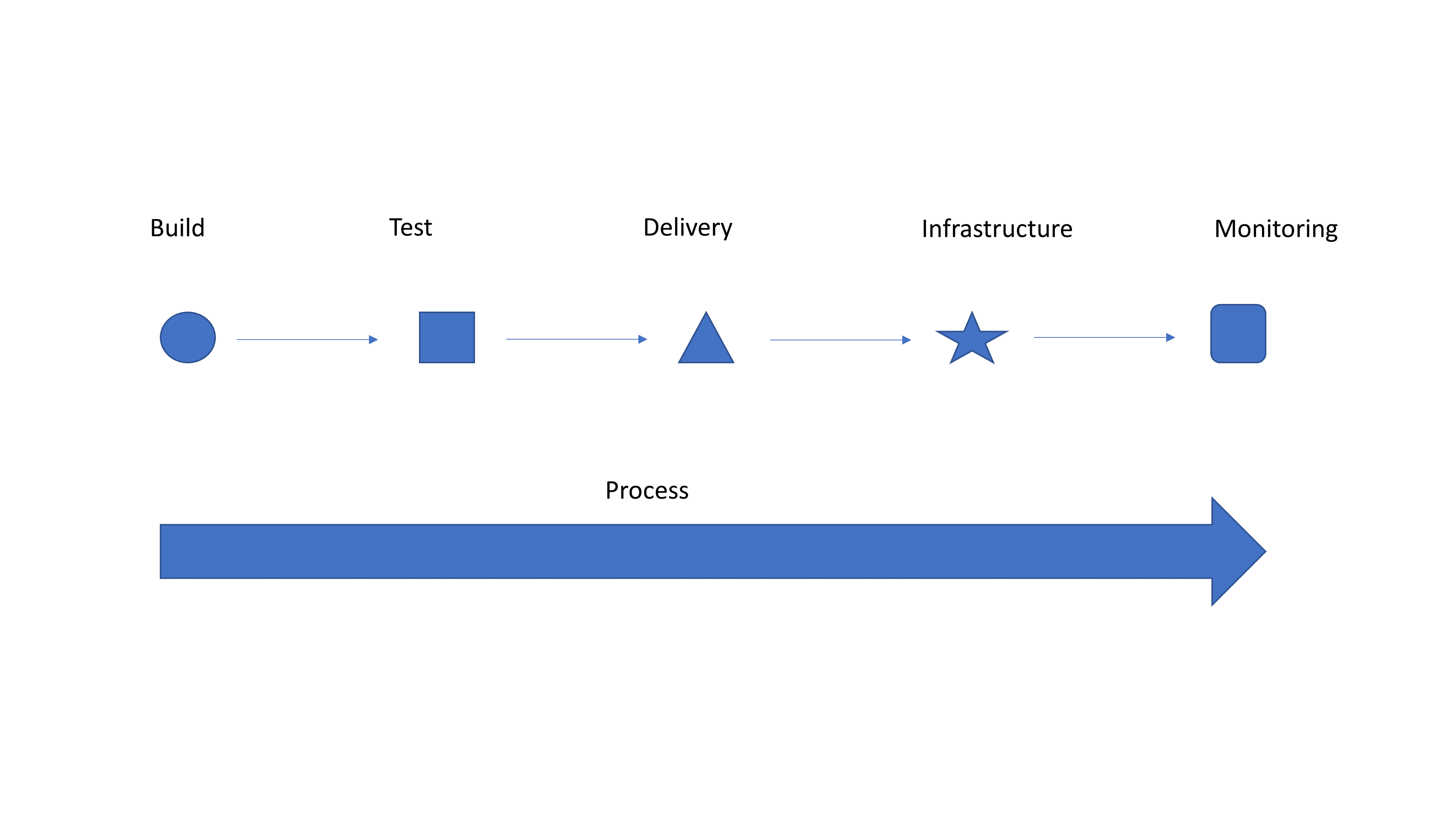
    Simple Graphic for Discussion

    So I’m going to take a second to tell you why it should. If you have integrated tools and teams, kudos! Hopefully you get absolutely nothing out of this blog, and you are enjoying a drink on a beach somewhere while your entire operation is taking care of itself. Everyone else, please read on.

    Look at the generic graphic. Notice how each step on the top is a different shape? That’s because they are individually implemented with limited integration of both people and processes. So you have a tool to submit for testing … Does testing (or monitoring at the end) feed back into your bug tracking system? Does it create tickets to get stuff done? When a container fails, is it simply dropped and a new one spun up to replace it because “they’re just cattle”? If so, does the system take steps to keep the failed container—or at least information about it—alive so troubleshooting can occur? Ignoring failed instances that were replaced and their impact on users was low is exactly how CloudBleed happened a couple years ago.

    Automate first, get the benefits of automation and drive faster delivery. Then take advantage of all that automation and make it into a streamlined process. It’s a massively complex system, even if you deliver everything on a single “platform,” so it will never be perfect. But issues that occur with regularity can be automated also to provide integration between systems. Isolating an instance and sending a notice to the defect tracking system that it is alive but not communicating (because it has been replaced) is something that is relatively easy to script/integrate and offers the ability to find what actually went wrong. Contrasted with just dropping the instance and starting a new one, this process is an order of magnitude better, and with integrated teams, Dev and Ops can work together to resolve whatever caused the instance to go down.

    Strong integration and a smooth pipeline is what technologies such as application release automation are designed to deal with, but most shops see these tools as “unnecessary” overhead. I disagree. Find one you like—there are a million of them—and use it to connect things. It’s just one step, but it is a step to transforming your operational delivery systems from unique snowflakes to part of a collection that works together.

    That’s it. Automate first because the gains are phenomenal, but don’t stop there. Really—don’t. You are doing yourself a disservice if you do. The whole “We’re going to change your world!” crowd is annoying, because changing your world is your decision, but listen to them anyway, and see which of their ideas fit your organization. You’ll be surprised once automation is solidly in place how much of what the process side of DevOps offers makes sense.

    — Don Macvittie

  • Survey Finds Wide Gap Between DevOps Adoption and Success

    Survey Finds Wide Gap Between DevOps Adoption and Success

    A recent HBR survey shows there is work to be done to advance DevOps in organizations

    A survey of 654 subscribers to the Harvard Business Review found that while 86 percent of respondents said it is important for their organizations to be able to build and deploy software quickly, only 10 percent said they are successful at it.

    Conducted by Harvard Business Review Analytic Services on behalf of Google, the survey found nearly half (48 percent) of respondents said their organization always relies on DevOps methodologies when deploying software, while another 21 percent rely on DevOps selectively. An additional 8 percent said their organization plans to adopt DevOps practices.

    Among those respondents employing DevOps practices, the top benefits cited were increased speed to market (70 percent), productivity (67 percent), customer relevance (67 percent), innovation (66 percent) and product/service quality (64 percent). Despite those benefits, however, most organizations still have a significant amount of work to do in terms of implementing best DevOps practices—the three biggest hurdles organizations face are organizational silos (50 percent), legacy technologies (49 percent) and resistance to change (46 percent).

    Melody Meckfessel, vice president of engineering for Google Cloud Platform (GCP), said these issues are precisely why Google is sharing how it operates in the form of site reliability engineering (SRE) principles, which are a prescriptive set of guidelines for implementing best DevOps practices. Not every organization needs to implement those principles to the same level, but just about every organization can benefit from adopting a set of well-defined engineering principles, said Meckfessel.

    The challenge many organizations face is the fact that most of the IT staff are not engineers by trade. Most IT staffs are made up of administrators who tend to have limited programming skills. But Meckfessel said even IT organizations that don’t necessarily have a lot of engineering expertise still can benefit from automating operations based on the SRE principles.

    Many of those organizations will need to slow down the rate at which they are building applications today to be able to speed up tomorrow. It takes time for organizations to master the cultural change required to implement DevOps practices. But once they begin to master DevOps, the benefits to the organization compound quickly. Meckfessel said two of the most important attributes of DevOps is adopting an immersive approach to training and establishing a no-blame culture within the IT organization when it comes time to conduct post-mortems. That latter goal is especially difficult to achieve sometimes, because most interactions between developers and IT operations teams historically have been less than positive.

    Meckfessel also noted it’s critical now for organizations to incorporate cybersecurity into its DevOps processes as well, which requires not only additional training for developers but also closer alignment with cybersecurity teams.

    It’s now only a matter of time before the complexity associated with emerging technologies such as microservices based on containers force many organizations to dive deeper in DevOps. The real challenge now is charting a path of least resistance that also generates the maximum level of benefit for all concerned.

    — Mike Vizard

  • Open Mainframe Project: Zowe Ready for Prime Time

    Open Mainframe Project: Zowe Ready for Prime Time

    There is a lot of interest in updating mainframe technology/interfaces across traditional enterprises. As development environments and toolsets have evolved outside the mainframe, there is a struggle to keep up—partially because backward compatibility requirements make wild changes difficult and partly because the very architecture of mainframes is different.

    There have been several fragmented efforts over the last few years—some of them quite good—to update how a mainframe is accessed from external source and the ways that developers can code for the mainframe. After all, the number of developers proficient in mainframe toolsets continues to decline while the number of workloads does not, so something has to change.

    The Open Mainframe Project’s Zowe attempts to address these issues in ways that are both more widely applicable and more technologically advanced. It takes advantage of Open Source REST systems to front-end hardcore mainframe functionality, so developers who are accustomed to application server development can call things such as Spring Boot-based interfaces and use languages including Node.Js to access their mainframe systems.

    This week, OMP announced that Zowe 1.0.0 is production-ready. That means serious experimentation can be started at your organization to see if it addresses some or all of your mainframe modernization needs.

    There will likely always be some (at least operational) differences in mainframe systems usage because the software infrastructure is designed a certain way, but increasing modern tool usage makes learning those different parts easier across the board. By implementing a vendor-independent architecture that has guidelines for users and vendors to add functionality from anywhere, Zowe is a powerful and expandable tool for getting the job done.

    I sound a bit like a fanboy, but for most verticals, this is an issue that will continue to be a pressure point. It’s been more than a decade since companies started bringing back retirees to work on mainframe projects because new developers did not have the skills or interest to complete those projects. As more and more skilled CICS/RPG/PLI/etc. developers and mainframe operations specialists retire, this pressure will increase until it is resolved or unbearable. So I am a fanboy of any company/solution that is addressing this space instead of flocking off to the coolest new DevOps tool du jour. I’ve not yet used Zowe, so can’t directly recommend it, but reading over their documentation, I believe it’s a good idea to use tools we’re familiar with. So I’m rooting for it.

    If you test it out, drop a comment and let the rest of us know what you think.

    And keep rocking it. Whether in VS-2019 or VT-70, you are making the company engines hum.

    — Don Macvittie

  • Python Benefiting From Increase in DevOps Use

    Python Benefiting From Increase in DevOps Use

    DevOps and Python have developed a mutually beneficial relationship.

    In a recent survey released by the Python Software Foundation and software development company JetBrains, researchers found that more and more developers are using the program language for an array of versatile projects, including DevOps and machine learning.

    In fact, Python developers told the researchers that DevOps is increasingly part of their professional development work.

    “In 2018 we had significantly more respondents specifying they’re involved in DevOps (an increase of 8 percent compared to 2017). In terms of Python users using Python as their secondary language, DevOps has overtaken web development,” according to the “2018 Python Developers study,” which is based on responses from 18,000 developers in 150 countries.

    Over the last two years, Python has grown more important to developers thanks to its flexibility, especially when it comes to web development. It’s no surprise that as other projects have gained popularity in the enterprise—DevOps and machine learning—developers have started adopting the language to other disciplines, especially as businesses invest more in application development.

    In TIOBE’s February 2019 index, Python now ranks third behind favorites such as Java and C, edging out C++ for its current position.

    Digging into the numbers, the survey finds that 43 percent of developers are using Python for DevOps projects, as well as system administration and writing automation scripts. That’s an increase from the 35 percent who reported the same types of uses for the programming language in 2017.

    The report notes that these numbers reflect a combination of Python used as either the primary or secondary language for various projects. As the report notes: “DevOps/system administration/writing automation scripts has moved into first place among Python users using it as a secondary language.”

    Machine learning is another up-and-coming category, with 38 percent of developers using Python for these projects compared to 31 percent last year.

    Overall, data analysis remains the No. 1 use case for Python developers, with 58 percent reporting that it’s their main focus when it comes to development.

    In second place is web development, according to the report.

    In terms of the top cloud platforms for Python developers, Amazon Web Service is the top choice, with 36 percent of respondents reporting that they use AWS. From there, it’s Google Cloud Platform (29 percent) Heroku (26 percent), DigitalOcean (23 percent) and Microsoft Azure (16 percent).

    About a third of those surveyed responded that they don’t use any cloud platforms.

    When asked about running code in a cloud production environment, 47 percent responded that they use virtual machines, although 40 percent of Python developers reported that they prefer containers. Another 28 percent use platform as a service (PaaS) and 21 percent are taking the leap to serverless computing.

    Additionally, when developing for the cloud, about 35 percent of those in the survey report that they use Docker containers.

    This increase use of Python within DevOps, as well as other connected areas such as serverless computing, does not surprise Anshu Agarwal, the CEO and co-founder of Nimbella, a cloud-agnostic, serverless cloud platform for developers. She noted the language’s use within a wide range of projects, specifically machine learning and AI, are driving this change.

    “Python developers are driving serverless requirements in new and unique ways, primarily because of the interest in data analysis, ML and AI,” Agarwal wrote in an email. “These data analysis and ML/AI-centric serverless use cases are different than request/response style serverless functions which run for much shorter durations. Python functions in serverless may have much longer durations (10s of minutes or hours), and consume a lot more memory. For such functions a different kind of serverless framework needs to be adopted that can handle long running workloads.”

    When it comes to continuous integration systems, about a third of respondents don’t use any. However, when they do, Jenkins is the most popular at 25 percent, followed by Gitlab CI and Travis CI, with 18 percent each. For configuration management, 20 percent reported using Ansible, while 9 percent used custom tools. Puppet, Salt and Chef also appeared in the list.

    Finally, about two-thirds of Python developers (69 percent) use Linux as their main operating system of choice for development. Microsoft Windows comes in a distant second at 47 percent and Apple’s macOS in third at 32 percent, according to the study.

    — Scott Ferguson

  • Break-Even Analysis: Understanding the Impact of Automation

    Break-Even Analysis: Understanding the Impact of Automation

    Determining whether automation is helpful beyond the CI/CD pipeline can be easier through a break-even analysis

    The pursuit of automating away all the operational tasks in your organization doesn’t stop after you finish building a solid CI/CD pipeline infrastructure using the myriad tools available and making it stable.

    There are many more one-off tasks not part of the CI/CD pipeline, but which are very important for managing the infrastructure and operating the applications running in production, that are not yet automated. These tasks could be very specific to your organization, but some common categories of these tasks are:

    • Provisioning and maintenance of infrastructure, including patching, updating certificates and licenses.
    • Maintenance of monitoring systems.
    • Generation of reports and dashboards.

    To Automate or Not to Automate?

    A CI/CD pipeline is an end-to-end automated system that handles all aspects, from builds triggered by code change through deploying the built artifacts into production, with very little or no human intervention in between. The non-CI/CD tasks described above could be automated or be carried out manually.

    An inexperienced DevOps team can easily get carried away by the notion of  automating everything and end up spending time on low-priority tasks—sometimes, simply because using a new tool or the coding work involved in automating a task can be very attractive to the team members. While such endeavors would look great in a sprint demo and on a resumé, they won’t help the business achieve operational velocity. When there are multiple automation projects competing for the team’s time, it would make sense to do a break-even analysis to obtain better insight on the returns of automating an operational task.

    The Agile methods to select and quantify a task such as backlog prioritization and estimating time for a story are not adequate to assess how the organization would benefit from that project overall. The break-even analysis proposed here would help to determine whether an automation project is worth doing by looking at the overall impact of rolling out that automation in the organization. Agile is limited by its narrow focus on the team that rolls out the automation—the DevOps team—and it cannot provide any metrics on the overall impact of an automated process on the organization.

    The Break-Even Analysis

    Let’s define various metrics involved first and then do the simple math of overheads and breaking even with the benefits.

    Development time (d) – This is the time needed to develop and roll out an automation task. This would be same as the time estimate used for a related story in an Agile sprint. In hours.

    Maintenance time (m) – As any experienced DevOps engineer can attest, developing a script or tool suite is not a one-time deal. The changes will be needed due to many factors:

    • Infrastructure change.
    • Fixing bugs in the tool.
    • Enhancement requests.
    • Training users of the tools, such as SREs and fellow team members.

    Budget the hours needed annually for this task, depending on the complexity and possibility of changes down the road.

    Manual working time ™ – The time needed to complete the task without automation. Doing things manually can cause human errors which adds to the total time. Factor that in the estimate  if this task has been causing issues. In hours.

    Automated working time (ta) – The time needed to complete the task using automation. In hours.

    Jobs count (c) – The number of times this task is run. Make an annual estimation so even infrequent operational tasks can have a score.

    Though arbitrary, my suggestion is to try out an automation for a year for its benefits. Check if the project would bring in impressive returns during that time frame:

    Project overhead = d + m

    Savings from automation = (tm – ta) x c

    Net benefit to organization = Savings from automation – Project overhead

    To embark on an automation project, the organization should benefit greatly from it to do things faster and better. While an Agile way of prioritizing an automation task would narrow the focus only on the DevOps team, this method also gauges and factors in the users’ time.

    DevOps Benefiting Customers

    The tools developed might not be used internally always, which is a major assumption in the above break-even analysis. It is quite possible that an automation process could benefit end users as well. I think it is very important to factor in the time saved by our customers also.

    Happy customers always bring in goodwill to a company.

    — Thomas Theakanath

  • Help a Student Out and Advance DevOps in Academia

    Help a Student Out and Advance DevOps in Academia

    Those of us who attended university know the pressures students face every day. Between attending classes, completing homework, figuring out what they really want to do with their life and all of the other assorted adulting they have to manage, college students have a lot going on. That’s why a little help can go a long way.

    Take Gabriel Cogo, for example. He’s a Ph.D. student at Texas Tech University in the Management Information Systems Department. He is working on his dissertation, the topic of which is DevOps, mostly focusing on the organizational impact and the factors that lead to successful DevOps adoption by organizations. He needs to gather information from DevOps professionals, such as IT analysts and managers, and reached out to devopsy.kinsta.cloud to see if we could help spread the word.

    From Cogo’s letter:

    … DevOps is an important topic, but so far not very much research has been done to help us understand how it works in actual companies.

    We ask that you participate by completing this survey. Additionally, if possible, I ask that you forward this survey to other colleagues in the IT department, preferably from different levels in the company (e.g., analyst, manager, CIO).

    This is an online survey that can be taken on your computer or smartphone, and we anticipate that it will take no more than 20-30 minutes to complete.

    This survey is completely anonymous, and we will only ask for the optional name of the company, so we can better understand the characteristics of our sample. To participate in this research please click the link:

    http://ttu.az1.qualtrics.com/jfe/form/SV_3z5Oh7ApF1za1pz

    You are free to leave at any time. We greatly value your participation in this study.

    For those interested, Cogo has shared with us the executive summary of his dissertation, which is available here.

    So whaddya say, want to help a student out?

    — Charlene O’Hanlon

  • DevOps Disillusionment? 4 Behaviors to Get Your Team to the Other Side

    DevOps Disillusionment? 4 Behaviors to Get Your Team to the Other Side

    For most teams, the adoption of DevOps and an agile mindset involves many twists and turns on the path to maturity. It’s not uncommon for teams to experience a “trough of disillusionment” period as:

    • Initial euphoria and “us-against-the-world” team mentality ushered in by adoption of new work patterns wanes with time.
    • Client demands and pressures to produce intensify.
    • Sustained leadership engagement and support fails to materialize.
    • Key evangelists move on to new roles.
    • Apologists for organizational status quo never tire.

    And before you know it, what once felt like a cultural movement seems mired in the realities of metrics, tools and keeping the operational wheels on.

    Pushing through these challenges and self-doubt is a critical step in DevOps maturity that can refine and strengthen a team’s character. Getting to the other side of “the trough” requires a team and its leaders to reconnect with why they embarked on the DevOps journey in the first place, and remind themselves that a lasting shift in behaviors is the ultimate goal. Where behaviors change, results follow.

    What are these behaviors? With so much written by thought leaders in the DevOps community, teams have the luxury of expressing the behaviors they intend to model in a way that resonates with their situation. Ultimately four actions, practiced faithfully, will build the team muscle memory necessary to get to the other side.

    Choose Wisely

    Overcoming the urge to please others and having the courage to say “no” to work that is unlikely to add customer value is perhaps the most important behavior of all. Doing it in a way that preserves credibility and trust is a skill that can only be learned through deeply understanding who your customers are and what problems they are trying to solve. Choose wisely and prioritize ruthlessly. Flawless IT delivery of unnecessary features is a shared failure for both customer and DevOps team alike.

    Commit Boldly

    Go “all in” on the work you choose to take on. Ensure that the desired outcomes and acceptance criteria of your work are clear before committing, and rely on those closest to delivery to determine how to get it done. Once established, game on! Commit boldly to small deliveries that add customer value and invite accountability for what you take on—knowing that customer satisfaction is the ultimate measure of your success.

    Adapt Quickly

    Sometimes, we fail. In big and small ways teams employing DevOps don’t always meet their own expectations or those of their customers. Our failures don’t define us; how we respond to them does. Learn. Adapt. Move on. Welcome the changes to requirements you know will come and adapt quickly by leaning in to the power of small and frequent deliveries to place you back on track quickly.

    Share Freely

    Teams employing DevOps are part of a larger community of like-minded individuals committed to delivering customer value quickly and making their organizations better. Take your obligations to continuous improvement seriously, share best practices freely and solicit expertise to help improve the pace and quality of your delivery and those around you. Helping others succeed has the remarkable effect of making yourself better in the process!

    — Chad Sands

  • How Software Outsourcing Can Empower Digital Transformation

    How Software Outsourcing Can Empower Digital Transformation

    Businesses are constantly readjusting themselves to become more agile and innovative while maximizing their opportunity in today’s digital economy. This is especially true for up-and-coming businesses with limited budgets that need to think ahead of the curve to find additional resources to fuel their digital transformation. Software outsourcing is no longer perceived as a choice or a strategic decision to be made, but rather an operational duty of the IT leaders trying to transform their organizations.

    Software outsourcing businesses often adapt better to the evolving digital landscape. Why? Because they aren’t afraid to look outside an organization to fulfill all the requirements needed to run a thriving business and cater to customer’s needs. Software outsourcing is seen by business leaders as an effective means of finding a balance between constant budgetary constraints and the need for a digital transformation. But what are some of the more prevalent outsourcing trends and how can they help empower your business’ digital transformation?

    Emerging Technologies

    The widespread adoption of emerging technologies adds another dimension to our everyday lives—artificial intelligence and machine learning, blockchain and IoT, automated SIEM software and the advancements in cloud computing capabilities. These technologies are skewing the already-blurred lines between our digital and physical worlds and are helping companies bring highly advanced solutions to the fields of business automation, customer management, risk and security orchestration, to name a few.

    Keeping an eye on such trends is one thing, but incorporating them into an existing business structure often requires outside expertise. Software outsourcing companies are, by definition, businesses that help other businesses with the development, design, maintenance and testing of their software application and solutions. As such, leading providers in software outsourcing are constantly looking out for the latest tech advancements the market has to offer and craft their much-needed expertise accordingly.

    Outsourcing providers represent the important link between the customer’s growing demand for technologically driven solutions and services and the companies trying to provide them. It seems that every business nowadays wants and AI or machine learning-powered answers to their problems. Instead of having to hire a full-time specialist to help them execute a specific task, companies can simply outsource the needed expertise and use their resources on core competencies.

    Data Privacy and Security

    Advanced software solutions such as AI and machine learning require massive amounts of user data to prove effective. Collecting user data is one thing, but guaranteeing data privacy and security is a whole different ballgame. As the number of cybersecurity breaches increases over time, so does the demand for data loss prevention, data security automation and advanced threat intelligence. The only way for software outsourcing companies to satisfy this demand is to fully comply with security regulations and industry standards.

    The General Data Protection Regulation, or GDPR, has standardized the data protection law in the EU, imposing strict rules in regards to the collection, control and processing of personally identifiable information. Outsourcing vendors are now obligated to conduct their security audits regularly and use that information to update their security strategies and meet the new security requirements.

    Doing this allows them to determine the most effective policies for data protection and guarantee availability, responsibility and quality of their service-level agreements.

    A successful outsourcing agreement cannot be made if your potential partner doesn’t follow the latest security standards or doesn’t have a clearly defined security policy. The best way to protect your business against potentially hazardous data breaches is as simple as looking for outsourcing providers that have security testing in their service offerings. Agency listings and repositories are an excellent place to start, as they tend to provide the much-needed reviews and rankings of potential providers.

    Increasing Talent Shortage

    Labor markets are having a hard time keeping up with the rapid pace of tech development. Talent shortage continues to be the No. 1 challenge even in the booming areas of the world such as the UK and the United States. A large number of tech-oriented startups enter the market each and every day and staying above the competition requires expert help with highly specialized skill sets.

    To combat the increasing difficulties of finding expert help locally, businesses are turning toward less dynamic regions for their software outsourcing needs. Eastern Europe, for example, is far less saturated with tech startups when compared to the United States, yet manages to provide a sizable talent pool, as well as a large number of outsourcing providers to choose from.

    Digital Transformation and the Benefits of Software Outsourcing

    Businesses outsource expert help when dealing with parts of the digital transformation process for which they have little to no expertise whatsoever. This allows them to close any gap they might have had regarding their digital capabilities and focus their efforts on core transformation objectives. Collaboration is a vital part of outsourcing and, as such, provides valuable information regarding the latest business insights and disruptive technologies.

    Outsourcing software leads to a successful DevOps journey. It allows businesses to find providers specialized in the digital transformation process. Some providers offer a multidisciplinary expertise that encompasses AI and machine learning, big data tools, digital mobility applications, scalable cloud solutions and more. Working with distributed engineering teams who already have the necessary domain-specific expertise can result in a faster time-to-market and increased customer satisfaction.

    Digital transformation comes with many challenges and software development outsourcing should not be viewed as the go-to solution for every problem. It is one of many crucial parts found in the larger digital transformation framework. Business automation, emerging technologies, the latest security practices and value-added services—these are the cogs in the software outsourcing-fueled machine that is digital transformation.

    — Natasha Lane