Category: DevOps and Open Technologies

Editorial Calendar for February 2016

  • WhiteSource Tightens Code Scanning Tool Integration with Azure DevOps

    WhiteSource Tightens Code Scanning Tool Integration with Azure DevOps

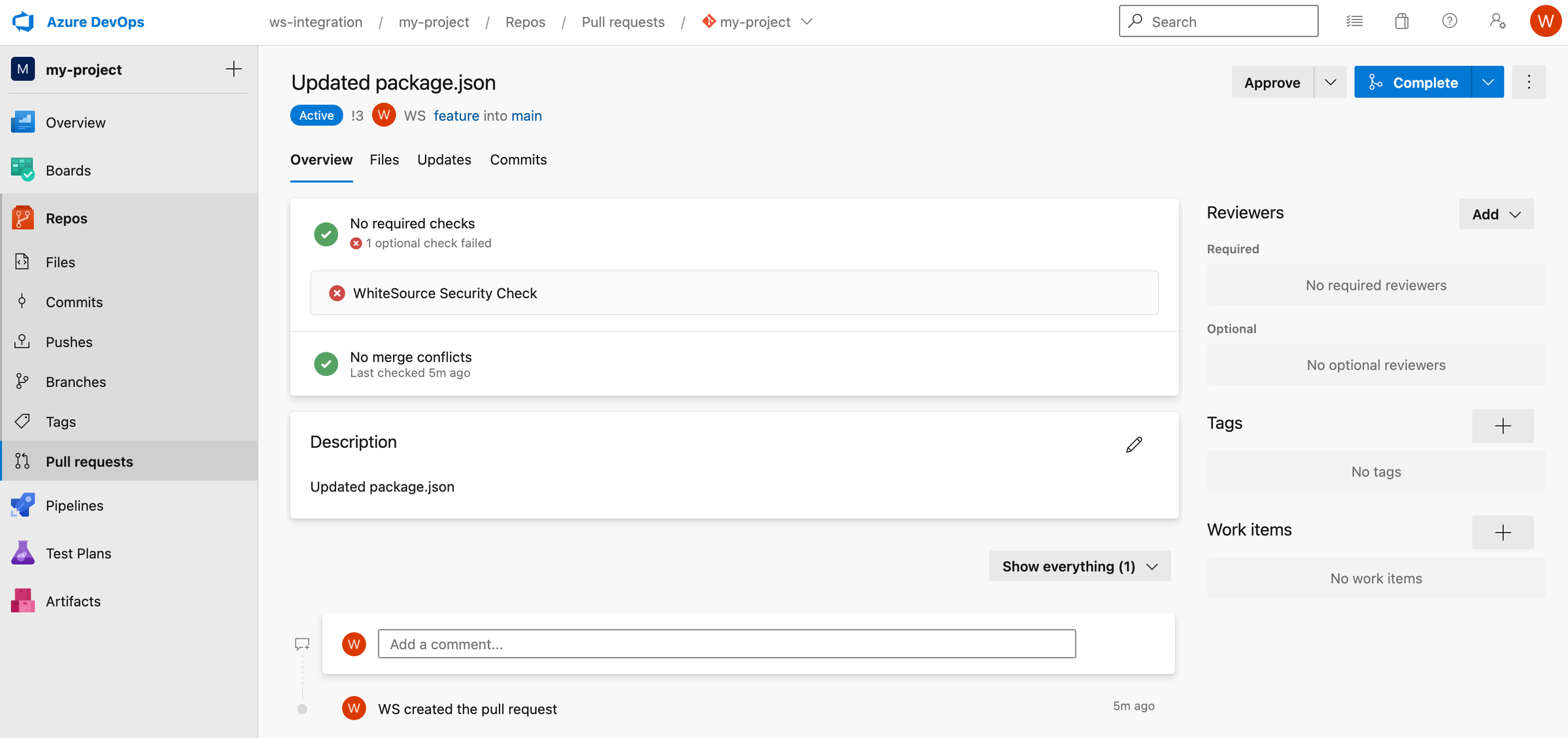
    WhiteSource has added the Microsoft Azure DevOps platform to the list of continuous integration/continuous delivery (CI/CD) platforms its open source vulnerability scanning tools natively supports.

    Susan St. Clair, director of product management for WhiteSource, said while developers are always encouraged to scan for vulnerabilities, it’s more effective if organizations implement scanning by default every time there is a merge request. That approach reduces friction because organizations become much less dependent on developers to scan for vulnerabilities within the context of a larger DevSecOps workflow, she added.

    WhiteSource also provides a merge confidence feature that uses crowdsourced data to show how likely it is that an open source component can be updated without breaking the build. Merge confidence includes data on upgrade age, adoption and compatibility to create a confidence score.

    The WhiteSource integrations make it possible for DevOps teams to detect all open source components being used and automatically enforce security policies directly from their repository. DevOps teams are provided with vulnerability and misconfiguration alerts and license violations along with detailed remediation guidance, including suggested fixes and prioritization advice, within an existing workflow versus being required to switch to a tool that has a separate user interface (UI) they need to learn.

    Should a merge request introduce a new error, the developer is given immediate feedback to resolve any newly introduced vulnerabilities before the request is completed. That approach to separating feature branches and mainline branches prevents interruptions to workflows. The enterprise edition of the WhiteSource tool also automatically generates pull requests in the repository to update vulnerable open source components to the lowest non-vulnerable version.

    WhiteSource also supports code repositories such as GitHub, GitHub Packages, JFrog, Bitbucket and GitLab. The Azure DevOps platform is gaining traction as more application development projects are being managed via the cloud following the onset of the COVID-19 pandemic, noted St. Clair.

    As more organizations begin to embrace DevSecOps workflows each of them will need to decide how far left they want to shift responsibility for application security. In theory, each developer is now being held more accountable for every one of their applications that gets deployed in a production environment. In practice, most developers lack the expertise required to ensure applications are secure.

    There are, of course, more concerns being raised about the security of software supply chains that include open source software in the wake of the recent disclosure of zero-day vulnerabilities in the widely-used Log4j logging tool. Many of the maintainers of smaller open source projects lack the resources required to ensure there are no inadvertent vulnerabilities that could be exploited by cybercriminals. More challenging still, many developers may have used an older version of that software that has known vulnerabilities.

    It’s not clear how open source software will ultimately be made more secure. In the meantime, however, it’s clear the onus for ensuring the security of that software is on the DevOps teams that employ it.

  • Heterogeneous Hardware Needs Universal Software

    Heterogeneous Hardware Needs Universal Software

    As hardware advances and diversifies, we’re entering what many see as a new golden age of computer architecture. However, the idea of an ever-expanding hardware landscape can be daunting for software developers, because while hardware diversity is wonderful for price and innovation, it can lead to spiraling software complexity on the back end. So many software tools are specific to the hardware they run on that a world where CPUs, GPUs, FPGAs, ASICs, DSPs and more are freely intermingled feels overwhelming; an invitation to interoperability headaches and spiraling tech overhead. The question on the minds of developers is how to navigate this constantly changing ecosystem to take advantage of the new world of hardware acceleration without driving themselves crazy in the process. 

    The challenge for developers is that, if we look historically, every time a new piece of world-changing silicon shows up, it often comes with a new software stack of tools. With heterogeneous hardware innovation moving at a nearly untrackable pace already, keeping up with the software end is beginning to feel untenable. In response, a new philosophy is emerging: We should be able to have a common set of tools, libraries, frameworks and compilers that can address a wide variety of accelerators in a “silicon agnostic” way. 

    Anyone doing DevOps work today should be asking, “Are the tools we are adopting ready for the heterogeneous hardware future?” Rather than using proprietary stacks exclusive to individual vendors’ concepts of how acceleration should work, we should be thinking about abstraction layers that allow us to move to open software stacks that work across multiple vendors and architectures. 

    This philosophy is central to a number of movements—oneAPI being one example—of asking for libraries, compilers and analysis tools that are more versatile. It’s incumbent on any future-conscious developer to analyze the tools they’re using and ask if they are preparing for the future or locking them into a single solution that excludes you from other innovations. 

    When it comes to navigating the changing developer landscape, it’s particularly important to look at the multiple-vendor piece of the puzzle. One of the signature strengths of computing and electronics is its ability to interoperate. Without compatibility between platforms, we end up locked into single solutions that don’t take advantage of the diverse landscape of innovation available to us. If systems are built from the ground up with mixing and matching in mind, we don’t have to change our software tools to adapt to new technologies and we can use the same languages, libraries and analysis tools we are used to. 

    It’s important we take on this work now because hardware diversity is not just at an all-time high, its momentum is only growing. In the past when the hardware landscape was more limited, switching to different toolsets for different CPUs was a feasible, if inelegant solution. Today’s computers, however, have computational capabilities from multiple vendors. If my tools don’t stretch across all of its ecosystems, I end up in a complex mess very quickly.  

    A particularly relevant example can be found in supercomputing, one of the most exciting and fast-moving areas of innovation in the developer community. What is the most exciting thing about supercomputing? It’s heterogeneous, allowing multiple architectures to take on specialized hardware acceleration for the different tasks for which they are best suited. The Aurora supercomputer, for example, is planned to achieve up to 2 exaflops of performance—a staggering number (the first supercomputer I helped design had 1 teraflop—or 2 millionths of Aurora’s performance). The amazing capabilities of these machines are only possible because of advancements in heterogeneous memory technologies, storage capabilities, sophisticated CPUs and GPUs all working together seamlessly.  

    The advancements we’re seeing in supercomputers, as always, will ultimately filter down into lower-level systems. In the near future, regardless of the type of work you do, enormous computing power is coming online. We need to make sure that our libraries and tools can take full advantage of it when it arrives.

    Two great places to learn more about activities to help software be open, multi-vendor and multi-architecture for heterogeneous programming are:  https://sycl.tech/ and https://www.oneapi.io. There are numerous online tutorials, a link to the SYCL book (free PDF download) and much more.

  • Database Virtualization: Breaking Vendor Lock-In

    Database Virtualization: Breaking Vendor Lock-In

    Every enterprise is battling vendor lock-in—constantly. Ask any IT leader about what keeps them up at night and vendor lock-in is certainly near, if not at, the top of the list. And while network, storage and compute have long been democratized by virtualization, one discipline has held out as the last bastion of vendor lock-in: Databases.

    How bad can it be? Take Amazon, for example. They celebrated their retirement of the last internal Oracle database exuberantly. People familiar with the matter suggested that replacing Oracle was at least a decade in the making, probably longer. It is anybody’s guess how much effort it took to accomplish this feat. A big celebration was in order, indeed.

    Now, let’s take a look at database virtualization. As a relatively new discipline, the idea of virtualizing critical systems like data warehouses made a big splash recently. But does it apply to your systems? And the ubiquitous question: Does it come with performance penalties?

    What Is Database Virtualization?

    Database virtualization is the concept of abstracting applications and databases from each other. Using virtualization, an application written for, say, an Oracle database can run on an open source database like PostgreSQL without making changes to SQL or to associated APIs. As an aside, this is not to be confused with data virtualization—which is really a data integration play.

    A database virtualization platform translates queries and data in real-time. Through emulation, it bridges functional gaps between the source and destination system so applications remain unchanged while moving to a different database. Database virtualization doesn’t make migrations easier; it makes them effectively obsolete.

    The idea is rather compelling. So much so that Amazon developed and released their own version of a database virtualization product recently that targeted small standalone database systems.

    Why You Need Database Virtualization

    Here’s a simple rule of thumb. The cost of migrating a typical data warehouse—without virtualization—is about the total cost of the database over the next five years. So, if your current data warehouse runs you, say, $5 million a year, (which is typical for a mid-range system) your cost to migrate it will probably be close to $25 million. Moreover, the project could take up to five years.

    But wait; there’s more. The true downside of conventional database migrations is actually their abysmal failure rate. Analysts put it typically above 80%. For large data warehouse systems, it seems to be higher still. That’s what makes databases the ultimate bastion of vendor lock-in.

    As an IT leader, you naturally don’t have the time, the budget or the appetite for such a risky undertaking; you’d probably rather deploy that kind of money toward creating new revenue. Database virtualization lets you do just that: Sidestep these risks and, instead, focus on what’s really relevant.

    When to Use Database Virtualization

    Database virtualization is particularly suitable for replatforming data warehouse workloads. These workloads are notorious for their complexity and for the effort a rewrite would entail. Often, these workloads have been grown and curated for years—sometimes decades. Maintaining the workload while replatforming makes economic sense: It means preserving and protecting long-standing investments.

    However, for database virtualization to be successful, both the source and destination systems need to be of comparable performance and scale. This should be obvious: Moving a workload from, say, a Teradata system to a Postgres instance is unlikely to satisfy your business users.

    But there is good news. Over the past few years, cloud data warehouses have increasingly reached competitive performance targets. They have become viable alternatives to legacy on-premises appliances. From an IT leader’s perspective, that is great timing. Most IT leaders today are currently tasked with sunsetting these appliances over the course of the next few years. Database virtualization couldn’t be any timelier.

    Goodbye, Vendor Lock-In

    Virtualization, as a general concept, has revolutionized the IT stack over the past 20 years. Server virtualization, which started as a niche for QA and developers, became the foundation of cloud computing; virtualization then spread to network and storage. Databases are one of the few remaining disciplines that have bucked the virtualization trend—until now.

    Not surprisingly, the premise of database virtualization resonates greatly with practitioners. And even though the initial success in the data warehousing arena is yet to be replicated in other areas, it seems like it’s just a matter of time before the concept becomes ubiquitous.

  • Linux Foundation Survey Sees Rise in SBOM Use

    Linux Foundation Survey Sees Rise in SBOM Use

    A global survey of 412 organizations published today by the Linux Foundation found nearly half of respondents (47%) producing or consuming software bills of material (SBOMs), and more than three-quarters said they expected to produce or consume them in 2022.

    SBOMs have become a bigger area of focus in the wake of a series of high-profile software supply chain-related breaches. The breaches involved application components compromised by malware that had been surreptitiously inserted during the application development life cycle. The Biden administration has gone so far as to issue an executive order requiring all agencies to provide SBOMs for all the commercial and custom software they use, but as of yet a deadline for compliance with that order hasn’t been set.

    In general, the Linux Foundation survey found that a large percentage of respondents (82%) are already familiar with the term SBOM. Respondents cited various benefits of having an SBOM, including making it easier for developers to understand dependencies across components in an application (51%), making it easier to monitor components for vulnerabilities (49%) and making it easier to manage license compliance (44%).

    However, the survey also makes it clear there is much SBOM work to be done. A full 62% of respondents, for example, are looking for better industry consensus on how to integrate the production/consumption of SBOMs into their DevOps practices. Respondents also cited a need for consensus on the integration of SBOMs into their risk and compliance processes (58%).

    More than half (53%) also said there is a need for better industry consensus concerning how SBOMs will evolve and improve.

    The survey also makes it apparent that organizations are more aware of the role SBOMs play in securing supply chains. A full 80% of organizations are aware of the White House’s executive order on improving cybersecurity, with more than three quarters (76%) considering making changes as a direct consequence of the order. Overall, the survey found the top consideration organizations focus on when evaluating open source software is security.

    Stephen Hendrick, vice president of research at the Linux Foundation, said 2022 is likely to be remembered as the year of the SBOM. There are several standards for building SBOMs, including an open source software package data exchange (SPDX) specification backed by The Linux Foundation and the Joint Development Foundation that is now recognized as the ISO/IEC 5962:2021 international standard. There is also CycloneDX, a lightweight SBOM standard based on an open source project that originated via the Open Web Application Security Project (OWASP) community and a software identification (SWID) standard for tags that some organizations use to create SBOMs.

    SBOMs are, essentially, a tool for listing the components that make up an application and are used inconsistently. However, when a critical vulnerability is discovered, they can sharply reduce the amount of time required to discover all the software components that need to be remediated. The challenge is, with the rise of containers, it has become much simpler to rip and replace software components in a way that may not always be reflected in the SBOM. Hendrick said in time, advances in technologies such as machine learning algorithms should make it easier to instantly reflect those changes in an SBOM.

    Regardless of approach, it’s apparent DevOps teams, like it or not, are about to be held more accountable for the provenance of every component employed across their entire application portfolio.

  • Embedded Connectivity Solves the Right (and Left) Problem

    Embedded Connectivity Solves the Right (and Left) Problem

    In Steven Bellovin’s book, “Thinking Security: Stopping Next Year’s Hackers,” (2015) he wrote:

    “Companies are spending a great deal on security, but we read of massive computer-related attacks. Clearly, something is wrong.

    The root of the problem is two-fold: We’re protecting (and spending money on protecting) the wrong things, and we’re hurting productivity in the process.

    InfoSec is hurting productivity in the organization it is supposed to be protecting.”

    Bellovin clarified what he meant by “the wrong things.” He observed that security measures tend to stick around even when the threat they were intended to address has faded into the past. Those security costs have only increased since 2015 when the book was published, and today represent a trillion-dollar drag on the global economy despite the emergence of security-integrated models of software delivery such as DevSecOps, shift left and shift right.

    The 2021 IBM Security Threat Intelligence Index reports the No. 1 attack vector was a surveillance technique known as scan-and-exploit. Defenders face an asymmetric engagement with such network threats. The successful attacker needs only to exploit a single vulnerability whereas defenders must secure 100% of the network’s ports of entry 100% of the time. The fundamental problem is the anonymous and permissionless nature of the internet. This makes it both useful and easily abused. Anyone anywhere may conduct reconnaissance and launch attacks at a massive scale with little cost or risk. How can we make it prohibitively difficult or costly to successfully surveil and attack our own applications? What if we could reliably defend against the entire category of active scanning tactics?

    There are no secure networks, only isolated networks. Taking this back to first principles, a network’s purpose is to convey packets of data from sender address to recipient address. The network has no built-in ability to identify either party or to discern the legitimacy of any activity. Active scanning techniques identify potential targets that are then probed by scripts that may be intrusive or stealthy or both. We could simply reject all incoming network traffic with a firewall, but application servers must be continually reachable in order to listen for incoming requests. Any interruption of availability causes errors like “connection refused” and “service unavailable” for the user. 

    This necessary network exposure leaves the upper layers of the network and the application server itself vulnerable to intrusion and denial of service attacks. “Private” enterprise applications are similarly exposed to the famously-vulnerable group that are VPN users’ devices, and so are by no means immune to this problem. This presents the problem of automatically discerning which incoming connections are legitimate, continually, forever. Are we trying to solve the wrong problem?

    Ideally, we would identify the sender before they connect to the application server. That way, we can know whether they have permission to connect at all. This is something we simply can not do when the sender is known only by a network address. We can’t ask for a credential because that introduces yet another application layer with all of the same problems. This is precisely why VPNs do not go far enough: A superficial barrier is erected for users that prevents the application server from checking for permission until after surveillance and subsequent attacks have occurred. 

    Embedded connectivity-as-code solves the right problem. This represents a shift in thinking about the relationship between the application and the network. Now, the application brings its own point-to-point overlay with a verifiable identity on both ends. This has significant implications for the security of the application that can be summarized in terms of shifting security left in the development timeline and shifted right in the life span after deployment.  

    Shift left: OpenZiti makes embedding connectivity-as-code convenient for developers and transparent for auditors and users. As open source software, it fits into DevSecOps processes that scan the source code. The management side of the OpenZiti network is cloud-native and API-driven and fits into the DevOps paradigm of continuous integration testing. For example, a network-as-code may be continually created and destroyed by a pipeline to exercise any imaginable configuration of endpoints, services and policies, or to facilitate dynamic scanning of the data edge and fabric APIs. 

    Shift right: OpenZiti allows us to shift right security to measure and monitor applications after development, in production, with a novel ease and without compromising security. Operators maintain perfect visibility of deployed applications and need not cope with the complexity of hopping through security gateways or bastions or worrying about external malicious actors and inbound connections. This best-of-both-worlds reality is a natural effect of  an access control scheme that is based upon verifiable cryptographic identity, not a weak identifier like an IP address. Importantly, this means it is always knowable which identity is accessing what services, when they were accessed and to what extent.

    OpenZiti gives applications superpowers! To name a few: Identity-driven addressability, private domain name system, shelter from unauthorized connections, portable and programmable micro-segmentation, end-to-end encryption, solves the IPv4 shortage without IPv6, smart routing to choose optimal routes across the internet and is transparent to end users.

    Learn more about OpenZiti by checking out our Quickstarts or engaging in conversation on Discourse. 

  • Google FLoC is Dead | Meta AI Supercomputer Lives | ARM Deal is Dead

    Google FLoC is Dead | Meta AI Supercomputer Lives | ARM Deal is Dead

    Welcome to The Long View—where we peruse the news of the week and strip it to the essentials. Let’s work out what really matters.

    This week: Google’s FLoC proposal is dead, Meta/Facebook is buying RSC—a huge AI supercomputer, and Arm “will IPO” instead of selling to Nvidia.

    1. Forget ‘Federated Learning of Cohorts’—Long Live ‘Topics’

    First up this week: Google bows to the inevitable. Third-party cookies will soon go away, because people are fed up with being tracked. But Google’s FLoC proposal wasn’t the answer.

    Analysis: FLoC is a flop

    Google doesn’t want to invade your privacy. But Google does want to sell well-targeted ads. The key difference between FLoC and Topics is that FLoC buckets were automatically generated—and hence opaque, risking overlap with “protected categories”—e.g., race or gender. But the topic classifications in the Topics API are curated and have user-visible, descriptive names.

    Frederic Lardinois: Google kills off FLoC, replaces it with Topics

    Google’s controversial project for replacing cookies for interest-based advertising … is dead. In its place, Google today announced a new proposal. … Your browser will learn about your interests as you move around the web.
    …
    When you hit upon a site that supports the Topics API for ad purposes, the browser will share three topics you are interested in. … The site can then share this with its advertising partners to decide which ads to show you. … Users will be able to review and remove topics from their lists [or] turn off the entire Topics API.
    …
    It’ll remain to be seen if other browser vendors will be interested in adding the Topics API. [But] they all quickly turned a cold shoulder to FLoC. … The plan is to start trialing the Topics API at the end of this quarter.


    A minor tweak and rename? “Yes and no,” equivocates mananaysiempre:

    Yes, it still amounts to building user-tracking functionality into user agents. No, it’s not the same approach.
    …
    FLoC was doing unsupervised clustering of users, whereas Topics allocates users into predetermined clusters. This makes it potentially more transparent and also seems designed to work around the “protected categories” objection.


    But Google has a long way to go to convince garett_spencley:

    I’m glad FLoC is being ditched, but as an end-user I’m still not asking for this Topics nonsense. It doesn’t solve any problem that I have. It solves problems that the advertising industry has.
    …
    I’ll choose to use browsers that don’t support this.


    2. Machine Learning at Metaverse Scale is Expensive

    Zuckerberg’s new toy is RSC: A $400 million Nvidia-based AI supercomputer. And that’s just Phase One.

    Analysis: 3.8×10¹⁸ integer operations per second is … a lot

    If you rely on Open Compute Project systems for your DevOps, know that it’s no longer the bee’s knees over at Hacker Way. Meta/Facebook is investing eye-watering sums into a custom configuration of off-the-shelf hardware.

    Timothy Prickett Morgan: Meta Buys, Rather Than Builds And Opens, Its Massive AI Supercomputer

    If you thought it took a lot of compute and storage to build Facebook’s social network, you ain’t seen nothing yet. … To build the Metaverse … is going to take an absolutely enormous amount of supercomputing power.
    …
    But what is a surprise, given Facebook’s more than decade long focus on … opening up its hardware designs through the Open Compute Project, is that the … Research Super Computer [RSC] system is built from … commercially available … servers, storage, and switches. [It] probably comes down to … working a deal with some vendors who want the Facebook publicity and are willing to work the price and the parts availability.
    …
    [So Meta bought] 760 DGX A100 systems from Nvidia—which each … have a pair of AMD “Rome” 64-core Epyc 7742 processors … 1 TB of main memory … eight A100 GPU accelerators [and] eight 200 Gb/sec HDR InfiniBand controllers—all-flash storage from Pure Storage, and … caching servers from Penguin Computing. … At list price this machine would cost around $400 million … Phase one of the RSC machine is rated at 59 petaFLOPS … (FP64), and 118.6 petaFLOPS FP64 using the Tensor Core matrix engines. … With INT8 processing on the Tensor Cores, which is needed for AI inference, the phase one machine is rated at 3.79 exaOPS.


    How much??? It doesn’t seem like news to kleiba:

    I used to work at a university where my professor had been in automatic speech recognition for a long time, but basically gave up on that line of research about 10 years ago because he figured that universities simply cannot compete budget wise with the big industry players. I suppose the same will soon be true for most ML-related areas of research sooner or later.
    …
    Already, a substantial amount of research innovation in [Natural Language Processing] and [Computer Vision] has been coming from big companies in recent years. Of course there is a discussion to be had about what that means for society at large.


    But 3.79 exoOPS? That’s the way the wind is blowing, according to sungazer:

    Give it 15 or so years—this level of computation will be on your desktop. If desktops still exist.
    …
    Or desks.


    3. Arm Bid: No Legs

    Speaking of Nvidia, as I’ve said before, the Arm merger really shouldn’t go through. And it’s looking less and less likely. ARM chips are an increasing fixture in the data center—especially those that value “performance per Watt.”

    Analysis: ARM M&A DOA—IPO PDQ

    A veritable hornets’ nest of Bloomberg journalists have put their names to an anonymously-sourced report. The story argues that the proposed Nvidia buyout of Arm from SoftBank Group is dead. Next stop: IPO.

    Ian King, Giles Turner, Peter Elstrom, Dina Bass, David McLaughlin, Ruth David and Dinesh Nair: Nvidia Quietly Prepares to Abandon … Arm Bid

    According to people familiar with the matter … Nvidia … doesn’t expect the transaction to close. … SoftBank, meanwhile, is stepping up preparations for an Arm initial public offering.
    …
    If Nvidia manages to get the deal over the line, it would be a massive coup. … But it will be an uphill fight. … The world’s biggest tech companies rely on Arm technology, and they fear they could lose unfettered access under Nvidia.
    …
    Within SoftBank, there are factions. [And] the ordeal has created divisions within Nvidia. … “We remain hopeful that the transaction will be approved,” a SoftBank spokesperson said in an emailed statement.


    Post-Brexit Britain would no doubt like to keep Arm independent. Here’s simonh:

    Arm has I think ⅔ of its employees in the UK—mainly Cambridge—and they’re expanding the campus there. The Semiconductor Physics Group at the Cavendish Laboratory at the University is at the cutting edge globally with 18 PhD projects currently.
    …
    Guess where scads of Arm’s top scientists are recruited from? Arm and the University are joined at the hip. That company’s not going anywhere.


    More broadly, it’s good news, thinks hatchet:

    Hopefully this means NVIDIA will focus on RISC-V instead. This will be good for everyone.


    The Moral of the Story: Zeal should not outrun discretion.


    You have been reading The Long View by Richi Jennings. You can contact him at @RiCHi or tlv@richi.uk.

    Image: Reed Geiger (via Unsplash)

  • Harness CD Platform Now Available via Source-Available License

    Harness CD Platform Now Available via Source-Available License

    Harness today announced a free community edition of its continuous delivery (CD) platform is now available under a source-available license rather than a more traditional open source license.

    Scott Sanchez, chief marketing officer for Harness, said the goal is to make CD as accessible to developers and DevOps teams as their current CI platform. Harness already makes an open source edition of its continuous integration (CI) platform available.

    The Harness CD platform is available under a Polyform Shield license that provides free access to the platform, including the right to use, modify and distribute it but not launch a competitive offering. A source-available license is an alternative to an open source license that allows an organization to potentially create a fork of the Harness CD that could, for example, be delivered as a cloud service. That specific issue has led to scenarios where vendors that create an open source project find themselves competing for revenue against a cloud service provider that is not necessarily as committed to contributing and maintaining the primary open source project. At this juncture, it’s not clear how many other vendors that make software available under an open source license might take a similar tack.

    While most organizations that embraced DevOps have been able to successfully implement a set of CI best practices, the number of organizations that have implemented CD is not nearly as high. One reason for that is automating deployments across platforms has never been especially easy. Each platform tends to be customized to the point where it is difficult to automate application deployments. In effect, each platform is its own unique type of “snowflake.”

    However, as the number of digital business transformation initiatives continues to steadily increase, the need to regularly update application experiences is going to require more organizations to implement a set of CD best practices. A source-available license should help increase the number of DevOps teams that can access and experiment with a CD platform, noted Sanchez. The challenge, of course, is that many of those applications are now based on microservices with components widely distributed across an IT environment.

    Historically, CI and CD have been synonymous when viewed within the context of a CI/CD platform. It’s not clear to what degree DevOps teams will look to better leverage the CI/CD platforms they already have in place rather than deploying a dedicated CD platform for IT operations teams and letting developers choose whatever CI platform they prefer. In general, a recent survey conducted by the Continuous Delivery Foundation found that 80% of respondents that work for companies with two or more employees are involved in DevOps to some degree.

    Regardless of approach, the coming year is shaping up to be one where many more organizations take DevOps initiatives to the next level. Arguably, as more organizations realize how dependent they are on software to differentiate themselves from rivals, the ability to deliver new application experiences has become critical. At the core of those efforts is a set of DevOps best practices that will ultimately determine just how competitive those organizations will be.

  • How Are API Management and Service Mesh Different?

    How Are API Management and Service Mesh Different?

    The use of APIs and microservices is increasing—a recent study from F5 estimated that the industry is approaching 200 million total APIs. As organizations expand their use of APIs and microservices, they inevitably require some form of service management architecture. There are primarily two major design options for implementing this: An API management system or a service mesh.

    The key distinction between API management and service mesh can be framed using the four cardinal directions. API management is typically adopted for REST services that face external developers—referred to as north-south traffic. On the other hand, service mesh is more commonly used by internal suites of microservices to help control lateral, or east-west, communication. There are more nuances between each, as we’ll cover below, but this is essentially how they’re adopted in practice.

    However, this binary is becoming blurred as collections of enterprise digital applications expand and access to cross-company business domains begins to look and feel more like consuming a third-party SaaS. Furthermore, some suggest that with the right controls, service mesh can cater to external users in the same way API management does. What’s more, service mesh and API management are complementary—they can coexist within the same organization and even be deployed in the same projects.

    I recently chatted with Mark Cheshire, director of product at Red Hat, about the emergence of both API management and service mesh. According to Cheshire, both approaches accomplished similar goals but evolved very differently. Below, we’ll revisit why these two paradigms emerged and compare and contrast them. In a separate article, we’ll consider when it’s best to integrate them both.

    What is API Management?

    API management is most often associated with north-south traffic. By exposing your API to the outside world, you enable other developers to connect it to their systems and leverage your data and functionality like building blocks.

    API management arose in response to the rise of web APIs. API management is a broad concept encompassing many functions required to expose an API endpoint to the outside world. This can include authentication, authorization, request routing, documentation, rate limiting, monitoring, logging, monetization and life cycle management. A key goal is to make integration easier for the developer consumer. Architecturally, API management follows a gateway pattern. Consumers issue requests to the gateway which then performs routing to the underlying services.

    For APIs, the big catalyst was the emergence of Web 2.0, Cheshire explained. Numerous startups began consuming RESTful APIs to connect their web properties and partner ecosystems. Companies also found REST APIs to be a much more straightforward integration approach than SOAP and SOA. They also saw the ease-of-use benefits and adopted API-first designs within their internal infrastructure.

    As of 2021, over 70% of APIs are built for internal use. So, do all these services need API management? It depends. “If you communicate externally, you need API management,” explained Cheshire. But, it’s a grey area for services within an enterprise, he says, though inter-domain traffic often could benefit from API management.

    A diagram of API management capabilities, from 3scale
    A diagram of API management capabilities, from 3scale

    Strengths

    • Can enable north-south traffic
    • Protects the boundary of an application
    • Designed to ease external developer consumption
    • Potential for monetization, subscription plans
    • Typically plug-and-play; easier to support
    • Many solutions on the market
    • Developer experience and docs
    • Analytics and reporting

    Weaknesses

    • May be heavier than service mesh
    • Fewer open source options; vendor lock-in
    • Analysis paralysis in comparing solutions

    What is Service Mesh?

    Service mesh is most often associated with controlling east-west communication between internal services. Service meshes like Linkerd, Istio and Kuma make it easier to reimplement similar logic—such as networking, observability, traffic management, security policies and routing—across many microservices from a single control plane.

    Service mesh was born to address slightly different challenges than API management. “The transition from monolithic to microservices is all about east-west traffic,” Cheshire said. Companies found it slower to innovate monolithic applications and thus broke them up into microservices that communicate via APIs. But these microservices all needed similar operational capabilities, which would be cumbersome to repeat over and over for each service.

    “For one monolithic app blown into microservices, you may not even need a service mesh,” said Cheshire. “However, when you have hundreds or thousands, that’s when applying service mesh becomes critical.”

    Istio service mesh architecture
    Istio service mesh architecture

    Architecturally, service mesh is typically divided into a data plane and a control plane. The service mesh deploys a sidecar proxy that sits alongside each individual service. Istio, for example, utilizes the Envoy proxy. Other meshes like Linkerd use their own proxy.

    Strengths

    • Fits the microservices architecture paradigm well
    • Good for traffic routing; improving resiliency
    • NIST-recommended architecture for achieving zero-trust
    • Many open source options
    • Fits large microservices deployments

    Weaknesses

    • Requires a more hands-on approach
    • Potentially more maintenance to support
    • Unnecessary for a single service
    • Requires filter chain add-ons for north-south abilities

    Comparing API Management and Service Mesh

    API management is predominantly aligned with externalizing APIs to partners. When you do so, maintaining the contract with a consumer is more important to meet SLAs. Thus, API management commonly delivers life cycle management abilities, such as versioning. API management is necessary even if you are exposing a single API, as this service needs to be adequately documented and secured. That being said, these tenants can also be relevant to developers reusing software within an organization—there’s something to be said for adopting a product mindset when dealing with internal APIs.

    On the other hand, service mesh is more aligned with controlling internal networks. Microservices are rarely deployed alone; typically, multiple microservices make up an application. And, many more might exist throughout an organization for unique purposes. Service mesh thus helps maintain consistency throughout large networks of decoupled microservices. Service mesh is also a rapidly growing field, experiencing an explosion of new development and production use. A Cloud Native Computing Foundation (CNCF) report found that service mesh use rose in production by 50% in 2020 alone.

    To put the comparison another way, William Morgan, CEO, Buoyant described how API management is more about business logic, whereas service mesh handles intra-cluster operations:

    “API gateways typically handle ingress concerns, not intra-cluster concerns, and often deal with a certain amount of business logic, e.g. ‘User X is only allowed to make 30 requests a day’. By contrast, a service mesh like Linkerd is focused on operational concerns (e.g. instrument these calls and report their success rate; secure this communication between these pods) and purposefully avoids the mixing of business and operational logic; and focuses on communication between the services on the cluster.”

    Though service mesh and API management achieve slightly different aims, both layers make it easier to reuse web-based services. And, they certainly can be used in conjunction. For example, you could build API-first microservices with service mesh and simultaneously use API management to expose certain domains. In another article, we’ll consider when it’s best to integrate the two technologies.

  • EEEWW—Green iMessage Bubbles | ‘Great Resignation’ Redux | Faster Firefox 96

    EEEWW—Green iMessage Bubbles | ‘Great Resignation’ Redux | Faster Firefox 96

    Welcome to The Long View—where we peruse the news of the week and strip it to the essentials. Let’s work out what really matters.

    This week: iMessage lock-in lessons, attrition-rate fixes, and more on Mozilla.

    1. ‘Never Date a Green Texter’

    First up this week: The weekend story getting the technorati chattering was about how Apple iMessage denizens pour scorn on Android users—identifying them by their “icky” green chat bubbles. An iPhone user’s message gets a “proper” blue background, y’see.

    Amusing though the story was, the writer seemed to be hell-bent on proving some sort of Apple C-suite-led “conspiracy to lock in.” The reality is far more mundane—but it teaches important lessons for DevOps.

    Analysis: Unintended consequences FTW

    Could your DevOps team make a trivial engineering decision that pays unexpected dividends? While lock-in might be distasteful, seemingly irrelevant design or technical choices can have huge ramifications with users.

    Tim Higgins: Why Apple’s iMessage Is Winning

    [The] pressure to be a part of the blue text group is the product of decisions by Apple executives starting years ago that have … helped to cement the iPhone’s dominance among young smartphone users. [It] encourages people to pay the premium … and remain loyal to its brand.
    …
    Teens and college students said they dread the ostracism that comes with a green text. The social pressure is palpable. … Jeremy Cangiano, who just finished up his MBA, … tried to cash in on it last year by selling his own merchandise that touted, “Never Date a Green Texter.”
    …
    The blue iMessage bubble was born out of a simple engineering need, according to Justin Santamaria, a former Apple engineer who worked on the original feature. … The idea that it would keep users locked in to using Apple devices wasn’t even part of the conversation at the time, he said.


    And then the other shoe dropped—via Ron Amadeo:

    Google took to Twitter this weekend to complain that iMessage is just too darn influential with today’s kids. … The company is hoping this public-shaming campaign will get Apple to change its mind. [But it] probably has the least credibility of any tech company [because it] has released 13 half-hearted messaging products since iMessage launched in 2011.
    …
    Google … seems to have learned nothing from its years of messaging failure. Today … the situation is an incredible mess, and no single Google product is as good as Hangouts was in 2015.


    Ouch. With a sociological perspective, here’s Christina “filmgirlcw” Warren:

    iMessage is incredibly popular with certain demographics. … It’s an in-group signifier—the way teens have always had in-group signifiers (when I was in high school, it was AIM, a Nokia, and wearing Abercrombie). … It’s always fascinating for me to go to other countries and see a ton of iPhone users not using iMessage but something else because that app has become the in-group signifier. … Every teen I know uses Discord more than they use almost anything else.
    …
    It isn’t about lock-in or regulation or technology. It’s about fashion.


    2. How’s your Attrition Rate?

    A study published this week says DevOps orgs and other internet companies rank third for attrition in the 38 industries surveyed. And if you lump that category together with “enterprise software,” it would be in clear first place.

    Analysis: We’re #1! Oh, wait …

    But some companies get this right—how can you be one of them? Culture, innovation, recognition and remote work. It’s definitely not only about pay.

    Donald Sull, Charles Sull and Ben Zweig report their fascinating study: Toxic Culture Is Driving the Great Resignation

    Between April and September 2021, more than 24 million American employees left their jobs. [But] while resignation rates are high on average, they are not uniform … from less than 2% to more than 30%. … More-innovative companies … are experiencing higher attrition rates than their more staid competitors.
    …
    Pay has only a moderate impact on employee turnover. … A toxic corporate culture is by far the strongest predictor of … attrition and is 10 times more important than compensation. … Job insecurity and reorganizations are important predictors of how employees rate a company’s overall culture. … But it is surprising that … the more positively employees talked about innovation at their company, the more likely they were to quit. … Employees are more likely to leave companies that fail to distinguish between high performers and laggards [or] that tolerate underperformance.
    …
    Our analysis identified … actions that managers can take … to reduce attrition. … Lateral career opportunities are 12 times more predictive of employee retention than promotions [and] 2.5 times more powerful [than] compensation. … Company-organized social events, including happy hours, team-building excursions [and] potluck dinners … are a key element of a healthy corporate culture. … Unsurprisingly, when employees discussed remote work options in more positive terms, they were less likely to quit.


    And the flipside of resignation? Hiring replacements. Let’s turn to the equilibrium of Nash Reilly:

    It’s only gotten harder in recent months [and] I think I know why. … You need to offer engineers some combination of these three things to pique their interest: Cool stuff to work on, smart people to work with [and] some degree of repeatability.
    …
    You can’t really prove to an engineer that you can give them things like good management, minimal churn, and decision making authority [so] let them talk to your employees. … Also, figure out a way to let your team “backchannel” to the candidate. [If] your product is not that cool … play up the things you can offer them: smart coworkers, and a stable working environment. … You can afford to be honest about what it is that you do offer to a candidate, [so] pitch them the truth: that you want to do good work, sustainably, for as long as you can—ideally with them on your team.


    Perhaps the smart money is already skating to where the puck will be? Here’s echelon:

    Engineering salaries are … one of the biggest expenses. … Companies love that they can now hire remotely and pay adjusted cost of living. They’ll hire as many workers in middle America as they can, and once enough of the workforce is concentrated outside of expensive cities, you’ll see them stop hiring in SF and NY entirely. [And] startup capital is already beginning to shift to … emerging markets. Employment will eventually head there too.
    …
    Make your money now while the iron is still hot.


    3. Say Something Nice About Firefox

    After accusing Mozilla of jumping the shark last week, perhaps I owe the Firefox folks a positive inclusion this time? The release notes for Firefox 96 certainly sound good.

    Analysis: Improved sound; better perf; stronger anti-CSRF

    Outside the Apple walled garden, Firefox is about the only non-Chromium browser. A browser monoculture can’t be a good thing for anyone—not DevOps nor users.

    Michael Gariffo: Firefox 96 update focuses on noise improvements, main thread efficiency

    On the desktop side of things, Mozilla’s latest release made “significant improvements” to the browser’s built-in [sound] noise suppression and auto-gain-control features. These improvements are aimed at web-based video chat users.
    …
    The second tentpole feature in version 96 focuses on reducing main-thread load, which should help the browser function better on older, slower, or congested systems. [And] a new enforcement setting for cookies … will, by default, apply the “Same-Site=lax” policy. Mozilla claims this will help better defend users against Cross-Site Request Forgery (CSRF) attacks.
    …
    Mozilla also acknowledged that it is working on correcting the performance of detached videos being played in full screen on macOS devices. … No timeframe was mentioned for when it might be available again.


    Okay. Sounds good. But not to Tetch:

    Never mind all that fancy stuff. … Any reduction in crashes?
    …
    FF crashes for me several times a month. … I always take the trouble to fill in the “What were you doing immediately before the crash?” section of the crash submission dialog, and never hear another thing.


    But more efficiency on the main thread? Tell me more. ksec:

    Such an important detail that deserves at least few more sentences of marketing message or explanation. But the whole release note just feels like they couldn’t be bothered anymore.


    The Moral of the Story: A weasel wishing Happy New Year to a chicken harbors no good intention.


    You have been reading The Long View by Richi Jennings. You can contact him at @RiCHi or tlv@richi.uk.

    Image: Moritz Knöringer (via Unsplash)

  • NPMs Sabotaged as OSS Sustainability Crisis Continues

    NPMs Sabotaged as OSS Sustainability Crisis Continues

    A long-simmering debate over the sustainability of smaller open source projects moved beyond the theoretical when two widely used open source node packaged modules (npm) were deliberately sabotaged this week, allegedly by a primary contributor.

    Colors.js is an npm that has been downloaded more than 3.3 billion times, with more than 19,000 projects depending on it. Faker, meanwhile, has been retrieved 272 million times, with over 2,500 projects depending on it. Colors.js enables organizations to print colorful text messages on the console, while faker is used to generate fake data for testing applications. Developers that pulled a recently published Colors.js version found their applications caught in an infinite loop, printing ‘LIBERTY’ ‘LIBERTY’ ‘LIBERTY’ followed by a sequence of gibberish non-ASCII characters. Functional code, meanwhile, was also removed from Faker.

    Ax Sharma, senior security researcher for Sonatype, a provider of an open source software security platform, noted these actions occurred in the wake of the series of zero-day vulnerabilities that impacted the widely used Log4j logging tool for Java applications. Sharma first reported the update issues with Color.js and Faker.

    The small team of contributors that work on the Log4j project found themselves creating multiple updates to the package to address vulnerabilities of varying severity on the common vulnerabilities and exposures (CVE) list. There is some debate, however, over how many of those vulnerabilities warranted a CVE listing given their severity, said Sharma.

    That issue has now emerged as a flashpoint for contributors to smaller open source projects. These contributors contend that larger organizations are taking advantage of their efforts without making any substantial contributions to a project in return, much less compensating any of the contributors for their time and effort. The recent updates made to the npms are, essentially, a protest statement, explained Sharma.

    It’s not clear whether other contributors to small open source projects might follow suit, but the debate over the sustainability of these projects has become heated. Many contributors to open source software assume that the organizations who use the free software they created should assume responsibility for securing it. That “user beware” approach to security is understandable for contributors that are not compensated for their efforts. However, when asked to patch open source projects used by billion-dollar organizations—and do so on an urgent, emergency basis—the resentment among those volunteer contributors rises sharply.

    Fortunately, some effort is being made to address these issues. The Open Source Security Foundation (OpenSSF), an arm of the Linux Foundation, raised $10 million to help maintainers embrace best practices and better protect open source projects from malicious code. Google has pledged $1 million to help open source developers adhere to National Institute of Standards and Technology (NIST) guidelines in response to the Biden administration’s recent executive order on cybersecurity. Administered as a pilot program by the Linux Foundation, that effort is part of a larger $10 billion commitment that Google previously made to open source security.

    White House national security adviser Jake Sullivan also recently sent a letter to major software companies and developers inviting them to discuss initiatives to improve open-source software security. The first step is a one-day discussion this month hosted by Anne Neuberger, the deputy national security advisor for cyber and emerging technology. In the letter, Sullivan specifically noted that while open source software has accelerated the pace of innovation, much of it is maintained by volunteers. This is now a key national security concern, he noted.

    It’s not clear how this emerging open source sustainability crisis will play out. However, DevOps teams might want to consider how dependent they are on open source projects whose contributors might have issues with how their work is being exploited.