Category: DevOps in the Cloud

  • The Age of Platform Engineering: What to Expect in 2024

    The Age of Platform Engineering: What to Expect in 2024

    Platform engineering has been gaining traction over the last few years, with some likening it to the next iteration of DevOps. Gartner has called it one of the top strategic trends of 2024 – and has predicted that 80% of large software engineering organizations will establish platform engineering teams by 2026. But what’s driving the momentum?

    I believe it’s a result of maturity in the adoption of the cloud by enterprises of all sizes and shapes. As more and more enterprises started using the cloud and embraced DevOps as a path towards quickly taking features to the market, there was a clear need to rethink how the underlying infrastructure and platforms were used for enterprise applications. Platform engineering emerged as the new path to building and managing the underlying application infrastructure.

    It’s been a growth year for platform engineering, but in today’s era of hybrid-cloud-meets-generative-AI, we see new trends emerging in this space. So, what’s next? Here is what we expect to see as we head into 2024.

    Product-Centric Funding Model

    Traditionally, IT was seen as a gatekeeper and cost center. With the cloud, developers gained more leverage in procuring the infrastructure they wanted for their applications. Enterprises realized the value of modernizing their IT operations to meet this modern need and wanted to transform their cloud operations to be part of the innovation team. They see platform engineering as the transformational approach that aligns cloud operations with developers and business users. However, platform engineering requires a product-centric funding model instead of project-centric models in the past, as a product-centric model doesn’t have a start and end date like projects and aligns closely with the product lifecycle with ongoing funding. Enterprises need to recognize this shift from the status quo widely, and we expect this realization to come for businesses in 2024.

    Platform Engineering as an Extension to DevOps

    As enterprises embraced DevOps to accelerate their application development, they still used the traditional gatekeeping models with cloud operations. The embrace of traditional guardrails in the cloud created friction and slowed innovation. With its “as code” model, platform engineering is well suited for reducing friction and accelerating innovation. We expect organizations to embrace platform engineering as the natural extension of DevOps to operate at the speed of business.

    Generative AI Capabilities

    Generative AI is at the peak of the hype cycle as we close out 2023, and in 2024, we will see some enterprise-ready use cases come to life. Generative AI will augment platform engineering with code assistants to create infrastructure-as-code, governance-as-code and security-as-code to ensure smooth Day 2 operations. We will also see chatbots leveraging generative AI to help SREs and other platform engineering pros with documentation, infrastructure playbooks and other relevant use cases.

    2024 is a critical year for organizations as they fend off the economic forces and embrace technological advancements to compete in the global market. Most CXOs will see platform engineering as the top strategic trend to focus on because it brings productivity and cost efficiencies to their organization. This is only the beginning, and the coming decade will be defined by platform engineering, laying a firm foundation for AI-driven innovation in enterprises.

  • AWS re:Invent 2023: Cloud Development Environments

    AWS re:Invent 2023: Cloud Development Environments

    Speaker 1: This is Techstrong tv.

    Shira Rubinoff: My name is Shira Rubinoff. I’m the chief cybersecurity officer with the Techstrong Group. I’m here with Rob Whiteley, CEO of Coder. Rob, it’s a pleasure to be with you here today.

    Rob Whiteley: Yes, thank you so much for hosting me. This is great.

    Shira Rubinoff: Rob, we’ve had some great conversations, and I’d love you to share with the audience who is Coder, what is your story? Please explain who you are, how you came about. Let’s go from there.

    Rob Whiteley: Yeah, I hope you have about two hours. No, I’m just kidding. I’ll give you the short version.

    Shira Rubinoff: Sure.

    Rob Whiteley: Coder is a cloud development environment solution or CDE is sort of the industry terminology. What that basically means is we’re trying to solve the problem of helping enterprises shift their development from local laptops to more of a cloud native where you’re asking developers to access the cloud and develop there.

    The idea is developing locally on laptops is expensive, it’s error-prone, and you often end up with the, “Well, it worked fine on my machine, but then when I ship the code, it doesn’t work.” So we try to solve that. We’ve been around for about seven years, and we actually started life as an open source project called Code Server, which is an IDE. We’ve since grown to have a more complete solution in this CDE space.

    Shira Rubinoff: Well, that’s wonderful and certainly very needed. Let’s dive into the security benefits of this because there are many and much are needed. I’d love to for your audience to understand that.

    Rob Whiteley: Yeah. Yeah. No, I’m super excited to be here because I think it’s an underappreciated element, right? So to me, if I step back, the reason why companies are investing in cloud development is for developer productivity, right? Only about a third of a developer’s time is actually spent coding. The remaining two-thirds is doing operational stuff, administrative. By going to the cloud, you get productivity gains. Great. That’s why I came.

    Why I stay is usually a security benefit. What I mean by that is so many of our customers have told us that, “Well, a developer left his laptop in a cab,” or, “She did not have access when she was on the road.” So by putting things in the cloud, it allows you to connect from any device, and it gets source code off of laptops. That’s now a major source of intellectual property for most companies. The applications run your business, and so to get source code off laptops is a huge benefit.

    That’s just the beginning. That’s usually what triggers. So for example, one of our large banks, it was actually the CISO that brought us in solely to solve that problem of getting source code off laptops.

    Shira Rubinoff: That’s a huge problem.

    Rob Whiteley: It is. I think that alone is worth it, but once you’re in the cloud, I have better access controls, I can do role-based access, I can be more thoughtful about encryption and how I secure it and whether I enforce certain forms of SSH. So there’s a lot of benefits, and I don’t think customers realize that until they’re underway. Part of what we’re hoping to do is front end that conversation a bit more. Security is actually a major driver on shifting to the cloud. It’s not just the productivity gains.

    Shira Rubinoff: Certainly. Let’s talk about the no extra steps that we were discussing earlier. The human factors piece of security is a massive piece that organizations and technology companies and all types of security, and certainly with coding there’s many different steps to do in order to get to what you want to do. Where there’s extra steps and people are in a rush, they don’t want to do that. They want to circumvent it, they want to break it, they want to leave it open so they don’t have to think about it, leave passwords around, all sorts of things. So please tell me what Coder does and why.

    Rob Whiteley: Yeah. No, it’s great. In fact, Coder’s co-founder Ammar, has a phrase that developers are inherently lazy. He doesn’t mean any disrespect by that. It’s just they’re-

    Shira Rubinoff: It’s everybody, right? It’s the multitasking. I wouldn’t just call it coders. Coders are fabulous.

    Rob Whiteley: But I think part of the coding ethos is do things as elegantly and simply as possible. That’s what makes good code. If you shift the security burden to the developer, like we in the industry love this concept of shift left, which basically means shift things earlier in the development lifecycle. What that really means is you’re asking the developer to do more, to take on more steps, to build security into his or her workflow. But that is against that ethos of being lazy and trying to do things efficiently.

    I think one of the things that we’ve noticed is, let’s flip that on its head a little bit. Let’s shift to the developer right. What if we could make the developer more productive and just make security seamless built into it? They’re not having to worry about it. How does that work? Well, if I’m logging into a cloud to do my development, I’m inheriting the entire security infrastructure I’ve already put in place for my cloud, my firewalling, my access controls, my encryption, my backups, everything that keeps that environment that I’ve probably already put in production. I now automatically shift those security controls to my development environment, which again, used to be laptops, and I was very dependent on making sure my antivirus or my mobile device management kept that device secure. My developer had to battle that. They had to toil, they had to update things, they had to make sure.

    We reduce that toil, but more importantly, we take the security off the plate, off the mind. If you access the cloud, it is more secure. Period. Full stop. So that’s what makes I think this work better as opposed to having to send developers through more security training. Yeah, you’ve got to write clean code and have fewer bugs, but that is what the developer should be focused on, not complying with your security policies, which is too much toil.

    Shira Rubinoff: Certainly. My background is heavy in security, and I will tell you the best technologies out there have the security built in and have the no extra steps. You want something that’s better, stronger, faster, without the onus being on the user, which is the developer or somebody who has to be responsible for it. You want to make sure they’re doing their job great and they’re doing their job well without having to burden them with thinking about those extra pieces.

    Just think about our daily lives. Moving a million miles an hour, and certainly the developers, that’s something they have to keep on top of mind, they have to be answering everything, running around and traveling, everything they’re doing. The last thing you want them to think about is, “Wait a second, did I do all these steps?” Because most of the time they haven’t. So that’s an excellent thing that you had certainly built in.

    In terms of the competitors out there that you see or you come face when you’re at the marketplace, what would you say your main differentiators are in the marketplace?

    Rob Whiteley: Yeah, sure. I think for us, there’s two primary ways these solutions get deployed. They’re self-hosted, which means you download the software, that’s Coder. So we start as open source, and you can upgrade to the commercial if you want, but you own the software, you deploy it. Or you can consume it as SaaS. The problem with this space in particular when deployed as SaaS, which is pretty much all of our competitors, is I now have a lot of very sensitive metadata about my developers. What environments are they using? What tools are they using? How often are they in those? What languages? What versions? That all could be used to exploit the application. So that metadata is now flowing out to some third party cloud, which by the way, I had to poke a hole in the firewall just to do, only for them to poke a hole right back into my environment in order to provision the developer workstation.

    For us, keeping it all hosted inside your cloud, whether it’s on-premise or public, we don’t care, is what has been the biggest inherent differentiation. I love SaaS. SaaS is the future, but in an early adopter market like this, there’s a clear leaning towards self-hosted. Most of these organizations can run software as well as a cloud provider anyway, and so they would rather just do it themselves. So that’s difference one.

    The second one I would just say is the majority of solutions in this market, and again I’ll call this the CDE or cloud development environment, is they’re designed with the operator in mind, the backend DevOps team that has to own the infrastructure. We’ve tried to approach it from the developer. What’s going to create the best developer experience? Because one of the things that you hinted at is if you make things difficult, it will not get adopted.

    Shira Rubinoff: Correct.

    Rob Whiteley: We don’t live in a world where we can force developers anymore. They pretty much have to opt in. So if it’s not a good experience, they just won’t adopt that structure.

    Shira Rubinoff: Well, that’s the mindset of developers, and it’s very good that you’re honed in on that. A lot of people are like, “Well, this is what we do for everybody else.” I like the fact that you’re really honed in to what do the developers do? How do they like to work? And work along the path of that. When they talk about security in general or how operating anything really works is think about your user base, work the way they work, and build the security around that.

    Rob Whiteley: Exactly.

    Shira Rubinoff: Don’t try to force them into something. So that’s key.

    Rob Whiteley: Yeah, exactly. So our mindset’s simple. If you make the developer experience clean and you take security friction out of it, they will adopt it. Then you finally benefit from all those advantages we talked about. The worst thing I think you could have is you deploy the solution and they just continue to work on their laptop as if nothing’s changed because they found the new thing too difficult.

    Shira Rubinoff: Right. True. I know you had some really interesting announcement that came out in September. I’d love you to reiterate that and tell our audience a little bit about that and also hint about some new things coming down the pike.

    Rob Whiteley: Yes. Yes. We’re very excited.

    Shira Rubinoff: If you could give us a little bit of a sneak peek here.

    Rob Whiteley: Yeah, back in September we announced something called the Coder Registry. Think of that as a marketplace for Coder plugins. The reason why that’s important is because we believe in developer choice. Developers should choose the tools that make them most productive. What we’ve done is we’ve created this registry so that anybody in the developer tooling ecosystem can write a plugin to Coder. If you want to be able to provision your tool to a developer … Because we sort of own that developer eyeball, if you will … We are the thing they log into to do their work so we can merchandise different tooling. If you want to use a code gen AI tool for assistance, we can make that. By doing these plugins, we’ll create a much more, I think, robust ecosystem where it is not on the developer to do that integration.

    We’re just a tile they can click on now to say, “I want that tool.” But we still give the platform team the chance to curate that. If they don’t want to introduce that tool, then they can just kind of exclude that from the developer’s pick list. That registry is what we announced. We’re building more and more third party support for that. That’s sort of the big thing. So that was big announcement.

    What I can say for next year that I think is going to be most exciting is we’re really trying to focus on how do we make these platform teams that are responsible for making developers productive, for helping secure source code, and really equip them with a much more advanced set of insights. One of the things that Coder does is we collect a lot of that metadata, and like I said, we don’t beacon it to the cloud. It stays local to your environment.

    Shira Rubinoff: That’s important.

    Rob Whiteley: Well, that’s a rich data set. There’s a lot we could do with that data set to help make operators’ lives easier. One of the things we’ll be looking at next year early is how do we expose that in a way where maybe you can figure out, “If I increased the amount of compute, what would that correlate to for an outcome?” By kind of front-ending that we can make it a lot easier for operators. Again, if we can remove friction from the developer experience, they will adopt it. So that’s part of what we’re looking at.

    Shira Rubinoff: Well, that’s very exciting. Everyone stay tuned for that announcement coming up. Anything else you want to add for our audience? Anything that they should take note of or any helpful hints around anything around the AWS Conference or your company itself that you’d like to share with us?

    Rob Whiteley: Yeah, I think the biggest thing would be … So the cloud development environment is new. It’s an emerging market. I think a lot of companies are not necessarily investigating it because they think it’s not right for them, or they don’t want to fit force developers to change behavior. I think what we’ve experienced is every customer that does it has quickly expanded. To me, my biggest call to action is just go look at it. I mean, it’s free. It’s open. You can get started. I’m not even asking you to purchase anything.

    But I think just shifting the behavior from local to cloud, getting those security benefits and demonstrating that win back to the business is the first step in I think what’ll be a sea change in arguably the last mile the cloud has not effectively touched yet, which is developers. Production environments have been in the cloud for a while now. Development environments are next. So I think now’s the time to get started.

    Shira Rubinoff: Well, that’s wonderful. Thank you so much for sharing your insight with our audience.

  • Hybrid Cloud in 2024: Trends and Predictions

    Hybrid Cloud in 2024: Trends and Predictions

    Hybrid cloud environments are becoming increasingly pivotal for DevOps teams, primarily due to their ability to bridge the gap between the rapid deployment of public cloud resources and the security and control of private cloud infrastructure. This blending of environments provides DevOps teams with flexibility and scalability, which is crucial for operating continuous integration and continuous deployment (CI/CD) in large enterprises.

    In a hybrid cloud setup, DevOps teams can swiftly deploy and test new applications in a cost-effective and scalable public cloud environment. Once the applications are ready for production, they can be seamlessly transitioned to a private cloud or on-premises environment, where they benefit from enhanced security and control. This allows DevOps teams to optimize their workflows, reduce time to market, and respond more effectively to business needs.

    The hybrid cloud also enables a more collaborative and agile working environment. DevOps teams can leverage various tools and platforms available in the public cloud while ensuring that sensitive data and critical applications are securely managed in the private cloud. This both enhances operational efficiency and improves compliance with data governance and regulatory requirements. These benefits will make hybrid cloud an indispensable asset for DevOps teams in 2024 and beyond.

    What is a Hybrid Cloud?

    Let’s start with a brief definition. A hybrid cloud is a computing environment that combines a public cloud and a private cloud by allowing data and applications to be shared between them. This combination allows businesses to enjoy the best of both worlds, leveraging the scalability and cost efficiencies of public cloud platforms while enjoying the security and control offered by private cloud infrastructure.

    This hybrid cloud model provides businesses with more deployment options and greater flexibility to scale computing resources. It also helps in reducing capital expenditure and improving security by allowing sensitive data to be stored on a private cloud. A hybrid cloud strategy enables businesses to allocate resources efficiently, keeping less critical applications on the public cloud, while mission-critical applications run on the private cloud.

    Current State of Hybrid Cloud Computing

    The hybrid cloud market is in a state of rapid growth and evolution. As businesses increasingly recognize the benefits of a hybrid approach, the adoption of hybrid cloud strategies is on the rise.

    In a world where digital transformation is the norm, hybrid cloud computing has emerged as a key enabler. It offers the flexibility needed to adapt quickly to changing business conditions, the scalability to handle sudden increases in workload, and the security to protect sensitive data. These benefits have made hybrid cloud a cornerstone of digital transformation strategies.

    However, the journey to hybrid cloud is not without its challenges. Businesses are grappling with issues related to data security, compliance, integration, and management. There are also complexities related to workload portability, interoperability, and the need for skilled resources. Despite these challenges, the adoption of hybrid cloud continues to grow as businesses seek to leverage its benefits to drive innovation and competitive advantage.

    Emerging Trends in Hybrid Cloud for 2024

    Increased Adoption Across Industries

    Many industries, including the banking and finance sector, healthcare, retail, manufacturing, and even the government sector, are seeing increased adoption of hybrid cloud strategies. This trend is driven by the need for greater agility and flexibility, better cost management, and improved security and compliance.

    In the healthcare sector, for example, hybrid cloud is enabling the integration of disparate systems, facilitating the sharing of patient data, and supporting telehealth initiatives. In the banking sector, it is helping to manage risk, improve customer experiences, and drive innovation. In retail, hybrid cloud is supporting omnichannel strategies, personalizing customer experiences, and improving supply chain efficiency.

    Advancements in Cloud Technology

    The hybrid cloud landscape in 2024 will be shaped by advancements in cloud technologies. Technologies like containers and Kubernetes are simplifying the deployment and management of applications, making it easier for businesses to adopt a hybrid cloud strategy. The rise of serverless computing is also contributing to the growth of hybrid cloud by eliminating the need to manage servers and allowing developers to focus on writing code.

    Furthermore, advancements in networking technologies are making it easier to connect and integrate public and private clouds. The emergence of 5G is expected to further accelerate the adoption of hybrid cloud by providing the high-speed connectivity needed to support real-time applications.

    Integration of AI and Machine Learning

    The integration of artificial intelligence (AI) and machine learning (ML) into hybrid cloud environments is a trend that is rapidly gaining momentum. One key aspect of this integration is the ability to use AI for better resource management within the hybrid cloud. AI algorithms can analyze patterns in data usage and application performance, allowing for more efficient allocation of resources across public and private cloud environments.

    Furthermore, AI and ML are also facilitating better data management and analytics. Cloud-based services are making AI/ML more accessible to businesses of all sizes. By integrating these technologies, businesses can unlock insights from vast amounts of data stored across different cloud environments.

    Predictions for Hybrid Cloud in 2024

    Growth in Edge Computing Integration

    By 2024, the integration of edge computing with hybrid cloud architectures is expected to grow significantly. Edge computing brings data processing closer to the location where it is needed, optimizing response times and saving bandwidth. 

    In a hybrid cloud context, this means that organizations can process critical data at the edge, in real-time, while still leveraging the cloud for less time-sensitive tasks. This integration is particularly beneficial for industries like manufacturing and autonomous vehicles, where real-time data processing is crucial. The combination of edge and hybrid cloud computing enables businesses to harness the power of cloud computing while maintaining the speed and efficiency of edge processing.

    Improved Security and Compliance Measures

    In 2024, we anticipate significant advancements in the security and compliance aspects of hybrid cloud environments. As these environments become more complex, the need for robust security measures that span both public and private clouds is crucial. Enhanced encryption techniques, more sophisticated identity and access management systems, and advanced threat detection tools will become standard. 

    Additionally, we expect to see the development of more streamlined compliance benchmarks and frameworks designed specifically for hybrid cloud architectures, simplifying the process of adhering to various regulatory standards and ensuring data privacy and protection across multiple platforms.

    Innovations in Cloud Management Platforms

    The year 2024 is likely to witness substantial innovations in cloud management platforms, driven by the need to manage complex hybrid cloud environments more efficiently. These platforms will offer enhanced capabilities in terms of automation, orchestration, and unified management across multiple cloud services. 

    The use of AI and machine learning for predictive analysis, resource optimization, and proactive problem resolution will become more prevalent. These platforms will also provide better tools for cost management and analytics, giving businesses a more granular understanding of their cloud usage and enabling more cost-effective decision-making.

    Customizable and Flexible Cloud Solutions

    As hybrid cloud environments continue to evolve, 2024 will likely see a rise in more customizable and flexible cloud solutions tailored to specific business needs. Providers will offer a range of options that allow businesses to mix and match services from both public and private clouds, creating highly personalized cloud environments. 

    This customization will extend to aspects like security, performance, and compliance, allowing businesses to fine-tune their cloud infrastructure to their specific requirements. Such flexibility will be particularly beneficial for businesses in niche markets or those with unique operational needs, enabling them to leverage the power of cloud computing without compromising on their specific requirements.

    Conclusion

    By 2024, hybrid cloud computing will have significantly evolved, becoming a critical component in the digital transformation strategies of various industries. This technology offers a blend of public and private cloud benefits, crucial for DevOps teams in terms of flexibility, scalability, and security. The integration of advanced technologies like AI, machine learning, and edge computing will enhance resource management, data analytics, and real-time data processing. Additionally, the hybrid cloud’s role in ensuring agility, better cost management, and compliance is expected to drive its wider adoption across sectors like healthcare, banking, retail, and government.

    The landscape will also see advancements in security and compliance, with sophisticated measures spanning both cloud types and cloud management platforms will evolve to include AI and machine learning for more efficient operations. Customizable and flexible cloud solutions will become prevalent, allowing businesses to tailor their cloud environments according to specific needs. Overall, hybrid cloud in 2024 will be a strategic enabler, equipping businesses with the necessary tools and capabilities to thrive in an increasingly digital world.

  • From Machine Learning to DevSecOps: Six DevOps Trends for 2024

    From Machine Learning to DevSecOps: Six DevOps Trends for 2024

    The DevOps market is set to grow by 25% annually between 2024 and 2032, fueled by the growing demand for faster software delivery and higher-quality output. Emerging technologies like AI-driven development and serverless architectures have introduced new products in the space, while traditional processes like version control and CI/CD will be further refined. But amongst this innovation, security and quality should remain as organizations’ highest concerns. Looking into the coming year, it’s hard not to see where the DevOps industry is going based on the past year. As such, we have endeavored to provide six distinct DevOps trends we think will be particularly influential in the new year.

    The Integration of AI and Machine Learning

    One of the most notable trends in the future of DevOps is the increasing incorporation of artificial intelligence (AI) and machine learning (ML) into the software development life cycle. The explosion of AI technology in 2023 has set the stage for more predictive analytics in code development, automated testing and intelligent monitoring in the operations phase.

    As Google’s 2023 State of DevOps Report highlighted, DevOps teams feel that AI will contribute most to analyzing data and security, alongside identifying bugs. However, a solid use case has yet to materialize for most teams, and the report shows that early adopters of AI have experienced a minor decrease in their software delivery performance and a significant decrease in their operational performance. So, it’s possible that at this stage teams are implementing AI without considering what problems they’re trying to solve, or without paying full attention to the security and quality implications.

    Emphasis on Increased Productivity

    While AI adoption will be driven by the underlying push for increased productivity in DevOps tools and practices, DevOps teams should focus on drawing maximum value from the existing tools that automate mundane and repetitive tasks, allowing them to focus on more critical aspects of development and operations. This will be made possible by DevOps vendors that provide enhancements to collaborative tools, simplified interfaces and more intuitive workflows, reducing the cognitive load on developers and operations professionals.

    Culturally, the continuing trend towards remote and hybrid work environments is influencing productivity strategies in DevOps, with tools and practices that support remote collaboration and communication becoming vital. Cloud-based DevOps tools are facilitating seamless collaboration, allowing teams to work efficiently irrespective of their physical locations.

    Alignment to Existing Cloud and Microservices Architecture

    We can expect the new alignment of DevOps with cloud and microservices architectures to continue into 2024. This integration is about more than just adopting new technologies — it’s about creating efficiencies that enhance agility and revenue growth.

    The combination of DevOps practices with cloud and microservices enables organizations to leverage the inherent benefits of these platforms. Cloud infrastructure is scalable and flexible, reducing overhead costs associated with physical servers. Microservices allow for rapid development, testing and deployment of independent components without disrupting the whole system. Together with DevOps automation and continuous practices, these architectures accelerate innovation and time-to-market.

    This alignment of DevOps with cloud and microservices will lead to enhanced scalability, resilience, collaboration and customer experiences. By being able to quickly scale, update, and respond to demands, organizations can better satisfy customers and meet market needs, and this, in turn, will drive revenue growth and productivity.

    The Drive for Higher Quality

    While increased productivity and revenue generation will be a key priority in 2024, it’ll be matched by an unwavering commitment to quality. With the rising complexity of software and the increasing dependency of businesses on digital platforms, the margin for error is slimming. Quality assurance practices will become more integrated into the DevOps workflow, ensuring that each release meets the highest standards of performance, security, and user experience.

    Continuous integration/continuous deployment (CI/CD) practices are evolving to include more rigorous and automated testing protocols. These protocols are designed not just to catch bugs but to assess performance under diverse and real-world scenarios. Real-time monitoring tools are being integrated more deeply into DevOps workflows, providing ongoing insights into application performance and user experience. This continuous feedback loop ensures that any issues are identified and addressed promptly, thereby maintaining high standards of quality post-deployment.

    DevSecOps Maturity

    In the same vein, cybersecurity will continue to be a primary concern in 2024, with core DevOps tooling and processes stepping up by incorporating advanced security features. Version control systems will take the lead here by introducing robust access controls, encryption of code repositories and integration with security testing tools to ensure that the code is not only efficient but also secure from vulnerabilities.

    Security integrations in version control will become more advanced, possibly incorporating real-time scanning for security vulnerabilities, tighter integrations with identity management platforms and pattern analysis to predict and prevent potential security breaches in code.

    And as AI is pioneered throughout DevOps tooling, organizations will need to consider the security implications. The Open Worldwide Application Security Project (OWASP) has predicted that data leaks, permission issues and insecure plugins could pose serious security vulnerabilities for software. Teams that can harness growth with AI in 2024 while building sufficient security through DevSecOps practices like backup and monitoring will future-proof themselves.

    Speed and Security

    The speed of DevOps growth, innovation and adoption is only set to increase in 2024. We’ll see teams pioneer new technologies to meet business priorities and revenue targets. In doing so, it’s very easy to jump on the AI or serverless bandwagon and assume that sprinkling it on every technical discipline will make for a bright and shiny future. While some key opportunities in the DevOps space will benefit from the acceleration and tighter integration that new technology brings, organizations looking for lasting growth will need to prioritize quality and security practices.

    The key trend we’ll see in 2024 is teams getting smarter and more focused on how they apply new technology to their DevOps trajectory, delivering faster, more accurate releases that free up time to deliver ever greater value to their customers and business. So, the DevOps winners of 2024 will be the organizations that manage to balance the speed of new technology adoption with robust security.

  • What Will DevOps Look Like in 2024?

    What Will DevOps Look Like in 2024?

    The last two years have been marked by significant downsizing in technology companies. As large layoffs at companies like Amazon, Meta and Google make major headlines, there is a general shift away from the “spending cash and growing fast” mindset that free capital and strong growth during the pandemic launched in the tech industry. The name of the game is to be more conservative with spending, and that mindset will drive a lot of investments in the next year. While these cost pressures may feel challenging to technology organizations, there are a few key opportunities as well. Many trends are starting, sustaining and ending, so let’s focus on the top six likely to drive changes in the industry in 2024 and beyond.

    1. AI—Specifically Generative AI—Move Right on the Hype Cycle

    While AI is not new, OpenAI and ChatGPT have created an amazingly accessible and powerful tool that is positioned to drive a lot of value. The hype cycle is still in full swing as dozens of new uses of the technology hit the market daily, and if you’re not trying to build a generative AI-enabled product, you’re getting asked when you will start. In 2024, we will likely see LLMs move into the trough of disillusionment as inflated expectations and projects don’t all play out. However, those organizations with generative AI products that truly deliver value to users should expect to see massive growth. Technology organizations will need to make hard decisions about AI products. You will either find traction in the next year and see huge growth or quickly find it doesn’t work and shift focus back to non-AI products.

    2. Developer Experience Gains Momentum

    While DX has been talked about for years, we’re seeing new investments in tools that empower developers. This trend is partially born out of a need to reduce tool and system sprawl for engineering teams, to empower teams and allow them to move faster and to improve efficiency. While you may not build or buy a DX platform, you will likely start a DX team or committee that better represents the folks building your software. This will lead to some great internal changes and key efficiencies getting attention that may have been previously overlooked. The wonderful thing about this trend is that it both brings efficiencies to the organization and makes developers’ lives easier. It’s a win-win!

    3. Increased Pressure to Reduce Costs

    Even for organizations that have avoided layoffs, most are seeing pressure to shift into a leaner existence. This often means critically looking at all sources of spending and taking on new projects to optimize them. Maybe a cloud re-platform can reduce hosting spend by 20%, or maybe you start looking to remove or combine SaaS tools to reduce seats. You may even see hiring freezes for critical teams. Organizations will have to embrace other trends to increase the efficiencies of their teams to meet business demands here. Don’t be surprised to hear “do more with less” become a mantra around the office.

    4. Increased Accountability Through Data

    While data platforms for technology organizations continue to grow, teams are finding that it’s not enough to just measure a few metrics. Organizations will be required increasingly to use the data they have to show they are delivering value. Partially due to increased pressures mentioned above, teams will need to become more predictable, and better at identifying and handling risk at every stage of development. It’s no longer enough to just build a great development engine, teams must ensure that the engine can power them to their destination.

    5. ESG in Technology

    Focus on DEI in technology continues to require significant investment, however, organizations are starting to consider a broader umbrella of social responsibility. This can range from considering the environmental impacts or carbon production of your servers to changing your software supply chain to avoid supporting particular organizations. These types of requirements are appearing sooner and more overtly in the software development process, and may significantly impact how teams choose to build or implement software.

    6. DevSecOps Continues to Grow

    There has been a renewed focus on security in recent years after some critical attacks exposed vulnerabilities in the software supply chain. It’s not surprising that security is now written into the fabric of how we build and deliver software. Teams are now expected to consider security at all stages of development from product planning to operation in production, and require additional experts, training and resources to both monitor and ensure compliance. Requirements for SaaS products continue to evolve as the last remnants of on-premises solutions evaporate, and teams should be prepared to move quickly as new threats are discovered and need to be patched.

    As the technology industry prepares for 2024, it’s clear that innovation and adaptation will be the keys to success. From the continued evolution of AI and the growing focus on the developer experience to the imperative to reduce costs, increase accountability through data, embrace ESG practices  and fortify security through DevSecOps, technology organizations face an exciting future.

  • Massdriver Adds Cloud Cost Controls to Internal Developer Platform

    Massdriver Adds Cloud Cost Controls to Internal Developer Platform

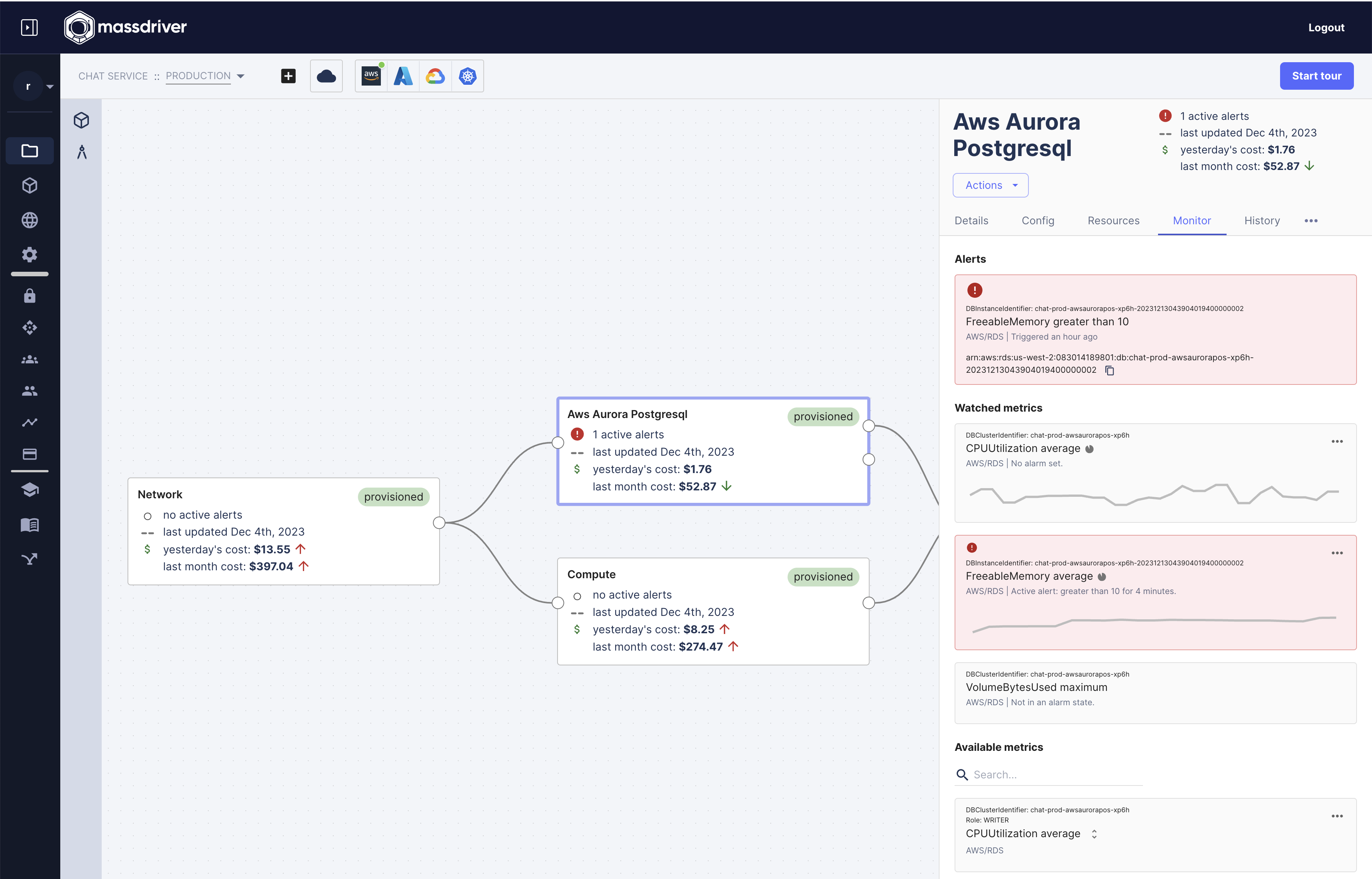
    Massdriver has made available tools for tracking cloud costs and generating a cloud infrastructure bill of materials (Cloud IBOM) to internal developer platforms (IDPs) as part of an ongoing effort to streamline platform engineering workflows.

    The Cloud IBOM makes it possible, with a few clicks, to map hybrid cloud resources such as databases, machine learning pipelines and serverless computing frameworks.

    Massdriver CEO Cory O’Daniel said collectively, these tools reduce expenses by preventing misconfigurations that result in unexpected costs. Rather than solely providing a summary of costs incurred, the tools provided by Massdriver surface how much cloud services are going to cost at the time the developer is invoking them, he noted.

    In the absence of that context, developers will nearly always overprovision cloud resources to ensure maximum availability regardless of cost, says O’Daniel. The overall goal is to help organizations reduce the total cost of IT by providing developers with insights into costs in real-time, he added.

    Earlier this year, the company launched an IDP that comes with platform engineering tools that, for example, make it possible for DevOps teams to build a catalog of infrastructure components that developers can access within the context of guardrails they define. The platform also includes observability and visualization tools that make it simpler to track metrics and monitor the usage of cloud resources.

    Massdriver is making a case for an IDP that provides built-in tools and workflows that enable organizations to embrace platform engineering as a methodology for managing DevOps workflows at scale. The goal is to reduce the level of expertise required to build and deploy applications in cloud computing environments, said O’Daniel. One of the primary reasons there are not more applications running in the cloud today is that these environments are still too complex to successfully manage, he added. An IDP abstracts away that complexity within a set of workflows that have been vetted by a DevOps team, he added.

    There are, of course, multiple approaches to building an IDP, but rival approaches require too much effort to set up and maintain, said O’Daniel. A proprietary platform provides a more turnkey approach that doesn’t require DevOps teams to either build their own or customize an open source platform, he added.

    It’s not clear at what pace organizations are embracing platform engineering, but there is a clear need to strike a balance between delivering IT services managed by a centralized team and the desire a developer might have to embrace new tooling whenever they see fit. Today, too much responsibility for provisioning IT environments has been pushed left toward developers who now have less time than ever to write code.

    There is, naturally, no guarantee that reducing the cognitive load for developers will increase productivity. Building applications requires streaks of inspiration, but, in theory, an IDP should provide more time for inspiration to strike. DevOps teams, as part of that effort, should be continuously working toward eliminating any bottlenecks that have emerged in their DevOps workflows.

  • Five Great DevOps Job Opportunities

    Five Great DevOps Job Opportunities

    devopsy.kinsta.cloud is now providing a weekly DevOps jobs report through which opportunities for DevOps professionals will be highlighted to better serve our audience.

    Our goal in these challenging economic times is to make it easier for DevOps professionals to advance their careers.

    Of course, the pool of available DevOps talent is still relatively constrained, so when one DevOps professional takes on a new role it tends to create an opportunity for others.

    The five job postings shared this week are selected based on the company looking to hire, the vertical industry segment and, naturally, the pay scale being offered.

    We’re also committed to providing additional insights into the state of the DevOps job market. In the meantime, for your consideration:

    Indeed.com

    MedStudy
    Remote
    Senior DevOps Engineer
    $125,000 to $165,000

    SimplyHired.com

    Raytheon
    Tewksbury, Massachusetts
    Technical Fellow – DevSecOps/Cloud Native
    $122,000 to $155,000

    CareerBuilder.com

    State Street Corp.
    Quincy, Massachusetts
    Azure DevOps Engineer
    $120,000 to $202,500

    Dice.com

    USEReady
    New York, New York
    Senior Azure DevOps Engineer
    $120,000 to $160,000

    LinkedIn

    Northrop Grumman
    Dulles, Virginia
    Senior Principal DevOps Engineer
    $107,300 to $199,600