Category: DevOps Culture

  • 5 Guaranteed Ways to Kill DevOps Developer Productivity

    5 Guaranteed Ways to Kill DevOps Developer Productivity

    “A developer is an organism that turns coffee into code.” I still laugh when I see that quote as it reminds me of my hardcore developer days, when my cube always seemed to be directly next to the coffee machine and caffeine was management’s way of ensuring we had the energy to develop well into the wee hours of the evening.

    What is developer happiness? I like to believe it hasn’t changed dramatically over the years. It’s about giving developers the right tools and the freedom to do what they do best—produce meaningful code. That means reducing distractions so they can meet or beat expectations and timelines, ultimately driving revenue for the organization.

    I trust your company is not in the practice of molding reusable human coffee filters. But are you doing everything you can to help your developers be as satisfied and productive as possible, or are you taking the “necessary” steps to ensure they are buried in context-switching hell?

    If the latter is your aim, read on to learn about five guaranteed ways you can totally kill developer productivity.

    Saddling Developers With ‘Plumbing’ Work

    Companies frequently look at developers primarily as technical resources instead of true innovators, so they get saddled with plumbing work. In DevOps and continuous delivery (CD), that’s writing a lot of ad-hoc scripts to string together pipelines, define infrastructure and manually create deployment plans. If your company is on the road to cloud adoption, it’s imperative to get unnecessary scripting under control because things only get more complicated as you start to incorporate the many different cloud platforms and services that are available.

    Making Developers Deal With Security After the Fact

    A fail-safe way to kill developer productivity is to make them deal with security after a release has left development. Too often, they first build code, QA then tests it and finally someone from security checks it to make sure there are no holes well after the code has been written. If security problems are found after coding is done, the release is halted and must go back to the developer to fix. This often occurs either just before the production release or, worst case, just after. In either case, not only does it take longer to resolve the problem, it also prevents the developer from moving on to the next big thing.

    Expecting Them to Chase Down Features and Status Requests

    Because development pipelines are often not integrated with the higher-level CD pipeline, those outside of development have no way of seeing the status of features, deployments and releases. Understandably, their only option is to ask developers to provide status information or call a status meeting which, of course, are additional interruptions that divert them from feature development. Developers don’t like it, and it doesn’t exactly help anyone else in the pipeline be more productive, either.

    Bogging Developers Down With GUIs

    GUIs are a great democratizer in large organizations. They offer a user-friendly way for people across the company, regardless of technical know-how, to access the information they need to be productive. But many developers see them as a waste of time. And while even the most GUI-resistant developer needs them every so often, they are not their preferred way to work.

    Taking Away Their Favorite Tools

    Standardizing your software delivery process is a must to increase efficiency, but standardizing on tools is not. Taking away their favorite tools is highly recommended only if you’re keen on decreasing developer satisfaction.

    What are the Alternatives?

    Managers and leaders can help developers by taking as much of these mind-numbing tasks off their plates as possible. They can do that by automating the release process and integrating CI pipelines into the CD pipeline. Doing so allows everyone to plug in to what’s happening in development without having to interrupt developers, and they can continue to use their beloved tools and simply connect them into the release pipelines.

    It’s also important to standardize most of your operations work upfront—infrastructure, provisioning, compliance, security. All this advance work will allow developers to consume environments on-demand and just deploy without extensive scripting or re-scripting for changes and maintenance.

    Keep in mind, if you shift security left, closer to the development process, you need to automate it. Otherwise, it becomes someone’s manual task—a developer, DevOps engineer or security person—and that will slow down the delivery process. For example, SAST test and SCA scans can be automatically run on every check-in. DAST tests can be automated to run after each build. This way, any security holes are caught as early as possible, while the code is still fresh in the developer’s head.

    Finally, reduce the amount of work developers need to do through GUIs. Give them a way to kick off releases from their respective CI pipelines and the ability to define release pipelines—infrastructure, configuration, security and so on—in code.

    Coffee Machine or Barista?

    Doing these five things—relieving developers of unnecessary scripting, standardizing compliance requirements and security checks upfront, reducing the need for developer-provided status updates, enabling them to work in code and allowing them to continue to use their favorite tools—will make the difference in whether your developers feel like the office coffee machine or a master barista.

    — Dan Beauregard

  • Promoting Purpose in Agile Environments

    Promoting Purpose in Agile Environments

    Agile environments increasingly are becoming a popular option for organizations large and small. Although initially created as a solution for small software development teams with short budgets and complex scopes, it’s been adopted (and refashioned) for all industries and team sizes.

    Agile Methodologies: Why They Work

    The agile approach seems obvious to us now, but back in 2001 when the idea was incepted, it was a revolutionary one: Give employees the room they need to get the job done and let them do it. Throw out extensive documentation and overbearing technical documents for constantly moving, constantly changing, constantly reassessing and growing workplaces.

    “In 2001, a group of experienced software developers got together and realized that they were collectively practicing software development differently from the classical waterfall methodology,” wrote Isaac Sacolick for InfoWorld’s “What is Agile Methodologies?”

    “This group came up with the Agile Manifesto that documented their shared beliefs in how a modern software development process should operate,” he continued. “They stressed collaboration over documentation, self-organization rather than rigid management practices and the ability to manage to constant change rather than lock yourself to a rigid waterfall development process. From those principles was born the agile methodology for software development.”

    How the Framework Works: Higher Purpose

    An agile approach pursues the production of top-tier software. Without an agile framework (or something like it), there is often a distinct lack of purpose-driven principles. From an agile framework, companies can create strong cultures.

    Why is higher purpose so important? After the great recession hit in 2008, we were left with some very important questions amid a financial disaster, the likes of which hadn’t been seen in 80 years. When the economic foundations of our world were rattled, many firms were forced to answer what their higher purpose really was.

    Without the promise of a steady paycheck or a fat margin, there is all too often an absence of purpose. Even when the economy is performing in a spectacular manner, a lack of higher meaning pervades many mediocre organizations.

    “Although a higher purpose does not guarantee economic benefits, we have seen impressive results in many organizations,” reported Harvard Business Review writer Robert E. Quinn and Anjan V. Thakor. “And other research—particularly the Gartenberg study, which included 500,000 people across 429 firms and involved 917 firm-year observations from 2006 to 2011—suggests a positive impact on both operating financial performance (return on assets) and forward-looking measures of performance (Tobin’s Q and stock returns) when the purpose is communicated with clarity. So, the purpose is not just a lofty ideal; it has practical implications for your company’s financial health and competitiveness.”

    How to Create Purpose With Agile Principles

    Joe Robles, the former CEO of USAA, found this utter lack of meaning to be of immense concern for every level of his organization. Concerned about his employees, he visited them to discern where the company culture could improve. He was surprised to find that his call center employees were happy to collaborate on every level.

    It became his mission to imbue this type of mission-driven attitude to every employee and everyone in leadership, through major cultural education. How can other organizations emulate USAA’s successful purpose-driven culture? There are a few steps to achieving this goal.

    The first step is to imagine the workforce you wish to have. In agile environments, there is a focus on efficiency. There is no unnecessary research, documentation or meetings; there are only results. Successful outcomes, however, only come from motivated, purpose-driven individuals. That means we must ascend above the employer-employee relationship and, instead, swap it with an inspiring mentorship program.

    The next step is to make this dream a reality. Craft an authentic message, promote that message, then promote the supplementation of that message with continual learning, training and dialogue.

    Conclusion

    Agile environments foster meaning and cooperation. Instead of employees that mindlessly listen to the autocratic directives of their superiors, they are part of a task force who shoulder the responsibility of reaching a higher goal together. This means some critical and divergent thinking must be fostered, which can be frightening to traditionalists of all forms.

    In agile environments, you will need to start asking questions that help expand how the team thinks and operates. In addition, listening, analysis and reflection skills must be a primary focus for a higher meaning to be divined.

    — Anthony Coggine

  • SREs: The Happiest – and Highest Paid – in the Industry

    SREs: The Happiest – and Highest Paid – in the Industry

    According to the 2019 StackOverflow survey completed by 90,000 developers around the world, whether you are already a Site Reliability Engineer (SRE) or thinking about becoming one, looks like you are onto something.

    SREs, also called DevOps specialists, are a pretty unique type of talent; one that has knowledge in both software development and system infrastructure. And because the world of infrastructure is so vast, these professionals also need to juggle networking, security, system administration, hardware and anything else that could make an infrastructure unstable or down (yes, I am looking at you, A/C). That makes any day at work unique.

    SREs, for the most part, are in charge of making sure that your favorite website apps are loading, and fast. Their work is not customer-facing but highly critical. According to Gartner, the average cost of IT downtime is going anywhere from $5,600 per minute to—when you work for Amazon—$2 million for every minute down.

    That’s one of the reasons why SREs are among the highest paid in the industry, well, right behind their fellow managers! They also rank among the ones with the most coding experience—it takes time and hard work to get there.

    And all of this leads to happiness! With an interesting job and high pay, SREs satisfaction is among the highest in the industry, and they rank in the top three of the ones not actively looking for a job. SRE for a day, SRE forever!

    But here’s the problem: There aren’t a lot of SREs out there and hardly any computer science programs cover the topic. A recent tweet from Target software engineer Jessica Schalz illustrates the point very well:

    As TechRepublic reported, these professionals are among the most wanted in the tech industry and 33% of IT leaders report having a hard time hiring profiles with these skills. A potential reason for this lack of talent might come from the fact that the profession is failing at attracting about half of our population: women. SREs are 30 times more likely to be men than women. Training non-bearded SRE talent is possible. The Holberton School, a coding school I co-founded where 40% of the students are women, is leading a lot of students to be hired as SREs.

    And the good news is that we are not alone: CloudFoundry and Infrastructure Masons are also taking action to move the needle. And industry leaders such as Tammy Bütow and Abby Kearns are showing the way.

    As former software architect Eduards Sizovs pegged it: Great developers are raised, not hired. The industry is spending tons of money and energy and trying to attract the best talent when it would often be more efficient to take juniors that can grow to their need.

    “There is a new generation of developers of all races, genders, backgrounds coming up who can do these jobs,” said Max Johnson, DevOps engineer at Pypestream. “Businesses should widen their hiring scope and consider non-traditional sources that train as good, if not better, talent and coach them further for these highly skilled jobs.”

    LinkedIn is among the first to understand the value of investing in people—so it’s probably not a coincidence that it’s among the best places to work in the U.S. From an internal, employee-led perspective, the company has developed a number of in-house programs for both career and technical development. For example, its Women in Tech (WIT) organization leads a number of programs to connect, inspire and grow women technologists. From an external standpoint, with its REACH engineering apprenticeship program, LinkedIn is redefining the way it identifies, recruits and trains talent. REACH is an apprenticeship program that creates opportunity for every individual with the passion and potential to either develop or restart their career in engineering. The program guides participants through various levels of technical roles at the company, with the end goal being that each individual builds their skill set and gains the experience needed to become an engineer.

    “Reinventing our approach to recruiting and developing junior talent has been a great way to expand our funnel and has brought forward more diverse perspectives, forming a more robust team,” said Casey Brown, senior manager, SRE at LinkedIn and core team member of the REACH program.

    As you have probably understood, SREs are a niche talent (43% of them even picked Vim as their favorite editor). But as I recently tweeted, they are ruling the world, and more of them are needed. Let’s get creative to train and hire more of these amazing professionals!

    — Sylvain Kalache

  • Different Organizations, Different DevOps Outcomes

    Different Organizations, Different DevOps Outcomes

    The main motivation behind inventing DevOps platform was to help close collaboration between developers and IT operations. Basically, DevOps emerged as a great platform to bring closer together developers and beneficiaries of the app development process. DevOps initiates a cross-disciplinary practice spanning across development and operations.

    The ultimate benefit of the DevOps approach is removing the barrier between development and deployment of software applications in specific business processes. Regardless, not all businesses reap the benefits of DevOps platform.

    Does DevOps really suit all businesses of different sizes and niches? What are the key considerations for utilizing DevOps platform? These are the questions we will try to answer through this article.

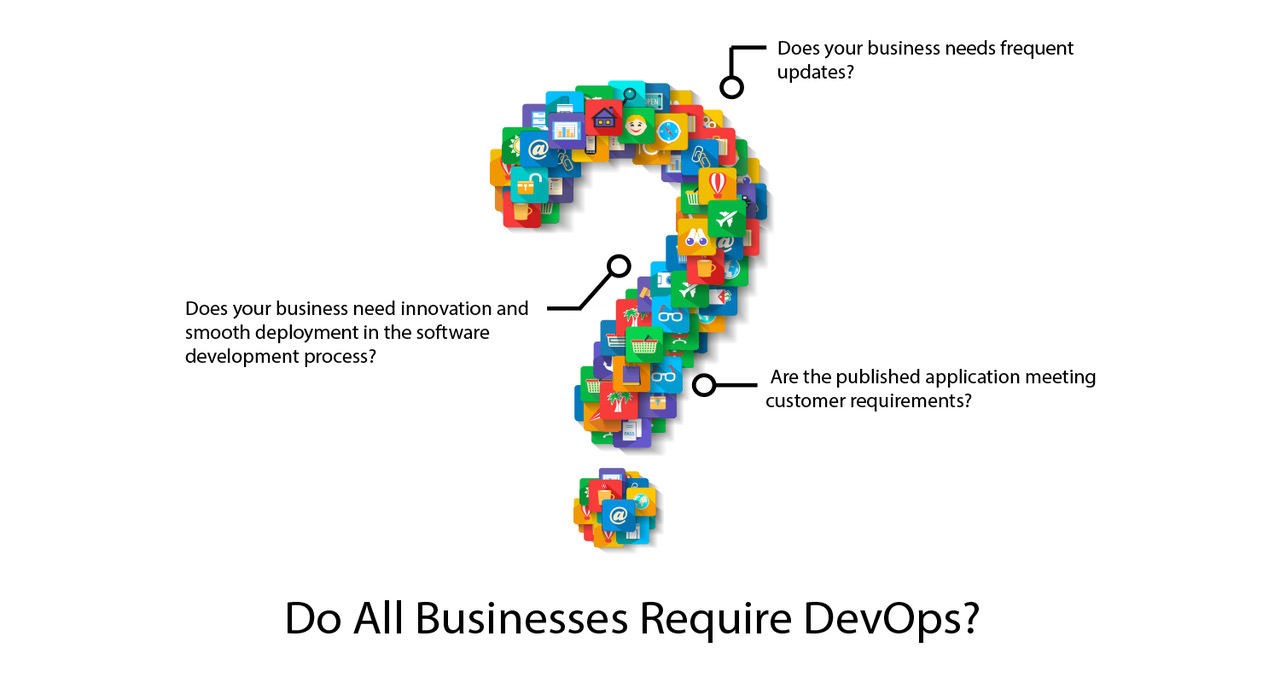
    Do All Businesses Require DevOps?

    The common and widespread consensus is that any software development company geared for innovation must embrace a DevOps environment. Any business that considers innovation and smooth deployment in the software development process—a key factor in their long-term growth strategy—should take advantage of the benefits of a DevOps platform. Whenever any service provider needs to adopt new strategies to keep pace with the evolution in the software space, DevOps will come as an irreplaceable platform choice.

    Despite this consensus and widely accepted perception, there are different opinions in the market. Many industry experts believe that to reap the benefit of the platform you need to have a dedicated DevOps team in place. If you have a DevOps culture and in-house DevOps team in your company, you can gain a competitive advantage.

    The Key Benefits of DevOps

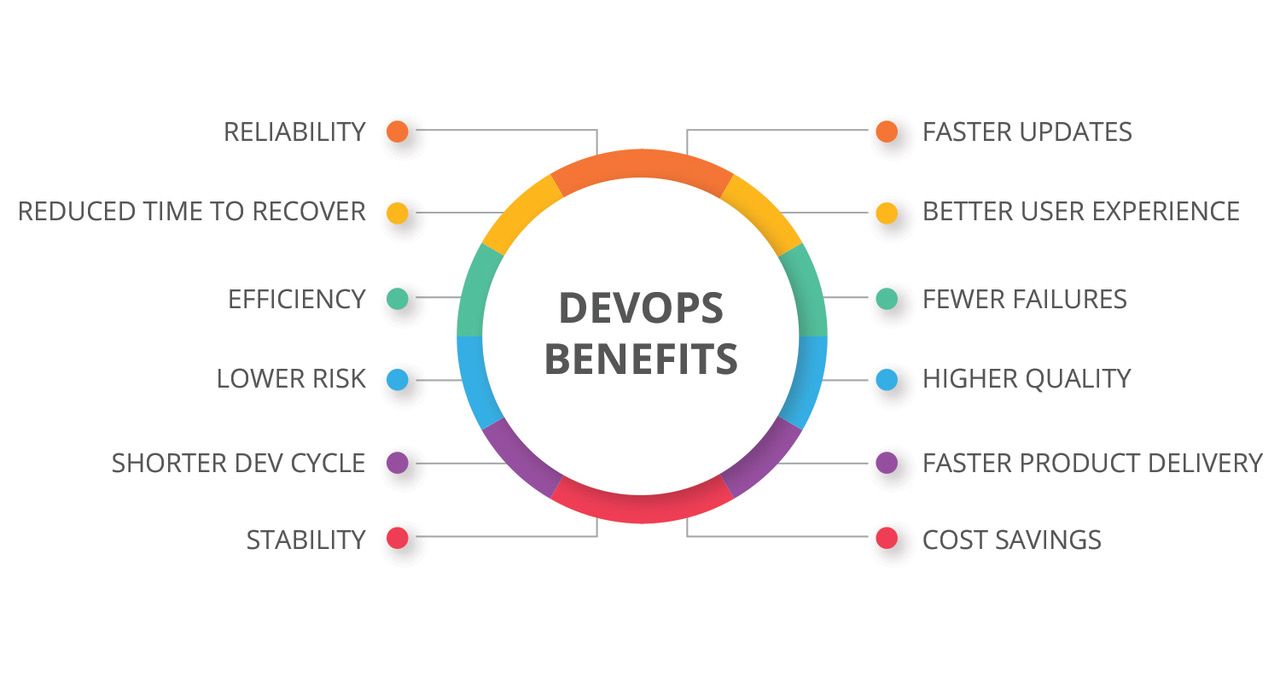
    The main benefit of DevOps is faster delivery of software with much-improved quality. There can be several other benefits depending on the industry.

    While some companies refer to the huge reduction in downtime since they adopted DevOps culture, there are still many others who simply give credit to the platform because of its integrated approach that makes the process more agile and fast-paced.

    For most companies, the domino effect of getting better software at a faster speed ends up delivering sustainable growth and revenue opportunities.

    Here’s a look at the role of DevOps platform across three types of businesses: small companies and startups, midsize companies and large business houses.

    Small Companies and Startups

    In smaller companies and startups where resources and human capital remain under-supplied, the responsibilities ascribed to developers, engineers and deployment professionals often tend to get blurred or overlap. Because of the scarcity of human resource, developers and engineers are often assigned multiple responsibilities. Naturally, in such companies, it is common to see cross-functional teams ready to engage into various development projects with ease. This makes them ideal business organizations to embrace and grow with DevOps culture.

    Midsize Companies

    As the companies tend to grow bigger in size and resources, they have a bigger (and often unbreachable) divide between verticals such as operations and development. In such organizations, staff are less likely to be open to cross-functional responsibilities, as many have been in the same job doing the same tasks and feel settled. This brings in a stagnant organizational process, where strong departmental divide rules the business process outcome.

    This stagnant work culture makes such companies less appropriate candidates to implement DevOps environment. For these companies to reap the benefits of a DevOps platform, mass organizational changes should be brought in the team structure. Building a separate cross-functional DevOps team to handle some focus projects can also be good practice for them.

    Large Companies

    Large companies enjoy the luxury and abundance of resources, and this makes them much better-placed compared to other organizations. Companies such as Amazon, Facebook, Google and Microsoft have the diversity, huge experience and robust abilities to bring together cross-functional specialists from development and operations to work on ambitious projects. These organizations are known for having product-oriented units, comprising specialists from both development and operations.

    Apart from their cross-functional expertise, product-focused approach and abundance of resources to roll on new projects, large companies also can make a big difference to the teamwork and motivation through a highly unified vision and strategic long-term objectives shared by every member of each team. This is why large companies always stand as suitable candidates to embrace DevOps approach and environment for their projects.

    Fixing the Right DevOps Strategy: 3 Things to Consider

    Beyond the organizational differences and core strengths and weakness for embracing a cross-functional DevOps approach, we must look into the key aspects that make a right strategy for any organization to incorporate DevOps into their scheme of things. Question is, despite the shortcomings and lacking, how can you embrace DevOps environment and reap the benefits? Here we provide some clues:

    • Making Change a Habit. Some strategists believe that any organizational change will face a lot of friction, causing substantial harm to the immediate business outcome. But there should be no reluctance to change for this. Rather, by bringing constant changes, people get used to the friction and pain and it becomes normal. This is one way to replace traditional IT mindset with DevOps.
    • Starting Small with a Neat Team. Obviously, finding the appropriate and credible skilled employee for your DevOps projects is not always easy. This is why it is advisable to create small startups or units, in which sharing the common vision and embracing a cross-functional approach becomes the order of the day. On top of that, do your best to bring out the best from your team and hire some experienced ones with knowledge of DevOps.
    • Continuous Development Mindset. We all know how the DevOps platform always focuses on continuous development approach. It is easier for the software developers to embrace such approach, but for operations staff, you have to slowly make them think of infrastructure as evolving and slowly building components. That’s something challenging but not impossible.

    Conclusion

    DevOps has emerged as the most promising development approach for modern software developers. Though for many development companies the friction emanating from strict role divides is becoming an obstacle, the positive push by DevOps for cross-functional approach looks indomitable.

    — Atman Rathod

  • HybridOps: Driving Better Collaboration and Productivity in IT

    HybridOps: Driving Better Collaboration and Productivity in IT

    Over the past 10 years, enterprise technology has experienced an enormous amount of upheaval. Developers started self-servicing, leading to “shadow IT.” The DevOps movement and alignment with Agile methods started gaining popularity, and thought leaders started making statements about how DevOps is the future and ITIL/ITSM and other traditional practices are the past.

    With all these changes, it’s no wonder that the words “digital transformation” have become highly charged and central IT teams feel—not entirely without justification—that their budgets and influence are on the wane. As a result (and partly due to misplaced self-preservation and wanting to stay relevant), these IT teams push back against any kind of cooperation with more developer-centric teams, leading to low levels of digital sophistication and decreased productivity.

    Introducing HybridOps

    This is where HybridOps comes in. We at PagerDuty coined the term HybridOps following feedback from customers to describe the reality of digital transformation in large enterprises—which is one in which technology teams will have a variety of operating models, velocities, tools and practices.

    Rather than a dogmatic focus on velocity and stack-ranking teams according to how “mature” they are, HybridOps focuses on three principles:

    1. Learning culture: It doesn’t matter what operating model (DevOps, ITIL or something in between) teams are using, as long as they can meet the needs of the business and have a culture of continuous learning and improvement.
    2. Communication and empathy: Open communication, constant sharing of operational data between teams and empathy for colleagues are much bigger drivers of digital operations productivity than rigorous adherence to a methodology handed down from executive management.
    3. Autonomy: Teams should have the autonomy to choose and use the tools they prefer—as long as those tools allow for open data exchange with other teams. Instead of forcing teams to use tools they don’t need or want, a better approach is to implement technologies that can bridge data and written communication gaps between teams that need to collaborate.

    HybridOps is ultimately a pragmatic, incremental, big-tent approach to digital transformation. Our most successful enterprise customers use this approach to roll out their digital transformation efforts, as opposed to the top-down, “Send everyone to Agile training,” enforced-compliance approach. In our experience, using the forced approach typically means teams end up using the language and processes of Agile development practices but actually fail to collaborate with others or make a meaningful impact on becoming more customer-centric.

    Measuring HybridOps Success

    All this talk about HybridOps is well and good, but how can organizations measure success in a HybridOps world? It’s actually very similar to other areas of a mature business: Leaders need to establish behavioral norms and measure outcomes (instead of outputs) relative to business needs.

    For example, it’s unnecessary to benchmark the mainframe team against the web team with metrics such as the number of deploys per day, tickets resolved per month or even system throughput. After all, a mainframe batch process that runs twice a week isn’t necessarily less operationally mature than a serverless function that can return an instant response.

    In short, when it comes to measuring performance, it all depends on the operational context and needs of the business—and it’s best to establish some common metrics that prevent overwork and burnout and use them across all teams.

    Culture, Culture, Culture

    Finally, one last word on culture. HybridOps can only succeed when senior leadership creates a high-trust culture. Blamelessness and fostering a learning culture are key here. Open communication and empathy for colleagues are important cultural values underpinning HybridOps that leaders need to establish and reinforce continuously. If leaders use ownership and control of data as a way to name and shame others when something goes wrong, a HybridOps approach won’t work.

    Ultimately, HybridOps is fundamentally a kinder, gentler route to digital transformation—one that’s focused on meeting people where they are and how they’re used to work. It encourages data-driven process improvements free of blame, avoids shaming people who aren’t “DevOps enough,” and creates high levels of empathy between technical professionals within an organization. It puts the focus on outcomes instead of outputs and favors collaboration and productivity over arguments about tools.

    — Julian Dunn

  • Digital Transformation: Coming from Behind

    Digital Transformation: Coming from Behind

    For many years, enterprises have been in a race to digitally transform how they work through the digitization of all areas of their business, to reduce costs and business frictions through creating efficiencies and delivering increased value to their customers. While many organizations have attempted a transformation, few have been successful.

    Research from the consultancy McKinsey & Company finds that less than one-third of transformations are successful.

    How do organizations that find themselves today, perhaps after several failed transformations starts or having procrastinated getting started, get themselves back on track before they find themselves too far behind the competition to ever hope to catch up? We reached out to several experts to find out.

    First, many of those advised organizations that currently find themselves digital laggards should not rush into a digital transformation out of fear of missing out. “Don’t pursue digital transformation with a FOMO mindset,” said Andy Lin, senior vice president of strategy and consulting at Nexient, a software services provider. “Approach it with clear, measurable business results in mind, such as increased market share or increased revenue. Focus on how the end state of your transformation—business capabilities, technical capabilities, digital experience capabilities and similar—will make the biggest impact, and prioritize accordingly,” he said.

    Research from business consultancy West Monroe Partners, which ranked respondents by maturity, found 21% of respondents are digitally mature and 17.9% as very digitally mature. There remains a sizable percentage, 35.9%, who are either not digitally mature at all or slightly digitally mature.

    Trailing in digital maturity likely means those organizations find themselves feeling the pressure from some constituents: shareholders, customers, competitors and others, said Justin Rodenbostel, vice president of delivery services at digital transformation agency SPR. “If pressure is coming from lagging customer engagement, then one should become more familiar with customer desires through research or analyze how other industries are innovating and transforming,” he said. “Pressure from competition might require competitive analysis, market research or research into applications of potentially disruptive technologies,” Rodenbostel advises those who are trying to identify where they should focus on their catch-up efforts.

    Scrum.org CEO and product owner Dave West agreed: “Enterprises embarking on a digital transformation should look at their business strategy, their customer base and start with that; building teams that align to the customer, empowering them to drive technology and business decisions to make that customer successful.”

    Also, when they set a course, enterprises need to be sure to set goals to be set to such business outcomes as well, said Nick Polachek, senior principal strategy for Maven Wave. Instead of prioritizing technical results, such as building an enterprise DevOps pipeline, it’s better to focus on results associated with business-driven outcomes, such as improved customer experience. “To prioritize effectively, you need to understand business drivers and divide technology initiatives into attainable slices that create real business value and quick wins,” he said.

    West Monroe found many attributes—from the use of digital in sales to leveraging data—that organizations should prioritize based on their digital maturity. “An organization can fast-track its maturity by prioritizing certain characteristics over others, regardless of industry. For instance, those with the lowest maturity should prioritize innovation that addresses customer pain points and those with the highest maturity should prioritize best-in-class cybersecurity. More accelerators can be found in our research,” said Kyle Hutchins, senior director at West Monroe Partners.

    Finally, as the organization attempts to increase its digital transformation maturity, others advise organizations prioritize their digital transformation efforts that will get widespread support throughout the enterprise—which usually translates to initiatives that will increase sales. “Since most organizations are designed to support sales efforts, prioritizing transformation within the sales organization is an effective way to motivate the organization to transform,” said Craig Besnoy, program director and digital strategy consultant at Mindtree, IT services provider.

    Still, and this could be why so many digital transformations fail, a sizable percentage of organizations—41%, according to research and strategic consulting firm Altimeter—make investments in digital transformation without ever seeking the guidance from thorough customer research.

    — George V. Hulme

  • Using Product Experimentation for Continuous Improvement

    Using Product Experimentation for Continuous Improvement

    Organizations are embracing product experimentation as a tool for continuous improvement

    Companies that embrace product experimentation are able to capture highly accurate data about markets and product ideas and gain intelligence about market trends. As a result, these companies are able to continuously deliver innovation and measure business outcomes.

    Industry leaders such as Netflix, Instagram and Facebook have used product experimentation to maximize a positive customer experience, increase their user base and elevate their market positions to the highest of levels.

    Let’s say you want to be one of those companies—or at least you and, hopefully, your team, want to experiment with product features in hopes that your company will embrace experimentation on a larger scale to achieve continuous improvement.

    Great. But now what?

    Just thinking about learning the basic concepts of experimentation and figuring out where to start can seem like an overwhelmingly daunting task. Fortunately, there are a few tried and true steps you can take to get on the path to product experimentation for continuous improvement.

    Measure First

    “You have to walk before you can run.” That old adage certainly applies here. Rather than attempting to jump headfirst into experimentation, organizations first must ensure they are measuring things. Are you tracking things such as users per day, trends, dates and conversions? The idea here is to become data driven, because before an organization can run effective experiments, it first must gather quantifiable data; understand what this data means for overall growth, user retention and long-term projection; and then base business decisions on this data.

    Buy or Build 

    No matter the size and scope of the experimentation throughout the organization, even if it is just one team or department, you need a platform or tool to experiment on. Many of the most progressive organizations that have based their growth and continuous improvement on experimentation have built in-house solutions to facilitate this. However, this can be time-consuming from the start and the platform will continue to require attention as it evolves. This evolution also requires a specific skill set to make it happen—specifically, data science and engineering—to ensure the experimentation platform is statistically sound.

    For most, investing in a robust tool or platform built specifically for experimentation is the best option. Most experimentation platforms allow you to plug and play, which provides the right features and capabilities to get an experimentation started quickly.

    Hypothesize

    The next step is to create a testable hypothesis and then record and analyze the data during testing. It’s important to begin thinking in terms of hypotheses, as framing plans and ideas in this manner makes them easier to reuse. In other words, being able to say, “Based on this, we predict we can move that metric,” makes your processes very repeatable. Getting into this mindset and having a standardized format—in terms of how things are designed and reported on—makes the lives of everyone on your team easier, as they can simply replicate similar experiment designs. And they will have fewer excuses not to.

    Keep It Simple

    Now that you have quantifiable data and some hypotheses to work with, you are ready to dip a toe into the experimentation pool. It is always a good idea to start with a single simple experiment first, no matter how small. For example, experimenting on a known pain point in your product is a nice place to start. Once you can successfully run an experiment that allows you to fix something in your product that you know is a problem, then you are ready to move on to bigger things such as revenue creation.

    Choose the Right Metrics

    As your team’s product experimentation efforts become more sophisticated, choosing the right metrics—and more importantly, your overall evaluation criteria (OEC)—should become a top priority in continuous improvement. Your OEC comprises the most important metrics of your experiment and it’s a measure of long-term business value or user satisfaction.

    In choosing which metrics to use, there are three essential characteristics of an effective OEC to consider.

    The first of these is sensitivity. This means the metrics you have chosen should be adjustable due to small changes in business value or user satisfaction, which helps ensure the result of an experiment is clear within a reasonable time period. For example, let’s say a customer only buys something from your website once or twice year. That’s not a very useful metric for an experiment since it would be difficult to influence.

    Next is directionality. Your metrics should be moving in one direction or another based on whether your overall business value increases or decreases. That said, the direction some metrics take can be ambiguous. For instance, say you are attempting to measure customers’ engagement with your support team. An increase in that metric could be a positive thing because it might be an indication that more people are engaging with your core product. On the other hand, a decrease in this metric could be an indication that your core product has become easier to use and therefore now requires less support.

    The third characteristic to consider is understandability, meaning the metric should be easily understood, both in terms of its direction and its definition, by your entire organization. Moreover, you should ensure it ties the experiment directly to business value.

    Of course, much more will need to be done to transform your organization into a place that truly embraces an experimentation culture and reaps the benefits that it brings in terms of customer experience and beyond. But these steps should set you and your team down the right path.

    — Sophie Harpur

  • Modern Workers Demand Modern Technology

    Modern Workers Demand Modern Technology

    Companies today must think of their employees as customers and employ technology, including mobile apps, that employees want to use.

    I have always been a bit of a technophile. Many years ago, in another life, when I worked in technology sales, I was one of the first sales engineers on my team to buy a personal laptop to use as a way to manage leads and accounts. The advantages of doing so over pen and paper became clear to me within weeks. I was able to track my activities more effectively and follow-up more precisely than my associates.

    For similar productivity reasons, I also equip my home office with the best tools that make the most sense from a productivity standpoint. This has been true for both the years I worked out of my home office self-employed and as an employee.

    I expected the tech I bought for my work to always be better than the tech that was provided to me by my employers. I grew to dislike the outdated computers, software and support services provided by employers. Why didn’t these employers invest in their employees to make them as productive as possible? There was never a good answer to that question.

    However, in the late 1980s and early 1990s, I was an outlier. Most workers didn’t have personal computers and most appreciated whatever outdated green screen hardware and software was planted in front of them. Today, it’s the other way around: Employees don’t just want state-of-the-art technology that matches their work—they demand it.

    Consider a recent note from research firm Gartner that found outdated technology pushes Australian workers away from their employers. In fact, Gartner’s “Q4 2018 Global Talent Monitor” found that technology now ranks ninth in the top 10 reasons Australian employees will leave their current role.

    “People have become so used to advanced technology in their day-to-day lives, that they expect the same thing from their workplace. However, businesses are having a hard time matching the speed at which technology is adopted at home,” noted Aaron McEwan, human resources advisory leader at Gartner. “It’s not surprising that employees are becoming frustrated when they find themselves wasting valuable time navigating complicated systems and processes that utilize slow and old technology. It’s unproductive and inefficient for everyone involved.”

    According to McEwan, businesses no longer can ignore the needs of their employees and must start thinking of them as they do their customers, making it a priority to offer a personalized, seamless and efficient experience.

    This recent Gartner Australian survey taps into trends that have been underway for some time. A few years ago, Microsoft partnered with SurveyMonkey to conducted a survey of about 1,000 millennials in the United States. That survey found 93 percent of respondents said modern technology was one of the top aspects of a good workplace.

    This isn’t just about new hardware or off-the-shelf software. It’s also about custom-built enterprise apps. For decades it has been accepted practice that enterprise software didn’t have to compete with consumer software, and poor-to-lackluster design was considered acceptable.

    This is no longer the case. Most employees today are technically savvy and their enterprise apps are on their tablets and phones, right next to the consumer apps that they love to use.

    Enterprise IT can try to force them to use leaden software, but this strategy increasingly is unlikely to prove productive. If they don’t like a collaboration platform, they’ll turn to one of the widely available cloud alternatives. If they don’t like the enterprise CRM, they’re likely to turn to Salesforce or a competitor.

    When consumer apps are designed—think Evernote, Uber, Instagram or another favorite consumer mobile app—a considerable amount of thought is invested into the user interface and making the app enticing to use, designing an intuitive workflow and hiding complexity from the user into the background of the app. The same should be true for the enterprise apps designed for the enterprise.

    A recent survey from Adobe found that 61 percent of 1,500 enterprise leaders believe organizations that don’t deploy mobile apps are at a competitive disadvantage. I’d take that a step further and conclude that deploying isn’t enough. But it’s more than simply deploying an app; organizations that don’t deploy effective and compelling apps will find they are at a competitive disadvantage.

    — George V. Hulme

  • 7 Ways to Introduce DevOps in Your Work Culture

    7 Ways to Introduce DevOps in Your Work Culture

    As many industries are going through a wave of digital transformation, a number of key technologies and principles are being deployed to business advantage. One such principle is DevOps.

    This collaborative principle is proving to be extremely helpful for businesses in their pursuit of customer satisfaction and beating their competition.

    The DevOps trend is growing, as cloud providers including AWS, Azure and Google Cloud are moving faster in upgrading their DevOps services and tools to address business needs.

    According to a Google Cloud and Harvard Business Review Analytic Services report, “two-third of companies that use DevOps have seen benefits impacting their bottom line, including productivity (67 percent), increased speed to market (70 percent), innovation (66 percent), customer relevance (67 percent) and product/service quality (64 percent).”

    While most companies are already reaping the benefits of DevOps practices, some organizations are still doing their homework. Here are seven tips to help you understand how your organization can use DevOps to its advantage:

    Begin with a Small Project

    It’s always best to start with a small project before you start engaging DevOps practices on a large scale. A pilot project will enable you to understand the core capabilities of the DevOps process and how you can map them to your business objectives.

    Utilizing Open Source Tools

    Using open source tools will keep you in touch with current trends and practices. Open source tools are easily available and easy to integrate. You can use these to enhance your DevOps experimentation.

    Introducing Security

    The DevOps process faces a threat in terms of security, which can be disruptive to an organization’s reputation. Hence, it is advisable for organizations to introduce security at the early stages of the DevOps process. Additionally, it saves a lot of time and resources, which are very crucial aspects of the DevOps process. The concept of DevSecOps is a wiser approach as it includes security all through the software development lifecycle (SDLC) process.

    Make the Most of DevOps Best Practices

    Looking for a process that drastically improves productivity and reduces time to market? DevOps best practices are designed to increase the pace of software development. With practices spanning site reliability engineering (SRE), end-to-end automation, continuous integration, testing and delivery, proactive monitoring and more, your team will be able to utilize their time effectively and devote their attention to other important business-driving processes.

    Enhance Team Skills

    The key to bringing out effective production results is having a skilled team that is equipped with the necessary training. Therefore, it is essential for organizations to provide their employees with a proper understanding of the organization goals in general and the processes employees are part of. According to the report, three-quarters of the best DevOps teams said they provide hands-on learning experiences with code labs and projects exercises.

    Avoid the Blame Game

    DevOps aims to bring about an increased pace of operations and fast learning, among employees. But most of the time for any new process to fall in place, individuals involved have to experience failure. And with the failure of the first project often comes the blame game. However, organizations need to understand that failure is the initial step to achieving future success. Moreover, firms should adopt the policy of “fail and adjust sooner.” The experience of learning from mistakes will take you farther along in your DevOps journey.

    A DevOps-Friendly Environment

    A DevOps-supportive culture is incomplete without the above exercises. Hence, it is essential that organizations bring about an environment that provides room for shared goals, improved transparency and making growth-driven decisions.

    So, industry change-makers: Are you ready for your DevOps experience?

    — Veritis

  • DevOps: Assessing Behavior Flows Through an Organization

    DevOps: Assessing Behavior Flows Through an Organization

    I’ll admit it, this article is a little strange. It is an experiment. But DevOps is all about experimentation, right? This article explores how information and behaviors in fact “flow” through an organization. It is based upon my observations with literally hundreds of DevOps teams. I have used the Three Ways of DevOps to show how and why many organizations struggle with this flow of information and behaviors, and what you can do to identify and prevent behavioral “defects” in your organization.

    Simple, Really: Mindsets and Behaviors

    IT organizations embarking upon Agile or DevOps ways of working are basically attempting to realize behavior change—simple. Consistent, new “desirable behaviors” that deliver value and reduce risks, wasted effort and costs—simple. This sustainable behavior change demands a change in mindsets and beliefs; it also means unlearning old ways of behaving—not so simple. This requires feedback and correction.

    Start with the ‘Why’

    Changing mindsets relies on the right messaging. Understanding the “why” and the “purpose” is seen as a critical factor in changing mindsets and ultimately behaviors. The right messaging is not just in terms of words, but also in terms of behaviors, such as people “walking the talk” and “leading by example.”

    Desirable behaviors are about people doing the right things. Doing the right thing implies making the right decisions; for example, prioritization of work. To be able to make the right decisions requires having the right information, such as mentioned above—the why. Knowing and understanding the why helps underpin decision-making and prioritization. However, we see many teams that do not fully understand the why behind new ways of working. Somehow the message did not arrive. Somewhere in the flow of information the “why as a justification” ended up as the “why as a question.”

    This made me realize that information and behavior flows through an organization. I decided to look at many of the challenges organizations face when adopting new ways of working, by using the Three Ways of DevOps.

    The First Way: Flow

    The First Way of DevOps is all about the flow from left to right, understanding the flow of work, seeking to increase the flow and never passing a defect downstream.

    Understanding the Flow

    The messaging I mentioned above flows through the organization traditionally top-down and bottom-up; with the shift to Agile ways of working, this flow is through the end-to-end value stream. This flow is upstream and downstream: Downstream is the flow and hand-offs; upstream is feedback.

    I mentioned above that desirable behavior is related to making decisions. If we consider the traditional decision-making authorities in an organization, we have from left to right: strategic, tactical and operational decision-making. This can be seen, for example, as the CIO and business management team (strategic decisions), e.g., product portfolio and key goals; product owners and IT delivery managers (tactical decisions), e.g., product backlog, IT changes; teams and employees (operational decisions), e.g., sprint planning, incident prioritization.

    The importance of decision-making was also confirmed in a recent Forbes article, “The Netflix Decision Making Model Is Why They Are So Successful.” Netflix’s desirable behaviors are driven by a set of corporate values. The first value is judgment, which “outlines the company’s decision-making ways and accompanying expected behaviors.  Notably, Netflix encourages its employees to ‘make wise decisions despite ambiguity’.”

    Every so often, it is decided to embark upon an Agile transformation at a strategic level. This decision is communicated throughout the decision-making levels as an intent—usually the why is vague and left open to interpretation. A set of values or principles are also communicated, such as customer-centric, end-to-end responsibilities and continuous improvement. However, these usually are not translated into desired behaviors. An implied set of behaviors are linked to these values and principles, and can end up being inconsistent with the original intention. This miscommunication of the why and the desired behaviors downstream is a form of a defect—often causing assumptions, driving poor decisions and resulting in undesired behaviors.

    For example, as a frustrated senior level manager complains that teams won’t take ownership and frustrated teams protest about lack of empowerment, desired behaviors were not defined and agreed. As a result, they were not displayed, waste occurred, frustration, delays, lack of return-on-value from the effort and behaviors spent.

    Another concept of flow is constraints—constraints stopping or slowing down the flow. In terms of behaviors, a constraint could be attitudes and beliefs (not understanding or believing in the new behavior), lack of skills or ability to perform the behavior and allocation of time to learn and experiment or improve behaviors. So, not only must we ensure that we do not pass defects downstream, we also must ensure feedback can identify constraints, impediments and barriers that are stopping the right behaviors from flowing smoothly through the end-to-end stream.

    Other types of constraints could be ignorance, indifference, confusion, fear, uncertainty, doubt—or, as Mike Orzen said in a discussion, focus, attention and trust.

    So, on one side we have:

    • Intent, implied, assumptions and inconsistent behaviors flowing from left to right (cause), meeting….
    • Indifference, confusion, fear, uncertainty, doubt, lack of trust etc. (effect)—you get the picture.
    • A management solution to this is then to tell people to collaborate, or to tell people they are now empowered—again, without defining the associated behaviors.

    “… Application delivery is a set of very human-oriented tasks, a key factor that determines the speed to value is trust,” wrote Carmen DeArdo in his latest book, “A Leader’s guide to Digital Transformation,” co-authored by Jack Maher. “As teams lose trust in the validity of the work as it flows through the lifecycle, a large amount of rework and waste is introduced.” he wrote. Trust is probably one of the biggest enablers or barriers to the smooth flow of behaviors through the system.

    The Second Way: Feedback

    The Second Way of DevOps talks about shortening and amplifying feedback right to left so that corrections can be made. One form of this is giving feedback when poor information is passed downstream or undesirable behaviors are displayed, enabling us to correct the messaging and the behaviors. Inconsistent messaging, in the form of managers giving conflicting signals or failing to “walk the talk,” are forms of defects. A commonly chosen ABC card (Attitude, Behavior, Culture) in global workshops is, “Don’t do as I do … do as I say.” However, if there is a culture of blame or a lack of safety associated with giving feedback to correct defects in behavior, then feedback isn’t given. Undesirable behaviors and inconsistent messaging goes unchecked.

    Failing to stimulate and act on feedback is another form of defect. This means undesirable behaviors continue to occur. All these behavioral defects create cultural and behavioral debt. As this debt accumulates, the ability to deliver value diminishes. In response to this, managers often revert to old management and control styles of behavior (cause), creating more resistance and reducing the willingness to give feedback or experiment (effect). Again, examples of passing defects downstream and creating more barriers and impediments to the flow of desired behaviors.

    As suggested in DeArdo’s book, “Feedback should be treated as though it were the most precious of our resources, because it is.”

    The Third Way: Experimentation and Learning

    The Third Way of DevOps is about continuous experimentation and learning—recognizing that repetition and practice are the prerequisites to mastery.

    Agile ways of working are still relatively new. DevOps is still evolving. Old management styles and models are no longer fit for purpose in this new world. Leadership in this new world is also characterized by experimentation. As one CIO stated, “Leaders are expected to walk the talk, but we don’t know what that looks like in this new model.” Leaders often fall back to an S1 leadership style—which is in conflict with the culture associated with Agile ways of working. Poor leadership styles and behaviors, as mentioned above, are also a form of defect—more behavioral debt.

    Feedback becomes even more important to validate experimental approaches and to learn and improve. However, the Third Way also stresses the need to allocate time for the improvement of daily work. We sometimes see impediments on team backlogs, but we don’t see behavioral or cultural debt as a backlog item. We don’t see this on the backlog of management teams’ behavioral debt, either. Teams often are frustrated with a lack of time reserved for technical debt, impediments or improvement work—let alone behavioral debt. As Orzen stated, “Even more important than daily work is the improvement of daily work.” Continual learning and improvement should be core skills and behaviors.

    As stated in the Third Way, repetition and practice are prerequisites to mastery. There is nothing new about this. It isn’t that the DevOps movement came up with this “new” philosophy: Aristotle, around 300 B.C., stated, “We are what we repeatedly do. Excellence, then, is not an act but a habit.”

    We need to practice and repeat behaviors until they become habits, or culture—like “the way we do things here.” Practice also requires feedback to validate improvement gains as a result of practice.

    Top athletes practice with the guidance and feedback from coaches. Scrum and Agile coaches are often assigned to Agile and DevOps teams as they practice and grow. These coaches are skilled in training on Agile and DevOps tools, such as standups, retrospectives, value stream mapping, Kanban and Kaizan. But what we see globally is that not all coaches have behavioral management skills.

    Another form of feedback from practice is measurement. In terms of DevOps, teams measure metrics such as number of releases—successful releases. We don’t often measure the behavioral change. We can measure the frequency and decisions from standups, but can we measure giving feedback, confronting undesirable behavior? One small example I use is measuring the amount of “yehbuts”—yes, but!—in a dialogue, or worse still, “yehbuts” before somebody has even finished talking. This is an example of a communication defect. Another example is assuming that we understand what somebody has told us without confirming if what we believe we heard was the actual intention.

    Communication defects are a major barrier to successful flow of information. Another measurement needs to be related to the impact of behavior change, such as improved customer and employee satisfaction and less rework because of assumptions.  Although measuring the actual impact is difficult, having the dialogue itself is valuable: How is what we are doing adding or reducing value to the team and to the organization?

    Conclusion

    If we want desirable, consistent behaviors focused on creating high-performing teams, we need to look at how messaging and behaviors flow through the system and recognize defects we are passing downstream. Our vague intentions need to be quantified in terms of desirable behaviors. We need to build in feedback mechanisms to signal defects and undesirable behaviors. We need to identify the constraints and impediments that may be causing undesirable behaviors such as fear, uncertainty, doubt—behaviors that may be slowing down or stopping our transformation to new ways of working. We need to recognize that experimentation and practice is needed—knowing that we will struggle and fail, but ensuring we learn and improve as an end-to-end capability. Leadership skills, styles and behaviors need to be aligned to facilitating the three ways of behavior flow. Finally, remember there is really nothing new about this.

    Case

    In a Phoenix Project simulation, after recognizing the above defects, a team posted the strategic portfolio and goals on the visual management board. The CFO explained these goals and why each backlog item was prioritized against value creation (benefits and value to be realized)—an example of clarity of the why. At the same time, the CFO displayed the right behaviors—being at the standup to explain to the team and ask for direct feedback and understanding.

    At the same standup, the CISO and IT team explained the potential “value leakage” backlog items in terms of debts, risks and defects, so that together—business and IT—could make the right decisions on prioritization.

    “This made me realize,” said the product owner, “I was now able to make a better-informed decision, because of the team’s input on value leakage—giving feedback from the usage of the applications and the negative impact. It also gave me more trust in the team as they demonstrated an understanding of the ‘why’ and had a clear understanding of value. If, as a team, we did not fully know or understand the value, this created a great dialogue to explore it and ensure we didn’t pass a ‘defect’ (wrong decision on prioritization downstream).”

    The team in the simulation learned that as well as visualization of impediments on their backlog, they also needed to visualize the behavioral defects that needed work on and allocated time.

    — Paul Wilkinson