Category: Continuous Testing

Continuous testing is the process of executing automated tests as part of the software delivery pipeline to obtain immediate feedback on the business risks associated with a software release candidate.

  • Harness Employs ML to Streamline DevOps Workflows

    Harness Employs ML to Streamline DevOps Workflows

    At the online {Unscripted} 2021 conference, Harness today announced an update to its namesake DevOps platform that includes support for feature flags that expose new capabilities to a select number of users for testing purposes along with the ability to prioritize the running of those tests based on the likelihood an application is likely to fail them.

    In addition, Harness is adding a unified pipeline capability that enables DevOps teams to streamline the management of multiple tools that make up a workflow and has updated its cloud cost management module to enable DevOps teams to automatically stop idle workloads. That capability is based on technology the company gained with its recent acquisition of Lightwing.

    Steve Burton, chief marketing officer for Harness, said Harness is now employing machine learning algorithms to identify which tests an application is most likely to fail. That test intelligence module enables DevOps teams to run those tests first versus testing an application only to discover close to the end of that effort that an application will need to be updated and then retested. The amount of time spent on testing is then sharply reduced, noted Burton.

    Overall, Harness is reducing the amount of time and effort spent maintaining DevOps pipeline and workflows, said Burton.

    The cost of maintaining a DevOps platform will naturally vary as the overall environment becomes more complex. It may not be clear how much time a DevOps team is spending on testing, but the faster that process becomes the more likely an application will be thoroughly tested before it is deployed in a production environment. Fixing applications after they are deployed in a production environment is, of course, considerably more expensive.

    At the same time, as the number of applications being built simultaneously increases, the amount of cloud resources being consumed also increases. Developers, however, don’t typically pay close attention to what workloads are consuming which cloud resources, which can result in an unpleasant surprise when the monthly bill from the cloud service provider comes due.

    In general, Burton says machine learning algorithms and other forms of artificial intelligence (AI) will soon become table stakes for any provider of a DevOps platform. The expectation is the platform will routinely employ AI to streamline processes and reduce total costs, noted Burton.

    Many of the manual tasks that DevOps teams regularly perform to maintain a DevOps platform will increasingly become automated as usage of machine learning algorithms becomes more pervasive. It’s not clear to what degree organizations may abandon a legacy DevOps platform to take advantage of those capabilities. However, over time it will become apparent that some organizations are spending a lot more time building and deploying applications than others as the next generation of DevOps platforms, infused with machine learning algorithms, are installed.

    In the meantime, DevOps teams might want to make a list of the manual tasks they perform today as part of an effort to determine how much time they are wasting that might otherwise be spent on tasks that are more valuable to the organization.

  • Why API Quality Is Top Priority for Developers

    Why API Quality Is Top Priority for Developers

    It is no secret that web APIs have become increasingly important to the operation of modern businesses. According to RapidAPI’s Developer Survey and Insights report, 61% of developers used more APIs in 2020 than 2019, with 71% planning to use even more in 2021. We are no longer tied to a small number of monolithic service providers. Businesses tend to gravitate toward specialized managed services, such as billing and authentication, which are backed by APIs. Business models for new products and services are constructed based on APIs. Trust has become a necessity for APIs. APIs that perform consistently and with high quality earn trust, and those that do not are abandoned for a competitor.

    Why Does Quality Matter?

    If a market exists for an API, it’s a given that there will be competition. To remain competitive, APIs must build and maintain trust with their consumers; sales and marketing can only go so far. The highest quality APIs will inevitably capture the largest slice of market share. Quality isn’t a destination, either—it is a collection of goals that require continuous investment.

    What Does Quality Mean for an API?

    Just like the code that drives an API, the quality of an API itself is quantifiable. The following facets describe some broad categories used to measure API quality. The weight of each facet will vary depending on how business-critical the API will be when in production.

    Resilient. An API is resilient when it continues to operate in the face of adverse conditions. Can an API continue to operate (even at reduced capacity) if the database is down? How does it handle network traffic spikes?

    Robust. A robust API is liberal in what it accepts, but conservative in what it sends. Will it crash when presented with a poorly formatted request, or respond with instructions on how the caller can fix the problem themselves? Can the code be restructured without breaking the API contract?

    Secure. API security is vital in most deployments. Are efforts made to check for OWASP Top 10 Web App security risks? Are open source vulnerabilities known and addressed in a timely manner? Are secure endpoints gated with authentication?

    Discoverable. APIs that are well documented and well structured are much easier to consume and integrate with other services.

    Consistent. A consistent API is one that changes without negatively impacting existing consumers. Changes are backward compatible or versioned as new features are introduced. API consumers should know far in advance if a breaking change will be coming if it cannot be avoided.

    How Do I Get There?

    Processes, tools and, most importantly, culture, are the key to high-quality APIs. Let’s explore how we can approach each API quality facet.

    Resilient. Processes such as chaos engineering, load testing and manual quality assurance can uncover situations where an API is failing to handle unexpected situations. Deploying your API to a cloud provider with a compelling SLA instead of your own hardware and network shifts the burden of infrastructure resiliency to a service, freeing your time to build features for your customers.

    Robust. A comprehensive suite of automated tests isn’t always sufficient to provide a robust API. Edge cases, unexpected code branches and other unplanned behavior may be triggered by requests that were not considered when writing the test suite. Traditional automated tests should be complimented by fuzz testing to help uncover hidden execution paths. Canary and blue-green deployments can further expose your API to the real world in a limited manner and prepare for when even more unexpected requests will hit.

    Secure. API security is a moving target. It is expected that most APIs are built on layers of open source libraries and frameworks. Software composition analysis is a necessity to stay on top of zero-day vulnerabilities by identifying vulnerable dependencies as soon as they are discovered. OWASP guidance is a must-have—directing API developers to implement attack mitigation strategies such as CORS and CSRF protection. Application logic must be well tested for authorization and authentication.

    Discoverable. For REST APIs, the OpenAPI initiative provides a consistent language for describing the API. Many frameworks, such as Spring Boot, can even generate OpenAPI documentation directly from your code. gRPC-based APIs offer similar benefits by providing both instructions for accessing the API and building the clients to communicate with it. Adding support for GraphQL allows developers to connect multiple APIs together with consistent tooling. Whichever direction you choose, it is vital to keep API documentation up to date and accessible.

    Consistent. To be consistent, the API development process should make incompatible changes obvious. Code reviews can catch many breaking changes right at the source. API contract testing and integration testing can be used to discover API changes as part of the build. When working in a microservices environment, staging environments may alert engineers if an API change will cause problems before production.

    Quality Builds Trust

    According to the RapidAPI survey, 58% of executives said participating in the API economy was a top priority for their organization. The figure was even higher in certain industries such as telecommunications, where the number is 89%. Whether you are building APIs for internal use or for public consumption, your goal should be to earn the trust of API consumers. Investing in the culture, tools and processes to build quality APIs will pave the way to building and maintaining that trust.

  • Leveraging AI in DevOps for Non-Linear Scaleup

    Leveraging AI in DevOps for Non-Linear Scaleup

    With technology evolving in leaps and bounds, AI is shaping the future of digital transformation for every business seeking speed, scalability, quality and flexibility.

    Since DevOps is on the verge of delivering exceptional software development environments, DevOps in AI is undeniably the next breakthrough in technology. We’ve witnessed every industry racing toward the adoption of AI to transform their business. To support this transformation, smart automation solutions coupled with AI implementations is becoming the new normal.

    So if you’re thinking about reinforcing your enterprise’s DNA by leveraging AI, DevOps principles for artificial intelligence are vital to these efforts. Here’s how businesses can unlock the true potential of AI and stay ahead of the curve.

    DevOps and AI

    DevOps has been s game-changer for numerous businesses. Applying AI can helps DevOps teams achieve the operational efficiency of machine learning (ML) models all the way through the journey from design to production.

    Artificial intelligence undeniably enhances automation and fast-tracks the performance of DevOps. Since the digital transformation process is quite challenging for diverse businesses, DevOps and AI ensures the right processes are in place that can further bring flexibility throughout the journey.

    DevOps enables continuous deployment and quick delivery of AI models via:

    • Speed: Improved overall development and delivery time by reducing unnecessary activities
    • Scalability: On demand and auto-scaling AI models
    • Quality: Boosting cleaning datasets and eventually promotes consistent learning that further enhances AI
    • Data monitoring: Decision making and computing helps handle huge amount of data with precise data monitoring

    Benefits of Integrating AI in DevOps

    There are endless benefits to integrating AI in DevOps.

    Analysis

    Data analysis is the key to business success, especially in times when there’s a huge list of competitors rushing to gain consumer trust. Since DevOps produces an enormous amount of data, it isn’t practical for humans to analyze the data without technological intervention.

    Artificial intelligence’s smart analytics eases the process by identifying and solving problems in a
    more systematic way, resulting in efficiency and increased consumer satisfaction.

    Data Correlation

    In the wider technology environment, development teams have their own set of issues and errors, which arrive while monitoring the processes. Since the communication scope is minimal and there’s a lack of mutual learning across teams, artificial intelligence can help to accelerate the learning cycle.

    Artificial intelligence helps to improve data insights from multiple platforms, which, in turn promotes better communication and establishes better data correlation.

    Failure Handling

    Machine learning is paving the way to better error resolution based on data, and eventually artificial intelligence will be able to predict signs of failure by examining patterns. Since humans cannot match the observation capabilities of AI, certain indicators of failure can only be analyzed through AI. This further enhances the overall development processes, as quick identification helps identify issues before they can impact the software development life cycle.

    Breaks Down Silos

    DevOps with AI has the ability to streamline business processes and establish proper communication among diverse systems, removing barriers that slow down the development and deployment processes. Furthermore, the ability to automate, continuously integrate and enhance communication helps business leaders to focus more on other aspects that can further accelerate business growth.

    Economic Growth

    Since the basic function of an AI-based model is automation, it can help businesses save money and enhance human resources. For any business, eliminating repetitive human work is a tough nut to crack. but a necessity when businesses are demanding continuous innovations. Artificial intelligence could be the best way for enterprises to cut costs and eventually helps the organization to use human resources more creatively and productively.

    Makes Software Intuitive

    Besides endless business benefits, AI-based software is more intuitive and user-friendly, since it prioritizes the reduction of human error. While DevOps is a well-known, reliable, business-driven approach for delivering software, intermingling artificial intelligence could enhance the user experience by integrating technology more deeply into the system.

    The perfect harmony of simplified interactions between humans and AI helps businesses achieve their desired goals of speed, efficiency, scalability and security.

    AI-driven systems are providing promising and scalable solutions for enterprises that are on a hunt
    for innovative and rapid ways to scale business growth. AI in DevOps is undoubtedly the best solution for accelerating growth through precise monitoring, automation and process improvement. This is the right time for businesses to ensure they operationalize artificial intelligence as a core business objective to stay ahead of their competitors.

  • Chicken Soup for the SLO

    Chicken Soup for the SLO

    Since time immemorial, humans have struggled to communicate. From myth to the modern era, our most memorable stories often involve individuals or groups seeking to be understood in order to avoid conflict. Be it the biblical allegory of Babel to the more recent Star Trek: The Next Generation episode of “Darmok,” a deep fascination with how people communicate seems to have collectively gripped our imaginations.

    It should come as no surprise, then, that communication between disparate teams and roles in the development of distributed software systems is a fascinating topic. There’s an almost primal struggle in the workplace—a dichotomy between “features” and “stability”—that teams have sought to overcome for decades. Indeed, much of the discipline of software engineering has implicitly evolved as a response to the needs of engineers to communicate with other parts of the business.

    How, then, do we improve this communication and build empathy toward our fellow developers, our coworkers, our PMs, our managers? We need a way to communicate with them, to express “how things are going,” how reliable our service or system is. Let’s step back, though, because this is only a small window we’re looking through—we need to communicate these desires and goals to a greater audience; Our bosses, their bosses, our customers, the entire world. Organizations rise and fall on their ability to communicate effectively.

    In the natural sciences, we observe that the tendency of a system is towards entropy; Energy tends to dissipate in the absence of a constraint. So, too, do human systems lose productivity as their scale and complexity increases. The rise in popularity of Agile methodologies and DevOps thinking tracks with this. They are, ultimately, designed to help us communicate better about needs and priorities. Site reliability engineering (SRE) is the latest in this line of disciplinary developments, providing rigor to the question of, “How do I operate very large scale systems in dynamic environments?”

    One of the more popularized elements of the SRE playbook is the concept of the service level objective, or SLO. To excerpt the excellent Implementing Service Level Objectives by Alex Hidalgo, a SLO is “a proper level of reliability targeted by a service,” a calculation of the amount of ‘bad’ events that can occur as part of the normal operation of a service. As Alex notes, the idea of SLOs and SRE have become almost inseparable in our collective consciousness—organizationally, it’s seen as strange to have one without the other.

    Let’s dive a bit deeper into what an SLO actually is. Again, I will excerpt and paraphrase from Alex’s book (it’s very good; you should read it if you’re interested in this topic). A SLO is simply a target, a set of defined criteria that represent some objective that you’re trying to reach. In a very general sense, the SLO expresses the threshold of ‘good’ to ‘bad’ events that you’re willing to tolerate over a time period. This simple ratio, however, unlocks a great deal of interesting and important ways of thinking about performance and reliability. It gives you, and your team, the ability to reason and communicate about reliability in a very quantitative and qualitative way.

    Now, you may be asking yourself what the qualitative component of a SLO is—after all, aren’t these measurements quantitative by definition? It’s in this dichotomy that I believe the true power and utility of SLOs lie; they’re not just a measurement of what you’re doing, they’re a communication vehicle for how you’re doing. Error budgets come out of this line of thinking—they represent the space between the current state of your SLO and its boundary.

    In plainer terms, it’s a measurement of how much you can miss your target before it becomes a problem. If my SLO targets 99% reliability, I have about three and a half days of unreliability a year to play with—or, about 14 and a half minutes a day. This way of measurement is certainly helpful in driving and determining engineering decisions, as it allows us to make snap judgements about how to prioritize the seemingly opposing buckets of “feature work” and “reliability work.” If we’re getting close to burning up our error budget for the month, do more reliability work. If we’ve got slack, do more feature work. Easy, right?

    How to Make Friends and Influence Budgets

    Reliability, SLOs, error budgets—these are all helpful ways to quantify performance and availability in software. There’s another way to consider them, though, and it’s through the lens of risk. If you’ve earned an MBA, you’re probably familiar with a ‘risk heat map.’

    SLO heatmap

    The x-axis on this quadrant represents the likelihood of a problem occurring; the y-axis represents the importance of that element. This is generally extensible to any element of a business—everything from your sales force to your customer success team to the availability of your data center or cloud resources.

    In many ways, this simple quadrant is responsible for many of the decisions that influence your work. While a business does many things, the business of operating a business can be thought of as an ongoing and unceasing process of risk management and abatement.

    The stuffy, MBA-fueled world of Six Sigma and process management doesn’t play terribly well in the more creative arenas of software development and maintenance, I’ve found. Much of this has to do with—you guessed it—risk. In manufacturing, the costs of failure or defects can be extremely high. Component defects can sideline million or billion dollar supply chains; projection and planning failures can disrupt just-in-time inventory and a single stuck ship or sudden winter storm can cause months or years of disruption to national or global economies. We should count ourselves fortunate that the actual costs of failure in a software system are so light; while us-east-1 going down for an hour would be bad, it probably wouldn’t wreck the global GDP for six months.

    The translation of ‘lower-level’ concerns, such as software system reliability or employee turnover, into ‘higher-level’ risk concerns acts as a curtain between the operational and the managerial aspects of a company. It is this curtain that we must consider when thinking about the true advantages, and the revolutionary potential, of SLOs. Remember, a SLO represents a ratio between ‘good’ and ‘bad’ and gives us a threshold value. These SLOs can be overlaid onto our risk maps extremely easily; SLOs for more critical services and processes rise to the top, newer services move to the right.

    In essence, we can give our SLOs a qualitative score with regard to overall business risk, and use this to shape the overall business direction. This is crucial, as in the absence of better qualitative measurements, businesses will often grasp at quantitative reliability measurements—“pages fired or tickets opened,” to quote Hidalgo. He continued, “[T]hese are prone to be inaccurate due to false positives or the whims of the people opening the tickets.” The types of measurements that we often rely on, such as categorization by severity or ‘mean time to x’ fail to accurately classify reliability or how it impacts the user experience.

    Let’s illustrate by example—a huge part of conversations about SLOs is talking about how they should be framed in terms of users; happier end users, happier engineers, happier managers and so forth. SLOs that correspond to user journeys—for instance, “Adding an item to the cart succeeds 99% of the time.”—are straightforward to understand from the perspective of an end user. We can discuss this in terms of risk by applying an importance and likelihood score to the SLO itself. If our site is an e-commerce platform, then the importance of the cart is very high. Since our threshold is very small (1%), then the likelihood of this risk is also very high—we don’t have a lot of wiggle room!

    A SLO for a targeted ad service might read, “A contextually appropriate display ad is served within 30ms 90% of the time.” In this case, our ad business might not be of high importance in terms of our business risk, so we should reduce the importance of the SLO. In addition, our threshold is very large, so we should reduce the likelihood of violation (since we have a lot more wiggle room). Over time, these positions and scores can (and should) change—perhaps the advertising segment of our business becomes more valuable, so we re-prioritize it on our risk maps.

    By speaking this language and quantifying our data in different ways, we can pull back the curtain between operational and managerial sectors and use it to influence things outside our immediate sphere.

    “Mommy, why is there a SLO in the house?”

    There’s an aphorism about war and fighting that goes, “Generals are always prepared to fight the last war.” I’ve seen this myself at every company I’ve worked for over the years—we tend to be reactive, rather than proactive, in planning and preparing for strategic business challenges. Some of this is due to the fact that none of us are oracles capable of divining the future, but much of it simply has to do with the aforementioned cycle of risk management that drives business planning and decision making. When introducing SLOs to a wider audience, you need to be able to plan for the pushback that executives and managers will almost certainly have to this new way of thinking.

    When you think about it, though, there’s not a lot of difference between what an SLO is trying to represent, and what an OKR or KPI or any other goal-oriented system is trying to represent. In each case, we’re creating some heuristic to sort events into ‘good’ and ‘bad’ cases, then creating a threshold of ‘Now there is a problem’ based on the ratio between them. In essence, this is, really, how you measure anything as a percentage.

    You could translate goals for your sales, marketing, customer success or people ops teams into SLOs. For example, “30% of POCs should convert into closed-won opportunities” is, basically, an SLO already, and is perhaps an existing goal for your salesforce. There are two big advantages to thinking about these as SLOs: consistent reporting and error budgets.

    Consistently reporting on SLOs means that you can express team and company goals in the same format and language across the entire organization. This brings teams together in a shared purpose, and allows for a shared language about how reliability benefits everyone. Being able to roll up reporting about how things are going not only encourages more shared ownership of goals, it helps you build connections and linkage between how different types of work align with each other towards a shared prosperity. More importantly, SLO reporting gives extremely clear signals about how teams—regardless of their function—should be addressing failure.

    If a consistent language around reliability is what builds empathy, error budgets are what unlocks creativity and problem solving for addressing issues in the business. In too many cases, organizations are loathe to give individual contributors, or even teams, the flexibility to experiment and measure the results of those experiments due to inertia, top-down command-and-control style processes or just the fear of screwing up.

    Let me give you an example—suppose your marketing team has a demo that generates a certain percentage of leads every month. Without a defined SLO for this demo’s performance, it becomes extremely difficult to change anything about how this demo works. Why? Because there’s a tendency for things to settle at their current state—we’re all so consumed with moment-to-moment crises or new work that evaluating the performance of existing things can be challenging.

    The work required to justify a change eventually outweighs the actual work being done to make the change, and so change withers on the vine and processes stagnate. Now, imagine that this demo flow had an SLO associated with it, something like “10% of clicks to our demo should result in a valid email capture.” Suddenly, we can report on this in a consistent fashion and, more importantly, we have a massive amount of headroom for experimentation. We can justify work being done to improve this flow in the context of not only its current status (are we running better or worse than our target?) but also in the context of our other goals (are we producing enough MQLs, in general, to support the sales funnel?) and prioritize appropriately.

    Ultimately, we can’t change the fact that there’s a bias towards dealing with the last thing that happened, but that’s not really the point. What we can change is how we think about expressing what’s happening now, and building a consistent language and verbiage around addressing these problems. SLOs are designed, broadly, as a way to communicate the reliability goals of complex distributed software systems. What is a business of people other than a complex distributed human system?

    As thinking, tooling, and processes around SLOs continue to mature (such as the recently announced OpenSLO specification), I’m excited to see what the future has in store for us. At the end of the day, we should be striving to reduce hierarchy, increase autonimity, and build collective ownership in the socio-technical systems that we rely on as human beings; SLOs are just another piece of this ever-evolving puzzle.

  • GitLab Acquires UnReview to Further AI Ambitions

    GitLab Acquires UnReview to Further AI Ambitions

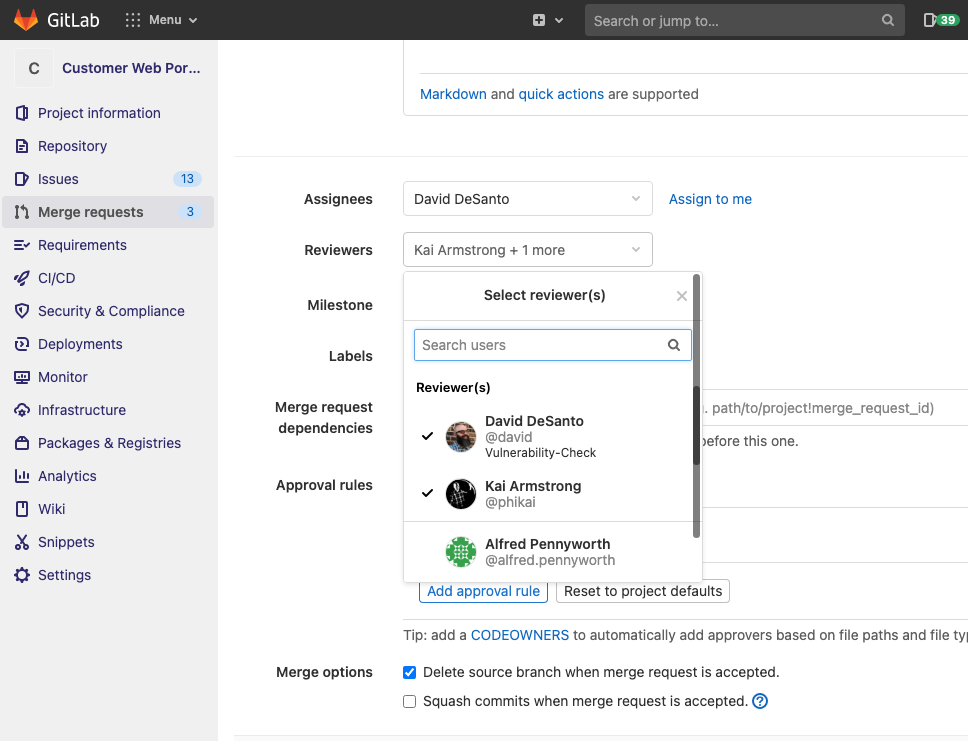
    GitLab announced this week it has acquired UnReview, a provider of a tool that employs machine learning algorithms to identify which expert code reviewers to assign to a project based on both the quality of their previous efforts and current workloads.

    David DeSanto, senior director for product management at GitLab, said the acquisition of UnReview is the latest step in an AI strategy that, in addition to optimizing DevOps processes, will eventually unify machine learning operations (MLOps) and DevOps workflows.

    Accessed via the Dev section of the GitLab platform, UnReview will also be employed to manage the overall code review process.

    GitLab

    DeSanto said GitLab is committed to employing AI technologies to automate workflows and compressing cycle times across all stages of the DevSecOps life cycle. The goal is to not eliminate the need for DevOps teams, but rather eliminate low-level tasks that conspire to hamper productivity while at the same time improving application security, noted DeSanto.

    Providers of DevOps platforms are now locked into an AI arms race on two separate fronts. Each of them clearly sees the opportunity to leverage machine learning algorithms and other forms of AI to automate a wide range of processes. At the same time, it’s apparent providers of MLOps platforms are borrowing heavily from DevOps best practices to manage the development of AI models. However, from the perspective of a DevOps team, an AI model is just another type of software artifact. Rather than deploying two distinct platforms, the goal should be to bring the data scientists that build AI models into the larger DevOps community, said DeSanto.

    The current challenge, of course, is the pace at which DevOps and data science teams work. It may take six months or more for a data science team to construct and validate an AI model that needs to be embedded within an application. Aligning the timetable for an AI model with the application development life cycle is difficult to accomplish if neither team has any meaningful visibility into each other’s workflows. As the rate at which AI models can be developed steadily improves, that alignment issue will only become all the more pressing.

    Going forward, it’s hard to envision any application that won’t have some sort of AI model embedded within it. The issue is that, just like any other software artifact, an AI model needs to be updated. As new data sources become available, an AI model is likely to drift beyond the parameters intended. A rapid change in business conditions may also require the replacement of an entire AI model. The same processes that DevOps teams apply to update any software artifact can also be applied to an AI model.

    It’s unclear how long it will take before some type of convergence of DevOps and MLOps inevitably occurs, as organizations look for more efficient ways to manage what will become thousands of AI models. The one certain thing is the longer it takes to make the effort, the more difficult it will become to overcome the organizational inertia that has been allowed to set in.

  • Digital.ai Deepens Value Stream Management Integration

    Digital.ai Deepens Value Stream Management Integration

    Digital.ai announced today it has expanded usage of machine learning algorithms within its namesake value stream management (VSM) platform to include modules to optimize flow and improve application quality in addition to enhancing its risk prediction and process optimization modules.

    In addition, Digital.ai has expanded the number of pre-built integrations it now provides for hundreds of DevOps tools and platforms.

    Derek Holt, general manager of agile and DevOps for Digital.ai, said the goal is to expand the bi-directional flow of data between the core Digital.ai platform and modules and tools provided by the company and its third-party DevOps partners.

    Digital.ai was formed from the merger of XebiaLabs and CollabNet VersionOne. The combined company has rolled up Numerify, a provider of analytics tools infused with artificial intelligence (AI), Experitest, a set of testing tools and Arxan, a provider of an application security platform. With the latest release, these capabilities have been integrated into the core Digital.ai platform in a way that goes well beyond merely providing access via a common user interface, said Holt.

    The goal is to provide organizations with a VSM platform through which better decisions can be made to optimize software development and delivery by first collecting data from all the DevOps tools employed and then using machine learning algorithms to surface optimization recommendations, noted Holt. As application development environments become more complex to manage, it’s already apparent that most IT teams will require AI capabilities embedded in a VSM platform to manage interdependent projects, noted Holt.

    Armed with those recommendations, it becomes simpler to reallocate resources in the event a critical project is going to be completed later than planned or shift resources to make sure that project is completed on time. A VSM platform also enables IT organizations to assess the impact those decisions will have on the rest of the business at a time when organizations have never been more financially dependent on the timely delivery of software. The late delivery of a single application module can wind up having a profound impact on revenue projections for organizations that increasingly rely on digital processes to engage customers.

    A recent survey conducted by Digital.ai found that many digital transformation initiatives are struggling, to some degree. Nearly half of respondents (49%) said they are not seeing the results they expected from their digital transformation efforts, and 54% admitted they were worried about their ability to compete. Over 90% need to see a better return on their digital transformation investments.

    Digital.ai claims it currently has more than 1,200 customers, including Allianz, Commerzbank, eBay, Janus Henderson and Levi’s that are using elements of the Digital.ai platform to better manage software development projects. Many of the users of those tools now include business executives and other application stakeholders that are employing a VSM platform to track the progress of application development projects. Digital.ai Analytics Lenses that are domain-specific make it simpler for different classes of end users to access pre-built dashboards and metrics, noted Holt.

    The market research firm Gartner has predicted that 70% of organizations will employ a value stream management platform by 2023 to improve flows across their DevOps pipelines. However, as DevOps platforms and project management applications continue to evolve, many are also adding many of the analytics capabilities found in a VSM platform. Each IT organization will need to decide which approach makes the most sense for them, but Digital.ai is clearly betting that as application development becomes more challenging, the need for an integrated VSM platform will become much more apparent.

  • Automation is Needed for Reliable Cloud Platforms

    Automation is Needed for Reliable Cloud Platforms

    From six to 1,400 microservices in less than five years? At first glance, that sounds like overwhelming complexity. Can you actually see the entire system across all of the microservices? This is the key to highly available and reliable SaaS cloud platforms. But what does this mean, and how can SaaS providers achieve it?

    Over the past decade, the cloud has become the virtual space where the majority of companies’ business processes and communications take place. Considering the accelerated digitization processes of the last year alone, cloud computing plays an increasingly crucial role when it comes to making distributed teams more productive. As a result of these developments, the number of applications, microservices and interfaces is increasing, creating a more complex IT infrastructure.

    The reliability and availability of cloud services must, therefore, be a high priority for providers. Weak services and downtime not only cause frustration among customers, but can also lead to considerable financial losses on the customer side. Accordingly, SaaS providers must establish processes and methods that help them provide secure and highly reliable cloud infrastructures, or risk losing their customers.

    Microservices as the Foundation for Reliability

    Complexity is implied with every SaaS cloud platform. This can be managed in two different ways. On one hand, management can be done via a centralized monolith. Through this, complexity arises from a single system with only one interface to external systems. On the other hand, complexity can be distributed via smaller system units in the form of microservices. This means that the various functions of an application or service are broken up and assigned to several individual instances that communicate with each other. The advantage of this is that if a microservice fails, the entire application is not necessarily affected.

    Microservices in cloud environments have been enjoying steadily growing popularity for some time now. In fact, 76% of the companies surveyed as part of a 2019 Forrester study stated that microservices will be high on the business agenda for many companies in the future. Only 4% disagreed with this statement at the time. In 2020, a TechRepublic survey found that the majority of experts surveyed (73%) have already integrated microservices into their application processes, and 66% of respondents use them in the form of cloud services. Microservices are everywhere!

    Service Level Objectives and Automation

    Due to the numerous interfaces that arise with microservices and the need to be monitored, this architecture appears, at first glance, to be more error-prone than traditional monolithic systems. Some companies already rely on service level objectives (SLOs) – i.e., targets and measurable KPIs to ensure service quality – for a higher level of security. However, these are often limited to the outer layer of the entire system.

    Formulating appropriate SLOs for each microservice with additional alerts can counteract this. In combination, these provide profound protection of the system against creeping errors.

    In order to maintain an accurate overview with regard to security and security-related incidents, and thus ensure the reliability of the system, the microservices and their respective SLOs must be closely monitored and continuously tested. When we surveyed software and IT professionals back in 2019, we found that 71% of respondents reported that microservices-based architectures are much easier to test than monoliths. And with the help of automation, operational teams can ensure that the overall reliability level is close to 100% in every single instance of the systems, no matter how complex. A separate, centralized automation tool monitors all microservices in use and is able to alert appropriate teams about any abnormal activity with respect to individual breached SLOs. In addition, this tool should be linked to an incident management platform so that any breach can be remediated directly. By following this framework, software developers will enjoy the benefits of a more manageable and scalable microservices system.

    We live in a time when consumers expect technology to be updated regularly and run reliably. If this is not the case, they will simply opt for better alternatives. To prevent this, companies need to invest in more effective service structures. Microservices, combined with a central platform that automates testing and management, is the foundation for achieving reliability and scalability.

  • Three Ways Machine Learning Can Change Incident Management

    Three Ways Machine Learning Can Change Incident Management

    Incident management for important applications has many connotations, many of them negative. Most are well-deserved. Stress, panic, hurry, urgent, drop-everything, all-hands-on-deck, emergency, to name a few. Typically, there is a critical problem, ranging from complete failure to loss of certain functionality or performance. The problem or outage potentially means loss of revenue, loss of customers, negative social media commentary or bad reviews and more. Time is of the essence, dictating that the primary objective is fixing the incident as quickly as possible. Often, this means that symptoms or partial causes are mainly addressed rather than the underlying root cause.

    Without fully addressing the underlying issue, companies virtually guarantee that the same problem – or a similar one – will reoccur. Not identifying root cause often prevents a durable fix. In addition, companies lose the opportunity to proactively improve application code or infrastructure based on real-world experiences and issues. Postmortems may only result in reviews of monitoring and observability solutions and the inevitable updates to alert rules. Most DevOps professionals not only understand but have lived through these frustrations on an ongoing basis. Management, then, often wonders why their systems are so unstable.

    Changing the model for incident management has been limited by a combination of the overriding urgency combined with short-staffed, overworked teams. Although AI and machine learning has been positioned as the panacea for nearly every kind of technical ill, this is a clear case where “machines” could fundamentally enhance human efforts to improve a situation. The best troubleshooters exhibit a combination of instinct, experience and patience to carefully sift through reams of data, spotting unusual events and their correlation with bad outcomes. This turns out to be a perfect application for machine learning.

    By ingesting all logs and metrics to find meaningful problems or anomalies, systematized machine learning can quickly and comprehensively sift through all data to gain a thorough understanding of the real problem. Using this approach significantly speeds up the root cause analysis. Such an applied solution introduces three game-changers for incident management.

    Three Game-Changers for Incident Management

    First, incident remediation times can be reduced dramatically and with less of an all-hands-on deck, drop-everything frenzy. Rather than SREs and engineers spending hours digging through dashboards, traces and millions of log lines, an automated approach can accomplish it more quickly, more thoroughly and with less impact on human professionals, allowing them to focus on other responsibilities. This instantly relieves stress and panic and alleviates pressure because incidents can be remedied better and faster, restoring the application to its expected service level. The value is, of course, two-fold: faster time to resolution and greater efficiency or productivity of the teams who would otherwise be involved. Ending or mitigating the frustration professionals have to deal with is an additional bonus.

    Second, besides faster MTTR, an automated, machine-learning-driven approach is more comprehensive and gets to the root problem. This means that future incidents may be avoided altogether. This also means a potential end to the alert rule “hamster wheel.” The knee-jerk tendency to continually adjust alert rules and settings to enable better “early warning systems” is far less necessary. Instead of trying to gain an early indication of a similar failure in the future, the cause of such failures can be found and addressed proactively. Eliminating such problems in the first place is far better than trying to evolve alerts to catch unresolved causes. Alerts are still important, but machine learning can shift the basis for them to more root-level issues, and they can be constructed automatically by the system.

    Third, automated, machine-learning-based incident management can help proactively catch silent bugs that may not yet directly be part of an incident. It can also inform developers earlier in the cycle. Not terribly long ago, new releases were tested extensively before deploying to production, allowing for the creation of specific test plans, conducting stress tests and potentially catching bugs that might have potentially terrible consequences in the future. Now with faster, non-stop development cycles, testing mainly occurs during production. Machine learning can surface new or unusual errors, event patterns and patterns in metrics. The approach can proactively surface subtle bugs early, before they impact users or cause widespread failure.

    Changing the DevOps Life Cycle

    Each of these three results significantly changes not only the incident management life cycle, but also DevOps as a whole. Poring over logs and metrics is a perfect application for machine learning and offers the opportunity to fundamentally change incident management, transforming it from a scourge and necessary burden to a competency. An automated system of machine learning applied to incident management advances DevOps rather than encumbers it.

  • Prevent False Positives From Derailing Shift Left

    Prevent False Positives From Derailing Shift Left

    Static application security testing (SAST) tools are designed to balance false positives (incorrect warnings) with false negatives (missed vulnerabilities) primarily because deeper analysis requires more time and computing resources. Both of these are in short supply among developers that are tasked with meeting shorter and shorter product delivery milestones.

    So, while SAST vendors consider a true positive a correct detection of a real defect, and a false positive an alert on a bug that does not exist, this is rarely the lens used by developers. What really matters to them is whether the output of a SAST tool is useful and actionable. For example, there is a great deal of variation in how developers interpret SAST scan results, depending on the nature of the defect, the role of the user, the platform on which the application will run and the environment in which it is deployed.

    Take, for example, a true positive result of a buffer overrun, one of the most notorious classes of C/C++ defects from a security perspective. In the early stages of application development, it almost always makes sense to change the code to fix such a bug. Developers are actively changing the code, anyway, so fixing it involves little extra overhead. However, if the same defect is found after the application has been deployed, then it is much trickier to decide whether it is worth fixing.

    That’s because the cost of fixing a real bug may exceed the benefit of fixing it, and the benefit of “correcting” a false positive may exceed the cost of leaving it alone. Since SAST tools can only be relied on to give narrow technical answers, humans must interpret and determine which static analysis results should be acted upon.

    Consider a hypothetical comparison of different SAST tools in the graph below. Tool A has good recall (i.e., the ability to identify real defects) and precision (i.e., the ability to exclude false positives) which results in finding many of the real bugs with a reasonable amount of false positives. Tool B has high precision but poor recall, resulting in low false positives but a higher number of false negatives (undetected security vulnerabilities). Tool C has poor precision but high recall, resulting in detecting all the possible errors but also with a very high number of false positives.

    A comparison of recall and precision of hypothetical SAST tools.

    Developers hate false positives because they introduce unnecessary work and delays. This, in turn, has a disproportionate effect on the way tools are designed, configured and used. If given a choice between Tool A that reports 40 real defects and 10 false positives, and Tool B that reports 50 real bugs but with 50 false positives, users will almost always prefer the former, even though it is finding fewer real defects. This is perfectly understandable — users are asked to weigh an immediate concrete negative (time spent looking at false positives) against an intangible potential future positive (vulnerabilities that may not show up).

    However, if one offsets the time and risk saved in finding those 10 bugs earlier (i.e. by avoiding expensive and potentially dangerous bugs in finished products) against the time needed to assess the additional 40 warnings as false positives, then it quickly becomes apparent that configuration B is more economical. This is especially true with security vulnerabilities that slip through testing and can have expensive consequences.

    Since the number of warnings within a DevOps pipeline can be a deterrent to getting the most out of a SAST tool – especially early in the project, when it provides the greatest benefits – organizations should consider the following techniques to increase developer attention to alerts:

    • Filter and Focus: Parse the viewed data from the tool’s interface, focusing on what is most important for the project and assigning developers to fix critical issues in priority order.
    • Mark and Defer: Lower the priority, or change the state to “later,” for example, on all or a subset of the warnings based on some set of conditions that are less crucial to the project.
    • Stop the Bleeding: Use the above techniques to temporarily defer existing warnings with the emphasis on fixing new defects that are introduced as code is changed or new code is developed.

    Despite the fact that it will invariably produce some false positives, SAST helps shift security further to the left by ensuring security and programming vulnerabilities are eliminated when code is being written, rather than at the testing stage when they are much more expensive to fix. Filtering and prioritizing warnings are two effective techniques to ensure developers don’t throw out the baby with the bathwater.

  • Perforce Acquires 21 Labs to Advance Mobile App Testing

    Perforce Acquires 21 Labs to Advance Mobile App Testing

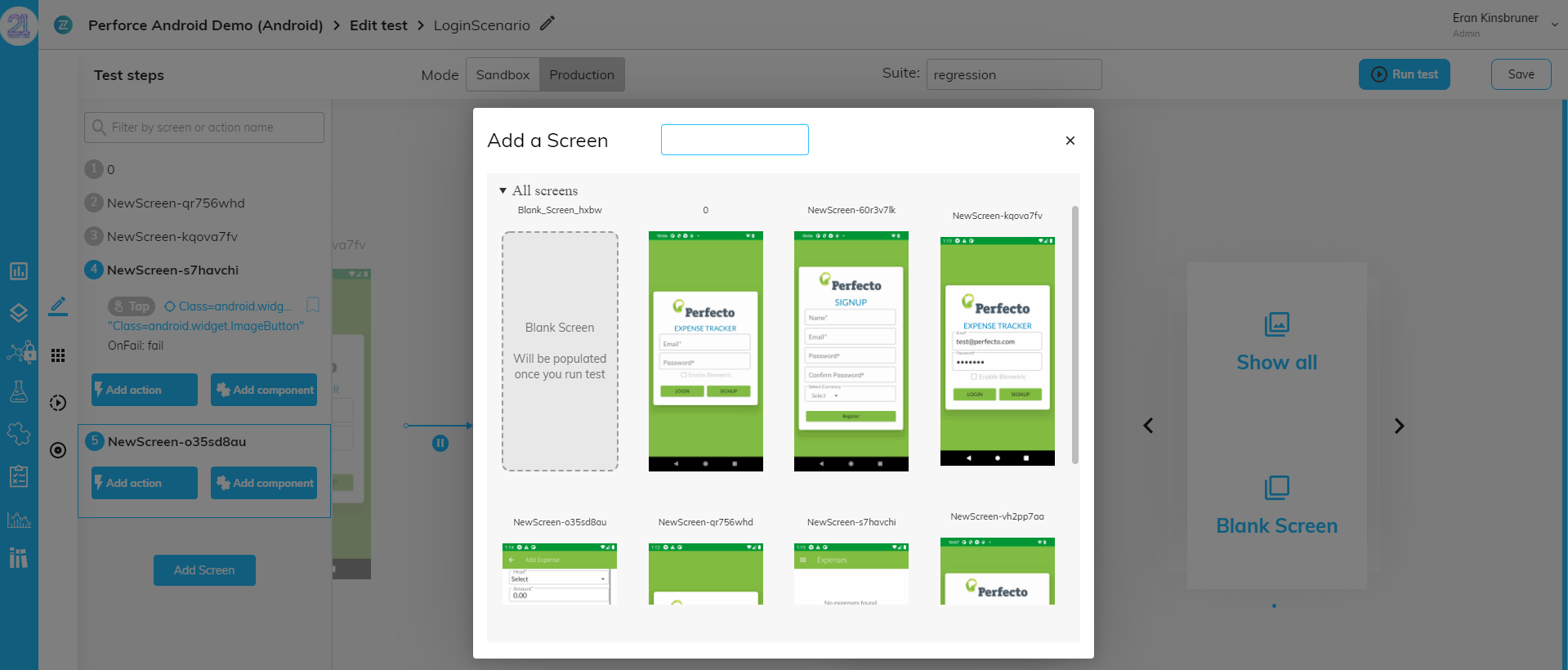
    Perforce Software announced today is has acquired 21 Labs, a provider of a suite of tools that leverages artificial intelligence (AI) to provide a no-code approach to testing mobile applications. Terms of the deal were not disclosed.

    Tim Russell, chief product officer for Perforce Software, said the 21 Labs tools complement a set of similar AI-based tools for testing web applications that the company makes available via its Perfecto portfolio. The company also makes available Virtual Devices, a service that makes it feasible to test mobile computing devices at scale using Apple iOS and Google Android emulation software. Perforce acquired Perfecto in 2018.

    21 Labs developed a test automation platform that uses algorithms to observe interactions within a mobile application that are then used to generate tests. That approach sharply reduces the need for a developer or professional application developer to employ scripts to generate those tests, said Russell.

    The next step will be to integrate 21 Labs with the test recommendation engine that Perforce already makes available via its Perfecto testing platform, added Russell.

    Perforce

    As the rate at which applications are developed accelerates, Russell noted, application testing has become a major bottleneck. The shift toward scriptless approaches to application testing will make it possible for organizations to quickly vet applications to ensure quality without having to slow down the rate at which they are being deployed. That’s especially critical at a time when mobile applications are often at the core of any digital business transformation initiative.

    It’s not clear to what degree application testing will be automated, but it’s apparent that as AI becomes more advanced, the need for many of the routine tests conducted by professional developers today will be eliminated. In theory, that should afford professional developers more time to conduct complex tests, while more routine tests are automatically run as an extension of a DevOps workflow.

    Application testing, of course, has always been the first thing to suffer whenever developers are pressed for time to make a delivery deadline. However, the sooner any issue is discovered, the less expensive it generally is to fix. At the same time, end users are not generally patient when it comes to mobile applications that don’t work as advertised. External-facing mobile applications, especially, need to provide a compelling experience the first time they are fired up. At the same time, internal digital business processes that are accessed by end users and business partners now need to be accessible from anywhere.

    Arguably, it’s harder to provide a great application experience on mobile computing devices than it is on a desktop platform, which means there should be even more testing of mobile applications before they are deployed in a production environment. The days when developers experimented on end users by rolling out minimally viable applications are coming to an end, as end user expectations continue to rise. DevOps teams that don’t adjust to that new reality may soon discover just how critical testing has become to their own job security.