Category: Continuous Testing

Continuous testing is the process of executing automated tests as part of the software delivery pipeline to obtain immediate feedback on the business risks associated with a software release candidate.

  • Bitrise Tightens Mobile DevOps Integration With AWS Cloud Services

    Bitrise Tightens Mobile DevOps Integration With AWS Cloud Services

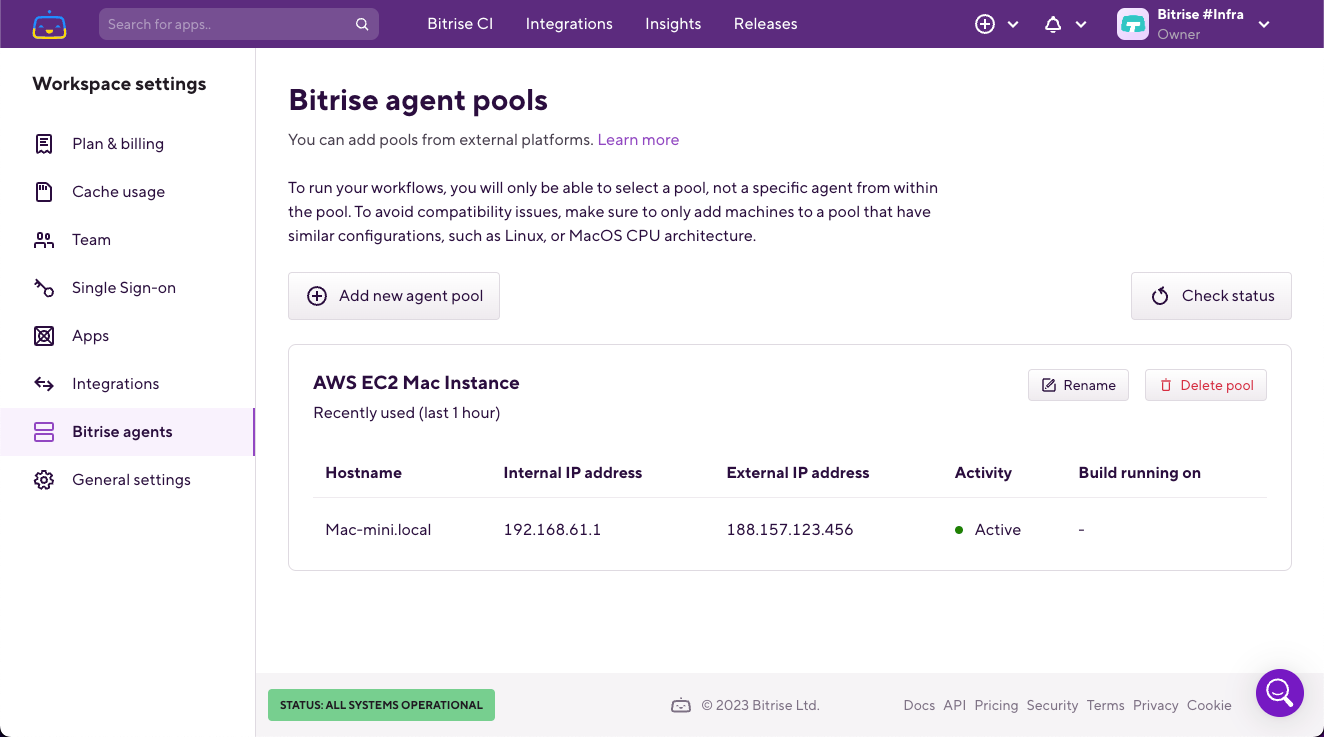
    Bitrise this week will tighten integration with its DevOps platform for building and deploying mobile applications and the application development services provided by Amazon Web Services (AWS) cloud.

    Announced at the AWS re:Invent 2023 conference, the goal is to provide easier access to automated building, testing and release management capabilities provided by AWS as part of an effort to increase overall efficiency.

    Bitrise CEO Barnabas Birmacher said those capabilities will streamline workflows for a Bitrise Mobile DevOps platform that has been specifically designed for building and deploying mobile applications that typically need to be updated frequently.

    Based on a continuous integration/continuous delivery (CI/CD) platform developed by Bitrise that can be deployed in an AWS cloud computing environment, the integrations will make it simpler to build and run mobile applications at scale, noted Birmacher.

    The goal is to reduce the total cost of building mobile applications while at the same time improving developer productivity for mobile applications that have to be thoroughly tested before being made accessible via an application store, he added.
    It’s not clear how many organizations will prefer to have a dedicated CI/CD platform for building and deploying mobile applications versus using the same CI/CD platform they might already be relying on to build and deploy other applications. Bitrise claims to have more than 6,000 customers, including Reddit, WISE, Equinox and Philips Hue.

    As the percentage of mobile applications that make up an organization’s portfolio continues to increase, the pace at which those applications need to be updated lends itself better to a CI/CD platform optimized for those types of applications, said Birmacher.
    In fact, a recent survey conducted by Bitrise found 62% of respondents have been adversely impacted by manual processes that slowed the rate at which mobile applications were deployed and updated. The survey also found (44%) of respondents reported their release approval process is mostly or entirely manual, with only 9% having fully automated application releases.

    The survey also found that nearly two-thirds of organizations (66%) have deployed applications that can’t be opened in two seconds or less, which is widely considered the accepted level of performance required for mobile applications. In addition, three-quarters of organizations (75%) required more than two days to address bug fixes.

    Many mobile apps have become increasingly mission-critical thanks to digital business transformation initiatives. Consequently, the amount of focus on them within most organizations is high; any issues that arise are likely to be noticed at the highest echelons of an organization. That level of attention can easily put pressure on DevOps teams, mainly because the general expectation among end users is that mobile applications will be regularly updated with new functionality. However, if release processes are largely manual, regularly improving the user experience can become problematic.

    Each IT organization will need to decide for itself how best to go about building and deploying mobile applications, but the one thing that is certain is adjustments to DevOps workflows will need to be made as a lot more of these applications are continuously built, deployed and updated.

  • LaunchDarkly Previews Generative AI Testing Tool for Feature Management

    LaunchDarkly Previews Generative AI Testing Tool for Feature Management

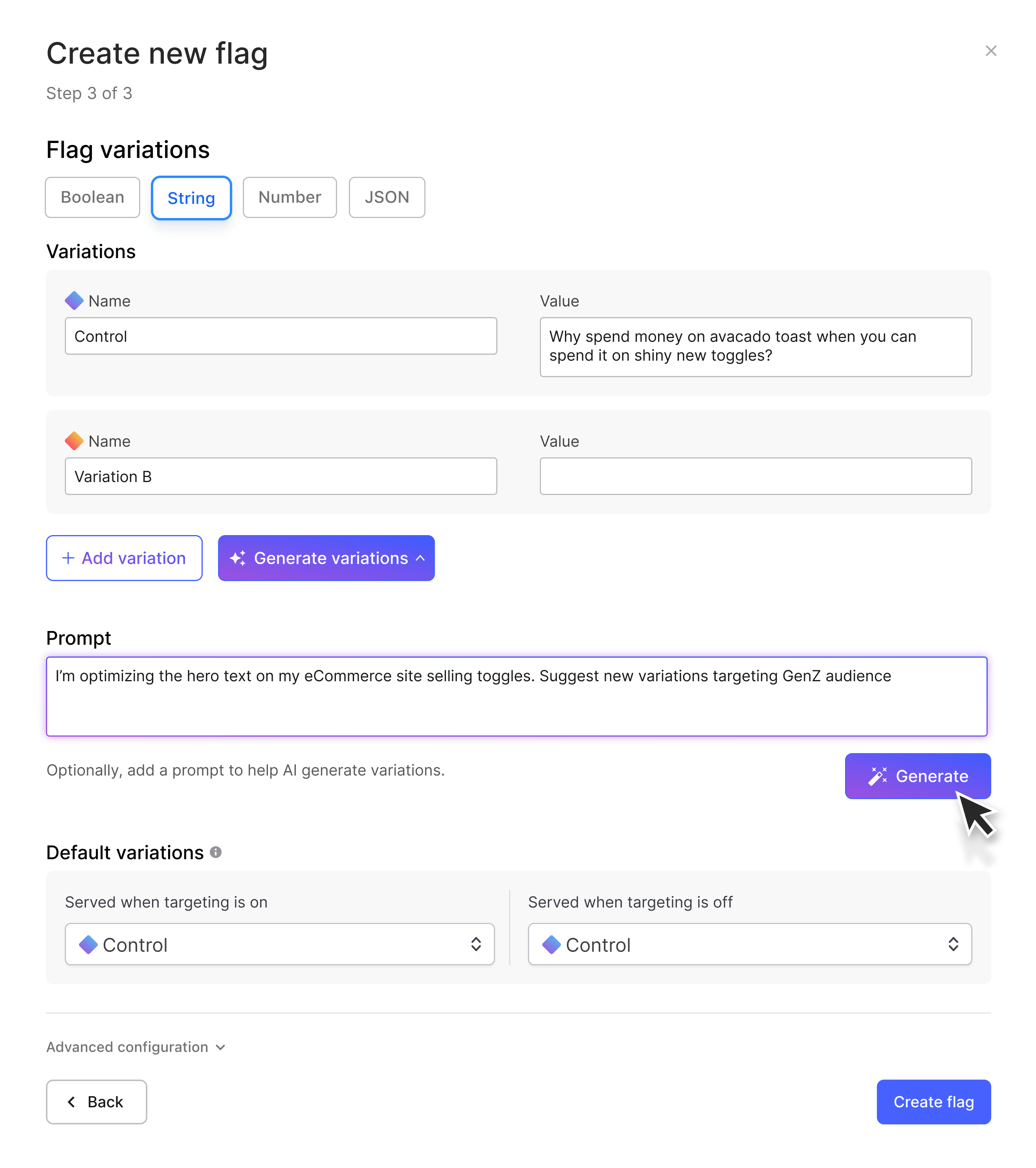
    At the AWS re:Invent 2023 conference, LaunchDarkly today previewed an ability to leverage generative artificial intelligence (AI) capabilities to create experiments for its feature management platform.

    Based on the Bedrock foundational large language models (LLMs) made available via AWS, this extension to the company’s Product Experimentation platform promises to make it simpler to use historical data to create a wider range of offerings that might be made available within an application.

    LaunchDarkly is making a case for a SaaS platform that can be used to centrally manage features across multiple workflows and platforms.

    Robert Neal, director of engineering for LaunchDarkly, said the company is now extending its testing capabilities using a managed Bedrock service provided by AWS that will enable leveraging generative AI to define a testing hypothesis more easily. That should also make it possible to involve more stakeholders in an iterative testing process within the context of a set of well-defined guardrails, he added.

    As more organizations start to deliver different tiers of digital services at varying price points, there is a clear need to be able to restrict access to those digital services. Application development teams have been employing feature management since the 1970s to isolate the development of various components into a branch that can be worked on and tested without impacting the primary build the application is based on.

    Feature management enables development teams to experiment with adding new capabilities in a way that doesn’t disrupt the application. When a project is completed, that branch is then usually merged into the primary build or can be deployed as a microservice that might be invoked via an application programming interface (API) by other modules with the application or another external application.

    At the core of that capability are what are known as feature flags, also known as feature toggles or feature switches, that make it possible to dynamically turn services on or off based on who is accessing them. Rather than being limited to the application development process, those feature flags are now being employed in production environments to enable the continuous delivery of multiple types of digital services to various classes of users of an application. A feature flag management platform enables an organization to keep track of all the flags being employed to keep the overall application environment consistent.

    It’s still early days in terms of understanding the extent to which generative AI can be applied to DevOps workflows, but it’s clear many of the manual processes that conspire to slow down the pace at which applications are built and deployed are going to be either reduced or outright eliminated. Each DevOps team will naturally need to determine for itself to what degree DevOps workflows can be automated using AI, but the overall pace at which applications can be built and deployed is going to clearly accelerate. The challenge now will be finding ways to keep pace with a rate of application development that is about to exponentially increase.

  • Redgate Automates Pulling of Test Data From Production Databases

    Redgate Automates Pulling of Test Data From Production Databases

    Redgate today added a Redgate Test Data Management (TDM) tool that automates the pulling of masked test data from databases running in production environments.

    David Gummer, chief product officer for Redgate, said this capability eliminates manual tasks that previously inhibited testing or resulted in personally identifiable information (PPI) being inadvertently used to test applications.

    Redgate TDM automatically classifies and masks data residing in SQL Server, PostgreSQL, MySQL or Oracle database before it is used to test an application. It then produces a copy or clone of that data that is a fraction the size of the original, said Gummer.

    That approach creates a repeatable process for DevOps teams that can withstand a regulatory audit of application development processes, he added. In fact, with the increased focus on software supply chain issues, more auditors are specifically reviewing how data is secured during the application development process.

    Designed to be invoked via a command line interface (CLI), within an integrated development environment or via a graphical interface, Redgate TDM reduces the friction that currently occurs when DevOps teams request test data from database administrators (DBAs), said Gummer. Many DBAs are either too busy to fulfill those requests or reluctant to provide access to sensitive data that would result in the organization running afoul of a compliance mandate.

    Developers then often resort to using anonymous data that doesn’t actually reflect the environment in which their application will ultimately be deployed.

    The amount of data that developers need to build applications is only going to increase. In the absence of any way to effectively automate the process of accessing that data, it ultimately takes longer to build and deploy stable applications. In many cases, applications are simply not tested as thoroughly as they should be before being deployed in a production environment, resulting in rollbacks that might otherwise be avoidable.

    Advances in artificial intelligence (AI) are making it easier to create test scripts, but much of the testing setup process is still based on manual processes that increase the overall level of toil.

    At a time when more organizations than ever are trying to increase developer productivity, automating relatively mundane tasks such as pulling test data can have a big impact. Developers want to spend as much time as possible focused on writing code. Everything else is a task that gets in the way of achieving that goal. While there is a general desire to empower developers, that doesn’t necessarily mean they want the cognitive load associated with building applications to increase. In fact, one of the reasons platform engineering has emerged as a methodology for managing DevOps workflows at scale is to reduce the current level of cognitive load developers experience today.

    Of course, DevOps teams are, by their nature, ruthlessly committed to automating as many processes as possible. The challenge is bottlenecks in those processes conspire to slow down the overall rate at which applications can be built and deployed despite the best intentions of all involved.

  • BMC Mainframe Survey Results Show a Platform on the Rise

    BMC Mainframe Survey Results Show a Platform on the Rise

    What if I told you that the oldest active computing platform is also one of the most innovative, seen as a platform for growth and new workloads, not just by seasoned professionals, but by a new generation of stewards, too? The 2023 BMC Mainframe Survey shows just that. In addition to an overwhelmingly positive perception and growth mindset regarding the mainframe, the survey reveals that the majority of those who are most enthusiastic about its future are relative newcomers to the platform.

    Now in its 18th edition, the annual BMC Mainframe Survey gauges the opinions of more than 800 executive and technical professionals on a range of topics, from overall perception of the platform to top priorities, common practices and greatest challenges.

    This year’s results show that 94% of respondents have a positive perception of the mainframe, with 62% citing it as a platform to grow and attract new workloads. This tracks the 62% who report adopting DevOps practices on the platform. It’s no surprise, then, that two of the top five priorities cited by respondents are efforts to enhance automation and modernize applications. Organizations around the world recognize that the mainframe can be a leader in innovation, powering their digital transformations.

    Modern Management Approaches

    This innovation goes beyond the software and services developed for the mainframe to include those used to manage the platform. It’s reported that 35% of respondents listed the implementation of cloud technologies as one of their top four priorities for the coming year, with 41% saying they are considering cloud-based storage and backup. With the growing volume of mainframe data and the emergence of new regulations and standards governing data security and recovery, organizations are turning to cloud-based data management to reduce costs and improve recovery options.

    Year over year, the number of survey respondents reporting the use of AIOps hasn’t changed considerably, but those reporting its cross-platform use on both mainframe and non-mainframe systems has jumped 7% from 2021.

    Organizations are recognizing the need to take advantage of the greatest business values of AIOps — cited in the survey as improved uptime and the ability to detect problems quickly, understand trends and respond proactively — as part of a holistic approach to enterprise IT operations management.

    With increased cross-platform use, significant benefits and a decrease in the number of respondents reporting implementation challenges like cost, complexity and the need for specialized skillsets, BMC sees AIOps as an area ripe for significant growth in the coming year.

    Investment Pays Dividends

    Improving the availability, quality and efficiency of the mainframe, of course, requires investment. In our report on the results of the 2023 BMC Mainframe Survey, we compare the responses of maximizers (those planning to increase investment in the platform) with those of minimizers (those planning to decrease investment levels). The results are eye-opening.

    Maximizers have invested in future-proofing their workforce in a variety of ways, and the data bears that out; 81% have ten or fewer years of experience on the platform. The new generation of stewards sees the mainframe not as a legacy platform, but one of continued growth and innovation, worthy of the investment required not just to keep it modern, but to place it at the forefront of digital transformation.

    Another key difference between maximizers and minimizers relates to security, which was cited as the top overall priority of survey respondents for the fourth consecutive year. Maximizers are more likely than minimizers to have a dedicated resource to investigate security events and to have dedicated ransomware recovery capabilities in place. It should come as no surprise, then, that maximizers were 20% more likely than minimizers to report that their mainframe security controls for ransomware are extremely effective.

    These results show that the differences between maximizers and minimizers go beyond outlook, producing tangible effects on outcomes. The maximizers increasing their investment in the mainframe report fewer challenges with staffing and skills shortages and a stronger stance against increasingly sophisticated cyberthreats. The minimizers decreasing their investment in the platform not only have greater difficulty in maintaining a skilled workforce, which increases the risk of falling behind competitively, but it also puts their organizations at serious risk of potentially catastrophic security breaches.

    A Bright Future

    In short, the results of the 2023 BMC Mainframe Survey reflect a positive outlook for the platform’s future. By investing in their workforces and the tools required to advance and protect the platform while adopting modern techniques and practices, organizations can reduce risk and promote innovation that delights their customers.

