Category: Continuous Testing

Continuous testing is the process of executing automated tests as part of the software delivery pipeline to obtain immediate feedback on the business risks associated with a software release candidate.

  • Kobiton Open Sources Test Script Generation Tool

    Kobiton Open Sources Test Script Generation Tool

    Kobiton today announced it is open sourcing a script generation tool for the Appium automation framework that automates the running of test scripts.

    The overall goal is to make the tool, which makes it simpler to create more testing scripts, more widely available and, ultimately, lead to higher-quality applications being deployed.

    Kobiton CTO Frank Moyer said the tool makes it possible to generate tests from a test case that has been captured in a Node.js format. Rather than having to hire hundreds of testers to create those scripts manually, it’s now possible to automate those tasks using an open source tool, he added.

    On average, Kobiton claims the tool it developed can write a 30-step script in 10 minutes, whereas a manual approach could take as long as four hours to construct a similar test.

    Once created, those test scripts can automatically be executed using the Appium framework. The output from that tool can also be used on other testing platforms, including Sauce Labs, BrowserStack and LambdaTest or integrated with low-code testing platforms from Perfecto and Tricentis.

    It’s no secret that the quality of any given application tends to vary widely, not just between organizations but also within them. Most of those issues can be traced back to a lack of testing that usually occurs because there isn’t enough time. As deadlines near, one of the first places organizations look to make up for delays is the time available for testing. The hope is that whatever issues arise will be addressed via the next update. Of course, when the update falls behind schedule, the testing process is again cut back.

    Ideally, application development projects would not be allowed to go forward without adequate testing, but given business pressures, they often do. The only way to limit the impact of application development delays is to reduce the time required to create and run tests. The more automated that process becomes, the less time there will be spent on manually running routine tests. In fact, hopefully, there might even be enough time to run more complex tests to uncover issues that might adversely impact the user experience in ways no one might have otherwise considered.

    One way or another, the quality of the applications being deployed needs to improve if for no other reason than end users have options. Most end users will never give a mobile application a second chance if the initial experience doesn’t meet expectations. At the same time, application security regulations are only going to become more stringent. The tolerance for known vulnerabilities discovered after an application has been deployed is falling. Many organizations will find themselves subject to fines being levied simply because there was not enough adequate testing baked into the software supply chain.

    In fact, application security should, in the final analysis, be an element of a large quality assurance process that begins with adequate testing.

  • Survey Surfaces Raft of Ongoing Agile Development Challenges

    Survey Surfaces Raft of Ongoing Agile Development Challenges

    A survey of 788 software development professionals finds 71% are using agile development methodologies within their software development life cycle (SDLC) but only 44% said it is working very well (11%) or somewhat well (33%) in the enterprise.

    Conducted by Digital.ai, the survey identifies end-to-end visibility and traceability from business initiative through deployment as the top opportunity for improvement (44%), followed by an ability to measure cycle time, wait time and bottlenecks (34%), continuous testing (29%) and identification and measurement of technological risk (28%).

    Nearly half (46%) identified too many systems as a primary reason Agile was not scaling, followed by siloed teams (37%), culture clash (34%), inconsistent adoption (30%) and the inability to measure business value (28%).

    Despite these issues, nearly two-thirds (63%) said they have visibility into their Agile pipeline, with 55% claiming they have complete visibility. However, only 36% said DevOps teams currently work together as one team to accelerate innovation and deployment of high-quality and more reliable software. At the same time, only two-thirds (66%) claimed at least 50% of their applications were delivered on time and “with quality.”

    Joyce Tompsett, general manager of the State of Agile project at Digital.ai, said the survey makes it clear many organizations are still trying to strike the right balance when it comes to developing software. For example, the survey finds the top two reasons organizations adopt Agile (tied at 41%) are to accelerate time to market and prioritize delivery and measure customer/business value. Most software development teams are being evaluated both based on velocity (33%) and the value delivered (29%), the survey finds.

    The survey also identifies customer satisfaction (43%), time to delivery (39%) and competitive advantage (34%) as their top priorities for 2024.

    In general, the survey finds that 33% of respondents reported business leaders and executives are actively leading and participating in company-wide agile transformation. However, more (41%) said there was not enough leadership participation. Well over a third (37%) said business teams simply don’t understand what Agile is or what it can do. More than a quarter (27%) said there is not enough training.

    Not surprisingly, the most widely adopted methodology is Scrum (63%) with the Scaled Agile Framework (SAFe) being the most widely used (26%). Another 22% don’t have a mandated framework, while 12% said they have created their own.

    The debate over what precisely constitutes agile development is, of course, ongoing. Each organization tends to adopt the elements of the framework that make the most sense for them, so the actual state of adoption from one organization to the next will vary widely. The one thing that is certain is the more complex the IT environment, the more challenging it can be to embrace agile development.

    And there continues to be lots of room for improvement. If only two-thirds of organizations are delivering half (50%) of their applications on time with an acceptable level of quality, it means there are more projects that are failing to meet that standard than many software development teams might care to admit.

    As more organizations become more dependent on software, however, tolerance for that level of failure will only continue to decline as businesses and leaders lose patience with application development practices that do not live up to expectations.

  • OpenText Extends Tool for Auditing Source Code Using Machine Learning

    OpenText Extends Tool for Auditing Source Code Using Machine Learning

    OpenText this week updated a static analysis tool it provides to audit code using machine learning algorithms to provide deeper insights into on-premises IT environments.

    Announced at the OpenText Security Summit 2024 conference, the latest generation of Fortify Audit provides additional artificial intelligence (AI) models capable of learning the unique attributes of custom source code.

    The latest version of Fortify Audit Assistant also adds the ability to detect drift in a model and, if necessary, automatically refresh it. OpenText is now committing to refreshing those models every quarter.

    The discriminant AI model from OpenText enables machine learning algorithms to learn how humans conducted an application audit to then run similar tests on other applications. Previously, Fortify Audit relied on the same core model to audit both on-premises and software-as-a-service (SaaS) applications based on data collected by OpenText. Fortify Audit Assistant now provides support for more than 30 language-specific models to improve testing performance.

    Dylan Thomas, senior director for Fortify engineering and product for OpenText Cybersecurity, said this capability ensures that any sensitive data never leaves an on-premises IT environment.

    The overall goal is to streamline the number of alerts that would otherwise overwhelm a DevSecOps team trying to identify the root cause of an issue, he added. For example, Fortify Audit Assistant will identify test code that is not vulnerable because it was never deployed in an actual production environment. That approach makes it easier for DevOps teams to prioritize which vulnerabilities to fix first in their source code using a lightweight AI model that still enables them to deeply scan source code, noted Thomas.

    Historically, DevSecOps teams need to make a trade-off between lightweight approaches and deep scans of source code that is no longer required, he added.

    As regulations pertaining to software supply chain security become more stringent the number of development teams that will be subject to some type of audit is only going to increase. The cost of failing an audit will also inevitably increase as regulatory bodies look to make examples of organizations that are not properly securing their software supply chains.

    It’s not clear how aggressively organizations are embracing best DevSecOps practices to address myriad software supply chain security issues that were highlighted in an executive order issued by the Biden administration to Federal agencies. However, with the rise of AI and other forms of automation, it should become simpler to identify more vulnerabilities before they wind up being exploited in a production environment.

    There will always, of course, be a need to secure production environments because there’s always a probability mistakes will be made. However, given the lax practices many organizations have employed to build and deploy applications, it’s probable the number of vulnerabilities that exist in production environments today is beyond counting. In many cases, the better part of valor might be to replace many of those applications entirely with ones built using DevSecOps best practices.

    Regardless of the path to better application security chose the one thing that is certain is cybercriminals are only going to become even more adept at discovering those vulnerabilities.

  • 10 Key Features of AI Code Assistants

    10 Key Features of AI Code Assistants

    One of the most potent tools that have emerged to streamline the coding process is code assistants. Code assistants are software tools designed to assist programmers by providing suggestions and automated features that help in writing code more efficiently and accurately. They act as virtual aides, making the coding process faster, more intuitive and less prone to errors.

    Code assistants can be categorized into two types: Rule-based and AI-based. Rule-based assistants follow predefined rules and perform according to set guidelines. They are mainly used for syntax highlighting, code formatting and basic error detection. AI-based code assistants can learn from past coding patterns, predict what a programmer is trying to achieve and suggest appropriate code snippets. They are capable of understanding the context of the code and providing accurate suggestions, as well as generating entire blocks of code based on natural language instructions. Read this blog post for examples of popular AI coding assistants.

    Whether you are an experienced software developer handling complex projects or a beginner, coding assistants can automate the tedious aspects of coding, allowing you to focus more on problem-solving and innovation.

    The Growing Importance of AI in Software Development

    As software development becomes more complex and time-sensitive, the role of AI in this field has grown significantly. AI-driven code assistants represent a major shift in how software is developed. They bridge the gap between human expertise and the efficiency of automated processes. 

    AI in software development not only speeds up the coding process but also enhances the quality of the code. These tools can analyze vast amounts of code, learn from it and apply that learning to assist developers in real-time. They can adapt to different coding styles and requirements, making them versatile tools for a wide range of programming tasks. Furthermore, as software projects increase in size and complexity, AI code assistants become crucial in managing and navigating these complexities. They offer intelligent insights, detect potential issues before they become problematic, and assist in keeping large codebases clean and manageable.

    In addition to increasing efficiency, AI code assistants are instrumental in reducing the barrier to entry in software development. They make coding more accessible to people with varying levels of expertise, including those who are new to programming. This accessibility is essential in an era where the demand for software development skills is continuously rising. By providing real-time assistance and learning resources, AI code assistants are not just tools for current developers but also learning aids for future generations of programmers.

    10 Key Features to Expect from Code Assistants in 2024

    With the rapid advances in large language models (LLMs), the following features are becoming standard in coding assistants as we enter 2024.

    Advanced Contextual Understanding

    Modern code assistants are evolving to understand the context of code more intricately. Unlike simple autocomplete tools, these AI systems can analyze the broader scope of a project, recognizing patterns and offering suggestions that align with the overall architecture and design patterns. This advanced understanding not only streamlines coding but also aids in maintaining consistency throughout the codebase.

    Real-Time Code Optimization Suggestions

    AI tools can proactively recommend changes to improve performance and efficiency. For instance, a code assistant might suggest a more efficient algorithm or highlight redundant code blocks that can be simplified. This feature not only enhances code quality but also serves as a learning tool for developers, exposing them to best practices and alternative approaches.

    Enhanced Debugging Assistance

    Debugging is often a time-consuming aspect of development. In 2024, expect code assistants to revolutionize this process by offering enhanced debugging assistance. Through deep analysis, these tools automatically detect errors and anomalies, suggesting potential fixes. They can pinpoint the exact location of a bug and provide context, significantly reducing the time developers spend in the debugging phase.

    Automated Refactoring

    Refactoring is crucial for maintaining clean code, and AI-driven assistants now offer sophisticated automated refactoring capabilities. They intelligently suggest changes that improve code readability and maintainability, such as restructuring code or renaming variables for clarity. These suggestions will be particularly beneficial for managing and updating legacy code, ensuring it adheres to modern coding standards.

    Code Documentation Generation and Update

    Keeping documentation updated is a challenge. Code assistants can now automate this task by generating and updating documentation in real-time. As code changes, the documentation will reflect these updates, ensuring that it always stays in sync with the codebase. This feature will be invaluable in large teams where keeping track of changes can be daunting.

    Predictive Coding Assistance

    Moving beyond reactive suggestions, code assistants will offer predictive assistance. By analyzing coding patterns and project structures, these tools will predict a developer’s next steps and offer relevant suggestions even before they are explicitly requested. This proactive approach will speed up the development process, reducing the cognitive load on developers.

    Understanding and Responding to Developer Queries in Natural Language

    Developers can pose queries or express coding requirements in plain English, and the assistant will interpret and execute these requests. Chat-based interfaces offered by leading AI coding assistants take this one step further. This advancement will make coding more intuitive and accessible, especially for beginners or non-expert users.

    Real-Time Suggestions and Conflict Resolution in Team Projects

    Collaboration in coding projects can lead to conflicts and inconsistencies. Code assistants now offer real-time suggestions and automated conflict resolution for team projects. These tools will identify potential conflicts in merge requests and suggest optimal resolutions, enhancing team collaboration and maintaining code integrity.

    Personalized Coding Assistance Based on Past Interactions

    Personalization is becoming a significant feature of code assistants. By learning from past interactions with a developer, these tools will tailor their suggestions and support to align with individual coding styles and preferences. This adaptive learning approach ensures that the assistance provided is most relevant and efficient for each developer.

    Enhancing Accessibility of Coding for Non-Expert Users

    One of the most impactful features of code assistants is their role in democratizing coding. By simplifying complex coding concepts and automating mundane tasks, these tools will make software development more accessible to non-experts. Beginners and those learning new programming languages will find these assistants particularly useful, as they provide guidance and learning aids.

    Conclusion

    Code assistants powered by AI are becoming an integral part of the software development process. They not only make coding faster and more efficient but also reduce the chances of errors, making the resultant software more reliable. The role of code assistants is only expected to grow, bringing in more advanced and intuitive features. Whether you are a seasoned programmer or a newbie, embracing code assistants can be a game-changer for your coding journey.

  • Salesforce Adds Ability to Apply Custom Security Policies to APIs

    Salesforce Adds Ability to Apply Custom Security Policies to APIs

    Salesforce today added the ability to customize security policies for application programming interfaces (APIs) to the Mulesoft Anypoint API management platform.

    Gerry Egan, vice president of product management for Mulesoft at Salesforce, said this capability makes it possible for organizations to use an Anypoint Flex Gateway Policy Development Kit to streamline development of custom API security policies that can be implemented as code.

    In addition to providing integrations with integrated development environments (IDEs), the Anypoint Flex Gateway Policy Development Kit also provides test policies that can be employed to ensure API security.

    That approach makes it simpler to ensure APIs are secure as they are being built and deployed within the context of an automated DevOps workflow versus having to rely entirely on a separate API security platform, he noted.

    The Mulesoft Anypoint Gateway already comes with security policies that DevSecOps teams can readily implement. Salesforce is now adding the ability to apply custom policies that DevOps teams can apply as it becomes apparent cyberattacks against APIs are becoming more sophisticated, noted Egan. Those policies can, for example, be used to remove sensitive data or replace it with a token, he added.

    Responsibility for API security is often not well established in many organizations, but as more accountability for API security shifts left toward DevSecOps teams, there is growing interest in addressing the issue as code when APIs are developed and deployed. While cybersecurity teams are responsible for maintaining cybersecurity after APIs are deployed, few of them have any insight into how an API is crafted. That’s a significant issue because cybercriminals have become more adept at both exfiltrating data via external facing APIs in addition to manipulating the underlying business logic to compromise a digital process, noted Egan.

    The Mulesoft Anypoint Gateway automates the process of building and applying security policies to APIs as part of the software development life cycle (SDLC) in a way that minimizes any impact on developer productivity, he added. That approach provides the added benefit of reducing the level of cognitive load developers would otherwise experience if they had to manually create software policies, said Egan.

    In general, most APIs are internally facing, but it’s not uncommon for them to suddenly be exposed to the internet as application use cases evolve. The best way to ensure API security is at the point of creation. Providing developers with API security tools gives them an opportunity to address security issues at the beginning of the application development process.

    There have already been several cybersecurity breaches involving APIs in the past year. It may only be a matter of time before there are additional breaches that could prove catastrophic. Regardless of the size of the API breach, the application development team that created and deployed the API in the first place is ultimately going to be held accountable for fixing it. The challenge is to find the simplest way to eliminate the issue in the first place at a time when the number of APIs being built and deployed only continues to explode.

  • Graylog Makes Free API Security Tool Available to Developers

    Graylog Makes Free API Security Tool Available to Developers

    Graylog this week made available a free version of its platform for securing application programming interfaces (APIs), intended to encourage developers to adopt best practices to secure them.

    The free version of Graylog API Security has all the capabilities of the paid version but is limited to 16GB of local rolling storage on a single node with a one-year renewable license.

    Graylog CEO Andy Grolnick said the goal is to make it simple for developers to use this edition of the platform as they are building APIs. As applications are deployed in a production environment, the expectation is organizations will then need to access the version of the platform that is designed to scale, he added.

    Based on technology Graylog gained with the acquisition of an API security platform originally developed by Resurface.io, this free version of Graylog’s API security platform is trying to help bridge the divide between the application development teams that create APIs and the cybersecurity teams tasked with protecting them, said Grolnick.

    Capabilities of the platform include API classification, discovery, risk scoring, an ability to capture API request and response payloads and continuous monitoring of API and threat signatures in real-time. Collectively, these capabilities enable Graylog API Security to provide high-fidelity alerts using a data lake that is embedded in the platform, noted Grolnick.

    That approach enables Graylog API Security to capture all API requests and response details to distinguish valid API traffic from malicious activity involving, for example, data exfiltration hiding under valid response codes.

    In addition, Graylog API Security automatically surfaces remediation guidance for developers who typically lack cybersecurity expertise.

    API security has become a major DevSecOps issue because cybercriminals are increasingly targeting APIs to steal data. As more externally facing APIs are deployed, the overall size of the attack surface that needs to be defended increases exponentially.

    A recent survey conducted by Enterprise Strategy Group (ESG) on behalf of Graylog found more than three-quarters of respondents (76%) have an average of 26 APIs per application. Most respondents are using open APIs for public consumption (67%) or are connecting applications with partners (64%).

    In general, most of those APIs are internally facing, but it’s not uncommon for those APIs to suddenly be exposed to the internet as use cases for applications evolve. The challenge is that few cybersecurity teams have visibility into APIs that, when manipulated by malicious actors, can expose code or provide a mechanism through which business processes can be compromised. This issue often exists because, in many organizations, it’s still not clear who is actually responsible for API security.

    Arguably, the best way to ensure API security is at the point of creation. Providing developers with API security tools gives them a chance to do the right thing from the beginning of the application development process, said Grolnick.

    There have already been several cybersecurity breaches involving APIs in the past year. It may only be a matter of time before there are additional breaches that could prove catastrophic. Regardless of the size of the API breach, the application development team that created and deployed the API in the first place is ultimately going to be held accountable for fixing it.

  • OX Security Optimizes DevSecOps to Improve Application Security

    OX Security Optimizes DevSecOps to Improve Application Security

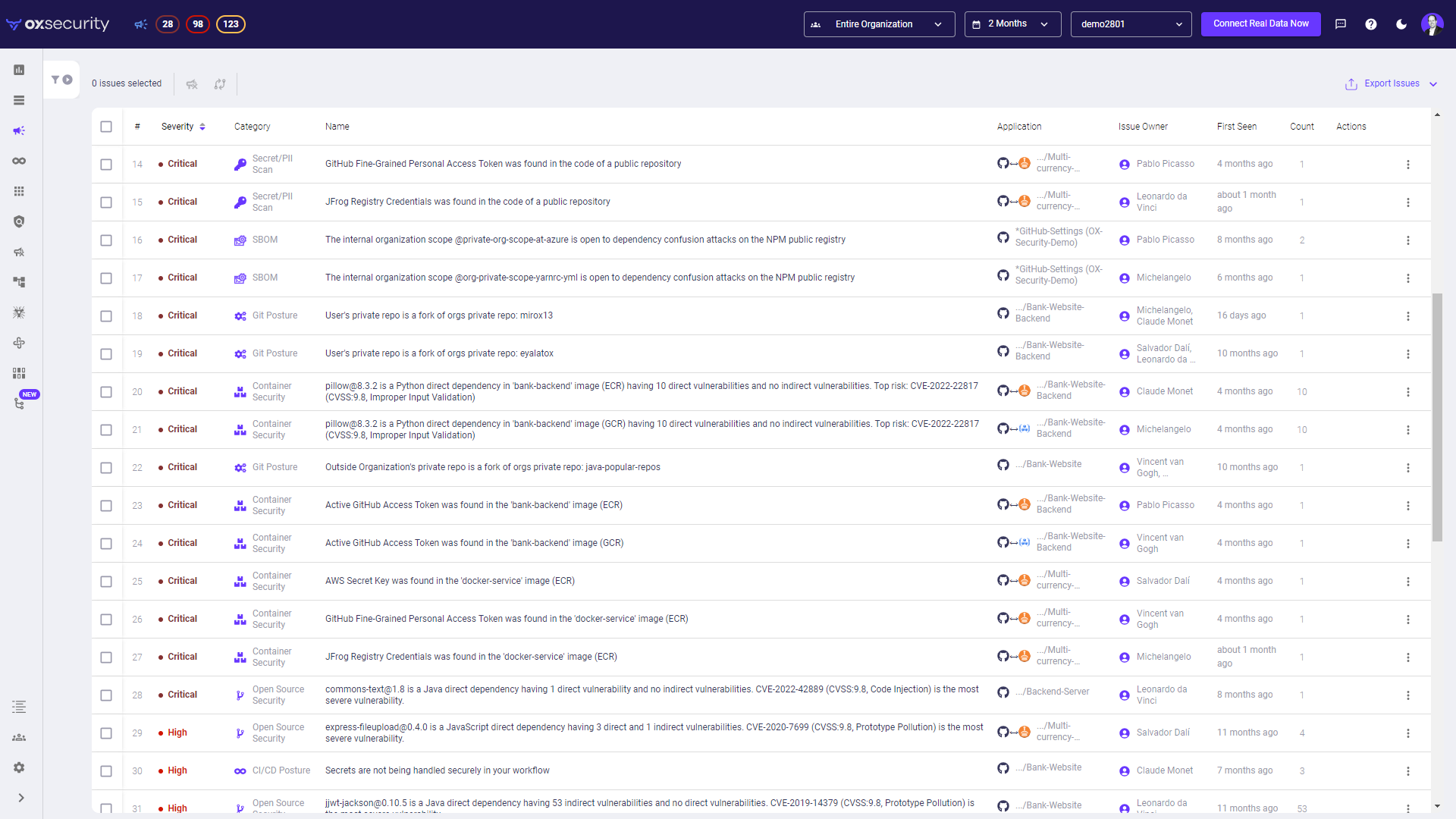
    OX Security this week updated its application security posture management (ASPM) platform to enable DevSecOps teams to instantly identify applications running in production environments that are running code that could be potentially exploited.

    The ASPM platform from OX Security leverages large language models (LLMs) to identify vulnerabilities. The latest version adds an ability to confine the number of alerts generated to instances of code that can actually be exploited.

    OX Security CEO Neatsun Ziv said that approach reduces the number of alerts that would otherwise be generated by 99% to enable DevSecOps teams to focus their limited resources on the 1% of alerts that represent an actual risk to the business. OX Security achieves that goal in part because its scanners are integrated with source control, continuous integration/continuous delivery (CI/CD) platforms, registries and cloud computing environments.

    The overall goal is to reduce the amount of manual effort currently required to consistently maintain DevSecOps best practices.
    The primary reason many vulnerabilities are never addressed is that DevSecOps teams are simply overwhelmed by alerts. Most of the alerts generated by a cybersecurity team are not immediately relevant because either the vulnerability is not present in the application running in a production environment or the application doesn’t connect to the internet.

    The OX Security platform makes it possible to identify application security issues that need to be prioritized because it has been confirmed a vulnerability exists that can be exploited, said Ziv.

    No matter how precise the alert process becomes, a DevSecOps team will still need to manage it, added Ziv. However, as the alerts generated become more relevant, it should become easier to bridge the historic divide between application developers and cybersecurity teams. Too many developers routinely ignore vulnerabilities identified by cybersecurity teams simply because previous efforts to identify the actual severity they represent have ultimately been a waste of their time.

    The challenge just about any organization encounters when trying to better secure their software supply chains is, not surprisingly, getting application developers to buy into the DevSecOps process. Most developers are going to actively resist any approach to remediating vulnerabilities that takes time away from building new applications. Most of them only allocate about 10% of their time or less to remediating vulnerabilities. As such, it’s incumbent on a DevSecOps team to find ways to address application security issues in ways that don’t adversely impact developer productivity.

    Organizations could mandate that vulnerabilities be remediated. In fact, there is a growing body of regulations that will require organizations to do just that unless they can prove the vulnerability in question cannot be exploited. The only way to effectively make that case will be to rely more on automation to document that the code running in a production environment is actually secure.

    In the meantime, developers should expect to see their code scrutinized more than ever. Of course, the better part of valor is to ensure that as many vulnerabilities as possible are never introduced.

  • Cycode Discloses GitHub Actions Vulnerability in Google Bazel Project

    Cycode Discloses GitHub Actions Vulnerability in Google Bazel Project

    Cycode today revealed it discovered a command injection vulnerability in the way the GitHub Actions continuous integration/continuous delivery (CI/CD) platform was used to update the open source Bazel project that many organizations employ to build and test software.

    The vulnerability, now remediated, could have been used to create a backdoor through which malicious code could have been inserted into a codebase that is managed by Google.

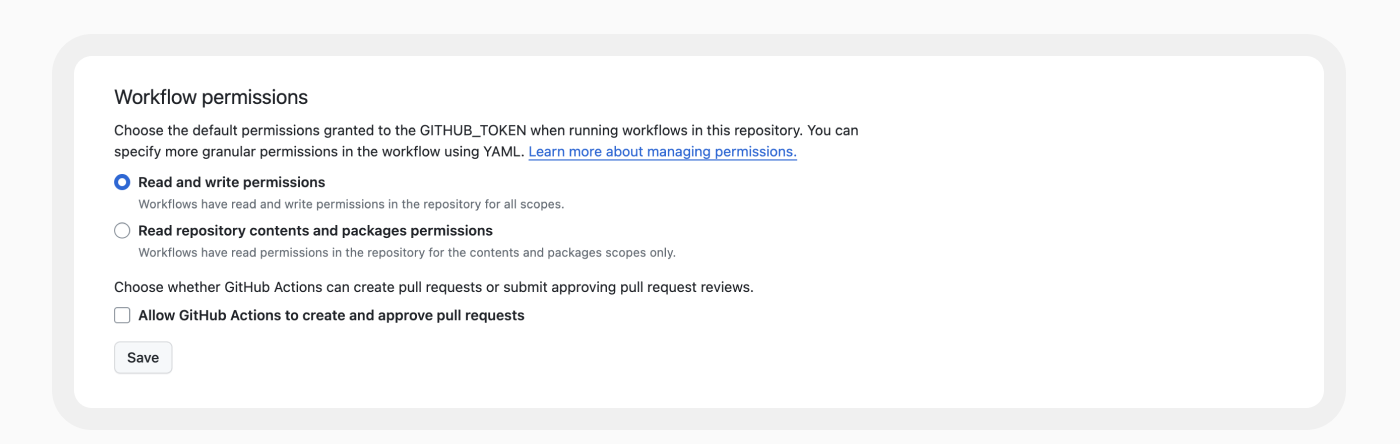
    Cycode researchers shared their discovery with Google, which has since updated the way it employs GitHub Actions to manage the Bazel codebase. Specifically, Google updated the base permissions to embrace least privilege principles to resolve the vulnerability discovered by Cycode.

    The vulnerability was discovered using RAVEN, an open source tool for scanning CI/CD platforms for vulnerabilities that Cycode makes available.

    Elad Pticha, senior security researcher for Cycode, said the vulnerability is the latest example of an instance of an open repository for building software that has been shown to be potentially vulnerable to an attack on a software supply chain that could theoretically impact any number of downstream applications and projects, including Kubernetes, Angular and platforms and services provided by Uber and LinkedIn.

    A Custom Actions capability that enables application development teams to create their own workflows presents any cybercriminal attempting to compromise of software supply chain with a tempting target, noted Pticha. A few changes to lines of code in a workflow can translate into thousands or even millions of lines of code, many of which an organization may never detect. Out of 3.4 million workflows examined by Cycode, nearly all (99%) make use of one or more Custom Action.

    Cycode has previously identified dozens of vulnerabilities in open source projects by mainly focusing on vulnerabilities within workflows. This latest research shows those vulnerabilities extend to indirect dependencies, such as Custom Actions, noted Pticha.

    Each DevOps team should review its own workflows for similar vulnerabilities at a time when more cybercriminals than ever are intent on compromising software supply chains. While many organizations have embraced DevSecOps workflows to improve application security, there is a natural tendency to overlook vulnerabilities that might exist in the workflows used to build and deploy software. The challenge is that DevSecOps workflows are still immature. A recent survey of 500 U.S. CISOs, AppSec directors and DevSecOps team members conducted by Cycode found 78% admitted application security attack surfaces are unmanageable, with 90% acknowledging relationships between their security and development teams need to improve.

    It’s not apparent if the vulnerability discovered by Cycode was actually ever exploited, but as most cybersecurity professionals know, if it can be imagined, someone has tried it. As such, any organization that uses Bazel might be well-advised to conduct a code review.

    In the meantime, it’s already apparent that regulations pertaining to securing software supply chains are only going to become more stringent in the months ahead. In the wake of the executive order from the Biden administration requiring federal agencies to lock down their software supply chains, it’s now only a matter of time before similar requirements are baked into legislation and various other regulations are implemented. The challenge and the opportunity now is to get ahead of this issue before a mandate with a hard deadline that can’t be ignored winds up disrupting the entire software development life cycle.