Category: AI

  • CloudBees CEO: State of Software Development is a Disaster

    CloudBees CEO: State of Software Development is a Disaster

    CloudBees CEO Anuj Kapur told attendees at a DevOps World event today that with developers spending only 30% of their time writing code the current state of software development in enterprise IT organizations is a disaster.

    After more than 14 years of effort, the promise of DevOps—in terms of being able to accelerate the rate at which applications are being deployed—remains largely academic, said Kapur. In fact, the effort to shift more responsibility for application security further left toward developers has only increased the amount of cognitive load and reduced the amount of time available to write code, he noted.

    However, with the rise of generative artificial intelligence (AI), an inflection point that will dramatically increase the velocity at which applications are being built and deployed has arrived, said Kapur. The challenge will be achieving that goal without increasing the cognitive load on developers. That cognitive overload results in 70% of developers’ time not being productive within organizations that often hire thousands of developers, he noted.

    Despite all the DevOps issues that need to be addressed, AI advances promise improvement. The overall DevOps market is still relatively young, given the current level of adoption, said Kapur. “We continue to believe the market is early,” he said.

    Today, CloudBees took the wraps off the first major update to the open source Jenkins continuous integration/continuous delivery (CI/CD) platform to have been made in the past several years. At the same time, the company also unveiled a DevSecOps platform based on Kubernetes that is optimized for building and deploying cloud-native applications based on portable Tekton pipelines. That latter platform provides the foundation through which CloudBees will, in the months ahead, apply generative AI to software engineering to, for example, create unit tests on the fly and automate rollbacks.

    In addition, DevSecOps capabilities will be extended all the way out to the integrated development environments (IDE) to reduce the cognitive load of developers.

    The overall goal is to reduce the number of manual processes that create bottlenecks that make it challenging to manage DevOps at scale.

    Criticism of the level of developer productivity enabled by DevOps compared to other development approaches needs to be tempered, said Tapabrata Pal, vice president of architecture for Fidelity Investments, because it still represents a significant advance. There is still clearly too much toil, but the issues that impede the pace at which developers can effectively write code tend to be more cultural than technical, he added.

    Organizations are not inclined to automatically trust the code created by developers, so consequently, there is still a lot of friction in the DevOps process, noted Pal.

    In theory, advances in AI should reduce that friction, but it’s still early days in terms of the large language models (LLMs) that drive generative AI platforms and their ability to create reliable code, he added. That should improve as LLMs are specifically trained using high-quality code, but in the meantime, the pace at which substandard code might be generated could overwhelm DevOps processes until AI is applied there as well, said Pal.

    Thomas Haver, master software engineer for M&T Bank, added that while assisted AI technologies will have a major impact, it’s not reasonable to expect large organizations to absorb them overnight. Patience will be required to ensure advances are made in ways that are both secure and sustainable, he added. In some cases, organizations may opt to build their own LLMs to achieve that goal, noted Haver. “You should not expect to change on a dime,” he said. “It will take time to see the fruits of our labor.”

    While many DevOps challenges need to be resolved, the benefits continue to outweigh the cost and effort required to succeed. The hope is that, with the help of AI, the return on those investments will continue to accrue.

  • Google De-Recruits 100s of Recruiters ¦ ARM Valued at $45½B in IPO

    Google De-Recruits 100s of Recruiters ¦ ARM Valued at $45½B in IPO

    Welcome to The Long View—where we peruse the news of the week and strip it to the essentials. Let’s work out what really matters.

    This week: Google fires hundreds of recruiters, and ARM gets a sky-high valuation. (more…)

  • Will ChatGPT Replace Human Software Developers? Probably Not

    Will ChatGPT Replace Human Software Developers? Probably Not

    Since the release of ChatGPT, there has been a great deal of hype around generative AI and how companies can leverage it to cut costs and democratize software and application development. Naturally, with discussions of cost-cutting and democratization come whispers about what will happen to software developers.

    This is a real and valid concern, but software developers’ skills, expertise and creativity are still very much needed.

    While generative AI and AI code generation tools like ChatGPT have shown some promise and potential benefits, they are still in their infancy—like many other innovative technological advancements. We also don’t know what scenarios they may present down the road or their true abilities when the technology matures. For instance, how will it integrate with other technologies? We don’t know what will happen when a ChatGPT-generated line of code breaks or needs to be changed. We don’t know if it can provide a novel solution to a unique problem or what security threats it will present.

    Given these unknowns, technology executives should think twice about replacing experienced and creative technology talent, such as software developers, with AI code generators.

    Will ChatGPT create novel code to solve a unique problem never encountered before? Probably not.

    A Tale as Old as Time (Or at Least a Decade)

    The technology industry has been searching for and developing new ways to make certain software development tasks much easier and more streamlined for years. One example of this is low-code/no-code.

    The notion of simplifying application development and replacing software developers with laypeople (citizen developers) has been around for more than a decade now, as low-code and no-code solutions have grown more popular. These solutions have promised that companies don’t need technical talent to get their software and app projects off the ground.

    However, if you look at the impact of these solutions today, their use can result in large amounts of technical debt and almost always require the skill of experienced software developers.

    The reason? Building complex software and applications is extremely difficult; it’s an art.

    Low-code and no-code solutions have their rightful place and can make things easier if a company is looking to launch a simple app or static web page. These solutions can increase the pace of development and time-to-market and enable everyday people without any development skills to facilitate them. However, they are not actually a complete solution and often overlook aspects of development that a human software developer would typically address. Without a skilled expert involved, low-code/no-code platforms often can’t solve a unique problem a company has.

    So, how does this relate to AI code generators like ChatGPT? Here’s how.

    A Similar Situation—With One Key Difference

    When thinking about their place in the development process, AI code generators are not that different from low-code or no-code solutions. The thinking is that they will also enable non-technical individuals to create software and applications with ease.

    Yet, there is one key difference—they promise expertise, too. But is the expertise coming from the AI code generator or the person piloting it? The answer is simple; it is not from the code generator.

    There have been examples of companies and individuals that have tried using ChatGPT to build code, and they have appeared to be successful. However, without the input of the individuals using it, it never would have been able to create the code on its own unprompted.

    This means that the expertise of skilled, human software developers is still very much needed, especially when building intricate software and apps that require complex functionality such as optical character recognition (OCR), internet-of-things (IoT) connectivity and more.

    A Future With Software Developers

    Because of the expertise still required to create elaborate and innovative software and applications, AI code generators will not replace software developers anytime soon, if ever.

    The technology used in these tools is still in its infancy, presenting many lingering questions and potential challenges. We will see this confirmed by the trials and tribulations experienced by the few companies and executives attempting to replace software development teams with tools such as ChatGPT.

    Knowing AI code generators follow a similar path as low-code and now-code solutions, companies and executives should use them as developer enablement tools. These tools should complement the work of software developers by empowering them to focus on the complex tasks software and apps today require.

  • JFrog Extends DevOps Reach to Manage and Secure AI Models

    JFrog Extends DevOps Reach to Manage and Secure AI Models

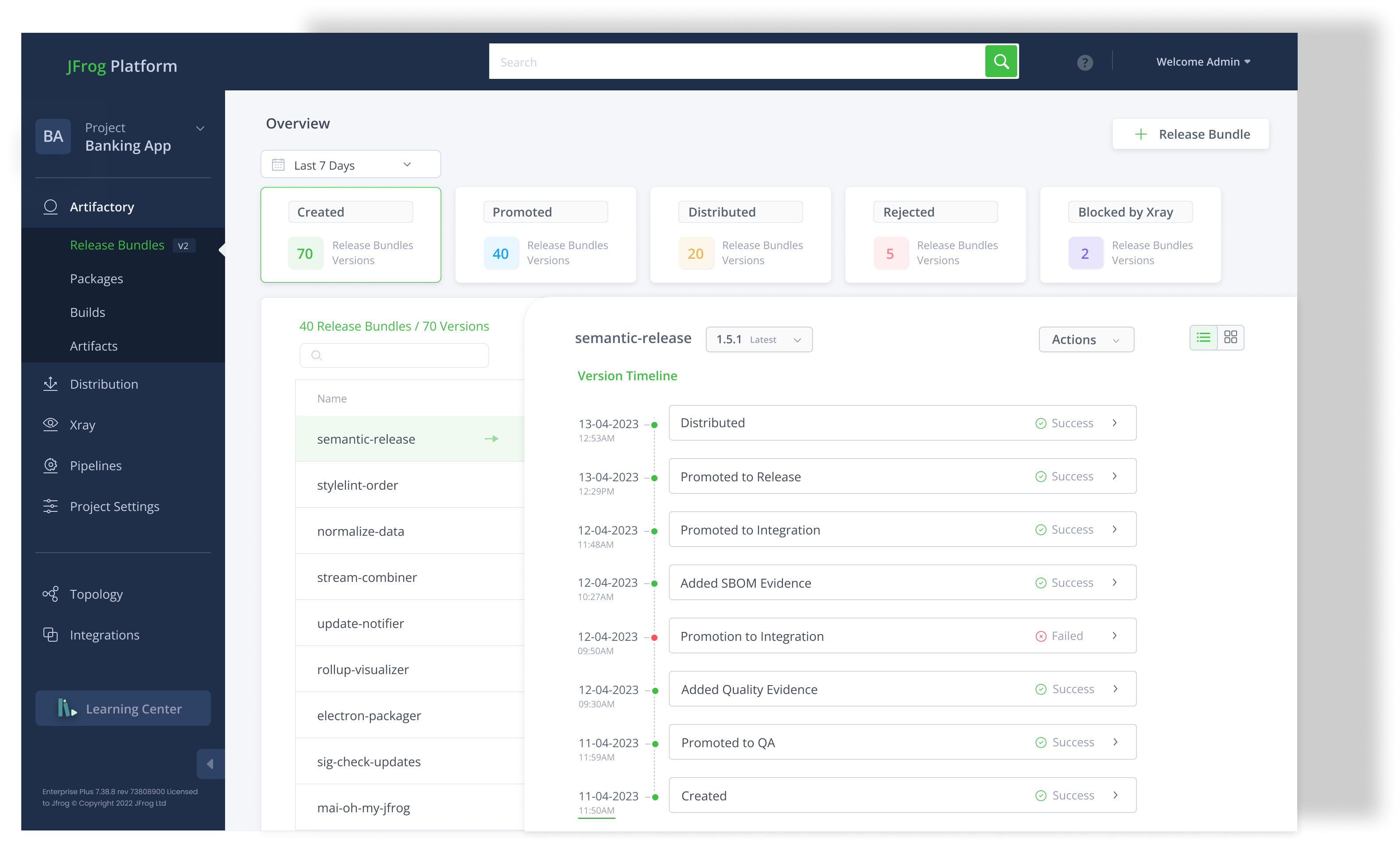
    At its swampUP 2023 conference, JFrog today added additional security capabilities to its continuous integration/continuous development (CI/CD) environment as well as making it possible to manage machine learning models within the context of a DevOps workflow.

    The latest edition of the JFrog Software Supply Chain Platform adds an integrated static application security testing tool (SAST) to scan source code alongside the existing JFrog Xray tool for scanning binaries.

    JFrog has also added an Open-Source Software (OSS) Catalog to the JFrog Curation service to make it simpler for DevOps teams to discover specific packages that have been determined to be secure. JFrog is also adding Release Lifecycle Management (RLM) capabilities that enable aggregating software artifacts into an immutable software package that serves as the single source of truth as multiple iterations of an application are developed. JFrog RLM uses anti-tampering systems, compliance checks and evidence capture to collect data and insights to ensure the immutability of signed binaries.

    Finally, ML Model Management capabilities, available in beta, are being added to the platform to make it possible to store AI models, run AI models from Hugging Face, a provider of open source AI models, as a proxy in cache via an application programming interface (API) and apply DevSecOps best practices to govern, secure and ensure licensing compliance.

    JFrog CTO Yoav Landman said that as DevOps teams become more familiar with AI models, it’s becoming increasingly clear they are managed like any other software artifact incorporated into a DevOps pipeline. He noted that the approach provides the added benefit of helping to ensure AI models have not been poisoned by malicious data and prompts that would deliberately cause a hallucination.

    Most AI models today are created by data scientists using machine learning operations (MLOps) best practices that each organization defines. In some instances, those processes include what is known as a feature store that enables data scientists to track which components are being used at any given time. However, once a model is completed, it needs to be integrated into an application—a process that, from a DevOps perspective, is best facilitated by storing an AI model in a Git repository alongside other components that need to be managed.

    It’s still early days as far as the convergence of DevOps and MLOps practices are concerned. Going forward, as it becomes apparent almost every application will be invoke some type of AI model, the need to integrate these workflows is becoming a more pressing concern.

    It’s now only a matter of time before AI models become a pervasive element of the software development life cycle as they are continuously retrained and updated. It will generally fall to DevOps teams to manage the deployment and updating of those AI models in collaboration with the data science teams that train them. The immediate challenge, of course, will be to bridge the significant cultural divide between two very different types of IT professionals.

  • Survey Surfaces Spike in Generative AI Usage Across IT

    Survey Surfaces Spike in Generative AI Usage Across IT

    A survey of 800 DevOps and application security operations (SecOps) leaders published today found nearly all (97%) are making use of generative artificial intelligence (AI).

    Conducted by the market research firm Sago on behalf of Sonatype, the survey found that beyond writing code, a full 45% of the 400 security operations professionals have already embedded generative AI into their workflows compared to 31% of the 400 DevOps professionals.

    Security operations teams also reported greater time savings than their DevOps counterparts, with 57% saying generative AI saves them at least six hours a week compared to only 31% of DevOps respondents that saw the same benefit.

    The top benefits cited by security operations teams is increased productivity (21%) and faster issue identification/resolution (16%) compared to faster software development (16%) and more secure software (15%) cited by DevOps professionals.

    It’s still early days as far as embedding generative AI in workflows is concerned, but it’s clear the ability to write code faster is trumping concerns about the increased number of vulnerabilities that might find their way into application environments. The most widely used generative AI platforms are trained on a massive corpus of data that includes code of varying quality. As such, a lot of the code generated by a general-purpose AI platform will likely have as many errors, including vulnerabilities, as the code used to train it.

    The level of faith organizations will place in that code will be heavily influenced by use cases. A script used to automate DevOps workflows that are not externally facing may be one example of where a general-purpose AI platform can boost productivity. In other instances, code that contains vulnerabilities that find their way into a web application might be much more problematic.
    Despite those concerns, however, the survey finds nearly three-quarters (75%) of all respondents feel pressure to use generative AI.

    There are, of course, already large language models trained on code that has been vetted by software engineers. In the months ahead, the code generated by AI platforms specifically designed for that purpose should significantly improve.

    Sonatype CTO Brian Fox said it’s only a matter of time before IT organizations focus more on ensuring the generative AI platforms are tuned for specific tasks. In the meantime, however, application security may get worse before it gets better, with more than three-quarters of DevOps respondents noting that generative AI will result in more vulnerabilities in open source code. Only 58% of security operations professionals are similarly concerned.

    It will be up to the engineers that make up these teams to bring discipline to code quality practices and make sure the code running in a production environment is of high quality, regardless of how it was created, noted Fox. For the moment, the issue is that AI augmentation is now occurring at a faster pace than the AI advances that should one-day help DevOps teams cope with increasingly larger codebases, he noted.

    Survey respondents are also concerned about who might own the code generated by AI. A total of 40% said developers or the organizations they work for should own the copyright for AI-generated output, and most of them agreed developers should be compensated for the code they wrote if it’s used in open source artifacts in LLMs (DevOps 93% versus SecOps 88%). A total of 42% of DevOps respondents and 40% of SecOps respondents said a lack of regulation could deter developers from contributing to open source projects.

    DevOps and SecOps leads both want more regulation: Asked who they believe is responsible for regulating the use of generative AI, 59% of DevOps leads and 78% of SecOps leads said both the government and individual companies should be responsible for regulation.

    At this point, the proverbial generative AI genie is out of the bottle, so there is no going back. The issue that remains to be seen is how DevOps and security operating teams will adjust to that new reality.

  • Tips for Increasing Developer Velocity in the AI Age

    Tips for Increasing Developer Velocity in the AI Age

    These days, everyone is trying to improve release frequencies. Under mounting pressure to deliver more, many software teams are considering new strategies to enhance their developer velocity, like AI-assisted code development and platform engineering. AI has been a boon for automatic code generation, but all the code in the world doesn’t matter if you can’t deploy it into production efficiently.

    Another point is that velocity isn’t always measured productively, said Dori Exterman, chief evangelist of Incredibuild and a self-proclaimed ‘productivity freak.’ Too often, managers place value on quantitative elements, such as points per sprint and unrealistic metrics, when they really should be considering the quality of these components and how easy they are to maintain in the long run.

    I recently chatted with Exterman and other experts about tactics organizations can use to enhance their development velocity. Below, we’ll consider some helpful methods, from optimizing testing automation to creating internal development platforms (IDPs) and evolving your CI/CD processes. Essentially, optimizing the plumbing will be necessary to match the productivity of instant code generation—otherwise, the vision of continual release will remain stunted.

    New AI, Same Plumbing…

    No tech article today can mention developer productivity enhancements without a nod to AI. Just take the interest in Copilot, for example. Among GitHub Copilot users, 40% of the code they’re checking in is now AI-generated and unmodified, according to a Microsoft executive. And GitHub reported that 88% of Copilot users feel more productive when using the tool.

    In contrast to past hype cycles, the latest AI wave is not just a passing fad—it will have long-lasting effects, said Exterman. However, most of our current DevOps processes were constructed for manual code writing, not for the era of AI-assisted development.

    If you quadruple the amount of water you use but use the same plumbing system, you can’t push more water through, said Exterman. Similarly, if you amplify the amount of code you’re producing but don’t evolve your build processes, staging and testing, then DevOps suddenly becomes the new blocker.

    Ways to Accelerate Developer Velocity

    So, how can we improve development efficiency and productivity in the age of AI? Here are some actionable strategies for overcoming these bottlenecks and improving developer velocity.

    Accelerating the Plumbing

    Exterman stresses the importance of leveraging AI to enhance the foundational processes of development. This involves using techniques such as distributed computing and smart test selection to streamline build and testing processes. By optimizing these foundational steps, development teams can ensure that their coding efforts translate into efficient and rapid progress.

    Optimizing Testing through AI

    AI’s potential not only lies in code generation—it extends to optimizing testing processes. Exterman suggests tools like Launchable that allow AI to prioritize tests that matter most. This strategic approach to testing enables teams to focus on high-impact areas while maintaining comprehensive test coverage.

    Embracing Test Automation

    Exterman underscores the importance of comprehensive test automation. Rapid iteration loops are essential for maintaining velocity, and automation facilitates fast feedback cycles. This approach ensures that each code change undergoes rigorous quality checks, preventing errors from propagating downstream.

    Keeping an Eye on Technical Debt

    One of the potential downsides of increasing programming velocity is the accumulation of more technical debt. As more development occurs, the temptation to compromise on documentation, unit testing and best practices grows. Exterman emphasizes that velocity must be pursued in tandem with managing technical debt to ensure the long-term health of projects.

    Investing in Platform Engineering

    Recently, we’ve witnessed a paradigm shift toward platform engineering. Just over half of IT organizations have already embraced platform engineering, according to the 2023 State of DevOps Report. Exterman emphasizes the need for a robust internal developer platform that supports the seamless transition of code from development to staging and production. For instance, tools like Terraform and Earthly play a pivotal role in establishing testable environments and reproducible builds.

    “Bring more data services closer to the developers,” said Venkat Ramakrishnan, VP, product management and engineering, Portworx by Pure Storage. “Choose platforms that provide easy-to-deploy services that developers can consume and provide visibility and control into the underlying costs.”

    Enabling Observability

    Observability, according to Exterman, is also important for gauging efficiency. The ability to continuously monitor and log processes enhances the overall development cycle. One report from Splunk even found that 64% report their investment into observability has exceeded their expectations. Tools from New Relic and Datadog, for example, offer insights that tie quality, delivery and productivity together, enabling teams to make informed decisions.

    Evolving CI/CD With Continuous Merge

    One method to progressing CI/CD is continuous merge, a new concept that can be implemented with tools like gitStream that aims to decrease the window between a pull request, review and merge.

    “CI/CD has done wonders to improve the quality and efficiency of the software development toolchain, but it mainly focuses on things that happen after code has been written and reviewed,” said Ori Keren, CEO and co-founder of LinearB. “Continuous merge is a mindset that extends CI/CD practices further upstream to improve the quality and efficiency of the code review process. We’ve reached a point where code review times frequently cause the most significant delays in the software delivery process; continuous merge is how we fix that.”

    Using Cloud-Agnostic Platforms

    Cloud-native development has become more popular as organizations seek to design software architectures bred for the natural scalability of the cloud. Simultaneously, both technology and business motivators are resulting in a multi-cloud condition. In this scenario, IT really needs agnostic, open platforms to retain flexibility and reduce bottlenecks.

    “Enable developers to build their apps in a cloud-agnostic way so they can scale their apps globally,” said Ramakrishnan. “Much of developer and app momentum is lost when scaling apps. Helping the application teams architect it right by providing cloud-agnostic application platforms like Kubernetes enables developers to move faster, scale faster and reach their customers everywhere.”

    Measuring Developer Velocity

    The above tips should help improve velocity, but how exactly should you measure success? Well, measuring developer velocity goes beyond simply tracking the number of points completed in a sprint, reiterated Exterman. He emphasizes the importance of focusing on the ability to deliver high-quality products to the market swiftly. He underscores the need for a fast feedback loop for addressing bugs and iterating quickly. AI plays a role here, too, aiding in test writing and enabling continuous delivery.

    End Benefits of Improved Developer Velocity

    Exterman concludes by highlighting the real-world benefits of increased developer velocity. Faster bug-fixing and release cycles, particularly crucial in industries like gaming, result in improved user experiences and customer satisfaction. He emphasized the significance of aligning key performance indicators (KPIs) and objectives and key results (OKRs) with the aspects that truly matter, promoting a culture of measured and sustainable progress.

  • Despite Concerns, AI Increasingly Used to Build Software

    Despite Concerns, AI Increasingly Used to Build Software

    A survey of 1,001 senior technology executives, developers, and security and operations professionals published this week by GitLab finds 67% are working for organizations already using artificial intelligence (AI) to build software, with 60% of those respondents reporting their organizations use it every day. A full 90% said their organizations are either already using or plan to use AI to build software.

    More than half (51%) have already identified productivity as a key benefit, but 32% are also “very” or “extremely” concerned about introducing AI into the software development life cycle (SDLC).

    Those concerns included AI-generated code introducing security vulnerabilities (39%) and whether that code may not be subject to the same level of copyright protection as human-generated code (48%). A full 95% of senior technology executives said they prioritized privacy and intellectual property protection when selecting an AI tool.

    Most organizations will continue to move forward with AI, but nearly two-thirds of respondents (65%) who use or are planning to use AI for software development said their organization hired or will hire new talent to manage its implementation.

    A full 81% cited a need for training to successfully use AI in their daily work, with 75% of respondents saying their organization provides training and resources for using AI. However, a roughly equal percentage also said they are finding resources on their own.

    David DeSanto, chief product officer for GitLab, said it’s already clear that AI will have a major impact on productivity simply because 75% of a developer’s time is typically spent on activities that have nothing to do with writing actual code.

    Less clear is the amount of expertise required to use AI to build software. In some cases, development teams may need to master, for example, prompt engineering to automate DevOps workflows at scale, but in many more instances, it’s likely the DevOps platform will automatically execute the commands required.

    Regardless of approach, it’s clear that as the amount of code being created by developers starts to steadily increase, the need to leverage AI to manage DevOps workflows will become more acute. The challenge is the pace at which developers can leverage AI to write code is, for the moment, exceeding the pace at which it is being embedded into DevOps platforms.

    In addition, organizations must determine whether to converge DevOps workflows with the machine learning operations (MLOps) workflows used to build AI models that are integrated into applications. As more MLOps capabilities are added to the GitLab platform, it will become easier to achieve that goal and enable data scientists to work more collaboratively with DevOps professionals, noted DeSanto. Today, a cultural divide between two distinct IT cultures is slowing down the pace of AI innovation.

    One way or another, DevOps workflows are about to be transformed. The challenge now is determining which tasks and bottlenecks are likely to be eliminated by AI to enable DevOps teams to focus on managing applications at an unprecedented scale.

  • Google Adds App Modernization Tools to Generative AI Platform

    Google Adds App Modernization Tools to Generative AI Platform

    Google this week added automated refactoring capabilities to the generative artificial intelligence (AI) tools it makes available to write code on Google Cloud.

    In addition, Duet AI for Google Cloud is now integrated with Google’s Apigee API Management and Application Integration services. This makes it possible to design, create and publish application programming interfaces (APIs) using simple natural language prompts.

    These additions to the preview of Duet AI for Google Cloud were announced at the Google Cloud Next 2023 conference and are scheduled to be generally available later this year. The new capabilities promise to reduce the time and effort required to modernize applications.

    For example, DevOps teams can now convert code written in C++ into Go and migrate that application to Cloud SQL, the managed relational database service that Google provides. Via a natural language interface, these tasks are launched via a prompt from directly within a development environment.

    Priyanka Vergadia, a developer advocate for Google, told attendees these capabilities will reduce the need to rely on consultants to migrate applications and take up much less time. In addition, the overall quality of the code should improve using large language models (LLMs) that have been trained using code written by Google developers and best practices defined by Google software engineers.

    Organizations will save time and effort because the need for developers to understand how existing application code was constructed is eliminated, she noted.

    Google has also started to work with select enterprise IT teams to allow Duet AI to incorporate knowledge from their libraries and codebases to generate more context-aware code suggestions.

    In addition to writing code, Google is making a case for also using Duet AI in Google Cloud to monitor performance and troubleshoot IT issues by identifying correlations across application environments. For example, natural language prompts can be translated into PromQL queries to analyze time-series metrics. Duet AI can also provide intuitive explanations of complex log entries in Logs Explorer for easier root-cause analysis and provide suggestions for how to fix issues that surfaced in an error reporting tool.

    Duet AI is also incorporated into the Google BigQuery service to help developers write SQL and Python code to access and analyze data. It can generate full functions and code blocks, auto-suggest code completions and explain your code and SQL queries. Via a single SQL statement, a query can connect tables with the foundational AI models Google makes available via its Vertex AI service.

    At the same time, IT teams can optimize prompts using BigQuery Studio tools, perform text analysis or generate new attributes to enrich a BigQuery data model. Duet AI also enables IT teams to generate vector embeddings in BigQuery to create semantic searches and recommendation queries.

    It’s not clear whether generative AI capabilities will automate entire DevOps and DataOps workflows just yet, but many of the tasks that once required automation scripts will soon be automated by AI models embedded within DevOps platforms. The challenge and the opportunity is to determine how to make those capabilities available to drive DevOps workflows at unprecedented scale.

  • Apica Acquires LOGIQ.AI to Unify Observability

    Apica Acquires LOGIQ.AI to Unify Observability

    Apica, a provider of a synthetic monitoring and observability platform, has just raised an additional $10 million in funding and has agreed to acquire LOGIQ.AI. LOGIQ.AI is a provider of a data fabric infused with machine learning algorithms.

    Jason Haworth, chief product officer for Apica, said the data fabric developed by LOGIQ.AI will be incorporated into the Apica Ascent platform in the third quarter. The LOGIQ.AI addition will apply artificial intelligence (AI) in a way that both optimizes and enriches data collected by the company’s observability platform.

    At the core of the Apica Ascent platform is an indexing engine built on top of a Kubernetes platform that aggregates data such as logs, traces and network packets from multiple sources. As part of that process, the platform reduces storage costs by trimming excess data that can be stored in a data lake it provides or a third-party data lake a customer prefers.

    At the same time, Apica also enables DevOps teams to both normalize data collected from multiple sources and enrich it to add additional context, said Haworth.

    The overall goal is to provide a unified view of all IT data to accelerate faster root cause analysis and reduce the total cost of collecting the data required, he added.

    Apica is making a case for an observability platform that goes beyond collecting data from DevOps platforms. As IT environments become more complex, IT teams need to be able to correlate data collected from a wide range of data sources to accurately determine the root cause of an issue, said Haworth.

    The challenge is managing the massive amount of data that needs to be continuously collected, stored and analyzed to achieve that goal, he added. The acquisition of LOGIQ.AI will enable Apica to embed a data fabric that employs machine learning algorithms and other data science techniques to make it feasible to observe complex IT environments at scale, noted Haworth.

    It’s still early days as far as observability is concerned, but it’s clear that IT teams need to move beyond monitoring a pre-determined set of metrics to manage complex and dynamic application environments. The rate of change to application environments as updates are made requires an ability to query data to determine the root cause of issues that could be caused by any number of dependencies.

    The issue is that even when IT teams have access to an observability platform, they may not have the knowledge and expertise required to craft the queries needed to determine the root cause of an issue. Machine learning algorithms will play a major role in enabling IT teams to proactively discover issues that they can investigate using the suggested queries.

    It’s only a matter of time before most IT organizations unify observability data within a single platform. That will make it simpler for them to collaborate across teams and should result in fewer disruptions as IT issues are discovered more quickly. After all, the best kind of IT incident is the one that never happened or that was too trivial for anyone outside of IT to even notice.

  • IBM Previews Generative AI Tool for Converting COBOL to Java

    IBM Previews Generative AI Tool for Converting COBOL to Java

    IBM this week announced it will preview a generative artificial intelligence (AI) tool for converting COBOL code running on mainframes into Java. The preview will be available next month during IBM’s TechXchange learning event, IBM said.

    Kyle Charlet, CTO for Z software at IBM, said watsonx Code Assistant for Z makes use of large language models (LLMs) that IBM has trained to both convert and optimize Java code for z/OS running on IBM mainframes.

    Rather than converting COBOL into Java code line for line, the watsonx Code Assistant for Z improves the syntax of Java code generated using object-oriented techniques, he noted.

    IBM’s watsonx.ai code model, which will have knowledge of 115 coding languages, is based on 20 billion parameters that will eventually be applied to other programming languages such as PL/1, added Charlet.

    That model is the same core LLM that IBM used to create Red Hat Ansible Lightspeed, a tool to generate code for an IT automation framework that is scheduled for release later this year. In the future, IBM will also most likely employ generative AI to convert REXX code into Ansible code, said Charlet.

    IBM expects the final offering will combine generative AI tools with its existing Application Discovery and Delivery Intelligence (ADDI) inventory and analysis tool to streamline the modernization of legacy mainframe applications.

    The goal, however, is not to move COBOL applications off the mainframe. Java applications created using watsonx Code Assistant for Z will still call the same data sources, such as an IMS database or CICS transaction processing system, as the original COBOL application.

    That approach will make mainframes more accessible to a wider pool of developers that know Java, which should increase the overall pace of innovation for application development, noted Charlet.

    There are billions of lines of COBOL code currently running on mainframes that, in one way or another, need to be modernized as the pool of developers that know COBOL continues to shrink. Generative AI will make it easier to quickly assess, update, validate and test code, which should accelerate code conversion efforts that otherwise would take years to complete, said Charlet.

    It’s not clear how quickly organizations might move to modernize COBOL applications, but as the time and effort to do so decreases, so should the cost of modernizing legacy code. Most organizations still running z/OS on mainframes are committed to the platform, but if they can transition to Java, the overall cost of building and maintaining mainframe applications should decline.

    In the meantime, it’s not likely that AI will replace developers. IBM recommends that developers further optimize the Java code generated by watsonx Code Assistant for Z.

    Most developers are already using some form of AI to accelerate application development. The next wave of AI will see more widespread use of LLMs that are optimized for specific tasks and that generate more reliable results. After all, the quality of any output from an AI model is always directly related to the quality of the data used to train it. The narrower the set of vetted data, the more trustworthy the AI becomes—the opportunity for erroneous data to create AI hallucinations is a whole lot less than any general-purpose AI model could achieve with customization.