Category: AI

  • Platform Engineering is a ‘Golden Path’ to FinOps

    Platform Engineering is a ‘Golden Path’ to FinOps

    Cloud costs. This simple reality has given rise to all manner of toolsets now being focused on modern IT stacks to shore up resources, reduce waste, optimize identified efficiencies and to monitor system wellbeing at the highest, widest and broadest level.

    Across cloud computing landscapes now being reinvented for generative AI functions, the rise of machine learning operations (MLOps) practices is aiming to bring software engineering in line with operations engineering and—perhaps above all—cost engineering.

    Before MLOps, There Was FinOps

    But before we tread too deep into MLOps territory, perhaps we should remind ourselves that FinOps (operations aligned to consider the financial impact of all systems architecture and software engineering decisions) is really the foundational practice that should oversee all matters in this field.

    CloudBolt is one organization that’s been very vocal in its desire to help businesses optimize, automate and control hybrid cloud and multi-cloud environments by providing cloud financial management, automation, orchestration and governance solutions for global enterprises. The firm runs several industry reports around various aspects of multi-cloud complexity. 

    Institutionalized Platform Engineering

    CloudBolt’s Kyle Campos, chief product & technology officer (CPTO), suggests that as businesses continue to sharpen their focus on efficiency–scrutinizing every expenditure and tool–by December 2024, most forward-thinking CIOs will ‘institutionalize’ platform engineering and establish corresponding teams. These teams will not only manage technology assets but also prioritize them to accelerate business value. This strategic shift aligns with the broader industry trend of optimizing technology stacks for agility and efficiency, offering a multi-dimensional approach to business.

    “FinOps silos that drive friction and [the presence of] unrealized optimization promises will reach a breakthrough as the conversation and solutions shift from ‘motivation’ to ‘facilitation’ in the coming year,” said Campos. “With platform engineering fully adopted as a technology approach by the majority of forward-thinking IT organizations by the end of next year, FinOps practices will become a native part of the journey to ‘golden paths,’ on par with security and observability, as the trifecta of defaults in the delivery process.”

    The Ultimate Performance Metric

    After decades of profligate spending on hardware, software and services, Campos said he thinks that 2024 will become the year that the cost to run an application becomes the ultimate performance metric. Why does he make this assertion? Because the traditional metrics that are focused on commodities (CPU, memory, disk, network) will actually become less important, he said. 

    As digitally transformed organizations continue their advance to the cloud, the cost-of-goods-sold will get linked intrinsically with operational and services measured at a finer-grained level; looking at specific tools, services and algorithms for cost savings.

    “As organizations grapple with intricate financial challenges in 2024, consumers will increasingly demand flexibility, compelling cloud providers to offer more consumer-centric pricing and services,” said Campos. “The FinOps FOCUS initiative instituted this year is just the beginning. The collective voice of the user community will continue to be a game-changer in leveling the playing field between cloud providers and consumers.”

    AI/ML Disrupts Linear FinOps

    Campos concluded by saying that currently, there is a direct correlation between user complexity/friction and capabilities/cost granularity in the FinOps solution ecosystem. 

    “Increases in the latter make the former that much more complex,” he argued. “But advances in AI/ML will continue to disrupt the status quo, lowering the barrier and time to value for users. What used to take hours of custom configuration, trial and error, will be a low-friction conversation. Additionally, AI/ML will facilitate unit cost solution inversion such that unit cost is provided to the user, not from the user.”

  • Copado Expands Beta of Generative AI Tools for Salesforce DevOps Platform

    Copado Expands Beta of Generative AI Tools for Salesforce DevOps Platform

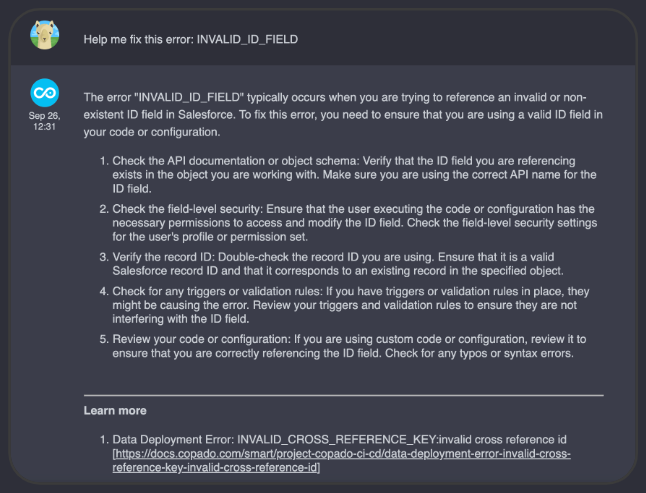
    Copado today announced it has expanded a beta program through which it provides application development teams building applications for the Salesforce software-as-a-service (SaaS) platform access to generative artificial intelligence (AI) capabilities enabled by ChatGPT.

    David Brooks, SVP of Evangelism for Copado, said the company, via the usage of vector databases, has exposed instances of ChatGPT to everything in its knowledge base that has been collected over the last 10 years. That approach enables Copado to extend the large language model (LLM) used to train ChatGPT without exposing any data that might be used to one day train the next version of the generative AI platform.

    The goal is to enable DevOps teams to generate code and tests faster while simultaneously reducing the time required to handle support calls, said Brooks.

    In addition, Copado is using ChatGPT to enable impact analysis and conflict detection to reduce the level of friction encountered when deploying applications in a production environment. That latter capability is critical because, in many instances today, DevOps teams don’t have a firm understanding of how code needs to be deployed, resulting in unnecessary rollbacks of application deployments, noted Brooks.

    Generative AI will also automate the creation of documentation, such as release notes for every application deployed, to reduce the overall level of toil DevOps teams experience, noted Brooks.

    Copado also plans to provide governance tools that will enable DevOps teams to ensure the code written by an LLM is not based on a hallucination that results when trying to reconcile conflicting data, added Brooks. There will, of course, always be a need for a human to review code before it is deployed in a production environment, he added.

    In the longer term, Copado will make it possible for organizations to invoke multiple LLMs to address various functions as they best see fit, said Brooks. In fact, DevOps teams should expect to soon be employing multiple copilots trained to address specific tasks such as writing code, deploying applications, assessing cybersecurity and addressing compliance mandates, he added.
    Ultimately, application development and deployment efforts that today require weeks to complete will soon be accomplished within the same day, said Brooks.

    At the same time, organizations will also be able to better manage application environments that today operate at levels of scale few IT teams can manually track. Generative AI capabilities, in effect, will make it simpler for DevOps teams to effectively manage application environments at much higher levels of scale, said Brooks.

    Each organization will naturally need to determine to what degree they are prepared to absorb that level of innovation, but it’s clear the pace at which applications are built and deployed is about to exponentially increase. The issue organizations will increasingly encounter is that business processes will not be able to absorb the rate at which software can be built and updated.

    It’s not clear just yet to what extent generative AI will transform DevOps, but as advances continue to be made, many of the manual tasks and bottlenecks that today conspire to slow down application development and deployment are about to be eliminated in ways that few would have thought possible a little more than a year ago.

  • KubeCon 2023: CTO.ai’s Developer Control Plane

    KubeCon 2023: CTO.ai’s Developer Control Plane

    Speaker 1: This is Techstrong TV.

    Alan Shimel: Hey, everyone, we’re back. We’re here in Chicago at KubeKon. We’re wrapping up our day two coverage, our last guest for day two. We’ll be back tomorrow, though. But let me introduce you to Kyle Campbell, right?

    Kyle Campbell: That’s right.

    Alan Shimel: Kyle is the founder of cto.ai and we’re going to find out about cto.ai and a little bit about what they’re doing here at KubeKon. But before we do that, Kyle, first of all, welcome.

    Kyle Campbell: Thank you.

    Alan Shimel: Second of all, let’s hear a little bit about Kyle.

    Kyle Campbell: Yeah, thanks.

    Alan Shimel: Tell us your kind of journey.

    Kyle Campbell: Yeah, well, first of all, great to meet you in person. I’ve talked in the past. Yeah, so my journey, I’ve told this story before, a little unconventional. I grew up in Nova Scotia in Canada, a small town. Been on the internet since the age of eight and just had no interest in the formal past. So I’ve been building software from the early days of the .com boom. I may not look at it, but I got some of the scar tissue. But I was self-taught software engineer, so open source was the key to my success and good developer tools.

    Alan Shimel: Sure.

    Kyle Campbell: And I came up through the cloud and open source era and then started founding developer platforms in 2014. The first company I built was a developer platform, the real estate space. Zillow acquired it in about eight months, which was interesting.

    Alan Shimel: Very.

    Kyle Campbell: And then I bootstrapped a DevOps agency quite successfully and started to find that there was a lot of opportunity for next generation developer platforms, which led me to cto.ai.

    Alan Shimel: Excellent, man. What a great story too. You still up in Nova Scotia?

    Kyle Campbell: I’m not. I moved to the other side of the country. I live in British Columbia now.

    Alan Shimel: Good for you.

    Kyle Campbell: Love the outdoors. Spend a lot of time with my son camping, fishing, and trying to get outdoors and just enjoy the beautiful-

    Alan Shimel: Loving it. Yeah, no, it’s beautiful. I mean, not that Nova Scotia’s not beautiful. It’s brutal in the winter, but it’s a beautiful country, part of the country.

    Let’s talk cto.ai now. So look, I’ve founded multiple companies myself. Every founder I’ve ever interviewed or spoken with in 30 years, they don’t just say wake up and say, “Oh, I feel like founding a company today.” There’s kind of like Richard Dreyfuss in Close Encounters of the Third Kind, right? There’s something driving you like, “I got to do this. This needs to get done.” What was driving you that needed to get done here with cto.ai?

    Kyle Campbell: Yeah. I mean, as I described my past, a lot of my journey was self-taught and stand on the shoulders of giants. And really important thing for me was developer experience and ease of use and tooling early on in my career because that enabled me to really drive my competencies as a developer and keep up with these people that had computer science degrees and master’s and all these things, right?

    Alan Shimel: Certainly.

    Kyle Campbell: So when I thought about that and I also thought about where the future’s going and my passion for platform engineering, it became pretty obvious to me that what was missing in the market was a set of tools that were designed to embrace the future of developer experience and how AI can impact that from code to cloud.

    So in 2016 or so, I started experimenting with the idea, and through 2020, I decided to formally launch cto.ai as a developer control plane is what we call it. The way to think about it is it’s a modern CI/CD platform where teams can compose their workflow across build, deployment, test, and preview. And as they work with these tools, they can interact with them in the CLI Slack, GitHub, talk to these workflows through sort of a prompt based model. And we collect telemetry data that allows them to then measure that against DORA metrics, which is-

    Alan Shimel: It’s standard.

    Kyle Campbell: … yeah, it’s a standard and I think, frankly, an empirical way to measure the developer experience. We don’t try to measure developer productivity. We think that’s the wrong question to ask. The question is how do I measure the experience the developer has in the same way that I would measure the experience my users have with my product? And if what we’re doing is building platforms to enable developer experience, we need a natively integrated way to measure that. And we also think that that measurement is a way to pave a future between how the developers experience those tools and how AI can support the developer experience and enhance developers with, frankly, superpowers over time.

    Alan Shimel: So I was recently at a couple of user conferences, big DevOps companies, and it was interesting. Three conferences all use the same metric, which is that developers only spend about 30% of their time developing.

    Kyle Campbell: State of DevOps Report 2018, I think?

    Alan Shimel: But it was in there and it’s been kind of verified in several others. What do you think about that? Is it good thing, bad thing, something to be proud of, something we should be working on? What’s the deal?

    Kyle Campbell: Yeah. Well, I think a pretty practical point of view in that as a software engineer, my goal is to release features that customers love and drive business value. And if I can do that at a higher velocity while maintaining quality, I mean, I think that that is a way that I, as an individual, can contribute to the success of the business and the team.

    But I think what often happens is we get really obsessed about the individual developer. And I think any developer who looks at the idea that they only spend 30% of their time adding value isn’t going to like that very much. And I think we need to reframe the conversation away from developer productivity towards developer enablement and look at the tooling and the process that the developer experience promotes and how developers go from code to cloud and ask ourselves as a business leader, as a CTO who we work with a lot, is the tooling and the workflow that we’re supporting our team with and that developer experience, what they’re experiencing, is that driving results?

    And I think DORA metrics is an empirical way to measure that, obviously, through anecdotes and surveys, but what we’ve really innovated on is creating a vertical integration with the tool chain that allows you to measure that in real time and then iterate on the tools quickly. And some of the teams can really own that themselves. And what the businesses should be doing is zooming out and asking themselves, “Yeah, how do we maximize the amount of time developers spend without individualizing that consideration?” There’s an innerloop and there’s an outerloop. And what DORA is really good for is measuring the outerloop of how we work in aggregate of teams. We need next generation platforms that make this data and this context more accessible to business leaders.

    Alan Shimel: I don’t disagree with anything you said there, so we’re there with that. What about have you guys released any news or anything? What do you got going on around the show?

    Kyle Campbell: Yeah, so for the last while, we’ve been focused on really building a rock solid workflow and tooling to basically set the premise of that next generation composable CI/CD vision. We’ve fed that data into DORA Metrics. You can now report on DORA metrics in real time, save those reports, share them with whoever one-on-ones, retros, so kind of up to you. And we’re starting to experiment with some data science, but something that’s really exciting that we just kind of put into production last week. We haven’t really officially announced, so I guess this is a first is we’ve released our first kind of AI-

    Alan Shimel: Heard it here first.

    Kyle Campbell: … yeah, heard it here first. Our first AI feature set, which is AI code review. And what we’re doing is we’re letting teams start with these sort of base models for how they can leverage AI in the code review process to get developers’ feedback earlier. But then, we want them to be able to do is enhance that model to really customize it to their preferences on their own kind of hardware, to customize those models to take into consideration their own specialized requirements and obviously protect proprietary information that’s so core to their beliefs. So we launched that into production, announcing it here first.

    Alan Shimel: Really?

    Kyle Campbell: And we’re looking for early adopters who can kind of test it out and help us stress test it and figure out how do we further enhance the context of that model with some of the information that is derived in these DORA metrics as well.

    Alan Shimel: So here, we’re talking to this camera. Developers out there. You’re looking for them to kick this around a little bit. Kick the tires.

    Kyle Campbell: That’s right. Yeah.

    Alan Shimel: How do they do it?

    Kyle Campbell: You’re a developer and you’re interested in how AI can support your CICD workflow, specifically code review, come over to cto.ai, sign up, send a message. I’d love to talk to you personally, software development yourself, and love to hear what you think, what you think are the limitations and hesitations, and more importantly, how do you think we can enhance this with other use cases? Because I think there’s a whole exciting set of use cases for AI and software delivery that is going to help software developers.

    Alan Shimel: Absolutely.

    Kyle Campbell: We embrace-

    Alan Shimel: I had this conversation in an earlier interview today. Look, for people who aren’t tech, you show them an AI interface and some of the kind of parlor tricks it could do and they think it’s magical.

    Kyle Campbell: Yes. Arthur C. Clark.

    Alan Shimel: Right.

    Kyle Campbell: Yeah.

    Alan Shimel: Now, we know it’s not magic. It’s just putting one word in front of the other or one… but there are some uses that AI really shine certain. So it’s not meant to replace Google Search nor is it meant to replace software developers.

    Kyle Campbell: No.

    Alan Shimel: But it can empower software developers to be 10x more effective. And one of the ways it could teach you to code, right? You could put code in there and say, “Explain it to me.” It could review code, right? So either it’s writing code or it’s reviewing code. You shouldn’t have it doing both probably, but…

    Kyle Campbell: It’s true.

    Alan Shimel: Right. But if it’s using it for review, what a great use of the technology.

    Kyle Campbell: Yeah. We’ve seen that the number one thing that slows down time to market in feature sets for developers is waiting for code review. And while I’m not sure that it’ll be the same thing as you and I pair programming and getting into the nitty-gritty details, if we can make sure that every developer can get a code review instantly just by adding a label and then that we can tailor the quality of that code review with more context that is supported by how the team thinks about quality. I think this is an important example of how we can accelerate the needs of developers and the developer experience with AI that still leaves all the control in the hands of the developer to decide, “Is this rational? Is this a hallucination? Is this the appropriate time?” But the feedback loop that we can get from this is, I think, a really great beachhead and why we chose to start there.

    Alan Shimel: Absolutely. And we’ll see. I don’t think we scratched the surface yet on how we’re going to use AI, but this is certainly a real definitive first step that I see us going with, right?

    Kyle Campbell: I think so. And I think the call to action for other software vendors out there is to think about reinstrumenting what they’re offering to prepare for this because I think there’s a necessary hesitance around AI. I think rightly so. But if we can think about how we can take control of it, how softwares can take control of it. Software engineers are perfectly suited to be some of the first stewards of these problems. Just like we see AI and code generation, I think the next natural step is to support it within code review. And then we’ll start looking at how smarter deployments, smarter rollbacks, and obviously, operations can be enhanced with AI. And this place is a perfect example of people trying to solve that problem.

    Alan Shimel: Absolutely. Absolutely. And here’s the other thing. I’ve been in technology a long time. You don’t put these genies back in their bottles.

    Kyle Campbell: Right.

    Alan Shimel: Once they’re out, they’re out. And so like it or not, they’re here. And I think you could… if you can’t beat them, join them.

    Kyle Campbell: You can’t stop Moore’s Law. I mean, this the pathway that the world is on.

    Alan Shimel: No, you’re not. You’re just not going to stop it. That’s the way it is. It’s great stuff, man. I love the attitude. I love having you on here. Cto.ai. Again, if you’re looking to help Kyle out, kick the tires on this AI code review product they got coming on, it’s fantastic. So let’s check it out.

    Kyle Campbell: All right. Thank you so much.

    Alan Shimel: All right. Hey, Kyle, enjoy the rest of your KubeKon. cto.ai wrapping up day two in Chicago at KubeKon. We’re going to be here tomorrow morning. I think we’re on at 10. We’re only here till two tomorrow because it wraps early tomorrow. But we’ll be back with a full load. We hope you’ve enjoyed today. On Demand is available at Techstrong TV. And so if you missed anything, do check it out. This is Alan Shimel. We’re out.


  • Atlassian Delivers on Generative AI Promise for DevOps and ITSM

    Atlassian Delivers on Generative AI Promise for DevOps and ITSM

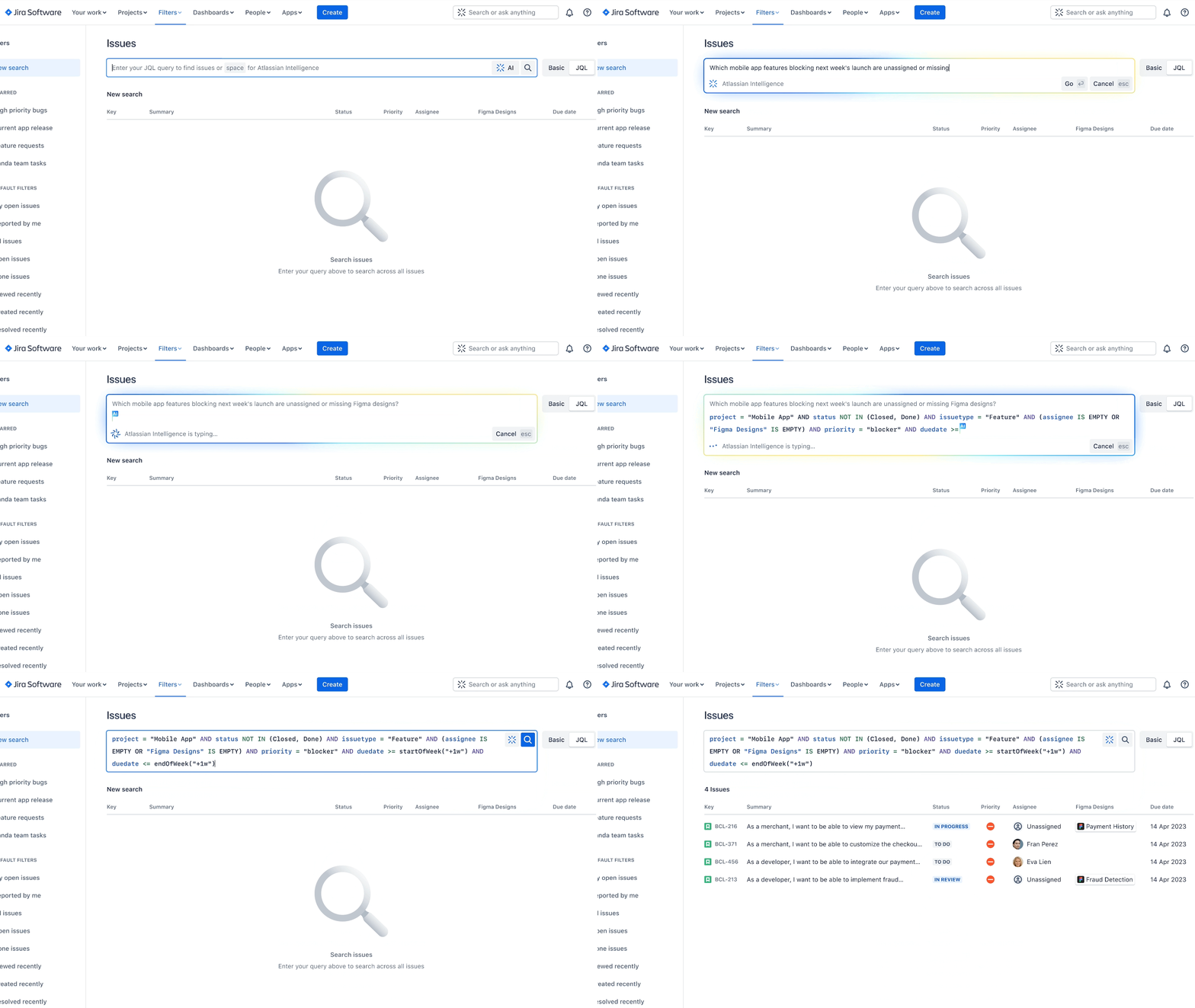
    During a virtual Unleash event, Atlassian today announced its generative artificial intelligence (AI) capabilities are now generally available across its Jira and Confluence suite of tools for managing IT and DevOps workflows.

    In addition, Atlassian also committed to adding generative AI capabilities to its Bitbucket continuous integration/continuous deployment (CI/CD) platform to enable DevOps teams to review pull requests and leave comments automatically with suggested changes around syntax and code conventions via a natural language interface. Developers will also be able to autogenerate pull request descriptions from commit messages.

    Matt Schvimmer, head of products for the Agile and DevOps division of Atlassian, said the capabilities provided by Atlassian Intelligence will reduce the level of toil and stress DevOps teams experience at a time when the velocity at which applications are being developed and deployed only continues to increase.

    Atlassian reported nearly 10% of its more than 265,000 customers have already leveraged Atlassian Intelligence since the launch of the beta program. Organizations, for example, can instantly create user stories within Jira Software tickets, change the tone of a customer response within Jira Service Management, create summaries, launch workflow requests via prompts and generate a starting point for a test plan in Confluence.

    Natural language capabilities, currently available for Confluence, will shortly be generally made available for Jira. An ability that promises to help demystify company-specific concepts, jargon or acronyms is also available now in beta, with support for Jira Software and Jira Service Management to shortly follow.

    There is little doubt at this juncture that AI will be pervasively applied across both ITSM and DevOps workflows. As those advances are made, it should also become feasible to reduce the level of toil these teams regularly encounter. At the same time, the level of scale at which ITSM and DevOps workflows can be effectively managed should also increase substantially.

    Each organization will need to decide how quickly to incorporate AI into those workflows, but hopefully, the level of burnout experienced by IT personnel will be sharply reduced as more tasks are automated. Less clear is the impact AI will have on the size of IT teams required to provide those services, but for the foreseeable future, there will always be a need for some level of human supervision.

    In the longer term, the war for IT and DevOps talent that has been waged now for multiple decades should diminish as managing these workflows becomes more accessible, noted Schvimmer. Organizations will not need to rely so much on the expertise of a handful of specialists, he added.

    Organizations, however, would be well-advised to make sure AI is embraced from both the bottom up and the top down to ensure optimal adoption, said Schvimmer.

    In the meantime, IT teams should take an inventory of the processes that are likely to be automated by AI today with an eye toward restructuring teams as more tasks are automated. Ultimately, the goal should be to let machines handle the tasks they do best to enable the IT staff to provide services that deliver more value to the business.

  • Five Great DevOps Job Opportunities

    Five Great DevOps Job Opportunities

    DevOps.com is now providing a weekly DevOps jobs report through which opportunities for DevOps professionals will be highlighted to better serve our audience.

    Our goal in these challenging economic times is to make it easier for DevOps professionals to advance their careers.

    Of course, the pool of available DevOps talent is still relatively constrained, so when one DevOps professional takes on a new role it tends to create an opportunity for others.

    The five job postings shared this week are selected based on the company looking to hire, the vertical industry segment and, naturally, the pay scale being offered.

    We’re also committed to providing additional insights into the state of the DevOps job market. In the meantime, for your consideration:

    Indeed.com

    Sony Electronics
    New York, New York
    DevOps Engineer
    $125,000 to $135,000

    SimplyHired.com

    Fiddler AI
    Palo Alto, California
    DevOps Engineer
    $120,000 to $152,000

    CareerBuilder.com

    Leidos
    DevOps Engineer
    Olivette, Missouri
    $120,000 to $125,000

    LinkedIn

    Capital Group
    Irvine, California
    DevOps Engineer
    $92,423 to $147,877

    Dice.com

    CA-One Tech Cloud
    Austin, Texas
    DevOps Engineer
    $80,000 to $100,000

  • PagerDuty Previews Generative AI Copilot for ITSM

    PagerDuty Previews Generative AI Copilot for ITSM

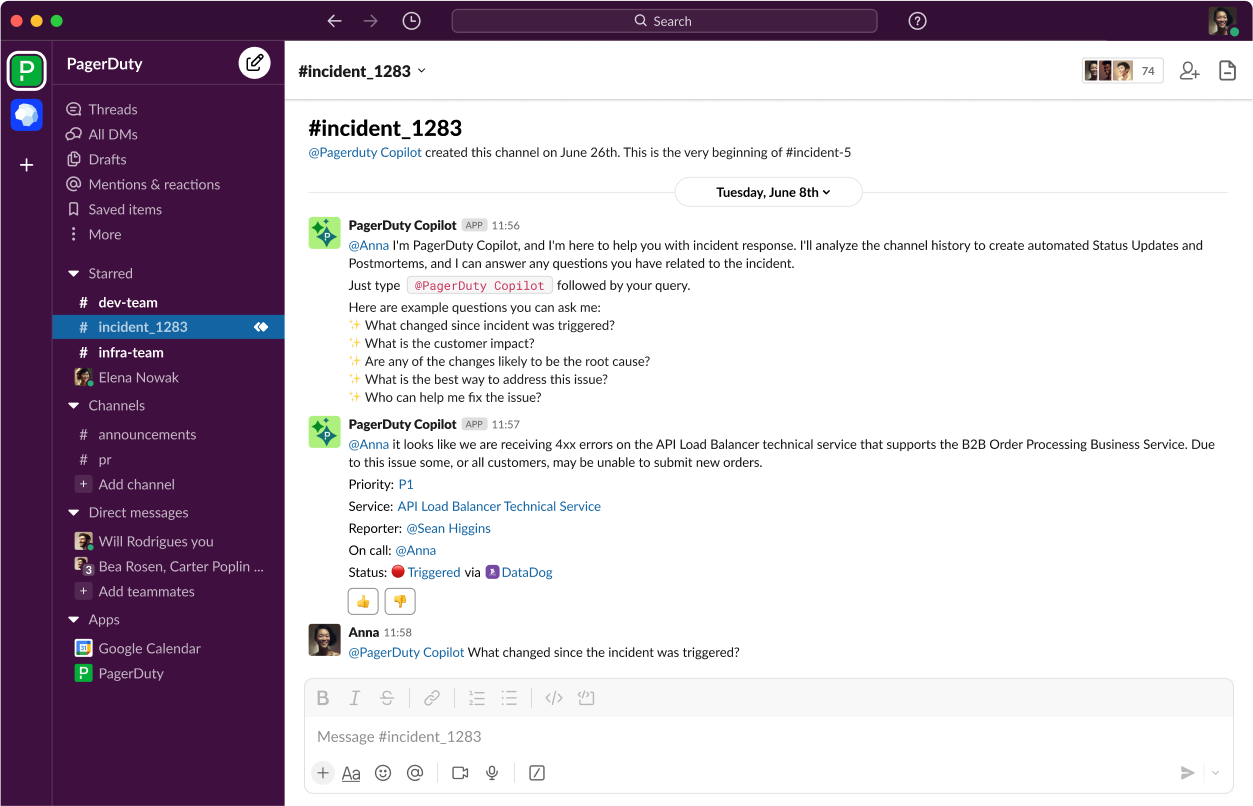
    Under an early access program, PagerDuty, Inc. is making available a tool that brings generative artificial intelligence (AI) capabilities to its IT service management (ITSM) platform.

    Jonathan Rende, senior vice president of products for PagerDuty, said PagerDuty Copilot for the PagerDuty Operations Cloud extends previous investments in machine learning algorithms the company has made as part of an ongoing effort to apply AI to ITSM.

    Designed to be invoked via Slack, PagerDuty Copilot makes use of multiple large language models (LLMs) to automate tasks ranging from providing summarization of IT incidents to creating code to automate workflows. PagerDuty plans to transparently swap LLMs in and out of its platforms as AI advances continue to be rapidly made, noted Rende.

    PagerDuty Copilot provides a level of abstraction for invoking AI models along with appropriate guardrails that make it simpler to manage IT operations without IT teams needing to have AI expertise, said Rende.

    The overall goal is to boost the productivity of IT operations teams by eliminating much of the drudgery and toil that conspires to make working in IT tedious, noted Rende. AI technologies are not likely to replace the need for IT personnel as much as they will enable IT teams to focus on tasks that add more value to the business, he added.

    It’s now only a matter of time before generative AI capabilities are pervasively applied across both ITSM and DevOps workflows. Less clear is the impact those capabilities will have on the best practices currently relied on to manage those workflows as more tasks are automated. Ultimately, however, AI should make it easier for more organizations to embrace those best practices as the level of skill and expertise required to manage IT at scale is reduced.

    In addition, the whole concept of issuing tickets to manage tasks tracked by a central system of record may need to evolve simply because AI has automated requests for service. There will naturally need to be some system of record for tracking requests. Still, ultimately that process will be managed via copilots rather than by a ticket created by an end user that is then tracked via an ITSM platform.

    Savvy IT teams, in the meantime, are already moving to determine which tasks and workflows will be automated in anticipation of AI becoming more widely embedded in ITSM and DevOps platforms. Roles and responsibilities within IT teams will inevitably evolve as AI increasingly automates mainly mundane tasks, such as creating reports that many IT professionals would rather not spend time writing.

    The biggest IT management platform challenge in the future might not necessarily be adjusting to AI as much as it will be orchestrating requests that are likely to be generated by multiple types of copilots that have been embedded into almost every application.

    One way or another, AI is about to transform how IT operations are managed. As disruptive as those advances will be, AI, more importantly, will also enable organizations to manage IT at levels of scale that were previously unimaginable.

  • Coexisting With AI: The Future of Software Testing

    Coexisting With AI: The Future of Software Testing

    If 2023 was the year of artificial intelligence (AI), then 2024 is going to be the year of human coexistence with the technology. Since the release of Open AI’s ChatGPT in November 2022, there has been a steady stream of competing large language models (LLMs) and integrated applications for specific tasks, including content, image processing and code production. It’s no longer a question of if AI will be adopted; we have moved on to the question of how best to bring this technology into our daily lives. These are my predictions for the software quality assurance testing industry for 2024.

    Automated testing will become a necessity, not a choice.

    Developers will lean heavily on AI-powered copilot tools, producing more code faster. That means huge increases in the risk profile of every software release. In 2024, testers will respond by embracing AI-powered testing tools to keep up with developers using AI-powered tools and not become the bottleneck in the software development life cycle (SDLC).

    The role of the tester will increase and evolve.

    While AI is helping software engineers and test automation engineers produce more code faster, it still requires the highly skilled eye of an experienced engineer to determine how good and usable the code or test is. In 2024, there will be a high demand for skilled workers with specific domain knowledge who can parse through the AI-generated output and determine if it’s coherent and useful within the specific business application. Although this is necessary for developers and testers to start trusting what the AI generates, they should be wary of spending inefficient amounts of time constructing AI prompts, as this can ultimately lead to decreased levels of performance. For instance, a developer could easily spend most of their time validating the AI-generated output instead of testing the release that will be deployed to users.

    Being able to distinguish between when to rely on AI and when to forego AI’s help will be key to streamlining the workflow. Eventually, we’re going to start seeing AI-powered testing tools for non-coders that focus on achieving repeatability, dependability and scalability so that testers can truly use AI as their primary testing tool and ultimately boost their productivity.

    The rise of protected, offline LLMs and the manual tester.

    As enterprise companies show signs they don’t trust public LLMs (e.g., ChatGPT, Bard, etc.) with their data and intellectual property (IP), they’re starting to build and deploy their own private LLMs behind secured firewalls. Fine-tuning those LLMs with domain-specific data (e.g., banking, health care, etc.) will require a great volume of testing. This promises a resurgence in the role of the manual tester as they will have an increasingly important role to play in that process since they possess deep domain knowledge that is increasingly scarce across enterprises.

    As we stand on the brink of 2024, it is evident that the synergy between artificial intelligence and human expertise will be the cornerstone of software quality engineering. Human testers must learn to harness the power of AI while contributing the irreplaceable nuance of human judgment. The year ahead promises to be one where human ingenuity collaborates with AI’s efficiency to ensure that the software we rely on is not only functional but also reliable and secure. There will likely be a concerted effort to refine these collaborations, ensuring that AI serves as a reliable support rather than an overpromised solution.

  • 8 Essential Generative AI Tools for Building Stand-Out Applications

    8 Essential Generative AI Tools for Building Stand-Out Applications

    Building advanced AI apps demands the right tools. Generative AI is a game-changer with the potential to transform how we craft AI-powered solutions. Whether you’re a pro or new to AI, the right generative AI tools can elevate your projects significantly. In this article, we’ll explore the essential generative AI tools that can help you build remarkable AI applications.

    These tools cover a wide range of functions, from content creation to design and data analysis. By the end of this blog, you’ll have a better understanding of how generative AI tools can elevate your AI projects to new heights.

    GPT-3 by OpenAI

    GPT-3, or Generative Pre-trained Transformer 3, is a remarkable language model designed to create text that closely resembles human writing. Its applications span content generation, language translation and chatbot development.
    ● Pros: GPT-3 is highly adaptable and capable of tackling a wide array of tasks. Its primary strengths lie in its ability to handle complex language-related challenges, making it a versatile tool for developers.
    ● Cons: While GPT-3’s capabilities are impressive, its availability may be limited and using it extensively could entail significant costs. These factors are worth considering for projects with high resource demands.

    Runway ML

    Runway ML is tailored to cater to the creative aspects of AI, offering a suite of tools tailored for artists, designers and developers. It encompasses a wide array of generative models that empower users to generate art, design prototypes and craft interactive experiences.
    ● Pros: Runway ML stands out for its user-friendly interface and real-time creative capabilities. This makes it an excellent choice for individuals venturing into the realm of creative AI projects, providing a smooth learning curve.
    ● Cons: It’s important to note that certain advanced features within Runway ML may be accessible only through a subscription, limiting full access in the free version. This subscription-based model should be considered when assessing its cost-effectiveness for your specific project needs.

    Hugging Face Transformers

    Hugging Face Transformers serves as a repository of pre-trained models specifically designed for natural language processing (NLP) tasks. Its applications are extensive, encompassing tasks such as sentiment analysis, text classification and more.
    ● Pros: Hugging Face Transformers stands out as an open-source platform with a vibrant and engaged community. This ecosystem offers a diverse array of models and tools, making it a valuable resource for developers seeking to harness the power of NLP.
    ● Cons: It’s important to acknowledge that newcomers to Hugging Face Transformers may face challenges when customizing models and engaging in model training. While this platform offers an array of resources, it may require a certain level of familiarity with NLP and machine learning concepts for optimal utilization.

    Midjourney

    Midjourney is a versatile tool designed to tackle creative tasks spanning text, music and image generation.
    ● Pros: Midjourney presents a robust offering of pre-trained datasets and generative models, catering particularly well to creative projects. Its user-friendly interface ensures accessibility for individuals, even those who are new to AI, making it an excellent starting point.
    ● Cons: However, it’s crucial to recognize that while Midjourney excels in the realm of creativity, it may not be the top choice for AI applications that require a strong focus on data-driven tasks. Depending on your project’s needs, this limitation might affect its suitability.

    Synthesia

    Synthesia is a specialized AI tool designed for video generation and customization. Its core function revolves around the conversion of text into AI-generated videos.
    ● Pros: Synthesia streamlines the video production process, delivering substantial advantages for content creators and marketers. Its user-friendly interface simplifies the video creation journey, ensuring that a wide audience, regardless of technical expertise, can harness its potential.
    ● Cons: However, it’s essential to recognize that Synthesia’s primary expertise centers on video generation. This specialization can occasionally limit its adaptability when dealing with a broader spectrum of creative tasks that extend beyond the realm of video production. Depending on your project requirements, this specialization may influence its suitability.

    DeepCode

    DeepCode is a specialized tool dedicated to code analysis and improvement. Its primary mission is to assist developers in identifying and rectifying issues within their codebase.
    ● Pros: DeepCode serves as a highly valuable resource for developers, offering concrete benefits such as the enhancement of code quality and the reduction of errors. It’s thoughtfully designed to streamline the coding process, making it more efficient and effective.
    ● Cons: It’s imperative to recognize that DeepCode’s focus is specifically centered around code analysis. This level of specialization may limit its applicability when addressing AI projects or tasks that fall outside the realm of software development. Depending on your project’s nature, this focus may impact its relevance to non-developer AI initiatives.

    Soundraw

    Soundraw is an AI-powered music generator designed to empower users to craft unique, royalty-free music, perfectly suited to enhance a wide range of projects and content.
    ● Pros: Soundraw’s most significant advantage lies in its ability to generate original compositions, thereby mitigating the risk of copyright issues. It also offers secure and enduring licenses for all creative uses, ensuring that your content remains free from copyright concerns.
    ● Cons: While Soundraw’s AI capabilities are impressive, it may occasionally lack the nuanced depth of creativity found in music created by human composers. The variety of available themes and moods may be somewhat limited, which could affect its suitability for highly specific or unique creative projects.

    VQ-VAE-2

    VQ-VAE-2 is a specialized tool known for its exceptional performance in image compression and generation tasks. It’s the preferred choice when the goal is to create high-quality images while simultaneously reducing data size.
    ● Pros: VQ-VAE-2 stands out as a robust solution for image-related AI applications, delivering substantial benefits in terms of enhanced compression and improved image quality.
    ● Cons: It’s essential to acknowledge that leveraging VQ-VAE-2 effectively may necessitate a solid understanding of image processing and AI concepts. This tool is best suited for users with advanced knowledge in these domains.

    Wrapping Up

    By using generative AI tools in your AI projects, you can open up exciting opportunities and make your work more efficient. But, it’s crucial to think about your project’s unique requirements, check if the tools are accessible, and understand their costs.

    Explore what each tool can and can’t do to decide which one suits your AI project best. With the right generative AI tools, you can bring your projects to life and shine in the world of artificial intelligence-powered applications.