Category: AI

  • Dynatrace Extends Data Reach and Scope of Observability Platform

    Dynatrace Extends Data Reach and Scope of Observability Platform

    At its Perform 2024 event today, Dynatrace unfurled a Dynatrace OpenPipeline that makes it possible to apply analytics to multiple types of data sources in real time.

    The company also unveiled a Data Observability offering that can be used to vet the quality and lineage of data being exposed to the Davis artificial intelligence (AI) engine at the core of the Dynatrace observability platform to reduce false positives that otherwise might generate an alert in addition to helping reduce the volume of data that might need to be stored.

    Finally, Dynatrace announced it is starting today extending the reach of its observability platform to the large language models (LLMs) that are used to create generative AI platforms. That capability will, for example, make it simpler to monitor the consumption of tokens that are used to provide access to these models.

    Steve Tack, senior vice president for product for Dynatrace, said Dynatrace OpenPipeline will enable organizations to streamline the collection of data in a way that will enable them to apply observability more broadly by applying stream processing algorithms to petabytes of data.

    Scheduled to be available in 90 days, the Dynatrace OpenPipeline capability enables IT teams to ingest and route observability, security, and business events data from any source and in any format at the point of ingestion, including unstructured data that is automatically converted into a usable format. That data can then be enriched to enable deeper analytics.

    It also provides IT teams with more control over which data they analyze, store or exclude from analytics, which in turn helps reduce the total cost of observability, noted Tack.

    Finally, it presents IT teams with the ability to apply more customizable security and privacy controls to how that data is employed, he added.

    Dynatrace is pursuing a multimodal approach to AI that spans predictive, causal and generative models. Collectively, that approach makes it simpler to identify the root cause of issues, identify anomalies that might disrupt services and streamline incident management by, for example, providing summarizations of events in a natural language format.

    It’s not clear how broadly observability will be applied beyond the data collected to manage DevOps workflows and other IT processes, but it’s clear there is a high correlation between IT events and business outcomes as organizations become more dependent on software. As AI becomes more pervasively employed, it should become simpler to apply analytics to a much wider range of types of data to surface the relationship between IT events and business processes. In effect, Dynatrace is making it simpler to apply best data engineering practices to collect, manage and analyze that data, noted Tack.

    In the meantime, DevOps teams should revisit how their pipelines are currently constructed to make it simpler to capture all relevant data. As critical as telemetry data collected from the DevOps platform is to ensure application development and delivery occurs as fast as possible, that data is only one factor in a larger equation. The challenge and the opportunity now is determining how best to apply AI to correlate it all.

  • How to Make the Most of In-House Software Development

    How to Make the Most of In-House Software Development

    Let’s be blunt: Maintaining an in-house software development team can be tough. You must hire skilled developers – which is no easy feat in today’s economy, where talented programmers remain in short supply – and then manage them on an ongoing basis. You must also ensure that your development team is nimble enough to respond to changing business needs and that it can adapt as your technology stack evolves. Given these challenges, it’s no surprise that most organizations now outsource application development instead of relying on in-house teams.

    But I’m here to tell you that just because in-house development can be hard doesn’t mean that outsourcing is always the best approach. On the contrary, IT organizations that choose to invest in in-house development for some or all the work can realize lower overall costs and a competitive advantage by creating domain-specific expertise. Keeping development in-house can help organizations address unique security requirements and maintain full control over the development lifecycle and roadmaps. For businesses with specialized technology, security and operational needs, in-house development is often the best strategy.

    Managing an in-house development team presents some steep challenges. At Komprise, we have refined several practices to keep our team efficient and productive, even in a business environment that is constantly changing.

    Scaling Up

    Scaling teams up is a key challenge for in-house development teams. Finding skilled developers to grow a team can be very difficult, especially when working with a bespoke technology stack.

    There is no simple solution to this challenge, but there are steps you can take to maximize your ability to find and hire development talent. For example, we invest significantly in engaging with college students, allowing us to identify promising developers while they are still in training.

    At the same time, we invest in upskilling our developers who are already on our team so they can take on additional responsibilities. We train our engineers in the latest cloud development and security skills and knowledge. The notion of embedding security into our designs and practices is fundamental to what we do. We also rotate engineers between different teams so they learn new technologies that are important to our business. This strategy allows us to align the work for every developer with their interests and to build reusable skills within our teams. We also hold a technical brown bag three times per month where we cover issues like development for cloud and how it differs from on-premises due to costs or how to design for performance and scalability.

    Focus on Customer Value

    Figuring out which features customers want most is a constant challenge. To address it, we quantitatively track how our customers use our product – which functionality they use most often, for example, and how usage patterns vary across different customer demographics. We evolve these metrics as we develop the product. Additionally, we identify customers who are “power users” and occasionally set up calls between them and our developers to gain additional insight into what customers want. Our marketing team also conducts customer advocacy interviews with our users to learn more about what they like and don’t like.

    Looking at third-party applications and interfaces helps us gain perspective on how best to meet user needs, too. For example, we might examine how Wayfair or Amazon are evolving their UI constructs to inform how we could change our product interface in ways that better meet customer needs. We want our B2B product to be as easy to use as consumer products.

    Invest in QA

    Quality Assurance (QA) operations are distinct from development operations, but if you want a successful in-house development team, you need a great QA team, too. Our QA engineers complement our in-house developers by helping them to deliver the highest-quality product, while also strategizing over how best to handle scale and efficiency challenges. In addition, we’ve invested heavily in QA automation, allowing us to test our applications thoroughly while keeping our team lean and efficient. This ensures that as our product feature set expands, our ability to test the entire product does not increase and we can maintain a monthly release cadence. We use test harnesses to simulate error and failure conditions, by injecting failures into the system or making our network experience a brownout or a blackout. You can’t automate every software test, but you can automate most of them, and QA automation is one of the key ingredients in effective development operations.

    Leverage AI Strategically

    AI is not the solution to every development challenge, but when used properly, AI can accelerate development and help in-house developers work more efficiently. Using AI tools to churn out code has become a hot use case for AI in development since the introduction of solutions like Copilot. AI can be a very useful solution, but the quality of the results it delivers hinges on the quality of the data it ingests. Inhouse development teams working on AI applications have much to consider from the data perspective. To leverage unstructured data, they need ways to find it across data silos, enrich it with new metadata as needed to support search and leverage AI tools like Amazon Macie and Rekognition to further refine the data.

    Optimizing In-House Development for the Long Term

    The importance of keeping in-house development teams happy and productive is likely only to increase as the tasks they work on grow more complex and as new paradigms, like those driven by AI, change the way developers work. The more IT organizations and enterprises can upskill their existing developers and empower them with the right tools and processes to succeed, the better they can leverage their teams to build products and features that bring value to the business.

  • Anima Adds Ability to Personalize Generative AI Code

    Anima Adds Ability to Personalize Generative AI Code

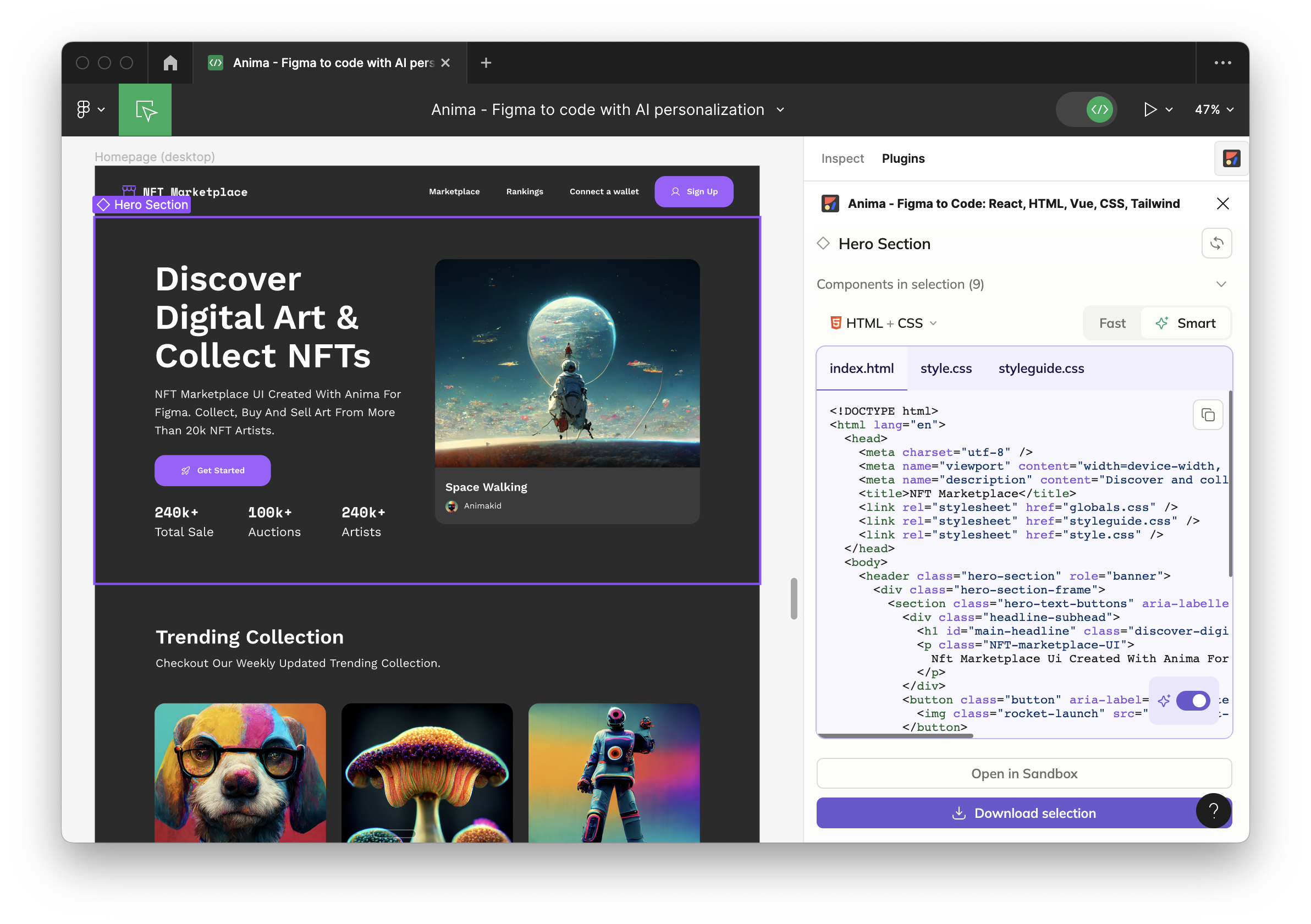
    Anima today revealed is has added an ability to personalize the code its generative artificial intelligence (AI) platform creates based on how an application is described using tools from Figma and Adobe.

    That capability makes it possible for the code being generated to resemble the coding style of an organization or specific developer more closely.

    Anima CEO Avishay Cohen said the company developed this capability to reduce the editing time that is otherwise required when trying to embed code generated by a large language model (LLM) within an application that has a well-defined coding methodology.

    The platform that Anima provides is based on a mix of LLMs and heuristics that the company developed to generate code. In this case, the code being generated is written in React or HTML to make it simpler to build an application’s front end. In contrast, a general-purpose LLM such as ChatGPT is not optimized for creating these types of graphical applications.

    Developers no longer need to worry about, for example, making sure each pixel is perfectly placed because the Anima platform automates that part of the application development process, including adding responsive behavior, animations and logic, noted Cohen. In addition, customized instructions may be applied to an entire project or even a specific component.

    In effect, the platform enables backend developers to automatically create a front-end for their application from a description in tools provided by Figma or Adobe. As a result, developers can allocate more time to writing business logic and optimizing application performance, said Cohen.

    Later this year, Anima will integrate its platform with GitHub and other continuous integration/continuous delivery (CI/CD) platforms as part of an effort to extend the reach of the platform across an entire codebase, he added.

    There is, of course, already no shortage of generative AI tools for writing code, but the degree to which they have been incorporated into DevOps workflows varies from one organization to the next. Much of the code created using platforms such as ChatGPT can vary widely in terms of quality. These platforms were trained using code collected from across the web so it’s not uncommon for the code generated to include known vulnerabilities that DevOps teams need to scan before incorporating into a build. In other cases, the code generated might simply break when installed.

    Regardless of these issues, however, the amount of code being generated by machines is only going to increase, especially as more LLMs that are specifically trained to create code based on examples that have been closely vetted become more widely available.
    In the meantime, developers who never especially enjoyed building the visual front ends of applications can now focus more of their time on tasks they prefer. Alternatively, developers who specialize in the front ends of applications will find that much of the toil involved will soon be automated in a way that should provide more time for them to create customized experiences.

    One way or another, the overall pace at which applications are built is about to exponentially increase. The challenge now will be finding ways to take advantage of AI to enable DevOps teams to keep pace.

  • CloudBolt Commits to Applying AI to FinOps

    CloudBolt Commits to Applying AI to FinOps

    CloudBolt Software today revealed it plans to infuse artificial intelligence (AI) into the financial operations (FinOps) capabilities it provides via its IT management platform over the coming year.

    Kyle Campos, chief product and technology officer for CloudBolt, said given the inherent complexity of modern IT environments, there is a need to apply machine learning algorithms and other forms of AI to enable IT organizations to apply policies in real-time to reduce costs. That capability is especially critical in cloud computing environments where services are often invoked by developers with little to no oversight, he noted.

    FinOps is a discipline that promotes a shared responsibility for an organization’s cloud computing infrastructure and costs. Rather than having disparate procurement teams working in silos to identify and approve costs, business, financial and IT leaders establish policies and best practices for usage that are programmatically enforced. The FinOps Foundation, an arm of the Linux Foundation, has been defining a set of FinOps best practices, but many organizations still lack the discipline required to implement them. One of the major reasons organizations lack this discipline is that many of them have been allowing application developers to provision cloud resources themselves. It’s not until the bill comes due at the end of the month that finance teams realize there is an issue when there is a sudden spike in costs.

    Rather than deploying a separate platform to manage FinOps, CloudBolt is making a case for integrating a framework for managing FinOps within the same platform IT teams use to manage those IT environments. That approach makes it possible to apply FinOps policies in a way that ensures best practices for controlling costs are implemented without creating yet another silo within an IT organization, said Campos.

    Running application workloads in the cloud is fundamentally different than running them in an on-premises IT environment where costs are largely fixed. Not many developers have much of an appreciation for the additional storage and cybersecurity expenses that are generated every time a new workload is added. As a result, many organizations lack visibility into the total cost of cloud computing until the monthly bill arrives. By then, it’s too late for IT teams to have any impact on the outcome.

    In the face of ongoing economic uncertainty, more organizations are clearly moving to reduce cloud computing costs more aggressively. In an ideal world, IT teams would be able to instantly see what impact any change to an IT environment will have on costs as part of any scenario planning exercise, said Campos.

    While most organizations would like to reduce their cloud costs, it’s just as important to ensure that the bills being incurred are predictable. Finance teams don’t appreciate surprises, no matter how important an application may be. IT leaders are now being held more accountable than ever to make sure cloud computing costs meet expectations from one month to the next. The challenge now is finding a way to inject controls in IT environments long after applications have already been deployed.

  • SmartBear Acquires Reflect to Gain Generative AI-Based Testing Tool

    SmartBear Acquires Reflect to Gain Generative AI-Based Testing Tool

    SmartBear this week revealed it has acquired Reflect, a provider of a no-code testing platform for web applications that leverages generative artificial intelligence to create and execute tests.

    Madhup Mishra, senior vice president of product marketing at SmartBear, said the platform Reflect created will initially be incorporated into the company’s existing Test Hub platform before Reflect’s generative AI capabilities are added to other platforms.

    Reflect provides access to a natural language interface to create tests using multiple large language models (LLMs) that it is designed to invoke. It can also understand the intent of a test to understand what elements to test regardless of whether, for example, a button has been moved from one part of a user interface to another, said Mishra. Test step definitions, once approved, can also be automatically executed using scripts generated by the platform.

    SmartBear has no plans to build its own LLMs, said Mishra. Rather, the company is focusing its efforts on providing the tools and prompt engineering techniques needed to effectively operationalize them, he added.

    Reflect is the tenth acquisition SmartBear has made as part of an effort to provide lightweight hubs to address testing, the building of application programming interfaces (APIs) and analysis of application performance and user experience. Last year, the company acquired Stoplight to gain API governance capabilities.

    Rather than building a single integrated platform, the company is focused on providing access to lightweight hubs that are simpler to invoke, deploy and maintain, said Mishra. The overall goal is to meet IT teams where they are versus requiring them to adopt any entirely new monolithic platform that requires organizations to rip and replace every tool they already have in place, he said.

    There is little doubt at this point that generative AI will have a profound impact on application testing in a way that should ultimately improve the quality of the applications. As the time required to create tests drops, more tests will be run. Today, it’s all too common for tests not to be conducted as thoroughly as they should be simply because either a developer lacked the expertise to create one or, with a delivery deadline looming, they simply ran out of time.

    Naturally, the rise of generative AI will also change how testing processes are managed. It’s not clear how far left generative AI will push responsibility for testing applications, but as more tests are created and run, they will need to be integrated into DevOps workflows.

    Of course, testing is only one element of a DevOps workflow that is about to be transformed by generative AI. DevOps teams should already be identifying manual tasks that can be automated using generative AI as part of an effort to further automate workflows that, despite commitments to automation, still require too much time to execute and manage. Once identified, DevOps teams can then get a head start on redefining roles and responsibilities as generative AI is increasingly operationalized across those workflows.

  • Diffblue Integrates Generative AI-Based Testing Platform With GitLab

    Diffblue Integrates Generative AI-Based Testing Platform With GitLab

    Diffblue this week generally made available an integration between its automated unit testing platform for Java and the DevSecOps platform from GitLab.

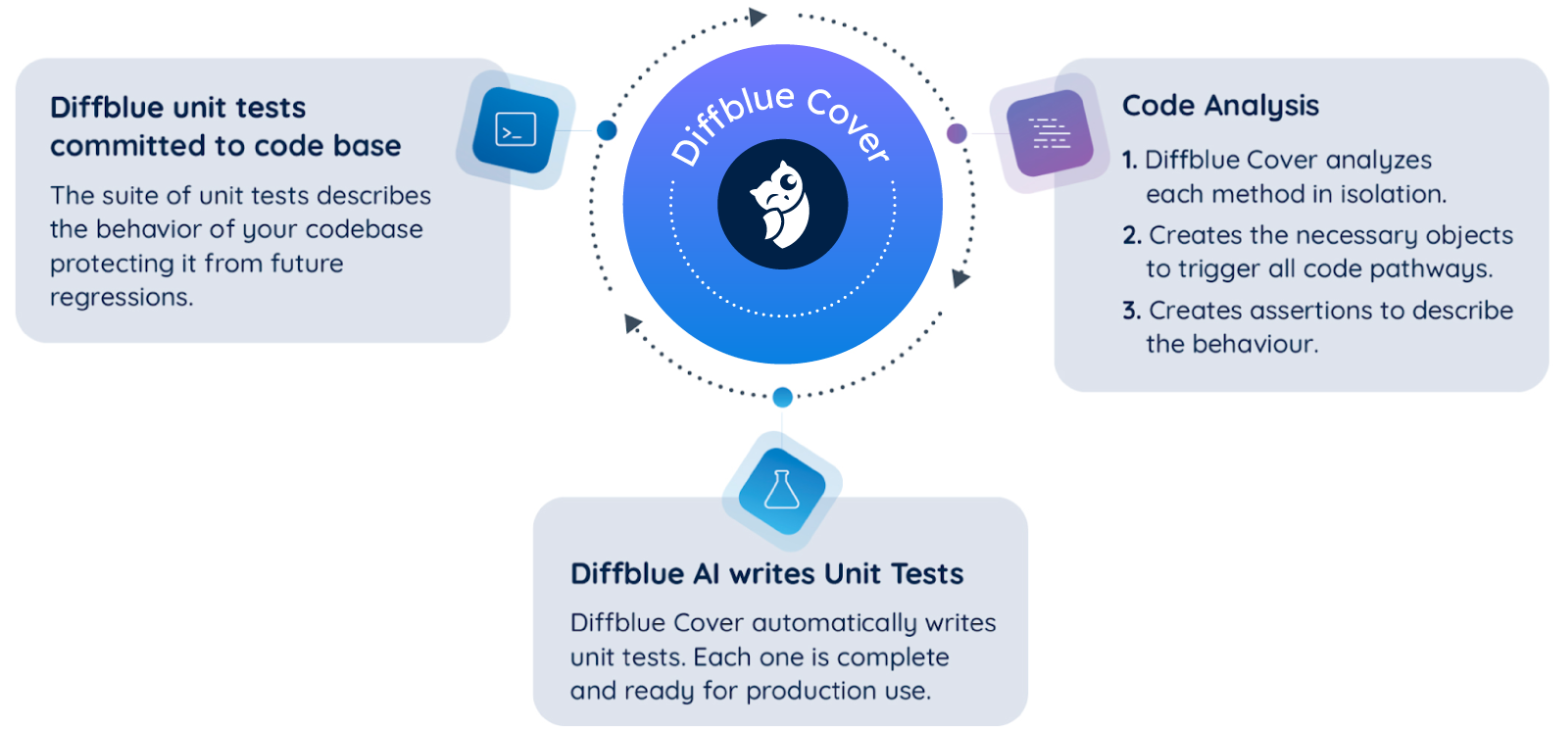
    The Diffblue Cover platform makes use of generative artificial intelligence (AI) to automatically create unit tests based on reinforcement learning technologies that don’t rely on LLMs—avoiding their drawbacks of sometimes introducing hallucinations and also requiring human review.

    Diffblue CEO Mathew Lodge said the integration with the continuous integration capabilities found in the premium and ultimate editions of the GitLab platform would, for example, streamline regression testing in a way that should ultimately improve both application quality and security. Diffblue Cover, for example, can update tests as much as 250 times faster than a human developer can write them manually without developer review.

    That approach also serves to reduce the level of friction many DevSecOps teams encounter when bottlenecks involving testing processes emerge, noted Lodge. The overall goal is to make it simpler for developers to test as much of their own code as possible before integrating it into a build, he added. Otherwise, developers will get fed up because testing is continuously breaking the build, noted Lodge.

    Ultimately, instead of having to write unit tests, developers become supervisors of a platform that automatically generates them on their behalf, said Lodge. The job of a developer doesn’t go away, but it does fundamentally change, he added.

    To achieve that goal, developers need to be able to access a platform that writes the tests and can then also execute them automatically. If it takes too long to create the test, chances are high that most developers won’t run it. On average, writing and evaluating a single unit test can take a developer 10 minutes. Over the course of any project, thousands of tests need to be written, so the amount of time testing takes away from coding is often much greater than most IT leaders fully appreciate.

    Automating those tests should improve developer productivity as more time is available to focus on writing code rather than testing. That doesn’t necessarily eliminate the need for a dedicated testing team, but it does mean that more tests will be run without slowing down the overall pace of application development.

    Developers naturally want to be able to test code at the very instant they create it. AI platforms can make that happen by, for example, employing reinforcement learning to write unit regression tests.

    Most developers are not going to resist assuming more responsibility for testing if the tools to automate that task are more accessible. Instead of merely shifting responsibility for testing left toward developers, DevOps teams need to find ways to streamline the process. Otherwise, testing just becomes one in a series of tasks that are being shifted to developers in ways that many of them are coming to resent.

    It may take some time before AI is fully integrated into software engineering but it’s clear with each passing day more previously manual tasks are being automated. Among the lowest hanging fruit for applying AI to software engineering are clearly testing processes that, if truth be told, few indeed enjoy conducting.

  • Venafi Adds Ability to Prevent Unauthorized Code From Running

    Venafi Adds Ability to Prevent Unauthorized Code From Running

    Venafi added an ability to prevent unauthorized code from running in IT environments that make use of its machine identity management platform.

    Shivajee Samdarshi, chief product officer at Venafi, said the Stop Unauthorized Code Solution leverages the company’s CodeSign Protect offering to ensure that only authorized code can run on any given platform.

    The overall goal is to enable organizations to better secure their software supply chains using a zero-trust approach to software based on identity management and code signing to verify software comes from an approved source and complies with policy controls, he added.

    All code is signed using private digital certificates or those issued by trusted certificate authorities, said Samdarshi. Before code can execute, the security platforms an organization has in place can be configured to check that digital signature against trusted code signing certificates, he noted.

    Interest in securing software supply chains has risen sharply since the Biden administration issued an executive order requiring federal agencies to implement a range of measures, including code signing, to achieve that goal. However, securing software chains is often more challenging than organizations initially appreciate.

    In fact, a recent Venafi survey found that 70% of security and IT leaders believe that software supply chain attacks are their biggest security blind spot. Additionally, 85% believe that continuous security validation of the CI/CD pipeline is vital to reduce the risk of vulnerabilities going undetected during the software development lifecycle. A full 88% said they believe machine identity management is essential to the success of zero-trust models that are being more widely adopted across enterprise IT environments.

    Arguably, the most important thing organizations need to focus on is making sure application developers and cybersecurity professionals develop a working relationship. The biggest barrier to the adoption of DevSecOps best practices required to secure software supply chains remains largely cultural. For more years than anyone cares to admit, many developers have viewed cybersecurity more as a hindrance to application development that needs to be overcome or circumvented rather than being a core aspect of a quality assurance process. The total number of vulnerabilities that exist in applications running in production environments could likely be measured in the billions.

    Remediating all those vulnerabilities may never be practical, but at the very least, DevSecOps teams could make sure that no new code containing vulnerabilities is allowed to execute. Cybercriminals have become especially adept at inserting malware into code that they hope will find its way into any number of downstream applications before they activate it. That capability alone should help mollify cybersecurity teams that are increasingly being tasked with improving software supply chain security. The challenge is those cybersecurity teams don’t always appreciate the impact new policies can have on the pace at which applications are developed and deployed.

    Like it or not, software supply chains will generally be more secure in 2024. The only thing that remains to be determined is how much friction will be injected into DevSecOps workflows to achieve that goal.

  • Legit Security Applies AI to Detect Vulnerable Application Secrets

    Legit Security Applies AI to Detect Vulnerable Application Secrets

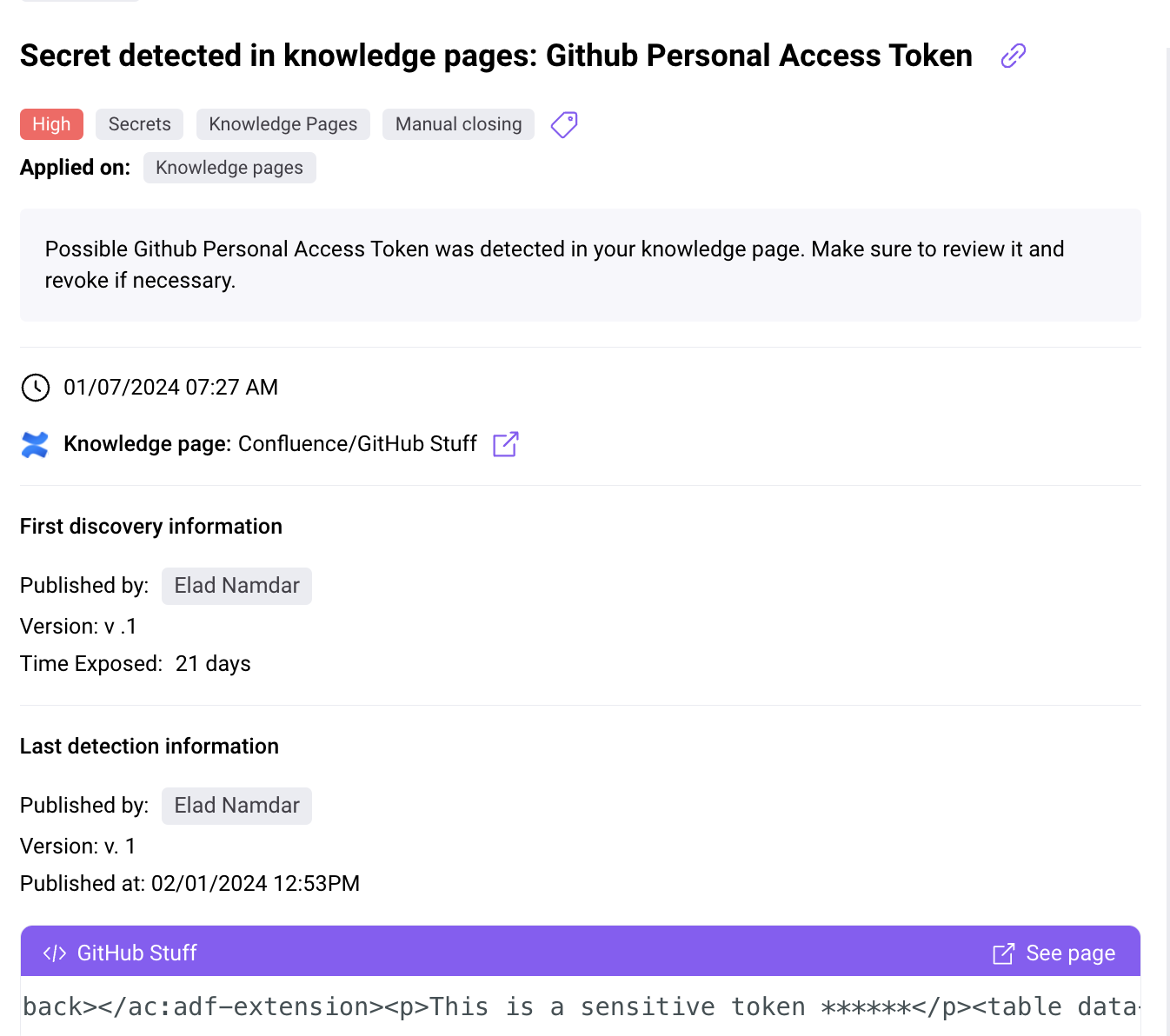
    Legit Security today announced it has expanded the scope of its application security posture management (ASPM) platform to make use of artificial intelligence (AI) to discover secrets more accurately in applications that cybercriminals can actually exploit.

    Scanners typically generate high false positive rates to the point where developers often start to ignore them. As a result, it’s not uncommon for secrets to be discovered in an application even though an alert was generated.

    Legit Security CTO Liav Caspi said the company is now applying a large language model (LLM) specifically trained for source code along with prompt engineering techniques and heuristics to reduce the level of alert noise that developers would otherwise see when scanning for secrets. The overall goal is to correctly identify access keys, passwords, application programming interface (API) keys and other personally identifiable information (PII) that should not be exposed once an application is deployed in a production environment, he noted.

    That capability can be applied to detect secrets across all development assets, including code repositories, source code management (SCM) tools, build tools and logs, artifacts and private and public documentation. In addition, this approach also uncovers toxic combinations of secrets or ones that might lie buried within assets such as source code history or modified Confluence pages that developers often forget exist, noted Caspi.

    Legit Security also enables DevSecOps teams to apply preventive guardrails on developer endpoints using the Legit command line interface (CLI) to stop secrets from being exposed before code is pushed. In addition, automated workflows can reach developers as part of a pull request or create Slack messages or Jira tickets to streamline remediation. DevSecOps teams can also continuously triage results to create a baseline that includes exceptions.

    As part of a larger effort to secure software supply chains, Legit Security has developed a software-as-a-service (SaaS) platform designed to apply security policies across an entire software development life cycle. The company is now extending the capabilities of that platform using AI technologies to detect secrets in both source code and all the components that make up a development pipeline as they are added.

    In the wake of an executive order requiring federal agencies to better secure software supply chains, there is now more focus than ever on application security. Unfortunately, many developers are a little too cavalier when it comes to managing secrets during the application development process. They often leave secrets in plain text to facilitate workflows, but more often than many care to admit, those secrets are not removed before an application is deployed. Knowing this, cybercriminals have learned to scan applications for those exposed secrets. Once gained, they then appear to be just another legitimate user of an application that might not be discovered until malware is activated.

    It may be a while before the cultural and technical issues that conspire to make the software supply chain insecure are fully addressed. In fact, the problem may get worse before it gets better—simply because the pace at which distributed applications are being built and deployed only continues to accelerate. At the same, the cost of making a secrets mistake is also only going to increase as regulations become more stringent. In fact, it’s now only a matter of time before stiff fines intended to make an example of one or more unfortunate organizations are eventually going to be levied.