Category: AI

  • Computer Vision is Building the Future

    Computer Vision is Building the Future

    Developing an accurate, regulated and purpose-driven facial recognition software is the challenge of computer vision engineering. It is also the future of how people do their everyday tasks: from unlocking a phone to signing into a bank app or logging the time they get to the office. Facial recognition amazes more and more with its new applications. Today, people can go to a concert without the tickets they bought online, they just have to bring…their face and show it at the gate.

    Computer vision science has been working on facial and object recognition software for some decades now. From the beginning, the main goal of this engineering, framed in the AI field, has been to give computers a visual understanding of the world.

    The goal gets fulfilled through a three-step process: image acquisition, image processing and image understanding. Each step can be done thanks to different kinds of technology. For example, image acquisition can be done using a web camera, an embedded phone camera or a 3D camera, among other types of lenses.

    With the help of algorithms computer vision is currently capable of recognizing and tracking objects. But it can go much further than that. Now, neural networks are at such a high level that they are capable of restoring and even creating new images. All of these features that seemed to be available only in futuristic or science fiction movies are now in the market thanks to AI algorithms, such as Generative Adversarial Networks (GAN).

    Today, big cloud providers have released their own AI and vision models including facial recognition APIs. Nevertheless, these models are conceived with rather general purpose algorithms that might be sensitive to specific environmental details, but don’t offer the possibility to retrain models with data gathered in a productive environment.

    The good news is some companies can offer AI models retraining in customers’ environment to accommodate any need or requirement, including usage of depth cameras or ToF sensors. But of course, these developments bring along some challenges. The way to succeed is to be ready and thoughtful in every step. This way, any surprises along the process will be controlled and won’t destabilize the project offered to a client.

    Last year at intive, we built a cognitive department with our internal AI experts as well as the best people we could find in the market. Eleven people shaped the core team that developed advanced facial recognition software in only one year of work. Our objective was to create an AI model fast suited to specific environmental conditions of small, medium-sized and big companies. We created AI models capable of using RGB, depth cameras and ToF sensors.

    Depth cameras enable the API to distinguish a real human face from flat images such as screens, tablets and paper. The new intive’s API can estimate age, detect sex and recognize a fraudulent face. It identifies eyes, nose and the ratio of length and distance of individual facial elements. It can even discern the differences between identical twins. The only face characteristics not taken into account are hair, mustache and beard; this is to make sure shaving or changing the hair style won’t impact the recognition capabilities.

    Here are the three major challenges for computer vision development.

    Legal and Compliance

    First, at any computer vision development, it is crucial to have the General Data Protection Regulation (GDPR) in mind. You must ensure you are allowed to manage or process certain biometric data. Imagine the city government installs cameras over the city parks, these are useful not only for recording but they are also capable of tracking people, thus enhancing the streets security. In this case, people’s identity has to be somehow recognized, and the way of doing this is by processing biometric data. If the person tracked does not know this is being done, a GDPR violation happens.

    Anytime a system needs to process people’s biometric data that can identify them, they need to give consent to process this data. To solve this, intive installed a button on our API that releases the biometric calculations and the person’s identification. By pressing this button, the person automatically gives consent to start the process. Additionally, while enrolling to the system, employees need to sign the consent.

    Same Environment, Always

    In every computer vision case, environment is an aspect you will always have to deal with. This refers to the technology used for acquiring images during the development, testing and productive stages of the project: the type of camera and its calibration, the drivers, libraries, settings and the light conditions.

    To ensure the API’s best accuracy, all stages must be developed with the same environmental conditions. Otherwise, the system loses its best accuracy and could come-up with worse results in the productive environment and in the development one. When environments change, the error rate rises.

    To ensure success, it is crucial to collect all possible data from the final environment and retrain the developed model with this data. For our computer vision project, we created several different production environments and we gathered all the data that came up. There will always be differences, for example, the lighting conditions are hard to control in every stage. But the more data you have, the fewer errors will appear.

    Set Acceptance Criteria and Meet It with the Data You Have

    From the beginning of the project, it is very important to set the accuracy you are aiming for. This means you need to decide how often the system recognizes an enrolled user correctly. To understand this better, if you have 10 users, and you set a classification accuracy of 90%, this means nine people are going to be recognized accurately.

    False positive rate (FPR) is linked to this and it needs to be decided too. This value represents how often the system recognizes a person that enters the system with different characteristics than the enrolled one. For example, if you are using the system to control employees’ entrance to an office, how often will a person who is not an employee (and not enrolled in the system) gain access to the building?

    Both values, accuracy and FPR, are strictly bound. Better accuracy is directly related to an increase in FPR. You need to decide if you want better accuracy and higher FPR or lower accuracy and lower FPR. This can be controlled smoothly along the course of the development if you set it according to the available data.

    Accuracy and FPR will change based on the quality of data–the photos used. The more pictures (data) per enrolled person, the more accurate the system is. Pictures from different angles allow the system to have a better chance of being effective. In our case, we took a minimum of five pictures for every enrolled person.

    Working on a computer vision project with facial recognition software can seem intimidating. But it is just a matter of being well organized. Take into account the three challenges highlighted above and you will be on the right track to success.
    — Grzegorz Tymiński

  • OverOps Integrates AI Code Analyzer With CI/CD Platforms

    OverOps Integrates AI Code Analyzer With CI/CD Platforms

    At the DevOps World | Jenkins World 2019 conference, OverOps announced it has integrated its namesake tools for analyzing Java and Microsoft .NET code at runtime with a variety of continuous integration/continuous deployment (CI/CD) platforms, including Jenkins, JetBrains TeamCity, Atlassian Bamboo and Pivotal Concourse.

    Eric Mizell, vice president of solution engineering for OverOps, noted that the more errors that are discovered by DevOps teams early in the development cycle, the less technical debt organizations must address after an application is deployed in a production environment. By pushing testing to further to the left of the application development process, the less troubleshooting will be required later on, he said.

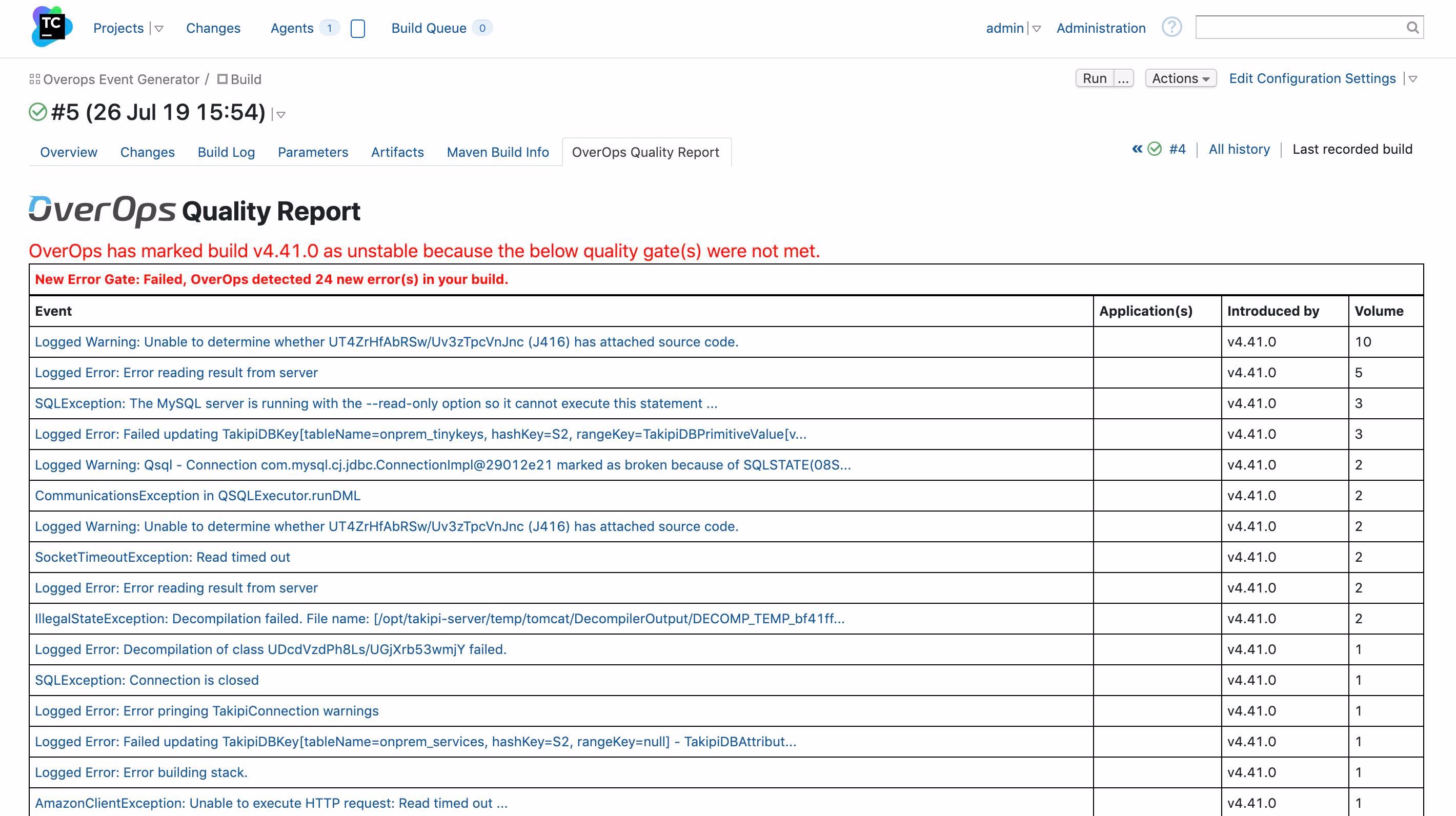
    OverOps employs predictive analytics and machine learning algorithms to identify new, increasing, resurfaced and critical errors in a release. It then generates a code quality report that ranks all severe issues likely to impact end users and application functions. By integrating OverOps within the CI/CD pipeline, DevOps teams can use those reports to determine whether code is safe to promote or automatically block unstable releases from moving forward.

    In addition, because the machine learning algorithms surface the true root cause of an issue, DevOps teams can more efficiently remediate issues by routing code back to the development team responsible for all the issues that are being created downstream.

    Making testing an integral part of the CI/CD process not only tightens the relationship between developers and testers, but also in many cases enables developers to test their own code before submitting it for review.

    Mizell said the need to shift testing to the left has become more critical as customer tolerance for application errors is low, especially in use cases involving mobile applications—consumers are especially unlikely to give a mobile application a second chance after they’ve encountered an issue.

    In an ideal world, of course, testing tools that make use of machine learning algorithms would be employed to coach developers in a way that enables them to develop reliable code more consistently and faster. However, some organizations will use tools that leverage machine learning algorithms to identify developers who are not meeting expectations. That weeding out process is likely to begin much earlier in the application development life cycle as more advanced testing tools are embedded within CI/CD environments. Those tools won’t eliminate the need for developers and testers, but they do promise to increase dramatically the rate at which quality applications can be built and deployed at an industrial scale. Technical debt may never be completely eliminated, but at the very least the rate at which that technical debt is being accumulated should substantially decline.

    It may be a while longer before machine learning algorithms and other forms of artificial intelligence (AI) are employed pervasively across DevOps processes. In most cases, those algorithms will help developers write better code faster. However, it’s also apparent there will be other algorithms at work that one way or another ensure developers will have fewer opportunities to make mistakes in the first place.

    — Mike Vizard

  • Fujitsu: State of Digital Transformation Is…Mixed

    Fujitsu: State of Digital Transformation Is…Mixed

    According to the Fujitsu Future Insights Global Digital Transformation Survey Report 2019, nearly 90% of companies in a recent survey are already deep into their digital transformation efforts. While the survey did find broad movement toward digital transformation, there existed wide differences in the progress of transformation across industries.

    If digital transformation progress were a horse race across industries, financial services and transportation would be running neck and neck. While, overall, companies reported 36% progress in their digital transformations, 47% of financial services firms and 45% of transformation companies said they have moved forward with digital transformations and have delivered positive outcomes. From there, the government reported 35%, manufacturing 32%, healthcare 31% and wholesale/retail 29%.

    Fujitsu’s findings are based on 900 respondents from nine countries. Interestingly, only 13% of those surveyed said their companies have yet to get started with their digital transformations.

    Not surprisingly, online businesses are moving along more quickly with their digital transformations than brick-and-mortar businesses. While online businesses comprised 33% of the survey respondents and brick-and-mortar 67%, online businesses have made more progress in digital transformation. Of the online companies, 91% are implementing a digital transformation, with more than half achieving positive outcomes.

    One of the more concerning findings from the Future Insights Global Digital Transformation Survey Report was the lack of trust toward online data. A considerable 70% of respondents found it difficult to judge if online information is trustworthy, and 59% were concerned that the data they use may have been falsified.

    “Concern about personal data is also high, with 72% of respondents saying that they are worried organizations exploit personal data without their permission,” the report said. “However, more than half of respondents are content to provide personal data to an organization if they can trust the organization and in cases where personal data is used to enhance products and services.”

    In addition to a lack of trust toward data, respondents are also unsure about AI-made decisions. “Sixty-three percent of respondents think that decisions made by AI are fair because AI is not subject to bias. However, 52% of respondents claimed they couldn’t trust AI because data can be incorrect or biased.”

    However, 60% of respondents said they would trust decisions made by AI if the AI shows substantial reasons for reaching the decisions, and 66% indicated they would trust a company that published a code of ethics governing the use of AI.

    “Companies in which management places an emphasis on long-term perspectives, practices empathic leadership by sharing their messages and passion with employees, and empowers their staff tend to achieve greater success in their journeys toward digital transformation,” the survey found.

    While respondents to this survey indicate moving forward toward their digital transformation objectives, as we recently covered in Digital Transformations Fall Short, Survey Claims, the Kony Digital Experience 2019 Index Survey concluded that businesses are “still missing the mark” with consumers despite nearly $5 trillion in digital investment. The report didn’t distinguish how the $5 trillion was being spent and in what areas of the business the investments were made.

    That report found that said organizations in banking (54%), retail (59%) and utilities (51%) are keeping pace with their expectations but are not delivering differentiated digital experiences. The big laggard was health care, with only 48% keeping pace and 20% being behind respondents’ expectations.

    — George V. Hulme

  • With Platform, Dotscience Applies DevOps to AI

    With Platform, Dotscience Applies DevOps to AI

    Dotscience today launched a namesake platform for building and deploying artificial intelligence (AI) models based on a set of best DevOps practices.

    Company CEO Luke Marsden said that as organizations realize that AI models need to be trained and updated continuously, the need for a DevOps platform that accelerates that process will become more apparent. Today most AI models are trained over an extended amount of time and then deployed within an application environment. Over time, however, either more data becomes available or organizations determine the machine and deep learning algorithms originally used to create the AI model need to be updated or replaced. Whatever the underlying reason for replacing an AI model, a platform that addresses all the aspects of the AI model life cycle, including testing, reproducibility, accountability, collaboration and continuous delivery, is required, he said.

    To address those requirements, the Dotscience platform facilitates concurrent collaboration across developer and operations teams, version control of the model creation process, tracking of provenance records in real-time, exploring and optimizing hyper-parameters when training a model and tracking workflows across multiple open source tools.

    Most of the teams that build AI models have backgrounds in data science versus application development. As such, Marsden noted most of them have had little to no exposure to DevOps practices. In that absence of those processes, teams building AI models now routinely encounter issues such as having to navigate siloed data and technical debt, which all conspire to extend the time required to build AI model, Marsden said. In addition, teams building AI models need to keep track of not only versions, but also runs of their code that tie together input data with models and corresponding hyperparameters and metrics, he added.

    Dotscience DevOps AI platform

    In the absence of a DevOps platform such as Dotscience, it becomes challenging for organizations to document what changes were made to an AI model when, Marsden said. That governance issue has become especially problematic when it comes to AI models because organizations are coming under increased regulatory pressure to document how the AI models they are employing are built and updated.

    Dotscience’s “The State of Development and Operations of AI Applications” report also published today identifies the top three challenges with AI workloads are duplicating work (33%), rewriting a model after a team member leaves (27.6%) and justifying its value (27%). Based on a survey of 500 industry professionals, the report also finds 52% of respondents track provenance manually using tools such as spreadsheets, while 27% don’t track provenance at all but think it is important. In total, the survey finds 63% of businesses report they are spending between $500,000 and $10 million on their AI efforts.

    As more organizations rely on DevOps processes to build and deploy applications, there’s no doubt that teams building AI models that need to be inserted into those applications will have to fall in line with best DevOps practices. That challenge now is finding a way to extend those DevOps processes all the way back to the building of the AI models themselves. Only then is the AI model building and deployment process likely to become agile enough to stay relevant to the pace of change now occurring across digital business processes.

    — Mike Vizard

  • DevOps Deeper Dive: BMC Software Bets on AIOps Transformation

    DevOps Deeper Dive: BMC Software Bets on AIOps Transformation

    As BMC tests the AIOps waters, the company seeks to find a balance in serving both the DevOps and ITIL populations

    It’s clear in the enterprise IT space that artificial intelligence (AI) is poised to play a significant role in IT operations, a phenomenon known as AIOps. Often with this level of IT disruption, new entrants funded by venture capitalists flood the segment, leaving incumbents to either fend off the new rivals, cede ground or, in many cases, put an end to the threat by acquiring one or more those startup companies that pose a threat to their existence.

    In the case of BMC Software, it has decided to stand its ground by aggressively investing in AIOps research and development. Most recently, BMC extended the AIOps capabilities of its existing portfolio of TrueSight IT management software through additional advanced analytics to identify patterns and anomalies within an IT environment. Other examples of BMC employing machine learning algorithms to automate IT environments tools include the ability to surface continuous recommendations for cost optimizations and automated event remediation workflows that promise to reduce the mean time to repair (MTTR).

    BMC has been making a case for AIOps as far back as 2017, but it’s only now that many organizations have enough confidence in AI to start embracing AIOps beyond the pilot stage. The challenge organizations face with AIOps are both technical and cultural: It requires a significant amount of time and effort to train and tune an AI model of each customer environment.

    [su_box title=”BMC Software Milestones”]

    • Dec. 2016: Peter Leav succeeded Bob Beauchamp as president and chief executive officer. Beauchamp remains chairman of the board of directors.
    • Oct. 2017: BMC Launches First AIOps Initiative for TrueSight
    • Nov. 2017: BMC Refinances Debt
    • Oct. 2018: BMC Software Goes Private After Being Acquired by Investors
    • Feb. 2019: BMC Partners with IBM on AI
    • April 2019: Bob Beauchamp resumes role as CEO
    • June 2019: BMC Extends AIOps Capabilities of TrueSight

    [/su_box]

    In addition, the effectiveness of any AIOps model varies based on the complexity of the IT environment. Organizations also should be concerned about the potential impact any flawed AI model might have on IT operations—it’s one thing for a human to make a mistake, but an AI model making a mistake at a level of scale could be catastrophic.

    From a cultural perspective, not every organization is yet comfortable with those AI models on current staffing, which can make some members of the IT staff less than comfortable with the whole concept.

    BMC CEO Bob Beauchamp

    It is early days for AIOps in DevOps processes. But the increased complexity of modern IT environments based on cloud-native technologies will force the issue within most organizations. BMC’s challenge is that while its management platform is employed widely in IT environments relying on ITIL-based frameworks, its footprint is comparatively nascent within organizations that have embraced best DevOps practices.

    Bill Talbot, vice president of solutions marketing for BMC, said one of the company’s advantages is access to the massive amounts of data required to train an AI model effectively. Most startup companies in this space don’t have nearly the same depth in terms of customer base, he said. That puts BMC in a better position to employ big data analytics to identify patterns and trends across multiple customers without having to know what data came from any one specific customer, unless the customer elects to share its data with BMC.

    BMC makes it a point to caution customers about rivals that make AIOps claims about their platforms but don’t actually solve a specific problem—a process known as “AIOps washing.” An AIOps platform not only needs to leverage Big Data analytics and machine learning, but it also provides the code and functionality needed to customize specific IT operations use cases, including capabilities such as automated event remediation and service resolution, optimized cost and capacity management and proactive vulnerability mitigation.

    BMC Software today stands at a crossroads. The company recently brought back former longtime CEO Bob Beauchamp to run the company day to day and has made no secret of the fact it is looking for additional investors. Making a pivot to AIOps requires access to massive amounts of funding for incumbents and startups alike.

    The next BMC act undoubtedly will involve employing AIOps across both DevOps and ITIL-based environments running on-premises and in the cloud. By any measure, that effort represents one of the most ambitious transformations ever attempted by any IT vendor.

    — Mike Vizard

  • How IoT Security Risks Derailing Robotics

    How IoT Security Risks Derailing Robotics

    Driven by advances in technologies such as artificial intelligence and deep learning, the mobile robots market is projected to grow to $54.1 billion by 2023 from $18.7 billion last year, according to Markets and Markets. But for robotics to progress, security for the internet of things (IoT) needs to be addressed fast, before the reputation of the entire industry suffers a permanent setback.

    Every industry segment has a journey to maturity that involves ramping up how seriously it takes security. For robotics, that time has come. Failing to start robotics projects on the right software foundations will see confidence continue to drop, impeding the rate at which new solutions are created.

    The future of robotics rests firmly on the shoulders of the IoT. Robots act as one part of intelligent ecosystems—they depend on IoT to link various sensors and smart meters, and pass data to and from third parties.

    The self-driving car, for example, is a robot orchestrated by various smaller devices and smart sensors. In fact, robots are being created to tackle every conceivable problem. Take the Google-funded RangerBot, an underwater machine designed to track down a species of starfish responsible for coral reef destruction, or Small Robot Company, a startup tackling farming deficiencies with bots that autonomously feed, seed and weed arable crops.

    However, while IoT is an established concept and connected devices are now mainstream, its full potential has not been realized in part because of security concerns. Ninety percent of consumers lack confidence in connected devices, according to a recent survey. These concerns are more than valid, as nearly half of companies are unable to detect when a breach occurs, and only 15% of budgets are earmarked for IoT security.

    With IoT security a lingering weak spot, one major attack within robotics, could have a domino effect on the entire industry. Add to this the verticals that robots are beginning to infiltrate—health care and agriculture, for example—and the threat becomes immediate and very real.

    Rising levels of sophistication within robotics go hand in hand with more targeted and damaging attacks. For example, telesurgery uses robotics to help surgeons perform procedures remotely. A malware bug in this scenario could mean the downing of tools, threatening the patient’s life.

    Researchers at Brown University proved how easy it is to hack robots. The industry simply will not be sustainable without the backing of a secure, connected IoT network.

    Robot manufacturers, therefore, must build with a security-by-design mindset. This begins by selecting a robust operating system from the outset—secure now, but also ready for future market demands.

    Hackers are constantly evolving their activities and businesses must be flexible in their approach to security, shedding the old hardware-centric view of IoT security.

    Software no longer can end when a device is shipped. It must align to the lifespan of a robot and be able to update whenever there is a potential flaw. The world of mobile took many years to get to grips with this. Robotics and IoT developers should learn from their mistakes.

    One way developers can safely build and secure software is through snaps, containerized software packages on an open platform for building and publishing applications to an audience of millions.

    If a security vulnerability is discovered in the libraries used by an application, the app publisher is notified so the app can be rebuilt quickly with the supplied fix and pushed out. This allowsr developers to stay focused on innovation while ensuring the longevity of the robotics hardware.

    It remains unclear where the onus lies for IoT security, with nobody holding anyone else to account. Market constraints often prevent device makers from putting more budget than what is necessary into design security, when there is so much pressure to innovate ahead of competitors.

    These issues need to be solved. Robotics has too much potential to let security concerns stunt their growth.

    — Tom Canning

  • Workflow Automation Poised to Accelerate DevOps

    Workflow Automation Poised to Accelerate DevOps

    Automation is taking the market by storm. Research firm Gartner predicts that by 2020, more than 40% of data science tasks will be automated, and that is just the tip of the iceberg. Businesses are turning to automation to reduce costs, increase productivity and gain a competitive advantage. Add DevOps to the mix and it becomes readily apparent how DevOps teams can benefit by leveraging a little workflow automation. After all, the DevOps process is framed by repeatable workflows, wherein the agile manifesto dictates progress or other frameworks define how change moves through the development and deployment cycles.

    “Most development projects are hindered by numerous manual steps and the lack of defined collaborative communications methodologies, leaving far too much room for error,” said Raj Mehta, CEO of Raj Technologies. “Defining a workflow and bringing automation into the picture could go a long way toward reducing errors.”

    The DevOps community has come to rely on many manual processes and numerous tools to keep the pace of rapid application delivery and change management. Those solutions often have points of failure, where important tasks can slip through the cracks. Even so, many developers are resistant to change and embrace the processes they have already established. Yet, intertwining manual processes with automation and management tools has been demonstrated as rather inefficient, slowing the perception that workflow automation can actually achieve the productivity promises claimed.

    Perhaps the challenge comes from the fact that many DevOps teams require assistance to achieve any type of automation goals. That indicates there may be a lack of qualified professionals to bring forth workflow automation. “You have to crawl before you can run, and that means you must become an expert in designing workflows, before deploying one, or at the very least, turn to an expert,” Mehta noted.

    A workflow is a fundamental process that dictates the steps to achieve a goal. Workflows have been used for centuries by businesses and have become digitized over the last few decades, with numerous workflow tools coming from leading vendors.

    Many technologists may have first encountered the workflow ideology back in the days when Microsoft’s Sharepoint first came on the scene, which offered rudimentary tools for routing content through various steps. Of course, the workflows in use today have become much more complex, requiring designers to not only know how to script actions but also understand the overall goal of those actions.

    That’s a simple truth understood well by Workfront, a Lehi, Utah, based vendor of workflow solutions which is looking to better service various organizations, as well as DevOps professionals, to create workflow automation opportunities. The company’s primary product goes by the name of Workfront as well and uses a platform-based approach for creating workflows that can be integrated across multiple technologies, bringing centralized workflow orchestration to many use cases.

    Tools like Workfront fit well into the automation equation by creating the foundation of workflows. However, most DevOps professionals need more than workflow design to achieve improved automation. Other elements must be considered, such as demand management, resource management, project templates, policies and scripted actions. Efficient workflow tools should also incorporate task lists, collaboration capabilities and reporting.

    Of course, Workfront is only one of many workflow automation companies on the market. Many other vendors are established in the market, with Market News Reports mentioning leaders such as Pegasytems, Tibco Software and Sourcecode Technology Holdings dominating the market.

    HNY Research projects workflow automation market size will grow to $16.58 billion by 2023 from $4.68 billion in 2017, at an estimated CAGR of 23.48%. Key factors such as ease in process with the installation of workflow automation tools, convergence of workflow automation with traditional business processes, focus on streamlining business processes and cost efficiency through workflow automation are driving the workflow automation market.

    “Business leaders must carefully analyze different processes and identify which workflows can automated. Therefore, business leaders should avoid rushing into workflow automation adoption and analyze the various potential use cases and choosing which vendors best fit in their organization,” said Naveen Joshi, founder and CEO of Allerin.

    Many businesses are leveraging workflow solutions on their path to digital transformation and bringing once-manual processes into a world where automation can be applied. While some may argue over the intricacies of digital workflows and how those workflows fit into business process management (BPM), one truth remains evident: The goal is to digitally transform and introduce automation, which in turn indicates robotic process automation (RPA), becomes the next logical step.

    According to Grand View Research, the global RPA market is expected to register a CAGR of 31.1%, from $597.5 million in 2018, driven largely by demand for business process automation via artificial intelligence (AI) and software robots.

    RPA paired with workflow design may prove to bring full digital transformation to DevOps, and potentially grow beyond just a niche in those challenging environments. Workflows, BPM, BPA and RPA are becoming increasingly important to DevOps organizations seeking to lower error rates, boost productivity and improve communications.

    — Frank Ohlhorst

  • Low-Code Providers Continue Enhancing Their Development Platforms

    Low-Code Providers Continue Enhancing Their Development Platforms

    Enterprise low-code development continues to grow in popularity as software vendors continue to unveil tool enhancements designed to help business users and non-developers build functional applications and business processes.

    The help from low-code platforms (and other platforms that are integrating low-code capabilities) couldn’t come at a better time, as enterprises continue to struggle to digitize operations and dig through their application backlogs.

    Consider open source digital process automation platform Bonitasoft and its recent increased support for low-code development and what the company promises to be accelerated user interface development for more customized user experiences. The platform (including a new Bonita Cloud edition) helps to enhance collaboration between professional developers and so-called citizen developers, according to the company.

    Recently, low-code development platform provider OutSystems announced it is adding new artificial intelligence (AI) and machine learning capabilities into its platform. The company said the enhancements provide customers the ability to help automate the creation of self-service portals, respond to text and voice queries and improve customer service.

    OutSystems said citizen developers now can more easily build communication channels into their apps and better utilize virtual assistants such as Alexa, Google and Siri, as well as common chatbot platforms. The company claimed developers don’t need any specialized development skills or knowledge in data science to use these features. “These new, high-level components package everything organizations need to implement rich use cases from end to end. As a result, many more companies can easily adopt AI and machine learning to positively impact their business,” said António Alegria, OutSystems’ head of artificial intelligence.

    According to the research firm Gartner, by next year, consumers will manage 85% of their relationship with enterprises without having to interact with a human. However, despite the use of AI having tripled over the past four years, two-thirds of organizations have yet to deploy AI in some form, it noted.

    According to Research and Markets, the global low-code development platform market size will reach just over $27 billion by 2022, up from $4 billion in 2017 and a 44% annual growth rate.

    According to the research firm, it is the increased demand in software automation and innovative applications and the ease of development of web and mobile apps that are driving enterprise demand for low-code development. “Moreover, the cloud-based deployment mode is gaining high traction in the market, as it requires less capital investment, helps decrease the operational and maintenance costs, and reduces the management’s efforts,” the research firm said.

    While many analyst market predictions do fall short, as long as low-code platforms reduce costs and help organizations move forward rapidly with their digitization efforts, low-code development is here to stay and will continue to grow.

    — George V. Hulme

  • AI for IT Operations: All It’s Cracked Up To Be?

    AI for IT Operations: All It’s Cracked Up To Be?

    Artificial intelligence for IT operations (AIOps) is becoming a critical tool for organizations attempting to bring automation quickly to network management and IT problem resolution. However, many organizations are still unsure how to deploy AIOps for the most value and to net the full, promised results. Perhaps the challenges come from not looking beyond data silos, or perhaps the problems can be attributed to a lack of understanding AIOps’s full potential in the enterprise.

    Enzo Signore, chief marketing officer at FixStream, lends credence to the problem of siloed information. “Despite continued investments in system resources, IT cannot holistically see what’s in their physical and virtual infrastructure,” he said. “And without a clear view of the entire IT environment and the ability to make sense of the mountain of data being served up by various system tools, Ops teams can’t figure out what’s wrong or how to fix it.”

    In essence, for AIOps to be successful, IT must be able to access that siloed data and then be able to process that data to derive actionable insights, exactly what AIOps is meant to do. Yet, complexity still seems to be one of the major challenges of bringing a holistic approach to managing networks and resolving problems. 

    “IT teams are bogged down by the sheer complexity of today’s hybrid, dynamic IT environments,” Signore noted. “Along with steep learning curves and lightning-fast changes to new technology, IT departments must cope with soaring consumer expectations, supporting legacy systems, lack of skilled talent, disparate tool sets and opaque physical and virtual IT infrastructures. These factors complicate IT staff’s ability to oversee operations and optimize system performance.”

    Naturally, companies such as FixStream have a major stake in the AIOps game; the company offers numerous AI solutions that promise to modernize IT operations and bring AI into the realm of IT operations. However, understanding what AIOps is all about is one of the first hurdles to overcome when contemplating the technology. Gartner defines AIOps as platforms that enhance IT operations through greater insights by combining big data, machine learning and visualization. “IT leaders should initiate AIOps deployment to refine performance analysis today, and as an augment to IT service management and automation within the next two to five years,” advised Pankaj Prasad, senior principal analyst at Gartner.

    Gartner defined some best practices that businesses should adopt, which include: 

    • Deploy AIOps by adopting an incremental approach that starts with historical data and progress to the use of streaming data, aligned with a continuously improving IT operations maturity.
    • Select platforms that enable comprehensive insight into past and present states of IT systems by identifying AIOps platforms that are capable of ingesting and providing access to text and metric data.
    • Deepen the IT operations team’s analytical skills by selecting tools that support the ability to incrementally deploy the four phases of IT operations-oriented machine learning—descriptive, diagnostic, proactive capabilities and root cause analysis, to help avoid high-severity outages.

    Best practices aside, FixStream’s Signore opined that there are some other challenges that must be addressed. “Without the foundational capabilities of accurate discovery, contextualization and full-stack correlation, AIOps can become severely limited,” he said. “The lack of those features have become the big elephant in the room that everyone is not addressing, and it’s holding back the advancement of AIOps and machine learning for many companies.”

    Simply put, when AIOps is not fully deployed, important insights may go unnoticed and leads to data remaining in silos. “Companies are getting all this data, but it’s not being properly processed and correlated, and it’s going to waste,” he said.

    It is those types of deployment issues that are lending credence to AIOps not being as effective as promised. “AIOps is a multi-layered platform whose capabilities should include efficient data collection at big data scale, correlation across the collected data, machine learning, analytics and visualization,” said Bishnu Nayak, FixStream CTO.

    Businesses discouraged by the initial ROI of AIOps should take a long, hard look at their implementation strategy and take into consideration what their data sources are and how they are applying analytics, Nayak said. “Done right, an AIOps implementation can lead to a decreased mean time to remediation and better proactive problem-solving. By increasing system availability and responsiveness, AIOps can enhance your digital business operations and improve profitability.”

    — Frank Ohlhorst

  • How Systemic Approaches to ITOps Impact the Business Culture

    How Systemic Approaches to ITOps Impact the Business Culture

    We are at an inflection point in the rise of big data. Enterprise IT infrastructure is producing data at a scale like the world has never seen before. IT operations (ITOps) management has accelerated past the notion of data storage and processing (vis a vis the Hadoop model) and into the world of analytics-as-a-service. We now need systems to drive insights and manage change on-demand. In fact, we need a new operating model for IT in the face of these new effects.

    Can a New System Save Us?

    The key to transforming into a responsive, data-driven enterprise—while avoiding a flood of unnecessary processes and over-staffing—is to adapt automation to intelligently consolidate information flows. At the same time, the dynamic nature of today’s IT environment requires IT teams to become literate in a completely new approach to technology, one that spans all functions of the business. Consequently, risks that previously stayed inside organizational units now leak across domains, influencing decision-making for the entire company. These factors will try to pull the organization in multiple directions at once; only a unified data management system with the intelligence to extract operational insights can drive positive business change.

    Culture Has Got to Change, Too

    Agile processes such as DevOps and AIOps offer mechanisms to control the flow of data and turn it into actionable results. For example, continuous application development and deployment gathers data about functional use, user sentiment, efficiency and various other metrics to inform the overall process and improve the product. Such rapid dev cycles let organizations identify and fix issues more quickly and with fewer resources, ultimately delivering greater business value.

    The resulting streamlined collaboration among IT, development and customer teams improves capabilities but also introduces dependencies that must be managed effectively. It changes the culture to adapt to the system, and thereby, the system of service delivery will fundamentally affect how organizations are structured, built and run. Eventually, there will be increased digitization of every human process, and that means human impact slowly will be replaced by AI impact. This doesn’t mean that machines are coming to take our jobs; instead, it means the modern enterprise IT organization must address a new future. How will it look?

    Retraining and Reskilling Is a Fact of Life: In a world of dynamic IT, requirements are no longer static, and teams need to be prepared. Organizational units must be able to work in different ways with new technology, with new skills that include robotic emotional intelligence, cloud-native literacy and infinite adaptability.

    System operators become stewards of the business because system operations directly impact business outcomes. It won’t be enough for workers to merely deploy, configure and manage IT while isolated from the goals of the company, because those goals are inextricably linked to how objectives are achieved through innovation. Employees will need to develop new skills for functioning in a dynamic system. Training staff in agile methodologies, service-oriented software design and six sigma-style approaches for process improvement will become critical for success.

    Automation Is Everything: Automation by policy won’t be enough; even runbooks will become obsolete. Data and results are always changing, so simple automation will not drive meaningful change. AI can be used to drive automation policies and frameworks, with the potential to reduce errors and integrate disparate systems, which previously required multiple points of oversight.

    The trend toward using AI for data understanding is driving intelligent services into other parts of the business, as well. Rather than just for correlating system and operational data, AI is being adapted to business process optimization. Moving forward, IT operations can begin to run themselves, led by deep data analytics. Alerting and response processes automatically will use their own feedback to update the system’s intelligence, identify emergent trends and take actions to deliver improved operational results.

    Risk Becomes Universal: Increasing connectivity and generalized frameworks (such as DevOps and site reliability engineering) mean that risk is no longer siloed to one department or function. It’s spread everywhere, and cascading effects become commonplace.

    In general, successful engineering outcomes rely on coordinated processes and policies that dictate operational needs, even after deployment. Introducing connectivity between formerly disparate systems can create instability that potentially affects operations in other unintended areas. Thus, broad risks arise if different systems can’t interoperate once unified into a single IT ecosystem. Addressing requirements under a generalized framework helps prevent gaps between application implementations.

    The System Drags the Company Forward: Insights-driven action will transform digital business well in advance of executive priorities. Change will happen before anyone is ready. Indeed, with so much complexity, so many tools and processes and so many competing business demands, IT changes now impact culture in entirely new ways.

    Business impacts will come from system intelligence rather than manual processes. Efficiency in operations management is derived from the entire system, including the people themselves. What was previously the IT culture is rapidly being replaced with a combination of self-adapting processes and workers who focus more on value than on plumbing.

    Transforming the enterprise from silos into integrated platforms will propel the business forward. The resulting system will also drive cultural change at an accelerated rate, perhaps faster than the worker community is prepared to accept, but informed by real data instead of executive intuition.

    — Bhanu Singh