Category: AI

  • How Integration Can Keep Up with Digital Demands

    How Integration Can Keep Up with Digital Demands

    Integration holds the key to accelerating innovation, but in many organizations, business systems and application integrations haven’t kept up with the demands of digital. Data still exists in a siloed blend of on-premises systems and unconnected cloud applications, and IoT has added another layer of complexity into the mix.

    Understanding the three trends below, and how to leverage them, will help organizations continue to drive innovation for years to come.

    The Rise of the Integration of Things

    It’s no secret that the adoption of IoT is increasing, generating massive amounts of data from devices and sensors. As the number of devices increases in response to the explosive growth of IoT, the amount of data increases exponentially. This explosion of devices–and its associated data–is driving the need to leverage that data for the benefit of the business, such as improved customer experience, cost and downtime reductions or efficiency and productivity gains.

    Integration is the key piece that will enable businesses to get control of this data and put it to work. Without the right integration tools, it’s only possible to leverage IoT at specific levels. Essentially, integration provides the ability to connect the data from IoT devices and enterprise applications, orchestrate workflow and enrich IoT data with contextual information from other systems for better decision-making.

    Organizations can even use integration to link IoT platforms together for a comprehensive view of data, analytics and actions–making it easier and quicker to analyze, draw conclusions from and determine how to use the data. On top of this, they can also create complex and sophisticated responses when something goes wrong by leveraging automated integration workflows.

    As we continue to connect our devices, the Integration of Things will be as important as the Internet of Things.

    Blurred Lines Between Application Development and Integration

    For cloud applications to survive and thrive, they require built-in integration with other apps and data sources. Otherwise, users are constantly switching contexts from one tool to another when trying to complete a task, and content is scattered across the organization in multiple applications and departments. Because of this, the lines between application development and integration will blur as apps are compelled to have integration embedded under the covers.

    There will be many benefits to this. First, organizations will easily create and deploy integrations directly within their products, fully baked into the user experience. These in-app integrations to third-party sources will unlock additional capabilities for users, empowering them to do more.

    Second, building integrations without the right tools and specialized integration know-how requires a lot of work. Embedded integration eases the pain of monitoring API changes and documentations so that maintenance is smoother and cheaper.

    Finally, business services can involve complex interactions with cloud apps and data that require ordering, have dependencies or may even need to be reversible on demand. Organizations can handle these sophisticated jobs by leveraging advanced integration orchestration to manage app interaction–meaning that instead of using manual code for complex data mapping, they can create a visual drag-and-drop data flow. 

    AI Powers Smarter APIs

    Businesses have already been leveraging intelligent automation to improve operations, drive innovation and personalize the customer experience. As we head into the new decade, API management will harness the power of AI with innovative ways of protecting and controlling APIs and the applications they serve.

    Service mesh, an increasingly popular way of discovering and observing services in distributed networks, will evolve into app mesh, an application-aware model of monitoring, managing and securing your APIs. API policies will be able to reconfigure dynamically based on traffic, security threats and identified patterns. Additional layers of defense will come from bots deployed in an organization’s network to constantly monitor behavior and these bots will use machine learning to improve automated threat responses for APIs.

    The integration landscape is changing, but understanding how to harness these trends will ensure organizations are well-equipped to take advantage of evolving technologies for innovation.

    — Ann Marie Bond

  • Five Technology Trends to Shape Future Investments

    Five Technology Trends to Shape Future Investments

    Humans invented technology to introduce innovative products in the market. Technology’s relentless cycle of innovation has now touched humanity, redefining what it means to be a human, a meaningful change that is impacting business priorities and is expected to do so in the future.    

    The most important tech investment for C-level executives relates to digital transformation, artificial intelligence (AI), Internet of Things (IoT) and cybersecurity. With 71% of the world expected to use mobile phones by 2024 and the successes of mobile banking in developing countries, experts predict that mobile and blockchain technologies will also join to bring about more financial inclusions.

    Here are five things that C-suite business people should invest in.

    Digital Transformation: Everything Online

    As one of the weapons in the arsenal of business innovation, digital transformation has become such a buzz word that it turns people on. According to a report by Forrester, 90% of the executives believe digital transformation is a necessity for their business, and around 60% believe they lag behind in digital transformation. By the end of 2020, a company would either have transformed or will be on its way to adapt to digital transformation.

    IoT: A Thousand Points of Entry?

    Business implementation of IoT and blockchain are very popular these days. However, if we look to enterprises it’s a different story. Costs, security and current political climate are the major hurdles for the enterprise-level implementation of IoT. To get the most out of this innovative technology, businesses need to determine what stands in their way and then work on strategies to sort things out. So until the issues are dealt with, IoT will be seen as a promising technology that’s not ready for prime time.

    AI: A Real Game-Changer

    Every so often a technology comes along that has the potential to completely change everything around it. The last such thing was cloud computing. Like cloud computing, AI has been around for a long time. AI, machine learning and deep learning are catching up with the initial promises and it will become more evident in the coming years.

    Most common usage of AI and machine learning will be seen in business intelligence, automating the repeated tasks, and making future prediction using the previous data. Previously, AI has been used for decision making using data analytics and this is expected to increase in the coming years with more businesses investing in the AI-driven decision-making system. Another use of AI that will be more common is digital identity verification for online businesses.

    Ultimately, AI/machine learning and deep learning will be seen more frequently in the years ahead. However, the promises it brings are far fetched and it’s worth waiting to see the true potential of AI.

    Quantum Computing: The Next Big Thing

    Currently, in R&D, quantum computing will open new ways by solving problems that require a lot of computation. Google’s investment in quantum R&D is expected to grow and more researchers will shift their focus from AI to quantum. With the emergence of 5G, the quantum research industry will see a boom.

    DevOps: For a Customer-Centric Approach

    According to the Forrester report, firms will embrace a customer-centric approach as the DevOps speeds flatter. DevOps continues to impress the heart and minds. However, with a slow-release speed, engineers are experiencing a stress point. DevOps teams must see this as an opportunity to approach DevOps differently. Within the next six to 12 months, DevOps adoption will change and the team will implement new strategies. Testing will revolve around previous radical methods and new technology will help developers to learn new skills.

    — James Efron

  • Predictions 2020: Key Trends that Will Shape the Autonomous Digital Enterprise

    Predictions 2020: Key Trends that Will Shape the Autonomous Digital Enterprise

    As 2019 comes to an end, and we look toward trends driving innovation in 2020 and beyond, technology advancements in hyper automation, AIOps, edge computing and the convergence of IT service management and IT operations management will be at the forefront. 

    Autonomous Digital Enterprise

    In order to thrive in the 2025 futurescape, organizations will need to evolve to Autonomous Digital Enterprises (ADE), a state where intelligent, integrated, value-creating functions can operate with minimal (ideally zero) human involvement or interference, across every facet of the organization, and its ecosystem of partners.

    This concept is based on the notion that every company today is being disrupted by technology and that’s fundamentally changing their business model. The notion of every company being a technology company means that software becomes more than just a system of record to be the system of action, the system of insights and the system of engagement.

    Edge Computing and IoT

    Over the next couple of years, partnerships will prove to be the pathway to success in realizing value from edge computing and IoT solutions. By using seamlessly integrated, multi-vendor, commercial off-the-shelf solutions, enterprises will experience more success than they would with single-vendor niche products. At the end of the day, what we need is an ecosystem of integrated solutions as opposed to a single silver bullet. This ecosystem will be able to harness data and look at it in meaningful ways and translate information into insight that then translates into actions that businesses can take to optimize the use of IoT assets.

    Convergence of IT Service Management and IT Operations Management

    As IT service management and IT operations continue to converge in 2020, CIOs will rely on AI. More than ever, CIOs will need to address this convergence and work to break down silos between these departments. To obtain a comprehensive view of the IT landscape, CIOs will begin to adopt AI, cognitive and robotic process automation. This will bring end-user support and managed back-end infrastructure more closely together. 

    If we look beyond traditional IT and service management, in the near future we will have the ability to go to market with fully integrated solutions that enable boundary-less operations across AppDev, SecOps, ITOps and service management. This will further enable the use of DevOps in organizations using the power of AI to improve existing capabilities and create new capabilities. This doesn’t mean companies have to start from the ground up on AI efforts, rather they need to look for software solutions that can offer prebuilt AI/ML solutions that drive change.

    AIOps

    The demand for AIOps in the enterprise will continue to rise as AI and machine learning have taken the industry by the jugular. Due to an expansion in the number of workloads—both in public cloud and on-premises—and an increase in application complexity, investment in AIOps will increase and ultimately lead to better business outcomes. Today’s challenges place a premium on differentiated vendor solutions powered by AI/ML and big data analytics techniques that can help modern IT operations evolve from traditional monitoring to observability to actionability.

    All of these trends open realms of possibilities for what businesses can achieve in 2020—as long as they can harness the massive amounts of data enterprises have access to and the technology that will allow them to unlock those insights.

    Want to learn more about what to expect in 2020? Join us Jan. 23 for our Predict 2020 Virtual Summit  featuring discussions from some of the industry’s best and brightest offering up their visions for the future. Sign up today for this free daylong virtual event.

    — Ram Chakravarti

  • Cloudera Calls for MLOps Standards Initiative

    Cloudera Calls for MLOps Standards Initiative

    Cloudera put out a call this week for the IT industry to define a set of open standards for machine learning operations (MLOps) and machine learning model governance that could be universally applied.

    Santiago Giraldo, senior product marketing manager for data engineering for Cloudera, said the idea is to create the equivalent of a set of best DevOps practices to create the equivalent of a set of best DevOps practices for employing machine learning models employed by artificial intelligence (AI) applications that will serve to foster portability, interoperability and explainability.

    In the absence of such standards, most AI models are essentially black boxes optimized for specific platforms that many organizations are reluctant to adopt because no one is quite sure how they operate. Furthermore, it’s not all that feasible right now to integrate multiple AI models built using different classes of tools.

    At the same time, Giraldo said the further down the AI path organizations go, the more they realize the AI models they are building need to be either updated frequently or outright replaced as new data sources become available. Most AI models are trained to respond to specific events based on access to a finite set of data. As new data sources are introduced, organizations are discovering the accuracy of recommendations being made by an AI model start to degrade. In fact, only a limited number of AI models are making it into production environments today largely because they didn’t scale as expected.

    Cloudera is already moving down the MLOps path with Apache Atlas, an open source framework designed to integrate data management across explainable, interoperable and reproducible MLOps workflows. Now Cloudera is inviting the industry, including competitors, to collaborate on a broader set of metadata specifications that Anduago said is more a call to action than a specific proposal.

    It’s unclear precisely how such an initiative might be managed. There is no widely recognized consortium initiative focused specifically on MLOps. Thus far, the closest thing might be The Deep Learning Foundation, an arm of The Linux Foundation that connects organizations working on innovative technical projects focused on AI and machine learning.

    Despite all the hype, it’s apparent that AI is still in its infancy in terms of practical use cases. Most organizations can’t afford to hire the data scientists required to build AI models, let alone find them. Even when they do, the competition for AI talent is so fierce that organizations are also finding it difficult to retain that talent. Giraldo said the goal should be to make it easier not only to build AI models but also slipstream them into both new and existing applications.

    Obviously, many of the best DevOps practices that have already been defined can be applied to AI models. The next big challenge might very well be educating data scientists on how to work more closely with developers to build, test and deploy AI models with applications at scale. In the meantime, the existing DevOps community might want to do as much as possible to help prevent a nascent MLOps community from reinventing some wheels that might already exist.

    — Mike Vizard

  • Designing a Future of Innovative UX, Without UI

    Designing a Future of Innovative UX, Without UI

    The long-fabled future of a world without traditional human-to-computer interactions is no longer science fiction. It’s a reality. Consumers all across the globe are wearing computers on the wrists, talking to artificial intelligence to check the weather and monitoring body functions through micro-devices. This is just the tip of the iceberg of what is possible through creative technology design, and yet the masses still see holograms and implantations as far-off science fiction, rather than the very close and possible future.  

    Designers and developers are leading the charge into the future, but not without their fair share of challenges and hurdles. With a blank slate of endless potential, how can we design for a simple UX while still having a visually appealing product? Moreover, what if, in the near future visuals are not required at all?

    The New Frontier of Design

    Holograms, audio controls, wearables … new technologies have the potential to disrupt the screen entirely. Society is teetering on the edge of the uncanny valley of a world without traditional UI, and designers must take the reigns. 

    Take audio design, for example. Voice technology and virtual assistants are already rendering many screen functions moot. Technology leaders such as Apple, Google, Samsung, Amazon and beyond are pouring resources into voice, creating a screenless interface simple and intuitive enough for any consumer to use. Google, for example, has made creating an app on the Google home quite simple though Google Console. Designers can have fun building the tone, language and personality for the app easily in as little as five minutes. While it’s true that we live in a world where some still battle this technology, it’s also the case that audio assistants are carving out a place for themselves in our home and our lives. The technologies powering audio controls are being developed and refined quickly, so learning how to design for it now is key. 

    Itcher, a recommendation engine that helps users discover movies, music, television shows, bestselling books, games and more, requires no UI at all. The voice-powered platform allows users to ask their voice assistant for a recommendation, prompts them with questions to better understand his or her tastes and preferences and leverages artificial intelligence to provide optimal recommendations. 

    Designing for audio navigation is not necessarily fully intuitive. More so than with desktop screens or handheld devices, interactive audio treads on the brink of the uncanny valley—imitating humans in many respects but still not quite convincingly human. Audio designers like the team at Itcher must consider factors such as lexicon, pitch, volume, direction and most importantly, value for users to want to interact with a voice-controlled device. 

    One contributing factor for the rise of audio is the rise of wearable technology such as smartwatches, AR smart glasses and beyond. Designed to be connected to consumers at all times, wearables are blurring the lines between technology and its users. As the wearables become better optimized for everyday use, the screens will shrink, and likely disappear altogether. This will make audio design more valuable than ever before. 

    While people are still going to be very dependent on traditional screen interfaces for quite some time (especially for complex tasks), there is no doubt the world is hurtling towards a future where screens are no longer a necessity, but an option. Designers and developers no longer have the luxury of waiting for the next big thing to enter mainstream—it’s here. 

    Focus on the U (User)

    No matter if you are designing for a wearable, a voice assistant or a mobile app, customer feedback is an important aspect of innovation and design that often gets overlooked. Of course, the first thing a designer must consider should always be the end user—know the business and customer requirements so they are making the best product that will fill the needs of both. A designer that does not approach a project by asking many “why” questions of both the company and the target audience will not have the information they need to build the best and simplest interface she or he can.

    Innovative thinking is important at all points of the design process, but to ground design in reality rather than getting trapped in science fiction aspirations, designers must have both quantitative and qualitative research to better understand not only the functionality success of a product or platform, but also the user sentiment. This requires heavy interaction with stakeholders (both internal and external) at every stage of the design process. 

    Bring customers in to soundboard ideas, test products and platforms and engage on a deeper level with the business. At Shutterstock, we speak to customers on a regular basis, hold focus groups, and use user testing platforms to ensure we have customer feedback at many steps along the way. It’s vital for customers to be able to interact with products and platforms along with designers. This allows for greater creativity and most importantly, simplicity in UX. 

    Focus on Simplicity

    Shakespeare’s quote “Brevity is the Soul of Wit,” from Hamlet, is typically interpreted for works of writing, encouraging authors to be concise. However, this is also true of all creative endeavors, writing, art and design. Making things simple (concise) takes hard work, it takes time, it takes skill and giving yourself the space as a designer to do that work is critical to finding success in creating a “simple” design.

    Designing something simple is one of the hardest things every designer faces. Sure, it’s easy for the designer to come up with a simple interface that answers the customer’s needs at a cursory level, but often there are additional requirements or stakeholder feedback that one also has to take into account. It’s important to remember that product, UX and engineering are all parts of an equal trifecta. Designer and developer questions, as well as conversations with real customers about how to solve a user’s need, will only make a product better in the long run. The challenge for designers is balancing immediate feedback from their company and users with forward-thinking innovation. 

    It is often not intuitive for both businesses and consumers alike to imagine a future that pushes the boundaries of what exists. Designers are uniquely positioned to bring abstract innovation and technology to the masses through simple and intuitive UX.

    — Erin Essex

  • Testim Adds SDK to AI-Based Testing Platform

    Testim Adds SDK to AI-Based Testing Platform

    Testim this week launched a beta release of a software development kit (SDK) consisting for a set of JavaScript application programming interfaces (APIs) that will enable DevOps teams to build tests that leverage machine learning algorithms from within their integrated development environment (IDE).

    Company CEO Oren Rubin said the Testim Development Kit makes it possible to call capabilities such as the ability to record user interface interactions via an application programming interface (API).

    The Testim approach to applying artificial intelligence (AI) testing differs from rivals in that Testim allows DevOps teams to fully inspect how algorithms construct a test, he noted. DevOps teams can also customize those algorithms to fit their own requirements, which is critical when it comes time for DevOps to explain how tests were conducted as part of a compliance audit.

    Testim will continue to provide access to its platform via a graphical user interface, but with the edition of the SDK, Rubin said his company expects to see an increase in the number of DevOps teams that will incorporate Testim within the context of continuous development/continuous deployment (CI/CD). Once that occurs, the number of tests those teams will be willing to run against software before it’s deployed in a production environment should also increase, especially as more developers leverage APIs to create their own tests, Rubin said. That doesn’t eliminate the need for another set of eyes to test an application, but it should reduce the number of common errors made before any piece of code is tested by someone else on the DevOps team.

    One of the most time-consuming elements of any DevOps process is the time it takes to create tests for each application. The Testim platform employs machine learning algorithms to discover the entire application environment and then begin creating appropriate tests. As DevOps teams modify those tests, the Testim platform continues to learn how to build tests the way the DevOps team prefers.

    The Testim platform doesn’t eliminate the need for testing expertise on the DevOps team, but it does enable organizations to scale their testing processes by augmenting whatever testing expertise they have on hand to reduce bottlenecks and improve overall software quality. Those algorithms also provide the added benefit of never taking a day off or quitting to take a more lucrative position elsewhere.

    When it comes to AI, there is naturally a lot of fear and loathing. On the one hand, IT professionals become concerned AI will replace them. On the other hand, they are often disappointed when machine learning algorithms don’t instantly automate a process to their satisfaction. It takes a significant amount of time for algorithms to learn how any IT environment operates, with each update to that environment requiring those algorithms to discover new functions. At this juncture, it’s not a question of whether AI will play a role in DevOps processes, but rather to what degree. Given the repetitive nature of testing, Testim is betting application testing will prove to be an area that lends itself to AI sooner than later.

    — Mike Vizard

  • IBM Zones in on DevOps for AI

    IBM Zones in on DevOps for AI

    IBM this week revealed it has added a drift detection capability to the Watson OpenScale platform to govern artificial intelligence (AI) models that will become a foundational piece of IBM’s approach to defining best DevOps practices for building AI-infused applications.

    Rohan Vaidyanathan, program director for IBM Watson OpenScale, said one of the biggest AI issues organizations face today is determining when to update or replace an AI model. Announced at the IBM Data and AI Forum event, the drift detection software added to Watson OpenScale provides a continuous monitoring capability that detects how far an AI model has moved from its original parameters, Vaidyanathan said.

    Drift in AI models usually occurs over time, especially as use cases change in ways that are unexpected. Once that drift is detected, organizations eventually want to either retrain that AI model or replace it with a new one. The process challenge organizations face when building AI applications is first assembling the right data to train the model and then integrating that model within an application as part of a continuous integration pipeline.

    With each interaction with an AI model, the result returned to the application might be different as the machine learning algorithms embedded in the AI model continually learn about the process the application abstracts.

    As it turns out, Vaidyanathan said, only one in 20 of the AI models being built make it into production applications, largely because organizations have not bridged the divide between DevOps teams and data scientists effectively. The drift detection capability IBM has developed is a “missing link” that will enable those two teams to begin collaborating more closely, he said.

    IBM has already defined a set of best practices for building AI models as part of its Watson Anywhere initiative, which seeks to drive adoption of the various elements of the Watson platform on multiple clouds. Rather than forcing organizations to load data into an IBM Cloud to use Watson, IBM is working to bring the various engines and application programming interfaces (APIs) to wherever data resides.

    Naturally, IBM would prefer organizations employ the opinionated DevOps and DataOps processes it defines as best practices for building AI models using its tools. However, Vaidyanathan acknowledged there is likely to be plenty of instances in which organizations will prefer to define their own DevOps processes. The hope is those organizations will still access Watson services and metrics using the APIs that IBM has exposed.

    The challenge IBM is encountering in terms of driving AI adoption are manifold. In addition to trying to get data scientists to appreciate DevOps, IBM recognizes AI models are only as good as the data employed to train them. Unfortunately, many organizations have been lax when it comes to data management. As a result, many of them are now revisiting broken DataOps processes. IBM Watson OpenScale and IBM Cloud Paks for Data, a set of portable data virtualization and management tools deployed as microservices, are part of an effort to bring both explainability and order to the building of AI models.

    Obviously, it will take some time for organizations to extend best DevOps practices to incorporate AI models. But at this juncture, it’s more a matter of when rather than if that goal will be achieved.

    — Mike Vizard

  • Virtual Instruments Changes Name to Virtana to Drive AIOps

    Virtual Instruments Changes Name to Virtana to Drive AIOps

    With the formal launch of a software-as-a-service (SaaS) to monitor cloud platforms and optimize cloud, Virtual Instruments today renamed itself Virtana.

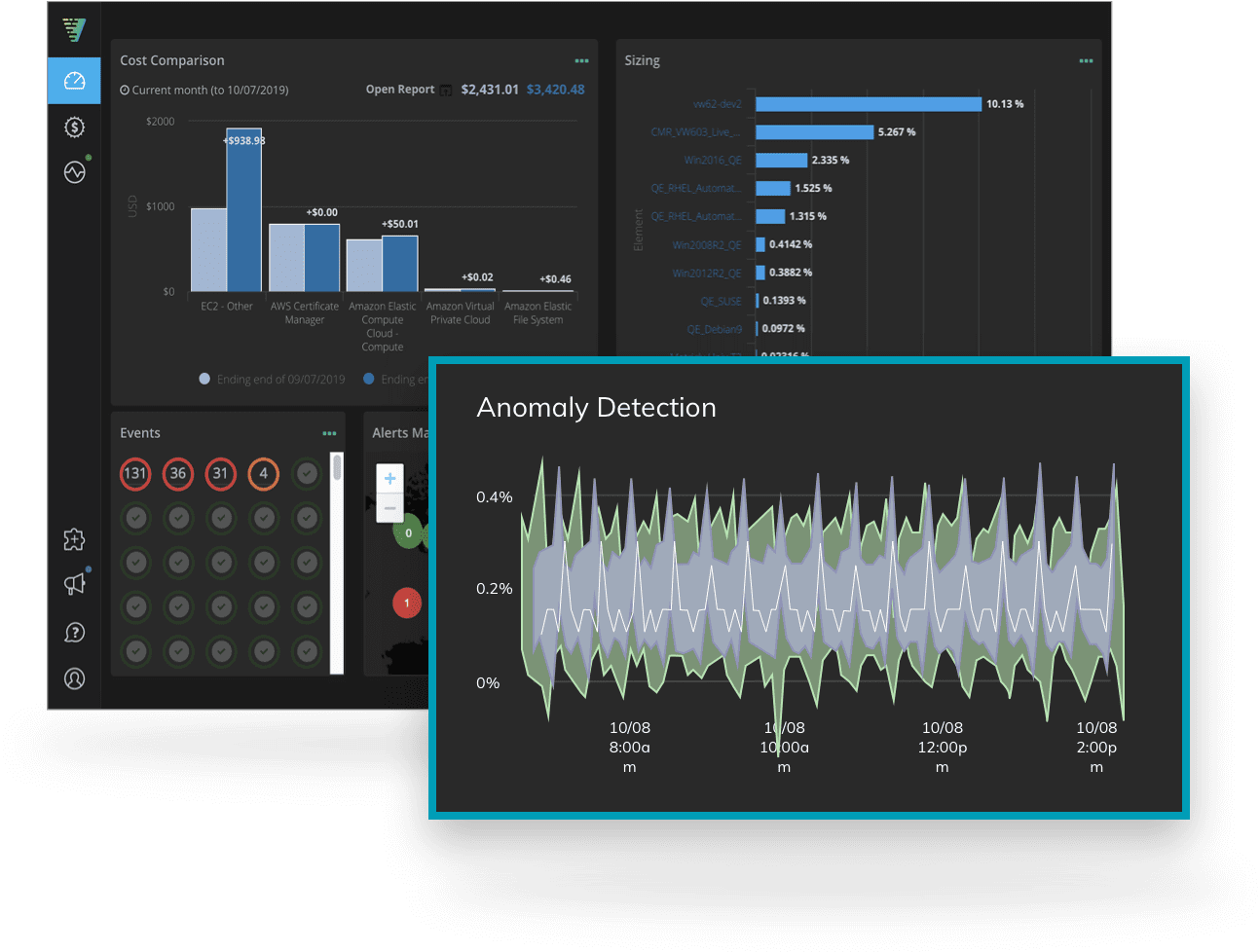
    The company’s CloudWisdom platform is based on technology Virtana gained via the acquisition of Metricly earlier this year. In addition to being integrated with existing on-premises offerings from Virtana, CloudWisdom has been expanded to include a self-service option. Downloadable trial versions are also available.

    Virtana CEO Philippe Vincent said the name change reflects a transformation from being simply a provider of storage I/O performance testing tools to becoming a provider of an IT operations management platform infused with artificial intelligence (AIOps). As part of that effort, the CloudWisdom offering represents the first time Virtana has extended the reach of its offerings beyond on-premises IT environments, he said.

    CloudWisdom will differentiate itself, Vincent said, because it combines cloud monitoring with built-in tools for optimizing cloud costs. Rival offerings require IT organizations to acquire two separate services, he noted. The CloudWisdom platform monitoring capabilities span databases, messaging platforms and containers, as well as cloud infrastructure services from Amazon Web Services (AWS) and Microsoft.

    In general, Vincent said IT organizations are moving away from a reactive approach to managing IT to a more proactive approach that will require increased reliance on automation. As IT environments become more complex, too many IT organizations are trying to compensate by overprovisioning IT infrastructure resources to make sure application performance doesn’t deteriorate or applications crash. That approach not only drives IT costs higher, he said, but it also makes those costs unpredictable.

    To address that issue, Virtana is combining CloudWisdom with an AIOps platform designed to be equally applicable in legacy IT service management (ITSM) and emerging DevOps environments. Organizations that have adopted DevOps will be at the forefront of the transition to AIOps because of the inherent fluidity and velocity of those environments, Vincent noted. Machine learning algorithms coupled with real-time monitoring, big data analytics, workflow engines and automation frameworks will enable IT teams to streamline ITSM and DevOps processes to become more efficient. The opportunity for Virtana is to disrupt a highly fractured monitoring category by leveraging AIOps to unify monitoring at an unprecedented level of scale and scope, he added.

    Virtana is not the only IT management platform provider that has identified the same opportunity; much larger incumbent providers of these platforms and a raft of startups are moving in the same AIOps direction. Vincent said Virtana will differentiate itself by pursuing a more application-centric approach to delivering on the promise of AIOps.

    It’s too early to say to what degree IT operations can be automated using AI. There’s general agreement that AI will play a significant role in automating IT, and the more standardized the IT environment is, the easier it is to accomplish. The challenge is, most IT environments today are still anything but standardized.

    — Mike Vizard

  • What is so Special About AIOps for Mission Critical Workloads?

    What is so Special About AIOps for Mission Critical Workloads?

    As the wave of digitization sweeps more enterprises with each passing day, the threats posed to organizations, particularly IT organizations, have never been more complex and pressing. With cybercrime statistics, including those for more targeted crimes (such as phishing) pointing towards an alarming frequency of attacks, the stakes for securing enterprises have been higher.

    However, many IT organizations have been unable to smoothly transition into pushing the digitization of their organizations forward. This inability to support and drive digital transformation isn’t a result of a lack of effort on behalf of these organizations. Instead, it has everything to do with the unavailability of the proper management tools needed.

    Unfortunately, many IT organizations lack the tactics and tools needed to overlook the smooth shift to digitization on such a grand scale, which often leads to the degradation of critical business applications, along with IT slowdowns and outages. Luckily, however, artificial intelligence for IT operations (AIOps) arrives like a beacon of hope for revolutionizing IT application, along with increasing business agility.

    The Failure of Enterprise in Tackling the Burgeoning Complexity of IT Infrastructure

    A primary reason behind the ever-present issue of IT slowdowns in enterprises and organizations that is frequently overlooked is the fact that the customer-facing side of IT (applications) is growing increasingly complex with each passing day.

    As the increasing number of applications continue to occupy more and more space, the IT infrastructure grows into a vast and hybrid structure which often spans across multiple clouds on a grand scale.

    Although the vastness of the IT infrastructure is a byproduct of the digitization drive taking enterprises by storm, it is still worlds away from the security infrastructure of yesterday, which was much easier to manage and analyze.

    From the Internet of Things (IoT) connecting thousands of devices onto an organization’s network to complex issues such as bottlenecks, application slowdowns and outages, along with performance latency and the ever-present threat of phishing attacks via a free host website (000webhostapp, being the most commonly used host), organizations are just setting their systems up for failure at some time in the foreseeable future.

    Owing to the flourishing complexity of the IT infrastructure, an organization’s system fails to cope with new, dynamic workloads for any multitude of reasons. Usually, the system is utilizing extra resources or is under the influence of a recent addition to the system.

    In instances of outages or IT slowdowns, the pressure to fix the IT infrastructure falls on the IT team, who are tasked with the immense responsibility of analyzing and diagnosing the issues as they occur in real-time, along with coming up with a solution that satisfies customers and prioritizes the business aspect of an organization as well.

    Unfortunately, however, without access to the proper tools and techniques, the IT team can only conjure security patches that resolve the problem for the moment but fail to withhold security in the long run. Also, without the ability to effectively predict a pattern for the ever-present security threats, the IT team is operating on a whim rather than basing their solutions on the rationale.

    How Can AIOps Help the Situation?

    To leave the momentous challenge of perfecting an organization’s IT infrastructure solely on the IT team is not only outdated, but it is also impractical. Taking into consideration the complexity of the threats facing enterprises, a solution that arches above each aspect of cybersecurity in an organization should be implemented.

    Today, that solution arises in the shape of AIOps. The hybrid IT infrastructure has become too complex to be handled through traditional tools and tactics, which is why AI, along with machine learning and automation, has to step in to bridge the gap.

    Unlike other security strategies, AIOps integrates a wholly modern and unique approach, which allows for the AI to view systems in terms of business outcomes. Simply put, rather than analyzing and diagnosing identities, infrastructure and applications independently, the AIOps platform follows the path taken by the user into the complex IT infrastructure and back out of it.

    Ideally, AIOps platforms run automated investigations that derive the root cause of existing and recent issues on a regular basis. When it comes to managing a business-critical application, an AIOps platform can detect an unusual response within the system, whether it’s an anomaly in a workload profile or variant response to critical workload.

    Other benefits to incorporating AIOps as a security tool include tapping into the truly unique set of capabilities offered, including predictive capacity management and forecasting/predictive abilities. The predictive ability of AIOps allows for the AI to smartly notify IT teams about any attack or potential outage, or slow down, before they actually happen so they may act accordingly.

    By taking a different approach to the pressing issues faced by enterprises today, AIOps manages to do what several security strategies have failed to accomplish—provide organizations with an end-to-end, app-centric approach to security, which also takes into consideration the context at hand.

    Moreover, AIOps will push organizations to shift their focus from reactive problem solving and cause them to optimize their IT infrastructure on a more proactive basis. Fundamentally, AIOps provides IT teams with the necessary tools to diagnose and combat both internal and external threats to an organization’s security infrastructure.

    After the integration of AIOps within an organization’s infrastructure, enterprises can turn their attention into optimizing the balance of critical workloads, along with prioritizing business functions and improving applications, rather than worrying about security.

    What Hurdles Can Enterprises Expect with AIOps?

    Despite the countless benefits AIOps brings to the table, certain obstacles arise when it comes to the implementation of the security model into organizations.

    Perhaps the most apparent obstruction organizations have to deal with is the extensive amount of time investment AIOps requires. Like every other security tool centered around an AI or machine learning technology, time is absolutely pivotal for the learning to actually take place. A simple way to smoothen the transition, AIOps must be fed with data, statistics and analytics originating from multiple data centers.

    Another common issue that arises, mainly because of a lack of research, is when an AIOps platform fails to perform as per the specific requirements of an enterprise. Keeping this in mind, CIOs must voice their concerns about fine-tuning AIOps before committing to a vendor.

    AIOps abilities in performing an in-depth analysis into the IT and security infrastructure—within the context of the applications it performs—gives the unique chance to stay ahead of the threats they face.

    — Rebecca James

  • Continuous Optimization: An Idea Whose Time Has Come?

    Continuous Optimization: An Idea Whose Time Has Come?

    Agile makes development deliver code faster. CI makes testing move faster and CD makes delivery faster, but what keeps track of the volume of change all of this introduces and delivers optimizations faster?

    That is the question Opsani wants you to be asking. And it’s a valid question. Optimization in a complex and constantly changing software world becomes more important–if it can keep up. Opsani thinks it can, with a little AIOps to help anyway.

    The premise is simple. There are ways to adjust the environment that might increase performance and/or reduce costs. Those ways are individually relatively simple (such as JVM settings or cloud instance sizing), but combined they make a complex web that impacts performance as a whole, with individual bits sometimes helping and sometimes hurting.

    Up JVM memory on a large instance and it might help. Switch to a smaller instance later, and that JVM change may cause problems on the smaller footprint, for example. So something more dynamic is needed. As code changes, best optimization options might change also. As the other parts of the environment change, that magnifies the concern that applications are not running at their best and might be costing too much money.

    Opsani’s answer to this problem is continuous optimization. Using AIOps to check different combinations of settings at a rate that operations staff couldn’t manage even if they did have the time. And they generally don’t.

    From my (not their) perspective, there are two pieces to this puzzle. First is gathering inputs and determining performance, second is tweaking settings. Then repeat. Seems simple but the environment continuous optimization would work in is increasingly complex. Any look at how many places optimization can occur in a given environment–from VM/Instance to code to network to management platform to storage/database choices–there is a lot going on, and all of these settings can impact each other.

    Hence the idea of continuous optimization appeals to me. They’ve got the interfaces that one would expect to gather inputs, names such as Jenkins, DataDog and New Relic. They’ve got the interfaces to enact and test out changes too, with interfaces to products such as Kubernetes, Terraform, Rancher and Wavefront. So it certainly appears they’ve got the basics covered. Of course there are vendor interfaces I’d like to see that aren’t in the list of integrations, and no doubt the same is true for you. But the core is here, getting to the monitoring and management tools most companies use regularly.

    Opsani seems to be aware of the different comfort levels of various organizations, also. Able to run in dev or test as well as production. Since every organization has a different taste for putting new ideas into production, this is a good idea, though personally I would aim for eventual production rollout, just because that is where the rubber meets the road. Having it running as part of normal operations means even that small change that reduces responsiveness of your application by 25% (we’ve all seen it) will be detected, and Opsani can try changing some of the environment to compensate.

    When I spoke with them, we did not discuss cost, but we did discuss savings. For budget-sensitive environments, it is worth looking into the cost in your organization versus the potential savings in actual monthly dollars. Here is a screenshot showing the cost measure combined with the performance measure. Reducing monthly overhead to pay for a tool that also improves performance might just be a no-brainer–if it suits your environment.

    I can’t say if it suits your environment, nor can any other analyst/pundit. That’s for your organization to decide. But the idea of continuous optimization is a good one. Opsani is not alone in working on this problem, so even if this particular tool doesn’t suit your needs, you can look for others that do. I recommend getting the demo and seeing what they’ve got, and how it might help in your environment.

    — Don Macvittie