Category: AI

  • Techstrong Research DevOps Radar Report 2022

    Techstrong Research DevOps Radar Report 2022

    You can’t control the pace of change; instead, consider that we are in a process of reinvention—both with regard to the way organizations use technology and how vendors position their offerings. At the same time, it’s never been more important for IT organizations to have complete visibility into the way technology is used from both a security and operations perspective. 

    This need to embrace reinvention while continuing to have broad and deep insight across all technology platforms led me to create a 2022 DevOps Radar Report. In this article, I highlight three near-term priorities that must be on every technology team’s radar. In addition, I’ll point out some long-range radar trends that should be on your agenda.

    Collision Warning! Your Current Radar View

    API Security

    APIs are the lifeblood of the cloud-native and app-based economies. Increasingly, poor API security across a variety of applications and systems puts your organization at risk. A compromised API or the use of unsupported or outdated APIs can prove to be an easy attack vector for cybercriminals. In addition, API vulnerabilities are calling into question how organizations approach application security and the usefulness of web application firewalls (WAF) and encryption protocols. Therefore, API security is rapidly becoming a top security priority for enterprise security teams and software professionals. 

    Failing to adequately manage the security of APIs creates a host of new challenges and questions that you must consider. For example, who is using which APIs? Are your APIs updated? Did your DevOps team evaluate the security of your APIs during their selection process? Have you formalized the way your organization is evaluating API security?

    It is increasingly clear that an API breach can lead to the downfall of your entire digital software strategy—but it doesn’t have to be this way.

    At Techstrong Research, we segment the market into “pure-play” API security vendors and larger security vendors with specific API security offerings. Our team will be publishing a Market Vista report on the API security landscape soon, so if you want to share your opinion or thoughts, please reach out.

    Below is a brief list of some of the vendors we are tracking in the API security market. Of course, expect consolidation—some of these pure-play vendors will likely be acquired in 2022.

    Pure-play API security vendors we’re tracking include:

    General security vendors with API security offerings that we’re tracking:

    Observability is Evolving to AIOps

    Modern applications are composed of containers and APIs that your organization can’t control, and into which visibility is difficult. Monitoring and application performance management (APM) solutions aren’t new; for many years log vendors built their businesses on collecting log files and sending alerts … so what’s changed?

    First, logs without context are meaningless. You need to understand upstream and downstream dependencies. Additionally, speaking for myself, I’m a mere mortal—if your teams are also made up of mere mortals, there is no way they can ingest, correlate and understand the tsunami of incoming DevOps log data quickly enough to take proactive measures.

    Besides the need to understand context, we are dealing with multiple cloud and on-premises platforms that each have their own logging protocols. Ultimately, the goal of observability and AIOps is to understand what’s happening across and among all these environments and technologies so you can detect and resolve issues as quickly as possible to keep your systems efficient and reliable and your customers happy. 

    Humans are the Biggest Security Vulnerability

    As an industry analyst, I see our clients pouring resources into cybersecurity efforts to prevent zero-day attacks and sophisticated advanced persistent threats (APTs). These threats, while real enough, are mostly external and may not pose as great a threat as many organizations believe. In fact, the vast majority of security vulnerabilities are caused by:

    • Well-meaning employees making innocent mistakes, including:
      • Falling victim to phishing attacks
      • Poor corporate password policies
      • Cloud misconfigurations and open ports
    • Technical debt—relying on older software and hardware that was never designed for a 100% mobile workforce, for example

    The first step in combating this problem is improving security awareness and building a cybersecurity culture. That starts with everyone in your organization understanding that security is a team sport and that it is a 24/7/365 responsibility. Even if you work from home; even when you’re cooking dinner while checking email on your phone, you need to have your “corporate security/Is it safe?” hat on.

    At the same time, machine learning, AI and automation have a role to play. There are emerging offerings that help enforce DevSecOps best practices and help security teams reduce the constant noise so they can focus on the most vital threats.

    Longview Radar: Plan Your Strategy Now

    To support emerging business models, what do DevOps leadership teams need to be thinking about from a long-term perspective?

    • Web3/Web 3.0 and the potential for change to the internet business model. But there is still a ton of opportunity with Web 2.0.
    • How will you support low-code/no-code? As a business model, vendors are selling directly to business units—it’s likely that your IT team has an existing solution to solve the business pain point(s).
    • Packaged software offerings that include blockchain, NFTs and other digital ledger technologies.
    • How to upskill teams, both from a technical perspective and a business perspective.
    • Providing developer teams with the tools they need while establishing guardrails to enforce governance and compliance requirements.
    • How to manage cloud costs in a predictable way no matter how many cloud vendors your organization uses.

    Conclusion: You Can’t Put the Brakes on Change

    Attempting to control change and the speed of reinvention is futile. You need to get comfortable riding the waves of industry change, or you’ll be swept away! Every IT leader needs to learn how to roll with and manage the ebb and flow of business, IT and personnel change.

    The best place to start is by building a successful culture within your organization. Although we often talk about technology-focused solutions to business problems, the first step on this journey doesn’t involve tech at all; it involves helping IT and business teams understand each other’s pain points and learn how they can each support a continual reinvention process.

    I will be tracking these incoming radar targets and other associated trends throughout the year and I look forward to your input. Do you think I missed something? Have a question or want to share what your organization is doing to support the need for continual reinvention? 

    Feel free to engage with me – @DDKirsch, LinkedIn or, of course, email. 

  • Google FLoC is Dead | Meta AI Supercomputer Lives | ARM Deal is Dead

    Google FLoC is Dead | Meta AI Supercomputer Lives | ARM Deal is Dead

    Welcome to The Long View—where we peruse the news of the week and strip it to the essentials. Let’s work out what really matters.

    This week: Google’s FLoC proposal is dead, Meta/Facebook is buying RSC—a huge AI supercomputer, and Arm “will IPO” instead of selling to Nvidia.

    1. Forget ‘Federated Learning of Cohorts’—Long Live ‘Topics’

    First up this week: Google bows to the inevitable. Third-party cookies will soon go away, because people are fed up with being tracked. But Google’s FLoC proposal wasn’t the answer.

    Analysis: FLoC is a flop

    Google doesn’t want to invade your privacy. But Google does want to sell well-targeted ads. The key difference between FLoC and Topics is that FLoC buckets were automatically generated—and hence opaque, risking overlap with “protected categories”—e.g., race or gender. But the topic classifications in the Topics API are curated and have user-visible, descriptive names.

    Frederic Lardinois: Google kills off FLoC, replaces it with Topics

    Google’s controversial project for replacing cookies for interest-based advertising … is dead. In its place, Google today announced a new proposal. … Your browser will learn about your interests as you move around the web.
    …
    When you hit upon a site that supports the Topics API for ad purposes, the browser will share three topics you are interested in. … The site can then share this with its advertising partners to decide which ads to show you. … Users will be able to review and remove topics from their lists [or] turn off the entire Topics API.
    …
    It’ll remain to be seen if other browser vendors will be interested in adding the Topics API. [But] they all quickly turned a cold shoulder to FLoC. … The plan is to start trialing the Topics API at the end of this quarter.


    A minor tweak and rename? “Yes and no,” equivocates mananaysiempre:

    Yes, it still amounts to building user-tracking functionality into user agents. No, it’s not the same approach.
    …
    FLoC was doing unsupervised clustering of users, whereas Topics allocates users into predetermined clusters. This makes it potentially more transparent and also seems designed to work around the “protected categories” objection.


    But Google has a long way to go to convince garett_spencley:

    I’m glad FLoC is being ditched, but as an end-user I’m still not asking for this Topics nonsense. It doesn’t solve any problem that I have. It solves problems that the advertising industry has.
    …
    I’ll choose to use browsers that don’t support this.


    2. Machine Learning at Metaverse Scale is Expensive

    Zuckerberg’s new toy is RSC: A $400 million Nvidia-based AI supercomputer. And that’s just Phase One.

    Analysis: 3.8×10¹⁸ integer operations per second is … a lot

    If you rely on Open Compute Project systems for your DevOps, know that it’s no longer the bee’s knees over at Hacker Way. Meta/Facebook is investing eye-watering sums into a custom configuration of off-the-shelf hardware.

    Timothy Prickett Morgan: Meta Buys, Rather Than Builds And Opens, Its Massive AI Supercomputer

    If you thought it took a lot of compute and storage to build Facebook’s social network, you ain’t seen nothing yet. … To build the Metaverse … is going to take an absolutely enormous amount of supercomputing power.
    …
    But what is a surprise, given Facebook’s more than decade long focus on … opening up its hardware designs through the Open Compute Project, is that the … Research Super Computer [RSC] system is built from … commercially available … servers, storage, and switches. [It] probably comes down to … working a deal with some vendors who want the Facebook publicity and are willing to work the price and the parts availability.
    …
    [So Meta bought] 760 DGX A100 systems from Nvidia—which each … have a pair of AMD “Rome” 64-core Epyc 7742 processors … 1 TB of main memory … eight A100 GPU accelerators [and] eight 200 Gb/sec HDR InfiniBand controllers—all-flash storage from Pure Storage, and … caching servers from Penguin Computing. … At list price this machine would cost around $400 million … Phase one of the RSC machine is rated at 59 petaFLOPS … (FP64), and 118.6 petaFLOPS FP64 using the Tensor Core matrix engines. … With INT8 processing on the Tensor Cores, which is needed for AI inference, the phase one machine is rated at 3.79 exaOPS.


    How much??? It doesn’t seem like news to kleiba:

    I used to work at a university where my professor had been in automatic speech recognition for a long time, but basically gave up on that line of research about 10 years ago because he figured that universities simply cannot compete budget wise with the big industry players. I suppose the same will soon be true for most ML-related areas of research sooner or later.
    …
    Already, a substantial amount of research innovation in [Natural Language Processing] and [Computer Vision] has been coming from big companies in recent years. Of course there is a discussion to be had about what that means for society at large.


    But 3.79 exoOPS? That’s the way the wind is blowing, according to sungazer:

    Give it 15 or so years—this level of computation will be on your desktop. If desktops still exist.
    …
    Or desks.


    3. Arm Bid: No Legs

    Speaking of Nvidia, as I’ve said before, the Arm merger really shouldn’t go through. And it’s looking less and less likely. ARM chips are an increasing fixture in the data center—especially those that value “performance per Watt.”

    Analysis: ARM M&A DOA—IPO PDQ

    A veritable hornets’ nest of Bloomberg journalists have put their names to an anonymously-sourced report. The story argues that the proposed Nvidia buyout of Arm from SoftBank Group is dead. Next stop: IPO.

    Ian King, Giles Turner, Peter Elstrom, Dina Bass, David McLaughlin, Ruth David and Dinesh Nair: Nvidia Quietly Prepares to Abandon … Arm Bid

    According to people familiar with the matter … Nvidia … doesn’t expect the transaction to close. … SoftBank, meanwhile, is stepping up preparations for an Arm initial public offering.
    …
    If Nvidia manages to get the deal over the line, it would be a massive coup. … But it will be an uphill fight. … The world’s biggest tech companies rely on Arm technology, and they fear they could lose unfettered access under Nvidia.
    …
    Within SoftBank, there are factions. [And] the ordeal has created divisions within Nvidia. … “We remain hopeful that the transaction will be approved,” a SoftBank spokesperson said in an emailed statement.


    Post-Brexit Britain would no doubt like to keep Arm independent. Here’s simonh:

    Arm has I think ⅔ of its employees in the UK—mainly Cambridge—and they’re expanding the campus there. The Semiconductor Physics Group at the Cavendish Laboratory at the University is at the cutting edge globally with 18 PhD projects currently.
    …
    Guess where scads of Arm’s top scientists are recruited from? Arm and the University are joined at the hip. That company’s not going anywhere.


    More broadly, it’s good news, thinks hatchet:

    Hopefully this means NVIDIA will focus on RISC-V instead. This will be good for everyone.


    The Moral of the Story: Zeal should not outrun discretion.


    You have been reading The Long View by Richi Jennings. You can contact him at @RiCHi or tlv@richi.uk.

    Image: Reed Geiger (via Unsplash)

  • Investing in Artificial Intelligence: How MLOps Drives Enterprise AI Wins

    Investing in Artificial Intelligence: How MLOps Drives Enterprise AI Wins

    Insight Partners had a banner year in 2021, with more than $50 billion in capital commitments across over 200 investments. While we invest in founders across a wide spectrum of businesses, this series focuses on outlining our theses on four verticals that we’re particularly excited about in 2022: Artificial intelligence (AI), fintech, cybersecurity and healthtech. 

    Artificial intelligence has remained a super-hot category for good reason: It has the potential to transform nearly every industry and business.

    At Insight, we’ve long been bullish on the many use cases for AI. In the past year, we’ve invested in image recognition software from Netherlands-based ScreenPoint Medical, which improves early detections of breast cancer, Covera Health, which provides a quality analytics platform to reduce medical errors in radiology, CARTO, which helps companies use and understand spatial analytics, and Laminar, a cloud data security platform to continuously monitor and protect against data leaks – among other game-changing companies.  

    In total, Insight invested in 49 different companies across a broad spectrum of artificial intelligence and machine learning use cases in 2021, which represents a 172% increase from the year prior.  

    As we look ahead into 2022, we expect artificial intelligence tools to continue to dominate. We see the ecosystem dividing into three primary categories:  

    • Layer 1 – Base platform companies: Algorithms; frameworks; infrastructure and workbenches for creating ML systems   
    • Layer 2 – Cross-industry capability companies: Turnkey machine learning-based systems that solve specific problems spanning multiple industries (e.g., cybersecurity)  
    • Layer 3 – Industry-specific companies: Applications powered by prediction or classification systems that target specific, niche use cases in one domain    

    Companies and investors will find valuable AI/ML software across all three layers. At Insight, we initially focused on layers two and three. We invested in startups creating robust ML systems that addressed specific problems, either vertically (like credit underwriting company Zest AI) or horizontally (like cybersecurity company SentinelOne). We thought that economic moats were hardest to build at layer one; in part as a result of robust open source ecosystems and because large public cloud vendors deliver many of these tools at low prices.

    Insight Partners’ three-layer framework of machine learning companies

    Throughout this year, however, we realized we were missing a piece of the puzzle. While there will always be market demand for cross-industry capabilities and industry-specific applications, 2021 taught us that as companies try to productize AI for the first time, base platforms will become increasingly important as well. 

    After all, more companies than ever are charging forward on artificial intelligence projects to try to guide business decisions and save time and money. A whopping 90% of enterprises are either actively running AI projects or plan to in the next 12 months, according to a recent survey.   

    But here’s the catch: Most of these projects will fail.  

    There are many reasons why including a lack of sufficient data or black-box models that spit out indecipherable results. Regardless of the reason, high failure rates can hurt the ecosystem if they result in corporations’ hesitation to move forward with future AI projects.  

    Accordingly, Insight is particularly excited about a subsection of AI tools that can significantly increase companies’ likelihood of succeeding at their project goals: Machine learning operations, or MLOps. 

    MLOps tools can improve a machine learning pipeline from start to finish by helping gather, manage and label data, experiment and test the model selection, deploy multiple models in production at once and protect against model and data drifts and attacks. 

    Holistically, the goal is to improve communication and collaboration between data scientists, data engineers and business analysts through the machine learning life cycle, similar to how DevOps tools help improve communication in the software development life cycle. Machine learning is an iterative process with constant feedback loops and the need for continuous monitoring, which makes MLOps tools to manage this process even more critical. 

    Overview of some of the key areas of an MLOps pipeline

    While every company rolling out AI projects can benefit from MLOps, the type of tools they require will depend on their needs, resources and strategies.   

    Companies should ask themselves: How sophisticated is our data science team? How mission-critical do we want our models to be? Are our data sources structured or unstructured? Do we want open source, commercial or homegrown tooling?   

    The answers to those questions will point companies to specific MLops tools that are best suited for their specific challenges. 

    For example, some platforms—like Dataiku or DataRobot—are end-to-end products with wide capabilities, which are typically easier to use and thus encourage model creation and experimentation from workers across job functions, regardless of technical knowledge. These so-called ‘citizen data scientists’ can boost analytic workflows for companies with fewer data science experts and create significant value, but there’s a risk that the deployed models are not as well understood or controlled. These types of tools are best for companies that want to use machine learning to drive business insights and analytics rather than as part of their core business function.  

    If a company has a sophisticated data science team, however, it may lean toward specific point solutions, or what Insight calls best-in-class MLOps solutions. While these products require greater technical knowledge to maintain and deploy, they allow for much more control, depth and sophistication in a system. One startup offered the apt analogy that using platforms versus best-in-class solutions is like driving an automatic car versus a stick shift. 

    There are multiple MLOps tools for each part of the pipeline, and we see a world where each tool has enough market space to support it becoming a large company. 

    At Insight, we spent 2021 learning about and investing in many of what we consider to be the best-in-class MLOps tools, as determined by highly satisfied customer feedback, clear market momentum and well-respected and knowledgeable teams. This perspective led to our investments in Explorium, Rasgo, Weights & Biases, Deci, Run AI, Fiddler, Tonic, Dataiku and Databricks, as well as several others that have yet to be announced. 

    Insight Partners’ MLOps market map 

     While Insight expects MLOps to continue to be an essential driver of AI success in the new year, we also expect to see several other trends take shape in 2022:  

    • First, we will see the emergence of two machine learning pipelines, one for structured and one for unstructured data. Unstructured data sources—like images, videos and audio—require specific data warehouses, data management, pipelines and model management tools that maximize productivity and accuracy. Given the nuances and complexities between the two data types, we expect to see more MLOps tools shift toward owning their category for one or the other. 
    • As enterprises scale from dozens of models to hundreds or even thousands of models, we expect the increased industrialization of AI. This will result in the rise of orchestration layers that sit on top of machine learning pipelines to help manage all the different tooling. These layers will integrate across multiple tools in the ML pipeline—whether open source, commercial or homegrown—and provide an integrated environment (or so-called “single pane of glass”) to better track and manage ML pipelines. Orchestration layers will help enterprises gain more control over their pipelines while still supporting best-in-class tools. 
    • Insight believes we are at an inflection point of moving from a model-centric to a data-centric world. In a model-centric approach, you ask how you can change a model’s code to improve the performance of the system, whereas, in a data-centric model, you ask how you can change the data to improve it [system performance]. We expect the most successful tools of 2022 to be focused on supporting the new tasks, workflows, and jobs spawned by the data-centric movement.
    • We will also see a new class of MLOps tools focused on closing the growing AI skills shortage and gap across businesses. These tools will focus on increasing the efficiency of the model production process and lower the bar for ML development.
    • Finally, we expect to see a significant increase in the overall enterprise adoption of ML, with a shift from experimentation to deploying models in full production. Last year, we saw many enterprises form AI research teams and hire data scientists to experiment with machine learning. In 2022, we believe these enterprises will start realizing the full capacity of their AI projects and driving significant business value. This increase in enterprise adoption will also be driven by the explosion of edge devices that will enable new use cases of ML adoption. 

    As active machine learning and artificial intelligence investors, we are excited to continue to watch the market and support new entrants in what will surely be another dynamic and exciting year. 


    George Mathew, Lonne Jaffe and Sophie Beshar co-authored this piece.

  • AI: It’s What Staff Crave!

    AI: It’s What Staff Crave!

    If you’ve seen Idiocracy (Side note: I am not recommending the movie; I’m using a phrase from it we’ve all heard. The movie itself was a comedy not at all meant to be family-friendly when it was made, and changes in social mores since its 2006 release make it far less acceptable today), you are familiar with the title phrase I’ve used here. That’s what is repeated almost religiously to justify why they buy/use/drink Brawndo, an energy drink.

    One of the scenes involves people telling the star that plants need Brawndo—“It’s got electrolytes … That’s what plants crave!” This is repeated over and over until he asks, “What are electrolytes?” After some stuttering and failures to answer, someone says, “It’s what they make Brawndo out of.” Someone else inevitably tacks on, “It’s what plants crave.”

    Now, substitute “AI” for “Electrolytes”. That’s where we seem to be. Ask a vendor what algorithms they’re using, where their training data comes from, the difference in results between the test reservations and the real world. Most will end up saying a lot, not answering your questions and ending with, “It’s what staff crave!” or some such.

    A few companies will lay it all out there, assuming you can parse through the information and are familiar with the AI training algorithms they are using or the algorithms they’re using to classify inputs against the dataset. And these companies are grand because they (a) know what they’re actually doing beyond “It’s got AI/ML, it’s what staff crave,” and (b) Expect that you are knowledgeable about the data you’ve asked for or are capable of looking it up in this age of wonder that has boundless information at your fingertips.

    Don’t let your vendors get away with just repeating “It’s got electrolytes” over and over. AI and ML are a massive help in some areas, but they’re not yet a panacea and success rates vary wildly whether we’re talking problem domains, datasets, algorithms, training style, etc. Make them tell you the details. Where the data comes from and how big that dataset is. How much was reserved for testing and whether it was reserved randomly. Ask them what they hope AI will achieve, then ask them how that correlates to human interaction. Most AI today is still evaluating or replicating human interactions with something—most AI in IT particularly so. What algorithms were used to validate? And finally, make sure to ask for real-world results. I know people in data science and one has confidently said to me, “My models are 95% accurate.” When I finally dug into that claim (because my experience is that real-world use of AI/ML is almost never that accurate) it turned out that claim was true … for the reserved test data. So, the same dataset used to train got the same results on the reserved subset. That’s a good thing, but it is no indication of how said algorithm will do in the wild with unfiltered data. The big problem really is the switch from test data to real-world data.

    In fact, in IT, we are a little better off than most spaces wrestling with AI/ML, because very often there is no difference between test and training data in IT. A network security vendor will test against actual traffic—because they have access to massive volumes of it and it shortens the iterations to use what’s at hand and what the system is being trained for.

    And keep rocking it. The current iteration of IT is the opposite of the dark comedy future depicted in Idiocracy. You all are putting up systems and keeping them running at increasingly fast cadences; sometimes remotely because of COVID-19 or other work-related issues. Don’t stop turning out success for your coworkers and customers and take a moment to force vendors to explain what they’re doing with AI. If you’re a generalist like me, ask over email, though, so you can go look up the answers and make sure you understand the details.

  • Zoom-Layoff CEO is Back | Bill Bans Targeted Ads | More FAA 5G Stupidity

    Zoom-Layoff CEO is Back | Bill Bans Targeted Ads | More FAA 5G Stupidity

    Welcome to The Long View—where we peruse the news of the week and strip it to the essentials. Let’s work out what really matters.

    This week: The return of the CEO who fired 900 staff on a Zoom call, Capitol Hill has a bill to kill ads, and a last-minute hiccup in the FAA/FCC 5G truce.

    1. Better.com CEO will Try to Do Better

    First up this week: Better.com, the DevOps-led mortgage lender, has its old CEO back. You probably remember Vishal Garg—he was the character who laid off 9% of his company on an open Zoom call.

    Analysis: Can leopards change their spots?

    Mr. Garg is being asked to help build “a respectful workplace.” But the famously combative CEO recently called investors “sewage,” threatened remaining employees with a “bloodbath,” and allegedly told a former business partner he would “burn him alive.”

    Riley de León: Better founder Vishal Garg … returns as CEO

    The move comes less than two months after Garg came under fire for laying off roughly 900 employees, or 9% of its workforce, via Zoom and subsequently stepped back at the request of Better’s board of directors. … According to an internal memo: … “CEO Vishal Garg has been taking a break from his full-time duties to reflect on his leadership, reconnect with the values that make Better great and work closely with an executive coach. … We are confident in Vishal and in the changes he is committed to making to provide the type of leadership, focus and vision that Better needs.”
    …
    The memo also reveals that board members Raj Date and Dinesh Chopra have resigned, though “not because of any disagreement with Better.” … Garg [had] cited market efficiency, performance and productivity as the reason behind the firings. [He later] accused the employees of “stealing” from their colleagues and customers by being unproductive and only working two hours a day.
    …
    In May, Better announced that it would go public. … Since then, multiple outlets have reported that Better has delayed its listing plans amid ongoing scrutiny.


    With a reminder, here’s Emma Goldberg:

    “If you’re on this call you are part of the unlucky group that is being laid off,” Mr. Garg told his workers [via Zoom]. “Your employment here is terminated effective immediately.”
    …
    Better.com has since conducted a “thorough, independent” review of its culture [and is] recruiting a new chairman for the board, a president and a chief human resources officer. … Some of the additional measures … include a training program on building “a respectful workplace” and a new ethics and compliance committee, reporting directly to the board.


    Don’t hold back—tell us how you really feel, @PCSAemilianus:

    What an utter pile of bull**** from this guy. He knew damn well what he was doing and didn’t care. You don’t “reflect” on that.


    2. Banning Surveillance Advertising Act

    Dems want to ban targeted ads. A new bill would outlaw the sort of adtech that Google and Meta/Facebook have turned into an art form. It would also put the kibosh on data brokers’ business models.

    Analysis: Expect Google and Facebook to fight like Spartans

    This will be an uphill battle. But it’s one that’s worth fighting: Surveillance capitalism has gotten normalized, but if consumers fully understood the extent of the privacy invasion, they’d rise up with flaming pitchforks in hand.

    Taylor Hatmaker: New privacy bill would put major limits on targeted advertising

    The Banning Surveillance Advertising Act, introduced by Reps. Anna Eshoo (D-CA) and Jan Schakowsky (D-IL) in the House and Cory Booker (D-NJ) in the Senate, would dramatically limit the ways that tech companies serve ads. … Targeting based on “protected class information, such as race, gender, and religion, and personal data purchased from data brokers” would be off-limits.
    …
    Sen. Booker called the targeted advertising model “predatory and invasive.” … Rep. Eshoo said, “This pernicious practice … fuels disinformation, discrimination, voter suppression, privacy abuses, and so many other harms.”
    …
    The bill would empower the FTC and state attorneys general to [levy] fines of up to $5,000 per incident for knowing violations.


    Trying to scan the bill, it’s Sam Biddle:

    A federal ban on surveillance advertising sounds like an extremely radical long shot. But I think the only people who would genuinely oppose it are the relatively small sliver of the population who make their money conducting the surveillance.
    …
    If it goes anywhere, get ready for a barrage of “this will literally murder small business owners” propaganda from FB/Google/et al. [It] is orders of magnitude more significant than any of the wishy washy We Can Reform Facebook! proposals you’ve seen in recent years, in terms of privacy and countering the power of big tech.


    Yay. Go GoTeam:

    Exactly! It’s the government’s job to secretly track us, not advertisers!(?)


    3. Last-Minute Hiccup in FAA/FCC 5G Truce

    A couple of weeks ago, I told you the FAA backed down in its opposition to 5G NR band 77. Well, a lot can happen in two weeks. It seems the airlines weren’t happy and demanded extra interference-mitigation from the mobile carriers at the last minute.

    Analysis: FAA vs. FCC: A plague on both their houses

    The various industries involved—and their regulatory agencies—have had years to sort this out. And it smells very much like the FAA is the one failing in its duty.

    Theo Leggett: Mobile firms agree another 5G delay at US airports

    The much-hyped expansion of 5G networks in the US has been chaotic, to say the least. The rollout has been delayed twice — and now AT&T and Verizon have bowed to intense pressure, agreeing to defer opening some parts of the network near airports.
    …
    There was clearly time to come up with a mitigation plan — and other countries have been able to do just that. The question is, why were US regulators, telecoms operators, airlines and airports apparently unable to come up with a workable solution?


    The FAA is “incompetent,” says David Von Drehle:

    5G — the long-promised next step in cellular technology. … It wasn’t a secret. … Yet it seems to have caught the FAA by surprise. … Various compromises and delays [have been] offered by the wireless industry — all met with last-minute panic-mongering by the FAA.
    …
    The FAA’s foot-dragging raises a red flag over the agency’s competence. … If a challenge as slow-moving and widely publicized as 5G can catch the FAA unprepared, it’s hard to be hopeful about smooth landings in … other areas … such as keeping up with pandemic health measures, battling unruly travelers and finding the next generation of pilots, flight attendants and air traffic controllers.


    Is there any doubt? No, opines @K0LWC:

    There is no doubt this is a colossal screw up by the FAA, and less so, the FCC. The 5G rollout and the bands being bid on were not a surprise.


    The Moral of the Story: The perfect is the enemy of the good.


    You have been reading The Long View by Richi Jennings. You can contact him at @RiCHi or tlv@richi.uk.

    Image: Jan Valečka (via Unsplash)

  • 2022 Predictions: AI, Security and Cloud

    2022 Predictions: AI, Security and Cloud

    It is difficult to find a single area of the technology landscape that isn’t incorporating artificial intelligence (AI) into products and services. As we move into a world where distributed computing is the norm for business operations, AI is a requirement given the increasing level of complexity in computing environments. While there are many different ways AI is penetrating computing, I think that there are a few specific areas where we will see a huge amount of growth in terms of innovation and investment. 

    AIOps will be at the forefront of monitoring and managing distributed computing environments.

    2022 will be a busy year for AIOps vendors and product offerings. Expect that, in 2022, you will see a massive number of large enterprise software companies bringing AIOps offerings to market—either as part of distributed computing management suites or as individual tools. In addition, there will be a flurry of well-funded startups entering the space. One of the first areas where AI models are productized is in the area of AIOps. AIOps provides the ability to apply machine learning models and automation based on data about the patterns and anomalies within IT operations. AIOps is an implementation of observability and helps businesses monitor and manage their IT environment based on collecting and managing data about operational patterns that are expected and correct. It also determines when there is an action that is outside of the norm, and provides either an automatic correction or offers IT operations management the ability to correct errors before they impact business operations. 

    Expect a year of consolidation in advanced analytics, security and solution clouds. 

    We’ve already seen 2022 kick off with a flurry of acquisitions. While we haven’t seen blockbuster buys, we have seen smaller acquisitions by big vendors that need more to sell their existing customer base. One exception is Alteryx, which purchased cloud-native analytics vendor Trifacta for $400 million in cash. In contrast, IBM recently purchased Envizi, an Australian data analytics firm focused on analytics for environmental, social and governance (ESG) requirements. This is just the beginning. We expect there to be a flurry of acquisitions in the hot observability market (solutions focused on analyzing how well the internal states of a system can be inferred from knowledge of its external outputs).

    As security continues to grow in importance, key emerging security vendors also will be hot commodities in the acquisition space. For example, Microsoft has acquired RiskIQ, a security software vendor focused on gathering threat intelligence about a wide range of cyberattacks across multiple public and private clouds. We also predict that many of the large cloud vendors will move aggressively to buy cloud business solutions.  

    Looking Forward

    It is easy to get caught up in the flurry of announcements and acquisitions coming at us fast and furious. However, the reality is that businesses need to know that whatever new shiny objects are introduced, these solutions need to be able to solve real customer problems that impact revenue and growth. It may sound obvious, but I think that vendors need to pay a lot more attention to customer pain. 

  • How AI Can Improve Software Development

    How AI Can Improve Software Development

    Change is constant and inevitable. While some changes are welcome, others are just a necessary evil. 

    Continuous calls for digitalization combined with a pandemic-prompted emphasis on transforming business operations, force organizations across industries to modernize their legacy systems. The emergence of cloud computing has shrunk organizations’ on-premise IT footprints. However, with 96 of the world’s largest 100 banks, 90% of the world’s largest insurance companies, 23 of the 25 largest retailers in the U.S. and 71% of the Fortune 500 still using mainframe systems, any modernization efforts—resulting in increased risk of downtime or defects—will frequently lead to disastrous consequences. 

    So, while making changes can be expensive, uncertain, and lead to customer loss and/or embarrassment in the marketplace, modern business demands that systems change to continue to deliver value. The problem with mainframe modernization, however, is that today’s code search tools, linters and program analysis tools are deficient when it comes to mitigating the risks associated with maintaining and improving systems. 

    Modernization: A Knowledge Problem

    With 10,000 mainframes in active use globally, the average organization annually spends anywhere from 60% to 80% of its IT budget just on maintenance. But, as experienced and proficient programmers retire or move on, many companies are realizing that the specialized domain knowledge of the industry and institution that those developers used to create and update these complex critical systems is walking out the door with them. 

    As the developers who originally wrote the code have long since moved on, and documentation leaves a lot to be desired, developers new to a system are unable to acquire comprehensive knowledge of the system’s functionality, at a detailed or fast enough level, to become adequately productive and proficient. That lack of speed comes with significant risk and cost to any organization.

    Recognizing the full and true intent of the functionality written in code is not simple. Developers today spend roughly 75% of their time searching through source code, to identify the code representing the functionality that needs to be changed. Complicating matters further, understanding the code is not enough. To effectively and efficiently maintain and support any system, software developers must know precisely what an application actually does—and how altering code in one part of the system impacts it as a whole. But since the code representing a behavior that needs to be changed can be littered throughout the system, developers might think they’re making a simple tweak, when really they may be breaking the entire system (and not even knowing it). The risk of change resulting in unintended consequences is real.

    All of that being said, how can developers improve their efficiency and effectiveness?

    The Shortcomings of Today’s Tools

    With code repositories growing unchecked over time to extraordinary sizes, those responsible for maintaining and preserving a system’s functionality say it’s becoming increasingly challenging to find bugs in code without machine assistance. And with debugging being an arduous, time-intensive endeavor, developers are increasingly turning to code search tools, linters, and static and dynamic analysis tools to analyze millions of lines of code, flag errors and suggest fixes. 

    Whether the tool excels at bug localization, code visualization or “error” detection, entirely too many tools are insufficient when it comes to actually identify the specific lines of code that require attention. Program analysis tools only illustrate code in ways that developers still have to interpret (potentially incorrectly) and draw their own conclusions. While code search tools might speed the rate at which developers can build a mental model of the code, such tools are notorious for false positives, and developers still have to undergo the mentally challenging endeavor of piecing that mental model together to identify the code, and then safely make changes. Worse yet, code completion tools—tools that less-experienced developers disproportionately rely on—can actually propose imprecise changes (one prominent tool offers incorrect code 71% of the time), and that introduces risk.

    The cherry on top of this problematic sundae is that today’s tools don’t have any way to effectively validate the scope and accuracy of a proposed change. The influence of a suggested change can be tough to identify, so testing for comprehensive validation is frequently next to impossible. 

    Ideally, there has to be a better way to mitigate risk while making changes to legacy systems. Enter artificial intelligence. By employing a unique approach to AI, the code repository truly becomes a knowledge repository, enabling many capabilities unrealized before now. 

    A Developer’s AI-Enabled Accessible Knowledge Repository 

    By leveraging AI to automate the identification of the specific lines of code that require attention, developers can simply ask this AI-driven knowledge repository where behaviors are coming from—and quickly identify the code associated with that behavior. This puts AI squarely in the position of intelligence augmentation, which is key to leveraging its capabilities. 

    This novel approach of AI reinterprets what the computation represents and converts it into concepts, therefore “thinking” about the code in the same way humans do. The result is that software developers no longer have to unearth the intent of previous developers encoded in the software to find potential bugs. Even better, developers are able to overcome the inadequacies of automated testing by using AI to validate that they haven’t broken the system before they compile or check in the code. The AI will forward simulate the change and determine whether it’s isolated to the behavior under change. The result is the bounds of the change are confined to the behavior under change so that no unintended consequences arise.

    While AI is not yet advanced enough to safely make changes on its own, it can serve as a knowledge repository with the added capability of directing developers precisely where to make any needed changes. With AI, programmers—even on their very first day on the job — can make any necessary fixes with confidence that they won’t break the entire system. 

    Unlike its code search, code navigation, code completion and program analysis tool counterparts, AI fundamentally empowers developers to safely, efficiently and effectively make any necessary changes. With AI — that is fortified by a knowledge repository that understands source code the same way a human does — developers can truly do more with less. 

  • Iterative Adds Experiment Versioning to MLOps Platform

    Iterative Adds Experiment Versioning to MLOps Platform

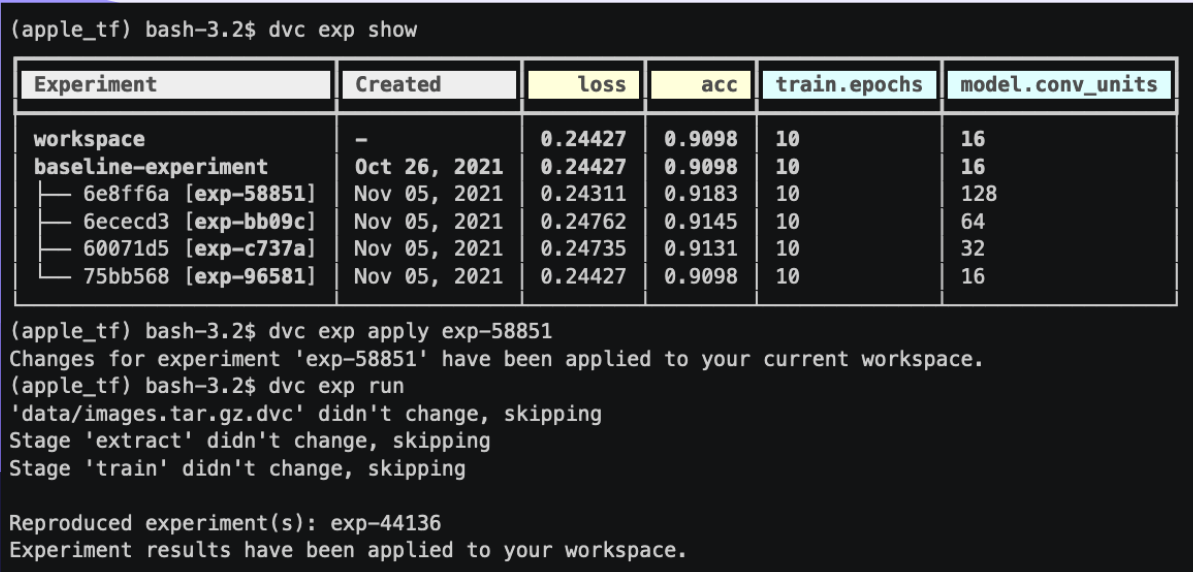
    Iterative today added an experiment versioning capability to an open source platform for managing machine learning operations (MLOps) using GitOps workflows.

    Dmitry Petrov, Iterative CEO, said the latest version of the Data Versioning Control (DVC) platform makes it simpler to save, compare and reproduce machine learning (ML) experiments at scale without requiring organizations to set up an additional repository to track them. Instead, organizations can store those experiments alongside other software artifacts in a Git repository, he said.

    As a result, IT teams will no longer need to try to keep track of experiments using spreadsheets or notebook tools such as Jupyter, he noted. Organizations that are building AI models for applications constructed using DevOps workflows will also find it easier to comply with a wide range of existing and forthcoming compliance mandates, added Petrov.

    The DVC platform makes use of a Git-like interface to enable organizations to track multiple versions of data sets, models and pipelines across an MLOps workflow. That capability is being extended to make it easier to manage the experiments data science teams create during the construction of an AI model.

    Iterative is at the forefront of an emerging debate over how best to infuse AI models into applications. Providers of platforms used by data science teams are making a case for separate repositories for tracking the artifacts used to construct an AI model. Iterative, on the other hand, is arguing for the use of an AI model build framework that uses the same Git repositories where any other type of software artifact is stored and shared. Iterative’s argument is that, in effect, AI models are just another type of software artifact, noted Petrov.

    In addition to reducing the total cost of building AI models by reducing the number of platforms required, a Git-based approach also makes it simpler for DevOps and data science teams to collaborate because the DevOps team will have more visibility into what AI models will eventually need to be incorporated into an application.

    It may be a while before the development of AI models and applications fully converges. Data science teams today typically have defined their own workflow processes using a wide range of graphical tools. However, as it becomes obvious that almost every application is going to be infused with machine learning and deep learning algorithms to some degree, the need to bridge the current divide between DevOps and data science teams will become more acute.

    In the meantime, DevOps teams should assume that many more AI models are not only on the way but that those models will need to be continuously updated. Each AI model is constructed based on a set of assumptions; however, as more data becomes available, AI models are subject to drift that results in less accuracy over time. Organizations may even determine that an entire AI model needs to be replaced because the business conditions on which assumptions were made are no longer valid. One way or another, the updating and tuning of AI models is likely to soon become just another continuous process being managed via a DevOps workflow.

  • ServiceNow Acquires DotWalk to Gain AI for App Testing

    ServiceNow Acquires DotWalk to Gain AI for App Testing

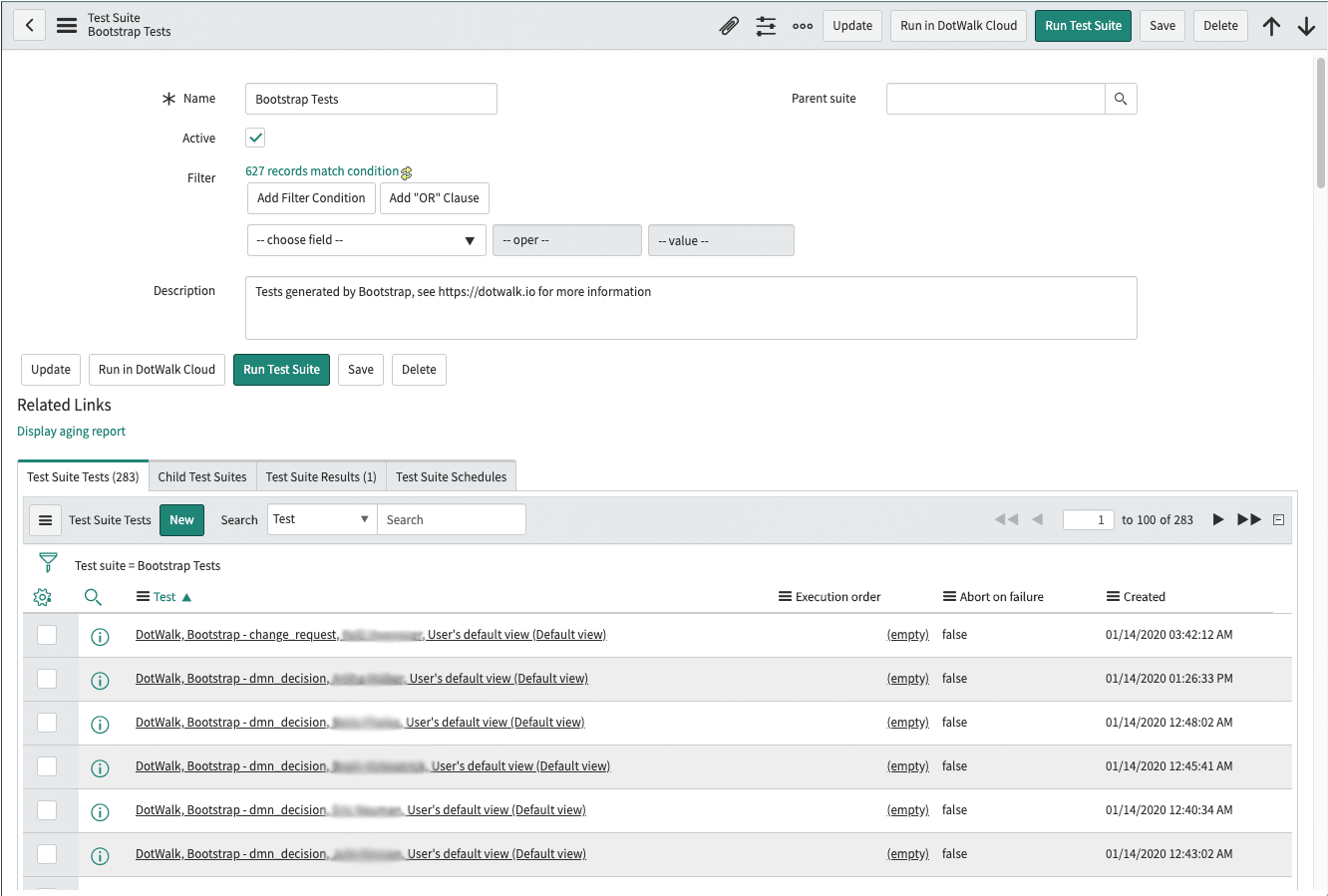
    ServiceNow today revealed it has acquired DotWalk to gain an artificial intelligence (AI)-infused application testing capability that runs natively on its software-as-a-service (SaaS) platform.

    Joe Davis, senior vice president for platform engineering at ServiceNow, said that testing capability will be made available free of charge to all organizations that build custom applications on the company’s platform.

    The number of custom applications being built on the ServiceNow platform has risen sharply since the start of the pandemic. Many organizations have taken advantage of the low-code tools provided by ServiceNow to build a range of applications that use the company’s SaaS applications as a foundation. That approach enables them to more quickly build applications that drive a wide range of digital business transformation initiatives.

    Davis said ServiceNow is committed to enabling organizations to improve the quality of those applications using a DotWalk testing capability that eliminates the need for developers to build and run tests themselves or for organizations to hire dedicated application testing teams.

    ServiceNow

    ServiceNow decided to acquire DotWalk because the company built a testing platform using machine learning algorithms specifically for the ServiceNow platform, noted Davis. The DotWalk tools also analyze logs in the background to identify and validate error sources that can arise during any application upgrade process.

    While there are a large number of professional developers that build applications on the ServiceNow platform, the company is also trying to encourage more so-called citizen developers to build applications. The challenge is many of the end users building applications lack an appreciation for design, security and what it takes to make sure an application scales as more users employ it. Testing tools infused with AI should make it easier for developers, regardless of experience, to build enterprise-class applications.

    Of course, professional developers will also benefit from AI-infused testing tools. Many developers have a tendency to cut short the application development process as they rush to meet application delivery deadlines. The end result, however, is that an application must be updated almost immediately after it has been deployed in a production environment. Testing tools that make use of AI will enable professional developers to more easily run tests they don’t have to build and then maintain, said Davis.

    One way or another, the number of custom applications built on SaaS platforms will increase as organizations digitize more processes. In the last year, more organizations have become adept at extending these platforms using a wide range of low-code tools that automate many aspects of application development. A significant percentage of those organizations are now also adopting DevOps best practices to better manage the pace at which those applications are developed and deployed.

    In the meantime, it’s too early to say precisely how AI will transform application testing. However, one thing that is certain is that even as the number of custom apps grows, applications will be more thoroughly tested before being deployed in a production environment.

  • Ensuring Network Connectivity With SD-WAN and AIOps

    Ensuring Network Connectivity With SD-WAN and AIOps

    Recently, Facebook experienced an outage. If companies relied on that app to do business, their IT teams were likely swamped with end-user complaint calls. 

    How would teams traditionally respond? They’d dive deep into the rabbit hole, analyzing issues on a case-by-case basis, asking countless questions, including: 

    • Could there be a problem with the enterprise network?
    • Is the service provider experiencing issues?
    • Are just a few users affected or is the issue more systemic?

    Traditionally, this manual process requires significant knowledge sharing and time to complete as teams break the problem into smaller pieces to triangulate an issue’s root cause.

    Oftentimes, it’s an enterprise network that experiences connectivity issues—not apps like Facebook. 

    Some companies pay an arm and a leg to leverage highly reliable WAN links, such as MPLS, for connecting to the internet and connecting branches to their data centers. Conversely, they may save a buck or two by using commodity links, like cable or DSL, which deliver less reliability. Both choices introduce tough tradeoffs—could there be a better way to ensure enterprise-wide connectivity?

    Enter SD-WAN. 

    Combining the same service-level agreement (SLA) as a dependable WAN link with the affordability of a commodity link, SD-WAN specializes in handling brownout situations, rerouting link traffic to maintain network connectivity — ensuring users’ access to their must-have apps. 

    And by incorporating artificial intelligence for IT operations (AIOps), teams can harness the power of analytics to radically reduce their response time, ensuring that if problems do happen, they get fixed fast. In fact, 90% of IT professionals acknowledge that powering network management with AIOps will improve their companies’ business outcomes.

    Drowning in Data: Understanding Traditional Network Issue Investigation Headaches

    To determine the root cause of a service disruption, teams spend considerable time assessing the landscape of all the different apps that people use and the links they follow to use them. These apps could be located anywhere—forcing teams to find needles across vast haystacks of data to determine what went wrong.

    And this data is exploding at such an extraordinarily high rate that it’s practically impossible for anyone to keep track of it all. Only by leveraging an advanced analytics system like AIOps can teams gain the necessary insights to swiftly solve problems. 

    SD-WAN and AIOps: A Problem-Solving Dream Team

    How do SD-WAN and AIOps work together to enable a highly reliable, always-connected network?

    SD-WAN quickly addresses all potential local issues and optimizes performance and connectivity across multiple WAN links—or even just a single WAN link that may be unreliable. SD-WAN also ensures that business-critical apps are prioritized correctly and are offered the precise amount of error correction that avoids any issues or disruptions as much as possible over the WAN. 

    Where does AIOps come into play? It analyzes data at a far more granular level for extended periods over a global topology. What is it looking for? Everything. It’s examining emerging patterns that are impacting individual apps. It’s searching for systemic issues that affect multiple SD-WAN edge devices simultaneously, worldwide. It could also be investigating how edges or apps are being affected over a particular time period. 

    By surfacing all that data, AIOps analyzes much more than SD-WAN can. And by deriving insights from that data, it highlights issues affecting everything from a lone user on a single application to a systemic issue that’s impacting an app across a far broader cohort of users. In certain cases, AIOps can cue the SD-WAN to heal itself and automatically fix the problem, then verify that the issue was fixed. As a result, end-users remain connected to their network.

    Inside a Wholly Adopted SD-WAN/AIOps Environment

    Imagine you’re an IT admin, supporting an extremely complex enterprise network, spanning thousands of different sites that use diverse security services for connecting to apps. Even if you’re on a huge team that’s charged with monitoring the network, it would be nearly impossible to have full visibility across the network to solve problems as they occur.

    By adopting SD-WAN together with AIOps, you gain a superpower. No, you won’t be able to fly or become invisible, but AIOps will make you omniscient, enabling you to:

    • Harness powerful analytics firepower to find and fix network trouble spots instantly and precisely before users complain—in some cases before they even notice
    • Understand which sites perform better than others to pinpoint where improvements can be made
    • Propose configuration changes that help the network self-optimize and self-heal
    • Detect and optimize degraded links to boost user experience

    And if issues ever do arise, AIOps advises you immediately as it monitors the network 24/7, providing you with full situational awareness and insights, solving problems as they occur.

    SD-WAN & AIOps: Maintaining Connectivity by Self-Healing

    The Facebook event was unusual in that it globally impacted the world’s users, who couldn’t access the app through any Facebook data center. In that scenario, AIOps simply identified the app disruption and noted the root cause.

    But what if the situation had been different? For example, imagine if Facebook’s U.S. west coast datacenters were deemed unavailable but its east coast datacenters were operational. By combining SD-WAN with AIOps, a similarly affected company could have performed diagnosis and ensured app connectivity. 

    How could that have played out? 

    First, AIOps would have detected the issue and its root cause. It would have reported that the application was unreachable to users on the west coast but available to users on the east coast. Finally, SD-WAN would have self-healed by rerouting end-user application traffic to the eastern data centers to maintain app connectivity.

    Using the old-school method of manually monitoring and troubleshooting networks is nearly impossible for most IT teams. Instead, teams are relying on SD-WAN and AIOps. This combined capability gives teams an unbeatable superpower, enabling them to substantially improve connectivity across the enterprise and rapidly respond to issues as they occur.