Author: Mike Vizard

  • Latest Chef Habitat Release Embraces On-Premises IT

    Latest Chef Habitat Release Embraces On-Premises IT

    Chef today announced that the Chef Habitat automation framework for building and deploying applications can now be used in on-premises IT environments.

    Mike Krasnow, a senior product manager for Chef, said version 1.5 of Habitat makes it possible to now store applications packages and their dependencies locally in addition to the cloud. In addition, pre-built application packages and dependencies from the Builder service can be deployed across multiple on-premises instances.

    An Applications tab in Chef Automate now shows the service groups and instances that are deployed to make it easier to understand what’s deployed where and the health of each service. Both the Habitat Builder installer and the application dashboard are integrated with Chef Automate, which uses the same installer as Chef Habitat.

    Finally, the Habitat Supervisor module is now more stable, easier to configure and manage, and provides improved support for Windows applications.

    Krasnow said Chef has seen a 300% increase in the use of the software-as-a-service (SaaS) instance of Chef Habitat in the last year. Organizations that have embraced Chef Habitat include Alaska Airlines, Rakuten, and Walmart. That rate of adoption should increase now that an on-premises edition is available, he said, including among IT organizations in highly regulated industries that are not allowed to employ cloud services. In fact, at least 70% of all application workloads are still deployed in on-premises IT environments.

    Chef Habitat appeals most to organizations that have embraced best DevOps practices to programmatically deploy applications, said Krasnow. There are rival automation platforms that make use of declarative approaches to automation that appeal more to IT generalists. However, he noted, organizations that want to empower DevOps teams tend to prefer a more programmatic approach.

    For more than a decade now Chef has been driving adoption of IT automation. However, it’s only relatively recently that organizations have been employing IT automation at scale as part of their efforts to embrace best DevOps practices. As interest in IT automation frameworks has risen, so too has the number of options. Some organizations are even employing multiple IT automation frameworks within different business units. They may one day standardize on a single IT automation framework, but many DevOps teams will simply opt to employ the IT automation framework the members of their team already know. If the members of that team in charge of IT operations don’t have a lot of programming expertise, chances are high they will opt for a more declarative approach. DevOps teams that have developers who deploy applications on their own are likely to prefer a more programmatic approach.

    Regardless of the platform chosen, it’s clear the days of manually deploying applications using custom scripts are coming to an end. IT organizations now require an industrial approach to managing IT as a factory. The biggest challenge achieving that goal is no longer the technology but rather the culture of the IT organization.

    — Mike Vizard

  • F5 Networks Launches Next-Gen ADC Based on NGINX

    F5 Networks Launches Next-Gen ADC Based on NGINX

    F5 Networks this week launched version 3.0 of its NGINX application delivery controller (ADC) that adds application programming interface (API) management tools, analytics and monitoring tools, a service mesh, a certificate manager, a developer portal and integrations with multiple continuous integration/continuous deployment (CI/CD) platforms.

    Ken Bocchino, director of product management for NGINX at F5 Networks, said as the first major update to the NGINX Controller since F5 Networks acquired NGINX last year, the 3.0 release represents a concerted effort to reduce the total cost of DevOps by bundling many capabilities that previously would have needed to be acquired separately.

    In addition, NGINX Controller 3.0 reduces the complexity associated with building DevOps workflows because all the components that make up NGINX Controller have been pre-integrated, said Bocchino.

    Based on the open source NGINX proxy server, NGINX Controller is the mechanism through which commercial capabilities are provided and supported as part of the NGINX Plus subscription service offered to enterprise IT customers. Previous iterations of ADCs were much more infrastructure-centric than application-centric, noted Bocchino.

    While F5 Networks naturally would prefer IT organizations to consume all those services, Bocchino said the ADC has been designed in a modular fashion to enable organizations to consume services exposed as REST APIs as they see fit. A future version of the NGNIX proxy server will be able to support multiple types of service meshes, including the lighter-weight offering created by the NGINX team that will become available later this year as part of NGINX Controller 3.0, he said.

    Bocchino noted F5 Networks envisions the NGINX Controller playing a major role in driving further convergence across network operations, security and DevOps teams. NGINX Controller 3.0 facilitates that goal by providing a self-service portal along with role-based access controls and modular workflows that eliminate the need for tickets to be issued to achieve every IT task.

    It’s not clear at what rate that convergence is occurring. However, F5 Networks last year published a survey of DevOps and NetOps teams that suggests there is still a wide gap between NetOps and DevOps teams. The survey found only a little more than a third (38%) of DevOps teams cited the “integration of toolsets across vendors/devices” as a challenge to network automation. In contrast, almost half of NetOps respondents (47%) noted a lack of integration as a problem, second only to a lack of automation expertise (49%).

    F5 Networks by acquiring NGINX is betting than most organizations that have already embraced NGINX proxy server software would rather extend those existing capabilities versus replacing their ADC with a new stack of software based on, for example, the rival open source Envoy proxy server being developed under the auspices of the Cloud Native Computing Foundation (CNCF).

    How the proxy server war and associated ASC platform wars will play out is still anybody’s guess. What is clear is that DevOps teams will need to access a wide range of programmable networking and security services easily to take DevOps to the next level.

    — Mike Vizard

  • GitLab Updates Core CI/CD Platform

    GitLab Updates Core CI/CD Platform

    GitLab this week delivered an update to its namesake continuous integration/continuous delivery platform that promises to make pipelines more efficient and easier to manage, in addition to making it easier to set up pipelines in Windows environments.

    Version 12.7 of the core GitLab platform adds support for Parent-Child Pipelines and Pipeline Resource Groups. Parent-Child Pipelines make it possible to run separate child pipelines concurrently, while Pipeline Resource Groups enable DevOps teams to limit pipeline concurrency to better manage jobs and resources.

    A Code Review Analytics module is designed to make it easier to find Merge Requests in review that require some level of intervention, while enhanced Merge Request widgets show when changes have made it to a specific environment.

    Other new capabilities include being able to automatically stage all changes with the GitLab integrated development environment (IDE) and the ability to share group access with another group.

    Finally, GitLab has added a beta release of Windows Shared Runner, which brings Windows environments to the GitLab platform via a managed service. Darren Eastman, senior product manager for Runner at GitLab, said instead of having to separately download agent software through which jobs on a GitLab pipeline are executed, Windows environments are becoming full-fledged citizens of the GitLab platform.

    Eastman said IT organizations running Windows compared to their Linux brethren are still playing a little catch-up in terms of DevOps maturity. However, with the arrival of microservices based on Docker containers on Windows, the need to embrace best DevOps practices to manage application development and deployment is becoming more apparent, he said.

    Of course, Microsoft is pushing its own rival CI/CD platform in the form of Azure DevOps, formerly known as Visual Team Studios. GitLab is betting that most organizations will prefer to consume a fully managed CI/CD service that spans both Windows and Linux platforms, especially as hybrid cloud computing gains traction in the months and years ahead.

    Regardless of the CI/CD platform employed, the overall size of the DevOps community should expand considerably in 2020 as more organizations that rely on Windows to build and deploy applications embrace DevOps’ core principles. Naturally, competition between Microsoft and providers of rival CI/CD platforms will be fierce. Microsoft in many ways is a behemoth that was constructed mainly by a loyal base of developers that the company can be expected to guard jealously. However, as Microsoft has embraced Linux alongside Windows in the cloud, the number of Windows developers who have been exposed to alternative platforms has increased.

    In the meantime, organizations that have teams that build and deploy applications on both Windows and Linux will have some cultural challenges to overcome should they decide to standardize on a common set of DevOps processes. Rather than managing each platform in isolation, there’s a clear opportunity to reduce costs and increase application development efficiency. The issue now is determining which DevOps platform might best enable them to begin a journey that is likely to take a few years to fully complete.

    — Mike Vizard

  • Red Hat Bolsters RHEL 8 Monitoring

    Red Hat Bolsters RHEL 8 Monitoring

    Red Hat is looking to expand the number of organizations embracing best DevOps practices by expanding the monitoring capabilities included in Red Hat Enterprise Linux (RHEL).

    The beta release this week of RHEL 8.2 includes an update to Performance Co-Pilot (PCP), a system performance toolkit that now includes collection agents for Microsoft SQL Server 2019 databases.

    Scott McBrien, a principal product manager for Red Hat, said by extending the scope of the performance toolkit, Red Hat is looking to make it easier for IT generalists and developers to collaborate across silos to better maintain application performance levels. Support for Microsoft SQL Server 2019 is an outgrowth of the alliance Red Hat formed with Microsoft way back in 2015. However, McBrien said IT organizations should expect Red Hat to continue to expand the reach of PCP.

    RHEL 8.2 Beta also simplifies the process of invoking the Red Hat Insights analytics service during the installation process and provides tighter integration with the extended Berkeley Packet Filter (eBPF) to better analyze network traffic.

    Finally, the latest version of RHEL extends an Applications Stream capability to segregate runtimes and languages to additional programming environments and provides a tool to test in-place upgrades to RHEL 8 from RHEL 6/7.

    McBrien said Red Hat is trying to keep to a six-month upgrade cycle of RHEL to provide IT organizations with a more predictable timetable. Of course, most of Red Hat customers are still running RHEL 6/7 releases. However, as the rate at which applications are built, deployed and updated continues to accelerate in the age of DevOps, the more pressure there will be on IT teams to maintain application performance levels across an increasingly extended enterprise. Inevitably, IT generalists will need access to a broader range of observability tools at all layers of the stack to keep pace.

    Adoption of DevOps practices across the enterprise remains uneven at best. However, as more IT generalists are exposed to richer monitoring tools at the operating system level, the easier it becomes to augment or supplant legacy ITIL-based approaches to managing IT. In fact, as tools at the disposal of IT generalists become more sophisticated, the need to rely on various classes of IT specialists declines. Most IT organizations are especially keen to achieve that goal because labor stubbornly remains the single biggest cost of IT.

    It remains to be seen to what degree the management of IT will be transformed in the months and years ahead. The one thing that is certain is IT will become more complex as new architectures based on microservices and serverless computing frameworks get adopted. Each additional layer of abstraction may make it easier for developers to build applications, but from the perspective of the IT operations teams, they tend to increase dependencies between systems that are already fairly fragile. The challenge now is to identify where bottlenecks exist between all those systems before a degradation in application performance becomes a full-blown catastrophic event.

    — Mike Vizard

  • DevOps Deeper Dive: DevOps Consolidation This Way Comes

    DevOps Deeper Dive: DevOps Consolidation This Way Comes

    The merger of XebiaLabs and CollabNet VersionOne announced this week will accelerate the ongoing consolidation of providers of DevOps platforms that has been slowly gaining momentum for the better part of two years.

    Under the terms of the agreement, the unnamed combined company will be led by Ashok Reddy, formerly with Broadcom, CA Technologies and IBM. Current XebiaLabs CEO Derek Langone will become president of the combined company. Current CollabNet VersionOne CEO Flint Brenton is stepping down from the combined company.

    CollabNet has been trying to make a case for employing value stream management tools to better align application development projects with business objectives ever since it merged with VersionOne, a provider of an application lifecycle management (ALM) platform anchored around version control software, in 2017. Late last year, CollabNet VersionOne was acquired by TPG Capital, which pledged to make $500 million in funding available to drive organic and inorganic growth. The decision to appoint Reddy as CEO of the combined company was made by TPG.

    XebiaLabs, meanwhile, raised $100 million capital in early 2018 to drive investments in building a continuous delivery platform. The goal now is to more tightly integrate the respective platforms of the two companies to advance value stream management with Global 5,000 class organizations, says Langone.

    “There is no enterprise-class player in this space,” said Langone.

    Rival offerings either don’t scale to meet the needs of larger enterprises or they are simply too shallow to meet business requirements, he noted.

    Of course, value stream management is where most of the rivals of the combined entity are also focused. CloudBees, for example, has already rolled out value stream management modules as an extension of its continuous integration/continuous delivery (CI/CD) platform. CloudBees CEO Sacha Labourey said the company is now taking that concept to the next level by building a software delivery management (SDM) platform that normalizes data from multiple data sources. The open source Jenkins CI/CD platform, along with the Electric Cloud application release platform CloudBees gained via acquisition last year, would be one of many data sources for that platform, he said, while value stream management would be one of several applications available to different classes of users within that SDM platform.

    While mergers and acquisitions among DevOps vendors have been occurring slowly, Labourey said he expects the pace of such deals to increase in the months ahead as organizations embrace more complex modern application architectures based on microservices.

    “The destination is now clear,” he said.

    GitLab, meanwhile, has already signaled in 2020 that it will be adding value stream management capabilities to its namesake platform. Rather than trying to merge disparate code bases acquired by acquisitions, GitLab is building an end-to-end platform on a common code base, says Jackie Meshell, a senior product manager for GitLab.

    “We’re seeing the market follow that fast,” Meshell said.

    There are, of course, other approaches to value stream management applications that span multiple application development platforms, including offerings from Plutora, Tasktop and Panaya.

    Value stream management has become an industry buzzword of late as more organizations appreciate the degree to which their businesses now revolve around the rate at which software gets built and delivered. Value stream management applications are roughly the equivalent of business intelligence software for business managers, who pull metrics and data from application development platforms to determine whether projects are falling behind and what impact those delays might have on the business.

    Most business leaders are going to lean toward value stream management applications that can be applied across multiple application development platforms, said Bob Davis, chief marketing officer for Plutora. Few organizations are standardized on a single application development platform, he noted.

    While it’s still early days in terms of adopting value stream management applications, Davis said it’s already apparent that in the age of digital business transformation the category is red hot.

    “Value stream management these days is everywhere,” he said.

    It remains to be seen whether a strategy that focuses mainly on slower-moving enterprise IT organizations will succeed at a time when more agile startups continue to gain share at the expense of larger incumbents in almost every industry. Many of those enterprise IT organizations may get exposed to value stream management by acquiring a rival that has already adopted an application. Of course, it’s also just as likely that by the time many of those enterprise organizations reach the point where they need value stream management applications, it may be past the point where they remain relevant.

    Regardless of how they get there, however, wider adoption of value stream management as an extension of SDM is coming. The only unknown now is how and when.

    — Mike Vizard

  • CircleCI Extends Orbs Ecosystem for CI/CD

    CircleCI Extends Orbs Ecosystem for CI/CD

    CircleCI announced today it has added integrations in collaboration with 20 partners to the family of connectors, known as Orbs, that it makes available for its continuous integration/continuous delivery (CI/CD) platform.

    Thomas Trahan, vice president of business development for CircleCI, said integrations are now available with Heroku, AWS, Cloud Foundry, Google Cloud, Red Hat, Helm, Kublr, Alcide, Azure, DeployHub, Fairwinds, VMware, Kubernetes, Rafay Systems, Pulumi, Convox, Spinnaker, realMethods, Quali, Pantheon, LaunchDarkly and Salesforce.

    Since launching Orbs a year ago, CircleCI claims there are now more than 13,000 organizations using Orbs across nearly 40,000 repositories and 9 million CI/CD pipelines. There are also more than 1,200 Orbs provided by more than 116 partners listed in the CircleCI registry. In the future, Trahan said the company plans to begin surfacing recommendations concerning which Orbs to employ based on the nature of the workflow being constructed.

    Trahan said Orbs are gaining traction because they reduce the amount of custom code that needs to be written to set up workflows across a CI/CD pipeline. Without the existence of Orbs, DevOps teams are forced to rely on application programming interfaces (APIs) that are more liable to break, he said.

    Competition between CI/CD platform providers is expected to become fiercer as adoption of CI/CD platforms continues to accelerate. A report published by Data Bridge Market Research this week forecasts demand for continuous integration (CI) tools alone will grow to $18.9 billion by 2025, representing a 19% compound annual growth rate. While the current CI/CD market is dominated by open source platforms managed by internal DevOps teams, CircleCI is betting interest in accessing a managed CI/CD service delivered via the cloud will rise as organizations opt to devote more resources to building applications versus managing the platforms they are built on.

    A recent CircleCI study of more than 30 million workflows spanning 1.6 million jobs runs per day on its platform found 80% of all workflows finish in less than 10 minutes. Those jobs spanned 150,000 projects launched by more than 40,000 organizations.

    The report noted 50% of those organizations start six workflows per day across their projects and that 50% of CircleCI projects never had a failure during pipeline changes made over the 90-day period when the study was conducted. When a failure did occur, 50% recovered in less than an hour, with 25% of organizations recovering in 15 minutes or less, according to the report.
    As organizations embrace best DevOps practices more broadly, CircleCI is betting these kinds of metrics will become more important as a platform differentiator.

    Naturally, it’s too early to say how the CI/CD platform wars will play out in the months and years ahead. But the amount of code organizations will need to deliver at increasingly faster rates is only increasing. The challenge organizations are facing now is finding a way to deliver all that code at an unprecedented level of scale.

    — Mike Vizard

  • Red Hat Extends Runtimes Middleware Portfolio

    Red Hat Extends Runtimes Middleware Portfolio

    Red Hat has made available the latest instance of Red Hat Runtimes, a suite of lightweight open source components and frameworks that makes it easier to discover the middleware most appropriate for building a specific type of application.

    James Falkner, product marketing director for Runtimes at Red Hat, said as organizations embrace cloud-native application architectures based on microservices it’s become increasingly challenging to determine what middleware to deploy optimally and where. Red Hat Runtimes not only makes it easier to navigate all those options, Falkner said, but all the components and frameworks are certified to be pre-integrated.

    The latest version of Red Hat Runtimes adds support for Open Liberty, a lightweight runtime for building Java applications developed by IBM. Red Hat was acquired last year by IBM.

    The latest installment of Red Hat Runtimes also provides access to what has become a standard distribution of Node.js based on Red Hat Software Collections that will be implemented across all Red Hat offerings.

    Finally, Red Hat has also added support for Red Hat Single Sign-On, an access control framework based on the Keycloak project.

    Falkner said Red Hat Runtimes also serves to reduce the total cost by providing a single subscription through which organizations can access everything from container runtimes to the 3Scale application programming interface (API) management middleware, which Red Hat acquired in 2016.

    Very few IT organizations these days are standardized on a single class of middleware, especially as they embrace microservices-based applications built using containers. Most IT teams for the foreseeable future will need a flexible way to access multiple runtimes in support of everything from monolithic applications based on Java to applications built using Node.js code deployed using Docker containers.

    Rather than a piecemeal approach to the middleware infrastructure required to build, deploy and integrate all those applications, Falkner said Red Hat Runtimes provides a more holistic approach.

    It’s not clear how much or even whether IT organizations are centrally managing middleware in the age of DevOps and the cloud. Historically, many IT organizations preferred to standardize on a single application server platform to deploy various classes of middleware. However, many developers today are deciding what middleware to include within their application stacks without much input from a central IT function.

    Via Red Hat Runtimes, Red Hat is trying to make a case for providing developers with the flexibility they cherish in the form of a subscription service that provides IT teams with a modicum of control over what middleware gets employed.

    Tensions between DevOps teams and central IT organizations have arguably never been higher. In fact, many DevOps teams are operating within lines of business that are outside the direct control of centralized IT. As such, the level of standardization that can be imposed by central IT organizations has become more constrained. Many centralized IT organizations are now trying to influence middleware platform decisions rather than outright make decrees that might get ignored anyway.

    Regardless of the middleware platform choice that ultimately gets made, however, the one thing that most centralized IT teams will have to come to terms with is finding a way to support it.

    — Mike Vizard

  • IBM Open Sources SysFlow Monitoring Platform

    IBM Open Sources SysFlow Monitoring Platform

    IBM has announced that its SysFlow monitoring platform is now available as an open source project.

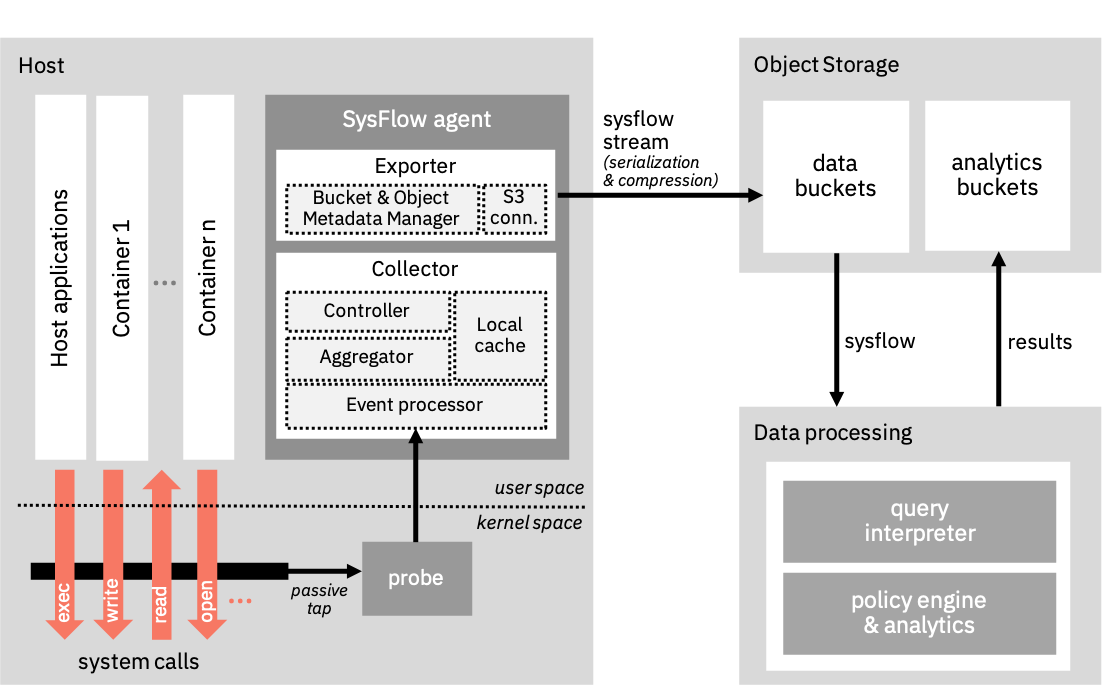
    Fred Araujo, a research scientist in the Cognitive Cybersecurity Intelligence Group at IBM Research, said IBM developed lightweight SysFlow agent software and monitoring tools as a way to provide more context around the telemetry data being collected while simultaneously reducing the amount of data that needs to be stored.

    SysFlow encodes a representation of system activities into a compact format that records how applications interact with their environment, Araujo said, noting that level of context provides deeper visibility in everything from container workloads to cybersecurity forensics. However, unlike existing monitoring platforms, SysFlow doesn’t require IT organizations to collect a massive amount of data to achieve that goal—it is intended to provide for a superset of the NetFlow framework used to analyze network traffic patterns to capture system events, he said.

    Araujo noted IBM doesn’t envision SysFlow eliminating the need for legacy log analytics platforms, as they provide a way to analyze log data. However, SysFlow does enable IT organizations to apply analytics via a graph-like visualization to surface patterns that goes beyond a comparative simple rules-based approach, said Araujo. For example, SysFlow’s approach will make it easier to uncover the relationship between various events that make up a cybersecurity attack and subsequently to identify what countermeasures to employ to create the appropriate kill chain response. It also should substantially reduce the amount of fatigue cybersecurity teams experience from chasing down false-positive alerts, he said.

    SysFlow is designed from the ground up to integrate with both open source frameworks such as Apache Spark and commercial analytics platforms via an open serialization format and associated libraries. IT organizations also can leverage a set of reusable components and APIs to make it easier to deploy telemetry probes. IT organizations also can take advantage of an extensible policy engine that can ingest customizable security policies described in a declarative input language, which then can be checked against records captured by SysFlow.

    Araujo said IBM developed SysFlow to address the challenges associated with managing application workloads in public clouds, but the framework can be applied to any on-premises IT environment to create a single pane of glass through which multiple platforms can be monitored.

    Regardless of the platform on which a workload is deployed, Araujo said as more responsibility for managing and securing applications shifts left toward developers in the age of DevOps, those teams need access to more sophisticated tools that are readily available and simple to deploy. There are several open source initiatives underway to provide that visibility, and one day many of them might coalesce into a single initiative.

    In the meantime, as the dependencies between applications and IT infrastructure continue to increase, it’s clear IT monitoring as a core part of any set of best DevOps practices is now an absolute requirement to achieve and maintain observability.

    — Mike Vizard

  • LogicMonitor Acquires Unomaly to Advance AIOps

    LogicMonitor Acquires Unomaly to Advance AIOps

    LogicMonitor this week revealed it has acquired Unomaly, a provider of tools infused with machine learning algorithms that make it easier to analyze large volumes of log data.

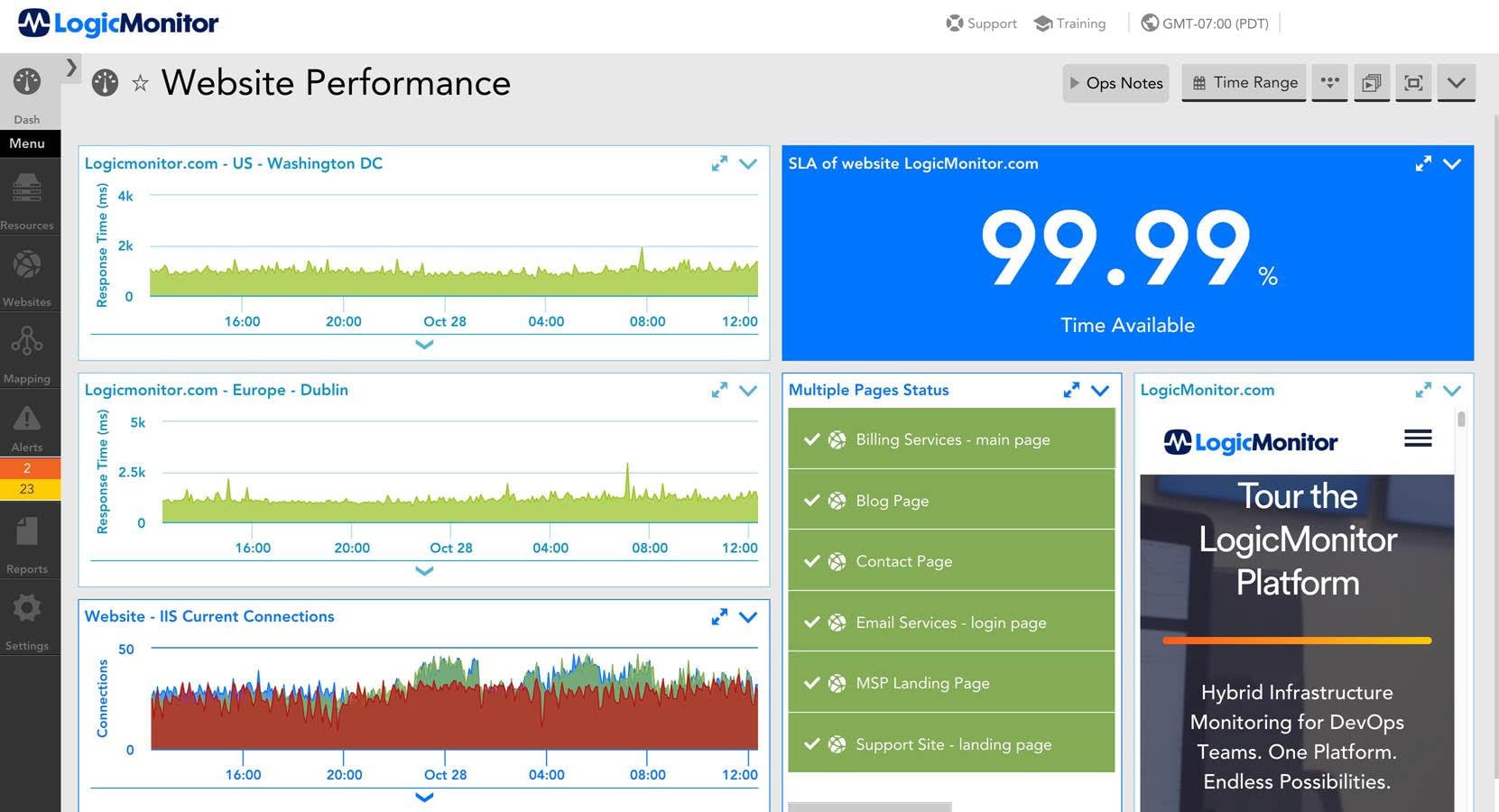
    Tej Redkar, chief product officer for LogicMonitor, said the acquisition of Unomaly will advance a previously announced AIOps initiative through which LogicMonitor will embed advanced analytics and automation capabilities into its core IT monitoring platform. Rather than requiring DevOps teams to acquire a separate platform to take advantage of AIOps, LogicMonitor contends AIOps is simply an element of the next logical iteration of an IT monitoring platform.

    Unomaly will help LogicMonitor achieve that goal by identifying patterns in streaming log data that are indicative of anomalies that warrant further investigation, said Redkar. Unomaly works by first establishing a baseline for the IT environment. It then records a profile for each log event that includes the event’s structure, sources, frequency patterns and intervals. Similar profiles are then merged into one aggregated profile, with dynamic parameters to reduce the amount of data that needs to be analyzed by several orders of magnitude. If an anomalous event occurs within a rolling 60-second window on a single log source, Unomaly will bring those events together to identify and score a situation based on the type and number of anomalies.
    Redkar noted this approach not only provides more context about the events but it also greatly reduces the amount of log data that needs to be stored. Unomaly is also designed to accept data in any format.

    As IT becomes increasingly more complex, organizations of all sizes need more observability. However, because all the dependencies within the IT environment are becoming too complex to track manually, IT organizations will need to rely more on machine and deep learning algorithms to observe the IT environment.

    Naturally, that increased reliance on algorithms will alter the role of IT operations teams. Most IT operations teams will find themselves supervising algorithms that are surfacing issues and making recommendations, said Redkar. Rather than eliminating the need for IT operations expertise, AIOps will be employed mainly to manage IT environments operating at a significantly higher scale, he noted.

    It will take some time for this transition to play out as issues such as the explainability of AI models are worked out. Some of the lower-level functions within an IT operations environment undoubtedly will be eliminated, so job roles will change. However, many of those functions will be rote tasks that many IT professionals don’t especially like to perform.

    IT vendors are, of course, involved in something akin to an algorithms arms race to infuse AI into their management platforms. In some cases, they will develop these capabilities themselves. In other cases, they will acquire startups to gain access to AIOps platforms. Most IT vendors will be mixing and matching a variety of AI technologies they developed themselves and acquired. Regardless of the path pursued, it’s no longer a question of whether AIOps will be applied to managing IT, but rather when.

    — Mike Vizard

  • JFrog ConanCenter Extends DevOps Reach to C++

    JFrog ConanCenter Extends DevOps Reach to C++

    JFrog this week announced it has updated ConanCenter, a repository for storing and discovering software packages that can be downloaded for free, to include support for C++ artifacts.

    Jagan Subramanian, vice president of community and partner engineering at JFrog, said ConanCenter provides a repository for the open source Conan package manager that JFrog includes as part of its continuous integration/continuous delivery (CI/CD) platform. By making ConanCenter available free of charge, JFrog is trying to encourage organizations that rely on C++ to build applications to embrace best DevOps practices, Subramanian said.

    JFrog is also making available a free Community Edition of its Artifactory CI/CD platform for C / C++ available for download and later this quarter plans to integrate ConanCenter with other JFrog tools to make it even easier to securely access packages.

    As a general-purpose programming language, C++ has been employed for decades to build applications in IT environments where resources are constrained, such as embedded systems. Subramanian said many organizations that rely on C++ to build those types of applications are experiencing the same pressures to accelerate application development as the rest of their software development colleagues.

    To make it possible to achieve that goal, he said, JFrog is now extending its DevOps portfolio to include support for applications developed using C++ tools. ConanCenter not only provides a means to discover artifacts based on the metadata they generate, but it also provides a list of configuration options and a free binary building service that can be applied across multiple operating systems, platforms and compilers.

    Despite its longevity and the rise of alternative programming languages, C++ continues to fulfill a unique role across a range of vertical industries. There are still plenty of C++ developers are that building some of the most challenging applications to develop. In fact, given the rise of robotics and internet of things (IoT) applications involving autonomous vehicles, interest in using C++ to build new classes of applications is on the rise. The ConanCenter repository promises to make it easier for C++ developers to share artifacts across those diverse projects.

    In terms of adoption of best DevOps practices among organizations that rely on C++, Subramanian said it’s still very early, as most are still at the proof-of-concept stage. However, he said most regularly experience all the pain points that best DevOps practices address, which should drive more organizations to embrace DevOps in the months and years ahead.

    It’s too early to hazard a guess as to how long it might take organizations that rely on C++ to embrace DevOps. Many of them have been relying on waterfall-based processes to build and deploy applications for decades. Nevertheless, just like in other programming environments, the need to build and deploy applications faster requires development teams to embrace change. As always, however, the biggest challenge when it comes to DevOps has little to do with the core technology platforms. Rather, the existing culture of the IT organization always proves to be the biggest hurdle.

    — Mike Vizard