Author: Mike Vizard

  • SolarWinds Strengthens AppOptics APM Platform

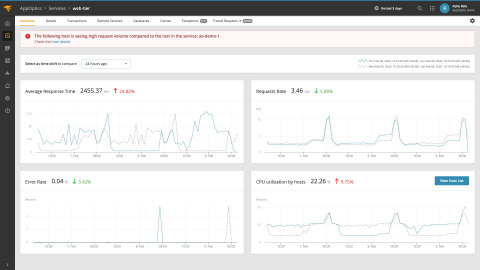
    SolarWinds today updated its AppOptics application performance management (APM) platform by adding both service- and trace-level root cause analysis capabilities.

    Jim Hansen, vice president of products, application management for SolarWinds, said the goal is to provide most of the same capabilities any IT organization would find in an APM platform that would cost 10 times more than AppOptics.

    That’s critical at a time when thanks to the rise of microservices-based applications based on containers more IT organizations are discovering they need to apply APM platforms more broadly, added Hansen. Previously, IT teams tended to reserve usage of APM platforms to their most mission-critical applications because of the costs involved. However, as SolarWinds moves to drive the cost of accessing an APM platform delivered via a software-as-a-service (SaaS) application, Hansen noted APM platforms are becoming more affordable.

    The service-level root cause analysis module is also designed to more accessible to the average IT administrator by reducing the number of steps and clicks required to identify the specific performance problem or issue. A complementary AppOptics trace-level root cause analysis then makes it possible to drill down into application metrics all the way down to specific lines of code and transactions. The goal is to make APM platforms more accessible to IT generalists, said Hansen.
    Those service- and trace-level root analysis features are available both in the core platform as well as a free AppOptics Dev Edition tool that SolarWinds makes available for developers.

    While AppOptics is the core APM platform provided by SolarWinds, the company also makes available a Loggly log management platform and Pingdom performance monitoring tools for websites. Collectively, those platforms make it easier to manage IT environments that are becoming increasingly complex to manage, said Hansen.

    In general, Hansen said IT organizations are starting to converge application and infrastructure management, especially if they have embraced best DevOps processes. In some cases, one member of a DevOps team is managing both, while other organizations are having teams of IT professionals collaborate around the same APM platform.

    At the same time, Hansen noted IT organizations want to be able to employ the same APM platform to manage both monolithic and microservices-based applications versus having to acquire separate APM platforms for both types of applications.

    It’s too early to say to what degree SolarWinds might be able to usurp rival providers of APM platforms that have been available for more than two decades. However, Hansen noted that in terms of market penetration, fewer than 10% of IT organizations have standardized on an APM platform.

    As organizations transition to microservices-based applications, APM platforms become a necessity. The overall IT environment is simply becoming too complex to manually monitor and manage. At the same time, businesses are starting to have a greater appreciation for how dependent digital processes are on software. The issue now isn’t so much whether those organizations need an APM platform as much as it is figuring out which APM platform can they afford.

    — Mike Vizard

  • Dell Pushes Computing to the Edge

    Dell Technologies today set its sights on becoming a major edge computing player with the launch of a Dell EMC PowerEdge XE2420 server optimized for space-constrained environments and a smaller version of a pre-integrated Dell EMC Modular Data Center Micro 415 (MDC Micro) ruggedized platform.

    In addition, Dell launched the Dell EMC Streaming Data Platform, a streaming analytics platform based on open source Kafka software. Dell is using Kafka also to provide an embedded management capability known as the Dell Remote Access Controller (iDRAC 9 Datacenter) for its edge computing platforms.

    Matt Baker, senior vice president for Dell EMC strategy and planning, said edge computing applications require a different approach to IT infrastructure because data is being processed and analyzed in real-time. Dell expects that eventually 75% of all data will be created and processed outside of a data center, he said.

    A primary driver of that transition will be the rise of wireless 5G networks, which will make it feasible to build and deploy real-time applications on edge computing platforms.

    Dell, of course, is making a case for distributed IT environment made up of its platform, contending will be easier for IT organizations to deploy and manage.

    The iDRAC 9 Datacenter platform, for example, provides a remote deployment capability that Dell claims can reduce administrator-attended time by up to 99.1% per server after initial setup. The streaming analytics capability, meanwhile, makes it possible to discover trends, fine-tune operations and create predictive analytics to help ensure peak performance and reduce downtime. Dell has also made available an automated certificate enablement tool to enable zero-touch security at the edge and in central locations.

    All told, Dell claims to be collecting nearly 2.9 million data points per server that can be surfaced in as many as 20 different types of reports.

    Baker said Dell has no plans to extend its data streaming analytics capabilities to other platforms, so IT teams will have to decide to what degree they want to standardize on Dell infrastructure versus setting up a streaming analytics platform of their own that is capable of supporting edge computing platforms from multiple vendors.

    Whatever the approach, the one thing that is certain is the way applications historically have been built and deployed is fundamentally changing. Rather than relying primarily on batch-oriented applications that often require large amounts of data to be transferred across networks to either a data center or public cloud, a lot more data is going to be processed at the edge because of application latency requirements. Edge computing applications, for example, will need to process analytics in near real-time to optimize a process or end user experience in milliseconds.

    Naturally, that shift will have profound implications for the management of IT going forward as IT environments become even more distributed than they are today. In fact, the real issue isn’t so much how computing platforms will be deployed at the edge so much as it is how they will be managed, at a time when most IT organizations are already short-staffed.

    — Mike Vizard

  • Veeam Updates Backup and Recovery Platform

    Veeam Updates Backup and Recovery Platform

    Veeam today announced the general availability of version 10 of the Veeam Availability Suite, which, among more than 150 enhancements, adds support for network-attached storage (NAS) systems, additional ransomware protection via an ability to create immutable backups in the cloud, an ability to recover multiple virtual machines simultaneously and a set of application programming interfaces (APIs) for mining data.

    Danny Allan, chief technology officer and senior vice president of product strategy for Veeam, said IT organizations are looking for more efficient methods of protecting data, as there is no longer enough time in the day to back up petabytes of data.

    Veeam now provides the ability to back up massive amounts of unstructured data residing in NAS systems by only updating the primary backup file with the most recent changes made to data on the NAS platform, said Allan. That approach, he noted, also curtails costs because it substantially reduces the amount of data that needs to be replicated across a network.

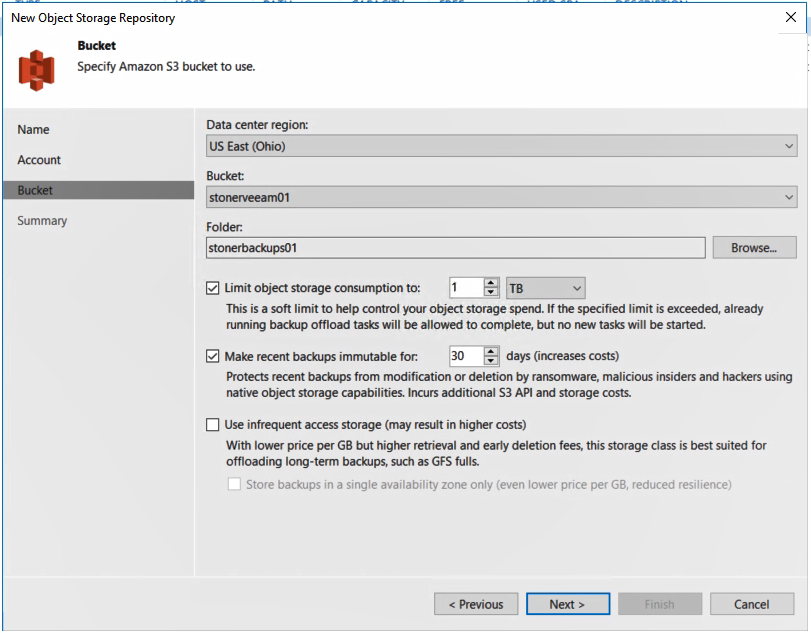
    backup and recoveryAt the same time, Allan said backup and recovery platforms are playing a more strategic role in the battle to combat ransomware. Veeam Availability Suite v10 users can create an immutable copy of data that can reside in any platform that supports the S3 API defined by Amazon Web Services (AWS). Dubbed S2 Object Lock, the offering was developed with the goal of creating a pristine image of a data set that can be recovered in the event of a ransomware attack that a cybercriminal or malicious insider has employed to encrypt an organization’s data.

    In addition, Veeam is moving to lower disaster recovery costs by making it possible to recover multiple virtual machines simultaneously in the event of a data center outage.

    Finally, an API now makes it possible for analytics applications to access data stored using Veeam Availability Suite.

    Fresh off being acquired by the venture capital firm Insight Partners for $5 billion, Veeam is moving to expand its core capabilities for backing up virtual machines to create a data management platform that will span multiple clouds. The goal is to create a platform for managing data across a hybrid cloud computing environment, Allan said.

    With organizations now routinely managing petabytes of data, competition among backup and recovery vendors has never been more fierce. Each provider of backup and recovery tools is, to one degree or another, evolving into becoming a data management platform, a process that largely began when IT teams stared using backup tools to migrate large amounts of data into the public cloud. Now the providers of those tools see an opportunity to enable IT teams to move data not just in and out of clouds but also between them.

    It’s too early to say how this battle will play out. Backup and recovery is one of those rare categories of software that refuses to be consolidated even as new startups launch regularly. It’s not uncommon for most IT organizations to employ multiple backup and recovery tools from different vendors. Less clear is how long the tendency to employ multiple tools will persist, but as new capabilities are added to each backup and recovery tool the pressure on the other tools to continue to prove their value continues to intensify.

    — Mike Vizard

  • Wind River Launches CD Platform for Embedded Systems

    Wind River Launches CD Platform for Embedded Systems

    Wind River is fostering the adoption of DevOps processes for embedded systems by making available a continuous delivery (CD) platform that its customers can download.

    Glenn Seiler, vice president for open source strategy for Wind River, said the CD platform is based on an open source instance of the Jenkins continuous integration/continuous delivery (CI/CD) platform. The company envisions organizations downloading the platform as source code that Wind River will update regularly for use on top of the Wind River Linux platform, he said.

    Wind River is taking advantage of containers, Kubernetes, the Puppet IT automation framework and a repository to ease deployment of its CD platform, added Seiler. The company is committed to providing updates to that platform, which Wind River uses internally, at least every three weeks, said Seiler.

    Wind River expects most organizations will already have some form of a CI process in place. The CD platform provided by Wind River will focus on accelerating the delivery of applications built using whatever CI process organizations have in place today, said Seiler.

    In the embedded systems space, Seiler said the adoption of best DevOps practices is still in its very early days. However, with the rise of edge computing and the internet of things (IoT), organizations will need to find a way to securely deploy and update highly distributed application environments. To achieve that goal, many organizations will apply the same DevOps principles enterprise companies have been applying to their embedded systems, he said.

    To ensure the integrity of the software supply chain on which the Wind River CD platform is delivered, Wind River has also been certified under the ISO 9001:2015 specification for management processes, as well as the OpenChain specification for open source compliance.

    Wind River also has the Wind River Workbench for Linux LTS, based on the Eclipse integrated development environment (IDE), along with various system analysis tools including a trace visualization tool from Percepio AB to identify the root cause of anomalies.

    While it’s taken more than 10 years to drive the adoption of best DevOps practices in the enterprise, adoption in embedded systems environments should be faster now that the journey has begun. Organizations of all sizes are pushing more application workloads to the edge at faster rates. Traditional approaches to building and deploying applications on standalone embedded systems will not be able to keep pace. Organizations that build applications for embedded systems will be challenged by first acquiring the right tools and then adapting their internal culture to the complexities that arise when they need to build and deploy applications faster.

    Wind River is making the case for a curated open source CD platform that should enable organizations to spend less time on managing the underlying DevOps platform in favor of focusing more time and energy on changing their internal culture.

    — Mike Vizard

  • SaltStack Updates Enterprise IT Automation Framework

    SaltStack Updates Enterprise IT Automation Framework

    SaltStack has partnered with Tenable.io to make it possible to pull vulnerability data into the enterprise edition of its namesake IT automation framework.

    In addition, version 6.2 of SaltStack Enterprise now integrates with the IT operations analytics platform from Splunk to make it possible to configure the Splunk Universal Forwarder to index and analyze events generated by the SaltStack framework.

    The SaltStack Comply compliance management module has also been updated to include content for Windows Server 2012 and Windows Server 2019 platforms that has been certified by the Center for Internet Security (CIS).

    Finally, SaltStack Enterprise 6.2 optimizes communications between the Salt Master and the SaltStack Enterprise Operations Framework by adding an intermediate SQLite database layer to queue events. SaltStack says IT organizations should see 20 times-plus improvement in event processing throughput. SaltStack has also added the ability to forward SaltStack events to any Salt Returner, such as a SQL database or local file, to improve performance and maintain high availability.

    Mehul Revankar, a senior product manager for SaltStack, said with this update to the enterprise edition of its open source framework the company is leveraging partnerships to enable IT systems to create closed-looped systems. For example, vulnerabilities identified by Tenable.io now can be automatically remediated using SaltStack Enterprise.

    Revankar said the goal is to make it easier for IT teams to create an IT process that can be automated at the push of a button. As IT environments become larger and more challenging to manage, IT organizations will need to automate more processes at scale, he said. To achieve that goal, SaltStack is simplifying the process to connect to a wider range of third-party platforms that house the type of data required to automate a closed-loop process.

    Naturally, organizations that have embraced DevOps principles are at the forefront of IT automation. Revankar said that as teams of IT professionals converge to drive DevOps and DevSecOps processes, the greater the willingness to employ IT automation frameworks becomes. The goal is to automate as many processes to inject a level of agility that serves to accelerate the rate at which applications are deployed and updated. The challenge organizations have always faced in IT automation is the time it takes to integrate an IT automation framework with relevant data sources.

    Revankar also noted resistance to IT automation among rank-and-file members of the IT operations team is declining as the number of applications that need to be managed increases. Most organizations can’t find or afford to retain enough IT personnel to manage IT operations at the level of scale now required. As such, the need to automate as many rote IT processes as possible has become apparent to all. That’s especially critical in the case of vulnerability management, where the amount of time it takes to patch an application directly correlates to a specific level of risk.

    There is, of course, no shortage of options these days when it comes to IT automation frameworks. In fact, the decision concerning which IT automation framework to employ now has as much to do with the number of sources that framework can pull relevant data from as much as it does the reliability of the automated processes that framework enables.

    — Mike Vizard

  • Synopsys Advances DevSecOps via IDE Plugin

    Synopsys Advances DevSecOps via IDE Plugin

    Synopsys has extended the static application security testing (SAST) and software composition analysis (SCA) of the Code Sight plugin it makes available for integrated development environments (IDEs).

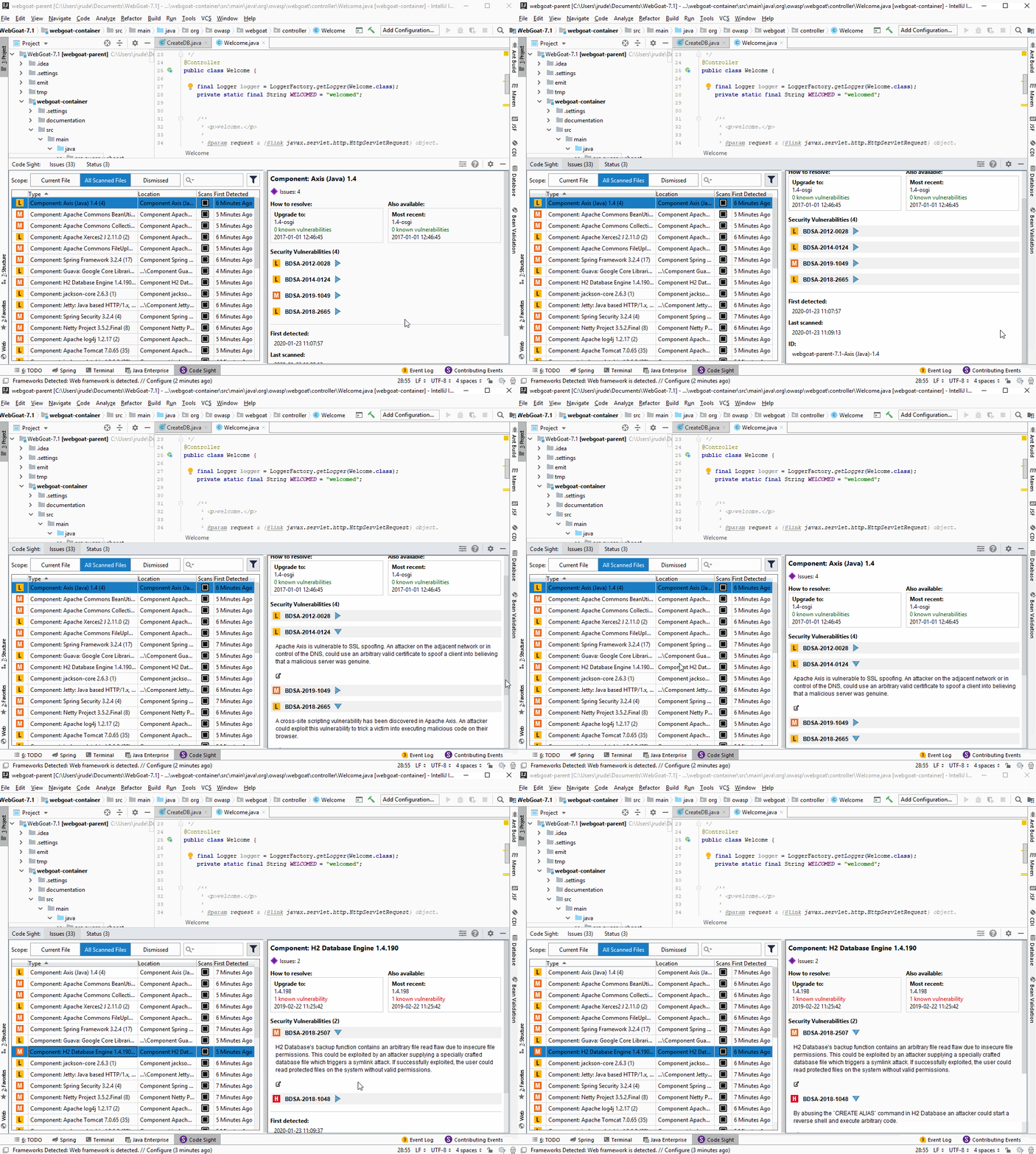
    The latest iteration of Code Sight adds the ability to analyze declared and transitive open source dependencies to identify components with known security issues alongside SAST findings without having to exit their IDE.

    Delivered vis the company’s Polaris Software Integrity Platform, the update enables developers to also review known vulnerabilities of flagged components to verify the risk and determine remediation options using vulnerability information from Black Duck Security Advisories (BDSAs). That information is based on data provided by both Synopsys and public CVE records gathered in the National Vulnerability Database (NVD).

    Patrick Carey, director of product marketing for the Software Integrity Group at Synopsys, said the Code Sight plugin enables developers to easily identify and select the best fix for vulnerabilities by providing detailed remediation guidance that directs them to more secure component versions.

    Code Sight also helps developers optimize component selection by including, for example, information regarding open source license risks and potential security and license compliance violations of an organization’s predefined set of open source policies.

    In general, Carey said Code Sight is designed to make it easier for developers to address a broad range of cybersecurity issues while an application is being developed instead of after it’s deployed. The goal is to make it easier for developers to discover and address cybersecurity issues on their own as part of the overall shift toward adoption of best DevSecOps practices, he said.

    The challenge, of course, is most developers have not been trained to identify potential cybersecurity issues in their code. Code Sight fills that gap by surfacing vulnerabilities as developers write code, said Carey. Synopsys plans to continue building on that capability by adding more analytics capabilities to the Code Sight plugin over time, he added. For example, Synopsys earlier this year acquired Tinfoil Security, a provider of dynamic application security testing (DAST) and application programming interface (API) security testing tools that will be employed to surface additional analytics in Code Sight.

    Eventually, the goal is to make identifying cybersecurity issues a natural extension of the quality assurance process within any application development and deployment life cycle, Carey said.

    It’s hard to say with certainty to what degree DevSecOps will be driven by a set of well-defined best practices versus simple evolution of how applications are developed. There’s no doubt cybersecurity professionals have a vested interest in making sure fewer vulnerabilities make it into production application environments. As such, communication between developers and cybersecurity professionals clearly needs to improve. However, the biggest DevSecOps strides any organization might make may simply come down to making the right tools available in the most frictionless way possible to developers.

    In the meantime, there’s no doubt application security has become a major area of focus in the age of digital business transformation. The challenge now is limiting the number of vulnerabilities that might be exploited as more code than ever is developed and deployed at increasingly faster rates.

    — Mike Vizard

  • Teradici Brings Virtual Desktops to Azure Stack

    Teradici Brings Virtual Desktops to Azure Stack

    Teradici announced today it has made its Cloud Access Software (CAS) available on Microsoft Azure Stack, the version of the cloud operating system that Microsoft makes available for on-premises servers.

    Ziad Lammam, vice president of product management for Teradici, said the availability of CAS on Azure Stack makes it possible to employ the PC-over-IP (PCoIP) remote display protocol developed by Teradici to access virtual desktops running in the Microsoft Azure cloud from Azure Stack platforms.

    Virtual desktops have been around in one form or another for a couple of decades, but adoption has always been limited because of primarily the complexity associated with configuring virtual desktops on local servers. With the rise of public clouds, however, it has become easier to take advantage of virtual desktops that are made available as a cloud service.

    The PCoIP protocol created by Teradici transfers pixels between the cloud and the desktop, which makes it feasible to deliver even high-performance 3D graphics applications running on graphical processor units (GPUs) via the cloud. While there are other protocols that can be employed to access remote desktops, Lammam said PCoIP has gained traction because of its ability to support such high-definition applications.

    Microsoft, however, has thrown most of its weight behind its proprietary Remote Desktop Protocol (RDP).

    It remains to be seen just how many virtual desktops might move to the cloud. Many organizations have resisted virtual desktops for a variety of technical concerns and cultural issues. Virtual desktops are difficult to set up on local servers, while connectivity to the cloud can be intermittent. At the same time, many internal IT teams responsible for managing local desktops have been reluctant to given up control of their fiefdom. In fact, it’s only been since the rise of Azure that Microsoft has been aggressively encouraging those IT teams to embrace virtual desktops.

    However, now that connectivity to the cloud has become more reliable and more organizations are lifting and shifting workloads to the cloud, both technical concerns and cultural issues are becoming much less of a hurdle, said Lammam.

    Less clear is to what degree IT organizations will embrace Azure Stack as a platform from which to access virtual desktops running in the Azure cloud. In general, Azure Stack requires organizations to acquire and deploy a modern server to run it. Many organizations are going to prefer to access virtual desktops running in the cloud without having to acquire a new local server running a new type of operating system. Teradici already provides access to virtual desktops running on public clouds without requiring organizations to have Azure Stack installed. However, there is a subset of Microsoft customers who will employ Azure Stack to build and deploy hybrid IT environments and will need to access virtual desktops running on a public cloud.

    Whatever the path chosen, it’s clear more virtual desktops will be accessed via the cloud. Many organizations want to reduce the cost of labor associated with managing local instances of desktops that are usually deployed across multiple remote office locations. The challenge now is figuring out the best path to achieving that goal based on the characteristics of the workloads being accessed.

    — Mike Vizard

  • Survey: Internal IT Teams Embrace ‘DevOps Inspired’ Processes

    Survey: Internal IT Teams Embrace ‘DevOps Inspired’ Processes

    The “2020 State of Application Services” survey published today by F5 Networks suggests more IT organizations than ever are adopting some elements of DevOps principles to manage an increasingly diverse application portfolio.

    Based on a global survey of 2,600 IT professionals, the report finds 63% of organizations still place primary responsibility for application services within IT operations. However, more than half the organizations surveyed said they are moving toward “DevOps-inspired” teams. In addition, 73% of respondents said their organizations are automating network operations to boost efficiency.

    Lori MacVittie, principal technical evangelist for F5 Networks, said the report makes it clear many IT organizations are trying to adopt best DevOps practices gradually. They may in some cases set up dedicated DevOps teams, but the preference long-term is trending toward a more evolutionary transition, she said.

    At the same time, application environments are becoming more complex at a faster rate. The survey finds three-tier web and mobile application architectures come are most common (40%), followed by client-server applications (34%), microservices/cloud-native applications (15%) and mainframe monolithic applications (11%). The survey also finds 87% of organizations are using multiple clouds, but only 27% of respondents will have more than half of their applications in the cloud by the end of 2020. It’s also worth noting less than half the applications being managed (45%) are external-facing.

    In terms of application services deployed today, the most common are SSL VPN and security services such as firewall, IPS/IDS, antivirus and spam mitigation, followed by load balancing, global server load balancing and DNS and web application firewall (WAF) and distributed denial of service (DDoS) protection. In the next 12 months, however, software-defined wide area networks (SD-WANs) take the top slot at 41%, followed by DNSSEC (37%) and service mesh (37%). Botnet protection, anti-fraud and common performance optimization services fill out the top six, with 36% of organizations planning to deploy each.

    MacVittie said the survey results make it clear IT organizations will find themselves having to cope with more complex IT environments for years to come, with the most intense pressure being on cybersecurity. The survey finds 71% of organizations admit to having a skills gap in security.

    Overall, 62% of respondents said they are confident in their ability to protect applications in an on-premises data center. However, only 45% of respondents said the same for applications residing in public clouds.

    The study also suggests there is a strong link between organizations that have embraced digital business transformation and the need to build and deploy applications faster. A total of 80% of respondents said their organizations are executing on some form of digital transformation.

    However, as organizations make that transition, it is apparent IT teams are challenged by the need to be more responsive to the business, said MacVittie. The day is coming to an end when IT could operate as a utility that was managed by open and closing tickets as regimented tasks were completed. IT teams need to embrace DevOps to respond faster to rapidly changing business conditions, she said.

    It’s unclear how long it may take for best DevOps practices to be absorbed across mainstream IT teams. However, the one thing that is clear is that many of the DevOps concepts associated with ruthlessly automating IT in the name of agility are finally starting to hit home.

    — Mike Vizard

  • Stellus Launches Next Generation NAS Platform

    Stellus Launches Next Generation NAS Platform

    Stellus Technologies launched a network-attached storage (NAS) system capable of processing unstructured data at 10 times the speed of existing systems.

    Based on a software-defined file system written on top of a key-value store, the Stellus Data Platform can be acquired either as an appliance or in the form of a virtual image that IT teams can deploy themselves on-premises, in the cloud or at the network edge.

    Ken Grohe, senior vice president and chief revenue officer for Stellus, said the operating system created for the Stellus Data Platform has been under development for the past five years thanks mainly to $70 million in funding from Samsung. As a provider of memory technologies widely used in storage systems, Samsung has a vested interest in advancing the adoption of next-generation storage systems capable of supporting a wide array of emerging applications, he said.

    NASThe appliance Stellus provides is built around 8TB hot-swappable, non-volatile memory express (NVMe) solid-state drives (SSDs). The base configuration is delivered in a 5RU2 rack that comes with 184TB of storage. The largest configuration comes in a 17RU rack to provide access to 1.475PB of storage capacity. The Stellus Data Platform can deliver throughput rates of 20 to 80+ GB/s reads and 19-70+ GB/s write throughput, according to the company.

    The Stellus Data Platform is designed specifically to address the needs of emerging applications in, for example, the medical and life sciences sector accessing massive amounts of data that existing NAS systems are either too slow or costly to address. The adoption of most of those applications are now being driven by DevOps teams rather than traditional storage administrators, Grohe said.

    Just as significantly, he said, the Stellus Data Platform is designed from the ground up to allow IT organizations to scale-up performance and capacity independently. That “Scale Through” architecture means IT teams don’t have to add additional “dead wood” to scale performance in the form of additional storage units that end up having only a small amount of data loaded on to them, said Grohe.

    In addition, the key-value store at the core of the platform enables searching and identifying unstructured data using metadata to eliminate the need for data caches and global data maps.

    Most big data analytics and artificial intelligence (AI) applications are deployed in the cloud today in part because legacy storage systems in on-premises environments can’t support them economically. The limiting factor, however, has not necessarily been the underlying technology, but rather the need to be backward-compatible with existing storage systems. As a startup, Grohe said Stellus enjoys the luxury of not being encumbered by a classic case of the innovator’s dilemma.

    It’s too early to say to what degree Stellus might supplant rivals such as Dell Technologies, NetApp and Hewlett-Packard Enterprise. Grohe said Stellus has signed up more than 500 customers to participate in its beta program. The challenge going forward will be determining to what degree Stellus will be employed to support a growing niche of emerging applications versus becoming a new foundation on which a next-generation NAS platform will be used to also support mainstream applications.

    — Mike Vizard

  • Sparkhound Unveils Pop-Up Service Desk

    Sparkhound Unveils Pop-Up Service Desk

    Sparkhound, a provider of managed IT services, has launched a Pop-Up Service Desk designed to augment the existing capabilities of internal IT teams during a major transition.

    Chris Kimmel, managing director for managed services at Sparkhound, said the new service was created to help organizations cope with transitions such as migrating to Windows 10 or deploying a major upgrade to an electronic medical record system.

    In both cases, Kimmel said it’s not uncommon for internal IT service desk personnel to be overwhelmed by requests for support. In some instances, organizations have decided to rely on Sparkhound, a provider of IT services that are available 24/7, to handle all the calls specifically relating to Windows 10 until such time the volume of support calls declines to a point where they can be handled by the internal IT team. In other cases, he said, Sparkhound has acted as a concierge that triages support calls before passing them on to a professional services team that has been contracted to implement an EMR system.

    IT teams can also “white-label” the Pop-Up Service Desk service in a way that makes the Sparkhound team appear to be an extension of the company’s internal IT service desk.

    Tensions between internal IT teams and managed service providers (MSPs) such as Sparkhound are long-standing. Many internal IT teams fear they will be replaced by an MSP. However, while Sparkhound continues to offer a wide range of managed IT services, Kimmel said none of the customers who have trialed Pop-Up Service Desk have opted to replace their internal IT staff.

    While most MSPs have an advantage in terms of technical expertise because of their ability to invest more in IT automation frameworks, many organizations still prefer to hire full-time employees to manage IT because they typically develop a closer relationship with end users. Less clear is to what degree managed services are less expensive to employ as an operational expense versus the fully loaded cost of hiring an internal IT team. The Pop-Up Service Desk allows organizations to strike a middle ground between those two extremes at times of stress.

    Kimmel said the services provided by Sparkhound are based on the ITIL framework. More organizations served by Sparkhound have yet to adopt best DevOps practices for building and deploying applications. However, Kimmel said the MSP will be prepared to make that transition if and when it comes.

    In the meantime, a chronic shortage of all types of IT skills is pushing more organizations to at the very least consider managed IT services as an alternative to hiring an internal IT team. The global managed services market is forecasted to be valued at $376 billion by 2025, representing an 11.7% compound annual growth rate.

    IT professionals who would prefer to see the management of IT remain in-house are under constant pressure to show more value. Alternatively, many IT professionals can simply opt to go to work for an MSP.

    Regardless of the route chosen, however, it’s apparent most internal IT teams can’t keep pace with the rate of change now occurring across the IT landscape. Whether it’s maintaining security or simply upgrading applications, few internal IT teams are going to have all the skills required to succeed, so like it or not, managed services are now a permanent part of the IT ecosystem.

    — Mike Vizard