Author: Mike Vizard

  • CloudTruth Acquires Tuono to Advance Configuration Management

    CloudTruth Acquires Tuono to Advance Configuration Management

    CloudTruth, a provider of a unified configuration management platform, today revealed it has acquired Tuono, a provider of a cloud secrets management platform, as part of an effort to make it simpler to secure infrastructure provisioned using code. Terms of the deal were not disclosed.

    Greg Arnette, CloudTruth CEO, said misconfigurations are rife across cloud computing environments. IT organizations now need a self-documenting approach to managing configurations as the number of cloud services that organizations can employ continue to multiply. The CloudTruth platform will automatically keep track of all configuration changes made to an IT environment, Arnette said.

    The rise of Kubernetes and microservices is making things even more challenging, introducing a range of additional opportunities to misconfigure cloud platforms and applications.

    Fresh from raising $5.25 million in seed funding, Arnette said one of the least-appreciated aspects of the configuration challenge is how dependent organizations are on tribal knowledge that gets shared unevenly across DevOps teams. The lack of a centralized repository for managing configurations makes it challenging to onboard new members to those DevOps teams, he added, resulting in more opportunities for mistakes to be made.

    Tuono adds a cloud-native secrets management platform that can be deployed across multiple cloud services. The goal is to provide a configuration management platform that functions as a metadata wrapper compatible with configuration tools such as Terraform or CloudFormation from Amazon Web Services (AWS). That approach reduces the cognitive load on DevOps teams that would otherwise have to remember how and why each service is configured the way it is, said Arnette.

    Arnette added that an additional goal is to enable DevOps teams to put guardrails in place that reduce the opportunities for misconfiguration errors to be made while continuing to enable developers to build and deploy applications quickly. Each organization will need to decide where to strike a balance between those competing agendas, noted Arnette.

    The challenge organizations are wrestling with today is just how vulnerable software supply chains are—as a series of cybersecurity attacks have made all too apparent. Organizations are adopting DevSecOps best practices to better secure those supply chains. However, the rate at which DevOps teams can come up to speed on security isn’t fast enough to secure applications that are about to be deployed. At the same time, there are potentially hundreds of applications deployed in cloud platforms with varying degrees of misconfigurations. Cybersecurity teams are now being asked to review how well those applications are configured as part of an effort to address the security of the entire software supply chain.

    It’s not clear if a backlash against DevOps, in general, is in the making as cybersecurity teams review application development and deployment practices. There undoubtedly will have to be adjustments made to those processes, even as most organizations realize just how dependent they are on software. The issue is that deploying more insecure applications faster is, at the end of the day, counterproductive.

  • Puppet Survey Suggests DevOps Adoption is Stagnant

    Puppet Survey Suggests DevOps Adoption is Stagnant

    Puppet today published an annual State of DevOps report that suggests overall adoption of DevOps practices has stagnated.

    The survey of 2,650 IT, development and information security professionals finds 83% are implementing DevOps practices, to a degree. However, only 18% of respondents are working for organizations that have highly evolved, automated DevOps processes in place. More than three-quarters of respondents (78%) are somewhere along the path toward achieving that goal.

    A full 90% of highly evolved DevOps teams have automated most repetitive tasks compared to only 67% of mid-level organizations, the survey found. In addition, 91% of highly evolved teams report a clear understanding of their responsibilities.

    Not surprisingly, the biggest hurdles identified are more cultural than technical. The most common culture blockers at mid-level organizations include a culture that discourages risk (21%), unclear responsibilities (20%), deprioritizing fast flow optimization (18%) and insufficient feedback loops (17%). In contrast, less than 2% of highly evolved organizations report resistance to DevOps from the executive level, the Puppet report found.

    Nigel Kersten, a field CTO at Puppet, said during an online panel that, after more than a decade of DevOps advocacy, people continue to be the biggest limiting factor when it comes to adoption. Specifically, from a compensation perspective, many IT operations personnel tend to feel undervalued compared to developers, noted Kersten.

    Another challenge enterprises encounter is trying to balance the need to create a standardized IT environment that can be managed and secured consistently and the desire of DevOps teams to embrace new tools as they see fit. Senior IT executives often tend to make platform decisions based on cost criteria that don’t always account for the need to enable agile development methodologies. Most of those platforms are designed to be managed by an IT administrator using a graphical tool rather than via a command line interface (CLI) and application programming interfaces (APIs) that appeal to DevOps teams.

    As a result, individual pockets of DevOps teams that select and maintain a platform of their choosing are emerging within enterprise IT organizations. Those teams often view their chosen platform as a better alternative for advancing developer productivity. Finding and retaining site reliability engineers (SREs), for example, to manage those DevOps platforms is a major challenge for most enterprise IT organizations. Most IT administrators lack the programming skills needed to become an SRE, and it’s not clear how many IT administers are inclined to acquire those skills.

    Conversely, it’s not clear how many programmers want to programmatically manage IT infrastructure at the expense of time they would otherwise devote to writing code. Organizations that can only hire a limited number of developers may not want to shift responsibility for managing IT operations to the proverbial left simply because they need more code to be written faster. Finding and retaining developers, in many cases, is just as much a challenge as hiring and retaining SREs.

    Advances in automation and artificial intelligence (AI) should make it easier for organizations to embrace DevOps best practices in the months and years ahead. However, it should be apparent to all that adoption of those best practices across an entire enterprise still requires a significant amount of time and effort, and will for many years to come.

  • Cycloid Brings Open DevOps Framework to the US and UK

    Cycloid Brings Open DevOps Framework to the US and UK

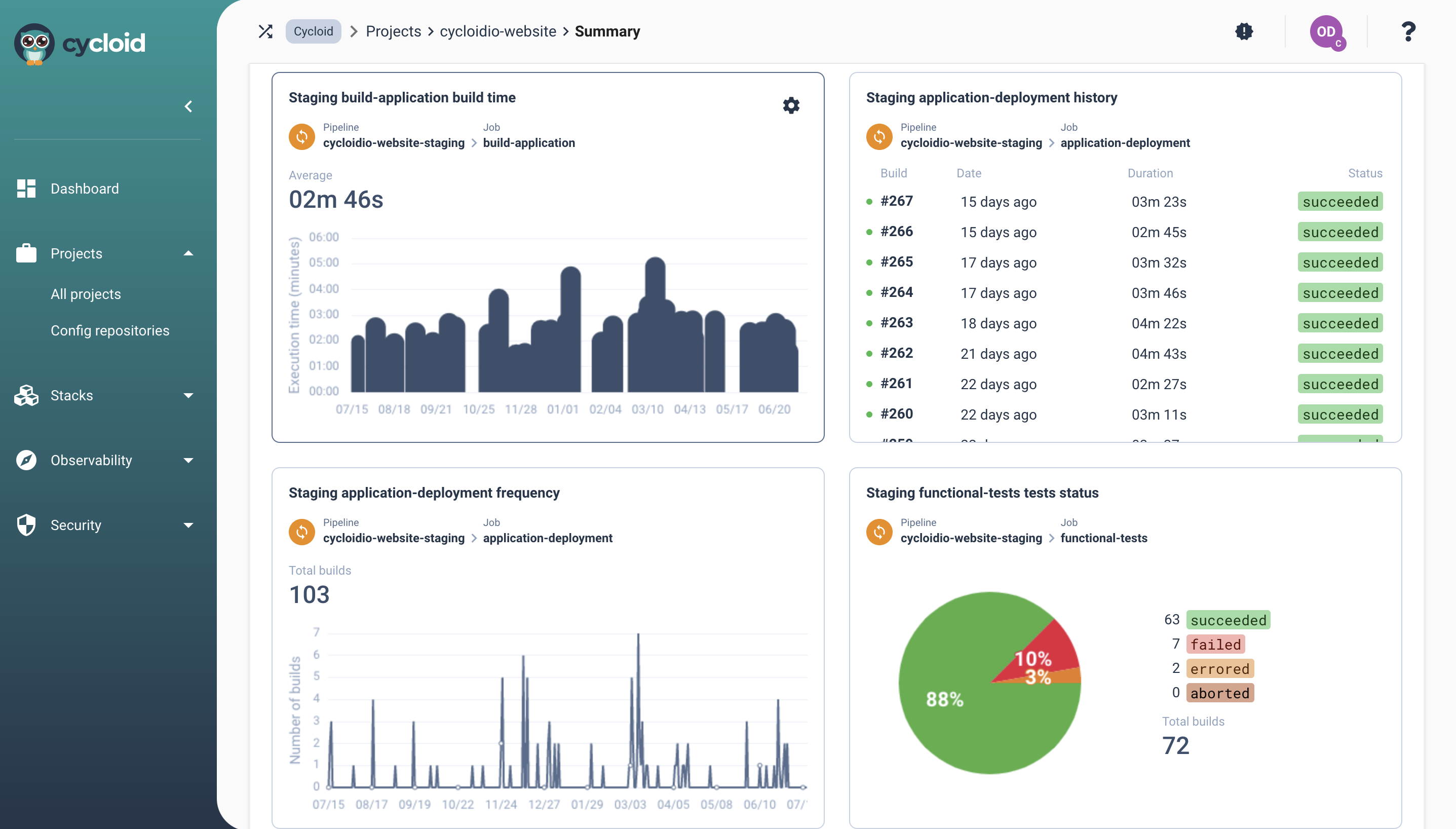
    Cycloid, a Paris, France-based provider of an open framework for implementing DevOps best practices, today announced it is expanding its operations into the U.S. and United Kingdom.

    Benjamin Brial, founder of Cycloid, said the Cycloid framework provides a lightweight approach to striking a balance between enabling developers to employ the tools they prefer and the need for centralized governance. The framework allows roles and policies to be pre-defined to ensure governance while service catalogs are used to deploy software using a set of drag-and-drop visual interfaces. There are also a set of management tools and features that provide additional visibility, automation, monitoring and financial controls to DevOps workflows.

    In effect, the portal that Cycloid provides to manage those workflows also serves to make DevOps more accessible to a wider range of IT professionals, added Brial.

    Cycloid

    Many organizations that embrace DevOps wind up building their own custom portal to achieve that same functionality. Rather than devoting resources to building and maintaining such a portal, Brial said Cycloid maintains and updates a portal platform that can be employed across any combination of tools that developers prefer. Other DevOps frameworks are often rejected because they require developers to adopt a specific set of tools, noted Brial. Without support from developers, it becomes nearly impossible to adopt DevOps best practices at scale, he added.

    After more than a decade of advocacy, adoption of DevOps within most organizations remains spotty. A significant factor in the lack of adoption is cultural issues involving skillsets. Many IT administrators lack the programming skills required to programmatically manage DevOps workflows. Cycloid is trying to establish a middle ground that enables IT operations teams to manage and govern DevOps workflows without having to acquire programming skills. The goal is to make it simpler for developers and IT operations teams to collaborate, said Brial.

    It’s not clear to what degree such an approach might increase adoption of DevOps best practices within enterprise IT organizations. However, it’s already apparent that the cost of hiring and retaining, for example, a small army of site reliability engineers (SREs) to manage IT environments at scale is often cost-prohibitive for many organizations.

    There’s no shortage of DevOps frameworks, but most organizations generally wind up crafting their own as part of an effort to tailor a DevOps workflow to meet their specific requirements. However, if there is a readily available framework that is highly customizable, Cycloid is betting more organizations would rather buy than build and maintain the entire framework themselves. Otherwise, DevOps teams would spend half their time performing the same repetitive manual tasks over and over, said Brial.

    One way or another, DevOps as a methodology for building and deploying applications needs to become more accessible. Proponents of DevOps have made a case for the methodology for the better part of a decade, with mixed success. The challenge continues to be finding a way to scale DevOps processes across the entire enterprise versus allowing each individual development team to define application development and deployment processes that, today, vary widely in terms of efficiency.

  • Aqua Security Acquires tfsec to Advance DevSecOps

    Aqua Security Acquires tfsec to Advance DevSecOps

    Aqua Security today announced it has acquired tfsec, an open source project that provides a static analysis scanner for infrastructure-as-code (IaC) that is designed to be integrated within a DevOps workflow.

    Amer Jerbi, Aqua Security CTO, said tfsec extends the security platform the company already provides in a way that advances adoption of DevSecOps best practices. In addition, to prevent developers from misconfiguring cloud infrastructure using tools such as Terraform, the scanner surfaces examples of code that provide developers with insights into how to properly configure infrastructure.

    Jerbi noted that tfsec is already integrated with Aqua Trivy, an open source tool that scans container images for vulnerabilities. Integrations with the rest of the Aqua Security portfolio will follow, added Jerbi.

    Tfsec co-founders Liam Galvin and Owen Rumney will join Aqua Security as cloud engineers. The challenge Aqua Security is trying to address is the need to enable organizations to proactively prevent cybersecurity issues from arising in production environments rather than only identifying vulnerabilities that need to be fixed, said Jerbi.

    Aqua Security tfsec

    The decision to acquire tfsec comes in the wake of a series of high-profile breaches when many organizations are scrambling to make sure software supply chains are secure. Cloud platforms are rife with misconfigurations mainly because developers often lack the expertise needed to ensure infrastructure is secure after they have provisioned it. Organizations are embracing DevSecOps best practices in the hopes of educating developers to assume more responsibility for application security. However, developers are not going to acquire that expertise overnight. The tfsec scanner provides a way to enforce security policies today while at the same time affording the time to teach developers how to avoid misconfigurations.

    It’s unclear how many cybersecurity events arise because of cloud misconfiguration issues. The cloud service providers have adopted a shared responsibility model that makes the organization employing the cloud responsible for both the applications deployed on those clouds and for how that infrastructure is provisioned. Many developers that provision cloud infrastructure themselves within the context of a DevOps workflow often assume the cloud service provider is doing more than it is to prevent misconfigurations. Cybercriminals, meanwhile, have become very adept at scanning for those misconfigurations.

    There are, of course, a lot of layers and nuances when it comes to DevSecOps. Arguably, Jerbi said, the most critical thing for most organizations is to simply get started. Tools that can be quickly and easily integrated within an existing DevOps workflow with minimal disruption are critical, Jerbi added.

    In the meantime, DevOps teams should expect cybersecurity teams to become more involved in their workflows, especially as government mandates aimed at securing software supply chains become stricter. Eventually, as organizations gain confidence in the ability of their DevOps teams to secure their application environments, those cybersecurity teams will refocus their efforts on hunting for threats. In the meantime, DevOps teams would be well-advised to make those cybersecurity professionals feel as welcome as possible, given the application security mandate most of them have been given.

  • Copado Acquires Qentinel to Gain AI Testing Tools

    Copado Acquires Qentinel to Gain AI Testing Tools

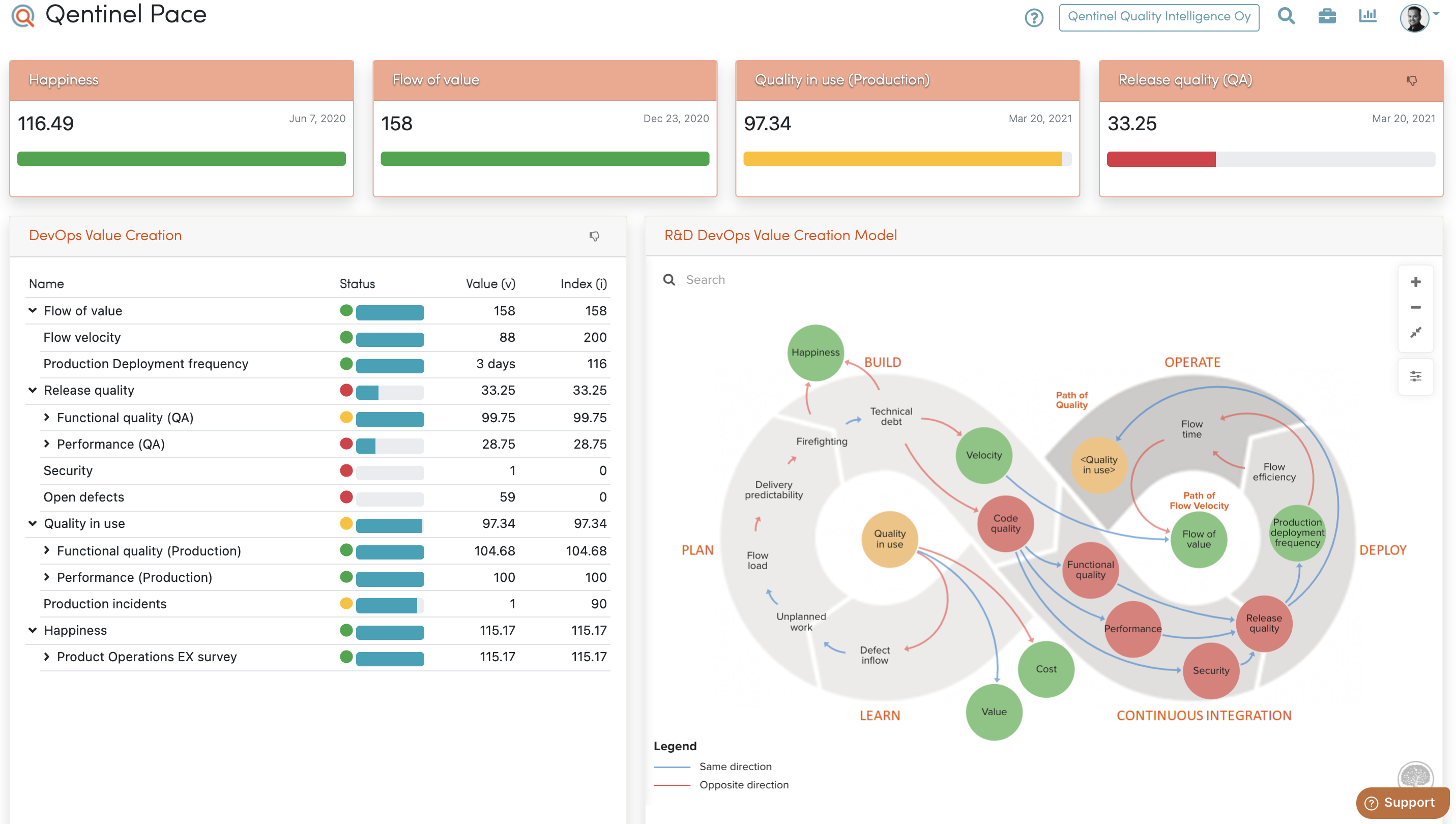
    Copado has acquired Qentinel as part of an effort to incorporate AI-infused application testing within a DevOps platform and build applications using low-code tools across multiple software-as-a-service (SaaS) platforms.

    The Copado continuous integration/continuous delivery (CI/CD) platform was originally created to accelerate the development of low-code applications on top of the Salesforce platform. Now, however, Copado is expanding the scope of its DevOps reach to include other SaaS platforms.

    Andrew Leigh, chief marketing officer for Copado, said as organizations increase the number of SaaS platforms they employ in the wake of the COVID-19 pandemic, it quickly became apparent there would soon be a need to build applications that enable organizations to unify business processes spanning multiple SaaS applications.

    As part of that effort, Copado’s acquisition of Qentinel aims to advance that goal by making it simpler for both developers and end users to participate in the application testing process, Leigh said.

    Qentinel is accessed mainly via the cloud to automate the creation of application tests. Rechristened Copado Robotic Testing, the core of the Qentinel platform is based on the open source Robot Framework that understands scripts, executes them and generates logs and reports. A set of built-in libraries comes packaged with Robot Framework and addresses a wide range of testing scenarios. Qentinel customers include Brunswick, Elisa and Konecranes.

    Copado AI testing

    Gartner is forecasting that, by 2024, 75% of large enterprises will be using AI-enabled test automation tools to advance continuous testing across different stages of the DevOps life cycle. Much of the interest in AI-infused application testing tools is being driven by necessity as the pace of low-code application development exceeds the pace at which manual testing processes can work. As application testing becomes a bottleneck, organizations will naturally look toward automation platforms that employ machine learning algorithms capable of testing applications at scale.

    It’s not clear to what degree those platforms might eliminate the need for humans to test applications. The expectation is humans will be able to test application functionality at a deeper level versus, for example, merely checking to see if compliance mandates have been met. Many smaller organizations building low-code applications don’t have any meaningful application testing capabilities at all. Testing platforms infused with AI will prove to be especially crucial for citizen developers that require guidance to build a secure application that can actually scale, noted Leigh. The more SaaS application environments those applications span, the more critical testing becomes, added Leigh.

    One way or another AI is coming to application testing. After all, machine learning algorithms don’t ever need to take a day off or suddenly leave to take a better offer elsewhere. In fact, soon, most organizations soon won’t even consider a test automation platform that doesn’t have AI capabilities as they attempt to reduce the level of manual, monotonous and repetitive testing tasks. It may take a while for everyone to gain confidence in the algorithms, but it’s now more a question of the degree to which AI will be employed rather than if.

  • BMC Extends DevOps Reach from the Mainframe

    BMC Extends DevOps Reach from the Mainframe

    BMC today announced it has extended its DevOps platform for mainframe environments to provide integrations with GitHub Actions, a framework for managing workflows, and HCL Launch, a continuous delivery platform from HCL Software. BMC gained the DevOps platform with the acquisition of Compuware in June 2020.

    John McKenny, senior vice president and general manager for intelligent Z optimization and transformation at BMC, said those integrations—along with existing support for DevOps platforms such as Jenkins, GitLab and VS Code—make it possible to accelerate the development of applications that include mainframes as part of a larger distributed computing environment. DevOps teams, for example, can now employ an HCL Launch plug-in for the BMC AMI DevOps for Db2 tool to automatically capture and propagate database changes across IBM Db2 databases.

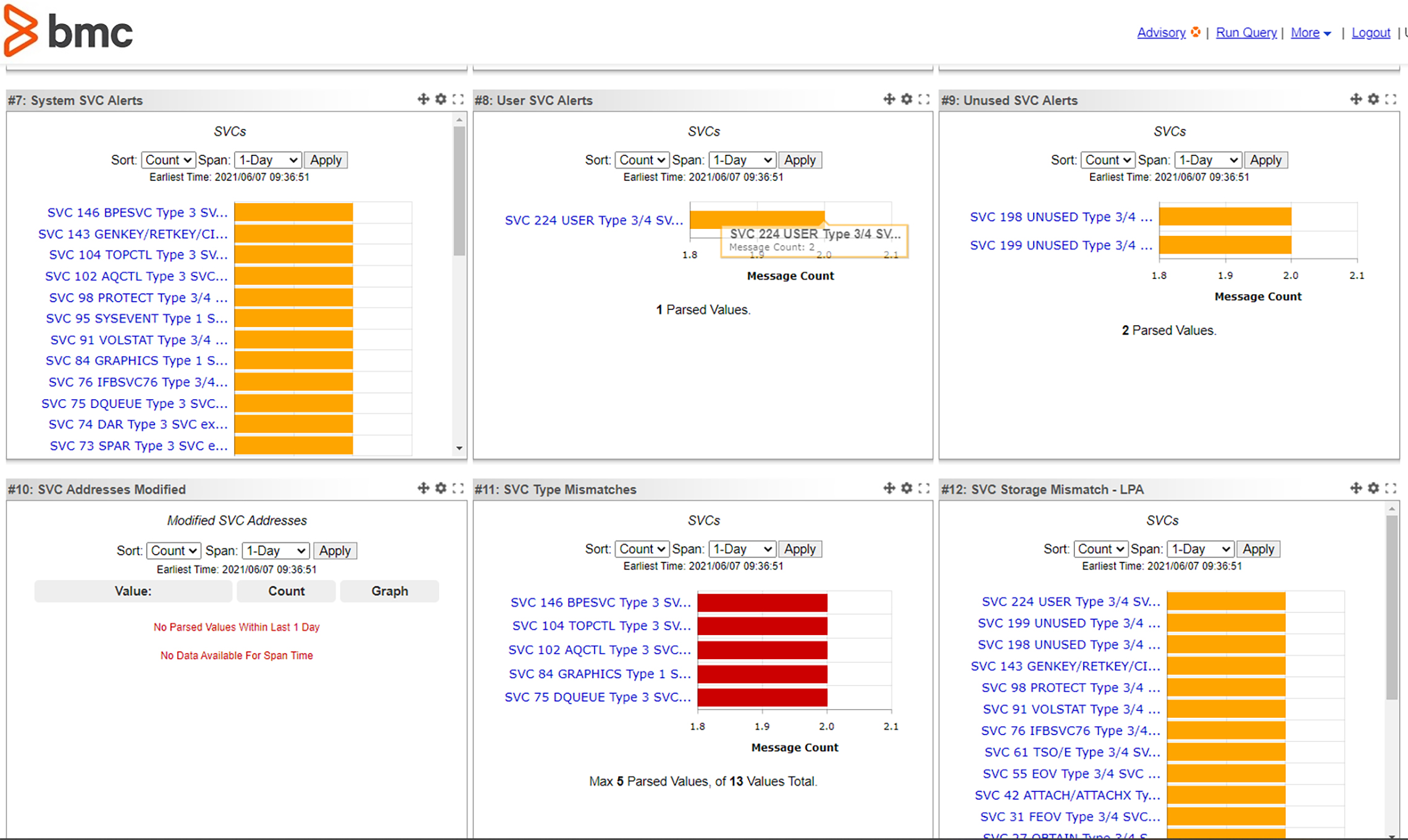
    At the same time, BMC also enhanced a BMC AMI Ops Monitor for Java Environments that automatically discovers all Java virtual machines (JVMs) running on z/OS environments on a mainframe. The BMC AMI Ops Monitor for Java Environments now includes the ability to discover the application programming interfaces (APIs) and services invoked by those JVMs.

    BMC also revealed today that its Workflow WiZard tool has been accepted as part of the open source Zowe initiative launched by the Open Mainframe Project. The Workflow WiZard makes it easier to install, configure and maintain software installed on mainframes running z/OS.

    Finally, BMC revealed it has extended its privileged access management (PAM) tools by enhancing the supervisor call screener and Unix System Service (USS) data enrichment capabilities of BMC AMI Security software. Based on technology BMC gained with the acquisition of RSM Partners, this enhancement increases the level of protection BMC AMI Security software provides to thwart attacks by surfacing suspicious activity, such as from malicious insiders that may have compromised administrator credentials, said McKenny.

    BMC mainframe

    These days, McKenny noted, everything is under attack because the minute cybercriminals discover a way to compromise one platform, they almost immediately try to apply that same technique against other platforms. Mainframe environments, which tend to process an organization’s most valuable data, naturally are a high-value target, added McKenny.

    In general, McKenny said IT organizations that rely on mainframes continue to make steady progress toward embracing DevOps best practices. A recent survey conducted by Forrester on behalf of BMC found 80% of respondents said their mainframe development tools needed significant improvement to provide more value.

    The need to accelerate digital transformation initiatives, which typically require access to data that resides on mainframes, are, in many cases, forcing the DevOps issue within many organizations. Software development teams that build mainframe applications are almost always required to create APIs that make it easier for other applications to consume that data.

    Not every organization, of course, has a mainframe. However, as digital business transformation continues to evolve, the number of applications that need to consume mainframe data will steadily increase. The challenge facing mainframe application management teams is finding a way to provide that access without using traditional waterfall processes to build the required APIs.

  • Survey Finds Biggest DevOps Obstacles are Organizational

    Survey Finds Biggest DevOps Obstacles are Organizational

    A survey of 600 IT professionals published this week by mabl, a provider of a test automation platform, finds the biggest barriers to adopting DevOps practices are more closely related to organizational issues rather than any technology.

    The survey identified non-technological issues as the main inhibitor to DevOps by a wide margin (82%). Only 11% of respondents said their organizations has fully implemented DevOps practices, while another 24% said they were most of the way toward achieving that goal.

    The top two barriers to adoption are slow processes and speed of adaptation (29%), followed by budget and funding (21%). Only 18% identified technology limitations as an issue.

    Nearly half of respondents (46%) said they have been able to implement continuous integration, while more than one-third (36%) said they have also been able to achieve continuous delivery. Just over a quarter (27%) said they have also achieved continuous deployment. However, only a third of respondents said they deploy new code at least once per week. Almost half still deploy less than once per month. The number of teams that deploy new code daily or multiple times a day (15%) is roughly equivalent to those that deploy code on a quarterly basis (16%).

    The most widely used DevOps tools are GitHub (34%) and Jenkins (33%), followed by GitLab (21%), Azure Pipelines (20%) and Bitbucket (19%).

    In terms of testing, the most widely automated tests are user interface (UI)/functional and unit tests at 42% each, followed by regression at 41% and integration at 35%, respectively. The most widely used functional testing tool is Selenium (41%), followed by Cypress at a distant second place (14%). The most widely employed tool for testing application programming interfaces (APIs) is Postman, followed by SoapUI (21%) and homegrown tools (17%).

    Dan Belcher, co-founder of mabl, said that while it’s clear most organizations still have a long way to go before they fully embrace DevOps best practices, it’s now more a question of degree rather than if. As organizations realize the extent to which they are dependent on software today, the focus on both quality and ensuring timely delivery will increase. The stakes involved in software delivery these days have never been higher, noted Belcher.

    Nevertheless, the survey makes it clear how resistant to change organizations are. Some organizations have been building software the same way for decades. The only thing more difficult than convincing IT and business leaders there is a fundamental need for change is driving that change all the way down to individual developers and IT operations teams.

    Competitive pressure, however, will inevitably force the issue. If rivals are delivering better application experiences that create a business advantage within the context of a digital business process, an organization will have to adapt. Otherwise, their fate will be, over time, to fade away or be acquired. Equating DevOps with that existential threat may be a challenge, but unless that connection is made it’s only a matter of time before organizations that aren’t embracing DevOps best practices will slide toward irrelevance.

  • Applitools Extends Visual AI Testing to Native Mobile Apps

    Applitools Extends Visual AI Testing to Native Mobile Apps

    At its online Future of Testing: Mobile event, Applitools today previewed the ability to apply visual artificial intelligence (AI) to applications that run natively on a mobile computing platform.

    Accessed via a cloud service that is currently available for free on a limited basis, the Ultrafast Test Cloud for Native Mobile offering will extend the company’s visual AI tool for browser-based mobile applications to applications that run natively on Apple iOS or Google Android devices.

    Applitools CEO Gil Sever said that while most mobile enterprise applications today rely on browsers to make it simpler to build and deploy applications, in time, many more of these applications will be running natively on iOS or Google Android platforms, mainly because they provide a better user experience.

    That approach also eliminates the need to rely on cumbersome platform emulators to test applications because the Applitools AI tool can learn the nuances of each platform in a way that streamlines the application testing process.

    In fact, visual AI tools will not only make developers and testing teams more efficient, but they also will make it easier for end users to participate in the application testing process, Sever noted.

    The Applitools approach to AI testing also provides developers with more control based on the application’s use cases. Different settings can be applied to test, for example, a medical application that requires perfect alignment of pixels versus an e-commerce application that may not require as much fidelity. Developers can then resolve regression issues by employing root cause analytics.

    It’s not clear how broadly visual AI tools that use computer vision algorithms to automate testing will be employed. There is no doubt the current pace of application development is faster than most dedicated teams of testers can handle. As a result, more responsibility for application testing is being shifted left toward developers that, in the interest of time, might be more inclined to rely on AI and other forms of automation that can be accessed via a cloud service.

    The rise of AI testing tools might also go a long way toward ensuring more applications are thoroughly tested before being deployed in a production environment. One of the first steps in any application development schedule that gets compressed when a project falls behind schedule is testing. As more rote tests are automated, there should be more opportunities for dedicated testing teams to focus on improving the end user experience.

    It may be some time before most organizations are routinely employing AI to test applications. However, none of those organizations should expect AI to replace the need for humans to test applications alongside AI testing platforms that can see the actual application. After all, there’s a world of difference between seeing the changes that were made to an application and understanding why they actually needed to be made.

  • Fugue Aims to Simplify Securing Infrastructure-as-Code

    Fugue Aims to Simplify Securing Infrastructure-as-Code

    Fugue today unveiled a 1.0 release for Regula, an open source policy engine for infrastructure-as-code (IaC) security that comes with prebuilt libraries for implementing hundreds of policies that validate configurations on Amazon Web Services (AWS), Microsoft Azure and Google Cloud services.

    Regula is based on the Open Policy Agent (OPA) software being advanced under the auspices of the Cloud Native Computing Foundation (CNCF) and is compatible with both Terraform and AWS CloudFormation tools for configuring cloud infrastructure.

    Developers can also build custom rules on top of OPA using libraries that Fugue created for the Rego programing language that is part of the OPA specification. Regula supports output formats such as JUnit, Test Anything Protocol (TAP) and JSON to make it easier to integrate Regula with other tools and frameworks that make up a DevOps workflow. Input formats supported include Terraform HCL, Terraform plan JSON, AWS CloudFormation and Serverless Application Model templates.

    Regula also provides out-of-the-box support for the CIS Foundations Benchmarks in addition to other policies defined by Fugue, such as dangerously permissive identity access management (IAM) policies, Lambda function policies allowing global access, volumes with encryption disabled and untagged cloud resources.

    It is deployed as a pre-packaged binary that includes a command line interface (CLI) through which Regula can be incorporated within a DevOps workflow and can be installed using tools such as Homebrew or deployed as a Docker image.

    Fugue CEO Josh Stella said Regula provides DevOps teams with an extensive library of rules that check for common security and compliance violations as well as advanced multi-resource misconfigurations. That latter issue is especially challenging because developers typically don’t have much visibility into dependencies that can inadvertently provide cybercriminals with access to, for example, an S3 cloud storage bucket that otherwise appears to be configured properly. Regula will also identify any required resources that might be missing, as well, added Stella.

    Stella said Regula 1.0 provides a simpler approach to securing cloud infrastructure. Cloud infrastructure is frequently misconfigured simply because a developer made a mistake. Unfortunately, cybercriminals have become especially adept at scanning cloud platforms for these misconfigurations, noted Stella.

    It’s not clear to what degree a backlash might be building against IaC in the wake of recent high-profile breaches of software supply chains. Organizations have embraced IaC tools to make developers more productive. However, each security incident involving a misconfiguration of cloud infrastructure resources makes it all too apparent that developers lack the expertise required to securely provision IT environments. Rather than creating a series of cybersecurity reviews that would reduce developer productivity, Stella said Fugue is making a case for a compliance-as-code approach that developers can readily understand and implement.

    One way or another, cloud infrastructure has to become more secure. Business leaders are growing weary of security incidents that, from their perspective, are caused by careless mistakes. Their first instinct is to empower cybersecurity teams to resolve those issues once and for all. The only issue that needs to be resolved now is just how cumbersome those security reviews need to be if developers are provided with the tooling required to secure cloud platforms themselves.

  • JFrog Acquires Vdoo to Advance DevSecOps

    JFrog Acquires Vdoo to Advance DevSecOps

    JFrog today announced it has agreed to acquire Vdoo for $300 million in cash to gain a set of analytics tools that discover vulnerabilities in application binaries.

    Vdoo’s scanning tools, infused with machine learning algorithms, will be fully integrated with the JFrog Xray vulnerability detection tools along with the rest of the JFrog continuous integration/continuous delivery (CI/CD) platform in 2022. In the meantime, the Vdoo scanning tool will continue to be made available via a software-as-a-service (SaaS) platform that Vdoo built.

    The Vdoo platform is already integrated with the JFrog Artifactory repository and JFrog Pipelines. Vdoo’s platform also is integrated with DockerHub, Jenkins, GitHub, GitLab and Azure Pipelines via REST application programming interfaces (APIs) that make the Vdoo scanning tools accessible via a command line interface (CLI).

    JFrog CTO Yoav Landman said acquiring Vdoo is critical because when it comes to implementing DevSecOps best practices, the only meaningful place to discover and remediate vulnerabilities is in the binaries deployed in production environments. As such, the Vdoo platform provides a superior alternative to both static application security testing (SAST) and dynamic application security testing (DAST) tools that scan for vulnerabilities in source code, added Landman.

    Developers require accurate intelligence that can be quickly acted upon to secure applications running in production. They can quickly take action once they know how a specific vulnerability impacts a binary, versus being told to update source code that could take days or weeks to complete, noted Landman. The Vdoo platform also makes it possible to leverage machine learning algorithms to detect zero-day vulnerabilities, malware, exploits, backdoors, supply chain risks and other threats before they become commonly known. Those vulnerabilities can be detected in everything from application binaries to firmware running on embedded devices. Vdoo is also recognized by the Mitre Corp. that oversees the Common Vulnerabilities and Exposures (CVE) database as a CVE Numbering Authority (CNA) for discovering vulnerabilities.

    JFrog Vdoo

    As responsibility for application security continues to shift left toward developers, many organizations are finding the tools that cybersecurity teams employed to discover threats don’t lend themselves to the workflows that developers have created to build applications. As a result, many of these tools are being replaced by developer-friendly alternatives that developers can invoke via a CLI as part of DevOps workflow. The goal, now, needs to be reducing the level of noise created by security tools to enable developers to focus on the vulnerabilities that specifically impact their code, noted Landman. Otherwise, developers are simply overwhelmed by a massive number of alerts generated by security tools that often don’t appear to be especially relevant, Landman added.

    It’s not clear how quickly responsibility for application security is shifting left. However, in the wake of a series of high-profile software supply chain breaches, the urgency surrounding adoption of DevSecOps best practices has increased considerably. The challenge, as always, is getting the right tools into the hands of developers at the right time.