Author: Mike Vizard

  • Dell Updates AIOps Platform to Better Automate IT Ops

    Dell Updates AIOps Platform to Better Automate IT Ops

    Dell Technologies this week updated its IT operations platform infused with artificial intelligence, dubbed CloudIQ, to add support for its PowerEdge servers. In addition, Dell pledged to add support for its PowerSwitch networking hardware next month as part of an ongoing effort to extend the reach of its AIOps platform across the entire Dell EMC portfolio.

    At the same time, Dell next month also plans to employ webhooks and a REST application programming interface (API) to both integrate the CloudIQ cloud service with third-party platforms and share notifications and recommended actions via tools and platforms such as ServiceNow, Slack, Microsoft Teams, Ansible and vRealize.

    Dell has also defined an autonomous operations framework that defines the various stages of AIOps capabilities that organizations should be able to take advantage of as CloudIQ continues to evolve.

    Dell AIOps

    Drew Schulke, vice president of product management for Dell Technologies, said CloudIQ currently enables IT organizations to achieve level three of that framework. As Dell continues to update CloudIQ alongside delivering ongoing infrastructure upgrades, additional capabilities will be steadily added, noted Schulke.

    Dell is making a case for standardizing on both its infrastructure and the IT operations platform it provides. Whether acquired and managed by an internal IT team or consumed as-a-service provided by Dell, the goal is to convince IT teams to reduce their reliance on rival infrastructure platforms that are not as tightly integrated with CloudIQ. In effect, Dell is delivering continuous intelligence as an AIOps service, said Schulke.

    Of course, IT operations teams could opt to standardize on an AIOps platform that is integrated with infrastructure provided by multiple vendors. However, Dell is betting that an AIOps framework optimized for its platforms will reduce the total cost of IT in a way that IT organizations will not be able to ignore.

    Each IT organization will need to decide for themselves what path forward makes the most sense for them. However, as more AI capabilities are infused into IT operations platforms, it’s becoming clear that many of the tasks routinely performed by IT teams are becoming increasingly automated. Most organizations will need to make a decision in the months ahead about the degree to which they are comfortable waiting for their existing IT operations platform to be enhanced with AI capabilities versus acquiring a new one that might be more advanced.

    Regardless of the path forward, the level of cultural disruption AIOps will bring to IT teams will be high. DevOps teams, naturally, have always been at the forefront of IT automation. However, most of the recent advances in IT operations have generally been applied in a piecemeal fashion. Platforms such as CloudIQ are designed to be implemented on a more end-to-end basis.

    Thate level of automation will have a profound impact on everything from the number of applications an IT team can support to the roles of the individuals that make up that team. It’s not likely that AIOps will replace the need for those IT teams as much as augment them and redefines the job they are being asked to perform.

  • Clubhouse Becomes Shortcut to Transform Software Project Management

    Clubhouse Becomes Shortcut to Transform Software Project Management

    Shortcut, formerly known as Clubhouse Software, today announced that its project management software for software development teams has been expanded to include additional workflow capabilities.

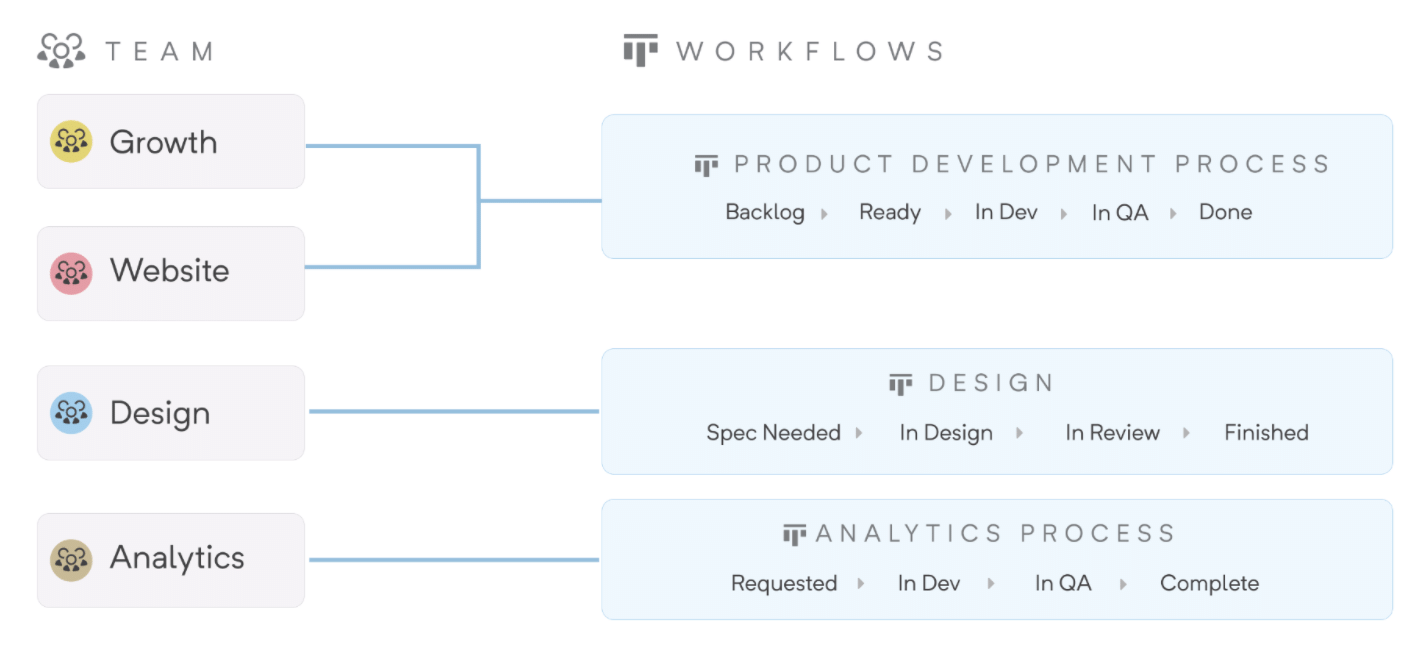
    CEO Kurt Schrader said team-to-workflow functionality is being added to the software-as-a-service (SaaS) platform and will make it easier to share workflows across software development teams in a more standardized way.

    Organizations can standardize workflows across multiple teams while still giving each team the ability to customize workflows for their own unique processes. As work gets created and assigned, it automatically moves into a workflow without having to manually update processes.

    Shortcut is designed to make it simpler for development teams to collaborate in a way that maintains transparency with other teams working on projects that are part of the same larger initiative, said Schrader. It allows product managers, engineers and designers to plan, track and measure their work without friction as the organization continues to grow in size, he added.

    For example, Shortcut will surface what teams need to focus on as priorities and timetables change within a specific project in addition to allowing users to define sprints using start and end dates, and the tool then sends reminders so the team can reserve time to focus on specific projects.

    Shortcut will also integrate with continuous integration/continuous delivery (CI/CD) platforms via application programming interfaces (APIs) to enable the development of custom workflows that include, for example, integration with real-time conversations occurring via the Slack collaboration service.

    Most of the project management software DevOps teams employ today is too complex and intimidating for the average business executive. Rather than forcing business users to learn how to master these applications, a case can be made for a more intuitive set of project management tools for both software development teams and the product managers they ultimately serve.

    As more organizations realize how dependent they are on software to drive business processes, many of them are reviewing the tools they currently rely on to manage software development. The goal is to not only reduce friction and enable more transparency across teams but also to provide stakeholders outside of the development team with more visibility into the status of any given project.

    At the same time, organizations are simultaneously launching more software development projects that have many dependencies. Many of those initiatives are based on microservices that are being built in isolation from one another before being aggregated to create an application. The dependencies between those microservices require organizations to make sure they are developed and deployed in a way that doesn’t leave one software development team waiting on another to finish a project before they can complete their work.

    Shortcut

    Schrader said that humans, as a species, are bad at organization. Project management applications should make it simpler for companies to understand how projects are not only organized but also all the dependencies that exist between them.

    Regardless of how software development projects are managed the need for greater visibility is obvious to all. Less clear is the best way to go about achieving that given all the communications channels available.

  • Google DORA Report Shows Modest DevOps Gains

    Google DORA Report Shows Modest DevOps Gains

    Google today published the annual Accelerate State of DevOps Report created by its DevOps Research and Assessment (DORA) team that finds 26% of DevOps teams surveyed can now be classified as elite performers. That compares to 20% the last time the study was conducted in 2019.

    DevOps teams, made up of a total of 32,000 IT professionals from around the globe, were evaluated based on their ability to frequently deploy, code, lead time for changes, time to restore service, change failure rates and operational performance. An elite team is expected to be able to restore service in the event of an outage in less than an hour.

    Dr. Dustin Smith, a user experience researcher for Google, said the increased rate suggests steady gains in DevOps maturity continue to be made despite all the challenges the COVID-19 pandemic presented. A full 96% of respondents said that prior to the pandemic they had not worked from home on a regular basis.

    The DORA report finds high and elite performers make up two-thirds of respondents. Elite performers were able to collectively decrease their lead time for changes when compared to previous studies. It’s also worth noting only elite performers have minimized their change failure rate. In previous years, medium and high performers were able to do the same.

    Overall, more than half of respondents (52%) report they have adopted site reliability engineering (SRE) best practices to some degree.

    Elite performers deploy code 973 times more frequently than low performers, who reported deploying less than once every six months. The normalized annual deployment numbers range from 1,460 deploys per year for the highest performers to 1.5 deploys per year for low performers. Not surprisingly, for elite performers, the lead times from commit to deploy are 6,570 times faster than low performers.

    Security practices have also improved with 60% conducting security reviews, with 58% reporting that the reviews include testing. Nearly two-thirds (63%) said they work closely with information security teams. The report finds teams with high-quality documentation were 3.8 times more likely to integrate security throughout their development process.

    Reliance on cloud platforms has also increased, with 56% of respondents indicating they employ a public cloud, a 5% increase from 2019. Only 21% of respondents reported deploying to multiple public clouds. Over a quarter (26%) of respondents did so to leverage the unique benefits of each cloud provider, followed closely by 22% that cited availability.

    Just over a third (34%) report they are using a hybrid cloud, while 29% have a private cloud. A total of 21% still don’t use a public cloud.

    The report also finds elite performers were 3.5 times more likely to have met all essential cloud characteristics defined by the National Institute for Standards and Technology (NIST). Those characteristics are defined as on-demand self-service, broad network access, resource pooling, rapid elasticity or expansion and measured service. Only 32% of respondents who said they were using cloud infrastructure agreed or strongly agreed that they met all five of the essential characteristics of cloud computing defined by NIST, an increase of 3% from 2019. Overall, usage of those characteristics of cloud computing have increased by 14% to 19%, with rapid elasticity showing the largest gain.

    The DORA report makes it clear there is still a long way to go before DevOps nirvana is more widely achieved. On the plus side, however, the number of organizations that have embraced DevOps to some degree continues to steadily increase.

  • OpsRamp Extends AI Reach to Incident Management

    OpsRamp Extends AI Reach to Incident Management

    OpsRamp today extended its IT operations platform infused with machine learning algorithms, also known as AIOps, into the realm of incident management.

    The Summer 2021 release of the company’s namesake platform adds alert predictions for preventing outages and incidents, alert enrichment policies for faster incident troubleshooting and enhancements for automatically ingesting metrics data collected from the Alibaba Cloud environment and open source Prometheus monitoring software as well as Hitachi, Poly, VMware and Dell EMC platforms.

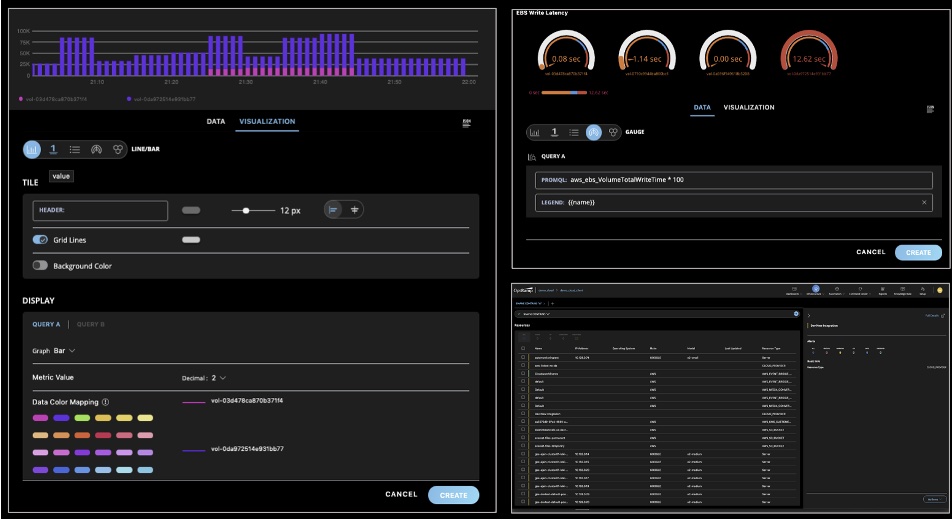
    IT operations teams can now also visualize metric values that can increase or decrease within a fixed range using Gauge charts. IT teams can also now add alert context details to provide more relevant information. There’s also now a mobile app for both Apple iOS and Google Android devices through which IT teams can now respond to alerts and incidents.

    Finally, OpsRamp is also making available a beta release of dynamic Workflows, which enable IT team to maintain a single decision table to address specific operational scenarios.

    Sheen Khoury, chief revenue officer at OpsRamp, said the goal is to leverage artificial intelligence (AI) to increase application availability by enabling IT teams to better predict when there are indicators of an incident caused by, for example, higher volumes of seasonal traffic that could lead to an outage.

    At the same time, IT operations teams can improve overall time-to-value by leveraging the automatic monitoring tools that are embedded in the platform, he added.

    OpsRamp is betting that rather than waiting for incumbent providers of IT operations platforms to add AI capabilities, many IT teams will opt to deploy a new IT management framework altogether. Many of the manual tasks IT operations teams regularly perform today can then be automated faster, noted Khoury.

    Naturally, it takes time for machine learning algorithms to be trained, so the benefits of AIOps are not instantaneous. However, those algorithms will continuously learn the unique attributes of an IT environment in a way that makes it easier for IT teams to manage an IT environment more proactively. The algorithms provide the added benefit of making it easier for new members to join an IT operations team without having to spend months learning all the nuances that are unique to that environment.

    Each IT team will need to decide for itself the degree to which they want to rely on an AIOps platform to manage their IT environment. Initially, most IT teams will need to evaluate the recommendations made by an AI platform. However, as they gain confidence in the recommendations, they will trust the platform to automate more processes in response to events occurring in the IT environment in real-time.

    Regardless of how much faith IT teams put in AI, it has become apparent that enterprise IT environments are only going to become more complex. Many IT teams will not be able to manage some environments without the aid of an AI platform. Many IT professionals may not want to work for organizations that don’t provide some way to augment their skills using AI—the stress level would simply be too high.

    One way or another, DevOps teams that are highly committed to ruthlessly applying automation will be at the forefront of AI adoption in the enterprise.

  • Sentry Integrates Code Observability Tool with GitHub, GitLab

    Sentry Integrates Code Observability Tool with GitHub, GitLab

    Sentry this week extended its namesake observability platform for code to provide tighter integration with the DevOps platforms provided by GitHub and GitLab.

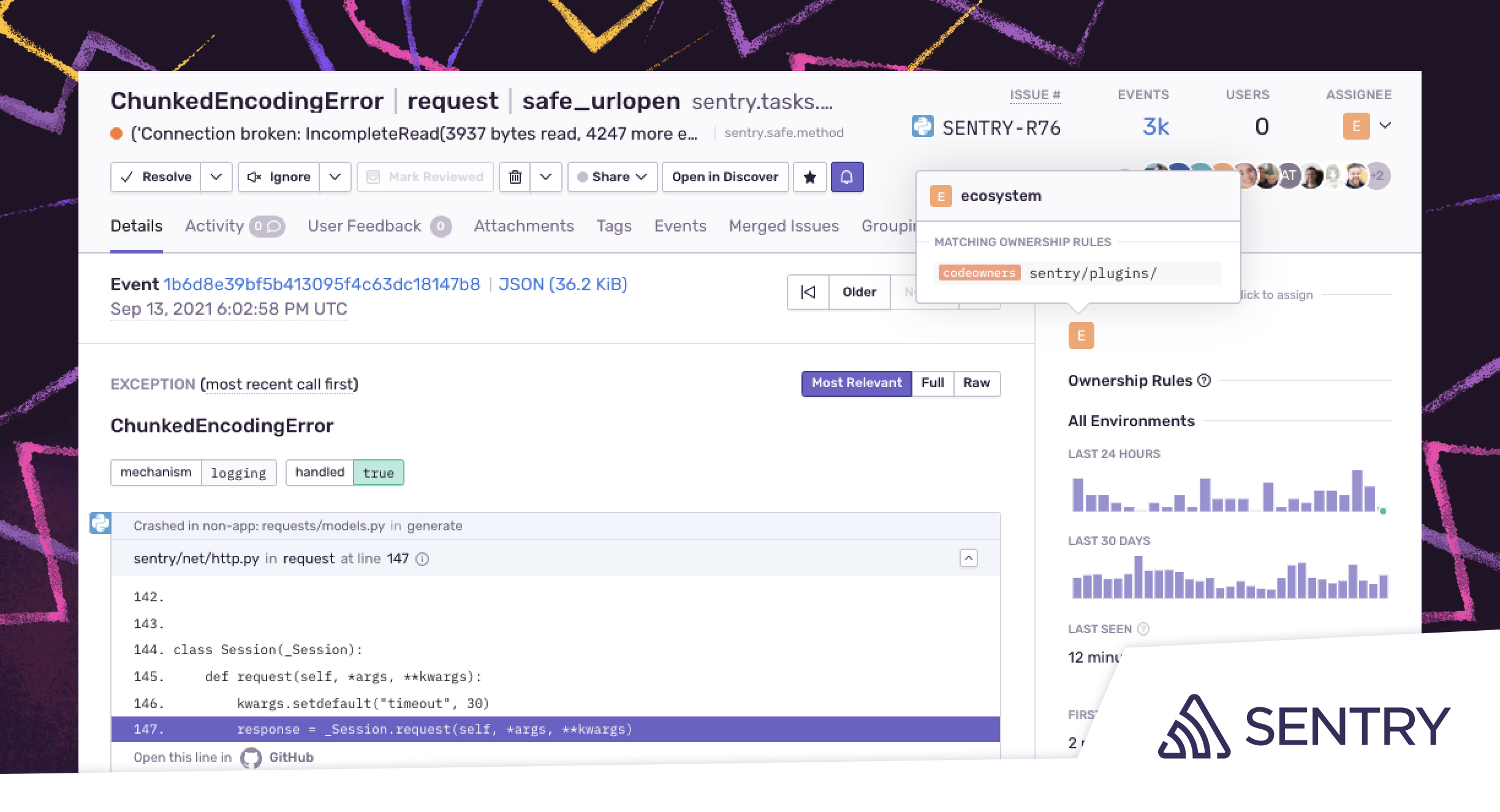
    Application development project managers can now assign issues to DevOps teams by integrating directly with the CODEOWNERS file in GitHub or GitLab. Error messages, for example, can now be automatically routed to individuals or teams that own the code via notifications in Slack.

    IT teams can now also identify and prioritize issues based on user impact by setting alerts based on when an issue exceeds a certain percentage of user sessions within a specific amount of time.

    Sentry CEO Milin Desai said that the percentage-based approach to alerts reduces the overall noise being generated in a way that enables DevOps teams to better prioritize their remediation efforts.

    Finally, Sentry has added an integration with the Okta identity management platform to make it possible to automatically provision and de-provision users and teams using the system for cross-domain identity management.

    As more responsibility for managing the application environment shifts left toward developers, there needs to be a way to streamline communications between developers and the rest of the IT operations team, noted Desai. Most developers today already spend less than one-third of their time writing code.

    The Sentry platform is already used by more than 75,000 organizations to enable developers to better observe and analyze code behavior. The company is now moving to bridge the divide between developers and site reliability engineers (SREs) by streamlining communications and workflows, noted Desai.

    As the responsibility for managing applications shifts left, developers don’t necessarily want to use the same tools that IT operations teams have relied on for years. Most developers want to be able to troubleshoot their applications with minimal interaction with IT operations teams.

    Historically, IT operations teams have relied on application performance management (APM) platforms to manage IT operations. Those platforms are now evolving into observability platforms that promise to provide more context by correlating events as they occur across both applications and IT infrastructure platforms. That approach, however, typically requires developers to insert agent software into their applications. Once inserted, that agent software needs to be maintained and updated, added Desai.

    The Sentry approach provides developers with a tool for collecting data from an application in a way that consumes just tens of kilobytes of memory after being embedded directly within an application. That approach eliminates the need to rely on much larger agent software to achieve observability of application code. Developers can then diagnose and possibly remediate issues in code without ever having to create a ticket asking a DevOps team to investigate an issue.

    Regardless of how developers go about instrumenting their applications, most everyone in IT agrees that the current state of observability needs to improve. The issue now is determining how best to achieve that goal in a way the benefits both the DevOps team and the developers that are now being asked to not just write code but also manage the entire application life cycle.

  • Transposit Survey Shows DevOps’ Impact on CIO, CTO Relationship

    Transposit Survey Shows DevOps’ Impact on CIO, CTO Relationship

    A survey of 415 CIOs and CTOs conducted by Transposit, a DevOps process orchestration platform provider, finds that as organizations continue to adopt DevOps processes more widely, friction between these types of senior IT leaders is rising within many organizations.

    As a C-level role, ‘CTO’ first gained traction in the wake of the dot com boom. In more recent years, many traditional enterprises added CTOs alongside CIOs as they realized how dependent the organization had become on software. In the wake of the COVID-19 pandemic, there is now more focus than ever on digital business transformation initiatives that are dependent on the timely delivery of software.

    Transposit CEO Divanny Lamas said that as more organizations’ structures revolve around product teams, there are a lot more CTOs. In some cases, CIOs are reporting to CTOs.

    The majority of organizations surveyed have both roles. A full 83% of CIOs said there is also a CTO at their organization, while 86% of CTOs said there is also a CIO. Just under a quarter of respondents (24%) said they perform both roles.

    At the same time, 98% of survey respondents reported increased focus on digital transformation within their organization in the past three years, with three-quarters (75%) noting that focus has increased since the start of the pandemic. A full 85% report their budget has increased over the last three years.

    Not surprisingly, 92% of respondents said that their responsibilities have changed in the last three years, with over half (56%) reporting their role changed significantly. Both are now graded according to key performance indicators (KPIs) related to managing revenue, with 66.3% of CIOs and 78% of CTOs saying their position is now either directly involved in or required to lead a business strategy.

    But only 34%, or just over a third, said that ownership of most aspects of digital transformation initiatives is a shared responsibility between the CIO and CTO. Specifically, just under a third (32%) noted ownership of software development in their organization is a shared responsibility. A full 88% of respondents apply DevOps practices, and 83.4% believe that DevOps is important to digital transformation at their organization. Almost all (98%) plan to expand their DevOps practice, and 83% already have a plan in place to do so.

    Lamas says software engineering-first principles are changing not just how applications are built but also how IT teams are structured in a way that advances innovation.

    More than a third (35%) of respondents said ownership of software operations developed in-house is a shared responsibility in their organization, while 28% said ownership of managing SaaS or operating commercial off-the-shelf (COTS) software in their organization is a shared responsibility. A third (33%) also noted ownership of the technology for the external customer experience in their organization is a shared responsibility.

    A full 95% of survey respondents also confirmed that the performance of their team is measured by key performance indicators (KPIs) related to revenue, specifically revenue growth (75%), rate of innovation (60%) and uptime (54%).

    It’s too early to say how the relationship between CIOs and CTOs will evolve, but the one thing is clear: The pressure for these roles to collaborate more effectively is on the rise.

  • Sonatype Report Shows Spike in Supply Chain Attacks

    Sonatype Report Shows Spike in Supply Chain Attacks

    Sonatype today released a report that finds there has been a 650% year-over-year increase in supply chain attacks aimed at upstream public repositories. Cybercriminals hope to compromise these repositories by injecting malware into software components that many organizations might be using, according to the report.

    The seventh annual State of the Software Supply Chain Report is based on an analysis of 100,000 applications and 4 million component migrations made in the last month alongside a survey of 702 software engineering professionals. Specifically, the report focuses on demand and security trends associated with the Java (Maven Central), JavaScript (npmjs), Python (PyPI) and .Net (nuget) ecosystems. The top four open source ecosystems now contain a combined 37,451,682 different versions of components, a nearly 20% increase year-over-year.

    Over the course of 2021, developers also downloaded more than 2.2 trillion open source packages from the top four ecosystems, a 73% increase over the prior year.

    However, despite the huge available supply of open source software, use of this software is primarily concentrated in a small number of popular projects. Production applications are only using 6% of available open source projects.

    Not surprisingly, popular projects are more vulnerable to compromise. A total of 29% of popular project versions contain at least one known security vulnerability. Conversely, only 6.5% of projects that are not widely used have vulnerabilities.

    Stephen Magill, vice president of product innovation for Sonatype, said popular open source projects tend to have better security practices in place because of the larger number of maintainers and contributors working on the project. The paradox is that less-popular open source software is not likely to be targeted by cybercriminals who tend to focus on targets that represent the best chance to infect downstream applications, said Magill. Popular open source projects were 2.8 times more likely to contain vulnerabilities, the report found.

    Projects with a faster mean-time-to-update (MTTU) are also generally more secure. They are 1.8 times less likely to have vulnerabilities, the survey found.

    The report also found developers make suboptimal choices 69% of the time when updating third-party dependencies, even when newer versions of projects are generally available. Developers may be avoiding those updates because they may be perceived to be not as stable as they would like. However, those updates generally contain the latest security patches needed to address a recently discovered vulnerability. Commercial engineering teams only manage 25% of the components they use, leaving the majority of their open source dependencies stale and susceptible to increased security risks, the report found.

    Finally, the report suggested there is a greater need for automation. Equipped with intelligent automation, a medium-sized enterprise with 20 application development teams would save a total of 160 developer days a year. Sonatype estimated that could save organizations $192,000 a year.

    In general, Magill noted that the security of software supply chains should continue to improve in the wake of an executive order issued by President Biden. In the meantime, however, most organizations would be well-advised to start reviewing the components and dependencies that make up their software supply chain sooner rather than later. After all, chances are good that cybercriminals are already doing much the same thing.

  • New Relic Survey Shows Greater Appreciation for Observability

    New Relic Survey Shows Greater Appreciation for Observability

    A global survey of 1,300 software engineers, developers, IT leaders and executives found half of respondents (50%) are in the process of implementing an observability platform. Another 23% of respondents said that they cannot gain end-to-end observability at all, while 26% said they believe they have mature observability practices in place. The survey, published today, was conducted by CITE Research on behalf of New Relic.

    The majority (94%) of IT professionals said observability is important for their job role, while nearly three-quarters (74%) said there is still room to grow their observability practice. In fact, 81% of the 450 C-suite executives that participated in the survey said they expect to increase observability budgets in the next year, with 20% expecting those budgets to increase significantly.

    Overall, the survey finds that lack of resources (38%), skills (29%), understanding of the benefits (27%) and strategy (26%) are top barriers to achieving observability.

    Observability, in one form or another, has always been a core tenet of DevOps best practices. Most DevOps teams have relied on monitoring tools to observe a specific process or function. The challenge is those monitoring tools track a pre-defined set of metrics such as resource utilization. Ideally, observability combines metrics, logs and traces—a specialized form of logging—to instrument applications in a way that makes it simpler to troubleshot issues without having to rely solely on a limited set of pre-defined metrics.

    Nearly three-quarters of respondents (72%) noted that IT teams today need to toggle between at least two different tools to manage IT, with 13% having to use more than ten different tools to monitor the health of their systems.

    In contrast, observability platforms make it possible to correlate events across both applications and infrastructure. This capability makes it easier for analytics tools to identify anomalous behavior indicative of the root cause of an IT issue. Armed with these insights, it becomes a lot simpler for IT teams to resolve issues faster.

    The New Relic survey notes that 60% of respondents still monitor telemetry data at the application level, which indicates that a massive amount of valuable telemetry data is largely going unused. A full 91% of IT professionals that responded to the survey noted that observability is critical at every stage of the software life cycle, especially when it comes to planning and IT operations.

    Top benefits cited include faster deployments (27%), more cost-effective use of IT resources (25%), better digital experiences (23%) and improved productivity (22%). The top use cases cited involved digital transformation initiatives (42%) followed by cloud optimization (37%), DevOps processes (36%) and bringing products to market faster (36%).

    Buddy Brewer, group vice president and general manager for New Relic, said observability will become a more pressing issue in IT environments, thanks to the rise of microservices-based applications running on Kubernetes. A full 88% of IT decision-makers New Relic surveyed said they are exploring Kubernetes and containers at some level right now, but only 10% said they have deployed them in a production environment. A total of 40% expect to be in production within three years.

    In general, it’s become critical for IT teams to be able to query data in real-time to resolve issues that are becoming more challenging to resolve at a time when organizations have never been more dependent on IT. Sampling data in the hopes of discovering issues is no longer sufficient, noted Brewer.

    The challenge, of course, is that most IT teams have been using legacy monitoring tools for so long that it’s still hard to imagine there might be a better approach. That doesn’t necessarily mean all those legacy tools will be immediately replaced, but it does mean many of them may simply fade away over time.

    One way or another, most IT teams will soon be able to observe IT environments more deeply. Developers increasingly are taking advantage of open source tools like OpenTelemetry to instrument applications in a way organizations can more easily afford, regardless of whether they fully appreciate the nuances of modern observability versus traditional monitoring.

  • JFrog Acquires Upswift to Push DevOps to the Edge

    JFrog Acquires Upswift to Push DevOps to the Edge

    JFrog today revealed it has acquired Upswift as part of an effort to extend its DevOps reach to edge computing platforms. Terms of the acquisition were not disclosed.

    Upswift has created agent software that is deployed as a binary file on an edge computing platform that makes it possible to continuously deliver software across a fleet of edge computing devices and platforms. That approach makes it possible for organizations to deploy software regardless of whether the target platform is only running Linux, containers or a virtual machine.

    JFrog CEO Shlomi Ben Haim said the agent software developed by Upswift will be integrated with the continuous integration/continuous delivery (CI/CD) platform created by JFrog to make it easier for organizations to manage the full life cycle of application workloads deployed on edge computing platforms.

    JFrog Upswift

    Organizations that deploy software on edge computing platforms and devices today typically have massive backlogs of updates that they are unable to deploy in a timely manner, said Ben Haim. By connecting the Upswift agent software to a (CI/CD) platform designed from the ground up to support binaries, it becomes possible to reduce that backlog as part of what JFrog describes as its ‘liquid vision’ for deploying software, he noted.

    In addition, after acquiring Vdoo to gain access to a set of analytics tools that discover vulnerabilities in application binaries, JFrog will also be able to bring DevSecOps best practices to edge computing applications as well, noted Ben Haim.

    The number of application workloads being deployed on edge computing platforms is rising sharply as organizations seek to process and analyze data closer to the point where it is being created and consumed. In fact, that shift is at the core of digital business transformation initiatives that depend on edge computing platforms and devices running, for example, internet of things (IoT) applications to process data in near-real-time.

    Upswift CEO Amit Ezer said it has already become apparent that the existing processes of updating software on edge computing platforms and devices are capable of handling that influx of software. Upswift created its tool to enable developers to assume more control over those processes, as responsibility for managing and securing software continues to shift left, he added. The issue in many cases is that organizations lack the ability to consistently deploy software on edge computing platforms, which results in a hodgepodge of homegrown tools being created to deploy software on edge computing platforms using largely manual processes.

    It’s too early to say just how much software will be deployed on the edge, but there may come a day when there is more software at the edge than there is in the cloud. Of course, the real challenge will be unifying the management of DevOps processes, regardless of where any given piece of software might be deployed. In fact, as edge computing continues to evolve, the line between edge computing and cloud computing will continue to blur until they are little more than natural extensions of each other.

  • Google Donates Sqlcommenter to OpenTelemetry Project

    Google Donates Sqlcommenter to OpenTelemetry Project

    Google announced today that Sqlcommenter, an open source project that provides access to an object-relational mapping (ORM) auto-instrumentation library, is being merged with OpenTelemetry, an open source project for building agent software to instrument applications.

    Nimesh Bhagat, a product manager for Google, said Sqlcommenter is designed to make it simpler to correlate application and database telemetry. OpenTelemetry provides a mechanism for collecting logs, metrics and traces that is being advanced under the auspices of the Cloud Native Computing Foundation (CNCF).

    The challenge organizations using OpenTelemetry to collect that data will face is the need for tools to query that data in whatever platform it ultimately resides, noted Bhagat. OpenTelemetry previously lacked a common standard by which application tags and traces can be sent to databases and correlated with an application stack. Google envisions that IT teams will either employ Sqlcommenter to explore data or access via platforms such as Cloud SQL Insights or a third-party application performance management (APM) platform.

    Google made Sqlcommenter available as open source software earlier this year. It is designed to enable object–relational mappings (ORMs) to augment SQL statements before execution by, among other things, providing access to comments containing information about the application code that caused its execution.

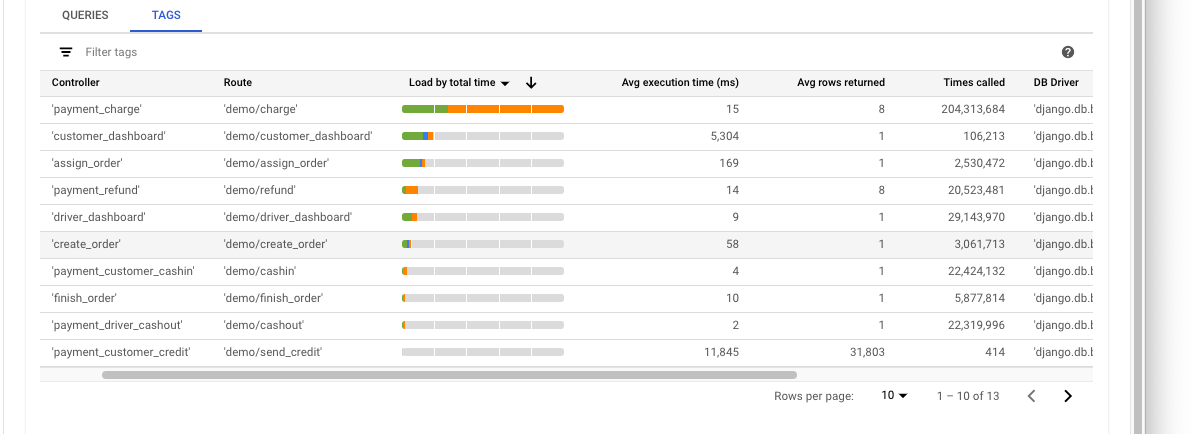
    Sqlcommenter also allows OpenTelemetry trace context information to be propagated to the database, enabling correlation between application traces and database query plans that ultimately should make it easier to, for example, determine the root cause of a performance issue involving a microservices-based application making calls to a database. Sqlcommenter is primarily designed to be employed by full-stack developers that have some familiarity with how to use SQL to query data residing in an observability platform, noted Bhagat.

    Specifically, Sqlcommenter is designed to provide deeper insights into the performance of backend databases by simplifying the process of correlating slow queries with source code. It currently supports Python, Java, Node.js and Ruby languages along with ORMs such as Django, Sqlalchemy, Hibernate, Knex, Sequelize and Rails.

    As the number of applications that are instrumented using open source software continues to steadily increase, the amount of data that a DevOps team could potentially query also will steadily increase. Cloud storage platforms have made it easier to store that data at an affordable cost but the next challenge is clearly going to be finding a way to surface meaningful insights from all that data. Undoubtedly, achieving that goal will require everything from query tools to machine learning algorithms capable of identifying patterns at a level of scale that would not otherwise be possible.

    In the meantime, DevOps teams can look forward to being able to attain a level of observability that previously could only be achieved at a cost that tended to limit the number of applications organizations would instrument. At a time when the dependencies between applications increases with each passing day, that level of observability will soon prove indispensable.