Author: Mike Vizard

  • Fiberplane Adds Open Source Libraries to Automatically Collect Metrics

    Fiberplane Adds Open Source Libraries to Automatically Collect Metrics

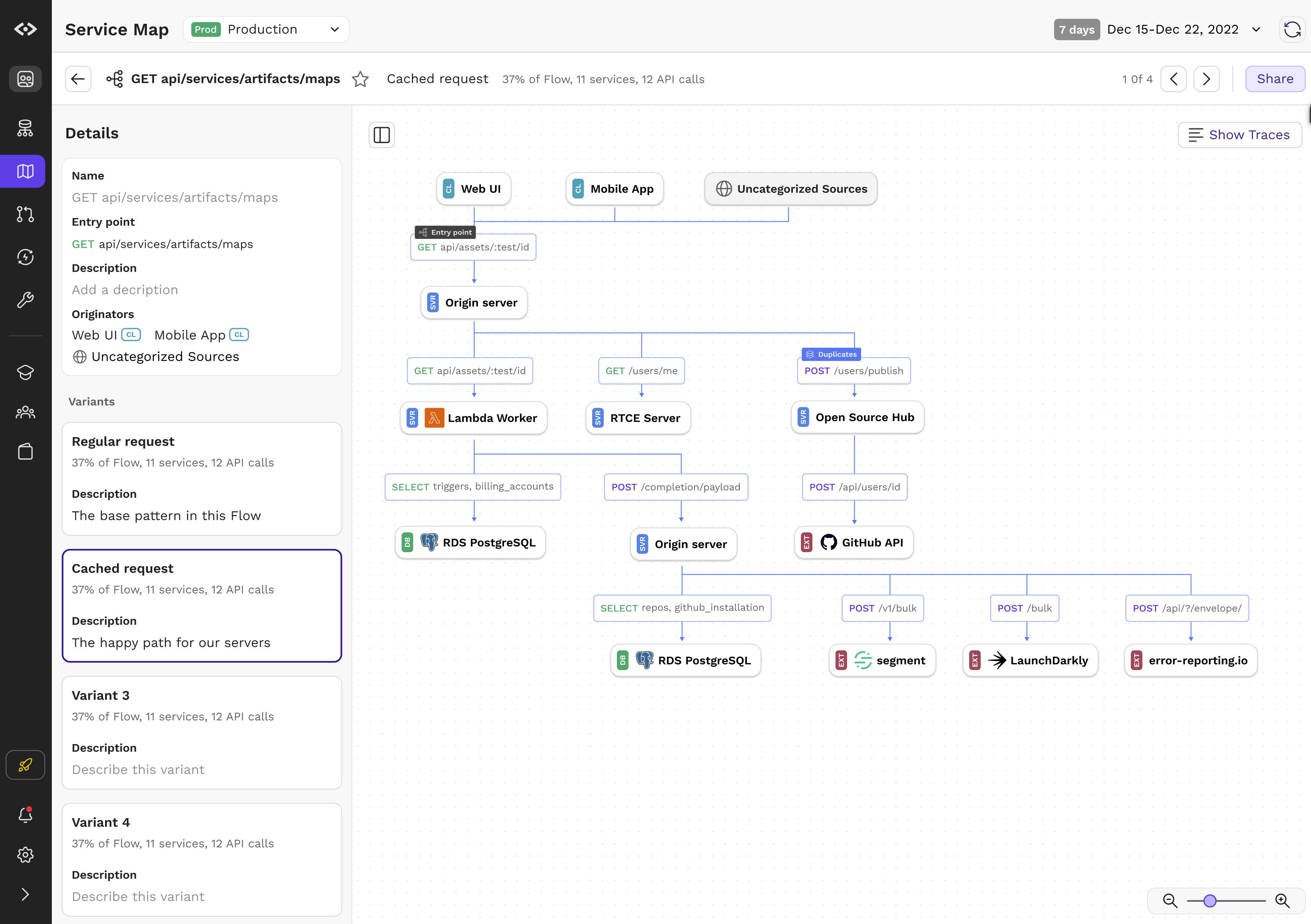
    Fiberplane today added an ability to automatically collect metrics in real-time and make them accessible either via its namesake notebook software for debugging infrastructure or an open source Grafana dashboard.

    Fiberplane CEO Micha Hernandez van Leuffen said Autometrics is an open source set of libraries the company created to make it simpler for developers to see platform performance metrics using a set of tools embedded within their integrated development environment (IDE).

    The goal is to reduce the cognitive load on developers; today, developers need to first determine what metrics to track, find a way to collect the appropriate data and then launch queries against those metrics to determine the root cause of an issue, said Hernandez van Leuffen.

    Autometrics, in contrast, provides access to a set of common queries using the Prometheus programming language (PromQL) against data that has been collected using open source OpenTelemetry agent software, he noted.

    That approach, for example, makes it simpler to track error rates, response time and latency of any function. Links to live charts based on real-time data can also be inserted into the comments section of any document a development team creates.

    The Fiberplane notebook uses the same operational transformation algorithm embedded within Google Docs to enable teams to easily collaborate around a document or spreadsheet. The core platform itself is built in Rust and WebAssembly (Wasm) to make it simpler to integrate Fiberplane as a plug-in into an existing DevOps workflow.

    Autometrics extends that capability in a way that enables DevOps teams to provide developers with instant access to observability data. They can then see how their code is performing on any given platform, which is critical as more responsibility for running applications continues to shift left, said Hernandez van Leuffen. Today, many developers need to wait for an IT operations team to share data collected via an observability platform that was designed to be used by ITOps rather than a developer, he added.

    As observability capabilities become more federated across the entire software development life cycle, it’s critical to make sure developers and IT operations teams can see metrics being generated in real-time. Otherwise, confusion arises because teams are not looking at the same set of metrics.

    Fiberplane address that issue by taking the concept of notebooks—often used by data science teams to collaborate—and applying it to DevOps workflows to reduce the amount of time it takes to resolve any issue. As IT environments become more distributed in the age of the cloud and microservices, troubleshooting issues invariably spans the responsibilities of multiple members of an IT team. In effect, a notebook makes it possible to spin up a virtual war room on demand that enables the members of an IT organization to collaborate—regardless of where they are physically located or which organization they may be employed by.

  • Five Great DevOps Job Opportunities

    Five Great DevOps Job Opportunities

    DevOps.com is now providing a weekly DevOps jobs report through which opportunities for DevOps professionals will be highlighted to better serve our audience.

    Our goal in these challenging economic times is to make it easier for DevOps professionals to advance their careers.

    Of course, the pool of available DevOps talent is still relatively constrained, so when one DevOps professional takes on a new role it tends to create an opportunity for others.

    The five job postings shared this week are selected based on the company looking to hire, the vertical industry segment and, naturally, the pay scale being offered.

    We’re also committed to providing additional insights into the state of the DevOps job market. In the meantime, for your consideration:

    Monster.com

    SnapLogic
    San Mateo, California
    Infrastructure Engineer
    $183,310

    LinkedIn

    Metropolitan Transit Authority – NYC
    New York, New York
    Cybersecurity Officer – DevSecOp/Cloud Infrastructure
    $144,500 to $191,000

    Dice.com

    Flexion
    Remote
    Azure DevOps Engineer
    $140,000 to $170,000

    Indeed.com

    Woven Teams
    Remote
    DevOps Engineer
    $116,000 to $147,000

    SimplyHired.com

    Raytheon Missile and Defense
    Schriever Air Force Base, Colorado
    Senior Software Engineer
    $75,000 to $161,000

  • CircleCI Report Surfaces DevOps Productivity Gains

    An analysis of more than 14 million workflows from thousands of organizations conducted by CircleCI, a provider of a continuous integration/continuous delivery (CI/CD) platform, revealed the mean-time-to-recovery (MTTR) decreased by about 13% year-over-year.

    Half of CI workflows (50%) recovered from a failed run in 64 minutes or less. That compares to 73 minutes or more in previous years, the report noted.

    In general, the report found 50% of workflows completed in 3.3 minutes or less. However, the average duration was approximately 11 minutes. The median workflow ran 1.54 times per day.

    Success rates, as defined by the number of passing runs divided by the total number of runs, was, on average, 77% for default branches and 67%, on average, for non-default branches.

    Naturally, the level of productivity any given DevOps team can achieve is impacted by everything from the size of the team to the vertical industry they operate in. CircleCI CTO Rob Zuber also noted there are other crucial developer productivity metrics, such as the amount of time developers are focused on writing code, that need to be tracked as well.

    The goal for any DevOps team is to abstract away as much complexity as possible to enable developers to spend more time on writing business logic, said Zuber. Unfortunately, as more responsibility for infrastructure and security has shifted left toward developers, many of them are spending too much time managing application environments instead of writing code, noted Zuber. He noted that the cognitive load being placed on developers today is too high.

    Developing applications is, of course, as much an art as it is a science. Organizations can set aside time for sprints to write code, but it’s difficult to dictate when inspiration might strike a particular developer. There is always going to be a need to let developers, for example, write code at odd hours of the day and night. The more friction they encounter in terms of spinning up application environments, the less likely it becomes a developer will spend time squarely focused on writing code, said Zuber. The “zone” is when most of the best code is developed, he added.

    Naturally, there is no set of metrics that are equally applicable to all DevOps teams, but they should pay attention to metrics as an indicator of whether teams are improving, added Zuber. Most developers and software engineers are not going to want to work in a “software factory” where every minute of the day needs to be accounted for within a project management application. Rather than employing metrics as a stick, they should instead be used as an educational tool—a carrot—that drives steady improvement. In addition, organizations should take care to make sure the collecting of metrics doesn’t impede the pace at which applications are being developed.

    As the saying goes, things measured are usually things done; but there is a fine line to be observed when it comes to any goal that requires a certain level of creativity to achieve.

  • Synopsys Preps Extensions to Polaris SaaS Platform

    Synopsys Preps Extensions to Polaris SaaS Platform

    Synopsys plans to extend the capabilities of its Polaris Software Integrity Platform for securing application development environments by adding dynamic application security testing (DAST) tools along with the ability to scan code used to provision infrastructure.

    As a software-as-a-service (SaaS) platform, the Polaris Software Integrity Platform was created by combining the static application security testing (SAST) tool Synopsys gained with the acquisition of Coverity in 2014 and the software composition analysis (SCA) tool it added to its portfolio by acquiring Black Duck Software in 2017.

    In 2015, Synopsys acquired the Seeker tool for analyzing the code created using interactive application security testing (IAST) tools from Quotium. The company last year acquired WhiteHat Security from NTT to add a DAST tool.

    Patrick Carey, senior director for marketing strategy for Synopsys, said that the company would add the capabilities of those latter two platforms to create a comprehensive set of best-in-class security tools that are easily accessible via a SaaS platform.

    At a time when more organizations than ever are moving to secure software supply chains, Carey said it’s critical to provide developers with more visibility into vulnerabilities across the entire software development life cycle (SDLC). Some organizations are opting to achieve that goal by embedding tools within the SDLC themselves, but many organizations would likely prefer to invoke a SaaS platform that they don’t have to maintain, noted Carey.

    He noted that a SaaS platform makes it simpler to point a collection of integrated tools at a code repository to surface those vulnerabilities.

    As DevSecOps workflows continue to evolve and mature, more responsibility for application security is shifted left toward developers. The challenge is that many developers have limited cybersecurity expertise, so it’s critical that they have access to high-quality security tools.

    In addition, a SaaS platform helps reduce the total cost of achieving that goal by providing multiple capabilities within a single integrated platform, said Carey.

    Naturally, most of the focus today is on reducing the number of vulnerabilities that find their way into production environments as applications are being built. However, there are already large numbers of unaddressed vulnerabilities in applications that have already been deployed. Organizations will need to find ways to address that technical debt in addition to providing developers with tools that help prevent those code vulnerabilities in the first place.

    As such, there is no one central place through which application security can be managed, noted Carey. Instead, application security needs to be addressed across every phase of the SDLC, he added.

    It’s not clear how quickly organizations are adopting DevSecOps best practices, but as calls for increased liability for software development increase—as outlined, for example, in the U.S. National Cybersecurity Strategy— organizations should expect DevSecOps workflows to become a requirement. Otherwise, organizations will be severely penalized for vulnerabilities that find their way into code. In effect, there is now a race to embrace DevSecOps before any proposed liability legislation becomes the law of the land.

  • Orgs Shift Toward Centralizing Automation Initiatives

    Orgs Shift Toward Centralizing Automation Initiatives

    A survey published today found that 75% of respondents recognized that automation silos hamper their ability to unify cloud operations across functions.

    Conducted by CloudBolt Software, the survey polled 350 senior IT and DevOps leaders at organizations with more than 3,000 employees. On a positive note, the survey found 57% of respondents were starting to pursue a more centralized approach to automation, with a total of 88% acknowledging that having all previous and new automation centralized for the entire organization would ensure compliance, bolster security, enable business continuity, encourage reuse and reduce risk.

    Rather than taking a more holistic approach, well over half of respondents (57%) reported automation efforts are limited to specific silos. On average, organizations are employing 27 different automation tools their organizations have deployed, using one or a few as they see fit, with little to no consistency across teams. More than half (55%) of respondents said they have four or more separate automation teams, with 95% noting that each of those teams operates in their own silo.

    CloudBolt CTO Rick Kilcoyne said that lack of continuity clearly creates inefficiencies and redundancies that conspire to raise the total cost of IT. The challenge is that each team tends to favor one approach to automating a silo with little to no regard for a larger overall strategy to create an automation standard, he said.

    That approach also creates issues whenever a member of one of those teams leaves an organization, he noted. In fact, the survey found 77% of respondents reported that continuity is at risk any time a vital member of the team leaves.

    CloudBolt has been making a case for a federated automation platform that can be invoked either via application programming interfaces (APIs) or a graphical user interface (GUI) that provides access to low-code tools. The goal is to make the platform equally accessible to DevOps teams or IT administrators that tend to lack programming skills, and do so in a way that doesn’t require individual teams to replace their automation platform of choice. Instead, each of the automation platforms can be programmatically invoked via a central framework, said Kilcoyne. That approach eliminates any political debate over the potential need to replace one team’s favored automation platform with another, noted Kilcoyne.

    Regardless of who is accessing the platform, most organizations would be well-advised to develop a center of excellence for automation, he added.

    DevOps teams have always been committed to ruthlessly automating as many IT processes as possible, but in many cases, that has resulted in a plethora of automation tools being employed. In effect, automation may have become too much of a good thing. One approach to regaining control over those platforms is to create a platform engineering team that centralizes the management of DevOps workflows.

    Regardless of approach, Kilcoyne said the most important thing for any team to do before automating an IT workflow is to first understand how to manually set it up. Too many IT teams are trying to apply automation to processes they don’t really understand with mixed results, he added.

    The one thing that is certain, especially with the rise of artificial intelligence (AI), is the management of IT is going to become more automated.

  • CodeSee Extends Reach of Code Visualization Platform

    CodeSee Extends Reach of Code Visualization Platform

    CodeSee updated its code visibility platform to enable instant mapping of application services, directories, file dependencies and code changes.

    CodeSee CEO Shanea Leven said CodeSee Enterprise 2.0 should extend the appeal of the platform beyond developers to include software engineers managing DevOps workflows.

    CodeSee Enterprise 2.0 provides real-time visibility across multiple repositories regardless of whether the application is a monolith or based on a microservices architecture, she noted.

    In addition, a Code Automations module enables developers to set granular conditions and actions down to the function level, requiring checklists to be complete before allowing developers to move on.

    CodeSee Maps now includes the ability to click to view code directly, while a streamlined Review Maps module has decreased code review time by 30%. Developers can easily share maps to discuss proposed changes or keep necessary code changes as automatic permanent artifacts.

    Additional languages including C#, VB.NET, ASP.NET, Blazor, Java, JavaScript, Go, Python and TypeScript are now supported.

    Finally, CodeSee is making available a dedicated solutions engineering team that provides guidance to connect an organization’s Datadog or OpenTelemetry trace data to CodeSee in less than an hour without storing code or having to first dive deep into traces, noted Leven.

    The core open source CodeSee tool was created because it takes too long today for most developers to pore over a codebase to understand where they might contribute. The larger a codebase becomes, the longer it takes for a developer or software engineer to be onboarded to a new project.

    The overall goal is to improve developer productivity, noted Leven. That’s become a critical issue because many organizations are hesitant to hire additional developers during uncertain economic times; they first want to ensure they maximize the utilization of the teams they already have.

    Application development, of course, is now a team sport. The days when a lone developer cared for an entire application are long over. The issue is finding a way for teams of developers to collaborate more easily in an era where many of them may never have met in person.

    In the longer term, Leven said she also expects that generative artificial intelligence (AI) platforms such as ChatGPT will supplement code visualization tools. Many developers are already starting to use these tools to help generate code faster. That code should, in theory, have fewer errors because it has essentially been copied from other previously validated sources. CodeSee provides a means to visualize that code before deploying it to ensure it will function as promised in increasingly complex application environments.

    One way or another, the tools being provided to developers to boost productivity are advancing. It’s not clear what metrics should be employed to track developer productivity, but the amount of code simultaneously moving through DevOps workflows is going to increase. The challenge DevOps teams face now is keeping track of all the dependencies that exist in that code as application environments are continuously updated.

  • Five Great DevOps Job Opportunities

    Five Great DevOps Job Opportunities

    DevOps.com is now providing a weekly DevOps jobs report through which opportunities for DevOps professionals will be highlighted to better serve our audience.

    Our goal in these challenging economic times is to make it easier for DevOps professionals to advance their careers.

    Of course, the pool of available DevOps talent is still relatively constrained, so when one DevOps professional takes on a new role it tends to create an opportunity for others.

    The five job postings shared this week are selected based on the company looking to hire, the vertical industry segment and, naturally, the pay scale being offered.

    We’re also committed to providing additional insights into the state of the DevOps job market. In the meantime, for your consideration:

    Dice.com

    NerdRabbit
    New York, New York
    DevOps jobs
    $120,000 to $150,000

    LinkedIn

    Tata Consulting Services
    Sunnyvale, California
    AWS DevOps Engineer
    $105,000 to $130,000

    Monster.com

    VANET, Inc.
    Irvine, California
    Software Engineer
    $100,000 to $300,000

    SimplyHired

    Renaissance
    Remote
    DevOps Engineer 2
    $100,000 to $125,000

    Indeed.com

    GEICO
    Remote
    Senior DevOps Engineer
    $82,000 to $185,000

  • New Relic Bets on AI to Advance Observability

    New Relic Bets on AI to Advance Observability

    New Relic is preparing to extend the capabilities of its observability platform by making use of both additional machine learning algorithms and the ChatGPT generative artificial intelligence (AI) platform.

    Peter Pezaris, senior vice president for strategy and experience at New Relic, said during an interview on an episode of TechStrong TV that a prototype of an AI model created using machine learning algorithms will automatically notify developers when code in a production environment is not performing well—right within their integrated development environment (IDE). The notification will then take developers to the precise line of code identified as the root cause of the issue, he said.

    DevOps teams will need to add two lines of code to applications running in production environments to take advantage of this capability. New Relic also plans to use a similar approach to integrate with generative AI platforms such as ChatGPT to create suggestions for fixing code, he added. ChatGPT now makes it possible to create entire programs in ways that output HTML and JavaScript code, so DevOps teams should expect to be able to use the platform to create natural language queries that invoke the proprietary query language New Relic makes available for its observability platform, he noted. Conversely, ChatGPT will make it possible to explain how a piece of code functions in plain language, Pezaris added.

    Previously, New Relic employed a similar approach to integrate its observability platform with machine learning operations (MLOps) platforms used to build and deploy AI models. This was part of a larger effort to integrate MLOps and DevOps workflows, added Pezaris.

    These AI extensions to the New Relic platform are part of a larger effort to extend the reach of the New Relic One observability platform further left toward developers. Most recently, New Relic added a free CodeStream module to its observability platform to give developers access to metrics and telemetry data that will enable them to write higher-quality code faster.

    That approach eliminates the need to wait for IT operations teams to surface issues that usually don’t manifest until long after the code in question was originally developed. The overall goal is to provide development teams with frictionless access to observability data at every stage of the software development life cycle to reduce mean-time-to-detection (MTTD) and mean-time-to-resolution (MTTR) of issues.

    Organizations should also be able to reduce technical debt faster by making it easier to identify issues that, for example, adversely impact application performance.

    In general, most organizations are still in the early stages of achieving full-stack observability. A recent New Relic survey found only 27% of respondents have achieved full-stack observability, and only 5% claimed they have a mature observability practice in place. A third (33%) of respondents also said they still primarily detect outages manually or based on complaints, the survey found.

    On the plus side, the survey also found nearly three-quarters of respondents said C-suite executives in their organization are advocates of observability, and more than three-quarters of respondents (78%) saw observability as a key enabler for achieving core business goals. However, more than half (52%) of respondents said they experienced high-business-impact outages once per week or more and 29% said they take more than an hour to resolve those outages.

    The hope is, of course, that by augmenting DevOps teams with AI capabilities, the number of those outages will be dramatically reduced in the months and years ahead.

  • Vega Cloud Commits to Reducing Cloud Costs

    Vega Cloud Commits to Reducing Cloud Costs

    Vega Cloud today made a commitment to save customers at least 10% on their cloud infrastructure spending or it won’t charge for its software. Vega Cloud’s software automates cloud infrastructure management.

    The Vega Cloud platform enables IT teams to connect, automate, manage and optimize new and existing networks, applications and other multi-cloud IT environments from a single console. As part of those capabilities, the company includes cost allocation and cost identification tools using a curated set of data to surface daily recommendations for cost improvements.

    Vega Cloud CEO Kris Bliesner said the goal is to provide a financial operations (FinOps) capability within the context of a platform capable of acting on those recommendations that, on average, reduces cloud costs by 15% to 25%.

    During uncertain economic times, IT leaders are under more pressure than ever to reduce costs. FinOps has emerged as a discipline for applying a set of best practices for specifically reducing cloud costs. In addition to reducing cloud costs, Vega Cloud is also making a case for reducing the total cost of IT by relying on a single automation framework to manage multiple clouds.

    In the cloud era, many organizations have found themselves employing multiple clouds, each of which requires a separate set of tools to manage. IT teams then need to hire additional staff to manage each of those tools. As a result, the total cost of IT increases with each additional platform added to the overall IT estate.

    Many organizations, of course, have allowed the number of platforms they manage to proliferate. This is because many application deployment decisions were driven by developers who can easily provision cloud infrastructure on their own. However, as concerns over the cost of cloud computing continue to rise, many organizations are revisiting how cloud infrastructure resources are used. Many of those reviews are being driven by finance teams that want cloud costs to become more predictable as cloud computing continues to account for a much larger percentage of the IT budget, noted Bliesner.

    In fact, one of the challenges IT leaders have is finding a way to make sure developers and DevOps teams are more motivated to reduce costs rather than focusing entirely on how fast they can build and deploy applications, he added.

    The reality is the average developer doesn’t need application build infrastructure running 24/7, so application development and testing is a great place to focus on cutting cloud costs initially, noted Bliesner. There’s also plenty of opportunity to better schedule workloads to reduce costs by relying more on lower-cost instances of cloud infrastructure, he said.

    DevOps engineers, by nature, don’t want to be inefficient, so the issue comes down to providing them with the tools needed to identify resources that are being wasted, added Bliesner.

    Most cloud service providers, of course, provide tools that enable IT teams to optimize spending, but Bliesner said those tools don’t go deep enough in terms of exposing issues. As a provider of an independent management framework, Vega Cloud is more committed to providing cost optimization capabilities that can be applied to multiple clouds, he added.

    In general, interest in controlling cloud costs has risen sharply. Vega Cloud has been engaged with more customers researching this issue in the last four weeks than in the last three years, said Bliesner. The challenge—and the opportunity—is to not just cut cloud costs but also identify patterns that make it easier to predict them, noted Bliesner.

    At this juncture, cloud costs are coming down. The only issue left to be determined is whether that goal will be accomplished with precision versus a fiat that adversely impacts an organization’s ability to continue to build and deploy software.

  • env0 Extends Workflow Platform for Provisioning Infrastructure

    env0 Extends Workflow Platform for Provisioning Infrastructure

    env0 today announced it has added support for additional infrastructure-as-code (IaC) tools and the Microsoft Azure DevOps platform to its workflow automation and management platform.

    Fresh from raising an additional $35 million in funding, env0 CEO Ohad Maislish said while Terraform remains the most widely used IaC tool, there are now more organizations using alternatives such as CloudFormation from Amazon Web Services (AWS) along with Pulumi and Terragrunt.

    Other capabilities added to the env0 platform include automated drift detection, multi-tier workflows, auditing, external logging platform integration, support for plug-ins and expanded role-based access controls and OpenID Connect (OIDC) authentication.

    Finally, env0 is extending its existing Terraform support to include support for remote backend, module registry, remote plan, and the ability to plan and apply pull requests. The capabilities are especially critical for organizations that are now building microservices-based applications that require more sophisticated workflows to provision infrastructure resources, noted Maislish.

    Most IaC tools are designed to enable developers to address technical implementation and provisioning issues without regard for user experience, security and governance, or business goals. The env0 platform makes it possible to create infrastructure environments with guardrails in place that enable DevOps teams to centrally address governance issues, noted Maislish.

    In general, there’s now a lot more focus on continuous delivery (CD) as organizations look to continuously update applications, said Maislish. That requires a more structured approach to provisioning infrastructure across teams of developers that is managed by a platform engineering team, he added. The challenge is that CD is dangerous—in the sense that mistakes can easily be made, noted Maislish.

    It’s not clear whether organizations are embracing platform engineering to centralize the management of DevOps workflows, but the number of organizations that have mastered CD best practices remains low. Most organizations are adept at continuous integration (CI), but given the number of unique platforms on which applications are deployed, CD has proven more challenging to adopt. In theory, a platform engineering team should make it easier for DevOps teams to define a consistent approach to CD that could be adopted across an organization.

    Regardless of the DevOps approach, the overall goal is to improve developer productivity. The problem is that in the absence of any guardrails, developers have been provisioning cloud infrastructure as best they can. Not surprisingly, cloud computing environments are rife with misconfigurations that create vulnerabilities that cybercriminals have become more adept at exploiting. The fundamental issue is not such much the cloud infrastructure that is available as much as it is the processes employed to provision the resources. In their rush to build and deploy applications, developers will sometimes ignore best practices unless guardrails force the issue.

    One way or another, IT organizations are exercising more control over cloud computing environments as the security of software supply chains becomes a bigger issue. The only thing that remains to be resolved now is how to put much-needed guardrails in place in a way that adds the least amount of friction possible.