Author: John Lafleur

  • How to Rethink Sprint Retrospectives to Shape a Better Culture

    How to Rethink Sprint Retrospectives to Shape a Better Culture

    If you have been in a scrum team (or even an agile software development team), you most certainly have had or heard about sprint retrospectives or gone through them. They often happen after the team showcases the work done during the sprint reviews or demos. The original intent behind retrospectives is to help the team learn and improve faster as a whole, with an iteration at every sprint. What if sprint retrospectives could be rethought so that it stimulates more motivation and learning for the team at every iteration, and have its value spread across the whole organization? Growing knowledge and awareness within your team is great, but growing knowledge and awareness in your whole organization (including other departments) is better.

    The fact is retrospectives are part and parcel of the engineering culture, but also the company culture. In this article, we will quickly go over the current way of doing retrospectives, before seeing the different ways their impact can be strengthened.

    What Is a Sprint Retrospective?

    There are plenty of resources about what a sprint retrospective is. Simply put, the sprint retrospective meeting lets you analyze your process in the previous sprint and create a plan for improvements in the next. It gives the scrum team the opportunity to ask and address questions such as:

    • What did we do right in the previous sprint?
    • What did we do wrong in the previous sprint?
    • What should we start doing in the next sprint?
    • What should we stop doing in the next sprint?
    • What can we do to improve productivity?

    You want to keep these simple and short, and possibly use some templates, so that the team can easily memorize and improve on every iteration. You would want to keep the team focused, otherwise it can just turn in a social gathering. The retrospective can even include some thinking about the retrospective process itself. Nothing is out of bounds.

    Be careful to avoid bashing or criticizing, as well as allowing boredom. If the same question is repeated at every retrospective, your team might not participate anymore. If the same questions arise, what can we do differently so that it is finally fixed?

    Overall, the end goal is self-improvement as a team that always strives to perform better, as well as self-improvement for every individual, scrum master and product owner.

    What’s Wrong with Current Sprint Retrospectives?

    There is nothing wrong with the way we handle retrospectives currently, per se. It’s just that there are huge missed opportunities. Sprint retrospectives are about growing the team as a whole as well as all its team members. And, think of the possibilities if we were able to do the same across the organization?

    Actually, sprint retrospectives are much more part of the organizational culture than we might initially think. It’s among the few things that happen on a weekly or bi-weekly basis with other team members. Doing sprint reviews, demos and retrospectives the right way will shape your team and individual growth, in addition to the organization’s talent retention.

    Sure, there are a few well-documented things that you need to be wary of when doing a retrospective. I’ll list them fast but won’t dwell on them because that is not the point of this article.

    • Boredom: Having the same questions asked regularly will get your team bored and the feeling that retrospectives are useless. One way to avoid this is to change things a bit. Iterate on the retrospective itself or have a different retrospective meeting leader each time.
    • Lack of candid conversation: Without conversations, feedback and ideas flowing, retrospectives are useless. It’s important to foster participation from everybody. If you see a lot of blank stares, it might be useful to think about other ways to get participation such as putting ideas on paper anonymously. But at some point, your team needs to feel comfortable to share their ideas without fear.
    • Ego: It’s vital to put the team productivity above individual needs. There shouldn’t be any place for emotions, as it will thwart honest conversations from happening.
    • Disagreements: It’s more than okay to disagree. There is a quote that says “diversity in counsel, unity in command.” The more disagreements, the more ideas will be flowing, and the end result will be the best ideas. However, once an agreement is made, everybody needs to unite behind the decision
    • Conflicting agreements: Let’s face it, that can happen. In the end, a decision needs to be made, and as stated above, then everybody needs to get behind the decision.
    • Tired of change: Attempting too many improvements may actually prevent the team from improving. In that case, making sure everyone is keeping up is the most important. Sometimes it’s best not to change anything, but just to retry as becoming good at something takes time and persistence. Also, it might mean it’s time to iterate on the sprint retrospective itself.

    4 Ways to Rethink and Improve Sprint Retrospectives

    Now, let’s see what we can do to improve retrospectives, as well as spread its benefits throughout the organization by improving its culture. Some of these points will directly address some of the speed bumps mentioned above.

    1. Positive Reinforcement

    You need to be very explicit about positive learning, so you have more willingness to share within the team. It might be interesting to rename the retrospective to “wins.” For instance, sprint wins or week wins, if you do those every week, or Friday wins, if the retrospective happens on Fridays.

    The name will emphasize that we are here to improve and not blame. Wins can also remind people of the demos, as the new features and work done can be considered new product wins.

    1. A Ship-It Culture

    Software only creates value for customers once it’s shipped. That’s a fact.

    Shorter cycle times lead to both higher productivity and higher satisfaction, there has been quite a lot of study on this. Only presenting work that has been shipped during the sprint demo will emphasize this point and will spread a culture of shipping fast and often. You shouldn’t present work that’s almost done or waiting to be merged to master. Deploying a developer’s work is what is most exhilarating for the developer.

    By promoting a shipping culture, your team will gain more confidence and will express more motivation thanks to creating this high-velocity momentum sentiment.

    1. High Energy and Inclusive 

    We already mentioned some retrospective techniques–only shipped features, no blaming, only positive learning. But that’s not enough if you want to have the full attention of the whole team during those retrospectives. For this reason, you need the retrospective meetings to be high-energy with time limits. Time limits can make them actually fun for both presenters and audience, as there are some kind of challenges. And everybody loves fun challenges.

    But also, you need to make the whole team participate. Some teams might not have shipped anything in the sprint or week. Still, you need to find ways to make everyone part of the meeting, through questions or participation to the discussion.

    Finally, why do we have sprint retrospective meetings only within teams? They create new learning opportunities for the other teams, too. That’s why they should be inclusive to anybody in the team but also to all the other teams (well, until the size of the meeting is no longer sensible).

    1. Cross-Functional as Learning Can Be

    Coming back to the last point about learning opportunities, it’s also a missed opportunity for other departments, too. For example, if sales and marketing better understood the progress of projects, they would gain a better understanding of how software engineering actually works. Companies that succeed have teams that respect each other’s work and collaborate well together.

    Plus, it’s awfully hard to predict who needs what information in a big company. Leaving the retrospective meetings open to anyone could help people get the information they need.

    So, it’s worth the effort to invest in making attendance as easy as possible–support for remote people, etc.

    Would You Still Do Intra-Team Retrospectives?

    Should these meetings stay only within teams? Should you have intra-team retrospectives with all the discussions, before a general one with only the demos and learnings?

    The point of this article is that sprint retrospectives are a great opportunity to drive more knowledge, better collaboration and alignment throughout the whole organization. So, you should really think intentionally about what you want from these meetings.

    — John Lafleur

  • How to Become a Great Engineering Manager

    How to Become a Great Engineering Manager

    I wrote recently about the attributes of a 10x software engineer and a 20x one. Consequently, I received a few comments suggesting I create a similar list for engineering managers. I checked online and found a few articles, but none conveyed a full list in my mind. If you consider that software development efficiency has become the No. 1 priority for executives, ranking higher than access to engineering talent or capital, then I guess that’s a topic worth discussing! Engineering managers just might have the biggest impact on the productivity of their engineering teams.

    I’ll first go over the attributes for a good engineering manager, and then list what makes a great one.

    The 10 Attributes of a Good Engineering Manager

    I tried to prioritize this list, from essential to bonus. Feel free to give me your opinion on this in the comments.

    1. Be trusting

    If you refer to what destroys developer productivity most, trust is at the heart of it. Managers need to trust their team and give them some space. Micromanaging means undermining the team’s skills and ability to get things done, and therefore their motivation and self-confidence (which, by the way, they need to address difficult problems). Trust between the managers and their teams should be the foundation of their relationship. And it’s the manager’s role and job to create it, not the other way around. So first, trust your team.

    1. Emotional intelligence and ability to establish trust

    This is linked to the first point. You need mutual trust within a team for it to work well. And again, it’s the manager’s job to ensure that their team trusts them. How does the manager do this? By showing emotional intelligence.

    Engineering managers must be sure to make themselves available for questions, even if they’d rather not be interrupted. This can run counter to high efficiency, but it’s important that managers spend the time to form personal connections, so honest and open conversations happen naturally within the team and with the manager.

    Another important point is to listen to anyone and everyone. When the team gets together for a meeting to sort out a project they plan to do, everyone in the room needs to be heard and considered. The manager needs to respect any experience or insight their team can bring to the table. Any member of the team may be the most knowledgeable on a particular subject.

    Now, this is not Disneyland for sure: Managers might need to be tough and unwavering sometimes. But when that’s the case, it’s important to be transparent about the reasons to keep the hard-earned trust intact.

    1. Ability to shield the team from interruptions

    Interruptions and meetings (consider them planned interruptions) are greatly loathed by developers, and for good reason. They literally destroy their productivity. Developers love projects that move fast; they’re invigorating! Managers would do them a great service by removing distractions, ensuring that they have large chunks of uninterrupted “maker time.”

    A classic example is a really long email exchange on some technical topic with no resolution. The manager could simply put everyone on the thread in one room together for 10 minutes to get the issue resolved promptly.

    1. Ability to manage the team’s motivation

    The team’s motivation is directly linked to their output and the success of their releases. There are many ways to keep the motivation high. Here are just a few:

    • Help the team see their work through the lens of their impact on the company.
    • Don’t worry too much about failure. Things will always fail: builds, deploys, schedules missed, etc. If things fail, take responsibility and focus on the learning. The point is not to have to fix the same issue twice. This will give your team a mindset toward action and growth.
    • Celebrate every achievement, whatever its size. And credit the participants profusely.
    • Be transparent. Default to overcommunicating. While some leaders believe they need to shield their teams from things going on at the executive level to prevent distraction, there’s a difference between productive shielding and unintentionally denying engineers important company context. Managers want their teams to feel included and invested in the direction of the company.
    1. Strong work ethic and cohesion with company culture

    Work ethic means being exemplary in all the ways you expect your team to behave. Lead by example. Managers must embrace the company culture, or it will create confusion sending team members mixed signals of whether or not they should embrace the company’s culture.

    This also means shielding your team from people who don’t act accordingly. For instance, hiring someone with a huge list of qualifications and experience can still be a disaster if they have a different set of values than those held by the company. Or, unfortunately, having to let people go who are not team players or aligned with the company and team culture, whatever their skill level.

    Good managers keep in mind that the team’s productivity as a group is important, not individual performance.

    1. Advocate for change to seek positive evolution in a constant manner

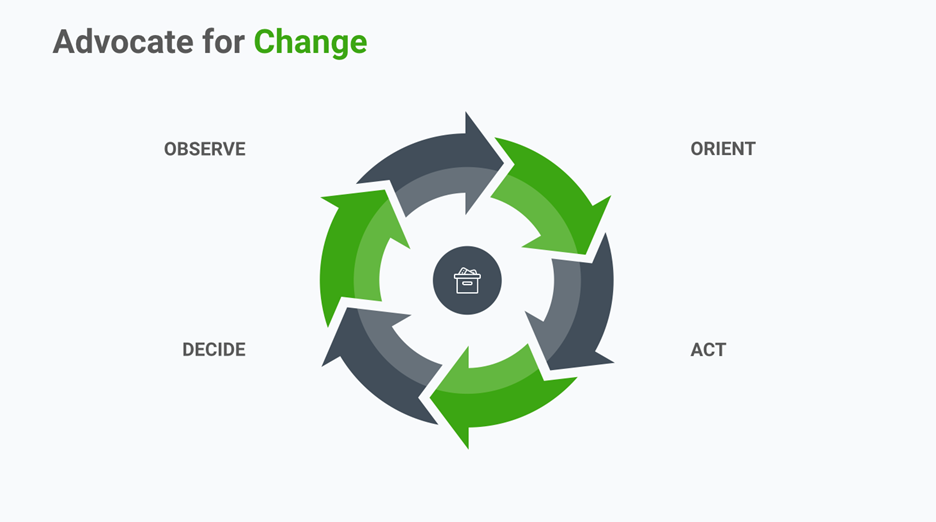
    Good managers install a mindset of positive evolution within the team.  They adopt a state of mind that continuously seeks to improve a certain situation. When a process is slow or cumbersome, they try to turn that around and make it better. One way todo this is using OODA loops: Observe, Orient, Decide, Act.

    1. Ability to work with departments outside of engineering

    The language used by non-technical stakeholders might be very different than that of the development team. However, good managers don’t want to be the Single point of contact, as they would introduce a potential liability into the project—a strong dependency on them. They tend to include their team in relevant discussions, but make sure they protect the team members from continuous interruptions. Good managers try to be the First point of contact, which is a big difference from being the single point of contact.

    1. Mentoring abilities

    Effective managers are measured by the effectiveness of their software teams. Anything that they can do to make each person on their team better makes their overall teams exponentially better. And most of the mentoring is actually about matchmaking team members with high-impact projects that align with their interests, the value they want to create and how they want to grow. That’s when motivation becomes organic.

    There are already so many articles on one-on-one meetings, I won’t spend much time on them. But mentoring also happens every day at every occasion. For instance, if a manager happens to review code or explain certain conventions, they make sure to clearly explain the reasoning why the team is doing something in a particular manner. Good managers are great teachers.

    1. Technical literacy and problem-solving skills

    On the one hand, technically competent managers will have a superior handle on the work that they are managing, and will therefore be better able to make recommendations and evaluate necessary trade-offs. On the other hand, technically talented managers are often better able to garner respect from their teams. Non-technical managers may struggle to manage high-performing individual contributors, who tend to have a tough time taking orders from managers who don’t fully understand their craft.

    But, if you don’t have any engineering background, it doesn’t mean you cannot be a good—or even a great—manager. I would advise you to learn about the technical dimension of the project (with humility) through every interaction you have with your team, and possibly in your off hours. Having enough technical experience to understand the projects and the decisions, mixed with the ability to trust others with technical depth, works really well.

    1. Ability to make hard decisions and manage conflicts

    Good engineering managers will make the courageous decision, even if it isn’t popular. They don’t make the wrong decision just because it is socially right and their team suggests it. Good engineering managers focus on the road and the values they believe in, and not only on the immediate issues they are facing. They don’t just choose best industry practices because they will attract the “right” talent. For instance, managers will avoid  automatically using the latest technologies: they will weigh the pros and cons and make the best choices based on the resources and requirements of their team and company.

    How Can You Become a Great Engineering Manager?

    1. Embody the vision

    Great managers have a natural ability to visualize the future of the company and motivate others to work toward those lofty yet realistic goals. They communicate the company vision at every opportunity by illustrating it contextually in discussions. They challenge the decisions made with, “What if we had 20x more users? Would that be sustainable?” or, “Will this technology decision still be valid in 24 or 36 months?”

    1. Support your team in the short and long term

    At the end of the day, as a technical manager, your job is mostly about humans. Great managers think about supporting their team in two ways: day to day and year to year.

    Great managers help their people devise a long-term plan to be happy and productive at their company. Sometimes, engineers don’t know how to articulate how they want to evolve. This is not an issue, as great managers have built strong relationships and trust with their team members to help them uncover this part and build a plan for:

    • the skills to improve.
    • the technical/non-technical experiences they want to have.
    • how they want to increase the scope of their impact at the company.

    And, naturally, the great managers will help their people to achieve their ambitions (within or maybe even outside the company).

    1. Challenge the team to grow faster

    Great managers try to super-charge learning within their team. They know to push their people out of their comfort zone and challenge them to accomplish things they didn’t even know they could do. But in doing so, they set up strong guardrails to help their team course-correct along the way.

    For instance, one way for engineers to increase their impact is to architect and own increasingly complex technical problems requiring novel solutions. Great managers will throw their people  into the deep end of the pool, with the right mentorship and guardrails, and have them start solving increasingly complex problems immediately. They will also try to maintain a balance between more experienced and less experienced engineers, having them work together and regularly share knowledge. They want to build in opportunities to make sure these conversations are truly bi-directional.

    Another instance is estimates. Do you know this law?

    Hofstadter’s Law: It always takes longer than you expect, even when you take into account Hofstadter’s Law.

    Estimating is hard. When you do it more often, you will get better at it … but you will still get it wrong from time to time. Challenging your team to make estimates is a way to get them used to getting out of their comfort zone.

    1. Embrace the differences

    Diversity is invaluable. All people are different and live different lives. This is incredibly valuable, because your users will also be different. Surround yourself with passionate people of different backgrounds. By background, I don’t only mean gender or race, but also education and past experiences. The more people in the team think differently, the more approaches your team will consider when addressing a problem, which results in better decisions. A great manager understands this and will strive to get input on the same problems from a variety of people with different backgrounds.

    1. Level up the product and engineering partnership

    Great engineering managers know to extract the essence from the user story; they focus first on the core capabilities, providing valuable input and challenging the product as early as possible. They never blame the product on complex features, or make the excuse that some things were not explained in the first place or changed 10 times. They never complain about the lack of visibility on the ideation process. They build such visibility themselves. They challenge the product team with several alternatives for the same idea. They know to explain pros and cons without deep diving into tech level and buzzwords. They help the product team make better decisions and educate them about the technical layers of features.

    1. Know themselves and educate others about themselves

    Great engineering managers have made the effort to understand how they themselves work,  behave,  think and make decisions. Being transparent with their team about these things, builds more trustful and productive relationships. They work on visibility and commitment for their own goals and tasks in front of their team members.

    1. Push their team for ownership as much as possible

    Great engineering managers tend to give more ownership of user stories to their developers. Transferring ownership to developers gives them more motivation to do a great job. Great engineering managers don’t try to own all of the responsibilities or give them all to a few select  individuals (tech leads).

    Great managers know when to give input, when to make decisions, and when to step back and allow the team to take more ownership. They promote a culture of accountability, where they trust each team member to do his or her job and never  insist on full visibility into what their team is doing.

    1. Understand the system’s bigger limitations

    Great managers understand the inefficiencies within the processes and organizations, as well as their own limitations. They share their thoughts to upper management to help the organization grow (and not only their team).

    This concludes my list of the attributes of good to great engineering managers. If you think of any I’ve overlooked or have any ideas or suggestions to add, I would love to hear your thoughts! Please leave your comments and opinions below!

    — John Lafleur