Author: Alan Shimel

  • The Official, Official DevOps

    The Official, Official DevOps

    It seems a little storm has blown up regarding the use of the term “Official DevOps Awareness Training” as used by the ITIL training company Axelos. I had a feeling it wouldn’t be long in coming after I saw the announcement at the DevOps Enterprise Summit and had a chance to interview Kaimar Karu there. Before I go any further on this though, in the interest of full disclosure, let me state that I am a co-founder of the DevOps Institute (DOI), providers of DevOps training and education. So obviously I have a dog in the race and if you want to stop right here, you are more than welcome to.

    The Background

    This story really starts about 18 months ago when we first announced the DOI launch and the fact that we would be offering training and certification based on the emerging practices around DevOps. At the announcement there was a firestorm of controversy and opinion as duly noted by IT Skeptic Rob England. Many in the community objected to the idea of even training for DevOps but the biggest push back was on the idea of testing and certification. Many in the community said it was repeating the mistakes made by other IT movements such as ITIL, ITSM, etc.  In fact some people went so far as to mock the DOI by making up silly certification post its and handing them out at DevOps conferences. In fact I believe that some of those folks were from Axelos itself.

    DOES 2016

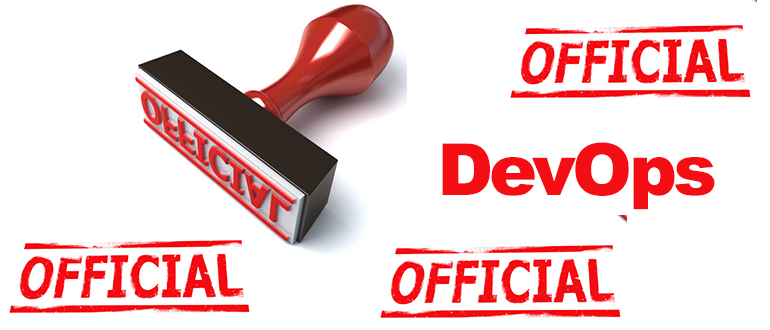
    So imagine my surprise when I saw at this years DOES, Axelos announce that they were entering the DevOps training market with a free course based on the IT Revolution (Gene Kim, et al) books among other sources. I was really blown away when on stage Kaimar of Axelos said, “The Official DevOps Awareness Training syllabus is flexible and powerful, allowing training providers to develop their own value-add training programmes, either as simulations or extended classroom-based courses, which can be accredited against the syllabus.” They went even further, putting this up on their website:

    Official now are we? By whose measure? That is a good question.

    The Storm Brews

    I guess I wasn’t the only who took exception to this. IT Skeptic Rob England has once again spoken up, questioning by what right Axelos has to say they are the “official DevOps Awareness training”.  Evidently, Rob and Kaimar had a little twitter exchange on this. You can head over to Rob’s article to read the exchange, but the gist of it is that by official Axelos meant to say they are the official training based on IT Revolution writing.

    Here is the thing though, official would seem to connate some sort of exclusivity. Now I have not spoken to Gene Kim or the other IT Revolution team members, but I have spoken to people who have and if you want to put credence in this hearsay, IT Revolution never said anything about Axelos training being the exclusive or even the “official” DevOps awareness training.  It seems Axelos has perhaps overstepped their bounds here in trying to claim the official monicker. There may well be other DevOps training based on IT Revolution writings and how many official DevOps training classes do we need?

    Don’t blame the Tiger for his stripes

    Now you might ask yourself why would Axelos go to all that trouble for a class they are offering for free? Well the answer to that one is pretty simple really. Axelos will not offer DevOps training for just free forever. In fact I would bet that they will be developing formal DevOps training and wait for it, DevOps certification training in the not so distant future. After all they are in business to make money. Don’t blame the tiger for having stripes.

    I interviewed Kaimar at DOES this year and brought up this very issue. I asked him how after mocking the DOI, giving out post it notes stickers claiming DevOps certification, he could now stand here and offer training that we all know is headed towards some sort of certification. To be fair to Kaimar said the issue is that it is pre-mature for DevOps certification now. That best practices are not in place yet, just emerging practices (hmm where did I hear that before?).

    It is easy to see Axelos path here. They will continue developing their “free” class until they think it is good enough to charge for it. Shortly thereafter, lo and behold the time will be right for DevOps best practices to emerge and Axelos will offer certification in DevOps.  You don’t have to read tea leaves or the innards of goats to see that future.

    The Conclusion

    But alas by then it could be too late. Between DevOps training and certification from the DOI (and many new courses and roles, now available and coming out soon), training and certification by Red Hat, AWS and others, there is no shortage of DevOps training and certification courses available. To call any of them official is probably not a great idea.

    Another point is that for all the people who bemoaned that official training and certification had come to DevOps and that it was in danger of being like ITIL seem to have either changed their mind or chosen not to speak out on this (that I have seen anyway).

    If you read to this point though, here is my bottom line. Like everything else, getting some training and education on a subject is never a bad idea. You as a consumer can pick whichever provider you choose. But don’t be fooled by “official” titles. You may find out they are more like fake news sites on Facebook.

    — Alan Shimel

  • Welcome to the CD Neighborhood

    Welcome to the CD Neighborhood

    Today we opened a new neighborhood or section here on devopsy.kinsta.cloud. It is called the CD neighborhood and it will feature content on CD and related content. The neighborhood is sponsored by CA Technologies, who will also contribute content to the new neighborhood.

    CA authored content will be clearly marked. CA employees have contributed by lined articles to devopsy.kinsta.cloud for a long time and they have some great DevOps thought leaders. Recently they have also acquired Blazemeter and just announced the intent to acquire Automic as well. This should mean even more great content from them.

    But CA is not the only content provider for the new CD neighborhood. The devopsy.kinsta.cloud staff writers will be contributing to the neighborhood on a regular basis. In addition, contributed articles that are on theme will also be posted here on a near daily basis. In fact I encourage you to submit your thoughts on CD to me at editor@devops.com, if you have something to say on the subject.

    In addition to written articles, the CD neighborhood will also host both audio and video content that is on point. Many will come from our DevOpsTV YouTube channel and DevOps Chats hosted on SoundCloud.

    With CD being such an important part of DevOps we think that the CD neighborhood is going to be a favorite destination for many of you. We will do our best to keep it fresh, informative and useful!

    — Alan Shimel

  • CA Technologies Announces Intent To Acquire Automic

    CA Technologies Announces Intent To Acquire Automic

    Acquisition to Provide Cloud-Enabled, End-to-End Automation and Orchestration Platform for Applications and Business Processes

     NEW YORK, December 1, 2016 – CA Technologies (NASDAQ:CA) today announced it has signed a definitive agreement to acquire Automic Holding GmbH, a leader in business automation software that drives competitive advantage by automating IT and business processes. The transaction, valued at approximately 600 million euros, net of cash and cash equivalents acquired, has been unanimously approved by both Boards of Directors, and is expected to close in the fourth quarter of CA’s fiscal 2017. Headquartered in Vienna, Austria, Automic has approximately 600 employees across Europe, North America and Asia.   

    With Automic, CA will add new cloud-enabled automation and orchestration capabilities across the portfolio and increase its reach into the European market. Automic’s European presence coupled with CA’s worldwide expertise and broad portfolio, offers customers a global solution that complements their existing technology investments to address the challenges of automation across the enterprise. 

    CA will add Automic’s automation and orchestration capabilities to its portfolio to give customers options that address their IT operations and DevOps needs on-premise, in the cloud and hybrid cloud environments. With real-time analytics incorporated into the end-to-end platform approach, customers will benefit from increased business agility with solutions that move from IT-centric task automation to business-centric intelligent automation and orchestration.

    “Global businesses need the flexibility and agility to move workloads to the most appropriate locations across heterogeneous hybrid cloud environments, with continuous availability, to stay ahead of their competition,” said Ayman Sayed, president and chief product officer, CA Technologies. “With the acquisition of Automic, we will deliver automation, scale work flows and business processes while reducing costs and greatly improving accuracy. This level of intelligent automation will give our customers the insights to achieve more agility and realize business value. We are pleased to welcome Automic, which is profitable and growing at a healthy clip, into CA.  Strategically, it accelerates our position with its cloud enabled platform.  Operationally, it expands our reach across Europe.  And, financially, it meets our rigorous hurdle rates while providing the highest likely return on offshore cash.”  

    Automic’s automation technology underpins digital transformation by helping enterprises move from siloed automation to intelligent and orchestrated automation with real-time analytics.

    “Enterprise customers are engaging with vendors to support their digital transformation initiatives to increase velocity, reliability and scalability among their businesses processes,” said Todd DeLaughter, Chief Executive Officer, Automic. “Together with CA Technologies, we will help organizations further propel their intelligent automation capabilities to the next level, driving the agility and speed demanded in this era of Digital Transformation.”  

    Founded in 1985, Automic has offices in Vienna, Paris, Asia Pacific Japan (APJ), and Bellevue, Washington and serves a wide range of customers in the energy, financial services, healthcare, manufacturing, retail and telecommunications sectors.  

    Foros acted as financial advisor to CA Technologies on this acquisition.

    Updated Guidance

    Assuming the transaction closes in early January, CA’s preliminary expectation compared with its previous fiscal year 2017 guidance, is that the acquisition will:

    • Add one-half percentage point of revenue, both as reported and in constant currency
    • Adversely affect GAAP and non-GAAP total company operating margin by 1 percentage point and will primarily impact the Enterprise Solutions segment
    • Be modestly dilutive to cash flow from operations and GAAP and non-GAAP diluted earnings per share, both as reported and in constant currency

    Please see below for information regarding non-GAAP financial measures, the cautionary statement regarding forward-looking statements, and the reconciliation of projected GAAP metrics to projected non-GAAP metrics. 

    About CA Technologies 

    CA Technologies (NASDAQ:CA) creates software that fuels transformation for companies and enables them to seize the opportunities of the application economy. Software is at the heart of every business in every industry. From planning, to development, to management and security, CA is working with companies worldwide to change the way we live, transact, and communicate – across mobile, private and public cloud, distributed and mainframe environments. Learn more at www.ca.com.

    — Alan Shimel

  • FRESHeTECH FRESHeBUDS Pro, Even DevOps Can’t Help A Bad Product & Company

    FRESHeTECH FRESHeBUDS Pro, Even DevOps Can’t Help A Bad Product & Company

    At devopsy.kinsta.cloud we spend a lot of time talking about the many companies who are making tremendous progress building better apps and products, being more profitable and serving their customers better. But every once in a while we need to remind ourselves that not every company, not every product or app works like it should. FRESHeTECH, makers of FRESHeBUDS is a great example. A product that is of shoddy quality as evidenced by many reviews of real customers and even worse customer service. These two qualities combine to a fast track to failure.

    freshbudsLet me give you a little background. We were looking for some simple bluetooth earbuds to use around the office for conference calls and webinars. We were emailed an offer for the FRESHeBUDS at only $29.99 a pair. Yes, you get what you pay for and we should have done our homework. But they looked good enough. They were a local Florida company and we gave them a chance.

    The first thing that should have sent a flag was that there was no way to track order status from the website. When was the last time you saw an e-commerce site where you can’t track order status? The next thing was we received an automated email that our order shipped and gave a USPS tracking number and estimated delivery. OK that sounded a little better. Alas, when the site wasn’t updated and the buds didn’t arrive again red flags. Frankly we blamed it on the USPS, not FRESHeTECH.

    Finally, a week later the product arrives. Nice packaging, kind of shoddy instructions. But the buds themselves looked as they did online. We tested them out as again the instructions were pretty sparse.

    We were able to get the buds to pair with two different phones. However, anytime you move the sound would cut out. Also they would only work if you held the paired cell phone up near your ear. If you lowered it below your shoulders again the sound would cut out. Our testing revealed that these earbuds had a bluetooth connectivity range of 10 to 12 inches!

    Really? No one picked this up in testing? Would this not be a critical design element? Thinking maybe this was just a defective set, we opened the 2nd set of earbuds and put them through the same test. Ugh, same result. So this wasn’t a random accident, this was poor quality by design!

    At this point we tried other phones and then used those phone to pair with other bluetooth headphones. No doubt about it, it is the FRESHeTECH FRESHeBUDS pro that are culprit. It appears this local Florida company probably had them manufactured in China or somewhere and choose some really poor quality design.

    Now no company wants to be know as the seller of this kind of shoddy product right? Well that is when we looked on Amazon. They have a rating of 2.5 stars. The complaints from customers are pretty evenly split between terrible design and even worse customer service. That does not make for a winning combination.

    So what does it take for a company like FRESHeTECH to realize that they are on a fast track to nowhere? Feedback loops, customer satisfaction – are these just crazy words to them? FRESHeTECH is reminder that even at a time when we have DevOps and other ways of improving our customer experiences, failures still happen.

    The good news is the market takes care these failures by forcing them out business once word gets out about the way they do business. Hopefully FRESHeTECH will learn and improve or fail quickly.

    So next time you think that your organization is not releasing fast enough, not making enough progress. Not like Facebook or Google enough, remember you could be like FRESHeTECH and really have problems.

    — Alan Shimel

  • DOES San Francisco 2016: Adrian Cockroft On Retaining Talent

    DOES San Francisco 2016: Adrian Cockroft On Retaining Talent

    Another one of the over 50 video interviews we did at DevOps Enterprise Summit 2016 is our discussion with Adrian Cockroft. Adrian is was one of the last presenters at DOES this year, but that was a good enough reason to stick around until the end. Adrian’s presentation was on the challenges in retaining talent at high tech organizations.

    Before we dive into the talent conversation though, Adrian talks a bit about his own journey from Netflix where he pioneered so much of what we see in the DevOps market today. After Netflix, Adrian joined Battery Ventures, where he had the opportunity to go visit with numerous large organizations and find out what was working for them and what their challenges were. He was able to use that information to help guide Battery in which companies they should invest in to add to their portfolio. After several years at Battery, Adrian has recently left to join AWS where he will once again be directly involved as the VP of Cloud Architecture.

    But as I said earlier, Adrian’s presentation (truth be told he only had one slide or so, it was more of him speaking) was about the lack of enough qualified people to fill the ranks. This pressure results in successful companies having to “grow” their existing talent. But as Adrian points out the very act of letting this talent grow also leads them to move on. As they become more prominent in the field they are more likely to be recruited away. So how do you retain talent? Adrian tells us some of the things Netflix did to keep their engineers. Of course what Netflix did does not translate to many traditional organizations though.

    Obviously, monetary compensation helps an awful lot. But there are things beyond money (sometimes). Things like giving people titles like distinguished engineer for example.

    Adrian also brought up the example of Brent in the Phoenix project. How by giving him a different role, you not only remove the bottle neck, but also keep him happy in his new role.

    As usual, it was great listening and learning from Adrian. His reputation as one of the leading lights in the DevOps space is well earned and well deserved. Enjoy the conversation!

    devopstvsquareYou can see over 50 video interviews we did at DOES 2016 on our YouTube channel, DevOpsTV.

    — Alan Shimel

  • Docker On Windows, One Engineering System, Microsoft Uses DevOps To Reinvent Itself

    Docker On Windows, One Engineering System, Microsoft Uses DevOps To Reinvent Itself

    While at DOES San Francisco 2016 last week I had a chance to sit down with two presenters who work at Microsoft. One is someone I have interviewed before at both DOES and here on devopsy.kinsta.cloud, Sam Guckenheimer, Product Owner of Microsoft Visual Studio Cloud Services. Joining Sam and I is Ed Blankenship, Product Manager at Microsoft for Visual Studio Team Services. We had a wide ranging discussion on Microsoft’s own DevOps journey including the move to one engineering system, to SaaS based systems, security and finally Docker on Windows.

    Ed and Sam presented at DOES on Microsoft’s move to a single engineering system that now serves over 62,000 users within Microsoft alone! Sam also did a Lean Coffee session on security and compliance. All in all it was a great discussion with Sam and Ed. I know it is a bit long at 17+ minutes, but have a listen and enjoy.

    Also if you are interested in Docker on Windows, please check out this free and easy hands on lab Microsoft has made available to our readers here. The lab allows you to install Docker on Windows 10 and more. You don’t need anything on your end it is all self-contained in a web browser.

    You can see some of the other 50 videos we recorded from this years DOES San Francisco event on our YouTube channel, DevOpsTV.

    — Alan Shimel

  • DevOps Enterprise Summit 2016: The DevOps Transformation Continues

    DevOps Enterprise Summit 2016: The DevOps Transformation Continues

    I had a great few days out in San Francisco at the 3rd annual DevOps Enterprise Summit produced by IT Revolution and Gene Kim. Once again Electric Cloud was back as the founding sponsor. Beyond that there were a host of other sponsors. But the real stars of the show are the many speakers from organizations the world over who relay their own DevOps Transformation stories.

    I had a chance to sit down the Gene Kim and Derek Langone, CEO of Xebia Labs to talk a little bit about what makes DOES so special:

    Another great thing about DOES is that at this point many of the speakers have been coming back year after year. So while we hear about new companies on their DevOps transformation, we also check in and see where others have progressed since last year. I told someone it is like a new season on a Netflix series and after waiting a year, we can binge and catch up on what we missed.

    Another thing I spoke to Derek and Gene about is that not all DevOps transformations are successful. In fact some fail. From a learning perspective we can learn more from the failures than we do from the successes. You can hear what Gene and Derek have to say on this as well.

    devopstvsquareThis video is one of the 25 that are up on our YouTube channel, DevOpsTV from DOES San Francisco 2016. There are another 25 or so videos that will be posted in the next few days as well. This should give you a good idea of what happened at DOES this year.

    Also while on DevOpsTV, you should check out DOES videos from San Francisco 2015, London 2016 and almost 300 videos on DevOps in total!

    — Alan Shimel

  • DevOps Chat: Lucas Carlson, VP Strategy, Automic, Can Ops Thrive In DevOps?

    DevOps Chat: Lucas Carlson, VP Strategy, Automic, Can Ops Thrive In DevOps?

    In this DevOps Chat our guest is Lucas Carlson, newly appointed VP of Strategy at Automic. Of course, Lucas has already had a distinguished career. Here is his bio from Linkedin:

    Lucas Carlson is an author, entrepreneur and executive. He also has a background of 20 years of programming to back it all up.

    He’s written scalable software that has been downloaded millions of times and used by millions of users. As a keynote speaker in the technology arena and innovation leader in the cloud space, Lucas helps companies discover opportunities for growth.

    Lucas wrote a bestselling book on Ruby for O’Reilly called The Ruby Cookbook and has created over a dozen open source libraries, some of which have been downloaded almost a million times.

    Lucas was formerly the CEO and founder of AppFog, a massively popular DevOps startup acquired by CenturyLink in 2013. AppFog signed up more than 100,000 developers, raised nearly $10M in venture funding and has become an industry leading Platform-as-a-Service.

    Before following his passion and writing books, Lucas served as the Chief Innovation Officer for CenturyLink, in charge of building next-generation Docker and Linux Container products for a $20B company.

    Lucas also writes for major tech and entrepreneur publications including Inc, Business Insider, InfoWorld and InformationWeek.

    I spoke with Lucas about why he joined Automic. Our discussion proved to be a provocative one, in which we explored Lucas’s view that DevOps is not a great thing for Ops. Ops needs its “own DevOps” that is more geared to its challenges and world view. Of course, many thought that DevOps is just that. Before you comment, have a listen to our conversation to see what Lucas said. I am interested in your thoughts and comments on this.

    Alan Shimel: Hi, everyone. Alan Shimel, editor of devopsy.kinsta.cloud here for another DevOps Chat. Very happy to be joined in this DevOps Chat by VP of Strategy at Automic Lucas Carlson. Lucas, welcome.

    Lucas Carlson: Thank you so much. Glad to be here.

    Shimel: Thank you. Lucas, I know you’ve been at Automic now, what, about two or three months?

    Carlson: Yep.

    Shimel: But I’ve known Lucas Carlson for years before Automic and I don’t know if our audience is familiar with you, but you’ve had quite a storied career already at a relatively young age.

    Carlson: Thank you. Yeah.

    Shimel: Why don’t you give our listeners a little bit of the Lucas Carlson story.

    Carlson: Sure. Well, I started out as a programmer: for 20 years I wrote code. I started code when I was in elementary school and ever since I’ve been writing code. And I wrote two programming books during my career. I’ve mainly focused on the open-source side of things so Ruby, PHP, Python worlds.

    And then I started a platform-as-a-service startup about seven years ago and I used Cloud Foundry as the foundation for my startup and it was called AppFog. We signed up 100,000 developers, it was a lot of fun. It was a great time.

    We were acquired by a telco and it was really interesting to spend a few years inside of a telco and watching them attempting a digital transformation—trying to move their applications into the cloud was a very interesting story.

    And after that I quit that job, I moved to Paris for a while—it was a life dream of ours—moved my family, and after Paris I looked around for what to do next and this opportunity came at Automic, and I thought it was a very interesting opportunity for reasons we might get into.

    Shimel: Great. Great. And of course, you know, interesting with your background and accomplishments Lucas that Atomic, which is an automation company, is where you wound up and as VP of Strategy there.

    So as someone who was a chief strategy officer at the last company I co-founded, Lucas, I can appreciate the title of VP of Strategy. But for our listeners who are saying, “Well, that sounds like just another corporate title,” give them a little insight. What’s your role as VP of Strategy at Atomic?

    Carlson: Yeah. Well, my role is to take a company that’s been around for almost 30 years that’s had a product that is battle tested, been around the block, really works, works at scale, has thousands upon thousands of enterprise scale customers, has a lot of pedigree and DNA, and yet is a company nobody’s heard of.

    That’s actually why I kind of joined. I thought it was a really interesting challenge to take a company that nobody’s heard of yet has had a product that is—has stood the test of time, is very, very robust, very strong, and see if there wasn’t a way to kind of help that company get recognized for the work that they do, which is actually really great work.

    And so I joined the company with that kind of concept in mind. And it’s been very interesting because fundamentally when I came into the company they called themselves a DevOps company and I come from a background—I’ve been doing DevOps for a long time. I grew up around Portland, I hung out with Luke Kaines who founded Puppet and he was one of my mentors when I was building AppFog and—so I knew DevOps inside and out. I used DevOps to build my own startup.

    And so I came in and I looked at what Automic had and Automic has a very interesting, strong product, but it’s not DevOps, because DevOps is predominantly—you know, having grown up around it I know you know DevOps is not some mystical union of developers and operations into this perfect combination that can do both and is just as adept at writing Ruby as they are debugging MySQL.

    You know, that’s kind of a story—a fairytale that people like to tell, but it’s not the truth. The truth is, DevOps was created by developers for developers to get around operations. They were sick and tired of waiting for operations to get around to provisioning their SQL server so they wrote some code that did it for them.

    They were tired of kind of the delays and lags so they wrote code that got around it. It wasn’t really meant to create this mystical union it was really meant to bypass operations.

    So, I guess, how does that apply to Automic? So, Automic came in saying they were DevOps—they weren’t a tool for developers and yet I thought they have this long track record. They’re doing something right, but what is it?

    And I spent a lot of time thinking about that before I joined and when I joined I became convinced that there is a huge part of the DevOps story that is getting left out: it’s getting forgotten, it is getting sidelined and ignored that doesn’t deserve to be ignored.

    I think that DevOps isn’t enough on its own. Having run a platforms and service company myself, having put platform as a service into major name-brand banks, having seen people trying to adopt these DevOps technologies—what I’m seeing over and over again is that one of the biggest struggles about DevOps is a myth that I’m trying to shatter. And the myth is that DevOps doesn’t need operations: that DevOps outsources operations, that operations isn’t necessary for DevOps.

    In fact, I think the absolute opposite is true and I don’t think ops is becoming part of dev. I think that ops deserves its own practices equivalent to what DevOps brought to developers. Equivalent and yet different, because I think that fundamentally operations was a different world of developers: always will, always has.

    To developers, failing fast is important and breaking stuff is totally acceptable. And going iteratively is great. So if you write some code, it doesn’t work you can fix it really quickly because you failed fast and it makes it better. And that kind of iterative approach is something that works really, really well for developers but it does not translate for operations. Operations cannot fail fast. If you fail in operations and your database goes down in production, that could be millions upon millions of dollars lost for the business.

    So it’s not that operations doesn’t want speed—of course they want speed, it’s just that speed is not the primary. For developers, speed is primary; for operations, reliability, robustness, scalability trumps speed. It’s not that they don’t want speed, it’s that they have a different core value set—a different world view—and instead of trying to mush these things together, instead of making them one idealized person that’s never going to exist, what I say is, let’s raise up the ops side of DevOps, bring it to the same level that developers have been raised. When developers adopted DevOps practices, it raised them up to a new level as a power-up—it was a mushroom in Mario. And what we need is to give the ops side a mushroom.

    We need ops to level up and be able to play at the same level as developers, but with tools built for operations, not built for developers.

    The tools out there for developers in DevOps are not the right tools for operations in DevOps and that’s what –

    Shimel: Hold on, I’m going to stop here because I’ve got to jump in—I’m sorry—I’ve been biting my tongue.

    So this is actually a pretty—I don’t want to say radical, but a very different kind of view of DevOps and what goes on between dev and ops than I think we hear from most people.

    And it actually reminds me I had a conversation—actually a DevOps Chat—with Dave West, who is the CEO of Scrum.org. And you know, obviously, Scrum and part of Agile is really aimed at developers. And though he saw sort of a potential bridge from dev to ops he had a similar view of yours that, you know, we have tools that are written for developers that developers are using that are letting them get more involved in ops but how much is ops really being involved in this DevOps, if you will.

    But yet, you know, let’s look—like configuration management tools.

    Carlson: Yep.

    Shimel: Do you think those are dev tools not ops tools?

    Carlson: Yep, I absolutely do.

    Shimel: Absolutely. And –

    Carlson: I could go into that more but I think it’s self-evident. I think that developers use those tools vastly more than operations. I think that the reasons are obvious. The tools were built for developers by developers.

    Operations looks at the world through a different lens; they use a different way of approaching the same problems and they kind of—the way that configuration management works embraces a development mindset.

    Shimel: Okay, fair enough. Let me ask—so how does this, Lucas, play into Automic and their future toolset? Will we –

    Carlson: Well, I joined Automic specifically because I saw this as the biggest problem in DevOps today and that Automic has solutions on the ops side of DevOps. Automic’s solutions are the level-up for ops teams. They don’t say—like one of my biggest pet peeves right now is this rip-and-replace mentality. You see it … with Mesosphere, with Docker containers, with Cloud Foundry, with OpenShift. All the big vendors out, there they all have the same promise: “Take everything you’ve done, throw it away, import all of your applications into our platform that will do it all for you and it will solve all your problems.”

    Well, I’m sorry, but that’s just not going to happen. Those platforms are generally underdeveloped, undertested at scale, they are a brand new way of managing applications that is untested. They don’t embrace the vast majority of enterprise scale applications architectures. They basically force you to rip and replace. And rip and replace is not just a thing for the code it’s a thing for all the IT processes that have been known to work for the last 10, 15, 20 years.

    So you’re trading a potential promise for a solution to all your problems, but the risks are exponential and vastly untested. So this whole concept of rip and replace I think is very, very dangerous in our industry today and very prevalent.

    And I joined Automic because their approach is to embrace what already exists and make it better. Instead of saying, “We’re going to have a new platform for you to import all your apps to,” they have a way to describe the topology of your existing infrastructure and built on top of that and automate that instead of throwing it out and replacing with something new.

    And so, I think to me, it really levels up the ops side of DevOps—it makes operations a hero, the co-hero of the DevOps story. It doesn’t deny operations their vital role.

    Shimel: Excellent. Excellent. You know what? Lucas, I’d love to see this at a Speak—you’ve got to submit to Speak about this somewhere.

    Carlson: Yeah, for sure.

    Shimel: Or, maybe we can do a webinar and get into it because honestly, our DevOps chat format being just 15 minutes doesn’t give us enough time to really delve in here and I’d love to get a counterview of these things too and let’s really have a discussion around it. I think I’m going to take that as my job. I’m going to go find someone and we’ll go back and forth on this.

    But unfortunately we are just about out of time—we’re at 15 minutes already. As I said, it goes quickly.

    Carlson: No problem.

    Shimel: This has been a very interesting discussion. I would call it truly an ignite or a fire starter in that you’ve opened the door here and we’re not finished with this one Lucas. We’re going to come back to it.

    Carlson: Sounds good.

    Shimel: But for now we’re going to call it a wrap. I hope if you’re listening to this you found the conversation interesting. Of course on devopsy.kinsta.cloud you’ll also see a written transcript of the conversation so you can hold Lucas to his words here and it’s going to be in writing.

    And if you have any questions, comments, feel free to also put them on devopsy.kinsta.cloud we’ll get them out to Lucas, and as I said we’re going to try to continue this discussion at a later date.

    But for now Lucas Carlson, VP of Strategy Automic. Thank you so much for really kind of blowing the doors up today on this and we look forward to seeing what the follow-up’s going to be. And success at the new position.

    Carlson: Thank you so much. I’m very happy to be here.

    Shimel: Thank you. Yeah, no, it’s a great company. We’ve worked with Automic for some time and I’ve met a lot of great people there.

    Anyway, that’s a wrap for this edition of DevOps Chat. Lucas Carlson from Automic was our guest and this is Alan Shimel for devopsy.kinsta.cloud. We’ll see you at the next DevOps Chat. Thanks everyone, have a great day.

    — Alan Shimel

  • Lance Crosby’s Vision To Bring Scale, Speed and Security To Developers with StackPath

    Lance Crosby’s Vision To Bring Scale, Speed and Security To Developers with StackPath

    lancecrosby_headshot_2016The last most of us heard from Lance Crosby we thought he was riding off to an island sunset, to bask in the glow of a very successful exit from SoftLayer. The company he founded was bought by IBM for a few billion dollars to serve as the centerpiece of their cloud strategy. Many would have been content with that as their career. But Crosby isn’t done yet. His new vision is StackPath, whose mission is to bring scale, speed and security to developers.

    I had a chance to catch up with Lance recently and talk about StackPath. The company just emerged from stealth in July but already has over 100 employees and over thirty thousand customers. This is due to acquiring three companies pre-launch, “MaxCDN, a leading NextGen CDN company, Fireblade, an Israel-based company with patented cloud based WAF technology, and Cloak, a leading VPN technology company.” On top of this StackPath has developed some patented new DDOS mitigation technology. Of course DDOS attacks are all the rage now with everyone’s camera, refrigerator and any other connected device in on the action.

    From a DevOps point of view what I find interesting is that Crosby and StackPath have clearly targeted the developer, rather than the security admin or the Ops team with this offering. Even in the title of their press release announcing the StackPath platform and CDN they target developers, “StackPath Announces General Availability of Its Global Security Platform for Developers.”

    This is an interesting approach and one I spoke to Lance about. In Lance’s view there is a gap between those who build and design applications and those who operate and secure them. Empowering developers with a friction-less security solution is what StackPath’s mission is. It is the developers who need to be thinking about security and more importantly making it part of the equation. This idea is one that many in security have espoused, but usually because they feel developers have larger budgets than the security team.  But I don’t think that is the case here. Crosby knows both the security and developer markets from SoftLayer. He is trying to fill a need he saw while still at SoftLayer that he wasn’t able to offer then.

    The CDN service they announced wraps up the three technologies they acquired along with their DDOS mitigation. To me it seemed like a Cloudflare kind of offering. Crosby agrees that there are similarities, but the plan is to build out the platform far beyond what it offers now or what Cloudflare offers. Threat analysis and artificial intelligence are part of the future, as well as more.

    The company already raised a large first round led by ABRY Partners, a multi-billion dollar private equity fund. Of course Crosby has his own money available as well as no shortage of VC/private equity funds who would like to invest in his next adventure based on the success of SoftLayer.

    The security industry has been looking for cloud native, next generation solutions and StackPath could be one of these. At some point though you need to please multiple masters. In this case if you are going to sell developers security, at some point you need to get the security people on board as well. It will be interesting to see how StackPath continues to grow and expand in the market. Certainly a mix of organic solutions with a sprinkling of acquisitions appears to be the recipe Crosby and team are following.

    — Alan Shimel

  • DevOps Chat: InterConnect 2017 w/ Randy Newell, IBM DevOps

    DevOps Chat: InterConnect 2017 w/ Randy Newell, IBM DevOps

    In this episode of DevOps Chats we are again joined by Randy Newell, Director World Wide Marketing for DevOps. Randy had a bunch of news he wanted to share with us including the call for speakers for IBM’s InterConnect 2017 which is open until November 11th. Randy also gave us a preview of the IBM sessions at the upcoming DevOps Enterprise Summit.

    Randy always has some good news and point of views to share. This interview is no different. Enjoy!

    As usual the streaming file is below with a printed transcript below:

    Alan Shimel:                Hey, everyone. Alan Shimel for another DevOps Chat. Happy to be joined on this episode by Randy Newell, Director Worldwide DevOps Marketing for IBM and a friend of mine. Randy, welcome to DevOps Chat.

    Randy Newell:             Thanks, Alan. Good to be here.

    Alan Shimel:                Absolutely. Randy, I invited you on because it’s getting near that time of year again where we’re ramping up for IBM Interconnect and I know you and your team have spent – have already invested weeks if not months of man hours and blood, sweat and tears in getting Interconnect ready to rock for this year. Why don’t you give our audience some highlights?

    Randy Newell:             Okay, sure. Yeah, I mean this is absolutely the most exciting time of the year for a number of reasons. I mean we’re getting ready for Interconnect, which we’ll talk about. We’ve got really key events in the DevOps space like the DevOps Enterprise Summit. Gartner puts on a big applications strategies event in December and so forth, so this is absolutely, you know, my favorite time of the year.

    I think the – kind of the cool thing that’s hot right now is we have just gone live with the call for speakers for IBM Interconnect 2017. That event is March 19th to the 23rd in Las Vegas. Last year we had, you know, over 20,000 attendees. Next year, this coming year, we’ll be even bigger. So it’ll be over 24,000 attendees.

    Alan Shimel:                Wow.

    Randy Newell:             Yeah. Where we ended up last year – and you were there, Alan. I mean the – it’s exciting, it’s a big conference. DevOps is a major piece of what happens at this bigger conference that has, you know, cloud and cognitive and mobile going on as well, but the DevOps piece itself I think was almost 250 sessions last year, labs, workshops, sessions, and I think one of the big things that we’re doing this year is actually bolstering the ops side of this thing. So we’ll have over 300 sessions and labs and workshops this year with a really good balance across the DevOps lifecycle, if you will, and we’re pretty excited about it.

    Alan Shimel:                Yeah. Sounds great, Randy. Randy, I – you know, you mentioned the call for speakers. If I’m – I happened to take a look. I believe the call for speakers is open through November 11th, correct?

    Randy Newell:             Yep. We’ve just opened it up in the last week so now through November 11th, you know, we’d encourage everybody to get their proposals in. I mean if it’s not something that you want to speak at we would obviously encourage you to attend the event anyway but would encourage, you know, a lot of the subject matter experts and thought leaders that pay attention to devopsy.kinsta.cloud to submit papers to this. It is – you know, if people have not attended before or watched online, you know, just thinking about some of the highlights from last year, and you interviewed [laughs] so many of these people –

    Alan Shimel:                Yeah.

    Randy Newell:             – you know, Lloyds with Mark Howell and John LaFreniere at Hertz, Topo Pal who is a Cap One fellow from Capital One, Nationwide with Carmen DeArdo and just some really super innovative smaller companies like Security First Insurance, Ben Bomhoff, who I know you interviewed

    Alan Shimel:                Yeah.

    Randy Newell:             – and, you know, it just keeps going. Presentations from a lot of our cool business partners like Datical and Blue Agility and PointSource, so it’s really high quality presentation content from organizations big and small who have figured out DevOps and are scaling it and getting, you know, real success out of it, and then I think we’re also drilling down from an IBM perspective to provide labs and workshops and so forth to really get deep into some of the sever system tools that we’re providing.

    Alan Shimel:                You got some good hands-on stuff. Randy, for those who might be listening and saying, “Geez, I’d – you know, I’d like to throw my hat in, I’d like to speak,” what are you looking for in not only speakers, obviously, but in subject matter?

    Randy Newell:             Well, I think it’s actually an interesting topic for this year because I think we’re really expanding what we want to see. I think kind of standard fare, but we want to continue to push on these areas because we’re pushing the envelope on what we’re seeing clients able to achieve, you know, areas of continuous delivery, application release automation, software test automation including things like API testing and virtualization, but I would underscore and expand some of the areas on the ops side, especially where we’re looking for application performance management, IT ops management, IT ops analytics, and then I think especially kind of where we’re come over the last year with the introduction of the garage method as well as what we’ll be doing between now and Interconnect around tool chains. I think those are areas that are particularly exciting for us to see new presentation proposals on, so we’d really encourage some of those topics.

    Alan Shimel:             Yep. And I’ll just mention – ’cause, Randy, as I mentioned to you offline, I myself am submitting a speaking proposal. What’s nice is you can submit basically a one-man speaking proposal, you could submit a panel or anything in between there, so there’s lots of options and also if you go and register or to submit you will see – I think you guys did a great job of kind of guiding people what area you’re proposed session deals with so that it can be categorized and put in there and, you know, kind of so you could pick the best of the best, right, within an existing –

    Alan Shimel:                Yeah, there’s a –

    Randy Newell:             – subject matter.

    Randy Newell:                – lot of prompting, you’ve got a lot of prompting. So if people are going about doing this go to – you know, I mean the easiest way is just to search on IBM Interconnect 2017 call for speakers, and when you get into the tool just take a look. There’s two main topic areas where we’ll find the DevOps stuff. It’s listed directly under hybrid and DevOps and then also under Bluemix and Softlayer there’s DevOps as well. There’s an awful lot of prompts under the hybrid category for some of the topics that I just reeled off in addition to a whole bunch of others and don’t stop there. I mean people should have some fun with this; what they’re challenged with, where they’re seeing successes. I mean we want to push the envelope a bit on the type of topics that we’re seeing.

    Alan Shimel:                Sure. And Randy, just as an aside, it’s not all DevOps all the time – well, actually it is all DevOps all the time for me anyway, but IBM Interconnect also – like last year, for instance – cognitive and Watson and some of the really good kind of gee whiz kind of stuff that IBM’s working on is also on full display at Interconnect.

    Randy Newell:             Absolutely. Yeah, there’s a whole – as you’re aware, we did the whole _____ arena which is a lot of hands-on to be able to play with brand new capabilities, Watson APIs, [laughs] a foosball table that’s hooked up live to a Bluemix application. I mean there’s just – there’s so much kind of exciting stuff to do and it is – you know, while I think we lead with Interconnect as our key presentation of our cloud capabilities, we’re so integrated, you know, within IBM that you will see how that plays out in collaboration with Watson capabilities. We’ll see representation of our systems group and, you know, representation of Z mainframe technology. We’ll see mobile capabilities.

    It really is a great display. And I think it’s actually – in the industry, it’s probably pretty unique in the fact that – I mean historically Interconnect represents many different conferences coming together that IBM offered, and so you have a slice of the IT organization and now kind of increasingly bringing in line of business representatives and so forth so you’ve got – for me anyway, looking at it from a DevOps perspective, you’ve got dev, you’ve got ops, you’ve got your business owners, you’ve got everyone attending, you’ve got practitioners that are attending, you’ve got architects. It’s really a neat opportunity and I think when organizations are evaluating their attendance at Interconnect, you know, it’s really – the interesting part of it is we can bring a large organization and there is deep content for all parts as you drill down and get technical and there are also very interesting subjects for the organization as a whole, so it’s a very broad and deep context from an IT perspective.

    Alan Shimel:                Excellent. And Randy, for those who maybe don’t want to – you know, are not planning on speaking or presenting but would like to still attend, of course it’s open to anyone, right?

    Randy Newell:             Absolutely.

    Alan Shimel:                You can buy tickets. I mean, again, I would just probably Google search IBM Interconnect 2017. And Randy, the dates – I know you moved it later in March this year. Just again for our audience.

    Randy Newell:             Yep. It’s March 19th to the 23rd in Las Vegas –

    Alan Shimel:                Perfect.

    Randy Newell:             – at the MGM Grand and Mandalay Bay.

    Alan Shimel:                And Mandalay Bay, yep. That’s a big show. But Randy, that’s not the only conference IBM DevOps is kind of really exerting a strong presence. We have the Gene Kim’s DevOps Enterprise Summit coming up around Election Day, November – I think it’s 5th, 6th, 7th, perhaps in San Francisco.

    Randy Newell:             We will be out there on Election Day, yes. So all attendees make sure you do your absentee vote before you go unless you’re in the Bay Area. [Laughs] 

    Alan Shimel:                Yeah. Exactly. But you guys have kind of an all-star lineup and a bunch of different activities lined up for that week. Why don’t you just give us a quick preview, if you don’t mind.

    Randy Newell:             Sure. So DevOps Enterprise Summit, you know, this is Gene Kim’s lead event and it’s November 7th to 9th in San Francisco. IBM’s a platinum sponsor, there’s a lot of great sponsors. It’s an exciting event and so we’re really looking forward to it. I think it’s – you know, the content especially is very well curated and I think a lot of the success stories that are brought forward are really in tune with kind of the frontend of what’s happening with DevOps where organizations are achieving scale and real results, so I think in that case it’s particularly exciting among the many DevOps events that are out there. We’ve put together I think a really interesting set of presentations, and I’ll click through them real quickly here. I think one that’s particularly exciting is we call it adopting DevOps at scale, lessons learned at NBCUniversal, Kaiser and GitHub and IBM. So Sanjeev Sharma, who you’ve interviewed a number of times –

    Alan Shimel:                Sure.

    Randy Newell:             – he’s an IBM distinguished engineer and the author of DevOps for Dummies is going to kind of host that panel, and on that panel we’ve got John Comas from NBCUniversal, Raghu Raman from Kaiser,  and we’ll also represent some of what we’ve been doing inside at IBM where we’re about – you know, we’re kind of well into our DevOps transformation. We’ve got about 40,000 developers that are in the process of transforming to a DevOps approach and we’re through about 10,000 of those and a lot of that learning we’ll be bringing forward as part of this presentation. So the idea is, you know, how do we use that time that we’ve got in that particular session to really show off three or four very significant organizations that have been able to achieve some scale? And I think what Gene has represented as kind of the horses, but you know, the more typical, big, complex enterprise organization and how they can succeed at both, you know, the two-pizza team and scale it all the way up to, you know, kind of enterprise adoption.

    Alan Shimel:                Sure. You know what, Randy, I wanted to just mention – you mentioned Raghunath Raman from Kaiser Permanente and actually he and another fellow who I interviewed at Interconnect last year, John LaFreniere – I probably butchered John’s name, I apologize, I’m better with Indian names than French names but… [Laughs]

    Randy Newell:             Well, just say John’s name with a French accent and you’ll get by.

    Alan Shimel:                John from Hertz, doing an amazing transformation there. I have both Raghunath and John on a webinar. I think it’s on November 29th, so this’ll be after DevOps Enterprise Summit, but we’re gonna talk about, you know, transformations and checking in – both of these gentlemen, Raghunath and John have really done some pretty cool stuff with, as you say – you know, or as Gene says horses, right? Not unicorns but large organizations and especially the Hertz one, Randy.

    It’s kind of just an out with the old and in with the new kind of transformation and a little unusual where Raghunath I think has gone more of a traditional transformation, but he’s also pushed the needle a heck of a lot there. So for those – the audience out there, November 29th is that webinar on devopsy.kinsta.cloud. You can register online. Highly, highly recommend that one. Randy, I think there’s some news around Bluemix garage method around for Gene’s event as well or no?

    Randy Newell:             Yeah, definitely. And so let me – and let me tell you that there’s a couple of sessions, additional sessions at DevOps Enterprise Summit where we’ll be showing some of that off. So one is adapting the squad model with Ann Marie Fred, at – and she’s an IBMer – and she’ll talk about some of the transformation that we’ve done internally at IBM. So that’s an exciting one. And then, of course, you know Rosalind Radcliffe.

    She’s co presenting with Rich Jackson from Walmart and that is a mainframe DevOps team savings of the day at Walmart. So there’s a number of really interesting presentations. We’re also running a series of lightening talks, demos, in our booth area and we’ll publish a schedule. So for people who are attending that particular conference, you know, look for a theater presentation for what we’ll be doing in the booth, we’ll be driving down into some key offerings like method and tool chain into urban code into test automation, Bluemix, et cetera. So that can be a lot of fun, and then of course, encourage people to attend the overall conference and we’ll be highlighting these other presentations that we just talked about.

    But you asked about, you know, kind of methods and tool chains and I – you know, for those of your listeners and readers who may have missed it, last year at Gene’s conference we introduced the Bluemix garage method – we refer to it just generally as a method – and as I indicated earlier, we’re kind of, you know, a CIO-level endorsed movement, transformation to DevOps inside of IBM. We’ve got, you know, over 40,000 developers. We’re about 10,000 developers into this material transformation which impacts process and tooling and underlying infrastructure technology and methods that we’re using, and we’ve harvested a lot of the learnings from this significant transformation as well as what we do through global services, client interactions and codified that into a methodology, and so, you know, people can go to http://www.ibm.com/devops/method or just Google Bluemix garage method. And what you’ll find is we’ve populated this with elements of the methodology.

    What’s evolved since we announced this thing is we’re now rolling in reference architectures, a concept of tracks, you know, syncing with online courseware, the idea being, you know, as we’ve dealt with both transforming ourselves and as we see our clients adopting DevOps some of the challenges are how do we take the success of that two-pizza team where you have focused on business outcomes and technical outcomes and then scale that. And some of the challenges are cultural, some of them are process-related, some of them are tools-related, and so that’s a lot of what’s gone into the methodology, and so these tracks are somewhat – are basically use case-oriented. I am building, you know, some bimodal or multispeed application, I’m building a cloud native application, I’m building a mobile app, those sorts of things, and it surrounds you with elements of the methodology, of reference architectures, and now we’re moving towards this introduction of tool chain.

    And the tool chain concept is really cool and people will find it especially cool coming from IBM, is because based on that use case that you select, the specific tool chain, you will be prompted with a set of services that sit on Bluemix, which is our cloud platform, and it’s a mix of both IBM services as well as third party services that represent the key elements and key services that you need in your tool chain for the particular use case. So if you’re, you know, selecting a – you know, let’s say a simple cloud native application it would prompt you on, you know, GitHub and a WebIDE and our delivery pipeline service from IBM and you literally click a button that says, you know, build this tool chain for me and it instantiates that, provisions it and integrates those tools and presents it to you as your dashboard on Bluemix and all of that takes, you know, a couple of minutes. So the idea is that through method reference architecture tool chain you have the ability to spin it very rapidly and then some guidance and architectures for actually how to move forward and how to scale, and so that’s kind of it. And I know you’ve spent some time with Rachel and so forth who’s, you know, directly involved with the garage method and kind of expanding this thing in conjunction with how we’re using it in the Bluemix garages and really seeing some pretty exciting response to it.

    I think some of the customer’s names that we’ve mentioned earlier as well as others, you know, have seen some of this stuff firsthand and benefited from it, so we’re looking forward to gaining some commentary on that. It’s part of the reason that we’ve brought the GitHub team into the presentation that we’re doing at DevOps Enterprise Summit, because I think they’ve seen firsthand how the IBM transformation has actually utilized GitHub Enterprise, which is taking all the benefit of GitHub and using that within the Enterprise firewall through GitHub Enterprise and we have that instantiated as a, you know, full Bluemix service. So it’s pretty exciting execution.

    Alan Shimel:                Cool. Randy, we have gone significantly over our allotted time here. I apologize. I didn’t want to interrupt you and I think our audience finds it – will find it useful and informative, but I – for those of you who are still listening at the end of our interview, I thank you very much for staying with us and I think it was worth your time and I certainly hope so. Well, Randy, we’re gonna have to call it a wrap on this version of DevOps Chats. Perhaps we’ll have you back on if we have time before Enterprise –DevOps Enterprise Summit, but if not I’m sure we’ll have you back on before IBM Interconnect in March, maybe once we have some more information on speaker selected and stuff we can review some highlights.

    Randy Newell:             Yep. Fantastic. Appreciate the time, Alan. This was great.

    Alan Shimel:                Not a problem. Randy Newell, Worldwide Marketing – Director Worldwide Marketing for DevOps IBM. Thanks for being this segment’s guest on DevOps Chat and continued success and good luck. We’ll see you San Francisco I guess next for Gene Kim’s DevOps Enterprise Summit. Until then, this is Alan Shimel of devopsy.kinsta.cloud. Thanks for listening and we’ll see you on another DevOps chat.

    — Alan Shimel