Tag: xmatters

  • xMatters Introduces Advances in Analytics to Speed Efficiency of Incident Response and Resolution

    Event Traffic and Group Performance Dashboards Deliver Insights about Customer Experience Degradations, Team Impact and Response Speed

    SAN RAMON, CA — July 14, 2019 — xMatters (www.xmatters.com), a digital service availability platform that prevents technology issues from becoming business problems, today announced new product advancements that provide DevOps teams comprehensive insights into incidents and their triggering events to better support post-mortem reporting and automate resolution. New xMatters platform features available today include dynamic event traffic and group performance dashboard widgets, the ability to view and export detailed context of incident response activities, and enhanced ChatOps integrations and automations with Microsoft Teams and Slack. xMatters is also adding new DevOps steps to its visual workflow builder, Flow Designer, to better support inbound triggers coming from Splunk, as well as enhancements that empower developers to more efficiently build projects in Jenkins, either on premises or in the cloud. 

    The pandemic has impacted the day-to-day productivity of technology practitioners and underscored the importance of incident response and management to keep digital services up and running. According to a recent xMatters survey, 88.4% of technology practitioners reported that they’ve seen a rise in the use of their company’s digital services offerings and 50.3% said their environments are now more complex. 

    “For our customers, digital business is their lifeblood and when that business is interrupted, every second counts. This is more important as the pandemic-imposed way of working and doing business continues to place pressure on technical teams to respond quickly and keep digital services running,” said Troy McAlpin, CEO at xMatters. “Advances in xMatters analytics and automation provide the insights needed to seamlessly deliver uninterrupted customer experiences. Unlike other solutions that offer this as an add-on, these capabilities are baked into our platform and available to all customers today.”

    New xMatters platform capabilities enable DevOps teams to easily understand the cause and impact of incidents in their environment and respond faster to reach a resolution. xMatters includes reporting and analytics in the fabric of its platform and is making it available to subscribers at all tiers to promote continuous learning. New features include:

    • Dynamic event traffic and group performance dashboard widgets identify hotspots in service architecture and efficiency challenges in the incident response and management process to support continuous improvement initiatives.

    • Comprehensive incident response reports provide detailed context of all event activity, including who was on-call, who responded and play-by-play comments for more in-depth analysis in post-mortems.

    • Enhanced ChatOps integrations and automations with Microsoft Teams and Slack to automate standard incident response tasks.

    • New automated steps in xMatters visual workflow builder, Flow Designer, easily initiate DevOps workflows from Splunk signals and more efficiently use Jenkins for rollbacks, failovers and other essential tasks, on premises or in the cloud.

    • New powerful search filters and views quickly find configuration issues with on-call users, groups and dynamic teams. 

    • Added mobile support for Android improves shift visibility, event management and collaboration for on-call teams from anywhere, on any device. 

    All new features announced today are available immediately at xMatters.com.

    About xMatters

    xMatters is a digital service availability platform that helps enterprises prevent, manage, and resolve IT incidents. From the Global 2000 to small workgroups and innovative DevOps teams, organizations around the world rely on xMatters to maintain operational visibility and control in highly complex IT environments. By providing toolchain integrations with hundreds of IT management, security, and DevOps applications, xMatters allows organizations to automate key processes and streamline workflows. xMatters is trusted by leading global companies including BMC Software, Credit Suisse, Danske Bank, DXC technology, Experian, NVIDIA, ViaSat, and Vodafone. xMatters is headquartered in San Ramon, California and has offices worldwide. For more information, please visit www.xMatters.com.

  • Survey: More Than Half of Consumers Have Experienced Increased Digital Service Problems During Work from Home Period Despite IT Confidence in Current Tools and Processes

    Surge in reliance on digital services during COVID-19 forces strain on IT teams’ digital transformation readiness and work-life balance


    SAN RAMON, Calif.–(BUSINESS WIRE)–xMatters (www.xmatters.com), a digital service availability platform that prevents IT issues from becoming business problems, today announced survey findings and an infographic that reveal how the COVID-19 pandemic has impacted the role of digital service operations practitioners and underscored the importance of incident response and management. Findings from the Impact of COVID-19 on Digital Transformation survey also highlight that despite IT professionals’ confidence in their ability to support today’s much greater dependence on digital services, there is a rise in application performance errors reported by more than half of consumers. However, while many companies and consumers have been quickly forced into a new digital reality, current efforts by IT organizations to build operational resiliency and adapt quickly will help position businesses for future success. For example, consumers anticipate continuing their increased use of digital services—from online banking and grocery shopping applications to video conferencing and collaboration tools—even after COVID-19 restrictions are lifted. The Impact of COVID-19 on Digital Transformation survey queried 300 consumers and 300 IT professionals in companies of at least 500 employees.

    “Current events have driven many organizations that hadn’t fully committed to making a digital transformation to change course and adapt in order to deliver accessible experiences for customers and employees,” said xMatters CEO Troy McAlpin. “Creating better consumer experiences and more productive workforces through digital services has moved from planning to production in the blink of an eye. Pursuing a digital transformation is now near mandatory—not only to be competitive, but to survive. It’s essential that enterprises build in the necessary operational resilience to support those services and survive in this new reality.”

    Pandemic Sharply Increases Digital Demand and Creates Burden

    The Impact of COVID-19 on Digital Transformation survey makes clear that consumer migration to online services has now become a mass movement. Eighty percent of survey respondents reported their use of websites or mobile applications for tasks—such as banking, ordering takeout and grocery shopping—has increased during the stay at home period. Of these respondents, 68.5% say they use websites or mobile applications to complete the same tasks several times a day. What’s more, having become accustomed to such digital interactions, 82% say they will continue using digital services in the same capacity even after the current stay at home period expires. The evidence for the nearly complete adoption of digital services is even more pronounced when reviewing input from employees as well as consumers, most of whom are working in a distributed workforce model—the majority (90%) said they are taking advantage of digital services and applications, including video conferencing, workflow automation and collaboration tools.

    With this increased reliance comes increased expectation. When asked what could dissuade them from continuing to use digital services, 52% said they would stop using a mobile application or website if it was slow to respond and 48% said security or privacy concerns would stop them.

    Gap Between IT Professionals’ Confidence and Users’ Problems Must be Closed

    For businesses to make a digital transformation, user concerns must be addressed and expectations fulfilled. Given increased consumer and employee reliance on digital services, the time to do so is now.

    Of the 300 IT professionals surveyed by xMatters, 88.4% reported that they’ve seen a rise in the use of their company’s digital services offerings over the course of the last approximately six weeks. (On March 4 Washington State became the first state to encourage employers to offer more work from home options.) As a result, 79% said their organization put an even greater focus on infrastructure security and privacy. There are also availability and performance considerations that require IT time and effort, and it hasn’t been easy from either a technology or culture perspective.

    While 75% of IT professionals say they believe their organization is equipped with the tools and processes to support the increased use of digital service offerings, a majority of consumers have experienced degradations in their digital service experience. Nearly 54% of consumers said they experienced an increase in application performance errors (e.g., a service outage, a website error, a slowdown in service, etc.) with the digital services or applications they’ve used during this stay at home period.

    Quickly Adapting to New Digital Reality Forces Strain on IT Team Operational Readiness and Work-Life Balance

    The role of the IT professional who is always on the frontline of infrastructure readiness has been impacted by the almost overnight digital transformation within their organization. The sudden shift is diverting IT attention from core functions to new unplanned operational challenges. Delving deeper into factors behind the IT readiness and consumer experience gap reveals the possible root causes:

    • 50.3% said their IT environments were now more complex
    • 49.7% pointed at capacity planning as being more difficult
    • 47.4% reported that they are managing more data and, perhaps relatedly, 43.4% said they need to learn new technologies in the realm of automation, orchestration and cloud computing
    • 38.1% said the increased number of tools made their jobs more difficult
    • 36.1% reported that they need to understand incident management and issue resolution best practices

    It’s not only technology concerns that are straining IT professionals; the surge in digital services usage has also affected the personal lives of 88% of survey respondents, specifically:

    • 49.7% stated they are currently working increased hours and are experiencing a diminished work-life balance
    • 38.1% stated that while they may be working the same number of hours, their workday has shifted, e.g., working earlier, working later or completing tasks during non-traditional work hours

    “There is no doubt that this pandemic will have widespread and long-lasting implications as it has massively altered humanity and our global economy. The world now depends on digital services to such a great extent that the people and technologies making them possible are more vital than ever,” McAlpin said. “As the world rallies together to overcome the most critical healthcare crisis our generation has faced, we, as technologists, can focus our innovation efforts towards business continuity and ensuring digital services are meeting the needs and expectations of consumers and employees across industries.”

    Additional Resources

    About xMatters

    xMatters is a digital service availability platform that helps enterprises prevent, manage, and resolve IT incidents. From the Global 2000 to small workgroups and innovative DevOps teams, organizations around the world rely on xMatters to maintain operational visibility and control in highly complex IT environments. By providing toolchain integrations with hundreds of IT management, security, and DevOps applications, xMatters allows organizations to automate key processes and streamline workflows. xMatters is trusted by leading global companies including BMC Software, Credit Suisse, Danske Bank, DXC technology, Experian, NVIDIA, ViaSat, and Vodafone. xMatters is headquartered in San Ramon, California and has offices worldwide. For more information, please visit www.xMatters.com.
  • xMatters Looks to Meld DevOps and ITIL

    xMatters Looks to Meld DevOps and ITIL

    With the launch today of a flow design tool from xMatters, the divide between DevOps and ITIL-based approaches to managing IT is narrowing.

    xMatters Flow Designer is a drag-and-drop graphical tool that either developers or IT operation teams can employ to create incident management workflows on top of xMatters incident management software. Doug Peete, chief product officer of xMatters, said those workflows feed data into a variety of third-party IT management tools to enable IT operations and DevOps teams to consume the same data in different tools—for example, in an instance of ServiceNow for IT operations and as a message in Jira or Slack for DevOps teams.

    Peete said the goal is to enable organizations to develop a more consistent approach to incident management. A recent survey of more than 1,000 IT professionals conducted by xMatters and Atlassian found that while 81 percent of developers and operation teams share information and tools, only 17 percent provide open access to information without time restrictions. The survey also found that 50 percent of respondents said the tools, processes and steps they employ vary from incident to incident.

    Most of those organizations have very little in the way tools that enable them to effectively conduct a post-mortem analysis of those incidents, added Peete.

    The arrival of the xMatters Flow Designer tool comes at a time when organizations are trying to find ways to meld the highly structured ITIL processes that most IT organizations rely on today and the inherently more agile approaches based on best DevOps practices. The most recent iteration of the ITIL framework incorporates some DevOps principles, but it’s apparent the two approaches to managing IT will be employed side by side in many organizations for many years to come. Developers these days tend to prefer DevOps methodologies, while IT administrators tend to appreciate the consistency of an ITIL framework that was designed to address IT governance concerns. By providing a set of workflow tools that span both those approaches, Peete said IT organizations can more easily meld those two approaches on their own terms.

    At the same time, an extensible approach to incident management makes it possible for IT organizations to incorporate new tools into those workflows as their IT environment evolves. That capability also should make it easier to integrate incident management workflows across multiple organizations as well as incorporate a new IT environment as a result of acquiring another company.

    Regardless of the path chosen, it’s clear that as organizations increasingly realize how dependent their business processes are on software in the age of digital business transformation, the more likely it is they will embrace DevOps practices. However, that doesn’t mean organizations need to abandon ITIL; there are plenty of IT processes that benefit from a highly structured approach. In fact, arguably the most important thing is to not let a philosophical debate over the merits of DevOps versus ITIL wind up becoming a major distraction that creates two isolated cultures who refuse to collaborate with one another.

    — Mike Vizard

  • xMatters Incorporates Stackdriver APM Metrics from Google

    xMatters Incorporates Stackdriver APM Metrics from Google

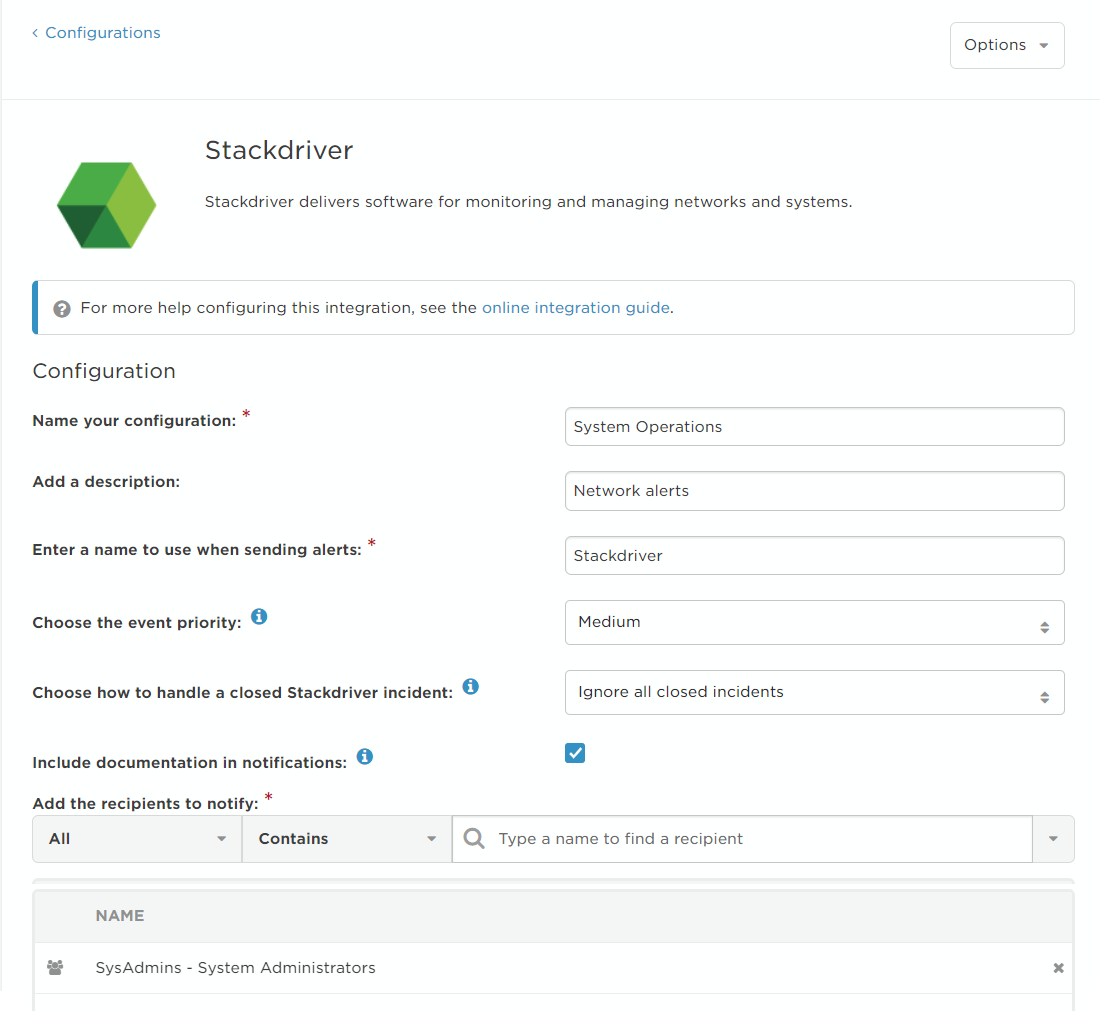
    As a set of application monitoring services on the Google Cloud Platform (GCP) for driving DevOps processes, Stackdriver has been steadily gaining adherents, especially since Google extended the reach of that service into the realm of on-premises systems. Today xMatters, a provider of incident management tools, announced it is integrating alerts and data generated by Stackdriver into its workflow processes.

    Company CTO Abbas Haider Ali said the xMatters incident management software will now automatically relay Stackdriver data to the correct people and systems to help coordinate and resolve incidents faster. Stackdriver insights will be embedded into notifications, collaboration invitations and service management tickets, said Haider Ali.

    The goal, he said, is to provide DevOps teams with more context concerning specific issues directly within the user interface employed to access the incident management platform.

    Google, via Stackdriver, not only provides access to a tool for application performance management (APM), it also effectively embeds best practices for site reliability engineers (SREs) inside the service. While the best practices defined by Google are highly opinionated, they are starting to gain traction as a specific methodology from implementing a DevOps process, said Haider Ali.

    Support for Stackdriver follows the recent release of an update to xMatters that added an Event Flood Control capability to suppress similar requests in close succession as part of an effort to reduce the level of noise generated by a single incident. The company also added an Unlimited Event Visibility feature allows organizations to unlock insights from past incidents to identify a potential root cause of a problem faster.

    Of course, while Google may have invented the SRE concept, it is clear other cloud service providers are coming up with their own flavors and many internal IT operations teams will likely create their own equivalents. But as the SRE concept continues to gain traction, the rate at which DevOps processes are adopted enterprisewide should increase. The challenge most enterprise IT organizations face today is their internal teams are largely made up of administrators rather than engineer that know how to programmatically manage infrastructure as code. Many of those organizations are either hiring former developers to become SREs, or investing in training to up level the skills of their existing IT administrators.

    But as more organizations embrace SRE concepts many of them will be looking to create closed-loop approaches to DevOps that enables them to significantly reduce the amount of time between when an issue or incident is discovered, and it gets assigned within a continuous integration/continuous deployment (CI/CD) environment to be programmatically addressed.

    In the meantime, any gaps that may have existed between DevOps processes and incident management systems are continuing to narrow. Not every organization necessarily has to hire SREs to achieve that goal. But those organizations that can afford to hire and retain SREs should expect they will insist on incorporating incident management with the context of a larger set of sophisticated DevOps processes.

    — Mike Vizard

  • Swarms: Adapting Guilds To Scale Agility

    Swarms: Adapting Guilds To Scale Agility

    In my first article in this series, “Using Guilds to Combat Information Silos,” I reviewed the adoption of guilds at xMatters. As our company has grown, we’ve used guilds to keep critical information from languishing in silos—as often happens when an organization scales. Guilds have helped our engineers apply their creativity and critical problem-solving skills to other channels and contribute to areas outside their normal scope. It’s a win-win situation for everyone who participates—and especially for the company.

    Implementing guilds began as a grand experiment. We quickly learned a lot about what enhances or hinders a guild’s success, making adjustments and adding a necessary dash of protocol along the way. But, as is the case with any growing organization, new needs and pain points challenged us to adapt and tackle them. One attempt to solve a critical problem led to an entirely new team model: a body we call the Swarm.

    The Swarm arose as a result of key changes in our release protocol. We used to be very focused on getting new features out the door as fast as we could. As it turned out, many of our customers prefer a more predictable schedule. So we gave our customers  flexible options by maintaining continuous delivery of code to production, with flags to stage larger features or more visible changes. Now, customers who wanted more predictable updates could opt for a quarterly release model while others could continue to access features as they became available and were being iterated on.

    While the quarterly release model improved our rhythm for customers, it also created stricter deadlines. A project that just missed a quarterly release could get delayed by almost another full quarter before our customers could start using it. Throwing more engineers at a problem doesn’t necessarily solve it faster—but, being the engineers we are, we thought about ways to parallelize the problem.

    We knew that guilds were very good at collaborating around a shared problem, so we adopted temporary guilds, which “swarmed” around a shared problem, completed work at an accelerated pace and disbanded. Centered around a specific initiative with a definitive start and end, multiple teams from Dev to Ops collaborated to complete a defined project. For instance, we might form swarms to create new product features, and their lifetime would span a finite number of sprints across multiple teams until completion. Due to its nature of focusing on new product features, swarms differ fundamentally from Guilds in that they are typically not self-forming; each one is an entity intentionally designed for a specific purpose.

    We began our swarms experiment with a large architectural change to roll out a new format for our customer hostnames, which involved six Engineering and Ops teams. We realized immediately that this would be an incredibly challenging undertaking on our tight deadline. A slew of teams was working on different stacks in different programming languages, so there were many competing visions and different contextual understandings of the end goal. It became very apparent that the swarm could not be left to operate in a completely flat hierarchy, as a guild usually does. We needed a leader to help ensure there was no duplication of work, things weren’t falling through the cracks and necessary dependencies were completed in the scrum storywriting between teams.

    Having someone take care of all the logistical problems is one thing, but we realized that in-person communication between all the teams in the swarm is absolutely necessary. We tried staying in the loop with each other by defining a process of posting updates from each team in our swarm’s Slack channel, but this was not enough to keep the project on track. Mattius, one of our very talented operations leads, initiated regular in-person meetings across all the teams, which led to far greater clarity. It was absolutely crucial to have all of the teams together and face to face on a regular basis.

    In the end, swarming on this massive endeavor allowed us to get the project delivered a week before the deadline. It was a challenging and imperfect first run, but it absolutely paid off.

    I leave you with these three recommendations:

    1. Create each swarm with a clear purpose and deadline;
    2. Have a leader to enforce consistent communication; and
    3. Have regular face-to-face interactions.

    The lessons we learned were invaluable for refining (and continuing to refine) our approach to tackling projects for faster release, and we’re continually working to improve and enhance this model. Good luck with all your future swarms.

    About the Author / Nick Fletcher

    Nick Fletcher, Engineering Manager at xMatters, started designing and developing websites back in 1998, when the World Wide Web was the Next Big Thing. In the time since that first website, he’s mastered all the aspects involved in creating great products: design, development and strong leadership. Connect with him on LinkedIn.

  • Using Guilds to Combat Information Silos

    Using Guilds to Combat Information Silos

    At xMatters, our group of 100 or so talented engineers is subdivided into teams tackling everything from front-end work to release automation to user interface (UI) and user experience (UX). As is common in an agile-minded organization, our engineering team members are cross-functional, with knowledge and expertise that carries over into areas outside their main focus. The advantages of this cross-functionality are an enhanced, self-organized form of collaboration and a more contextual understanding of project needs and goals—all of which ultimately lead to faster innovation.

    When I joined the company seven years ago, we had three engineering teams. We were already utilizing agile methodologies to eliminate as many inefficiencies as possible and streamline the continuous delivery process. However, as we grew to six, seven and upwards of eight teams, we realized that agile principles weren’t enough to scale the benefits. There was still a tipping point at which critical information started to silo and communication hurdles began to creep up between teams.

    Despite the stellar performance and incredible strides we had achieved with our platform, there still was room for us to grow and become smarter, faster and more productive. We needed a solution for this problem at the team-level, and for this we found that another cultural transformation was necessary.

    Here’s how it started: We observed that many of our engineers had keen interests in areas outside their usual scope, and that we could harness their interests as a valuable resource. There was the possibility of another kind of team—less official and more fluid—that would allow us to capture new ideas and solutions to problems as well as give our engineers the opportunity to engage in their interests.

    Thus, we adopted the concept of “guilds,” originally pioneered by Spotify’s development team. While Spotify’s structure is more complex to account for its nearly 2,000 engineers (it utilizes squads, tribes, chapters and guilds), the premise is the same: Allow people from different teams to come together fluidly and collaborate on a shared purpose. Our teams already utilized Slack for internal communications, and so we also created relevant channels for guilds.

    For instance, the UX guild exists separately from our dedicated UX team to include members from the front-end and other teams. We also have a test guild, comprised mostly of QA team members, who meet in person or over videoconference on a monthly basis. Our architecture guild features people from across nearly every engineering team who are interested in discussing the way we build our platform and structure our code base. Whenever people have an architecture-related problem, they post it to the architecture guild, and its members devise, record and vet a solution.

    In one case, we needed a way to configure all our customer’s environments and also replicate those configurations globally across our data centers around the world. The conversation about this issue arose in the architecture guild channel, and through it we gathered all of the necessary information and expertise to work on a spike and write a complete architecture document.

    If you’re at an agile-minded organization and are thinking of implementing guilds, the most important thing is to create an open, welcoming environment. Don’t try to structure them or make them overly formal; in principle, they should be self-governing entities that are virtually hierarchy-less. One of the coolest things about guilds is that they will be self-vetted by your community of engineers, so as soon as one no longer serves a function or becomes redundant, it naturally will fizzle out. We saw this happen with an auto-testing guild (for automation testing vs. manual testing)—it was essentially absorbed into the testing guild.

    Remember, in addition to bringing together experts in different areas, you’re inviting newbies who are interested in learning. There are so many advantages to this approach: You not only benefit from free user testing—in the case of the UX guild—but you also can harness a diversity of skill sets and creative minds to solve problems. As Einstein once said, “We cannot solve our problems with the same thinking we used when we created them.” NASA has taken this idea to heart, and has long used public crowdsourcing to solve problems for humanity in space and create new, innovative projects.

    The people who ultimately create the solutions often don’t have any traditional experience or expertise in the same area as the problem itself. Sometimes, it takes the collaboration of those both near and far from an issue to overcome it.

    About the Author / Nick Fletcher

    Nick Fletcher, Engineering Manager at xMatters, started designing and developing websites back in 1998, when the World Wide Web was the Next Big Thing. In the time since that first website, he’s mastered all the aspects involved in creating great products: design, development and strong leadership. Connect with him on LinkedIn.

  • xMatters Sees Value in Continuous Testing

    xMatters Sees Value in Continuous Testing

    xMatters builds an intelligent communications platform that alerts and connects company stakeholders for IT incident response and in manufacturing line workflow support and DevOps systems scenarios. Customers who count on xMatters also count on the effectiveness of the vendor’s continuous testing mechanisms: A failure of continuous testing early on at xMatters could lead to a magnified impact on the customers’ crises response, resulting in costly repercussions.

    XMatters uses continuous testing to promote continuous delivery of its intelligent communications platform, delivering changes to a limited number of features in an accelerated fashion. “This reduces our risks of failures and makes it easier to resolve defects,” said Deepa Guna, QA Architect at xMatters.

    For xMatters, the proper use and placement of continuous testing in the DevOps pipeline is critical to ensure the intelligent communications solution does not introduce errors during customer crises.

    xMatters Software, Languages and Tools

    The xMatters platform consists of a service stack architecture with front-end technologies accessible via the web and back-end technologies that support it. According to Guna, the platform takes advantage of Java, RESTful JSON, Node.js and Postgres, which run on data centers that are geographically dispersed in North America, Europe and the Asia Pacific regions.

    “Our data centers are built on infrastructure as a service, which includes technologies such as OpenStack, Puppet, Fabric and Consul,” Guna said. XMatters also has a mobile application for iOS and Android platforms as part of its communication service.

    xMatters Testing Approaches, Before and After DevOps

    The company’s testing before the advent of the continuous delivery pipeline included manual test execution of regression tests in the midst of a slow process of releasing one large set of features per month and deploying customer-reported defects, Guna said.

    Today, xMatters uses automated and manual regression tests and unit test code coverage monitoring, releasing small sets of features and resolved defects weekly while enabling customers to provide feedback early in the feature development process.

    XMatters uses several tests during the development, test and release phases of the DevOps pipeline and when delivering the platform to the customer. The development phase includes the following testing tools and their associated types of testing:

    • SonarQube analyzes the quality of the code.
    • Jacoco measures the code coverage of the developer unit/integrations tests.
    • Git + Jenkins run the unit and integration tests before xMatters commits the changes.

    The testing phase, Guna said, runs tests as follows:

    • Jenkins deploys artifacts in test environments and runs automated tests.
    • An automation framework that includes Jmeter, Gradle, Java, TestNG and Selenium runs its tests.

    The release phase tests software after this manner:

    • Jenkins deploys artifacts in test environments and runs automated tests.
    • An automation framework that includes Jmeter, Gradle, Java, TestNG and Selenium runs its tests.
    • Splunk and Takipi do exception monitoring.

    When xMatters delivers the platform to its customers, Guna said, it performs the following tests:

    • Runscope monitors the health of the system to ensure critical services are running.
    • Pingdom monitors the status of the customer websites.

    Drilling Down into Release Testing

    “During the release testing phase, we put the application through 1,000 fully automated and manually initiated tests that we execute with every release cycle. We also have tools that are monitoring for exception during the release testing,” Guna said. Passing this phase successfully, the new software platform release is ready to be pushed into the production environment.

    XMatters uses the continuous delivery pipeline to deploy the new platform release first to the customer staging environment and next to its production environment, Guna said. “All production environments have ongoing smoke tests that we execute every five, 10 or 15 minutes, based on customer tier, to monitor the health of the services.”

    Results Metrics

    xMatters’ method of continuous testing seems to be working for the vendor. “We have reduced the number of major incidents in production due to application defects by 40 percent this year compared to last year,” Guna noted.

  • xMatters Boosts DevOps in the Enterprise with New Integration Platform

    Next-Generation Intelligent Communications Technology Integrates Processes and Systems for Enterprise DevOps Stakeholders

    London, UK. — 23rd February, 2016 — xMatters, inc., a leader in communication-enabled business processes, today announced the release of its integration platform – enhanced connectivity technology designed to help enterprises overcome key hurdles in DevOps adoption.

    "IT support and service management tools are largely automated today for maximum efficiency, but ultimately people must be involved to move processes forward. Enterprises need to integrate real human activity into the service management and DevOps processes to continue to gain agility. To do that effectively, it makes sense to connect — in context — to systems that run these processes where people spend their time interacting. Using xMatters’ DevOps approach to integrate these systems with an intelligent communication platform will enable enterprises to achieve their business goals — by meeting SLAs and better time to value in deployments,” said Daniel Conde, analyst at Enterprise Strategy Group.

    xMatters’ award-winning cloud platform accelerates business processes through intelligent communication. The technology pinpoints and proactively alerts the individuals, teams and external service providers required to work together to quickly manage any business scenario along with resolving incidents, such as service disruptions and technical issues that interrupt the flow of day-to-day operations.

    Enterprises have long faced challenges in embracing DevOps – which Gartner defines as “a change in IT culture, focusing on rapid IT service delivery through the adoption of agile, lean practices in the context of a system-oriented approach” – because the agility of modern systems conflicts with the strict compliance, stability and reliability requirements of legacy systems.

    Successful DevOps requires a wide range of stakeholders to efficiently communicate, collaborate and stay aligned with the business so they can build, test and release new software more rapidly, frequently and reliably. When companies engage in high-velocity software release cycles, it’s easy for key information to slip through the cracks or not get communicated to the right individuals, putting software delivery times or quality standards at risk.

    "Intelligent communications is an essential part of an Enterprise DevOps toolset,” said Doug Peete, SVP of Product Management at xMatters. “As IT organisations embrace DevOps initiatives, they need to empower both technical and business constituents to drive key processes forward. As the leader in intelligent communications for the enterprise, xMatters is in a unique position to enable DevOps initiatives while still supporting the specific business needs of ITSM and major incident management.”

    The xMatters Integration Platform connects modern and legacy systems and business processes to fundamentally alter the way development and operations teams work together in a DevOps environment. By doing so, standard IT service management processes can be managed in conjunction with DevOps processes.

    The new technology operationalises, contextualises and automates communications within key DevOps processes to drive personalised communication at scale so individuals and teams can collaborate effectively and efficiently.

    In September 2015, xMatters launched an expanded Global Partner Program designed to advance its platform for rectifying business disruptions in today’s always-connected enterprise. The company boasts more than 200 integrations and partnerships, including ServiceNow, Splunk, BMC Software, AppDynamics, New Relic, Salesforce and many more.

    Supporting Partner Quotes:
    “DevOps is an agile, collaborative approach to IT service delivery that brings together siloed teams, technologies and processes. xMatters’ new Integration Platform acts as a system of engagement, and helps empower enterprise IT teams to better manage communication and collaboration across these silos. It ensures the right information gets to the right people at the right time – and brings that information and context in Cherwell Service Management as the system of record. In that regard, intelligent communications driven by xMatters is an essential piece of the enterprise DevOps toolset.”
    – Jarod Greene, Vice President of Product Marketing, Cherwell Software

    "Moogsoft’s anomaly detection and event correlation across the production stack, combined with xMatters’ intelligently targeted alerting technology allows enterprise DevOps to identify and resolve incidents faster than ever before. This integration allows for better collaboration across DevOps teams through Moogsoft’s Situation Room and xMatters intelligent communication to engage the right resources with rich situational context."
    – Stephen Hart, CTO, Moogsoft

    "Our vision for New Relic is to be the first and best place to look to understand your digital business. Communications plays a huge role in delivering this experience and showing customers that everything is working – the health of the software, the quality of the customer experience and the business outcomes. We are excited about xMatters’ new Integration Platform which makes it even easier for New Relic customers to receive critical alerts, and also ensure that the right people are being notified on the right device with the right data at the right time.”
    – Nate Heinrich, Product Manager, New Relic

    “The xMatters Integration Platform is a welcome solution for enterprises that are aiming to adopt DevOps, but are struggling with the mammoth communications challenge inherent in rapidly delivering new IT services, while making sure everything is stable, reliable and secure. xMatters’ new offering makes it easy to connect with services such as API monitoring that are essential to maintaining platform health.”
    – Neil Mansilla, Vice President of Developer Relations, Runscope

    Resources

    About xMatters, inc.
    xMatters’ cloud-based communications solutions enable any business process or application to trigger two-way communications (push, voice, email, SMS, etc.) throughout the extended enterprise during time-sensitive events. With over a decade of experience in rapid communication, xMatters serves more than 1,000 leading global firms to ensure business operations run smoothly and effectively during incidents such as IT failures, product recalls, natural disasters, dynamic staffing, service outages, medical emergencies and supply-chain disruption. xMatters is headquartered in San Ramon, CA with additional offices in London and Sydney.