Tag: web development

  • Netlify Makes Build Plugins Available for Jamstack Platform

    Netlify Makes Build Plugins Available for Jamstack Platform

    Netlify, at a Jamstack Conf Virtual event, announced the general availability of open source Netlify Build Plugins that provide IT teams with a set of continuous integration/continuous delivery (CI/CD) workflows for building websites and web applications using JavaScript, application programming interfaces (APIs) and static HTML files without employing web servers, otherwise known as a Jamstack.

    Designed to be launched from within a Netlify platform to enable IT teams to build a website and launch it from a Git repository to a content delivery network (CDN), the Netlify Build Plugins are intended to make it easier to employ DevOps processes using, for example, a plugin to run an end-to-end Cypress test.
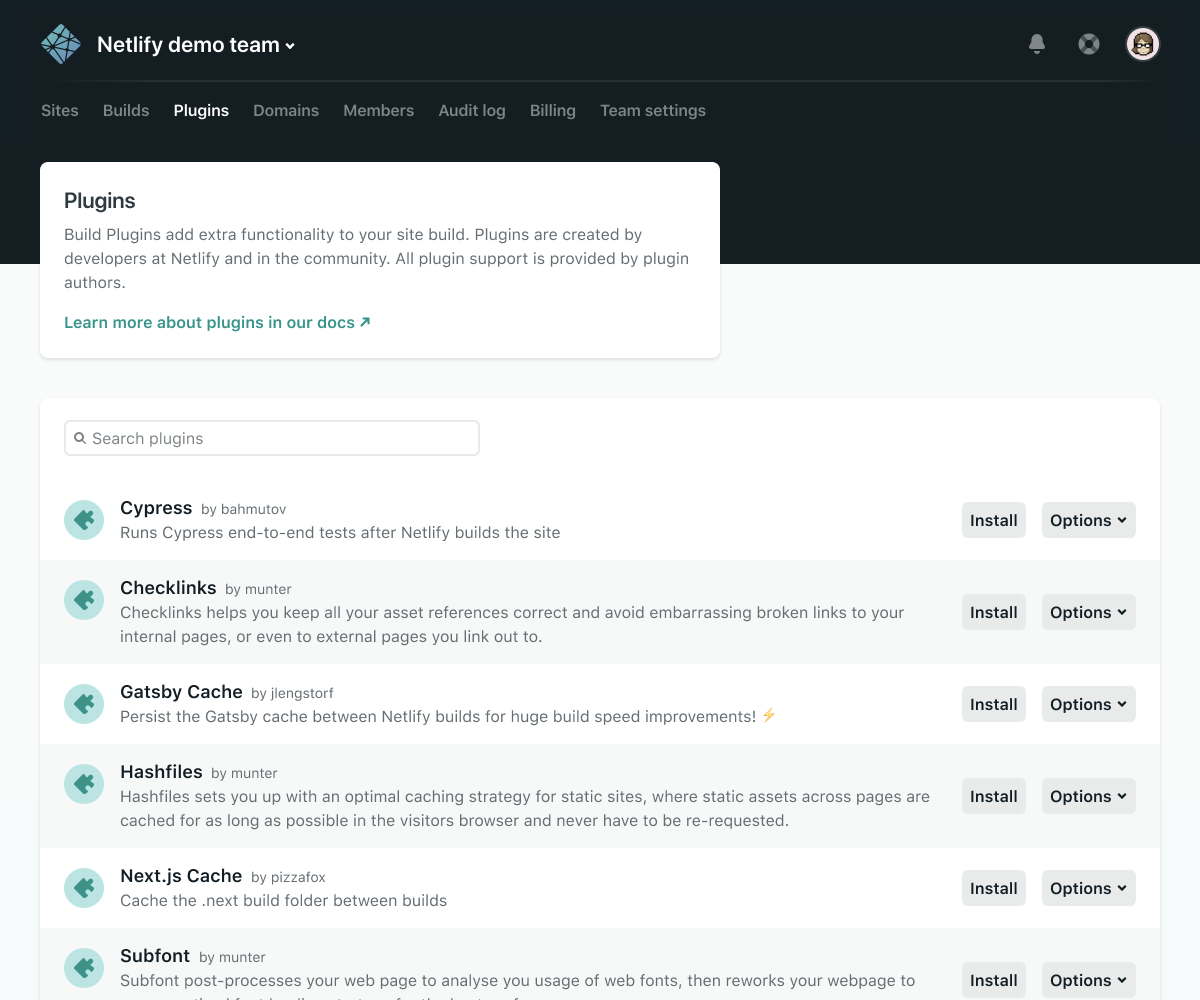
    Netlify CEO Mathias Biilmann said DevOps teams also can make use of a Netlify API to create their own plugins. Ultimately, the goal is to foster the development of a wide range of open source Netlify plugins that would be built and vetted by the Jamstack community, he said.

    Other Netlify Build Plugins provide a means to enable Ghost, an open source headless content management system based on Node.js that can be deployed on any framework; launch a Sentry tool to automatically discover, triage and prioritize bugs; or enable a Gatsby tool to create incremental builds on Netlify.

    A survey of more than 3,000 Jamstack developers published today by Netlify finds one-third have worked on sites serving millions of users over the last year. Nearly two-thirds of survey respondents (62%) work outside the tech industry, including advertising and marketing (21%), media and publishing (14%), education (14%), financial services (13%) and business support and logistics (13%). Well over a third (38%) work for a technology company. About a quarter (26%) have more than 10 years of experience.

    Top Jamstack benefits cited by all types of developers are performance, uptime, speed of development, security, compliance and avoiding vendor lock-in, the survey finds.

    Biilmann said Jamstack as a philosophy enables IT teams to separate the development of front- and backend websites and applications in a way that allows organizations to embrace best DevOps processes. That approach is agnostic as far as any specific JavaScript framework is concerned, but it does define a way to automate the build process for a web application or website.

    In the wake of the economic downturn brought on by the COVID-19 pandemic, more organizations are investing time and resources in modernizing their websites and applications. With more employees and end users depending on those websites to drive digital business processes, the quality of the application experience has become a much bigger concern. At the same time, end users have now come to expect those application experiences to be updated regularly, which in many cases will necessitate the adoption of best DevOps processes.

    In fact, it’s arguable that organizations that don’t embrace best DevOps practices to build and deliver web applications at scale will soon discover they have bitten off more than they can chew.

  • Python’s Popularity Continues: Examining the Top Use Cases

    Python’s Popularity Continues: Examining the Top Use Cases

    Python continues to be one of the most popular coding languages in use. In fact, the TIOBE index of programming language popularity named it the 2018 Language of the Year. Its usage and adoption continue to grow and proliferate into additional use cases.

    Python’s popularity and growth are in part because it’s flexible and easy to use. Python has grown from a scripting solution for sysadmins to web development for programmers to the driving force behind machine learning. We’ve observed this growth since 1999, when we began to build engineering Python distributions. As we’ve seen the use cases grow, we’ve examined the top use cases by customers ActiveState has observed.

    Let’s look at the three most popular Python use cases within the traditional tech space: infotech, software and hardware.

    Infotech: IT modernization

    The IT team of a state legislature is challenged to be able to remotely manage thousands of user desktops. Its 147 representatives, as well as its hundreds of supporting personnel, work on-premises and/or remotely. One of the key tools that empowered the team was Windows Powershell. Unfortunately, Powershell is unsupported and no longer works under newer Microsoft operating systems.

    Rewriting any application that’s a cost center is always difficult to justify. As a result, rewrites are rarely budgeted, planned and resourced appropriately. But the alternative was much costlier in terms of capital and resources: dispatch IT personnel to physically install, update and manage each user’s desktop, on an on-call basis.

    It’s famously easy to get started and develop with Python. While there was no way around a rewrite of the desktop management scripts, the IT team could at least minimize the time and resources required. Python allowed Powershell script rewrites to be done incrementally in IT’s spare time. This translated into a significant lowering of costs, and reduction in the risk of a “big bang” rip and replace project.

    Software: Adding Extensibility to Legacy Applications

    A U.S.-based public company has a 30-plus-year history of providing a suite of electronic design automation (EDA) tools to their more than 5,000 customers worldwide. Its suite of tools historically was built in C++ and is packaged for deployment on-premises.

    Because each customer has their own instance, it’s natural for the customer to want to customize the suite of tools to their needs. The U.S. public company used Python to wrap some of its C++ APIs to expose key functionality, making their software solutions more extensible by customers. Ensuring Python was deployed properly at customer sites required including Python within their existing installer, rather than relying on their customers to install Python correctly.

    The company used an OEM distribution Python that added a standard version of Python within their application and deployed it, so all teams can customize and leverage the EDA tools as required. Plus, by deploying a standardized Python version across all customer sites and developer desktops, the company can decrease support costs and speed time to market by eliminating the need for legal department reviews. Further, using a third-party-standardized Python version eliminates the opportunity cost of managing one’s own Python build and can facilitate the discovery of issues, bugs and performance issues.

    Hardware: Automating Network Administration

    A Silicon Valley-based American technology leader develops, manufactures and sells networking hardware. A key enterprise demographic for the company is network administrators, who often are confronted with managing the vendor’s multiple devices across extended corporate networks.

    The challenge: Network admins aren’t typically developers. Yet, they want to improve their efficiency by being able to programmatically make configuration changes to multiple network devices at once. While sample scripts are easy for any network admin to use and modify, the vendor did not want to be held responsible for creating all the scripts its user base might require.

    Python was the solution because it is simple enough for any technical person to learn and start using effectively. The company chose a version of Python that allows their customers to quickly create sample Python scripts to cover the majority of typical network admin use cases.

    This choice also allows network admins to create Python libraries they can leverage to create their own custom scripts to manipulate the configuration, operational state or event data from network devices. Most importantly, the cost of administering enterprise networks is significantly lowered and network admins are dramatically more efficient with programmatic access to physical networking devices and virtual network resources.

    Looking Outside the Tech Space

    Other examples that round out the top 10 use cases for Python include:

    • Consulting services: Bespoke web development.
    • Insurance: Creating business insights with machine learning.
    • Finance: Data mining to identify cross-sell opportunities.
    • Retail banking: Flexible data transformation and manipulation.
    • Aerospace: Meeting software system deadlines.
    • Business services: API access to financial information.
    • Health Care: Predicting disease prognosis.

    Ongoing Innovation

    Python’s usage continues to grow due to its simplicity and flexibility. Developers clearly want to use it for a variety of reasons that surpass its creator’s original intent. To support this usage, organizations need to ensure their developers can do so securely, by overcoming open source vulnerabilities while still iterating quickly. It seems that use cases for Python are limited only to the imaginations of its growing, enthusiastic user base.

    — Bart Copeland

  • SauceCon 2019 Speaker Profile: Wim Selles

    SauceCon 2019 Speaker Profile: Wim Selles

    This is the fifth in a series of articles highlighting speakers at SauceCon 2019. SauceCon brings together the global community of Sauce Labs users and continuous testing experts to learn from each other and level up their automated testing and continuous delivery skills. This year’s event will be held April 23-25 in Austin, Texas.

    SauceCon 2019 speaker Wim Selles is passionate about front-end test automation and his enthusiasm is infectious.

    He started manual testing back in 2007, then began dabbling in web development to challenge himself. He soon fell in love with front-end web development, deciding that if he truly understood how code works, he would become a better tester.

    While employed at Tele2, a large telecom company in the Netherlands, Wim realized the need for an image compare tool for native apps, but he couldn’t find exactly what he needed. So he decided to roll up his sleeves and build an open source module himself.

    Wim’s SauceCon presentation, “Building Your Own Native App Visual Testing Module with Appium,” will focus on exactly how he did this. He will share the things he learned about Appium in the process, as well as how he managed to create a cross-platform solution to answer this need.

    Wim wants to make people as enthusiastic about test automation as he is. As a solutions architect at Sauce Labs, he helps customers successfully implement the Sauce Labs Continuous Testing Cloud. He conducts trainings, shares best practices and travels the world speaking (and learning!) about coding and testing.

    In addition to his passion for test automation, Wim enjoys contributing to the open source community and spending time with his family and two young daughters.

    You can hear from Wim and more than 30 other expert speakers at SauceCon 2019, the third annual Sauce Labs user conference. To see a full list of presentations or to register, visit the SauceCon website.

    — Rebecca Cramer

  • Why Hiring Top Web Developers is a Good Idea

    Why Hiring Top Web Developers is a Good Idea

    Web developers are a great addition to every organization. Having your own web developers to help you create web applications and websites can be invaluable to companies of every size. If you happen to be a software development team, they are indispensable members of your team.

    Because web developers are in such high demand, hiring the best of the best can be an extremely expensive endeavor. However, hiring them is more than worth the investment, as web development is one of the most valuable activities of any company, especially tech companies and web design agencies.

    With top web developer talent, you’ll surely make more than your initial investment. Investing in quality is always a sound decision, especially for software teams, where a lack of expertise can spell doom for the end product.

    Facilitating Communication

    It’s good to have a team of both frontend and backend web development specialists. The top web developers can help specialists with weak points or blind spots. They can help other, less-experienced members of the team implement a piece a source code, an algorithm or a create a better-optimized database.

    Premier web developers have extensive knowledge and experience with web development, which can help other members of the team better communicate their concerns with other specialists.

    With an in-depth understanding of web development, they know how to translate backend issues to frontend specialists, greatly facilitating communication and collaboration.

    Improving Team Morale

    The best web developers aren’t only technically adept, they are also great communicators, collaborators and leaders. They know how to speak empathetically, compassionately and honestly and openly. They are active team members who voice concerns, questions and comments in a way that everyone can understand.

    When communication and collaboration are facilitated and when constructive criticism is encouraged, team morale is impacted postively. When team morale is boosted, productivity increases, miscommunication decreases and passion for the project can be revitalized. Talented, team-oriented web developers can provide your team with extra motivation and much-needed mentorship.

    Bringing Perspective

    The top web developers have the experience necessary to bring in a fresh perspective to organizations of all sizes. The best web developers likely have worked on extensive projects for important clients, encountered a great deal of strife and come up with unique solutions to intimidating problems.

    While attracting top talent isn’t an easy thing to accomplish, it is worth the time and effort it requires. Young companies, especially tech startups, can benefit from bringing experienced web developers onto their teams.

    Exceptional web developers can act as managers, mentors and liaisons for young, sparsely populated companies. The most experienced web developers can inject knowledge, quality and direction to small companies.

    Keeping a Consistent Pace

    The best web developers maintain a consistent pace, leveraging lean and agile project management principles to do their job to the best of their ability.

    One big mistake young companies commit is biting off more they can chew. It’s a good idea to keep a steady, consistent pace. If your team is using Scrum to help maintain pace with sprints and project retrospectives, experienced developers can be of great use.

    Their experience can help the team establish a successful sprint schedule, helping other team members get acclimated to turning in project deliverables in a consistent and sustainable way.

    Conclusion

    The best web developers on the market are difficult to attract. Hiring dedicated web developers requires organizations spend the time and money carefully to find, vet and hire the best in the business.

    Why are the best web developers worth the investment? They can enrich your organization with their expertise, their talent and their communication skills. It’s important to remember that the top developers are not only technically but also socially gifted. They exhibit leadership skills, easily communicating ideas and encouraging collaboration.

    If your organization is looking to hire a web developer, seek out top-caliber candidates, especially if your company is young or understaffed. While you may not believe you can afford the best web developers at this junction, it’s well worth the risk to invest in them.

    — Anthony Coggine

  • 4 Questions to Ask a Web Developer During an Interview

    4 Questions to Ask a Web Developer During an Interview

    Web development is a fragile process. You need talented web developers to make truly beautiful sites with seamless user experiences and fast loading speeds. Without experienced web developers, creating a website that has both form and function is exceedingly difficult.

    Web developers have a great deal of responsibility. They understand design and they understand how to implement that design using programming languages, tools and frameworks. How do they piece all of these skills together? How do you assess whether they have these skills?

    There’s no formula for the interview process that guarantees great hiring decisions. There are a few questions you should consider appending to yours, however, as they can help you get to know the web developer a little better.

    Here are four questions to include in your interview with a qualified web developer:

    1. What programming languages, tools and frameworks are you most familiar with?

    Web developers are usually proficient in a number of programming languages and are adept at wielding frameworks. They must have an in-depth knowledge of HTML, CSS and web scripting languages such as JavaScript. If the role you’re hiring for includes back-end programming, they also will need to know how to program databases by using PHP or even Python.

    Content management systems such as WordPress can also be extremely helpful for web developers. Bootstrap and frameworks also may be helpful when building web pages.

    You’ll want to ask more about the technologies, programming languages and frameworks they like using. Don’t limit your questions to strictly the technical requirements of the role. Assess the developer’s passion and knowledge.

    1. How do you stay relevant as a web developer?

    Technology is constantly evolving. Web developers have to have strategies to stay up to date on the latest updates, frameworks and trends. There’s no wrong way to keep up self-education. A potential web developer candidate might cite online courses as a way to stay skilled and knowledgeable.

    Web developer meetups, professional web development classes and sites such as StackOverflow and GitHub can help developers stay informed and in conversation with other developers.

    1. What are some mistakes you’ve made in the past as a web developer? How did you react to those mistakes?

    Web development is a complex process. There are lots of little things that can go wrong during development. It’s not uncommon to make mistakes even as an experienced web developer. However, it’s still important to assess how a candidate responds to tricky situations.

    Do they show themselves compassion when they make a simple mistake? Do they create actionable plans to remedy mistakes when they appear? Are they resilient or easily defeated? Are they prone to blaming others or do they take responsibility for their actions?

    It’s important to know how a candidate will respond to stress especially if you expect your projects to be lengthy or complicated.

    1. What would you like your role to be?

    It’s easier to get to know a candidate if you know the activities they like to perform. Are they interested in leading a team? Do they enjoy helping design wireframes with the design team? Do they take great pleasure in optimizing back-end processes?

    Ask the web developer candidate about their own likes and how they can best fulfill their duties as a member of your company’s team. You’ll find out a great deal about their personality, preference, and work style with questions that probe into their own likes, dislikes, and dreams.

    Conclusion

    Great web developers are rare. Even though it’s hard to attract the top web developers on the market, it’s not impossible. By asking the right questions, you’ll capture the imagination of the best web developers and, hopefully, gain some insight into their own creative and technical processes.

    Delve into a few technical aspects of the job, gauging their familiarity with popular programming languages and tools. Make it a point to ask web developers about past projects and performances. See how they self-assess and gauge their capacity for compassion, collaboration and resiliency. Continuing education is also important for web developers as trends often change.

    Be sure to also delve into their personal preferences and opinions as this will help you better understand how they work and if they are the right fit for your organization.

    — Greg Robinson