Tag: video

  • MediaOps Wins Two Gold Hermes Creative Awards for Video and Podcast

    MediaOps Wins Two Gold Hermes Creative Awards for Video and Podcast

    We are thrilled to announce that MediaOps is the recipient of two Hermes Creative Awards. TechStrong TV won the Gold Award in the video/informational category and DevOps Chats won the Gold Award for audio/podcast series.

    The Hermes Creative Awards is an international competition for creative professionals involved in the concept, writing and design of traditional and emerging media. Hermes Creative Awards recognize outstanding work in the industry while promoting the philanthropic nature of marketing and communication professionals. Hermes Creative Awards are administered by the Association of Marketing and Communication Professionals (AMCP). Judges are industry professionals who look for companies and individuals whose talent exceeds a high standard of excellence and whose work serves as a benchmark for the industry.

    Our main goal here at MediaOps is to create and produce high-quality, educational and informational content to our audience, covering IT industries and practices that are re-shaping the world of technology, including DevOps, cloud-native, cybersecurity and digital transformation. These awards are a testimony to all the hard work and dedication that goes into producing these programs. We are proud of our MediaOps team and honored to receive recognition for our work.

    The two MediaOps broadcast programs recognized by the AMCP are:

    • TechStrong TV: Gold Award winner in the video/informational category. TechStrong TV is a streamed broadcast featuring fresh video news and information three days a week and on-demand content from conferences and shows two days a week on the Digital Anarchist network. TechStrong TV features interviews with industry thought leaders, covering the latest news on DevOps, cybersecurity, cloud native and digital transformation.
    • DevOps Chats: Gold Award winner in the audio/podcast series category. DevOps Chats is a “fireside chat” podcast featuring devopsy.kinsta.cloud and Security Boulevard Editor-in-Chief, Alan Shimel, discussing relevant topics with luminaries and thought leaders in the DevOps and security industries.

    The MediaOps team would like to thank the Hermes Creative Awards for recognizing the content we publish. Most of all, we would like to thank you, our audience, for all the support you have given us throughout the years.

    TechStrong TV is available on the web at Techstrong.tv, with on-demand segments available on DigitalAnarchist.com and the MediaOps community sites (devopsy.kinsta.cloud, Security Boulevard, Container Journal). TechStrong TV is also available on LinkedIn Live (devopsy.kinsta.cloud page), Facebook Live (devopsy.kinsta.cloud page), YouTube (DevOps TV channel), on the devopsy.kinsta.cloud mobile app for iOS and Android, and on TV via devopsy.kinsta.cloud app for OTT channels on Apple TV, Roku and Amazon Fire TV. 

    Episodes are available after broadcast on-demand at Digital Anarchist, the next-gen streaming service for tech communities, which offers in-depth coverage on DevOps, cybersecurity, cloud-native and digital transformation, adding high-quality content on a regular basis. DevOps Chats are published on SoundCloud and iTunes, and are also available on Digital Anarchist.

  • Twilio Expands Scope of Cloud Services Portfolio

    Twilio Expands Scope of Cloud Services Portfolio

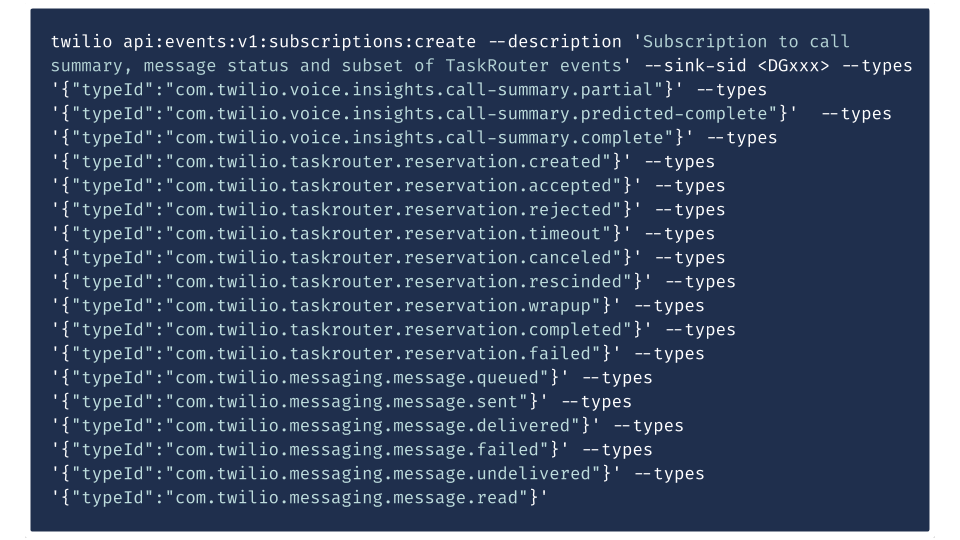
    Twilio today at its online SIGNAL 2020 conference launched Twilio Video Web RTC Go, a free toolkit that makes it easier to embed video within an application, and exposed an Event Streams application programming interface (API) through which the management of streams of messaging and voice can be centralized using the Amazon Kinesis platform.

    At the same time, Twilio debuted Twilio Frontline, a mobile application that enables all incoming and outgoing customer conversations occurring over any channel or medium to be sent to a single application running on an IoS or Google Android device.

    Finally, Twilio also launched Microvisor, a turnkey connectivity and device management platform for developers building and updating internet of things (IoT) applications.

    Quinton Wall, senior director of developer marketing at Twilio, said Twilio Video Web RTC Go will play a critical role in enabling organizations to take control of digital business applications that now typically include a video stream. Rather than having to rely on a video service provided by Zoom, for example, an organization can provide an interactive video experience under their own brand by invoking application programming interfaces (APIs) that connect applications to Twilio Video running on the Amazon Web Services (AWS) cloud.

    In a similar vein, Twilio Frontline enables organizations to also take control of the communications channels that end customers are likely to employ. It may not be feasible to require every customer to employ a specific communications channel but at the very least all communications occurring over WhatsApp, SMS/MMS, webchat and other channels can be centralized, noted Wall. The Events Stream API, which will be expanded to include other processing engines other than Amazon Kinesis, enables developers to apply that same capability within their own applications.

    Twilio is also making it easier to build and deploy applications in IoT environments via a Microvisor platform through which Twilio provides constant monitoring of vulnerabilities and applies security patches to both IoT devices and any associated cloud components. Developers can also debug and update devices remotely and push out code updates as often as they see fit.

    Developers can also reuse any existing embedded code and develop IoT applications in the language and embedded OS of their choice using the TrustZone hardware isolation technology made available by Arm on processors that are widely employed in IoT devices.

    Collectively, Twilio is making a concerted effort to convince developers to programmatically invoke a range of cloud services that are exposed via an API. Rather than employing separate services for each video, audio, text or in the case of IoT application an IT management function, Wall said the goal is to enable developers to spend more time on writing code versus integrating external services.

    In general, the point where applications that don’t include embedded collaboration tools, including video, are considered antiquated has arrived. End users that have become accustomed to using services such as Zoom expect to be able to instantly communicate with the owner of that application or other end users. Twilio provides those capabilities in a way that doesn’t require developers to rely on a service such as Zoom that introduces yet another brand into the application environment, noted Wall.

    It’s too early to say just how capabilities such as video will be surfaced within applications. However, the one thing that is certain is video is now expected to be pervasive both inside and out of application environments.

  • TechStrong TV: The Low-Code Movement, With ServiceNow

    TechStrong TV: The Low-Code Movement, With ServiceNow

    ServiceNow is well-known for its IT transformation products and customer/employee workflows. But the company has another technology, App Engine, a low-code application platform that lets people build applications faster than they can on any other platform.

    In this TechStrong TV interview, I speak with Josh Kahn, general manager of the platform business unit at ServiceNow, about App Engine and the evolving low-code landscape, which is a very hot topic in today’s business environment. The video is below followed by a transcript of our conversation. Enjoy!

    Transcript

    Alan Shimel: Hey, everyone. Thanks for joining us on another episode of TechStrong TV here on Digital Anarchist. Really happy to be joined for this episode by Josh Kahn. Josh is the general manager of the platform business unit over at ServiceNow. Hey, Josh, welcome.

    John Kahn: Alan, thank you for having me. Really excited to be here today.

    Shimel: We’re excited to have you here, man. Let me just make sure I didn’t mess up anything with the title or the unit and everything, right?

    Kahn: Got it exactly right. That’s right.

    Shimel: Cool, man. Appreciate it. So Josh, look, our audience doesn’t really need an introduction to ServiceNow the company. You know, it’s probably one of the most successful companies over the last two/three years in the tech universe, if you will, right? Phenomenal growth, phenomenal story. But you’re the GM for the platform business unit, and I don’t know if our audience is as familiar with that. I think a lot of people think of ServiceNow with ITSM and those kinds of things. What exactly is the platform unit there?

    Kahn: Yeah, so the platform business unit actually has two parts to it. One is taking requirements from all of our different lines of business and defining shared capabilities in the platform itself that they use to build their products. The other part is defining the things that our customers and partners need to build their own applications on our platform just like we do. And the platform at ServiceNow really is a single platform. It’s one platform, one architecture, one data model. So we make sure that the same capabilities our own businesses have to build on are available to our customers and partners. It’s the job me and my team have to make sure that that’s world class for all of the developers out there in our customers and our partners and in the ecosystem

    Shimel: Sure. Excellent, man. Josh, if you can, share with our audience a little bit, what’s your background

    Kahn: Yeah, so I’ve been in platforms for a long time. I actually graduated college and my first job was at Accenture where they said, “Hey, you’ve got to do some development work before you can get on to being a business analyst.” And I thought, oh man, I can’t wait to be a business analyst. I’ll power through this development stuff, and I just loved it, and I spent the first years of my career programming and programming in C on Windows 3.1 and doing three-tier client server systems. That was a lot of fun. At some point, the internet came along and I realized, wow, that was a much better architecture so found my way to Netscape.

    Shimel: A little bit

    Kahn: Say again.

    Shimel: I said a little bit better.

    Kahn: Yeah. So I found my way to Netscape which was the only internet company at the time and ended up there working on the Netscape 1 platform in a product management role and just http: my career continued to focus on development environments, platforms, and helping people bring solutions to market. Fortunately, I’ve been at ServiceNow for about four years and am continuing to really focus on how do we build a platform that lets our customers unleash the innovation in their organizations and create the kinds of applications that we create ourselves today? We want to bring that to our customers. That’s a really fun job to have.

    Shimel: Excellent. You know, it’s funny. About two weeks ago I interviewed Tom Jermoluk. He was at Netscape obviously with Jim Clark, and he went off with Jim on a bunch of other adventures. They’re still adventuring, right? Tom is now at Beyond Identity or something like that. But yeah, we were talking about – I mean those Netscape days, you’re of an age, I was an OS/2 guy rather than Windows 3.1, truth be told. But you know, you’re at an age where Netscape, people forget I mean that was the opening of the internet commercially, right, without Netscape and what went on there. It was crazy times. Unbelievable times.

    Kahn: I mean the thing that I was building an application where we designed a billing system for an airline to bill back and forth and exchange services and fees and they just sort of wash out dollars at the end of the month and somebody wrote somebody else a check. You know, one airline painted the other airlines planes and then the other airline de-iced. It was a really complicated data model to build, and we had to roll it out to all these different hubs but we tackled the data model problem. We tackled the logic problem. The thing that we couldn’t get around was the messaging infrastructure. That’s the thing that the internet made so easy. I mean among many things, I think it’s one of the reasons that it’s unlocked so much potential is it’s so easy to get a message from point to point for an application.

    Shimel: Absolutely.

    Kahn: It’s really, really changed the –

    Shimel: Yeah, no, it was revolutionary. But you know, you bring up a good example and that is kind of what development was like back then versus what development can be like today. That kind of brings me up to App Engine and what I wanted to speak to you a little bit today, right, where, look, man, it’s – thank God you don’t have to do what you were doing in 1996/97/98 to develop an application today, right? We do have the internet. It does make a lot of things easier.

    But we also live in a time of low-code no-code revolution where you don’t have to be a C-plus developer anymore to put together an application rather quickly. Rapid application development, right? And so I think a lot of people who are familiar with ServiceNow, Josh, they may not be familiar with App Engine and what it brings. So talk to us a little bit about – if you don’t mind, talk to us a little bit about App Engine.

    Kahn: I’d love to, and I think you’re absolutely right. We’re well-known for our IT transformation products, customer workflows, employee workflows, less known for App Engine. So we focused App Engine on providing an application platform that lets people build applications faster than they can on any other platform. A lot of the first questions I get from customers is, “Hey, I have a number of application platforms and I can build – yeah, I want to go faster but what kinds of applications is your platform really best for?”

    And one of the things that we’ve really done, in addition to making it possible to build low-code and build fast, is focus on digital workflows. So digital workflows are ways to drive business process across the organization. A lot of organizations were building those pre-COVID because they had digital transformation initiatives, but the COVID pandemic put the speed and the need of digitizing business process to the forefront of every organization, every government. It’s really just been a catalyst for building applications that drive business process, run across a lot of different systems, and create those sort of digital outcomes.

    Shimel: Great. You’re preaching to the choir here, and we see it every day. Six years’ worth of digital transformation in about four months. That being said, digital transformation is way big, right? I probably went out of the screen on that. I apologize. It’s very big. But low-code no-code allows us to almost take it in bite-sized chunks. It allows us to get our hands around it without the huge development teams and all the languages and all that and really – especially like now in COVID, right, I need an application that does this now, right? We just sent everyone home remote. I need to be able to do this now. And so things like App Engine enable that sort of thing. Do you have any maybe examples you could share with us?

    Kahn: Absolutely. Yeah. I think you’re absolutely right. And we see a world where, look, people who write software and people who code are still going to be incredibly important, right?

    Shimel: No doubt.

    Kahn: The issue is demand. There’s just too many applications to build so we’ve got to help people who don’t know how to code but do know business process to create those applications. That’s what we really tried to do with our low-code platform. And I’ll give you some examples, and a lot of the kinds of applications that people build in a no-code way tend to be the simpler variety of applications. So a few that we’ve worked with customers on. One they call Opendoor. So this allows all of their employees to submit ideas or concerns to the executive team. It was an idea at this organization that started when it was a very small company.

    As the company has grown and grown, it’s no longer feasible for people to walk into the CEO’s office and he was getting 60,000 e-mails a year with ideas for how to do things better or how to mitigate risk. And so they had someone build an application using low-code technology called Opendoor, and any employee can go on a mobile device, submit an idea or a concern and it gets routed to the right executive team in the corporation at the executive level to address so it doesn’t all go to the CEO. If it’s obviously an issue that should be thought of in the finance department, it goes straight to the CFO. If it’s something that should be thought of in the human resources department, it goes straight to the talent officer. But it’s a way that employees are able to get those requests, visibility to the executive team. It was built without developers writing code. It was simply a no-code application process.

    Shimel: Excellent.

    Kahn: You know, I think there’s also an interesting dynamic, too, where we see an opportunity for people who write code to support those – we call those citizen developers. A lot of people use that term citizen developer. So what we think of as a citizen developer is someone who is technical but doesn’t typically write code. So I’ll give you an example. One individual was the person in her department that they would always go to and say, “Hey, we’re going to evaluate a SAS application for project management. Can you go look at these three apps and tell us which one you think is best?” So she really knew technology. She could log in, find her way around, configure things but wasn’t going to go write code to build an application herself.

    What we’ve seen with the citizen developers is they can get pretty far into building an application, but oftentimes they hit a cliff where they need help from somebody who can really write code, whether it’s an integration with a system of record or some kind of complex business logic that’s just a little bit beyond the capabilities of the no-code tooling that they’re using. That’s where we think it’s really important to bring these citizen developers and the developers who write code together on a single platform so that they can support each other and we can get scale from the citizen developers but also have the pro code developers do the tough stuff that really empowers and enables the citizen developers.

    Shimel: You know, Josh, that is so dead on to part of what DevOps is about, right, which is all of us working together in that thing. I wanted to let you finish your thought, but a couple of comments on it is number one, when we look at the full spectrum of the kind of applications modern enterprises, modern organizations need to function, yeah, there are some things that are really hard. They need applications that are really hard to build, have very, very complex workflows and very complex needs or requirements. You really do need to be a high-level developer, let’s call it, a really high level experienced developer to pull that off.

    But I would venture to say that that’s probably 20 percent or less of the kind of apps – when you look at the full spectrum of apps that people use, it’s probably 20 percent or less. I think the majority of the apps are rather mundane, right? They don’t need the rocket scientist to develop. If you just give someone some good building block tools, they could put together 90 percent of the functionality they need, 95 percent of the functionality that app needs to be functional and effective.

    And I think, you know, we said it before, there’s something like 40 million, 42 million developers in the world was the last number I saw, growing 20 percent a year. Would be the fastest growing country on Earth. It’s still not enough. As you said, there’s still not enough developers. So part of what we have to do in DevOps, part of what we do in digital transformation is say, “Hey, if we don’t need one of those 42 million on this but we have someone here doing it, let someone here do it.” We don’t need that pro developer, if we can call it that, to do everything every time. And so the citizen developer as the term is coined, right, becomes more and more important to do more and more of these 80 percent or so apps that don’t require it, right, that don’t require that pro guy or pro gal.

    And so the real question for organizations, and I’m sure this is something you deal with, is how do you empower those people? With an App Engine maybe. But sometimes – Josh, again I’d like to hear your voice – it’s not just the tool. It’s making the CIO, the IT department aware that, hey, let’s not just dump everything on that developer’s desk because he is dealing with security and DevOps and testing and deployment. He’s got enough on his plate. Are there things we can take off the plate for the citizen developer and get it done quicker, cheaper, and just as functional?

    Kahn: Yep, absolutely. So it’s really interesting you say that because we see a pretty common journey with a lot of our customers that have great success with App Engine and it tends to start with the team building a business-critical application of some sort. So I’ll give you an example. Academy Mortgages is one of our customers, and I talked for a bit with the CIO about their journey, and I’ll describe it in terms of what Academy Mortgage did, but this is a very common journey that plays out in lots of our customers.

    So Felix was describing first they had a couple of business-critical applications they built out on the platform. So Academy Mortgage does loan origination. Then a lot of times they will package them up and sell them to investors. So there’s a process when you sell them where there’s a set of stipulations that have to be attested to as a part of that process. So they had a hundred people that manage that stipulation process.

    So they built a digital workflow on our platform with App Engine, and they were able to do that process with half the number of people. So they reduced from 100 people to 50 people to process even more loans than they had in the past. You say, well, hey, where did those 50 people go? And I asked Felix that question. He’s like, “Hey, these are people that know the mortgage industry. They’re incredibly knowledgeable. They’re great employees. We redirected them to other work.”

    So this is a case where they took a business-critical application, had a huge cost savings and increase in revenue generation for the organization through the combination of saving those people and redirecting. But that was only step one. You know, the next thing is they built a small center of excellence. So they put, not huge, three people in a team that were like the experts on building App Engine applications. That team was able to build over 50 applications for 27 different departments at their organization. So now they’ve gone from a couple of big wins – I mentioned one of them, but they had a couple of big wins – to a small center of excellence team and then they move on to phase three.

    Once they’ve had that broad sort of impact with the 50 applications, they start empowering the rest of the organization to build the simple ones, right? So Felix calls it power to the people. He wants to let the citizen developers do the really simple stuff and his CEO team is gonna continue to do the high impact, high complexity, real business value-driving applications. So the vision that you laid out, Alan, is exactly what I’m seeing our customers doing is combining both professional developers for the really complex stuff and citizen developers for the simpler applications

    Shimel: I mean it’s the right person for the right job using the right tool, quite frankly. So you know, Josh, I, like the rest of the world, hope and pray that this COVID thing doesn’t stick with us forever and we come out the other side somehow into what the new normal is. In this new normal, what role – I mean do we go back – we can’t go back to the way it was before, but what role does low-code no-code play in this whole thing going in this new normal that emerges

    Kahn: Yeah, I mean it’s incredible the amount of processes that are being re-engineered across every industry. Anything that depended on contact, human contact, paper changing hands, two people being in the same place is now being re-engineered to become contactless processes. And so for any organization will have hundreds or thousands of those processes, and to think that you’re going to need a skilled developer to write code to reengineer each one of those processes is – you know, you’re going to put the timeline out too far for your organization to be successful. You’ll put people’s lives at risk. You’ll put your organization at risk.

    And so the pace of digitization is just going through the roof. The only way to really keep pace with that digitalization is to empower citizen developers. So what we’ve seen in our customers is a real demand to empower their citizen developers, their business analysts to reengineer business process. They know that process well. If they can be armed with tools that allow them to model it, define it, and deploy it, then the organization can create transformation at scale. That is what everyone is looking for in this post-COVID era.

    Shimel: Absolutely.

    Kahn: We’re dealing with it today, but even as we move out those processes will continue to be reengineered and change.

    Shimel: Agreed. I think, look, the whole thing around business process automation, robotic process automation, RPA, another popular topic and I think the other thing is we’re interviewing a analyst a couple weeks ago and they said something like we’ve done six months or six years of digital transformation in a couple of months.

    The interesting thing about that is it’s almost like putting money in the bank. So that money’s there now. So when and if this COVID enters, you don’t start with zero in the bank. You start with what you’ve already deposited, right, and then we build on that. I think that’s an important thing for people to remember in that all of these investments we’re making now and empowering our citizen developers with tools like App Engine. They’re now short term or diminishing assets. These are long-term investments we’re making that will serve us well going out beyond the immediate crises or whatever you want to call it.

    And it’ll be interesting because I feel like, you know, so like you, we both came of an age, right, when the internet came onboard and we had this concept of internet time, right, this kind of crunch time. In internet time, it goes three times faster than the real world. I think we have now introduced like COVID time, and I don’t mean to be – look, a lot of people are suffering. A lot of people are dying. But we have compressed timeframes in terms of how fast we’re developing apps, in terms of how fast we are bringing onboard these things. I don’t think that goes away. You can’t put that genie back in the bottle.

    Kahn: You can’t. You know, I think there’s a perfect example of that that we saw with the City of Los Angeles. So the mayor’s office wanted – this is early on in the pandemic. They wanted to roll out COVID testing for all of the citizens of Los Angeles, and they called ServiceNow, and we brought in one of our partners on a Saturday morning. The mayor was saying I have a press release on Sunday night. I need to roll out the testing application so that when we tell people there’s testing, we can tell them where to go to sign up. And so this partner, Cask was our partner that did this, they assigned six developers who worked through the night, did a demo for the mayor’s office on Sunday morning, and by Sunday evening they had this application up and running for 4 million citizens of Los Angeles, eventually expanded to the county so you get to 16 million people.

    But it’s interesting because it wasn’t a registration form. It was a really powerful logistics app. Behind the scenes, they had to have agents who could route the request to the right site to get tested. They had different sites and each site had two-hour windows where they didn’t want to put too many people in a window because then you have –

    Shimel: Unbelievable.

    Kahn: – too close together. So you want to talk COVID time, I mean within 48 hours they were able to build an application that handled a complex logistical challenge and make it available for 4 million people. You know what I mean? Even on the internet.

    Shimel: Fantastic.

    Kahn: – that would be inconceivable.

    Shimel: Crazy. I don’t want to get into politics, but why couldn’t we do that nationally, man? You know, if it worked for L.A. for a couple of million? But let’s not go there. Josh, we’re about out of time. I want to thank you for coming on and sharing a little bit with us, talking, learning. You know what we didn’t mention? For people who want to find out more about App Engine, where can they go.

    Kahn: Yeah, look, best place to go is ServiceNow.com. You’ll drill into the platform area, learn about App Engine. If you’re interested, you get your own developer instance and you can be up and running building applications in no time.

    Shimel: Fantastic, man. Hey, thanks for joining us. Josh Kahn, VP of the Platform Business Unit at ServiceNow, talking to us about App Engine, empowering citizen developers around the world. This is Alan Shimel for TechStrong TV. We’ll be right back with our next guest.

  • DevOps Unbound: Exploring Acceleration and Automation, Setting DevOps Free

    DevOps Unbound: Exploring Acceleration and Automation, Setting DevOps Free

    We are launching a new video series Thursday, Aug. 6, called DevOps Unbound. DevOps Unbound will focus on DevOps, automation, CI/CD and testing, featuring leaders in these areas as we explore the challenges and issues software delivery and IT teams face every day. How do we go faster, smarter with better quality? DevOps Unbound!

    The series will premier on our TechStrong.tv streaming network and should start around 10:40 a.m. Eastern tomorrow, August 6th. It will be available on Linkedin Live (on the devopsy.kinsta.cloud page), Facebook Live (devopsy.kinsta.cloud, Container Journal or Security Boulevard pages), YouTube on the DevOpsTV channel and the MediaOps sites. Additionally, the show is available on-demand on our devopsy.kinsta.cloud mobile app and our devopsy.kinsta.cloud OTT channels on Roku, Apple TV and Amazon Fire TV. Finally, all episodes will be available on-demand on Digital Anarchist, our streaming video platform. The series is sponsored by our friends at Tricentis.

    New episodes will run every other week. Also planned is a monthly DevOps Unbound roundtable, open to the public and featuring a revolving panel of experts around a given theme. The first live monthly roundtable will be Aug. 18, around the theme “DevEverythingOps.” Roundtable discussions do require registration; you can register for the first event here.

    Premier Episode August 6th

    The premiere episode features Dr. Grigori Melnik, CPO of Tricentis, and James Bach, the developer of session-based testing and a highly respected expert in testing. We will explore the history of testing and how it has adapted over the years to allow for more automation, help testers and developers be more efficient and accelerate the software release process.

    These are two people renowned in their fields who arrived here from very different paths. Bach is a high school dropout who was bitten fiercely by the computer bug. He was a game developer and then a coder who became one of Apple’s first test engineers in 1987. Dr. Grigori Melnik has a Ph.D. in testing and is a respected authority in both the academic and business worlds.  Though they come from different backgrounds, they have more in common than you might think. It was a great discussion and one I think you will really enjoy.

    Future episodes of the bi-weekly show will feature topics including DevSecOps, open source, cloud-native, CI/CD, SDM, DataOps, observability and more. We think DevOps Unbound will quickly become an essential part of your DevOps information arsenal.

    We are always on the lookout for future topics and guests. If you think you would like to take a giant leap with DevOps Unbound, reach out to me at unbound@devops.com with your idea and we can follow up.

    BTW, DevOps Unbound is just one of several new shows we are premiering on TechStrong TV and Digital Anarchist. Another is CISO Talk, featuring Unisys CISO Mathew Newfield and me. That will be on TechStrong TV this coming Monday. More announcements to come about new, recurring shows.

    We recognize that people want to see video content and at MediaOps/devopsy.kinsta.cloud we are producing lots of exciting new video content. Stay tuned.

  • DevOps Chats: CloudBees Remains at Top of DevOps Market

    DevOps Chats: CloudBees Remains at Top of DevOps Market

    In this special DevOps Chats video edition, we speak with Sacha Labourey, CEO of CloudBees. From the very beginning of the DevOps movement, CloudBees has been one of the companies at the top of the DevOps market and, based on its latest business metrics, the company remains there.

    Being the enterprise Jenkins company helped CloudBees early on to be a leader at the top of the DevOps market. But with Jenkins and Jenkins X handed over to the Continuous Delivery Foundation (CDF), CloudBees can no longer count on its Jenkins connection to stay on top.

    Sacha, like any good CEO, did not allow CloudBees to rest on its laurels. An aggressive acquisition strategy including acquiring Electric Cloud, Rollout.io and others, has kept CloudBees on top. At the same time, Sacha has led the product and engineering teams as they roll out a new generation of DevOps products and services including the upcoming Software Delivery Management (SDM) and Software Delivery Automation (SDA).

    In this video, Labourey lays out what the past year has seen for CloudBees and what the coming year could bring. Of course, with Covid19 everyone is sailing into unchartered waters. But Sacha has the course in mind for CloudBees to follow.

    Have a listen to our conversation with Sacha to understand CloudBees’ plan to stay at the top of the DevOps market.

    [video src="https://videos.files.wordpress.com/TNgFIQ9x/2020-03-19-interview-with-sacha-labourey-1_hd.mp4" /]

    — Alan Shimel

  • JFrog swampUP: DevOps Culture Is a Powerful Force

    JFrog swampUP: DevOps Culture Is a Powerful Force

    The notion that culture is such an important part of DevOps and high-performing IT teams gets plenty of lip service, but not every organization really buys into it. In my years covering the DevOps space, I can count only a handful of companies that truly represent the epitome of “DevOps culture.” One of these companies is JFrog.

    Every time I have the chance to interact with “the Frogs” and their community, I am reminded of what a powerful force culture can be in forging success. At the recent swampUP user conference in San Francisco, the JFrog secret sauce was again on display. From the little things, such as designing and decorating the conference themselves, to the bigger things in terms of the theme of the sessions and activities, swampUP was a great and learning time for all. Our Digital Anarchist team was on hand and we did a bunch of videos that you can watch up on DigitalAnarchist.io. The videos are with speakers at the conference, attendees, JFrog employees and partners.

    One of my favorite videos from swampUP was the one I have embedded here. It is the three co-founders of JFrog—Yoav Landman, Fred Simon and Shlomi Ben Haim and I discussing business and what makes JFrog’s culture so special. Have a listen and maybe get some insight into making the culture of your own organization better.

    Also, if you are in Israel Sept. 24, check out Yalla DevOps, a first-time conference JFrog and others are producing that looks like it will be a great event. The Digital Anarchist team will be there covering with video (even broadcasting live), along with John Willis as a keynote speaker; Jayne Groll, my co-founder at DevOps Institute; and others.

    In the meantime, enjoy the video:

    Transcript

    Alan Shimel: Hey, everyone, it’s Alan Shimel for devopsy.kinsta.cloud on Digital Anarchist, and we’re here in San Francisco at JFrog swampUP 2019. It’s been a great conference, and I’m really, really lucky and happy to be joined—I feel like I’m at a Beatles reunion, for some reason. I’ve got Ringo, Paul, John—

    Shlomi Ben Haim: Who’s John Lennon? I’m afraid. [Laughter]

    Shimel: – done. Anyway, but no, we’re not at a Beatles reunion, but we do have the three JFrog co-founders here with me. I’m gonna let them introduce themselves. We’re gonna go to the far right to Fred. Fred, go ahead.

    Fred Simon: Hi, I’m Fred Simon, co-founder and Chief Data Scientist today at JFrog and I’m really happy to be here. Thank you.

    Shimel: Thanks, Fred.

    Yoav Landman: Yoav Landman, CTO and co-founder of JFrog.

    Ben Haim: I’m Shlomi Ben Haim, CEO and co-founder of JFrog.

    Shimel: Three co-founders on one panel—there you go. So, guys, first of all, congratulations on another great event.

    Simon: Thank you.

    Shimel: You know, you know this, but you guys don’t know this—my wife wants to come work with you.

    Simon: [Laughter]

    Shimel: Because she loves the company and the culture and the buzz that she gets when she’s around the Frogs that, you know, when she grows up, she wants to come work at JFrog.

    But all kidding aside, it’s a tremendous—you can’t come to a JFrog event, whether it be swampUP or SwamPower or Meetup or whatever without kinda feeling the love, right? Feeling that culture. And it’s an interesting dynamic. Take it from me—I go to a lot of conferences, I deal with a lot of companies. They don’t all have that. They don’t have that culture.

    So, I wanted to talk a little bit about—look, 2009, you started Artifactory, right? What was the idea on the culture, here? How do you instill that culture—not in the community, right now. Let’s talk about the company, because every high performing team ranked culture as important. How do you instill that pride to be a Frog, we’re all in this together, we’re making the world a better place? Who wants to answer?

    Simon: You want to start? You started this mess! [Laughter]

    Yoav Landman: So, yeah, Artifactory started before JFrog. So, Artifactory was there to solve a real pain, and we were all developers, and it’s our second—except for Shlomi—it’s our second venture.

    So, I guess this idea of solving pains, being very connected to the community, to customers, speaking a lot with customers, getting feedback from every engineer and every employee in JFrog that comes and says that they think that something should work differently or that we should develop something that may contribute to more success of our product is something that is instilled into the culture of JFrog.

    Shimel: Excellent.

    Simon: Yeah, we got lucky that everybody else who is working at JFrog is working for someone like him. So, that’s scratching our own itch. So, at the end of the day, you are a developer at JFrog and you hear about a customer having an issue, you feel it, because this is your job. You’re writing code, you’re a developer, and you know that what you are doing is impacting people. And so, this strong care about the customer and the strong feedback of the culture was here right from the beginning.

    And then Shlomi one day decided, “Oh, that’s too big, too full of a culture. I’m gonna try to write it down.” [Laughter]

    Shimel: [Laughter] And Shlomi, with all due respect, you like to deflect and you let him talk, but you’re the CEO. At some point, the buck stops here, right? You know, it’s important to you, but how do you build this culture? How do you get this loyalty, this feeling of buy-in from people?

    Ben Haim: That’s, you know, I’m listening to the question and I’m  getting excited like it’s my first day at JFrog. I think culture matters. Everybody knows that, everybody said that. But it’s hard to practice. It’s hard to maintain it for 10 years. And this—this goes back 18 years. I think I’m with these guys before I got married, and what you see in JFrog is that when you have the right culture, it’s viral. But it’s not just an internal move, it’s also reflecting outside of the company.

    And you spoke about Artifactory and how it started, and when we started, the only thing that we had was the technology that we believed in and ourselves. And it’s very hard to start a company when nobody understands what you do on the technical level, nobody understands what’s the pain. There is no budget line for it. So, the only thing that you can fight with is your team.

    Shimel: Right.

    Ben Haim: And just yesterday, as we set up this amazing conference here, I saw more than 70 JFrog employees. You know that we do our conferences ourselves.

    Shimel: Right.

    Ben Haim: No producers, it’s just us. Our team built it for the community. And I saw them here walking, and it doesn’t matter whether it’s building Artifactory or Xray or JFrog Pipelines or JFrog Distribution or swampUP—same culture, same values, comes over and over again as our one very big advantage.

    Shimel: Absolutely. But now—so, that in and of itself is fantastic, right? But now, there’s a second key ingredient to the success. How do we take that culture that we built at JFrog and let the community, infect the community with it, right, to use a security term? How do we transform the community with that same—not transform, infuse that community with that same culture, with that same passion?

    Because that’s something that always, again, it screams, right? It’s easy to see. And building that kinda community is not easy, because at the end of the day, today’s software world with open source and everything else is community, right? It’s all about—so how, is that something that’s done on purpose? If so, how? What do we do?

    Landman: I can try and start.

    Shimel: Go ahead, Yoav.

    Landman: So, part of being driven by input is also being very direct. And it all comes down to people—at the end of the day, it’s all people. So, the way that we interact with the community, the way that we interact with customers is not very much different than the way we interact internally in JFrog.

    So, by bonding with people, by investing in clear and open discussions with no fluff, I think that drives results, at the end of the day.

    Shimel: Fred?

    Simon: First of all, I don’t think it’s intentional. I mean, it’s just the way we are and the way—and it’s pure and it’s just true, okay? We truly care about the suffering of our customer, and the customer feels it. So, once he feels it and then he’s part of it—and sometimes, it’s a little bit disturbing for the customer, because the customer feels like he’s gonna get more help and better integration with the JFrog community and with JFrog than with his peers inside the company, because of the [Laughter]—

    Shimel: Yeah, exactly.

    Simon:  – some cultural clash between the company and JFrog. And so, by, you know, not saying, “Okay, whenever a customer is telling you something, just be compassionate”—we never told our employees, “Please be compassionate about the customer.” This is just, this is who we are, and this is what the—and they see, and the customer feels it, and he sees the effort we put to make sure that… And it’s like here, the communication, also. The effort of communication, the effort of knowledge, knowledge transfer. We are not shy on transferring what we know, what we need, what we did. It’s just—yeah, I think truth and natural truth is a [Cross talk].

    Shimel: So, the word that comes to my mind is genuine, right? You can’t fake this. It has to be genuine. And if it’s not genuine, people see through it and it smells, right? So, I think that’s a key ingredient of that, for sure.

    And the transfer, too—I mean, I’ve done, I don’t know, maybe 10 interviews, 12 interviews, maybe more today, to a lot of customers. And that knowledge transfer and sharing in this kinda—it’s huge to them.

    So, now—so, we’ve got the culture to the community. Now, we’re gonna talk, Yoav, you said Artifactory existed before there was a JFrog, right? It’s 10 years, right? In technology terms, that’s like dog years, it’s 90 years, you know? It’s almost 100 years old already.

    Landman: Frog’s years. [Laughter]

    Shimel: Frog years. How do you—so, obviously, the Artifactory today is not Artifactory, what it was.

    Landman: For sure.

    Shimel: JFrog today is not what JFrog was. We mentioned something things—JFrog Pipelines, there was the Shippable acquisition, Xray came out about two years ago now, right? Two, three years ago—Xray. JFrog today—let’s talk about the technology, the tools, the solutions. What are you most—you’re CTO, Yoav. What are you most proud of with that?

    Landman: Artifactory was the centerpiece and it still is. It’s the place where you put—we call it the golden bits. It’s what you’re going to, at the end of the day, put in production, right? But the world has changed dramatically since Artifactory was written. It was just a very basic Maven remote proxy. And then other features came about, but the whole DevOps and the whole pipeline automation process that we’re seeing today within companies, it didn’t exist back then to the same level of automation.

    So, bringing in security into the pipeline is an integral part, with Shippable, making sure—we can maybe talk about this later—making sure that we can drive the pipeline, adding functionality to give you insights into the pipeline. These are all things that came along and are going to be injected into the pipeline from JFrog, from other companies, but this is the natural evolution. Artifactory is still the base of what you’re going to shift, but all the services around it is what makes JFrog a lot bigger and why it’s very different than what we started.

    Shimel: Fred, I wanna come to you in a second, but I have a follow up question for Yoav. So, Yoav, I think another great example is—so, in the last year, you announced you’re gonna start a repository for Go, yeah? And so, that’s an example of, you see what the community is doing. I spoke yesterday to a Microsoft fellow here who’s, like, their advocate for the Go community—so happy to be here because JFrog’s supporting him with that.

    Where does that come from? Like, where—the idea of saying, “Hey, we should do something for Go?”

    Landman: So, it comes from, I think, two angles. The first is purely technical, just being able to be there first. The other one is, I think, a little bit cultural, just being able to instill innovation into the company, even before the market adoption happens. And it kind of goes together. Both goals, they serve one another. So, we did the same, by the way, with Docker. With Docker, we had support for the Docker beta versions, even before Docker was a thing.

    And the same thing we wanted to do with Go, even when the standards were not that stable yet and we had to rewrite our implementation once the standards have stabilized. But yeah, this is the source of this motivation.

    Shimel: Fred, I wanna go to Liquid Software with you, right? So, it’s a book, we can probably have someone throw us a copy for a prop, if we can get Brian maybe get us a Liquid Software book over here, it’s right by Netta.

    But you’re one of the co-authors, Yoav, Baruch is one. So, that’s another concept, right? This whole concept of liquid software and what it is. Talk to us about that. What do we—where does that come from? How does that fit?

    Simon: Yeah, so the—by the way, where it goes to Go and all these kind of communities and things like that? The origin of manipulating software and trying to put software in production into an environment, we always try to manipulate it as boxes. A box where we put a bunch of software and we try to run it. And with the advent of releasing multiple ________ multiple versions and making all those services micro-micro-microservices—basically, the flow of those packages got higher and higher and the size of the packages got smaller and smaller.

    And so, instead of thinking about it in terms of ship management and supply chain management of shipping packages, it didn’t make sense any more. It was really, really a big burden on the tagging.

    And so, when you want to put a piece of software in production, you have the final run time, which is the software in the hands of your end user, the one that really, really wants to use it. And deploying software is actually easy. You just created a new piece of software, you just run it for the first time, and it’s quite easy, and then you run. What’s hard is to update it, okay? Deploying is easy, updating is hard. And the only way to update it is to get the new version. And if you keep thinking about it in terms of blocks, you’re stuck. You need to think about it in terms of pipes and liquid and this is the liquid software. Is that, as soon as you create a run time that can receive software, you need to think about all the pipes that you need to plug to get the liquid to it and to update it continuously.

    And it changed all the way to the developer. This is—it starts from the pressure from the end users from, like you said, your wife, your daughter or whatever that wants to get the latest software all the time without any, and it put the pressure all the way to the developer. And what’s funny in our environment is that it’s hard for a developer to do it correctly, and a lot of times they said, because they are used to it, when they interact with technology, actually, the developers are a lot more, first, reluctant to update software. If you see all the developers and their phones, iOS and Android, they have the most, the oldest version, the one that doesn’t update. [Laughter] And they want to control [Cross talk].

    Shimel: It’s the mechanic’s car.

    Simon: Yes, exactly. [Laughter]

    Shimel: Never drive the mechanic’s car.

    Simon: And so, for them, it’s not that complicated to do a complicated update. So, it really comes from the pressure from the market, and life is ________ is a really good, it’s life pushing it and so liquid software is gonna happen whenever it’s gonna happen.

    But the change that we need to push is to put the tools and the mechanism and the practices into the hands of the developer. Because it’s not that hard. It’s hard, it’s some work and stuff, but it’s not as impossible as the community of developers think.

    So, it’s a book, I highly recommend it.

    Shimel: Here’s the book. We’ve got the book, thanks to the folks offstage.

    Simon: But it kind of tried to remove this fear from the developer community of writing liquid software. It’s possible.

    Ben Haim: And, you know, Alan, I think that the experience of being in a very successful company for over eight years and not being able to explain what is it that we are doing, why it’s more than just managing your binaries, why it’s more than just providing you with a better repository. And when Fred came up with this phrase, liquid software, it was one presentation that everybody in JFrog understood and immediately aligned to it. Because this is actually what we believe in. And when you go and raise your Series D and you say—

    Shimel: Which was this year.

    Ben Haim: – this last year, last October, seven months ago. And when we said—nine months ago.

    Shimel: Yeah. [Laughter]

    Ben Haim: When we said, “We are the liquid software company,” we had all kinds of eyebrows moving, and people are asking us more and more about that, because they start to understand that this is beyond just the vision of JFrog. This is where the world is going. We are just one of the enablers of the liquid software world.

    Shimel: Absolutely. So, first of all, I still can’t explain to my family what I do for a living, but that’s another story.

    Ben Haim: [Laughter] The story of my life.

    Shimel: Yeah. But, you know, in some ways, this is also the story of JFrog, because 9 years ago, 10 years ago, Artifactory, I would’ve told you, “Liquid software? What is it? What do you”—stop.

    Ben Haim: Yeah. Stop with the drugs.

    Shimel: Right. But yet, the kernel of what is liquid software according to you was there in Artifactory 10, 11 years ago. Yeah.

    Landman: The essence is.

    Shimel: Yeah. and so, it’s—you know, I learned once, what we do in technology is, 99 percent of the time evolutionary, not revolutionary. And so, this is the revolution of it.

    So, I’d like to, now, if we can—and Liquid Software is available, you can get it. The book’s on Amazon. I think it’s on—

    Simon: Audible. It’s Audible, also.

    Shimel: Yep. We had it on devopsy.kinsta.cloud on a link, too, at one time. We probably still do, obviously.

    But I wanna now turn a little bit, you mentioned D round was a couple dollars, 165,000,000—that’s not even shekels, dollars.

    Ben Haim: [Laughter] It sounds better in shekels, by the way.

    Shimel: Yeah. It’s like the speed of light. But you know what, when you raised—Yoav and I were talking earlier—you raise that kind of money, with a lot of money comes a lot of responsibility, a lot of expectations. Where does JFrog go from here, right, and how do you chart that course, right? As a CEO, CTO, developer advocate, technology—how do we, where do you, where do you go? How do you know where to go, right? You’ve got tremendous resources now at your disposal, probably more than you might have dreamed you’d have to do.

    Where do we go and how do chart that course?

    Ben Haim:  So, I’ll try to answer that from a high level and then, of course, Fred and Yoav can take it to the technology solution. I think that JFrog has done something really big. And when you see what happened in the world, it’s beyond the developer. It’s beyond the people who are actually using our solution. It’s the destination that was changed. And what people expect to have is a fast and fluid software update. And if JFrog, with 5,000 customers today and growing fast, can be the company that powers this need, then I think we have a very big story.

    So, when we raised our money—you know, when you raise such an amount with such an evaluation, you also understand that the dream about M&A and exit is kind of pushed away and the list of acquired got changed to maybe three or four companies.

    Shimel: Very small—a handful.

    Ben Haim: So, you have to go and ask your wife about it, because this is 10 years, together 30 years of investment that our family was part of this journey. And I asked Donna, my wife, and I said, “Donna, you understand that there will be no exit soon. We have to go all the way—all the way towards it.” And the answer that I got is that, “If this is really what you say it is, if it’s really changing the world, if it’s really about electricity and water and aircraft and cars and everything you do, I’m so excited about it, and I’m not even a technologist, then you guys should go after it.”

    So, I think we have made the right choice, and you’re right, there is a lot of responsibility here. It’s a responsibility not just to our VCs, but also to our employees that trust us and follow us, and also to our customers—

    Shimel: And the community.

    Ben Haim: – that comes and uses it and over and over again, we are growing at 150 new logos per month—new logos per month. These are people that adopt this solution and say, “This is what we are going to do in the next 10 to 20 years. We are making software liquid.”

    Landman: So, JFrog for a long time is not just the sum of the founders, it’s much, much bigger than that, and we have wonderful people in the company that leaped forward with JFrog and take the company forward, basically, for us and for the other investors.

    One thing that you have to understand is that, today, JFrog is taking the responsibility of serving huge organizations and our end customers are also sharing this responsibility of serving the automation for huge organizations, and the automation patterns that we are seeing, they are not constant. They are changing and they keep evolving over time.

    So, this is kind of great, an ever growing challenge for us to develop a new set of tools, a new set of solutions, new pains to cure. To tell you that we exactly know what the next pains are going to be—we don’t. If we would, it would probably be too boring to continue going, like Shlomi said. But this is basically what drives us and keeps us committed to this responsibility.

    Simon: Yeah, still a ton of work to do. I mean, the liquid software vision, there’s still a lot, a lot, a lot to do. And like Yoav said, the responsibility that we have as being a critical piece of keeping those pipes, making sure they don’t leak, making sure nobody’s injecting stuff into it. And making it happen and making the water system trusted and the software delivery trusted is a huge amount of work, responsibility, and systems that we have to create on the way, we have to build, and we have to scale to worldwide—really, worldwide impact and environment.

    So, you can say that 160 is a lot of money, and when I see the amount of things that need to be done, maybe not. [Laughter]

    Shimel: Yeah. Well, there’s always more out there. Guys, we’re way over time, but I wanted to end it with this. I sold my first company in 1997, and I sold it to, well, a guy named Brad Feld who’s a pretty well-known venture capitalist himself. But his mentor was an older Jewish man, Len Fassler—a little older, he was like my grandpa. I couldn’t negotiate against him.

    Ben Haim: [Laughter] No, it’s impossible.

    Shimel: It was like negotiating with your grandpa. But Len had good—he did several billion dollar companies, rollups and good stuff. And I then worked for him and we did 30 acquisitions in 36 months, and we wound up taking the company public in the dot cot days.

    And one of the things he always said to every founding group, whether we bought the company or not, was, “Any time you can build a company that someone’s willing to reach into their pocket to invest in and write you a check, you have a lot to be proud of,” right? To write a check for $165,00,000.00—that’s plenty to be proud of. But even beyond the money, when you look out at swampUP, when you look out at all those Frogs’ faces, you guys have a lot to be proud of, so congratulations.

    Ben Haim: Thank you very much.

    Shimel: Thanks for joining us.

    Ben Haim: Thank you.

    Shimel: And continued success. Hey, we’re gonna wrap it here in San Francisco from JFrog swampUP, this is Alan Shimel for devopsy.kinsta.cloud and the Digital Anarchist.

    — Alan Shimel

  • True Digital Adoption Empowers Humans

    True Digital Adoption Empowers Humans

    True Digital Adoption empowers humans to use use technology which is almost exclusively digital. What are the killer apps that you use all the time? OK, of those handful (for most of you) of apps, how well do you know them?  What percentage of the feature set do you really use? Making better use of the apps we already own is a key factor in transformation.

    Gartner calls this category Digital Adoption Solutions (DAS). According to Gartner, “They assist employees with complex business processes, tasks infrequently performed and change management activities.”  One of the leaders in this emerging category is Walkme.

    Walkme as a Digital Adoption Solution

    I was introduced to Walkme at a recent Insight Ignite event in Iceland. I saw a presentation from Amir Farhi of Walkme. He showed us a demo of how Walkme overlaid on an organization’s Salesforce install made it really easy to use with features that you may not be familiar with. Instantly, digital adoption became real for me.

    Salesforce is, of course, a hugely popular application and in many cases this is a poster child for why digital adoption in general and Walkme in particular is a killer app in and of itself. But Walkme doesn’t end with Salesforce. You can use Walkme on just about any app, both public and your own private apps.  It is a game changer and the bigger your enterprise, the bigger the payoff in using Walkme for digital adoption.

    I invited Amir to join me on a video for Digital Anarchist to discuss digital adoption and show us a demo of Walkme. I am happy to share this with you below. Have a look and listen. I think you will agree that Walkme is one of those rare solutions that is so elementally easy to appreciate, your reaction will be, “Why didn’t I think of this?”

    Here is my conversation with Amir on digital adoption:

    — Alan Shimel