Tag: vFunction

  • Survey Reveals High Cost of Application Modernization

    Survey Reveals High Cost of Application Modernization

    A survey of 250 software developers and architects in the U.S. found nearly three-quarters of respondents (74%) reported that the average cost of an application modernization project is nearly $1.5 million, with 79% noting that at least one of these projects has failed.

    Conducted by Wakefield Research on behalf of vFunction, a provider of a platform that automatically converts monolithic applications into microservices, the survey polled developers and architects at organizations with 5,000 or more employees that have been in business for at least 15 years and are maintaining Java applications. The survey found that the primary reasons application modernization projects failed were expectations not being set correctly (43%) and the need for organizational structural changes (37%).

    Despite the cost and inherent risks, however, the survey also found a full 92% of respondents planned to or are currently modernizing applications. Nearly two-thirds (62%) said having the right resources and tools is the key to application modernization success.

    Well over half of the respondents (58%) also noted that, on average, it takes 16 months to complete these projects, with more than a quarter (27%) noting it takes two years or more. Not surprisingly, a full 97% said they expected someone in their organization would push back on a proposed project.

    Application modernization, of course, is something of a catch-all phrase that can involve everything from providing applications with a web frontend to lifting-and-shifting them into the cloud or completely refactoring them to run natively on a cloud platform.

    vFunction CEO Moti Rafalin said that regardless of the scope of the initiative, most organizations should first pick these projects based on what makes the most sense for the business. Once identified, it then becomes critical for IT teams to have a deliberate strategy in place to achieve that goal given the high cost of failure, he added.

    Organizations would also be well-advised to determine how job roles will evolve, because one of the biggest inhibitors to application modernization is concern over how any job might be impacted, noted Rafalin.

    It’s not clear how quickly organizations are opting to modernize existing applications versus replacing them outright. However, as more organizations opt to run applications in the cloud, the level of interest in using microservices to build applications has risen sharply. The goal is to employ microservices to make applications both more resilient and secure. The tradeoff is that microservices-based applications tend to have lots of dependencies that make them more challenging to manage and secure.

    Regardless of approach, it’s more a question of when an application will be modernized or retired versus if. The level of technical debt that accrues over time for each application eventually becomes unsustainable. The issue, of course, is that most organizations don’t have the resources required to modernize every application at once, so it may take a decade or more to work through an entire application portfolio—even as that portfolio continues to grow. In fact, as technologies continue to evolve, it may turn out that application modernization is not a task to be completed as much as it is a permanent state of IT affairs.

  • vFunction Tool Uses AI to Help Convert Monolithic Java Apps

    vFunction Tool Uses AI to Help Convert Monolithic Java Apps

    vFunction today added the ability to employ artificial intelligence (AI) to automatically assess the level of effort required to convert a monolithic Java application into a set of microservices.

    Bob Quillin, chief ecosystem officer for vFunction, said the goal is to make it simpler for IT teams to more effectively employ the company’s vFunction Application Transformation Engine by using a vFunction Assessment Hub that assesses the level of technical debt involved.

    Legacy monolithic Java applications tend to have a lot of technical debt and dependencies that make them a challenge to convert into microservices, he noted. Most simpler Java applications have either already been converted or are in process, Quillin added.

    The vFunction Assessment Hub enables IT teams to better predict the outcome of refactoring a Java application to better prioritize which Java application should be converted first based on, for example, the level of scalability that can be achieved, said Quillin. Current assessment approaches involve a lot of manual effort and which typically requires organizations to hire external contractors to perform, he added.

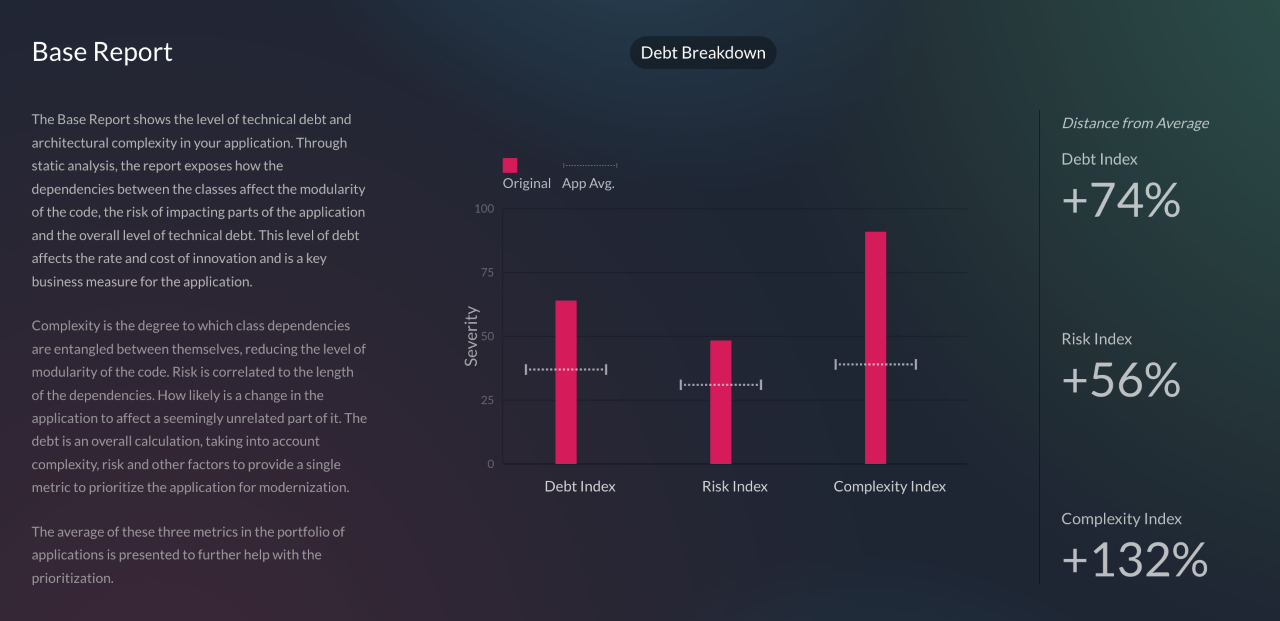
    An AI-based approach reduces the total cost of creating a business case and constructing a roadmap for modernizing existing Java applications, said Quillin. The vFunction Assessment Hub measures application complexity based on code modularity and dependency entanglements and then assesses the level of risk changes might have on the stability of the application based on the depth and length of the dependency chains. It then surfaces benchmarks for debt, risk and complexity in addition to identifying aging frameworks that could create security risks and licensing issues.

    Thus far most organizations have been content to lift and shift Java applications into the cloud without modernizing them. The application simply now runs on infrastructure that is managed by an external cloud service provider. That approach does little to improve the scalability of a monolithic Java application, noted Quillin. The goal should be to convert that Java application into a set of microservices that run natively in the cloud, he added.

    The vFunction Assessment Hub is already being used within a Java Refactoring Service for the Azure cloud provided by Microsoft that is based on agent software to analyze code and the vFunction Application Transformation Engine.

    In general, organizations are embracing microservices to build applications that are both more scable and resilient. In the event a microservice becomes unavailable, requests for services are rerouted to another microservice to make sure the application degrades gracefully, rather than simply crashing altogether. The challenge, of course, is that the dependencies that can exist between hundreds of microservices can be more challenging to manage over time than those of the monolithic application being replaced.

    It’s not likely that microservices-based applications will entirely replace monolithic applications any time soon, but the bulk of new applications are being built on top of a microservices-based framework. As such, many DevOps teams are now managing a broad mix of monolithic and microservices-based applications across IT environments that become increasingly more complex to manage with each passing day.

  • vFunction Launches the First AI-Based Modernization Assessment Solution to Quantify and Identify the Root Cause of Technical Debt in Applications

    vFunction Assessment Hub enables enterprises to prioritize app modernization efforts, in order to restore engineering velocity, boost scalability, and gain actionable insights on the impact of technical debt

    Palo Alto, CA, May 3, 2022 — vFunction, the first and only platform to apply AI to application modernization, today announces the availability of the vFunction Assessment Hub, a product that uses AI to accurately calculate the effect of technical debt across applications, their negative impact on innovation, predict the benefits of refactoring, and then integrate seamlessly into an automated refactoring platform. Companies can now identify the most egregious innovation killers in their application estate, build more accurate and impactful business cases to modernize complex apps, and increase the success rate of their application modernization projects.

    The top inhibitor to innovation velocity in organizations today is the debilitating cost and load of technical debt in large and complex applications. Current manual assessment approaches are slow, overwhelmingly complex, costly, and often fail to deliver positive business results. In order to increase innovation velocity and scalability, companies must address and eliminate accumulated technical debt across their application estate head-on. But, understanding the actual cost of technical debt and building a business case for modernization is elusive to most enterprises today. To address this, companies need to be able to accurately assess and measure the negative impact that technical debt has on the ability to innovate, compete, and scale.

    Introducing vFunction Assessment Hub 

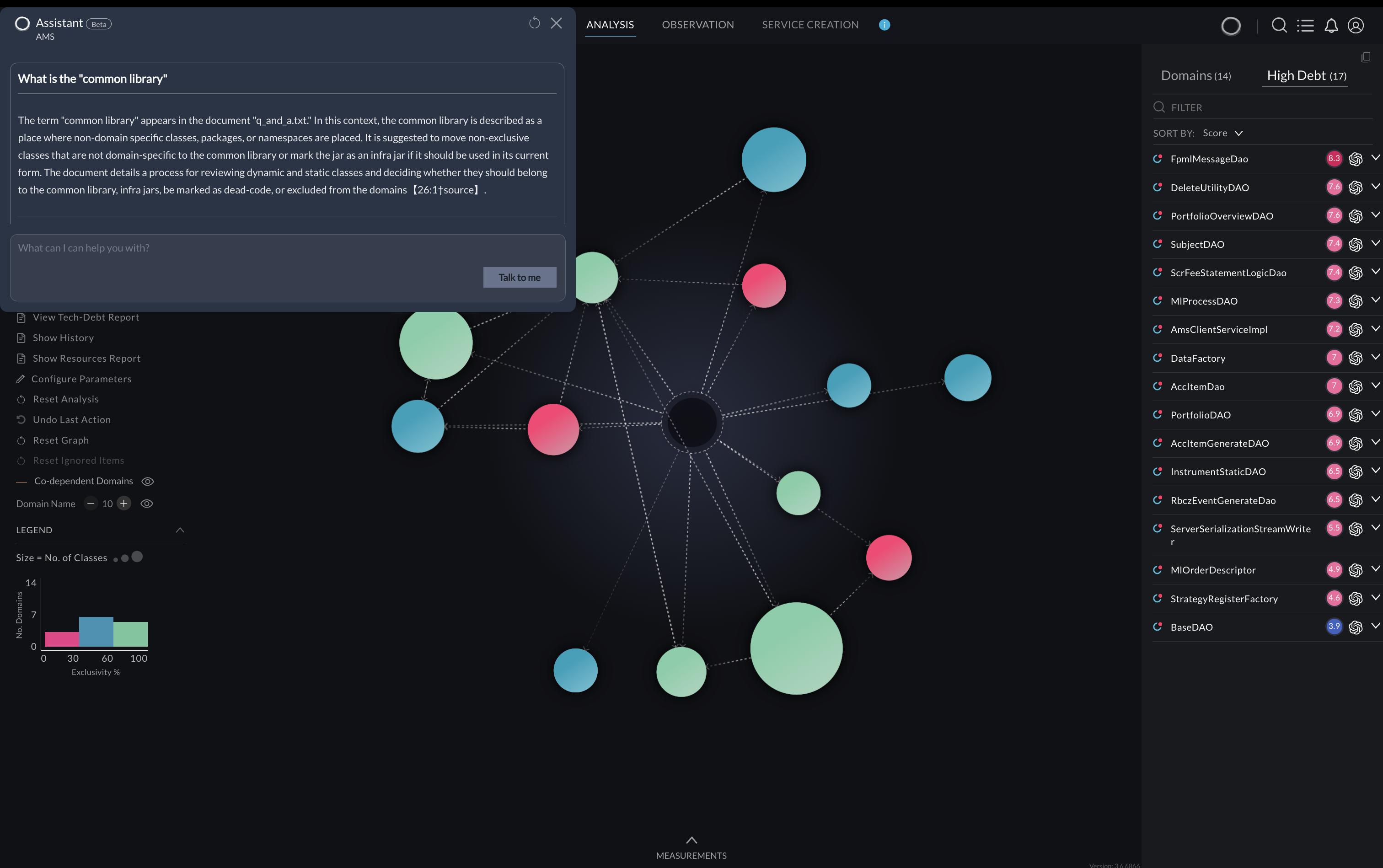
    The new vFunction Assessment Hub, which integrates seamlessly with the vFunction Modernization Hub, is the first modernization assessment solution to analyze the technical debt of a company’s legacy applications, accurately identify the source(s) of that debt, and measure its negative impact on innovation. The AI-powered solution measures app complexity based on code modularity and dependency entanglements, measures the risk of changes impacting stability based on the depth and length of the dependency chains, and then aggregates these to assess the overall technical debt level. It then benchmarks debt, risk, and complexity against the organization’s own estate, while identifying aging frameworks that could pose future security and licensing risks.

    With too many of today’s assessment projects mired in complexity, risk, fatigue, and impracticality,  vFunction Assessment Hub allows enterprises with a broad portfolio of applications to accurately identify and prioritize which apps to modernize, construct an actionable roadmap for refactoring, and build a compelling business case for modernization that increases innovation velocity, scalability, and lowers costs. vFunction Assessment Hub is the first assessment solution that directly leads to refactoring, re-architecting, and rewriting applications with the vFunction Modernization Platform. vFunction’s AI-powered, data-driven approach to app modernization equates to accurate higher quality results, and more actionable conclusions than the manual approaches that exist today.

    “Technical debt and innovation are two sides of the same TCO coin—and debt has an inverse effect on innovation—you can’t solve one without addressing the other,” said Moti Rafalin, CEO and Co-founder, vFunction. “Traditionally, app modernization has been risky, costly and slow, but it doesn’t need to be. Our top priority is to provide customers and partners with a powerful, automated and low-cost assessment solution that helps to democratize the way legacy app assessment, planning, and modernization is addressed today.”

    “Given the complexity and interdependence of today’s multi-layered application estates, CIOs and technology leaders need to prioritize their modernization efforts before they start pulling on threads that can unravel further complexity,” said Jason English, Principal Analyst, Intellyx. “The vFunction Assessment Hub provides an entry point for evaluating the ROI of breaking down legacy monoliths and decoupling dependencies, so refactoring efforts can be better aligned with business goals.”

    “As people look to migrate to the cloud, ‘lifting and shifting’ monolithic applications is not sufficient,” said Steven Dickens, Senior Analyst, Futurum Research. “This vFunction announcement, which focuses on capabilities that make it easier for development teams to analyze and assess the task of migrating applications to cloud-native microservices architecture hosted on the public cloud, is much needed right now.”

    The vFunction Assessment Hub, packaged in 10-application packs and priced below less functional automated static code analysis tools, is now available for enterprises, in the AWS Marketplace, and through vFunction partnerships with leading Systems Integrators and Cloud Providers. To learn more and request a free trial, please visit: https://vfunction.com/assessment-hub-free-trial/.

    About vFunction
    vFunction is the first and only AI-driven platform for developers and architects that intelligently and automatically transforms complex monolithic applications into microservices, restoring engineering velocity and optimizing the benefits of the cloud. Designed to eliminate the time, risk and cost constraints of manually modernizing business applications, vFunction delivers a scalable, repeatable factory model purpose-built for cloud native modernization. With vFunction, leading companies around the world are accelerating the journey to cloud-native architecture and gaining a competitive edge. vFunction is headquartered in Palo Alto, CA, with offices in Israel. To learn more, visit www.vfunction.com.

  • vFunction Automates Conversion of Java Apps to Microservices

    vFunction Automates Conversion of Java Apps to Microservices

    vFunction has developed an eponymous platform capable of automatically converting a monolithic application written in Java into a set of microservices. The startup is emerging from stealth mode today.

    Fresh from raising $12.2 million in seed funding, vFunction CEO Moti Rafalin said the company’s platform employs dynamic analysis, static analysis, data science and automation to enable IT teams to reengineer, in a repeatable fashion, the source code used to create monolithic Java applications.

    As part of that process, vFunction also detects and eliminates code that is no longer executed to reduce the footprint of an application, minimize security risks and overall maintenance tasks.

    The vFunction platform is deployed as a server that communicates with agent software injected into the legacy monolithic application. The server then creates a microservice that is scanned by additional tools to determine how best to optimize it to run on, for example, a Kubernetes cluster based on the Red Hat OpenShift platform, said Rafalin.

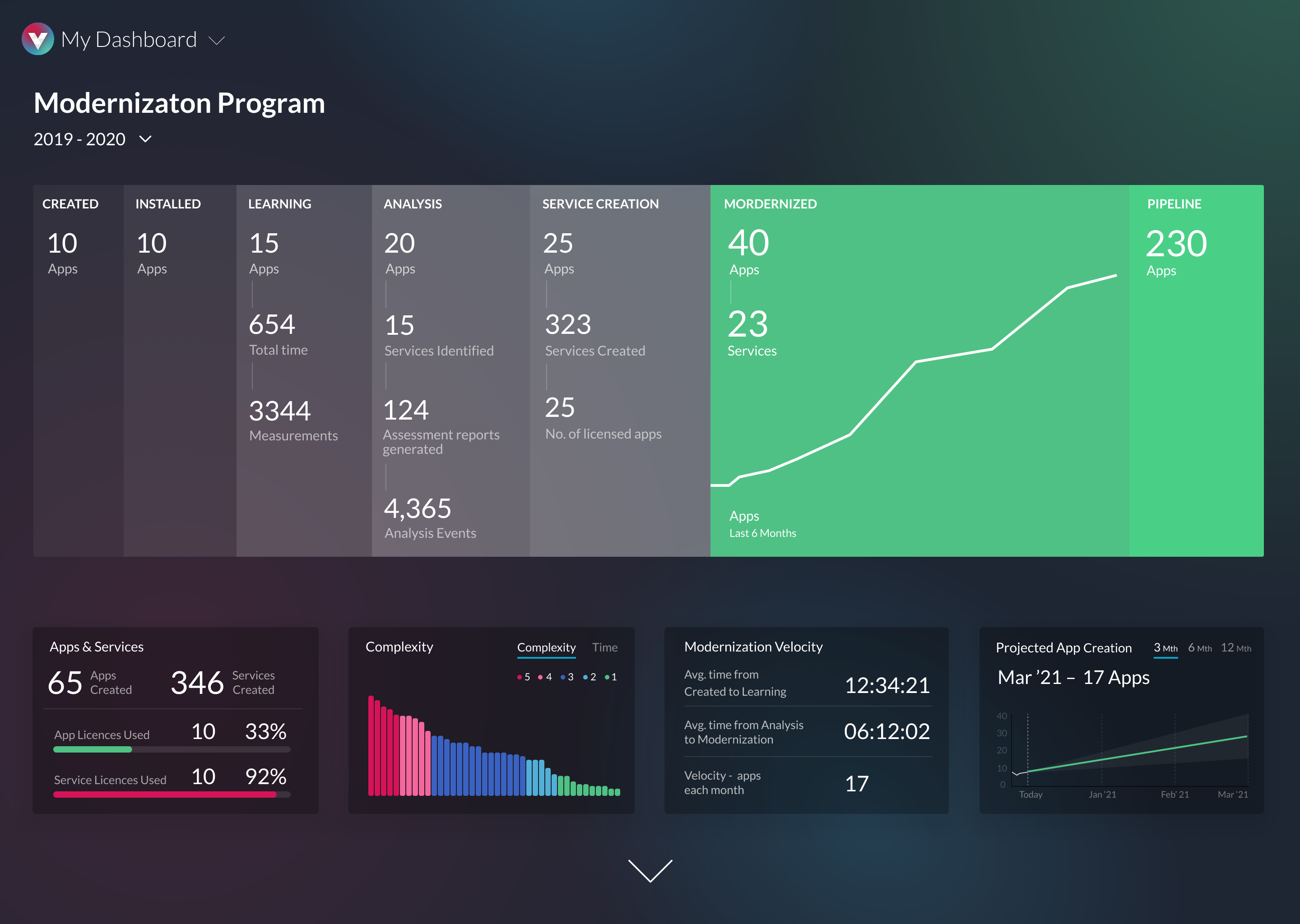
    IT teams can also employ vFunction to determine which monolithic applications are better suited to being converted into a set of microservices that can be automatically extracted into separate compilable projects. Each project comes with an estimated timetable for completion that can be accessed via a Modernization Factory Dashboard and Application Complexity Assessment tool provided by the platform.

    Rafalin said most monolithic applications are made up of large amounts of ‘spaghetti code’ that was added over multiple generations by different development teams. Manually analyzing that code as part of an effort to refactor a legacy application would require weeks of effort, Rafalin said. As such, the rate at which most organizations are re-engineering applications is extremely slow, he said.

    In fact, it’s not unheard of for IT organizations to to start, but quickly abandon such because the time and effort required proved too costly. vFunction claims its automated, domain-driven processes accelerate manual refactoring by a factor of ten, resulting in a savings of anywhere from $300,000 to $500,000 per application.

    Pricing for vFunction is based on a per-application model. The company has also established alliances with system integrators such as HCL Technologies, Tata Consulting Services and Wipro that are regularly contracted by IT organizations to refactor their applications.

    Of course, not every monolithic application needs to be converted into a set of microservices. However, most monolithic applications have components that would be easier to maintain and support as a distinct microservice. Organizations, in general, are embracing microservices to build applications that are more resilient. In the event a microservice becomes unavailable, requests for services are rerouted to another microservice to make sure the application degrades gracefully, rather than crashes altogether. The challenge is that, over time, the dependencies that can exist between hundreds of microservices can be more challenging to manage than those of the monolithic application being replaced.