Tag: Vercel

  • Vercel Adds Observability Tools to Web Application Framework

    Vercel Adds Observability Tools to Web Application Framework

    Vercel today announced it has added a suite of observability tools to its platform for building web applications using Next.js, an instance of the open source React framework based on a JavaScript library.

    Vercel CTO Malte Ubl said the Vercel Monitoring tools make it simpler for developers to troubleshoot applications without relying on a DevOps team to surface data. Instead, developers can take advantage of Vercel Monitoring tools to access metrics that track user interface and application programming interface (API) issues, he added.

    That capability is not intended to replace the need for observability tools employed by DevOps teams. Instead, the goal is to provide metrics that are specific to issues that developers encounter as an application is being built or after it has been deployed so they can be addressed.

    Developers can select from pre-made queries provided by Vercel or create their own by defining what metrics they want the Vercel Monitoring tools to track, including bandwidth and web traffic spikes and requests by bots that are indicative of a cyberattack. In total, there are more than 500 potential errors that developers can track. Logs then make it possible to drill down into errors and issues once they are identified to pinpoint the root cause of an issue.

    As more responsibility for applications shifts left toward developers, there’s a clear need for tools that provide more visibility into the applications they develop. Many of the issues that DevOps teams encounter today could have been resolved if developers had been aware of them earlier.

    The Vercel platform employs caching, routing and a React framework to optimize application performance in a way that reduces the dependency on backend infrastructure to optimize application performance. That approach puts less strain on backend infrastructure as more requests are automatically processed using a framework that spans clients and servers. In effect, developers can take advantage of frameworks such as React to treat the underlying IT infrastructure as if it were serverless whenever possible with tools that have a familiar JavaScript construct. The overall goal is to increase developer productivity at a time when many organizations are much more focused on the issue.

    As a result, DevOps teams will need to make some adjustments as more applications capable of providing richer experiences are built and deployed without relying as much on backend infrastructure. That shift has implications for everything from the amount of network bandwidth consumed to the performance of web applications. Frameworks such as Next.js also tend to increase the overall rate at which web applications can be built and deployed.

    One way or another, it’s clear that the way web applications are being built is fundamentally changing. The only issue now is determining to whether DevOps teams are prepared to absorb that level of change across an ever-increasing portfolio of applications that still need to be deployed, secured, updated and optimized.

  • Vercel Acquires Turborepo to Gain Build System

    Vercel Acquires Turborepo to Gain Build System

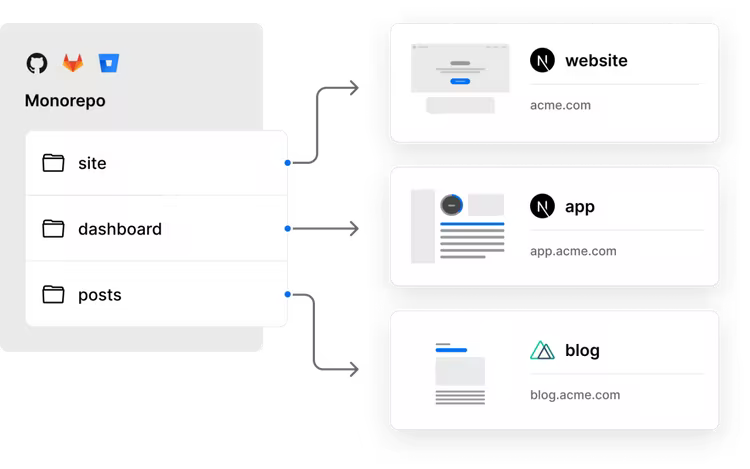
    Vercel today announced it has acquired Turborepo, a provider of a build system for JavaScript and TypeScript applications that provides developers with access to an easy-to-use monorepository for their code.

    In the wake of that acquisition, the command line interface (CLI) for accessing Turborepo will now be available under an open source license.

    Jared Palmer, creator of Turborepo and other popular open source projects including Formik and TSDX, will continue working on accelerating Turborepo’s capabilities as the new leader of a build performance team at Vercel.

    The goal is to move existing users of the Turborepo cloud service to a Vercel platform for building applications using the Next.js framework, which makes it possible to build web applications based on the React library for creating user interfaces that enable both static site generation (SSG) and server-side rendering (SSR).

    Palmer said monrepositories such as Turborepo not only make it easier for developers to manage builds but also reduce the amount of time required to process those builds using a continuous integration/continuous delivery (CI/CD) platform.

    Rival build systems are also much more complex to configure and manage, which Palmer said is a primary reason many developers have not yet set up their own mononrepositories.

    As the number of applications that organizations want to build and deploy in the digital business transformation era increases, the focus on developer productivity is intensifying. Rather than having to maintain a complex build system, Turborepo is designed to be simple to configure. As a result, more developers can reduce build times by as much as 50%, noted Palmer.

    In effect, front-end developers are able to more easily become full-stack developers by combining that build system with the Next.js framework, he added.

    DevOps teams will need to adjust to applications capable of providing richer application experiences without relying as much on backend infrastructure. That shift has implications for everything from the amount of network bandwidth consumed to the performance of web applications. The Vercel platform employs caching, routing and a React framework to optimize application performance in a way that reduces the dependency on backend infrastructure to optimize application performance.

    As web application development continues to evolve, the overall rate at which they web apps are built should increase significantly. Naturally, DevOps teams will need to consider the implications of having more applications move through DevOps pipelines and the need to continuously update those after they are deployed.

    It’s not clear whether or how much DevOps teams will nudge developers toward frameworks such as Next.js to develop web applications that might not tax backend infrastructure as much as previous generations of applications. In effect, developers can take advantage of frameworks that enable them to treat the underlying IT infrastructure as if it were serverless whenever possible with tools that have a familiar JavaScript construct. Vercel claimed there are already more than 30,000 sites running Next.js in production at organizations like Airbnb, Hulu, Nike, Ticketmaster and Uber.

    One way or another, it’s clear that the way web applications are being built is fundamentally changing. The only issue now is determining to what degree the rest of the IT organization is prepared to absorb that level of change.

  • Next.js 11 Accelerates Frontend Performance and Enables Instant Collaboration to Let Developers Build the Next Big Thing, Faster

    Cross-platform innovations highlighted by Vercel and Google to audience of more than 50,000 attendees.

    San Francisco, CA, June 15, 2021 — Vercel, a comprehensive platform for creating unsurpassed web user experiences and creator of Next.js, the leading React and JavaScript framework for frontend web development, today announced Next.js 11, accelerating frontend developers’ ability to build the next big thing through speed and collaboration. New innovations include significantly faster starts and changes, real-time feedback, instantaneous live collaboration and significant image optimization enhancements. In addition, the Aurora team in Google Chrome developed Conformance for Next.js, a system that provides carefully crafted solutions and rules to support optimal loading; Next.js script prioritization and font enhancement automations that reduce First and Largest Contentful Paint times. Together, these enhancements enable developers to improve Core Web Vitals scores, which are now being used by Google to influence search rankings. Developers can try these new capabilities by visiting nextjs.org/11.

    Next.js is the first hybrid framework to succeed at scale, and the only one to meet the needs of both static and dynamic websites and applications. Leveraging React as the fundamental unit of collaboration gives developers at companies including TikTok, Hulu, Ticketmaster, Staples and Marvel the flexibility to scale from one page to one billion pages.

    Since the first Next.js Conf in October 2020, Next.js open-source contributors have grown to more than 1,600, driving downloads on NPM from 4.1M to 6.2M. Traffic to all sites and apps on the Vercel edge network has doubled, weekly deploys have quadrupled and the number of homepages in the Alexa top 10,000 using Next.js have grown by 50%.

    “Whether you’re starting with a single static page or deploying a dynamic site with billions of pages, Next.js is the hybrid framework that meets you where you are and grows with you,” said Vercel CEO Guillermo Rauch. “We believe the fastest and most enjoyable end-user experience must go hand in hand with the fastest and most enjoyable developer experience.”

    New Innovations in Next.js 11 Include:

    • The Fastest Frontend Platform Ever — Next.js innovations improve startup time by up to 24% and reduce processing time for changes from edit to screen by 40%.
    • Next.js Live (Preview Release) — Combining a brand new dev server engine for Next.js with the Vercel platform enables teams to instantly share, chat, draw, and edit from anywhere in the world, with developers able to generate a URL in less than five seconds. With support for both static and dynamic Next.js applications, sharing and accessing a URL is always instantaneous, regardless of page numbers, because there’s no build process involved. Next.js will run entirely inside the web browser. Leveraging ServiceWorker, WebAssembly and ES Modules makes everything that’s possible when you run Next.js on a local machine possible in the context of a remote collaboration. Next.js Live works perfectly, even when offline, eliminating the need to run or operate remote virtual machines.
    • Real-time Feedback — Vercel enables developers to see the reaction to changes instantly. A priority in Next.js since day one, the new functionality builds on support for webpack HMR with zero configuration, and on the close partnership with Facebook, which led to the development of the Fast Refresh innovation in Next.js. Now developers can run the next dev command and their frontend project is ready to go. The browser reflects changes as soon as a file is saved. This not only works for styles, but thanks to Fast Refresh, all state is preserved even as changes are made.
    • Industry-first Image Enhancements — Next.js lets developers quickly swap the HTML image tag for the Next.js image component, optimizing images for each device viewport the image is delivered to. Lighthouse tests provide insights for improving loading performance out of the box in development when running Next Start, or when deploying to Vercel via its blazing fast edge network. Close community-driven integration with Cloudinary, Cloudflare, Akamai, and Imgix extend those benefits to the leading third-party content networks. New enhancements include support for the import keyword for the src, which can be used to refer to essential images that are part of a repository and automatically setting width and height parameters for local images, reducing cumulative layout shift, a core web vital. It also provides support for image placeholders on imported images, easing the transition from blank space to image, in addition to support for blurring for dynamic images.
    • Conformance for Next.js — This new system provides carefully crafted solutions and rules to support optimal loading. It frees developers from having to memorize complicated rules for loading performance via a compiler that enforces best practices to ensure predictable outcomes. This makes teams productive, and becomes essential as teams grow and features increase.
    • Next.js Script Component — This foundational optimization enables developers to set the loading priority of third-party scripts, significantly improving loading performance. Developers can now simply define the strategy property and Next.js will prioritize it. It enables three different loading strategies — before-interactive, for critical scripts such as security and authentication that need to be fetched and executed before the page is interactive; after-interactive, for scripts such as tag managers and analytics that can fetch and execute after the page is interactive; and lazy-onload, for scripts such as chat support widgets that can wait to load last during idle time.
    • Font Enhancement Automations — More than 80% of web pages are using custom web fonts as part of their branding, design, or to maintain cross-browser and device consistency. That customization exacts a performance toll. In April, Google introduced Font Optimization that includes Google Fonts and Adobe Typekit on Next.js, along with Font Optimization for Angular for Google Fonts. In Next.js, the CSS of custom fonts is now automatically inlined at build time. This eliminates the round trip to fetch font declarations, improving both First and Largest Contentful Paint times by as much as five seconds. A preconnect tag in Next.js, by default, establishes a connection with the underlying font files even faster.

    “At Google Chrome, we believe our collaboration with Next.js is an example of how to set predictable outcomes for loading performance,” said Houssein Djirdeh, developer advocate at Google. “We love working together with great frameworks to help developers make the web faster and we’re incredibly grateful for the maintainers and sponsors of the frameworks that enable the web to thrive. A special thanks to the Next.js team for testing with us and sharing the cost of many early attempts.”

    About Vercel

    Vercel is the leading advocate and enabler of frontend developer experience, having created the best platform to deploy any frontend website or application and Next.js, the most popular React framework. Vercel provides unsurpassed vertical integration, from developer experience to edge delivery, with the industry’s most advanced development tools paired with parallel compute in a serverless cloud environment providing a fully-managed, highly-automated experience for both developers and users. Companies including Carhartt, Github, Hulu, IBM, McDonald’s, Uber and Facebook deploy their frontends with the Vercel platform. Vercel (twitter @vercel) is headquartered in San Francisco.

  • Vercel Announces $40M in Series B Funding to Fuel Frontend Development Innovation

    GV-led round will be used to accelerate adoption and expand hybrid platform for development and deployment of any dynamic website or application


    SAN FRANCISCO – December 16, 2020 – Frontend development pioneer Vercel today announced that it has secured $40M in series B funding in a round led by GV, with participation from new investors Greenoaks Capital, Bedrock Capital and Geodesic Capital in addition to existing investors Accel and CRV. The new funding, which brings the total raised to $61M, will be used to accelerate research and development, drive platform innovation and scale its team globally to further accelerate frontend developers’ ability to enrich end users’ web experiences. Companies including AirBnb, Hashicorp and TripAdvisor deploy their frontends with the Vercel platform.


    “We see a significant uptick in the number of global enterprises transitioning from cloud to serverless computing technologies,” said Tyson Clark, GV general partner. “This opens the door for companies like Vercel to transform the frontend development market. Vercel’s collaborative approach to interactive web applications is well-positioned to become the top choice for developing the websites over the next decade.”

    Vercel provides a software development workflow and deployment platform that redefines how developers work, how they collaborate with lines of business and, most importantly, how their sites perform. The leading advocate and enabler of frontend developer experience and the creator of Next.js, the first hybrid framework to succeed at scale, Vercel uniquely satisfies the needs of both static and dynamic websites and applications. Hybrid applications give users all the capabilities and benefits of a static generator, while providing the flexibility of server-side rendering or streaming server-side rendering for additional personalization within the same application.

    “Since our inception, Vercel has been focused on creating the most powerful way to develop, preview and ship interactive web applications without having to depend on monolithic backend systems,” said Guillermo Rauch, CEO of Vercel. “Vercel is now the preferred frontend development platform, capable of providing dynamic web application experiences for growing legions of Javascript developers. We are extremely pleased to have partnered with GV, whose experience in this space will help us grow as a company, rapidly expand our user base and ensure ever-higher quality of user experiences globally in the coming months.”

    About Vercel

    Vercel is the leading advocate and enabler of frontend developer experience, having created Next.js, the most popular React framework available, and Vercel, the best platform to build and deploy any frontend website or application. Vercel provides unsurpassed vertical integration, from developer experience to edge delivery, with the industry’s most advanced development tools paired with parallel compute in a serverless cloud environment providing a fully-managed, highly-automated experience for both developers and users. Companies including AirBnb, Hashicorp and TripAdvisor deploy their frontends with the Vercel platform. Venture-backed by Accel and CRV, Vercel (twitter@vercel) is headquartered in San Francisco.