
Think of DevOps tools as stepping stones to releasing new functionality into the hands of your customers faster and more frequently. Working together, tools automate processes and help companies become modern software factories. But isolated tools, like a lone rock in the middle of a river, are much less useful.
Disparate tools may help an individual or a team do their job, but they impede the progress of the larger organization. To achieve desired efficiency across the application life cycle, companies may waste time and amass technical debt by integrating tools with scripts.
The other answer is that organizations get restrictive. They may establish a “center of excellence” for DevOps that prescribes a toolchain that works together, but are those tools going to be the best fit for all individuals and teams, supporting an agile mindset?
The ideal scenario is for a DevOps toolchain to become an integrated, dynamic continuous delivery powerhouse where “best fit” tools work in concert to enable better performing teams and better customer experiences.
Start with the Right Tools for the Job
DevOps teams are focusing on automating and streamlining all aspects of the application life cycle. It makes sense to choose the tool that’s best for the job. And teams should feel free to experiment and take advantage of new tools emerging every day that solve new problems or do a better job solving existing problems.
Typical areas of DevOps tool investment include:
- Planning and managing development work
- Managing, tracking and documenting all code changes
- Building, managing and deploying containers
- Automating iterative builds/continuous integration
- Developing and deploying to cloud platforms
- Automating the deployment of applications into environments at all stages
- Provisioning, configuring and monitoring environments
- Managing all types of testing with the right requirements and data
- Validating security before vulnerabilities become a problem
- Promoting better agile team collaboration
- Monitoring and managing an application in production
These tool categories each serve a vital role in the application life cycle. However, there remains a significant lack of coordination and shared knowledge across the DevOps toolchain to generate the value stream velocity that can keep businesses competitive and customers engaged. For example, if a testing function is isolated, it becomes a black hole of activity and often a bottleneck to delivery.
Build the Smarter DevOps Toolchain
When teams can visualize, orchestrate and track the continuous delivery value stream from development through production, the pipeline becomes an intelligent entity of its own. How is the pipeline performing? How is it adding value to the organization? How do you improve the pipeline?
For example, by integrating the planning and management solutions as part of the value stream, you can keep track of the user stories—including where they are deployed, what tests have been done and the results. Bi-directional integration enables automatic updates in the planning/management tool. Layer in collaboration tool integrations, and dev teams can get instant feedback and respond more quickly, shifting quality left.
The result: real-time information and the ability to plan and prioritize more effectively. Release and development teams now have a shared view and understanding of release status and business implications.
The testing function is another area where tools can work better together. Instead of sequential and separate functional, integrated, performance, API or security testing, you can build a testing workflow that runs in parallel, automatically promotes tasks, monitors progress and sends feedback of testing status. This can include orchestrating the generation of the right test cases, test data and virtual services for the app under test. With all the testing knowledge gathered in one place, it’s easy to see testing gaps and determine the risk of a release.
Launch DevOps Mission Control
A control center that manages the continuous delivery value stream can help teams not only manage the health and schedule of an active release more effectively, but it can also provide the visibility and analytics to help teams iteratively improve.
There are a number of tools on the market that look beyond the silos of the application life cycle to connect and extract value from an end-to-end toolchain. As you assess tools that can enable a dynamic value stream, ensure they have capability in these five areas:
- Plug and play integrations: Does the tool support common DevOps plug-ins? How easy is it to integrate tools, whether they are open source, commercial or home grown?
- Full pipeline visibility: Does it enable orchestration and tracking of all releases at all stages—planning, development, test and production—including feedback loops and planning for the next release?
- Continuous quality: Does it support a shift-left testing model to ensure testing happens continuously and rigorously? Does it help you prioritize your testing and automate risk assessment for your releases?
- Business value alignment: Does it provide intelligence about the app content in the pipeline? Can you see what code is deployed where in the pipeline and its status? Can you map how the content of a release aligns to business priorities?
- Actionable analytics: Does it extract meaningful data points from pipeline operation to provide analytics that support real-time decisions, as well as inform improvements over time? Can you get insights into release and pipeline performance, testing coverage and speed, release readiness, team productivity, and so on?
With intelligent integration of your DevOps toolchain you can increase your value stream velocity and deliver the best quality apps—every single time.

 Peter studied M.Sc. in Applied Computer Science and works in management consulting roles focusing on complex analysis and customer satisfaction, like IT Business Analyst and Change Manager. His current scientific research focus is digital transformation applied to the field of software engineering in large distributed organizations. Connect with him on
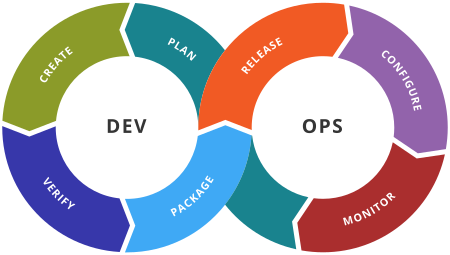
 The ultimate goal of DevOps is to streamline development. DevOps doesn’t necessarily require tools and is not defined by its tools, but for most organizations, they play an integral role in automating tasks and ensuring processes run as efficiently as possible. When used together, a combination of DevOps tools form a DevOps toolchain, which enables teams to flow smoothly through the DevOps life cycle.