Tag: The Linux Foundation

  • Open Mainframe Summit Call for Papers Now Open

    Open Mainframe Project announces Co-Located Events with IBM TechXchange in September and Open Source in Finance Forum in November

    San Francisco, CA, June 7, 2023 – The Open Mainframe Project, an open source initiative that enables collaboration across the mainframe community to develop shared tool sets and resources, today announced the launch of the Call for Proposals (CFPs) for the 4th annual Open Mainframe Summit. This year, the premier mainframe event will be co-located with two industry conferences – IBM TechXchange Conference 2023, hosted in Las Vegas on September 11-14; and Open Source in Finance Forum, hosted in New York City on November 1. 

    “As mainframe technology and events evolve and mature, it becomes a more natural evolution to align Open Mainframe Projects and activities with other industry events,” said John Mertic, Director of Program Management at the Linux Foundation and Executive Director of the Open Mainframe Project. “This year, by partnering with IBM and FINOS, we are offering attendees the opportunity to enhance their experience with unique presentations and targeted conversations with industry experts.” 

    “As open source becomes the default development model for many enterprises, mainframe customers are looking to embrace community developed code for their mainframe environments,” said Steven Dickens, Vice President and Practice Leader at the Futurum Group. “The Open Mainframe Project has established itself as the go-to community for mainframe developers, enterprises and vendors alike.  The events announced today are a key part of how the community will gather to advance code on the mainframe.” 

    Open Mainframe Summit aims to connect and inform all those interested in growing the use of mainframes and related technology in dynamic technical and educational sessions. It is open to students, developers, corporate leaders, users and contributors of projects from around the globe looking to learn, network and collaborate. It will feature content tracks that tackle both business and technical strategies for enterprise development and deployment.

    Open Mainframe Summit – Las Vegas

    IBM TechXchange Conference offers technical breakout sessions, hands-on experiences, product demonstrations, instructor-led labs, and certifications tailored to your interests and learning style. Open Mainframe Summit will be featured as part of the TechXchange Community Day on September 11. Community Day unites diverse IBM user groups and technical communities to foster collaboration, networking and learning. Learn more here. 

    Open Mainframe Summit – New York

    Open Source in Finance Forum is dedicated to driving collaboration and innovation in financial services through open source software and standards. The event brings together experts across financial services, technology, and open source to engage our community in stimulating and thought-provoking conversations about how to best (and safely) leverage open source software to solve industry challenges. Open Mainframe Summit will be featured as part of a 6-session track and a 10-minute keynote presentation. Learn more about the event here. 

    Submit a Proposal

    The Call for Proposals is now open and will be accepting submissions until Friday, June 30, 2023. Interested speakers for either event can submit proposals with options for 20 minute talks, 30-minute sessions, 60-minute panel discussions or a 60-minute workshop or lab. All topics that benefit the Open Mainframe ecosystem are welcome and can include (but not limited to) AI, machine learning, building the next workforce, cloud native, COBOL, Java, hybrid cloud, diversity and Inclusion, z/OS and Linux on Z, and security. 

    Submit a proposal: http://cfp.openmainframesummit.org/. 

    Meet the Program Committee

    A program committee, which includes active community members and project leaders, will review and rate the proposals. Open Mainframe Project welcomes Alan Clark, CTO Office and Director for Industry Initiatives, Emerging Standards and Open Source at SUSE, Donna Hudi, Chief Marketing Officer at Phoenix Software International, Elizabeth K. Joseph, Global Head of the OSPO for IBM zSystems at IBM, Rose Sakach, Offering Manager, Mainframe Division at Broadcom, Inc., and Len Santalucia, CTO at Vicom Infinity, A Converge Company.  

    We encourage community leaders, creators, developers, implementers, and users to submit presentations.  Whether you are a seasoned presenter or a first-time speaker we welcome your submissions.  While we expect a key focus on work within the Open Mainframe Project’s 21 hosted projects/working groups, user experiences and tips and tricks are often some of the favorite sessions of attendees.

    For more details about Open Mainframe or to watch the videos for Open Mainframe Summit 2022, check out the Open Mainframe Project 2022 Annual Report. 

    For more about Open Mainframe Project, visit https://www.openmainframeproject.org/.  

    About the Open Mainframe Project

    The Open Mainframe Project is intended to serve as a focal point for deployment and use of Linux and Open Source in a mainframe computing environment. With a vision of Open Source on the Mainframe as the standard for enterprise class systems and applications, the project’s mission is to build community and adoption of Open Source on the mainframe by eliminating barriers to Open Source adoption on the mainframe, demonstrating value of the mainframe on technical and business levels, and strengthening collaboration points and resources for the community to thrive. Learn more about the project at https://www.openmainframeproject.org.

    About The Linux Foundation

    The Linux Foundation is the world’s leading home for collaboration on open source software, hardware, standards, and data. Linux Foundation projects are critical to the world’s infrastructure including Linux, Kubernetes, Node.js, ONAP, PyTorch, RISC-V, SPDX, OpenChain, and more. The Linux Foundation focuses on leveraging best practices and addressing the needs of contributors, users, and solution providers to create sustainable models for open collaboration. For more information, please visit us at linuxfoundation.org. 

    The Linux Foundation has registered trademarks and uses trademarks. For a list of trademarks of The Linux Foundation, please see its trademark usage page: www.linuxfoundation.org/trademark-usage. Linux is a registered trademark of Linus Torvalds.

  • Rust Foundation Allies With OpenSSF and JFrog to Secure Code

    Rust Foundation Allies With OpenSSF and JFrog to Secure Code

    The Rust Foundation announced today it is working with the Open Source Security Foundation (OpenSSF) and JFrog to help maintainers secure open source software created using the Rust programming language.

    Rebecca (Bec) Rumbul, executive director at the Rust Foundation, said even though Rust is a memory-safe language, there are still security issues that maintainers need to be able to address. The goal is to provide the resources those maintainers need to better secure their software supply chains.

    As part of that effort, the Rust Foundation is adding a dedicated security team to help maintainers of open source projects built using Rust to better secure their software supply chains. That team is being underwritten by JFrog and the Alpha-Omega Initiative funded by Google and Microsoft which was recently launched by OpenSSF. JFrog last week announced it is joining the Rust Foundation at the Platinum level alongside Amazon Web Services (AWS), Google, Huawei, Meta, Microsoft and Mozilla.

    The first initiative for the security team will be to conduct a security audit and develop threat modeling tools that will provide the foundation for a set of best security practices for maintainers, said Rumbul. The team will also help advocate for those security practices across the Rust landscape, including the Cargo package manager and Crates.io directory projects.

    The OpenSSF has previously called for replacing programming languages like Java that are not memory-safe as part of a larger plan to secure open source software supply chains.

    In general, the Rust Foundation is committed to enabling Rust developers to achieve their scale, security and sustainability goals, said Rumbul. Given the early stages of the Rust programming language, there is no better time to start addressing security issues that application developers can’t ignore, she added.

    In the longer term, The Rust Foundation is also committed to providing developers with Rust security education and is also working to come up with a fair approach to certifying which projects have achieved an appropriate level of cybersecurity maturity, said Rumbul.

    It’s not clear whether developers are abandoning older programming languages in favor of a memory-safe language such as Rust. Rust employs a compiler to track the ownership of values that can be used once and a borrow checker that manages how data is used without having to rely on traditional garbage collection techniques.

    Of course, replacing trillions of lines of code that have already been constructed using a variety of legacy languages is a gargantuan task that might never be fully completed. However, as new applications are built using a memory-safe programming language, the overall security posture of an organization will steadily improve. The challenge, of course, is that the number of developers that know how to build applications using those languages is still relatively small.

    Nevertheless, there may come a day when the way applications are coded is a lot more secure by default than it is today. In the meantime, however, the number of vulnerabilities that exist with application environments is still too numerous to count.

  • Linux Foundation Lists Top Open Source Libraries

    Linux Foundation Lists Top Open Source Libraries

    The Linux Foundation today published a report that provides access to eight lists of the top 500 open source libraries being used by organizations as part of an ongoing effort to help better secure software supply chains.

    The Census II of Free and Open Source Software—Application Libraries report is based on usage data from providers of software composition analysis (SCA) tools such as Snyk, the Synopsys Cybersecurity Research Center (CyRC) and FOSSA. The report itself was compiled by the Harvard Lab for Innovation Science.

    The eight lists are made up of four that include version numbers and four that are version agnostic. The lists are separated into npm and non-npm packages because npm packages would dominate any ranking created. The top non-npm packages being employed include maven, nugget, Go and cargo.

    Frank Nagle, assistant professor at Harvard Business School, said the report is intended to provide organizations with some guidance in terms of knowing what open source packages are used in the wake of recent vulnerabilities discovered in the widely employed Log4j software used to manage logs within Java applications.

    Many of the organizations impacted by that vulnerability were unaware of just how widely deployed Log4j was within their enterprise IT organizations. IT organizations should evaluate the sustainability of those projects in terms of the number of contributors and maintainers that are working to ensure the security of those libraries.

    One of the biggest challenges is to find a way to standardize naming schema for software components and the overall management of versions of different libraries, noted Nagle.

    Ultimately, the goal is to convince more enterprise IT organizations—and the vendors that support them—to make more resources available to secure those libraries, noted Nagle. Much of the most widely used open source software is developed and maintained by only a handful of contributors. Many of those contributors argue that, while they made that software available for free, it is the responsibility of the organizations employing it to secure it.

    The Linux Foundation is moving to become a conduit through which it will make available additional resources to help better secure open source software. The Open Source Security Foundation (OpenSSF), a consortium hosted at the Linux Foundation, earlier this week announced that 19 additional organizations have joined OpenSSF to help identify and fix security vulnerabilities in open source software and improve tooling, training, research, best practices and vulnerability disclosure practices.

    Brian Behlendorf, executive director at OpenSSF, said in addition to making resources available, it’s clear there is a need for some form of a third-party audit of open source software as organizations are more broadly employing that software across their software supply chains.

    New premier member commitments to OpenSSF are now coming from 1Password, Citi, Coinbase, Huawei Technologies, JFrog and Wipro. New general member commitments are being made by Accuknox, Alibaba Cloud, Block, Inc., Blockchain Technology Partners, Catena Cyber, Chainguard, DeployHub, Gravitational Inc., MongoDB, NCC Group, ReversingLabs, Spotify and Wingtecher Technology. New associate members include Institute of Software, the Chinese Academy of Science (ISCAS), MITRE and OpenUK.

    Other efforts led by the OpenSSF include an Alpha-Omega Project to better secure open source security posture, scorecards that identify risks of the dependencies within more than one million projects, multi-factor authentication tokens and a Project Sigstore initiative to sign, verify and protect open source code.

    It may be a while before open source software achieves the level of security the IT industry strives for. On the plus side, however, there have never been more resources allocated to achieving that goal.

  • Linux Foundation Survey Sees Rise in SBOM Use

    Linux Foundation Survey Sees Rise in SBOM Use

    A global survey of 412 organizations published today by the Linux Foundation found nearly half of respondents (47%) producing or consuming software bills of material (SBOMs), and more than three-quarters said they expected to produce or consume them in 2022.

    SBOMs have become a bigger area of focus in the wake of a series of high-profile software supply chain-related breaches. The breaches involved application components compromised by malware that had been surreptitiously inserted during the application development life cycle. The Biden administration has gone so far as to issue an executive order requiring all agencies to provide SBOMs for all the commercial and custom software they use, but as of yet a deadline for compliance with that order hasn’t been set.

    In general, the Linux Foundation survey found that a large percentage of respondents (82%) are already familiar with the term SBOM. Respondents cited various benefits of having an SBOM, including making it easier for developers to understand dependencies across components in an application (51%), making it easier to monitor components for vulnerabilities (49%) and making it easier to manage license compliance (44%).

    However, the survey also makes it clear there is much SBOM work to be done. A full 62% of respondents, for example, are looking for better industry consensus on how to integrate the production/consumption of SBOMs into their DevOps practices. Respondents also cited a need for consensus on the integration of SBOMs into their risk and compliance processes (58%).

    More than half (53%) also said there is a need for better industry consensus concerning how SBOMs will evolve and improve.

    The survey also makes it apparent that organizations are more aware of the role SBOMs play in securing supply chains. A full 80% of organizations are aware of the White House’s executive order on improving cybersecurity, with more than three quarters (76%) considering making changes as a direct consequence of the order. Overall, the survey found the top consideration organizations focus on when evaluating open source software is security.

    Stephen Hendrick, vice president of research at the Linux Foundation, said 2022 is likely to be remembered as the year of the SBOM. There are several standards for building SBOMs, including an open source software package data exchange (SPDX) specification backed by The Linux Foundation and the Joint Development Foundation that is now recognized as the ISO/IEC 5962:2021 international standard. There is also CycloneDX, a lightweight SBOM standard based on an open source project that originated via the Open Web Application Security Project (OWASP) community and a software identification (SWID) standard for tags that some organizations use to create SBOMs.

    SBOMs are, essentially, a tool for listing the components that make up an application and are used inconsistently. However, when a critical vulnerability is discovered, they can sharply reduce the amount of time required to discover all the software components that need to be remediated. The challenge is, with the rise of containers, it has become much simpler to rip and replace software components in a way that may not always be reflected in the SBOM. Hendrick said in time, advances in technologies such as machine learning algorithms should make it easier to instantly reflect those changes in an SBOM.

    Regardless of approach, it’s apparent DevOps teams, like it or not, are about to be held more accountable for the provenance of every component employed across their entire application portfolio.

  • Foundation Proposes Advancing eBPF Adoption Across Multiple OSes

    Foundation Proposes Advancing eBPF Adoption Across Multiple OSes

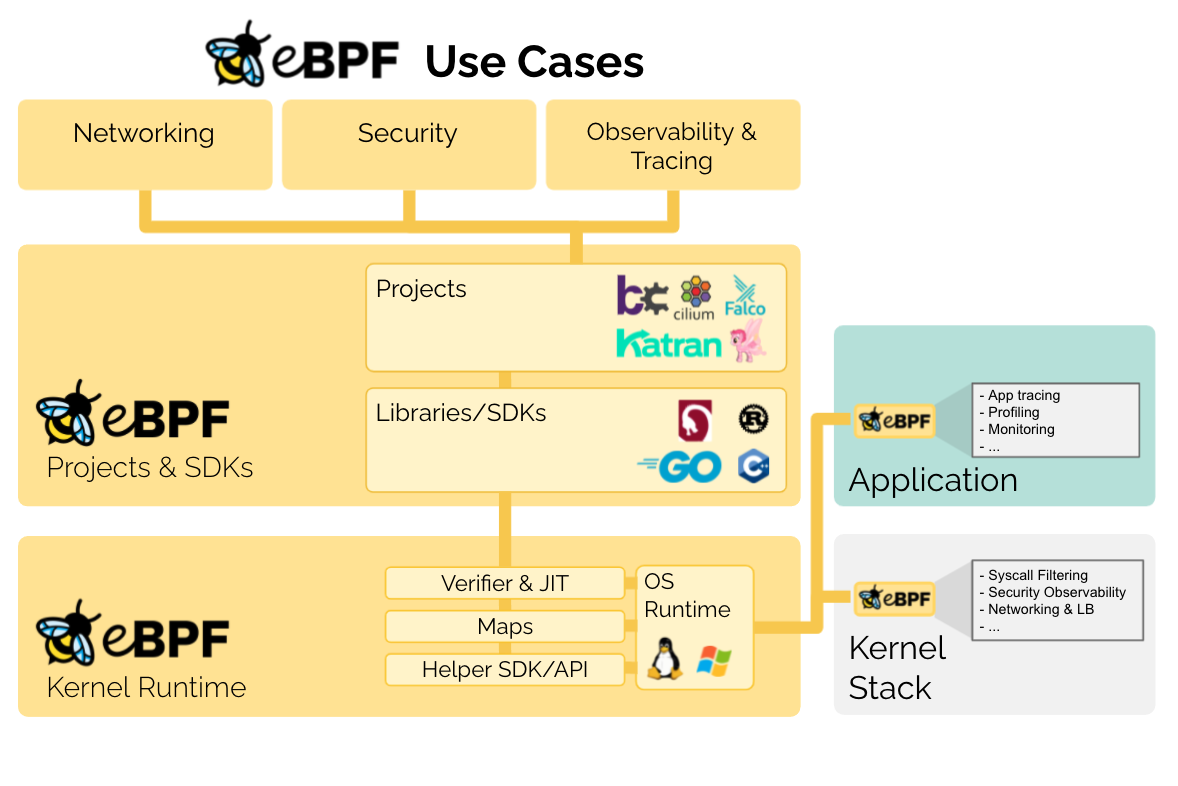
    The eBPF Foundation, which proposes to advance adoption of an approach that enables sandbox programs to run faster at the kernel level, is being launched today as an arm of the Linux Foundation.

    The technology known as eBPF was originally developed for Linux. The eBPF Foundation is now committed to expanding use of eBPF across all operating systems. Members of the eBPF Foundation include Facebook, Google, Isovalent, Microsoft and Netflix.

    Thomas Graf, CTO and co-founder of Isovalent, a provider of networking and security tools that leverage eBPF, said IT organizations should expect to see the technology become part of Windows, along with other operating systems, as the core technology is tested and validated across a much wider range of platforms.

    In effect, eBPF changes the way operating systems are designed. It bridges the boundary between kernel and user space by enabling developers to combine and apply logic across multiple subsystems that, historically, were completely independent of one another. That approach enables, for example, a security tool to scale to the point where it can identify threats at much higher levels of throughput to improve overall scale at a time when the volume of cybersecurity attacks being simultaneously launched continues to increase.

    Currently, eBPF is widely employed by web-scale companies such as cloud service providers. Facebook is using it as the primary software-defined load balancer in its data centers while Google is using open source Cilium networking software within its managed Kubernetes offerings.

    However, adoption within on-premises IT environments that have deployed Linux has been more limited simply because the number of vendors that have optimized networking, security and storage offerings to take advantage of eBPF is still fairly limited.

    Sysdig, for example, recently launched made available an instance of the open source Falco container security platform available that employs eBPF. Tigera has also made available an instance of its container networking platform that leverages eBPF at the kernel level of Linux.

    Ultimately, Graf notes the biggest benefit of eBPF is efficiency. The total cost of processing for security, networking and storage platforms should decline as more vendors take advantage of a capability that will one day be widely employed across multiple operating systems.

    In the meantime, IT organizations would be well-advised to ask their vendors when they plan to support eBPF. Cloud service providers generally require it to deliver their own managed services more efficiently, so any vendor that hopes to sell a platform to those providers will need to support eBPF to drive performance at scale. The issue then becomes determining which platforms that have embraced the technology are also available in on-premises IT environments looking for similar benefits.

    Regardless of approach, it’s clear there will soon be a reason to upgrade not just networking, storage and security platforms but also instances of operating systems that don’t yet support eBPF. DevOps teams would be well-advised to plan accordingly because the number of platforms that will ultimately benefit from eBPF spans the entire enterprise.

  • Open Mainframe Project Launches Call for Proposals for the 2nd Annual Open Mainframe Summit on September 22-23 

    Registration for the virtual event is now open.

    SAN FRANCISCO, May 5, 2021 – The Open Mainframe Project (OMP), an open source initiative that enables collaboration across the mainframe community to develop shared tool sets and resources, today announced plans for its 2nd annual Open Mainframe Summit, the premier mainframe event of 2021. The event, set for September 22-23, is open to students, developers, users and contributors of Open Mainframe projects from around the globe looking to learn, network and collaborate. As a virtual event again this year, Open Mainframe Summit will feature content tracks that tackle both business and technical strategies for enterprise development and deployment.

    In Open Mainframe Project’s inaugural event last year, more than 380 registrants from 175 companies joined the two-day conference that featured 36 sessions. Some of the most popular sessions were the Women in Tech panel, COBOL sessions, new mainframer journey and project overview sessions for Ambitus, Feilong, Polycephaly, and Zowe. The event report can be found here and all of the videos can be watched here.

    “Open Mainframe Project is becoming the gateway to all educational tools and initiatives that run some of the world’s biggest enterprise systems,” said John Mertic, Director of Program Management at the Linux Foundation. “For our inaugural event last year, we merely dipped our toes in the water as a new summit. This year, we’ll see more change makers speaking about open source innovation, creativity and diversity in mainframe related technologies. We look forward to igniting conversations that are going to positively impact all facets of mainframes.”

    Call for Proposals

    The Call for Proposals is now open and will be accepting submissions until July 16, 2021. Interested speakers can submit proposals in five tracks such as business overview, Linux on Z, z/OS, education and training and diversity, equity and inclusion. Options for presentations include lightning talks, 30-minute sessions and panel discussions. 

    A program committee, which will include maintainers, active community members and project leaders, will review and rate the proposals once all the submissions are in. This year, Open Mainframe Project welcomes Greg MacKinnon, Distinguished Engineer at Broadcom, Inc; Joe Winchester, Technical Staff Member at IBM; Kimberly Andersson, Director of Experience Design at Rocket Software; Stacey Miller, Product Marketing Manager at SUSE; and Harry Williams, Chief Technology Officer at Marist College as the 2021 Open Mainframe Summit program committee. 

    Submit a proposal here: https://events.linuxfoundation.org/open-mainframe-summit/program/cfp/. 

    Whether a company is a member or contributor of Open Mainframe Project or is sponsoring the event has no impact on whether talks from their developers will be selected. However, being a community leader does have an impact, as program committee members will often rate talks from the creators or leaders of an open source project more highly. Focus on work with an open source project, whether it is one of the Open Mainframe Project’s 18 hosted projects or working groups that adds value to the ecosystem.

    Conference Registration for the online event is $50 for general attendance and $15 for academia. Registration is now open, click here to register. 

    Thank You Sponsors

    Open Mainframe Summit is made possible with support from our Platinum Sponsors Broadcom Mainframe Software, Rocket Software, and SUSE; our Gold Sponsor Vicom Infinity; and our Academic and Community Sponsors CD Foundation and the Fintech Open Source Foundation (FINOS). To become a sponsor, click here. 

    For more about Open Mainframe Project, visit https://www.openmainframeproject.org/.

    About the Open Mainframe Project

    The Open Mainframe Project is intended to serve as a focal point for deployment and use of Linux and Open Source in a mainframe computing environment. With a vision of Open Source on the Mainframe as the standard for enterprise class systems and applications, the project’s mission is to build community and adoption of Open Source on the mainframe by eliminating barriers to Open Source adoption on the mainframe, demonstrating value of the mainframe on technical and business levels, and strengthening collaboration points and resources for the community to thrive. Learn more about the project at https://www.openmainframeproject.org.

    About The Linux Foundation

    The Linux Foundation is the organization of choice for the world’s top developers and companies to build ecosystems that accelerate open technology development and commercial adoption. Together with the worldwide open source community, it is solving the hardest technology problems by creating the largest shared technology investment in history. Founded in 2000, The Linux Foundation today provides tools, training and events to scale any open source project, which together deliver an economic impact not achievable by any one company. More information can be found at www.linuxfoundation.org. 

    The Linux Foundation has registered trademarks and uses trademarks. For a list of trademarks of The Linux Foundation, please see its trademark usage page: www.linuxfoundation.org/trademark-usage. Linux is a registered trademark of Linus Torvalds.

  • Open Mainframe Project Kicks Off First Quarter with New Members, Additional COBOL and Linux on Z Resources and Launch of the 2nd Annual Open Mainframe Summit


    • OMP welcomes ASG Technologies, BMC Software and High School Technical Services to its global ecosystem
    • COBOL Check, a new testing framework for COBOL applications, will complement the COBOL Training Course and leverage the support of the COBOL Working Group
    • ConsoleZ is a new project that will modernize z/VM and zLinux

    SAN FRANCISCO, March 9, 2021 – The Open Mainframe Project (OMP), an open source initiative that enables collaboration across the mainframe community to develop shared tool sets and resources, today welcomes ASG Technologies, BMC Software and High School Technical Services as well as COBOL Check and ConzoleZ to its growing global community.

    “Despite the pandemic, Open Mainframe Project experienced record growth over the past year,” said John Mertic, Director of Program Management at the Linux Foundation. “We more than doubled the number of projects hosted and that is a direct result of the commitment and talent of our members and contributors. Their passions are pushing projects to meet technical milestones and members are collaborating on governance, which has helped Open Mainframe solidify our role as the premiere resource for devops technology and education.”

    COBOL and Linux on Z Continue to Take Center Stage

    COBOL’s ability to support digital transformation is measurably faster and lower-risk than any of the alternatives, which is why there is an estimated 200 billion lines of code being used today. COBOL’s value to the IT industry and global economy is sometimes underestimated, as is its contemporary usage and viability. COBOL is up-to-date technology, supporting the latest advances and innovations such as micro services, containers and cloud.

    COBOL Check aims to enable unit testing for COBOL applications, including those hosted on IBM Z systems, and can support micro testing off-platform on Windows, OS X, Linux, or Unix. It has no dependencies on resources hosted on the Z system, which makes it easy to implement and key to supporting future technologies. For developers, COBOL Check will reduce code modifications and offers a shorter lead time to production. The program also improves the design, understandability, maintainability, and longevity of core business applications and supports IBM’s mainframe modernization program by enabling restructuring of existing applications of APIs. COBOL Check will complement the COBOL Training Course and will leverage the support of the COBOL Working Group.

    ConsoleZ strives to modernize Linux on Z by offering a new open source tool for z/VM and zLinux. It is a web user interface that gives browser access to z/VM console data and CP commands, while limiting access to certain teams. It can save more time and resources so teams don’t have to interact with many z/VM LPARs. ConsoleZ is secure, efficient and has a better user interface.

    Continued Growth of the Ecosystem

    Open Mainframe Project, which launched in 2015 by The Linux Foundation, is now comprised of 43 business and academic organizations. Today, the project welcomes ASG Technologies, a leading provider of solutions for the information-powered enterprise; BMC Software, a global leader in software solutions for the Autonomous Digital Enterprise; and High School Technical Services, which offers coding and technology services in 50+ topics for students and adults.

    “The world’s largest organizations continue to rely on the mainframe,” said Jeff Boatright, Senior Vice President, Development at ASG Technologies. “As they accelerate digital transformation, advancing the mainframe ecosystem is more critical than ever. We’re thrilled to join Open Mainframe Project and contribute our expertise in enabling organizations to modernize mainframe culture, processes and tools and to empower the next generation of mainframe professionals.”

    “We’re excited to bring the combined expertise and experience of BMC, Compuware, and RSM Partners to the Open Mainframe Project to support ongoing innovation on the mainframe,” said John McKenny, SVP and General Manager of ZSolutions at BMC. “With mainframe processing and transaction levels increasing in most industries, there is an increased need for compute power to support mission critical applications, and mainframe modernization is absolutely critical. We have a deep relationship and history of collaboration with the Open Mainframe Project and look forward to working with other members for an open source future of the mainframe.”

    “Through our live events and training services, we teach how to build and manage mainframe applications and promote best practices for mainframe design, development and maintenance,” said Matt Zand, Program Manager for High School Technology Services. “As a provider of advanced training to students and adults, HSTS is excited about partnering with Open Mainframe Project and contributing to the education and training projects like Mainframe Open Education, the COBOL Training Course and the Mentorship Program.”

    The new members will collaborate on vendor-neutral open source projects with the mission of building community and adoption of open source on the mainframe. The project strives to build an inclusive community through investment in open source projects and programs, career development, and events that provide opportunities for the mainframe community to collaborate and create sustainability.

    Open Mainframe invites you to…

    Ask Questions! The Linux Foundation is hosting an Open Mainframe Project Open House on March 9 at 1-2 pm PST. Current member companies Broadcom, IBM and Vicom Infinity as well as a professor from East Carolina University and graduate of the Mentorship Program will be online to answer questions and discuss the mainframe community. This session is open to anyone interested in membership in the Open Mainframe Project.  Register here.

    Apply! The annual Open Mainframe Project Mentorship program, which has helped more than 40 students learn more and gain experience with Linux, open source, and mainframes, is looking for mentees for the Summer Mentorship. Read more here and apply before March 31.

    Sponsor! The 2nd Annual Open Mainframe Summit will take place virtually on September 22-23, 2021. Last year, the digital event brought more than 380 registrants from around the world. This year, the Summit promises to be bigger and better with a stellar roster of speakers and more engagement and networking opportunities. To become a sponsor, click here.

    For more details about Open Mainframe Project, visit https://www.openmainframeproject.org/.

    About the Open Mainframe Project

    The Open Mainframe Project is intended to serve as a focal point for deployment and use of Linux and Open Source in a mainframe computing environment. With a vision of Open Source on the Mainframe as the standard for enterprise class systems and applications, the project’s mission is to build community and adoption of Open Source on the mainframe by eliminating barriers to Open Source adoption on the mainframe, demonstrating value of the mainframe on technical and business levels, and strengthening collaboration points and resources for the community to thrive. Learn more about the project at https://www.openmainframeproject.org.

    About The Linux Foundation

    The Linux Foundation is the organization of choice for the world’s top developers and companies to build ecosystems that accelerate open technology development and commercial adoption. Together with the worldwide open source community, it is solving the hardest technology problems by creating the largest shared technology investment in history. Founded in 2000, The Linux Foundation today provides tools, training and events to scale any open source project, which together deliver an economic impact not achievable by any one company. More information can be found at www.linuxfoundation.org.

    The Linux Foundation has registered trademarks and uses trademarks. For a list of trademarks of The Linux Foundation, please see its trademark usage page: www.linuxfoundation.org/trademark-usage. Linux is a registered trademark of Linus Torvalds.

    ###

  • The Benefits of Open Source Technologies

    The Benefits of Open Source Technologies

    Over the last 20 years, we have seen the proliferation of open source software and technologies become part of commercial offerings, either as part of the technology stack that powers the product or part of the product itself. Although these two use cases are largely different, both have come to showcase just how useful open source is, not only for the developer community but for businesses as well.

    One of the benefits of working with open source technologies or projects is the free sharing of ideas. Open source brings people together to brainstorm and develop a common piece of technology. The shared love for what they do crosses cultural and geographical boundaries. One of the best-known – and arguably, most important – open source projects is the Linux kernel and operating system. Linus Torvalds released the first version of the kernel to the open source community through a mailing list, sparking worldwide collaborative development and widespread adoption.

    The passion for open source stems from a deeply rooted belief that contributors are solving an important problem, and that they are working towards the betterment of the world as a whole. In many cases, this is demonstrable. The Linux kernel now powers the majority of data centers worldwide, serving billions of users. But it’s not only that subjective passion that has played a key role in establishing open source technologies. The peer-review process of open source projects means that each code commit passes a rigorous, public audit and verification process. It has proven to be a superb way to increase code quality, reduce bugs and regressions and guard against vulnerabilities. Research has shown, objectively, that this process produces higher quality software than the standard, proprietary quality assurance and testing procedures.

    When selecting an open source technology to use in development, there are a couple of issues that need to be considered in order to safeguard the quality of your product. One key consideration is to resist chasing the latest technology fad. Instead, select the right technology for the job. It’s in developers’ DNA to obsess over new and exciting technologies, but this does not always mean that they are appropriate. While Kubernetes may be the right solution if you need to serve millions of users at Netflix-like scale while managing maintenance and cost, it likely isn’t the best choice for a new startup launching the first iteration of their product. In this case, speed of development and flexibility to make changes is more important than scalability (so, perhaps, the startup might be better off using Ruby on Rails or Django). These three projects all share an important characteristic: They have active communities that not only safeguard project features but also maintain them and offer peer-to-peer support.

    When implementing a new feature with a particular technology, this supporting community is very important, since they can greatly accelerate the development of your product. These are people who love what they do and want to see other community members succeed with the technology. In this regard, it’s also important to consider giving back to the projects and communities you benefit from. You can either participate in the communities and help others yourself, one-on-one, or contribute by sharing the improvements that you have made to the open source technology. If you have extended the API, for example, or discovered and fixed bugs, there is no reason not to contribute your changes back and further enrich the ecosystem. The credibility you build in this way can also be a benefit, as people will identify you, your team and your product as supporters of the open source project. It’s a virtuous cycle of collaboration with benefits that should not be underestimated.

    As you and your product become an important part of the open source ecosystem, either because you use open source components or because the core of your product is open-sourced, remember that trust is notoriously hard to build and very easy to lose quickly.

    Whatever one’s feelings are on this matter, the open source community is very careful about who they trust and can easily be alienated by a company that appears not to have their best interests in mind. In order to build trust, it’s important for teams to build credibility. Open source communities are largely merit-based, so unless the community sees proof of expertise and knowledge, they will not automatically trust a self-proclaimed expert. This credibility can even extend to the personal, like the many open source developers who have a large following on social media and lend their credibility to the projects and companies that they work for.

    Finally, when dealing with open source technologies, projects, and communities, it’s key to remember that developers are very sensitive to blatant sales pitches. Authenticity matters in the way that a project, company or brand presents itself. Open source is all about collaboration and community; it’s a relationship built on trust and mutual benefit, not profit.

  • Linux Foundation Exam for Certified IT Associates Available

    Linux Foundation Exam for Certified IT Associates Available

    A while back I wrote about an upcoming certification people receive from passing the Linux Foundation Exam. Now that it is available, I’m circling back as promised with more information.

    For those unfamiliar, this certification is specifically targeted at people who are newer to their IT career or just launching it. The goal is to offer an onramp for people to show their basic skills and demonstrate to potential employers their ability to get the job done or learn what is needed. It fits in well with their other offerings, giving Linux admins a path to use the foundation’s certifications to reflect progress in their career.

    I have information about the beta test, more information about what is stressed in the testing, and availability information, so let’s dive right in.

    First off, for those like me who have a friend that might benefit from using this test, it is available for purchase now and can be scheduled in January 2021.

    Who is the Linux Foundation Exam for?

    This exam is aimed at entry-level IT folks or those who are contemplating a move to DevOps. Though it is not targeted at help desk people aiming at systems admin jobs, it is suitable for them also. Its goal is to provide employers with proof of a minimum set of skills in IT basics, with (unsurprisingly) a strong emphasis on Linux. An interesting application that Lee Marer of Outcert, one of the Linux Foundation’s partners, pointed out to us was interest from K-12 and colleges—it could be a benefit to people who are recently out of school to already have something that shows they know their way around.

    Specifically, Lee thought the following groups would benefit from the test, and sees interest from these groups:

    • K-12/College: Already mentioned. A good way to offer practical benefit to coursework and offer prospective employers a hint at an inexperienced student’s capability.
    • Those moving to DevOps: Because a lot of DevOps is open source, a lot of DevOps depends upon Linux. This test shows those looking to move have the background required.
    • Those who are intimidated by the more advanced tests available from the Linux Foundation and others. My friend fits into this category. The amount of prep required to pass some tests is not on par with the practical knowledge they test for. This test offers a stepping stone that allows users to study the basics before being asked to advanced tasks such as (for an extreme example) parsing packets.
    • Employers: This exam proves a basic understanding of the topics covered, allowing employers to say “Must have passed this exam” in place of “Must have Doctorate and 15 years of experience.” (I joke, but it does offer employers a bar for help desk or entry-level DevOps.)

    What’s in the Linux Foundation Exam?

    Specifically, Dan Brown, senior manager, content and social media at the Linux Foundation, told us that the test would cover the following topics:

    • Linux Fundamentals (20%)
    • System Administration Fundamentals (20%)
    • Cloud Computing Fundamentals (20%)
    • Security Fundamentals (16%)
    • DevOps Fundamentals (16%)
    • Supporting Applications and Developers (8%)

    We had hoped to have a couple of sample questions for you, as an example of what to expect from the test and from those who took it. As of this writing, answers to those questions are not available. We’ll keep you posted.

    How Can I Take the Linux Foundation Exam?

    As mentioned above, it is available for purchase now (at a good price for an exam), and the scheduling of exams opens in January 2021.

    Tests are delivered remotely, with a live proctor and monitoring used to ensure it is an evaluation of the test taker’s knowledge, as opposed to the test taker’s ability to look up answers.

    This will be a point of contention, as it is in interviews and other exams. Simply put, the ability to look up what you don’t know and apply what you find to answer your questions/fix your problems is a critical skill at this point in IT. But for an entry-level test, I think that proving you have the basis to even understand what you are looking up is more important. So while I believe that unfettered internet access should be available during higher-level tests, for this test it makes perfect sense to me that monitoring will detect searches for answers.

    So Why Cover it Here?

    I think that this industry has developed a kind of psychosis. We talk about skills being more important than formal education and for entry-level positions, ability being at least as important as experience. Yet, job postings read like wish-lists. No, I don’t have five years’ experience in that three-year-old tech, thanks. The Linux Foundation Exam offers an avenue for organizations to demand basic competence without going crazy on a laundry list of items. For help-desk, for admin, for DevOps, this test would prove basic competency in a swath of Linux applications and utilities that would simplify the hiring process. I think we need that. I think we need that across the board, but starting with entry-level is good for me. Priced to be available to entry-level people, gauged to judge their basic knowledge, and from an authority on Linux, this might just be the answer at the bottom end of the scale.

    In fact, combining this test with a demonstrated ability to look up and comprehend answers would be all that is needed for most entry-level positions. Employers get assurance that they’re making the right hire, applicants don’t have to try and figure out which of those “requirements” is actually a requirement. Everyone wins. But only if we’re talking about it. So I’m talking about it, to people who’ve laughed at job postings before and know something like this could help: You. Keep kicking it, and consider this another tool to get co-workers who can kick it, too.